Search & find:
Media, press releases, events for your editorial coverage

IAA Transportation 2026: How Bosch is shaping freight transport today and tomorrow

02.09.2026

Press release

Mobility

IAA Transportation 2026: How Bosch is shaping freight transport today and tomorrow

Stuttgart, Germany – Bosch is shaping the transition to software-defined commercial vehicles with a broad portfolio of technologies for powertrains, thermal management, chassis, automation, connectivity, and digital services. The company’s latest innovations help vehicle manufacturers and fleet operators tackle the industry’s most pressing challenges, from decarbonization and traffic safety to the increasing complexity of software and systems in modern commercial vehicles.As a system partner, Bosch provides custom solutions that, through software and artificial intelligence, encompass both the hardware in the vehicle and the digital control system. In May 2026, Bosch announced its plans to establish a new joint venture by the end of the year in collaboration with the two subsidiaries of the TSF Group, namely Brakes India Private Limited (BIPL) and Wheels India Limited (WIL). The establishment of the new company is still subject to official approval. Through the new joint venture, Bosch aims to expand its portfolio to include smart actuators for compressed air generation, compressed air treatment, air suspension, and parking brakes. The goal is to strengthen the company’s position in the commercial vehicle segment and to further advance the development of software-defined commercial vehicles and connected transportation solutions. Bosch powertrain technologies for global markets Electric powertrain: Bosch is electrifying both light- and heavy-duty commercial vehicles, from individual components to complete systems solutions. Its new rigid e-axle integrates core components of the electric powertrain like the electric motor and transmission into a solution for commercial vehicles weighing 18 to 49 metric tons. The axle reduces the vehicle’s weight and also operates more efficiently than a conventional electric center drive. When combined with silicon carbide inverters, which feature an efficiency of up to 99 percent, the rigid e-axle significantly reduces operating costs in freight transport. A global manufacturing and supply network also ensures reliable delivery directly to sites in all relevant markets. High-voltage motor-driven fan: Efficient thermal management is crucial for the range and performance of electric commercial vehicles. To this end, Bosch is introducing a new high-voltage blower module for 800-volt architectures , which the company has developed specifically for electric commercial vehicles and off-highway applications. The solution provides on-demand cooling for key vehicle components, reduces energy consumption, and thus helps increase range and efficiency. Fuel-cell systems for buses and trucks: As a locally emission-free powertrain solution for commercial vehicles, fuel cells use hydrogen and oxygen to produce water and electricity. Compared to a purely battery-electric powertrain, this technology offers advantages such as lower system weight, longer ranges, and quick refueling times. Bosch’s portfolio of compact, highly integrated fuel-cell systems covers a power spectrum from 100 to 300 kilowatts. This enables the operation of city buses, long-haul trucks, and stationary applications. Hydrogen engines as alternative powertrain: Since 2025, Bosch has been supplying various test vehicles and fleets worldwide with, among other things, injectors, control units , and sensors for direct and intake manifold injection , as well as components for hydrogen tank systems . Because this powertrain solution is based on established architectures, automakers can still use their existing development and production lines. In addition, the hydrogen engine conserves resources because it requires virtually no raw materials that are difficult to source, such as rare earth elements or precious metals. Bosch also offers solutions for other alternative fuels, such as natural gas/methane, ethanol, and methanol, which have often been developed for specific regions or applications. Bosch’s digital carbon certificate: Organic and electricity-based synthetic fuels reduce carbon emissions from existing fleets and commercial vehicles that are difficult to electrify. Bosch provides fleet operators who use renewable synthetic fuels such as hydrotreated vegetable oil (HVO) with a digital fuel twin . This cloud-based software function automatically tracks the use of alternative fuels and documents the resulting reduction in emissions. Sensors and connectivity for greater safety in truck traffic Integrated drowsiness detection in the side mirror: As of mid-2026, the EU requires all newly registered trucks to be equipped with sensor-based driver warning systems to prevent accidents caused by inattention or fatigue. Bosch is implementing the EU regulation particularly efficiently: a camera integrated into the left display of Bosch’s digital side mirror monitors the driver’s attention, eliminating the need for manufacturers to install a separate unit. Two European truck manufacturers are already equipping their vehicles with this solution as standard. A separate control unit is still needed to process the image data, but in the future, a central domain controller will handle this task. Sensor data fusion directly in the camera: Modern trucks already use multiple video and radar sensors to track their surroundings. Bosch’s MPC4 multipurpose camera is the first to enable data fusion from the camera’s numerous surround sensors. Compared to the previous model, Bosch has increased the computing power by a factor of twenty and is using artificial intelligence (AI) to improve assistance systems such as lane-departure warning and emergency brake assist. The system, which is specifically designed for the commercial vehicle environment, will go into production in 2027. Radar technology with its own chip architecture: Alongside the camera, Bosch will introduce its new seventh-generation radar sensor in 2027. The sensor uses waveguide antenna technology and a processing chip (system on a chip, SoC) manufactured in-house, while AI algorithms optimize signal quality. The technology adapts flexibly to various E/E architectures, from traditional domain control units to high-performance computers that will define the software-defined truck of the future. Predictive driving and simplified access: Connecting commercial vehicles to the cloud enables new safety and convenience functions. For example, Bosch’s connected map services analyze real-time data on accidents, wrong-way drivers, and hydroplaning to proactively control driver assistance systems. The fleet management xtended access system, in turn, controls vehicle access using a physical key and a smartphone app. The digital key simplifies fleet scheduling for fleet managers. High-performance vehicle computers and software solutions Vehicle computers for software-defined commercial vehicles: To manage the increasing complexity of modern trucks, Bosch is developing central E/E architectures with powerful and scalable vehicle computers. The cockpit integration platform, for example, brings together all functions for driver interaction – from operating the infotainment system to other cockpit applications. For cross-domain functions, Bosch offers additional solutions such as its vehicle integration platform, which combines functions from the motion, energy, and body domains on a central computing platform. These high-performance computers enable the transition to software-defined commercial vehicles by supporting fast over-the-air software updates and advanced features such as secure gateways and other on-demand features. The ETAS software platform for software-defined commercial vehicles: The Bosch subsidiary ETAS offers a vehicle software platform suite , which provides a stable and secure basis for the efficient development and management of scalable vehicle architecture. Based on the open-source initiative Eclipse S-CORE, it supports all modern vehicle architectures – from classic control units to powerful computers and platforms for assisted and automated driving. Customers can use it to efficiently create state-of-the-art vehicle platforms and market them more quickly. Diagnostic solution from ETAS: The Bosch subsidiary ETAS is introducing next-generation vehicle health and repair , a service-oriented diagnostic approach based on the ASAM SOVD standard. This system pools vehicle data, diagnostic functions, and service information to quickly identify complex faults in software-defined commercial vehicles. This allows workshops to plan and prepare for repairs more effectively, reduce downtime, and increase the first-time fix rate – that is, successfully complete repairs during the customer’s first visit to the shop. At the same time, the diagnostic data collected is fed directly back into development and quality assurance, thereby contributing to the continuous improvement of the vehicles. Steering and occupant protection systems for commercial vehicles ServoE – fully electric steering: Bosch’s ServoE electromechanical system steers heavy-duty commercial vehicles using only electric power and requires no oil, which simplifies factory installation. The power-on-demand function reduces the vehicle’s energy consumption during operation. Thanks to its redundant design and a cybersecure software architecture, the system enables assisted steering functions all the way up to automated driving. In addition, ServoE paves the way for future steer-by-wire technologies without a mechanical connection between the steering wheel and the wheels. Servotwin – electrohydraulic steering system: The Servotwin electrohydraulic steering system for heavy commercial vehicles combines a hydraulic Servocom steering system with scalable electrical servo units. Its cybersecure software architecture reliably controls SAE Level 2 steering assistance and driver assistance functions. In this way, Bosch significantly improves driving comfort and safety on long-haul trips. Rear-axle steering for a smaller turning radius : Bosch’s electrohydraulic rear-axle steering system , as a standalone power-on-demand system, steers up to three or more leading or trailing heavy-truck axles. The additional axle steering reduces the turning radius and helps prevent premature tire wear. Thanks to its compact design, the system fits into all standard powertrains and trailer applications. Compact, low-friction steering shaft: The modular steering shaft connects the steering mechanism to the steering column in buses as well as in medium- and heavy-duty commercial vehicles. The mechanical component fully compensates for relative movements between the cab and the chassis while driving without affecting steering behavior. In addition, this weight-optimized component features a highly compact design and minimal internal friction. Airbag control units for enhanced occupant safety: Bosch protects the occupants of heavy-duty trucks in the event of a collision with an airbag system specifically tailored to this market segment. In electric commercial vehicles, the 24-volt system ensures that the high-voltage battery is automatically disconnected from the vehicle’s electrical system in the event of an accident. This protects occupants and emergency responders alike from hazards such as electric shock or fire. The control unit also records accident data in the integrated event data recorder and transmits crash information in real time to the vehicle’s internal network via the J1939 protocol.

SMM 2026: Bosch presents injection technology for the large engines of the future

01.09.2026

Press release

Mobility

SMM 2026: Bosch presents injection technology for the large engines of the future

Stuttgart and Hamburg, Germany – Ships account for about 80 percent of international freight traffic, and also cause 2 to 3 percent of all man-made carbon emissions worldwide. Bosch, a leading supplier of injection systems for maritime engines, is working with partners to develop solutions that will enable ships to use renewable synthetic fuels efficiently and reliably in the future. In this way, Bosch is making an important contribution to achieving the International Maritime Organization’s (IMO) ambitious climate goals on the path to net-zero greenhouse gas emissions by 2050. At the SMM international trade show in Hamburg, the technology company is showcasing a new injector for alternative fuels that can be used with both liquid and gaseous fuels. “The maritime market will continue to grow in the coming years, while needing to decrease its environmental impact dramatically,” says Dr. Stefan Schenk, who oversees the Large Engines business unit in Bosch’s Power Solutions division. “To truly establish sustainable fuels in the shipping industry, we need policymakers, the fuel industry, shipbuilders, and shipowners around the world to work together.”According to forecasts by the UN Conference on Trade and Development (UNCTAD), global maritime traffic is expected to grow by an average of about 2 percent per year through 2030. Other long-term scenarios from the International Transport Forum also assume that the volume of freight transport worldwide could nearly double between 2019 and 2050. Shipping remains by far the most important mode of transportation for global trade. “The market for climate-friendly maritime propulsion systems will grow rapidly in the coming years,” Schenk says. Greater sustainability in maritime applications – and beyond Current Bosch injection systems have so far been used primarily with diesel or diesel-based fuels and are mainly installed in medium- and high-speed large engines. These can be found, for example, on ferries, tugboats, yachts, or in generators that provide onboard power for large container ships and freighters. Bosch components are already compatible with drop-in fuels such as biodiesel and paraffinic diesel. This means that, provided they are fueled appropriately, such components can already help reduce carbon emissions. “Our development efforts are now focused on injection and air-injection components for liquid and gaseous alternative fuels,” Schenk says. The new Bosch injector can work with a variety of fuel types, including hydrogen, methanol, ethanol, and ammonia, and its design can be customized to suit the specific application. It can be used for either intake manifold injection or for low-pressure direct injection and is currently being tested by Asian customers. Some of the development challenges associated with methanol use include, for example, modifying combustion processes, ensuring reliable cold starts, and addressing material compatibility and wear caused by the fuel’s lower lubricity. This is because, without appropriate modifications, existing products are not suitable for use with methanol or ammonia. Bosch offers special injection valves for the gaseous injection of natural gas, hydrogen, or ammonia into the intake manifold. In addition to maritime applications, Bosch technology is also used in large stationary engines, construction machinery, locomotives, and more. Millions invested in the Hallein location To advance these developments further, Bosch recently put a methanol infrastructure into operation at its engineering location in Hallein, Austria, investing tens of millions in the project. Within the Bosch Group, this facility serves as the global center of competence for large-engine injection systems. “Decarbonizing large engines requires a diverse array of technologies – especially where electrification reaches its limits and where renewable synthetic fuels will play a key role in the future,” Schenk says. “With the new methanol infrastructure, we’re laying the groundwork to further develop these technologies and get them ready for volume production and deployment by our customers.”

Bosch at IFA 2026: intelligent solutions for greater well-being and comfort

01.09.2026

Press release

Bosch Group

Bosch at IFA 2026: intelligent solutions for greater well-being and comfort

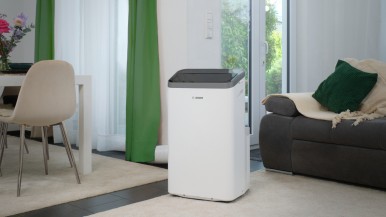
Stuttgart and Berlin, Germany – In light of persistent heat waves, there is a growing desire for year-round home comfort. Bosch will be showcasing its latest innovations at IFA 2026 in Berlin. Its focus is on solutions for heating, ventilation, and air conditioning that use smart connectivity and digitalization to enhance home comfort, save energy, and promote well-being. Heat pumps, air conditioners, and wellness products such as air purifiers are surging in popularity and were the fastest-growing segments for the Bosch Home Comfort Group in the first half of 2026. Demand is set to rise even higher: according to a survey1 conducted by the Bosch Home Comfort Group, only slightly more than one in three people (38 percent) in Germany are satisfied with their own arrangements for protecting against heat. Nearly half of those surveyed (47 percent) are struggling with the heat, which is causing problems sleeping and making daily life more difficult. In Germany, where air-conditioning systems have long been a subject of controversy, interest is growing: 54 percent of Germans surveyed are interested in purchasing an air conditioner. The need for reliable cooling is no longer merely a luxury, but a matter of well-being, health, and quality of life.Increased demand for air conditioners There was a sharp, weather-driven surge in demand for air conditioners as a result of this summer’s heat waves. For some time now, the Bosch Home Comfort Group has also been seeing steady growth in demand for air-to-air heat pumps, which can heat and cool. According to Fachverband Gebäude-Klima, the German association for buildings and indoor air quality, sales of split air-conditioning systems in the German market rose from approximately 260,000 units in 2023 to approximately 320,000 in 2025. Overall, Bosch expects the market for HVAC solutions to grow. According to calculations by the International Energy Agency in 2018, a global temperature rise of just 1 degree Celsius by 2050 will increase the demand for cooling solutions worldwide by 25 percent. However, climate researchers are already predicting much greater global warming. Building-stock electrification is progressing Looking ahead, heating and cooling are becoming increasingly integrated from a technological standpoint, which is driving the electrification of the existing building stock. One year after its strategic acquisition of the HVAC solutions business for residential and light commercial buildings from Johnson Controls and Hitachi, the Bosch Home Comfort Group has solidified its position as one of the biggest players in the global HVAC market. As a full-line supplier, the company has been able to tap into new business opportunities and is consistently pursuing a growth-oriented strategy in all of its markets. For example, the Bosch Home Comfort Group sells York-brand products and spare parts directly to installation companies through its own network of 125 sites across the United States. Heat pumps as a growth driver for the German heating market The German heating market is showing positive signs, having grown year on year in the first half of 2026. Heat pumps remain the key driver of growth here: according to figures from the Federal Association of the German Heating Industry (BDH), sales of heat pumps rose by 40 percent to 194,500 units in the first half of 2026. Moreover sales in Germany is expected to reach 400,000 units in 2026, a significant increase compared to earlier forecasts according to the German Heat Pump Association (BWP). The Bosch Home Comfort Group is continuing its product push at IFA with several new products: the Compress 8800i AW achieves very high flow temperatures and heating power, making it ideal for replacing old gas or oil heating systems in single-family homes and apartment buildings while retaining the existing radiators. With the Climate 6000iP , the Bosch Home Comfort Group is introducing its first single-split air conditioner designed entirely for the natural refrigerant R290. The Air 4000 air purifier has been named by the German consumer testing organization Stiftung Warentest as the top-rated product on multiple occasions. The testers praise its quiet operation and low power consumption. Heat pumps can now be connected to Bosch Smart Home thermostats Bosch Smart Home is also unveiling new products at IFA designed to bring more comfort and efficiency to the home. Optimized heat distribution is now possible with its smart radiator thermostats II [+M]. These systems automate hydraulic balancing and ensure a consistent, comfortable indoor climate throughout the house while promoting more efficient energy use. The smart connectivity of Bosch and Buderus heat pumps with Bosch Smart Home thermostats also lets them generate heat in line with demand: heat is generated only when it is actually needed in the rooms, which reduces the heat pump’s energy consumption. In the summer, compatible heat pumps can even actively cool the space through the floor-heating system. “Always on”: all Bosch heat pumps are connectable Bosch is driving digitalization not only for end customers but also for its specialist partners. Every Bosch Home Comfort Group heat pump is already equipped with connectivity. To date, the company has launched more than 2 million connectable products worldwide. Buderus, a Bosch Home Comfort Group brand, has developed “AskBuderus Pro,” an AI-based assistant for heating specialists and installers. The platform provides fast, accurate, and practical answers around the clock to technical questions regarding planning, installation, maintenance, hydraulics, control technology, and systems integration – helping specialist partners in their day-to-day work. Artificial intelligence has the potential to completely transform heat pump operating models and greatly accelerate the adoption of new business models, such as smart energy management. Bosch intends to systematically seize the opportunities presented by digitalization. At the Bosch Factory of Quality, Bosch Home Appliances also showcases products and solutions that deliver real added value and long-lasting quality – including product innovations in both large and small appliances. Visit Bosch at IFA 2026 in hall 1.1, booths 101 and 102, to experience the latest innovations from the Bosch Home Comfort Group, Bosch Smart Home, and BSH Home Appliances. 1 A total of 2,097 individuals in seven European countries – including Germany, Italy, Spain, Bulgaria, Sweden, Türkiye, and France – were surveyed.

Survey on summer heat: Almost half of the Europeans surveyed feel strongly affected

31.08.2026

Press release

Bosch Group

Survey on summer heat: Almost half of the Europeans surveyed feel strongly affected

Wetzlar – One year after strategically expanding its air conditioning business, the Bosch Home Comfort Group conducted a consumer survey. A total of 2,097 private individuals from Germany, Italy, Spain, Bulgaria, Sweden, Türkiye, and France were surveyed about their perception of the prolonged summer heat. 1Heat waves affect everyday life and performance Almost half of the respondents (46 percent) in the countries surveyed feel strongly or very strongly affected by the summer temperatures. The heat most frequently restricts everyday life: 28 percent report sleep problems on more than four days a week, while 27 percent report lower productivity. So far, respondents surveyed in the seven countries also use traditional methods to protect themselves from the heat: 68 percent ventilate extensively, 58 percent close windows or shutters during the day, and 46 percent switch on a fan. Almost half of the respondents (45 percent) already use a portable or permanently installed air conditioning unit. Significant differences in ownership and purchase interest The comparison between countries shows significant differences in air conditioning ownership, while the picture is reversed when it comes to purchase interest: In Germany, only 16 percent of respondents currently own an air conditioner, compared with 64 percent in Italy. Interest in Germany is growing, however: 54 percent of German respondents are interested in purchasing an air conditioning unit. In Italy, this figure is only 27 percent due to the already high ownership rate. More than one-third of all respondents are generally interested in buying an air conditioning unit. Of these, more than half (54 percent) plan to buy a new unit within the next two years. Germany: Only 38 percent satisfied with their measures to protect against the heat In Germany, traditional methods to protect against the heat appear to be reaching their limits: Only 38 percent of respondents are satisfied with current measures such as using fans, taking cold showers, or keeping windows closed. Significantly more satisfied with the options available to them are people in Spain (57 percent), Italy (56 percent), and Bulgaria (74 percent). These are countries in which more than half of respondents already own an air conditioning unit. Sweden appears the most relaxed: In summer 2026 one in four Swedes surveyed (24 percent) feel strongly affected by the heat. In Germany, the heat is a problem for almost one in two people (47 percent), while in Türkiye, three-quarters (74 percent) of respondents feel strongly or very strongly affected by extreme temperatures. Bosch Home Comfort Group lays the foundation for comfortable indoor climates worldwide The results make one thing clear: As temperatures rise in Europe, the need for efficient and reliable cooling solutions for residential applications is growing. With its strategic acquisition in 2025, the Bosch Home Comfort Group has pooled its international expertise and brand portfolio. This gives the company the ideal prerequisites for offering households and trade partners around the world tailored solutions for a healthy and comfortable indoor climate. 1 Online survey of 2,097 private individuals in seven European countries – including Germany, Italy, Spain, Bulgaria, Sweden, Türkiye, and France. Survey period: July 2026

Ten Years of Bosch Smart Home

31.08.2026

Press release

Smart Home

Ten Years of Bosch Smart Home

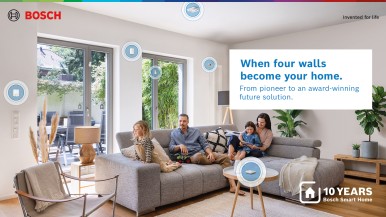
Stuttgart / Berlin – For ten years, Bosch Smart Home has been developing solutions for a connected home designed around residents’ genuine needs. What began as individual smart devices has evolved into a comprehensive system that combines convenience, security, and intuitive everyday control. Bosch Smart Home stands for high quality, reliability, and robust data protection. True to Bosch’s slogan “Invented for life,” the technology delivers real value by making daily life noticeably easier and giving people more time for what truly matters. At IFA 2026, Bosch Smart Home is showcasing innovations that enhance living comfort, make heating more responsive to actual needs, and simplify life via intelligent security features.Home+ gains key new functions The existing optional Home+ service – which already included multisystem control, expanded cloud storage, and intelligent noise detection – has been expanded to include two attractive new indoor climate features: Optimised Heat Distribution and Demand-Optimised Heating. Home+ thus integrates even more key functions for comfort, accurately targeted heating, and system control into a single, expanded service. The price remains unchanged at €4.99 per month. Optimised Heat Distribution for greater efficiency and comfort In many households, heat is not distributed evenly: radiators near the heating circuit pump often receive too much flow, while more distantly situated radiators do not get enough heat. The unwanted consequences are imbalanced temperatures, unnecessary energy consumption, and annoying flow noise within the heating system. This is precisely where the new Bosch Smart Home solution comes in: the Smart Radiator Thermostats II [+M] automate hydronic balancing and continuously optimise heat distribution. The system analyses heating operation in real time to ensure that each radiator consistently receives exactly the required amount of heat. The results are rooms with uniform temperatures, fewer common heating problems (e.g., chilly or overheated rooms), reduced energy consumption, and quieter operation. The solution thus provides long-lasting comfort and efficiency – entirely without manual intervention. Demand-Optimised Heating for intelligent energy management Even with optimal heat distribution, many heating systems consume more energy than is actually required, resulting in inefficient operation. A demand-optimised control system solves this problem by directly connecting individual thermostats to the central heat generator. Linking heat pumps (via Bosch Connect Key K40 or Buderus MX400) with smart radiator thermostats or 230V room thermostats enables predictive heating behaviour. Precise and dynamic adjustment of the flow temperature means heat is generated only when it is actually needed. This achieves optimised heat-pump utilization and accurately targeted energy consumption. Integration into the smart home unlocks further potential for savings: customised schedules and automation routines support demand-based heating control. At the same time, living comfort remains fully supported because each room’s temperature can be set individually and implemented automatically. This makes the entire heating system more efficient, striking a perfect balance between comfort and optimised energy consumption. The whole heating system – even one with multiple heating circuits – can be controlled centrally via a single app, thus ensuring intuitive operation and complete transparency. When paired with a compatible Bosch or Buderus heat pump, the system offers an additional convenient feature: active cooling via underfloor heating on warm days. Additionally, a special version of the Radiator Thermostat II [+M] PRO is available. The model is distributed and installed exclusively by professional installers. With this variant, the Optimised Heat Distribution and Demand-Optimised Heating functions are permanently enabled by default during the installation process. Particularly attractive for end customers: the total costs of this optimisation measure – including hardware and professional installation – are eligible for subsidy under the Federal Funding for Efficient Buildings (BEG) programme. Eyes+: the smart camera upgrade with intelligent person recognition Bosch Smart Home has enhanced its camera portfolio with “Eyes+”, a feature offering intelligent person recognition. This function is available as an add-on service for all Bosch Smart Home indoor and outdoor cameras. Eyes+ automatically distinguishes between known and unknown individuals: it notifies users only in case of truly relevant events, thus preventing a distracting deluge of unnecessary alerts. During the one-time-only setup process, the system captures multiple images of a person’s head from various angles. An algorithm uses these images to generate an encrypted digital feature profile. This data is securely stored in the Bosch Cloud and cannot be reconstructed into an image. The profile serves solely to differentiate between known and unknown persons. Captured images are subsequently deleted, with the exception of a single image retained to display the known person within the app. This supports the accurately targeted filtering of relevant events, thus ensuring that only genuinely important push notifications are sent. A preview image in the app enables users to promptly assess each situation at a glance. In the event of unusual activity, users can react immediately, if necessary, thereby enjoying a greater sense of everyday security. Additionally, Eyes+ provides greater transparency and peace of mind in everyday family life, for example by sending a notification as soon as loved ones arrive home. Ten years of Bosch Smart Home: evolution into an integrated system With its new product launches at IFA 2026, Bosch Smart Home showcases the further development of its system over the past decade: an evolutionary journey from individual connected devices to an integrated, comprehensive solution that optimises comfort and security, thus giving users the confidence of knowing that everything at home is functioning reliably. New capabilities for indoor climate, energy usage, and home security demonstrate how state-of-the-art technology can deliver accurately targeted support and provide genuine value in daily life. For users, this means less effort and more time for what really matters – thanks to a home where they feel truly at ease. Availability and pricing Home+, including the “Optimised Heat Distribution” and “Demand-Optimised Heating” extensions, is available in the Bosch Smart Home app for €4.99 per month (incl. 19% VAT). The Radiator Thermostat II [+M] PRO will be available directly from installers starting in September 2026. The “Eyes+ Intelligent Person Recognition” feature can be added via the Bosch Smart Camera app starting in November 2026 for €2.99 per month (incl. 19% VAT).

New Daily Helpers from Bosch

30.07.2026

Press release

Power Tools

New Daily Helpers from Bosch

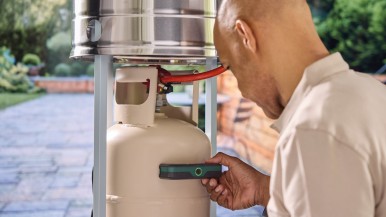
Stuttgart / Leinfelden – Is there enough gas left for the next barbecue? How do I fix the loose chair cushion? And who wants to spend ages cleaning windows? The new Daily Helpers from Bosch solve these everyday questions quickly and easily: The product line includes clever and compact power tools that make life at home easier. New among the Daily Helpers are the Filio gas level detector, the Tweo cordless stapler, and the GlassVac cordless window cleaner. These handy helpers are designed for daily tasks and impress with their compactness, versatility, and ease of use.Filio: Precise level measurement for gas cylinders To ensure the gas cylinder doesn't suddenly run empty at the next barbecue or camping trip, Bosch offers an easy way to measure the fill level with the new Filio and arrange for a replacement in good time. The compact daily helper checks the gas cylinder's fill level using state-of-the-art ultrasound measurement technology. Thanks to integrated magnets, the tool effortlessly adheres to the outside of gas cylinders and automatically aligns itself at a precise 90° angle. The measurement starts directly upon attachment, and the fill level is indicated via a dual indication system. LEDs on the top, a light ring around the trigger button, and an acoustic signal instantly show the result: A green light signals gas, while a red light indicates its absence. Measurement can be restarted by pressing the trigger button. Filio is suitable for all common steel and aluminum gas cylinders with Propane or Butane, with a diameter of 200 to 350mm. Whether for a gas grill, patio heater, or camper: With Filio, users are well-equipped for any adventure. Tweo: Compact stapler for versatile fastening tasks For decorating, crafting projects, or DIY activities, the new Tweo cordless stapler is a compact and versatile helper. As the successor to the PTK 3.6 LI, its cordless design effortlessly fastens fabrics, cardboard, or paper to soft wood surfaces, allowing for flexible work indoors and outdoors. Thanks to the practical BA 4V exchangeable battery, which can be charged directly in the tool via USB, Tweo is ready for use anytime, anywhere. The proven "Push+ Release" system ensures controlled application: A shot is only triggered when the stapler nose is firmly pressed onto the workpiece. This prevents accidental self-triggering and ensures precise results. The ergonomic design makes handling easy, even during longer projects. Practical indicators constantly show the battery and staple fill levels to ensure uninterrupted workflow. With the new multi-page stapler attachment included in the scope of delivery, Tweo becomes even more versatile. It transforms the stapler into a powerful office helper in an instant, effortlessly stapling up to 60 sheets of paper and thus impressing even with office and writing tasks. GlassVac: Useful window cleaner for clear vision The product line is complemented by the GlassVac cordless window cleaner, which ensures streak-free cleanliness. Equipped with patented triple-lip technology from Bosch, it delivers flawless results on windows, mirrors, and tiles. A major advantage over its predecessor is the removable 120mm dirty water tank, which can be emptied quickly and hygienically. In addition, the design allows for unrestricted 360° application – GlassVac therefore cleans in any position, even horizontally or overhead. The cordless tool also runs on a flexible BA 4V exchangeable battery, which can be charged directly in the tool via USB port in approximately two hours. With one battery charge, the cleaner runs for up to 35min, which is sufficient for a cleaning area of around 120m2 – equivalent to about 40 windows. The set includes a spray bottle with a washable microfiber cloth and two exchangeable suction heads with widths of 280 and 140mm. You can find the tool specifications table in the PDF, see “download”. Subject to change.

Hydrogen: New Bosch fuel-cell system begins test operations in Madrid

28.07.2026

Press release

Mobility

Hydrogen: New Bosch fuel-cell system begins test operations in Madrid

Stuttgart, Germany and Madrid, Spain – In Europe, pressure on urban public transit is mounting: in light of mandatory EU requirements to reduce carbon emissions from city buses by 90 percent by 2030, public transit operators are seeking reliable, emissions-free solutions. To this end, an initial test operation is now launching in Madrid: Equipped with a fuel-cell power module (FCPM) from Bosch, an Irizar bus has been transporting passengers through the Spanish capital for several weeks now. Vehicle operation will focus on routes where the fuel cell’s long range allows it to fully demonstrate its advantages. The operator is the Spanish bus company Alsa. The fuel cell is the perfect complement to battery-electric powertrains – even in bus operations,...says Thomas Pauer, member of the Bosch Mobility sector board and president of Bosch Power Solutions. “Fuel cells are especially well-suited for buses that travel longer distances every day and rarely have the opportunity to charge en route. With this trial, we can clearly demonstrate that Bosch’s fuel-cell technology is ready for the demands of large-scale deployment in passenger transport.” Over the past few weeks, the test vehicle has already undergone extensive testing and received the necessary approval. Day-to-day operation in real conditions will now confirm the robustness and strengths of the fuel-cell powertrain. The test bus is equipped with the FCPM C190 fuel-cell system from Bosch. This compact system is based on a horizontal double stack and delivers a continuous output of 190 kilowatts. With the available hydrogen tank capacity, ranges of over 1,000 kilometers are possible, with refueling times of just 10 to 15 minutes. This means the bus can also be used for intercity service. In addition to the FCPM C190, Bosch also offers the FCPM C300, a system designed for heavy-duty tour buses and trucks. The portfolio is rounded off by the FCPM C100, which, with a continuous power output of 100 kilowatts and a flat design, is the ideal solution for city buses. EU regulations are driving innovation in the bus sector Due to EU regulations, bus operators and city transit companies are increasingly turning to alternatives to diesel engines. In addition to regulations aimed at improving air quality in cities, climate regulations also call for more environmentally friendly powertrain systems. For example, by 2030, carbon emissions of newly registered city buses must be reduced by 90 percent compared to 2019; for all other bus types, this applies from 2040 onward. Vehicles with fuel-cell power modules, which the EU recognizes as zero-emission vehicles, can make an important contribution here. According to the European Automobile Manufacturers’ Association (ACEA), just over 38,000 new buses were registered in the EU in 2025. Bosch technology along the entire hydrogen value chain Bosch is strongly committed to building an H 2 economy, and is developing technical solutions for the production, infrastructure, and use of hydrogen. In 2025, the company announced the launch of its Hybrion PEM electrolysis stack for hydrogen production. Bosch is also working on technology for hydrogen engines and offers corresponding components for port and direct injection. At the end of 2025, a team of developers from Bosch won the German Future Prize, the federal president’s award for technology and innovation, for their development of the mobile fuel cell.

Precision redefined: Expert Top Performance Class Laser Measure from Bosch

27.07.2026

Press release

Power Tools

Precision redefined: Expert Top Performance Class Laser Measure from Bosch

Stuttgart / Leinfelden – On construction sites, speed, precision, and reliability are crucial. With the new EXPERT EXLM100-39CG laser measure, Bosch presents a professional measuring tool specially developed for demanding applications, such as interior finishing and construction planning. The EXPERT EXLM100-39CG belongs to the Expert top performance class from Bosch , which provides professionals with power tools, measuring technology, and accessories for the highest demands. In addition to the new flagship, Bosch is introducing four other laser measure models: GLM60-31, GLM70-32, GLM80-35C, and GLM100-36CG.New standards with the Bosch High Precision System All tools are based on a new measuring system, the Bosch High Precision System. This high-precision technology ensures reliable measurement results over distances of up to 100 m with a deviation of just ± 1.5 mm. In addition, the laser measures achieve up to four times faster measurement speed compared to previous models – the measurement result appears at the touch of a button. This saves valuable time for professional users in their daily work. Complex data in real-time thanks to Dynamic Sensor Fusion Technology As a tool from the Expert top performance class, the new EXPERT EXLM100-39CG has particularly powerful features that simplify work on the construction site: The innovative Dynamic Sensor Fusion Technology from Bosch intelligently combines data from three precise sensors in the tool. An algorithm fuses this data in real-time. This allows the tool to analyze complex spatial relationships and enables three new measurement modes for maximum efficiency: Two-point measurement: This mode allows determining the distance between any two points, regardless of how they are arranged. This is particularly practical for measuring the width of a facade, the height of a window, or the length of a steel beam from a distance without having to place the tool directly on it. Multipoint area: This mode revolutionizes the area calculation of complex rooms or surfaces. The tool automatically calculates the total area from up to 30 set corner points of an irregular surface. Wall angle: For the exact determination of angles between two walls or objects, this mode offers fast measurement results. For example, architects or construction managers can precisely check construction site conditions in advance. Robust design and user-friendly application For construction site use, the EXPERT EXLM100-39CG is optimally protected. The dust and waterproof housing meets protection class IP 65 and can withstand drops from up to 1.5 m without damage thanks to a reinforced rubber housing. In addition, the tool uses green laser technology, which is significantly more visible to the human eye than red laser dots. This significantly speeds up targeting in bright light conditions. Thanks to the dual power supply, the measuring tool is always ready for use: It can be operated either with conventional AA batteries or the included rechargeable lithium-ion battery. Measurement values can also be transferred directly to the Bosch MeasureOn App via the integrated Bluetooth interface to create digital floor plans and document data without errors. You can find the tool specifications table in the PDF, see “download”. Subject to change.

Christof Ehrhart will leave position as Bosch’s Head of Communications at the en ...

15.07.2026

Press release

Business/economy

Christof Ehrhart will leave position as Bosch’s Head of Communications at the en ...

Stuttgart – Prof. Christof Ehrhart (60) is leaving Bosch on December 31, 2026, at his own request to pursue commitments and projects outside the company. In his capacity as the company’s head of communications, he has been responsible worldwide for internal and external communications, governmental affairs, relations with industry associations and stakeholder groups, and strategic brand management since 2019. Ehrhart can look back on three decades of leadership roles in international communications. In 2024, he received the prestigious German Image Award for the second time for his communications work at Bosch.Stefan Asenkerschbaumer, chairman of the Bosch supervisory board: “The company extends its sincere thanks to Christof Ehrhart for his many years of outstanding work and for leading the communications function for Bosch with great success during what has been a very challenging period in the company’s history. We wish him every success in his future endeavors.” Christof Ehrhart: “Now is the right time to begin the handover in the company’s communications team. I would like to thank all my colleagues at Bosch for the trust they have placed in me, and I look forward to embracing the opportunities that lie ahead.” Christof Ehrhart’s successor will be announced at a later date.

Changes on the Robert Bosch GmbH board of management

26.06.2026

Press release

Bosch Group

Changes on the Robert Bosch GmbH board of management

Stuttgart – The following personnel changes are taking place on the board of management of Robert Bosch GmbH: Dr. Stefan Hartung is stepping down from his position as chairman of the board of management effective June 30, 2026, at his own request and in close consultation and agreement with the shareholders. He is thus leaving the board of management and that of Robert Bosch Industrietreuhand KG. His successor as of July 1, 2026 will be Dr. Christian Fischer . Dr. Markus Forschner and Dr. Markus Heyn will be appointed vice chairmen of the board of management. As CEO of Bosch, Stefan Hartung has strongly driven the company’s development and consistently focused it on growth and innovation. During very challenging times and under difficult conditions, Hartung achieved important milestones for the company’s future viability and competitiveness. In future, he plans to dedicate his time to new social commitments and entrepreneurial tasks outside the Bosch Group. “The shareholders and the supervisory board regret Stefan Hartung’s decision and express their sincere gratitude to him for his outstanding achievements in the diligent management of the company during an exceptionally challenging period,” said Prof. Stefan Asenkerschbaumer , managing partner of Robert Bosch Industrietreuhand KG and chairman of the supervisory board of Robert Bosch GmbH. “As chairman of the board of management, he has driven the strong development of Bosch with purpose, in line with the will of our founder. We respect Stefan Hartung’s personal decision and wish him every success in the future.” Hartung, who holds a PhD in mechanical engineering, has been a member of the Bosch board of management since 2013 and has served as chairman of the board of management since January 1, 2022. He joined Bosch und Siemens Hausgeräte GmbH in Munich in 2004. Prior to that, he had worked at the Fraunhofer Gesellschaft, among other organizations. Succession as of July 1, 2026 Dr. Christian Fischer (58) will succeed Stefan Hartung (60) effective July 1, 2026. As deputy chairman of the board of management and limited partner of Robert Bosch Industrietreuhand KG, he has already played a key role in shaping the company’s strategic development in recent years. In addition to his responsibility for the Consumer Goods business sector, Fischer has also been in charge of the company’s key growth initiatives, portfolio management, and the development of the company’s senior leadership, among other tasks. Under his leadership, Bosch has expanded and sustainably strengthened its portfolio through the acquisition of the heating, ventilation, and air-conditioning (HVAC) business from Johnson Controls and Hitachi – the largest acquisition in the company’s history. “Christian Fischer has demonstrated in recent years that he thinks strategically, acts with an entrepreneurial mindset, and leads with foresight. Working alongside Stefan Hartung, he has helped shape the company’s fundamental direction and set the course for its transformation. He will consistently drive the implementation of the strategy forward, aiming to future-proof the company amid the multiple challenges in the markets in which it operates,” said Asenkerschbaumer. Christian Fischer, who holds a PhD in economics, began his professional career in 1996 at Bosch as a trainee. Prior to returning to the company and joining the Bosch board of management in 2018, he held various leadership roles outside the company. Among other achievements, he grew Smartrac – an RFID technology company – from a young start-up into a TecDAX-listed global market leader while serving as its CEO from 2006 to 2012. To ensure that Bosch’s transformation continues consistently in a forward-looking manner, responsibilities within the board of management will be reorganized as part of the leadership transition. The two members of the board of management Dr. Markus Forschner and Dr. Markus Heyn will be appointed deputy chairmen of the Bosch board of management effective July 1, 2026. Markus Forschner (59) has served as the company’s chief financial officer (CFO) since 2022 and has been with Bosch since 1996. He studied computer science and business administration and gained a PhD from Stuttgart University’s institute for R&D management. “As an experienced CFO, Markus Forschner stands for financial stability, long-term thinking, and the disciplined execution of the transformation initiatives already adopted. In his new role, he will balance investments in future-oriented fields with financial strength, while maintaining a clear focus on safeguarding the company’s independence,” said Asenkerschbaumer. Markus Heyn (61) has served as chairman of the Mobility business sector since 2022. He has successfully driven the reorganization of the Mobility sector and is consistently continuing to align the business with future demands. He holds a PhD in mechanical engineering, joined the Bosch Group in 1999, and has been a member of the board of management since 2015. Asenkerschbaumer: “Going forward, Markus Heyn will bring the technology perspective to the group’s senior leadership. As an engineer and head of the company’s largest business sector, Mobility, he represents innovative strength, manufacturing excellence, global market expertise, and has a proven track record in transforming the mobility business.” The shareholders and the supervisory board wish Christian Fischer, Markus Forschner, and Markus Heyn every success in their new roles.

Everyday life and recreation in perfect balance: New features for City eBikes wi ...

18.06.2026

Press release

Electrified mobility

Everyday life and recreation in perfect balance: New features for City eBikes wi ...

Stuttgart/Reutlingen – Confident in the city, relaxed in their free time: Many eBike riders use their eBike for running errands in the city, commuting to work, and going for leisurely weekend rides. For the perfect balance between everyday life and recreation on an eBike, Bosch eBike Systems is making its portfolio of City eBikes even more powerful. The new generation of the Active Line Plus provides more powerful support and is also smaller and lighter. Also new are the Intuvia 200 display and the next generation of the Bosch ConnectModule with improved functions. Bosch is also adding a new battery to the smart system: The PowerTube 720 enables eBike rides of up to 115 miles.Active Line Plus: Natural support for the city Always stay in the flow, navigate through traffic effortlessly, and negotiate ascents with ease: The Active Line Plus has been the tried-and-tested drive unit for City eBikes since 2017. Now the new generation provides even more powerful support. Up to 60 Nm of torque, 600 watts of power, and 340 percent support ensure agile acceleration in the city – allowing riders to master all routes with confidence and ease. In addition, the power of the new drive unit is delivered in a smooth and controlled manner at all times: Thanks to its improved response behavior, the Active Line Plus remains sensitive and responds precisely. Riders can also use the customizable riding modes to adapt it precisely to their personal needs. For added comfort, the new Active Line Plus is compatible with the eShift electric gear shifting solution. If desired, the system automatically takes over the gear shifting operation and always ensures the best gear ratio – ideal for dynamic city traffic or relaxed rides in the countryside. For additional safety and control, the Active Line Plus is compatible with eBikes that have a backpedal brake. The new generation of the Active Line Plus weighs only around 6 lbs and has become even more compact thanks to a new two-stage gearbox. This makes it around 1 lb lighter, reducing the total weight of the eBike and making it even easier to handle in the city. The 17% smaller volume also allows for more discreet integration into modern eBike designs. The new drive unit comes with an optimized sealing and bearing concept that makes it a reliable companion for riders in all weather. During development, Bosch takes care to use materials responsibly. Around 40% recycled aluminum in the housing cuts almost half of the CO₂ emissions compared to conventional aluminum. Recycled materials are also used for plastic components. Intuvia 200: Focus through clarity Simple, intuitive, focused: The new Intuvia 200 display shows riders all important information at a glance. With its excellent readability, modern design, and individual setting options, it turns everyday rides into experiences. The large font and clear design ensure that all riding information can be understood at a glance – even in full sun or at twilight. This is because the 2.4-inch grayscale display automatically adjusts its brightness up to 1,000 nits and thus adapts to changing conditions. High contrasts, deep black values, and good viewing angle stability ensure excellent readability in any weather and from almost any perspective. It is controlled with a separate control unit 1 , allowing both hands to stay on the handlebars. For a carefree riding experience, the Intuvia 200 is permanently mounted on the handlebars – making removal, stowing, or the risk of scratches when stored in a backpack a thing of the past. With its stylish design, the new one-piece housing integrates seamlessly into the look of streamlined eBikes. High-quality workmanship and the full-surface connection of the display glass and LCD panel also make it robust and resistant to dirt and rain. Riders can configure the exact ride data shown on the display themselves: They can select their favorite information in the display settings, e.g., heart rate, elevation, or current smartphone charge level. As part of the smart system, the Intuvia 200 also displays additional information depending on the eBike's equipment – such as the active ABS mode or the gear currently engaged for electric gear shifting. LED Controller: Compact, versatile, advanced With the successor to the LED Remote, Bosch is setting new standards in terms of ergonomics and design. The new LED Controller is around 65% smaller than its predecessor, creating an uncluttered, minimalist look on the handlebars. All important functions can be operated safely with the thumb using five buttons with tactile and audible feedback. The LED indicators adapt to the ambient light and always show clearly legible information such as the riding mode or battery level. A practical USB-C port with up to ten watts of charging power 2 also enables external devices to be charged. Precise tracking with the new Bosch ConnectModule For even more effective theft protection, Bosch eBike Systems is expanding the functions of the Bosch ConnectModule to include precise tracking using Bluetooth® Low Energy technology (BLE). This means that the new generation module can locate a stolen eBike to within a few yards. It can even be found in places where a pure GPS signal reaches its limits – such as in basements or backyards. The Bosch ConnectModule forms the technical basis for digital theft protection in the smart system. Through the interaction between GPS, cellular, and motion sensors, it connects the eBike to the internet, maintaining a connection via the eBike Flow app no matter where the eBike or its owner is located. In the event of suspicious activity of the parked eBike, the system can trigger an alarm and send a notification. The tracking function in conjunction with the ConnectModule is part of the optional subscription service Flow+. Reliable range for long rides: PowerTube 720 Simply set off and forget about the battery level: For spontaneous weekend excursions, Bosch is expanding the smart system with the PowerTube 720 . The powerful new battery weighs only around 8.6 lbs and has an energy density of approx. 185 Wh/kg (84 Wh/lb). Depending on the mode and conditions, rides up to 115 miles are possible. 3 The compact, short construction allows for deeper integration into the frame. This lowers the center of gravity of the entire eBike and ensures more stable handling and a better sense of balance – for example when riding with heavy saddle bags. Depending on the manufacturer, the PowerTube 720 is either permanently installed or can be removed. It is integrated either horizontally or vertically in the eBike frame. The PowerTube 720 is also flexible in combination with the smart system: Because it has the same length and mount, it is interchangeable with the PowerTube 800, PowerTube 600, PowerTube 540, and PowerTube 360, provided the eBike manufacturer has designed the frame for this. The PowerMore 250 Range Extender can also be used for even more range. The PowerTube 720 is additionally protected with the Battery Lock digital function: In the event of theft, the battery is deactivated, making it useless to thieves. This means riders can relax and enjoy their breaks on every ride. 1 Intuvia 200 is compatible with the LED Controller, the LED Remote, and the System Controller with Mini Remote. 2 The USB-C charging function for the LED Controller depends on the drive unit. Further information is available from dealers. 3 Basis of calculation: Touring eBikes with Performance Line PX, PowerTube 720, range in Eco mode. The values may vary depending on use and conditions.

The wait was worth it: Bosch eBike Systems launches first hub motor

18.06.2026

Press release

Electrified mobility

The wait was worth it: Bosch eBike Systems launches first hub motor

Stuttgart/Reutlingen – For modern city dwellers, the eBike is more than just a means of transportation – it's an expression of a conscious and flexible lifestyle. For all those who want to get around the city quickly and in style, Bosch eBike Systems is now launching a range of groundbreaking new products. At its heart is the Hub Line: a lightweight, agile and almost invisible hub motor that was developed specifically for the requirements of urban eBikes. In combination with the new, compact PowerTube 360 battery, it enables particularly slim, lightweight and stylish eBikes. The urban product range is rounded off by the next generation of the Bosch ConnectModule for smart theft protection, the compact LED Controller for intuitive operation and the minimalist Intuvia 200 display. With our new features related to the Hub Line, we are ushering in a new era of urban eBikes. They are not only light and agile and excite with a clear and modern design language, but also revolutionize the riding experience in the city. At the same time, we are making connected eBiking accessible to even more people. eBike riders benefit from all the advantages of our smart system: from the usual Bosch quality and durability to intuitive digital services and reliable support – all from a single source and engineered in Germany....Claus Fleischer, CEO of Bosch eBike Systems Hub Line: Clean style, smart power For all those who want to organize their everyday urban life with style and ease, Bosch eBike Systems is breaking new ground with the Hub Line. While the company was previously known for its powerful mid-drive motors, the Hub Line heralds a new era for elegant urban bikes as the first hub motor in the smart system. Developed specifically for urban dynamics, its 45 Nm of torque immediately provides noticeably lively yet sensitive support. Thanks to a smart sensor function, this always remains precisely controllable and ensures agile riding behavior, taking the effort out of situations such as starting off at traffic lights or moderate inclines. The motor is completely decoupled at speeds above 25 km/h, allowing the eBike to be ridden like a conventional bike with virtually no pedal resistance. This feeling of lightness and agility is additionally underscored by the motor's low weight of only approx. 5.1 lbs. The eBike is easy to carry and remains pleasantly maneuverable in city traffic. At the same time, the compact design supports the minimalist aspirations: with a diameter of only around 3.9 inches, the motor blends discreetly into the hub and becomes an almost invisible part of the clean overall design thanks to its black aluminum housing. As an integral part of the smart system, the Hub Line is fully connected. With the eBike Flow app, the smartphone becomes an intuitive control center for intelligent functions such as theft protection, navigation and personalization. Regular over-the-air updates ensure that the eBike is always up to date. For those who want to glide even more comfortably through traffic, the Hub Line can also be combined with the eShift electronic gear shifting solution. eBike riders can choose between manual or automatic gear shifting and benefit from efficient gear shifting operations at exactly the right moment. PowerTube 360: Energy in its slimmest form In keeping with the clean design of the Hub Line, Bosch presents the slimmest battery in the smart system to date with the PowerTube 360. Its slim profile of just 2.7 inches in diameter enables such inconspicuous frame integration that eBike models can hardly be distinguished from a conventional bike at first glance – the perfect basis for minimalist, urban eBike designs. But it's not just the design that's impressive: the battery's low weight of just approx. 4.6 lbs optimizes the eBike's center of gravity, making it more responsive and dynamic. With 360 Wh, the battery provides reliable energy for daily urban use and ranges of over 50 miles¹. The DualBattery system can easily be extended for longer distances, for example, with the PowerMore 250 Range Extender. Depending on the manufacturer's design, the PowerTube 360 is either removable or permanently installed in the frame. Bosch ConnectModule: Intelligent protection for greater peace of mind Whether for a quick stop at your favorite café or parking in the yard for a longer time – thanks to the Bosch ConnectModule, eBike riders can remain relaxed even when they don't have their eBike in sight. Equipped with GPS, cellular and motion sensors, it forms the basis for advanced digital theft protection functions such as eBike Alarm. The new module generation brings two decisive innovations: It now also uses Bluetooth® Low Energy technology, which enables precise tracking to within a few yards. This means that an eBike can even be found in places where classic GPS trackers reach their limits, such as in basements or backyards. In addition, the module can now be retrofitted more easily to compatible eBikes using a flexible mounting. The extended features are part of the Flow+ paid subscription service. LED Controller: maximum control, minimal design With the new LED Controller , Bosch presents the successor to the LED Remote. Thanks to its design, the new control unit is around 65% smaller than its predecessor, creating a tidy, minimalist look on the handlebar. The focus here is on ergonomics: all five buttons are optimally positioned within the thumb radius and provide noticeable and audible feedback. This allows eBike riders to change the support mode, activate the walk assistance or operate the lights safely without taking their eyes off the road. The LEDs clearly display information such as the riding mode and battery level, while a sensor automatically adjusts their brightness to the ambient light – for optimum readability day and night. A practical USB-C connection with up to ten watts of charging power 2 also enables external devices to be charged. Intuvia 200: Focus through clarity The Intuvia 200 is more than just a display – it's a design statement. Its sleek, minimalist look blends seamlessly into the aesthetics of any eBike and emphasizes the clean look. The 2.4-inch grayscale display provides a razor-sharp image and ensures excellent readability in any weather and from any perspective. This allows eBike riders to concentrate fully on the flow during the ride and enjoy the urban experience. The future of urban eBiking starts now Perfectly coordinated and digitally connected: Hub Line, PowerTube 360, ConnectModule, LED Controller and Intuvia 200 together define a new generation of urban eBikes. They impress with their combination of intuitive riding experience, minimalist design and smart additional functions. This makes the eBike an integral part of modern city life: whether on the way to work, for a spontaneous outing to visit friends or for a quick ride through the city. 1 Calculation basis: City eBike with Hub Line, PowerTube 360, range in Eco mode approx. 55 miles. This value may vary depending on use and conditions. 2 The USB-C charging function for the LED Controller depends on the drive unit. Further information is available from dealers.