Search & find:
Media, press releases, events for your editorial coverage

Highest number of truck parking spaces in Europe

03.11.2022

Press release

Service Solutions

Highest number of truck parking spaces in Europe

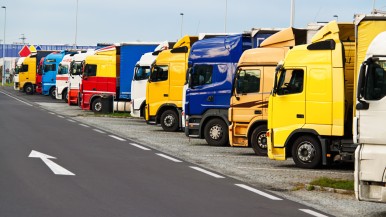
Frankfurt am Main, Germany, and Tilburg, the Netherlands – The logistics industry is struggling with major challenges: According to recent studies, there is a shortage of 400,000 safe truck parking spaces in the EU alone. The result: risky and accident-prone parked vehicles, increased cargo theft and more traffic and CO 2 emissions due to the search for a parking space. Added to this is the pressure on drivers to comply with their driving and rest times. To address these challenges, Bosch Secure Truck Parking and TRAVIS Road Services have forged an alliance against the shortage of truck parking spaces in Europe: In a new partnership, the two companies will be combining their contingents and providing carriers with Europe's highest number of bookable truck parking spaces: "From the beginning of 2023, users of Bosch Secure Truck Parking and TRAVIS Road Services will be able to access a total of 15,000 parking spaces at well around 400 locations in 14 European countries, also in countries such as the Netherlands, Belgium, Great Britain, France, and Poland," explains Dr. Jan-Philipp Weers, Head of Bosch Secure Truck Parking.Joint action against lack of parking spaces "Together, we are taking an important step towards addressing the challenges of the logistics industry," said Dennis van Veggel, CEO of TRAVIS Road Services. "In addition to the high safety standards that the majority of the 100 Bosch sites meet, there is good site coverage through approximately 300 parking locations of TRAVIS Road Services." The portals provide freight forwarders with parking spaces in different areas, such as at truck stops, trucking marshalling yards, logistics centers. This approach allows to connect locations and new parking spaces flexibly, which promises further, rapid growth in parking spaces. What essentially changes is the scope of the offer for existing customers: Freight forwarders can view and block-book all the parking spaces they need in real time via the usual platform, and bill paperlessly via efficient collective invoices. Individual offers are retained Regardless of the cooperation, Bosch and TRAVIS maintain their individual offers on the respective portals. Bosch Secure Truck Parking advises beyond the platform on holistic solutions for the transport and logistics industry and supports freight forwarders in the structural implementation of security and service solutions. Depending on the requirements, Bosch complies with European safety certificates such as the certifications of the Transported Asset Protection Association's (TAPA) or EU Parking Standards developed by the European Commission. This is important because the financial damage caused by cargo theft alone is estimated at 8.2 billion euros within the European Union. Bosch has also recently introduced a service that provides freight forwarders and drivers with support as needed via a Europe-wide telephone hotline. TRAVIS, on the other hand, offers the combined booking of cleaning and repair services. Carriers can continue to book these services at approximately 1,450 partner locations in 17 countries as usual. They can easily simplify their administration by receiving just one invoice for different bookings or services which includes special VAT rules (e.g. reverse-charge mechanism). The possibility to pay and book road services with company fuel cards are also still available, which TRAVIS offers in cooperation with partners such as Shell, DKV or UTA. In short, the alliance between Bosch and TRAVIS brings a noticeable increase in truck parking spaces for freight forwarders, their drivers, and customers, many with high safety standards. At the same time, it also relieves the municipalities along the major traffic axes of wildly parked trucks and minimizes the traffic and accident risks caused by them. Additional interview on the partnership: https://www.boschservicesolutions.com/en/stories/interview-bosch-and-travis-partnership/

Ten years of increased road safety with Bosch eCall

15.06.2022

Press release

Service Solutions

Ten years of increased road safety with Bosch eCall

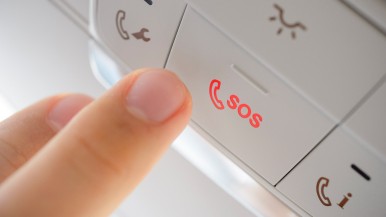
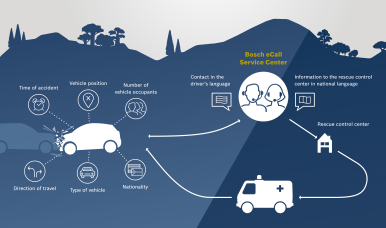
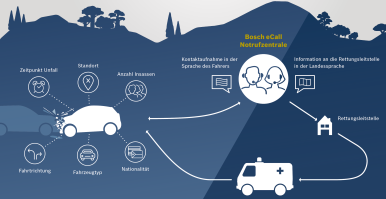
Frankfurt am Main - Black ice on the highway. A vehicle leaves the road, flips over and slides down an embankment. There's no one around to witness the accident. "Emergency Call", known as eCall for short, was developed for situations precisely like this. In the event of an accident or emergency situation, the emergency call system for vehicles establishes a voice connection to an emergency call point to request rapid assistance either automatically or at the push of a button. Bosch Service Solutions is a leading international provider of this life-saving service. Ten years ago, on behalf of Mercedes-Benz, the service provider developed one of the first integrated emergency call services that went on to become a global success. "In June 2012, the service went live in nine countries and six languages. Today, it is already available in more than 50 countries and more than 20 languages – and there are more and more. Currently, around 27 million cars from more than 15 car brands have the Bosch emergency call service fitted," explains Stefan Gross, Head of Mobility Services at Bosch Service Solutions. In the past ten years, the company has processed over eleven million eCalls. As a pioneer in this field, it is also constantly bringing innovations to the market, most recently the smartphone-based eCall.Launch of the eCall service in 2012 While the Bosch emergency call service still involved a combination of on-board computer and driver's cell phone in 2012, the standard integration for Mercedes-Benz cars followed in 2014. Since then, the corresponding technology has been integrated into the infotainment module – it detects an impact, sends an emergency call and transmits a package with accident-relevant data. Bosch has established an international network of service centers for the eCall service, including a comprehensive IT infrastructure. These include partner networks with connections to rescue control centers, fire departments and hospitals in the relevant countries. The service provider developed the high standards of the Bosch eCall based on years of experience in alarm and emergency call management. Saving lives and increasing road safety The benefits of emergency call systems in vehicles also gained acceptance at the political level: eCall became a mandatory requirement in the EU on March 31, 2018. Since then, passenger cars and light commercial vehicles newly launched on the market in the EU must have an integrated emergency call service. Consequently, two systems operate in the EU: the statutory 112 eCall system and the eCall systems run by private providers such as Bosch - both of which meet the defined EU standards. The difference is that with private eCall, the emergency call is received at the provider's own emergency call centers and immediately forwarded to the public control centers if necessary. The advantage is that faulty alarms, such as those caused by accidentally pressing the emergency call button, can be filtered out in this way. This relieves the rescue coordination centres and keeps capacities free for emergencies. With a quota of around 90 percent, Bosch has filtered out around ten million faulty eCalls in the last ten years. Another plus: Bosch emergency call center employees stay on the phone to attend to the people involved until the rescue forces arrive. Euro NCAP confirms improved road safety A major advantage of Bosch eCall is its multilingual nature: vehicle occupants in many countries can report an emergency in their own language. A German tourist on vacation in Spain, for example, will be addressed in German, which can be of great value psychologically and when it comes to passing on the details of the accident. In turn, the rescue control centers are informed in the local language, avoiding misunderstandings. What's more, they receive information that goes beyond the so-called minimum data set associated with EU-112 eCalls. This includes, among other things, the geographical position, the time of the accident and the direction of travel of the accident vehicle. Bosch also passes on data such as the number of occupants and the severity of the accident. Both are factors that improve the rescue chain and thus help occupants. Euro NCAP, the independent assessment organization for vehicle safety, also evaluates in-car eCall systems when it checks the road safety of new cars in crash tests. The availability of the emergency call in as many languages as possible also has a positive impact on the evaluation, as does the transmission to the rescue control centers of accident-related data that goes beyond the minimum data set. Combining smartphone and LTE for the eCall service of the future Bosch is continuously developing eCall and regularly launches technical innovations on the market. For example, Bosch eCall can now be integrated into fleet vehicle apps thanks to smartphone-based collision detection. Bosch is also working on expanding faster digital transmission paths. In the USA, for example, Bosch is focusing on "Next Generation eCall" and transmits accident data from the car to emergency call centers via an internet-based data connection using LTE. "Very high speed and excellent voice quality speak for the transmission via LTE," explains Stefan Gross. "That helps us to set the rescue chain in motion particularly quickly." Digitizing the rescue chain The transmission of relevant information from the emergency call centers to the rescue control centers is also evolving: this is necessary because data transmission in EU-112-eCall is limited to the older 2G and 3G telephone networks, which are under constant threat of being shut down. At the same time, however, Germany still lacks a legal basis that clearly regulates how emergency calls from private providers can be transmitted digitally to the control centers. As a result, many emergency calls are still passed on by voice call. Bosch is working to expand the use of modern digital transmission paths. "We hope that the course will be set for fast digital data transmission throughout the EU as soon as possible, which will be used across the board”, says Stefan Gross. Whatever happens, Bosch is well equipped to handle future emergencies quickly and effectively – with the aim of saving even more lives.


Bosch plans to acquire Elpro Group AG

16.12.2021

Press release

Service Solutions

Bosch plans to acquire Elpro Group AG

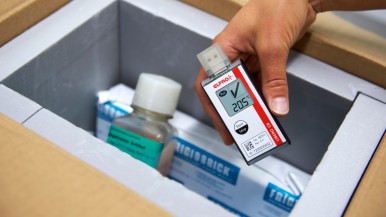
Frankfurt am Main - Bosch Service Solutions, a leading provider of technology-based services, plans to acquire Elpro Group AG, headquartered in Buchs, Switzerland. Founded in 1986, the company develops monitoring solutions for the pharmaceutical, biotech, life science and healthcare industries. This includes, for example, uninterrupted monitoring of the cold chain for pharmaceuticals. With the acquisition of the Elpro Group, Bosch Service Solutions is expanding its portfolio and entering the pharmaceutical services sector. “The Elpro Group has deep industry knowledge and innovative strength in the development and application of monitoring solutions. These are implemented along the entire pharmaceutical supply chain and meet the highest quality standards,” says Henning von Boxberg, President of the Board of Management of Bosch Service Solutions. The company employs 220 people and has sales offices in Europe, North America, and Singapore. Bosch and Elpro signed agreements on the planned acquisition on December 15, 2021. The parties have agreed not to disclose the purchase price. The transaction is subject to approval by the antitrust authorities.Bosch Service Solutions has been offering monitoring solutions for e.g. elevators, heating systems, and security transport since the 80s. The technologies of the Elpro Group expand the portfolio to include monitoring services for sensitive goods such as pharmaceuticals. “Bosch is an excellent partner for us. We are united by a promise of high quality and technology-based solutions. The global presence of Bosch Service Solutions helps expand Elpro’s portfolio internationally, open up additional markets and implement new service offerings,” says Philipp Osl, CEO of the Elpro Group. Safe monitoring of sensitive goods Drugs are sensitive products. Temperature, humidity, and light can affect their quality. Certain medicines, such as vaccines, must be refrigerated throughout the supply chain: from manufacturer through wholesaler, pharmacy and hospital to the patient. If a cold chain is interrupted, medicines are at risk of becoming unusable and losing their effectiveness. Elpro has developed technologies that monitor the entire process. For this, the company uses so-called data loggers. These are devices for stationary or mobile use, which monitor temperature, humidity, light, and other environmental conditions with the help of sensors. If specifications and guidelines are not adhered to, this is recorded automatically. The data loggers transfer this information to software that immediately reports and documents critical deviations and makes the data available to manufacturers. New service options for Elpro customers Until now, Elpro has focused on identifying and documenting deviations in the pharmaceutical supply chain. Bosch Service Solutions operates the largest private security control center network in Europe. This makes it possible not only to detect malfunctions and emergencies, but also to coordinate remedial actions. Elpro’s service portfolio will be expanded to include this service competence in the future. New and innovative service models can result for participants of the pharmaceutical supply chain.

Elevator Monitoring by Bosch Service Solutions shortens downtimes and reduces op ...

08.02.2021

Press release

Service Solutions

Elevator Monitoring by Bosch Service Solutions shortens downtimes and reduces op ...

Frankfurt am Main – A new, retrofittable solution from Bosch Service Solutions for elevator monitoring shortens downtimes and makes operations more cost-effective. Older models in particular harbor an increased risk of breakdowns – an unpleasant situation for the user and expensive for the operator. With Elevator Monitoring, Bosch Service Solutions is bringing a solution onto the market to support the operation of elevators in particular, with monitoring 24 hours a day and automatic identification of faults. "With the new Elevator Monitoring service, we are making elevator journeys more transparent and safer," explains Henning von Boxberg, President of Bosch Service Solutions. "The combination of a sensor box, cloud-based software and associated service ensures that building and elevator operators can see at all times whether their elevator is moving or at a standstill."Retrofit elevators in around 15 minutes Thanks to the retrofit solution comprising a ten-centimeter flat sensor box, which is installed on the top of the elevator cab, elevators can be easily and cost-effectively retrofitted, and usually in just 15 minutes – irrespective of age, manufacturer or model. The solution requires a cell phone network connection. This means that operators can connect a large number of elevators in different locations using just one system. The sensor box sends information to the cloud, for example function status, the number of journeys or the number of floors traveled to. The software evaluates the sensor data. It makes it available to elevator operators, such as facility managers, building operators or maintenance partners, as a status monitoring solution via web or smartphone access. In the event of a fault, it sends a message to the operator and the Bosch Monitoring Center. Early notification enables faster intervention and repairs, thus shorter downtimes. Compared to elevator emergency call systems where people trapped in an elevator sound the alarm by pressing an emergency button, elevator monitoring is performed 24/7 even if the elevator is not in use. The monitoring helps to optimize processes related to elevator operation. Thanks to more efficient maintenance and repair processes, operators can reduce their operating costs by up to 30 percent. Status of all elevators at a glance The elevators can be grouped by building or location, and relevant data can be viewed centrally in the portal. In the map view, the user can see at a glance whether the elevators are traveling: If they are working, the corresponding points on the map are lit green. If there is a fault, the color turns red and the system sends a status notification by e-mail. If necessary, the service employees at the Bosch Monitoring Center arrange resolution of the fault by informing the operator or maintenance partner. The solution can be used in line with requirements: whether as a technical system, a solution with associated service or by integrating it into existing IT systems. Evaluation of usage data also enables operators to adapt the frequency of maintenance work in line with the work that is actually required – and not at defined intervals anymore. In the future, Elevator Monitoring will be expanded to include additional functions like locating the cause of the fault. Expansion of services planned The new solution complements the services offered by Bosch Service Solutions within the Bosch Elevator Cloud service platform. Besides the elevator emergency call, which the division has been offering since 1986, the services also include the rescuing of trapped people, risk assessment and visual inspections. Bosch Service Solutions plans to further expand the range of monitoring services in the future. Alongside additional functions for elevators, there are also plans to expand the portfolio to include additional building elements such as heating systems. The aim is to have one solution that provides an overview of all the systems in a building that are prone to faults.

Bosch Service Solutions to invest in U.S. startup Sfara

30.11.2020

Press release

Service Solutions

Bosch Service Solutions to invest in U.S. startup Sfara

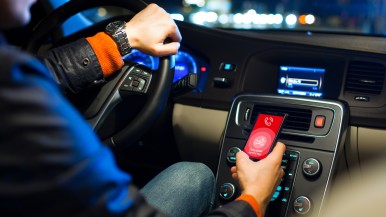
Frankfurt am Main, Germany / Hoboken, NJ – As part of its plans to further expand its mobility service business, Bosch Service Solutions is acquiring a minority stake in the startup Sfara Inc., based in Hoboken, NJ (USA). The two companies have been working together since 2019. Set up in 2012, Sfara offers app-based technologies for mobile devices that detect vehicle collisions and other emergencies. The user’s smartphone triggers then an emergency call, such as the Bosch eCall service, to quickly contact first responders. The two companies signed an agreement on the investment of a minority stake on November 25, 2020. It has been agreed that the financial details will not be disclosed.“With this investment in Sfara, we are strengthening collaboration between our two companies and will continue our joint effort to expand the successful Bosch eCall emergency and breakdown service,” says Henning von Boxberg, President of Bosch Service Solutions. The automatic emergency call system – eCall for short – is a milestone in vehicle safety. For newly registered vehicle types, it has been mandatory in the European Union since March 31, 2018. Technology developed by Sfara now makes it possible for drivers to use this digital aide via a smartphone in vehicles without the eCall installed, usually in older vehicles that don’t include the necessary technology. This way, a significantly greater number of road users can benefit from this emergency call system and can automatically get help in the event of an accident. Thanks to the Sfara technology, users can also access eCall outside the vehicle from their smartphones, for example when moving around on foot. “We are delighted to be working with a well-known investor such as Bosch, and pleased that our technology can play a valuable part in expanding Bosch’s global eCall service portfolio,” says Erik Goldman, the CEO of Sfara. eCall by smartphone, regardless of age of car or means of transport Smartphone-based eCall means that vehicle manufacturers, auto insurers, and fleet operators can offer a comprehensive accident and breakdown service to their customers – independent of the age of their car or means of transport. A service app for customers’ smartphones is available from the respective provider. In case of an accident, the app connects the user with the Bosch accident and breakdown network. Accelerometers, GPS and other sensors are embedded in modern smartphones. Sfara’s proprietary app-based technology uses sensor fusion to detect accidents and suppress false positives. If an accident is detected, the app automatically triggers an emergency call to a Bosch service location and simultaneously transmits information necessary to get first responders to the scene quickly. An emergency call can also be triggered manually. This connects the user with a member of the service team, who will then contact emergency services, if required. The technology contains optimized crash detection functions that considerably reduce false positives, which are costly to the business and frustrating to end users. Digital accident and breakdown management The data for rapid assistance in case of an accident or breakdown is collected by Bosch and can be passed on to vehicle manufacturers, auto insurers, and fleet operators. This speeds up the process for all concerned, since the information includes useful accident data such as the location of impact. The report of an accident can also go hand in hand with a first notification of loss (FNOL). Insurers need this information to carry out smooth claims processing. In accordance with GDPR, only the data needed to perform service is transmitted, based on approval given by the user in advance. Bosch Service Solutions plans to extend the eCall service further with its partners and make all steps involved in accident and breakdown management available in digital form to its business customers. These range from the first notification of loss or accident, to repair and towing services and the provision of a replacement vehicle and claims management.

German Road Safety Day: How Bosch eCall saves lives

20.06.2020

Press release

Service Solutions

German Road Safety Day: How Bosch eCall saves lives

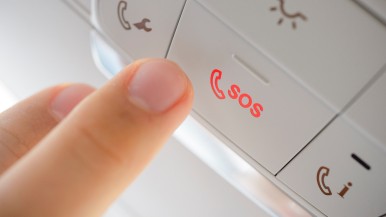
Frankfurt – Fast assistance is crucial when a car accident occurs. "Emergency Calls" - known as eCalls for short - are of enormous advantage when rescue is needed. In the event of an accident or emergency, the emergency call system for vehicles establishes a voice connection to an emergency call point to request assistance either automatically or at the push of a button. The statutory eCall system, known as EU 112 eCall, differs from the emergency call systems from private providers. EU 112 eCall are routed directly to the public rescue coordination centers, which then mobilize the rescue services. Private eCall providers process incoming emergency calls in their emergency centers and forward emergency calls to the public rescue coordination centers. EU 112 eCall is installed as standard in all new car models launched in the EU for the first time since March 31, 2018. Bosch has been offering its private eCall service since 2012 and is a pioneer in this area, so that by now more than ten car manufacturers now trust the company to handle their emergency calls. Bosch eCall not only meets the relevant EU standards and all applicable data protection requirements, but also offers five times more service and security.1. Bosch eCall goes above and beyond statutory requirements In order to provide fast, effective assistance in the event of a car accident, it is important that the rescue coordination center receives all key information to enable it to assess the accident. This enables it to dispatch the right number of rescue workers and, in the best-case scenario, to give these workers an idea of what to expect at the scene of the accident. That's why Bosch eCall delivers more information than the EU 112 eCall, which is limited to the so-called minimum data set. This comprises the geographical position, the time of the accident, the direction of travel and the fuel type used by the accident vehicle. However, Bosch delivers additional information, such as the number of occupants and the severity of the accident. This helps the coordination center and the rescue teams to better assess the accident situation, enabling a tailored response to the respective accident situation. For example, in the event of an accident involving four occupants more ambulances can be dispatched to the scene of the accident. This optimizes the rescue chain. 2. Bosch answers eCalls in the driver's own language Bosch eCall has one major advantage when traveling: in the event of an accident abroad, the driver will receive communications in his own language at all times as soon as eCall has been activated. It is invaluable for the casualties, who are often in shock, to be able to provide details of the accident in the language they are most familiar with. The local rescue coordination center then receives precise information in the local language from the team at the Bosch emergency center, so that it can mobilize the appropriate assistance for the situation. Unlike EU 112 eCall, Bosch eCall is available in 18 languages and more than 50 countries. 3. Bosch handles eCalls quickly around the clock The Bosch eCall is available around the clock seven days per week and thus complies with EU regulation EN 16102. This stipulates that eCall service providers must be demonstrably reachable 99 percent of the time. Legislators also stipulate how quickly emergency calls must be answered by the emergency center. Bosch exceeds the required standards and answers calls in less than ten seconds on average - about five seconds faster than required. 4. Bosch relieves the pressure on public rescue coordination centers In 2019, Bosch processed around 1.2 million eCalls worldwide, including 90 percent false alarms. This happens for instance when drivers accidentally press the SOS button, triggering eCall. However, false alarms in particular take a lot of time to process - time that the public emergency services do not have. Providers like Bosch provide relief here, filtering out false alarms before qualified accident calls are passed on: in 2019 alone, there were over a million mistaken calls. Bosch thus only passes genuine emergencies to the rescue coordination centers. 5. Bosch eCall observes strict data protection regulations Bosch also meets all requirements from a data protection perspective. The data that is transmitted to the Bosch emergency center or public rescue coordination center is precisely defined: in addition to the minimum data set, the system only transmits information that is important in assessing the accident situation, e.g. the number of people in the car.

Bosch launches its eCall solution in India

10.12.2019

Press release

Service Solutions

Bosch launches its eCall solution in India

Frankfurt am Main / Bangalore, India – The eCall solution is an emergency call system for cars, which enables a faster emergency response in case of accidents and other emergencies. It thus helps save lives. Bosch already delivers this service for car manufacturer Daimler in more than 50 countries and in 18 languages, and is now expanding its services to the rest of the world. Effective October, Bosch started providing the eCall service in India. With more than 1.3 billion inhabitants, India is the second most populated and, in terms of geographic size, the seventh-largest country in the world. Consequently, delivering a country-wide service 24/7 and 365 days per year is a challenge that requires a comprehensive solution.“We needed to create a solution wherein car drivers from all over India can have an audio connection in an emergency and can receive fast help through the fire brigade, police and ambulance service,” says Stefan Gross, Head of Mobility Services at Bosch Service Solutions, based in Frankfurt/Main, Germany. To ensure these standards, Bosch has established itself as one of the first third-party provider for eCall services in India. Solutions for a challenging environment The eCall service covers 27 states and 5 union territories in India and is provided in two languages, Hindi and English. To achieve this, Bosch Service Solutions has created a partner network of relevant PSAP (Public Safety Answering Points) contacts, which enables access to over 13,500 verified hospitals and police stations. Furthermore Bosch has set up two completely new and dedicated data and operations centers in Bangalore and Coimbatore in 2019.

Bosch plans takeover of LAWA Solutions

04.02.2019

Press release

Service Solutions

Bosch plans takeover of LAWA Solutions

Frankfurt am Main – Bosch Service Solutions, a leading solution provider in the area of Business Process Outsourcing, is planning the takeover of start-up LAWA Solutions based in Giessen. LAWA Solutions GmbH, which was founded in 2009, specializes in cloud-based software products in the automotive industry. The company's highly scalable solutions are used by automobile clubs, breakdown services, recovery companies and workshops, for example. "With the acquisition of LAWA Solutions, we are optimally expanding the product portfolio of Bosch Service Solutions in the area of networked products and services. LAWA Solutions has the necessary competence, experience and relevant technologies for successful cooperation", says Henning von Boxberg, Head of Bosch Service Solutions. The parties have agreed not to disclose the purchase price of the company with around ten associates. The transaction is subject to the approval of the antitrust authorities.Smart and networked: how digital breakdown service works Those who had a breakdown in the past often had to wait for hours and were badly informed during the waiting period. Those who have a breakdown today can use a smartphone to access digital services after calling the breakdown service and get more transparency about the status of the roadside assistance. Bosch uses technology embedded in the vehicle as part of its service. When a driver reports a malfunction, he/she can send important data from the car simultaneously - such as location, vehicle type and error code. On this basis, the associated digital platform automatically connects to suitable breakdown service providers in the immediate vicinity. The orders are awarded to those partners who respond to the relevant request first and can send a service employee within minutes. At this point, the driver receives a notification on his/her smartphone and can track the arrival of the breakdown service digitally. "We ensure that everything runs smoothly in the background - the driver often doesn't even know that Bosch is behind the service. This means that everyone benefits from the offer: the providers of roadside assistance can access the software, the networking with the vehicle and the service centers, and thus improve customer satisfaction. In our view, this is a clear competitive advantage", explains Stefan Gross, Mobility Services Manager at Bosch Service Solutions. "The partnership is also a massive gain for LAWA Solutions' customers. In addition to the expanded Bosch service portfolio, data transfer directly from the vehicle in particular opens up completely new potential and consistently advances the digital networking of our software platforms," explains Thomas Lamprecht of LAWA Solutions. LAWA Solutions digitalizes last process steps in the Bosch value chain With the acquisition of LAWA Solutions, the last process steps in the value chain are digitalized. The start-up brings with it an independent, cloud-based end-to-end platform for recovery companies. From case acceptance to regulation: the necessary repair is digitally documented and can be invoiced to the breakdown service provider within a short time. A process that can normally take several weeks is therefore completed in just a few hours. The result: significantly more satisfied drivers, simpler processes and cost savings for roadside assistance providers. In addition, it simplifies and accelerates processing and provides more transparency for service technicians, insurance companies, automobile clubs, recovery companies and workshops. Combined with other services, such as the Concierge Service, the driver can also find a nearby hotel or rental car provider, for example, or bridge the time until the roadside assistant arrives with digital waiting time offers. This provides for all-round digital utilization of the service.

07.12.2018

Press release

Service Solutions

Bosch Service Solutions wins Technology Leadership Award

Frankfurt am Main – Well-known consultancy firm Frost & Sullivan has honored Bosch Service Solutions with the Technology Leadership Award for its exemplary best practices customer management BPO (Business Process Outsourcing) in Europe. In particular, Frost & Sullivan praised the use of the company’s innovative Robotic Process Automation (RPA) solution and Artificial Intelligence (AI) in global automation. These are not only implemented at Bosch Service Solutions, but also form part of the company's strategy. As the Bosch division is optimizing its complex processes, there will be positive knock-on effects for customers such as increasing employee satisfaction. Two of Frost & Sullivan’s evaluation criteria for the award were the extent to which the technology is used and the impact it has on the company's success.Analyst Stephen Loynd of Frost & Sullivan noted that, "Bosch Service Solutions offers its customers concepts and methods that aim to improve the entire service chain, where automation is a key part of the solution. And instead of implementing these steps individually as necessary measures, Bosch integrates them on an end-to-end basis. The result is a set of rational solutions." In addition, Irfan Ali, Head of Robotic Process Automation at Bosch Service Solutions, commented on receiving the award: "We are thrilled to have won this prestigious award. We always consider automation with a view to the overall result. We take into account the goals and process value streams. Based on this, we redesign and revise the processes and create a comprehensive automation solution." RPA – an important step toward digital transformation The Technology Leadership award is a testament to the forward-looking and holistic approach adopted by Bosch Service Solutions in implementing automation steps in customer service and business processes. Bosch does not see automation as a threat to the business, but rather as the key to future competitiveness. The company division is not concerned with the use of technology as a means to replacing employees. Rather, the goal of automation is to create an ideal combination of human resources and technology. The aim is to enhance the customer experience, increase employee satisfaction, and help foster new business models. The use of RPA relieves employees from routine, error-prone tasks so that they can concentrate on more demanding ones. Artificial intelligence improves service Bosch Services Solutions also uses Artificial Intelligence (AI) applications such as pattern recognition and machine learning. These enable customer concerns to be identified during an interaction with the customer advisor, and can also be used to supply associates with unsolicited information relating to a consultation. In turn, this allows the associate to focus on the customer and to address his or her concerns in an empathic way. This leads to greater satisfaction on both sides. The jury's verdict: the winner convinced us across the board Technology leaders are companies that promote the development and successful introduction of high-tech solutions for key problems within the sector, thus actively shaping the future of the industry. The independent analysts at Frost & Sullivan evaluate candidates' solutions and take account of technological influences, as well as business impact. Criteria included commitment to innovation and creativity as well as operational efficiency customer acquisition and potential for growth. Other important criteria included the impact on associates and customers. The prize will be awarded in London in spring 2019.

Bosch explains five things that everyone should know about eCall

05.12.2018

Press release

Service Solutions

Bosch explains five things that everyone should know about eCall

Frankfurt am Main - Under EU regulations, the eCall automatic emergency call system has been mandatory in newly registered vehicle models since March 31, 2018. The purpose of the automatically dispatched emergency call in the event of a traffic accident is as follows: rescue operations are initiated more quickly, reducing the number of road deaths. eCall should save up to 2,500 road users' lives every year. "The basic principle behind eCall is quite simple, however a number of aspects require explanation," says Stefan Gross, Head of Mobility Services at Bosch Service Solutions GmbH. "The following five facts should help clarify the topic of eCall."Fact 1: The EU regulation governs several eCall systems Developed under the aegis of the EU, 112 eCall is only one of several systems legitimized by the relevant EU regulation. As well as the 112 eCall system, there are other systems from private providers, known as Third Party Service Provider (TPSP) eCall systems, like the one from Bosch. Automobile manufacturers can also install the TPSP system in the vehicle and the customer can decide which system to activate - 112 or the TPSP eCall. TPSP eCall systems generally offer added value. Just like 112 eCall, these capture the information from the minimum data record defined by law. This includes for example the time of the accident, the GPS coordinates of where the accident happened, vehicle registration, timestamp and eCall qualifier, in other words information indicating whether the eCall was triggered automatically or manually. In addition, TPSP eCalls can also transmit details such as the number of occupants in the vehicle. Fact 2: The eCall emergency call system is not a data-hungry monster The topic of data protection is a concern for many consumers and quite a few are worried that the eCall emergency call systems are a threat to their privacy. There is no basis for this worry. The eCall's SIM card is passive and is only activated in an emergency. The SIM card only dials into a mobile network in the event of an accident or manual operation of the eCall system. Here too, the EU regulation defines exactly which data may be transmitted to the service provider or the rescue coordination center. This includes the minimum data set and, in addition, only data such as vehicle type or number of occupants, i.e. information that is important when assessing the accident situation. It is not technically possible to use the eCall system to spy on motorists or even create movement profiles. Nevertheless, it is important to take the data protection concerns of car owners and drivers seriously and to provide them with detailed advance information about how eCall works. Fact 3: eCall speeds up rescues The fact that emergency calls in the Bosch eCall system are first received by a service center may result in a mistaken conclusion: it looks as if more time is needed in an emergency due to a longer rescue chain. However, as the most important thing in the event of an accident is accurate information about the casualties, the opposite is actually the case. eCall will transmit the details of the accident to the service center even before any first responders can make an emergency call. The service center immediately sends this information to the rescue center, which can then use the data to assess very accurately which and how many rescue workers are needed and where. This ensures that the right help can be provided quickly. There is another important advantage: car passengers, for example children, often press the eCall button even though there is no emergency. The service center prevents such false alarms from reaching the emergency response centers, acting as a filter. This allows rescue workers to focus on genuine accidents. Fact 4: The eCall emergency call service works throughout Europe. There is a common misconception that the eCall emergency call service only works within the national network One of the precise objectives of the EU was to develop a single emergency call system that works across all member states. Anyone who is involved in a traffic accident abroad will also benefit from the Bosch eCall system. Bosch Service Solutions scores highly for its multilingual service centers: the victim of the accident will be addressed in the language stored in the vehicle telematics, usually his native language. At the same time, another service agent forwards the accident information in the local language to the local control center. Possible language barriers are eliminated, which is particularly beneficial in emotional crisis situations like accidents. Fact 5: The emergency call system can be retrofitted The EU regulations primarily relate to the use of eCall systems, which are permanently installed as a component in new vehicle models ex works, but also support the retrofitting of systems, enabling the eCall system to be used in as many vehicles as possible. That's because these systems are not just designed for brand new car models but can even be installed in used cars as well as new cars from older model series. In the meantime, Bosch has introduced retrofittable systems, such as an accident reporting jack for the 12-volt (cigarette lighter) socket with associated smartphone app. These retrofittable solutions can be used to offer an emergency call service that is just as reliable as a newly installed eCall system and that likewise only gathers accident-related data. Summary Although EU regulations make the eCall system mandatory for new car models, an automatic emergency call system is generally a useful technological support for any vehicle: in the event of a traffic accident, all those involved will benefit from faster, better prepared deployment of the rescue services. The topic of "connected cars" is currently more relevant than ever for many industries - as both a challenge and an opportunity. Find out more about this in the free whitepaper entitled " The Connected Car –Overview of Trends and Services ” (only in German available).

What automobile insurers need to know about eCall

30.11.2018

Press release

Service Solutions

What automobile insurers need to know about eCall

Frankfurt am Main - Under EU regulations, the eCall automated emergency call system has been mandatory in newly registered vehicle series since March 31, 2018. This is a topic that has been on the agenda for car manufacturers for some time. However, new types of networked mobility services are becoming more and more common as networked vehicles continue to develop, and are also highly relevant for insurance companies. By no means all automobile insurers have yet investigated the extent to which an emergency call service could be a suitable option for their own product portfolio. "This may be due to a large extent to the following five common misconceptions about the emergency call system, which we frequently encounter in practice," explains Stefan Gross, Head of Mobility Services at Bosch Service Solutions GmbH.First misconception: The eCall emergency call system is only available for new car models This is only partially true. The EU regulation rightly only refers to systems that are permanently installed as a component in new vehicle models directly ex works. A distinction must be drawn here between two systems: the first is the 112 eCall system developed under the aegis of the EU. The second system comprises the Third Party Service Provider (TPSP) eCalls from private providers such as Bosch, which also comply with the EU standard for eCalls. These usually record more accident-related information than required by law. In the meantime, Bosch has also introduced retrofittable systems, such as an accident reporting jack for the 12-volt (cigarette lighter) socket with associated smartphone app. This means that even used cars as well as new cars from older model series can be equipped with this life-saving system. These retrofittable solutions can be used to offer an emergency call service that works just like a newly installed eCall system. Second misconception: Only car manufacturers can offer an emergency call service Naturally this is true of integrated TPSP systems in which the car manufacturer forwards the eCall to a service provider. However automotive insurers can also offer the retrofittable solutions – including the associated service – to their customers as a product. Bosch is capable of providing all the necessary services – from IT integration and technical operation to the operational implementation of the service. Third misconception: eCall transforms the car into a data-hungry monster Many consumers are concerned that the eCall emergency call system poses a threat to privacy. There is no basis for this worry. The eCall's SIM card is passive and is only activated in an emergency. The SIM card only dials into a mobile network in the event of an accident or manual operation of the eCall system. Here too, the EU regulation defines exactly which data may be transmitted to the service provider or the rescue coordination center. This includes the minimum data set and, in addition, only data such as vehicle type or number of occupants, i.e. information that is relevant in assessing the accident situation. It is not technically possible to use the eCall system to spy on motorists or even create movement profiles. Retrofittable solutions and smartphone apps enable insurers to offer customers useful services in addition to eCall, such as breakdown assistance or protection against theft. Additional data has to be gathered for this purpose. This must be handled in accordance with the applicable regulations, such as the EU General Data Protection Regulation (EU GDPR). It is advisable for insurers only to offer services tailored to and approved by the user. Confidence in new mobility services and an untroubled user experience are best provided by companies with a high degree of transparency. Customers should be informed of the framework conditions and limits of data usage in advance using easily understandable materials. Fourth misconception: eCall with service centers slows down the rescue process The fact that emergency calls in the Bosch eCall system are first received by a service center may result in a false conclusion: it looks as if more time is needed in an emergency due to a longer rescue chain. However, as the most important thing in the event of an accident is accurate information about the casualties, the opposite is actually the case: eCall will establish a voice connection to the service center even before any first responders can make an emergency call. The service agents are specially trained to empathize with casualties and quickly to obtain all the information needed to make an initial assessment. This information is sent immediately to the rescue center, together with the record of the accident, allowing the service center to assess very accurately which and how many rescue workers are needed, and to dispatch them immediately. The service center also prevents false alarms from reaching the emergency response centers, acting as a filter. This allows rescue workers to focus on genuine accidents. Fifth misconception: the eCall emergency call service only works within a national network Many of those who are convinced of the benefits of the eCall emergency call system in theory, nonetheless believe it only works in their home country. One of the precise objectives of the EU was to develop a single, automated emergency call system that works across all member states. Anyone who has an accident abroad will also benefit from the eCall system, which automatically sends a call to the local rescue center. The Bosch eCall system scores highly for its multilingual service centers: the victim of the accident will be addressed in the language stored in the vehicle telematics, usually his native language. At the same time, another service agent forwards the accident information in the local language to the local rescue control center. Possible language barriers are eliminated, which is particularly beneficial in emotional crisis situations such as accidents. The topic of "connected cars" is currently more relevant than ever for car insurers – as both a challenge and an opportunity. If they have not yet done so, insurers should now develop a strategy for creating attractive added value for their clients through innovative products and services. In addition to the emergency call, additional networked mobility services such as Roadside Assistance, Stolen Vehicle Tracking or a Concierge Service could be considered in this context. Find out more about this in the free whitepaper for insurance providers entitled " The Connected Car - Smart Assistant and Lifesaver ". (only in German available)