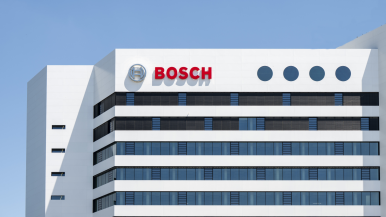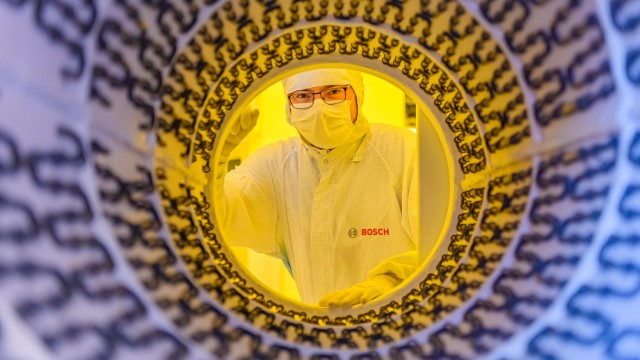

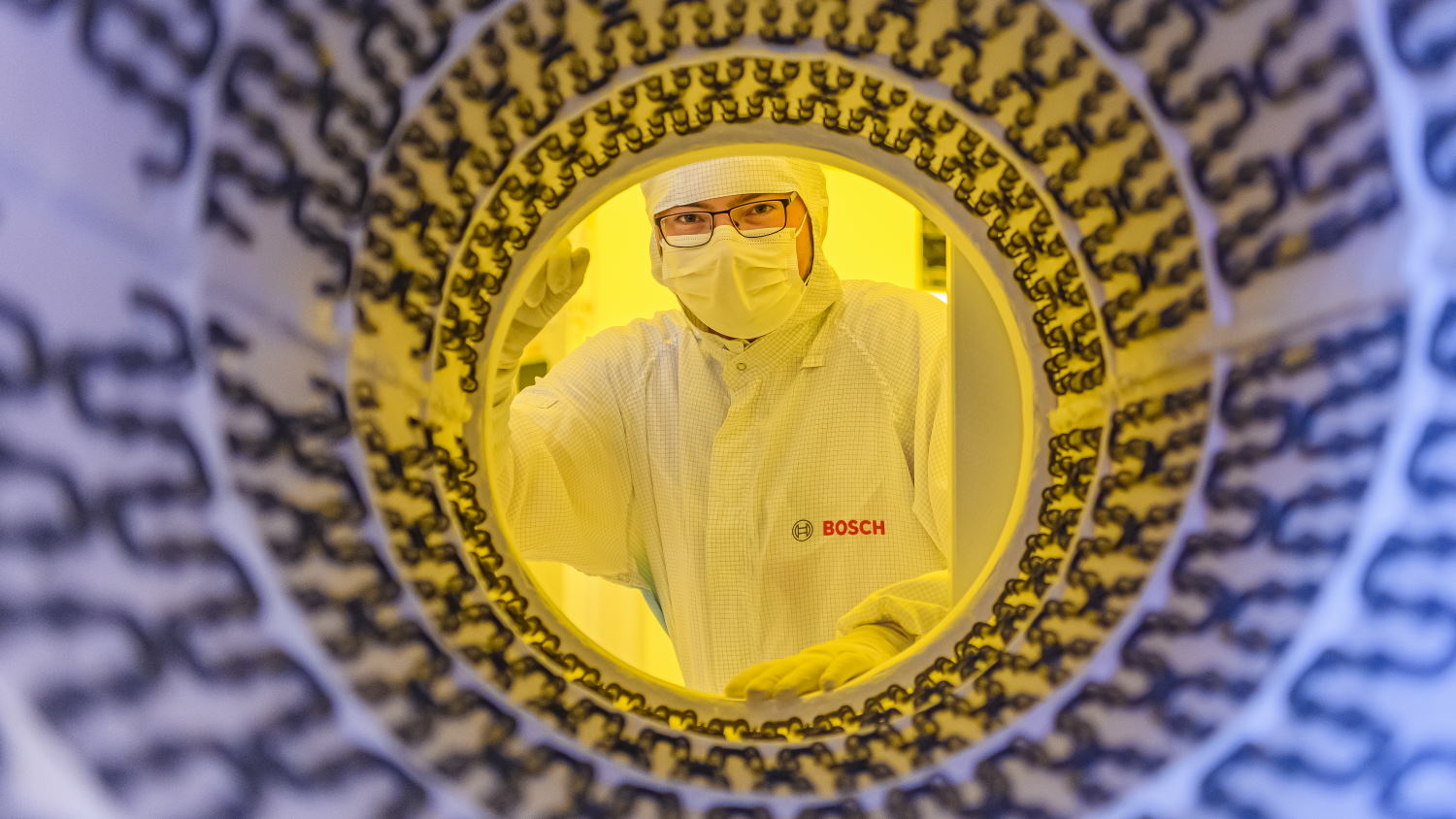
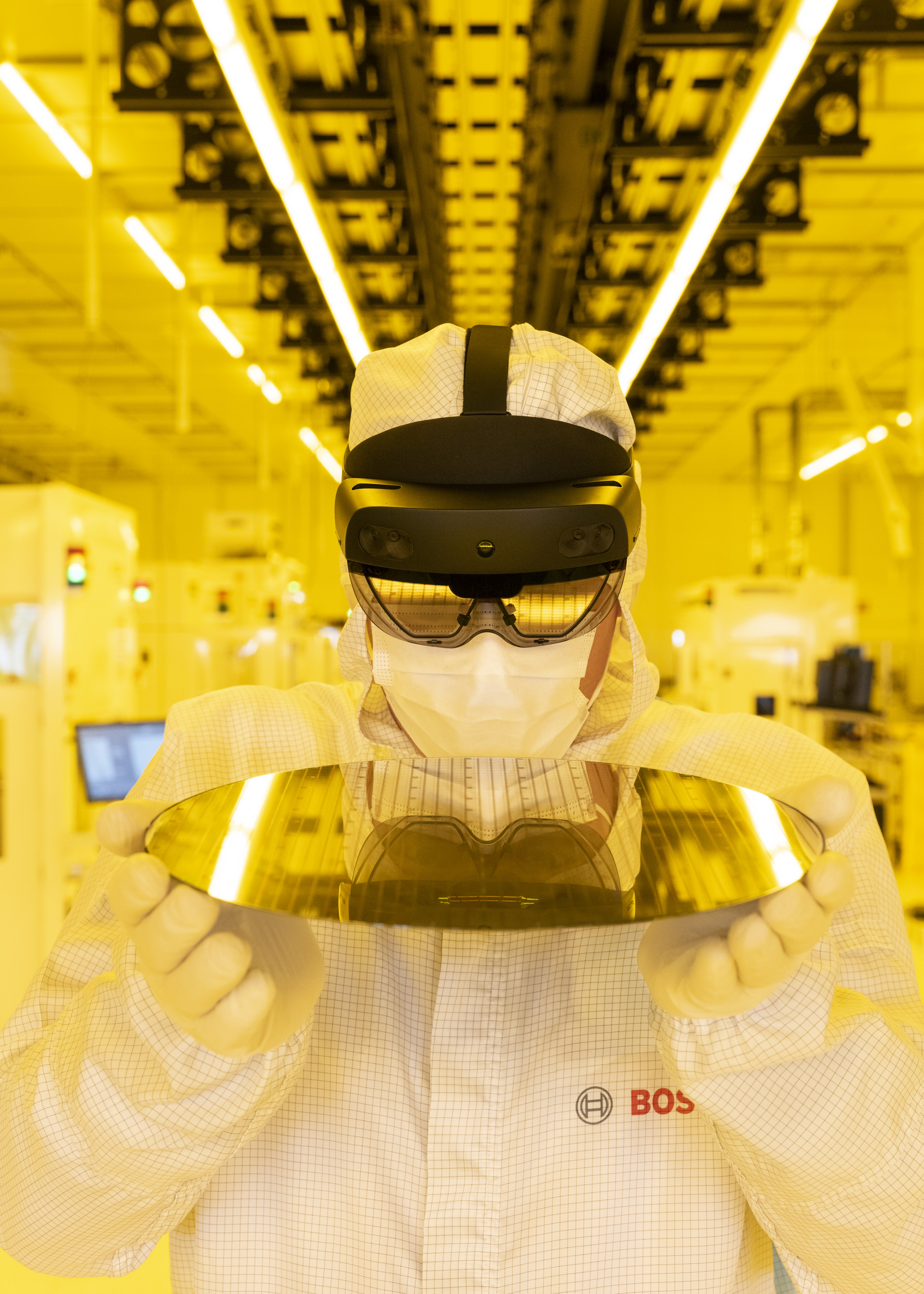
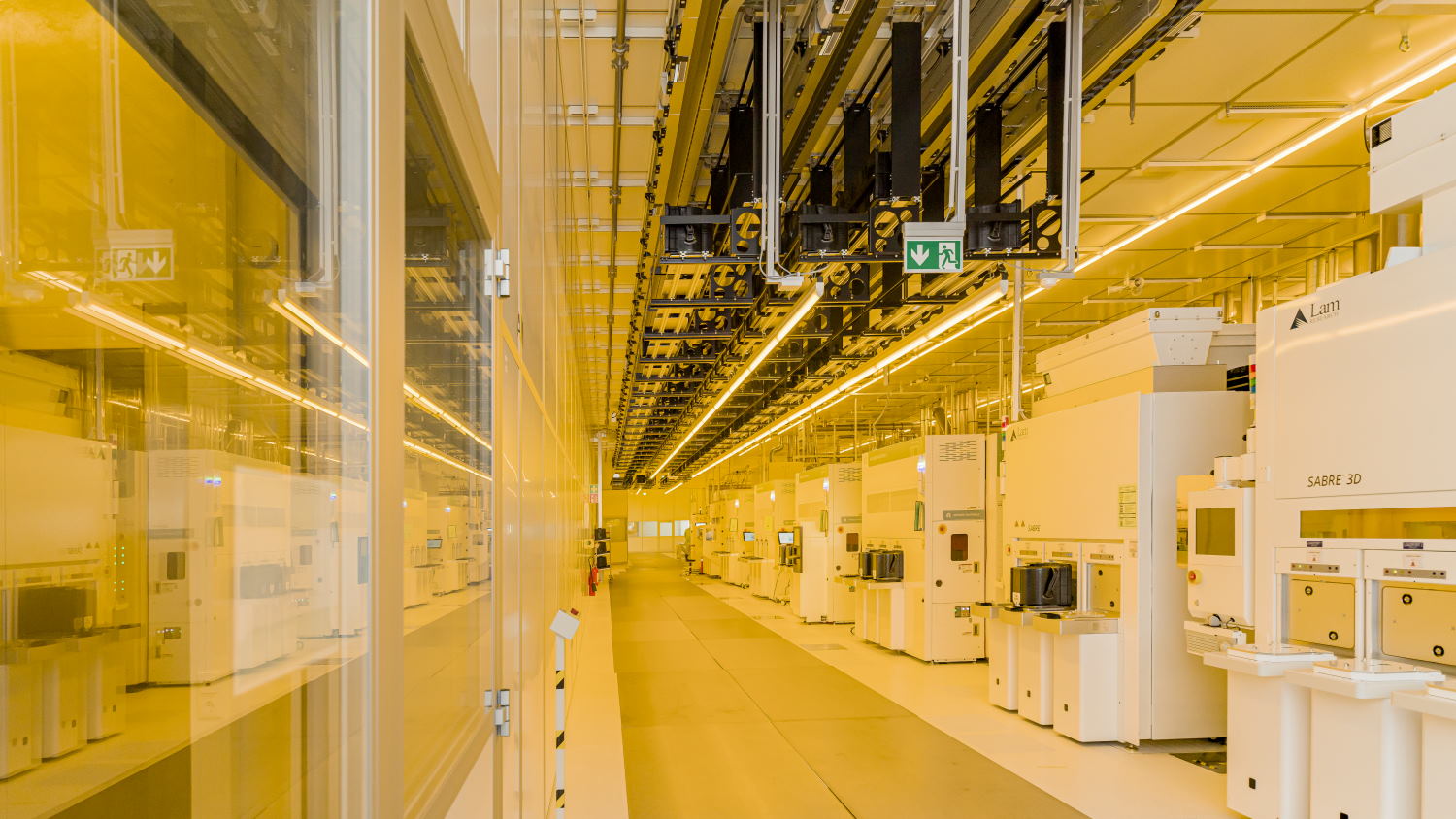
Stuttgart, Germany – They may be small components, but they have a big impact: semiconductors are the driving force behind the modern technological world. As an indispensable component of all electronic systems, they are already miniature heroes in cars, e-bikes, home appliances, and wearables. Now, rapid growth in new technology markets – particularly robotics and data centers for artificial intelligence (AI) – means demand for them is skyrocketing. According to a recent McKinsey study, meeting semiconductor demand for generative AI applications alone will require an additional annual volume of up to 3.6 million wafers by 2030. Meanwhile, analyses by Strategy& and the German Electro and Digital Industry Association (ZVEI) suggest that robotics and industrial automation will cause European demand for semiconductors to double by 2040. Bosch wants to participate in this growth and plans to generate some 5 billion euros in semiconductor sales by 2030. To this end, the company will put its semiconductor business on a firmer footing as part of the reorganization of its corporate structure and the evolution of Bosch Mobility, which was announced at the end of October 2026. Effective January 1, 2028, Bosch will transfer its semiconductor operations to a new division called Semiconductors. The business will continue to be assigned to the Mobility business sector. Bosch’s semiconductor operations are currently part of its Mobility Electronics division.
Contact person for press inquiries:
Athanassios Kaliudis
Phone: +49 711 811 7497
E-mail: Athanassios.Kaliudis@de.bosch.com
About Bosch
The Bosch Group is a leading global supplier of technology and services. It employs roughly 413,000 associates worldwide (as of December 31, 2025). The company generated sales of 91 billion euros in 2025. Its operations are divided into four business sectors: Mobility, Industrial Technology, Consumer Goods, and Energy and Building Technology. With its business activities, the company aims to use technology to help shape universal trends such as automation, digitalization, electrification, and artificial intelligence. In this context, Bosch’s broad diversification across regions and industries strengthens its innovativeness and robustness. Bosch uses its proven expertise in hardware, software, and services to offer customers cross-domain solutions from a single source. It also applies its expertise in connectivity and artificial intelligence in order to develop and manufacture intelligent and user-friendly products. With technology that is “Invented for life,” Bosch wants to help improve quality of life. The Bosch Group comprises Robert Bosch GmbH and its roughly 500 subsidiary and regional companies in over 60 countries. Including sales and service partners, Bosch’s global manufacturing, engineering, and sales network covers nearly every country in the world. Bosch’s innovative strength is key to the company’s further development. Bosch employs some 82,000 associates in research and development.
The company was set up in Stuttgart in 1886 by Robert Bosch (1861-1942) as “Workshop for Precision Mechanics and Electrical Engineering.” The special ownership structure of Robert Bosch GmbH guarantees the entrepreneurial freedom of the Bosch Group, making it possible for the company to plan over the long term and to undertake significant upfront investments in the safeguarding of its future. Ninety-four percent of the share capital of Robert Bosch GmbH is held by Robert Bosch Stiftung GmbH, a limited liability company with a charitable purpose. The remaining shares are held by Robert Bosch GmbH and by a company owned by the Bosch family. The majority of voting rights are held by Robert Bosch Industrietreuhand KG. It is entrusted with the task of safeguarding the company’s long-term existence and in particular its financial independence – in line with the mission handed down in the will of the company’s founder, Robert Bosch.
Additional information is available online at www.bosch.com, www.bosch-press.com.