Search & find:
Media, press releases, events for your editorial coverage

For safer roads: Bosch teams up with Microsoft to explore new frontiers with gen ...

28.02.2024

Press release

Automated mobility

For safer roads: Bosch teams up with Microsoft to explore new frontiers with gen ...

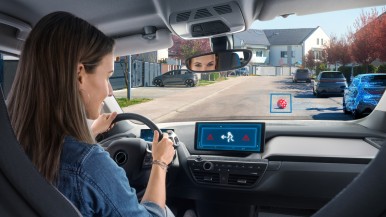
Stuttgart, Germany – It’s a scenario that no driver ever wants to see: a ball rolling out into the road. The chances are it will be followed immediately by a child in hot pursuit, oblivious to any traffic. But while human drivers can assess this situation using their contextual knowledge, today’s assisted and automated driving systems still have to learn how to do it. Bosch is pursuing the use of generative AI in terms to further improve automated driving functions. As part of this, Bosch and Microsoft are exploring opportunities to collaborate and leverage the power of generative AI. “Bosch is working on bringing a new dimension of AI applications into the vehicle,” said Dr. Stefan Hartung, chairman of the Bosch board of management, at this year’s Bosch Connected World (BCW) AIoT industry conference in Berlin. The expectation is that generative AI will enable vehicles to assess situations and react accordingly, and in this way keep road users even safer. Greater safety on the roads is also the wish of 60 percent of respondents to this year’s Bosch Tech Compass, a worldwide representative Bosch survey on the subjects of technology and AI. Bosch is working on bringing a new dimension of AI applications into the vehicle,...says Dr. Stefan Hartung, chairman of the board of management. Generative AI to make road traffic safer The two companies anticipate that a collaboration would take the performance of automated driving functions to the next level. They would like to see generative AI help enhance convenience in the vehicle and to provide greater safety for all road users. To achieve this, Bosch's comprehensive understanding of vehicles and automotive-specific AI expertise will be invaluable, as well as their access to vehicle sensor data to feed the generative AI. “In our unwavering commitment to safer roads, Microsoft is eager to explore collaboration opportunities with Bosch to pioneer the realm of generative AI,” said Uli Homann, Microsoft CVP and Distinguished Architect. Even today, when it comes to training systems for automated driving, AI quickly comes up against its limits. Today’s driver assistance systems can detect people, animals, objects, and vehicles, but in the near future generative AI could help determine whether a situation could potentially lead to an accident. Generative AI utilizes vast amounts of data to train systems for automated driving, enabling them to draw improved conclusions from this data. For example, it could deduce whether an object on the road ahead is a plastic bag or a damaged vehicle part. This information can be used either to communicate directly with the driver – such as by displaying a warning – or to initiate appropriate driving maneuvers, such as braking while switching on the hazard warning lights. Bosch and Microsoft have already partnered to develop a universal software platform for seamlessly connecting cars and the cloud, and are looking forward to work together to identify new opportunities to bring cutting-edge AI technology to their customers and the autonomous vehicle industry. Generative AI as a boost to innovation “Generative AI is a boost to innovation. It can transform industry in much the same way as the invention of the computer,” says Dr. Tanja Rueckert, member of the Bosch board of management and chief digital officer. The new 2024 Bosch Tech Compass shows this as well: 64 percent of respondents believe that AI is the technology with the greatest importance for the future. In comparison, only 41 percent of respondents were of the same opinion just one year ago. Generative AI is a boost to innovation. It can transform industry in much the same way as the invention of the computer,...says Dr. Tanja Rueckert, member of the Bosch board of management and chief digital officer. From manufacturing to everyday office work, generative AI is already being used in many areas at Bosch. In addition to Microsoft, the company is working with several partners, including AWS, Google, and Aleph Alpha. The Bosch Group’s venture capital unit, Bosch Ventures, invested in the AI company Aleph Alpha last year. Bosch also announced it would collaborate with the startup on finding new use cases both for Bosch associates and customers. “Bosch and Aleph Alpha want to learn from each other, benefit from each other’s know-how, and work together on cross-domain use cases,” Rueckert says. This partnership is now bearing its first fruits in North America: in collaboration with Aleph Alpha, Bosch is debuting AI-based speech recognition on behalf of a premium car manufacturer. In this solution, a chatbot understands and answers breakdown service calls with the help of natural language processing, which also recognizes dialects, accents, and moods. The call is taken directly, reducing the driver’s waiting time to a minimum. As many as 40 percent of calls can be processed and resolved automatically; for more complex queries, the bot transmits all relevant information to a service center agent who takes over the case immediately. From the AI search engine to manufacturing AI experts at Bosch are currently working on well over 120 specific applications that these new AI models open up for the company’s associates and customers. Such applications include the generation of software program code or powerful chatbots and voicebots to support technicians or interact with consumers. Another is AskBosch, the in-house AI-assisted search engine launched at the end of 2023. It offers faster natural-language access to a wide variety of data sources – sources scattered over the intranet, say. In addition to externally available data, AskBosch also includes internal data sources, so Bosch associates can research information specific to the company. Generative AI also ensures greater speed in manufacturing: in initial projects in two Bosch plants in Germany, generative AI creates synthetic images in order to develop and scale AI solutions for optical inspection and optimize existing AI models. Bosch expects that this will reduce the time needed for planning, launching, and ramping up AI applications from the current six-to-twelve months to just a few weeks. Following successful piloting, this service for generating synthetic data is to be offered to all Bosch locations. 2024 Bosch Tech Compass: setting the pace in the use of AI As AI is used in more and more areas of life, professional development is becoming increasingly important: 58 percent of respondents to the Bosch Tech Compass are convinced of this. This opinion is particularly prevalent in USA at 63 percent (Germany: 54 percent, China: 52 percent). Here, too, Bosch is setting the pace in the use of artificial intelligence and is getting its associates on board. In 2019, Bosch launched a training program, initially aimed at bringing 30,000 associates up to speed on the subject of AI. Up to now, some 28,000 associates have taken part in the program. Like the Bosch AI code of ethics, which sets ethical guidelines for dealing with artificial intelligence, this program has been supplemented with content about generative AI. For all the results of the 2024 Bosch Tech Compass, click here . About the survey: For the representative survey, people aged 18 and over in seven countries (Brazil, China, Germany, France, India, the U.K., and the U.S.) were polled online on behalf of Robert Bosch GmbH by the market researchers Gesellschaft für Innovative Marktforschung mbH (GIM) in December 2023. In Germany, France, and the U.K., at least 1,000 people were polled per country; in Brazil, China, India, and the U.S., it was at least 2,000 people each. The random samples are representative of their respective countries in terms of region, gender, and age (Brazil, Germany, France, U.K., U.S.: 18 to 69 years / China, India: 18 to 59 years).

CES world premiere: Bosch unites infotainment and driver assistance functions on ...

05.12.2023

Press release

Connected mobility

CES world premiere: Bosch unites infotainment and driver assistance functions on ...

Stuttgart – The trend toward software-defined mobility goes hand in hand with a centralized vehicle and electric/electronic (E/E) architecture. While numerous electronic control units usually control different functions in the car today, in the future just a few central vehicle computers will unite multiple system functions from previously separate domains. To do this, new computers with a powerful processor, known as a system on chip (SoC), are necessary. As an innovation and technology leader, Bosch is leading the charge and, at CES® 2024 in Las Vegas, will be the world’s first automotive supplier to demonstrate the fusion of infotainment and driver assistance functions in a software-intensive central computer on a single SoC. “We want to reduce the complexity of the electronics systems in cars and make them as secure as possible at the same time. With this demonstration of our new vehicle computer platform at CES, we are taking an important step in exactly this direction. Our goal in the medium term is to bring even more automated driving functions to the road, including to the compact and midsized car segments,” says Dr. Markus Heyn, member of the board of management at Robert Bosch GmbH and chairman of Bosch Mobility.At the core of the new vehicle computer from Bosch – called the cockpit & ADAS integration platform – is a single SoC, which processes a variety of functions from the two domains of infotainment and driver assistance simultaneously. This includes, for example, automated parking and lane detection, paired with smart, personalized navigation and voice assistance. Advantages for vehicle manufacturers: less space and cabling required, meaning lower costs. Central vehicle computers are the heart of software-defined cars. In the future, they will control all the domains in modern vehicles and reduce the currently high number of individual control units...says Dr. Markus Heyn, member of the board of management at Robert Bosch GmbH and chairman of Bosch Mobility. Overall, Bosch is already doing good business with vehicle computers: in 2026, the company expects sales revenue of three billion euros just for vehicle computers for infotainment and driver assistance. Modular system principle for maximum scalability For its central vehicle computers, Bosch uses a modular system principle. Together with stand-alone software solutions such as video perception for surround sensing, vehicle manufacturers can modularly and scalably assemble their individual solutions in combination with hardware components. Software-intensive central computers play a decisive role here, since they enable manufacturers to implement driving and assistance features. Software integration is in strong demand here. Bosch brings integrative expertise and enables software components from various sources to be combined. Bosch knowledge in all vehicle domains as a competitive advantage Nearly every vehicle maker in the world is currently investing massively in software-defined vehicles. Bosch predicts that the market for automotive software will reach a volume of around 200 billion euros by 2030. In the field of vehicle computers for infotainment and driver assistance systems, the company expects a market volume of 32 billion euros in 2030. Bosch’s advantage is its extensive knowledge in all vehicle domains. This means that the company is an expert not just for software but also for hardware, and develops and manufactures key components of modern vehicles, such as for drives, brakes, steering, infotainment, and automated driving, under one roof. Bosch’s approach allows maximum flexibility Bosch pursues what is known as a multi-SoC approach. The company’s new vehicle computers are designed so that the required SoCs can come from different chip manufacturers. Therefore, depending on the customer’s wishes, Bosch can use exactly the SoC that is requested. “Our software runs on chips from different manufacturers. This allows software and hardware to be decoupled from each other,” says Heyn. Bosch is one of the few companies that can develop a centralized electronic architecture from start to finish and has mastered the interplay of automotive electronics, software, and the cloud. New features, such as for driver assistance, are simply and easily sent to the car through over-the-air updates. This provides drivers with a personalized digital driving experience – even long after purchasing the car. Presskit #BoschCES 2024 Event #BoschCES 2024

German industry proposes new development standard for safe automated driving

21.11.2023

Press release

Automated mobility

German industry proposes new development standard for safe automated driving

Stuttgart, Germany – Four years ago, the German automotive industry joined forces with 21 partners in a project to develop the world’s first structures for the verification of safety standards for automated vehicles in an urban environment. The results of the joint Verification and Validation Methods (VVM) project are now available. The findings of the pre-competitive research project, funded by the German Federal Ministry for Economic Affairs and Climate Action and initiated by the VDA flagship initiative autonomous and connected driving, will be discussed in detail at the final presentation at the Carl Benz Arena in Stuttgart today.The higher the level of automated driving and the more complex a system’s area of application, the more factors need to be taken into account during development. The first SAE Level 3 systems for freeway driving and an SAE Level 4 system for driverless parking have already been approved. Expanding the use of these systems to other applications – such as urban traffic – means that the vehicle and system become much more complex and subject to far stricter requirements. This explains the need for suitable verification and validation methods, which was the focus of the VVM project’s efforts. The challenge of urban traffic “Pedestrians, cyclists, motorized two-wheelers, intersections with limited visibility: one of the biggest challenges for automated driving systems is coping with traffic in an urban environment, which is characterized by a huge volume of road users, traffic light systems, traffic signs, and vehicles,” says Roland Galbas from Bosch, the coordinator of the VVM consortium project. “For future vehicles to be able to handle even extremely rare scenarios, they will need comprehensible structures and processes that not only enable the safe operation of a system in exceptional situations, but can also verify that maneuvering is done safely.” “The essence of the VVM research project is to verify that automated driving functions react safely and reliably, and that they also benefit customers in terms of precision and quality,” says Dr. Mark Schiementz from BMW, the co-coordinator of the project. “In addition to compliance with regulations, the guiding principle behind the German automotive industry’s work is not only to get technological progress onto the roads as quickly as possible, but also to provide safe vehicles and systems that can be relied on at all times. And this reliability starts right from the development of these systems.” Approval for road use requires verifiable safety Right from the very beginning of the design and development of automated driving functions, safety is the overriding consideration. And safety functions must be verified before a vehicle can be approved and certified for use in road traffic. To be able to provide this verification, the 21 project partners have jointly developed a model comprising a suite of procedures, methods, and tools. This allows a “security argumentation” to be employed to verify that the system is safe to use. To develop the methodology for this model, the partners worked together in several subprojects. If it were applied industry-wide, the defined model would provide the basis for verifying the safety of automated vehicles. “The models developed here make it possible for the first time to provide all automakers with the same structures for the verification and validation of automated driving systems in urban areas. This may then also lead to industry-wide standards that could make road traffic even safer for all road users,” explains Dr. Helmut Schittenhelm, project coordinator at Mercedes-Benz. Technology pioneer from Germany The VVM project’s methodological approach is the world’s first standard to also take industrial processes into account, once again underscoring the German automotive industry’s pioneering role in automated driving. The world’s first regulation for fully automated driving (SAE Level 4) came into force in 2021, when Germany enacted a law to that effect. In 2022, a corresponding regulation outlining the technical details was passed to allow such vehicles to be registered and operated on German roads. These latest developments are yet another example of how the German automotive industry is tackling the complexity of automated driving and making it more manageable. At the end of its project term, and building on the results of its Pegasus and SetLevel predecessor projects, VVM now delivers the world’s first consistent methodical approach to safety for automated driving in an urban environment, enabling industry-wide collaboration and value creation. The scenario-based safety verification approach pursued in the project could help to set global standards once it has been approved by the authorities. VVM has created a reference system for the industry that is relevant for the future, closes a methodological gap for practical validation, and secures the pioneering role of German industry in international competition on automated driving.

How connectivity can make city traffic safer and more efficient

26.09.2023

Press release

Automated mobility

How connectivity can make city traffic safer and more efficient

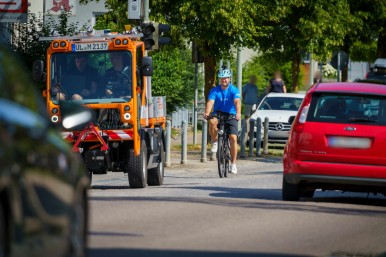
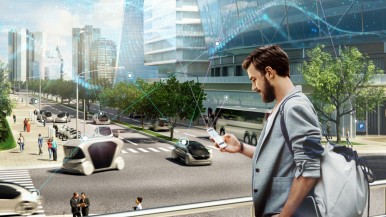
Stuttgart, Germany – The digital transformation, increasing urbanization and automation, as well as the need for greater energy efficiency and climate action are tough challenges currently facing the mobility sector. In the three-year LUKAS research project, Bosch, InMach, IT-Designers, Mercedes-Benz, Nokia, Ulm University, and the University of Duisburg-Essen are researching how to improve traffic efficiency and safety in future mixed traffic scenarios of urban traffic environments. LUKAS is the abbreviation of the German name "Lokales Umfeldmodell für das kooperative, automatisierte Fahren in komplexen Verkehrssituationen” (local environment model for cooperative automated driving in complex traffic situations). Reliable communication between automated and non-automated traffic participants as well as within the infrastructure plays a key role here. The project was funded by the German Federal Ministry for Economic Affairs and Climate Action (BMWK) with 5.2 million euros as part of its program for new vehicle and systems technology.Using data from the local environment for more safety and efficiency To increase traffic efficiency and safety in future mixed traffic scenarios of urban traffic environments, the LUKAS research project uses all the information available within the local environment. This includes, for example, information from infrastructure sensors, connected cars and commercial vehicles, and mobile devices such as smartphones used by pedestrians or cyclists. This concept provides anonymized data from traffic participants and stationary objects, including values such as position, extent, and possibly the travel speed and direction of movement. The preprocessed sensor information is relayed to an edge server, which is directly connected to the 5G network near the junction and provides data transmission with minimal delay times. A fusion algorithm on the edge server is able to create a comprehensive model of the local surroundings and use this as the basis to plan maneuvers for connected traffic participants. Object information from the server's environment model is fed back to the road users. This expands their overview to include areas that they cannot detect themselves. "The edge server uses methods of artificial intelligence (AI), among others, to calculate an optimized, cooperative maneuver and then sends instructions to the connected participants. This approach makes it possible to increase the overall energy efficiency of a traffic scenario and the safety of traffic participants, especially those who are vulnerable...explains Dr. Rüdiger Walter Henn, head of the LUKAS project at Bosch, the consortium leader. LUKAS pilot installation in Ulm-Lehr To run the tests, which took place in a public area in the suburb of Ulm-Lehr, the consortium used a pilot installation supported by the city of Ulm and operated by Ulm University. The selected area contains a junction with a right-of-way street turning off and a side street entering. The buildings there obscure the right-of-way, which makes this street situation particularly interesting for real traffic scenarios. "This installation gives us excellent opportunities to use real traffic situations to test the approaches we have researched and developed, so we can very quickly draw conclusions about their suitability for practical use," explains Dr. Michael Buchholz, who heads the Electric Mobility and Connected Driving/Connected Infrastructure research groups at the Institute of Measurement, Control and Microtechnology at Ulm University and is responsible for the pilot installation. The lampposts in the vicinity of the junction are equipped with video, lidar, and radar sensors to detect and classify the flowing traffic. The object information is sent to the edge server via a 5G network from the partner Nokia. Due to data protection reasons, persons and vehicles are not able to be identified. The edge server hosts the global environment model, several evaluated variations of cooperative maneuver planning, and a warning module for pedestrians and cyclists. Connectivity makes travel safer and more efficient To depict cooperative use cases in mixed traffic, Bosch, Mercedes-Benz, and Ulm University bring in connected, partially automated passenger cars. InMach provides a connected prototype of a street sweeper. Special smartphone apps from IT-Designers GmbH and Nokia make it possible to connect pedestrians and cyclists with the edge server. IT-Designers collects data using a video drone to assist in the simulation of the traffic scenarios, while the University of Duisburg-Essen supports the project with traffic flow simulations. All tested use cases verified the benefits of the LUKAS approach in terms of increasing traffic efficiency and safety. Simulation results from AI-based planning algorithms lead researchers to expect a significant increase in the traffic flow. Studies by the partner Mercedes-Benz show a significant reduction in fuel consumption and a decrease in the time required to pass through the junction in comparison to conventional driving. By delaying oncoming traffic to allow for cooperative behavior, participants passing stationary vehicles and vulnerable traffic participants crossing the road are protected in obscured areas. Thanks to the new technology and cooperative scenario planning, traffic participants recognize early on which driving strategy will enable them to behave safely and efficiently. The results of the LUKAS project have allowed the partners of the consortium to gain informative experience about connected, cooperative driving and incorporate this into the development of new products. The approach developed by LUKAS can help make automated driving in urban mixed traffic safer and more efficient for all traffic participants.

TSMC, Bosch, Infineon, and NXP Establish Joint Venture to Bring Advanced Semicon ...

08.08.2023

Press release

Connected mobility

TSMC, Bosch, Infineon, and NXP Establish Joint Venture to Bring Advanced Semicon ...

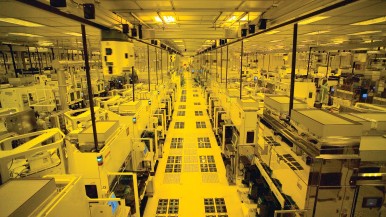
Hsinchu, Stuttgart, Munich, Eindhoven, Aug 8, 2023 – TSMC (TWSE: 2330, NYSE: TSM), Robert Bosch GmbH, Infineon Technologies AG (FSE: IFX / OTCQX: IFNNY), and NXP Semiconductors N.V. (NASDAQ: NXPI) today announced a plan to jointly invest in European Semiconductor Manufacturing Company (ESMC) GmbH, in Dresden, Germany to provide advanced semiconductor manufacturing services. ESMC marks a significant step towards construction of a 300 mm fab to support the future capacity needs of the fast-growing automotive and industrial sectors, with the final investment decision pending confirmation of the level of public funding for this project. The project is planned under the framework of the European Chips Act. The planned fab is expected to have a monthly production capacity of 40,000 300 mm (12-inch) wafers on TSMC’s 28/22 nanometer planar CMOS and 16/12 nanometer FinFET process technology, further strengthening Europe’s semiconductor manufacturing ecosystem with advanced FinFET transistor technology and creating about 2,000 direct high-tech professional jobs. ESMC aims to begin construction of the fab in the second half of 2024 with production targeted to begin by the end of 2027. The planned joint venture will be 70 percent owned by TSMC, with Bosch, Infineon, and NXP each holding 10 percent equity stake, subject to regulatory approvals and other conditions. Total investments are expected to exceed 10 billion euros consisting of equity injection, debt borrowing, and strong support from the European Union and German government. The fab will be operated by TSMC. “This investment in Dresden demonstrates TSMC’s commitment to serving our customers’ strategic capacity and technology needs, and we are excited at this opportunity to deepen our long-standing partnership with Bosch, Infineon, and NXP,” said Dr. CC Wei, Chief Executive Officer of TSMC. “Europe is a highly promising place for semiconductor innovation, particularly in the automotive and industrial fields, and we look forward to bringing those innovations to life on our advanced silicon technology with the talent in Europe.” Dr. Stefan Hartung, chairman of the Bosch board of management: “Semiconductors are not only a crucial success factor for Bosch. Their reliable availability is also of great importance for the success of the global automotive industry. Apart from continuously expanding our own manufacturing facilities, we further secure our supply chains as an automotive supplier through close cooperation with our partners. With TSMC, we are pleased to gain a global innovation leader to strengthen the semiconductor ecosystem in the direct vicinity of our semiconductor plant in Dresden.” Semiconductors are not only a crucial success factor for Bosch. Their reliable availability is also of great importance for the success of the global automotive industry. Apart from continuously expanding our own manufacturing facilities, we further secure our supply chains as an automotive supplier through close cooperation with our partners. With TSMC, we are pleased to gain a global innovation leader to strengthen the semiconductor ecosystem in the direct vicinity of our semiconductor plant in Dresden....said Dr. Stefan Hartung, chairman of the Bosch board of management “Our joint investment is an important milestone to bolster the European semiconductor ecosystem. With this, Dresden is strengthening its position as one of the world’s most important semiconductor hubs that is already home to Infineon’s largest frontend site,” said Jochen Hanebeck, CEO of Infineon Technologies. “Infineon will use the new capacity to serve the growing demand particularly of its European customers, especially in automotive and IoT. The advanced capabilities will provide a basis for developing innovative technologies, products and solutions to address the global challenges of decarbonization and digitalisation.” “NXP is very committed to strengthening innovation and supply chain resilience in Europe,” said Kurt Sievers, President and CEO of NXP Semiconductors. “We thank the European Union, Germany, and the Free State of Saxony for their recognition of the semiconductor industry’s critical role and for their true commitment to boost Europe’s chip ecosystem. The construction of this new and significant semiconductor foundry will add much needed innovation and capacity for the range of silicon required to supply the sharply increasing digitalization and electrification of the automotive and industrial sectors.”About Infineon Infineon Technologies AG is a global semiconductor leader in power systems and IoT. Infineon drives decarbonization and digitalization with its products and solutions. The company has around 56,200 employees worldwide and generated revenue of about €14.2 billion in the 2022 fiscal year (ending 30 September). Infineon is listed on the Frankfurt Stock Exchange (ticker symbol: IFX) and in the USA on the over-the-counter market OTCQX International over-the-counter market (ticker symbol: IFNNY). Further information is available at www.infineon.com . Follow us: Twitter – Facebook – LinkedIn About NXP Semiconductors NXP Semiconductors N.V. (NASDAQ: NXPI) brings together bright minds to create breakthrough technologies that make the connected world better, safer and more secure. As a world leader in secure connectivity solutions for embedded applications, NXP is pushing boundaries in the automotive, industrial & IoT, mobile, and communication infrastructure markets while delivering solutions that advance a more sustainable future. Built on more than 60 years of combined experience and expertise, the company has approximately 34,500 team members in more than 30 countries and posted revenue of $13.21 billion in 2022. Find out more at www.nxp.com . About TSMC TSMC pioneered the pure-play foundry business model when it was founded in 1987, and has been the world’s leading dedicated semiconductor foundry ever since. The Company supports a thriving ecosystem of global customers and partners with the industry’s leading process technologies and portfolio of design enablement solutions to unleash innovation for the global semiconductor industry. With global operations spanning Asia, Europe, and North America, TSMC serves as a committed corporate citizen around the world. TSMC deployed 288 distinct process technologies, and manufactured 12,698 products for 532 customers in 2022 by providing broadest range of advanced, specialty and advanced packaging technology services. The Company is headquartered in Hsinchu, Taiwan. For more information please visit https://www.tsmc.com .

Bosch opens new semiconductor test center for chips and sensors in Malaysia

01.08.2023

Press release

Connected mobility

Bosch opens new semiconductor test center for chips and sensors in Malaysia

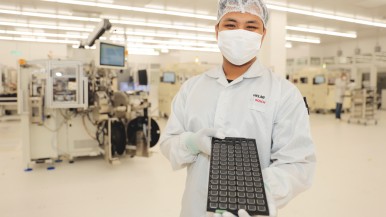
Stuttgart, Germany / Penang, Malaysia – Global demand for chips for the automotive and consumer goods industries remains high. That is why Bosch is continuing to expand its semiconductor business. The company has now opened a new test center for chips and sensors in Penang, Malaysia, at a cost of some 65 million euros; it plans to invest a further 285 million euros at the site by the middle of the next decade. “With our new semiconductor test center in Penang, we are creating additional capacity within our worldwide manufacturing network to meet the continued high demand for chips and sensors,” said Dr. Stefan Hartung, chairman of the Bosch board of management. “Semiconductors are a decisive success factor for all Bosch business areas, and the expansion of this business is strategically very important.” With our new semiconductor test center in Penang, we are creating additional capacity within our worldwide manufacturing network to meet the continued high demand for chips and sensors,...said Dr. Stefan Hartung, chairman of the Bosch board of management. In total, Bosch has some 100,000 square meters of land available on Penang’s mainland strip. The new test center currently covers more than 18,000 square meters and includes clean rooms, office space, and laboratories for quality assurance and manufacturing. By the middle of the next decade, up to 400 associates will be working there. With the new factory and a total of 4,200 associates, Penang is now Bosch’s biggest location in Southeast Asia. Semiconductor manufacturing can basically be divided into two sections: frontend manufacturing and backend manufacturing. For the latter, Malaysia is an important hub in the global semiconductor supply chain. The country is estimated to cover around 13 percent of global backend manufacturing. According to official figures, in recent years the state of Penang has generated more than 5 percent of worldwide semiconductor revenue. “The new test center in Penang brings our manufacturing network closer to the companies that serve the further value chain of semiconductor manufacturing as well as to customers in this important Asian market. That shortens delivery times and routes, and it improves our competitiveness,” says Dr. Markus Heyn, member of the Bosch board of management and chairman of the Mobility business sector. One of the most cutting-edge test centers in Southeast Asia The frontend is where the actual circuits are attached and patterned on the wafers; at Bosch, for example, this work is currently performed in the clean rooms of the wafer fabs in Reutlingen and Dresden. The backend is where the individual chips are then separated from the wafers, assembled, and tested. Bosch currently carries out most of the final testing of its semiconductors in Reutlingen, Germany; Suzhou, China; and Hatvan, Hungary. Those locations will now be joined by the new test center in Penang, Malaysia. The fully connected plant is one of the most advanced semiconductor test centers in Southeast Asia. Here, Bosch will immediately begin testing semiconductors that the company manufactures at its frontend in Dresden, among other locations. “Our new test center in Penang completes our internal process chain, especially for semiconductors from Dresden,” Heyn says. Bosch invests further in chip business Bosch is pursuing a global growth strategy with its semiconductor business. Over the next three years, the company plans to invest some three billion euros in Dresden and Reutlingen, both as part of its own investment plan and under the auspices of the European IPCEI ME/CT (“Important Project of Common European Interest on Microelectronics and Communication Technologies”) funding program. Following its expected acquisition of part of the business of TSI Semiconductors, based in Roseville, California, which is expected before the end of the year, Bosch plans to invest roughly an additional 1.4 billion euros in retooling the fab to support the latest manufacturing processes for silicon carbide semiconductors. Penang Factsheet

GAIA-X 4 moveID project develops basis for secure mobile data exchange

08.09.2022

Press release

Business/economy

GAIA-X 4 moveID project develops basis for secure mobile data exchange

Stuttgart, Germany – Which parking garages currently have vacant charge spots available? Where are free parking spaces in the city center? And how can this information be digitally transmitted, and services billed, across providers? The answer to these and similar questions calls for secure data exchange between the vehicles and their environment. It is precisely this foundation that a research project consisting of universities, automotive suppliers, and system providers is now in the process of building, with Bosch leading the consortium. Over the next three years, the GAIA-X 4 moveID project is set to develop the necessary standards and technological concepts to enable the secure exchange of information between providers of mobility applications and their customers. The goal is to create decentralized digital vehicle identities. This is an important prerequisite for the mass use of electric vehicles, automated driving, and the establishment of connected cities. GAIA-X 4 moveID is supported to the tune of 14 million euros by the German Federal Ministry for Economic Affairs and Climate Action – covering half of the project costs.Connectivity for digital services across the board “An integrated and transparent system architecture for the exchange of data on the road that incorporates different products and players simply isn’t available today. While it’s true that some companies out there already offer services, those services are tailored for specific applications, vehicles, or customer groups,” explains Peter Busch, project manager at the consortium leader Bosch. They often map the infrastructure, for example, but they rarely provide information about availability due to a lack of connectivity between the many independently operating service providers. “Open standards are needed so that users, for example, can find all available charging stations or pay for charging processes,” Busch says. It’s important to always ensure that the data is processed securely and that individual providers don’t exploit it solely for their own purposes. For Busch, this is the only way that the necessary user confidence can grow and a broad range of all available services, such as so-called deep parking (use of otherwise unavailable parking spaces), can be created. That is why the consortium is building on the European GAIA-X system, which defines the technological, economic, and legal framework for a secure and trustworthy data infrastructure. GAIA-X relies on decentralization and the interplay of different cloud providers under common guidelines. In this spirit, the GAIA-X 4 moveID project is using open source software for its developments and making them available to all providers for various business models. Vehicles are becoming marketplaces The standards that GAIA-X 4 moveID is pursuing will allow vehicles to securely and independently exchange information with other vehicles and their environment without an “intermediary.” The vehicles’ “infrastructure partners” include charge spots, barriers, traffic lights, and parking lots. The research project will use internationally recognized hardware and software to develop management and administrative services to facilitate the interaction and trade between different players. This will enable providers to connect a great many services, such as news, entertainment, and navigation, with the car’s system, especially in automated driving. The market for services related to connected parking alone is estimated to be worth ten billion euros annually worldwide. What’s more, the ability to navigate directly to a vacant parking space significantly reduces congestion and emissions. After all, today, about a third of downtown urban traffic is people looking for parking spaces. The availability of information is also a crucial factor for the success of electromobility. It is estimated that about half of newly registered cars in Europe will be electric by 2030. “Their drivers need to know that they’ll be able to find a charge spot quickly whenever they need one. And that requires connected systems,” Busch says. Extensive data exchange as a basis for automated driving The mass use of automated vehicles is conceivable only if cars are able to quickly and reliably communicate with their environment. The data exchange this requires will enable climate-friendly traffic control based on the volume of traffic at any given moment. This will allow cities to regulate incoming traffic to particular areas in real time, thus preventing congestion. However, this method, known as zoning, requires that vehicles be able to immediately recognize changing conditions and to reroute accordingly. Zoning is being demonstrated with test vehicles – for the first time across borders – in the Germany-France-Luxembourg (Merzig/Saarbrücken) test area as part of the GAIA-X 4 moveID project. The cars receive dynamic information regarding their approach to defined zones.The project partners: Robert Bosch GmbH Materna Information & Communications SE Denso Automotive Deutschland GmbH Continental Automotive Technlogies GmbH WOBCOM GmbH ecsec GmbH HTW Saar (University of Applied Sciences) Atos Information Technology GmbH Chainstep GmbH Peaq Technology GmbH Zeppelin Universität gGmbH (Zeppelin University) Datarella GmbH 51nodes GmbH Bigchain DB GmbH Fetch.ai Research & Development GmbH ITK Engineering GmbH Deutsche Zentrum für Luft- und Raumfahrt e.V. (German Aerospace Center) Airbus Defence and Space GmbH Delta Dao AG

Automated driving: Bosch and Volkswagen Group subsidiary Cariad agree on extensi ...

25.01.2022

Press release

Automated mobility

Automated driving: Bosch and Volkswagen Group subsidiary Cariad agree on extensi ...

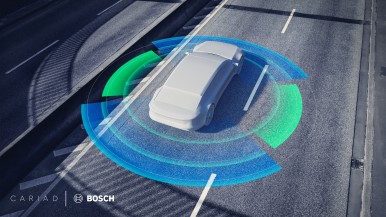
Stuttgart, Wolfsburg, and Ingolstadt, Germany – More safety and less stress for drivers, more rapid deployment of automated driving functions across all vehicle classes: Bosch and the Volkswagen Group subsidiary Cariad are now collaborating to achieve this objective, and have agreed to form an extensive partnership. The companies want to make partially and highly automated driving suitable for volume production, and thus available to the broad mass of consumers. For the vehicles sold under the Volkswagen Group brands, the alliance aims to make functions available that will allow drivers to temporarily take their hands off the steering wheel. More specifically, these functions are Level 2 hands-free systems for urban, extra-urban, and freeway driving, as well as a system that takes over all driving functions on the freeway (SAE Level 3). The first of these functions are to be installed in 2023. For partially and highly automated driving, the two companies will jointly develop a state-of-the-art, standardized software platform. The aim is to use this platform in all privately used vehicle classes sold under Volkswagen Group brands – and thus in one of the world’s biggest vehicle fleets. It will also be possible to integrate all the component parts developed by the alliance in other automakers’ vehicles and ecosystemsSoftware and volume-production expertise “For privately owned vehicles, progress to automated driving happens one step at a time. At Bosch, we’ve been working successfully on this for many years now. Together with Cariad, we will now be accelerating the market launch of partially and highly automated driving functions across all vehicle classes, and thus making them available for everyone. This will make driving on the roads safer and more relaxed,” says the Bosch board of management member Dr. Markus Heyn. “We will be able to offer the solutions we create to our other customers as well, and in this way set new standards.” The two partners have got what it takes to make increasingly automated driving a common sight on our roads: they have decades of experience in the volume production, scalability, and approval of driving systems, as well as expertise in the areas of software, data-driven development, and artificial intelligence. For privately owned vehicles, progress to automated driving happens one step at a time. At Bosch, we’ve been working successfully on this for many years now. Together with Cariad, we will now be accelerating the market launch of partially and highly automated driving functions across all vehicle classes, and thus making them available for everyone. This will make driving on the roads safer and more relaxed...Bosch board of management member Dr. Markus Heyn “Automated driving is key to the future of our industry. With our cooperation, we’ll strengthen Germany’s reputation for innovativeness. Bosch and Cariad will further enhance their expertise in the development of pioneering technologies,” says Dirk Hilgenberg, the Cariad CEO. “This underscores our ambition to deliver the best possible solutions to our customers as soon as possible.” Automated driving is key to the future of our industry. With our cooperation, we’ll strengthen Germany’s reputation for innovativeness. Bosch and Cariad will further enhance their expertise in the development of pioneering technologies...Cariad CEO Dirk Hilgenberg Intelligently processing information from the real environment At various locations belonging to the two companies, and especially in Stuttgart and Ingolstadt, associates from the Bosch Cross-Domain Computing Solutions division and Cariad will work together to develop partially and highly automated driving functions. Working in mixed, agile teams, they will be part of a global network. At peak times, it is expected that the various modules required by the project – from middleware to individual applications – will occupy more than 1.000 experts from the two companies. The two companies have already started recruiting fresh experts to work in the alliance as well. The focus of the project’s work will be data-driven software development on the basis of information from 360-degree surround sensing. For this purpose, a highly innovative development environment will be created for the recording, evaluation, and processing of data. The environment will also make use of AI methods. The idea behind this is a simple one. The more extensive the pool of data from real road traffic, the more robust and natural the design of the partially and highly automated driving functions can be. This applies, for example, to additional layers for high-resolution maps for the localization and lateral and longitudinal guidance of vehicles. The alliance will also be working on these layers. Moreover, it applies equally to everyday driving situations and to what are known as “corner cases” – the seldom occurring road-traffic incidents that are especially tricky for a system to resolve. Information processing in real time “The best proving ground for the development of automated driving is road traffic. With the help of one of the world’s biggest connected vehicle fleets, we will gain access to a huge database. This will allow us to take automated driving systems to a new level. All our customers will be able to benefit from this,” says Dr. Mathias Pillin, president of Bosch Cross-Domain Computing Solutions. “Together, we can test automated driving functions on a broader scale in actual vehicles and implement them more quickly. Our engineering work will be done jointly, with Bosch and Cariad as one team. There has never been an alliance like this in the automotive industry,” says Dr. Ingo Stürmer, the alliance’s project director at Cariad. This also involves feeding the data gathered in real traffic conditions into the development process – continuously and in real time. Each kilometer driven in real traffic conditions, and the data gathered, evaluated, and processed as a result, means a bigger pool of data and a better basis from which to make even higher levels of automated driving reality and get them safely and reliably onto our roads. The partners have also agreed to examine the possibility of joint development targets and timelines on the path the fully automated driving (SAE Level 4). The guiding principle behind this partnership on equal terms is as follows: one of the world’s biggest automaking groups plus one of the world’s biggest automotive suppliers equals a huge step forward in the development of automated driving.

CES 2022: For better quality of life and more climate action – connected and sma ...

04.01.2022

Press release

Business/economy

CES 2022: For better quality of life and more climate action – connected and sma ...

Las Vegas – At home, on the road, at work, in the hospital, or even in orbit: Bosch is improving the everyday lives of people from all walks of life with smart and connected solutions. At the same time, the company is tapping into new areas of business through software, services, and licenses. “We are systematically digitalizing our core business to increase the benefits for our customers. Going forward, we aim to turn the sale of every digital product into services-based revenue as well,” says Tanja Rückert, the Bosch Group’s chief digital officer, at CES in Las Vegas. To achieve this goal, Bosch is focusing on the connection of IoT with AI – in other words, it is linking the internet of things (IoT) with artificial intelligence (AI). We are systematically digitalizing our core business to increase the benefits for our customers. Going forward, we aim to turn the sale of every digital product into services-based revenue as well....Tanja Rückert, the Bosch Group’s chief digital officer This creates a virtuous circle in which connected products deliver information that, in turn, is processed by means of AI and incorporated into software updates for these products. At the core of this approach is the benefit for customers, since it allows users to be an integral part of the development process and enables solutions to be tailored precisely to their needs. Furthermore, neither development nor value creation ends with the sale of the products. “We see the combination of AI and IoT as holding the key to leveraging the most user benefit from both of these technologies,” Rückert says. “Besides enabling us to develop new business models, this approach helps us offer better products and solutions that deliver real added value for individuals and society as a whole.” Expanding software expertise: Bosch is already shaping the future today Bosch laid the foundation for this long ago. As of the new year, all electronics product classes will be connectable. Sales of connected power tools, household appliances, and heating systems alone have grown by 50 percent within one year – from four million units in 2020 to more than six million in 2021. With the Bosch Center for Artificial Intelligence (BCAI), the company has established a strong unit in the field of AI that has already contributed some 300 million euros to result. In addition, the company invests a total of more than four billion euros every year in its software expertise, around three billion of which goes to the mobility business. To shape the software-defined future of mobility, Bosch will also be pooling development activities for application-independent software in one unit as of mid-2022. In the future, under the umbrella of its subsidiary ETAS GmbH, the company will develop and sell basic vehicle software, middleware, cloud services, and development tools for universal application. Bosch is also rapidly advancing connected and automated driving. Over the past five years, Bosch has generated some nine billion euros in sales just with driver assistance systems and the associated sensors. Bosch Tech Compass: a survey conducted in five countries around the world The Bosch Tech Compass – a representative survey conducted in five countries and presented for the first time at CES – shows what people across the globe expect from new technologies. According to the survey, the majority of respondents (72 percent) are convinced that technological progress is making the world a better place, for instance as a key to fighting climate change (76 percent). At the same time, four out of five people think technology should be more focused on tackling the great challenges of our time rather than serving individual needs. “We at Bosch also believe that technology offers a broad range of benefits,” Rückert says. “When we talk about high-tech, we’re not talking only about pushing the envelope on what’s possible. We use technology as a means to improve people’s lives wherever they are.” From space to pediatric medicine: the Bosch SoundSee sensor system One example of the benefit of AI and connectivity is the SoundSee sensor system. Since late 2019, it has been traveling through space to identify unusual sounds on the ISS, using AI algorithms to analyze and indicate when maintenance is required. Now, in collaboration with the non-profit healthcare company Highmark in Pittsburgh (USA), Bosch is pursuing a completely down-to-earth application of this technology: investigating how audio AI can be used as a diagnostic tool in pediatric medicine. Specifically, Bosch and Highmark are working to adapt the sensors in a way that will enable them to detect pulmonary conditions such as asthma at an early stage just by listening to children’s breathing patterns. “Using innovative technology to improve children’s health – that’s exactly what we mean with high tech,” says Mike Mansuetti, president of Bosch in North America. SoundSee’s use in medicine also illustrates Bosch’s understanding of its “Invented for life” strategic imperative. Bosch’s new gas sensor – the first on the market to contain AI – serves to protect both humans and nature. Part of Dryad’s Silvanet Wildfire Sensor, it is essentially a digital nose that helps detect forest fires early on. Dryad’s sensors are attached to trees, where they continuously monitor the local microclimate to detect incipient fires – and to wirelessly notify the local authorities, long before camera- or satellite-based systems can. Not only can this protect against devastation by fire, it can also reduce global carbon emissions from forest fires. “These sensors are going to help save lives, homes, and tons of CO 2 from entering the atmosphere – all thanks to AI and connectivity,” Mansuetti says. High-tech #LikeABosch: new campaign for smart solutions A new, lighthearted Bosch campaign shows the solutions the company has developed to improve the little things in people’s everyday lives. Called “High tech #LikeABosch – with many connected, intelligent, and sustainable solutions,” its protagonist takes viewers on a tour through her daily routine and uses several Bosch solutions, from smart glasses to a connected e-bike to a digital access pass for work. This makes her teenage son, who at the start of the clip said his mom was “old school,” look pretty out of touch.

Bosch Tech Compass: 72 percent believe that technology makes the world a better  ...

04.01.2022

Press release

Business/economy

Bosch Tech Compass: 72 percent believe that technology makes the world a better ...

Stuttgart, Germany / Las Vegas, USA – The vast majority of people surveyed worldwide believe that technological progress is making the world a better place (72 percent). This is a finding of the Bosch Tech Compass , a representative survey of the general public in China, India, Germany, the United Kingdom, and the United States. The survey is having its global debut at CES 2022. In view of the rapid and profound changes technology is driving in many spheres of life, the Bosch Tech Compass aims to encourage people to take a closer look at the positive impact of technological progress on a globalized world.Technological progress as key to combating climate change Although technology has the potential to make almost anything possible, such as creating a pizza with a 3D printer, global respondents strongly agree that technology should be more focused on tackling the major challenges of our time rather than serving individual needs (83 percent). For example, the survey shows that more than three out of four respondents worldwide see technological progress as the key to combating climate change. “The Bosch Tech Compass shows that people want technology that addresses the problems of our time,” says Bosch CEO Stefan Hartung. “Technology should support us, make life easier overall, and make the world a better place. This is why we at Bosch are committed to technology that is ‘Invented for life’ and serves people.” Despite global confidence in technological progress, there are regional differences in the perception of how technology is currently being used. While most Chinese (83 percent) and Indian respondents (77 percent) are more confident that technology is currently being used sufficiently to tackle the major problems of our time, only a minority of people in the U.S. (47 percent), the U.K. (37 percent), and Germany (29 percent) believe this. The Bosch Tech Compass shows that people want technology that addresses the problems of our time...says Bosch CEO Stefan Hartung Western countries have high hopes for green tech, Asia for AI In the assessment of individual technologies and their impact, there are significant regional differences. While Germany, the U.K., and the U.S. see green technologies like climate engineering, biotechnology, and hydrogen as having a particularly positive impact on society, China and India have high hopes for intelligent and connected technologies like AI and 5G. Around a third of all respondents in the U.S. and Europe, however, say they see AI as the biggest technological threat. “Easing such concerns is yet another reason why building trust in digital technology will be crucial, and it will have a direct impact on consumer behavior as well,” Hartung says. Four out of five people worldwide believe that a company’s success will depend on building digital trust with its customers in the future. Trust is also becoming increasingly important: for 43 percent of global respondents, trust plays a greater role in the digital world than in the analog world, as opposed to only 20 percent who see it the other way around. “This is also why Bosch has introduced its AI code of ethics , which is contributing to the important public debate around AI and trust in AI,” Hartung adds. Easing such concerns is yet another reason why building trust in digital technology will be crucial, and it will have a direct impact on consumer behavior as well....says Hartung. Driving or beaming? When asked how they would prefer to move around in the future – regardless of technical feasibility – German respondents displayed fewer reservations. Nearly four in ten (39 percent) would choose beaming as their preferred mode of transportation, which makes them more adventurous than the Chinese with 34 percent. Teleportation also has a few fans in the U.K. (27 percent), the U.S. (20 percent), and India (10 percent). Despite respondents being given free rein to daydream, teleportation was not at the top of anyone’s wish list. In first place with 56 percent was the considerably more mundane human-controlled car, followed by planes (40 percent) and trains (32 percent).

Bosch at CES 2022: smart technology to make everyday life safe, convenient, and  ...

13.12.2021

Press release

Smart Home

Bosch at CES 2022: smart technology to make everyday life safe, convenient, and ...

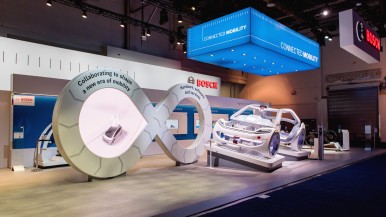
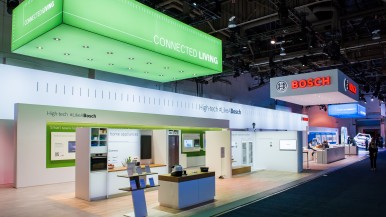
Stuttgart, Germany, and Las Vegas, NV – Technology for all walks of life: at CES in Las Vegas, Bosch will be presenting connected, smart, and sustainable products and services for a better life – at home and on the road. From January 4 through 7, 2022, you will find Bosch at CES in the Central Hall, Booth #16103.CES Innovation Awards: Honoree for smart connected biking solution For its smart connected biking solution, Bosch eBike Systems has been named a CES® 2022 Innovation Award honoree in the “Vehicle Intelligence & Transportation” category. The CES® Innovation Awards are given by the Consumer Technology Association (CTA). Smart connected biking solution – e-bike riding enjoyment 2.0: The new systems generation from Bosch eBike Systems merges the physical experience of riding an e-bike with the digital experience provided by connectivity and an app. This smart system comprises the new eBike Flow app, an LED user interface, color display, rechargeable battery, and drive unit. Over-the-air updates mean it can be continuously enhanced. The eBike Flow app opens up a range of new digital features for e-bikes, such as automatic activity tracking and personalized riding modes. Whether on the daily commute or a leisurely ride, the result is more enjoyment over longer distances. A Bosch must-see Bosch show car: The future of mobility is automated, connected, electrified, and personalized. In the future, more and more vehicles will be electrically powered. They will increasingly be connected with other road users and their surroundings, and provide personalized, cloud-based services for their occupants such as wrong-way driver alerts or road condition updates. The show car will demonstrate Bosch systems expertise and extensive know-how in software and hardware. For example, Bosch is developing central computers for the electronics architecture of the future. These vehicle computers will be used for assisted and automated driving, controlling vehicle motion, as well as for cockpit functions and body electronics. Over-the-air updates will keep cars’ functions constantly up to date. Virtual visor – the transparent digital sun visor: Conventional sun visors shield car drivers from dazzling light. But folding them down often also blocks significant areas of a driver’s field of vision. Bosch has solved this problem with a new, transparent LCD solution that replaces opaque visors. The virtual visor is connected to the interior monitoring camera, which detects the position of the driver’s eyes. Using AI-based intelligent algorithms, the virtual visor analyzes this information and darkens only the portion of the windshield through which the sun or other light sources would dazzle the driver. The rest remains transparent, leaving the driver’s view of the road unobstructed. SoundSee – intelligent ears for the ISS: Although barely bigger than a lunch box, Bosch’s SoundSee is brimming with start-of-the-art artificial intelligence (AI). SoundSee can be found on the ISS (international space station). Installed on board Astrobee, NASA’s autonomous free-flying robot, SoundSee’s integrated microphones pick up ambient noise in space. Using AI, the Bosch technology then analyzes the audio data in order to detect potential anomalies and to flag areas requiring maintenance work. SoundSee was developed together with Astrobotic as part of a NASA research partnership. Software-based solutions for the mobility of today and tomorrow Solutions for the software-defined vehicle: Software is playing an increasingly central role in automotive engineering. After all, future connectivity, automation, and personalization functions will more than ever be brought about by software. Even now, Bosch annually puts more than 200 million control units running its proprietary software into vehicles worldwide. To achieve this, the company can draw on profound software, electronics, and systems expertise, and use this to develop application-specific vehicle software and the hardware to match for automotive applications of all kinds, from driver assistance and infotainment to the powertrain. Bosch plans to pool the development of application-independent basic software and middleware, as well as cloud-based software modules for over-the-air software updates, at its wholly owned subsidiary ETAS. Advanced driving module – pre-integrated components for electric cars: To make the development of electric cars less complex, and thus improve efficiency for automakers, Bosch offers pre-integrated modules such as its ADM advanced driving module. The ADM combines powertrain, brakes, and steering to form an integrated unit that automakers can incorporate faster and more cost-effectively into their vehicles. In addition, simplified interfaces and a standard software architecture ensure the best possible communication between the components, and provide the basis for new features. TPA technician process assistant – a digital handyman: The TPA technician process assistant is part of a connected after-sales ecosystem in which humans and machines exchange data as needed to efficiently repair and maintain vehicles. The system, which is continuously learning and evolving, is a hands-free, platform-agnostic solution that works with tablet, PC, and wearables. With the help of AI, moreover, a knowledge base has been created on the basis of information taken from traditional servicing operations. If more expertise is needed, a connection can be set up between an expert and the “eyes and ears” of the technician working on the vehicle. This helps improve accuracy and efficiency when servicing and repairing today’s ever more complex vehicles. Nevonex – connecting agriculture: Agriculture currently faces the challenge of securing food production in a changing climate. Here, Nevonex can help farmers by providing the necessary expert knowledge in the form of digitalized services. Nevonex allows these third-party services to be used in all makes of agricultural machinery – for example, to automate machine settings or optimize crop-planting processes. Bosch’s research here focuses on harnessing data from these processes to optimize subsequent process steps. The aim is to use edge computing to make robust, AI-based services available for farmers. A breath of fresh air – Bosch solution for better urban air quality: To improve air quality in cities, at airports and train stations, and in business parks, Bosch offers innovative solutions that precisely record and simulate emissions. Bosch air-quality monitors provide precise readings for nitrogen oxides, particulates, humidity, and temperature – in other words, important information for gauging local air quality. The data is then uploaded to the cloud and evaluated. Knowing precisely what pollutants are in the air, where they are, and where they are spreading to allows countermeasures to be taken quickly, for better air at all times. Smart solutions that improve convenience and security in the home Bosch heating and cooling solutions for a perfect climate in the home: Thanks to state-of-the-art inverter technology, the highly efficient Climate 5000 3.0 ductless mini-split air-source heat-pump system offers ample heating and cooling capacity. This heat pump is suitable for most residential buildings due to its ability to heat efficiently, even in frigid outdoor temperatures. The Climate 5000 3.0 features improved energy efficiency and humidity control, creating a comfortable indoor climate. In addition, its built-in air filtration system purifies the air and reduces volatile organic compounds (VOCs) and other harmful gases and odors. Bosch is also launching the Inverter Ducted Split (IDS) Premium Connected heat-pump system on the market. This solution offers high efficiency and particularly innovative connected features. Using a wireless internet connection and an IoT platform means that installers and homeowners can register it in the app. It also makes installation and troubleshooting easy. With the EasyAir app, installers and homeowners can access data remotely, allowing them to monitor energy consumption and appliance status. Connected thermostats – smart and simple heating control: With its BCC50 and BCC100 connected thermostats, Bosch offers a simple and smart all-in-one control for heating, air-conditioning, and ventilation systems. Users can program their own heating and cooling schedules, for example. The controls are set directly on the thermostat, by using the Bosch Connected Control app, or by voice command. Intelligent oven – cooking with a voice assistant: What temperature? Direct heat or steam? Finding the right setting can be tricky. But whether it’s a quick supper or fine dining, an intelligent Bosch oven will do the trick. The voice assistant Alexa is standing by with advice, and will not only recommend the best oven setting, but also switch the oven on if required – all you have to do is ask. Recipes inspired by a digital look inside the fridge: No idea what to eat? Fridge always full of leftovers? That’s now a thing of the past. Now food can be entered into a digital fridge inventory – manually, by synchronizing with the Home Connect shopping list, or via a camera in the fridge. The Home Connect app will then know exactly what’s in the fridge and provide recipe ideas based on the provisions available. A surefire recipe for new ways to treat your taste buds, as well as for less food waste. Bosch Cookit – all-around culinary talent: Cookit offers a whole new dimension of flexibility in the kitchen. Whether guided cooking, automatic programs, or manual cooking, the multifunctional food processor with cooking function has the right level of support for everyone. And now it has become even more flexible: the new “My Recipe” function allows Cookit to save personal recipes. The recipe, with all ingredients, quantities, temperatures, and special tips, is entered in the Home Connect app, which then relays it to the Cookit. The food processor with cooking function will then guide the user through the preparation steps as often as required. Bosch sensors – unshakeable, untiring, and incredibly flexible BME688 – monitors air quality and protects forests: Whether at home, in the office, or outdoors – to satisfy the need for clean air, Bosch Sensortec has developed the BME688. This innovative MEMS sensor is the world’s most compact four-in-one air-quality sensor featuring artificial intelligence, and is capable of measuring gas, humidity, temperature, and atmospheric pressure simultaneously. It is suitable for a range of applications, such as sending a warning when foodstuffs expire or the early detection of forest fires. In collaboration with Dryad Networks, BME688 sensors have been combined with an IoT network to detect forest fires early. Fewer forest fires mean significantly lower CO 2 emissions. In this way, Bosch is helping to mitigate global warming. BHI260AP – revolutionizing fitness tracking: Squats, sit-ups, kettlebell training: the list of fitness exercises is nearly endless. However, many fitness trackers and smart watches can track only a limited number of activities, and the variety of apparatus types as well as users’ different movement styles, physiques, and fitness levels mean that they cannot always reliably recognize the exercises being done. To solve this problem, Bosch Sensortec has developed the BHI260AP – a novel, self-learning motion sensor that gives wearables and hearables artificial intelligence. The sensor recognizes and responds automatically to many different movements and can learn any new fitness activity based on regularly repeated routines. BMP384 – resistant to water, chemicals, and dust: Wearables, home appliances, and industrial applications often have to cope with tough conditions. Up to now, however, many barometric pressure sensors have not been very robust or resistant to fluids, and therefore could not always be installed in watertight products. With Bosch Sensortec’s BMP384, it’s a different story. This barometric pressure sensor is as compact as it is robust. At CES, Bosch Sensortec is also debuting a new ultra-precise pressure sensor that can also be used for indoor navigation and location. Bosch IoT solutions for the connected city and for more data security From a single source – application store for video analytic apps: The world’s first open application store for video analytics apps allows surveillance cameras to be flexibly equipped with new AI-assisted functions. In just a few minutes, applications for detecting things such as face masks, smoke, fire, and flooding or for evaluating flows of traffic and visitors can be installed on compatible cameras. Developed by the Bosch subsidiary Azena, more than 100 apps are already available for more than 40 use cases – with new ones joining them every month. Smart video cameras for greater road safety: Thanks to a new deep-learning video analytic software, the new Inteox cameras with object classification can be used in areas such as traffic monitoring. Even in heavy traffic, they can recognize precise details of vehicles faster. AI helps to detect unforeseen, undesired, or future situations more quickly, more intuitively, and more reliably. Using artificial intelligence to ward off hackers: The Bosch AI shield protects AI systems against external attacks. It performs the vulnerability analysis of AI systems and then creates an AI-assisted defense mechanism to provide protection. The solution comprises a SaaS (software as a service) tool and user interface which has been designed to help developers use and help organizations to scale it for a variety of AI systems. The Bosch AI shield defends AI systems in Cloud and IoT devices and protects IP, brands, and investments, thus creating trust in digitalization.


Swarm intelligence for automated driving

15.07.2021

Press release

Automated mobility

Swarm intelligence for automated driving

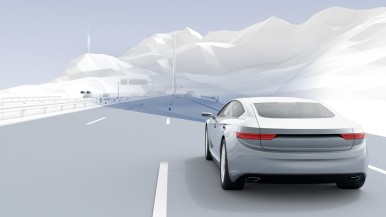
Stuttgart, Germany – Is it possible to help automated driving achieve a breakthrough just by driving? Sure – at least for drivers behind the wheel of a VW Golf 8. As they drive along, these vehicles can provide information for the Bosch road signature. The cloud-based service uses real-world traffic data from sensors to provide multilayer high-resolution maps and keep them up to date. For driving that is becoming increasingly automated, this function is crucial. “We are pleased to be paving the way to tomorrow’s mobility today together with partners,” says Dr. Mathias Pillin, president of the Bosch Cross-Domain Computing Solutions division.If cars are to drive on their own in the future, they will need highly accurate digital maps – and to know precisely where they are on those maps. This is exactly what the Bosch road signature offers: using information from radar and video sensors, as well as vehicle motion data, it augments common navigation maps with additional layers for vehicle localization and control. These additional layers are compatible with typical map formats. Data is currently being generated to set up the road signature. Starting in 2023, vehicles will feature the signature along with an initial number of services. Bosch plans to use current data to continuously expand the signature and keep it up to date. While the other map levels truly unfold their full potential especially in vehicles featuring Level 2 hands-free functions and higher, they also offer advantages at lower levels. “The more vehicles that provide information now and in the future, the larger and more robust the database will be for automated and assisted driving,” Pillin says. Digital twin of the vehicle environment VW is leading the way with the high-volume Golf 8 in Europe, with other vehicles to follow. Specifically, the solution works like this: while on the road, the vehicle fleet uses surround sensors to generate information about landmarks such as road signs, guardrails, curbs, and lane markings. The vehicles send the data completely anonymously via the VW cloud to the Bosch cloud. Furthermore, only the information that is required for the map layers is transmitted. The road signature is created in the Bosch cloud on this basis, producing a kind of digital twin of the real environment. We are pleased to be paving the way to tomorrow’s mobility today together with partners...Dr. Mathias Pillin, president of the Bosch Cross-Domain Computing Solutions division Thanks to the Bosch road signature, vehicles can determine their position with a high degree of accuracy: in real time, each vehicle compares the information currently provided by its surround sensors with that of its digital twin. This comparison enables the cars to accurately determine their position in the lane down to a few decimeters relative to the highly accurate map. The use of radar means that localization works reliably even in adverse weather conditions such as fog, rain, and snow – conditions which make it difficult, if not impossible, for a camera to perceive its surroundings. Natural driving behavior of automated vehicles In addition, the road signature enables safer and more convenient lateral and longitudinal guidance of automated vehicles, as it contains information not only about landmarks, but also about road geometry, lane layout, road signs, and speed limits. It even includes typical driving behavior at specific locations: for instance, how do human drivers approach a curve? When do they step on the brakes before an intersection? What do they do when they change lanes prior to making a turn? To answer such questions, the service uses motion data such as speed, steering angle, and wheel speed. In the future, the road signature will provide vehicles with this information – and thus help make automated driving an experience that is as natural, comfortable, and safe as possible. Bosch and VW are moving closer to this goal with every kilometer driven.