Search & find:
Media, press releases, events for your editorial coverage

AI in the car: Bosch presents cockpit innovations at CES 2026 in Las Vegas

18.12.2025

Press release

Artificial Intelligence

AI in the car: Bosch presents cockpit innovations at CES 2026 in Las Vegas

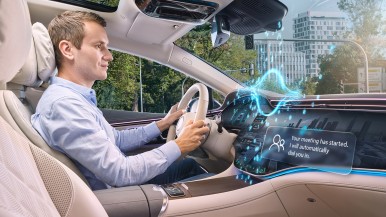
Stuttgart – The automotive industry is undergoing a fundamental transformation, with software – and especially artificial intelligence (AI) – becoming a core component of the future driving and in-cabin experience. Bosch is a pioneer in this field and is taking a decisive step forward in bringing AI into the vehicle, turning the cockpit into an intelligent and proactive companion. At one of the world’s leading electronics trade fairs, CES® 2026 in Las Vegas, USA, Bosch will unveil its new AI extension platform, an AI-enabled high performance computing unit for realizing an AI-powered cockpit. The new AI extension platform enables existing cockpit systems to be quickly and easily upgraded with advanced AI functions. This makes the driving experience more comfortable, intuitive, and safer for all vehicle occupants...says Markus Heyn, member of the board of management of Robert Bosch GmbH and chairman of Bosch Mobility. With Bosch’s new AI-powered cockpit, the vehicle is transforming from a simple means of transport into an intelligent, self-learning partner that understands the driver’s routines, preferences, and context. Features of Bosch’s AI-powered cockpit include an AI voice assistant that anticipates needs, comprehensive scene understanding of the vehicle interior, precise navigation, and extensive entertainment options. For instance, a simple statement like, “I’m feeling cold,” can trigger multiple coordinated actions, such as activating the seat heating while simultaneously adjusting the cabin temperature. Two billion euros in sales by the end of the decade “Bosch’s new AI-powered cockpit enables both drivers and car manufacturers to fully leverage the capabilities of modern automotive software. Thanks to the ‘AI extension platform,’ new functions can be implemented in the vehicle much faster in the future,” says Heyn. Bosch sees a significant and growing market for such AI cockpits. Various market research institutes, including Grand View Research* and MarketsandMarkets*, predict that the market for AI-enabled in-vehicle infotainment (IVI) solutions will reach a volume of approximately 17 billion euros by 2030. Bosch aims to participate in this market. The company expects sales of over 2 billion euros with such IVI solutions by the end of the decade and strives for a leading position among the top three providers. Bringing advanced AI to today’s vehicles A key application of this is turning unproductive downtime in the car into productive work time. Together with Microsoft, Bosch is transforming the car into a mobile office without compromising on driver safety. By integrating Microsoft Foundry and specialized features for the cockpit, the solution provides seamless access to the Microsoft 365 productivity suite. Microsoft 365 applications can be intelligently connected with other vehicle domains to prioritize safety and minimize distraction. For example, a driver can use an intuitive voice command to join a Microsoft Teams call, which in turn prompts the system to proactively activate adaptive cruise control. This seamless, cross-domain interaction helps to create a journey that is both productive and safe – a significant value for commuters and frequent drivers, for instance. Bosch’s new “AI extension platform” allows today's vehicles to be quickly and easily retrofitted without changes to existing hardware or system architecture. At its core, the platform leverages the powerful “NVIDIA DRIVE AGX Orin system-on-chip” (SoC), which forms the foundation for complex AI applications in the cockpit. It builds on the industry-standard “NVIDIA CUDA” platform, allowing automakers to easily integrate their own AI models and agents. Offering 150 to 200 tera operations per second (TOPS) of additional compute power, the compact unit connects via simple power and Ethernet interfaces and is supported by flexible active air or liquid cooling options. To accelerate the development and deployment of complex AI features, Bosch also utilizes NVIDIA’s software suites, including the “NVIDIA NeMo framework” for managing the end-to-end AI lifecycle. This enables seamless integration of advanced in-cabin applications such as real-time sensor processing and vision-language models (VLMs). In addition, core reasoning and speech capabilities powered by “NVIDIA Nemotron models” deliver contextual understanding, multi-step reasoning, and natural, conversational user interactions. Furthermore, using Microsoft Foundry, Bosch designs and manages the in-vehicle AI, ensuring a scalable, always up-to-date AI assistant experience in the cockpit. Bosch will demonstrate the AI-powered cockpit and the AI extension platform for the first time at CES® 2026 in Las Vegas. * Grand View Research and MarketsandMarkets

Hannover Messe 2024: Bosch presents sustainable solutions for factory automation ...

22.04.2024

Press release

Business/economy

Hannover Messe 2024: Bosch presents sustainable solutions for factory automation ...

Stuttgart and Hannover, Germany – Industrial manufacturing is the engine of every economy. It creates jobs, secures prosperity, and ensures growth through trade. When industrial manufacturers come together again for this year’s Hannover Messe, there will be one major challenge that all of them continue to face: to respond to climate change, factories must become sustainable and conserve resources. Bosch is one of the leading factory outfitters; its broad portfolio of solutions for factory automation, the hydrogen economy, digitalization, and artificial intelligence (AI) helps industrial companies achieve a green transformation.Bosch industrial technology is in demand: in 2023, the supplier of technology and services was able to hold its own in a volatile market environment characterized by geopolitical tensions, the economic downturn, and interest-rate effects. Its sales of industrial technology rose to 7.4 billion euros. This equates to an increase of 6.8 percent, or 10.2 percent after adjusting for exchange-rate effects. The main drivers of this growth were Bosch’s acquisitions of HydraForce and Elmo Motion Control. “We are pursuing a long-term growth strategy with industrial technology,” says Tanja Rueckert, the member of the board of management of Robert Bosch GmbH responsible for the Industrial Technology business sector as well as the area of digital business and services. “We want to strengthen our market position, expand regional supply chains, and increase our industrial technology sales to 10 billion euros by 2028.” We want to strengthen our market position, expand regional supply chains, and increase our industrial technology sales to 10 billion euros by 2028....Tanja Rueckert, the member of the board of management of Robert Bosch GmbH At Hannover Messe 2024, Bosch will be presenting technologies and solutions in the fields of automation, digitalization, and hydrogen. “As an early adopter of artificial intelligence and digitalization applications, industrial technology is like almost no other sector,” Rueckert says. “Software and connectivity help increase efficiency, quality, and sustainability in production. The only way we can secure our standard of living and prosperity is with a strong industrial sector.” Generative AI: improve processes, increase quality In manufacturing, Bosch wants to use generative AI to further improve production management, monitoring, and control. In two Bosch plants in Germany, the company has launched initial projects through which generative AI creates synthetic images in order to develop and scale AI solutions for optical inspection and to optimize existing AI models. Bosch expects that this will reduce the time needed for planning, launching, and ramping up AI applications from the current six-to-twelve months to just a few weeks. Developed by Bosch researchers, this service for generating synthetic data is to be offered to all Bosch locations following successful piloting. ctrlX AUTOMATION: automation toolkit The ctrlX AUTOMATION system for factory automation developed by Bosch Rexroth comprises hardware, software, and apps. It is an open platform that provides all the building blocks for complete automation solutions, and reduces component and engineering costs by 30 to 50 percent. The platform’s community of partners, known collectively as ctrlX World, is continuously expanding the range of solutions with hardware, and above all with apps. So far, 100 partners have contributed their strengths and solutions. Since its launch five years ago, the number of customers has risen to around 1,500. Sales in this area increased 30 percent in 2023. Battery production: components for automated equipment Whether in electromobility, consumer electronics, or building technology, the demand for energy storage is greater than ever. Bosch Rexroth offers a comprehensive portfolio for battery production that includes individual components, systems solutions, and subsystems featuring linear, joining, and transfer technology in addition to the fully open ctrlX AUTOMATION system. Speed and precision are also important in battery production. Bosch Rexroth has developed linear robots that can be used quickly for typical applications such as handling cells and packs as well as joining and dispensing. These robots optimize processes in module and pack assembly and disassembly. Battery recycling: automation solution for deep discharge of batteries There are more and more electric cars driving quietly and with low emissions on the roads. Their batteries contain rare and valuable raw materials such as lithium and nickel, the recovery of which makes economic and ecological sense. Bosch Rexroth’s toolkit solution for diagnosing, discharging, and dismantling used vehicle batteries enables the automation of these process steps, which are upstream of the actual process of recovering the raw materials. This makes it possible to recycle batteries on an industrial scale and offers the possibility of flexible scaling. Stack and smart electrolysis module: technology for H2 electrolyzers Bosch not only plans to use hydrogen, but also to provide smart technology for its production. For this purpose, the company has developed an electrolysis stack, the central element of an electrolyzer. The stack comprises more than 100 electrolysis cells that use electricity to split water into oxygen and hydrogen. It is designed for an output of 1.25 megawatts. That is equivalent to the production of 23 kilograms of hydrogen per hour. The Bosch electrolysis stack is suitable for use in smaller-scale plants producing 1 megawatt and more, all the way up to large, gigawatt-scale plants. It is expected to be market-ready from 2025. In addition, Bosch is planning to combine its electrolyzer stack with a control unit, power electronics, and various sensors to create a smart electrolysis module. Manufacturing and testing technology: how fuel cells are made Bosch Manufacturing Solutions (BMG), the company’s special-purpose machinery unit, supplies advanced manufacturing equipment and testing technology for fuel-cell manufacturing – from individual components to complete systems. In total, more than 50 percent of the required manufacturing equipment comes from Bosch itself. When testing stacks and systems, natural conditions are simulated for the end-of-line functional test, where the PEM fuel cells are put through their paces. Here, gas composition, temperature, pressure, and humidity are the same as in the actual vehicle. The test benches work efficiently: 50 percent of the hydrogen used is recovered for new testing processes. A test bench for proton exchange membrane (PEM) electrolysis stacks will be presented for the first time at Hannover Messe. This type of test bench can be upgraded for development as well as for end-of-line functional testing, and is available in size classes between 50 kW and 3 MW. eSEA underwater actuator: electrification of offshore facilities In the future, hydrogen will often be produced in remote areas – in the desert or at sea – and thus far away from where it will later be used. To make it economical to operate the offshore facilities required for green hydrogen and the capture and storage of CO2, their plant technology needs to be significantly cheaper to purchase and operate than it has been to date. Bosch Rexroth has developed an electrical solution for controlling valves in underwater process plants at depths of up to 4,000 meters. Since this solution no longer feature valves operated via hydraulically driven actuators, it eliminates the need for miles of hydraulic lines to connect to hydraulic power units above water. Hydrogen filling stations: drive solutions for compressing hydrogen Hydrogen filling stations play a major role in decarbonizing the mobility sector. Within the next six years, several thousand hydrogen filling stations are set to go into operation worldwide. Together with partners, Bosch Rexroth has developed scalable solutions for servo-hydraulic compressor drives in the power range between 10 and 280 kW for the compression of hydrogen. To be able to refuel vehicles with hydrogen fuel quickly and simply, the gas has to be compressed to as much as 900 bar. A new electrohydraulically driven cryogenic pump has been developed in partnership with FirstElement Fuel, a leading company in the U.S. for the commercial operation of hydrogen filling stations. This cryogenic pump compresses liquid hydrogen directly to 875 bar. The aim is to refuel heavy trucks with 100 kg of hydrogen in under ten minutes. Direct refueling eliminates the need for intermediate storage tanks at filling stations. The first filling stations are set to be equipped starting in 2025. Moreover, Bosch Rexroth has worked with Maximator Hydrogen to develop scalable, low-maintenance drive units, with ratings currently up to 250 kW, that offer filling station operators an affordable way into hydrogen technology. The new container-based compressors can potentially reduce total cost of ownership by half compared with the commercially available alternatives. The Swiss Coop Group already uses hydrogen trucks for its goods transportation. They refuel at five filling stations equipped with Maximator and Bosch Rexroth technology. Bosch at Hannover Messe Bosch Rexroth – Hall 6, Booth D26 Bosch Connected Industries – Hall 9, Booth F27 Bosch Manufacturing Solutions – Hall 13, Booth C33 Selected panels with Bosch experts • Research Summit – Panel discussion with Dr. Tanja Rueckert, member of the board of management and chief digital officer, Robert Bosch GmbH, Monday, April 22, 2024, 2:30–3:15 p.m., Convention Center (CC), Room 1 • Panel discussion “The future of SMEs: Organizing sustainability & establishing digital business models” with Lisa Reehten, managing director, Bosch Climate Solutions, Tuesday, April 23, 2024, 5:15–5:35 p.m., Hall 8, Booth D17 • Panel discussion “AI meets automation” with Hans Michael Krause, director ctrlX World, Bosch Rexroth AG, Tuesday, April 23, 2024, 1:30–2:00 p.m. in Hall 3, Booth A76 • Lecture “Digital twins: What nobody is talking about” with Dr. Birgit Boss, Bosch Connected Industry, Thursday, April 25, 2024, 3:00–3:25 p.m., Industry 4.0 Conference Stage, Hall 8, Booth D17 • Panel discussion “The role of 6G in shaping the next industrial era” with Andreas Müller, Wednesday, April 24, 2024, 2:45–3:30 p.m., Hall 14, Booth H06

For safer roads: Bosch teams up with Microsoft to explore new frontiers with gen ...

28.02.2024

Press release

Automated mobility

For safer roads: Bosch teams up with Microsoft to explore new frontiers with gen ...

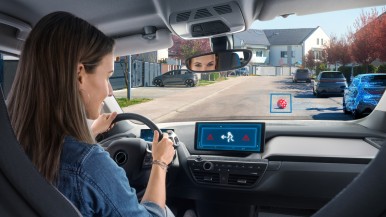
Stuttgart, Germany – It’s a scenario that no driver ever wants to see: a ball rolling out into the road. The chances are it will be followed immediately by a child in hot pursuit, oblivious to any traffic. But while human drivers can assess this situation using their contextual knowledge, today’s assisted and automated driving systems still have to learn how to do it. Bosch is pursuing the use of generative AI in terms to further improve automated driving functions. As part of this, Bosch and Microsoft are exploring opportunities to collaborate and leverage the power of generative AI. “Bosch is working on bringing a new dimension of AI applications into the vehicle,” said Dr. Stefan Hartung, chairman of the Bosch board of management, at this year’s Bosch Connected World (BCW) AIoT industry conference in Berlin. The expectation is that generative AI will enable vehicles to assess situations and react accordingly, and in this way keep road users even safer. Greater safety on the roads is also the wish of 60 percent of respondents to this year’s Bosch Tech Compass, a worldwide representative Bosch survey on the subjects of technology and AI. Bosch is working on bringing a new dimension of AI applications into the vehicle,...says Dr. Stefan Hartung, chairman of the board of management. Generative AI to make road traffic safer The two companies anticipate that a collaboration would take the performance of automated driving functions to the next level. They would like to see generative AI help enhance convenience in the vehicle and to provide greater safety for all road users. To achieve this, Bosch's comprehensive understanding of vehicles and automotive-specific AI expertise will be invaluable, as well as their access to vehicle sensor data to feed the generative AI. “In our unwavering commitment to safer roads, Microsoft is eager to explore collaboration opportunities with Bosch to pioneer the realm of generative AI,” said Uli Homann, Microsoft CVP and Distinguished Architect. Even today, when it comes to training systems for automated driving, AI quickly comes up against its limits. Today’s driver assistance systems can detect people, animals, objects, and vehicles, but in the near future generative AI could help determine whether a situation could potentially lead to an accident. Generative AI utilizes vast amounts of data to train systems for automated driving, enabling them to draw improved conclusions from this data. For example, it could deduce whether an object on the road ahead is a plastic bag or a damaged vehicle part. This information can be used either to communicate directly with the driver – such as by displaying a warning – or to initiate appropriate driving maneuvers, such as braking while switching on the hazard warning lights. Bosch and Microsoft have already partnered to develop a universal software platform for seamlessly connecting cars and the cloud, and are looking forward to work together to identify new opportunities to bring cutting-edge AI technology to their customers and the autonomous vehicle industry. Generative AI as a boost to innovation “Generative AI is a boost to innovation. It can transform industry in much the same way as the invention of the computer,” says Dr. Tanja Rueckert, member of the Bosch board of management and chief digital officer. The new 2024 Bosch Tech Compass shows this as well: 64 percent of respondents believe that AI is the technology with the greatest importance for the future. In comparison, only 41 percent of respondents were of the same opinion just one year ago. Generative AI is a boost to innovation. It can transform industry in much the same way as the invention of the computer,...says Dr. Tanja Rueckert, member of the Bosch board of management and chief digital officer. From manufacturing to everyday office work, generative AI is already being used in many areas at Bosch. In addition to Microsoft, the company is working with several partners, including AWS, Google, and Aleph Alpha. The Bosch Group’s venture capital unit, Bosch Ventures, invested in the AI company Aleph Alpha last year. Bosch also announced it would collaborate with the startup on finding new use cases both for Bosch associates and customers. “Bosch and Aleph Alpha want to learn from each other, benefit from each other’s know-how, and work together on cross-domain use cases,” Rueckert says. This partnership is now bearing its first fruits in North America: in collaboration with Aleph Alpha, Bosch is debuting AI-based speech recognition on behalf of a premium car manufacturer. In this solution, a chatbot understands and answers breakdown service calls with the help of natural language processing, which also recognizes dialects, accents, and moods. The call is taken directly, reducing the driver’s waiting time to a minimum. As many as 40 percent of calls can be processed and resolved automatically; for more complex queries, the bot transmits all relevant information to a service center agent who takes over the case immediately. From the AI search engine to manufacturing AI experts at Bosch are currently working on well over 120 specific applications that these new AI models open up for the company’s associates and customers. Such applications include the generation of software program code or powerful chatbots and voicebots to support technicians or interact with consumers. Another is AskBosch, the in-house AI-assisted search engine launched at the end of 2023. It offers faster natural-language access to a wide variety of data sources – sources scattered over the intranet, say. In addition to externally available data, AskBosch also includes internal data sources, so Bosch associates can research information specific to the company. Generative AI also ensures greater speed in manufacturing: in initial projects in two Bosch plants in Germany, generative AI creates synthetic images in order to develop and scale AI solutions for optical inspection and optimize existing AI models. Bosch expects that this will reduce the time needed for planning, launching, and ramping up AI applications from the current six-to-twelve months to just a few weeks. Following successful piloting, this service for generating synthetic data is to be offered to all Bosch locations. 2024 Bosch Tech Compass: setting the pace in the use of AI As AI is used in more and more areas of life, professional development is becoming increasingly important: 58 percent of respondents to the Bosch Tech Compass are convinced of this. This opinion is particularly prevalent in USA at 63 percent (Germany: 54 percent, China: 52 percent). Here, too, Bosch is setting the pace in the use of artificial intelligence and is getting its associates on board. In 2019, Bosch launched a training program, initially aimed at bringing 30,000 associates up to speed on the subject of AI. Up to now, some 28,000 associates have taken part in the program. Like the Bosch AI code of ethics, which sets ethical guidelines for dealing with artificial intelligence, this program has been supplemented with content about generative AI. For all the results of the 2024 Bosch Tech Compass, click here . About the survey: For the representative survey, people aged 18 and over in seven countries (Brazil, China, Germany, France, India, the U.K., and the U.S.) were polled online on behalf of Robert Bosch GmbH by the market researchers Gesellschaft für Innovative Marktforschung mbH (GIM) in December 2023. In Germany, France, and the U.K., at least 1,000 people were polled per country; in Brazil, China, India, and the U.S., it was at least 2,000 people each. The random samples are representative of their respective countries in terms of region, gender, and age (Brazil, Germany, France, U.K., U.S.: 18 to 69 years / China, India: 18 to 59 years).

Bosch to use generative AI in manufacturing

07.12.2023

Press release

Industry 4.0

Bosch to use generative AI in manufacturing

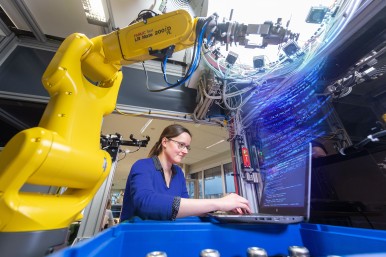
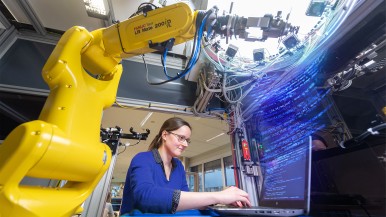
Stuttgart, Germany – Bosch is piloting generative AI and foundation models in manufacturing. In initial projects in two Bosch plants in Germany, generative AI creates synthetic images in order to develop and scale AI solutions for optical inspection and optimize existing AI models. Bosch expects that this will reduce the time needed for planning, launching, and ramping up AI applications from the current six to twelve months to just a few weeks. Following successful piloting, this service for generating synthetic data is to be offered to all Bosch locations. Nearly half of all Bosch plants are already using AI in their manufacturing operations. With the help of generative AI, we’re not only improving existing AI solutions, but we’re also laying the foundations for the optimum take-up of this future technology in our global manufacturing network...says Stefan Hartung, chairman of the board of management of Robert Bosch GmbH. There are sound economic reasons for this move: depending on the size of the plant and type of production, artificial intelligence can be used to achieve productivity gains and six- to seven-figure cost savings – per year and plant. “AI has excellent potential for innovation and can make human work even more productive. As a manufacturing company, established factory outfitter, and Industry 4.0 trendsetter, Bosch aims to play a leading role in the development and application of industrial AI,” Hartung says.AI in practice: Bosch projects deliver substantial benefit Bosch pilot plants are already using AI in production scheduling, monitoring, and control. At the plant in Hildesheim, for example, AI-based data analysis has helped reduce cycle times during the production ramp-up of new lines by 15 percent. At the plant in Stuttgart-Feuerbach, new algorithms cut component-testing processes from three and a half to three minutes. “With generative AI, we’re now taking the next step in the evolution of artificial intelligence and advancing modern manufacturing to a new level,” says Tanja Rueckert, member of the Bosch board of management and chief digital officer. In this process, Bosch can build on its own expertise: the software models for generative AI were developed by Bosch research and are now being implemented in the field by Bosch factories. One plant uses an AI method of synthetically generated images to reliably inspect welds of copper wires in electric motor production, while another focuses on the quality assurance of high-pressure pumps. AI boost: generative AI pushes the boundaries of feasibility For years, the Feuerbach plant inspected fuel-injection components manually. The nature and complexity of the products, as well as differences in the structure of the production lines, meant that neither rule-based nor AI-assisted optical inspection was possible. The new approach is a scalable generative AI that recognizes variants of a product and error patterns and takes into account different arrangements and sequences in the production process. This is based on a foundation model developed by Bosch research and fed by large data sets from the Bosch manufacturing network. Synthetically generated data is used to refine the model and customize it for on-site applications. This is expected to make the AI capable of inspecting components independently, only submitting cases to visual inspectors where it is unsure. At the Hildesheim plant, synthetically generated images have already been successfully used for training purposes in the first standard systems in electric motor production. The human eye cannot distinguish the artificially generated images from real ones. The plant expects that project duration will be six months shorter with the new approach than with conventional methods, leading to annual productivity increases in the six figure euro range. Bosch plans to expand the AI approach to other locations. “In our work to develop AI solutions, we’re unlocking the potential offered by the Bosch manufacturing network and its roughly 230 plants. And we are using new technologies. Generative AI helps to harmonize individualization and scaling – the technology gives us the best of both worlds,” Rueckert says. AI status: widely used in Bosch plants Many Bosch plants have one thing in common: not only are they AI pioneers, but they also focus consistently on Industry 4.0. “Bosch has been digitalizing and connecting its own plants and those of its customers for more than ten years. Now we’re combining Industry 4.0 with artificial intelligence: connected manufacturing provides data and AI evaluates it,” Rueckert says. Errors are detected at an early stage, machine downtimes are kept to a minimum, scrap is reduced, and energy is applied in a focused way. “The use of AI will make factories more efficient, more productive, and more eco-friendly,” she adds. For example, Bosch research has developed an AI-based system that identifies anomalies and malfunctions in the manufacturing process and improves product quality. This software is now in use in around 50 Bosch plants, with over 2,000 production lines connected. Many Bosch plants also use artificial intelligence in the optical inspection of components. For example, over 20 plants use Machine Vision AI, a solution designed by Bosch’s special-purpose machinery unit that helps detect hard-to-identify features, such as scratches and chipping on surfaces and defects in weld seams. AI pioneers: World Economic Forum commends Bosch plants The Bosch plant in Bursa, Turkey, illustrates what AI can achieve in manufacturing. Starting from an already high level of technical expertise, the plant has used AI to further improve manufacturing quality: it has reduced water consumption by 30 percent, energy consumption by 6 percent, and scrap by 9 percent, while also increasing plant efficiency by almost 10 percent. This year, these achievements prompted the World Economic Forum (WEF) to single out the plant in Bursa as an Industry 4.0 lighthouse. This is the fourth time a Bosch plant has received such recognition from the World Economic Forum, and the second time specifically for developments in the field of artificial intelligence. All this shows that “AI’s importance is historic. It will fundamentally change industrial production – for the better,” Rueckert says.

TSMC, Bosch, Infineon, and NXP Establish Joint Venture to Bring Advanced Semicon ...

08.08.2023

Press release

Connected mobility

TSMC, Bosch, Infineon, and NXP Establish Joint Venture to Bring Advanced Semicon ...

Hsinchu, Stuttgart, Munich, Eindhoven, Aug 8, 2023 – TSMC (TWSE: 2330, NYSE: TSM), Robert Bosch GmbH, Infineon Technologies AG (FSE: IFX / OTCQX: IFNNY), and NXP Semiconductors N.V. (NASDAQ: NXPI) today announced a plan to jointly invest in European Semiconductor Manufacturing Company (ESMC) GmbH, in Dresden, Germany to provide advanced semiconductor manufacturing services. ESMC marks a significant step towards construction of a 300 mm fab to support the future capacity needs of the fast-growing automotive and industrial sectors, with the final investment decision pending confirmation of the level of public funding for this project. The project is planned under the framework of the European Chips Act. The planned fab is expected to have a monthly production capacity of 40,000 300 mm (12-inch) wafers on TSMC’s 28/22 nanometer planar CMOS and 16/12 nanometer FinFET process technology, further strengthening Europe’s semiconductor manufacturing ecosystem with advanced FinFET transistor technology and creating about 2,000 direct high-tech professional jobs. ESMC aims to begin construction of the fab in the second half of 2024 with production targeted to begin by the end of 2027. The planned joint venture will be 70 percent owned by TSMC, with Bosch, Infineon, and NXP each holding 10 percent equity stake, subject to regulatory approvals and other conditions. Total investments are expected to exceed 10 billion euros consisting of equity injection, debt borrowing, and strong support from the European Union and German government. The fab will be operated by TSMC. “This investment in Dresden demonstrates TSMC’s commitment to serving our customers’ strategic capacity and technology needs, and we are excited at this opportunity to deepen our long-standing partnership with Bosch, Infineon, and NXP,” said Dr. CC Wei, Chief Executive Officer of TSMC. “Europe is a highly promising place for semiconductor innovation, particularly in the automotive and industrial fields, and we look forward to bringing those innovations to life on our advanced silicon technology with the talent in Europe.” Dr. Stefan Hartung, chairman of the Bosch board of management: “Semiconductors are not only a crucial success factor for Bosch. Their reliable availability is also of great importance for the success of the global automotive industry. Apart from continuously expanding our own manufacturing facilities, we further secure our supply chains as an automotive supplier through close cooperation with our partners. With TSMC, we are pleased to gain a global innovation leader to strengthen the semiconductor ecosystem in the direct vicinity of our semiconductor plant in Dresden.” Semiconductors are not only a crucial success factor for Bosch. Their reliable availability is also of great importance for the success of the global automotive industry. Apart from continuously expanding our own manufacturing facilities, we further secure our supply chains as an automotive supplier through close cooperation with our partners. With TSMC, we are pleased to gain a global innovation leader to strengthen the semiconductor ecosystem in the direct vicinity of our semiconductor plant in Dresden....said Dr. Stefan Hartung, chairman of the Bosch board of management “Our joint investment is an important milestone to bolster the European semiconductor ecosystem. With this, Dresden is strengthening its position as one of the world’s most important semiconductor hubs that is already home to Infineon’s largest frontend site,” said Jochen Hanebeck, CEO of Infineon Technologies. “Infineon will use the new capacity to serve the growing demand particularly of its European customers, especially in automotive and IoT. The advanced capabilities will provide a basis for developing innovative technologies, products and solutions to address the global challenges of decarbonization and digitalisation.” “NXP is very committed to strengthening innovation and supply chain resilience in Europe,” said Kurt Sievers, President and CEO of NXP Semiconductors. “We thank the European Union, Germany, and the Free State of Saxony for their recognition of the semiconductor industry’s critical role and for their true commitment to boost Europe’s chip ecosystem. The construction of this new and significant semiconductor foundry will add much needed innovation and capacity for the range of silicon required to supply the sharply increasing digitalization and electrification of the automotive and industrial sectors.”About Infineon Infineon Technologies AG is a global semiconductor leader in power systems and IoT. Infineon drives decarbonization and digitalization with its products and solutions. The company has around 56,200 employees worldwide and generated revenue of about €14.2 billion in the 2022 fiscal year (ending 30 September). Infineon is listed on the Frankfurt Stock Exchange (ticker symbol: IFX) and in the USA on the over-the-counter market OTCQX International over-the-counter market (ticker symbol: IFNNY). Further information is available at www.infineon.com . Follow us: Twitter – Facebook – LinkedIn About NXP Semiconductors NXP Semiconductors N.V. (NASDAQ: NXPI) brings together bright minds to create breakthrough technologies that make the connected world better, safer and more secure. As a world leader in secure connectivity solutions for embedded applications, NXP is pushing boundaries in the automotive, industrial & IoT, mobile, and communication infrastructure markets while delivering solutions that advance a more sustainable future. Built on more than 60 years of combined experience and expertise, the company has approximately 34,500 team members in more than 30 countries and posted revenue of $13.21 billion in 2022. Find out more at www.nxp.com . About TSMC TSMC pioneered the pure-play foundry business model when it was founded in 1987, and has been the world’s leading dedicated semiconductor foundry ever since. The Company supports a thriving ecosystem of global customers and partners with the industry’s leading process technologies and portfolio of design enablement solutions to unleash innovation for the global semiconductor industry. With global operations spanning Asia, Europe, and North America, TSMC serves as a committed corporate citizen around the world. TSMC deployed 288 distinct process technologies, and manufactured 12,698 products for 532 customers in 2022 by providing broadest range of advanced, specialty and advanced packaging technology services. The Company is headquartered in Hsinchu, Taiwan. For more information please visit https://www.tsmc.com .

Bosch opens new semiconductor test center for chips and sensors in Malaysia

01.08.2023

Press release

Connected mobility

Bosch opens new semiconductor test center for chips and sensors in Malaysia

Stuttgart, Germany / Penang, Malaysia – Global demand for chips for the automotive and consumer goods industries remains high. That is why Bosch is continuing to expand its semiconductor business. The company has now opened a new test center for chips and sensors in Penang, Malaysia, at a cost of some 65 million euros; it plans to invest a further 285 million euros at the site by the middle of the next decade. “With our new semiconductor test center in Penang, we are creating additional capacity within our worldwide manufacturing network to meet the continued high demand for chips and sensors,” said Dr. Stefan Hartung, chairman of the Bosch board of management. “Semiconductors are a decisive success factor for all Bosch business areas, and the expansion of this business is strategically very important.” With our new semiconductor test center in Penang, we are creating additional capacity within our worldwide manufacturing network to meet the continued high demand for chips and sensors,...said Dr. Stefan Hartung, chairman of the Bosch board of management. In total, Bosch has some 100,000 square meters of land available on Penang’s mainland strip. The new test center currently covers more than 18,000 square meters and includes clean rooms, office space, and laboratories for quality assurance and manufacturing. By the middle of the next decade, up to 400 associates will be working there. With the new factory and a total of 4,200 associates, Penang is now Bosch’s biggest location in Southeast Asia. Semiconductor manufacturing can basically be divided into two sections: frontend manufacturing and backend manufacturing. For the latter, Malaysia is an important hub in the global semiconductor supply chain. The country is estimated to cover around 13 percent of global backend manufacturing. According to official figures, in recent years the state of Penang has generated more than 5 percent of worldwide semiconductor revenue. “The new test center in Penang brings our manufacturing network closer to the companies that serve the further value chain of semiconductor manufacturing as well as to customers in this important Asian market. That shortens delivery times and routes, and it improves our competitiveness,” says Dr. Markus Heyn, member of the Bosch board of management and chairman of the Mobility business sector. One of the most cutting-edge test centers in Southeast Asia The frontend is where the actual circuits are attached and patterned on the wafers; at Bosch, for example, this work is currently performed in the clean rooms of the wafer fabs in Reutlingen and Dresden. The backend is where the individual chips are then separated from the wafers, assembled, and tested. Bosch currently carries out most of the final testing of its semiconductors in Reutlingen, Germany; Suzhou, China; and Hatvan, Hungary. Those locations will now be joined by the new test center in Penang, Malaysia. The fully connected plant is one of the most advanced semiconductor test centers in Southeast Asia. Here, Bosch will immediately begin testing semiconductors that the company manufactures at its frontend in Dresden, among other locations. “Our new test center in Penang completes our internal process chain, especially for semiconductors from Dresden,” Heyn says. Bosch invests further in chip business Bosch is pursuing a global growth strategy with its semiconductor business. Over the next three years, the company plans to invest some three billion euros in Dresden and Reutlingen, both as part of its own investment plan and under the auspices of the European IPCEI ME/CT (“Important Project of Common European Interest on Microelectronics and Communication Technologies”) funding program. Following its expected acquisition of part of the business of TSI Semiconductors, based in Roseville, California, which is expected before the end of the year, Bosch plans to invest roughly an additional 1.4 billion euros in retooling the fab to support the latest manufacturing processes for silicon carbide semiconductors. Penang Factsheet

From research to application: Bosch drives forward the use of artificial intelligence

13.06.2023

Press release

Artificial Intelligence

From research to application: Bosch drives forward the use of artificial intelligence

Stuttgart, Germany – Bosch continues to set the pace in the use of artificial intelligence: in the past five years, the company has filed patent applications for more than 1,000 AI inventions, making it one of the leading applicants for AI patents in Europe. Recent technological developments in the area of generative AI and what are known as foundation models (such as ChatGPT) also offer Bosch entirely new opportunities. These models are able to generate content such as software code, text, images, and music. What makes them especially powerful compared to previous AI models is that they are trained on vast amounts of data. This breadth and volume of information allows foundation models to translate between languages, for example, and to work through tasks in a structured way. “Technological breakthroughs are opening a whole new chapter in the area of AI,” says Tanja Rückert, member of the board of management and chief digital officer of Robert Bosch GmbH. “This progress will influence almost all areas of society as well as processes in companies. We want to exploit this potential for Bosch – both for our customers and for our associates.” That is why Bosch currently has AI experts from both research and the divisions looking into the specific applications that these new AI models offer the company. One example is the company’s own database, which stores entries according to search terms. The less precise the keyword searched for, the less accurate the search result and vice versa. A solution based on generative AI would search – and find – information much faster and, most importantly, more comprehensively. This would enable easier access to and more thorough use of knowledge that already exists within the company. AI-powered search is one of some 60 potential use cases around foundation models that are currently being reviewed and that the company plans to implement if the evaluation is positive. Technological breakthroughs are opening a whole new chapter in the area of AI ...Tanja Rückert, member of the board of management and chief digital officer of Robert Bosch GmbH We are bringing AI into our applications quickly and successfully. We’re making good progress here ...Tanja Rückert, member of the board of management and chief digital officer of Robert Bosch GmbH Bosch brings AI into applications faster than originally planned “In recent years, Bosch has made good progress in the development of AI in its divisions and at its locations worldwide,” Rückert says. “We are bringing AI into our applications quickly and successfully. We’re making good progress here.” Before the end of this year, all products and solutions are set to either contain AI or have been developed or manufactured with its help. The company originally set this goal for 2025, but is now on track to achieve it two years early. This is thanks also to more than 300 AI researchers who are currently working on the development of new AI methods at Bosch. There is close contact between research and the divisions on this. In addition, the company is pursuing customized HR and training policies: in 2019, an AI training program was launched under the leadership of Bosch research. To date, 26,500 associates have completed this program, which includes training formats at three different levels for managers, engineers, and AI users. “The training courses play an important role in bringing AI expertise into all areas of the company,” says Thomas Kropf, the head of Bosch research. Bosch has also established strong partnerships with leading global institutions, such as the renowned Carnegie Mellon University in the United States, and has continuously expanded its patent portfolio in the field of artificial intelligence over the years. A billion in sales of artificial intelligence AI has been a driver of progress and growth for some time. According to PWC, Germany’s GDP could increase by 11 percent by 2030. Tractica projects global sales to rise to around 31 billion dollars in 2025. The main reasons are considered to be the greater productivity and efficiency that AI solutions make possible. Over the next few years, Bosch, too, wants its sales of AI-enabled products to reach the one-billion-euro mark. “We regard artificial intelligence, in combination with product connectivity, as a key technology and a driver of progress in our society. Our primary aim is for AI to benefit people,” Rückert says. Bosch is focused on industrial AI, in other words intelligent algorithms combined with domain expertise in transportation, manufacturing, and buildings. The company is applying its own strengths in the manufacturing of complex, physical objects and combining these with its many years of experience in the area of AI. This is in contrast to U.S. and Chinese IT companies, which are using AI primarily to build a model of humans and their behavior. The potential applications of AI-based solutions are manifold: in chip manufacturing, for example, AI helps detect anomalies. AI-based image processing allows automated optical inspection of wafers. At the same time, AI manages material flows so as to achieve optimum utilization of wafer production machinery. AI technologies are also key to making the new wafer fab in Dresden the world’s most efficient semiconductor plant. Smart cameras and sensors help detect fires at an early stage, while in cars, intelligent assistance systems help prevent accidents.

CES 2022: For better quality of life and more climate action – connected and sma ...

04.01.2022

Press release

Business/economy

CES 2022: For better quality of life and more climate action – connected and sma ...

Las Vegas – At home, on the road, at work, in the hospital, or even in orbit: Bosch is improving the everyday lives of people from all walks of life with smart and connected solutions. At the same time, the company is tapping into new areas of business through software, services, and licenses. “We are systematically digitalizing our core business to increase the benefits for our customers. Going forward, we aim to turn the sale of every digital product into services-based revenue as well,” says Tanja Rückert, the Bosch Group’s chief digital officer, at CES in Las Vegas. To achieve this goal, Bosch is focusing on the connection of IoT with AI – in other words, it is linking the internet of things (IoT) with artificial intelligence (AI). We are systematically digitalizing our core business to increase the benefits for our customers. Going forward, we aim to turn the sale of every digital product into services-based revenue as well....Tanja Rückert, the Bosch Group’s chief digital officer This creates a virtuous circle in which connected products deliver information that, in turn, is processed by means of AI and incorporated into software updates for these products. At the core of this approach is the benefit for customers, since it allows users to be an integral part of the development process and enables solutions to be tailored precisely to their needs. Furthermore, neither development nor value creation ends with the sale of the products. “We see the combination of AI and IoT as holding the key to leveraging the most user benefit from both of these technologies,” Rückert says. “Besides enabling us to develop new business models, this approach helps us offer better products and solutions that deliver real added value for individuals and society as a whole.” Expanding software expertise: Bosch is already shaping the future today Bosch laid the foundation for this long ago. As of the new year, all electronics product classes will be connectable. Sales of connected power tools, household appliances, and heating systems alone have grown by 50 percent within one year – from four million units in 2020 to more than six million in 2021. With the Bosch Center for Artificial Intelligence (BCAI), the company has established a strong unit in the field of AI that has already contributed some 300 million euros to result. In addition, the company invests a total of more than four billion euros every year in its software expertise, around three billion of which goes to the mobility business. To shape the software-defined future of mobility, Bosch will also be pooling development activities for application-independent software in one unit as of mid-2022. In the future, under the umbrella of its subsidiary ETAS GmbH, the company will develop and sell basic vehicle software, middleware, cloud services, and development tools for universal application. Bosch is also rapidly advancing connected and automated driving. Over the past five years, Bosch has generated some nine billion euros in sales just with driver assistance systems and the associated sensors. Bosch Tech Compass: a survey conducted in five countries around the world The Bosch Tech Compass – a representative survey conducted in five countries and presented for the first time at CES – shows what people across the globe expect from new technologies. According to the survey, the majority of respondents (72 percent) are convinced that technological progress is making the world a better place, for instance as a key to fighting climate change (76 percent). At the same time, four out of five people think technology should be more focused on tackling the great challenges of our time rather than serving individual needs. “We at Bosch also believe that technology offers a broad range of benefits,” Rückert says. “When we talk about high-tech, we’re not talking only about pushing the envelope on what’s possible. We use technology as a means to improve people’s lives wherever they are.” From space to pediatric medicine: the Bosch SoundSee sensor system One example of the benefit of AI and connectivity is the SoundSee sensor system. Since late 2019, it has been traveling through space to identify unusual sounds on the ISS, using AI algorithms to analyze and indicate when maintenance is required. Now, in collaboration with the non-profit healthcare company Highmark in Pittsburgh (USA), Bosch is pursuing a completely down-to-earth application of this technology: investigating how audio AI can be used as a diagnostic tool in pediatric medicine. Specifically, Bosch and Highmark are working to adapt the sensors in a way that will enable them to detect pulmonary conditions such as asthma at an early stage just by listening to children’s breathing patterns. “Using innovative technology to improve children’s health – that’s exactly what we mean with high tech,” says Mike Mansuetti, president of Bosch in North America. SoundSee’s use in medicine also illustrates Bosch’s understanding of its “Invented for life” strategic imperative. Bosch’s new gas sensor – the first on the market to contain AI – serves to protect both humans and nature. Part of Dryad’s Silvanet Wildfire Sensor, it is essentially a digital nose that helps detect forest fires early on. Dryad’s sensors are attached to trees, where they continuously monitor the local microclimate to detect incipient fires – and to wirelessly notify the local authorities, long before camera- or satellite-based systems can. Not only can this protect against devastation by fire, it can also reduce global carbon emissions from forest fires. “These sensors are going to help save lives, homes, and tons of CO 2 from entering the atmosphere – all thanks to AI and connectivity,” Mansuetti says. High-tech #LikeABosch: new campaign for smart solutions A new, lighthearted Bosch campaign shows the solutions the company has developed to improve the little things in people’s everyday lives. Called “High tech #LikeABosch – with many connected, intelligent, and sustainable solutions,” its protagonist takes viewers on a tour through her daily routine and uses several Bosch solutions, from smart glasses to a connected e-bike to a digital access pass for work. This makes her teenage son, who at the start of the clip said his mom was “old school,” look pretty out of touch.

Bosch Tech Compass: 72 percent believe that technology makes the world a better  ...

04.01.2022

Press release

Business/economy

Bosch Tech Compass: 72 percent believe that technology makes the world a better ...

Stuttgart, Germany / Las Vegas, USA – The vast majority of people surveyed worldwide believe that technological progress is making the world a better place (72 percent). This is a finding of the Bosch Tech Compass , a representative survey of the general public in China, India, Germany, the United Kingdom, and the United States. The survey is having its global debut at CES 2022. In view of the rapid and profound changes technology is driving in many spheres of life, the Bosch Tech Compass aims to encourage people to take a closer look at the positive impact of technological progress on a globalized world.Technological progress as key to combating climate change Although technology has the potential to make almost anything possible, such as creating a pizza with a 3D printer, global respondents strongly agree that technology should be more focused on tackling the major challenges of our time rather than serving individual needs (83 percent). For example, the survey shows that more than three out of four respondents worldwide see technological progress as the key to combating climate change. “The Bosch Tech Compass shows that people want technology that addresses the problems of our time,” says Bosch CEO Stefan Hartung. “Technology should support us, make life easier overall, and make the world a better place. This is why we at Bosch are committed to technology that is ‘Invented for life’ and serves people.” Despite global confidence in technological progress, there are regional differences in the perception of how technology is currently being used. While most Chinese (83 percent) and Indian respondents (77 percent) are more confident that technology is currently being used sufficiently to tackle the major problems of our time, only a minority of people in the U.S. (47 percent), the U.K. (37 percent), and Germany (29 percent) believe this. The Bosch Tech Compass shows that people want technology that addresses the problems of our time...says Bosch CEO Stefan Hartung Western countries have high hopes for green tech, Asia for AI In the assessment of individual technologies and their impact, there are significant regional differences. While Germany, the U.K., and the U.S. see green technologies like climate engineering, biotechnology, and hydrogen as having a particularly positive impact on society, China and India have high hopes for intelligent and connected technologies like AI and 5G. Around a third of all respondents in the U.S. and Europe, however, say they see AI as the biggest technological threat. “Easing such concerns is yet another reason why building trust in digital technology will be crucial, and it will have a direct impact on consumer behavior as well,” Hartung says. Four out of five people worldwide believe that a company’s success will depend on building digital trust with its customers in the future. Trust is also becoming increasingly important: for 43 percent of global respondents, trust plays a greater role in the digital world than in the analog world, as opposed to only 20 percent who see it the other way around. “This is also why Bosch has introduced its AI code of ethics , which is contributing to the important public debate around AI and trust in AI,” Hartung adds. Easing such concerns is yet another reason why building trust in digital technology will be crucial, and it will have a direct impact on consumer behavior as well....says Hartung. Driving or beaming? When asked how they would prefer to move around in the future – regardless of technical feasibility – German respondents displayed fewer reservations. Nearly four in ten (39 percent) would choose beaming as their preferred mode of transportation, which makes them more adventurous than the Chinese with 34 percent. Teleportation also has a few fans in the U.K. (27 percent), the U.S. (20 percent), and India (10 percent). Despite respondents being given free rein to daydream, teleportation was not at the top of anyone’s wish list. In first place with 56 percent was the considerably more mundane human-controlled car, followed by planes (40 percent) and trains (32 percent).

Bosch at CES 2022: smart technology to make everyday life safe, convenient, and  ...

13.12.2021

Press release

Smart Home

Bosch at CES 2022: smart technology to make everyday life safe, convenient, and ...

Stuttgart, Germany, and Las Vegas, NV – Technology for all walks of life: at CES in Las Vegas, Bosch will be presenting connected, smart, and sustainable products and services for a better life – at home and on the road. From January 4 through 7, 2022, you will find Bosch at CES in the Central Hall, Booth #16103.CES Innovation Awards: Honoree for smart connected biking solution For its smart connected biking solution, Bosch eBike Systems has been named a CES® 2022 Innovation Award honoree in the “Vehicle Intelligence & Transportation” category. The CES® Innovation Awards are given by the Consumer Technology Association (CTA). Smart connected biking solution – e-bike riding enjoyment 2.0: The new systems generation from Bosch eBike Systems merges the physical experience of riding an e-bike with the digital experience provided by connectivity and an app. This smart system comprises the new eBike Flow app, an LED user interface, color display, rechargeable battery, and drive unit. Over-the-air updates mean it can be continuously enhanced. The eBike Flow app opens up a range of new digital features for e-bikes, such as automatic activity tracking and personalized riding modes. Whether on the daily commute or a leisurely ride, the result is more enjoyment over longer distances. A Bosch must-see Bosch show car: The future of mobility is automated, connected, electrified, and personalized. In the future, more and more vehicles will be electrically powered. They will increasingly be connected with other road users and their surroundings, and provide personalized, cloud-based services for their occupants such as wrong-way driver alerts or road condition updates. The show car will demonstrate Bosch systems expertise and extensive know-how in software and hardware. For example, Bosch is developing central computers for the electronics architecture of the future. These vehicle computers will be used for assisted and automated driving, controlling vehicle motion, as well as for cockpit functions and body electronics. Over-the-air updates will keep cars’ functions constantly up to date. Virtual visor – the transparent digital sun visor: Conventional sun visors shield car drivers from dazzling light. But folding them down often also blocks significant areas of a driver’s field of vision. Bosch has solved this problem with a new, transparent LCD solution that replaces opaque visors. The virtual visor is connected to the interior monitoring camera, which detects the position of the driver’s eyes. Using AI-based intelligent algorithms, the virtual visor analyzes this information and darkens only the portion of the windshield through which the sun or other light sources would dazzle the driver. The rest remains transparent, leaving the driver’s view of the road unobstructed. SoundSee – intelligent ears for the ISS: Although barely bigger than a lunch box, Bosch’s SoundSee is brimming with start-of-the-art artificial intelligence (AI). SoundSee can be found on the ISS (international space station). Installed on board Astrobee, NASA’s autonomous free-flying robot, SoundSee’s integrated microphones pick up ambient noise in space. Using AI, the Bosch technology then analyzes the audio data in order to detect potential anomalies and to flag areas requiring maintenance work. SoundSee was developed together with Astrobotic as part of a NASA research partnership. Software-based solutions for the mobility of today and tomorrow Solutions for the software-defined vehicle: Software is playing an increasingly central role in automotive engineering. After all, future connectivity, automation, and personalization functions will more than ever be brought about by software. Even now, Bosch annually puts more than 200 million control units running its proprietary software into vehicles worldwide. To achieve this, the company can draw on profound software, electronics, and systems expertise, and use this to develop application-specific vehicle software and the hardware to match for automotive applications of all kinds, from driver assistance and infotainment to the powertrain. Bosch plans to pool the development of application-independent basic software and middleware, as well as cloud-based software modules for over-the-air software updates, at its wholly owned subsidiary ETAS. Advanced driving module – pre-integrated components for electric cars: To make the development of electric cars less complex, and thus improve efficiency for automakers, Bosch offers pre-integrated modules such as its ADM advanced driving module. The ADM combines powertrain, brakes, and steering to form an integrated unit that automakers can incorporate faster and more cost-effectively into their vehicles. In addition, simplified interfaces and a standard software architecture ensure the best possible communication between the components, and provide the basis for new features. TPA technician process assistant – a digital handyman: The TPA technician process assistant is part of a connected after-sales ecosystem in which humans and machines exchange data as needed to efficiently repair and maintain vehicles. The system, which is continuously learning and evolving, is a hands-free, platform-agnostic solution that works with tablet, PC, and wearables. With the help of AI, moreover, a knowledge base has been created on the basis of information taken from traditional servicing operations. If more expertise is needed, a connection can be set up between an expert and the “eyes and ears” of the technician working on the vehicle. This helps improve accuracy and efficiency when servicing and repairing today’s ever more complex vehicles. Nevonex – connecting agriculture: Agriculture currently faces the challenge of securing food production in a changing climate. Here, Nevonex can help farmers by providing the necessary expert knowledge in the form of digitalized services. Nevonex allows these third-party services to be used in all makes of agricultural machinery – for example, to automate machine settings or optimize crop-planting processes. Bosch’s research here focuses on harnessing data from these processes to optimize subsequent process steps. The aim is to use edge computing to make robust, AI-based services available for farmers. A breath of fresh air – Bosch solution for better urban air quality: To improve air quality in cities, at airports and train stations, and in business parks, Bosch offers innovative solutions that precisely record and simulate emissions. Bosch air-quality monitors provide precise readings for nitrogen oxides, particulates, humidity, and temperature – in other words, important information for gauging local air quality. The data is then uploaded to the cloud and evaluated. Knowing precisely what pollutants are in the air, where they are, and where they are spreading to allows countermeasures to be taken quickly, for better air at all times. Smart solutions that improve convenience and security in the home Bosch heating and cooling solutions for a perfect climate in the home: Thanks to state-of-the-art inverter technology, the highly efficient Climate 5000 3.0 ductless mini-split air-source heat-pump system offers ample heating and cooling capacity. This heat pump is suitable for most residential buildings due to its ability to heat efficiently, even in frigid outdoor temperatures. The Climate 5000 3.0 features improved energy efficiency and humidity control, creating a comfortable indoor climate. In addition, its built-in air filtration system purifies the air and reduces volatile organic compounds (VOCs) and other harmful gases and odors. Bosch is also launching the Inverter Ducted Split (IDS) Premium Connected heat-pump system on the market. This solution offers high efficiency and particularly innovative connected features. Using a wireless internet connection and an IoT platform means that installers and homeowners can register it in the app. It also makes installation and troubleshooting easy. With the EasyAir app, installers and homeowners can access data remotely, allowing them to monitor energy consumption and appliance status. Connected thermostats – smart and simple heating control: With its BCC50 and BCC100 connected thermostats, Bosch offers a simple and smart all-in-one control for heating, air-conditioning, and ventilation systems. Users can program their own heating and cooling schedules, for example. The controls are set directly on the thermostat, by using the Bosch Connected Control app, or by voice command. Intelligent oven – cooking with a voice assistant: What temperature? Direct heat or steam? Finding the right setting can be tricky. But whether it’s a quick supper or fine dining, an intelligent Bosch oven will do the trick. The voice assistant Alexa is standing by with advice, and will not only recommend the best oven setting, but also switch the oven on if required – all you have to do is ask. Recipes inspired by a digital look inside the fridge: No idea what to eat? Fridge always full of leftovers? That’s now a thing of the past. Now food can be entered into a digital fridge inventory – manually, by synchronizing with the Home Connect shopping list, or via a camera in the fridge. The Home Connect app will then know exactly what’s in the fridge and provide recipe ideas based on the provisions available. A surefire recipe for new ways to treat your taste buds, as well as for less food waste. Bosch Cookit – all-around culinary talent: Cookit offers a whole new dimension of flexibility in the kitchen. Whether guided cooking, automatic programs, or manual cooking, the multifunctional food processor with cooking function has the right level of support for everyone. And now it has become even more flexible: the new “My Recipe” function allows Cookit to save personal recipes. The recipe, with all ingredients, quantities, temperatures, and special tips, is entered in the Home Connect app, which then relays it to the Cookit. The food processor with cooking function will then guide the user through the preparation steps as often as required. Bosch sensors – unshakeable, untiring, and incredibly flexible BME688 – monitors air quality and protects forests: Whether at home, in the office, or outdoors – to satisfy the need for clean air, Bosch Sensortec has developed the BME688. This innovative MEMS sensor is the world’s most compact four-in-one air-quality sensor featuring artificial intelligence, and is capable of measuring gas, humidity, temperature, and atmospheric pressure simultaneously. It is suitable for a range of applications, such as sending a warning when foodstuffs expire or the early detection of forest fires. In collaboration with Dryad Networks, BME688 sensors have been combined with an IoT network to detect forest fires early. Fewer forest fires mean significantly lower CO 2 emissions. In this way, Bosch is helping to mitigate global warming. BHI260AP – revolutionizing fitness tracking: Squats, sit-ups, kettlebell training: the list of fitness exercises is nearly endless. However, many fitness trackers and smart watches can track only a limited number of activities, and the variety of apparatus types as well as users’ different movement styles, physiques, and fitness levels mean that they cannot always reliably recognize the exercises being done. To solve this problem, Bosch Sensortec has developed the BHI260AP – a novel, self-learning motion sensor that gives wearables and hearables artificial intelligence. The sensor recognizes and responds automatically to many different movements and can learn any new fitness activity based on regularly repeated routines. BMP384 – resistant to water, chemicals, and dust: Wearables, home appliances, and industrial applications often have to cope with tough conditions. Up to now, however, many barometric pressure sensors have not been very robust or resistant to fluids, and therefore could not always be installed in watertight products. With Bosch Sensortec’s BMP384, it’s a different story. This barometric pressure sensor is as compact as it is robust. At CES, Bosch Sensortec is also debuting a new ultra-precise pressure sensor that can also be used for indoor navigation and location. Bosch IoT solutions for the connected city and for more data security From a single source – application store for video analytic apps: The world’s first open application store for video analytics apps allows surveillance cameras to be flexibly equipped with new AI-assisted functions. In just a few minutes, applications for detecting things such as face masks, smoke, fire, and flooding or for evaluating flows of traffic and visitors can be installed on compatible cameras. Developed by the Bosch subsidiary Azena, more than 100 apps are already available for more than 40 use cases – with new ones joining them every month. Smart video cameras for greater road safety: Thanks to a new deep-learning video analytic software, the new Inteox cameras with object classification can be used in areas such as traffic monitoring. Even in heavy traffic, they can recognize precise details of vehicles faster. AI helps to detect unforeseen, undesired, or future situations more quickly, more intuitively, and more reliably. Using artificial intelligence to ward off hackers: The Bosch AI shield protects AI systems against external attacks. It performs the vulnerability analysis of AI systems and then creates an AI-assisted defense mechanism to provide protection. The solution comprises a SaaS (software as a service) tool and user interface which has been designed to help developers use and help organizations to scale it for a variety of AI systems. The Bosch AI shield defends AI systems in Cloud and IoT devices and protects IP, brands, and investments, thus creating trust in digitalization.


Ten years of Industry 4.0: Bosch sales reach four billion euros

08.04.2021

Press release

Business/economy

Ten years of Industry 4.0: Bosch sales reach four billion euros

Stuttgart, Germany – Industry 4.0 is coming of age. What began at Hannover Messe in 2011 as a “pioneering German project” has now gained global traction – thanks in part to groundbreaking work by Bosch. The aim is for connected manufacturing to optimize itself automatically, making it economical to produce customized products in batch sizes even as small as one. Since 2012, Bosch has been systematically leading factories – both its own and those of its customers – into this new industrial age. This commitment is paying off: over the past ten years, the company has generated more than four billion euros in sales with Industry 4.0. In 2020 alone, Bosch generated sales of more than 700 million euros with connected manufacturing solutions. “We recognized the potential of Industry 4.0 early on and are pioneers in this field. Now we’re reaping the rewards,” says Rolf Najork, the member of the Bosch board of management, responsible for industrial technology. The use of Industry 4.0 in the company’s own plants is also paying off. Bosch is combining intelligent software for production control, monitoring, and logistics planning into a manufacturing platform of its own. This connects to a larger database that simplifies and improves tasks such as AI analyses for fault detection . The roll-out of the new Bosch manufacturing and logistics platform will start at the end of 2021. “We offer our roughly 240 plants a standardized ‘Industry 4.0 toolbox,’ which can be expanded and deployed as needed,” Najork says. Bosch believes this will save it almost one billion euros over the next five years, following an investment of around 400 million euros. At the digital Hannover Messe (April 12 –16, 2021), Bosch will chart the development of “ten years of Industry 4.0” and showcase the factory of the future: technologically flexible, intelligently connected, ecologically sustainable – and economically successful. The only way to tap the full potential of Industry 4.0 is collectively and globally. Humans and machines need to ‘speak the same language.’ This requires international, cross-company standards....Rolf Najork, member of the Bosch board of management The beginnings: Bosch does pioneering work on Industry 4.0 Back in 2011 at Hannover Messe, scientists presented an idea that broke with convention. Rather than have people adapt to machines, they turned things around. The vision here was of products that actively involve themselves in their manufacturing, navigate themselves through the production process, and communicate with humans and machines. It was the birth of Industry 4.0 – Bosch is one of its founding fathers. In 2012, the company took over the chairmanship of the newly established Industry 4.0 working group to further develop the German government’s high-tech strategy. Bosch became a leading provider and a leading user of Industry 4.0, not only testing this modern form of manufacturing in its own plants, but also bringing proven solutions to the market. The Bosch plants in Blaichach in Germany, Anderson in the U.S., and Wuxi and Suzhou in China were pioneers in this domain and have been the recipient of multiple awards for their innovative concepts, including the designation of “lighthouse factories” by the World Economic Forum. At the same time, one thing soon became apparent: “The only way to tap the full potential of Industry 4.0 is collectively and globally. Humans and machines need to ‘speak the same language.’ This requires international, cross-company standards,” Najork says. Bosch worked together with other companies to develop OPC Unified Architecture (OPC UA), a machine language for Industry 4.0 that standardizes access to devices and systems and enables manufacturer-independent data exchange. There was also increased collaboration between organizations such as Plattform Industrie 4.0 and the Industrial Internet Consortium, with Bosch an active leader in both. Alliances became an integral part of Industry 4.0. The status quo: Bosch is making Industry 4.0 the norm And today? Interest is still high, but too few companies are consistently gearing up for Industry 4.0: “Pilot projects are a good approach for trying things out and getting ideas out there. Now it’s time to up the tempo: we need to make Industry 4.0 the norm,” Najork says. Bosch uses its own academies and training courses to train associates for Industry 4.0 and also makes this offering available to customers. Najork is convinced that “Industry 4.0 is not an end in itself. It’s a way to maintain competitiveness. In the future, nothing will be possible without digitalization.” Bosch projects deliver measurable benefit: connected solutions increase productivity by as much as 25 percent, boost machine availability by up to 15 percent, and reduce maintenance costs by as much as 25 percent. “If we want to exploit the potential of Industry 4.0, we have to move away from isolated solutions. Technical systems that work only within their own boundaries inhibit progress,” Najork says. In Bosch plants, there are now over 120,000 machines and over 250,000 devices such as integrated cameras or robots connected. Some 22,000 machine controllers alone are connected via the Nexeed software for Industry 4.0 developed by Bosch Connected Industry . Founded in 2018, this operating unit has already supplied software to more than half of Bosch’s plants and more than 2,000 production lines. In addition, around 100 international customers rely on Nexeed – including BMW, Sick, and Trumpf. Hardware and software are growing ever closer together. At Hannover Messe, Bosch Rexroth is presenting its ctrlX Automation platform. Based on app technology and web engineering, this open, 5G-enabled control technology enables co-creation. The idea behind it is for users to either use apps provided by Bosch Rexroth and third-party providers, or to develop apps themselves and share them with other companies within an ecosystem. “By making developments participatory,” Najork says, “we can create network effects and let ideas take wing.” Future prospects: Bosch combines Industry 4.0 with other technologies The foundation has been laid. “Our focus is on harnessing and combining the power of different technologies. Bosch is becoming an AIoT company. We’re bringing artificial intelligence and the internet of things together,” Najork says. At Hannover Messe, Bosch is presenting the Balancing Energy Network , an AI-based energy management system that employs intelligent software to control and optimize energy flows in factories. Originally developed for manufacturing facilities, the software has the potential to help all types of larger building complexes reduce their environmental footprint, including hospitals, shopping malls, and sports arenas. Technology and knowledge are fundamental stepping stones on the path to climate-neutral manufacturing . Based on its own experience of becoming climate neutral, Bosch has set up a new unit to advise manufacturing companies on how to reduce their carbon emissions. Combining flexible robotics with learning image processing software helps save resources in manufacturing: the APAS inspector takes over the visual inspection of workpieces, inspecting them fully automatically. Meanwhile, smart item picking demonstrates impressive flexibility and precision. The robotic system picks various products delivered by transport vehicles. Using intelligent image recognition, the system picks up different components with no need for prior training and reliably sorts them for further processing or shipping. Thanks to new technologies interactions between humans and machines will be even safer and more efficient in the future: 5G promises reliable wireless data exchange in near real time. Bosch is taking on a pioneering role in this: at the end of 2020, the company put its first campus network into operation at its Industry 4.0 lead plant in Stuttgart-Feuerbach. The company is currently testing 5G applications in around ten plants worldwide. Moreover, Bosch is making products 5G-capable . In the future, Bosch Rexroth’s new Innovation Center in Ulm is where the company will work on progressive approaches and business ideas as well as on developments with customers and partners; the site extension is planned for summer 2021. These developments show that “factories are once again becoming a source of innovation,” Najork says. For the future, he believes three principles are crucial: “First, we have to see Industry 4.0 in holistic terms and focus on end-to-end factory solutions. Second, we need an open architecture to be compatible and user-friendly both in the plants themselves and vis-à-vis customers and suppliers. And third, we must ensure flexibility: in the future, customers will increasingly want customized products. As long as we keep these principles in balance, the ideas that emerge from the manufacturing industry will change the world for the better.”

Robot coworkers, climate action, and AI

08.04.2021

Press release

Business/economy

Robot coworkers, climate action, and AI

One decade, four billion euros in sales, countless opportunities – for Bosch, Industry 4.0 is a success story. The company is a pioneer in connected manufacturing and is consistently pursuing its idea of the factory of the future. Key stages from ten years of Industry 4.0 at Bosch:2011: The fourth industrial revolution gets a name A smart factory with machines that are connected, communicate with each other, and organize themselves – with people at the center of it all, orchestrating more efficient, more flexible, and more customized production. Originally called “cyber-physical production systems”, this idea receives a catchier name in 2011: “Industrie 4.0” (Industry 4.0). With the official go-ahead given for the German government’s pioneering project, the German term quickly takes hold around the world.2012: Bosch takes over the chairmanship of the Industry 4.0 working group From concept to development: chaired by Siegfried Dais, former deputy chairman of the board of management of Robert Bosch GmbH, and Prof. Henning Kagermann, president of acatech, the Industry 4.0 working group draws up initial recommendations for implementing a successful path into the fourth industrial age. They send their recommendations to the German federal government in October 2012. Dais comments: “During the course of our work together it has become apparent that Germany possesses all the necessary competencies in the fields of manufacturing technology and mechanical engineering to continue to enjoy global success in tomorrow’s world of the Internet of Things and Services.”2013: From Industry 4.0 to technology “Invented for life” “We must turn data into knowledge, and knowledge into benefits,” says Bosch CEO Volkmar Denner at the ZVEI Annual Convention in 2013. The company is already using connectivity software in its own manufacturing operations, and is also developing its own software solutions for industrial processes. Its declared aim is to derive business models from the technical potential of Web 3.0 that will lead to a better quality of life. This is one of the reasons Bosch begins working in 2013 on the “Energy-efficient factory” project spearheaded by the Technical University of Darmstadt.2014: Bosch premieres the world’s first robot coworker The world’s first robot certified to work side by side with human operatives without the need for additional protective housing comes to life at Bosch in 2014. Its name describes its purpose: APAS – automatic production assistant. This is not only a big step in the development of human-robot collaboration (HRC), but also a crucial one for Industry 4.0. Bosch has developed APAS so that it can autonomously take over the feeding of machines, palletizing, and assembly in the shortest possible time.2015: Bosch establishes “Connected Industry” Bosch pools its connected manufacturing expertise in its company-wide “Connected Industry” innovation cluster. This brings the company a step closer to becoming the leading user and leading supplier in connected manufacturing. Bosch launches an education offensive as well: associates without a degree are to be offered training for IT and commercial jobs that usually require an academic degree. The aim is to respond to the growing demand for software expertise and prepare its workforce for Industry 4.0 jobs. The first group to participate in the program is made up of roughly 80 skilled workers.2016: Bosch readies old tech for Industry 4.0 Old machine, rapid connectivity, new benefits. This is the reasoning behind Bosch’s decision to take a closer look at its company founder’s 130-year-old lathe. Sensors and software combined with IoT-enabled industrial control catapult the lathe from 1887 into the Industry 4.0 era. This is more than just a symbolic action: according to studies in 2016, tens of millions of machines are still being assembled in plants worldwide without being enabled for Industry 4.0.2016: Industry 4.0 on cloud nine – Bosch’s own cloud for IoT services With the launch of its own cloud for internet-based services, Bosch becomes a full-service provider for connectivity and the internet of things. In the Bosch IoT Cloud, the company runs various applications for its connected mobility, connected industries, and connected buildings businesses.2017: Workplace 4.0 – People and machines team up at Bosch With the APAS workstation, Bosch creates the first workplace where people and machines work side by side. People remain indispensable as decision-makers and drivers, supported by the precision and endurance of the production assistants. In this setup, Workplace 4.0 adapts to the individual – everything from the height of the work surface to the speed or guidance assistance for new processes.2018: Bosch establishes its own operating unit for Industry 4.0 Bosch creates a new operating unit for connected industry. This brings together all its Industry 4.0 activities, especially concerning software and services. It also ensures that the company has the best possible team for the job: customers wanting to connect the entire value stream can now consult the new unit for support. The unit launches with 500 associates in Germany, Hungary, and China.2019: Bosch countson training – and a smartphone for manufacturing Developed by Bosch and the Chamber of Industry and Commerce, the first Germany-wide vocational training program geared to the Industry 4.0 skill set is launched. The training program is now also offered in other countries, such as China. That same year, Bosch debuts a new software solution: CtrlX AUTOMATION – ctrl being short for “control.” The solution makes systems and machines as accommodating as a smartphone, with functions that can be customized and updated – much the way a smartphone is via apps.2020: Bosch puts first 5G campus network into operation Data is transferred extremely reliably and ultra-fast, machines react almost instantaneously, wireless is becoming the standard, and people and machines work together safely and without barriers at all times – the new reality at the Bosch plant in Stuttgart-Feuerbach. This is the beginning of the real-time revolution for Industry 4.0 at Bosch, as it aims to gradually roll 5G out to all its roughly 240 plants around the world.2020: Bosch’s pioneering Industry 4.0 role helps make its global manufacturing operations carbon neutral All 400 Bosch locations worldwide no longer leave a carbon footprint. Connected manufacturing has played a crucial part in this achievement: Industry 4.0 solutions can detect energy consumption and make it more efficient. In over 100 plants and locations worldwide, Bosch is already utilizing an energy platform that is part of its own Industry 4.0 portfolio. Intelligent algorithms help predict energy consumption, avoid peak loads, and correct deviations in energy consumption.2021: Toward zero-defect production with Bosch artificial intelligence The Bosch Center for Artificial Intelligence (BCAI) has developed a system based on artificial intelligence (AI) that can detect and remedy anomalies and malfunctions in the manufacturing process at an early stage. This use of AI ensures more efficient, environmentally friendly manufacturing with better products. The AI solution currently supports production in around 50 plants and 800 production lines, and will eventually be rolled out to all 240 Bosch plants.2021: Distinction for Bosch’s factory of the future in Suzhou, China For the second time, the World Economic Forum has honored a Bosch plant as an Industry 4.0 lighthouse project. In Suzhou, China, Bosch demonstrates how digitalized manufacturing and logistics can increase efficiency and quality in equal measure. Bosch already added its plant in Wuxi, China, to the list of shining examples back in 2018. There, the World Economic Forum highlighted the capability of connected solutions for troubleshooting and predictive maintenance as exemplary for a factory of the future.2021: Within ten years, Bosch generates four billion euros in sales with Industry 4.0 Since launching Industry 4.0 ten years ago, Bosch has generated more than four billion euros in sales with its portfolio in this area. In 2020 alone, the company recorded sales of more than 700 million euros with connected solutions for manufacturing and logistics. Bosch is not only a supplier, but also a user: Bosch plants now count more than 120,000 machines and over 250,000 devices that feature connectivity, such as integrated camera systems and robots. Bosch projects indicate that connected solutions increase productivity by as much as 25 percent.