Search & find:
Media, press releases, events for your editorial coverage

Hannover Messe 2025: Bosch embraces hydrogen production

26.03.2025

Press release

Industry 4.0

Hannover Messe 2025: Bosch embraces hydrogen production

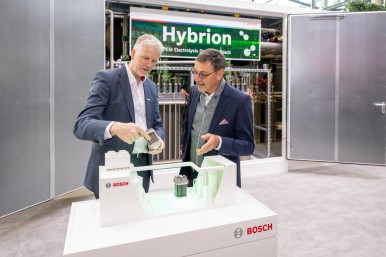
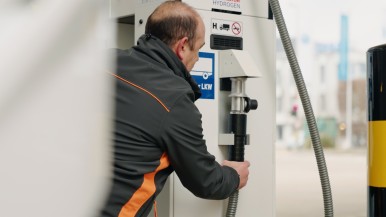
Stuttgart and Hannover, Germany – Whether in the chemicals, transportation, steel, or energy industries, there is enormous potential for decarbonization if hydrogen is used as an energy source – especially if it is produced using renewables. With an expected global capacity of 100–170 gigawatts by 2030, electrolysis is a strategic growth field for Bosch, despite the slowdown in the ramp-up of the hydrogen economy. To mark its entry into this market, the company is showcasing technology for electrolyzers at Hannover Messe. Bosch is premiering two Hybrion PEM (proton exchange membrane) electrolysis stacks as a modular container solution integrated into an electrolysis system. Such stacks are at the heart of the electrolyzer. The complete system, with an output of 2.5 megawatts, is supplied by FEST, based in Goslar, Germany. “To counter climate change, we need alternatives to fossil fuels. Green hydrogen, produced with renewable energy, will play a vital role in massively reducing carbon emissions in the industrial, transport, and energy sectors. Producing this hydrogen requires electrolysis systems – and Bosch’s Hybrion stack is the key component for them,” says Dr. Stefan Hartung, chairman of the board of management of Robert Bosch GmbH. To counter climate change, we need alternatives to fossil fuels. Green hydrogen, produced with renewable energy, will play a vital role in massively reducing carbon emissions in the industrial, transport, and energy sectors. Producing this hydrogen requires electrolysis systems – and Bosch’s Hybrion stack is the key component for them....Dr. Stefan Hartung, chairman of the board of management of Robert Bosch GmbH Bosch aims to apply its fuel-cell expertise to hydrogen production. The company wants to use its experience in volume production to achieve economies of scale and reduce costs in the future. In 2025, it is planning to work on several projects in Europe with various partners. Even before the official sales launch in April, Bosch has already acquired orders amounting to some 100 megawatts – for example, Neuman & Esser will be integrating 16 Bosch Hybrion stacks into an electrolyzer with a capacity of 20 megawatts. Bosch is also working with companies including AKA Energy Systems, Andritz, Pietro Fiorentini, Hyter, H2B2, iGas, IMI, Nikkiso, and Técnicas Reunidas. “Hydrogen is a strategic growth field for Bosch – we expect sales revenue to run into the billions by 2030,” says Dr. Markus Heyn, member of the board of management and chairman of Bosch Mobility. Hydrogen is a strategic growth field for Bosch – we expect sales revenue to run into the billions by 2030....Dr. Markus Heyn, member of the board of management and chairman of Bosch Mobility Stack production and hydrogen cycle in Bamberg The Hybrion stacks will initially be manufactured at the Bosch location in Bamberg, Germany. For each unit, over one hundred electrolysis cells are arranged in layers. For this, Bosch has developed a special clamping tool that greatly simplifies and accelerates the manufacturing process. Each stack can produce up to 23 kilograms of hydrogen per hour when supplied with a maximum power input of 1.25 megawatts. This is enough for a 40-ton truck with a fuel-cell powertrain to travel around 250 to 300 kilometers. In the individual electrolysis cells, a proton exchange membrane – made using a special polymer – separates the anode and cathode from each other. To produce hydrogen, ultrapure water is first fed into the anode side of the PEM electrolyzer. As a result of electrical voltage at the two electrodes, the water at the anode reacts to form oxygen and free electrons and protons. The protons cross the membrane and combine with the electrons to form hydrogen gas at the cathode. Bosch’s Hybrion PEM electrolysis stacks are suitable for hydrogen production in modular plants starting from 1 megawatt, but also for large, gigawatt-scale industrial plants. A FEST electrolyzer with integrated Bosch PEM electrolysis stacks is set to go into operation at the Bamberg plant as part of a hydrogen cycle in 2025. Bosch intends to use the hydrogen produced there for the endurance testing of mobile fuel-cell stacks, which are also manufactured in Bamberg. The power generated during that testing will in turn flow into the electrolyzer, thus closing the cycle. The hydrogen itself is initially intended for the company’s own use. Bosch offers a broad portfolio of products and solutions for hydrogen Bosch has an exhaustive hydrogen portfolio. “In developing hydrogen technologies, Bosch also relies on its proven expertise in industrial technology. We offer solutions from industry for industry,” says Dr. Tanja Rueckert, member of the Bosch board of management. Bosch Manufacturing Solutions, for example, offers water treatment systems that can be used to produce the ultrapure water required for electrolysis. These systems use thermal and electrochemical processes to remove impurities such as salts or metals from the water. Bosch is also actively using hydrogen in mobile fuel cells and hydrogen engines. Together with FirstElement Fuel, the U.S. market leader for the commercial operation of liquid hydrogen filling stations, Bosch Rexroth has achieved an important technology milestone for refueling infrastructure. CryoPump stations cut operating costs by up to 70 percent, bringing them down to an economical level, while shortening refueling processes for heavy trucks to around ten minutes.

Hannover Messe 2025: Bosch offers intelligent and efficient solutions for industry

19.03.2025

Press release

Business/economy

Hannover Messe 2025: Bosch offers intelligent and efficient solutions for industry

Stuttgart and Hannover, Germany – At Hannover Messe, Bosch presents solutions for industry – from hydraulics and electrolysis to software . In each case, the focus is always on improving the efficiency and productivity of manufacturing and enabling sustainable production. There is a significant role for hydrogen in making production sustainable – and in Hall 13, Booth C33, Bosch will be showcasing technologies for producing and using this resource. Bosch Rexroth will also be presenting its broad portfolio of industrial technology in Hall 6, Booth D26. In addition, Bosch experts will be sharing their thoughts with industry through presentations and panel discussions .Bosch technical highlights make industry fit for the future Hydraulic Hub: With its comprehensive range of digital services, the Hydraulic Hub simplifies and accelerates the servicing and maintenance of industrial hydraulic products, thereby increasing machine availability. Users of this digital service platform can access Bosch Rexroth’s hydraulics and service expertise 24/7 via its intuitive interface. The Hydraulic Hub also offers support with documentation and with proactive maintenance of hydraulic systems. AI-based tools provide answers to specific questions, such as what to do in the event of an oil leak, and help identify and rectify faults. Bosch Rexroth is working with Amazon Web Services, among others, to apply AI technologies. Electrolysis stack: Hydrogen production by way of electrolysis using renewable electricity has a central role to play on the path to a climate-neutral economy. In 2025, Bosch will launch its first electrolysis stack, the heart of every electrolyzer. The Bosch stack comprises more than 100 electrolysis cells that employ electricity to split water into oxygen and hydrogen. It is designed for an output of 1.25 megawatts, which corresponds to a hydrogen production rate of 23 kilograms per hour. On the hydrogen side, the resulting pressure is more than 30 bar. The stack is suitable for use in modular systems from 1 megawatt upward as well as in large gigawatt-class industrial systems. Water treatment system: The Pure Water System offered by Bosch Manufacturing Solutions (BMG) is a container system for the production of ultrapure water for electrolysis. Impurities in the water can render electrolyzers inoperative in a very short time. BMG’s water treatment system uses thermal and electrochemical processes to remove impurities such as salts or metals, thereby producing ultrapure water. The first step uses an energy-efficient and water-saving distillation technology called mechanical vapor compression. This is followed by electrodeionization (EDI), in which an electric field removes the remaining ions from the distillate. The Pure Water System requires no filter media or chemicals at all to treat salty water. The system’s product water meets the strict purity requirements of all electrolyzer technologies. Electrolyzer stack testing system: Bosch Manufacturing Solutions (BMG) offers an innovative system for the safe and efficient end-of-line testing of PEM electrolysis stacks up to a size of 1 megawatt. Automated contacting of the electrolyzers at the anode, cathode, and power supply increases precision and reduces the time required for testing. The software’s test procedures can be flexibly adapted to the specific requirements of different tests. Moreover, its customizable data evaluations enable a detailed analysis of the test results, which supports quality assurance in stack production. BMG also offers a modular, customizable electrolysis system for efficient hydrogen production, as well as a broad portfolio of assembly and testing systems for the development, manufacture, and quality assurance of fuel cells and fuel-cell power modules (FCPM). CryoPump station: Bosch Rexroth has worked together with FirstElement Fuel, the U.S. market leader for the commercial operation of liquid hydrogen filling stations, to develop an important technology milestone for refueling infrastructure. CryoPump stations cut operating costs by up to 70 percent, bringing them down to an economical level, while shortening refueling processes for heavy trucks to around ten minutes. Compared to conventional crankshaft-based pumps, the technology increases efficiency to over 95 percent and extends maintenance intervals to over 4,000 hours. With a footprint of less than 11 m² and a noise level of less than 65 dB(A), the stations are ideal for use in existing filling stations, even in residential areas. Battery production solutions: Battery production is considered a key technology for the energy transition. The only way manufacturers can hope to meet heavy future demand is by rapidly scaling up their battery production capacity. At Hannover Messe, Bosch Rexroth will be demonstrating how to realize complex value streams and extremely dynamic material movements using real material flow solutions along the entire value stream: from the virtual warehouse and cell preparation through module and pack assembly to transport and end-of-line testing. Compact gas compressor: Efficient and cost-effective hydrogen compression and storage is a key issue in the energy transition. Based on a proven automotive application, Bosch has developed a gas compressor that can compress over 11 standard cubic meters of hydrogen per hour to as much as 350 bar. This corresponds to more than one kilogram of hydrogen. The compressor’s compact dimensions and extremely low weight of less than ten kilograms make installation and maintenance considerably easier. In addition to hydrogen, the compressor is also suitable for other gases such as nitrogen, helium, and carbon dioxide, which greatly expands its range of application. HeyBosch: Bosch and Microsoft have expanded their partnership to introduce HeyBosch, an advanced AI platform based on Microsoft Azure. HeyBosch improves data management for industrial companies by providing insights into data and knowledge, making complex engineering data easy to understand, and using generative AI to enable user training. The platform integrates conversational AI, VR/AR functions, and business intelligence tools to offer a consistent and user-friendly experience.

Hannover Messe 2024: Bosch presents sustainable solutions for factory automation ...

22.04.2024

Press release

Business/economy

Hannover Messe 2024: Bosch presents sustainable solutions for factory automation ...

Stuttgart and Hannover, Germany – Industrial manufacturing is the engine of every economy. It creates jobs, secures prosperity, and ensures growth through trade. When industrial manufacturers come together again for this year’s Hannover Messe, there will be one major challenge that all of them continue to face: to respond to climate change, factories must become sustainable and conserve resources. Bosch is one of the leading factory outfitters; its broad portfolio of solutions for factory automation, the hydrogen economy, digitalization, and artificial intelligence (AI) helps industrial companies achieve a green transformation.Bosch industrial technology is in demand: in 2023, the supplier of technology and services was able to hold its own in a volatile market environment characterized by geopolitical tensions, the economic downturn, and interest-rate effects. Its sales of industrial technology rose to 7.4 billion euros. This equates to an increase of 6.8 percent, or 10.2 percent after adjusting for exchange-rate effects. The main drivers of this growth were Bosch’s acquisitions of HydraForce and Elmo Motion Control. “We are pursuing a long-term growth strategy with industrial technology,” says Tanja Rueckert, the member of the board of management of Robert Bosch GmbH responsible for the Industrial Technology business sector as well as the area of digital business and services. “We want to strengthen our market position, expand regional supply chains, and increase our industrial technology sales to 10 billion euros by 2028.” We want to strengthen our market position, expand regional supply chains, and increase our industrial technology sales to 10 billion euros by 2028....Tanja Rueckert, the member of the board of management of Robert Bosch GmbH At Hannover Messe 2024, Bosch will be presenting technologies and solutions in the fields of automation, digitalization, and hydrogen. “As an early adopter of artificial intelligence and digitalization applications, industrial technology is like almost no other sector,” Rueckert says. “Software and connectivity help increase efficiency, quality, and sustainability in production. The only way we can secure our standard of living and prosperity is with a strong industrial sector.” Generative AI: improve processes, increase quality In manufacturing, Bosch wants to use generative AI to further improve production management, monitoring, and control. In two Bosch plants in Germany, the company has launched initial projects through which generative AI creates synthetic images in order to develop and scale AI solutions for optical inspection and to optimize existing AI models. Bosch expects that this will reduce the time needed for planning, launching, and ramping up AI applications from the current six-to-twelve months to just a few weeks. Developed by Bosch researchers, this service for generating synthetic data is to be offered to all Bosch locations following successful piloting. ctrlX AUTOMATION: automation toolkit The ctrlX AUTOMATION system for factory automation developed by Bosch Rexroth comprises hardware, software, and apps. It is an open platform that provides all the building blocks for complete automation solutions, and reduces component and engineering costs by 30 to 50 percent. The platform’s community of partners, known collectively as ctrlX World, is continuously expanding the range of solutions with hardware, and above all with apps. So far, 100 partners have contributed their strengths and solutions. Since its launch five years ago, the number of customers has risen to around 1,500. Sales in this area increased 30 percent in 2023. Battery production: components for automated equipment Whether in electromobility, consumer electronics, or building technology, the demand for energy storage is greater than ever. Bosch Rexroth offers a comprehensive portfolio for battery production that includes individual components, systems solutions, and subsystems featuring linear, joining, and transfer technology in addition to the fully open ctrlX AUTOMATION system. Speed and precision are also important in battery production. Bosch Rexroth has developed linear robots that can be used quickly for typical applications such as handling cells and packs as well as joining and dispensing. These robots optimize processes in module and pack assembly and disassembly. Battery recycling: automation solution for deep discharge of batteries There are more and more electric cars driving quietly and with low emissions on the roads. Their batteries contain rare and valuable raw materials such as lithium and nickel, the recovery of which makes economic and ecological sense. Bosch Rexroth’s toolkit solution for diagnosing, discharging, and dismantling used vehicle batteries enables the automation of these process steps, which are upstream of the actual process of recovering the raw materials. This makes it possible to recycle batteries on an industrial scale and offers the possibility of flexible scaling. Stack and smart electrolysis module: technology for H2 electrolyzers Bosch not only plans to use hydrogen, but also to provide smart technology for its production. For this purpose, the company has developed an electrolysis stack, the central element of an electrolyzer. The stack comprises more than 100 electrolysis cells that use electricity to split water into oxygen and hydrogen. It is designed for an output of 1.25 megawatts. That is equivalent to the production of 23 kilograms of hydrogen per hour. The Bosch electrolysis stack is suitable for use in smaller-scale plants producing 1 megawatt and more, all the way up to large, gigawatt-scale plants. It is expected to be market-ready from 2025. In addition, Bosch is planning to combine its electrolyzer stack with a control unit, power electronics, and various sensors to create a smart electrolysis module. Manufacturing and testing technology: how fuel cells are made Bosch Manufacturing Solutions (BMG), the company’s special-purpose machinery unit, supplies advanced manufacturing equipment and testing technology for fuel-cell manufacturing – from individual components to complete systems. In total, more than 50 percent of the required manufacturing equipment comes from Bosch itself. When testing stacks and systems, natural conditions are simulated for the end-of-line functional test, where the PEM fuel cells are put through their paces. Here, gas composition, temperature, pressure, and humidity are the same as in the actual vehicle. The test benches work efficiently: 50 percent of the hydrogen used is recovered for new testing processes. A test bench for proton exchange membrane (PEM) electrolysis stacks will be presented for the first time at Hannover Messe. This type of test bench can be upgraded for development as well as for end-of-line functional testing, and is available in size classes between 50 kW and 3 MW. eSEA underwater actuator: electrification of offshore facilities In the future, hydrogen will often be produced in remote areas – in the desert or at sea – and thus far away from where it will later be used. To make it economical to operate the offshore facilities required for green hydrogen and the capture and storage of CO2, their plant technology needs to be significantly cheaper to purchase and operate than it has been to date. Bosch Rexroth has developed an electrical solution for controlling valves in underwater process plants at depths of up to 4,000 meters. Since this solution no longer feature valves operated via hydraulically driven actuators, it eliminates the need for miles of hydraulic lines to connect to hydraulic power units above water. Hydrogen filling stations: drive solutions for compressing hydrogen Hydrogen filling stations play a major role in decarbonizing the mobility sector. Within the next six years, several thousand hydrogen filling stations are set to go into operation worldwide. Together with partners, Bosch Rexroth has developed scalable solutions for servo-hydraulic compressor drives in the power range between 10 and 280 kW for the compression of hydrogen. To be able to refuel vehicles with hydrogen fuel quickly and simply, the gas has to be compressed to as much as 900 bar. A new electrohydraulically driven cryogenic pump has been developed in partnership with FirstElement Fuel, a leading company in the U.S. for the commercial operation of hydrogen filling stations. This cryogenic pump compresses liquid hydrogen directly to 875 bar. The aim is to refuel heavy trucks with 100 kg of hydrogen in under ten minutes. Direct refueling eliminates the need for intermediate storage tanks at filling stations. The first filling stations are set to be equipped starting in 2025. Moreover, Bosch Rexroth has worked with Maximator Hydrogen to develop scalable, low-maintenance drive units, with ratings currently up to 250 kW, that offer filling station operators an affordable way into hydrogen technology. The new container-based compressors can potentially reduce total cost of ownership by half compared with the commercially available alternatives. The Swiss Coop Group already uses hydrogen trucks for its goods transportation. They refuel at five filling stations equipped with Maximator and Bosch Rexroth technology. Bosch at Hannover Messe Bosch Rexroth – Hall 6, Booth D26 Bosch Connected Industries – Hall 9, Booth F27 Bosch Manufacturing Solutions – Hall 13, Booth C33 Selected panels with Bosch experts • Research Summit – Panel discussion with Dr. Tanja Rueckert, member of the board of management and chief digital officer, Robert Bosch GmbH, Monday, April 22, 2024, 2:30–3:15 p.m., Convention Center (CC), Room 1 • Panel discussion “The future of SMEs: Organizing sustainability & establishing digital business models” with Lisa Reehten, managing director, Bosch Climate Solutions, Tuesday, April 23, 2024, 5:15–5:35 p.m., Hall 8, Booth D17 • Panel discussion “AI meets automation” with Hans Michael Krause, director ctrlX World, Bosch Rexroth AG, Tuesday, April 23, 2024, 1:30–2:00 p.m. in Hall 3, Booth A76 • Lecture “Digital twins: What nobody is talking about” with Dr. Birgit Boss, Bosch Connected Industry, Thursday, April 25, 2024, 3:00–3:25 p.m., Industry 4.0 Conference Stage, Hall 8, Booth D17 • Panel discussion “The role of 6G in shaping the next industrial era” with Andreas Müller, Wednesday, April 24, 2024, 2:45–3:30 p.m., Hall 14, Booth H06

New area of business: Bosch to develop systems for water treatment

28.06.2023

Press release

Business/economy

New area of business: Bosch to develop systems for water treatment

Stuttgart, Germany – “A climate-neutral world won’t work without green hydrogen,” says Dr. Stefan Hartung, chairman of the Bosch board of management. Bosch is now expanding its business to include technology for water treatment. In addition to systems using the usual water treatment method of reverse osmosis, Bosch also plans to offer new solutions specifically engineered for remote areas and offshore locations. “Above all, the production of green hydrogen requires ultrapure water. With our special-purpose systems, water treatment can be done anywhere, even in the most remote areas of the world, in an economical and environmentally friendly way,” Hartung says. The systems designed by Bosch Manufacturing Solutions are not only robust and low maintenance, but compared to solutions commonly available on the market, they eliminate the need for chemicals in water treatment. With its entry into this new business field, Bosch is closing the circle and rounding off its range of products and services: “We’re developing technology for water treatment as well as for the generation, compression, storage, and use of hydrogen – and doing so for various sectors. Hardly any other company offers such a broad portfolio,” Hartung says. Water treatment forms the first and most fundamental link in the hydrogen value chain. Bosch has developed the water treatment technology for electrolysis at its locations in Renningen, Stuttgart-Feuerbach, and České Budějovice, and external pilot projects are to be added in the course of this year. The market launch for the systems is planned for 2024, and Bosch will be presenting the technology at the Bosch Tech Day in Stuttgart-Feuerbach on July 13, 2023. We’re developing technology for water treatment as well as for the generation, compression, storage, and use of hydrogen – and doing so for various sectors. Hardly any other company offers such a broad portfolio...says Dr. Stefan Hartung, chairman of the Bosch board of management. Special-purpose water treatment systems for the toughest conditions Electrolyzers require ultrapure water for the production of hydrogen. “Impurities in the water can render electrolyzers inoperative in a very short time,” explains Dr. Wolfgang Schleifenbaum, head of the Hydrogen business unit at Bosch Manufacturing Solutions. In the future, hydrogen will be produced in areas with strong winds or abundant sunshine – Africa, South America, or Northern Europe, for example. Locations offshore or in the desert present particular challenges: considerable distances from the technical facilities, water high in salt or minerals – all make water treatment more difficult. As a result, demand for special equipment is high: Bosch expects that starting in 2035, some 500 of the company’s special-purpose water treatment systems will be needed worldwide each year. The Bosch systems remove minerals from the water by means of thermal and electrochemical processes to obtain ultrapure water. Thanks to a treatment process without filter media, it is possible for operators to completely dispense with the use of chemicals. “Green hydrogen is sustainable only if its production doesn’t cause collateral damage to the environment; for example, by putting chemicals into our already heavily polluted waters,” Schleifenbaum explains. For predictive maintenance of the equipment, even from far away, Bosch offers software solutions that ensure robust operation in harsh environmental conditions. Industrial systems for water treatment in developed areas The demand for ultrapure water for the world’s hydrogen projects is enormous. As the world strives to achieve the Paris climate targets, Bosch estimates that, starting in 2050, annual demand for the water used in electrolysis will amount to some four cubic kilometers – more than the volume of Germany’s Lake Starnberg. Germany, too, has ambitious plans: the government has set a goal of installing H2 electrolyzers with a total capacity of 10 gigawatts by 2030 (source: German government, 2022 ). The EU aims to install 40 gigawatts of electrolysis capacity in Europe by 2030, with plans to produce up to ten million metric tons of renewable hydrogen (source: European Commission, 2020 ). “Hydrogen will play a crucial role in the energy supply of the future. Industries worldwide must use hydrogen if they want to become climate neutral. Bosch supplies water treatment technology that meets different requirements with regard to the size, performance, and location of the electrolyzers,” Schleifenbaum says. For water treatment in developed areas, Bosch plans to expand its portfolio to include industrial systems that use reverse-osmosis processes and ion exchangers to turn tap water into the ultrapure water electrolyzers need. With this combination of industrial and special purpose equipment, Bosch fulfills the requirements for electrolysis projects worldwide. Water treatment with Bosch technology – “Invented for life” Bosch technologies also help maintain valuable drinking water reserves. The Bosch system is particularly efficient, reducing the feedwater required for producing water for the electrolysis process by up to one-third compared to common solutions on the market. In addition to producing water for electrolysis, the special-purpose systems can also be adapted to produce drinking water. “With our water treatment systems, we follow the Bosch guideline and offer technology that is ‘Invented for life.’ In areas where drinking water is scarce, we can use our technology to help improve the supply,” Schleifenbaum says.

Hannover Messe: Bosch aims to increase sales of industrial technology to over 10 ...

13.04.2023

Press release

Business/economy

Hannover Messe: Bosch aims to increase sales of industrial technology to over 10 ...

Stuttgart, Germany – Bosch wants to achieve sustainable growth with industrial technology. Its sales of industrial technology are expected to rise from their current level of 7 billion euros to more than 10 billion euros by 2028. The aim is to achieve profitable growth: “We want to increase result more than sales and sustainably increase the value of the company. To this end, Bosch will invest a combined total of more than 3 billion euros in industrial technology in 2022 and 2023, ensuring organic and inorganic growth,” says the Bosch chairman Dr. Stefan Hartung. The acquisition of the U.S. hydraulics company HydraForce and its roughly 2,100 associates means that Bosch’s biggest current acquisition is in its Industrial Technology business sector. This merger sees Bosch Rexroth expanding its leading global position in hydraulics, supplying technology for excavators, cranes, tractors, and for plant and machinery in factories.Industrial technology offers enormous growth potential for Bosch. This is driven by an increasing need for automation and Industry 4.0 solutions, the “merging” of electrical and hydraulic systems, and growing demand for GreenTech for the ecological transformation of the economy. “By strengthening Industrial Technology, we are creating a better balance among our areas of business. Our broad diversification as a global technology company makes Bosch more creative and robust,” Hartung says. Within the Bosch Group as well, Industrial Technology is an important service provider, equipping the roughly 240 Bosch plants worldwide with manufacturing technology to ensure resource-efficient, customer-specific production. This saves the group from having to make orders worth over half a billion euros every year. At Hannover Messe (April 17–21, 2023), Bosch is showcasing its industrial technology portfolio, including innovations in collaborative robotics, control technology for Industry 4.0, energy-efficient hydraulics, electrified mobile machinery, stationary fuel cells for buildings and factories, and automated battery recycling. By strengthening Industrial Technology, we are creating a better balance among our areas of business. Our broad diversification as a global technology company makes Bosch more creative and robust,...says the Bosch chairman Dr. Stefan Hartung. GreenTech: Bosch sales with solutions for industry reach the billion mark Industrial technology is growing thanks both to various sectors of the economy moving toward climate neutrality and to the emergence of a circular economy. “Without capital goods, the ecological transformation of business would not be conceivable. Industrial technology enables the sustainable transformation of different sectors of the economy,” Hartung says. Bosch is developing solutions that conserve resources, reduce energy consumption, protect the environment, and mitigate global warming. In 2022, Bosch generated sales of more than 1 billion euros with environmental technology for industry – a year-on-year increase of 25 percent. In other words, Bosch reached its sales target for 2023 one year earlier than planned. And the company is continuing to expand its GreenTech portfolio. Bosch Rexroth, for example, is launching its eLION portfolio solutions for the electrification of mobile machinery such as excavators, wheel loaders, and tractors. With over 80 motor variants, graded according to power and size, the company offers the broadest range in the industry, helping to reduce carbon emissions on construction sites, in mining, and in ports. International customers such as Sennebogen and Kalmar Cargotec are already using the new Bosch drives in their products, and in this way driving forward the electrification of mobile machinery. The demand for GreenTech is also increasing in factories. As a result of climate-action measures, companies are modernizing their installed machinery and equipment on the one hand and building new manufacturing facilities on the other, for example for batteries and fuel cells. At Hannover Messe, Bosch is showcasing manufacturing technology for battery production – and for recycling. “The only way we can make a success of electromobility is if we recover the raw materials we use,” Hartung says. Bosch Rexroth has developed an automated battery discharge system that not only simplifies recycling, but is also more efficient than manual processes. The technology is being used for the first time by REMONDIS and Rhenus Automotive at their Magdeburg site in Germany. Hydrogen: Bosch is relying on its own know-how for technology development In addition to storage media such as batteries, “conversion artists” such as fuel cells are important elements of a climate-neutral future. At Hannover Messe, Bosch is presenting stationary solid-oxide fuel cells (SOFCs) with an overall efficiency of more than 85 percent. These distributed energy converters are currently being tested in some 60 pilot plants. One of them is the Hydrogen Campus in Salzgitter, Germany: at this Bosch site, ten SOFC fuel-cell systems have been integrated into the plant’s energy supply system. Bosch is aiming to launch the stationary fuel cells commercially in 2025. The components are manufactured using Bosch’s own know-how and technology. From cell to stack to the overall system: Bosch’s special-purpose machinery unit supplies more than 50 percent of the manufacturing equipment required for fuel-cell production. In the future, the Bosch portfolio will also feature components for electrolyzers. The market launch for the heart of the electrolyzer, known as the stack, is planned for 2025. Industry 4.0: Bosch software conserves resources Energy, factory supplies, raw materials – resources are rare and precious. “Our response to shortages is efficiency. Anyone looking to manufacture sustainably needs to adopt Industry 4.0,” Hartung says. For example, Bosch Connected Industry’s Nexeed Industry 4.0 software increases plant effectiveness in factories by an average of 5 percent, cuts maintenance costs by 25 percent, and reduces waste. Nexeed is already being put through its paces in more than half of Bosch’s roughly 240 plants and at more than 100 international customers. Software also helps combine conventional and novel technologies. One example is hydraulics: for more than 200 years, fluid mechanics have been used whenever large loads need to be moved with minimal effort, for example in plastics machinery or presses. Thanks to load-dependent control, Bosch Rexroth variable-speed pump drives are now always in the optimum operating mode. They switch to standby mode when not in use. Compared to conventional drives, this reduces the hydraulic systems’ energy consumption by up to 80 percent. Automation: Bosch technology reduces complexity Aging society, labor shortages, limited resources in general: the challenges are mounting. Bosch is focusing on an education and training campaign and on technology that supports companies and relieves workers of certain tasks. Bosch Rexroth’s ctrlX AUTOMATION modular automation system, for example, understands over 30 programming languages and allows users to develop their own apps and services. More than 600 customers already rely on this pioneering form of automation. “The only way we can overcome the pressing challenges of our time is by joining forces to make more of a difference. ‘Co-creation’ and making systems open for others are important considerations here,” Hartung says. Bosch Rexroth is pursuing this approach in hydraulics as well. Whereas control technology was previously tied to hardware, the company has now transferred this to software modules. This means mechanical engineers can continue to use existing automation architectures; specific hydraulics know-how is no longer required. Automation also supports workers directly, for example by relieving them of monotonous or strenuous tasks. At Hannover Messe, Bosch Rexroth is showcasing articulated, fine-motor lightweight cobots that reach around corners in seven axes and help workers load, palletize, and inspect workpieces. These cobots are in demand. The global market for industrial automation is growing rapidly: while sales of automation technology were just under 200 billion euros in 2021, they are expected to grow to more than 400 billion euros globally by 2030 – with annual growth rates of over 8 percent (source: Precedence Research, 2022 ). “Megatrends such as digitalization, an aging society, and efforts toward greater sustainability are driving the demand for automation. Factory automation is a strategic business area for Bosch in which we aim to achieve double-digit growth every year – and thus grow faster the market,” Hartung says.

Battery recycling: Bosch to develop Europe’s first fully automated battery-disch ...

05.04.2023

Press release

Business/economy

Battery recycling: Bosch to develop Europe’s first fully automated battery-disch ...

Stuttgart, Germany – More and more electric cars are finding their way onto the road. Bosch estimates that they will account for around 70 percent of all newly registered passenger cars in Europe by 2030. This is increasing demand for batteries and for the recycling of the raw materials they contain, such as lithium, cobalt, and nickel. Bosch has developed special machinery, equipment, and software for this purpose. The subsidiary Bosch Rexroth is supplying Battery Lifecycle Company, a joint venture between REMONDIS subsidiary TSR Recycling and Rhenus Automotive, with Europe’s first fully automated system for discharging and disassembling battery modules. “Electromobility can only establish itself in the long term if sufficient raw materials are available for battery production. Recycling plays a key role here, and helps place our output on a sustainable footing: we reuse what we use, and we recover raw materials,” says Dr. Stefan Hartung, chairman of the Bosch board of management. Experts predict that by 2030, Europe will require recycling capacity for up to 420,000 metric tons of battery material each year (Source: Fraunhofer ISI, 2023 ). “If we want to build a European circular economy, we need to integrate recycling firmly into the product life cycle and create the necessary infrastructure to do so. Bosch is contributing its technical expertise to this,” Hartung says. Bosch will present industrial technology for battery recycling at Hannover Messe (April 17–21, 2023). Electromobility can only establish itself in the long term if sufficient raw materials are available for battery production. Recycling plays a key role here, and helps place our output on a sustainable footing: we reuse what we use, and we recover raw materials,...says Dr. Stefan Hartung, chairman of the Bosch board of management. Efficient recycling as a building block of a circular economy Growing numbers of electric cars combined with limited resources and increasing legal requirements for recycling – the challenges are increasing. “What we do today sets the course for tomorrow. The batteries currently being installed in vehicles will have reached the end of their life in 10 to 15 years. We must use this window of opportunity to build the necessary recycling capacity,” says Steffen Haack, CEO of Bosch Rexroth. According to the Fraunhofer Institute for Systems and Innovation Research, the technical systems required for recycling will require investment of more than 6 billion euros by 2040 in Europe alone (Source: Fraunhofer, 2021 ). Recycling will be worthwhile: optimum recycling can recover up to 95 percent of a battery’s chemical elements and recycle them into the battery production process. The automated discharging system developed by Bosch not only simplifies recycling, but also increases efficiency and enhances safety: it takes just a few minutes to deep-discharge a module. The system recognizes different battery designs, minimizing risks such as short circuits and fires. Model project at Battery Lifecycle Company Battery Lifecycle Company is building Europe’s first fully automated plant at its site in Magdeburg, with Bosch Rexroth supplying the technology. The site will test used batteries from different manufacturers, deep-discharge them, and prepare them for subsequent shredding. The new plant’s workpiece carriers will each transport battery materials weighing up to 150 kilograms at a speed of 18 meters per minute. This means that it will take less than 15 minutes to automatically discharge eight lithium-ion batteries from electric cars. Bosch’s automated solution will greatly increase the speed of recycling: with the manual process currently used, it takes up to 24 hours to deep-discharge a battery. The model project in Magdeburg is the first to use this patented Bosch discharging solution: battery modules will be chemically deactivated in a reliable process, ensuring that further processing can take place without voltage. The residual energy in the modules can be used to operate the recycling system. In addition, the site will use proven Bosch industrial technology for battery production on-site, including flexible, modular transfer systems and the ctrlX AUTOMATION control platform. Each year, the Battery Lifecycle Company site will recycle up to 15,000 metric tons of battery materials. The plant is scheduled to go into operation in summer 2023. Bosch industrial technology for recycling Bosch has many years of experience in the development of automation and manufacturing technology for battery production. All the premium German automakers and many battery production facilities worldwide use Bosch industrial technology. Bosch is continuously expanding its portfolio along the value chain for battery production. The company has now developed hardware and software specifically for battery recycling, which is marketed worldwide together with partners and system integrators. In addition to fully automated battery module discharging stations, these include ergonomically flexible workstations for technical analysis and safe battery disassembly, transfer systems for transporting batteries of different weight classes, and software for guiding workers through the various process steps. Bosch also offers a track and trace solution for the condition, material origin, and processing status of batteries.

Bosch aims to generate billions in sales with green tech for industry

24.05.2022

Press release

Business/economy

Bosch aims to generate billions in sales with green tech for industry

Stuttgart, Germany – In the fight against climate change, technology is paving the way, and Bosch is at the forefront of these endeavors. In February 2020, Bosch became the first global industrial company to achieve carbon-neutral production. It is developing green technologies that conserve resources, reduce energy consumption, protect the environment, and mitigate global warming. “Industry will become a driver of ecological transformation in business and society. Bosch is mobilizing all its resources and contributing its technological know-how and many years of manufacturing expertise,” says Rolf Najork, the member of the Bosch board of management responsible for industrial technology. In 2021, green tech for industry generated sales of over 800 million euros for the company. That is just under 14 percent of the total sales of Bosch’s Industrial Technology business sector (6.1 billion euros in 2021). The green tech market is growing by 8 percent annually (source: BMU, 2021 ). “Bosch is growing faster than the market. By 2023, we want to break the one-billion-euro mark in sales of green industrial technology,” Najork says. Ecological transformation is paying off: according to the VDMA, the association of German machinery and equipment manufacturers, the systematic use of green tech can cut industrial greenhouse gas emissions by almost 90 percent (source: VDMA, 2020 ). The VDMA study also says that by 2050, the expansion of climate-friendly technologies in the industrial sector will create a market potential of over 300 billion euros a year. At Hannover Messe (May 30–June 2, 2022), Bosch will be presenting its green tech solutions – from industry, for industry, and beyond. Industry will become a driver of ecological transformation in business and society. Bosch is mobilizing all its resources and contributing its technological know-how and many years of manufacturing expertise...says Rolf Najork, the member of the Bosch board of management responsible for industrial technology. Green factories: digitalized and connected Mitigating climate change is a challenge for society as a whole. The industrial sector accounts for around one-fifth of global CO 2 emissions. “Industry must and can play a crucial role in environmental and climate action,” Najork says. “Far from being a pipe dream, green factories are a reality. All we need now is more of them.” Energy efficiency is a key lever, helping machinery and equipment to consume less energy. This is where digitalization comes in. It also helps pinpoint where energy is being consumed. To manage the consumption of heat, electricity, and compressed air, Bosch relies on its own Energy Platform in combination with Nexeed Industry 4.0 software. This makes it easier to predict energy consumption, avoid peak loads, and recognize and correct deviations in individual machines. The platform is now used at more than 120 of the company’s locations and in more than 80 customer projects. In Bosch’s Industry 4.0 lead plant in Homburg, Germany, this software is helping cut energy requirements by over 40 percent per manufactured product. Artificial intelligence offers even more possibilities. At its Eisenach plant, also in Germany, Bosch is currently piloting its Balancing Energy Network . Based on the Energy Platform, this AI solution manages and optimizes the energy requirement of 1,000 machines. The AI shows how production and logistics data, weather information, and energy prices relate to each other and offers recommendations for action. AI is expected to help further lower the location’s annual energy costs by around 5 percent. Efficient machinery: higher performance, lower consumption Connecting machinery and processes intelligently and dovetailing them with information and communications technology creates the basis for energy-efficient production. Increasingly, this involves relocating functions from hardware to software, augmented by digital twins. “In the factory of the future, it will be possible to adjust many things at the touch of a button,” Najork says. Here, Bosch takes a modular approach. The only static elements of such a factory will be the floor, ceiling, and walls. Everything else will be dynamic and variable, with machines constantly rearranging their constellations and changing their configuration, depending on the job in hand. As a result, plant and equipment will last longer, and the amount of raw materials used in the production of new hardware will decrease. Digital twins provide ways of designing, developing, and testing production systems to make them more resource-efficient. “Virtual copies of physical assets in the real factory allow us to simulate and optimize workflows and processes – and this without interrupting operations,” Najork says. One striking example is ctrlX Automation , the new Bosch Rexroth control technology, with its app technology and web-based engineering. This allows the volume of all automation components to be reduced by up to 50 percent on average. What’s more, the drives weigh up to one-third less. The lighter the hardware, the less drive power and energy are required. Three years on from market launch, more than 300 customers are already using this Bosch automation technology, which works like a smartphone. The company is even rethinking hydraulics and unlocking its potential: machine tools, injection molding machinery, and presses often use smart hydraulic power units such as Bosch Rexroth’s CytroBox . The integrated variable-speed pump drive reduces energy consumption and electricity costs by up to 80 percent compared to conventional drives. CytroBox’s load-dependent control means that it is always in the optimum operating mode. It switches to standby mode when not in use. Sustainable industries: the basis and the trailblazers of the green economy German companies are among the leading providers of environmental technology, making up 15 percent of the global green tech market. Pre-eminent among these German companies are manufacturers of machinery and equipment – this sector has the largest share of the German green tech market (source: BMU, 2021 ). “Establishing a green economy hinges on industry. It’s where the innovations will be developed that sustainably shape not only industry, but also a variety of other sectors,” Najork says. To take the example of mobility: Bosch is the world’s biggest automotive supplier, and the innovation leader in electric driving. No other company offers such a broad portfolio – from e-bikes, to passenger cars, to commercial vehicles. Bosch Rexroth is taking this one step further and accelerating the electrification of mobile machinery such as excavators, forklifts, and tractors. Volume production of electric motors for off-highway applications is scheduled to start in the second half of 2022. But Bosch is also one of the leading suppliers of factory equipment. The company supplies both its own factories and those of its customers with machinery and equipment. It will only be possible to transition to electromobility if high-quality energy storage systems are developed that are sustainably produced and then recycled. For the production and recycling of battery modules and packs , Bosch offers everything from a single source, ranging from individual components and systems solutions to complete assembly lines. Together with Volkswagen, Bosch is looking to develop factory equipment for producing the core component of electromobility: the battery cell. A project unit is currently examining the market and is tasked with verifying and preparing the establishment of a new company by the end of the year. In addition to batteries, hydrogen-based fuel cells will power the mobility of the future. Bosch’s special-purpose machinery unit supplies efficient manufacturing and testing technology tailored to the individual requirements of automakers and suppliers, as well as customers from the aviation industry. For example, this year Bosch will equip the manufacturing facility operated by its partner Nikola in Arizona with production lines to assemble fuel-cell systems for trucks. When it comes to establishing infrastructure, the hydrogen extracted through electrolysis needs to be compressed at filling stations. Bosch Rexroth is developing hydraulic drives and electric controls, including software, for hydrogen compressors that raise the gas pressure to up to 900 bar. The aim is to equip some 4,000 hydrogen filling stations with Bosch technology by 2030. “Industry is opening the door to a climate-neutral future,” Najork says.

CES 2022: For better quality of life and more climate action – connected and sma ...

04.01.2022

Press release

Business/economy

CES 2022: For better quality of life and more climate action – connected and sma ...

Las Vegas – At home, on the road, at work, in the hospital, or even in orbit: Bosch is improving the everyday lives of people from all walks of life with smart and connected solutions. At the same time, the company is tapping into new areas of business through software, services, and licenses. “We are systematically digitalizing our core business to increase the benefits for our customers. Going forward, we aim to turn the sale of every digital product into services-based revenue as well,” says Tanja Rückert, the Bosch Group’s chief digital officer, at CES in Las Vegas. To achieve this goal, Bosch is focusing on the connection of IoT with AI – in other words, it is linking the internet of things (IoT) with artificial intelligence (AI). We are systematically digitalizing our core business to increase the benefits for our customers. Going forward, we aim to turn the sale of every digital product into services-based revenue as well....Tanja Rückert, the Bosch Group’s chief digital officer This creates a virtuous circle in which connected products deliver information that, in turn, is processed by means of AI and incorporated into software updates for these products. At the core of this approach is the benefit for customers, since it allows users to be an integral part of the development process and enables solutions to be tailored precisely to their needs. Furthermore, neither development nor value creation ends with the sale of the products. “We see the combination of AI and IoT as holding the key to leveraging the most user benefit from both of these technologies,” Rückert says. “Besides enabling us to develop new business models, this approach helps us offer better products and solutions that deliver real added value for individuals and society as a whole.” Expanding software expertise: Bosch is already shaping the future today Bosch laid the foundation for this long ago. As of the new year, all electronics product classes will be connectable. Sales of connected power tools, household appliances, and heating systems alone have grown by 50 percent within one year – from four million units in 2020 to more than six million in 2021. With the Bosch Center for Artificial Intelligence (BCAI), the company has established a strong unit in the field of AI that has already contributed some 300 million euros to result. In addition, the company invests a total of more than four billion euros every year in its software expertise, around three billion of which goes to the mobility business. To shape the software-defined future of mobility, Bosch will also be pooling development activities for application-independent software in one unit as of mid-2022. In the future, under the umbrella of its subsidiary ETAS GmbH, the company will develop and sell basic vehicle software, middleware, cloud services, and development tools for universal application. Bosch is also rapidly advancing connected and automated driving. Over the past five years, Bosch has generated some nine billion euros in sales just with driver assistance systems and the associated sensors. Bosch Tech Compass: a survey conducted in five countries around the world The Bosch Tech Compass – a representative survey conducted in five countries and presented for the first time at CES – shows what people across the globe expect from new technologies. According to the survey, the majority of respondents (72 percent) are convinced that technological progress is making the world a better place, for instance as a key to fighting climate change (76 percent). At the same time, four out of five people think technology should be more focused on tackling the great challenges of our time rather than serving individual needs. “We at Bosch also believe that technology offers a broad range of benefits,” Rückert says. “When we talk about high-tech, we’re not talking only about pushing the envelope on what’s possible. We use technology as a means to improve people’s lives wherever they are.” From space to pediatric medicine: the Bosch SoundSee sensor system One example of the benefit of AI and connectivity is the SoundSee sensor system. Since late 2019, it has been traveling through space to identify unusual sounds on the ISS, using AI algorithms to analyze and indicate when maintenance is required. Now, in collaboration with the non-profit healthcare company Highmark in Pittsburgh (USA), Bosch is pursuing a completely down-to-earth application of this technology: investigating how audio AI can be used as a diagnostic tool in pediatric medicine. Specifically, Bosch and Highmark are working to adapt the sensors in a way that will enable them to detect pulmonary conditions such as asthma at an early stage just by listening to children’s breathing patterns. “Using innovative technology to improve children’s health – that’s exactly what we mean with high tech,” says Mike Mansuetti, president of Bosch in North America. SoundSee’s use in medicine also illustrates Bosch’s understanding of its “Invented for life” strategic imperative. Bosch’s new gas sensor – the first on the market to contain AI – serves to protect both humans and nature. Part of Dryad’s Silvanet Wildfire Sensor, it is essentially a digital nose that helps detect forest fires early on. Dryad’s sensors are attached to trees, where they continuously monitor the local microclimate to detect incipient fires – and to wirelessly notify the local authorities, long before camera- or satellite-based systems can. Not only can this protect against devastation by fire, it can also reduce global carbon emissions from forest fires. “These sensors are going to help save lives, homes, and tons of CO 2 from entering the atmosphere – all thanks to AI and connectivity,” Mansuetti says. High-tech #LikeABosch: new campaign for smart solutions A new, lighthearted Bosch campaign shows the solutions the company has developed to improve the little things in people’s everyday lives. Called “High tech #LikeABosch – with many connected, intelligent, and sustainable solutions,” its protagonist takes viewers on a tour through her daily routine and uses several Bosch solutions, from smart glasses to a connected e-bike to a digital access pass for work. This makes her teenage son, who at the start of the clip said his mom was “old school,” look pretty out of touch.

Bosch honors its suppliers’ endeavors for sustainability

19.07.2021

Press release

Business/economy

Bosch honors its suppliers’ endeavors for sustainability

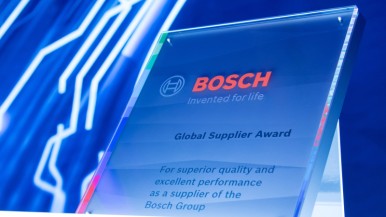
Stuttgart, Germany – As it continues to pursue its sustainability strategy, Bosch has decided to recognize commitment to sustainability among its roughly 23,000 suppliers worldwide. For the first time, this year’s international Bosch Supplier Awards include an honor in this category. Announcing the award winners, Prof. Stefan Asenkerschbaumer, CFO and deputy chairman of the board of management of Robert Bosch GmbH, said: “With a current purchasing volume of 35 billion euros, Bosch’s responsibility in the global supply chain extends far beyond the factory gates. Together with our suppliers, we assume social responsibility, which also means striving to achieve a high level of sustainability.” For Bosch, the award is also an expression of partnership and long-term cooperation with its suppliers and service providers. Forty-six companies from 16 countries received one of the coveted Bosch Global Supplier Awards for their exceptional performance in various categories. The jury recognized Infineon, Salesforce, and Steelcase for their climate action programs.Sustainable supply chains: spotlight on climate action With its 400 locations worldwide, Bosch has been climate neutral since the first quarter of 2020. In close cooperation with its global supplier network, Bosch wants to go one step further, and aims for a 15 percent reduction in its upstream and downstream CO 2 emissions along its entire value chain by 2030. “Climate action is a collective task shared by industry, politics, and society,” Asenkerschbaumer says. “Climate-conscious action is a common bond between Bosch and its suppliers.” In the future, the company will make aspects such as CO 2 emissions or CO 2 ratings a criterion for awarding new contracts. “We plan to put some initial ideas into practice more broadly as of 2022,” the CFO says. Electrification and green hydrogen: opportunities for suppliers Bosch is focusing above all on electrification and hydrogen technology, for example in mobility and heating, in order to turn technological and environmental upheaval into new business opportunities . “Global efforts to combat climate change are boosting electrification and green hydrogen,” Asenkerschbaumer says. As for the associated business opportunities, he sees suppliers as important partners for Bosch: “Our suppliers and service providers play a crucial role in many technical innovations that ultimately help improve quality of life and conserve natural resources.” Robustness: disruptions also affecting supply chains At Bosch, partnering with regional and local suppliers ensures a high degree of robustness and availability in the supply chain. According to Asenkerschbaumer, this strategy has once again proved invaluable in crises such as the coronavirus pandemic and the current market bottlenecks. Nevertheless, companies and their suppliers worldwide need to prepare early for changes in the event of ongoing supply chain disruptions. “At Bosch, we’re well prepared for this. We essentially take a decentralized approach by manufacturing locally in our customers’ countries and relying on a standardized global manufacturing network.” In light of the challenging business year, the CFO expects purchasing volumes in 2021 to be only slightly above the previous year’s level. Sustainability: award winners in the new category In this new category, Bosch honors its suppliers’s endeavors to promote sustainability. The criteria it applies are strict. “To kick things off, we focused on climate action programs,” said Dr. Arne Flemming, head of supply chain management at Bosch. “To make the shortlist, our suppliers had to demonstrate excellent overall performance as well as an A or B rating in the prestigious Carbon Disclosure Project .” Next, a jury of procurement and sustainability experts evaluated criteria such as the transparency of a company’s carbon emissions, its reduction targets for the years up to 2030, and its contribution to Bosch’s CO 2 targets. This year, the semiconductor manufacturer Infineon , the software company Salesforce , and the office furniture manufacturer Steelcase are the recipients of the first-ever Bosch Sustainability Award. Infineon qualified through its many years of voluntary activities to reduce CO 2 in production as well as its comprehensive corporate strategy with ambitious sustainability goals. Salesforce impressed with its exclusive use of renewable energy starting in 2022 as well as with the CO 2 reduction targets it has set its own supplier base. Among other things, Steelcase won over the jury with its integrated approach to CO 2 reduction – from the selection of sustainable materials to their reuse. 17th Bosch Global Supplier Awards: honoring the best suppliers Across the globe, some 37,000 Bosch associates work in purchasing and logistics; they keep around 240 manufacturing plants supplied with parts and raw materials every day. The supplier of technology and services regularly honors the best of its suppliers from around the world with the Bosch Global Supplier Award. Award winners are recognized for outstanding performance in the manufacture and supply of raw materials, products, and services. A panel of judges evaluated the finalists in the categories of Purchasing of indirect materials and services, Raw materials and components, Purchasing of direct materials (by business sector), and a special Sustainability category. Bosch has been presenting these awards to honor supplier excellence every two years since 1987, and they are highly regarded in the industry. This year, due to the pandemic, the awards will be given individually. A complete list of the winners is available here .

Bosch believes AIoT, electrification, and green hydrogen are the way forward

22.04.2021

Press release

Business/economy

Bosch believes AIoT, electrification, and green hydrogen are the way forward

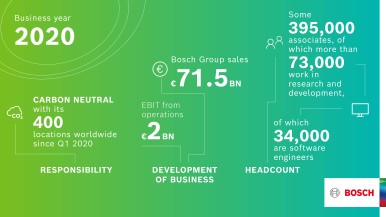
Renningen and Stuttgart, Germany – Bosch, the supplier of technology and services, is combining the internet of things (IoT) with artificial intelligence (AI) and believes electromobility will allow it to develop new business opportunities on the back of the profound technological and ecological changes currently occurring. “Bosch came through the first year of the coronavirus pandemic well,” said Dr. Volkmar Denner , the chairman of the board of management of Robert Bosch GmbH, at the press conference to present the company’s 2020 annual report . “We are one of the winners in the transition to electromobility, and we are significantly expanding our software business by tying in artificial intelligence.”In powertrain technology, electromobility is establishing itself as Bosch’s core business. Denner reported that the company is making heavy upfront investments in this area – a further 700 million euros this year alone. Up to now, its upfront investments in electromobility total five billion euros. Currently, Bosch sales revenue from electrical powertrain components is growing twice as fast as the market, at almost 40 percent. The aim is to increase annual sales fivefold to a total of some five billion euros by 2025 and to break even one year earlier. “Electromobility has long since ceased to be a bet on the future. Our upfront investments are now beginning to pay off,” the Bosch CEO said at an online press conference. Overall, Bosch had acquired orders worth over 20 billion euros by the end of 2020. In the first three months of this year, Bosch Group sales climbed 17.0 percent year on year. “With a good first quarter, Bosch has made a successful start to 2021,” said Prof. Stefan Asenkerschbaumer , the CFO and deputy chairman of the Bosch board of management. He expressed confidence for 2021, but expects it to be another challenging year. For the current reporting period, sales are expected to increase roughly 6 percent year on year, while the margin from operations is set to improve slightly to around 3 percent – or around 4 percent without restructuring costs. However, this depends on the effects of the semiconductor bottlenecks, which are difficult to assess. “The year 2021 will be an important milestone on our path to regaining our target margin of around 7 percent in the next two to three years,” Asenkerschbaumer said. The encouraging 2020 business year – despite the pandemic – with an operating result (EBIT from operations, adjusted for the effects of purchase-price allocations for Automotive Steering and BSH Hausgeräte) of 2.0 billion euros provides Bosch with a sound footing on which to continue to invest in areas of future importance. With sales amounting to 71.5 billion euros, research and development spending remained essentially unchanged at 5.9 billion euros, and EBIT margin from operations reached 2.8 percent. Adjusted for restructuring expenses, which additionally burdened result in 2020, the figure was 4.7 percent. Connectivity megatrend: customers becoming integral to development Bosch aims to leverage the competitive advantage it derives from its wealth of experience in combining connectivity (the internet of things, IoT) and artificial intelligence (AI) to generate future business and become a leading AIoT company . Bosch foresees that AI-enabled products will generate sales worth billions of euros over the next few years. Sales of connectivity-enabled devices for the home are expected to double: from four million last year to around eight million units in 2021. In addition, Bosch wants to use AI to evaluate data relating to how its customers use its products, and in this way to provide software updates that create new functions and services for those customers. “Connecting things leads to knowledge about how things are used,” Denner said. “This lets us continuously improve our products, keep them up to date, and provide our customers with more benefits.” In the field of video security, for example, video analysis based on neural networks opens up new possibilities. To this end, Bosch is integrating detectors both into new cameras and into an AI box that can be connected to installed devices. The first application is a traffic detector that will initially be able to detect and locate vehicles precisely in busy traffic situations, even under difficult lighting conditions. The more data that flows into the customer application, the more AI will be able to do, including accurate accident detection, the company says. Electrification megatrend: new opportunities in several business areas Global efforts to combat climate change are boosting electrification and green hydrogen. Denner believes electrification opens up new opportunities in several business areas: “Electrification requires solutions not only for electric driving in cars, but also for electric heating in buildings.” In electromobility , the key drivers of change are falling battery costs and emissions standards designed to meet climate action targets. In building technology, especially in heating and air-conditioning, the use of heat pumps and renewables is playing a growing role. In heating systems , for instance, Bosch is growing much faster than the market with solutions based on electricity. Sales of heat pumps grew by more than 20 percent in 2020; Denner expects them to triple by 2025. The company also anticipates that the refurbishment of residential buildings called for under the European Green Deal will provide a strong stimulus to growth. With this in mind, Bosch wants to leverage its “investment clout, large-scale production capability, and commercialization expertise.” In the case of the company’s particularly efficient and quiet air-to-water heat pumps alone, unit sales almost doubled in Germany in 2020. Hydrogen megatrend: fuel-cell market worth billions Bosch is also focusing on a growth market for the hydrogen megatrend: the company believes the market for green hydrogen in the EU will be worth almost 40 billion euros by 2030 – with annual growth rates of 65 percent. Fuel cells convert hydrogen into electricity, and Bosch is developing both stationary and mobile fuel-cell solutions. From 2021 to 2024, Bosch plans to invest one billion euros in fuel-cell technology . “Bosch is already H₂-ready,” Denner said. The plan is to put 100 stationary fuel-cell plants into operation this year. They will supply electricity to users such as data centers, industrial manufacturers, and residential areas. One stationary solid-oxide fuel cell, located in the center of Bamberg, Germany, was brought into operation at the end of March 2021 together with Stadtwerke Bamberg, the city’s public utilities. Bosch estimates that the market for mobile fuel-cell components will be worth around 18 billion euros by the end of the decade. Denner believes Bosch is in a good position here: “We have what it takes to be a leader in this market as well.” Bosch recently entered into a joint venture with China’s Qingling Motor Group to produce fuel-cell powertrains. A test fleet of 70 trucks is set to be on the roads before the end of this year. Denner: EU plans may threaten carbon neutrality Denner does not believe that the EU’s initial plans for the Euro 7 emissions standard make sense; however, he expressed his satisfaction that the debate was now showing signs of movement and becoming more objective. He explained why: “Climate action is not about the end of the internal-combustion engine. It’s about the end of fossil fuels. And while electromobility and green charging power make road transport carbon neutral, so do renewable fuels.” The Bosch CEO reminded his audience that climate-neutral mobility is almost as ambitious a goal as flying to the moon was in the 1960s. But instead of just setting the big goal of “first man on the moon” and leaving it up to engineers to decide how to achieve it, as U.S. President Kennedy did at the time, the European Commission is doing things the other way around. “This is a surefire way to cut off alternative paths to climate action,” Denner said. “If society truly wants climate action, it is essential that we do not play technological approaches off against each other. Instead, we must combine them.” CO₂ reduction at Bosch: along the entire value chain Bosch is pressing ahead with its own climate action targets as planned: Now that the climate-neutral status of the Bosch Group, with its more than 400 locations worldwide, has been certified, Bosch is giving concrete shape to its plans for what is known as Scope 3. By 2030, it aims to reduce carbon emissions by 15 percent from their 2018 level along its entire value chain, from suppliers to customers – a reduction of 67 million metric tons of carbon dioxide emissions. “Our efforts are sure to drive our product portfolio in the direction of energy efficiency or even technology change. In the future, a supplier’s or logistics provider’s carbon footprint will be one of the criteria for awarding new procurement contracts,” Denner said. “In terms of mitigating global warming, this will pay off.” Outlook for 2021: despite confidence, the year remains challenging Bosch expects the global economy to grow by just under 4 percent this year, after a contraction of around 3.8 percent last year. “Even though we’ve made a confident start to 2021, the pandemic continues to pose significant risks,” Asenkerschbaumer said. The CFO added that Bosch is particularly aware of market bottlenecks in the automotive sector, especially for semiconductors, which are in great demand. The company is doing everything in its power to support its customers in this tense situation. However, an improvement in the short term is not to be expected, and the situation may also impact business developments in the current year. In the long run, Asenkerschbaumer believes it is necessary to make all supply chains in the automotive industry less prone to disruption. Moreover, aligning its mobility business with areas of future importance such as electromobility, automated driving, and future electronics architectures calls for enormous upfront investments. “In this profound transformation, 2021 will be both a very important and a challenging year for us.” Business year 2020: coronavirus pandemic overcome In 2020, Bosch Group sales amounted to 71.5 billion euros. As a result of the pandemic, sales were 6.4 percent below their previous-year level (4.3 percent after adjusting for exchange-rate effects). The company generated earnings from operations before interest and taxes (EBIT from operations, adjusted for the effects of purchase-price allocations for Automotive Steering and BSH Hausgeräte) of 2.0 billion euros. The EBIT margin from operations came to 2.8 percent. “Improved sales in the second half of the year, as well as significant cost savings, helped cushion the impact of the pandemic,” Asenkerschbaumer said. The equity ratio remained at a high level of 44 percent, while free cash flow reached a record level of 5.1 billion euros. The CFO sees the company in a satisfactory liquidity situation: “Bosch continues to enjoy a healthy financial structure, and this will allow it to focus on areas of future importance.” Business year 2020: development by business sector The Bosch Group’s broad diversification was vindicated once again in 2020, balancing out different business developments. In the Mobility Solutions business sector, sales developed better than the market. At 42.1 billion euros, sales were down 10 percent year on year. However, worldwide automotive production fell 16 percent over the same period. After adjusting for exchange-rate effects, sales fell 8.2 percent. The EBIT margin from operations was minus 1.3 percent, with the refocusing of the business also having an impact. In the Industrial Technology business sector, sales reached 5.1 billion euros. With the market already in decline before the coronavirus pandemic, sales tumbled by 17 percent¹, or by 15 percent after adjusting for exchange-rate effects. At 4.7 percent, the EBIT margin was lower than in the previous year. In the Consumer Goods business sector, demand for household appliances and power tools increased significantly during the pandemic. Sales grew by 5.1 percent to 18.7 billion euros. After adjusting for exchange-rate effects, sales growth was 8.4 percent. The margin from operations was an outstanding 11.5 percent. Sales in the Energy and Building Technology business sector fell by 2.7 percent, or by 0.8 percent after adjusting for exchange-rate effects. The EBIT margin was 4.6 percent, from sales of 5.5 billion euros. Business year 2020: development by region¹ In Europe , sales for the year were 38.0 billion euros. This was 5.1 percent down on the previous year, or an exchange-rate adjusted 3.7 percent. In North America , sales totaled 10.7 billion euros, representing a 15.5 percent fall. After adjusting for exchange-rate effects, the fall was 12.8 percent. In South America , exchange-rate effects had a particularly pronounced impact on sales. At 1.1 billion euros, overall sales were 22.3 percent down on the previous year; however, the fall was just 0.2 percent after adjusting for exchange-rate effects. In Asia Pacific including other regions, the early and strong market recovery in China cushioned the effects of the coronavirus pandemic. At 21.7 billion euros, overall sales fell by just a slight 2.6 percent year on year, or by just 0.7 percent after adjusting for exchange-rate effects. Associates: change also offers opportunities Denner admitted that Bosch’s transformation will cost jobs on the one hand, but added that it will also open up new prospects for associates on the other. At its core plants, Bosch is taking skills from the development and production of gasoline and diesel systems and applying them to new technologies such as fuel cells. “We have already filled more than half our electromobility-related jobs with associates from the combustion-engine business,” the Bosch CEO said. In addition, a company-wide placement platform has been created in order to quickly get specialists into positions in areas of future importance. In its digital qualification programs as well, Bosch is making progress: since the beginning of 2020, the company’s in-house learning portal has been accessed more than 400,000 times. In 2020, more than a third of the training catalog was available online; by 2023, this figure is expected to rise to half. As of December 31, 2020, the Bosch Group employed some 395,000 associates worldwide. That is around 3,100 fewer people than in the previous year – a drop of around 1 percent. Headcount decreased primarily in Asia Pacific. In Germany, the number of associates remained largely constant at 131,800. Worldwide, the number of researchers and engineers increased by around 600 to around 73,200. The number of software developers also grew by more than 10 percent to around 34,000. ¹ Compared with a previous-year figure that has been adjusted for the effect of the divestment of the packaging machinery business.


Ten years of Industry 4.0: Bosch sales reach four billion euros

08.04.2021

Press release

Business/economy

Ten years of Industry 4.0: Bosch sales reach four billion euros

Stuttgart, Germany – Industry 4.0 is coming of age. What began at Hannover Messe in 2011 as a “pioneering German project” has now gained global traction – thanks in part to groundbreaking work by Bosch. The aim is for connected manufacturing to optimize itself automatically, making it economical to produce customized products in batch sizes even as small as one. Since 2012, Bosch has been systematically leading factories – both its own and those of its customers – into this new industrial age. This commitment is paying off: over the past ten years, the company has generated more than four billion euros in sales with Industry 4.0. In 2020 alone, Bosch generated sales of more than 700 million euros with connected manufacturing solutions. “We recognized the potential of Industry 4.0 early on and are pioneers in this field. Now we’re reaping the rewards,” says Rolf Najork, the member of the Bosch board of management, responsible for industrial technology. The use of Industry 4.0 in the company’s own plants is also paying off. Bosch is combining intelligent software for production control, monitoring, and logistics planning into a manufacturing platform of its own. This connects to a larger database that simplifies and improves tasks such as AI analyses for fault detection . The roll-out of the new Bosch manufacturing and logistics platform will start at the end of 2021. “We offer our roughly 240 plants a standardized ‘Industry 4.0 toolbox,’ which can be expanded and deployed as needed,” Najork says. Bosch believes this will save it almost one billion euros over the next five years, following an investment of around 400 million euros. At the digital Hannover Messe (April 12 –16, 2021), Bosch will chart the development of “ten years of Industry 4.0” and showcase the factory of the future: technologically flexible, intelligently connected, ecologically sustainable – and economically successful. The only way to tap the full potential of Industry 4.0 is collectively and globally. Humans and machines need to ‘speak the same language.’ This requires international, cross-company standards....Rolf Najork, member of the Bosch board of management The beginnings: Bosch does pioneering work on Industry 4.0 Back in 2011 at Hannover Messe, scientists presented an idea that broke with convention. Rather than have people adapt to machines, they turned things around. The vision here was of products that actively involve themselves in their manufacturing, navigate themselves through the production process, and communicate with humans and machines. It was the birth of Industry 4.0 – Bosch is one of its founding fathers. In 2012, the company took over the chairmanship of the newly established Industry 4.0 working group to further develop the German government’s high-tech strategy. Bosch became a leading provider and a leading user of Industry 4.0, not only testing this modern form of manufacturing in its own plants, but also bringing proven solutions to the market. The Bosch plants in Blaichach in Germany, Anderson in the U.S., and Wuxi and Suzhou in China were pioneers in this domain and have been the recipient of multiple awards for their innovative concepts, including the designation of “lighthouse factories” by the World Economic Forum. At the same time, one thing soon became apparent: “The only way to tap the full potential of Industry 4.0 is collectively and globally. Humans and machines need to ‘speak the same language.’ This requires international, cross-company standards,” Najork says. Bosch worked together with other companies to develop OPC Unified Architecture (OPC UA), a machine language for Industry 4.0 that standardizes access to devices and systems and enables manufacturer-independent data exchange. There was also increased collaboration between organizations such as Plattform Industrie 4.0 and the Industrial Internet Consortium, with Bosch an active leader in both. Alliances became an integral part of Industry 4.0. The status quo: Bosch is making Industry 4.0 the norm And today? Interest is still high, but too few companies are consistently gearing up for Industry 4.0: “Pilot projects are a good approach for trying things out and getting ideas out there. Now it’s time to up the tempo: we need to make Industry 4.0 the norm,” Najork says. Bosch uses its own academies and training courses to train associates for Industry 4.0 and also makes this offering available to customers. Najork is convinced that “Industry 4.0 is not an end in itself. It’s a way to maintain competitiveness. In the future, nothing will be possible without digitalization.” Bosch projects deliver measurable benefit: connected solutions increase productivity by as much as 25 percent, boost machine availability by up to 15 percent, and reduce maintenance costs by as much as 25 percent. “If we want to exploit the potential of Industry 4.0, we have to move away from isolated solutions. Technical systems that work only within their own boundaries inhibit progress,” Najork says. In Bosch plants, there are now over 120,000 machines and over 250,000 devices such as integrated cameras or robots connected. Some 22,000 machine controllers alone are connected via the Nexeed software for Industry 4.0 developed by Bosch Connected Industry . Founded in 2018, this operating unit has already supplied software to more than half of Bosch’s plants and more than 2,000 production lines. In addition, around 100 international customers rely on Nexeed – including BMW, Sick, and Trumpf. Hardware and software are growing ever closer together. At Hannover Messe, Bosch Rexroth is presenting its ctrlX Automation platform. Based on app technology and web engineering, this open, 5G-enabled control technology enables co-creation. The idea behind it is for users to either use apps provided by Bosch Rexroth and third-party providers, or to develop apps themselves and share them with other companies within an ecosystem. “By making developments participatory,” Najork says, “we can create network effects and let ideas take wing.” Future prospects: Bosch combines Industry 4.0 with other technologies The foundation has been laid. “Our focus is on harnessing and combining the power of different technologies. Bosch is becoming an AIoT company. We’re bringing artificial intelligence and the internet of things together,” Najork says. At Hannover Messe, Bosch is presenting the Balancing Energy Network , an AI-based energy management system that employs intelligent software to control and optimize energy flows in factories. Originally developed for manufacturing facilities, the software has the potential to help all types of larger building complexes reduce their environmental footprint, including hospitals, shopping malls, and sports arenas. Technology and knowledge are fundamental stepping stones on the path to climate-neutral manufacturing . Based on its own experience of becoming climate neutral, Bosch has set up a new unit to advise manufacturing companies on how to reduce their carbon emissions. Combining flexible robotics with learning image processing software helps save resources in manufacturing: the APAS inspector takes over the visual inspection of workpieces, inspecting them fully automatically. Meanwhile, smart item picking demonstrates impressive flexibility and precision. The robotic system picks various products delivered by transport vehicles. Using intelligent image recognition, the system picks up different components with no need for prior training and reliably sorts them for further processing or shipping. Thanks to new technologies interactions between humans and machines will be even safer and more efficient in the future: 5G promises reliable wireless data exchange in near real time. Bosch is taking on a pioneering role in this: at the end of 2020, the company put its first campus network into operation at its Industry 4.0 lead plant in Stuttgart-Feuerbach. The company is currently testing 5G applications in around ten plants worldwide. Moreover, Bosch is making products 5G-capable . In the future, Bosch Rexroth’s new Innovation Center in Ulm is where the company will work on progressive approaches and business ideas as well as on developments with customers and partners; the site extension is planned for summer 2021. These developments show that “factories are once again becoming a source of innovation,” Najork says. For the future, he believes three principles are crucial: “First, we have to see Industry 4.0 in holistic terms and focus on end-to-end factory solutions. Second, we need an open architecture to be compatible and user-friendly both in the plants themselves and vis-à-vis customers and suppliers. And third, we must ensure flexibility: in the future, customers will increasingly want customized products. As long as we keep these principles in balance, the ideas that emerge from the manufacturing industry will change the world for the better.”

Adaptable and efficient: the factory of the future

06.04.2021

Press release

Business/economy

Adaptable and efficient: the factory of the future

Stuttgart and Hannover, Germany – While demand sets the pace, the product determines the process. Machines and robots are constantly reconfiguring themselves. Autonomous transport vehicles deliver components, sophisticated robotic systems pick up workpieces and sort them, assistance systems support workers, and artificial intelligence takes over quality control. Industry 4.0 software can visualize processes and machine statuses at any time. But control over all this remains firmly in human hands. That is how Bosch envisions the factory of the future – and the company is setting up just such a factory for Hannover Messe: a model factory which will be open to visitors at Bosch Rexroth’s new customer and innovation center in Ulm starting in summer 2021.The factory of the future is adaptable, connected, and flexible The factory of the future is movable – and Bosch Rexroth’s intelligent floor makes the factory floor itself flexible and capable of adapting to the manufacturing process. It transports energy contactlessly, with load cells in the floor that “recognize” people and measure the weight of plant and machinery. LED strip lighting indicates pedestrian and vehicle aisles that can be altered at any time. Communication between the systems and machinery is wireless as well. The smart floor, which Bosch presented as a research project at Hannover Messe in 2019, is now available for use by pilot customers. Together with various partners, Bosch has developed new functionalities such as a floor module with an integrated safety switching mat that automatically shuts machinery down in the event of unauthorized entry. Using a modular manufacturing system , Bosch’s special-purpose machinery unit will demonstrate how adaptable manufacturing will be in the future. The system is based on a platform with standardized hardware and software interfaces. All other process modules, for example for joining or testing processes, are flexibly integrated as required. Whether workers assemble parts at an assisted manual workstation, work together with a collaborative robot, or have handling and transport processes take place autonomously – the degree of automation is freely scalable. Bosch Rexroth’s ctrlX AUTOMATION solution is helping hardware and software grow together. With the market’s first open 5G-capable automation platform, users can use apps provided by Bosch Rexroth or third-party providers, or they can create apps themselves and offer them to other companies via the platform. ctrlX AUTOMATION supports more than 30 communication interfaces and standards for data exchange and is compatible with any programming language. Bosch Connected Industry’s Nexeed industrial application system also offers maximum flexibility. This Industry 4.0 software consists of specific applications developed together with customers. To cite one example: thanks to a customized Nexeed solution, workers at the Osram plant in Berlin can now simply consult an app for a status report on their machines and systems. Upcoming maintenance work or material deliveries can be clearly displayed, organized and evaluated online.AI helps the factory of the future learn all the time Bosch Rexroth’s smart item picking solution is a self-learning robotic system that will support labor-intensive picking tasks in intralogistics in the future. Following a model-free approach, it can also recognize new objects and reliably grip them. Data from operations and the latest AI methods help refine the system’s object recognition for each specific application and optimize its gripping strategy. The modular system with hardware and software modules allows a wide portfolio of individual items, such as drugstore products in cartons or spare parts, to be picked onto a conveyor belt. Smart item picking reliably processes more than 600 items per hour, with a 99 percent success rate. The APAS automatic production assistant has revolutionized interactions between people and machines. The APAS assistant needs no protective housing to work safely with human operatives. And for the automatic visual inspection of workpieces, there is the APAS inspector. Thanks to artificial intelligence (AI), the system can be retrained at any time. Detection capability can be improved without the need for extensive programming skills. Track and trace provides the necessary transparency about products’ journeys to retailers and customers. The logistics solution monitors deliveries by using sensors and gateways that regularly transmit information about the location and processing status of the goods. That way, logistics specialists know at all times where the goods are, and whether they will arrive on time. Track and trace helps keep supply chains up and running.The factory of the future is climate neutral Bosch Climate Solutions is a newly created unit that advises manufacturing companies on how to reduce their carbon emissions, based on Bosch’s own experience of becoming climate neutral. Within a period of four weeks, the experts carry out a CO₂ audit and present an initial master plan. Three months later, a CO₂ reduction concept is in place. This integrated approach includes measures to increase energy efficiency, expand the supply of power from renewable sources, and procure green electricity and offsets. The customers enlisting Bosch’s help on the road to climate-neutral operations include the engineering companies Freudenberg and Prettl and the shower and faucet manufacturer Hansgrohe. Bosch combines knowledge and technology: the company’s Energy Platform is an intelligent software solution that controls the consumption of heat, electricity, and compressed air at more than 120 of Bosch’s locations. External customers are using the platform in more than 80 projects. At Hannover Messe, Bosch is presenting an extension of this platform: the Balancing Energy Network analyzes energy flows and provides forecasts. Its energy schedules incorporate information from production scheduling and from shift and logistics planning as well as weather data. Originally developed for manufacturing facilities, the AI-based software has the potential to help all types of larger building complexes, such as logistics centers, reduce their environmental footprint.