Search & find:
Media, press releases, events for your editorial coverage

The wait was worth it: Bosch eBike Systems launches first hub motor

18.06.2026

Press release

Electrified mobility

The wait was worth it: Bosch eBike Systems launches first hub motor

Stuttgart/Reutlingen – For modern city dwellers, the eBike is more than just a means of transportation – it's an expression of a conscious and flexible lifestyle. For all those who want to get around the city quickly and in style, Bosch eBike Systems is now launching a range of groundbreaking new products. At its heart is the Hub Line: a lightweight, agile and almost invisible hub motor that was developed specifically for the requirements of urban eBikes. In combination with the new, compact PowerTube 360 battery, it enables particularly slim, lightweight and stylish eBikes. The urban product range is rounded off by the next generation of the Bosch ConnectModule for smart theft protection, the compact LED Controller for intuitive operation and the minimalist Intuvia 200 display. With our new features related to the Hub Line, we are ushering in a new era of urban eBikes. They are not only light and agile and excite with a clear and modern design language, but also revolutionize the riding experience in the city. At the same time, we are making connected eBiking accessible to even more people. eBike riders benefit from all the advantages of our smart system: from the usual Bosch quality and durability to intuitive digital services and reliable support – all from a single source and engineered in Germany....Claus Fleischer, CEO of Bosch eBike Systems Hub Line: Clean style, smart power For all those who want to organize their everyday urban life with style and ease, Bosch eBike Systems is breaking new ground with the Hub Line. While the company was previously known for its powerful mid-drive motors, the Hub Line heralds a new era for elegant urban bikes as the first hub motor in the smart system. Developed specifically for urban dynamics, its 45 Nm of torque immediately provides noticeably lively yet sensitive support. Thanks to a smart sensor function, this always remains precisely controllable and ensures agile riding behavior, taking the effort out of situations such as starting off at traffic lights or moderate inclines. The motor is completely decoupled at speeds above 25 km/h, allowing the eBike to be ridden like a conventional bike with virtually no pedal resistance. This feeling of lightness and agility is additionally underscored by the motor's low weight of only approx. 5.1 lbs. The eBike is easy to carry and remains pleasantly maneuverable in city traffic. At the same time, the compact design supports the minimalist aspirations: with a diameter of only around 3.9 inches, the motor blends discreetly into the hub and becomes an almost invisible part of the clean overall design thanks to its black aluminum housing. As an integral part of the smart system, the Hub Line is fully connected. With the eBike Flow app, the smartphone becomes an intuitive control center for intelligent functions such as theft protection, navigation and personalization. Regular over-the-air updates ensure that the eBike is always up to date. For those who want to glide even more comfortably through traffic, the Hub Line can also be combined with the eShift electronic gear shifting solution. eBike riders can choose between manual or automatic gear shifting and benefit from efficient gear shifting operations at exactly the right moment. PowerTube 360: Energy in its slimmest form In keeping with the clean design of the Hub Line, Bosch presents the slimmest battery in the smart system to date with the PowerTube 360. Its slim profile of just 2.7 inches in diameter enables such inconspicuous frame integration that eBike models can hardly be distinguished from a conventional bike at first glance – the perfect basis for minimalist, urban eBike designs. But it's not just the design that's impressive: the battery's low weight of just approx. 4.6 lbs optimizes the eBike's center of gravity, making it more responsive and dynamic. With 360 Wh, the battery provides reliable energy for daily urban use and ranges of over 50 miles¹. The DualBattery system can easily be extended for longer distances, for example, with the PowerMore 250 Range Extender. Depending on the manufacturer's design, the PowerTube 360 is either removable or permanently installed in the frame. Bosch ConnectModule: Intelligent protection for greater peace of mind Whether for a quick stop at your favorite café or parking in the yard for a longer time – thanks to the Bosch ConnectModule, eBike riders can remain relaxed even when they don't have their eBike in sight. Equipped with GPS, cellular and motion sensors, it forms the basis for advanced digital theft protection functions such as eBike Alarm. The new module generation brings two decisive innovations: It now also uses Bluetooth® Low Energy technology, which enables precise tracking to within a few yards. This means that an eBike can even be found in places where classic GPS trackers reach their limits, such as in basements or backyards. In addition, the module can now be retrofitted more easily to compatible eBikes using a flexible mounting. The extended features are part of the Flow+ paid subscription service. LED Controller: maximum control, minimal design With the new LED Controller , Bosch presents the successor to the LED Remote. Thanks to its design, the new control unit is around 65% smaller than its predecessor, creating a tidy, minimalist look on the handlebar. The focus here is on ergonomics: all five buttons are optimally positioned within the thumb radius and provide noticeable and audible feedback. This allows eBike riders to change the support mode, activate the walk assistance or operate the lights safely without taking their eyes off the road. The LEDs clearly display information such as the riding mode and battery level, while a sensor automatically adjusts their brightness to the ambient light – for optimum readability day and night. A practical USB-C connection with up to ten watts of charging power 2 also enables external devices to be charged. Intuvia 200: Focus through clarity The Intuvia 200 is more than just a display – it's a design statement. Its sleek, minimalist look blends seamlessly into the aesthetics of any eBike and emphasizes the clean look. The 2.4-inch grayscale display provides a razor-sharp image and ensures excellent readability in any weather and from any perspective. This allows eBike riders to concentrate fully on the flow during the ride and enjoy the urban experience. The future of urban eBiking starts now Perfectly coordinated and digitally connected: Hub Line, PowerTube 360, ConnectModule, LED Controller and Intuvia 200 together define a new generation of urban eBikes. They impress with their combination of intuitive riding experience, minimalist design and smart additional functions. This makes the eBike an integral part of modern city life: whether on the way to work, for a spontaneous outing to visit friends or for a quick ride through the city. 1 Calculation basis: City eBike with Hub Line, PowerTube 360, range in Eco mode approx. 55 miles. This value may vary depending on use and conditions. 2 The USB-C charging function for the LED Controller depends on the drive unit. Further information is available from dealers.

Everyday life and recreation in perfect balance: New features for City eBikes wi ...

18.06.2026

Press release

Electrified mobility

Everyday life and recreation in perfect balance: New features for City eBikes wi ...

Stuttgart/Reutlingen – Confident in the city, relaxed in their free time: Many eBike riders use their eBike for running errands in the city, commuting to work, and going for leisurely weekend rides. For the perfect balance between everyday life and recreation on an eBike, Bosch eBike Systems is making its portfolio of City eBikes even more powerful. The new generation of the Active Line Plus provides more powerful support and is also smaller and lighter. Also new are the Intuvia 200 display and the next generation of the Bosch ConnectModule with improved functions. Bosch is also adding a new battery to the smart system: The PowerTube 720 enables eBike rides of up to 115 miles.Active Line Plus: Natural support for the city Always stay in the flow, navigate through traffic effortlessly, and negotiate ascents with ease: The Active Line Plus has been the tried-and-tested drive unit for City eBikes since 2017. Now the new generation provides even more powerful support. Up to 60 Nm of torque, 600 watts of power, and 340 percent support ensure agile acceleration in the city – allowing riders to master all routes with confidence and ease. In addition, the power of the new drive unit is delivered in a smooth and controlled manner at all times: Thanks to its improved response behavior, the Active Line Plus remains sensitive and responds precisely. Riders can also use the customizable riding modes to adapt it precisely to their personal needs. For added comfort, the new Active Line Plus is compatible with the eShift electric gear shifting solution. If desired, the system automatically takes over the gear shifting operation and always ensures the best gear ratio – ideal for dynamic city traffic or relaxed rides in the countryside. For additional safety and control, the Active Line Plus is compatible with eBikes that have a backpedal brake. The new generation of the Active Line Plus weighs only around 6 lbs and has become even more compact thanks to a new two-stage gearbox. This makes it around 1 lb lighter, reducing the total weight of the eBike and making it even easier to handle in the city. The 17% smaller volume also allows for more discreet integration into modern eBike designs. The new drive unit comes with an optimized sealing and bearing concept that makes it a reliable companion for riders in all weather. During development, Bosch takes care to use materials responsibly. Around 40% recycled aluminum in the housing cuts almost half of the CO₂ emissions compared to conventional aluminum. Recycled materials are also used for plastic components. Intuvia 200: Focus through clarity Simple, intuitive, focused: The new Intuvia 200 display shows riders all important information at a glance. With its excellent readability, modern design, and individual setting options, it turns everyday rides into experiences. The large font and clear design ensure that all riding information can be understood at a glance – even in full sun or at twilight. This is because the 2.4-inch grayscale display automatically adjusts its brightness up to 1,000 nits and thus adapts to changing conditions. High contrasts, deep black values, and good viewing angle stability ensure excellent readability in any weather and from almost any perspective. It is controlled with a separate control unit 1 , allowing both hands to stay on the handlebars. For a carefree riding experience, the Intuvia 200 is permanently mounted on the handlebars – making removal, stowing, or the risk of scratches when stored in a backpack a thing of the past. With its stylish design, the new one-piece housing integrates seamlessly into the look of streamlined eBikes. High-quality workmanship and the full-surface connection of the display glass and LCD panel also make it robust and resistant to dirt and rain. Riders can configure the exact ride data shown on the display themselves: They can select their favorite information in the display settings, e.g., heart rate, elevation, or current smartphone charge level. As part of the smart system, the Intuvia 200 also displays additional information depending on the eBike's equipment – such as the active ABS mode or the gear currently engaged for electric gear shifting. LED Controller: Compact, versatile, advanced With the successor to the LED Remote, Bosch is setting new standards in terms of ergonomics and design. The new LED Controller is around 65% smaller than its predecessor, creating an uncluttered, minimalist look on the handlebars. All important functions can be operated safely with the thumb using five buttons with tactile and audible feedback. The LED indicators adapt to the ambient light and always show clearly legible information such as the riding mode or battery level. A practical USB-C port with up to ten watts of charging power 2 also enables external devices to be charged. Precise tracking with the new Bosch ConnectModule For even more effective theft protection, Bosch eBike Systems is expanding the functions of the Bosch ConnectModule to include precise tracking using Bluetooth® Low Energy technology (BLE). This means that the new generation module can locate a stolen eBike to within a few yards. It can even be found in places where a pure GPS signal reaches its limits – such as in basements or backyards. The Bosch ConnectModule forms the technical basis for digital theft protection in the smart system. Through the interaction between GPS, cellular, and motion sensors, it connects the eBike to the internet, maintaining a connection via the eBike Flow app no matter where the eBike or its owner is located. In the event of suspicious activity of the parked eBike, the system can trigger an alarm and send a notification. The tracking function in conjunction with the ConnectModule is part of the optional subscription service Flow+. Reliable range for long rides: PowerTube 720 Simply set off and forget about the battery level: For spontaneous weekend excursions, Bosch is expanding the smart system with the PowerTube 720 . The powerful new battery weighs only around 8.6 lbs and has an energy density of approx. 185 Wh/kg (84 Wh/lb). Depending on the mode and conditions, rides up to 115 miles are possible. 3 The compact, short construction allows for deeper integration into the frame. This lowers the center of gravity of the entire eBike and ensures more stable handling and a better sense of balance – for example when riding with heavy saddle bags. Depending on the manufacturer, the PowerTube 720 is either permanently installed or can be removed. It is integrated either horizontally or vertically in the eBike frame. The PowerTube 720 is also flexible in combination with the smart system: Because it has the same length and mount, it is interchangeable with the PowerTube 800, PowerTube 600, PowerTube 540, and PowerTube 360, provided the eBike manufacturer has designed the frame for this. The PowerMore 250 Range Extender can also be used for even more range. The PowerTube 720 is additionally protected with the Battery Lock digital function: In the event of theft, the battery is deactivated, making it useless to thieves. This means riders can relax and enjoy their breaks on every ride. 1 Intuvia 200 is compatible with the LED Controller, the LED Remote, and the System Controller with Mini Remote. 2 The USB-C charging function for the LED Controller depends on the drive unit. Further information is available from dealers. 3 Basis of calculation: Touring eBikes with Performance Line PX, PowerTube 720, range in Eco mode. The values may vary depending on use and conditions.

Peace of mind when buying pre-owned eBikes: Certified by Bosch creates trust in  ...

02.06.2026

Press release

Electrified mobility

Peace of mind when buying pre-owned eBikes: Certified by Bosch creates trust in ...

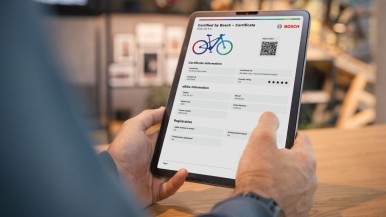
Stuttgart/Reutlingen – Pre-owned or refurbished eBikes are becoming an increasingly attractive option for many people. 1 However, potential buyers are often unsure about the condition of pre-owned models and therefore want more transparency for peace of mind when making a purchase decision. With Certified by Bosch, Bosch eBike Systems is the first manufacturer of eBike drive systems to create a digital certification for the pre-owned market. The certificate digitally displays the condition of the battery and drive unit of the smart system, shows important information about the model and confirms that the eBike has not been reported as stolen in the eBike Flow app. From July 2026, refurbishment specialist Rebike will be the first partner to certify all eBikes with a Bosch system and issue them with the Certified by Bosch certificate. From the beginning of 2027, Bosch will also use the certificate to support specialist bicycle retailers in the sale of pre-owned models.“Our products are designed to a high quality and for a long service life, making them ideally suited for a second life in the pre-owned market. This market is important: it makes eBikes accessible to more people and contributes to sustainable mobility. With Certified by Bosch, together with Rebike as our first refurbishment partner, we are establishing a transparent and professional offering that provides buyers and sellers alike with a high level of trust,” says Claus Fleischer, CEO of Bosch eBike Systems. Certified by Bosch: clarity about battery, drive unit and system condition Anyone buying a pre-owned eBike is faced with a challenge: it is difficult to realiably assess the condition of the battery and drive unit from the outside or compared with other offerings. At the same time, these components significantly determine the value and thus the purchase price. This is precisely where Certified by Bosch provides clarity: the digital certificate for the smart system records the condition of the battery and drive unit at the time of certification and displays it in an intuitive star-based rating display, with a higher number of stars reflecting a better condition. 2 For the battery, information such as the number of charge cycles and the remaining capacity in percent can be displayed. For the drive unit, values such as the distance already travelled and the power used so far are included in the rating. The certificate also shows important model information such as brand, model year and frame number and confirms that the eBike has not been reported as stolen in the eBike Flow app and that there are no indications of tuning. By comparing the serial numbers of the battery and drive unit with the serial numbers displayed in Certified by Bosch, it is possible to ensure that the certificate actually belongs to the eBike being sold. To better protect eBikers against fraud, authenticity can also be easily checked using a QR code. Widespread availability: Rebike to become the first partner from July 2026 Rebike is the first partner to rely on Certified by Bosch: refurbished eBikes with the Bosch certificate will initially be available in Germany, Austria, Switzerland, France and the Netherlands from July 2026. The certified models will be available in the Rebike online shop, in the company's own stores, on partner marketplaces and in selected shop-in-shop areas at Decathlon. Belgium, Spain, Italy and other European markets are also set to follow. “Our customers appreciate the security we offer as a professional provider when buying a refurbished eBike. In addition to our own services, such as our TÜV-certified Premium Refurbishment Programme and the two-year Rebike warranty on the motor and battery, with Certified by Bosch we are creating even more transparency about the condition of our models with the Bosch system. Together, we are strengthening confidence in refurbished eBikes and making the pre-owned market as a whole even more attractive,” says Sven Erger, COO and co-founder of Rebike. From 2027, Bosch eBike Systems will also be using the Bosch certificate to support specialist dealers in Europe with their pre-owned eBike sales. Digitally certified eBikes will be available at more contact points and the transparent second-hand market will continue to grow. Buying pre-owned eBikes: an environmentally conscious choice Buying a pre-owned eBike with a Bosch system is a conscious decision for the environment. Compared to the new production of a similar model, CO₂ and CO₂ equivalents savings of up to 208 kg can be achieved. 3 This corresponds to around 80% of the emissions of a new eBike. The reason: no new materials are required and no new components are manufactured. 3 Buying second-hand conserves valuable resources and saves money. With Certified by Bosch, eBikers don't have to compromise on safety and transparency when buying a pre-owned bike. 1 Source: ZIV market data 2025 , last accessed on 15/04/2026. 2 The following information is displayed: certification information (certificate creator, creation date, certificate ID, overall star rating), eBike information (model, brand, model year, total distance and frame number), registration (confirmation that the eBike is not marked as stolen in the eBike Flow app. If the eBike is marked as stolen, a Bosch certificate will not be issued. The theft status is checked solely on the basis of the messages in the eBike Flow app. A comparison with police search databases or other external registers does not take place); information on whether components are locked and registered, the drive unit (product name, product code, serial number, supported distance, tuning detection (no certificate is issued in the case of tuning), star rating, potentially logged faults), the battery (product name, product code, serial number, number of charge cycles, remaining capacity in percent, star rating, potentially logged faults), the system and services (software status, star rating, potentially logged system faults); the star rating is based on Bosch's own evaluation criteria. 3 Bosch eBike Systems has considered the effects of CO₂ as well as other greenhouse gases and climate-relevant substances, insofar as these are relevant to the analysis. For ease of reading, Bosch eBike Systems uses CO₂ synonymously with CO₂ equivalents. The basis for calculating the carbon footprint of an eBike is a Trekking eBike with a Performance Line CX, PowerTube 500 and Kiox 300 and a mileage of 11,000 km. The remaining 20% is made up of transport, packaging, recycling and use. The calculation was carried out by TÜV Rheinland (as of April 2024).

Electromobility growth market: Bosch wins major order from Mercedes-Benz

19.05.2026

Press release

Electrified mobility

Electromobility growth market: Bosch wins major order from Mercedes-Benz

Stuttgart, Germany – The electrification of mobility continues to gain momentum – and together with its customers, Bosch is actively shaping this transformation. The company recently received a major new order from Mercedes-Benz to supply a large volume of electric motors into the 2030s for the premium manufacturer’s next generation of electric powertrains. “The new order reaffirms our long-standing partnership with Mercedes-Benz and shows that we can successfully contribute our expertise to technologically demanding projects as well,” says Markus Heyn, member of the Bosch board of management and chairman of Bosch Mobility. The order follows on from a successful year in 2025, in which Bosch acquired more than 70 customer projects worldwide. The company currently supplies more than 50 automakers from all over the world with technology and solutions for electromobility. Even though markets in different regions are developing at different speeds and price and competitive pressures remain high, these orders make it clear: Bosch is on course in electromobility, too. We win over customers with our core competence of being able to develop and manufacture complex technology in large quantities with significant economies of scale worldwide. We deliver electric-driving solutions to all markets around the world,...says Markus Heyn, member of the Bosch board of management and chairman of Bosch Mobility. Bosch electric motors feature up to 98 percent efficiency along with increased power density, thanks in large part to the new winding technology. These motors are also equipped with innovative rotor oil cooling, which is the optimum way to dissipate the heat. Another decisive advantage is their scalable platform architecture: the length of the electric motor can be varied depending on the power required, so the motor can be easily installed in different axle variants. This allows customers to integrate the powertrain flexibly and cost-effectively into a range of vehicle models. The combination of high efficiency, innovative cooling, optimized winding technology, and scalable platform architecture results in a particularly compact design that reduces weight, installation space, and ultimately system costs. Bosch is a key technology partner for numerous manufacturers worldwide Bosch plans to manufacture more than seven million components for electric driving in 2026. Currently, roughly seven electric motors roll off the company’s production lines every minute worldwide. Besides premium manufacturers such as Mercedes-Benz, Bosch also works with a large number of other international automakers in the field of electromobility. In India, for example, the company has entered a joint venture with TataAutocomp Systems to develop, commercialize, and manufacture e-axles for the Indian market. Bosch also plays a leading role as a technology partner in China, the world’s largest vehicle market today. “We already work with almost all Chinese car manufacturers, as well as with numerous international automakers operating in China,” says Marco Zehe, president of Bosch’s Electrified Motion division. For more than a decade, Bosch has been manufacturing for a large number of automakers based there and supplies more than 30 customers with solutions for electric driving. From silicon carbide chips to complete powertrain solutions – Bosch covers the entire spectrum of electromobility worldwide. In addition to the e-axle, the company now also offers “X-in-1” solutions, in which several elements such as the electric motor, power electronics, transmission, and energy management are bundled into highly integrated systems. These are more compact, lighter, and less complex, and offer clear cost benefits for customers.

New features for the smart system and new SmartphoneGrip Vertical

13.04.2026

Press release

Electrified mobility

New features for the smart system and new SmartphoneGrip Vertical

Stuttgart/Reutlingen – A jump over a root, a short wheelie out of a corner: many eMountain bikers want to show what they can do while on the trails and work specifically on their riding technique. With the latest update for the eBike Flow app, your own skills can now be measured. At the heart of Release 1.34 is the "Trick Check" function, which eBikers can use to measure and analyse their performance on the trail. The update also includes the integration of heart rate data into the ride statistics, a practical favourites function for route planning, and expansion of the eShift portfolio. In addition to the update, Bosch eBike Systems is also expanding the range of display options in the smart system: the new SmartphoneGrip Vertical transforms smartphones into a display in portrait view."Trick Check": measure, analyse – and improve – your own skills on the trail The new "Trick Check" function is the ideal solution for eMountain bikers wanting some action and to take their tricks to the next level. Making every trail a playground: no matter whether jumps, wheelies, manuals or stoppies – "Trick Check" recognises every trick automatically. Information such as the duration, height, distance or angle of the trick is recorded by the sensor system and confirmed by means of an audible signal. The trick is also clearly shown on the display for eight seconds. Once the ride is over, eBikers can view and analyse their personal best performance from within the eBike Flow app. "Trick Check" is compatible with selected drive units and displays in the smart system. 1 Heart rate in the statistics: analyse your training in detail Sporty, ambitious eBikers can now analyse their performance even more precisely. While it was already possible to connect a heart rate monitor to the eBike via Bluetooth and track the data live on the display 2 , this data will now also be saved in the eBike Flow app. After the ride, the average heart rate and detailed heart rate progression can be viewed in the statistics. This allows riders to precisely analyse the workload and helps them to make their training more effective. Save favourites: plan and start your routes even quicker The new update from Bosch eBike Systems also simplifies everyday route planning. In the eBike Flow app, eBikers can now save several locations as favourites, such as their home or workplace, via a new button on the map in the "Planning" menu item. Three of these favourites can be added as navigation shortcuts and selected directly via the Quick Menu on the ride screen or on the Kiox 300, Kiox 400C and Kiox 500 displays while out on your next ride. Making it even easier to start navigation. See destinations at a glance: use your smartphone as an eBike display in portrait view Complementing the digital functions, the SmartphoneGrip Vertical enhances the new features in the smart system. Transforming the smartphone 3 into an eBike display in portrait view. During the ride, the smartphone charges inductively or via USB-C via the eBike battery – allowing for reliable use of even battery-intensive applications. The Bosch eBike Flow app's ride screen shows you all the important data during the ride – from speed and battery level to the arrival time. While navigating, eBikers can also see a much larger area of the route in portrait view and therefore ride with more foresight. Two clamps ensure a reliable grip even on cobblestones or gravel paths, while a rubber coating protects the phone. All buttons and ports remain freely accessible. The SmartphoneGrip Vertical can be easily retrofitted and is compatible with the display mount for Kiox 300, Kiox 500 and the SmartphoneGrip. It can be flexibly mounted in front of, on or next to the stem, and the angle can be adjusted to suit you. Smoother gear changes: eShift integration from Gearsensor Bosch eBike Systems is also expanding its portfolio of integrated gear shifting solutions: eShift now also supports mechanical hub gear and derailleur systems equipped with the GS gear shifting solution for manual gear shifting from Gearsensor – ideal for Urban, City and Trekking eBikes. The motor support is briefly interrupted while you are shifting gear. The result is a noticeably smoother and more comfortable gear change, which ensures the ride continues uninterrupted and can also reduce the wear on components. If required, the display can give eBikers a shift recommendation – for relaxed riding without having to overthink things. 1 The "Trick Check" function works with the Performance Line CX (BDU384Y), Performance Line CX-R (BDU384Y), Performance Line CX Race (BDU374Y), Performance Line CX (BDU374Y) and Performance Line SX (BDU314Y) and on the following displays: Kiox 300, Kiox 400C, Kiox 500, Purion 200, Purion 400. The function is activated as standard on the Kiox 400C and Purion 400. 2 Not available for the Intuvia 100. 3 Suitable for smartphones incl. camera body and case with the following dimensions (L x W x D): 135–170 mm x 68–80 mm x 7–12 mm and a total weight of up to 260 g incl. case. Not suitable for foldable smartphones and smartphones with flip covers/cases. Depending on the case, the inductive charging feature may be limited.

Services for connected eBike mobility: Bosch presents the Connected Biking Platform

24.03.2026

Press release

Electrified mobility

Services for connected eBike mobility: Bosch presents the Connected Biking Platform

Stuttgart/Reutlingen – Modern eBike mobility is seamlessly integrated into people’s everyday digital lives. This gives rise to new opportunities for companies from the bike, mobility and service world: the development of attractive digital offers for their customers, optimised processes and innovative business models. With the Connected Biking Platform, Bosch eBike Systems now offers a digital basis for the development of new eBike services and provides with standardised interfaces and expertise. Our Connected Biking Platform is becoming a central component of the digital ecosystem around the eBike. We are creating opportunities for industry players to develop their own digital offerings. The first partners are already connected and are shaping connected eBike mobility together with us....Claus Fleischer, CEO of Bosch eBike Systems From connectivity to new possibilities The connected eBike is at the centre of the new platform. The system continuously records important information such as status, configuration, use and service data via the Bosch ConnectModule. This creates a level of knowledge about the entire life cycle of the eBike, from delivery to operation and remarketing. For secure integration, Bosch eBike Systems provides a modular toolbox of standardised interfaces and digital modules. For example, partners can use this information for their own applications via Cloud APIs for the ConnectModule and the eBike Flow app. Added value for the bike industry: development, service and new offers These insights into the complete life cycle of an eBike open up new ways for the entire bike industry to simplify processes and continuously enhance the riding experience for end customers. New models can be specifically adapted to real use profiles, maintenance and support are strengthened with efficient service, and app providers can develop innovative digital offerings. eBike manufacturers receive valuable insights into the actual use of their connected models based on the comprehensive information base. Knowledge about stock levels, functions used or the system status helps in developing future models and equipment in a more targeted manner. Operational processes can also be simplified: test fleets can be managed efficiently and transport to retailers can be secured with the tracking option. In addition, eBike manufacturers can develop their own apps or subscription services and place their own branded content directly in the eBike Flow app via “Content Cards”. Specialist dealers benefit from the option of being able to organise their own rental or test fleets even better on this basis. The overview of the location and availability of each eBike makes management much more efficient and also increases theft protection. App and service providers can connect their services to the eBike Flow app via the Connected Biking Platform and therefore reach a large, active eBike community. Once integrated, the interface enables seamless exchange between the two platforms. This creates a consistent experience for shared users and a valuable basis for the further development of our own services. Partners such as komoot are already connected here. New potential for fleet operators, leasing providers and insurance companies The Connected Biking Platform also opens up new options for professional mobility service providers: fleet operators can manage their eBikes more efficiently and minimise breakdowns, leasing providers can transparently track the value retention of their models, and insurance companies can minimise damage risks. The result is more reliable sharing services, transparent leasing conditions and comprehensible insurance rates. Fleet operators receive real-time information on the location, state of charge and use of each individual eBike. In the event of theft, the eBike can be located and the motor support disabled. Partners such as Papin and Tilia already have these options: for example, they can plan and control use, service and charging processes centrally. This enables proactive maintenance, reduces downtime and simplifies operation across many wheels. The fleet therefore remains reliably available. Mobility platforms can offer a complete solution with dashboards and booking apps for fleet and rental management with a clear competitive advantage. The advantage is a single, standardised interface for all eBikes with the smart system from Bosch. Partners such as allride (AMAG Group), Connected Cycle , Friiway , Joyride , OKGO and Velo de Ville are already using the Connected Biking Platform to help fleet and hire providers manage their eBikes or support dealers in selling eBikes through subscription models – without them having to invest in their own solutions. Leasing providers can transparently track the condition and service history of each eBike over the entire contract term. This ensures value retention, facilitates the technical appraisal during return and makes the evaluation of returns faster and more objective – the ideal basis for profitable remarketing. Leasing partners can also offer additional digital services by integrating them into the eBike Flow app. This creates a seamless experience for customers: they benefit from digital theft protection and can view their contract data directly in the eBike Flow app. Leasing providers are therefore given the opportunity to optimise customer lifecycle management and initiate follow-up leasing. Insurance companies benefit from alarm and GPS tracking functions that can help prevent theft and recover stolen bikes more quickly. A digital theft report also bundles all relevant data on the eBike and the incident. This enables significantly faster, partially automated claims processing and helps to calculate risks or rates accurately in future, based on real information. The Connected Biking Platform as the digital backbone of the eBike industry A reliable and secure technical basis is needed so that the variety of digital services for eBikers in the sector can continue to grow. The protection of personal data and information security are also a top priority for Bosch eBike Systems when working with its partners and are an integral part of the company’s principles. Modern encryption technologies and a system architecture are used to ensure that each eBike is individually protected. In addition, all data processed by Bosch eBike Systems is stored on European servers in accordance with strict European data protection law. Over-the-air updates also make it possible to keep security up to date at all times. The protection and conscious control of personal data by the user are at the centre of this. With the Connected Biking Platform, Bosch eBike Systems is creating a digital backbone that sets new standards. This offers partners countless options for shaping digital mobility. The Connected Biking Platform forms the basis for an ecosystem that grows with you. It is already providing compelling offers from the first partners, and simultaneously forming the foundation for tomorrow. “With the extensive components of our Connected Biking Platform, we are creating a real win-win situation: customers and partners can implement ideas easily, quickly and reliably, and therefore create a wide range of digital offers from which the constantly growing community of eBikers can benefit. The future of eBiking is happening now,” says Gregor Dasbach, Head of Digital Business at Bosch eBike Systems. Further information on the possibilities of the Connected Biking Platform can be found here.

Bosch team wins innovation and advanced technology award with fuel-cell power module

19.11.2025

Press release

Electrified mobility

Bosch team wins innovation and advanced technology award with fuel-cell power module

Berlin, Germany – The future needs a driving force – and Bosch’s fuel-cell power module (FCPM) has what it takes. The Bosch team responsible for developing the FCPM, led by Christoffer Uhr, Kai Weeber, and Pierre Andrieu, has now received the German Future Prize 2025 in honor of this work. The German federal president’s award recognizes the system as a key technology for climate-neutral mobility. This award is outstanding recognition for the entire team. It shows the innovative potential of hydrogen – and the decisive role that Bosch is playing in it....says Dr. Stefan Hartung, chairman of the board of management of Robert Bosch GmbH. “The technology is ready. What’s needed now is the political will to systematically drive forward the development of an efficient hydrogen economy. Only then can fuel-cell power modules become an everyday technology for commercial vehicles. We in the industry have done our part”, says Dr. Stefan Hartung. The award-winning FCPM converts hydrogen and oxygen into electrical energy. This means commercial vehicles can cover long distances completely CO 2 -free – provided they have green hydrogen in the tank. Their only remaining emission is water vapor. In this way, Bosch is playing a significant part in achieving climate neutrality in freight transport. Heavy trucks are responsible for more than one-quarter of CO 2 emissions from road traffic in the EU, but they are also indispensable for the transportation of goods and freight. “With the fuel-cell power module, Bosch has shown that hydrogen technology is suitable for large-scale production and can play a major part in decarbonizing road transport,” Hartung says. “This powertrain system combines engineering skill, experience, and systems expertise – and it marks an important step toward sustainable mobility.” Several thousand trucks fitted with the Bosch system already in use worldwide Large-scale production of the FCPM started in 2023 at the Stuttgart-Feuerbach plant, and shortly afterward also in Chongqing, China. With more than a thousand individual parts, the FCPM is one of the most complex systems in Bosch’s almost 140-year history – and at the same time one of the most pioneering. From the stack to the recirculation pump and the air compressor, all its key components are developed and manufactured in-house. The powertrain module itself can be installed in trucks where the combustion engine was previously located. Instead of diesel tanks, the trucks feature pressurized tanks for the hydrogen. Refueling times are comparable at around 15 minutes. Depending on the vehicle layout, and when driven economically, it is possible to cover up to 1,000 kilometers on a single tank of around 70 kilograms of hydrogen. Several thousand trucks fitted with the Bosch FCPM are already in use worldwide. The modules already out in the field are generating valuable development data: many systems exist both physically in the vehicle and as a digital twin in virtual space. Parameters such as temperature, pressure, and wear can be continuously monitored and incorporated directly into development work on the next generation of the powertrain system. FCPM technology can be used not only in trucks but also in bus powertrains and maritime propulsion systems. What’s more, it can provide decentralized CO2-free electricity to data centers. Bosch also uses the same technology in reverse in its PEM electrolysis stacks (PEM = proton exchange membrane) to produce hydrogen from water and electricity – another important building block in the hydrogen value chain. Following the market entry of its electrolysis stacks in April, the company recently put an electrolyzer featuring its own electrolysis technology into operation for the first time at its Bamberg site. Bosch was nominated five times for the German Future Prize between 1998 and 2013, and teams from Bosch or with Bosch involvement received the award three times: in 2005 for piezo injectors, in 2008 for smart sensors, and in 2013 for ultrashort pulse lasers. With the German Future Prize 2025 for the fuel-cell power module, Bosch has written another page in this ongoing success story. The award demonstrates not only the company’s technological strength but also its vision for the future: a world in which hydrogen and fuel cells play a decisive part in decarbonizing the transportation sector.

Hannover Messe 2024: Bosch presents sustainable solutions for factory automation ...

22.04.2024

Press release

Business/economy

Hannover Messe 2024: Bosch presents sustainable solutions for factory automation ...

Stuttgart and Hannover, Germany – Industrial manufacturing is the engine of every economy. It creates jobs, secures prosperity, and ensures growth through trade. When industrial manufacturers come together again for this year’s Hannover Messe, there will be one major challenge that all of them continue to face: to respond to climate change, factories must become sustainable and conserve resources. Bosch is one of the leading factory outfitters; its broad portfolio of solutions for factory automation, the hydrogen economy, digitalization, and artificial intelligence (AI) helps industrial companies achieve a green transformation.Bosch industrial technology is in demand: in 2023, the supplier of technology and services was able to hold its own in a volatile market environment characterized by geopolitical tensions, the economic downturn, and interest-rate effects. Its sales of industrial technology rose to 7.4 billion euros. This equates to an increase of 6.8 percent, or 10.2 percent after adjusting for exchange-rate effects. The main drivers of this growth were Bosch’s acquisitions of HydraForce and Elmo Motion Control. “We are pursuing a long-term growth strategy with industrial technology,” says Tanja Rueckert, the member of the board of management of Robert Bosch GmbH responsible for the Industrial Technology business sector as well as the area of digital business and services. “We want to strengthen our market position, expand regional supply chains, and increase our industrial technology sales to 10 billion euros by 2028.” We want to strengthen our market position, expand regional supply chains, and increase our industrial technology sales to 10 billion euros by 2028....Tanja Rueckert, the member of the board of management of Robert Bosch GmbH At Hannover Messe 2024, Bosch will be presenting technologies and solutions in the fields of automation, digitalization, and hydrogen. “As an early adopter of artificial intelligence and digitalization applications, industrial technology is like almost no other sector,” Rueckert says. “Software and connectivity help increase efficiency, quality, and sustainability in production. The only way we can secure our standard of living and prosperity is with a strong industrial sector.” Generative AI: improve processes, increase quality In manufacturing, Bosch wants to use generative AI to further improve production management, monitoring, and control. In two Bosch plants in Germany, the company has launched initial projects through which generative AI creates synthetic images in order to develop and scale AI solutions for optical inspection and to optimize existing AI models. Bosch expects that this will reduce the time needed for planning, launching, and ramping up AI applications from the current six-to-twelve months to just a few weeks. Developed by Bosch researchers, this service for generating synthetic data is to be offered to all Bosch locations following successful piloting. ctrlX AUTOMATION: automation toolkit The ctrlX AUTOMATION system for factory automation developed by Bosch Rexroth comprises hardware, software, and apps. It is an open platform that provides all the building blocks for complete automation solutions, and reduces component and engineering costs by 30 to 50 percent. The platform’s community of partners, known collectively as ctrlX World, is continuously expanding the range of solutions with hardware, and above all with apps. So far, 100 partners have contributed their strengths and solutions. Since its launch five years ago, the number of customers has risen to around 1,500. Sales in this area increased 30 percent in 2023. Battery production: components for automated equipment Whether in electromobility, consumer electronics, or building technology, the demand for energy storage is greater than ever. Bosch Rexroth offers a comprehensive portfolio for battery production that includes individual components, systems solutions, and subsystems featuring linear, joining, and transfer technology in addition to the fully open ctrlX AUTOMATION system. Speed and precision are also important in battery production. Bosch Rexroth has developed linear robots that can be used quickly for typical applications such as handling cells and packs as well as joining and dispensing. These robots optimize processes in module and pack assembly and disassembly. Battery recycling: automation solution for deep discharge of batteries There are more and more electric cars driving quietly and with low emissions on the roads. Their batteries contain rare and valuable raw materials such as lithium and nickel, the recovery of which makes economic and ecological sense. Bosch Rexroth’s toolkit solution for diagnosing, discharging, and dismantling used vehicle batteries enables the automation of these process steps, which are upstream of the actual process of recovering the raw materials. This makes it possible to recycle batteries on an industrial scale and offers the possibility of flexible scaling. Stack and smart electrolysis module: technology for H2 electrolyzers Bosch not only plans to use hydrogen, but also to provide smart technology for its production. For this purpose, the company has developed an electrolysis stack, the central element of an electrolyzer. The stack comprises more than 100 electrolysis cells that use electricity to split water into oxygen and hydrogen. It is designed for an output of 1.25 megawatts. That is equivalent to the production of 23 kilograms of hydrogen per hour. The Bosch electrolysis stack is suitable for use in smaller-scale plants producing 1 megawatt and more, all the way up to large, gigawatt-scale plants. It is expected to be market-ready from 2025. In addition, Bosch is planning to combine its electrolyzer stack with a control unit, power electronics, and various sensors to create a smart electrolysis module. Manufacturing and testing technology: how fuel cells are made Bosch Manufacturing Solutions (BMG), the company’s special-purpose machinery unit, supplies advanced manufacturing equipment and testing technology for fuel-cell manufacturing – from individual components to complete systems. In total, more than 50 percent of the required manufacturing equipment comes from Bosch itself. When testing stacks and systems, natural conditions are simulated for the end-of-line functional test, where the PEM fuel cells are put through their paces. Here, gas composition, temperature, pressure, and humidity are the same as in the actual vehicle. The test benches work efficiently: 50 percent of the hydrogen used is recovered for new testing processes. A test bench for proton exchange membrane (PEM) electrolysis stacks will be presented for the first time at Hannover Messe. This type of test bench can be upgraded for development as well as for end-of-line functional testing, and is available in size classes between 50 kW and 3 MW. eSEA underwater actuator: electrification of offshore facilities In the future, hydrogen will often be produced in remote areas – in the desert or at sea – and thus far away from where it will later be used. To make it economical to operate the offshore facilities required for green hydrogen and the capture and storage of CO2, their plant technology needs to be significantly cheaper to purchase and operate than it has been to date. Bosch Rexroth has developed an electrical solution for controlling valves in underwater process plants at depths of up to 4,000 meters. Since this solution no longer feature valves operated via hydraulically driven actuators, it eliminates the need for miles of hydraulic lines to connect to hydraulic power units above water. Hydrogen filling stations: drive solutions for compressing hydrogen Hydrogen filling stations play a major role in decarbonizing the mobility sector. Within the next six years, several thousand hydrogen filling stations are set to go into operation worldwide. Together with partners, Bosch Rexroth has developed scalable solutions for servo-hydraulic compressor drives in the power range between 10 and 280 kW for the compression of hydrogen. To be able to refuel vehicles with hydrogen fuel quickly and simply, the gas has to be compressed to as much as 900 bar. A new electrohydraulically driven cryogenic pump has been developed in partnership with FirstElement Fuel, a leading company in the U.S. for the commercial operation of hydrogen filling stations. This cryogenic pump compresses liquid hydrogen directly to 875 bar. The aim is to refuel heavy trucks with 100 kg of hydrogen in under ten minutes. Direct refueling eliminates the need for intermediate storage tanks at filling stations. The first filling stations are set to be equipped starting in 2025. Moreover, Bosch Rexroth has worked with Maximator Hydrogen to develop scalable, low-maintenance drive units, with ratings currently up to 250 kW, that offer filling station operators an affordable way into hydrogen technology. The new container-based compressors can potentially reduce total cost of ownership by half compared with the commercially available alternatives. The Swiss Coop Group already uses hydrogen trucks for its goods transportation. They refuel at five filling stations equipped with Maximator and Bosch Rexroth technology. Bosch at Hannover Messe Bosch Rexroth – Hall 6, Booth D26 Bosch Connected Industries – Hall 9, Booth F27 Bosch Manufacturing Solutions – Hall 13, Booth C33 Selected panels with Bosch experts • Research Summit – Panel discussion with Dr. Tanja Rueckert, member of the board of management and chief digital officer, Robert Bosch GmbH, Monday, April 22, 2024, 2:30–3:15 p.m., Convention Center (CC), Room 1 • Panel discussion “The future of SMEs: Organizing sustainability & establishing digital business models” with Lisa Reehten, managing director, Bosch Climate Solutions, Tuesday, April 23, 2024, 5:15–5:35 p.m., Hall 8, Booth D17 • Panel discussion “AI meets automation” with Hans Michael Krause, director ctrlX World, Bosch Rexroth AG, Tuesday, April 23, 2024, 1:30–2:00 p.m. in Hall 3, Booth A76 • Lecture “Digital twins: What nobody is talking about” with Dr. Birgit Boss, Bosch Connected Industry, Thursday, April 25, 2024, 3:00–3:25 p.m., Industry 4.0 Conference Stage, Hall 8, Booth D17 • Panel discussion “The role of 6G in shaping the next industrial era” with Andreas Müller, Wednesday, April 24, 2024, 2:45–3:30 p.m., Hall 14, Booth H06


Quantum technologies: Bosch aims to use sensors to take a leading position

05.10.2023

Press release

Electrified mobility

Quantum technologies: Bosch aims to use sensors to take a leading position

Stuttgart, Germany – Quantum technologies have great potential, but most of this potential is still a distant dream at present. Following ten years of research in this field, Bosch is now planning to work with the first pilot customers in the medical and mobility industries on specific applications over the next two years. At the startup Bosch Quantum Sensing, established at the beginning of 2022, some 30 associates are currently focusing on this. Bosch estimates the annual global market potential of applications for medicine and mobility will reach the mid-single-digit billions by the middle of the next decade. One potential area of application for quantum sensors, the brain-computer interface (BCI), will on its own be worth more than five billion dollars annually in the long term, according to the company’s calculations. One example of its future use is sensors that record nerve impulses in order to control artificial limbs and thus improve patients’ quality of life. “The quantum sensors we are creating in medical technology are a perfect fit for our ‘Invented for life’ ethos. By the end of the decade, we want to take a leading position with our technology,” says Dr. Stefan Hartung, chairman of the Bosch board of management.Small is beautiful: Bosch is a leader in miniaturization When it comes to size, the technology company is already a frontrunner: in terms of its measurement accuracy, the Bosch sensor prototype is the smallest currently available – about the size of a cell phone. Its compact design offers considerable advantages wherever space is at a premium – for example, in industrial applications, in vehicles, in aircraft, or even in hospital emergency rooms. The smaller the sensor, the greater the benefits: smaller sensors are portable, cheaper to produce, and more scalable as a result. “Our goal is to miniaturize quantum sensors to the point where they can be integrated onto a chip,” says Dr. Katrin Kobe, who is responsible for sensor commercialization at Bosch Quantum Sensing. This could lead the way to additional sensor applications. Quantum sensors as potential lifesavers In medicine, Bosch quantum sensors could help save lives in the future: by measuring the heart’s natural magnetic field and enabling simple measurements over a longer period of time, they can provide far more data than today’s electrocardiography (ECG). An ECG machine is applied directly to the skin by means of electrodes; if they slip, measurements are inaccurate. Moreover, in an emergency, attaching the ECG machine uses up precious time. Quantum sensors, by contrast, can be incorporated into things like items of clothing or mattresses. This not only speeds up diagnosis in the emergency room, but also makes monitoring at home easy and precise. The prospect of contactless early detection of atrial fibrillation – one of the causes of life-threatening strokes, heart failure, and dementia – is thus within reach for the first time. In other words, early diagnosis with the help of quantum sensors could, in the best case, lead to the prevention of fatal strokes. Ultra-precise navigation in the air, on the road, and on water In addition to medical technology, quantum sensors could also be used in mobility. One example is navigation. A global positioning system (GPS) is susceptible to interference, whereas quantum sensors are resistant to external influences, since they work by measuring the earth’s unchanging magnetic field. This paves the way for ultra-precise navigation in the air, on the road, and on water. There may also be scope for considerable additional benefits in electromobility. In the future, quantum sensors could be used there to precisely measure the magnetic field of the electric current and thus determine the exact charge level of the battery. The result would be more reliable determination of the remaining range, allowing trips to be planned better.

TSMC, Bosch, Infineon, and NXP Establish Joint Venture to Bring Advanced Semicon ...

08.08.2023

Press release

Connected mobility

TSMC, Bosch, Infineon, and NXP Establish Joint Venture to Bring Advanced Semicon ...

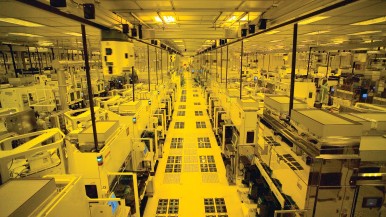
Hsinchu, Stuttgart, Munich, Eindhoven, Aug 8, 2023 – TSMC (TWSE: 2330, NYSE: TSM), Robert Bosch GmbH, Infineon Technologies AG (FSE: IFX / OTCQX: IFNNY), and NXP Semiconductors N.V. (NASDAQ: NXPI) today announced a plan to jointly invest in European Semiconductor Manufacturing Company (ESMC) GmbH, in Dresden, Germany to provide advanced semiconductor manufacturing services. ESMC marks a significant step towards construction of a 300 mm fab to support the future capacity needs of the fast-growing automotive and industrial sectors, with the final investment decision pending confirmation of the level of public funding for this project. The project is planned under the framework of the European Chips Act. The planned fab is expected to have a monthly production capacity of 40,000 300 mm (12-inch) wafers on TSMC’s 28/22 nanometer planar CMOS and 16/12 nanometer FinFET process technology, further strengthening Europe’s semiconductor manufacturing ecosystem with advanced FinFET transistor technology and creating about 2,000 direct high-tech professional jobs. ESMC aims to begin construction of the fab in the second half of 2024 with production targeted to begin by the end of 2027. The planned joint venture will be 70 percent owned by TSMC, with Bosch, Infineon, and NXP each holding 10 percent equity stake, subject to regulatory approvals and other conditions. Total investments are expected to exceed 10 billion euros consisting of equity injection, debt borrowing, and strong support from the European Union and German government. The fab will be operated by TSMC. “This investment in Dresden demonstrates TSMC’s commitment to serving our customers’ strategic capacity and technology needs, and we are excited at this opportunity to deepen our long-standing partnership with Bosch, Infineon, and NXP,” said Dr. CC Wei, Chief Executive Officer of TSMC. “Europe is a highly promising place for semiconductor innovation, particularly in the automotive and industrial fields, and we look forward to bringing those innovations to life on our advanced silicon technology with the talent in Europe.” Dr. Stefan Hartung, chairman of the Bosch board of management: “Semiconductors are not only a crucial success factor for Bosch. Their reliable availability is also of great importance for the success of the global automotive industry. Apart from continuously expanding our own manufacturing facilities, we further secure our supply chains as an automotive supplier through close cooperation with our partners. With TSMC, we are pleased to gain a global innovation leader to strengthen the semiconductor ecosystem in the direct vicinity of our semiconductor plant in Dresden.” Semiconductors are not only a crucial success factor for Bosch. Their reliable availability is also of great importance for the success of the global automotive industry. Apart from continuously expanding our own manufacturing facilities, we further secure our supply chains as an automotive supplier through close cooperation with our partners. With TSMC, we are pleased to gain a global innovation leader to strengthen the semiconductor ecosystem in the direct vicinity of our semiconductor plant in Dresden....said Dr. Stefan Hartung, chairman of the Bosch board of management “Our joint investment is an important milestone to bolster the European semiconductor ecosystem. With this, Dresden is strengthening its position as one of the world’s most important semiconductor hubs that is already home to Infineon’s largest frontend site,” said Jochen Hanebeck, CEO of Infineon Technologies. “Infineon will use the new capacity to serve the growing demand particularly of its European customers, especially in automotive and IoT. The advanced capabilities will provide a basis for developing innovative technologies, products and solutions to address the global challenges of decarbonization and digitalisation.” “NXP is very committed to strengthening innovation and supply chain resilience in Europe,” said Kurt Sievers, President and CEO of NXP Semiconductors. “We thank the European Union, Germany, and the Free State of Saxony for their recognition of the semiconductor industry’s critical role and for their true commitment to boost Europe’s chip ecosystem. The construction of this new and significant semiconductor foundry will add much needed innovation and capacity for the range of silicon required to supply the sharply increasing digitalization and electrification of the automotive and industrial sectors.”About Infineon Infineon Technologies AG is a global semiconductor leader in power systems and IoT. Infineon drives decarbonization and digitalization with its products and solutions. The company has around 56,200 employees worldwide and generated revenue of about €14.2 billion in the 2022 fiscal year (ending 30 September). Infineon is listed on the Frankfurt Stock Exchange (ticker symbol: IFX) and in the USA on the over-the-counter market OTCQX International over-the-counter market (ticker symbol: IFNNY). Further information is available at www.infineon.com . Follow us: Twitter – Facebook – LinkedIn About NXP Semiconductors NXP Semiconductors N.V. (NASDAQ: NXPI) brings together bright minds to create breakthrough technologies that make the connected world better, safer and more secure. As a world leader in secure connectivity solutions for embedded applications, NXP is pushing boundaries in the automotive, industrial & IoT, mobile, and communication infrastructure markets while delivering solutions that advance a more sustainable future. Built on more than 60 years of combined experience and expertise, the company has approximately 34,500 team members in more than 30 countries and posted revenue of $13.21 billion in 2022. Find out more at www.nxp.com . About TSMC TSMC pioneered the pure-play foundry business model when it was founded in 1987, and has been the world’s leading dedicated semiconductor foundry ever since. The Company supports a thriving ecosystem of global customers and partners with the industry’s leading process technologies and portfolio of design enablement solutions to unleash innovation for the global semiconductor industry. With global operations spanning Asia, Europe, and North America, TSMC serves as a committed corporate citizen around the world. TSMC deployed 288 distinct process technologies, and manufactured 12,698 products for 532 customers in 2022 by providing broadest range of advanced, specialty and advanced packaging technology services. The Company is headquartered in Hsinchu, Taiwan. For more information please visit https://www.tsmc.com .

Bosch opens new semiconductor test center for chips and sensors in Malaysia

01.08.2023

Press release

Connected mobility

Bosch opens new semiconductor test center for chips and sensors in Malaysia

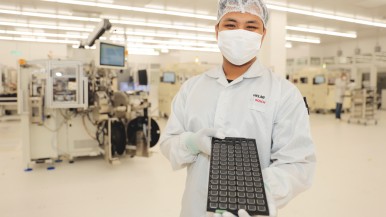
Stuttgart, Germany / Penang, Malaysia – Global demand for chips for the automotive and consumer goods industries remains high. That is why Bosch is continuing to expand its semiconductor business. The company has now opened a new test center for chips and sensors in Penang, Malaysia, at a cost of some 65 million euros; it plans to invest a further 285 million euros at the site by the middle of the next decade. “With our new semiconductor test center in Penang, we are creating additional capacity within our worldwide manufacturing network to meet the continued high demand for chips and sensors,” said Dr. Stefan Hartung, chairman of the Bosch board of management. “Semiconductors are a decisive success factor for all Bosch business areas, and the expansion of this business is strategically very important.” With our new semiconductor test center in Penang, we are creating additional capacity within our worldwide manufacturing network to meet the continued high demand for chips and sensors,...said Dr. Stefan Hartung, chairman of the Bosch board of management. In total, Bosch has some 100,000 square meters of land available on Penang’s mainland strip. The new test center currently covers more than 18,000 square meters and includes clean rooms, office space, and laboratories for quality assurance and manufacturing. By the middle of the next decade, up to 400 associates will be working there. With the new factory and a total of 4,200 associates, Penang is now Bosch’s biggest location in Southeast Asia. Semiconductor manufacturing can basically be divided into two sections: frontend manufacturing and backend manufacturing. For the latter, Malaysia is an important hub in the global semiconductor supply chain. The country is estimated to cover around 13 percent of global backend manufacturing. According to official figures, in recent years the state of Penang has generated more than 5 percent of worldwide semiconductor revenue. “The new test center in Penang brings our manufacturing network closer to the companies that serve the further value chain of semiconductor manufacturing as well as to customers in this important Asian market. That shortens delivery times and routes, and it improves our competitiveness,” says Dr. Markus Heyn, member of the Bosch board of management and chairman of the Mobility business sector. One of the most cutting-edge test centers in Southeast Asia The frontend is where the actual circuits are attached and patterned on the wafers; at Bosch, for example, this work is currently performed in the clean rooms of the wafer fabs in Reutlingen and Dresden. The backend is where the individual chips are then separated from the wafers, assembled, and tested. Bosch currently carries out most of the final testing of its semiconductors in Reutlingen, Germany; Suzhou, China; and Hatvan, Hungary. Those locations will now be joined by the new test center in Penang, Malaysia. The fully connected plant is one of the most advanced semiconductor test centers in Southeast Asia. Here, Bosch will immediately begin testing semiconductors that the company manufactures at its frontend in Dresden, among other locations. “Our new test center in Penang completes our internal process chain, especially for semiconductors from Dresden,” Heyn says. Bosch invests further in chip business Bosch is pursuing a global growth strategy with its semiconductor business. Over the next three years, the company plans to invest some three billion euros in Dresden and Reutlingen, both as part of its own investment plan and under the auspices of the European IPCEI ME/CT (“Important Project of Common European Interest on Microelectronics and Communication Technologies”) funding program. Following its expected acquisition of part of the business of TSI Semiconductors, based in Roseville, California, which is expected before the end of the year, Bosch plans to invest roughly an additional 1.4 billion euros in retooling the fab to support the latest manufacturing processes for silicon carbide semiconductors. Penang Factsheet

Bosch charging services support the ramp-up of electromobility

21.03.2023

Press release

Connected mobility

Bosch charging services support the ramp-up of electromobility

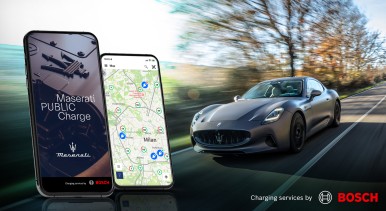
Stuttgart, Germany – Worldwide, there are more and more electric cars on the road. But how convenient is it to recharge electric vehicles? How quickly can drivers find a vacant charge point? And how easy is it to pay for the charging process? The answers to these questions will determine the success of electromobility – and thus also the achievement of climate targets. “Making it straightforward to recharge electric vehicles reduces range anxiety and is a prerequisite for their widespread acceptance. Bosch charging services offer the drivers of electric cars easy access to one of Europe’s biggest and steadily growing charging networks,” says Dr. Markus Heyn, member of the board of management of Robert Bosch GmbH and chairman of its Mobility Solutions business sector. Customers who use Bosch charging services already have access to some 450,000 publicly accessible charge points in 30 European countries – one of the largest charging networks in Europe. The Italian automaker Maserati has now made Bosch charging services available for the first time in its new electric model, the GranTurismo Folgore – not only in Europe but also, in the course of 2023, in the Asia-Pacific region. Charging services hold immense potential: by 2030, Bosch expects more than one in three new vehicles worldwide to be purely electric; in Europe, it could be as many as two in three. By 2035, it expects one in two newly registered passenger cars worldwide to be an electric car. “We expect a huge surge in growth for our charging services business over the course of the decade – because as electromobility ramps up, so does the need for straightforward and comprehensive charging solutions. We will benefit from this,” Heyn adds. By the end of the decade, Bosch is expecting its charging solutions business to expand by more than 50 percent each year. Bosch offers its solutions for recharging electric cars to vehicle manufacturers and companies. The charging services can be flexibly and easily integrated into a manufacturer’s look and feel and infotainment system, both functionally and visually, so that the driving and charging experience retain the manufacturer’s individual look and fit into its brand world. As a result, Bosch charging services are making electromobility even more suitable for everyday use. Making it straightforward to recharge electric vehicles reduces range anxiety and is a prerequisite for their widespread acceptance. Bosch charging services offer the drivers of electric cars easy access to one of Europe’s biggest and steadily growing charging networks ...says Dr. Markus Heyn, member of the board of management of Robert Bosch GmbH and chairman of its Mobility Solutions business sector. Maserati GranTurismo Folgore with Bosch charging services At Maserati, the Bosch charging services are now available for the first time in the recently unveiled GranTurismo Folgore. Once registered for the services, drivers of the GranTurismo Folgore can display the charge point information on their navigation system and on the app. It takes just a few taps to find a charge point, charge, and pay. For example, the service makes it simple to navigate to an available charge point directly, or to pull up information on restaurants and shopping centers in the vicinity of the customer’s position. Bosch also spares users the tedious task of researching car-electricity tariffs by listing which costs and terms of use apply at given charge points. Billing takes place automatically using the credit card details added to the app. Bosch charging services are for more than just charging electricity In addition to charging services for drivers of electric cars, Bosch also offers services for charge point operators. Bosch’s software services enable charge point operators to remotely control and manage their charge points and also integrate them into the Bosch charging network. For this purpose, the company concludes contracts with the charge point operators and connects their charge points to the network. On an especially encouraging note, the Bosch charging network is constantly growing. By mid-2023, it is expected to include around 700,000 charge points in Europe, North America, and the Asia-Pacific region. “With our charging services and our growing charging network, we are playing a decisive part in making electromobility a success story even faster. In this way, Bosch is also helping Germany achieve its climate targets,” Heyn says.