Search & find:
Media, press releases, events for your editorial coverage

For safer roads: Bosch teams up with Microsoft to explore new frontiers with gen ...

28.02.2024

Press release

Automated mobility

For safer roads: Bosch teams up with Microsoft to explore new frontiers with gen ...

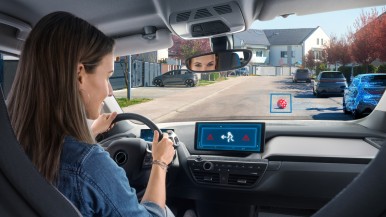
Stuttgart, Germany – It’s a scenario that no driver ever wants to see: a ball rolling out into the road. The chances are it will be followed immediately by a child in hot pursuit, oblivious to any traffic. But while human drivers can assess this situation using their contextual knowledge, today’s assisted and automated driving systems still have to learn how to do it. Bosch is pursuing the use of generative AI in terms to further improve automated driving functions. As part of this, Bosch and Microsoft are exploring opportunities to collaborate and leverage the power of generative AI. “Bosch is working on bringing a new dimension of AI applications into the vehicle,” said Dr. Stefan Hartung, chairman of the Bosch board of management, at this year’s Bosch Connected World (BCW) AIoT industry conference in Berlin. The expectation is that generative AI will enable vehicles to assess situations and react accordingly, and in this way keep road users even safer. Greater safety on the roads is also the wish of 60 percent of respondents to this year’s Bosch Tech Compass, a worldwide representative Bosch survey on the subjects of technology and AI. Bosch is working on bringing a new dimension of AI applications into the vehicle,...says Dr. Stefan Hartung, chairman of the board of management. Generative AI to make road traffic safer The two companies anticipate that a collaboration would take the performance of automated driving functions to the next level. They would like to see generative AI help enhance convenience in the vehicle and to provide greater safety for all road users. To achieve this, Bosch's comprehensive understanding of vehicles and automotive-specific AI expertise will be invaluable, as well as their access to vehicle sensor data to feed the generative AI. “In our unwavering commitment to safer roads, Microsoft is eager to explore collaboration opportunities with Bosch to pioneer the realm of generative AI,” said Uli Homann, Microsoft CVP and Distinguished Architect. Even today, when it comes to training systems for automated driving, AI quickly comes up against its limits. Today’s driver assistance systems can detect people, animals, objects, and vehicles, but in the near future generative AI could help determine whether a situation could potentially lead to an accident. Generative AI utilizes vast amounts of data to train systems for automated driving, enabling them to draw improved conclusions from this data. For example, it could deduce whether an object on the road ahead is a plastic bag or a damaged vehicle part. This information can be used either to communicate directly with the driver – such as by displaying a warning – or to initiate appropriate driving maneuvers, such as braking while switching on the hazard warning lights. Bosch and Microsoft have already partnered to develop a universal software platform for seamlessly connecting cars and the cloud, and are looking forward to work together to identify new opportunities to bring cutting-edge AI technology to their customers and the autonomous vehicle industry. Generative AI as a boost to innovation “Generative AI is a boost to innovation. It can transform industry in much the same way as the invention of the computer,” says Dr. Tanja Rueckert, member of the Bosch board of management and chief digital officer. The new 2024 Bosch Tech Compass shows this as well: 64 percent of respondents believe that AI is the technology with the greatest importance for the future. In comparison, only 41 percent of respondents were of the same opinion just one year ago. Generative AI is a boost to innovation. It can transform industry in much the same way as the invention of the computer,...says Dr. Tanja Rueckert, member of the Bosch board of management and chief digital officer. From manufacturing to everyday office work, generative AI is already being used in many areas at Bosch. In addition to Microsoft, the company is working with several partners, including AWS, Google, and Aleph Alpha. The Bosch Group’s venture capital unit, Bosch Ventures, invested in the AI company Aleph Alpha last year. Bosch also announced it would collaborate with the startup on finding new use cases both for Bosch associates and customers. “Bosch and Aleph Alpha want to learn from each other, benefit from each other’s know-how, and work together on cross-domain use cases,” Rueckert says. This partnership is now bearing its first fruits in North America: in collaboration with Aleph Alpha, Bosch is debuting AI-based speech recognition on behalf of a premium car manufacturer. In this solution, a chatbot understands and answers breakdown service calls with the help of natural language processing, which also recognizes dialects, accents, and moods. The call is taken directly, reducing the driver’s waiting time to a minimum. As many as 40 percent of calls can be processed and resolved automatically; for more complex queries, the bot transmits all relevant information to a service center agent who takes over the case immediately. From the AI search engine to manufacturing AI experts at Bosch are currently working on well over 120 specific applications that these new AI models open up for the company’s associates and customers. Such applications include the generation of software program code or powerful chatbots and voicebots to support technicians or interact with consumers. Another is AskBosch, the in-house AI-assisted search engine launched at the end of 2023. It offers faster natural-language access to a wide variety of data sources – sources scattered over the intranet, say. In addition to externally available data, AskBosch also includes internal data sources, so Bosch associates can research information specific to the company. Generative AI also ensures greater speed in manufacturing: in initial projects in two Bosch plants in Germany, generative AI creates synthetic images in order to develop and scale AI solutions for optical inspection and optimize existing AI models. Bosch expects that this will reduce the time needed for planning, launching, and ramping up AI applications from the current six-to-twelve months to just a few weeks. Following successful piloting, this service for generating synthetic data is to be offered to all Bosch locations. 2024 Bosch Tech Compass: setting the pace in the use of AI As AI is used in more and more areas of life, professional development is becoming increasingly important: 58 percent of respondents to the Bosch Tech Compass are convinced of this. This opinion is particularly prevalent in USA at 63 percent (Germany: 54 percent, China: 52 percent). Here, too, Bosch is setting the pace in the use of artificial intelligence and is getting its associates on board. In 2019, Bosch launched a training program, initially aimed at bringing 30,000 associates up to speed on the subject of AI. Up to now, some 28,000 associates have taken part in the program. Like the Bosch AI code of ethics, which sets ethical guidelines for dealing with artificial intelligence, this program has been supplemented with content about generative AI. For all the results of the 2024 Bosch Tech Compass, click here . About the survey: For the representative survey, people aged 18 and over in seven countries (Brazil, China, Germany, France, India, the U.K., and the U.S.) were polled online on behalf of Robert Bosch GmbH by the market researchers Gesellschaft für Innovative Marktforschung mbH (GIM) in December 2023. In Germany, France, and the U.K., at least 1,000 people were polled per country; in Brazil, China, India, and the U.S., it was at least 2,000 people each. The random samples are representative of their respective countries in terms of region, gender, and age (Brazil, Germany, France, U.K., U.S.: 18 to 69 years / China, India: 18 to 59 years).

Quantum technologies: Bosch aims to use sensors to take a leading position

05.10.2023

Press release

Electrified mobility

Quantum technologies: Bosch aims to use sensors to take a leading position

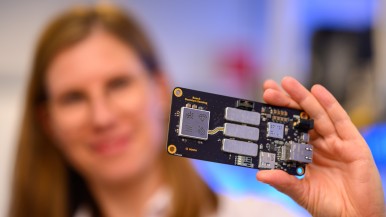
Stuttgart, Germany – Quantum technologies have great potential, but most of this potential is still a distant dream at present. Following ten years of research in this field, Bosch is now planning to work with the first pilot customers in the medical and mobility industries on specific applications over the next two years. At the startup Bosch Quantum Sensing, established at the beginning of 2022, some 30 associates are currently focusing on this. Bosch estimates the annual global market potential of applications for medicine and mobility will reach the mid-single-digit billions by the middle of the next decade. One potential area of application for quantum sensors, the brain-computer interface (BCI), will on its own be worth more than five billion dollars annually in the long term, according to the company’s calculations. One example of its future use is sensors that record nerve impulses in order to control artificial limbs and thus improve patients’ quality of life. “The quantum sensors we are creating in medical technology are a perfect fit for our ‘Invented for life’ ethos. By the end of the decade, we want to take a leading position with our technology,” says Dr. Stefan Hartung, chairman of the Bosch board of management.Small is beautiful: Bosch is a leader in miniaturization When it comes to size, the technology company is already a frontrunner: in terms of its measurement accuracy, the Bosch sensor prototype is the smallest currently available – about the size of a cell phone. Its compact design offers considerable advantages wherever space is at a premium – for example, in industrial applications, in vehicles, in aircraft, or even in hospital emergency rooms. The smaller the sensor, the greater the benefits: smaller sensors are portable, cheaper to produce, and more scalable as a result. “Our goal is to miniaturize quantum sensors to the point where they can be integrated onto a chip,” says Dr. Katrin Kobe, who is responsible for sensor commercialization at Bosch Quantum Sensing. This could lead the way to additional sensor applications. Quantum sensors as potential lifesavers In medicine, Bosch quantum sensors could help save lives in the future: by measuring the heart’s natural magnetic field and enabling simple measurements over a longer period of time, they can provide far more data than today’s electrocardiography (ECG). An ECG machine is applied directly to the skin by means of electrodes; if they slip, measurements are inaccurate. Moreover, in an emergency, attaching the ECG machine uses up precious time. Quantum sensors, by contrast, can be incorporated into things like items of clothing or mattresses. This not only speeds up diagnosis in the emergency room, but also makes monitoring at home easy and precise. The prospect of contactless early detection of atrial fibrillation – one of the causes of life-threatening strokes, heart failure, and dementia – is thus within reach for the first time. In other words, early diagnosis with the help of quantum sensors could, in the best case, lead to the prevention of fatal strokes. Ultra-precise navigation in the air, on the road, and on water In addition to medical technology, quantum sensors could also be used in mobility. One example is navigation. A global positioning system (GPS) is susceptible to interference, whereas quantum sensors are resistant to external influences, since they work by measuring the earth’s unchanging magnetic field. This paves the way for ultra-precise navigation in the air, on the road, and on water. There may also be scope for considerable additional benefits in electromobility. In the future, quantum sensors could be used there to precisely measure the magnetic field of the electric current and thus determine the exact charge level of the battery. The result would be more reliable determination of the remaining range, allowing trips to be planned better.

New area of business: Bosch to develop systems for water treatment

28.06.2023

Press release

Business/economy

New area of business: Bosch to develop systems for water treatment

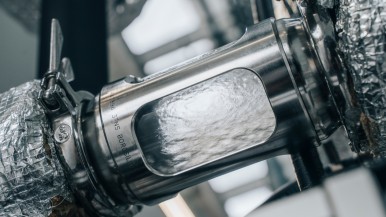
Stuttgart, Germany – “A climate-neutral world won’t work without green hydrogen,” says Dr. Stefan Hartung, chairman of the Bosch board of management. Bosch is now expanding its business to include technology for water treatment. In addition to systems using the usual water treatment method of reverse osmosis, Bosch also plans to offer new solutions specifically engineered for remote areas and offshore locations. “Above all, the production of green hydrogen requires ultrapure water. With our special-purpose systems, water treatment can be done anywhere, even in the most remote areas of the world, in an economical and environmentally friendly way,” Hartung says. The systems designed by Bosch Manufacturing Solutions are not only robust and low maintenance, but compared to solutions commonly available on the market, they eliminate the need for chemicals in water treatment. With its entry into this new business field, Bosch is closing the circle and rounding off its range of products and services: “We’re developing technology for water treatment as well as for the generation, compression, storage, and use of hydrogen – and doing so for various sectors. Hardly any other company offers such a broad portfolio,” Hartung says. Water treatment forms the first and most fundamental link in the hydrogen value chain. Bosch has developed the water treatment technology for electrolysis at its locations in Renningen, Stuttgart-Feuerbach, and České Budějovice, and external pilot projects are to be added in the course of this year. The market launch for the systems is planned for 2024, and Bosch will be presenting the technology at the Bosch Tech Day in Stuttgart-Feuerbach on July 13, 2023. We’re developing technology for water treatment as well as for the generation, compression, storage, and use of hydrogen – and doing so for various sectors. Hardly any other company offers such a broad portfolio...says Dr. Stefan Hartung, chairman of the Bosch board of management. Special-purpose water treatment systems for the toughest conditions Electrolyzers require ultrapure water for the production of hydrogen. “Impurities in the water can render electrolyzers inoperative in a very short time,” explains Dr. Wolfgang Schleifenbaum, head of the Hydrogen business unit at Bosch Manufacturing Solutions. In the future, hydrogen will be produced in areas with strong winds or abundant sunshine – Africa, South America, or Northern Europe, for example. Locations offshore or in the desert present particular challenges: considerable distances from the technical facilities, water high in salt or minerals – all make water treatment more difficult. As a result, demand for special equipment is high: Bosch expects that starting in 2035, some 500 of the company’s special-purpose water treatment systems will be needed worldwide each year. The Bosch systems remove minerals from the water by means of thermal and electrochemical processes to obtain ultrapure water. Thanks to a treatment process without filter media, it is possible for operators to completely dispense with the use of chemicals. “Green hydrogen is sustainable only if its production doesn’t cause collateral damage to the environment; for example, by putting chemicals into our already heavily polluted waters,” Schleifenbaum explains. For predictive maintenance of the equipment, even from far away, Bosch offers software solutions that ensure robust operation in harsh environmental conditions. Industrial systems for water treatment in developed areas The demand for ultrapure water for the world’s hydrogen projects is enormous. As the world strives to achieve the Paris climate targets, Bosch estimates that, starting in 2050, annual demand for the water used in electrolysis will amount to some four cubic kilometers – more than the volume of Germany’s Lake Starnberg. Germany, too, has ambitious plans: the government has set a goal of installing H2 electrolyzers with a total capacity of 10 gigawatts by 2030 (source: German government, 2022 ). The EU aims to install 40 gigawatts of electrolysis capacity in Europe by 2030, with plans to produce up to ten million metric tons of renewable hydrogen (source: European Commission, 2020 ). “Hydrogen will play a crucial role in the energy supply of the future. Industries worldwide must use hydrogen if they want to become climate neutral. Bosch supplies water treatment technology that meets different requirements with regard to the size, performance, and location of the electrolyzers,” Schleifenbaum says. For water treatment in developed areas, Bosch plans to expand its portfolio to include industrial systems that use reverse-osmosis processes and ion exchangers to turn tap water into the ultrapure water electrolyzers need. With this combination of industrial and special purpose equipment, Bosch fulfills the requirements for electrolysis projects worldwide. Water treatment with Bosch technology – “Invented for life” Bosch technologies also help maintain valuable drinking water reserves. The Bosch system is particularly efficient, reducing the feedwater required for producing water for the electrolysis process by up to one-third compared to common solutions on the market. In addition to producing water for electrolysis, the special-purpose systems can also be adapted to produce drinking water. “With our water treatment systems, we follow the Bosch guideline and offer technology that is ‘Invented for life.’ In areas where drinking water is scarce, we can use our technology to help improve the supply,” Schleifenbaum says.

On the path toward zero-defect production with Bosch AI

03.03.2021

Press release

Industry 4.0

On the path toward zero-defect production with Bosch AI

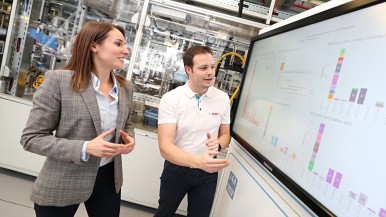
Stuttgart, Germany – More precise than any eye or ear, faster than any mind: artificial intelligence captures and processes terabytes of data in a matter of seconds, helping humans understand complex relationships at a glance and take action. The Bosch Center for Artificial Intelligence (BCAI) has developed an AI-based system that detects anomalies and malfunctions in the manufacturing process at an early stage, reliably reduces reject parts, and improves product quality. Speaking at Bosch’s digital AI conference “AI CON” on Wednesday, March 3, Bosch CDO/CTO Dr. Michael Bolle said: “The use of artificial intelligence will make factories more efficient, more productive, more eco-friendly – and will make products even better. Our new AI solution will save plants millions in costs.” Pilot plants where the AI solution is already in use are saving between one and two million euros per year. The plant in Hildesheim, for example, was able to identify and eliminate disruptions in process flows with the help of AI. As a result, the cycle times of the lines dropped by 15 percent Studies have confirmed the AI effect: Industry 4.0 in particular would benefit from the widespread use of AI in Germany. Spread across the various industries, the greatest cost-saving potential – more than 50 percent (182 billion euros) – is to be found in AI-assisted production (source: eco - Association of the Internet Industry and Arthur D. Little, 2019). In 2021, Bosch will be rolling out the AI solution developed by BCAI, starting with some 50 powertrain plants worldwide, and connecting it to more than 800 production lines. More than one billion data messages will be stored on the analysis platform every day. Bosch plans to subsequently deploy the AI solution across the company at its roughly 240 plants. The company will also take the experience and technological know-how it gains and incorporate it into the development of new AI technology for manufacturing. The use of artificial intelligence will make factories more efficient, more productive, more eco-friendly – and will make products even better. Our new AI solution will save plants millions in costs....Dr. Michael Bolle, Bosch CDO/CTO Bosch AI improves production and product The pilot user of the new AI analysis platform is Bosch’s Mobility Solutions business sector. Over the next few years, Bosch will invest some 500 million euros in bringing digitalization and connectivity to its plants. The expected saving will be twice as high: roughly one billion euros by 2025. An integral part of the project is the use of artificial intelligence. Collaboration between BCAI and the division’s plants has resulted in a universal AI solution for manufacturing that uses Bosch Connected Industry’s Nexeed Manufacturing Execution System (MES) to automatically collect, process, and analyze data from a variety of sources in near real time. Sensor data from machines serves as the basis for, say, determining fluctuations in a wide range of manufacturing processes. The Industry 4.0 software Nexeed “translates” and visualizes the data and codes, the AI system makes a recommendation for action, and the associate decides how to proceed. The main tools in this process are dashboards, individually configured and tailored to local use cases and the corresponding AI analysis. This setup makes it easier to find potential causes of errors. Self-adapting processes for machines and assembly lines can be integrated as well. If, for example, a drill hole deviates from the defined placement, the AI system independently initiates the necessary steps. At times, the AI system receives support from cameras that are positioned along the production lines and record the manufacturing process. On the basis of patterns it has learned, the system identifies deviations, and action can be taken immediately. In addition, field and customer data is linked to the platform in individual cases. This helps the system understand even better how products behave in the field, enabling it to detect defects in good time and predict impending failures. Bosch uses AI to unlock manufacturing potential While the manufacturing industry has grasped the situation in theory, it is still lagging behind in practice: more than half of all German companies (58 percent) see disruptive potential in artificial intelligence, but only one in seven (14 percent) is currently using AI for Industry 4.0 (Bitkom, 2020). A clear majority of Germans (60 percent) would like to see AI used more in industry, in sectors such as automaking or aircraft-building. This is a core finding of the Bosch AI Future Compass . Presented in November 2020, the study indicated that more than two-thirds of respondents would welcome the use of AI in diagnosing machine faults and in other high-tech areas. Bosch is already fully committed to artificial intelligence. In manufacturing operations, the technology helps reduce rejects, improves the utilization of machines and systems, and optimizes production processes. “Artificial intelligence is an epoch-making technology, comparable to the invention of letterpress. It will revolutionize manufacturing. With the help of artificial intelligence, machines and products learn how to be smart and anticipate,” Bolle says. In addition to projects in its own plants, Bosch is launching AI-based solutions on the market. Applications in manufacturing include automated visual inspection of workpieces, software for intelligent production management, and sophisticated energy management. Bosch will present AI solutions for manufacturing at the digital Hannover Messe 2021 (April 12–16). Artificial intelligence is an epoch-making technology, comparable to the invention of letterpress. It will revolutionize manufacturing. With the help of artificial intelligence, machines and products learn how to be smart and anticipate....Dr. Michael Bolle, Bosch CDO/CTO Bosch anchors artificial intelligence in its corporate strategy Bosch regards artificial intelligence as a key technology. By 2025, the aim is for all Bosch products to either contain AI or have been developed or manufactured with its help. To this end, the company is investing in bright minds, appropriate infrastructure, and suitable conditions. Bosch aims to train 20,000 associates in AI by the end of 2022. One key lever here is its research and development center for artificial intelligence, BCAI. Just three years after it was set up, BCAI had earned back its initial investment: its contribution to result is now some 300 million euros. Bosch’s objective: “We research and offer AI that is safe, robust, and explainable,” Bolle says. The company is primarily concerned with industrial AI – the connection between artificial intelligence and the physical world, in other words. Bosch has excellent prospects in this area. “Our plants manufacture a wide variety of products – from refrigerators and power tools to powertrains and assistance systems for the automotive industry and automation technology for use in factories. We are now adding AI algorithms to this expertise,” Bolle explains.

Bosch Hemoglobin Monitor: Early detection of anemia without blood tests

11.01.2021

Press release

Business/economy

Bosch Hemoglobin Monitor: Early detection of anemia without blood tests

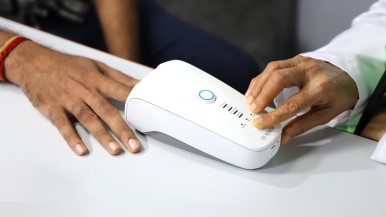
Bengaluru, India / Waiblingen, Germany – According to estimations by the WHO 1.6 billion people suffer from Anemia, a condition resulting from the reduced hemoglobin concentration in the blood. This has prompted the WHO to define the fight against anemia as one of its critical sustainable development goals for 2025. Bosch has developed a portable Hemoglobin Monitor Solution (HMS) especially for regions where routine access to medical care tends to be difficult. This HMS allows a large number of people to be screened for anemia rapidly, safely, using a non-invasive approach. The solution has been named a CES Innovation Award Honoree in the “Health and Wellness” category. “Bosch has developed the non-invasive Hemoglobin monitor as an innovative solution and as an alternative to traditional methods for the early detection of anemia. This should offer people better diagnosis options even in resource constrained conditions. The use of artificial intelligence is revolutionizing anemia management, specifically in point-of-care setups and closer to the patient”, explains Dattatri Salagame, President and Managing Director of Robert Bosch Engineering and Business Solutions Private Limited (RBEI). Bosch has developed the non-invasive Hemoglobin monitor as an innovative solution and as an alternative to traditional methods for the early detection of anemia. This should offer people better diagnosis options even in resource constrained conditions. The use of artificial intelligence is revolutionizing anemia management, specifically in point-of-care setups and closer to the patient....Dattatri Salagame, President and Managing Director of Robert Bosch Engineering and Business Solutions Private Limited (RBEI) Hemoglobin is a protein found in red blood cells and is responsible for carrying oxygen and carbon dioxide throughout the body. People with a low hemoglobin count may experience symptoms such as general fatigue, weakness, pale skin, and even serious illnesses. Anemia particularly affects women, even more so when they are pregnant, and also people suffering from malnutrition. In cancer patients undergoing chemotherapy or in palliative care, hemoglobin levels should be checked regularly. Hemoglobin results in 30 seconds using a non-invasive AI measurement The intelligent solution by Bosch is designed for use directly at the point-of-care and is completely pain-free with no need for a blood test, as the value is determined by a finger scanner using multi-wavelength spectrophotometry on the surface of the skin. The system uses an optical sensor to precisely and reliably measure the photoplethysmogram (PPG) signals. Photoplethysmography, or PPG, is an optical technique used to detect volumetric changes in blood in peripheral circulation. The device provides a reliable result within 30 seconds even for low hemoglobin concentrations. This is where machine learning comes in: the device’s algorithm monitors the wavelength of the light and uses 27 different characteristics to determine and classify the hemoglobin value. The algorithm has been trained with more than 10,000 anemia data points. These clinically collected data along with the corresponding ground truth data, are the basis for the machine learning algorithm. The more validated data sets are put into the continuously learning algorithm, the more precise the results will be. Lab-free results without risk of infection A laboratory analysis is not necessary and there is no risk of infection from contaminated needles. Participants receive their test results quickly at the point of care. The device is battery operated, does not need subsequent calibration, and is extremely easy to use. It is intended for use in outlying and remote regions by healthcare professionals. Location-based reporting ensures easy clinical traceability. Organizations that operate multiple devices can draw conclusions through heat maps about specific regions. Patient data remains anonymous. Market release in India is expected by mid-2021.

Bosch puts first 5G campus network into operation

26.11.2020

Press release

Business/economy

Bosch puts first 5G campus network into operation

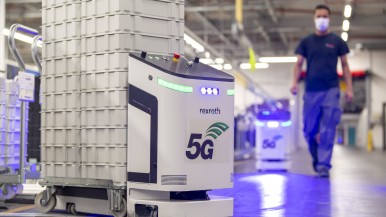
Stuttgart, Germany – Bosch is putting its first 5G campus network into operation. At its Industry 4.0 lead plant in Stuttgart-Feuerbach, the company aims to manufacture under previously unheard-of conditions, with data being transferred extremely reliably and ultra-fast, and machines reacting almost instantaneously. For the first time, wireless implementation will be possible for critical applications that require absolute precision and safety. Without exception, people and machines will be able to cooperate safely and without barriers. “5G strengthens our competitiveness and lets us make even more of Industry 4.0 ’s potential,” says Dr. Michael Bolle, board of management member and CDO/CTO at Bosch. “We will gradually roll 5G out to our roughly 250 plants around the world.” The locations where Bosch will be setting up 5G networks in the coming months include its research campus in Renningen, Germany. The company is also developing 5G-capable products and launching its first solutions for industrial use. 5G strengthens our competitiveness and lets us make even more of Industry 4.0’s potential. We will gradually roll 5G out to our roughly 250 plants around the world....Dr. Michael Bolle, board of management member and CDO/CTO at Bosch Bosch plant in Stuttgart-Feuerbach is 5G pioneer The ActiveShuttle moves effortlessly and autonomously over the shop floor, avoids people and vehicles, bypasses storage boxes, steers purposefully toward the production line, stops, unloads its freight, and sets off again. At the Bosch plant in Stuttgart-Feuerbach, the factory of the future is becoming a reality – including 5G applications such as the widespread use of autonomous transport systems. “Campus networks¹ are an important building block for Industry 4.0,” Bolle says. One decisive feature is ubiquitous and uninterrupted network coverage. The network can be optimized and tailored to highly demanding industrial applications. In the campus network in Feuerbach, eight small base stations – known as “small cells” – ensure good signal reception throughout the manufacturing facility, which covers around 10,000 square metres. This lets wirelessly connected machines and systems communicate with each other in real time and exchange data within a few milliseconds. Integrated into the existing IT infrastructure and continuously monitored, the 5G campus network offers a maximum of security and independence. “Campus networks give us control – over what happens in the factory and over how data is transferred both within and beyond the factory walls,” Bolle says. Bosch set up the network together with Nokia. While Bosch defined use cases, Nokia provided 5G components. The two companies are jointly responsible for network planning, operation, and servicing. The pioneering work in Feuerbach is also the setting for an extraordinary symbiosis: Industry 4.0 combined with 5G, optimized with artificial intelligence. As part of KICK , a project funded by the German Federal Ministry of Education and Research, Nokia and other partners are researching how artificial intelligence can simplify the operation and maintenance of 5G campus networks. We have a clear vision of the factory of the future, and how we need to develop our products to meet its requirements. In this context, 5G is a ‘springboard innovation,’ a technology that will fundamentally change the market....Rolf Najork, member of the Bosch board of management Bosch to launch its first 5G-capable products Anyone looking to seize the potential of the new mobile communications standard in factories needs not just 5G networks but also equipment and machines that interact wirelessly. Bosch is making products 5G-capable. “We have a clear vision of the factory of the future, and how we need to develop our products to meet its requirements. In this context, 5G is a ‘springboard innovation,’ a technology that will fundamentally change the market,” says Rolf Najork, the member of the Bosch board of management responsible for industrial technology. Capgemini has found that 65 percent of industrial companies worldwide plan to deploy 5G within the first two years of availability². Bosch is developing solutions to meet this demand. At the Hannover Messe 2019, the company presented its ActiveShuttle , whose 5G capability and intelligent software allow it to integrate into intralogistics operations smoothly and safely. 5G also plays an important role in control technology. Indeed, Bosch Rexroth’s ctrlX Automation platform was designed for 5G from the outset. “We are forging new paths and bridging the gap between control systems, IT, and the internet of things. Our new control technology will use the new mobile communications standard to connect a wide range of devices,” Najork says. Bosch sees 5G as a boost for business 5G is making inroads not only into manufacturing industry, but also into healthcare, agriculture, mobility, and urban development. Experts estimate that there will be up to 70 billion connected devices worldwide by 2025³, ranging from industrial robots and autonomous cars to sensors that provide information about the nutrient content or moisture level of arable soils. The new mobile communications standard plays a major role in this and is becoming a competitive factor. “We have played an active part in shaping 5G. Bosch started its research into 5G as early as 2014,” Bolle says. These include activities such as 5G NetMobil , a project that shows how to achieve fully connected driving and how modern communications technology can make it safer. Meanwhile, the international 5G-SMART association is investigating the potential effects 5G will have on complex semiconductor production. These findings are being incorporated into the planning of 5G networks, also in Bosch’s new wafer fab in Dresden, which will be ready for 5G from day one. Moreover, Bosch now chairs the 5G-ACIA initiative, whose more than 70 member companies aim to shape 5G so that it meets the needs of manufacturing industry from the outset. As a leading IoT company that offers solutions for connected mobility, the smart home, and connected industry, Bosch sees 5G as a driver of future business.¹ “5G campus network” denotes a geographically limited, local cellular network adapted to meet specific requirements such as industrial communications. ² See Capgemini: “ 5G in industrial operations: How telcos and industrial companies stand to benefit ”, p. 7. ³ See Roland Berger: „ Erfolgsfaktor 5G. Innovation und Vielfalt für die nächste Stufe der Digitalisierung “, p. 11.

“5G is a standard of superlatives”

26.11.2020

Press release

Business/economy

“5G is a standard of superlatives”

Everyone’s talking about 5G. What is so special about this new communications standard? Dr. Andreas Müller : If we want to keep things simple, we could say this is the next step after the mobile communications standards 2G, 3G, and 4G. And now with 5G, we’ll be able to transfer data on the internet even faster. But that definition doesn’t go far enough. 5G represents something completely new. For the first time, a mobile communications standard has been developed that focuses not on connecting people, but on the communication between sensors, devices, machines, and more on the internet of things (IoT). The IoT is of key importance for Bosch. We already employ more than 30,000 software engineers.. As far as possible, all Bosch products should be launched with a web-based services package in the future. Experts believe that by 2025, there will be more than 70 billion connected devices worldwide. These include industrial robots, self-driving cars, and agricultural sensors that measure soil moisture or provide information on animal health.How much better and faster will communication be with 5G? Dr. Andreas Müller : We won’t only be faster and better, we’ll also cover a lot more. Striving for more is human nature, but it doesn’t always become reality. With 5G it’s different. 5G is a standard of superlatives: with top data rates of 20 gigabits a second, it is up to 20 times faster than 4G. It can transfer data virtually instantaneously with a latency of one millisecond, and is up to 99.9999 percent reliable – in other words, almost as safe as data transmission through a wire. 5G also makes wireless real-time “critical communication” possible for the first time. In other words, even applications that have to work absolutely reliably and securely can be realized wirelessly with 5G. This applies, for example, to a remotely operated crane as well as to a manufacturing facility. 5G opens up new areas of application in industry, where the performance of other wireless technologies such as Wi-Fi frequently fell short in the past. How important is 5G for Bosch? Dr. Andreas Müller : Bosch is an IoT company. We offer solutions for connected mobility, homes, and factories. All these are areas in which 5G will be used and deliver added value. In doing so, it has enormous disruptive potential: not only will it enable completely new technological solutions and business models, but it will also trigger fundamental changes to established value chains. Bosch launched its research activities in 5G as early as 2014 and got involved with a host of national and international initiatives and bodies. One of these is the 5G Alliance for Connected Industries and Automation ( 5G-ACIA ), which has more than 70 companies and research institutions as members. Bosch has taken on the chair of the alliance to work with partners in shaping 5G so that it meets the needs of industry from the outset. In addition, we applied to Germany’s Federal Network Agency for 5G licenses for selected German locations and received them. Here, Germany is blazing a path for the rest of the world in making it possible for companies to set up their own local campus networks. This also offers opportunities for leveraging the full potential of Industry 4.0, particularly in the manufacturing sector. Such opportunities are especially important for Bosch, As the company believes Industry 4.0 is the way forward, and is digitalizing its plants and those of its customers. What benefits does 5G offer manufacturing? Can you name some examples? Dr. Andreas Müller : 5G will become the central nervous system of the factory of the future. The new communications standard will make manufacturing more flexible, more mobile, and more productive. One way to use 5G in manufacturing is with portable, mobile operating panels, which on-site workers can use to plug into various systems and machines. The panels themselves can also support safety-critical applications like kill switches. At the moment, such mechanisms are usually stationary and attached to each separate machine. 5G reduces that number and simultaneously improves working conditions for associates, who can quickly and conveniently access the machines. Augmented reality in conjunction with the new mobile communications standard will also deliver considerable benefits. For instance, workers wearing data glasses connected via 5G can access additional information in their field of vision in real time, optimizing how they monitor and maintain machinery. 5G also makes it possible to link driverless transport systems and integrate them into manufacturing operations without any difficulty. We presented ActiveShuttle , an initial prototype for a 5G-capable transport system, at the Hannover Messe 2019. What role exactly does 5G play in ActiveShuttle? Dr. Andreas Müller : In the first stage, we’ve replaced “only” the current Wi-Fi connection with 5G. That has already brought many advantages, such as a more stable connection and the avoidance of interruptions to communication when switching between different wireless access nodes. But things should really get interesting when we launch the second stage. At that point, we will shift the “intelligence” of our transport system, meaning key control functions, to a local cloud and use 5G for data transfer between the machine and IT infrastructure. This will pave the way for more affordable devices, and improve maintenance, safety, security, and scalability. At the same time, we’ll be able to realize new functions relatively easily, such as cooperative maneuvers between different transport systems. What we’re currently looking into is these sorts of approaches, which weren’t possible before 5G. The first prototypes will be available in the next few months. Often it’s the way they combine the trio of 5G, edge computing, and AI that’s truly revolutionary. If 5G gives production a boost, why has Bosch applied for 5G licenses for only its two locations in Feuerbach and Renningen? Dr. Andreas Müller : We’re still in the process of evaluating 5G’s full potential and working out new manufacturing concepts. This takes time and will happen first at selected locations that do pioneering work for the entire Bosch network.. However, we have firm plans to eventually roll out 5G to all Bosch plants step by step. There are already 5G activities underway at several locations, although still using test licenses from the network agency. What were the criteria for selecting the Feuerbach and Renningen locations? Dr. Andreas Müller : Various factors come together at these locations. The plant in Feuerbach is one of Bosch’s largest factories in Germany and very centrally located, with the research campus in Renningen, Bosch Rexroth branches, corporate IT, and the Bosch Connected Industry operating unit all very close by. We can bring together various kinds of expertise and professionals relatively easily and quickly – which is precisely what we need. What’s more, Feuerbach is a lead plant for Industry 4.0 at Bosch and now also a lead plant for 5G. The research campus in Renningen, is the nucleus of research and development at Bosch. That’s where we ran early tests on 5G and its application in an industrial setting. Our plan is to expand that further and gradually extend those activities to other domains, such as agriculture or building automation. You have put the first 5G campus network into operation in Feuerbach. What was the biggest challenge? Dr. Andreas Müller : 5G campus networks are uncharted territory – for Bosch as well as for everyone else. These challenges start at the network planning stage. Traditional network planning generally focuses on network coverage and the feasible data transfer rate. In a factory, however, criteria such as latency and reliability also play a role. Guaranteeing 99.9999% reliability is not so easy from a planning perspective. Beyond that, questions about topology arose – how exactly the network is going to be constructed. Working out the details of how to integrate it securely into existing structures, for example the existing Bosch network, was also very challenging Who is Bosch working with to set up these 5G networks? Dr. Andreas Müller : We select our partners on a project-related basis. In the current phase it is also important to get to know the offers of different providers even better. At the Stuttgart-Feuerbach plant, for example, we have implemented the network construction with Nokia. While Bosch defined use cases, Nokia supplied the 5G infrastructure components. Both companies carried out the network planning together. At our semiconductor plant in Reutlingen however, we are working together with Ericsson as part of the 5G-SMART research project. The aim of this project is to evaluate the effects of 5G on the extremely complex and sensitive semiconductor manufacturing process. Aside from 5G-capable factories, there are also machines and products that have to be compatible with the new standard. Bosch recently launched a new 5G-capable control technology. Will Bosch be making all its products 5G-capable? Dr. Andreas Müller : Bosch Rexroth’s new control technology, ctrlX AUTOMATION , is a true revolution. ctrlX AUTOMATION bridges the gap between control systems, IT, and the internet of things, and was designed with 5G in mind. 5G will be making its way not only into manufacturing, but also into domains such as agriculture, urban development, and healthcare. As a result, we are constantly assessing whether using 5G makes sense or if another technology might not be a better choice. 5G is not an end in itself, but should always offer recognizable added value for our customers. How does 5G affect people’s health? How dangerous is the radiation exposure from 5G? Dr. Andreas Müller : Bosch takes this topic very seriously, as well as the concerns that people sometimes have about it. Complying with all legal requirements and threshold values is a given. In addition, we regularly analyze the assessments and recommendations from various organizations, such as the World Health Organization (WHO) and the German Federal Office for Radiation Protection (BfS). Neither WHO nor BfS have so far found any scientific evidence of negative effects on people’s health, despite numerous studies. Apart from that, we are drawing up concepts that would minimize radiation exposure, for instance through proper network planning. A high density of base stations is actually a good thing, since this can markedly reduce the transmission power. But ultimately it’s always about the terminal device’s reception quality. In plants, the transmission power of 5G will be comparable to that of Wi-Fi. What will 5G change for Bosch associates? Dr. Andreas Müller : With 5G, we’ll be making entirely new manufacturing concepts a reality, moving us toward our vision of the factory of the future. This of course goes hand in hand with giving our associates training. The new mobile communications standard has the potential to simplify and improve the work our associates do in manufacturing and logistics. And that’s the whole point.About Dr. Andreas Müller Dr. Andreas Müller is the head of communication and network technology in the corporate sector for research and advance engineering at Robert Bosch GmbH in Renningen, Germany. He also coordinates group-wide 5G activities at Bosch as part of its Industry 4.0 initiative. Since April 2018, Dr. Müller has chaired the global 5G Alliance for Connected Industries and Automation (5G-ACIA). The goal of the alliance, which has more than 70 companies and research institutions, is to shape 5G from the beginning so that it meets the future needs of industry.

Bosch’s new rapid coronavirus test delivers reliable results in 39 minutes

25.09.2020

Press release

Business/economy

Bosch’s new rapid coronavirus test delivers reliable results in 39 minutes

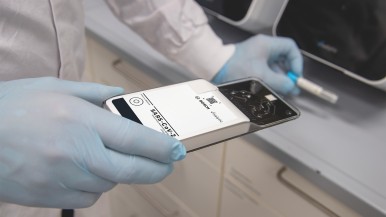
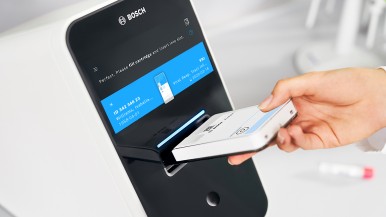
Stuttgart, Germany – Bosch has developed a new rapid test for its Vivalytic analysis device to detect the SARS-CoV-2 pathogen. The test provides a reliable result in 39 minutes and is currently the fastest polymerase chain reaction (PCR) test worldwide. Bosch’s new rapid test is predestined for decentralized use in mobile test centers at freeway service stations or in airports. People who take the test can obtain a reliable result while at the testing site. Available now in Europe, the CE-approved test helps avoid time in quarantine, relieve laboratories, and make travel and work safer again. “One of the keys to fighting the coronavirus pandemic is to rapidly identify sources of infection. That’s why we focused on following up on our first coronavirus test with an even faster one,” says Dr. Volkmar Denner, chairman of the board of management of Robert Bosch GmbH. “This will now enable us to put people’s minds at ease even more quickly.” One of the keys to fighting the coronavirus pandemic is to rapidly identify sources of infection. That’s why we focused on following up on our first coronavirus test with an even faster one....Dr. Volkmar Denner, chairman of the board of management of Robert Bosch GmbH The development of the new Bosch PCR singleplex test is part of a research and development project funded by the German Federal Ministry of Education and Research (BMBF). As the federal minister for education and research Anja Karliczek says, “I believe it’s important that people have clarity about their state of health as quickly as possible. In this respect, insights from science and research can bring people huge benefits. Over the next few months, we will be confronted with the particular challenge of having to test more people. The improved testing procedure developed by Bosch with the BMBF’s support has the potential to be a tremendous help with this complex job. The rapid improvement of our technological capabilities shows what innovative achievements German companies can deliver in times of crisis.” The test has a sensitivity of 98 percent and a specificity of 100 percent. To develop it, the Bosch subsidiary Bosch Healthcare Solutions joined forces with the German biotechnology company R-Biopharm – a leading provider of highly sensitive manual PCR tests. PCR tests are considered the gold standard of test methods.A world first: simultaneous testing of five samples Bosch launched the first rapid test for its Vivalytic analysis device at the end of March, after just six weeks’ development. As a multiplex test, it simultaneously checks samples for the SARS-CoV-2 virus and nine other respiratory diseases in two and a half hours. The new, accelerated test is exclusively for SARS-CoV-2. “With our different coronavirus tests and variable analysis strategies, we open up a range of testing scenarios with a Vivalytic device – from screening all the way to supporting differential diagnosis for diseases with similar symptoms,” says Marc Meier, president of Bosch Healthcare Solutions GmbH. And development work is still in full swing at Bosch: As of early October 2020, it will be possible to simultaneously evaluate five samples in one test cartridge and at a comparable speed – a world first, according to the company. Bosch is thus increasing available testing capacity, enabling fully automated processing of more than 160 samples a day using a Vivalytic device. In addition, optimized software will in the next few weeks further reduce the time to result of the SARS-CoV-2 test on positive samples. Vivalytic analysis device: easy to use at the test site The advantages of Bosch’s rapid test lie not only in speedy analysis, but also in ease of use. A sample is taken from the patient’s nose or throat using a swab, and placed in the test cartridge. Then the test cartridge, which already contains all the reagents required for the test, is inserted into the Vivalytic device for automated analysis. The Vivalytic analysis device is designed to be user-friendly; medical staff require only brief training on how to operate it. The development of the Vivalytic system, which consists of an analysis device and test cartridges, grew out of a long-standing collaboration between Bosch’s corporate research and advance engineering and Bosch Healthcare Solutions. By the end of the year, Bosch wants to reach capacity for one million tests. As demand for the analysis device and the rapid tests remains high, the company is working closely with its suppliers to maximize capacity and further increase supply.

Bosch launches 5G tests at Reutlingen wafer fab

06.08.2020

Press release

Business/economy

Bosch launches 5G tests at Reutlingen wafer fab

Stuttgart, Germany – As an Industry 4.0 pioneer, Bosch believes 5G will be a key building block of digitalization and connectivity in manufacturing and logistics. The company is now starting compatibility tests and channel measurements for setting up a 5G network in its wafer fab in Reutlingen. “We at Bosch started researching and developing 5G early on, and we are convinced that this new mobile communications standard will give Industry 4.0 a boost,” says Dr. Michael Bolle, the Bosch CDO/CTO. For this reason, the company is taking an active role in the international 5G-SMART research project, which aims to test, demonstrate, and evaluate the new communications standard in real-life manufacturing environments. The 5G-SMART partners will be testing 5G manufacturing applications at the Bosch wafer fab in Reutlingen , as well as at the Ericsson location in Kista, Sweden, and on the Fraunhofer IPT’s 5G Industry Campus Europe in Aachen.Setting up a 5G network at the Bosch wafer fab in Reutlingen Industrial manufacturing is undergoing a digital transformation: manual processes are in decline, technical assistance systems are making inroads, sensors transmit a wide range of data, and the degree of connectivity between people, machines, and systems is rising. In all this, 5G is the key. “Fast, reliable, and secure data transmission is the basis for Industry 4.0. Combining it with 5G will allow us to further ramp up and improve factory production,” Bolle explains. At its wafer fab in Reutlingen, Bosch is currently launching compatibility tests in partnership with Ericsson that are designed to explore the extent to which 5G impacts manufacturing. “Semiconductor production is extremely complex and sensitive. These microscopic wafers undergo more than 1,000 tests before ending up in a wide array of products, ranging from airbags to smartphones to e-bikes. In a factory environment, electromagnetic waves can be a source of interference, so we’re testing the impact 5G has on production,” says Andreas Müller, who works for Bosch as a researcher and is the chairman of the international 5G Alliance for Connected Industries and Automation (5G-ACIA). Channel measurements are also on the agenda. As a means of delivering insights into how to ensure optimum network coverage as well as where and how densely transmitting antennas need to be placed throughout the plant, for example. Bosch plans to use those findings as it sets up a 5G test network in its wafer fab in Reutlingen by fall, where it will roll out the first 5G applications. During this process, engineers will observe how machines and systems can work with 5G and investigate how much better and more efficient this connection is compared to Wi-Fi or cabling. Fields of application include autonomous transport systems that can be guided via a local cloud, remote access to machinery, and communication between industrial systems. Wafer fab in Dresden: Bosch’s first 5G-capable semiconductor plant Results from the Reutlingen research project can also be put to good use in future 5G network planning, for example in the company’s new wafer fab in Dresden. “In Dresden, we are building Bosch’s first 5G-capable semiconductor plant worldwide. The facility will be ready for 5G from day one,” Bolle says. Bosch is investing around a billion euros in the new wafer fab – the largest single investment in the company’s history. Semiconductor production is scheduled to begin there by the end of 2021. 1 Microelectronics are paving the way for Industry 4.0 on various levels. For one, Industry 4.0 is inconceivable without intelligent sensors; for another, wafer production itself is one of the forerunners of connected manufacturing. It is nearly fully automated and employs artificial intelligence to optimize manufacturing processes in real time. EU research project examines conditions for 5G in manufacturing For the 5G-SMART project, a multidisciplinary team of telecommunications companies, network and factory operators, plant and mechanical engineers, and universities is combining 5G with Industry 4.0 solutions. The project partners are also testing the electromagnetic compatibility (EMC) in Bosch’s Reutlingen wafer fab, taking channel measurements, and evaluating how 5G behaves in a real-life manufacturing environment. In addition, they aim to identify new 5G business models. Funded by the European Union, the project is scheduled to run for a total of two and a half years and will end in November 2021. 1 The industrialization of innovative semiconductors in Dresden, Germany is taking place within the scope of the „IPCEI Microelectronics“ funded by the Federal Ministry for Economic Affairs and Energy (BMWi).

Against coronavirus, for the climate: with responsibility and technology “Invent ...

29.04.2020

Press release

Business/economy

Against coronavirus, for the climate: with responsibility and technology “Invent ...

Presentation by Dr. Volkmar Denner, chairman of the Board of Management, Robert Bosch GmbH, and Prof. Stefan Asenkerschbaumer, deputy chairman of the board of management, at the annual press conference on April 29, 2020 Check against delivery.Ladies and gentlemen: All of us – across the globe, as well as right here at Bosch – are living through an extraordinary crisis. The coronavirus pandemic demonstrates our limitations, but it also demonstrates what is really important – the health of our associates and their families. But also your health, ladies and gentlemen. In times such as these, annual press conferences can only be virtual, but my welcome to you is warmer than ever. But in times such as these, where should I begin? At Bosch as well, so much of what is happening is completely new. Before the crisis broke, it would have been inconceivable: that we, and our customers and suppliers with us, should have to suspend production on a massive scale, initially in China, and then in 20 other countries in Asia, Europe, and the Americas. that nearly 100 plants across the globe should be shut down. The figure now is 63 plants, 20 of them in Asia Pacific, 21 in the Americas, and 22 in Europe. that in Germany alone, more than half our associates should be working reduced hours. that an interdisciplinary task force, supported by 10,000 associates around the world, should be working 24/7 to ensure Bosch can continue to supply its customers. Normally, supplying 300 million parts a day is no problem for us. But now, it is crucial to constantly analyze where there are bottlenecks in supply and demand, and where manufacturing and freight capacity is tight. that we should be synchronizing plans for a resumption of our supply chains. We have already successfully performed this ramp-up in China, and we aim to follow the same path in Europe next month. Our preparations are underway, with checklists for various scenarios. Two things are decisive. First, that our associates are confident their health will be protected and, second, coordinated action with authorities, customers, and suppliers to ensure a smooth ramp-up. In times of coronavirus, our utmost priority is of course that everyone stays healthy. First and foremost, our thanks go out to the doctors, nurses, and scientists fighting the virus on the front line. But we would also like to thank our associates and business partners – for the solidarity with which we are tackling this crisis. The widespread use of digital technologies is also good news – and not just because we wouldn’t be able to give this press conference without them. The fact is that the number of people dialing in to daily Skype conferences at Bosch has nearly tripled at peak times since the pandemic broke, and more than 100,000 associates have been working from home at times. The internet was not invented as a guard against infection, but it does help keep operations running even in times of social distancing. But while we may have gained a newfound appreciation for the benefits of digitalization, we must have no illusions about the scale of the losses being inflicted on growth and income. The longer the lockdown continues, the more such losses threaten business existences. The losses also affect social and political life as we know it. We have to closely monitor any possible side-effects and take action to counter them if necessary. Three points are important for me here: First, the pandemic could mean that globalization is in for a sustained setback. What we are seeing in many countries is a knee-jerk reaction – as though the present intensity of global economic interdependence were the root cause of the pandemic. In fact, waves of infection were capable of spreading across continents in medieval times, when there was only the Silk Route, but no air traffic. We need to see things less simplistically: while we will have to take a critical look at critical dependencies in the supply chain, across-the-board isolationism of the kind demanded by certain populist politicians cannot be the solution. It would result in even greater losses of prosperity than those already threatened by the pandemic. In 2019 alone, punitive tariffs that had arisen as a result of trade disputes around the world cost Bosch nearly 100 million euros. Anyone who wants to retreat to pre-globalization times is undermining what companies like Bosch stand for – our associates come from 150 countries, and even when faced with coronavirus, we see ourselves as a “United Nations.” Second, we have to maintain a sense of the correct balance of government and business – something that has changed quite radically in recent weeks, with shelter-in-place mandates, store and factory shutdowns, but also rescue packages running into the billions. Given the seriousness of the situation, any criticism is out of the question. But it is essential that we return to normal when the time comes. Here as well, we must not underestimate the appeal of the idea of stronger or more authoritarian regimes being spread by populists in certain democratic countries. We cannot let any of the current overregulation of the economy, and certainly any of the restrictions on freedom, remain once this emergency ends. But how should we shape our exit strategy? This is my third point, and seems to the most difficult question of all at the moment. To make the right decisions, policymakers will have to exercise a keen sense of proportion. As far as we know at present, an exit from lockdown can only be gradual – and course corrections will be needed depending on the fall or renewed rise in cases. And each step will have to be taken conscientiously, with the protection of human life on the one side and efforts to minimize economic and social harm on the other. Nobody should believe this is simply a “money or life” trade-off. If a sustained recession threatens too many existences and jobs, there is a risk of social unrest, which would again be grist to the mill of radical elements.The fight against the virus: how Bosch can help technologically At all events, while politics looks after its responsibilities, Bosch must do what it can. And more than anything in these times, that means developing and producing technological solutions for the fight against the virus. Let me mention a few important examples: Wherever possible, we want to contribute our expertise to containing the pandemic, such as by quickly developing medical aids. For this purpose, we are working with other companies, but also assessing the feasibility of our associates’ ideas. They have to fulfill clear criteria: above all, they have to satisfy a concrete need and comply with prevailing approval procedures. Within a short time, we have started production of face masks. Even now, thirteen Bosch plants in nine countries – from Bari in Italy, to Bursa in Turkey, to Anderson in the United States – have taken the initiative and are making such masks for local requirements. Furthermore, our special-purpose machinery unit has designed a new production line within just a few weeks. On this basis, we are currently setting up two fully automatic production lines at our Stuttgart-Feuerbach location – and will set up a further line in Erbach in Germany, as well as lines in India and Mexico. All in all, this will allow us to produce half a million masks a day. Initially, we want these masks to protect the workforce at our locations worldwide, but wherever possible, we will also make them available for others. If we produce masks ourselves, we will at least not have to buy any in the market. Moreover, we are producing hand sanitizer for in-house use – some 1,000 liters a week at our Anderson location in South Carolina, and nearly 4,000 liters a week on our research campus in Renningen, Germany. In this way, we can keep associates at our American and European plants supplied. Finally, we have now launched our rapid test for Covid-19. It takes just two-and-a-half hours to deliver a result – fully automatically and straight to the doctor’s office. In this case, time is health. We do not want to put commercial laboratories out of business with our Vivalytic analysis device, but to provide additional support – and to do so where the need is especially urgent. So while personnel at the Robert Bosch Hospital in Stuttgart and Bosch associates in an initial number of plants are benefiting from the rapid test, it is also being used by companies as an aid to vaccine development. The devices are in great demand, and by the end of the year we will have increased our manufacturing capacity five times more than planned. In this way, we want to produce more than a million rapid tests in 2020, and to increase this to three million next year. We are doing everything to increase production, with additional associates coming not least from our automotive locations. That, too, is Bosch in transition. The rapid test is already being delivered to European customers with a “research use only” label, and can be used following validation. We expect to comply with CE marking requirements by the end of May. Furthermore, we have nearly finished completing the development of an extra-rapid test that delivers reliable results in less than 45 minutes. In outstanding fashion, these achievements are guided by our “Invented for life” strategic imperative. Staying with this strategic imperative, there is one subject that should no less concern us – one that is difficult enough to tackle even in normal times: climate change. Curbing this change is an existential task – not only for the people in the world today, but also for their children and grandchildren. We have to combat the virus, but this fight will not stop global warming. The decision to keep climate action as the central theme of our press conference this year was therefore made whole-heartedly. Ladies and gentlemen, climate change is the dominant issue this year as well, despite coronavirus. It is good that policymakers are taking climate action seriously, but the paradigm shift in many industries is also serious. This also affects Bosch, but still I have to say, loud and clear, that while climate action costs money, doing nothing will cost even more. A company’s mood cannot be one of resignation, but instead has to be one of innovation. So even in these difficult times, we have no choice but to plan for the short and the long term. It is above all to two questions that we want to give answers at our annual press conference: First, what can we do technologically to combat both climate change and the paradigm shift in the industries in which we operate? We are acting to make our value creation chains carbon neutral, we are electrifying our product portfolio in areas such as powertrain and heating technology. And not least, we are advocating a bold move into the hydrogen economy. Second, how are we negotiating the crisis? Even last year, business activity had slowed. This led to a drop in result, while sales remained stable. This year, there are signs of a recession, and we have to contain its consequences for Bosch. So before we go any further, Stefan Asenkerschbaumer will give you some more details...Business situation of the Bosch Group: enormous challenges in 2020 Ladies and gentlemen, today I would like to focus mainly on current developments. I will end my presentation with a cursory look at the figures for 2019. As Volkmar Denner already said, we are in an unprecedented situation. The challenges are formidable. This is reflected in our first-quarter figures. They already show the effects of the coronavirus pandemic. Bosch Group first-quarter sales fell 7.3 percent year on year, and by 17 percent in March alone. We see a similar picture in our Mobility Solutions business sector, with a 7.7 percent fall in the first quarter and a 19 percent drop in March. In Industrial Technology, by contrast, the 18.5 percent drop in sales to the end of March is mainly caused by the steep decline in business activity in the machinery sector, which had its origins in 2019. First-quarter sales in our Consumer Goods business sector are down 2.7 percent year on year, and in Energy and Building Technology, the figure is 4.8 percent. Regionally speaking, sales in Asia Pacific (incl. Africa) have fallen 15 percent. In Europe and North America, the decline is 4.7 and 6 percent respectively. The considerable 10 percent drop in South America is due to exchange-rate effects. Even if production has been ramped up again in China, and European industry is preparing for a ramp-up of its own, we have to steel ourselves for a severe global recession over 2020 as a whole. The actual extent of the drop in economic output can still only be guessed at. Our assumption is that it will be significantly steeper than the roughly 1.5 percent fall we experienced in the 2009 recession. In automotive production, our current expectation for 2020, based on the effects that are currently apparent, is that it will fall at least 20 percent. As concerns our business, we expect sales losses to be especially pronounced in our Mobility Solutions and Consumer Goods business sectors. But in our other business sectors as well, we are anticipating a significant decline. Given the many imponderables, we feel unable to make a reasonable fore-cast for the Bosch Group for the year as a whole. It will take a supreme effort to achieve at least a balanced result. In this severe crisis, it is again an advantage for us that we are so diversified, with different business sectors This explains why we are attaching such great importance to our many activities to cut costs and secure liquidity. These include the reductions in working hours in place at many of our locations in Europe – which means losses of income for our workforce. At the locations affected, managers and executives are playing their part by taking as much as eight days of unpaid vacation in April and May – on average, a 20 percent cut in salary in the two months. For our senior executives and the board of management, this applies regardless of local measures. All our divisions are under instruction to exercise extreme restraint in their capital expenditure. Nonetheless, we are pushing ahead with investments in our company’s future, such as the construction of our wafer fab in Dresden. But even here, we are examining whether expenditure can be spread over a longer period in individual cases. Especially in Mobility Solutions, with its tight supply chains, we are very closely monitoring our suppliers’ financial situation. But that is not all: our logistics and purchasing teams have worked successfully with our suppliers and customers to secure deliveries. This means we have a good basis from which to ramp up production again. In such troubled times, our very sound financial structure is especially valuable. Our traditionally high equity ratio was 46 percent at the end of 2019, and balance-sheet liquidity was 19 billion euros. A few days ago, moreover, we agreed an additional credit line of 3 billion euros. As in the financial crisis of 2008 and 2009, this is a precautionary measure. In our planning, we had already expected the 2020 business year to be a challenging one. We had expected global economic activity to cool further and assumed that both automotive production and the diesel share of passenger cars would continue to fall. Just like the automotive industry as a whole, Bosch is both in transition and in upheaval. On the one hand, we are making considerable upfront investments in areas of future importance. They comprise electromobility (including fuel cells), automated driving, future automotive electronics architectures, the internet of things, the application of methods of artificial intelligence, the connected factory of the future, and electrification in heating technology. At the same time, considerable adjustments are necessary, especially in the Mobility Solutions business sector. These upfront investments and adjustments are an additional burden on result. This is also reflected in our 2019 business figures. Our documentation provides detailed information. Owing to a number of successful products, Bosch Group sales reached 77.7 billion euros, nearly on a par with the previous year – and this despite an already weak global economy and a 5.5 percent drop in automotive production. Especially in Mobility Solutions, we were able to gain market share. However, at 4.2 percent, the Bosch Group’s EBIT margin from operations was significantly below the previous year’s 7 percent. Without positive extraordinary effects, above all as a result of the sale of our packaging machinery activities, the margin was 3.5 percent. Right at the start of 2020, therefore, we adopted a comprehensive program to improve cost structures and secure liquidity. It applies to all units and functions worldwide. However, the measures take account of differing requirements. In the medium term, our objective is to return to a roughly 7 percent margin from operations, but without neglecting the essential tasks to secure our future. We are devoting all our energy to this and to overcoming the coronavirus pandemic. In this way, we will create the financial foundations we need to seize the many huge opportunities that lie ahead for the Bosch Group. And with that, I would like to hand back to Volkmar Denner.Climate action remains vital: a technology offensive as the way forward … Many thanks, Stefan. How can Bosch return to growth, despite coronavirus and despite the paradigm shift in the automotive industry? How can the fundamental change in our world, and not least in the natural world, be tackled on a business level? To answer these questions, I would like to present a number of strategic considerations centering on climate action, which remains the greatest challenge humanity faces. We believe the response to this challenge should be an aggressive one, deploying not less, but more technology – and above all technology that is new and smart. In our view, climate action policy should not be merely defensive, or indeed restrictive. A policy of sacrifice and prohibition would only inhibit our engineers’ ingenuity. We want technology neutrality, and in the end, this means a technology offensive. First and foremost, neutrality means that there is more than one path to sustainable mobility. Batteries are one way, but so are renewable synthetic fuels and fuel cells. And a technology offensive means that the move to alternative energy must eventually go hand in hand with a move to alternative fuels. It is obviously not possible to electrify every mode of transport. We also need carbon-neutral liquid fuels. This means boldly embracing the hydrogen economy, and doing it now. If we do not, Europe will not achieve climate neutrality by 2050. It is good to see this debate gaining momentum, and good to see that Germany intends to test hydrogen applications in the field. But these applications need to become industrial reality soon, for climate change is already very real. We already have a German hydrogen strategy. However, the objectives it sets out still lag way behind climate-policy exigency, as well as what is technically feasible. Hydrogen is figuring prominently as a subject of debate, but it’s high time it was commercialized. What needs to be done politically? I see three fundamental points: First, subsidize hydrogen production, either by levying a lower rate of energy tax, or by exempting it altogether. Second, support research, so that hydrogen-processing technologies can be commercialized faster. Third, establish infrastructure and logistics, including a nationwide network of hydrogen filling stations. Ladies and gentlemen, a climate-action policy such as this could also be a policy for economic growth. It would be a policy that benefits the environment without neglecting prosperity. In the end, a successful move to a hydrogen economy is also important for the future of our company. And Bosch is also making itself H2-ready, as a number of examples already demonstrate: We are preparing to manufacture a Bosch stack for the use of hydrogen in vehicles, especially trucks. Market launch is planned for 2022, and as early as 2030, one in eight newly registered heavy trucks could be powered by fuel cells. Stationary fuel cells will also soon be coming into commercial use, supplying computing centers and industrial facilities with electricity. We started field tests in Germany in 2019, and will this year be setting up pilot plants in the U.K., China, and the United States. By 2030, we forecast that the market volume for fuel-cell power plants will be more than 20 billion euros. Finally, we are preparing for the use of hydrogen in heat generation. We expect the share of H2 in the natural gas network to rise over the long term. And as millions of homes are connected to this network, gas-fired boilers will have to be made future-proof. Even now, our range includes an industrial boiler that is 100 percent hydrogen-ready.All locations becoming CO 2 neutral: from statement of intent to reality For all our technological push, climate action starts at home – in our company. This brings me back to the promise I gave at this event a year ago: to make all Bosch locations carbon neutral by the end of 2020. And we will keep our promise – the first global industrial enterprise to do so. To do this, we are applying four levers: one, increase energy efficiency; two, expand our supply of renewable energy; three, procure more green electricity; and four, offset unavoidable CO 2 emissions. In the years up to 2030, the first two levers will enhance the quality of our CO 2 neutrality. The latter two levers are above all short-term in effect. That said, the share of carbon offsets will be significantly lower than planned in 2020, at just 25 percent instead of nearly 50 percent. In other words, we are making faster progress than we expected in improving the quality of the measures we take. And we are confident that we can stay this ecologically correct course economically as well – especially as our efforts to achieve energy efficiency also make us more cost efficient.Beyond the company: Bosch as a climate-action multiplier But climate action is too important for us to stop there. It concerns everyone, and we want our efforts to have a multiplier effect in the economy. For this purpose, we are taking two new paths: First, we are passing on our experience to other companies. Making 400 locations around the world carbon neutral means monitoring energy consumption at five million measuring points. Last year alone, nearly 1,000 experts worked on this in more than 1,000 energy-efficiency projects. We are contributing their expertise to an innovative new advisory business. For this purpose, we have set up a company called Bosch Climate Solutions. It has attracted a lot of interest, and gained some pilot customers, the technology companies Freudenberg and Prettl. Our CO 2 advisory service is intended primarily for manufacturing companies. Within three months, we present them with a detailed concept for reducing CO 2 . Here, Bosch is using its expertise to help other companies progress to carbon neutrality. Second, we are stepping up our climate action relating to what the experts call Scope 3 emissions. In concrete terms, we are reducing CO 2 by working our way along the value chain, from “purchased goods” to “use of products sold.” This can only work if customers and suppliers also cooperate. But such joint efforts will allow us to have a multiplier effect on climate action. This is because the carbon footprint of all our upstream and downstream activities is roughly 100 times higher than what our own locations used to emit: 340 million metric tons a year in total. We had this figure checked by an independent certification organization, and want to reduce it by 15 percent by 2030. This is not a target we set on our own, but one we agreed with the Science-Based Targets initiative. We are the first automotive supplier to join this initiative with a defined target.In our cars and homes: electricity is complementing combustion Admittedly, the completely climate-neutral use of our products is still a great challenge. Just think of our injection systems for combustion engines. How far do such systems run contrary to the objective of climate neutrality? In fact, the diesel engine is especially economical and CO 2 efficient. But in the future, we will need more than this. We will need alternative powertrains, and we will need ways of making combustion engines themselves carbon neutral. We can achieve this with renewable synthetic fuels. Precisely for this reason, it would help to consider such renewable synthetic fuels in fleet consumption, instead of tightening the CO 2 rules for purely automotive emissions in a time of crisis. On a fundamental level, climate action is accelerating structural change in all the industries in which we operate. Not only in powertrain technology, but in heating technology as well, there is a trend toward more electrification. In both these areas, climate action means that electrical solutions are complementing the combustion solutions that have dominated up to now. In our cars, the twenties will see the ramp-up of electromobility. Even now, Bosch is in pole position. We are registering a consistently high order intake. This will also benefit our German locations. This year, we will be investing roughly 100 million euros in the production of electrical powertrain systems at our plants in Eisenach and Hildesheim. And in central heating systems, we predict a decade of electrification, especially through the more widespread use of heat pumps. Their market volume is growing by more than 10 percent a year in Europe. By 2025, it will be nearly as big as the market for gas-fired boilers. Bosch is investing an extra 100 million euros in the heat-pump business, with the aim of doubling development effort and market share.When entrepreneurial responsibility is put to the test: we have to show we mean what we say Here, ladies and gentlemen, I would have liked to say even more about how we are networking our multifaceted industrial expertise – about digitally controlling the energy flows between our homes and our cars, or about software, the internet of things, and artificial intelligence. But we are negotiating a severe, unparalleled crisis – for society, for the economy, for our company, for everyone. This is why I limited my strategic statements in the midst of this pandemic to the subject of climate action, which is no less crucial for our survival. I would like to close with some thoughts about entrepreneurial responsibility in the current situation. The paradigm shift in the industries in which we operate, which was underway before the coronavirus outbreak, is itself a tough test of our responsibility. We have to reorganize the divisions affected. Any other course of action would be economically irresponsible. But we want to make the effects of this reorganization socially acceptable, or at least to cushion them. Beyond the unforeseeable consequences of the coronavirus crisis, this remains our responsibility to our associates. In addition, however, we have to responsibly take up the fight against climate change. It is not too late to achieve the climate action targets – but only if major enterprises such as Bosch bring their weight to bear. They have to show how such great ecological concerns can be tackled without crippling economic effects. Bosch is taking climate action seriously, not just in its manufacturing operations, but gradually also in its products and services. This will cost money, but it will also create new business. This alone shows that maintaining a balance in the interplay of economic, social, and ecological interests is difficult, but it can be done. Given the recessionary consequences of the coronavirus pandemic, I can only add that this balancing act will be even more difficult, but also even more urgent. This acute crisis will test the mettle of all those who bear entrepreneurial responsibility. In this context, it is good to know how responsibly our associates are handling such an exceptional situation: that they understand and accept the burdens of reduced working hours, of sacrifice of income, and even of temporary shutdowns, that they are keeping their operations and our supply chains running, despite all restrictions. Safeguarding jobs and securing our company’s existence has been hard work, and will remain so. But there will be life and work after coronavirus. Our experience in this crisis of our “We are Bosch” spirit will help us pull through.


Staying on track despite malfunctions: how driverless shuttles get safely from A to B

02.04.2020

Press release

Automated mobility

Staying on track despite malfunctions: how driverless shuttles get safely from A to B

Renningen, Germany – Ferrying visitors from tram stop to exhibition center, supplementing public transport routes, moving containers full of packages in a logistics center: all these are possible use cases for driverless shuttles. The main thing is for them to be able to get safely from A to B – safely in both senses: reliably and without danger. This is what Project 3F, “Driverless and fault-tolerant vehicles in the low-speed range,” set out to achieve, with a focus on fail-safe operation. “The aim was to develop solutions to ensure that automated shuttles can move around safely, even if a technical malfunction occurs or obstacles suddenly appear,” says Steffen Knoop, project leader in research and advance engineering at Robert Bosch GmbH.Specifically, the project team was concerned with making sure that the system does not fail completely in the event of a fault, but rather that the vehicle can continue to drive. With 4.3 million euros in funding from the German Federal Ministry of Economic Affairs, the project featured Bosch as the consortium leader and involved three other companies, a university, and a research institute: StreetScooter GmbH, RA Consulting GmbH, the FZI Research Center for Information Technology, Finepower GmbH, and RWTH Aachen University. Better safe than sorry: redundant power supply and sensor technology “Driverless shuttle buses need to meet different requirements than, say, highly automated passenger cars,” explains Bosch project coordinator Thomas Schamm. To operate without (safety) drivers, shuttles must be able to monitor their system autonomously – in other words, perform diagnostic tasks – and cope with any technical faults detected so that they can continue driving. At the same time, they must be able to secure the system in the event of critical faults, for example by bringing themselves to a stop. Project 3F has been working on what the requirements look like in detail, how the systems must be designed on that basis, and how to optimize the way the individual components interact. One solution is to build in redundancy, in other words to duplicate safety-relevant functions. For example, the researchers developed redundant systems for the power supply so that the electrical powertrain and vehicle electrical system are reliably protected. They also adapted and refined the sensor technology to suit the vehicle design. In order to reliably detect obstacles, they installed several lidar and radar sensors at various points around the vehicle, giving it the ability to observe its surroundings from different positions. By delivering a 360-degree birds-eye view and avoiding blind spots, this creates a kind of 3D protection zone. This setup not only detects obstacles on the road, such as barriers, it also spots things like hanging branches. Detect, classify, adjust driving behavior Another solution is to build in fault tolerance, whereby the failure of a subsystem is at least partly compensated for by other functions. This is a bit like how it is with people: if the lights suddenly go out in a room, we use our other senses and feel our way around instead of becoming paralyzed. The shuttle behaves in a similar way: if it is blind in a certain area, say because leaves are stuck to the sensor or a large object such as a dumpster is completely blocking the view in one direction, it slows down or omits the parts of the route that can no longer be detected. In addition, the project worked to ensure that shuttle buses can also react to altered circumstances along their defined route. The vehicles are programmed to slow down when any moving objects approach or, in case of doubt, to give unknown objects a wide berth. When they identify familiar landmarks such as streetlights, on the other hand, they resume their journey at full speed. If there is any imminent danger, the shuttle will come to a precautionary stop. The objective is for the vehicle to adapt its driving behavior to the circumstances in real time while also continuing on its journey automatically whenever possible, even in the event of system malfunctions or obstacles in its path. Three times the telemetry, twice the usability Data on the journey being undertaken and the current technical status can be transmitted from the vehicle and back to it. Information on three different functions is transmitted back and forth: diagnostics, monitoring, and control. So that is three times the telemetry, which is why we’re calling it “teletrimetry.” This lays the foundation for an entire fleet of automated shuttle buses to be remotely monitored, as well as repaired or even controlled, for instance to open the doors. It means the vehicles will get help if they do ever reach their fault-detection and compensation limits, or if they simply require scheduled maintenance. The solutions developed in the project work not only for driverless shuttle buses. They can also provide robust support for logistics processes. Project members developed an assistance system for driver-vehicle interaction that enables highly accurate positioning of swap body lifting trucks – special vehicles for moving containers in logistics centers. The objective here was to move the vehicles with centimeter precision underneath gantry cranes to enable the swift removal of transport containers. This requires precise localization and a form of automated parking under the gantry. In practice, this automated maneuver enables error-free container collection and positioning. These developments were tested on several test tracks: at Bosch’s research campus in Renningen, two shuttle buses trialed the transportation of people around a site shared with pedestrians; while at an innovation park near Aachen and in the area around a Deutsche Post/DHL depot, a logistics vehicle was deployed to test the interaction between driver and automated vehicle. Further information is available online at www.3f-projekt.de (German only) Project video: https://youtu.be/K8QbiSR347Q Supported by the Federal Ministry for Economic Affairs and Energy following a resolution of the German Bundestag.

Combating the coronavirus pandemic: Bosch develops rapid test for COVID-19

26.03.2020

Press release

Research

Combating the coronavirus pandemic: Bosch develops rapid test for COVID-19

Stuttgart, Germany – The coronavirus SARS-CoV-2 is posing major challenges for healthcare systems and medical institutions worldwide. An ability to rapidly diagnose the virus is of invaluable help in curbing its exponential spread in many countries. Bosch’s new, fully automated rapid test for COVID-19 can help medical facilities such as doctors’ offices, hospitals, laboratories, and health centers make fast diagnoses. The rapid molecular diagnostic test runs on the Vivalytic analysis device from Bosch Healthcare Solutions. “We want the Bosch rapid COVID-19 test to play a part in containing the coronavirus pandemic as quickly as possible. It will speed up the identification and isolation of infected patients,” says Dr. Volkmar Denner, chairman of the board of management of Robert Bosch GmbH. Bosch’s rapid COVID-19 test will help contain the spread of the pandemic and break the chain of transmission more quickly...Bosch CEO Dr. Volkmar Denner Faster certainty, slower spread Developed in just six weeks, the rapid test can detect a SARS-CoV-2 coronavirus infection in patients in under two and a half hours – measured from the time the sample is taken to the time the result arrives. Another advantage of the rapid test is that it can be performed directly at the point of care. This eliminates the need to transport samples, which takes up valuable time. It also means patients quickly gain certainty about their state of health, while allowing infected individuals to be identified and isolated immediately. With the tests currently in use, patients must usually wait one to two days for a result. “Time is of the essence in the fight against coronavirus. Reliable, rapid diagnosis directly on site with no back and forth – that is the great advantage of our solution, which we see as another example of technology that is ‘Invented for life,” Denner says. Differential diagnosis: diagnosing ten respiratory pathogens simultaneously Bosch’s rapid test is one of the world’s first fully automated molecular diagnostic tests that can be used directly by all medical institutions. What’s more, it allows a single sample to be tested not just for COVID-19 but also for nine other respiratory diseases, including influenza A and B, simultaneously. “The special feature of the Bosch test is that it offers differential diagnosis, which saves doctors the additional time needed for further tests. It also provides them with a reliable diagnosis quickly so they can then begin suitable treatment faster,” says Marc Meier, president of Bosch Healthcare Solutions GmbH. The newly developed test will be available in Germany starting in April, with other markets in Europe and elsewhere to follow. Bosch’s rapid COVID-19 test is the result of collaboration between the company’s Bosch Healthcare Solutions subsidiary and the Northern Irish medical technology company Randox Laboratories Ltd. “Together with our partner Randox, we have succeeded in developing this innovative rapid test within a very short time frame, and we are now in a position to offer it to the market. The Bosch Vivalytic analysis device evaluates the test safely and reliably directly in the hospital, in the lab, or in the doctor’s office, guaranteeing the best possible protection for patients and medical staff,” Meier says. The company is currently examining how it can help doctors and nursing staff in medical facilities such as the Robert Bosch Hospital get tested promptly so they can be fit to work for as long as possible – with no risk of infecting others. Easy application at the point of care In various laboratory tests with SARS-CoV-2, the Bosch test delivered results with an accuracy of over 95 percent. The rapid test meets the quality standards of the World Health Organization (WHO). A sample is taken from the patient’s nose or throat using a swab. Then the cartridge, which already contains all the reagents required for the test, is inserted into the Vivalytic device for analysis. During the analysis, medical staff can devote themselves to other tasks, for example treating patients. The Vivalytic analyzer is designed to be so user-friendly that even medical personnel who have not been specially trained on it can reliably perform the test. A Bosch Vivalytic analyzer can perform up to ten tests in the space of 24 hours. This means it takes just 100 devices to evaluate up to 1,000 tests per day. Given the dynamic spread of the coronavirus SARS-CoV-2, laboratories are already working beyond capacity. The Bosch Vivalytic will thus help to increase available testing capacities.