Search & find:
Media, press releases, events for your editorial coverage

Christof Ehrhart will leave position as Bosch’s Head of Communications at the en ...

15.07.2026

Press release

Business/economy

Christof Ehrhart will leave position as Bosch’s Head of Communications at the en ...

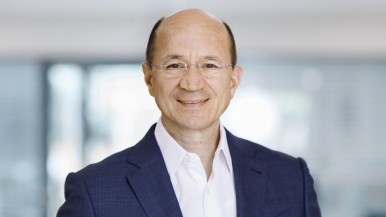
Stuttgart – Prof. Christof Ehrhart (60) is leaving Bosch on December 31, 2026, at his own request to pursue commitments and projects outside the company. In his capacity as the company’s head of communications, he has been responsible worldwide for internal and external communications, governmental affairs, relations with industry associations and stakeholder groups, and strategic brand management since 2019. Ehrhart can look back on three decades of leadership roles in international communications. In 2024, he received the prestigious German Image Award for the second time for his communications work at Bosch.Stefan Asenkerschbaumer, chairman of the Bosch supervisory board: “The company extends its sincere thanks to Christof Ehrhart for his many years of outstanding work and for leading the communications function for Bosch with great success during what has been a very challenging period in the company’s history. We wish him every success in his future endeavors.” Christof Ehrhart: “Now is the right time to begin the handover in the company’s communications team. I would like to thank all my colleagues at Bosch for the trust they have placed in me, and I look forward to embracing the opportunities that lie ahead.” Christof Ehrhart’s successor will be announced at a later date.

Strategy 2030: Bosch plays to its innovative strengths

16.04.2026

Press release

Business/economy

Strategy 2030: Bosch plays to its innovative strengths

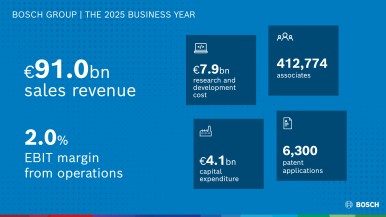
Stuttgart and Renningen, Germany – In the face of geopolitical tensions and trade barriers, the Bosch Group intends to exploit the growth prospects in its global markets with full innovative strength in the 2026 business year. The necessary upfront investments in areas of future importance are set to remain at the high level of previous years. In 2025 alone, Bosch devoted some 12 billion euros to investments in research and development and to capital expenditure. The supplier of technology and services is planning sales growth of 2–5 percent and an EBIT margin from operations of 4–6 percent for 2026. Referring to the presentation of the company’s annual figures, Stefan Hartung , chairman of the board of management of Robert Bosch GmbH, said: “As a global technology leader, we are committed to shaping the trends of automation, digitalization, electrification, and artificial intelligence, as this also paves the way for profitable growth in our business. An important prerequisite for this are the cost-cutting effects of the structural measures we have already initiated and innovations in all business areas.” When it comes to innovative strength, Bosch is one of the strongest industrial companies in the world and one of the most prolific patent applicants in Europe. Bosch registered around 6,300 patents in 2025 and was once again the leader in Germany. Despite considerable challenges, Bosch was able to achieve sales revenue of 91.0 billion euros in the 2025 business year, slightly up on the previous year (2024: 90.3 billion euros). After adjusting for exchange-rate effects, this was equivalent to 4.1 percent growth. At 2 percent, the EBIT margin from operations was below the previous year’s figure (2024: 3.5 percent). Necessary structural and personnel adjustments to increase future viability had a considerable negative impact on result in the form of provisions of 2.7 billion euros.Strategy 2030: innovation and differentiation to boost growth To achieve successful business development in an adverse global economic environment, the company must keep its costs at a competitive level. With the conclusion of talks with employee representatives on the necessary job cuts at all affected Mobility locations in Germany, Bosch is improving its future competitive position in the face of increasing price pressure. “The negotiations weren’t easy, but both sides demonstrated a marked sense of responsibility,” Hartung said. “We are now implementing the agreed measures as quickly and consistently as necessary, but also in as socially acceptable a manner as possible.” In the automotive industry, China is currently setting the standard for price levels. Hartung therefore sees the expansion of innovation leadership as a key success factor for expanding business, particularly in the automotive market, and implementing the company’s Strategy 2030, which foresees Bosch being one of the three leading suppliers in its key markets. Trade barriers and different user expectations are currently both a challenge and an opportunity for regionally adapted solutions. “In international competition, it’s not just about costs, but above all about differentiating ourselves,” Hartung said, referring to Bosch’s global footprint, which he sees as a competitive advantage. “We can adapt our offerings and supply chains to regional conditions and at the same time deliver global-level quality.” Business outlook 2026: generate financing for areas of future importance Bosch believes that the weak economic development of 2025 will continue in the current business year. High levels of uncertainty, primarily due to geopolitical developments with the as yet unpredictable effects of the war in the Middle East, are likely to continue to affect inflation and global economic output. Moreover, price and competitive pressure remains high. Nonetheless, in the first three months of the year, Bosch was able to keep its sales more or less at the previous year’s level; after adjusting for exchange-rate effects, revenue was some 5 percent higher. Bosch expects the global economy to achieve only moderate growth, at the level of recent years. “The foundation for profitable growth is our competitiveness – which is why we’re working hard to increase it further,” said Markus Forschner , member of the board of management and chief financial officer of Robert Bosch GmbH. “This strengthens our resilience in the face of upcoming challenges and at the same time boosts our investment capacity for the future.” In light of strategic opportunities and as a financial precaution, Bosch is expanding its scope accordingly: to ensure it will be able to issue financial instruments such as bonds more flexibly during the year, the company will for the first time publish interim consolidated financial statements and an interim group management report for the first half of the current business year. On this point, Forschner said: “This improves our ability to access the capital markets, even though we already have a strong capacity to finance our business from our own resources.” Sensor technology as an innovation field: automation and robotics secure sales Bosch is driving forward numerous innovations in microelectronics and sensor technology and expects its consistent focus on technology that is “Invented for life” to provide considerable growth impetus. Experts suggest that the global market for sensors could be worth more than 440 billion U.S. dollars by 2031. Bosch stands to benefit from growth in the potential applications: the company’s sensors are playing an increasingly important role in robotics. The BMI5 sensor platform, for example, creates artificial environments extremely realistically and helps robots find their way around even under difficult conditions. With this, its most powerful sensor solution to date, Bosch considers itself well positioned for a rapidly growing segment. In the field of automated driving, inertial sensors are regarded as a key component of the future and offer additional sales potential. They enable cars to maintain full awareness of their whereabouts even when camera or GPS signals aren’t available. “These sensors work for an automated car in much the same way as the sense of balance does in the human inner ear,” Hartung said. According to analysts, the market for intelligent sensors in automotive applications is set to almost double to more than 80 billion U.S. dollars by the middle of the next decade. Innovations in the field of mobility: algorithms and powertrains boost growth Bosch expects the market for automotive software to be worth around 200 billion euros by 2030. As a result, Bosch chairman Hartung sees great growth opportunities in software-defined mobility. “Bosch is at the forefront in this area and is now literally bringing AI into the driver’s field of vision,” Hartung said. The new Bosch AI Extension Platform is an AI-capable high-performance computer that, in conjunction with an interior sensing solution, turns driving into a highly personalized experience. “The vehicle recognizes who’s at the wheel and detects whether there are any other passengers on board, then adjusts everything: from the exterior mirrors and vehicle handling to optimized airbag deployment in the event of an accident.” Product innovations in intelligent driver assistance solutions are also generating new business across all regions of the world: together with sensor technologies and central vehicle computers, Bosch secured orders worth 10 billion euros in 2025. “Of course, the cars of the future will need not only algorithms but also powertrains,” Hartung said with regard to the growing business with electromobility. “This year alone, we will deliver more than 7 million solutions and components for electric driving.” Just a few weeks ago, Bosch announced a joint venture with Tata AutoComp Systems in India. Starting in the middle of the year, it will focus on the development, manufacturing, and sale of electric axles and motors in the Indian market. Innovations in the field of consumer goods and services: AI is driving business forward AI is providing significant growth opportunities in the services and product business as well. For example, a new oven model with an AI-based voice function is securing new sales potential for the BSH Hausgeräte division. No external loudspeakers or additional apps are required. Overall, the worldwide business with home appliances in the luxury and premium segment is expected to continue to grow, particularly in North America. Market experts estimate that global sales of home appliances will reach around 5 billion units by 2030. The use of AI is also driving product innovations in the Power Tools division. Since the start of the year, the first 30 tools in the Expert product line have been on the market and setting new standards for professional power tools. These include a new wall scanner that locates objects in different types of wall and uses Bosch radar technology in combination with AI object detection for the first time. Bosch’s services business is also benefiting from AI: The Bosch Global Service Solutions division also expects double-digit average sales growth by 2030 thanks to AI-based applications. Its service portfolio includes solutions for digital mobility services such as eCall and breakdown assistance as well as offerings for fleet operators and logistics providers. The 2025 business year: stable financial strength, liquidity, and R&D ratio Bosch achieved a positive free cash flow of some 300 million euros in 2025 (2024: some 900 million euros). The R&D ratio stood at 8.7 percent of sales (2024: 8.6 percent). Expenditure on research and development amounted to 7.9 billion euros. “Even in difficult times, Bosch is prepared to make substantial upfront investments,” Forschner said. “Capital expenditure remained at a high level." Bosch made considerable upfront investments in areas such as electromobility, semiconductors, and state-of-the-art braking control systems. At 41.6 percent, the equity ratio also remained high (2024: 44.3 percent). The Bosch Group continues to be financially solid, even though liquidity as per the consolidated statement of cash flows fell to 7.4 billion euros (2024: 8.2 billion euros). The 2025 business year: development by business sector Sales development in the business sectors was held back both by the subdued economy in focus markets and by negative currency effects. The Mobility business sector recorded an increase in sales revenue of 0.1 percent to reach 55.8 billion euros. After adjusting for exchange-rate effects, this was equivalent to 2.9 percent growth. The EBIT margin from operations came to 1.8 percent (2024: 3.8 percent). In the Industrial Technology business sector, sales rose by 0.1 percent to 6.5 billion euros. Adjusted for exchange-rate effects, the increase was 2.4 percent. The main reason for this was the downward trend on the North American market. The EBIT margin increased to 3.5 percent (2024: 1.2 percent). In the Consumer Goods business sector, sales revenue fell by 1.9 percent year on year to 19.9 billion euros. Adjusted for exchange-rate effects, however, sales increased by 4.1 percent. The consumer goods business suffered in particular from a lack of impetus from the construction industry in China and the U.S. The EBIT margin from operations was 3.0 percent (2024: 3.5 percent). The Energy and Building Technology business sector generated sales of 8.5 billion euros. This is an increase of 13.0 percent, or an exchange rate-adjusted 15.6 percent. The EBIT margin from operations was 0.5 percent (2024: 4.9 percent). This was heavily influenced by one-off costs from acquisitions and sales activities. The 2025 business year: development by region While sales revenue in Europe declined slightly, Bosch recorded slight increases in the other regions of the world. In Europe, sales revenue fell by 0.6 percent year on year to 44.2 billion euros – but grew by 1.5 percent after adjusting for exchange-rate effects. In the Americas , sales revenue increased by 3.8 percent to 18.5 billion euros, or by 9.3 percent after adjusting for exchange-rate effects. In Asia Pacific , sales increased by 0.7 percent to 28.3 billion euros. Adjusted for exchange-rate effects, the growth rate amounted to a significant 5.0 percent. The 2025 business year: development of headcount At the end of 2025, worldwide headcount in the Bosch Group stood at 412,774 associates (2024: 417,859), a reduction of around 1 percent (5,085 associates). This had the greatest impact on the Mobility business sector and regionally on Germany.

Developing forward: Bosch is focusing on speed and global innovative strength

16.04.2026

Press release

Business/economy

Developing forward: Bosch is focusing on speed and global innovative strength

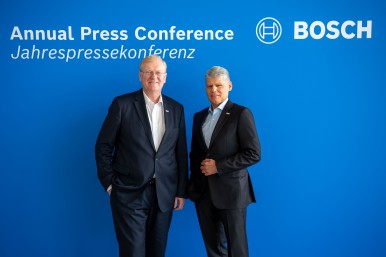
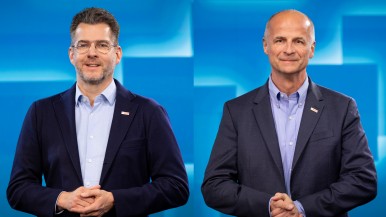
Stefan Hartung, chairman of the board of management of Robert Bosch GmbH, and Markus Forschner, member of the board of management and chief financial officer, at the annual press conference on April 16, 2026 Check against delivery.Ladies and gentlemen, “For tomorrow. Today.” – That’s precisely what we’re here to talk about. Today, we’ll talk about the future. We’ll talk about new technologies, pioneering innovations, and strategic partnerships. We’ll talk about the right response to geopolitical challenges and the mobility of tomorrow. About AI and customer proximity, about software and sensors, and about the next generation of home appliances. In other words, we’re talking about everything that will shape our company in the coming years and – more importantly – will allow it to grow. And with that, I warmly welcome you to our press conference here in Renningen. However, just because we’re focusing on our opportunities and strengths today doesn’t mean that we’re ignoring the present. It’s too early to give the all-clear. These challenges still exist and are still considerable – even for our company. There are still too many bureaucratic and regulatory shackles, too many question marks in global politics, and too little demand in many of our core markets. But one thing’s becoming increasingly clear: our answers to these challenges are the right ones. Bosch can deliver the future – even under unfavorable conditions. We’ve worked hard to achieve this confidence. As you know, we had to make some very painful and, for many of our associates, momentous decisions in the past financial year. However, the only way for us to persevere in an increasingly competitive environment is to reduce and streamline our costs and structures – not only in the short term, but in the long term. Last year’s figures show a clear need for action. In total, we generated sales revenue of 91 billion euros, which is roughly the same as in 2024. Our EBIT of around 2 percent was below the previous year’s level and also below our expectations. My colleague Markus Forschner will provide you with the detailed figures later on. But for right now, I can share two conclusions: one, our result is still within the acceptable range against the backdrop of challenging operating conditions and extraordinary burdens. And two, it’s clear that we need to further improve our profitability and competitiveness. However – and this brings us back to the aforementioned confidence – we’ve already made noticeable progress in 2025 and in the first few months of this year. I’d like to briefly present the five most important developments: First, we’ve reached agreements with employee representatives at all affected German Mobility locations regarding further local developments. By their very nature, the negotiations weren’t easy, but both sides demonstrated a marked sense of responsibility – and their efforts ultimately bore fruit. We’ve spent a lot of money on these agreements, including out of a sense of fairness toward the associates affected. However, any further delay would have cost significantly more in the long run and increased uncertainty for everyone involved. And even though it will still take some time before the measures take full effect, we must implement them now – as quickly and consistently as necessary, but also in as socially acceptable a manner as possible. Second, we won a record number of new orders in our Mobility business sector last year. Especially with our ADAS product family, by which I mean our intelligent driver assistance systems, we’ve been awarded a large number of strategically important projects. The situation in electrification is similar: a premium manufacturer has placed a major order with us for e-axles, and several other manufacturers from all over the world also rely on our solutions in this area. This was an outstanding achievement by all colleagues involved, especially given the circumstances. At the same time, this success is closely linked to my first point: these projects will really pay off only if we can operate efficiently enough. This is because global prices in the automotive industry are increasingly based on just one standard, and that’s China’s. However, despite all the challenges – and this brings me to my third point – I’m convinced that we will help shape the new automotive world just as much as we did the previous one. For years, we’ve been working intensively on the three major trends in the industry: automation, electrification, and software-defined mobility. The cars of the future will be more technologically sophisticated – and that’s just right for Bosch. Because what we’re particularly good at is connecting mechanics, electronics, and software into a single intelligent system. The car will become a fully immersive experience. Over the past few months, we have systematically expanded precisely those strengths that will be needed for the mobility of tomorrow. These include close ties with our customers through reliable partnerships and joint system developments. Or our unique breadth of technologies, which span the entire vehicle lifecycle and are increasingly being improved and expanded by AI. Economies of scale also remain extremely important. One thing in particular is becoming more and more clear: our special combination of thinking globally and acting locally is a decisive advantage in a geopolitically fragmented world. This is because trade barriers and different user expectations increasingly require regionally adapted solutions. The future belongs to those who can adapt their portfolios and supply chains to regional conditions – and still deliver world-class quality. And that’s exactly what we do: we transfer innovative, efficient solutions from our lead markets to the whole world – in exactly the way our customers expect us to. It’s yet another reason why we’re the number one supplier in the highly competitive Chinese market. This global presence brings me to my fourth point, namely, how it shapes our business outside the automotive segment. No other area is currently growing more strongly than our Energy and Building Technology business sector. The Bosch Home Comfort Group in particular is in the midst of many changes. With the acquisition of Johnson Controls and Hitachi’s heating, ventilation, and air-conditioning business, or HVAC for short, we’ve reached a milestone that strengthens us significantly in terms of both technology and our regional presence. The division has almost doubled the number of its plants to 33, and currently operates 26 development centers. This means the Bosch Home Comfort Group is close to customers around the world and can adapt its range to local requirements at any time. Electrification is merging heating and cooling – anyone wanting to be part of this shift has to be globally and broadly positioned. That’s us. Despite difficult conditions, the division was able to significantly increase its market share last year thanks to the strong growth for heat pumps in Europe. We expect a gradual revival in the market this year and then long-term growth starting in 2027, particularly in North America. Bosch Global Service Solutions, our division for connected services in the areas of mobility and monitoring, is also doing extremely well at the moment. Here, too, we received more orders last year than ever before. These include solutions for digital mobility services, such as eCall and breakdown assistance, as well as services for fleet operators, logistics providers, and building managers. We expect on average double-digit sales growth in this division up through 2030, due in part to our heavy focus on AI-based applications and innovations. And to give rise to more growth stories like this, we’ve recently established our subsidiary Bosch Business Innovations. Its mission is to systematically develop new business areas for Bosch outside the current core business. We’re supporting these efforts by investing some 200 million euros. Up to ten business ideas are to be validated and implemented in initial structures just by the end of this year. Our goal for 2030 is even more ambitious: by then, we want to have successfully established more than 20 startups together with experienced venture studios, external founders, and investors. Initial areas of focus include software-controlled manufacturing, the field of remote medical monitoring, and the capture, use, and storage of CO 2 . This brings me to the fifth and perhaps most important success factor: we’re working on hardly anything right now as hard as we are on our innovative strength. This is the most important currency we have. In international competition, it’s ultimately not just about costs, but above all about differentiating ourselves. To achieve this, however, we have to develop solutions even faster and then just as quickly convert them into products and sell them. We’ve made excellent progress here, as some of you have already seen on the tours this morning. Later on, I’ll explain a few examples in more detail, including one solution that could potentially save many lives – and another one that already does. Before that, however, our chief financial officer Markus Forschner will now present the key business figures to you in detail.... Markus, if you please... Markus Forschner: Ladies and gentlemen, I too would like to welcome you to the Bosch annual press conference. As Stefan has already said, we see considerable opportunities for Bosch and are determined to seize them. The foundation for future profitable growth is our competitiveness – that’s why we’re continuing to work hard to improve it. In 2025, we set an important course and introduced further comprehensive actions to improve efficiency and profitability. 2026 will be dominated by their implementation, and our plan is for them to take effect quickly. This also strengthens our resilience to future challenges. After all, we must continue to prepare ourselves for an environment of great uncertainty. But before we look ahead, let’s first take a look back at the 2025 financial year. The global economy proved remarkably resilient in 2025 despite considerable uncertainty. Growth plateaued at a moderate level, however, and economic momentum in our focus markets remained weak. In 2025, we were faced with a complex interplay of various negative factors – volatile trade policy, unfavorable currency effects, and increased competition. We held our own in an adverse environment and were able to increase the Bosch Group’s sales revenue to 91 billion euros. This represents a nominal increase of 0.7 percent, or 4.1 percent when taking exchange-rate effects into account. The 1.2 billion euros in sales revenue from the acquisition in the HVAC sector has had a positive impact. That meant our Energy and Building Technology business sector recorded growth of a very pleasing 13 percent – despite the sale of the building technology product business in mid-2025. Even adjusted for these portfolio changes, the sector achieved growth, in spite of subdued construction activity and regulatory uncertainties in the heating market. In the Mobility business sector, nominal sales revenue remained roughly at the previous year’s level. Adjusted for exchange rate effects, there was growth of 2.9 percent. One of the main reasons for this was the continued weak environment in the vehicle market, particularly in Europe, where the business sector generates a large portion – more than 40 percent – of its sales revenue. Although sales in areas of future importance such as electromobility and automated driving developed positively compared to the previous year, they fell short of our planning. Industrial Technology’s sales revenue also remained near the previous year’s level, due primarily to the downward trend in the North American market. The lack of momentum from the construction industries in China and the U.S. was particularly noticeable in Consumer Goods, where we recorded a nominal 1.9 percent decline in sales revenue, although it was an increase after adjusting for exchange-rate effects. From a regional perspective, sales revenue in Europe fell by 0.6 percent, while the other regions of the world posted slight increases – 3.8 percent in the Americas and 0.7 percent in Asia Pacific. Exchange-rate effects had a negative impact on global sales revenue totaling 3.1 billion euros. EBIT from operations also came in below our expectations, falling to 1.8 billion euros. The EBIT margin from operations came to 2.0 percent, following 3.5 percent the previous year. One of the main reasons for this is restructuring expenses of 2.7 billion euros, which are mainly in the form of provisions. Exchange-rate effects, lower contribution margins, and higher or additional customs duties also had a negative impact. Overall, this results in a picture that is strongly influenced by special and one-off effects beyond our actual business development. Profit before tax fell to 0.5 billion euros, compared with 2.7 billion euros in the previous year. After taxes, result was negative at −0.4 billion euros, compared with 1.3 billion euros in the previous year. Despite the decline in result, we once again achieved a positive free cash flow of 0.3 billion euros in 2025. Liquidity according to the consolidated statement of cash flows remained high at 7.4 billion euros, as did the equity ratio of 41.6 percent. Bosch is therefore standing on a stable financial foundation, even in challenging times. We’re pleased to say that all our business sectors made a positive contribution to result: Mobility with 1.8 percent of sales, Consumer Goods with 3.0 percent, Industrial Technology with 3.5 percent, and Energy and Building Technology with 0.5 percent. In addition to restructuring costs, which impacted all sectors, Energy and Building Technology also saw one-off costs due to our acquisitions and sales activities that had a negative effect on result. The number of associates worldwide fell by some 5,100 to around 412,800 in 2025, a decline of 1.2 percent. Adjusted for consolidation- and method-based effects, the operational workforce reduction amounts to around 15,000 associates, affecting the Mobility business sector and Germany the most. This shows that we are making good progress in implementing the socially responsible measures. Even in difficult times, Bosch is prepared to make substantial upfront financial investments. Capital expenditure remained at the high level of 4.1 billion euros, albeit lower than it was the previous year. In 2025, we once again made targeted investments in numerous projects of future importance, with a focus on semiconductors, sensors, modern braking control systems, and electromobility. Bosch’s expenditure on research and development amounted to 7.9 billion euros, or 8.7 percent of sales. Ladies and gentlemen, what awaits us in the current financial year? Business and the economy will continue to be characterized by considerable uncertainty in 2026. Geopolitical tensions are escalating, national interests are increasingly putting the brakes on free trade, and this is putting a strain on the global economy. The impact of the war in the Middle East on inflation, global economic output, and the delivery of energy resources cannot yet be estimated. It also remains to be seen how the U.S. Supreme Court’s decision will affect future customs and trade policy and what claims will arise for reimbursement of tariffs. At present, we expect global economic growth to remain at the moderate level of previous years. Asia Pacific is once again expected to record the highest growth rates, although we anticipate a slowdown. This is due particularly to China’s structural challenges, for example in the real estate industry or demographic trends. In the U.S., we’re likely to get a boost from strong momentum in artificial intelligence and a more expansive monetary and fiscal policy. Increasing government spending on infrastructure and defense is also supporting growth in Europe. However, it will probably remain subdued, especially because the necessary reforms for greater competitiveness are being implemented only slowly, particularly in Germany. Markets remain demanding and implementing our growth targets is challenging. The price and competitive pressure is palpable. Nonetheless, in the first three months of this year, we were able to keep our revenue more or less at the previous year’s level, and increased it by some 5 percent after adjusting for exchange-rate effects. We’re confident that we can exploit the potential in our markets – with innovative strength, a high degree of technological expertise, and global positioning that puts us close to our customers. Despite the unfavorable environment, which is intensifying competition and hampering growth opportunities, we aim to increase the Bosch Group’s sales by 2 to 5 percent in 2026. We expect growth in all business sectors, mostly in Energy and Building Technology with double-digit growth driven especially by the newly acquired business. Industrial Technology is likely to make solid gains by tapping the potential offered by advancing automation and electrification. Despite a probable decline in vehicle production, we’re forecasting a slight increase in sales for Mobility, and in Consumer Goods as well. For 2026, we anticipate a major improvement in result with an EBIT margin from operations of between 4 and 6 percent of sales. One reason for this is that special effects, such as the high provisions of the previous year, no longer affect us to the same extent. In addition, the restructuring actions are gradually having a positive effect on result. Even if we don’t reach our target margin of 7 percent in 2026, we’re on the right track and are making great progress. Profitable growth also requires financial leeway. We want to tap into this primarily from our own resources, but also by using the capital markets. Previously, we could issue financial instruments such as bonds during the year only for a limited period once our consolidated financial statements were available. Now, however, we intend to make our access to the capital markets much more flexible in the future. For this reason, this year we’re publishing interim consolidated financial statements and an interim group management report for the first time. This improves our ability to access the capital markets, even though we have a strong capacity to finance our business from our own resources. Ladies and gentlemen, as you can see, we’re working hard to improve our financial robustness and competitiveness, as this will enable growth and secure our future. And now I’ll hand back to Stefan Hartung. Stefan Hartung: Thank you, Markus! The figures clearly show once again that we will have to continue with a two-pronged approach for the foreseeable future. The first prong is to secure and optimize our core business. And the second is about carefully selecting growth areas and opening them up quickly. One finances the other, and both together secure our future. In both areas, the fuel is the same: innovation. That’s why I’m so very proud of all the innovations that our associates have developed, tested, improved, and brought to the market over the past few months. The spectrum is huge and ranges from highly specialized quantum sensors to products such as the first BSH oven with an AI-supported voice function. The oven requires no external loudspeakers and no additional apps, but responds quickly and precisely to simple commands – right up to voice-controlled opening of the oven door. The smallest Bosch products, on the other hand, are barely visible to the naked eye, but have long since established themselves as lifesavers. I’m talking of course about our sensors. For example, sensors built into a smartwatch can detect if the wearer takes a sudden fall, so that an alarm can be triggered in good time. Another example is pressure sensors, which help rescue teams find and treat people seeking help more quickly. These sensors work even in high-rise buildings, as they can indicate height differences down to a few centimeters. It’s estimated that this function saves thousands of lives in the U.S. alone – every year. Bosch sensors are also playing an increasingly important role in consumer electronics and robotics. They make artificially created environments look extremely realistic, they stabilize the images from smartphones and action cameras, and they help robots find the right path even under difficult conditions. The different variants are based on the BMI5 sensor platform, our most intelligent, most accurate, and most powerful sensor solution to date – ideally suited for a rapidly growing sector in which Bosch is the market leader. And there’s another emerging technology that depends heavily on smart sensors: automated driving. One example here is our range of inertial sensors, including the SMU300. This sensor works for an automated car in much the same way as the inner ear works for us: all rotations and inclines are recorded with the utmost precision and processed into something akin to a sense of balance. It allows the car to maintain full awareness of its whereabouts even when camera or GPS signals aren’t available. The portfolio encompasses individual sensors as well as customized solutions, such as our IMU-Integrated. Such solutions play a key role in the success of our ADAS product family. As mentioned earlier, the demand here is particularly encouraging to see. In 2025 alone, we won orders worth 10 billion euros for intelligent driver assistance systems across all regions of the world. These include software solutions as well as central vehicle computers or products: for example, camera systems, high-precision radar sensors, and ultrasonic sensors that not only help with parking, but also detect whether the road is wet or dry and send corresponding signals to the assistance systems. Of course, the future of mobility also includes the integration of artificial intelligence into the entire lifecycle of the car – from its manufacture to regular software updates. Bosch is at the forefront in this area and is now literally bringing AI into the driver’s field of vision. Our new AI-controlled cockpit is a mixture of assistant, navigator, and chauffeur – it can advise, give warnings, and even think for itself. This is because behind the AI-powered cockpit is an AI-enabled high-performance computer that actively supports the driver, be it with appointment management, route planning, or the predictive search for a parking space. In conjunction with our interior sensing solutions, the AI-powered cockpit can turn driving into a completely new, highly personalized experience. The vehicle recognizes who’s at the wheel and detects whether there are any other passengers on board, then adjusts everything accordingly: from the exterior mirrors and vehicle handling to optimized airbag deployment in the event of an accident. Buttons and touchscreens are increasingly being supplemented by gestures and “normal” speech: the interface between person and machine is shifting more and more in the human direction. In the future, parking the car will require just one voice command before the AI-powered cockpit steps in to handle everything else – all that’s left for you to do is get yourself out of the car. At the same time, interior recognition is crucial for automated driving, as this is the only way the car can determine whether a person is really in a position to take over the wheel again. In this respect, all these functions aren’t just some fun gimmick. On the contrary: taken together, they can make driving considerably more convenient and, above all, safer. This is particularly true when other functions are available in the vehicle – for example, our Vehicle Motion Management, which is already used by more than 20 manufacturers worldwide. This software handles central control of brakes, steering, powertrain, and chassis. The individual systems are optimally coordinated with each other, exactly as the driver wants them to be. On command, the vehicle switches from smooth to sporty or vice versa. But not in the same way as the usual changes between driving modes; instead, in such a way that you think you’re sitting in a completely different car. Things get really exciting when you combine our Vehicle Motion Management with intelligent driver assistance systems, like in the new automated emergency steering function. As soon as an obstacle is detected, the system automatically and precisely initiates an evasive maneuver without compromising the vehicle’s stability – even at speeds of up to 100 kilometers per hour. Bosch worked with a Chinese vehicle manufacturer to make this function ready for volume production within six months. The next safety features are already in the test phase – including an almost revolutionary lane-keeping support system. Truly, technology that’s “Invented for life.” All this is complemented by our by-wire systems for brakes and steering. Steer-by-wire, for example, replaces the mechanical connection between the steering wheel and the steering mechanism with electrical signal lines. With these in place, when the lane-keeping support system helps the driver react, the steering wheel remains completely still – no distracting movements, no irritating shaking. At the same time, the driver retains full control and a secure steering feel at all times. Our customers were able to experience for themselves how precisely, quickly, and sensitively our system operates during the recent winter tests in northern Sweden. All these solutions are key technologies on our path toward automated driving and software-defined mobility. But here, too, any players looking to break into new worlds quickly and deeply would do better to seek out strong partners. Almost all the functions I’ve just presented to you require one or more systems on a chip, meaning chips on which all essential signals from driver assistance and infotainment converge. We work closely with partners such as Qualcomm, Nvidia, Renesas, and Horizon Robotics to ensure that our technologies are perfectly matched to the respective chips. The volumes we’re talking about here are enormous: for example, as part of a strategic partnership, we’ve already delivered more than 10 million digital cockpit computers with a Qualcomm system on a chip. This also applies to three major orders for cockpit and ADAS integration platforms that we’re currently implementing for manufacturers worldwide. Of course, the cars of the future will need not only algorithms but also powertrains. We’re hard at work on this as well; for example, in electromobility. The most recent example is our new joint venture with Tata AutoComp Systems in India. Together, we want to focus on developing, manufacturing, and selling e-axles and electric motors in India, with operations scheduled to start by the middle of this year. No other company is as globally positioned in electromobility as Bosch, and we’re growing in all core markets. This year alone, we will deliver more than 7 million solutions and components for electric driving. Our customers – more than 50 worldwide – are increasingly relying on highly integrated systems, some of which go far beyond the classic e-axle. That’s why we’re bundling the motor, power electronics, transmission, and other components, such as the entire energy management system, into a single unit. Doing so will save space and cut costs. Such a solution will go into volume production this year. The further development of the other powertrains in our portfolio depends not only on our innovative strength, but on political decisions as well. Take hydrogen, for example. We’ve just introduced a new version of our fuel-cell power module that is particularly suitable for buses in city traffic. With the solution, the vehicles can be powered electrically and – when using renewable hydrogen – even completely carbon-free. Hydrogen remains a key growth field for us – also because the EU’s climate and resilience targets can hardly be achieved without it. In this respect, it’s regrettable that politicians aren’t doing more to drive hydrogen technology forward, or that they at least refrain from the use of some restrictive requirements. There’s currently no market for it in Europe, so we regularly review our strategy in this area. Nevertheless, we’re making upfront investments and advancing both the production and use of hydrogen. In March, we put an electrolysis stack into operation at our Farmington Hills site in the U.S., and a similar system has been running at our Bamberg plant since November. And since October, a filling station in California has enabled even heavy-duty trucks to fill up their hydrogen tanks in under ten minutes – thanks to a Bosch Rexroth CryoPump station. We also see a need for political action in the area of conventional powertrains. The European Commission’s proposed change to the CO2 limits won’t be enough to secure investment, value creation, and, in particular, jobs in Europe. That’s because efficient combustion engines will remain important for a long while yet. We expect that around 50 percent of all new vehicles worldwide will still have a combustion engine on board in 2035; roughly half of these will be powerful hybrids. For Europe, this means that if we limit ourselves exclusively to battery-electric powertrains, we’ll forgo about half the global market – and thus the corresponding jobs and skills. Excessive regulation would therefore affect the European industry right at its very core. This can be avoided only if we make use of all available technologies during the transformation. We need battery-electric powertrains, hybrids, range extenders, and efficient combustion engines with renewable fuels. We want to play a major role here with our solutions in the combustion and hybrid businesses – our expertise in these areas has always been in demand worldwide. It is therefore welcome news that the federal government intends to maintain favorable and reliable conditions for plug-in hybrids and continue to permit vehicles powered by renewable fuels. This also applies to the Mobility Aftermarket, meaning our workshop business, which serves both technology worlds – electric and conventional powertrains – exceptionally well. Our ESI[tronic] diagnostic software is used some 55 million times a year worldwide. This puts us in an excellent position for the future, as access to the vehicle after delivery is increasingly becoming a strategic advantage, especially in the age of software-defined mobility. The division also provides an excellent example of how we strive for sustainability by combining economy and ecology. We’ve established services for the circular economy in almost all areas of business. And our workshop division does this particularly well: with the “eXchange” program, it generated around 400 million euros in 2025. By 2030, we expect sales revenue to rise to 1 billion euros. Ladies and gentlemen, these many examples have made one thing strikingly clear: Bosch is in a good position. 2026 will be a year of new beginnings. We also have clear goals beyond this: we want to be among the top three companies in all our key markets. We want to achieve an average annual increase in sales of 6 to 8 percent. And we want to generate a margin of at least 7 percent. In the current situation, this will take a little longer than expected. But we are still convinced that we will achieve these goals fairly soon. Our innovative strength is among the best in the industry: in terms of patent applications, we’ve been number one in Germany for many years and we’re also one of the top applicants in Europe. And I have no doubt that this will continue to be the case in the future – especially with more and more applications now coming from the AI sphere. Bosch is celebrating a milestone anniversary this November. It will then be 140 years since Robert Bosch set up his “Workshop for Precision Mechanics and Electrical Engineering” in a courtyard in Stuttgart. A lot has happened since then, but some things have remained almost the same. For 140 years, we have constantly faced new challenges – and often enough, in retrospect, they have become pioneering success stories. For 140 years, we have been as robust as we are versatile, as resilient as we are dynamic, and as realistic as we are confident. For 140 years, we have repeatedly taken the initiative based on this confidence – and thus carried our history further and further into the future. So for 140 years, we’ve been living the idea of “For tomorrow. Today.” Rest assured, this will still be true when our 150th anniversary rolls around. Thank you!


Personnel change at Robert Bosch Industrietreuhand KG

26.03.2026

Press release

Business/economy

Personnel change at Robert Bosch Industrietreuhand KG

Stuttgart, Germany – The following personnel change will take place at Robert Bosch Industrietreuhand KG.Gerd Chrzanowski (54) is stepping down as a shareholder in Robert Bosch Industrietreuhand KG (RBIK), effective March 31, 2026. This is due to the increasingly overlapping business activities of Bosch and the Schwarz Group, which Chrzanowski has managed as general partner since 2021. To avoid potential conflicts of interest, both sides have agreed on this step as a precautionary measure. We regret Gerd Chrzanowski’s departure and wish to thank him for his commitment and valuable contributions. His in-depth expertise, particularly in the area of digitalization, and his strategic vision were an asset to our organization,...said Prof. Stefan Asenkerschbaumer, the managing partner of Robert Bosch Industrietreuhand KG and chairman of the supervisory board of Robert Bosch GmbH. Effective April 1, 2026, his successor as a shareholder in Robert Bosch Industrietreuhand KG will be Alexander Birken (61), chair of the supervisory board of the Otto Group. Birken moved from chair of the executive board to chair of the supervisory board at the beginning of March 2025. After graduating in business administration, he started his career at Philips Medical Systems. He joined the financial controlling division of the Otto Group in 1991, managed various companies in the Group, and was appointed chair of the executive board in 2017. He has worked for the company for more than 35 years and brings extensive experience to his new role. About Robert Bosch Industrietreuhand KG The RBIK industrial trust carries out the entrepreneurial ownership functions at Robert Bosch GmbH. The role of the trust is the result of the distinctive corporate constitution of Robert Bosch GmbH, which safeguards the legacy of the company founder Robert Bosch. While the majority of voting rights are held by Robert Bosch Industrietreuhand KG, the majority of the share capital in Robert Bosch GmbH is held by Robert Bosch Stiftung GmbH, a limited liability company with a charitable purpose. However, the latter company has no influence over the Bosch Group’s strategic and business orientation. This special ownership structure of Robert Bosch GmbH guarantees the entrepreneurial freedom of the Bosch Group, making it possible for the company to plan over the long term and to undertake significant upfront investments in the safeguarding of its future.

Personnel Changes in the Board of Management of Bosch Power Tools

20.03.2026

Press release

Business/economy

Personnel Changes in the Board of Management of Bosch Power Tools

Stuttgart/Leinfelden – Bosch Power Tools is regrouping its Board of Management, effective April 1, 2026: Michael Budde (56), currently President of the Bosch business division Mobility Electronics, will take over as President and CEO from Thomas Donato (54). At the same time, Martin Hettich (61) will join the Bosch Group as COO of Power Tools. He will succeed Lennart de Vet (49) and assume responsibility for regions, marketing, and sales from him, as well as responsibility for the business units from Thomas Donato. Dr. Katharina Hartl (49) will continue in her present role as CFO.Thomas Donato, President and CEO of Bosch Power Tools since June 2023, will leave the Bosch Group at his own request on March 31, 2026, to pursue his professional career outside the company. Lennart de Vet will move into a new role within the Bosch Group, which will be announced at a later date. Peter Wolfangel (54) will succeed Michael Budde as President of the business division Mobility Electronics. "Michael Budde is a highly experienced Bosch leader with the ability to steer large-scale, complex businesses to success, with strategic foresight and strong execution. With Martin Hettich, we gain a proven consumer goods expert with extensive international experience. Together with Dr. Katharina Hartl, the new Board of Management will significantly advance the future development of Bosch Power Tools," says Katja von Raven, Chairwoman of the Supervisory Board of Robert Bosch Power Tools GmbH and member of the Board of Management of Robert Bosch GmbH. The market environment continues to be highly dynamic and competitive. Bosch Power Tools has responded by executing substantial restructuring and cost reduction programs over the past three years, while also investing in new products and capabilities. "Over the past three years, decisive restructuring activities and a successful pipeline of product launches have created a solid foundation for the future and thus mark an important milestone for the future development of Power Tools. We sincerely thank Thomas Donato for his contribution," says von Raven. "For nearly 25 years, Lennart de Vet has significantly contributed to the success of Power Tools across various functions, and we sincerely thank him for his contribution. We wish them both the best in their future professional endeavors. With the incoming leadership, we are aiming at driving global growth, and the new Board of Management line-up reaffirms our growth objective." The priority now is to pursue our global growth ambitions, continue implementing cost-saving measures, and thereby serve customers and users in global markets as effectively as possible. About Michael Budde Michael Budde has served as President of the business division Mobility Electronics of Robert Bosch GmbH since October 2022. He joined the Bosch Group in 1998. Thanks to his many years of experience in various fields and roles, including in the United States and South Korea, he brings two key strengths: deep business expertise in managing large, complex operations within the Bosch Group, and a proven track record of strategic direction and growth. Budde studied mechanical engineering and graduated from the Rheinische Fachhochschule Köln (RFH). About Martin Hettich Martin Hettich has more than 30 years of international experience in the consumer goods industry, particularly in strategic B2C brand positioning and differentiation. From 1994 to 2024, Hettich held a variety of leadership roles at Procter & Gamble across multiple countries. During that time, he was responsible for the successful launch and expansion of several consumer-goods brands and for increasing their profitability, most recently as Senior Vice President of Fabric Care. After leaving P&G, Hettich worked as a senior advisor, supporting consumer-goods companies in their innovation and growth journeys.

Bosch has set a course for the future in the difficult 2025 financial year

30.01.2026

Press release

Business/economy

Bosch has set a course for the future in the difficult 2025 financial year

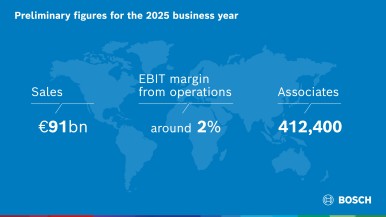
Stuttgart, Germany – Bosch, the supplier of technology and services, can look back on 2025 as an incredibly challenging financial year. According to preliminary figures 1 , sales revenue was up slightly on the previous year’s level at 91 billion euros (2024: 90.3 billion euros). After adjusting for exchange-rate effects, sales revenue grew by 4.2 percent. At around 2 percent, the EBIT margin from operations was below expectations (2024: 3.5 percent). “The economic reality is reflected in our results – 2025 was a difficult and sometimes painful year for Bosch,” said Stefan Hartung , chairman of the board of management of Robert Bosch GmbH, referring to the company’s published preliminary business figures. “In an unfavorable environment, we are continuing to work systematically on our growth strategy, which also requires us to strengthen our competitiveness. We are now setting our course for the future.” According to Hartung, Bosch plans to continue to benefit from its global presence, its strong brand, and its technological expertise. However, the company anticipates increasingly intense competition under adverse economic conditions. Bosch does not expect to see significant improvements in individual markets until 2027.The main reasons for the sluggish growth in the past financial year were the weak economic environment and the increasingly challenging market conditions. Result was negatively impacted by the lack of margins due to lower sales, as well as by increased tariffs and considerable provisions for necessary structural adjustments and the associated personnel measures. The aim of this restructuring is to ensure that the company remains economically robust, financially independent, and secure for the long term. To achieve this, Bosch still needs to generate annual sales growth of 6 to 8 percent with a margin of at least 7 percent. Given the current environment, the company now assumes that it will begin achieving its target margin of 7 percent in 2027 at the earliest, instead of in 2026. Competitiveness: Narrow the cost gap, strengthen investment capacity Bosch continued to systematically pursue its long-term Strategy 2030 over the past year. In addition to achieving the target margin, the strategy stipulates that the company must be one of the three leading providers in its key markets in all regions of the world. This currently requires competitive cost levels and demand-oriented capacities in particular. “We are working hard on our material costs, we are making even more intensive use of AI to increase our productivity, and we are weighing up every investment even more carefully than before,” Hartung said. “And yet, to secure our competitiveness and investment capacity in the long term, we need to do much more to reduce our personnel expenses and streamline our organization.” Above all, the structural shift toward electromobility and the extremely high price and competitive pressure in the global automotive industry is resulting in an annual cost gap of around 2.5 billion euros worldwide in the Mobility business sector alone – in relation to the target margin for the business. As a result, last year Bosch announced it needed to cut about another 13,000 jobs. Hartung emphasized that the board of management was aware of the implications of these decisions and was taking associates’ concerns seriously. “But even a foundation-owned company has to keep an eye on securing its existence and cannot ignore business realities.” He went on to say that Bosch aims to implement these unavoidable measures in close consultation with employee representatives and in as socially acceptable a manner as possible, even if that initially incurs high costs. Strategy 2030: Innovations and acquisitions will create business opportunities Despite the adverse environment, Bosch sees great opportunities for a business revival in many market segments. “We assume that market momentum in the crucial field of software-driven mobility will initially be restrained, but will then accelerate significantly, especially in the coming decade,” Hartung explained. The Vehicle Motion Management software for the central control of brakes, steering, powertrain, and chassis is already being very well received on the market, Hartung said. Last year, the supplier of technology and services was able to win customer orders for solutions for automated driving, the requisite sensor technology, and central vehicle computers worth 10 billion euros, and thus hold its own in global competition. The ongoing integration of the newly acquired areas in the HVAC solutions business ensures strong growth prospects: Bosch Home Comfort aims to nearly double its sales revenue to 8 billion euros in the medium term and is now one of the world’s largest suppliers in the market for heating, ventilation, and cooling in residential and light commercial buildings. The Power Tools division has accelerated its product development processes, thereby reducing time to market by an average of two months. As part of an innovation offensive, Power Tools plans to launch around 2,000 new products by 2027. Bosch is also systematically expanding the use of AI in all divisions. At the recent U.S. electronics trade show CES, it presented an AI-enabled high-performance computer for making the AI-controlled car cockpit a reality. By the end of 2027, the company plans to have invested a total of 2.5 billion euros in AI, which is already in use throughout the company. Europe as a business location: Technological skepticism jeopardizes prosperity When it comes to regional competitiveness, Bosch believes Europe has tremendous potential – provided policymakers and society can overcome the existing skepticism toward technological progress. Hartung expressed his concern regarding the latest results of the Bosch Tech Compass , a survey that reports on how people in key industrialized countries feel about new technologies. According to the survey, less than two-thirds of Germans believe that technological progress has a positive impact, and in France, the figures are even lower. “This is highly alarming,” Hartung said. “The only way a country, a society, can survive in global competition is if there is at least sufficient will to make technological progress.” To achieve this, businesses, society, and policymakers need to actively engage with new fields of technology such as hydrogen and AI with greater courage and decisiveness. As one of the most innovative companies in the world, Bosch has a role to play here. It is one of the most prolific patent applicants in Europe, having filed more than 2,000 patent applications in the field of AI alone since 2018. With regard to protectionist policies, Hartung sees a need for action in Europe and calls on legislators to introduce targeted local content rules. This could make today’s clearly distorted competition fairer again. Business developments in 2025: Global economy slows down sector sales The difficult situation in various Bosch focus markets had an impact on sales development in the business sectors. “Bosch, too, clearly felt the effects of 2025’s weak global economy,” said Markus Forschner , member of the board of management and chief financial officer of Robert Bosch GmbH. “Yet despite considerable uncertainties and trade barriers, we’ve been able to hold our own in most markets.” At 56 billion euros, sales revenue in the Mobility business sector was up slightly year on year by 0.3 percent. Adjusted for exchange-rate effects, this represents an increase of 3.1 percent. The Industrial Technology business sector generated sales revenue of 6.5 billion euros; a marginal increase of 0.9 percent in sales meant it was able to maintain the previous year’s level, despite the difficult situation in the mechanical engineering and construction sectors. Adjusted for exchange-rate effects, this was an increase of 3.2 percent. In the Consumer Goods business sector, sales revenue fell by 1.9 percent to 19.9 billion euros. Adjusted for exchange-rate effects, however, it rose by 4 percent. The main reason for this development was consumers’ continuing reluctance to spend. The Energy and Building Technology business sector generated sales of 8.4 billion euros. Despite subdued construction activity, sales revenue increased year on year by 12.3 percent, or plus 15.3 percent when adjusted for exchange-rate effects. The acquisition of the HVAC solutions business more than offset the sale of the product business in the Building Technologies division. Business developments in 2025: Significant currency effects in regional sales The challenging conditions were reflected in regional sales development as well. “The situation remained tense in all our global regions,” Forschner said. “Our business was again weakest in Europe, while the Americas and Asia Pacific were more encouraging.” In Europe, sales revenue fell slightly to 44.2 billion euros, or a nominal 0.6 percent. Adjusted for exchange-rate effects, this represents an increase of 1.5 percent. In the Americas, sales revenue increased by 3.6 percent to 18.5 billion euros. Adjusted for exchange-rate effects, this was an increase of 9.2 percent. In Asia Pacific, sales amounted to 28.3 billion euros. This is a nominal increase of 1.2 percent, or an exchange rate-adjusted 5.6 percent. Headcount development in 2025: Headcount fell by 1 percent Worldwide, the Bosch Group employed some 412,400 associates as of December 31, 2025; this is some 5,400 (around 1 percent) fewer than in the previous year. While the acquisition in Home Comfort added associates, the necessary job cuts and the sale of Building Technologies reduced headcount. The number of associates fell furthest in Germany, where headcount fell by around 6,500 (just under 5 percent) to a good 123,100 associates. Outlook 2026: Competitive and price pressure continues to rise Bosch does not expect the situation to ease in the current financial year. The company currently expects the global economy to grow by 2.3 percent in 2026. “There are many indications of a slight slowdown in global economic growth,” Forschner explained. “Competitive and price pressure are likely to increase further and the increased tariffs will have their full impact for the first time.” Bosch expects to make significant progress with the measures it introduced to implement its Strategy 2030. “We’ll begin to see positive effects on margin once we’ve improved our cost and competitive situation,” Forschner said. “But given the subdued economy and the unfavorable environment, we will achieve our target margin of 7 percent in 2027 at the earliest.” He emphasized that work on expenditures and structures is absolutely essential in order to maintain Bosch’s position in global competition and to be able to continue financing considerable upfront investments in areas of future importance. Bosch is thus laying an important foundation for the future development of the company. 1 Rounded figures; may differ from figures published in the subsequent consolidated financial statements.

CES 2026: Bosch is shaping the future of mobility, manufacturing and technology  ...

05.01.2026

Press release

Business/economy

CES 2026: Bosch is shaping the future of mobility, manufacturing and technology ...

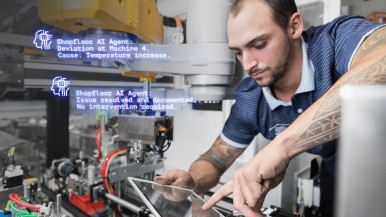
Las Vegas, NV, USA – In a world that is becoming increasingly digital, software is the invisible engine of progress. It shapes the way we communicate, work, use devices in everyday life, and produce goods. But only when it merges seamlessly with the physical world of hardware does it unfold its full potential. At CES ® 2026, Bosch is showcasing how software and hardware can work together to pave the way to a smarter future. Our many years of expertise in hardware and software enable us to bridge the gap between the physical and the digital. By integrating hardware and software, we can create intelligent products and solutions that are people centric – in other words, ‘invented for life’,...says Tanja Rueckert, member of the board of management of Robert Bosch GmbH, at the electronics trade fair in Las Vegas. Bosch is equally at home in both worlds – and we’ve built up the necessary expertise for this ourselves. That’s what our success is built on,...says Paul Thomas, president of Bosch in North America. By the beginning of the next decade, Bosch expects to generate sales of more than 6 billion euros with software and services, much of which will already be based on artificial intelligence (AI). Around two-thirds of this revenue is expected to come from the Mobility business sector. The company expects its sales of software, sensor technology, high-performance computers, and network components to double by the mid-2030s to well over 10 billion euros. Bosch continues to set the pace in the application and development of AI, too: by the end of 2027, the technology company will invest more than 2.5 billion euros in this field. AI innovations for the cockpit When it comes to the vehicles of the future, AI plays a crucial role. Bosch is already using AI to enhance safety and convenience behind the wheel. At CES ® 2026 in Las Vegas, Bosch will be demonstrating its new AI-based cockpit. This is an all-in-one system that allows the car environment to be highly personalized. The cockpit is equipped with an AI large language model that enables communication as if with a real person. It also has a visual language model that can interpret what is happening both inside and outside the vehicle. Based on this, the system can, for example, automatically search for a parking space on arrival at the destination or create meeting minutes for online meetings. At the same time, Bosch is establishing itself as a leading provider of by-wire systems, another key technology for automated and software-defined driving. These systems replace mechanical connections for brakes and steering with electrical signal lines, which opens up completely new freedoms in terms of design, safety and software control. With brake-by-wire and steer-by-wire, Bosch expects to achieve cumulative sales revenue of more than 7 billion euros by 2032. The market dynamics of this key technology will continue to accelerate in the 2030s. Reduce motion sickness – thanks to smart Bosch software Bosch’s Vehicle Motion Management software makes it possible to control the vehicle movement in all six degrees of freedom by centrally controlling the brakes, steering, powertrain, and chassis. This means the individual actuators can be better coordinated and used more efficiently. In the future, they even will be adjusted to the driver’s needs. Vehicle Motion Management can greatly reduce vehicle rolling movements in bends or pitching movements in stop-and-go traffic, which aim to prevent motion sickness – an important step on the way to autonomous driving. On that topic, Bosch presents groundbreaking technology in the combination of sensor technology and AI with its new Radar Gen 7 Premium, which is celebrating its world premiere at CES in Las Vegas. The radar sensor improves driving assistance functions such as the freeway pilot. Thanks to its special antenna configuration, it enables maximum angular precision and a very long range. For example, the sensor detects very small objects such as pallets and car tires at a distance of over 200 meters. This enables it to precisely detect lost loads or other road users even in complex traffic situations and thus trigger a suitable driving maneuver. E-bikes are also becoming safer than ever thanks to Bosch’s expertise in hardware and software: the eBike Flow app now has a new function that allows users to mark their e-bike or battery as stolen. This makes it more difficult for thieves to resell the e-bike or battery, because as soon as second-hand buyers, specialist dealers, or authorities attempt to connect to the e-bike via the eBike Flow app, they will receive a warning. Unsung heroes of digitalization: MEMS sensors No matter whether it’s a question of high-tech devices in cars, in industry, or at home: innovations rely on tiny sensors. At CES, Bosch is presenting its newest BMI5 AI MEMS sensor platform. All sensors developed on this basis are characterized by a high degree of precision, robustness, and energy efficiency. They also have integrated AI functions that can recognize movements, positions, and even contexts. One area in which these new motion sensors are used is in virtual and augmented reality applications. By tracking head movements precisely and with virtually no delay, they allow users to interact naturally in 3D environments. They also help robots recognize their surroundings and movements with high accuracy – for example, they show humanoid robots how to find the right path even when there is an object obscuring the camera lens. Bosch cooperates with Microsoft on “Manufacturing Co-Intelligence ® ” At CES ® 2026 in Las Vegas, Bosch has now announced that it would be continuing its collaboration with Microsoft. Together with Microsoft, Bosch will expand its “Manufacturing Co-Intelligence ® ” offer, exploring advancements that have the potential to revolutionize production through the use of agentic artificial intelligence. The two companies will be signing a Memorandum of Understanding (MoU) in Las Vegas. Agentic AI can interpret very large amounts of data, make largely autonomous decisions and execute tasks in order to optimize production, maintenance and supply chains. “It makes factory processes more intelligent,” says Tanja Rückert. This collaboration seeks to combine the deep industrial knowledge of Bosch in the production and industrial software sector with the leading IT infrastructure and software expertise of Microsoft. The two companies aim to make existing production processes scalable with AI-supported solutions so that factories are not only more efficient, but organizations can also relieve the burden on associates. For example, by detecting deviations in the production process at an early stage, downtimes can be minimized and production costs reduced. One of the first Bosch customers for “Manufacturing Co-Intelligence ® ” is Sick AG, a leading global manufacturer of sensors and sensor solutions for industrial applications. Revolutionary pocket-sized protection against counterfeiting Another CES highlight is Bosch’s innovative approach in the fight against counterfeit products. With Origify, Bosch presents a smart solution that gives products a digital DNA. This is a software ecosystem with a core technology for surface pattern recognition that verifies the authenticity of physical goods. Instead of relying on additional labels, chips, or codes, Origify analyzes the unique, non-replicable physical characteristics of a product’s surface and assigns it a tamperproof digital identity. Once registered in the system, the associated Detector app can enable fast and reliable verification: a live video stream of the object can be used to determine within seconds whether it is an original – or a fake. Bosch in the U.S.: growth, investment, and strong partnerships The U.S. remains an important and strategic growth market for Bosch. “Our collaboration with Microsoft is a strong example of how we’re continuing to drive growth, investment, and collaborations here in the U.S. – and it’s just one example among many,” Thomas says. In addition to its work with Microsoft, Bosch is driving forward numerous other initiatives in the U.S. market. That includes an agreement with Kodiak AI, a pioneer in the field of autonomous driving for trucks. Bosch and Kodiak AI are collaborating on vehicle-independent, redundant platforms for driverless trucks. Such a platform is a comprehensive system of specialized hardware and software that is integrated into standard trucks to give them autonomous driving capabilities. Bosch is supplying a variety of hardware components – including sensors and vehicle actuation components such as steering technologies – for these platforms. Bosch is also currently modernizing its silicon carbide wafer fab in Roseville, California. The aim is to strengthen the production of this essential technology for electromobility. Bosch Tech Compass: AI is a driving force for the future The Bosch Tech Compass, a survey of more than 11,000 people in seven countries worldwide, shows that the majority of people see AI as the most influential and most positive technology in the years ahead. A key finding is that enthusiasm for AI is growing worldwide, with 70 percent of respondents seeing it as crucial for the future. This positive attitude is accompanied by a simultaneous increase in progress fatigue. According to the Bosch survey, despite the high hopes placed in AI, there are also concerns about its negative social impact – no other technology is seen as such a potential threat to society. Overall, 57 percent would like to see a “pause button” to better understand the implications of technological development.

Bosch fuel cell power module team nominated for the Deutscher Zukunftspreis 2025

17.09.2025

Press release

Business/economy

Bosch fuel cell power module team nominated for the Deutscher Zukunftspreis 2025

Munich, Germany – A three-person development team from Bosch is in the running for the Deutscher Zukunftspreis 2025. Christoffer Uhr, Kai Weeber, and Pierre Andrieu have been nominated for the federal president’s prestigious award thanks to their work on the fuel cell power module (FCPM). The FCPM converts hydrogen and oxygen into electricity. This means that trucks worldwide can also run on electricity over long distances; if they use green hydrogen, their operation will be zero-carbon. This is an important step in the fight against climate change. After all, in the EU alone heavy commercial vehicles account for more than one-fourth of greenhouse gas emissions from road traffic – but it is impossible to imagine freight transport without them. This nomination for the Deutscher Zukunftspreis 2025 is an outstanding recognition for the Bosch team and everyone involved with the fuel cell power module. It’s also confirmation that we’re on the right track: hydrogen is indispensable for a climate-neutral world and is also a strategic business field for Bosch,...says Dr. Stefan Hartung, chairman of the board of management of Robert Bosch GmbH. “We offer scalable solutions along the entire hydrogen value chain – from production to transportation and application.” The Deutscher Zukunftspreis 2025 will be awarded in Berlin on November 19. Bosch manufactures the stack and all key system components itself With more than a thousand individual parts and weighing around 500 kilograms, the FCPM is the most complex system Bosch has ever developed in its nearly 140-year history. In addition to its centerpiece, the fuel cell stack, among the most important individual components are a hydrogen metering valve, a hydrogen recirculation pump, and an electric air compressor – everything needed to effectively transport water and atmospheric oxygen into the fuel cells for conversion into electricity. Bosch has designed each individual part to work together optimally in the overall system. Volume production of the system launched in Stuttgart-Feuerbach in mid-2023 and a little later in Chongqing, China. One thing to note is that, unlike batteries, for example, building the FCPM requires hardly any critical raw materials. Bosch can draw on decades of appropriate manufacturing expertise, such as high-speed laser welding, which is used to make the 1.2 kilometers of weld seams in each system watertight. Another major advantage is that the module is designed to fit into the space that in over 95 percent of all trucks was previously occupied by the combustion engine. For freight forwarders and logistics companies, using a truck with the Bosch FCPM is no different than with the diesel technology they are used to: with high robustness for the vehicle’s entire service life, short hydrogen refueling times, and a long range of up to 1,000 kilometers per tank. Moreover, the powertrain module enables almost whisper-quiet operation without vibrations. Bosch is committed to building a hydrogen economy Several thousand trucks with the Bosch FCPM are already on the road worldwide. In Europe and North America in particular, the further ramp-up depends on the course that politicians set. “We urgently need to start building a hydrogen economy along with the corresponding infrastructure for the production, storage, and use of hydrogen. China and India are showing us how this can be done. As an industry, we stand ready with technical solutions – the FCPM is a first building block,” Hartung says. Meanwhile, the powertrain modules already in use by customers are collecting data for further development. Each FCPM has a double existence: one in reality and one as a digital twin in virtual space. Bosch uses this to collect specific information on things like temperature, pressure profile, and wear, drawing key findings that have already been incorporated into the development of the second generation. But not just that. Bosch also uses some of the technology developed for the FCPM for other solutions. One of these involves reversing the principle of the fuel cell: instead of generating electricity from water and oxygen, the company also offers technology for electrolyzers that produce hydrogen from water and renewable electricity – in a climate-friendly way. In addition, the FCPM can power ships or, say, provide data centers with zero-carbon electricity. Bosch has already received the Deutscher Zukunftspreis three times Germany’s federal president has awarded the “Deutscher Zukunftspreis for technology and innovation” since 1997. These innovations reflect the wide range of research and development in Germany. Endowed with 250,000 euros, the prize honors outstanding research and development projects. The key factors in the jury’s decision are the degree of innovation as well as the potential to turn this achievement into sustainable jobs and create added value for society. The innovations range from medical technology, novel material development, and robotics to mechanical engineering and aerospace technology. Between 1998 and 2013, Bosch was nominated five times for the Deutscher Zukunftspreis. To date, three teams from Bosch or with Bosch involvement have received the award: in 2005 for piezo injectors, in 2008 for smart sensors, and in 2013 for ultrashort pulse lasers. Is this track record about to be extended?

Bosch wants to grow significantly faster than the market in the heating, ventila ...

01.08.2025

Press release

Business/economy

Bosch wants to grow significantly faster than the market in the heating, ventila ...

Stuttgart – The Bosch Group reaches the next milestone in its corporate strategy 2030 and is consistently focusing on growth. The company has successfully completed the largest acquisition in its history. The acquisition of the residential and light commercial heating, ventilation, and air conditioning (HVAC) business from Johnson Controls and the acquisition of the Johnson Controls-Hitachi Air Conditioning joint venture were completed as scheduled on July 31. The contracts were signed roughly one year ago. “With the largest acquisition in our company history, we are accelerating our growth, expanding our global footprint, and balancing our business by strengthening our energy and building technology – this makes Bosch more powerful and robust, in line with our corporate strategy 2030,” says Stefan Hartung, chairman of the Bosch board of management. The purchase price of 8 billion U.S. dollars (7.4 billion euros) is subject to customary adjustments. Bosch is systematically taking advantage of its opportunities and is now moving up to the Champions League in the heating, ventilation, and air conditioning solutions business....Stefan Hartung, chairman of the Bosch board of management With the acquisition, the Bosch Home Comfort division almost doubles in size to over 25,000 associates and more than 8 billion euros in sales. Bosch is thus significantly expanding its presence, especially in America and Asia, and becoming one of the largest suppliers in the market for heating, ventilation, and cooling of residential and small commercial buildings worldwide. “The entire HVAC industry is in a state of upheaval, and the market and technologies are changing. Bosch is systematically taking advantage of its opportunities and is now moving up to the Champions League in the heating, ventilation, and air conditioning solutions business,” says Hartung. Ambitious goals, strong brands With the new lineup, Home Comfort wants to grow significantly faster than the global HVAC market. According to Bosch estimates, this will increase by up to 5 percent every year until 2030. “Bosch wants to be one of the leading companies in each of its industries by 2030 and is expanding its business with strategic investments in growth areas, among other things. Acquisitions are also part of the strategy,” says Christian Fischer, deputy chairman of the board of management and responsible for strategic growth initiatives and portfolio management. “The current acquisition perfectly complements our portfolio. We can now offer our customers the entire range of HVAC technologies – from a single source and worldwide.” The acquisition also includes strategically important company investments and joint venture interests, among other things, in component manufacturers and sales partners. These investments are expected to make a significant contribution to the financial result of Home Comfort in the future. With its expanded product and brand portfolio, Home Comfort wants to better exploit the potential of its strong and established sales channels and boost sales. Integrated purchasing and the joint development of product platforms should also ensure cost savings. It is hoped that initial successes will be seen as early as 2026. The company can rely on strong brands for this: in addition to Bosch and Buderus, these now also include York in the USA and Hitachi in Asia, as well as other strong local brands. The company is acquiring long-term licenses to use the brand names for York and Hitachi. The global production network of Home Comfort will grow from 17 to 33 plants as a result of the acquisition, while the number of development sites is increasing from 14 to 26. The completion of the transaction marks the beginning of the integration of the new units into the Home Comfort division at Bosch. This should be completed by the end of 2027. The market for air conditioning solutions is growing worldwide The current acquisition means that Bosch is positioning itself much more broadly – especially for air conditioning solutions. With its large product portfolio, international presence, and the sales channels of the purchased units, the company is tapping into attractive growth prospects. According to Bosch analyses, the global market for heating, ventilation, and air conditioning systems amounted to more than 150 billion euros in 2024. Air conditioning systems alone accounted for two-thirds of this. Demand will continue to increase significantly in the coming years, owing to global warming as well as other factors. According to Bosch’s forecast, sales of air conditioning units worldwide are expected to increase to more than 200 million units per year by 2030, almost a fifth more than in 2024. “We want to help shape this market – and use energy-efficient solutions to ensure that people can make their everyday lives comfortable and healthy, even on increasingly hotter days, whether at home, at work, or while shopping,” says Frank Meyer, who is responsible for energy and building technology and thus also for the Home Comfort division at Bosch. According to calculations by the International Energy Agency from 2018, a global temperature increase of only one degree Celsius by 2050 will already increase the need for cooling worldwide by 25 percent. However, climate researchers are already anticipating significantly greater global warming. Business has a regional basis Depending on the region of the world, different technologies are in demand. In the USA, the focus is on so-called ducted systems, in which the air is routed through ducts from a central location in order to either heat or cool all rooms at the same time. In Asia, so-called ductless solutions are in particular demand, in which indoor units can heat or cool individually in each room, as well as modern air conditioning systems with so-called variable refrigerant flow systems (VRF). The commercial applications of VRF technology range from smaller commercial premises such as retail stores to large-scale projects such as hotels or hospitals. The Europe / Middle East / Africa region is characterized by large regional differences. In northern and western Europe, electrification by heat pumps and other technologies is already established or is being promoted. In the Middle East and Africa, air conditioning solutions and water heaters are in demand. In many countries of the region, the whole spectrum is offered from heat pumps via oil and gas heaters to hybrid heaters. “We have ambitious growth targets in all regions of the world. We are consistently focusing our new organization on this,” says Jan Brockmann, executive management president of Home Comfort. “By strengthening regional responsibility, we can meet customer needs even better.” In the future, Home Comfort’s business will be managed directly in the three world regions of America, Asia, and Europe / Middle East / Africa. This orientation is also reflected in the new global executive board of the division as of August 1, 2025. Jan Brockmann will become president of the future organization and at the same time will take on the role of regional president for the Europe / Middle East / Africa region. David Budzinski, previously president of residential and light commercial at Johnson Controls and CEO of the Johnson Controls-Hitachi Air Conditioning joint venture, will be appointed to the global executive board of the division. He assumes responsibility for the Americas region and becomes deputy to Jan Brockmann. Ulrich Lissmann, who is also joining the global executive board, will be responsible for Asia-Pacific. Nora Klug, previously General Counsel of the Bosch Group, will assume the role of chief people and governance officer. As chief transformation officer, Oliver Koukal will take care of the integration of the acquired business, which he has already been responsible for as project manager. The current members of the executive management Thomas Volz and Birte Luebbert will continue to be members of the global executive board. Thomas Volz will be chief financial officer, Birte Luebbert will serve as chief operating officer.

The world of AI at Bosch: These smart solutions make life safer and easier

25.06.2025

Press release

Business/economy

The world of AI at Bosch: These smart solutions make life safer and easier

Stuttgart, Germany – Artificial intelligence is everywhere nowadays. Bosch recognized the opportunities that this technology offers at an early stage and systematically introduced it into all areas of its business. And this is paying off: at present, all Bosch products either contain AI or are manufactured with its help. The company achieved this goal in 2023, two years earlier than originally planned. At the Bosch Tech Day 2025, Bosch will be showcasing smart AI solutions from across the company – from Range Control for e-bikes to wildfire detection.Oven: The intelligent Bosch Series 8 oven is equipped with sensors, cameras, and AI. With their help, the oven can recognize around 80 dishes and automatically set the optimum cooking method and temperature. And for many dishes, even the degree of browning can be individually selected. Range Control: On e-bikes, AI helps dispel range anxiety. With the AI-based Range Control feature, e-bike riders who are about to set out on a journey can use the eBike Flow app to set the battery charge level with which they would like to arrive at their destination. The support is then adjusted automatically by the smart system, taking into account factors like system weight, route elevation, and individual riding behavior. Smart AI fitness sensor: Thanks to the new smart BHI385 sensor from Bosch Sensortec, fitness trackers and smartwatches can reliably detect highly dynamic exercise routines and provide detailed feedback on their execution. The Bosch sensor is a powerful, fully programmable smart inertial measurement unit (IMU) with self-learning AI software, which allows the sensor to learn new movements. AI-based battery production: Bosch Manufacturing Solutions offers intelligent, optically guided “on the fly” laser welding that enables the seamless and highly efficient connection of battery cell terminals, supported by state-of-the-art automation and real-time data processing. Integrating optical guidance with continuous laser welding leads to faster production cycles, immediate quality feedback (thanks to real-time evaluation), and reduced maintenance. The solution combines AI-assisted anomaly detection and root-cause analysis to optimize process monitoring in manufacturing. Deep learning models monitor several signals in real time, and potential errors, inefficiencies, or deviations are detected immediately. Revol: The intelligent Bosch Revol crib can be used to monitor a child’s vital signs, such as heart and respiratory rate. Its software also signals in good time if a stuffed animal or blanket is covering the child’s airway or if the child is crying. And if the newborn is having trouble falling asleep, the crib can automatically rock it to sleep. Users can decide for themselves whether the data the crib records is ultimately stored in encrypted form on Bosch servers or remains offline within their own four walls. Prefabricated AI agents: With the Agentic AI Framework from Bosch Connected Industry, customers can easily combine AI agents into multi-agent systems and customize them. The agents are specially tailored to the needs of manufacturing operations. For example, scalable applications can be developed that help manufacturing employees use voice control to, for example, remedy machine faults, create reports, or make entries in the shift log. Multi-agent systems can also support personnel planning or software configuration. Many other applications are possible as well. Wildfire detection: A service from Bosch Building Technologies detects initial smoldering in forests, for example, before a large-scale fire breaks out. The sensors are able to “smell” smoke gases and report the danger and other relevant information via a cloud-based portal to a control center, which can quickly initiate countermeasures. In addition, Bosch can fly drones from its own control centers to the scene of the fire and provide aerial images as live video. Artificial intelligence trains the sensors and continuously evaluates information – for example, on the composition of gas combinations. Wall scanner: Bosch is working on applying AI in the field of measurement technology, too. One example is the Bosch wall scanner, which uses several sensor technologies to detect different materials in walls, such as electrical cables, metal beams, and empty spaces. In the future, radar signals will be processed with AI support in the form of improved AI algorithms and neural networks. This will enable objects in the wall to be detected, located, and classified even more precisely.

Bosch Tech Day 2025: Bosch invests heavily in AI as a growth driver

25.06.2025

Press release

Business/economy

Bosch Tech Day 2025: Bosch invests heavily in AI as a growth driver

Stuttgart, Germany – Bosch continues to set the pace in the application and development of artificial intelligence (AI): by the end of 2027, the technology company will invest more than 2.5 billion euros in this field. AI is an innovation booster and growth driver for Bosch products and services. It makes automated driving safer, reliably checks quality in manufacturing, and makes everyday life easier for consumers at work, in their free time, and at home. The breakthroughs in AI make it possible to open up completely new chapters in technology, accelerate the development of innovations, and turn these into business...says Stefan Hartung, chairman of the Bosch board of management. Bosch was an early adopter of AI, bringing it together with in-depth industrial knowledge and thus gaining a clear competitive advantage. Furthermore, in the past five years, the company has filed more than 1,500 patent applications for inventions in the field of AI – making it one of the leading applicants in Europe. One area where Bosch wants to utilize the advantages of AI is in assisted and automated driving. Even if momentum in this area has not yet reached its peak, Bosch has no doubt that automated driving will achieve long-term market success. The company offers the right solutions for this and is confident: Bosch expects its sales of software, sensor technology, high-performance computers, and network components to double by the mid-2030s to well over 10 billion euros. Bosch uses AI in automated driving, for example for visualizing the vehicle’s surroundings and for route planning. Thanks to AI, the vehicle thinks ahead, anticipates how other road users will behave, and calculates the next steps to get to its destination safely. AI not only ensures greater safety in vehicles, however; it also helps significantly shorten development times for new products. For example, Bosch can draw on a unique database of vehicle sensor data to feed a generative AI solution – and thus train systems much faster and more efficiently. This could pave the way for even more reliable driving assistants and automated driving functions in the future. When AI talks to AI In manufacturing, Bosch is already focusing on the next level of artificial intelligence: agentic AI, which is able to make its own decisions and carry out its own actions. Agentic AI can give a boost to AI similar to the one the smartphone gave the internet...says Tanja Rueckert, member of the Bosch board of management. The revolutionary technology enables various processes to run in parallel. Several AI agents can form a team, a multi-agent system that’s supervised by humans or a coordinating agent. Bosch is already making use of this possibility in-house: multi-agent systems monitor devices in manufacturing, predict maintenance requirements, and optimize personnel scheduling. “We’ve now reached the next level. The result is a reduction in unplanned downtime and an increase in productivity overall,” Rueckert says. Besides Bosch’s own plants, other companies will benefit from Bosch’s expertise in agentic AI: Bosch is developing a platform that will be made available to other companies as of fall 2025, enabling them to create their own multi-agent systems with little or even no programming knowledge. The goal here is to make manufacturing more efficient, reduce costs, and be able to react more flexibly to market requirements. In this way, comprehensive, orchestrated use can save several million euros. Bosch uses AI to make technology “Invented for life” AI is an innovation booster for Bosch, not only in the areas of industrial production and automated mobility but throughout the entire company. For example, the intelligent Bosch Revol crib can be used to monitor a child’s vital signs, such as heart and respiratory rate. On an e-bike, AI helps dispel range anxiety with the Range Control feature, and in the kitchen, it takes on the role of chef: the Bosch Series 8 oven can recognize around 80 dishes and automatically set the optimum cooking method and temperature. Artificial intelligence also helps with DIY: a wall scanner can look inside walls and detect electrical cables, metal beams, and empty spaces. In-house academy readies Bosch’s workforce for AI Bosch is also getting its associates on board: the company fosters the development of AI skills in-house through its AI Academy, which has trained over 65,000 associates since 2019. Nearly 5,000 AI specialists are working on intelligent AI solutions. AI skills are essential for the future of the working world outside of Bosch as well. “One thing is becoming increasingly clear: a society without AI capabilities will fall behind in global competition,” Hartung says. A majority of people have obviously already recognized the implications of AI: according to the Bosch Tech Compass, four out of five respondents worldwide plan to pursue AI training, and around two-thirds are in favor of AI as a school subject. In Germany, 72 percent believe that AI will be the dominant technology of the next decade in their country. Bosch is already well equipped for the dawning age of AI.