Search & find:
Media, press releases, events for your editorial coverage

New Bosch subsidiary develops solution for identifying fake products

16.10.2025

Press release

Connected mobility

New Bosch subsidiary develops solution for identifying fake products

Stuttgart, Germany – In 2023 alone, 152 million counterfeit goods with an estimated value of 3.4 billion euros were seized in the European Union – an increase of 77 percent compared to the previous year. Not only does this represent an economic loss for brand manufacturers, it also poses a risk for consumers. If toys, cosmetics, food, or even medicines that appear to be original products are in fact inferior goods, customers can suffer health, safety, or financial consequences.* This is precisely where Origify, a software solution from the newly established Bosch Secure Authentication GmbH, comes in. Together with Koenig & Bauer Vision & Protection GmbH, a leading provider of inspection and security technologies in the printing industry, the new Bosch subsidiary offers greatly improved brand protection and traceability for sensitive print products.“Thanks to this cooperation, we can make even better use of the opportunities in our target markets,” says Oliver Steinbis, CTO at Bosch Secure Authentication GmbH. “According to the consulting firm Smithers, the packaging market is set to grow to over 1.4 trillion U.S. dollars by 2028, while the security printing industry is set to grow to more than 35 billion U.S. dollars.” This size underlines the market potential for Bosch Secure Authentication and Koenig & Bauer Vision & Protection, which together aim to set new standards in product security with their solution. Authentication via unique surface structures The technical basis for unique identification is Bosch’s Origify solution, which records a product’s individual microstructures. To this end, an image is recorded during the production of each individual object, then converted into a digital identity, and finally stored securely in the cloud. All that’s required for verification is to take another photo using a smartphone app and compare it with the reference data stored in the database. This means a product’s authenticity can be clearly verified at any time – with no need for additional security features or imprints. Companies can use the solution to detect fake goods in-house – for example, to prevent counterfeit returns from entering the goods cycle. At the same time, the solution can be made available to end users: if a company gives the go-ahead, customers can verify the authenticity of its products themselves using a smartphone app. A version of Origify specially developed for the printing industry is now available under the name “Ovjera.” Designed for high volumes and manufacturing speeds, this software can be integrated directly into printing machines without slowing down the production flow. Here too, a forgery-proof digital identity is recorded for each printed product to reliably ensure traceability. About Bosch Secure Authentication GmbH Bosch Secure Authentication GmbH, a wholly owned subsidiary of Robert Bosch GmbH, was founded in 2025 and is part of the Bosch Group. Bosch has been working intensively on authentication and traceability since 2017 and has already tested the technology on its own production lines. Projects to date were centered on registering and verifying automotive parts during production using Origify in a process that both serves legal requirements and maintains internal quality standards. Building on this, the company is now focusing on the development and marketing of solutions for the printing sector, the luxury goods market, and manufacturing industry. Video: Banknotes *European Commission – Directorate-General for Taxation and Customs Union & EUIPO. (November 13, 2024). EU seizes record 152 million fake items worth €3.4 billion in 2023. European Commission. Available at: https://taxation-customs.ec.europa.eu/news/eu-seizes-record-152-million-fake-items-worth-34-billion-eur-2023-2024-11-13_en (accessed on: September 23, 2025)

Logistics and transportation industry: Bosch launches service platform in Europe ...

06.12.2023

Press release

Connected mobility

Logistics and transportation industry: Bosch launches service platform in Europe ...

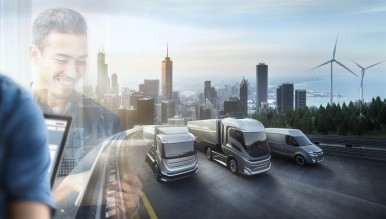
Stuttgart, Germany – Bosch’s digital logistics platform L.OS, targeted for simplifying IT processes in the transport and logistics industry, is celebrating a successful market launch. In Europe, India, and the U.S., the Bosch offering has already won 50 customers. 20 logistics companies each from Germany and India and ten from the U.S. are among the first L.OS customers. In addition, the integration of more than 50 service providers into the digital marketplace is already underway. Last year, Bosch announced a s trategic collaboration with the U.S. cloud provider Amazon Web Services (AWS) to digitalize logistics . The transportation and logistics industry is the backbone of the global economy. Bosch sees great market opportunities for its logistics services driving efficiency improvement. The technology company aims to generate global sales of some 500 million euros with logistics services by 2030, and has set up a separate unit with more than 400 associates for its digital platforms business. With L.OS, Bosch has ushered in the digital age for freight carriers, fleet owners and logistics service providers. Our logistics platform offers a complete ecosystem and software environment for using and combining services from different providers. For Bosch, the transportation and logistics industry is strategically important...says Dr. Markus Heyn, member of the Bosch board of management and chairman of the Mobility business sector. Open platform for providers of logistics solutions Using the digital L.OS platform, logistics and transportation companies across the globe will have quick and easy access to IT services, and thus be able to operate more efficiently and sustainably. The distinctive feature of L.OS is that it is open to all providers of logistics solutions and facilitates the smooth interplay of disparate services and data. For freight carriers and freight companies, this presents a chance to reap far greater benefit from the opportunities of digitalization for themselves in accordance with their individual needs or requirements in the respective country without having to set up resource- and cost-intensive IT projects of their own. In India, for example, Bosch’s proprietary “TrakZeus” positioning solution for efficient fleet and transportation management as well as route and parking planning has been available on L.OS from the start. The “Digital CN” solution allows transport documents such as e-way bills to be digitized quickly and easily, so that they can be transmitted securely via cell phone. In Europe, L.OS has been launched with a first service integration enabling secure truck parking booking as an extra feature for existing transportation management systems, while in the U.S., a dedicated transportation management system simplifies and manages operations for fleets. New Bosch operating unit to build digital platforms In July 2023, Bosch established its new, transnational “Mobility Platform and Services” operating unit to build digital platforms. More than 400 associates in Europe, India, and the U.S. are responsible for the further development and support of Bosch digital platforms. This currently includes for example “Mobility Marketplace”, a neutral digital ecommerce marketplace as well as “ParkZeus”, an integrated parking platform, and the “Logistics Operating System” L.OS. “The establishment of a dedicated unit underscores the great importance Bosch attaches to the digitalization of mobility empowered by cloud-based platforms. We want to enable companies to come together to co-create, innovate and solve complex problems of mobility through our platforms. Together, we’re driving the vision of sustainable and safe mobility enabled by digital platforms and the inclusivity it brings with it.,” says Sandeep Nelamangala, the executive director responsible for the digital platforms business at Bosch.

CES world premiere: Bosch unites infotainment and driver assistance functions on ...

05.12.2023

Press release

Connected mobility

CES world premiere: Bosch unites infotainment and driver assistance functions on ...

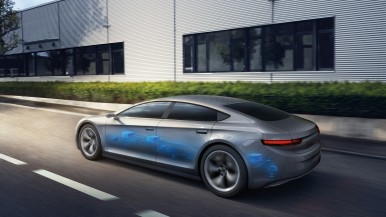
Stuttgart – The trend toward software-defined mobility goes hand in hand with a centralized vehicle and electric/electronic (E/E) architecture. While numerous electronic control units usually control different functions in the car today, in the future just a few central vehicle computers will unite multiple system functions from previously separate domains. To do this, new computers with a powerful processor, known as a system on chip (SoC), are necessary. As an innovation and technology leader, Bosch is leading the charge and, at CES® 2024 in Las Vegas, will be the world’s first automotive supplier to demonstrate the fusion of infotainment and driver assistance functions in a software-intensive central computer on a single SoC. “We want to reduce the complexity of the electronics systems in cars and make them as secure as possible at the same time. With this demonstration of our new vehicle computer platform at CES, we are taking an important step in exactly this direction. Our goal in the medium term is to bring even more automated driving functions to the road, including to the compact and midsized car segments,” says Dr. Markus Heyn, member of the board of management at Robert Bosch GmbH and chairman of Bosch Mobility.At the core of the new vehicle computer from Bosch – called the cockpit & ADAS integration platform – is a single SoC, which processes a variety of functions from the two domains of infotainment and driver assistance simultaneously. This includes, for example, automated parking and lane detection, paired with smart, personalized navigation and voice assistance. Advantages for vehicle manufacturers: less space and cabling required, meaning lower costs. Central vehicle computers are the heart of software-defined cars. In the future, they will control all the domains in modern vehicles and reduce the currently high number of individual control units...says Dr. Markus Heyn, member of the board of management at Robert Bosch GmbH and chairman of Bosch Mobility. Overall, Bosch is already doing good business with vehicle computers: in 2026, the company expects sales revenue of three billion euros just for vehicle computers for infotainment and driver assistance. Modular system principle for maximum scalability For its central vehicle computers, Bosch uses a modular system principle. Together with stand-alone software solutions such as video perception for surround sensing, vehicle manufacturers can modularly and scalably assemble their individual solutions in combination with hardware components. Software-intensive central computers play a decisive role here, since they enable manufacturers to implement driving and assistance features. Software integration is in strong demand here. Bosch brings integrative expertise and enables software components from various sources to be combined. Bosch knowledge in all vehicle domains as a competitive advantage Nearly every vehicle maker in the world is currently investing massively in software-defined vehicles. Bosch predicts that the market for automotive software will reach a volume of around 200 billion euros by 2030. In the field of vehicle computers for infotainment and driver assistance systems, the company expects a market volume of 32 billion euros in 2030. Bosch’s advantage is its extensive knowledge in all vehicle domains. This means that the company is an expert not just for software but also for hardware, and develops and manufactures key components of modern vehicles, such as for drives, brakes, steering, infotainment, and automated driving, under one roof. Bosch’s approach allows maximum flexibility Bosch pursues what is known as a multi-SoC approach. The company’s new vehicle computers are designed so that the required SoCs can come from different chip manufacturers. Therefore, depending on the customer’s wishes, Bosch can use exactly the SoC that is requested. “Our software runs on chips from different manufacturers. This allows software and hardware to be decoupled from each other,” says Heyn. Bosch is one of the few companies that can develop a centralized electronic architecture from start to finish and has mastered the interplay of automotive electronics, software, and the cloud. New features, such as for driver assistance, are simply and easily sent to the car through over-the-air updates. This provides drivers with a personalized digital driving experience – even long after purchasing the car. Presskit #BoschCES 2024 Event #BoschCES 2024

TSMC, Bosch, Infineon, and NXP Establish Joint Venture to Bring Advanced Semicon ...

08.08.2023

Press release

Connected mobility

TSMC, Bosch, Infineon, and NXP Establish Joint Venture to Bring Advanced Semicon ...

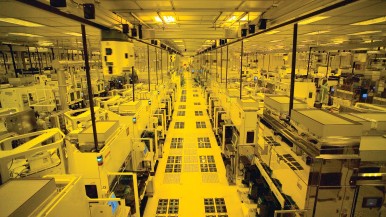
Hsinchu, Stuttgart, Munich, Eindhoven, Aug 8, 2023 – TSMC (TWSE: 2330, NYSE: TSM), Robert Bosch GmbH, Infineon Technologies AG (FSE: IFX / OTCQX: IFNNY), and NXP Semiconductors N.V. (NASDAQ: NXPI) today announced a plan to jointly invest in European Semiconductor Manufacturing Company (ESMC) GmbH, in Dresden, Germany to provide advanced semiconductor manufacturing services. ESMC marks a significant step towards construction of a 300 mm fab to support the future capacity needs of the fast-growing automotive and industrial sectors, with the final investment decision pending confirmation of the level of public funding for this project. The project is planned under the framework of the European Chips Act. The planned fab is expected to have a monthly production capacity of 40,000 300 mm (12-inch) wafers on TSMC’s 28/22 nanometer planar CMOS and 16/12 nanometer FinFET process technology, further strengthening Europe’s semiconductor manufacturing ecosystem with advanced FinFET transistor technology and creating about 2,000 direct high-tech professional jobs. ESMC aims to begin construction of the fab in the second half of 2024 with production targeted to begin by the end of 2027. The planned joint venture will be 70 percent owned by TSMC, with Bosch, Infineon, and NXP each holding 10 percent equity stake, subject to regulatory approvals and other conditions. Total investments are expected to exceed 10 billion euros consisting of equity injection, debt borrowing, and strong support from the European Union and German government. The fab will be operated by TSMC. “This investment in Dresden demonstrates TSMC’s commitment to serving our customers’ strategic capacity and technology needs, and we are excited at this opportunity to deepen our long-standing partnership with Bosch, Infineon, and NXP,” said Dr. CC Wei, Chief Executive Officer of TSMC. “Europe is a highly promising place for semiconductor innovation, particularly in the automotive and industrial fields, and we look forward to bringing those innovations to life on our advanced silicon technology with the talent in Europe.” Dr. Stefan Hartung, chairman of the Bosch board of management: “Semiconductors are not only a crucial success factor for Bosch. Their reliable availability is also of great importance for the success of the global automotive industry. Apart from continuously expanding our own manufacturing facilities, we further secure our supply chains as an automotive supplier through close cooperation with our partners. With TSMC, we are pleased to gain a global innovation leader to strengthen the semiconductor ecosystem in the direct vicinity of our semiconductor plant in Dresden.” Semiconductors are not only a crucial success factor for Bosch. Their reliable availability is also of great importance for the success of the global automotive industry. Apart from continuously expanding our own manufacturing facilities, we further secure our supply chains as an automotive supplier through close cooperation with our partners. With TSMC, we are pleased to gain a global innovation leader to strengthen the semiconductor ecosystem in the direct vicinity of our semiconductor plant in Dresden....said Dr. Stefan Hartung, chairman of the Bosch board of management “Our joint investment is an important milestone to bolster the European semiconductor ecosystem. With this, Dresden is strengthening its position as one of the world’s most important semiconductor hubs that is already home to Infineon’s largest frontend site,” said Jochen Hanebeck, CEO of Infineon Technologies. “Infineon will use the new capacity to serve the growing demand particularly of its European customers, especially in automotive and IoT. The advanced capabilities will provide a basis for developing innovative technologies, products and solutions to address the global challenges of decarbonization and digitalisation.” “NXP is very committed to strengthening innovation and supply chain resilience in Europe,” said Kurt Sievers, President and CEO of NXP Semiconductors. “We thank the European Union, Germany, and the Free State of Saxony for their recognition of the semiconductor industry’s critical role and for their true commitment to boost Europe’s chip ecosystem. The construction of this new and significant semiconductor foundry will add much needed innovation and capacity for the range of silicon required to supply the sharply increasing digitalization and electrification of the automotive and industrial sectors.”About Infineon Infineon Technologies AG is a global semiconductor leader in power systems and IoT. Infineon drives decarbonization and digitalization with its products and solutions. The company has around 56,200 employees worldwide and generated revenue of about €14.2 billion in the 2022 fiscal year (ending 30 September). Infineon is listed on the Frankfurt Stock Exchange (ticker symbol: IFX) and in the USA on the over-the-counter market OTCQX International over-the-counter market (ticker symbol: IFNNY). Further information is available at www.infineon.com . Follow us: Twitter – Facebook – LinkedIn About NXP Semiconductors NXP Semiconductors N.V. (NASDAQ: NXPI) brings together bright minds to create breakthrough technologies that make the connected world better, safer and more secure. As a world leader in secure connectivity solutions for embedded applications, NXP is pushing boundaries in the automotive, industrial & IoT, mobile, and communication infrastructure markets while delivering solutions that advance a more sustainable future. Built on more than 60 years of combined experience and expertise, the company has approximately 34,500 team members in more than 30 countries and posted revenue of $13.21 billion in 2022. Find out more at www.nxp.com . About TSMC TSMC pioneered the pure-play foundry business model when it was founded in 1987, and has been the world’s leading dedicated semiconductor foundry ever since. The Company supports a thriving ecosystem of global customers and partners with the industry’s leading process technologies and portfolio of design enablement solutions to unleash innovation for the global semiconductor industry. With global operations spanning Asia, Europe, and North America, TSMC serves as a committed corporate citizen around the world. TSMC deployed 288 distinct process technologies, and manufactured 12,698 products for 532 customers in 2022 by providing broadest range of advanced, specialty and advanced packaging technology services. The Company is headquartered in Hsinchu, Taiwan. For more information please visit https://www.tsmc.com .

Bosch opens new semiconductor test center for chips and sensors in Malaysia

01.08.2023

Press release

Connected mobility

Bosch opens new semiconductor test center for chips and sensors in Malaysia

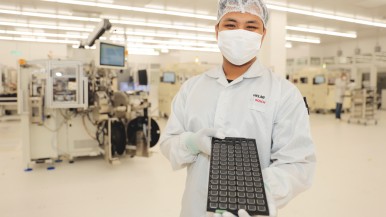
Stuttgart, Germany / Penang, Malaysia – Global demand for chips for the automotive and consumer goods industries remains high. That is why Bosch is continuing to expand its semiconductor business. The company has now opened a new test center for chips and sensors in Penang, Malaysia, at a cost of some 65 million euros; it plans to invest a further 285 million euros at the site by the middle of the next decade. “With our new semiconductor test center in Penang, we are creating additional capacity within our worldwide manufacturing network to meet the continued high demand for chips and sensors,” said Dr. Stefan Hartung, chairman of the Bosch board of management. “Semiconductors are a decisive success factor for all Bosch business areas, and the expansion of this business is strategically very important.” With our new semiconductor test center in Penang, we are creating additional capacity within our worldwide manufacturing network to meet the continued high demand for chips and sensors,...said Dr. Stefan Hartung, chairman of the Bosch board of management. In total, Bosch has some 100,000 square meters of land available on Penang’s mainland strip. The new test center currently covers more than 18,000 square meters and includes clean rooms, office space, and laboratories for quality assurance and manufacturing. By the middle of the next decade, up to 400 associates will be working there. With the new factory and a total of 4,200 associates, Penang is now Bosch’s biggest location in Southeast Asia. Semiconductor manufacturing can basically be divided into two sections: frontend manufacturing and backend manufacturing. For the latter, Malaysia is an important hub in the global semiconductor supply chain. The country is estimated to cover around 13 percent of global backend manufacturing. According to official figures, in recent years the state of Penang has generated more than 5 percent of worldwide semiconductor revenue. “The new test center in Penang brings our manufacturing network closer to the companies that serve the further value chain of semiconductor manufacturing as well as to customers in this important Asian market. That shortens delivery times and routes, and it improves our competitiveness,” says Dr. Markus Heyn, member of the Bosch board of management and chairman of the Mobility business sector. One of the most cutting-edge test centers in Southeast Asia The frontend is where the actual circuits are attached and patterned on the wafers; at Bosch, for example, this work is currently performed in the clean rooms of the wafer fabs in Reutlingen and Dresden. The backend is where the individual chips are then separated from the wafers, assembled, and tested. Bosch currently carries out most of the final testing of its semiconductors in Reutlingen, Germany; Suzhou, China; and Hatvan, Hungary. Those locations will now be joined by the new test center in Penang, Malaysia. The fully connected plant is one of the most advanced semiconductor test centers in Southeast Asia. Here, Bosch will immediately begin testing semiconductors that the company manufactures at its frontend in Dresden, among other locations. “Our new test center in Penang completes our internal process chain, especially for semiconductors from Dresden,” Heyn says. Bosch invests further in chip business Bosch is pursuing a global growth strategy with its semiconductor business. Over the next three years, the company plans to invest some three billion euros in Dresden and Reutlingen, both as part of its own investment plan and under the auspices of the European IPCEI ME/CT (“Important Project of Common European Interest on Microelectronics and Communication Technologies”) funding program. Following its expected acquisition of part of the business of TSI Semiconductors, based in Roseville, California, which is expected before the end of the year, Bosch plans to invest roughly an additional 1.4 billion euros in retooling the fab to support the latest manufacturing processes for silicon carbide semiconductors. Penang Factsheet

Bosch charging services support the ramp-up of electromobility

21.03.2023

Press release

Connected mobility

Bosch charging services support the ramp-up of electromobility

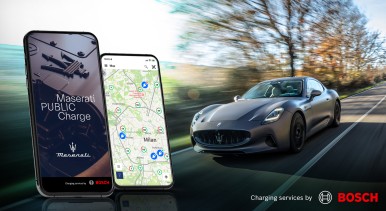
Stuttgart, Germany – Worldwide, there are more and more electric cars on the road. But how convenient is it to recharge electric vehicles? How quickly can drivers find a vacant charge point? And how easy is it to pay for the charging process? The answers to these questions will determine the success of electromobility – and thus also the achievement of climate targets. “Making it straightforward to recharge electric vehicles reduces range anxiety and is a prerequisite for their widespread acceptance. Bosch charging services offer the drivers of electric cars easy access to one of Europe’s biggest and steadily growing charging networks,” says Dr. Markus Heyn, member of the board of management of Robert Bosch GmbH and chairman of its Mobility Solutions business sector. Customers who use Bosch charging services already have access to some 450,000 publicly accessible charge points in 30 European countries – one of the largest charging networks in Europe. The Italian automaker Maserati has now made Bosch charging services available for the first time in its new electric model, the GranTurismo Folgore – not only in Europe but also, in the course of 2023, in the Asia-Pacific region. Charging services hold immense potential: by 2030, Bosch expects more than one in three new vehicles worldwide to be purely electric; in Europe, it could be as many as two in three. By 2035, it expects one in two newly registered passenger cars worldwide to be an electric car. “We expect a huge surge in growth for our charging services business over the course of the decade – because as electromobility ramps up, so does the need for straightforward and comprehensive charging solutions. We will benefit from this,” Heyn adds. By the end of the decade, Bosch is expecting its charging solutions business to expand by more than 50 percent each year. Bosch offers its solutions for recharging electric cars to vehicle manufacturers and companies. The charging services can be flexibly and easily integrated into a manufacturer’s look and feel and infotainment system, both functionally and visually, so that the driving and charging experience retain the manufacturer’s individual look and fit into its brand world. As a result, Bosch charging services are making electromobility even more suitable for everyday use. Making it straightforward to recharge electric vehicles reduces range anxiety and is a prerequisite for their widespread acceptance. Bosch charging services offer the drivers of electric cars easy access to one of Europe’s biggest and steadily growing charging networks ...says Dr. Markus Heyn, member of the board of management of Robert Bosch GmbH and chairman of its Mobility Solutions business sector. Maserati GranTurismo Folgore with Bosch charging services At Maserati, the Bosch charging services are now available for the first time in the recently unveiled GranTurismo Folgore. Once registered for the services, drivers of the GranTurismo Folgore can display the charge point information on their navigation system and on the app. It takes just a few taps to find a charge point, charge, and pay. For example, the service makes it simple to navigate to an available charge point directly, or to pull up information on restaurants and shopping centers in the vicinity of the customer’s position. Bosch also spares users the tedious task of researching car-electricity tariffs by listing which costs and terms of use apply at given charge points. Billing takes place automatically using the credit card details added to the app. Bosch charging services are for more than just charging electricity In addition to charging services for drivers of electric cars, Bosch also offers services for charge point operators. Bosch’s software services enable charge point operators to remotely control and manage their charge points and also integrate them into the Bosch charging network. For this purpose, the company concludes contracts with the charge point operators and connects their charge points to the network. On an especially encouraging note, the Bosch charging network is constantly growing. By mid-2023, it is expected to include around 700,000 charge points in Europe, North America, and the Asia-Pacific region. “With our charging services and our growing charging network, we are playing a decisive part in making electromobility a success story even faster. In this way, Bosch is also helping Germany achieve its climate targets,” Heyn says.

GAIA-X 4 moveID project develops basis for secure mobile data exchange

08.09.2022

Press release

Business/economy

GAIA-X 4 moveID project develops basis for secure mobile data exchange

Stuttgart, Germany – Which parking garages currently have vacant charge spots available? Where are free parking spaces in the city center? And how can this information be digitally transmitted, and services billed, across providers? The answer to these and similar questions calls for secure data exchange between the vehicles and their environment. It is precisely this foundation that a research project consisting of universities, automotive suppliers, and system providers is now in the process of building, with Bosch leading the consortium. Over the next three years, the GAIA-X 4 moveID project is set to develop the necessary standards and technological concepts to enable the secure exchange of information between providers of mobility applications and their customers. The goal is to create decentralized digital vehicle identities. This is an important prerequisite for the mass use of electric vehicles, automated driving, and the establishment of connected cities. GAIA-X 4 moveID is supported to the tune of 14 million euros by the German Federal Ministry for Economic Affairs and Climate Action – covering half of the project costs.Connectivity for digital services across the board “An integrated and transparent system architecture for the exchange of data on the road that incorporates different products and players simply isn’t available today. While it’s true that some companies out there already offer services, those services are tailored for specific applications, vehicles, or customer groups,” explains Peter Busch, project manager at the consortium leader Bosch. They often map the infrastructure, for example, but they rarely provide information about availability due to a lack of connectivity between the many independently operating service providers. “Open standards are needed so that users, for example, can find all available charging stations or pay for charging processes,” Busch says. It’s important to always ensure that the data is processed securely and that individual providers don’t exploit it solely for their own purposes. For Busch, this is the only way that the necessary user confidence can grow and a broad range of all available services, such as so-called deep parking (use of otherwise unavailable parking spaces), can be created. That is why the consortium is building on the European GAIA-X system, which defines the technological, economic, and legal framework for a secure and trustworthy data infrastructure. GAIA-X relies on decentralization and the interplay of different cloud providers under common guidelines. In this spirit, the GAIA-X 4 moveID project is using open source software for its developments and making them available to all providers for various business models. Vehicles are becoming marketplaces The standards that GAIA-X 4 moveID is pursuing will allow vehicles to securely and independently exchange information with other vehicles and their environment without an “intermediary.” The vehicles’ “infrastructure partners” include charge spots, barriers, traffic lights, and parking lots. The research project will use internationally recognized hardware and software to develop management and administrative services to facilitate the interaction and trade between different players. This will enable providers to connect a great many services, such as news, entertainment, and navigation, with the car’s system, especially in automated driving. The market for services related to connected parking alone is estimated to be worth ten billion euros annually worldwide. What’s more, the ability to navigate directly to a vacant parking space significantly reduces congestion and emissions. After all, today, about a third of downtown urban traffic is people looking for parking spaces. The availability of information is also a crucial factor for the success of electromobility. It is estimated that about half of newly registered cars in Europe will be electric by 2030. “Their drivers need to know that they’ll be able to find a charge spot quickly whenever they need one. And that requires connected systems,” Busch says. Extensive data exchange as a basis for automated driving The mass use of automated vehicles is conceivable only if cars are able to quickly and reliably communicate with their environment. The data exchange this requires will enable climate-friendly traffic control based on the volume of traffic at any given moment. This will allow cities to regulate incoming traffic to particular areas in real time, thus preventing congestion. However, this method, known as zoning, requires that vehicles be able to immediately recognize changing conditions and to reroute accordingly. Zoning is being demonstrated with test vehicles – for the first time across borders – in the Germany-France-Luxembourg (Merzig/Saarbrücken) test area as part of the GAIA-X 4 moveID project. The cars receive dynamic information regarding their approach to defined zones.The project partners: Robert Bosch GmbH Materna Information & Communications SE Denso Automotive Deutschland GmbH Continental Automotive Technlogies GmbH WOBCOM GmbH ecsec GmbH HTW Saar (University of Applied Sciences) Atos Information Technology GmbH Chainstep GmbH Peaq Technology GmbH Zeppelin Universität gGmbH (Zeppelin University) Datarella GmbH 51nodes GmbH Bigchain DB GmbH Fetch.ai Research & Development GmbH ITK Engineering GmbH Deutsche Zentrum für Luft- und Raumfahrt e.V. (German Aerospace Center) Airbus Defence and Space GmbH Delta Dao AG

From the first mile to the last: Bosch delivers solutions for sustainable logistics

05.09.2022

Press release

Connected mobility

From the first mile to the last: Bosch delivers solutions for sustainable logistics

Stuttgart/Hannover, Germany – Commercial vehicles keep the economy running. However, an increasing shortage of drivers, a lack of safety in the transport of goods, and more climate action are challenging the industry. Bosch technology for the electrification, automation, and connectivity of commercial vehicles increases efficiency, safety, and reliability in logistics. At IAA Transportation 2022 in Hannover, the supplier of technology and services is presenting its innovations for the freight traffic of tomorrow – from the first mile to the last. The Bosch booth is in hall 20, number B22.From the first mile: Bosch makes heavy-duty freight more sustainable Climate action for freight transport calls for a broad technology offensive. Bosch hopes to play a role in realizing climate-neutral transportation for all vehicle classes. To this end, the company is developing a range of efficient powertrains – from combustion engines to battery-electric and fuel-cell powertrains. Fuel-cell powertrain: Bosch’s eDistanceTruck powertrain solutions are designed for heavy-duty long-haul transport. The heavier the freight and the longer the route, the more attractive a fuel-cell powertrain’s short refueling times and long range become. If the hydrogen used comes from renewable sources, then the fuel cell’s operation is climate neutral, too. Bosch offers not only individual system components, but also complete fuel-cell powertrain systems and solutions for H2 storage systems. Diesel engine: Modular common-rail injection systems , effective temperature management , and e xhaust-gas treatment with double injection – Bosch diesel technology for commercial vehicles helps truck manufacturers further reduce the fuel consumption and emissions of their vehicles and meet future emissions requirements. Hydrogen engine: Fuel cells are not the only way to power trucks using hydrogen; there are also H 2 engines. Bosch is carefully examining the technical issues and looking into the marketability of this technology. Today’s engine and powertrain technologies are already a good starting point. The basic structure of the fuel, air, and exhaust system, along with numerous well-understood system components, can be adopted from existing powertrain solutions. That means there is a great deal of synergy between the hydrogen engine and familiar diesel and natural-gas engines. Fully electric power steering: ServoE augments Bosch’s product portfolio to include a fully electric steering system for heavy trucks. Because the steering system operates exclusively with electric servomotors, it does not require hydraulic oil or additional pumps. The system’s redundant design supports assistance functions up to and including automated driving. Its function and steering feel can be adapted to each customer’s requirements. Servotwin: The next generation of the Servotwin electrohydraulic steering system for heavy commercial vehicles combines a hydraulic Servocom steering system with two control units. This means it meets the requirements of automated driving up to and including SAE Level 4. The system offers speed-dependent steering assistance with active response and enables various driver assistance functions. Rear-axle steering system: The next generation of the electrohydraulic steering system for rear axles is a stand-alone power-on-demand system. It enables the steering of three or more leading or trailing heavy-truck axles. Steering the additional axles, if required, reduces the turning radius and tire wear. Thanks to its compact design, Bosch technology can be adapted to all powertrain types. Digital charge planning: A Bosch cloud-based software solution seamlessly integrates electric recharging into logistics planning and service operations for electric-vehicle fleets. Intelligent energy management optimizes recharging costs at depots and logistics centers by smoothing out peak loads, for example. Battery data and other external factors are included in route planning to reduce recharging and thus downtime during the day. Automated subcontractor billing ensures seamless processes and more clarity in operations. Over the last mile: Bosch gets courier, express, and package delivery services on the road Delivering packages right to the customer’s doorstep: Bosch is also making freight and passenger transport fit for tomorrow with alternative powertrains for the last mile. In addition, Bosch’s smart hardware is gradually paving the technological way for downtown traffic that has as little impact as possible on residents and the environment. Electric delivery traffic: Bosch’s eCityTruck powertrain solutions offer efficient, economical technologies for downtown delivery runs. Both the e-axle and the ADM advanced driving module are easy to integrate into commercial vehicles of up to 7.5 metric tons. Electric vehicles with zero local CO2 emissions offer fleet operators the security of continuing to be able to drive in areas with restricted access, such as environmental zones. Depending on the battery design, they enable ranges of up to 200 kilometers, meaning that most delivery routes of less than 80 kilometers a day on average are easily covered on a single charge. Continuously variable transmission for electric light commercial vehicles: The CVT4EV is a continuously variable transmission with a pushbelt that can increase the efficiency of electrically powered light commercial vehicles by more than 10 percent. Alternatively, a smaller battery saves weight and space. Lower engine speeds and smooth shifting also increase driving comfort. Cargo e-scooter: Urban electromobility is multifaceted and serves a wide range of needs – from sharing to last-mile delivery services. Electric scooters provide fast and efficient transportation of goods in dense urban traffic while helping to minimize traffic noise in downtown areas. Bosch offers powertrains and drive controls that, although designed for different requirements, have been combined and coordinated in a compact drive system . Urban mobility: Whether for the weekly groceries or delivering light to medium loads – the eCargo Bike can be used in many ways and is increasingly establishing itself as a sustainable and quiet alternative in urban traffic. Now cargo bike riders can also enjoy the benefits of Bosch’s smart system, the latest generation of which – consisting of eBike Flow app, control unit, display, battery, and drive unit – combines e-bike components of high technical quality with the digital world, taking riding enjoyment to the next level. With up to 85 Newton meters of torque, the Cargo Line drive system delivers powerful but natural support at up to 400 percent of the rider’s own pedal power. The new ABS Cargo and Cargo mode ensure greater safety and comfort: ABS Cargo enables safe braking, while the Cargo riding mode allows for a comfortable start, even when carrying a full load. From the first mile to the last: Bosch technology for logistics More efficiency, transparency, and reliability are finding their way into logistics thanks to connectivity. Using cleverly analyzed vehicle data, Bosch can, for example, identify anomalies at the system or component level in good time and help fleet operators avoid unplanned downtime. Software platform for logistics specialists: Bosch’s digital service platform for logistics addresses many of the challenges facing the transportation and logistics industry. At the heart of the software ecosystem for freight carriers and forwarders is a marketplace for digital services from different providers. These services are based in part on data from the truck’s telematics systems and on the transport management software. For example, predictive diagnostics can reduce truck downtime and easily enable the use of services such as booking secure parking or keyless access to vehicles. Bosch is working on this with Amazon Web Services (AWS). Software-defined vehicles: The Bosch subsidiary ETAS facilitates the development of vehicle services and brings service developers together with their users through its Mobility Cloud integration platform, which includes a development portal and marketplace. In addition, the platform’s over-the-air and data services enable bidirectional data exchange between the vehicle and the cloud as well as continuous further development of vehicle software and functions over the vehicle’s entire life cycle. This speeds up the development and provision of new vehicle functions. Solutions such as CrossLifecycle Diagnostics are already available to manufacturers, fleet operators, and mobility providers in the Mobility Cloud. The cloud-based diagnostics service improves maintenance planning using vehicle connectivity. As a result, vehicle downtimes can be shortened thanks to digital services for monitoring vehicle conditions (remote), vehicle diagnostics, and software updates, as well as data evaluation for failure prediction. Convenient vehicle access: Fleet Management Xtended Access is the name of the keyless vehicle access system that Bosch is presenting for the first time at IAA Transportation 2022 as a retrofit solution for existing vehicle fleets. This system lets fleet operators and drivers gain efficiency and time. Registered drivers are remotely assigned a vehicle using a web application. Persons authorized in this way can then access their vehicle using a smartphone app within the defined validity period. Road safety: The Bosch Driver Monitoring System employs innovative sensor and image processing technologies to increase safety and comfort for drivers and other road users. It detects critical situations such as driver distraction or fatigue at an early stage and warns the driver in good time. According to the EU General Safety Regulation (GSR), in the future all vehicles within the European Union will have to detect drowsiness and distraction. In addition to the safety-related functions, the system enables various convenience features. Facial recognition enables automatic identification of the driver. Based on the stored driver profile, individual comfort settings such as the preferred seat and mirror position, a favorite radio station, or the right language can be set automatically in the infotainment system. Reliable vehicle return: RideCare Insight is the world’s first one-box solution to reliably detect abrupt driving maneuvers, smoke inside the vehicle, and exterior damage to the vehicle, even when it is parked. For example, it immediately detects accidental damage while parking. A backend-to-backend connection means the mobility service provider or fleet manager receives real-time notifications and information on the location and time of the event for use in further processes such as inspection, damage claims, or repairs. The dashboard also displays information on body condition and wear and tear at the vehicle and fleet levels. Entertainment center on wheels: The Coach Future Cockpit System and Coach Future Cabin System offer bus infotainment in a class of its own. The perfectly matched components, certified to all relevant OEM standards, and the high-performance signal transmission via Ethernet Audio Video Bridge turn coaches into a digital network on wheels that meets the needs of drivers and passengers alike. With the special coach head unit for commercial vehicles, the driver’s cab becomes a fully connected workplace. In addition to Navigation Data Standard (NDS) map navigation optimized for coaches, the head unit offers a wide range of convenience features, such as a Bluetooth hands-free system, music streaming, and voice control. Secure data exchange: A prerequisite for numerous smart services that make driving safer and more efficient is for vehicles to be able to communicate with objects in their immediate vicinity and with the traffic infrastructure. The basis for this is the Bosch Connectivity Control Unit (CCU) . It uses air interfaces to connect the driver’s vehicle with other vehicles, the infrastructure (traffic lights, for example), and the cloud. The central gateway (CGW) links the vehicle domains and communicates with the outside world via the CCU. It acts as a secure data distributor for communication within commercial-vehicle systems. Modern vehicle computers: Today’s production vehicles feature several control units to manage and regulate various displays and other electronic cockpit functions. In the future, more and more functions will be brought together in one central location. The Information Domain Computer (IDC) combines the computing functions for infotainment and instrumentation, which were previously separate domains, with other functions on a single processor. This saves cost, installation space, weight, and energy. Smart eyes: The third generation of the multifunction camera is tailored to the requirements of heavy trucks. With its unique multipath approach, the camera combines conventional image processing algorithms with AI-driven methods, giving it a key role in high-performance driver assistance systems. It detects and processes objects and structures highly reliably and uses an innovative, high-performance system-on-chip (SoC) for image processing. The camera is designed for safety-relevant driver assistance systems and convenience functions such as the lane-keeping support system, and it also supports object-based functions such as automatic emergency braking. Moreover, it also permits implementation of other helpful functions such as traffic sign recognition. This means the system supports the future legal requirements of the EU General Safety Regulation (GSR) on intelligent speed assistance for detecting speed limits and warning of exceeding them. Precise object detection: The fifth-generation front and side radar ensures greater safety in the heavy truck segment, thanks to reliable and precise object detection in the area to the front and side of the vehicle. Thanks to the sensors’ large detection range and high angular resolution, as well as their wide aperture, they can detect complex driving situations very quickly, accurately, and robustly. They employ novel chirp-sequence modulation to improve surround sensing by producing more detailed reflections. As a result, both the front and side radar solutions are extremely precise when detecting and distinguishing between objects and people as well as their position, relative speed, and direction of movement – even when visibility is poor. This means that Bosch radar sensors in heavy trucks can ensure greater safety for the driver and other road users by supporting functions such as automatic emergency braking or the future legal requirements of the EU General Safety Regulation (GSR) for a moving-off information system (MOIS) and a blind spot information system (BSIS). Digital mirror replacement system: Large exterior mirrors on commercial vehicles ensure a safe view of the traffic behind. However, due to their size, they restrict the direct view to the front and sides and create high air resistance. The Digital Vision System , developed in conjunction with Mekra Lang, replaces the large exterior mirrors with two interior monitors and two exterior cameras mounted outside the cab. Its aerodynamic design lowers fuel consumption by as much as 2 percent. At the same time, it considerably improves the driver’s 360-degree vision and reduces the blind spot.

The 2021 business year: Bosch increases sales and result - company exceeds forecasts

09.02.2022

Press release

Business/economy

The 2021 business year: Bosch increases sales and result - company exceeds forecasts

Stuttgart, Germany – The Bosch Group increased its sales and result significantly in 2021. According to preliminary figures 1 , total sales rose 10 percent to 78.8 billion euros. After adjusting for exchange-rate effects, sales growth at the supplier of technology and services was 11 percent. Earnings before interest and taxes (EBIT) from operations increased by more than half to reach 3.2 billion euros. The EBIT margin from operations is therefore expected to be around 4 percent, compared with 2.8 percent in the previous year. “Our business performed much better in 2021 than expected,” said Dr. Stefan Hartung , chairman of the board of management of Robert Bosch GmbH, at the presentation of the company’s preliminary business figures. “We were able to exceed our forecasts despite many challenges, such as cost burdens due to supply bottlenecks and price increases for raw materials.” Business success was also significantly shaped by “solidarity in times of social distancing,” as he put it. “I would like to thank our associates for their commitment, and our customers, suppliers, and business partners for their trust,” Hartung said, adding that, together with the global Bosch team, he wanted to continue developing technology that is “Invented for life” as a response to current challenges. “Bosch is a technological pioneer in many areas, and we want to keep it that way.” To this end, the company is continuing to invest large sums in strategically important fields, including a total of around 1 billion euros in microelectronics and electromobility this year alone. At the same time, Bosch is increasingly focusing on partnerships, such as the recently announced alliance with Volkswagen in the field of automated driving. The Bosch chairman also expects the efforts of many countries to move toward a climate-neutral economy to significantly stimulate growth in the future: “Climate action is driving our business forward – from mobility solutions and industrial automation to building technology and home appliances,” Hartung said. “And thanks to connectivity and artificial intelligence, energy efficiency will continue to improve.” In this vein, Bosch was able to increase its sales of connected power tools, home appliances, and heating systems by 50 percent in 2021 – from 4 million units in 2020 to more than 6 million. 1 Based on internal reporting.Bosch is stepping up its climate action – growth through electrification Bosch is committed to the goals of the EU’s Green Deal. Its business sectors are already implementing a broad range of measures to combat global warming: With its 400 locations worldwide, Bosch has been climate neutral since the first quarter of 2020. Between now and 2030, the company plans to cut carbon emissions along its supply chain – from purchasing to product use – by 15 percent. According to the Bosch chairman, electrification is already giving rise to more and more business. “We are generating billions in sales with electromobility. We’re also growing at double-digit rates with heat pumps for the home, and electrical drives are making inroads in industrial technology,” Hartung said. He believes this puts the company in a strong position: “Bosch is translating climate action into growth.” The company is demonstrating how the transformation to climate neutrality can succeed both ecologically and economically, he said. Sustainable mobility – growth from automotive and industrial technology Bosch is also tapping further growth potential in electromobility. Since the end of 2021, the company has been manufacturing power semiconductors made of silicon carbide (SiC) , which can extend the range of electric vehicles by up to 6 percent. According to the market research company Yole, the SiC market as a whole will grow on average by 30 percent a year to over 2.5 billion dollars over the next three years. Dr. Robert Habeck, the German Federal Minister of Economic Affairs and Climate Action, recently visited Bosch’s Bamberg site to find out more about the mass production of the stationary fuel cell (solid-oxide fuel cell, SOFC). With its SOFC technology, Bosch is playing a role in the transition to renewable energy while opening up new business opportunities. By 2024, the company plans to invest more than 400 million euros in SOFC technology and a further 600 million euros in mobile fuel cells. Bosch has also entered the factory equipment business for battery production. This business has potential: according to the company, the global battery market is growing by up to 25 percent annually. Together with Volkswagen, Bosch is looking into jointly making battery cell production processes ready for volume production. Hartung said: “Our common goal is for a European supplier to be the cost and technology leader in the volume production of battery technology.” Experts see the joint plans as an important step on the road to climate-neutral mobility and the mass production of sustainable batteries. Software-dominated mobility – double-digit growth in a market worth billions Bosch also intends to achieve growth and expand its position in software development for vehicles. The Mobility Solutions business sector already equips vehicles worldwide with more than 200 million control units running its proprietary software each year. The company expects the market for automotive software to reach a volume of some 200 billion euros by 2030. “Bosch will see double-digit growth in this market,” said Dr. Markus Heyn , the new chairman of the Mobility Solutions business sector and member of the board of management of Robert Bosch GmbH. “Here we will benefit in no small part from the evolution of the car into an internet node.” According to Heyn, Bosch has already set the strategic course for this. The company’s portfolio of application-independent vehicle software will be brought together in its ETAS subsidiary in mid-2022. ETAS will offer basic vehicle software, middleware, cloud services, and development tools for universal application. In addition, Bosch’s new Cross-Domain Computing Solutions division will create application-specific vehicle software with special hardware for functions such as driver assistance and automated driving. In this field, Bosch entered into a wide-ranging alliance with Cariad, Volkswagen’s software subsidiary, at the end of January 2022. “Our goal is to accelerate the process of making partially and highly automated driving in everyday vehicles a reality,” Heyn said. “We want to set standards for the market that will benefit other automakers.” Transforming the industrial workplace – a billion euros earmarked for training The path toward a climate-neutral economy is also one that Bosch wants to help forge as an employer. “With many industries undergoing a transformation, Bosch sees an opportunity to rethink employment,” said Filiz Albrecht , member of the board of management and director of industrial relations at Robert Bosch GmbH. To support people as they move from one kind of work to another, it is increasingly important for employers to “make prospects for new employment visible outside their own company as well.” That’s why in Germany, Bosch is contributing its broad experience to Allianz der Chancen , a cross-industry initiative concerned with the transformation of the working world. “We believe we can make this change socially acceptable,” Albrecht said. To that end, the company is also pursuing new approaches to associate placement and qualification. Furthermore, Bosch is continually investing in upskilling its workforce – more than a billion euros over the past five years. Another way the company is driving change in the world of work is with hybrid collaboration models. “With our ‘Smart Work’ initiative, we are systematically shaping the interplay between working remotely and working on site. Together with their supervisors, teams determine the flexible arrangement of when and where they work for themselves,” Albrecht said. Determining their time and place of work is especially important for software developers, and, as Albrecht says, the need for these professionals is great: “In the Cross-Domain Computing Solutions division in Germany alone, we currently have more than 1,000 vacancies for software experts.” Business development in 2021 – all business sectors increased sales Not only did the Bosch Group’s total sales grow year on year, but they are also higher than in 2019, the year before the crisis. “The company’s broad diversification across different industries and regions paid off once again,” said Dr. Markus Forschner , member of the board of management and chief financial officer of Robert Bosch GmbH. “All business sectors increased their sales despite global supply bottlenecks.” The Mobility Solutions business sector, which is the largest and generates the highest sales, recorded significant growth, even though the business environment in the fourth quarter put a brake on developments. Sales rose 7.5 percent to 45.4 billion euros despite the chip shortage, which had a particularly major impact on the automotive industry. Adjusted for exchange-rate effects, this is an increase of 7.9 percent. The Industrial Technology business sector benefited particularly from the recovery in the mechanical engineering market and achieved sales of 6.1 billion euros. This is an increase of 20 percent, both in nominal terms and after adjusting for exchange-rate effects. As the CFO pointed out, this meant that sales returned to their pre-crisis level. In the Consumer Goods business sector, products for the home and garden were once again in strong demand. At 21 billion euros, sales were significantly above the previous year’s level. This is a rise of 13 percent; adjusted for exchange-rate effects, it is 15 percent. Sales in the Energy and Building Technology business sector rose 11 percent to 5.9 billion euros – growth of 12 percent after adjusting for exchange-rate effects. To quote Forschner, “The business benefited from strong demand for climate-friendly heating technology, with the business sector actually exceeding its pre-crisis level.” Business development in 2021 – sales growth in all regions “Regionally as well, Bosch sales grew across the board,” Forschner said. In Europe , sales grew by 9.3 percent to 41.5 billion euros. After adjusting for exchange-rate effects, this is an increase of 10 percent. In North America , sales came to 11.5 billion euros. The increase in sales of 6.5 percent becomes 10 percent after adjusting for exchange-rate effects. In South America , sales rose to 1.4 billion euros – an increase of 32 percent, or 41 percent after adjusting for exchange-rate effects. “This is a very positive development, especially since the region was hit particularly hard by the coronavirus pandemic the previous year,” Forschner explained. In Asia Pacific , sales grew by 12 percent to 24.4 billion euros – 11 percent after adjusting for exchange-rate effects. Headcount development in 2021 – slight increase worldwide As of December 31, 2021, the Bosch Group employs some 401,300 associates worldwide. Most of this increase of some 6,700 related to Asia Pacific and Europe; the number of associates in Germany remained stable at around 131,400. In research and development, the number of associates rose by just under 4 percent to 76,300. The number of software developers worldwide was more than 38,000 – an increase of some 4,000 over the previous year. Outlook for 2022 – global economy beset by uncertainty Bosch expects the global economy to grow between 4 and 4.5 percent in 2022, as against some 5.5 percent in 2021. Despite impressive progress made with vaccinations in many countries, the company expects Covid-19 to continue to impose heavy burdens on society and the economy in 2022. In addition, ongoing supply bottlenecks and rising prices for raw materials, primary products, and transportation will have a major impact on the global economy and affect the business of many sectors, especially the automotive industry. The marked rise in inflation in many sectors and regions is also clouding the outlook. Provided the business environment is not disrupted further, the Bosch Group expects to grow its sales in 2022. It also expects to achieve an EBIT margin from operations that is at least on a par with the previous year. Despite these considerable challenges, Forschner remains confident: “Bosch has a sound financial basis for investing in strategically important fields and continuing on its current course.” It remains Bosch’s objective to grow more strongly than the markets in its most important sectors and regions.

CES 2022: For better quality of life and more climate action – connected and sma ...

04.01.2022

Press release

Business/economy

CES 2022: For better quality of life and more climate action – connected and sma ...

Las Vegas – At home, on the road, at work, in the hospital, or even in orbit: Bosch is improving the everyday lives of people from all walks of life with smart and connected solutions. At the same time, the company is tapping into new areas of business through software, services, and licenses. “We are systematically digitalizing our core business to increase the benefits for our customers. Going forward, we aim to turn the sale of every digital product into services-based revenue as well,” says Tanja Rückert, the Bosch Group’s chief digital officer, at CES in Las Vegas. To achieve this goal, Bosch is focusing on the connection of IoT with AI – in other words, it is linking the internet of things (IoT) with artificial intelligence (AI). We are systematically digitalizing our core business to increase the benefits for our customers. Going forward, we aim to turn the sale of every digital product into services-based revenue as well....Tanja Rückert, the Bosch Group’s chief digital officer This creates a virtuous circle in which connected products deliver information that, in turn, is processed by means of AI and incorporated into software updates for these products. At the core of this approach is the benefit for customers, since it allows users to be an integral part of the development process and enables solutions to be tailored precisely to their needs. Furthermore, neither development nor value creation ends with the sale of the products. “We see the combination of AI and IoT as holding the key to leveraging the most user benefit from both of these technologies,” Rückert says. “Besides enabling us to develop new business models, this approach helps us offer better products and solutions that deliver real added value for individuals and society as a whole.” Expanding software expertise: Bosch is already shaping the future today Bosch laid the foundation for this long ago. As of the new year, all electronics product classes will be connectable. Sales of connected power tools, household appliances, and heating systems alone have grown by 50 percent within one year – from four million units in 2020 to more than six million in 2021. With the Bosch Center for Artificial Intelligence (BCAI), the company has established a strong unit in the field of AI that has already contributed some 300 million euros to result. In addition, the company invests a total of more than four billion euros every year in its software expertise, around three billion of which goes to the mobility business. To shape the software-defined future of mobility, Bosch will also be pooling development activities for application-independent software in one unit as of mid-2022. In the future, under the umbrella of its subsidiary ETAS GmbH, the company will develop and sell basic vehicle software, middleware, cloud services, and development tools for universal application. Bosch is also rapidly advancing connected and automated driving. Over the past five years, Bosch has generated some nine billion euros in sales just with driver assistance systems and the associated sensors. Bosch Tech Compass: a survey conducted in five countries around the world The Bosch Tech Compass – a representative survey conducted in five countries and presented for the first time at CES – shows what people across the globe expect from new technologies. According to the survey, the majority of respondents (72 percent) are convinced that technological progress is making the world a better place, for instance as a key to fighting climate change (76 percent). At the same time, four out of five people think technology should be more focused on tackling the great challenges of our time rather than serving individual needs. “We at Bosch also believe that technology offers a broad range of benefits,” Rückert says. “When we talk about high-tech, we’re not talking only about pushing the envelope on what’s possible. We use technology as a means to improve people’s lives wherever they are.” From space to pediatric medicine: the Bosch SoundSee sensor system One example of the benefit of AI and connectivity is the SoundSee sensor system. Since late 2019, it has been traveling through space to identify unusual sounds on the ISS, using AI algorithms to analyze and indicate when maintenance is required. Now, in collaboration with the non-profit healthcare company Highmark in Pittsburgh (USA), Bosch is pursuing a completely down-to-earth application of this technology: investigating how audio AI can be used as a diagnostic tool in pediatric medicine. Specifically, Bosch and Highmark are working to adapt the sensors in a way that will enable them to detect pulmonary conditions such as asthma at an early stage just by listening to children’s breathing patterns. “Using innovative technology to improve children’s health – that’s exactly what we mean with high tech,” says Mike Mansuetti, president of Bosch in North America. SoundSee’s use in medicine also illustrates Bosch’s understanding of its “Invented for life” strategic imperative. Bosch’s new gas sensor – the first on the market to contain AI – serves to protect both humans and nature. Part of Dryad’s Silvanet Wildfire Sensor, it is essentially a digital nose that helps detect forest fires early on. Dryad’s sensors are attached to trees, where they continuously monitor the local microclimate to detect incipient fires – and to wirelessly notify the local authorities, long before camera- or satellite-based systems can. Not only can this protect against devastation by fire, it can also reduce global carbon emissions from forest fires. “These sensors are going to help save lives, homes, and tons of CO 2 from entering the atmosphere – all thanks to AI and connectivity,” Mansuetti says. High-tech #LikeABosch: new campaign for smart solutions A new, lighthearted Bosch campaign shows the solutions the company has developed to improve the little things in people’s everyday lives. Called “High tech #LikeABosch – with many connected, intelligent, and sustainable solutions,” its protagonist takes viewers on a tour through her daily routine and uses several Bosch solutions, from smart glasses to a connected e-bike to a digital access pass for work. This makes her teenage son, who at the start of the clip said his mom was “old school,” look pretty out of touch.

Bosch at CES 2022: smart technology to make everyday life safe, convenient, and  ...

13.12.2021

Press release

Smart Home

Bosch at CES 2022: smart technology to make everyday life safe, convenient, and ...

Stuttgart, Germany, and Las Vegas, NV – Technology for all walks of life: at CES in Las Vegas, Bosch will be presenting connected, smart, and sustainable products and services for a better life – at home and on the road. From January 4 through 7, 2022, you will find Bosch at CES in the Central Hall, Booth #16103.CES Innovation Awards: Honoree for smart connected biking solution For its smart connected biking solution, Bosch eBike Systems has been named a CES® 2022 Innovation Award honoree in the “Vehicle Intelligence & Transportation” category. The CES® Innovation Awards are given by the Consumer Technology Association (CTA). Smart connected biking solution – e-bike riding enjoyment 2.0: The new systems generation from Bosch eBike Systems merges the physical experience of riding an e-bike with the digital experience provided by connectivity and an app. This smart system comprises the new eBike Flow app, an LED user interface, color display, rechargeable battery, and drive unit. Over-the-air updates mean it can be continuously enhanced. The eBike Flow app opens up a range of new digital features for e-bikes, such as automatic activity tracking and personalized riding modes. Whether on the daily commute or a leisurely ride, the result is more enjoyment over longer distances. A Bosch must-see Bosch show car: The future of mobility is automated, connected, electrified, and personalized. In the future, more and more vehicles will be electrically powered. They will increasingly be connected with other road users and their surroundings, and provide personalized, cloud-based services for their occupants such as wrong-way driver alerts or road condition updates. The show car will demonstrate Bosch systems expertise and extensive know-how in software and hardware. For example, Bosch is developing central computers for the electronics architecture of the future. These vehicle computers will be used for assisted and automated driving, controlling vehicle motion, as well as for cockpit functions and body electronics. Over-the-air updates will keep cars’ functions constantly up to date. Virtual visor – the transparent digital sun visor: Conventional sun visors shield car drivers from dazzling light. But folding them down often also blocks significant areas of a driver’s field of vision. Bosch has solved this problem with a new, transparent LCD solution that replaces opaque visors. The virtual visor is connected to the interior monitoring camera, which detects the position of the driver’s eyes. Using AI-based intelligent algorithms, the virtual visor analyzes this information and darkens only the portion of the windshield through which the sun or other light sources would dazzle the driver. The rest remains transparent, leaving the driver’s view of the road unobstructed. SoundSee – intelligent ears for the ISS: Although barely bigger than a lunch box, Bosch’s SoundSee is brimming with start-of-the-art artificial intelligence (AI). SoundSee can be found on the ISS (international space station). Installed on board Astrobee, NASA’s autonomous free-flying robot, SoundSee’s integrated microphones pick up ambient noise in space. Using AI, the Bosch technology then analyzes the audio data in order to detect potential anomalies and to flag areas requiring maintenance work. SoundSee was developed together with Astrobotic as part of a NASA research partnership. Software-based solutions for the mobility of today and tomorrow Solutions for the software-defined vehicle: Software is playing an increasingly central role in automotive engineering. After all, future connectivity, automation, and personalization functions will more than ever be brought about by software. Even now, Bosch annually puts more than 200 million control units running its proprietary software into vehicles worldwide. To achieve this, the company can draw on profound software, electronics, and systems expertise, and use this to develop application-specific vehicle software and the hardware to match for automotive applications of all kinds, from driver assistance and infotainment to the powertrain. Bosch plans to pool the development of application-independent basic software and middleware, as well as cloud-based software modules for over-the-air software updates, at its wholly owned subsidiary ETAS. Advanced driving module – pre-integrated components for electric cars: To make the development of electric cars less complex, and thus improve efficiency for automakers, Bosch offers pre-integrated modules such as its ADM advanced driving module. The ADM combines powertrain, brakes, and steering to form an integrated unit that automakers can incorporate faster and more cost-effectively into their vehicles. In addition, simplified interfaces and a standard software architecture ensure the best possible communication between the components, and provide the basis for new features. TPA technician process assistant – a digital handyman: The TPA technician process assistant is part of a connected after-sales ecosystem in which humans and machines exchange data as needed to efficiently repair and maintain vehicles. The system, which is continuously learning and evolving, is a hands-free, platform-agnostic solution that works with tablet, PC, and wearables. With the help of AI, moreover, a knowledge base has been created on the basis of information taken from traditional servicing operations. If more expertise is needed, a connection can be set up between an expert and the “eyes and ears” of the technician working on the vehicle. This helps improve accuracy and efficiency when servicing and repairing today’s ever more complex vehicles. Nevonex – connecting agriculture: Agriculture currently faces the challenge of securing food production in a changing climate. Here, Nevonex can help farmers by providing the necessary expert knowledge in the form of digitalized services. Nevonex allows these third-party services to be used in all makes of agricultural machinery – for example, to automate machine settings or optimize crop-planting processes. Bosch’s research here focuses on harnessing data from these processes to optimize subsequent process steps. The aim is to use edge computing to make robust, AI-based services available for farmers. A breath of fresh air – Bosch solution for better urban air quality: To improve air quality in cities, at airports and train stations, and in business parks, Bosch offers innovative solutions that precisely record and simulate emissions. Bosch air-quality monitors provide precise readings for nitrogen oxides, particulates, humidity, and temperature – in other words, important information for gauging local air quality. The data is then uploaded to the cloud and evaluated. Knowing precisely what pollutants are in the air, where they are, and where they are spreading to allows countermeasures to be taken quickly, for better air at all times. Smart solutions that improve convenience and security in the home Bosch heating and cooling solutions for a perfect climate in the home: Thanks to state-of-the-art inverter technology, the highly efficient Climate 5000 3.0 ductless mini-split air-source heat-pump system offers ample heating and cooling capacity. This heat pump is suitable for most residential buildings due to its ability to heat efficiently, even in frigid outdoor temperatures. The Climate 5000 3.0 features improved energy efficiency and humidity control, creating a comfortable indoor climate. In addition, its built-in air filtration system purifies the air and reduces volatile organic compounds (VOCs) and other harmful gases and odors. Bosch is also launching the Inverter Ducted Split (IDS) Premium Connected heat-pump system on the market. This solution offers high efficiency and particularly innovative connected features. Using a wireless internet connection and an IoT platform means that installers and homeowners can register it in the app. It also makes installation and troubleshooting easy. With the EasyAir app, installers and homeowners can access data remotely, allowing them to monitor energy consumption and appliance status. Connected thermostats – smart and simple heating control: With its BCC50 and BCC100 connected thermostats, Bosch offers a simple and smart all-in-one control for heating, air-conditioning, and ventilation systems. Users can program their own heating and cooling schedules, for example. The controls are set directly on the thermostat, by using the Bosch Connected Control app, or by voice command. Intelligent oven – cooking with a voice assistant: What temperature? Direct heat or steam? Finding the right setting can be tricky. But whether it’s a quick supper or fine dining, an intelligent Bosch oven will do the trick. The voice assistant Alexa is standing by with advice, and will not only recommend the best oven setting, but also switch the oven on if required – all you have to do is ask. Recipes inspired by a digital look inside the fridge: No idea what to eat? Fridge always full of leftovers? That’s now a thing of the past. Now food can be entered into a digital fridge inventory – manually, by synchronizing with the Home Connect shopping list, or via a camera in the fridge. The Home Connect app will then know exactly what’s in the fridge and provide recipe ideas based on the provisions available. A surefire recipe for new ways to treat your taste buds, as well as for less food waste. Bosch Cookit – all-around culinary talent: Cookit offers a whole new dimension of flexibility in the kitchen. Whether guided cooking, automatic programs, or manual cooking, the multifunctional food processor with cooking function has the right level of support for everyone. And now it has become even more flexible: the new “My Recipe” function allows Cookit to save personal recipes. The recipe, with all ingredients, quantities, temperatures, and special tips, is entered in the Home Connect app, which then relays it to the Cookit. The food processor with cooking function will then guide the user through the preparation steps as often as required. Bosch sensors – unshakeable, untiring, and incredibly flexible BME688 – monitors air quality and protects forests: Whether at home, in the office, or outdoors – to satisfy the need for clean air, Bosch Sensortec has developed the BME688. This innovative MEMS sensor is the world’s most compact four-in-one air-quality sensor featuring artificial intelligence, and is capable of measuring gas, humidity, temperature, and atmospheric pressure simultaneously. It is suitable for a range of applications, such as sending a warning when foodstuffs expire or the early detection of forest fires. In collaboration with Dryad Networks, BME688 sensors have been combined with an IoT network to detect forest fires early. Fewer forest fires mean significantly lower CO 2 emissions. In this way, Bosch is helping to mitigate global warming. BHI260AP – revolutionizing fitness tracking: Squats, sit-ups, kettlebell training: the list of fitness exercises is nearly endless. However, many fitness trackers and smart watches can track only a limited number of activities, and the variety of apparatus types as well as users’ different movement styles, physiques, and fitness levels mean that they cannot always reliably recognize the exercises being done. To solve this problem, Bosch Sensortec has developed the BHI260AP – a novel, self-learning motion sensor that gives wearables and hearables artificial intelligence. The sensor recognizes and responds automatically to many different movements and can learn any new fitness activity based on regularly repeated routines. BMP384 – resistant to water, chemicals, and dust: Wearables, home appliances, and industrial applications often have to cope with tough conditions. Up to now, however, many barometric pressure sensors have not been very robust or resistant to fluids, and therefore could not always be installed in watertight products. With Bosch Sensortec’s BMP384, it’s a different story. This barometric pressure sensor is as compact as it is robust. At CES, Bosch Sensortec is also debuting a new ultra-precise pressure sensor that can also be used for indoor navigation and location. Bosch IoT solutions for the connected city and for more data security From a single source – application store for video analytic apps: The world’s first open application store for video analytics apps allows surveillance cameras to be flexibly equipped with new AI-assisted functions. In just a few minutes, applications for detecting things such as face masks, smoke, fire, and flooding or for evaluating flows of traffic and visitors can be installed on compatible cameras. Developed by the Bosch subsidiary Azena, more than 100 apps are already available for more than 40 use cases – with new ones joining them every month. Smart video cameras for greater road safety: Thanks to a new deep-learning video analytic software, the new Inteox cameras with object classification can be used in areas such as traffic monitoring. Even in heavy traffic, they can recognize precise details of vehicles faster. AI helps to detect unforeseen, undesired, or future situations more quickly, more intuitively, and more reliably. Using artificial intelligence to ward off hackers: The Bosch AI shield protects AI systems against external attacks. It performs the vulnerability analysis of AI systems and then creates an AI-assisted defense mechanism to provide protection. The solution comprises a SaaS (software as a service) tool and user interface which has been designed to help developers use and help organizations to scale it for a variety of AI systems. The Bosch AI shield defends AI systems in Cloud and IoT devices and protects IP, brands, and investments, thus creating trust in digitalization.


Bosch turns connected devices into personal guardian angels

10.03.2021

Press release

Connected mobility

Bosch turns connected devices into personal guardian angels

Stuttgart, Germany – One careless moment is all it takes for someone to crash their e-bike or lose control of their motorcycle. In Germany alone, more than 38 two-wheelers are seriously injured in accidents every day (source: Federal Statistical Office). That’s when every second counts. But what if the person involved is traveling alone when the accident happens or if they are no longer in a position to call for help? This is where Bosch’s connected emergency call solution comes in. Help Connect accesses the sensors in the user’s smartphone and other connected devices and uses an intelligent crash algorithm to automatically detect accidents. In the event of an emergency, the app alerts the emergency services via the Help Connect emergency call center and immediately directs them to the scene of the accident. This saves time, and potentially also lives. Two apps are now available for cyclists and motorcyclists and thus for several hundred thousand users: the COBI.Bike app from Bosch eBike Systems and the calimoto app for motorcycle navigation. “Bosch is working flat out to integrate its emergency call solution into other products, including those of partners. We are leveraging the internet of things and algorithms and using Help Connect to turn connected devices into personal lifesavers in all circumstances – whether on the road, during sports, or at home,” says Bosch CEO Dr. Volkmar Denner. Bosch currently provides the Help Connect service for users with a German SIM card in eleven European countries¹. Bosch is working flat out to integrate its emergency call solution into other products, including those of partners. We are leveraging the internet of things and algorithms and using Help Connect to turn connected devices into personal lifesavers in all circumstances – whether on the road, during sports, or at home....Bosch CEO Dr. Volkmar Denner One solution – triple benefit Help Connect combines automatic accident detection, emergency call function, and personal emergency response system. In COBI.Bike and calimoto, for example, the crash algorithm evaluates smartphone sensor data about speed, acceleration, and rotation. Most of the smartphones commercially available today feature such sensors. The apps must be activated during the journey and the device must be attached to the handlebars. Help Connect works on all Android devices with version 6 or higher and all iOS smartphones with version 11 or higher. In the event of an accident, the solution uses the smartphone’s mobile data connection to transmit the current location, the severity of the impact and, depending on the app, optionally stored health data to a Help Connect 24/7 emergency call center. From the call center, specially trained emergency agents attempt to make contact with the person involved in the accident. Communication takes place in German or English, even in other European countries. If the person does not react and the sensor data indicate a serious fall, the emergency services are notified immediately. Likewise, relatives and friends are optionally informed. An emergency call can also be triggered manually at any time. For motorcyclists, Bosch has also developed an accident detection that is permanently installed in the vehicle. Here, Help Connect uses the inertial measurement unit integrated into the Bosch motorcycle stability control (MSC). Via Bluetooth, it connects to the corresponding partner app and then transmits the data to the Help Connect emergency call center, just as with the smartphone-based solution. More partners – additional applications Bosch wants to make life safer and is integrating its emergency call solution into as many connected products as possible – its own or those of partners. “Help Connect is designed as an open IoT ecosystem so that different products with appropriate sensor technology can become personal guardian angels,” Denner says. For example, the startup company Tocsen is currently integrating Help Connect into its crash helmet sensor solution. Bosch is also preparing its own smart home services and products to integrate into the Help Connect service. In addition to fire and burglar alarms, this will also include the topic of water protection in the home in the future. ¹Apart from Germany, it is available in Austria, Belgium, France, Italy, Ireland, Luxembourg, the Netherlands, Spain, Switzerland, and the United Kingdom.