Search & find:
Media, press releases, events for your editorial coverage

Industry leaders scale full value chain for hydrogen mobility across Europe

15.09.2026

Press release

Mobility

Industry leaders scale full value chain for hydrogen mobility across Europe

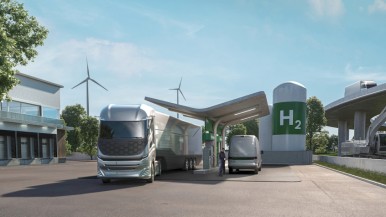
Stuttgart / Hannover – Today at IAA Transportation, Volvo Group, Daimler Truck, Toyota Motor Corporation, Bosch, Air Liquide, TotalEnergies, TEAL Mobility, and MB Energy unveiled their plans to accelerate the rollout of hydrogen-powered vehicles across Europe. For the first time in Europe, the German ecosystem has put in place all the conditions for a scalable deployment of Hydrogen trucks by 2030, driven by the German authorities and European industrial leaders along the value chain. Building on the German deployment model as a practical baseline, scaling these solutions across the continent calls for aligned support from national governments and the European Commission to ensure long-term energy resilience and competitiveness.Rooted in the shared conviction that hydrogen is an important complement to battery-electric vehicles in achieving the EU’s decarbonization targets, industry leaders are joining forces to overcome historical bottlenecks, particularly for truck operations requiring long range, high payload capacity, rapid refueling and operational flexibility. At Daimler Truck, customers have driven almost 600,000 kilometers with fuel cell trucks. As the next step, the company plans to deploy a small series of 100 next generation fuel cell trucks into customer operations from the end of 2026 onwards. In parallel, the first hydrogen combustion engine trucks are being prepared for market launch next year. Overall, the company invests a mid-three-digit million euro amount in hydrogen trucks by the end of the decade. Volvo Group is similarly advancing its hydrogen portfolio and investing significant amounts into hydrogen power solutions such as both fuel-cell and hydrogen-combustion trucks for market rollout towards 2030. Toyota will participate as a technology partner supporting the expansion of hydrogen mobility, leveraging more than 30 years of expertise gained through the development and supply of fuel cell systems, while Bosch is supplying key vehicle components for gaseous hydrogen – with its fuel cell system proven over more than 30 million kilometers on the road – alongside break-through refueling technologies for both liquid and gaseous hydrogen. On the energy and infrastructure side, Volvo Group and Daimler Truck are closely cooperating with energy companies and hydrogen suppliers like Air Liquide, TotalEnergies and MB Energy, and retail operators such as MB Energy and TEAL Mobility (a 50/50 joint venture between TotalEnergies and Air Liquide, operating under TotalEnergies brand). These players are mobilizing their respective capacities to scale both liquid and gaseous hydrogen supply chains. Through their infrastructure investments, they are advancing toward large capacity, high-throughput refueling stations, able to refuel up to 100 trucks per day. They are also leveraging synergies with the fast-growing industrial renewable hydrogen production, driven by the implementation of the European RED III directive. Reaching competitive cost with diesel is essential for fleet operators to adopt hydrogen. Crucially, combining German government policies with industrial collaboration makes this possible through three key levers: Lowering truck cost through incentives and series production. Reaching diesel competitive hydrogen pump price through a more competitive hydrogen supply chain and Greenhouse Gas quota mechanisms. Offering operating incentives like zero emission toll exemptions for fleet operators. Market is rising to meet these conditions. Recent applications under Germany's NOW funding program were oversubscribed, with over 70 high-capacity stations and 800 heavy-duty trucks applied for by industrial companies, confirming strong commercial pull from the logistics sector. While Germany serves as the operational launchpad, demonstrating how industry action and targeted public support can accelerate market development, the industry leaders are calling for strategic measures – supported by national governments and the European Commission – to replicate this model at a continental scale. These measures include scaling infrastructure through synchronized funding calls for refueling stations and vehicles to meet Alternative Fuels Infrastructure Regulation (AFIR) targets; strengthening the commercial viability of hydrogen through pragmatic, harmonized renewable fuel credit mechanisms and toll incentives; and jointly de-risking the overall value chain, from production and liquefaction to final distribution and vehicle operation. This combination of industrial execution and a strong policy framework provides the foundation needed to scale zero-emission freight while reinforcing Europe’s industrial competitiveness, energy resilience and employment, and reducing emissions from freight transport.

IAA Transportation 2026: Bosch aims to double sales in the heavy-duty commercial ...

14.09.2026

Press release

Mobility

IAA Transportation 2026: Bosch aims to double sales in the heavy-duty commercial ...

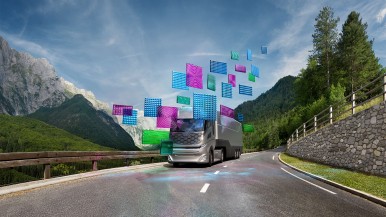
Stuttgart and Hannover, Germany – The commercial vehicle industry is facing virtually unprecedented opportunities – but also challenges. Rising transport demands driven by the growth of global trade, stringent regulatory requirements, and a worsening driver shortage are putting pressure on the industry and driving up total cost of ownership. Bosch’s answer to this is more technology that opens up new economic prospects. “The heavy-duty commercial vehicle business is a key growth area for us. We aim to double our sales in this segment by the mid-2030s,” said Dr. Markus Heyn, deputy chairman of the Bosch board of management and chairman of the Mobility business sector, at the IAA Transportation 2026 in Hannover. The robust commercial vehicle market is also bolstering Bosch’s business. While global vehicle production is expected to show an overall downward trend in 2026, the heavy-duty commercial vehicle segment (vehicles weighing over six metric tons) is proving to be more resilient. Following a strong first half of the year, Bosch expects global truck production to grow moderately by about 1 percent to approximately 3.3 million trucks, and then to 4 million units by the mid-2030s. On the basis of this forecast and the market uptake of corresponding technologies, Bosch sees the potential to double its heavy-duty commercial vehicle technology sales from today’s more than 4 billion euros by 2035. At the same time, assuming a solid final quarter, the Bosch Mobility business sector will be able to maintain its 2026 revenue level despite the current challenges and demanding market environment. We’re leveraging our strength as a global systems supplier to accelerate the transition to alternative powertrains and new vehicle architectures,...Heyn said. The company’s portfolio ranges from hardware and software to artificial intelligence and cloud-based services that make operating commercial vehicles safer and more economical. Bosch is also boosting its growth by entering new business areas. The company plans to establish a new joint venture with Brakes India and Wheels India, two subsidiaries of the TSF Group, to develop smart actuators for compressed air generation, compressed air treatment, air suspension, and parking brakes. Powertrains and technology for all markets A key element of Bosch’s growth strategy remains its broad portfolio of alternative powertrain technologies. The company is consolidating its market position in battery-electric mobility: in 2026, one-third of all newly registered battery-electric trucks in Europe are powered by electric motors and inverters from Bosch. A major new order from long-time partner Daimler Truck for the eActros electric truck underpins this success: the agreement covers the supply of electric powertrain components manufactured in Europe. Similar to the passenger car segment, the pace of transformation in the commercial vehicle market also varies by region: electromobility is rapidly gaining momentum and is becoming especially widespread in China. Bosch estimates that by 2030, about one in four newly registered heavy-duty trucks worldwide will be climate-friendly – powered by batteries or fuel cells – with that figure going up to about half by 2035. In the North American market, on the other hand, the traditional – and in some cases, hybridized – diesel engine continues to dominate. “Achieving the world’s climate goals in the transport sector isn’t an ‘either-or’ proposition – we have to use every technology that helps us transition away from fossil fuels,” Heyn said. “Batteries are also becoming the lead technology in commercial vehicles, but in heavy-duty long-haul transport and on global markets, they will continue to rely on hydrogen and alternative fuels to supplement them.” That’s why Bosch consistently focuses on technological diversity and, in addition to fuel-cell power modules, also supplies key components for hydrogen-powered combustion engines. At the same time, the company intends to systematically expand its leading position in diesel engines and continues to optimize conventional injection systems to help vehicle manufacturers meet new emissions standards such as Euro 7. For the global fleet, renewable synthetic fuels can also help make rapid progress toward climate goals. Smart sensors for new safety requirements The commercial vehicle industry is undergoing a transformation, one that’s not limited to powertrain technology: to improve safety on its roads, the EU has made an increasing number of driver-assistance features mandatory in recent years; the most recent regulations were introduced in July 2026. The emergency braking assistant must now also reliably identify pedestrians and cyclists, and the driver monitoring system is required to detect not only drowsiness but also distraction. Bosch provides the necessary sensors and functions. In 2027, the company will launch new generations of its multipurpose camera and radar sensor, both of which will enable precise detection of people and vehicles, thanks to the latest AI technologies and significantly greater computing power. A digital rearview mirror with a built-in camera that analyzes driver behavior and issues warnings when it senses driver distraction went into mass production in 2026 at two well-known European manufacturers. Even outside Europe, major markets such as India and China are tightening their safety standards. In India, for example, new regulatory requirements are pushing up demand for modern driver assistance systems, such as emergency braking assist and blind-spot detection. Bosch is already working there with leading commercial vehicle manufacturers to implement the appropriate ADAS solutions in order to support the introduction of the new safety standards. With its comprehensive portfolio of systems and sensors, Bosch helps create a complete view of the truck’s surroundings and enhances driving safety and convenience. Thanks to intelligent software algorithms, data from the various sensors in the vehicle is combined and analyzed in real time. The cameras and radar systems are also suitable for higher levels of automation. “Level 4 automated driving is the goal, in part to address the driver shortage in the logistics sector,” Heyn said regarding the automation roadmap. “The software can handle increasingly complex driving tasks, thus reducing the burden on the logistics system.” On the path to software-driven commercial vehicles Modern commercial vehicles are collecting and processing increasing amounts of data. The ever-expanding range of powertrain, assistance, and automation functions is leading to much greater complexity in electrical and electronic systems. In addition, competitive pressure in the industry is creating a strong incentive for systems integration, as combining components into complete systems reduces complexity and, in turn, costs. For example, vehicle functions that were previously distributed throughout the truck are now consolidated on central computing platforms for domains such as the cockpit or the vehicle. Furthermore, software and hardware are being consistently decoupled. This is a prerequisite for rolling out new features across the entire vehicle portfolio and throughout the vehicle’s lifecycle by means of over-the-air updates. Bosch and its subsidiary ETAS are developing the central E/E architectures required for this, featuring high-performance, scalable vehicle computers and the associated software platforms. “The software-defined vehicle is gradually becoming a reality in the trucking industry as well,” Heyn said. As a result, customers are benefiting from the company’s systems expertise, as it is well-versed in both hardware and software. Software-defined mobility in the trucking business addresses the industry’s most critical factor: total cost of ownership. For fleet operators, the software-defined truck significantly reduces day-to-day complexity.

IAA Transportation 2026: How Bosch is shaping freight transport today and tomorrow

02.09.2026

Press release

Mobility

IAA Transportation 2026: How Bosch is shaping freight transport today and tomorrow

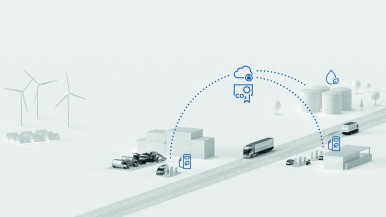
Stuttgart, Germany – Bosch is shaping the transition to software-defined commercial vehicles with a broad portfolio of technologies for powertrains, thermal management, chassis, automation, connectivity, and digital services. The company’s latest innovations help vehicle manufacturers and fleet operators tackle the industry’s most pressing challenges, from decarbonization and traffic safety to the increasing complexity of software and systems in modern commercial vehicles.As a system partner, Bosch provides custom solutions that, through software and artificial intelligence, encompass both the hardware in the vehicle and the digital control system. In May 2026, Bosch announced its plans to establish a new joint venture by the end of the year in collaboration with the two subsidiaries of the TSF Group, namely Brakes India Private Limited (BIPL) and Wheels India Limited (WIL). The establishment of the new company is still subject to official approval. Through the new joint venture, Bosch aims to expand its portfolio to include smart actuators for compressed air generation, compressed air treatment, air suspension, and parking brakes. The goal is to strengthen the company’s position in the commercial vehicle segment and to further advance the development of software-defined commercial vehicles and connected transportation solutions. Bosch powertrain technologies for global markets Electric powertrain: Bosch is electrifying both light- and heavy-duty commercial vehicles, from individual components to complete systems solutions. Its new rigid e-axle integrates core components of the electric powertrain like the electric motor and transmission into a solution for commercial vehicles weighing 18 to 49 metric tons. The axle reduces the vehicle’s weight and also operates more efficiently than a conventional electric center drive. When combined with silicon carbide inverters, which feature an efficiency of up to 99 percent, the rigid e-axle significantly reduces operating costs in freight transport. A global manufacturing and supply network also ensures reliable delivery directly to sites in all relevant markets. High-voltage motor-driven fan: Efficient thermal management is crucial for the range and performance of electric commercial vehicles. To this end, Bosch is introducing a new high-voltage blower module for 800-volt architectures , which the company has developed specifically for electric commercial vehicles and off-highway applications. The solution provides on-demand cooling for key vehicle components, reduces energy consumption, and thus helps increase range and efficiency. Fuel-cell systems for buses and trucks: As a locally emission-free powertrain solution for commercial vehicles, fuel cells use hydrogen and oxygen to produce water and electricity. Compared to a purely battery-electric powertrain, this technology offers advantages such as lower system weight, longer ranges, and quick refueling times. Bosch’s portfolio of compact, highly integrated fuel-cell systems covers a power spectrum from 100 to 300 kilowatts. This enables the operation of city buses, long-haul trucks, and stationary applications. Hydrogen engines as alternative powertrain: Since 2025, Bosch has been supplying various test vehicles and fleets worldwide with, among other things, injectors, control units , and sensors for direct and intake manifold injection , as well as components for hydrogen tank systems . Because this powertrain solution is based on established architectures, automakers can still use their existing development and production lines. In addition, the hydrogen engine conserves resources because it requires virtually no raw materials that are difficult to source, such as rare earth elements or precious metals. Bosch also offers solutions for other alternative fuels, such as natural gas/methane, ethanol, and methanol, which have often been developed for specific regions or applications. Bosch’s digital carbon certificate: Organic and electricity-based synthetic fuels reduce carbon emissions from existing fleets and commercial vehicles that are difficult to electrify. Bosch provides fleet operators who use renewable synthetic fuels such as hydrotreated vegetable oil (HVO) with a digital fuel twin . This cloud-based software function automatically tracks the use of alternative fuels and documents the resulting reduction in emissions. Sensors and connectivity for greater safety in truck traffic Integrated drowsiness detection in the side mirror: As of mid-2026, the EU requires all newly registered trucks to be equipped with sensor-based driver warning systems to prevent accidents caused by inattention or fatigue. Bosch is implementing the EU regulation particularly efficiently: a camera integrated into the left display of Bosch’s digital side mirror monitors the driver’s attention, eliminating the need for manufacturers to install a separate unit. Two European truck manufacturers are already equipping their vehicles with this solution as standard. A separate control unit is still needed to process the image data, but in the future, a central domain controller will handle this task. Sensor data fusion directly in the camera: Modern trucks already use multiple video and radar sensors to track their surroundings. Bosch’s MPC4 multipurpose camera is the first to enable data fusion from the camera’s numerous surround sensors. Compared to the previous model, Bosch has increased the computing power by a factor of twenty and is using artificial intelligence (AI) to improve assistance systems such as lane-departure warning and emergency brake assist. The system, which is specifically designed for the commercial vehicle environment, will go into production in 2027. Radar technology with its own chip architecture: Alongside the camera, Bosch will introduce its new seventh-generation radar sensor in 2027. The sensor uses waveguide antenna technology and a processing chip (system on a chip, SoC) manufactured in-house, while AI algorithms optimize signal quality. The technology adapts flexibly to various E/E architectures, from traditional domain control units to high-performance computers that will define the software-defined truck of the future. Predictive driving and simplified access: Connecting commercial vehicles to the cloud enables new safety and convenience functions. For example, Bosch’s connected map services analyze real-time data on accidents, wrong-way drivers, and hydroplaning to proactively control driver assistance systems. The fleet management xtended access system, in turn, controls vehicle access using a physical key and a smartphone app. The digital key simplifies fleet scheduling for fleet managers. High-performance vehicle computers and software solutions Vehicle computers for software-defined commercial vehicles: To manage the increasing complexity of modern trucks, Bosch is developing central E/E architectures with powerful and scalable vehicle computers. The cockpit integration platform, for example, brings together all functions for driver interaction – from operating the infotainment system to other cockpit applications. For cross-domain functions, Bosch offers additional solutions such as its vehicle integration platform, which combines functions from the motion, energy, and body domains on a central computing platform. These high-performance computers enable the transition to software-defined commercial vehicles by supporting fast over-the-air software updates and advanced features such as secure gateways and other on-demand features. The ETAS software platform for software-defined commercial vehicles: The Bosch subsidiary ETAS offers a vehicle software platform suite , which provides a stable and secure basis for the efficient development and management of scalable vehicle architecture. Based on the open-source initiative Eclipse S-CORE, it supports all modern vehicle architectures – from classic control units to powerful computers and platforms for assisted and automated driving. Customers can use it to efficiently create state-of-the-art vehicle platforms and market them more quickly. Diagnostic solution from ETAS: The Bosch subsidiary ETAS is introducing next-generation vehicle health and repair , a service-oriented diagnostic approach based on the ASAM SOVD standard. This system pools vehicle data, diagnostic functions, and service information to quickly identify complex faults in software-defined commercial vehicles. This allows workshops to plan and prepare for repairs more effectively, reduce downtime, and increase the first-time fix rate – that is, successfully complete repairs during the customer’s first visit to the shop. At the same time, the diagnostic data collected is fed directly back into development and quality assurance, thereby contributing to the continuous improvement of the vehicles. Steering and occupant protection systems for commercial vehicles ServoE – fully electric steering: Bosch’s ServoE electromechanical system steers heavy-duty commercial vehicles using only electric power and requires no oil, which simplifies factory installation. The power-on-demand function reduces the vehicle’s energy consumption during operation. Thanks to its redundant design and a cybersecure software architecture, the system enables assisted steering functions all the way up to automated driving. In addition, ServoE paves the way for future steer-by-wire technologies without a mechanical connection between the steering wheel and the wheels. Servotwin – electrohydraulic steering system: The Servotwin electrohydraulic steering system for heavy commercial vehicles combines a hydraulic Servocom steering system with scalable electrical servo units. Its cybersecure software architecture reliably controls SAE Level 2 steering assistance and driver assistance functions. In this way, Bosch significantly improves driving comfort and safety on long-haul trips. Rear-axle steering for a smaller turning radius : Bosch’s electrohydraulic rear-axle steering system , as a standalone power-on-demand system, steers up to three or more leading or trailing heavy-truck axles. The additional axle steering reduces the turning radius and helps prevent premature tire wear. Thanks to its compact design, the system fits into all standard powertrains and trailer applications. Compact, low-friction steering shaft: The modular steering shaft connects the steering mechanism to the steering column in buses as well as in medium- and heavy-duty commercial vehicles. The mechanical component fully compensates for relative movements between the cab and the chassis while driving without affecting steering behavior. In addition, this weight-optimized component features a highly compact design and minimal internal friction. Airbag control units for enhanced occupant safety: Bosch protects the occupants of heavy-duty trucks in the event of a collision with an airbag system specifically tailored to this market segment. In electric commercial vehicles, the 24-volt system ensures that the high-voltage battery is automatically disconnected from the vehicle’s electrical system in the event of an accident. This protects occupants and emergency responders alike from hazards such as electric shock or fire. The control unit also records accident data in the integrated event data recorder and transmits crash information in real time to the vehicle’s internal network via the J1939 protocol.


SMM 2026: Bosch presents injection technology for the large engines of the future

01.09.2026

Press release

Mobility

SMM 2026: Bosch presents injection technology for the large engines of the future

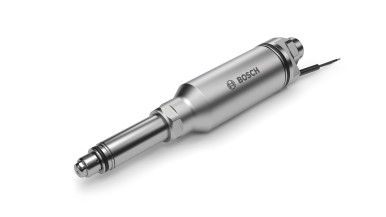
Stuttgart and Hamburg, Germany – Ships account for about 80 percent of international freight traffic, and also cause 2 to 3 percent of all man-made carbon emissions worldwide. Bosch, a leading supplier of injection systems for maritime engines, is working with partners to develop solutions that will enable ships to use renewable synthetic fuels efficiently and reliably in the future. In this way, Bosch is making an important contribution to achieving the International Maritime Organization’s (IMO) ambitious climate goals on the path to net-zero greenhouse gas emissions by 2050. At the SMM international trade show in Hamburg, the technology company is showcasing a new injector for alternative fuels that can be used with both liquid and gaseous fuels. “The maritime market will continue to grow in the coming years, while needing to decrease its environmental impact dramatically,” says Dr. Stefan Schenk, who oversees the Large Engines business unit in Bosch’s Power Solutions division. “To truly establish sustainable fuels in the shipping industry, we need policymakers, the fuel industry, shipbuilders, and shipowners around the world to work together.”According to forecasts by the UN Conference on Trade and Development (UNCTAD), global maritime traffic is expected to grow by an average of about 2 percent per year through 2030. Other long-term scenarios from the International Transport Forum also assume that the volume of freight transport worldwide could nearly double between 2019 and 2050. Shipping remains by far the most important mode of transportation for global trade. “The market for climate-friendly maritime propulsion systems will grow rapidly in the coming years,” Schenk says. Greater sustainability in maritime applications – and beyond Current Bosch injection systems have so far been used primarily with diesel or diesel-based fuels and are mainly installed in medium- and high-speed large engines. These can be found, for example, on ferries, tugboats, yachts, or in generators that provide onboard power for large container ships and freighters. Bosch components are already compatible with drop-in fuels such as biodiesel and paraffinic diesel. This means that, provided they are fueled appropriately, such components can already help reduce carbon emissions. “Our development efforts are now focused on injection and air-injection components for liquid and gaseous alternative fuels,” Schenk says. The new Bosch injector can work with a variety of fuel types, including hydrogen, methanol, ethanol, and ammonia, and its design can be customized to suit the specific application. It can be used for either intake manifold injection or for low-pressure direct injection and is currently being tested by Asian customers. Some of the development challenges associated with methanol use include, for example, modifying combustion processes, ensuring reliable cold starts, and addressing material compatibility and wear caused by the fuel’s lower lubricity. This is because, without appropriate modifications, existing products are not suitable for use with methanol or ammonia. Bosch offers special injection valves for the gaseous injection of natural gas, hydrogen, or ammonia into the intake manifold. In addition to maritime applications, Bosch technology is also used in large stationary engines, construction machinery, locomotives, and more. Millions invested in the Hallein location To advance these developments further, Bosch recently put a methanol infrastructure into operation at its engineering location in Hallein, Austria, investing tens of millions in the project. Within the Bosch Group, this facility serves as the global center of competence for large-engine injection systems. “Decarbonizing large engines requires a diverse array of technologies – especially where electrification reaches its limits and where renewable synthetic fuels will play a key role in the future,” Schenk says. “With the new methanol infrastructure, we’re laying the groundwork to further develop these technologies and get them ready for volume production and deployment by our customers.”

Hydrogen: New Bosch fuel-cell system begins test operations in Madrid

28.07.2026

Press release

Mobility

Hydrogen: New Bosch fuel-cell system begins test operations in Madrid

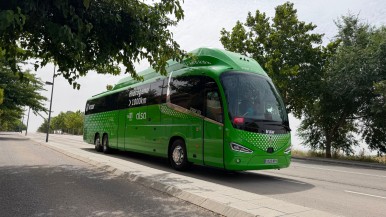
Stuttgart, Germany and Madrid, Spain – In Europe, pressure on urban public transit is mounting: in light of mandatory EU requirements to reduce carbon emissions from city buses by 90 percent by 2030, public transit operators are seeking reliable, emissions-free solutions. To this end, an initial test operation is now launching in Madrid: Equipped with a fuel-cell power module (FCPM) from Bosch, an Irizar bus has been transporting passengers through the Spanish capital for several weeks now. Vehicle operation will focus on routes where the fuel cell’s long range allows it to fully demonstrate its advantages. The operator is the Spanish bus company Alsa. The fuel cell is the perfect complement to battery-electric powertrains – even in bus operations,...says Thomas Pauer, member of the Bosch Mobility sector board and president of Bosch Power Solutions. “Fuel cells are especially well-suited for buses that travel longer distances every day and rarely have the opportunity to charge en route. With this trial, we can clearly demonstrate that Bosch’s fuel-cell technology is ready for the demands of large-scale deployment in passenger transport.” Over the past few weeks, the test vehicle has already undergone extensive testing and received the necessary approval. Day-to-day operation in real conditions will now confirm the robustness and strengths of the fuel-cell powertrain. The test bus is equipped with the FCPM C190 fuel-cell system from Bosch. This compact system is based on a horizontal double stack and delivers a continuous output of 190 kilowatts. With the available hydrogen tank capacity, ranges of over 1,000 kilometers are possible, with refueling times of just 10 to 15 minutes. This means the bus can also be used for intercity service. In addition to the FCPM C190, Bosch also offers the FCPM C300, a system designed for heavy-duty tour buses and trucks. The portfolio is rounded off by the FCPM C100, which, with a continuous power output of 100 kilowatts and a flat design, is the ideal solution for city buses. EU regulations are driving innovation in the bus sector Due to EU regulations, bus operators and city transit companies are increasingly turning to alternatives to diesel engines. In addition to regulations aimed at improving air quality in cities, climate regulations also call for more environmentally friendly powertrain systems. For example, by 2030, carbon emissions of newly registered city buses must be reduced by 90 percent compared to 2019; for all other bus types, this applies from 2040 onward. Vehicles with fuel-cell power modules, which the EU recognizes as zero-emission vehicles, can make an important contribution here. According to the European Automobile Manufacturers’ Association (ACEA), just over 38,000 new buses were registered in the EU in 2025. Bosch technology along the entire hydrogen value chain Bosch is strongly committed to building an H 2 economy, and is developing technical solutions for the production, infrastructure, and use of hydrogen. In 2025, the company announced the launch of its Hybrion PEM electrolysis stack for hydrogen production. Bosch is also working on technology for hydrogen engines and offers corresponding components for port and direct injection. At the end of 2025, a team of developers from Bosch won the German Future Prize, the federal president’s award for technology and innovation, for their development of the mobile fuel cell.

Bosch, Toyota, BMW, and Repsol launch real-world pilot of vehicles running on 10 ...

15.07.2026

Press release

Mobility

Bosch, Toyota, BMW, and Repsol launch real-world pilot of vehicles running on 10 ...

Stuttgart – Bosch, in collaboration with Toyota Motor Europe, BMW Group and Repsol, today announces the launch of a pioneering six-month pilot project in Spain. The pilot, which started in early July, will demonstrate the real-world potential of Vehicles running Exclusively on Eligible Fuels (VEEF)*. The initiative will deploy a fleet of around 20 Toyota and BMW vehicles, powered by Repsol’s 100 % renewable gasoline (Nexa 95), and supported by Bosch’s advanced digital fuel tracking technology. This pilot aims to provide tangible, real-world evidence that vehicles exclusively running on eligible fuels can be effectively deployed at scale, supporting Europe’s transition to decarbonize mobility through a complementary, technology-neutral approach while leaving no one behind.Bosch’s digital fuel tracking solution will collect and validate refueling data from multiple sources, including vehicle data, fuel stations and fuel card transactions, ensuring robust, transparent tracking of renewable fuel usage. With our digital fuel twin, Bosch is bringing full digital transparency to the entire fuel value chain to reliably track and verify the renewable fuels from the moment they enter the market right down to the end consumer. By precisely monitoring fuel usage on individual vehicles in real-time, we are building the foundation of trust and regulatory compliance needed for higher acceptance of renewable fuels in the mobility and transport sector,...says Dr. Marko Babic, head of the Bosch product area in charge of the digital fuel twin. "Technology openness is a key pillar of the BMW Group strategy – at the same time our goal is always to have more environmentally friendly and efficient vehicles on the road. Our BMW and MINI vehicles as a part of this future oriented pilot, will help to gain valuable data helping us to offer our global customer the best and most efficient powertrain also in the future.” says Stefan Heller, Head of Development of the VEEF programme at BMW Group. The pilot will focus on three key objectives: Availability of renewable gasoline in the market – leveraging Repsol’s infrastructure, currently the only provider of 100 % renewable gasoline at public fuel stations in Spain. Readiness of digital tracking and certification technologies – enabled by Bosch’s digital fuel twin system, which certifies renewable fuel usage across the full lifecycle. Operational deployment of VEEF fleets – demonstrating that existing vehicles can run today on 100 % renewable fuels using existing infrastructure. Unlike solutions that require new vehicle technologies or infrastructure investments, the pilot uses existing Toyota and Lexus passenger cars provided by Toyota España, and BMW fleet vehicles. It highlights the immediate scalability of renewable fuels as a drop-in solution for decarbonizing road transport. Repsol’s Nexa 95 renewable gasoline is produced from RED-compliant (Renewable Energy Directive) feedstocks, offering significant greenhouse gas reductions compared to fossil fuels, while remaining fully compatible with today’s gasoline engines and infrastructure. Spain has been selected as the optimal location for this demonstration due to the availability of renewable gasoline, strong partner collaboration, and Toyota España’s operational support. "At Repsol, we believe every emission-reduction solution has a role to play in decarbonizing transport. This project underscores how renewable fuels can expand consumer choice, offering another way to reduce carbon footprints using existing vehicles and infrastructure. As the only company currently supplying 100 % renewable gasoline at public service stations in Spain, Repsol is proud to contribute its expertise and infrastructure alongside Toyota, BMW, and Bosch. The project’s real-world data will demonstrate the value of a technology-neutral approach to Europe’s mobility transition", says Estíbaliz Pombo, Deputy Director of Energy Products at Repsol. Strengthening the case for technology neutrality in Europe The pilot is designed to generate robust data and insights that will support ongoing European policy discussions on decarbonizing the automotive sector. With EU policy currently focused predominantly on electrification, the project aims to demonstrate that renewable fuels can play a complementary and scalable role in reducing CO₂ emissions. Data and intermediate findings from the pilot will be shared with EU policymakers, industry stakeholders and media audiences, contributing to discussions around technology neutrality and the potential inclusion of VEEF vehicles within future regulatory frameworks. “We believe renewable fuels can play a key role alongside electrification in reducing CO₂ emissions. As the transition progresses, it is becoming clear that there is a growing risk that 100 % zero-emission vehicles by 2035 may not be fully achieved. In such a scenario, renewable fuels can help bridge the gap to deliver carbon neutrality, especially when combined with hybrid and plug-in hybrid technologies. This pilot aims to demonstrate how renewable fuels can make a meaningful and sustainable contribution to decarbonization today, for both new and existing vehicles”, says Pascal Ruch, Vice President Corporate & Governmental Affairs, Toyota Motor Europe. Driving measurable impact A key success factor of the project will be promoting the effective use of renewable fuel across the fleet, supporting emissions reductions and advocacy impact. The pilot will also provide valuable insights for R&D validation and monitoring methods, the scalability of existing approaches for tracking physical fueling, and fuel operator's ability to link fuel consumption to individual vehicles. * Eligible fuels: Refers to renewable and low-carbon fuels that comply with EU sustainability criteria under the Renewable Energy Directive (RED) and deliver significant greenhouse gas (GHG) emissions reductions on a well-to-wheel basis compared to fossil fuels. This includes sustainably produced biofuels and renewable fuels derived from waste, residues or renewable energy sources, as recognized in ACEA and FuelsEurope positions supporting the deployment of Vehicles Exclusively running on Eligible Fuels (VEEF). Press photos and infocharts are available on the Bosch Media Service at www.bosch-press.com .

Le Mans: Bosch and Maserati define the hydrogen-powered future of racing

28.05.2026

Press release

Mobility

Le Mans: Bosch and Maserati define the hydrogen-powered future of racing

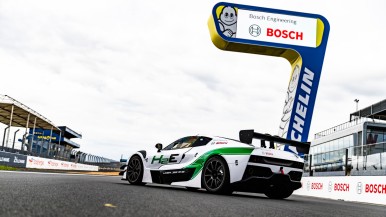
Abstatt – Bosch Motorsport's commitment to the 24 Hours of Le Mans is once again centered on greater sustainability this year. The demonstration of long-distance-capable alternative motorsport powertrains from Bosch Motorsport enters the next phase with the optimized hydrogen engine based on Maserati's Nettuno gasoline engine. "To make a vision like the hydrogen race car a reality, you need a strong team. Our strategic partnership with Ligier Automotive is the foundation on which we are developing and testing the vehicle. At the same time, our collaboration with Maserati provided a first-class basis for the engine. This pooling of expertise is our key to bringing sustainable performance to the road faster," says Ingo Mauel, Head of Bosch Motorsport.Innovative Engineering for Hypercar Performance The hydrogen unit developed by Bosch Engineering is fundamentally based on the Maserati Nettuno, a 3.0-liter six-cylinder gasoline engine with biturbo charging and dry sump lubrication. For the conversion to hydrogen operation, core components like the cylinder head and turbocharger were retained from the original design. Within the base engine, a key modification was solely made to the pistons, which were optimized in shape and to lower the compression ratio in order to extract even more power and performance at high RPM's. The modifications include, among other things, the injection system, the ignition system, and the engine control unit. Instead of the combined direct and port fuel injection, the current version uses modern hydrogen direct injection with HIDI LCV injectors from Bosch. This allows the 3.0-liter hydrogen engine to produce around 480 kilowatts and deliver 880 Newton-meters of torque in this Motorsport application. Davide Danesin, Head of Maserati Engineering, says: “Nettuno is a state-of-the-art engine that continues to demonstrate robustness, efficiency, and versatility. For this reason, it has proven to be particularly well-suited for conversion to hydrogen, thanks to its inherent strength, which allows it to withstand very high cylinder pressures.” Strong partnership brings innovation to the track To make the potential of a race car with a hydrogen engine tangible, Bosch Engineering entered into a strategic partnership with Ligier Automotive in 2021. The result is the development of the hydrogen-powered race car prototype, the Ligier JS2 RH2. The vehicle was first presented at the 24 Hours of Le Mans in June 2023. In the tests conducted since then, the vehicle and engine have proven their robustness over almost 8,000 test kilometers on track under various weather conditions without any technical issues. Continuous optimizations have led to the further development of the hydrogen concept; for example, the drive's torque and power were increased while further reducing emissions. “The Ligier JS2 RH2 project perfectly illustrates what can be achieved when three complementary areas of expertise come together. Our collaboration with Bosch Engineering and Maserati allows us to explore the full potential of hydrogen in motorsport, combining performance with sustainability. It also echoes a meaningful chapter in our history — the original Ligier JS2, powered by a V6 3,0l Maserati engine, claimed victory at the Tour Auto in 1974. Today, this legacy inspires us to look ahead. Together, we are not only developing a race car demonstrator, but also opening the door to future applications, such as a decarbonized track-day car integrating Maserati engine technology and Bosch hydrogen systems,” says Jacques Nicolet, President of Ligier Automotive. As in previous years, the Ligier JS2 RH2 with its hydrogen engine will complete a demo lap on the Le Mans race circuit on Saturday, June 13, 2026, and will be on display in the H2 Village throughout the race week. Further information: https://www.bosch-engineering.com/stories/ligier/ https://www.youtube.com/watch?v=UbLfgPRiG9M

Bosch and Mitsubishi Corporation: Joint Venture Launches First Customer Project  ...

26.05.2026

Press release

Mobility

Bosch and Mitsubishi Corporation: Joint Venture Launches First Customer Project ...

Stuttgart/Tokyo/Chizhou – The 'Bosch MC Battery Service Innovations GmbH' joint venture, established by Bosch and Mitsubishi Corporation, has secured its first customer for its innovative 'Battery as a Service' (BaaS) solution. This milestone was now marked with the inauguration of an energy service hub located in Chizhou, China. The facility, operated by Shanghai Lingzhou Technology Co. Ltd., is the first to deploy the joint venture's technology.At the hub, electric trucks can have their batteries swapped or recharged within minutes. An AI-driven charging approach, complemented by an integrated inspection solution, optimizes the process. This provides a tailored charging experience and enhanced asset monitoring and protection. The facility currently services more than 100 trucks daily. Electric trucks are on the rise in China: Nearly 30 percent of all heavy-duty trucks sold in 2025 were already so-called New Energy Vehicles (NEV). For 2030, Bosch even expects more than every second new truck will be purely electric. China is considered a pioneer in the transformation of heavy-duty transport. Bosch MC Battery Service Innovations eases electrification of fleets The joint venture’s offer addresses a core challenge for electric vehicle (EV) fleet operators: As battery capacity degrades over time based on individual usage and charging patterns, accurate planning for the future value of both the vehicle and its power source becomes difficult. Bosch provides its "Battery in the Cloud" solution as the technical basis for the services. This software calculates the exact 'state of health' of the drive battery, forecasts its progression, and helps to optimize charging. "With this service, Bosch and Mitsubishi Corporation can create real added value for fleets," says Thomas Pauer, President of the Bosch Power Solutions division. "Although the state of health can decline due to aging and many charging cycles, our solution allows fleet operators to keep an eye on the battery condition of their vehicles – a decisive criterion for the everyday suitability and total cost of ownership of a fleet." "Our service hits a local nerve: We support battery-electric vehicles in the fleet business," says Qian Yang, general manager of the joint venture’s local subsidiary in China. "This holistic approach accelerates the electrification of fleets and optimizes the entire battery lifecycle. The combined expertise of Mitsubishi and Bosch is a perfect match for our customers." Furthermore, collected charging data can be used to improve aftermarket service such as connected insurance, vehicle and battery maintenance, and service. Bosch and Mitsubishi have been collaborating on this topic since 2019. A first trial run of the services has already been successful.

Electromobility growth market: Bosch wins major order from Mercedes-Benz

19.05.2026

Press release

Electrified mobility

Electromobility growth market: Bosch wins major order from Mercedes-Benz

Stuttgart, Germany – The electrification of mobility continues to gain momentum – and together with its customers, Bosch is actively shaping this transformation. The company recently received a major new order from Mercedes-Benz to supply a large volume of electric motors into the 2030s for the premium manufacturer’s next generation of electric powertrains. “The new order reaffirms our long-standing partnership with Mercedes-Benz and shows that we can successfully contribute our expertise to technologically demanding projects as well,” says Markus Heyn, member of the Bosch board of management and chairman of Bosch Mobility. The order follows on from a successful year in 2025, in which Bosch acquired more than 70 customer projects worldwide. The company currently supplies more than 50 automakers from all over the world with technology and solutions for electromobility. Even though markets in different regions are developing at different speeds and price and competitive pressures remain high, these orders make it clear: Bosch is on course in electromobility, too. We win over customers with our core competence of being able to develop and manufacture complex technology in large quantities with significant economies of scale worldwide. We deliver electric-driving solutions to all markets around the world,...says Markus Heyn, member of the Bosch board of management and chairman of Bosch Mobility. Bosch electric motors feature up to 98 percent efficiency along with increased power density, thanks in large part to the new winding technology. These motors are also equipped with innovative rotor oil cooling, which is the optimum way to dissipate the heat. Another decisive advantage is their scalable platform architecture: the length of the electric motor can be varied depending on the power required, so the motor can be easily installed in different axle variants. This allows customers to integrate the powertrain flexibly and cost-effectively into a range of vehicle models. The combination of high efficiency, innovative cooling, optimized winding technology, and scalable platform architecture results in a particularly compact design that reduces weight, installation space, and ultimately system costs. Bosch is a key technology partner for numerous manufacturers worldwide Bosch plans to manufacture more than seven million components for electric driving in 2026. Currently, roughly seven electric motors roll off the company’s production lines every minute worldwide. Besides premium manufacturers such as Mercedes-Benz, Bosch also works with a large number of other international automakers in the field of electromobility. In India, for example, the company has entered a joint venture with TataAutocomp Systems to develop, commercialize, and manufacture e-axles for the Indian market. Bosch also plays a leading role as a technology partner in China, the world’s largest vehicle market today. “We already work with almost all Chinese car manufacturers, as well as with numerous international automakers operating in China,” says Marco Zehe, president of Bosch’s Electrified Motion division. For more than a decade, Bosch has been manufacturing for a large number of automakers based there and supplies more than 30 customers with solutions for electric driving. From silicon carbide chips to complete powertrain solutions – Bosch covers the entire spectrum of electromobility worldwide. In addition to the e-axle, the company now also offers “X-in-1” solutions, in which several elements such as the electric motor, power electronics, transmission, and energy management are bundled into highly integrated systems. These are more compact, lighter, and less complex, and offer clear cost benefits for customers.

Road hazard service: Bosch hazard warnings in BMW Group vehicles

07.05.2026

Press release

Mobility

Road hazard service: Bosch hazard warnings in BMW Group vehicles

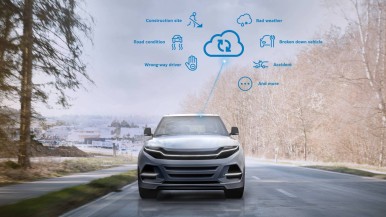
Stuttgart/Munich – The journey is its own reward. Bosch’s road hazard service brings safety to new heights so that drivers can enjoy an even more carefree and rewarding journey. The cloud-based service uses continuously updated data from numerous sources to quickly warn drivers of potential hazards on their route, such as sudden fog or black ice, and is already being used in millions of different cars and commercial vehicles around the world. Also, initial vehicles from the BMW Group are using the Bosch service. Bosch plans to roll out the service gradually in additional BMW vehicles over the next few years. The road hazard service from Bosch increases road safety while also increasing the ease of driving. Our cloud-based service is a tangible win for our customers because it predicts and informs drivers, whether they are in a car or a truck, of hazards on the route and helps them avoid critical situations,...says Dr. Markus Heyn, member of the board of management at Bosch and chairman of the Mobility business sector. Bosch service already proving itself in millions of vehicles The road hazard service from Bosch was released in June 2024 and went live with a European vehicle manufacturer. Six months later, a large commercial vehicle manufacturer also integrated the service, which Bosch has been gradually rolling out since then. The cloud-based software solution is now available in millions of vehicles in Europe and the U.S. The service has also been part of the BMW Group’s vehicle fleets since March 2026. Some of the models using the road hazard service include the BMW iX1, iX2, iX3, and X3, as well as several Mini models. One unique selling point of the Bosch technology is that vehicle manufacturers can set the sensitivity of the system – meaning the point at which the system triggers a warning – to their exact specifications and in line with their own market philosophy. This includes notices about accidents and abandoned vehicles, for instance in construction zones. The service can also warn drivers of heavy rain that could lead to hydroplaning, heavy snow, and strong wind. In addition, Bosch is the only provider to offer a cloud-based wrong-way driver warning, which is, among others, used by a European high-volume manufacturer. Vehicle manufacturers can choose whether to purchase the wrong-way driver warning as part of the road hazard service package or as an individual feature. This technology provides drivers with an early warning and gives them crucial seconds to respond, often long before the wrong-way driver is even visible. The wrong-way driver warning is shown either directly on the display in the cockpit or on a smartphone, if the driver does not yet own a vehicle with an integrated wrong-way driver warning. The feature can be used in a variety of smartphone apps from Bosch partners. Simply download one of the partner apps and activate the feature to use this Bosch service. In total, these apps have already been downloaded more than 100 million times. Highly reliable thanks to smart data mix The high degree of reliability of the road hazard service is based on a smart fusion concept. Bosch combines anonymized real-time data from a worldwide fleet of millions of connected vehicles with information from third-party providers such as weather services and road operators. These sources together provide a highly precise, current overview of the road conditions, which forms the basis for reliable warnings. Driver assistance systems such as adaptive cruise control (ACC) and emergency braking assist can also use the predictive warnings to respond even more safely and precisely. In practice, an algorithm continuously analyzes and combines the incoming vehicle data, such as control interventions by the electronic stability program (DSC) and the activity of the windshield wipers. If the system determines, for example, that many vehicles in one region are using the windshield wipers on the highest setting and weather data is reporting heavy rain, the system concludes that there is a risk of hydroplaning. Affected drivers then receive an early warning and can adjust their speed in time. The quality of the predictions is continuously validated by Bosch’s own test fleet, which is equipped with special sensors. In addition, external sources such as webcams along the roads verify the emitted warnings. A new Bosch offering for even greater safety and ease on every drive: the connected speed limit system always knows the current speed limit and shows it to the driver directly in the vehicle. Thanks to smart connectivity, the service even recognizes dynamic limits, such as those in construction zones, on wet roads, or depending on the time of day.

A leap in semiconductor efficiency: Bosch introduces third generation of SiC chips

22.04.2026

Press release

Mobility

A leap in semiconductor efficiency: Bosch introduces third generation of SiC chips

Stuttgart, Germany – Chips made of silicon carbide (SiC) are the key to making electric cars more efficient and increasing their range. Bosch has now taken the development of these chips to the next level: the company has started to introduce third-generation silicon carbide chips and is supplying samples to global automakers. This means that in the future, more and more electric vehicles will be equipped with Bosch’s cutting-edge third-generation SiC chips. “Silicon-carbide semiconductors are the key drivers of electromobility. They control the flow of energy and make it as efficient as possible. With our next-generation SiC chips, we’re systematically expanding our technological leadership in this field and helping our customers put even more powerful and efficient electric vehicles onto the road,” says Markus Heyn, member of the Bosch board of management and chairman of the Bosch Mobility business sector. Our ambition is clear: we want to be a globally leading manufacturer of SiC chips,...says Markus Heyn, member of the Bosch board of management and chairman of the Bosch Mobility business sector. Bosch is thus positioning itself in a promising, high-growth market. Analyses by the market research and consulting company Yole Intelligence* forecast that the global market for SiC power semiconductors will grow from 2.3 billion U.S. dollars in 2023 to around 9.2 billion U.S. dollars by 2029, driven primarily by electromobility. Billions invested in global manufacturing network Silicon-carbide semiconductors switch much faster and more efficiently than conventional silicon chips. They reduce energy losses and enable a higher power density in the electronics. Bosch’s next-generation semiconductors offers not only a technological advantage, but also an economic one. “Our next-generation chips deliver 20 percent higher performance and are also significantly smaller than the previous generation,” Heyn says. “This miniaturization is the key to greater cost efficiency, as we can produce many more chips per wafer. That means we’re playing a key role in making high-performance electronics more widely available.” Bosch has already delivered more than 60 million SiC chips worldwide since the first generation went into production in 2021. In recent years, Bosch has pushed ahead with its development work for SiC chips and at the same time increased its manufacturing and clean-room capacity. The company has invested around 3 billion euros in semiconductors as part of Europe’s IPCEI (Important Projects of Common European Interest) funding programs for microelectronics and communication technology. Its wafer fab in Reutlingen, Germany, develops and manufactures the third-generation SiC chips on modern 200-millimeter wafers. In September 2023, Bosch acquired a second fab for SiC chip manufacturing in Roseville, California, and is currently equipping it with state-of-the-art, highly complex production facilities. The company is investing an additional 1.9 billion US-Dollar in the U.S. plant, which plans to manufacture and deliver its first SiC chips this year – initially as samples for customer trials. “In the future, Bosch plans to supply its innovative SiC chips from these two fabs in Germany and the U.S.,” Heyn says. This will make for more robust and resilient supply chains in the rapidly growing electrification of the automotive industry. In the medium term, Bosch intends to expand its manufacturing capacity for SiC power semiconductors to a unit volume running into the mid-nine figure range. Unique “Bosch process” is the key to success Bosch uses unique manufacturing expertise to make its chips both smaller and more powerful. The company adapted its etching process, which has existed since 1994 and is known throughout the industry as the “Bosch process.” Originally developed for sensors, this process enables the manufacture of high-precision vertical structures in silicon carbide. This design greatly increases the chips’ power density – a decisive factor for the third generation’s superior performance. *Power SiC 2024 report, Yole Intelligence, 2024