Search & find:
Media, press releases, events for your editorial coverage

Bosch establishes company with the synthetic diamond solutions provider Element Six

07.04.2025

Press release

Business/economy

Bosch establishes company with the synthetic diamond solutions provider Element Six

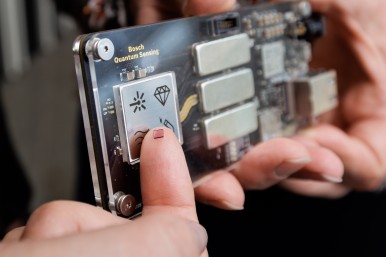
Stuttgart, Germany – They cannot be grasped, either literally or figuratively. Yet their potential is revolutionary, and they are a key technology of the future. We are talking about quanta. For more than ten years, Bosch has been researching in this field, and it is playing a decisive part in commercializing quantum sensors. Since 2023, it has had a development collaboration with Element Six, the world’s leading solutions provider of synthetic diamonds. Bosch is now significantly extending this alliance and establishing a joint venture, to be known as Bosch Quantum Sensing. The joint venture will be based on the in-house start-up of the same name, which Bosch set up in 2022. Domiciled in Ludwigsburg, Germany, Bosch Quantum Sensing currently employs 30 associates. Bosch itself will be the lead partner and be responsible for operations. Element Six will hold a 25 percent stake. It has been agreed that further financial details will not be disclosed. The establishment of the new company is still subject to official approval. Bosch Quantum Sensing sees many areas in which novel quantum sensors can be used, from exploration of natural resources to aircraft navigation and medical technology. By the middle of the next decade, Bosch estimates that the global market potential of medical and mobility applications will be in the mid-single-digit billion euros range per year. Synthetic diamonds are a key component of Bosch quantum sensors. In stepping up its partnership with Element Six, Bosch is making a determined move toward the commercialization of quantum sensors. Quantum sensors are a future technology with huge potential. They will bring about fundamental changes in many sectors of our economy, and improve people’s lives. In setting up this new company, we are underscoring this technology’s strategic significance for Bosch. As innovation leader of commercial quantum sensors, we will work with Element Six to further extend our technological lead,...says Stefan Hartung, chairman of the board of management of Robert Bosch GmbH. Quantum leap toward commercialization The distinctive qualities of these special-purpose synthetic diamonds allow quantum sensors based on them to detect even the tiniest magnetic fields. In this way, they satisfy the most exacting market requirements and make real innovations possible. “We want to work with Element Six to make quantum sensors economical and allow them to be produced on an industrial scale. In this way, we will create the basis for innovative applications that set new standards for precision and efficiency,” says Katrin Kobe, CEO of Bosch Quantum Sensing. “Through the new joint venture between Bosch and Element Six, which aligns with Element Six’ contribution towards De Beers Group’s Origins strategy, we will integrate our synthetic diamond technology with Bosch Quantum Sensing’s capabilities, unlocking new possibilities in critical sectors such as healthcare and navigation. Together, we will harness the respective decades of excellence and innovation to push the limits of what's possible, heralding a new era of synthetic diamond-enabled technologies”, says Siobhán Duffy, the CEO of Element Six. The synthetic diamond solutions provider is in a unique position to supply the highly engineered synthetic diamonds in the quantity and quality required for industrial applications, while Bosch will integrate them into robust and scalable sensor systems. It is a classic win-win situation. Even now, the latest Bosch quantum sensor prototype is the most compact of its kind for the level of sensitivity required – it is the same size as a modern smartphone. In the area of mobility, it could enable a robust navigation in the future, complementary to conventional GPS systems. It could also offer decisive advantages for the exploration of natural resources and, in medical technology, for the measurement of cardiac activity. The advantage of compact sensors is their portability, less expensive production, and better scalability. The long-term goal of Bosch Quantum Sensing is to make quantum sensors so small that they can be integrated onto a chip. Press photos and infocharts are available on the Bosch Media Service at www.bosch-press.com . Contact person for press inquiries: Athanassios Kaliudis Phone: +49 711 811-7497 E-mail: Athanassios.Kaliudis@de.bosch.com

Bosch invests millions in metal 3D printing center

18.03.2025

Press release

Business/economy

Bosch invests millions in metal 3D printing center

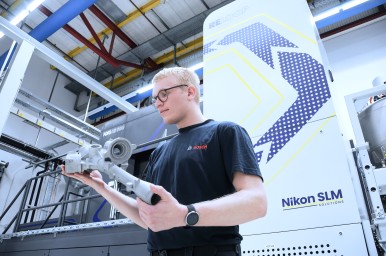
Nuremberg and Stuttgart, Germany – Speed, precision, flexibility, and energy efficiency: for Bosch, these factors are key when manufacturing the complex metal parts that it supplies to its in-house and third-party customers. With a new metal 3D printer at its Nuremberg plant, Bosch wants to bolster its pioneering role in the supplier industry. In fact, it is the first Tier-1 automotive supplier in Europe to have a facility in this performance class. The plant has invested almost six million euros in the center and in the associated purchase and installation of a Nikon SLM Solutions NXG XII 600 metal 3D printer. Bosch remains committed to Germany as an industrial location and is investing large sums of money here. By introducing new technologies in our plants, we are securing considerable sales potential....Klaus Mäder, member of the Bosch Mobility sector board responsible for operations. “Bosch remains committed to Germany as an industrial location and is investing large sums of money here. By introducing new technologies in our plants, we are securing considerable sales potential,” says Klaus Mäder, the member of the Bosch Mobility sector board responsible for operations, including all plants worldwide. The new 3D printer is intended to accelerate development cycles, especially for metal parts, which take a long time to make using conventional manufacturing processes. Commenting on the facility’s official start of operations, Alexander Weichsel, the commercial plant manager in Nuremberg, says: “By making the manufacture of metal parts faster and more productive, this new facility will increase our competitiveness.” And the technical plant manager Jörg Luntz adds: “With this facility, we are setting the highest standards in metal 3D printing. In volume production, this will open up completely new possibilities for us.” Whether components for hydrogen applications, motor housings for electric cars, components for e-axles, or engine blocks for racing: the facility’s sheer size and technical capabilities pave the way for a host of applications. Working from a computer-aided design file developed in advance, its twelve lasers melt metal powder layer by layer to create highly complex shapes. The new metal 3D printer is up to five times faster than the 3D printing systems that have been used up to now. Complex structures such as interior or curved channels, which are simply not feasible with conventional milling processes, can now be produced without any problem. While drilling around corners is not possible using conventional methods, 3D printing makes light work of this. The printer can produce unfinished parts on demand with no need for tooling. And because 3D printing slashes raw-material waste to almost zero, it also conserves resources. “Using the 3D printer to manufacture components not only increases sustainability in production, but also enables Bosch to respond flexibly to fluctuations in batch sizes and offer everything from a single source,” Weichsel says. Manufacturing a complete engine block using the 3D printing process One particularly vivid example of the new possibilities that the 3D printing process opens up is the engine block: with conventional manufacturing, it can take up to three years to get from the first draft design to volume production. Completing the casting mold for the engine block alone can take up to 18 months. 3D printing does away with this step. The design data is transmitted directly to the printer, eliminating the need for complex molds. The 3D printer delivers a finished engine block after just a few days, thus greatly reducing overall product development time. At full capacity, the facility can produce metal parts with a total weight of around 10,000 kilograms in under a year, achieving speeds of up to 1,000 cubic centimeters per hour. The main aim of this faster component production is to cut the time to market. “We want to be faster than with traditional manufacturing processes and use this technology to get products to market more quickly,” Luntz says. “Even today, only a few companies can produce technology on an industrial scale the way Bosch does. We’re now going one step further, taking volume production in metal 3D printing to the automotive level.” This opens the door to completely new opportunities and possibilities – in the automotive sector, but also in numerous other industries such as energy and aviation.

Into the hydrogen age: Bosch starts volume production of its fuel-cell power module

13.07.2023

Press release

Business/economy

Into the hydrogen age: Bosch starts volume production of its fuel-cell power module

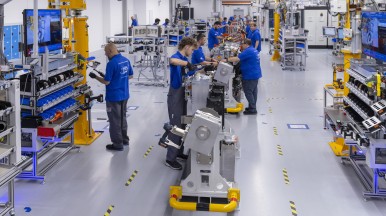
Stuttgart, Germany – Bosch is entering the hydrogen age of mobility. At its Stuttgart-Feuerbach location, the supplier of technology and services has now begun volume production of its fuel-cell power module. Nikola Corporation, based in the United States, will serve as the pilot customer with its Class 8 hydrogen fuel cell electric truck, which is scheduled to enter the North American market in the third quarter of 2023. “Here in Stuttgart-Feuerbach, in the plant whose history goes back further than any other Bosch plant, the hydrogen future is about to happen,” said Dr. Stefan Hartung, the chairman of the board of management of Robert Bosch GmbH, at the Bosch Tech Day 2023. “Bosch knows its way around hydrogen, and Bosch is growing with hydrogen.” The company operates along the entire hydrogen value chain, developing technology for its production and application. By 2030, Bosch plans to generate sales of roughly 5 billion euros with hydrogen technology. Here in Stuttgart-Feuerbach, in the plant whose history goes back further than any other Bosch plant, the hydrogen future is about to happen,...said Dr. Stefan Hartung, the chairman of the board of management of Robert Bosch GmbH, at the Bosch Tech Day 2023. In its solutions for the hydrogen economy as well, Bosch is relying on a global manufacturing network and the prowess of its German locations. For example, the Bosch plant in Bamberg, Germany, will supply the Feuerbach factory with the fuel-cell stack. And important system components such as the electric air compressor and the recirculation blower come from the Bosch plant in Homburg, Germany. “Bosch is one of the very few companies that are capable of mass producing technology as complex as fuel-cell stacks. We don’t just have the required systems expertise, but also the capability of quickly scaling up new developments to mass production,” said Markus Heyn, member of the Bosch board of management and chairman of Bosch Mobility. Production of the fuel-cell power module is not only starting in Feuerbach, but also in Chongqing, China. The components it requires will come from the Wuxi plant. “Bosch is the first company to produce these systems in both China and Germany,” Hartung said. In addition, Bosch is also planning to manufacture stacks for mobile applications in its U.S. plant in Anderson, South Carolina. Worldwide, the company expects that, by 2030, one in five new trucks weighing six tons or more will feature a fuel-cell powertrain. Bosch is helping to shape the hydrogen economy, and sees obligations on the part of policymakers Only with hydrogen can there be a climate-neutral world. For Bosch, that is crystal-clear. The company therefore strongly advocates the establishment of a hydrogen economy, and is stepping up its investments in hydrogen. Between 2021 and 2026, Bosch will have invested a total of nearly 2.5 billion euros in the development and manufacturing of its H 2 technologies. That is another billion euros more than was earmarked in the investment plan for 2021 to 2024. The business opportunities for Bosch are huge, as is the effect on jobs. Even now, there are more than 3,000 people at Bosch working on hydrogen technologies, more than half of them in Europe. Most of the vacancies can be filled from within the company, and especially with people who have so far worked in the Bosch powertrain business. However, the further prospects for the hydrogen business depend on the political environment. Hartung especially believes that Europe must do much more to create a counterweight to the rapid pace of developments in other regions of the world, such as the United States. More specifically, the Bosch chairman has four demands of German and European policymakers: “First, we have to step up the pace of hydrogen production in the EU. Second, global supply chains have to be set up, and third, hydrogen has to be used in all sectors of the economy.” As a fourth point, he stressed the importance of quickly setting up infrastructure for distributing hydrogen in Europe. Bosch technology starts with electrolysis and ends with the hydrogen engine At all events, Bosch is ready, and applying automotive experience to the hydrogen economy like no other company. This is why the company is also in demand in H 2 production. At the start of 2023, Bosch started constructing prototypes for electrolysis using proton exchange membranes – in other words, the reverse of the energy conversion method used in mobile fuel cells. Starting in the fall, the company intends to make 1.25-megawatt prototypes available for pilot applications, and is on track to start volume production in 2025. Bosch is exploring several options for the use of hydrogen. Stationary solid-oxide fuel cells can be used for the distributed supply of power and heat. In a pilot project at the hospital in Erkelenz, near Cologne in Germany, Bosch wants to use this technology to achieve overall efficiency of 90 percent. The micropower plant there will initially run on natural gas, but can be converted to green hydrogen. Apart from the fuel-cell powertrain, Bosch is also working on the hydrogen engine, developing systems for both port and direct injection of hydrogen. This solution is particularly suitable for heavy vehicles on long hauls with especially heavy loads. “A hydrogen engine can do everything a diesel engine does, but on top of that, it is carbon neutral. It also allows a fast and cost-effective entry into hydrogen-based mobility,” Heyn said. One major advantage is that more than 90 percent of the development and manufacturing technologies needed for it already exist. The H 2 engine is expected to be launched starting in 2024. Even now, Bosch has four orders for production projects from all the major economic regions, and expects six-figure unit volumes by 2030. In this field as well, Bosch is dynamically taking the hydrogen economy forward.


Mobility in the software age: Bosch to realign its automotive-supply business fo ...

04.05.2023

Press release

Business/economy

Mobility in the software age: Bosch to realign its automotive-supply business fo ...

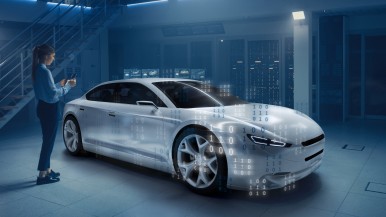
Stuttgart and Renningen, Germany – More than ever, innovations in the automotive sphere are coming about through bits and bytes. Bosch is responding to this trend toward software-based automotive engineering by realigning its automotive-supply business: within Robert Bosch GmbH, Bosch Mobility will in the future be managed as a business sector with responsibility for its own business and its own leadership team. At the Bosch annual press conference , Dr. Stefan Hartung , the chairman of the board of management of Robert Bosch GmbH, informed the audience about this. The aim is to be able to serve existing and new customer needs even better and faster with customized technologies and solutions from a single source. With some 230,000 associates at more than 300 locations in 66 countries worldwide, Bosch Mobility will be the biggest of Bosch’s four business sectors.“Software won’t only change how we use and experience cars in the future. It will also change the way cars are engineered. For some time now, Bosch has also seen itself as a mobility software company. Now, in response to customer requirements, our structure is changing to reflect this and to open up further growth,” said Dr. Markus Heyn , member of the Bosch board of management and the future chairman of the five-strong Bosch Mobility sector board. Organizationally speaking, some of the business sector’s individual divisions will be redrawn effective January 1, 2024, and all divisions will be given horizontal, cross-divisional responsibilities as well. With its mobility solutions alone, Bosch’s aim for this new structure is that it will generate sales revenue of more than 80 billion euros worldwide by 2029. First wave of software-defined vehicles expected from mid-decade One pillar of this growth will be the market for automotive software. Driven by the trend toward software-defined vehicles, this market is likely to reach a volume of significantly more than 200 billion euros by 2030. This is three times more than in 2020. Currently, Bosch growth in this market is in double digits. The entire automotive industry is presently putting a stronger focus on software development. Its share in development cost will be roughly 30 percent by 2030. At Bosch, it is already higher than that. Even now, more than 50 percent of all R&D associates working for Bosch Mobility are software engineers. Software-defined vehicles offer two outstanding advantages. The first is the speed of development. Instead of taking years, implementing new functions in existing systems will in the future be just a matter of days. The second is the decoupling of software and hardware development, which means that cars will feel like new for longer thanks to software updates. Explaining this, Heyn said: “Drivers across the globe want to seamlessly integrate their vehicles into their digital world. After all, we have gotten used to constant updates and new features on our smartphones. Now, we are applying this to cars as well.” From 2025, Bosch expects that software-defined vehicles will be introduced on a broad scale. New trend in automotive engineering reflected in Bosch organization The example of vehicle motion management shows how the reorganization of Bosch Mobility and intensified cross-divisional collaboration is conducive to this new trend in automotive engineering. It includes a new control concept that does an even faster and more accurate job of stabilizing vehicles. It can intervene not only in the braking system, but also in the electrical powertrain and electric steering system. This helps to shorten the braking distance, and the driver has to take considerably less corrective action. All this increases road safety. The technical basis is ESP10, the latest generation of the Bosch braking control system, and the Vehicle Dynamics Control 2.0 software function. The ingenious part is that the new control system does not have to form part of the ESP control unit, but can alternatively be integrated in the central vehicle computer – and, in the future, it will also be available as a standalone software package. But that’s just the start. Bosch anticipates a threefold increase in software applications and even a tenfold increase in applications that access the cloud. Bosch: a successful player in automotive hardware and software Software-defined vehicles go hand in hand with a new, centralized electrical and electronic (E/E) architecture. More than 100 control units are installed in the latest premium-class vehicles. Even today’s compact-class vehicles feature between 30 and 50 control units. “Our focus will be on making the complexity of electronic systems controllable and as reliable as possible,” Heyn said. In the future, it will be possible to significantly reduce the number of control units by using powerful computers for the various vehicle domains, such as cockpit and connectivity functions, driver assistance systems and automated driving, and the powertrain. This is why Bosch is developing a uniform IT architecture for the entire vehicle – from the cloud, to the central vehicle computer, to the individual control units. One major advantage is that Bosch is equally at home in the software and hardware domains. Whether brakes, steering systems, or eco-friendly powertrains – where Bosch pursues a technology-neutral approach with fuel cells, batteries, and hydrogen engines – the supplier of technology and services develops and manufactures the key components of modern vehicles under one roof. This includes more than 250 million control units each year, which are also configured with the company’s proprietary software. But that’s not all. Bosch specializes in a further field that is becoming increasingly important – the integration of software from diverse sources and resulting from collaboration between the automotive and IT industries. Bosch also has this integrative expertise, and will extend it by reorganizing its automotive-supply business. Sector board, executives, and associates contribute to realignment The Bosch Mobility sector board defined the business sector’s new configuration in consultation with associates and executives from the individual divisions. The reorganization is subject to observance of employee representatives' participatory rights. Organizationally speaking, the business sector will in the future comprise seven divisions. Some of them have been redrawn, and in some cases additional horizontal responsibilities have been created across all divisions. More specifically, the Electrified Motion division will be concerned with everything relating to electric motors, from the Bosch e-axle to seat adjusters. Vehicle Motion will deal with vehicle dynamics, from ABS and ESP to steering. Power Solutions will handle combustion-engine technology, mobile and stationary fuel cells, electrolyzers, and hydrogen engines. Cross-Domain Computing Solutions will develop solutions for areas ranging from automatic parking to automated driving. Mobility Electronics will drive forward the development of control units. It will also promote in-house semiconductor activities at Bosch. Mobility Aftermarket will deal with the spare-parts market and the Bosch Car Service workshop franchise. E-Bike Systems will supply systems solutions – comprising drive units, rechargeable batteries, ABS, and connected displays – for e-bikes. The Bosch subsidiary ETAS will be given horizontal responsibility for hardware-agnostic software for operating systems and engineering tools.

Rising demand for SiC chips: Bosch plans to acquire U.S. chipmaker TSI Semiconductors

26.04.2023

Press release

Business/economy

Rising demand for SiC chips: Bosch plans to acquire U.S. chipmaker TSI Semiconductors

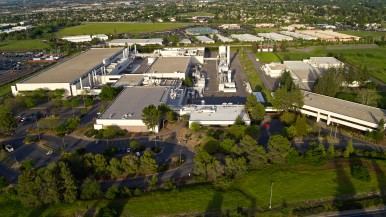
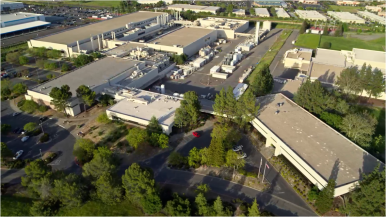
Stuttgart, Germany – Bosch is expanding its semiconductor business with silicon carbide chips. The technology company plans to acquire assets of the U.S. chipmaker TSI Semiconductors, based in Roseville, California. With a workforce of 250, the company is a foundry for application-specific integrated circuits, or ASICs. Currently, it mainly develops and produces large volumes of chips on 200-millimeter silicon wafers for applications in the mobility, telecommunications, energy, and life sciences industries. Over the next years, Bosch intends to invest more than 1.5 billion USD in the Roseville site and convert the TSI Semiconductors manufacturing facilities to state-of-the-art processes. Starting in 2026, the first chips will be produced on 200-millimeter wafers based on the innovative material silicon carbide (SiC).In this way, Bosch is systematically reinforcing its semiconductor business, and will have significantly extended its global portfolio of SiC chips by the end of 2030. Above all, the global boom and ramp-up of electromobility are resulting in huge demand for such special semiconductors. The full scope of the planned investment will be heavily dependent on federal funding opportunities available via the CHIPS and Science Act as well as economic development opportunities within the State of California. Bosch and TSI Semiconductors have reached an agreement to not to disclose any financial details of the transaction, which is subject to regulatory approval. “With the acquisition of TSI Semiconductors, we are establishing manufacturing capacity for SiC chips in an important sales market while also increasing our semiconductor manufacturing, globally. The existing clean-room facilities and expert personnel in Roseville will allow us to manufacture SiC chips for electromobility on an even larger scale,” says Dr. Stefan Hartung, the chairman of the Bosch board of management. “The location in Roseville has existed since 1984. Over nearly 40 years, the U.S. company has built up vast expertise in semiconductor production. We will now be integrating this expertise into the Bosch semiconductor manufacturing network,” says Dr. Markus Heyn, member of the Bosch board of management and chairman of the Mobility Solutions business sector. “We are pleased to join a globally operating technology company with extensive semiconductor expertise. We are confident that our Roseville location will be a significant addition to Bosch’s SiC chipmaking operations,” says Oded Tal, CEO at TSI Semiconductors. With the acquisition of TSI Semiconductors, we are establishing manufacturing capacity for SiC chips in an important sales market while also increasing our semiconductor manufacturing, globally. The existing clean-room facilities and expert personnel in Roseville will allow us to manufacture SiC chips for electromobility on an even larger scale,...says Dr. Stefan Hartung, the chairman of the Bosch board of management. Acquisition of TSI Semiconductors creates new manufacturing capacity The new location in Roseville will reinforce Bosch’s international semiconductor manufacturing network. Starting in 2026, following a retooling phase, first SiC chips will be produced on 200-millimeter wafers in a facility offering roughly 10,000 square meters of clean-room space. At an early stage, Bosch invested in the development and production of SiC chips. Since 2021, it has been using its own proprietary, highly complex processes to mass-produce them at its Reutlingen location near Stuttgart. In the future, Reutlingen will also produce them on 200-millimeters wafers. By the end of 2025, the company will have extended its clean-room space in Reutlingen from roughly 35,000 to more than 44,000 square meters. “SiC chips are a key component for electrified mobility. By extending our semiconductor operations internationally, we are strengthening our local presence in an important electric vehicle market,” Heyn says. SiC chips are a key component for electrified mobility. By extending our semiconductor operations internationally, we are strengthening our local presence in an important electric vehicle market,...says Dr. Markus Heyn, member of the Bosch board of management and chairman of the Mobility Solutions business sector. Demand for chips for the automotive industry remains high. By 2025, Bosch expects to have an average of 25 of its chips integrated in every new vehicle. The market for SiC chips is also continuing to grow fast – by 30 percent a year on average. The main drivers of this growth are the global boom and ramp-up of electromobility. In electric vehicles, SiC chips enable greater range and more efficient recharging, as they use up to 50 percent less energy. Installed in these vehicles’ power electronics, they ensure that a vehicle can drive a significantly longer distance on one battery charge – on average, the possible range is 6 percent greater than with silicon-based chips. Systematic investments in pivotal semiconductor technology Semiconductors are key to the success of all Bosch business areas. The company recognized the potential of this technology early on, and has been producing semiconductors for more than 60 years. Bosch is one of the few companies to have not only electronic and software expertise but also a profound understanding of microelectronics. It can combine this decisive competitive advantage with its strength in semiconductor manufacturing. The supplier of technology and services has been manufacturing semiconductors in Reutlingen since 1970. They are used both in the automotive sphere and in consumer electronics. Modern electronics in vehicles is also the basis for reducing traffic emissions, preventing road accidents, and efficient powertrains. Production at the Bosch wafer fab in Dresden (300-millimeter wafers) started in July 2021. At nearly one billion euros, the wafer fab is the biggest single investment in the company’s history. In its wafer fabs in Reutlingen and Dresden, Bosch has invested more than 2.5 billion euros in total since 200-millimeter technology was introduced in 2010. On top of this, billions of euros have been invested in developing microelectronics. Independently of the investment now planned in the United States, the company announced in summer last year that it will be investing a further 3 billion euros in its semiconductor business in Europe, both as part of its investment planning and with the aid of the EU’s “Important Project of Common European Interest on Microelectronics and Communication Technologies” program.