Search & find:
Media, press releases, events for your editorial coverage

A look into the past, a ride into the future: Bosch celebrates three decades of  ...

04.11.2025

Press release

Two Wheeler

A look into the past, a ride into the future: Bosch celebrates three decades of ...

Milan, Italy – Thirty years ago, Bosch launched its first production-ready motorcycle ABS system on the market, marking a major milestone in the evolution of rider safety. Since then, Bosch has continuously advanced two-wheeler safety, evolving from foundational ABS units to sophisticated systems such as Motorcycle Stability Control (MSC) and cutting-edge rider assistance technologies. “At Bosch, our mission over the past 30 years has been clear: to make riding safer through innovation, precision, and intelligent technology,” said Geoff Liersch, head of Two-Wheeler & Powersports at Bosch, at EICMA 2025. At the trade fair, Bosch presents its latest advancements in two-wheeler and powersports technology, celebrating three decades of continuous innovation while offering a glimpse into the connected and intelligent riding experience of the future.Bosch’s work on motorcycle ABS began in 1986, building on passenger-car technology that was launched in 1978, and culminated in the first production motorcycle equipped with Bosch ABS in 1995, the Kawasaki GPZ1100 ABS. The company’s sustained commitment led to the establishment of a center of competence for two-wheeler safety technology in Japan in 2007, forming the foundation of a global development hub and a specialized engineering pool. Subsequent milestones include the launch of motorcycle ABS 9 in 2009, the arrival of the compact and lightweight ABS 10 light and base designed for emerging markets in 2016, and the ABS 10 enhanced package tailored to high-performance bikes in 2018. The development of inertial-measurement-based MSC in 2013 marked the start of Bosch’s expansion into advanced active safety systems for motorcycles. Enhancing motorcycle safety beyond ABS Bosch’s Motorcycle Stability Control system, or MSC, provides critical protection in situations where motorcyclists are particularly vulnerable, such as when leaning into bends and during dynamic maneuvers. Combining wheel-speed sensors and a high-frequency inertial measurement unit (IMU), MSC evaluates vehicle dynamics up to 100 times per second to manage braking and acceleration control, even when a motorcycle is pitched and rolled on a corner. Beyond cornering functions, Bosch continues to develop value-added features enabled by MSC, including rear-wheel lift-up control, vehicle hold control for use on slopes, and rear-wheel slide control for performance on the racetrack. A Bosch Accident Research study indicates that, if every motorcycle were equipped with MSC, ABS combined with MSC could prevent or mitigate more than 30 percent of motorcycle accidents involving personal injury in Germany alone. Making these benefits accessible to a broader global audience, Bosch introduced MSC for smaller vehicles in 2023 and is ready to supply MSC solutions to markets where smaller-displacement bikes predominate, including India, China, and ASEAN countries. Since introducing its first production-ready motorcycle ABS system three decades ago, Bosch has continuously advanced two-wheeler safety. Today, ABS is not just a standard; it is a cornerstone of modern motorcycle safety systems. This evolution is reflected in global regulations: the European Union mandated ABS for motorcycles over 125 cc in 2016, followed by India in 2018. Singapore will take this commitment a step further, becoming the first country worldwide to require ABS on all new motorcycles, including those under 125 cc, starting April 1, 2027. This progressive move highlights the growing global focus on rider protection and sets a benchmark for other countries. Bosch continues to lead in this space, providing advanced solutions and integrating connectivity features to enhance both safety and the riding experience across all motorcycle segments. A ride into the future: Bosch innovations at EICMA 2025 At EICMA 2025, Bosch is also showcasing its innovations of today in hall 18, booth E66. In anticipation of the new EU regulation mandating a digital passport for every battery starting February 2027, Bosch is at the forefront of supporting motorcycle manufacturers with robust solutions. The Digital Battery Passport is designed to meet the EU requirements, providing full transparency on a battery’s condition throughout its lifecycle via static and dynamic data. Bosch offers comprehensive digital services that enable OEMs to fulfill these new documentation requirements and manage crucial battery data securely. This solution seamlessly integrates data from multiple sources, offering clear and user-friendly access for OEMs, workshops, dealers, and riders. It also streamlines compliance and enhances battery management. To complement the Digital Battery Passport, Bosch is introducing Battery in the Cloud , a service designed to help motorcycle manufacturers continuously monitor, predict, and improve battery health. This innovative system creates a digital battery twin in the Cloud, which accurately reflects the real battery’s condition using sophisticated data analysis and AI-based models. As a result, it’s possible to detect stress factors and anomalies early on, significantly reducing failures and extending battery life. Battery in the Cloud provides precise insights and forecasts on battery performance and reliability, which supplies manufacturers and owners with critical information. Furthermore, the usage certificate generated by the system confirms the battery’s condition in a tamper-proof manner, providing crucial support for residual value estimation when reselling the vehicle. Further elevating the connected riding experience, Bosch is presenting the Connectivity Cluster 4.2” Round, the latest addition to its expanding Connectivity Cluster series. Addressing the common need for a second display for navigation, which often requires separate holders, this innovative cluster seamlessly integrates connectivity functions. Simply by connecting their smartphone to the Connectivity Cluster, riders gain access to essential features such as navigation, music, and telephony, all while the cluster displays crucial riding information such as warning messages and current speed. Bosch powers two-wheel mobility with advanced drive systems To address the increasing shift toward electrified mobility, Bosch has developed a range of solutions tailored to different two-wheeler segments. Its vehicle control unit and integrated electric drive are designed to enable electric mobility with 6 kW. For smaller vehicle classes, which are particularly popular in markets such as India and southeast Asia, Bosch offers additional in-hub drive systems and corresponding controller solutions. The new Bosch 3 kW drive control unit supports manufacturers in bringing electrification to compact vehicle segments. This unit combines the inverter, engine management, and vehicle control functions within a single compact component. When paired with a wheel hub motor, it enables comfort features such as smoother acceleration and cruise control for maintaining speed. The system’s electric traction control manages motor torque to prevent rear-wheel slip during acceleration, enhancing riding safety. One-throttle ride improves powertrain efficiency by enabling regenerative braking when the rider releases the throttle, extending the electric range by up to 8 percent. Built to withstand harsh conditions, the 2 kW drive control unit features a robust design with high vibration tolerance and IP67 protection, ensuring reliable performance in any weather and on any terrain.

Bright, interactive, and secure: Bosch presents new cluster and vehicle architec ...

05.11.2024

Press release

Two Wheeler

Bright, interactive, and secure: Bosch presents new cluster and vehicle architec ...

Milan, Italy – Providing user-friendly accessibility, staying securely connected, and yielding the benefits of digital content – these are all clear trends in the motorcycle segment. With its new connected clusters, Bosch offers the key to a better riding experience: a display that is easy to operate wearing gloves, clearly visible no matter the weather conditions, and operable via voice command, allowing the driver to keep their hands on the handlebars. “In a connected environment, Bosch is prepared to build the bridge from vehicle manufacturers to riders with technological innovations without compromising on security. With its two-wheeler and powersports organization, Bosch is constantly working on innovations and continues to invest in dedicated motorcycle and powersports technologies,” says Geoff Liersch, head of Two-Wheeler & Powersports at Bosch, in the context of the EICMA 2024 motorcycle show in Milan.Bosch offers a seamless connected experience and integration Already standard in cars, the use of functions such as wireless Apple CarPlay on a motorcycle display is not yet an everyday activity for riders. The Bosch TFT connect platform can link to a smartphone, so that the driver can safely store the phone away and still access apps on the display while riding. Additionally, the connection of a global navigation satellite system with the platform provides accurate location information. Because the system will support Linux and Android Automotive, manufacturers have more flexibility to adapt and integrate content, and so can offer riders more variety in the interface design and additional content. Another key function of the TFT Connect platform is its voice control option, which enhances safety and convenience for riders on the road. With this feature, riders can manage motorcycle settings like the ride mode just with voice commands. Other features can be managed via smartphone, using Siri or Google Assist: users can answer calls, dictate messages, operate the navigation system, or simply pick out a song completely hands-free. More clarity and control with the new connected clusters from Bosch The display on a motorcycle is more than the connection between bike and rider: it must be able to show relevant information for the ride at a glance, but also has to offer several features and options. And no matter if the sun is shining brightly or if the rain is pouring down, the information on the display must be clearly visible. The new Bosch display generation TFT connect offers high-resolution displays, advanced connectivity features, and a customizable interface. It sets a new standard for motorcycle instrumentation and boasts the highest contrast ratio and brightness on the market. With more than 16 million colors, brightness of up to 1,500 nits, and a contrast ratio of 1250:1, it allows crystal-clear and vibrant images in any weather. The display will be available in the sizes 7” and 10.25” at launch, but can also be adapted to different layouts and sizes. Also, the newly introduced touch interface is seamlessly integrated with the user interface and is designed to work with or without gloves in different weather conditions to provide riders with a personalized and comfortable user experience. Furthermore, the platform’s improved bootup times and system concept for displaying relevant information in less than a second ensure that riders can get on their bikes and set off immediately. The Bosch TFT connect platform represents a step forward in motorcycle instrumentation, offering riders clarity, connectivity, and customization. With its advanced features and user-friendly design, the platform is set to enhance the riding experience for motorcycle enthusiasts around the world. Handling the complexity of the future with the new Bosch central gateway In an increasingly connected world, security is fundamental to avoiding unauthorized access to and tampering with vehicle components. Bosch’s central gateway for two-wheelers brings state-of-the-art security to the motorcycle and powersports world, safeguarding the other electronic control units in the vehicle’s trusted zone, ensuring rider safety, and helping to comply with upcoming cybersecurity regulations. Bosch’s gateway platform is prepared to serve a large variety of vehicles in a range of sizes. Also, it’s designed to be constantly active and includes additional vehicle inputs and outputs; this makes it possible to deliver further features, turning it into a true gatekeeper for the entire vehicle. Functions such as over-the-air updates, remote function activation, connected safety functions, and vehicle tracking can be hosted on the gateway. Furthermore, the gateway can enable secure smartphone-based keyless systems, in which the rider can unlock the vehicle with their smartphone hands-free. This will open up new ways to make the riding experience more personalized and to improve riders’ daily life. With its versatility and functions, Bosch’s gateway for two-wheelers serves as a basis for future architecture upgrades. “The technology Bosch delivers for greater security in connectivity and data exchange is laying the basis for new services and connected assistance and comfort functions. This brings us closer to our goal of shaping the future of riding,” Liersch says. “It’s exciting to be part of an ever-evolving industry, and Bosch is consistently driving forward the development of new motorcycle technologies in both software and hardware to ride at the very forefront.”

Safer and more efficient on two wheels: Bosch innovations at EICMA 2024 in Milan

30.10.2024

Press release

Two Wheeler

Safer and more efficient on two wheels: Bosch innovations at EICMA 2024 in Milan

Milan, Italy – Conquering winding roads, dynamically commuting through dense traffic, or eating up thousands of kilometers over tough terrain are just some of the many use cases that define a motorcycle. Offering innovative solutions for safety, convenience, and sustainability calls for an understanding of these use cases and their particular requirements. That’s why at Bosch, development work is done by riders for riders. At EICMA 2024, Bosch is presenting tailored solutions for all kinds of motorcycles: components for combustion engines and electric powertrains, as well as smart assistance systems and innovative connectivity solutions. Bosch will be showcasing its innovations in hall 18, booth E66.Safety: Bringing safety innovations to all levels of two-wheelers Having introduced MSC motorcycle stability control for smaller bikes in 2023, Bosch’s next step to promote the uptake of MSC in more bikes across different segments is to reveal ABSi at EICMA 2024. This new Bosch system is an ABS with integrated inertial measurement unit. Combining these two products reduces complexity. The advantages include the elimination of an external measurement unit and a reduction in necessary wire harness. With the potential to prevent one in six accidents on German roads alone, advanced rider assistance systems (ARAS) play a major role in realizing the vision of accident-free riding. Overall, Bosch offers six new functions, including five world-firsts. Four are new functions for the front: adaptive cruise control – stop and go (ACC S&G), group ride assist (GRA), riding distance assist (RDA), and emergency brake assist (EBA). Two are for the rear: rear distance warning (RDW) and rear collision warning (RCW). Through these functions, Bosch can further enhance riding pleasure and help increase safety and convenience where needed. The front functions will be launched together with KTM in its new 1390 SUPER ADVENTURE S EVO, which will be on display at the Bosch booth. Presenting innovations in all segments, the Bosch booth also will be showcasing race eCBS , launched with Ducati in the new Panigale V4 S 7G in July 2024. This function stands as a new milestone for the race segment of the motorcycle market. It is based on the eCBS electronic combined braking system, which is part of the Bosch ABS for premium motorcycles. The feature enables a combination of front and rear braking, even if only one of the two brakes is actively applied. In practice, this means that pulling the front brake automatically increases the pressure of the rear brake. While eCBS is currently intended for everyday use, race eCBS is for the racetrack. Toward efficiency: Bosch counts on the latest powertrain technology Making riding more efficient is one of the goals Bosch pursues in its ongoing development work. Significant effort is going into electrifying the two-wheeler powertrain. To adapt to the growing trend of electrified mobility , the company has introduced various solutions for different vehicle segments. Its vehicle control unit and the integrated electric drive address the goal of realizing electric mobility of 6kW and beyond. Further In-hub drive solutions and associated controller solutions dominate the smaller vehicle segments, especially in the markets of India and Southeast Asia. The new Bosch 2 kW drive control unit helps customers bring electrification to smaller segments. The drive control unit combines the inverter, engine management system, and vehicle control in one compact component. In conjunction with the wheel hub motor, the drive control unit can be used to implement comfort functions such as a smoother starting mode ( Smooth Riding ) or cruise control to maintain speed. Controlled by the electric motor, the electric traction control prevents the rear wheel from slipping when starting off and increases riding safety. One-throttle ride , meanwhile, is an additional function that increases powertrain efficiency by allowing the motorcycle to recuperate braking energy when the rider rolls off on the throttle. This helps extend the battery-electric range by up to 8 percent. With high vibration profiles and ingress protection levels up to IP67, the 2kW unit can handle any weather and road conditions. At the same time, Bosch is continuing to work on making current combustion technology even more efficient. Here, Bosch is providing specific engine management systems and components for two-wheelers and powersports vehicles to help manufacturers meet future emissions regulations, such as Euro 5 and India’s BS 6 (Bharat Stage 6), including full Onboard Diagnostics II (OBD), Step 1 and 2. Together with the latest sensor technology, the engine management systems can achieve considerable efficiency gains compared with the conventional carburetor still in widespread use in emerging markets. Bosch engine components, such as injectors or sensors and controllers, are also already capable of supporting gasoline blend ratios up to E100 and CNG/LPG, even in the two-wheeler sector. Additional functions such as various driving modes or quickshift solutions can also be implemented quickly and easily via the engine control unit, even in smaller vehicle classes. Digital: Functions on demand and updates over the air Increasingly standard in cars, updates over the air and functions on demand are also gaining ground in two-wheelers. Here, Bosch continues to build on its core competencies: developing solutions that combine technological progress and riding enjoyment. Bosch software solutions mean that motorcyclists can install new functions even after purchasing their vehicle. Special or advanced riding modes for the racetrack or off-highway use, as well as convenience functions for the next long trip, can thus be added on demand. This is done easily via the rider’s own smartphone: the new functions or updates are downloaded from the vehicle manufacturer’s app and then applied to the motorcycle. To create a smooth integration of connected features and user experience, it is vital that the human-machine interface be well set up and easy to understand. Bosch’s longstanding experience in cluster development is evident here: our existing TFT display generations, ranging from our 5” connected cluster up to our 10.25” integrated connectivity cluster , have impressive readability even in direct sunlight thanks to our optical bonding process, which is applied across the full range of our display products.

New Bosch radar-based assistance system used for first time by KTM

24.09.2024

Press release

Two Wheeler

New Bosch radar-based assistance system used for first time by KTM

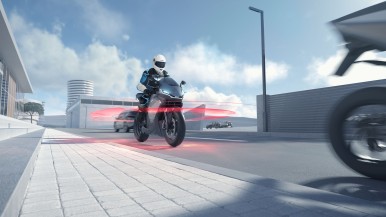
Stuttgart, Germany, and Yokohama, Japan – Thanks to Bosch, motorcyclists can now feel even safer in the saddle: the technology company has unveiled six new radar-based assistance systems, including five world-firsts. According to Bosch Accident Research, these could help prevent not just one in seven, like earlier systems, but as many as one in six accidents on German roads alone. Bosch already revolutionized the motorcycle market back in 2020 with its support functions for motorcyclists. Of the six new assistance functions, four will be unveiled in a new model from leading European motorbike manufacturer KTM in November 2024 and are set to enter production in 2025. “Bosch’s declared aim is to make motorcycling even safer and more comfortable by employing innovative new technologies – without diminishing riding enjoyment,” says Geoff Liersch, head of Two-Wheeler & Powersports at Bosch. “The new functions mark yet another step in this direction, and we’re delighted to have KTM as a customer.” The manufacturer will incorporate the four Bosch rider assistance functions that use front radar. This is not the first time Bosch and KTM have worked together: in 2013, the two companies collaborated on the successful launch of the MSC motorcycle stability control system. „We’re very satisfied with the longstanding collaborative relationship between our development teams, and we’re excited that KTM is the first to put these new functions to use,” says Stefan Haist, Lead KTM Chassis Control System – Street Development.Bosch assistance systems provide more support on two wheels Adaptive cruise control – stop and go (ACC S&G) For two-wheelers, traffic jams can be strenuous as well as dangerous. Riders have to constantly apply the clutch, use the brakes, and then start moving again. To make this task easier, Bosch launched ACC adaptive cruise control back in 2020. Once the desired speed has been set, this system constantly matches the vehicle’s speed to the flow of traffic while maintaining the necessary safe distance from the vehicle in front. Bosch has now taken this technology to a new level to offer increased riding comfort with its new ACC S&G function, which can bring the motorcycle to a controlled standstill in order to support the motorcyclist. This works best with an automatic transmission such as the one used in KTM’s new bike, which will be the first to incorporate this new function. If their motorcycle comes to a halt, there is no need for riders to use the clutch; they can set their bike in motion simply by pressing a button or briefly activating the throttle as soon as the vehicle in front starts moving. Group ride assist (GRA) Group riding in a staggered formation is popular among motorcyclists, though it can be challenging with ACC, because the function expects the motorcycles riding in front to be in the middle of the lane. GRA is a useful addition to ACC; using an algorithm, it detects when a group is riding in a staggered formation and regulates the speed to automatically maintain the same distance from the motorcycles in front. In this way, the function assists riders in achieving a natural group formation. When not riding in groups, the GRA system works the same as ACC. Riding distance assist (RDA) When traffic is flowing smoothly and RDA is activated, it helps maintain an appropriate distance from vehicles in front and thus prevent rear-end collisions. With ACC, a desired speed must be set; but when RDA is activated, the motorcycle can be controlled as normal via the throttle grip. While riding, the system automatically reduces the vehicle’s acceleration or applies the brakes as and when required. Riders can set the desired distance from the vehicle in front beforehand. If they wish, they can also use a switch to deactivate the function or apply the throttle to override the deceleration generated by the RDA system. This enables the function to blend naturally and comfortably into the dynamic flow of riding. Emergency brake assist (EBA) Hazardous situations on the road require not only a rapid response but, in many cases, emergency braking. Every second counts when it comes to preventing collisions and avoiding potentially serious consequences. EBA is triggered when the system detects a risk of collision and the rider doesn’t brake hard enough. In this case, the function actively increases the wheel brake pressure further to reduce the bike’s speed as quickly as possible. Rear distance warning (RDW) Even in a car, it can be hard to keep a constant eye on traffic approaching from behind; but on a motorcycle, it requires an extra level of concentration. RDW monitors the situation behind the rider and flashes a warning on the display if another vehicle gets too close. Based on this warning, the rider can take mitigating action to prevent a rear-end collision. Rear collision warning (RCW) RCW warns vehicles behind the motorcycle when a rear-end collision is imminent, for example by activating the hazard warning lights. In this way, the function protects motorcyclists from accidents caused by having to brake unexpectedly or by a vehicle failing to see them – whether waiting at traffic lights, sitting in a traffic jam, or riding in free-flowing traffic. These new functions supplement Bosch’s worldwide portfolio of radar-based assistance systems, thus expanding the “sensory world” of the motorcycle. In addition to basic safety features, increasing importance is also being given to convenience and experience features that focus on the motorcycle and take real-life riding situations into consideration – functions that ensure not only safety and convenience, but also unmatched riding enjoyment.

Innovative Bosch racetrack technology on the new Ducati Panigale V4

26.07.2024

Press release

Two Wheeler

Innovative Bosch racetrack technology on the new Ducati Panigale V4

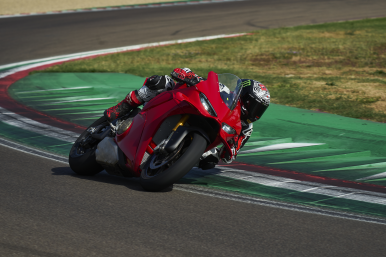
Stuttgart, Germany, and Misano, Italy – Gaining a few more seconds on corners, bettering the previous lap time, and delivering an outstanding performance – that’s what most riders on the racetrack have in their sights. But all this involves challenges. One of the biggest is the phase before entering the corner, where braking is crucial for success. With its new race eCBS, Bosch is delivering a solution specifically for the racetrack. Based on the proven eCBS, the new brake system will celebrate its premiere on the new Ducati Panigale V4 at World Ducati Week 2024 in Misano. “The Bosch and Ducati Engineering teams have worked very intensively and in numerous tests on a function that specifically improves racetrack braking and cornering performance,” says Fevzi Yildirim, head of Bosch Two-Wheeler and Powersports in Europe. “The Bosch race eCBS takes the safety and performance of sport motorcycles a big step forward, and is also further evidence of the ongoing fruitful cooperation between Bosch and Ducati.” The Bosch Race eCBS takes the safety and performance of sport motorcycles a big step forward, and is also further evidence of the ongoing fruitful cooperation between Bosch and Ducati....Fevzi Yildirim, head of Bosch Two-Wheeler and Powersports in Europe The development path started from the eCBS function powered by the Bosch ABS for premium bikes. This technology allows the front and rear brakes to be combined even if only one of them is applied. In practice, this means that once the front brake has been applied, the ABS unit automatically increases the rear brake pressure as well, without any rider input on the rear brake pedal. Starting from the existing eCBS function for everyday use, the development teams from Bosch and Ducati focused on improving performance specifically for the racetrack. Constant data checks for perfect brake pressure on the racetrack To generate perfect brake pressure on the rear wheel, the system checks front brake pressure, lean angle, side-slip angle, and rear-wheel slip 100 times per second and incorporates this data into the calculation. At all times, the aim is to brake the rear wheel as effectively as possible, while ensuring that the vehicle always remains stable. As this function is only available in racetrack ABS modes, there is no rear-wheel ABS, which leaves riders in full control of the rear brake if they want to use it manually. Moreover, race eCBS is able to keep the rear brake applied for a short moment at the apex of a corner, even after the rider has released the front brake, to bring the bike back into its racing line. The major advantages of this next-level technology are that it improves braking stability, average deceleration, and cornering while braking on the racetrack without any need for additional effort to manually control the rear brake. “This function is made for every type of rider level on the racetrack. The automatic and effective application of the rear brake will help even professional riders reach a better lap time, since they can concentrate on riding instead of on controlling the rear brake,” Yildirim says. "Ducati has always looked for innovative solutions and aimed for absolute performance from its products. The new race eCBS system has the dual value of both improving the bike’s braking performance and, above all, allowing every user to access riding levels that were previously out of their reach,” explains Alessandro Valia, the official Ducati tester who worked on the system’s development. “This relies on the principle of emulation of a professional rider’s braking technique. The system generates pressure at the rear brake even after the front brake has been completely released – a maneuver normally carried out by the rider to tighten the line on corner entry. This feature also benefits professional riders, who will be able to devote the attention normally spent on modulating the rear brake to other aspects of riding,” Valia says. This project is another milestone in the more than 15-year partnership between Bosch and Ducati and demonstrates their ability to develop innovative solutions for greater motorcycle safety without sacrificing riding experience and performance. “Together, we’re setting the standard for two-wheeler mobility now and in the future,” Yildirim says. Bosch will also be attending the World Ducati Week, the world’s biggest Ducati rally, which takes place from July 26 to 28 at the Marco Simoncelli Misano World Circuit. In collaboration with the Ducati Riding Academy and Ducati Riding Experience (DRE) courses, the automotive supplier will offer talks, round tables, and hands-on demonstrations. In this way, it wants to provide insights and discuss the technical topics associated with motorcycle safety, focusing on the Bosch technologies that feature in the latest Ducati models – including Bosch race eCBS. Click HERE to see the full program of the WDW 2024 event.

Bosch at the IAA Mobility: Safe, emissions-free, and exciting mobility – now and ...

10.08.2021

Press release

Connected mobility

Bosch at the IAA Mobility: Safe, emissions-free, and exciting mobility – now and ...

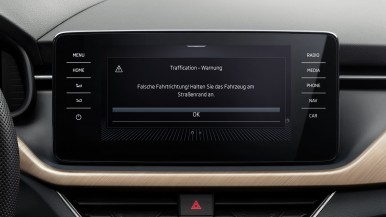
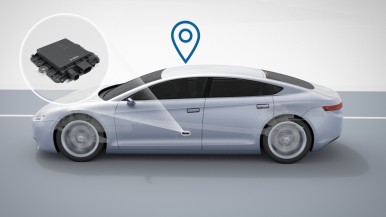
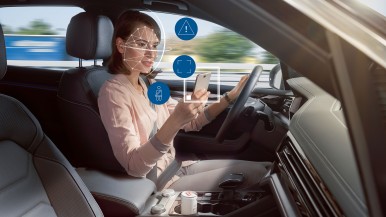
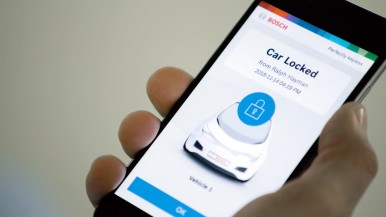
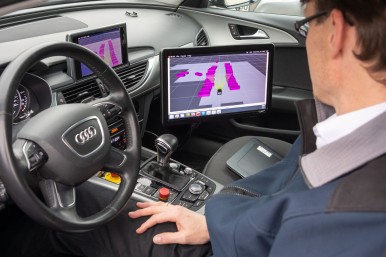
Munich, Germany – Cars, e-bikes, motorcycles, scooters, electric race cars: Bosch is rolling out mobility solutions for all types of vehicles, and is even making smartphones and people’s homes an integral part of mobility. At IAA Mobility 2021 in Munich, the supplier of technology and services will be showcasing its solutions for personalized, automated, connected, and electrified mobility. Bosch will be in exhibition hall B3 at booth C30 and in the bike area, in the Messe West parking garage, and downtown at Königsplatz and Odeonsplatz.At the trade fair and downtown – get in, get on, try it out Bosch show car: In the future, more and more vehicles will be electrically powered. They will increasingly be connected with other road users and their surroundings, assume more and more of the driving task themselves, and provide personalized services for their occupants. Bosch technology for automated, electrified, personalized, and connected mobility is paving the way for this future vision of mobility. The company has the systems know-how and comprehensive software and hardware expertise that this requires. For example, Bosch is developing central computers for the electronics architecture of the future. These vehicle computers are used for assisted and automated driving, controlling vehicle motion, as well as for cockpit functions and body electronics. (Trade fair: Hall B3, booth C30) Driverless parking: Bosch and nine project partners will present the future of parking in a live demonstration. In the automated valet parking system developed jointly by Bosch and Mercedes-Benz, a smartphone command directs cars automatically to their assigned parking bays without the need for driver supervision. Interplay between the intelligent parking garage infrastructure and the vehicle technology makes this possible. Sensors in the parking garage monitor the driving aisle and its surroundings while guiding the vehicle. The in-car technology converts the commands from the infrastructure into safe driving maneuvers. A joint project with the association of the German automotive industry (VDA) shows how vehicles from different manufacturers will be able to communicate with infrastructure technology from various suppliers in the future. Against this backdrop, the project partners are also working on an international standard (ISO 23374). (Live demonstrations several times a day in the Messe West parking garage) An enhanced cycling experience: E-bikes are the best-selling electric vehicle in Europe. Riding an electrically assisted bike is good for people’s health and the environment – as well as a lot of fun. Connected products and services enhance the cycling experience and connect e-bikers with the digital world. Bosch will be showcasing new connected-biking solutions and allowing visitors to see for themselves just how much fun power-assisted cycling can be. (Trade fair: Hall B3, booth C30; bike area B5, Blue Lane Micromobility: Brienner Straße; open space: Königsplatz and Odeonsplatz) Bosch is electrifying mobility and helping mitigate global warming Bosch wants to be a key player in climate-neutral mobility. The company has set itself the goal of making all vehicle classes ready for upcoming emissions requirements. As an innovation leader, Bosch has a broader electric driving portfolio than any other company – from e-bikes to passenger cars to heavy trucks. Battery-electric power for two- and four-wheeled vehicles: From powertrains to steering systems to brakes, Bosch’s portfolio includes all the building blocks for the electrification of passenger cars. One component is the e-axle , which combines the power electronics, electric motor, and transmission in a single unit. And with its pre-integrated system solutions for vehicle platforms, Bosch helps automakers bring electric vehicles to market faster than before. The key is the optimized interaction of the powertrain, steering, braking, and vehicle control in the advanced driving module , which is combined with partner solutions to form a complete axle module for the front and rear axles. Alongside efficient powertrains, Bosch also uses thermal management to increase the range of electric and hybrid vehicles. Precise control of currents of hot and cold air improves the efficiency of the battery and ensures that all components are working within their optimum temperature range. Bosch also offers drives and control units for electric two-wheelers . Integrated in a compact system, the two components ensure precise control of the motor, reliable riding performance, and optimum torque development. Fuel-cell system: Mobile fuel cells offer long ranges and short refueling times. Where they really come into their own is on long-haul routes and in commercial vehicles. With green hydrogen, fuel cells enable vehicles to be operated CO 2 -free. Bosch develops all the key system components to production readiness – including complete systems. For the stack, which converts hydrogen and ambient oxygen into electrical energy, the company is working with the Swedish specialist Powercell. Large-scale manufacturing of the stack is set to begin in 2022, and the launch of the complete fuel-cell system – the Bosch fuel-cell power module – is scheduled for 2023. Services for electromobility: Bosch’s Battery in the Cloud prolongs the life of electric car batteries. Smart software functions in the cloud continually analyze battery status and take appropriate action to prevent or slow cell aging. The tamper-proof “usage certificate” documents the condition of the battery throughout its entire service life, thus giving a better picture of the battery’s residual value if the car is sold. With charging services such as Convenience Charging , Bosch makes it easy and straightforward for drivers of electric cars to find – and pay at – publicly accessible charging stations. In addition, the integrated recharging and navigation solution allows for a precise range forecast and route planning that includes recharging stops – and comes with the option to set personal preferences, such as charging stations next to restaurants. New charging cable: At the IAA Mobility, Bosch is presenting a flexible charging cable with integrated control and safety technology for the first time. It also does without the usual in-cable control box when charging at a 230-volt power socket. This means, the flexible smart charging cable weighs less than three kilograms. On average, this is a good 40 percent less than conventional charging cables with a control box. Because it comes with adapters for Type 2 and household plugs, drivers who want to be free to choose whether to recharge from a power socket at home or from a charging station on the road no longer need a second cable. High-speed electromobility: For everyday life and for the racetrack – Bosch is committed to becoming the leading supplier of electrified powertrain solutions, both in electromobility for production vehicles and in electrified motorsports. The company has entered into a long-term technology and development partnership with the DRAGON/PENSKE AUTOSPORT Formula E Team. And those who want to experience driving the racing series courses virtually and compete with others for the best time can do just that in two simulators. (Open space: Königsplatz) Using electricity intelligently: Bosch’s intelligent energy manager makes it possible for homeowners to reduce CO 2 emissions and save energy costs. Serving as an interface between a Bosch heat pump and a photovoltaic system, it optimizes the use of home-generated solar energy and distributes it intelligently throughout the building. Alongside heating and hot water, it will also be possible to integrate electric cars into the Bosch energy management system in the future. Compatible wallboxes can then be deployed to recharge vehicles using as much home-generated electricity as possible. Bosch is automating driving and making roads safer Less stress, smoother traffic flows, greater safety – vehicles that assume more driving tasks themselves are a key building block for tomorrow’s mobility. An automated vehicle must be able to do everything a human driver can: perceive its surroundings, make decisions, and accelerate, brake, and steer. Step by step, Bosch is laying the technical foundations for automated driving. With its driver assistance systems, it is already paving the way for all levels of automation. Surround sensing for all traffic situations: Sensor technology forms the basis for assisted and increasingly automated driving. To drive safely, the vehicle must be able to reliably recognize objects, people, and other road users. Bosch’s multi-purpose camera combines traditional image-processing algorithms with artificial intelligence (AI) methods. Using AI, the camera understands and interprets what it sees, ensuring reliable object recognition and good surround sensing. In addition to camera, radar, and ultrasonic sensors, Bosch is also developing a long-range lidar, for which it employs various sensor principles. The more complex the driving task, the more important their interaction. Localization technology for exact positioning: Automated vehicles need to know exactly where they are at all times. Bosch offers a comprehensive package of hardware, software, and services that allows automated vehicles to precisely determine their own location. The VMPS (vehicle motion and position sensor) uses satellite navigation signals to identify the exact position, augmented by data from a correction service and information from the steering-angle and wheel-speed sensors. The Bosch road signature cloud-based map service uses data from radar and video sensors as well as vehicle motion data to create additional layers for high-resolution maps. Volkswagen Golf 8 vehicles are currently collecting this information on Europe’s roads. Redundant braking and steering systems for safe and energy-saving driving maneuvers: Better safe than sorry – this holds especially true for safety-relevant functions in automated driving. Thanks to multiple redundancy, Bosch’s electric steering system offers additional safety. In the rare event of a malfunction, the system is still capable of retaining 50 percent of its electric steering functionality. Bosch has also integrated a redundant architecture into the design of its braking systems : should either the iBooster (the electromechanical brake booster) or the ESP electronic stability program fail, the other component can brake the vehicle. A second braking unit serves as a backup for the integrated power brake system, which combines brake boosting technology and ESP functionality. This is an especially important requirement in automated vehicles. In addition, Bosch’s regenerative braking systems help save CO 2 : in a very smooth process, which is unnoticeable for the driver, they make it possible to switch between generator and friction braking, thus enabling braking energy to be converted back into electrical energy and fed back into the battery every time the vehicle is braked. Services for automated driving: Bosch’s predictive road-condition services raise the alert in the event of potential hazards long before critical situations develop. They provide real-time information about road conditions and risks such as aquaplaning, ice, and snow. This enables automated vehicles to correctly anticipate road conditions, adapt their driving behavior to the conditions, choose a different route, or even ask the driver to take control. Bosch connects vehicles with each other and with their surroundings: Vehicles that warn each other of danger, keep a protective eye on their occupants, and communicate with the smart home – Bosch connects systems, components, and services inside and outside the vehicle, making mobility more efficient, safer, and more relaxed. Users, vehicles, and surroundings are seamlessly connected, making driving more enjoyable and providing a personalized mobility experience. Smart car meets smart home: Bosch is turning cars into the command centers for smart homes: using Mercedes-Benz’s MBUX infotainment system, Bosch Smart Home applications can be controlled by voice command from the vehicle. In addition to shutters and heating thermostats, the system can also be used to control light switches and smart adapters, and to check the status of motion detectors and door/window contacts. Using voice commands allows the driver to stay focused on the road. Guardian angel for all areas of life: In the shape of Help Connect , Bosch has developed a digitally connected emergency call system for motorcycles and other vehicles. A smart crash algorithm added to the acceleration sensors in the Bosch MSC motorcycle stability control system allows accidents to be detected. A smartphone app transmits information about the accident scene and the rider to a service center, and from there to the emergency services. If the motorcycle has no permanently installed accident detection system, the sensor data from the smartphone can be used to initiate the emergency response. Bosch Help Connect can also provide assistance at home, in the gym, or when out cycling. Indoor monitoring for better occupant protection: Bosch has developed a system comprising cameras and AI that can increase the safety of vehicle occupants. The interior monitoring system detects driver drowsiness and distraction, or if occupants are in an unsafe seating position. It warns inattentive drivers, recommends a break if they are getting tired, and can reduce vehicle speed – depending on the automaker’s wishes and legal requirements. The system also enhances convenience by automatically adjusting the seat, mirrors, and steering wheel height in line with individual preferences – as well as enabling gesture control of the infotainment system. Wrong-way driver alert: Bosch’s cloud-based wrong-way driver warning system warns both the wrong-way driver and all road users at risk of the impending danger within seconds – much faster than traffic news on the radio. In early 2021, ŠKODA became the first automaker worldwide to opt for Bosch’s digital guardian angel. The lifesaving warning is flashed up directly on the display in the vehicle cockpit. As an app solution for smartphones, this service already has 2.5 million active users in 20 European countries. Smartphones as car keys: With Perfectly Keyless , sensors in the car recognize the owner’s smartphone as securely as a fingerprint and open the vehicle only at their request. The cell phone thus displaces the conventional car key. Thanks to ultra-wideband technology, the system also offers other practical everyday advantages: it is even easier to maneuver the car into tight parking spaces by remote control or to open the trunk remotely so that package handlers can deposit deliveries in it. For large parking lots where it is difficult to locate vehicles, Perfectly Keyless helps find the way to the car and illuminates the path by switching on the headlights, providing extra safety in the dark.