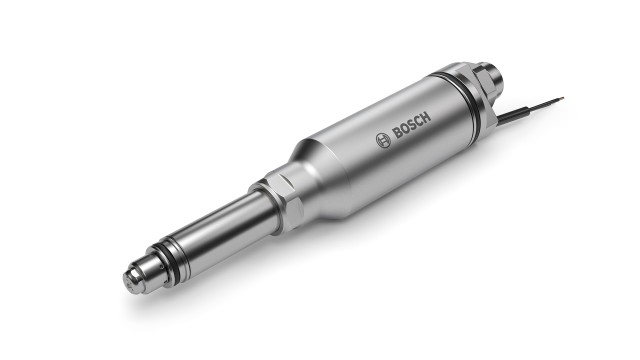


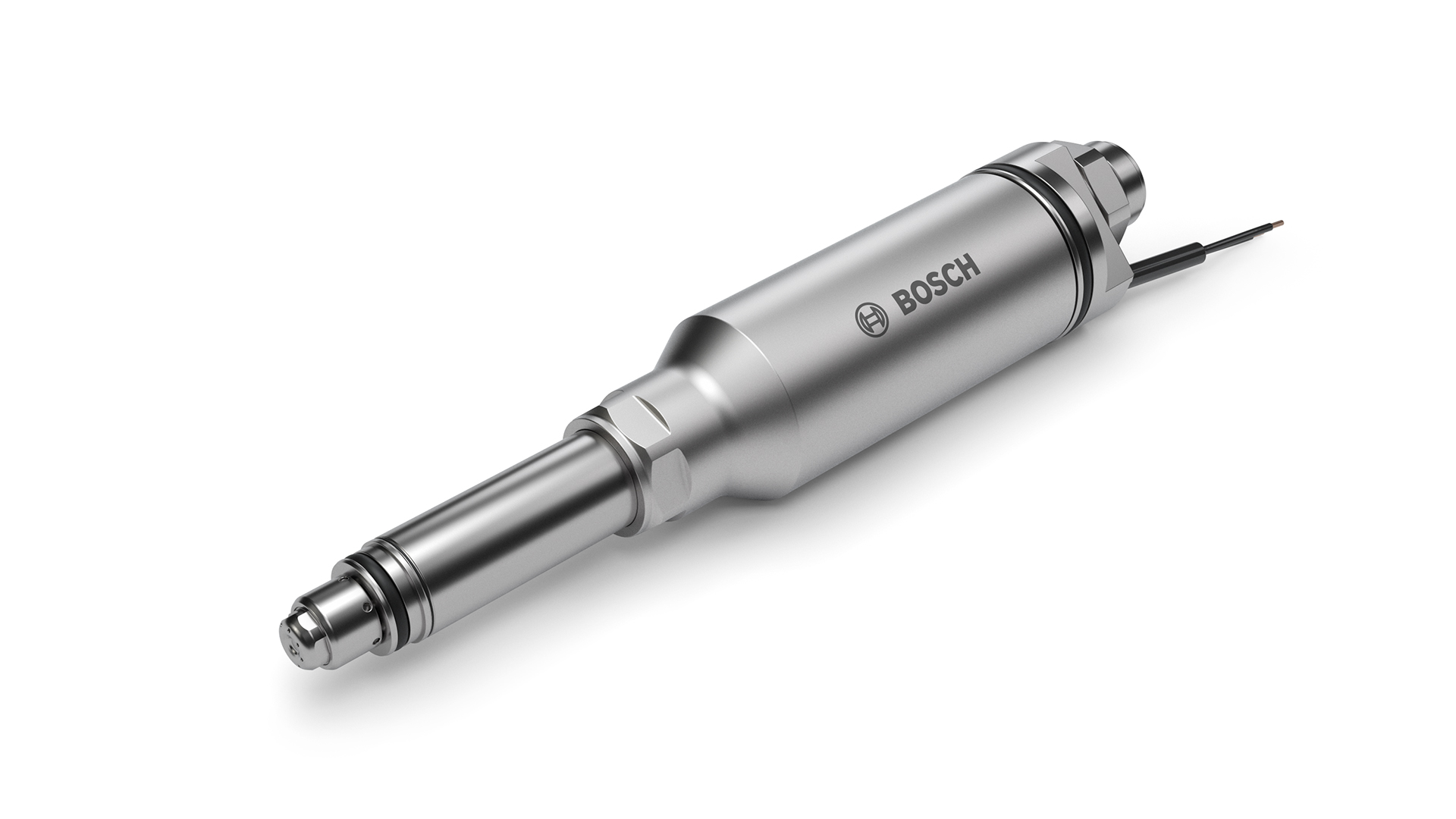
Stuttgart and Hamburg, Germany – Ships account for about 80 percent of international freight traffic, and also cause 2 to 3 percent of all man-made carbon emissions worldwide. Bosch, a leading supplier of injection systems for maritime engines, is working with partners to develop solutions that will enable ships to use renewable synthetic fuels efficiently and reliably in the future. In this way, Bosch is making an important contribution to achieving the International Maritime Organization’s (IMO) ambitious climate goals on the path to net-zero greenhouse gas emissions by 2050. At the SMM international trade show in Hamburg, the technology company is showcasing a new injector for alternative fuels that can be used with both liquid and gaseous fuels. “The maritime market will continue to grow in the coming years, while needing to decrease its environmental impact dramatically,” says Dr. Stefan Schenk, who oversees the Large Engines business unit in Bosch’s Power Solutions division. “To truly establish sustainable fuels in the shipping industry, we need policymakers, the fuel industry, shipbuilders, and shipowners around the world to work together.”
Contact person for press inquiries:
Anna Schmatz,
Phone: +49 711 811 12715
E mail: anna.schmatz@de.bosch.com
Mobility is the largest Bosch Group business sector. It generated sales of 55,8 billion euros in 2025, and thus contributed around 61 percent of total sales. This makes the Bosch Group one of the leading mobility suppliers of technology and services. For its customers, the outcome is integrated mobility solutions. The business sector’s main areas of activity are electrification, software and services, semiconductors and sensors, vehicle computers, advanced driver assistance systems, systems for vehicle dynamics control, repair-shop concepts, as well as technology and services for the automotive aftermarket and fleets. Bosch is synonymous with important automotive innovations, such as electronic engine management, the ESP anti-skid system, and common-rail diesel technology.
The Bosch Group is a leading global supplier of technology and services. It employs roughly 413,000 associates worldwide (as of December 31, 2025). The company generated sales of 91 billion euros in 2025. Its operations are divided into four business sectors: Mobility, Industrial Technology, Consumer Goods, and Energy and Building Technology. With its business activities, the company aims to use technology to help shape universal trends such as automation, digitalization, electrification, and artificial intelligence. In this context, Bosch’s broad diversification across regions and industries strengthens its innovativeness and robustness. Bosch uses its proven expertise in hardware, software, and services to offer customers cross-domain solutions from a single source. It also applies its expertise in connectivity and artificial intelligence in order to develop and manufacture intelligent and user-friendly products. With technology that is “Invented for life,” Bosch wants to help improve quality of life. The Bosch Group comprises Robert Bosch GmbH and its roughly 500 subsidiary and regional companies in over 60 countries. Including sales and service partners, Bosch’s global manufacturing, engineering, and sales network covers nearly every country in the world. Bosch’s innovative strength is key to the company’s further development. Bosch employs some 82,000 associates in research and development.
Additional information is available online at www.bosch.com, www.bosch-press.com.