Search & find:
Media, press releases, events for your editorial coverage

Bosch establishes company with the synthetic diamond solutions provider Element Six

07.04.2025

Press release

Business/economy

Bosch establishes company with the synthetic diamond solutions provider Element Six

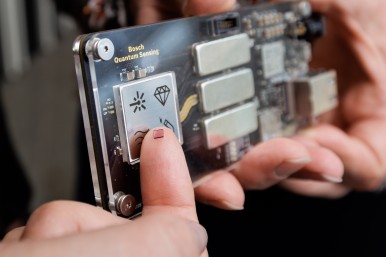
Stuttgart, Germany – They cannot be grasped, either literally or figuratively. Yet their potential is revolutionary, and they are a key technology of the future. We are talking about quanta. For more than ten years, Bosch has been researching in this field, and it is playing a decisive part in commercializing quantum sensors. Since 2023, it has had a development collaboration with Element Six, the world’s leading solutions provider of synthetic diamonds. Bosch is now significantly extending this alliance and establishing a joint venture, to be known as Bosch Quantum Sensing. The joint venture will be based on the in-house start-up of the same name, which Bosch set up in 2022. Domiciled in Ludwigsburg, Germany, Bosch Quantum Sensing currently employs 30 associates. Bosch itself will be the lead partner and be responsible for operations. Element Six will hold a 25 percent stake. It has been agreed that further financial details will not be disclosed. The establishment of the new company is still subject to official approval. Bosch Quantum Sensing sees many areas in which novel quantum sensors can be used, from exploration of natural resources to aircraft navigation and medical technology. By the middle of the next decade, Bosch estimates that the global market potential of medical and mobility applications will be in the mid-single-digit billion euros range per year. Synthetic diamonds are a key component of Bosch quantum sensors. In stepping up its partnership with Element Six, Bosch is making a determined move toward the commercialization of quantum sensors. Quantum sensors are a future technology with huge potential. They will bring about fundamental changes in many sectors of our economy, and improve people’s lives. In setting up this new company, we are underscoring this technology’s strategic significance for Bosch. As innovation leader of commercial quantum sensors, we will work with Element Six to further extend our technological lead,...says Stefan Hartung, chairman of the board of management of Robert Bosch GmbH. Quantum leap toward commercialization The distinctive qualities of these special-purpose synthetic diamonds allow quantum sensors based on them to detect even the tiniest magnetic fields. In this way, they satisfy the most exacting market requirements and make real innovations possible. “We want to work with Element Six to make quantum sensors economical and allow them to be produced on an industrial scale. In this way, we will create the basis for innovative applications that set new standards for precision and efficiency,” says Katrin Kobe, CEO of Bosch Quantum Sensing. “Through the new joint venture between Bosch and Element Six, which aligns with Element Six’ contribution towards De Beers Group’s Origins strategy, we will integrate our synthetic diamond technology with Bosch Quantum Sensing’s capabilities, unlocking new possibilities in critical sectors such as healthcare and navigation. Together, we will harness the respective decades of excellence and innovation to push the limits of what's possible, heralding a new era of synthetic diamond-enabled technologies”, says Siobhán Duffy, the CEO of Element Six. The synthetic diamond solutions provider is in a unique position to supply the highly engineered synthetic diamonds in the quantity and quality required for industrial applications, while Bosch will integrate them into robust and scalable sensor systems. It is a classic win-win situation. Even now, the latest Bosch quantum sensor prototype is the most compact of its kind for the level of sensitivity required – it is the same size as a modern smartphone. In the area of mobility, it could enable a robust navigation in the future, complementary to conventional GPS systems. It could also offer decisive advantages for the exploration of natural resources and, in medical technology, for the measurement of cardiac activity. The advantage of compact sensors is their portability, less expensive production, and better scalability. The long-term goal of Bosch Quantum Sensing is to make quantum sensors so small that they can be integrated onto a chip. Press photos and infocharts are available on the Bosch Media Service at www.bosch-press.com . Contact person for press inquiries: Athanassios Kaliudis Phone: +49 711 811-7497 E-mail: Athanassios.Kaliudis@de.bosch.com

Bosch drives forward the development of 6G

27.02.2023

Press release

Connected mobility

Bosch drives forward the development of 6G

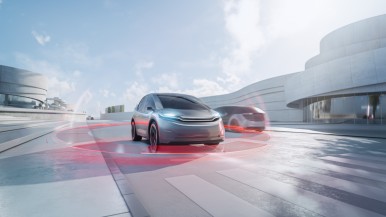
Stuttgart, Germany – Worldwide, research and development work on the future 6G mobile communications standard is picking up pace. Companies and states are investing massively in this technology. Bosch is leading the way and is actively involved in projects, alliances, and initiatives at both the national and international level to lay important foundations for 6G technology. “6G will be much more than just an infrastructure for connectivity; it will greatly increase the efficiency of autonomous driving cars, smart cities, and connected industries. That’s why 6G is a strategically important field of technology,” says Dr. Andreas Müller, who bundles and manages 6G activities at Bosch. The company currently has some 40 associates working on 6G technology. Over the next two years, that number is likely to double,” Müller says. Bosch is currently investing several millions of euros in research and development for 6G. 6G will be much more than just an infrastructure for connectivity; it will greatly increase the efficiency of autonomous driving cars, smart cities, and connected industries. That’s why 6G is a strategically important field of technology...says Dr. Andreas Müller, who bundles and manages 6G activities at Bosch. Bosch and Nokia expand their research alliance to include 6G At the Mobile World Congress 2023 in Barcelona, Bosch and Nokia have now announced that they will expand the alliance they entered into in 2017 to develop industrial IoT solutions in the area of 5G so that it also addresses the new 6G technology. The two companies are conducting joint research on the next generation of networks and investigating how to use future 6G networks for both communications and sensors. Comprehensive Bosch commitment at national and international level Bosch is currently contributing its expertise and experience to five publicly funded projects. In this context, the 6G-ICAS4Mobility , KOMSENS-6G , and 6G-BRAINS projects focus primarily on integrating communication and sensor-based environment recognition. Bosch leads the consortium for the first project . In addition to addressing relevant scenarios for road traffic, insights gained from the project will serve, in particular, as technical foundations for applications in the connected drones domain as well as in Industry 4.0 (e.g. for driverless transport systems). Meanwhile, the 6G-ANNA and 6G-SHINE projects focus on new connectivity structures. These are intended to enhance the efficiency of future E/E architectures in vehicles or robot cells. Bosch is also taking an active and leading role in early discussions and activities relating to future mobile communications standards within various industry alliances. In the 5G Automotive Association (5GAA) , for instance, leading companies from the automotive and telecommunications industries are working together to develop solutions for the mobility of the future. The 5G Alliance for Connected Industries and Automation (5GACIA) brings together industrial companies to focus on connectivity for machinery and equipment. Networks with a sixth sense through integration of sensor technology Among other things, the next generation of mobile communications will integrate new functionalities similar to radar sensors. With 6G, it will be possible to detect the position of objects in the network’s coverage area – without these objects having to be equipped with a radio module. 6G will enable extremely high data rates of up to one terabit per second, with very low latency in the order of some 100 microseconds – which is four times faster than a lightning strike. With the help of digital twins, this will for instance make it possible to monitor and simulate real-world manufacturing processes in a virtual world with no temporal and spatial restrictions. Experts predict that the first 6G standard will be completed by 2028. In recent months, Germany and Europe have launched a large number of 6G projects with the goal of strengthening their technological sovereignty. The German government, through the Federal Ministry of Education and Research (BMBF), is providing some 700 million euros over the next three years to fund 6G activities. In addition, the EU budget has earmarked a further almost 900 million euros until 2027. Japan and the United States have also launched corresponding investment programs totaling around 4.5 billion dollars.

Bosch establishes startup for quantum sensing

17.02.2022

Press release

Research

Bosch establishes startup for quantum sensing

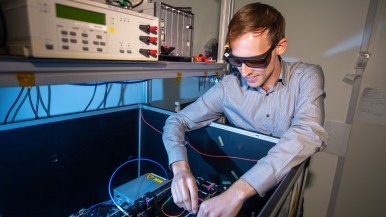
Ludwigsburg, Germany – Robert Bosch GmbH has set up a new business unit to commercialize quantum sensors. With a view to sharing in the strong growth expected for this market, an in-house startup will pool the results of research so far and translate them into products. Jens Fabrowsky, the executive vice-president of Bosch Automotive Electronics responsible for the semiconductor business, says: “Quantum technology is pushing the boundaries of what is possible – in both data processing and sensors. Above all, the aim is to increase the broad practical benefit of quantum effects – for everything from the development of carbon-neutral powertrains to neurological diagnosis. Bosch has been doing extensive research in quantum sensing for many years now, and we see ourselves as global leaders in this area. Now we also want to use this as a basis for future business models.” Quantum technology is pushing the boundaries of what is possible – in both data processing and sensors....Jens Fabrowsky, executive vice-president of Bosch Automotive Electronics Dr. Katrin Kobe to lead new unit The CEO of the newly established startup is Dr. Katrin Kobe. A physics PhD, she brings to Bosch more than 25 years of management experience with a variety of technology companies. During that time, she developed several new business areas. “At Bosch, research is a top priority,” she says. “As a global company with alliances and expertise in quantum technology, Bosch is seizing the opportunity to make headway with this promising new field in an agile startup environment.” There are already 15 associates working at the new startup. The team, which is set to grow to more than 20 in the coming months, is looking to attract engineers and business developers in particular. At Bosch, research is a top priority,” she says. “As a global company with alliances and expertise in quantum technology, Bosch is seizing the opportunity to make headway with this promising new field in an agile startup environment....Dr. Katrin Kobe, CEO of the new start-up Medical applications possible in the foreseeable future Quantum sensors use the individual atoms of a gas or defects in solids as atomic measuring instruments. Because of the special way they are initialized before measurement and their ability to detect individual quantum states after measurement, these sensors achieve unprecedented precision. Thanks to quantum technology, this will soon allow measurements to be carried out that are nearly 1,000 times more precise than those done by today’s MEMS sensors (MEMS stands for micro-electro-mechanical system). Quantum sensors will, for example, be able to help diagnose neurological conditions such as Alzheimer’s and Parkinson’s more accurately and easily. They can also be used to record nerve impulses, and thus to control artificial limbs one day. These sensors can also detect the tiniest changes in an object’s position. Bosch has been researching quantum sensing for seven years now, and has built fully functional and powerful demonstrators of a quantum magnetometer and a quantum gyrometer. Quantum magnetometers can, for example, be used to detect the tiny magnetic fields generated by physiological processes, while quantum gyrometers permit the high-precision detection of rotations for the navigation of autonomous systems. The long-term goal is to achieve further miniaturization and integrate the technology on a chip. Moreover, Bosch has been actively involved in eight publicly funded quantum sensing projects, some of them international, since 2018. With this new business unit, Bosch now wants to open up this field for its own strategic purposes. Strong market growth expected Market experts are predicting strong growth in quantum sensing applications in the years ahead. In 2021, 22 billion dollars was invested worldwide in quantum technology. According to McKinsey & Co., the market for quantum sensors is expected to grow to as much as 7 billion dollars. Bosch’s new business unit will be located on the premises of its grow platform GmbH subsidiary in Ludwigsburg. Organizationally, the startup will be assigned to the Bosch Automotive Electronics division, based in Reutlingen.

Groundbreaking passenger protection: 40 years ago, Bosch launched the electronic ...

04.11.2020

Press release

Automated mobility

Groundbreaking passenger protection: 40 years ago, Bosch launched the electronic ...

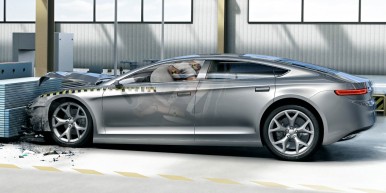
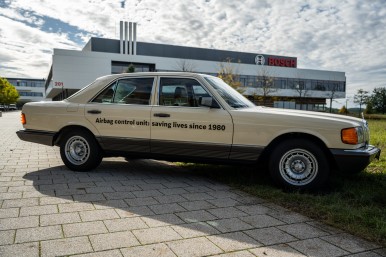
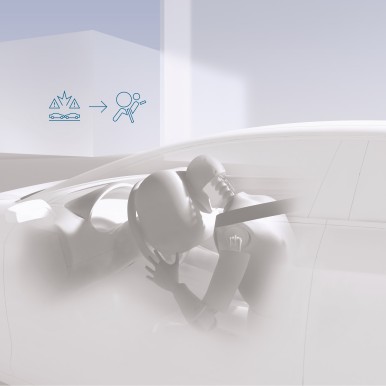
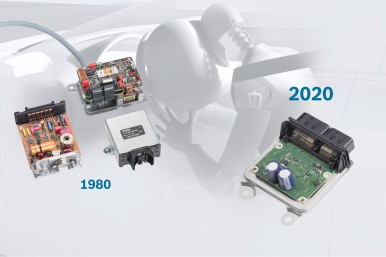
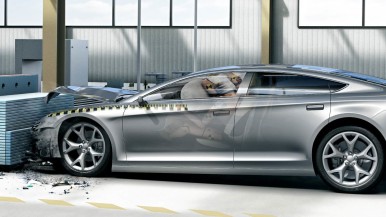
Stuttgart, Germany – A collision, a loud bang, and the worst-case scenario has been avoided – that’s the easiest way to describe the benefits of an airbag. Playing a key role in this protective “detonation” is the airbag control unit. It functions as the control center for the lifesaving inflatable cushion. Forty years ago, Bosch joined forces with the Daimler-Benz AG to start production of the world’s first electronic airbag control unit – giving a decisive boost to passenger protection. “Bosch is a pioneer in automotive electronics and safety,” says Bosch board of management member Harald Kröger. “The electronic airbag control unit shows what we mean by ‘Invented for life.’” Since the start of full-scale production in December 1980, Bosch has manufactured more than 250 million airbag control units, constantly refining the technology all the while. The company’s accident researchers estimate that since the market launch of Bosch’s airbag control units, the front, side, and head airbags they deploy have helped save some 90,000 lives around the world. This makes them a key component of vision zero: no fatalities or serious injuries in road traffic. Bosch is a pioneer in automotive electronics and safety. The electronic airbag control unit shows what we mean by ‘Invented for life.’...Bosch board of management member Harald Kröger The right decision in milliseconds Using internal and external acceleration, yaw-rate, and pressure sensors, a state-of-the-art airbag control unit identifies the type of accident as well as its severity, and deploys the airbag and belt tensioner as needed. In just ten milliseconds – ten times faster than a person can blink – the trigger algorithm interprets the sensor data to determine whether the driver has simply hit the brakes, bumped into a parked car, jumped the curb, or if the vehicle has had a severe collision or is at risk of rolling over. If the situation is dangerous, the system ignites the pyrotechnic gas generator. Within 30 milliseconds, the airbag is fully inflated and can protect the driver and passengers. Today’s vehicles come with as many as nine airbags installed, which can be deployed individually depending on the accident scenario. Following a collision, the system also sends a signal to cut off the fuel supply, or, in electric vehicles, to disconnect the high-voltage battery. In addition, the system forwards information about the accident to other vehicle systems – for example eCall, which automatically calls emergency services after an airbag has been deployed. Since 1977, Bosch engineers have worked with automakers on the first electronic airbag control unit, putting it through more than 6,000 crash tests in 60 vehicle models. Today, more than 1.8 million crash simulations are necessary to prepare an airbag control unit for large-scale production in a vehicle model. The first airbag system, which went into production in December 1980 and then had its market launch in the Mercedes-Benz S-Class, consisted of three components – a voltage converter, an energy reserve, and a control unit – with a total of 170 parts. These controlled only an airbag and belt tensioner for the driver and optionally for the front passenger. Today’s twelfth-generation airbag control units have just half as many parts and can manage up to 48 restraint devices, including various front and side airbags, knee airbags, and belt tensioners.Airbag control units and automated driving In the future, as the number of sensors in vehicles rises, applying the information they gather could ensure that airbags, belt tensioners, and other vehicle functions interact even better. Such an interaction might look something like this: the system swiftly recognizes an impending accident and, for example, automatically puts the occupants into a sitting position that reduces their risk of injury before the actual collision. It can deploy airbags and belt tensioners to provide the best possible crash protection for every person in the vehicle. Increasingly automated driving is one area where these possibilities are relevant, since at higher levels it opens up entirely new interior concepts and more room to move about, even for drivers: they may swivel their seat, turn to face the passengers, or get cozy in their seat. As seating arrangements in the vehicle become more flexible, it is ever more crucial to have very specific control of airbags and belt tensioners. In turn, this increases the complexity of the demands on the airbag control units that Bosch is already working on today. Even after 40 years, this particular bag of tricks is still far from empty.