Search and find:
Photos, videos, releases, events to support your reporting about the Bosch Group

Electromobility growth market: Bosch wins major order from Mercedes-Benz

20.05.2026

Press release

Business/economy

Electromobility growth market: Bosch wins major order from Mercedes-Benz

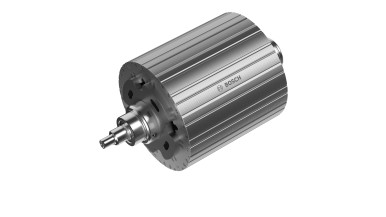
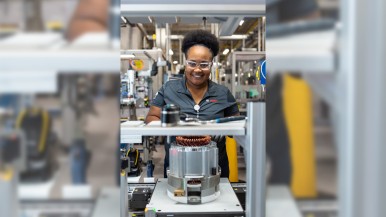
Farmington Hills, Mich. – The electrification of mobility continues to gain momentum – and together with its customers, Bosch is actively shaping this transformation. The company recently received a major new order from Mercedes-Benz to supply a large volume of electric motors into the 2030s for the premium manufacturer’s next generation of electric powertrains. “The new order reaffirms our long-standing partnership with Mercedes-Benz and shows that we can successfully contribute our expertise to technologically demanding projects as well,” says Markus Heyn, member of the Bosch board of management and chairman of Bosch Mobility. The order follows on from a successful year in 2025, in which Bosch acquired more than 70 customer projects worldwide. The company currently supplies more than 50 automakers from all over the world with technology and solutions for electromobility. Even though markets in different regions are developing at different speeds and price and competitive pressures remain high, these orders make it clear: Bosch is on course in electromobility, too. “We win over customers with our core competence of being able to develop and manufacture complex technology in large quantities with significant economies of scale worldwide. We deliver electric-driving solutions to all markets around the world,” Heyn says. We win over customers with our core competence of being able to develop and manufacture complex technology in large quantities with significant economies of scale worldwide. We deliver electric-driving solutions to all markets around the world,...says Markus Heyn, member of the Bosch board of management and chairman of Bosch Mobility. Bosch electric motors feature up to 98 percent efficiency along with increased power density, thanks in large part to the new winding technology. These motors are also equipped with innovative rotor oil cooling, which is the optimum way to dissipate the heat. Another decisive advantage is their scalable platform architecture: the length of the electric motor can be varied depending on the power required, so the motor can be easily installed in different axle variants. This allows customers to integrate the powertrain flexibly and cost-effectively into a range of vehicle models. The combination of high efficiency, innovative cooling, optimized winding technology, and scalable platform architecture results in a particularly compact design that reduces weight, installation space, and ultimately system costs. Bosch is a key technology partner for numerous manufacturers worldwide Bosch plans to manufacture more than seven million components for electric driving in 2026. Currently, roughly seven electric motors roll off the company’s production lines every minute worldwide. Besides premium manufacturers such as Mercedes-Benz, Bosch also works with a large number of other international automakers in the field of electromobility. In India, for example, the company has entered a joint venture with TataAutocomp Systems to develop, commercialize, and manufacture e-axles for the Indian market. Bosch also plays a leading role as a technology partner in China, the world’s largest vehicle market today. “We already work with almost all Chinese car manufacturers, as well as with numerous international automakers operating in China,” says Marco Zehe, president of Bosch’s Electrified Motion division. For more than a decade, Bosch has been manufacturing for a large number of automakers based there and supplies more than 30 customers with solutions for electric driving. From silicon carbide chips to complete powertrain solutions – Bosch covers the entire spectrum of electromobility worldwide. In addition to the e-axle, the company now also offers “X-in-1” solutions, in which several elements such as the electric motor, power electronics, transmission, and energy management are bundled into highly integrated systems. These are more compact, lighter, and less complex, and offer clear cost benefits for customers.

Bosch sets new benchmark for electric propulsion with next-generation synchronou ...

23.04.2026

Press release

Business/economy

Bosch sets new benchmark for electric propulsion with next-generation synchronou ...

Farmington Hills, Mich.— Bosch has introduced a new generation of permanent-magnet synchronous e-motors designed to set the benchmark for series-ready electric propulsion. The advanced motor delivers a world-record gain in efficiency, with only 0.85 kWh/100 km losses in the WLTC cycle and effectively cutting the losses by up to 30 percent . Depending on use case, the motor provides a continuous-to-peak power ratio of up to 93 percent , combining breakthrough efficiency with robust, real-world performance. WLTC, or Worldwide Harmonized Light Vehicles Test Cycle, is a globally recognized test that measures how efficiently a vehicle uses energy under realistic driving conditions so automakers and consumers can compare performance across different vehicles. By maximizing energy efficiency and power density, the technology supports the industry’s transition to scalable, high-performance electric mobility. “Efficiency is the new horsepower,” said Kevin OKeefe, regional president of Electrified Motion, Bosch in North America . “This next-generation e-motor demonstrates how Bosch is helping our customers unlock greater performance, lower costs and enhanced supply-chain resilience. By enabling smaller batteries without compromising range, we’re delivering real value to automakers and drivers alike.” Engineered for broad applicability, the motor is designed for both battery-electric and hybrid powertrains. Its modular architecture supports a wide range of vehicle segments, from passenger cars to commercial applications, allowing manufacturers to streamline development and accelerate time to market. The new e-motor also reflects Bosch’s focus on global flexibility and long-term resilience. It incorporates sourcing strategies that support diversified supply chains, including rare-earth-reduced magnet configurations and, where available, localized production. This approach supports automakers in addressing regulatory requirements, mitigating supply risks and aligning with evolving sustainability and supply chain considerations. With experience of 8 million electric motors of all generations produced so far and decades of experience in electrification and large-scale manufacturing, Bosch is positioning the new motor as a series-ready solution capable of supporting global production programs. The company continues to invest in innovations that advance efficiency, scalability and sustainability across the electric mobility ecosystem.

Bosch debuts powerful 800-volt electric drive for applications on recreational a ...

20.08.2025

Press release

Electrified mobility

Bosch debuts powerful 800-volt electric drive for applications on recreational a ...

Farmington Hills, Mich. – electric drives are becoming increasingly prevalent in the boat and ship sector. At Electric & Hybrid Marine Expo, Bosch Engineering North America, a division of Robert Bosch LLC, is unveiling a newly developed, high-performance electrification solution for electrical systems with voltages of up to 800 volts, which further extends the potential use cases of electric drives in maritime applications while also raising system efficiency. “With the latest generation of our electric motor and inverter with silicon carbide power modules, we offer a complete system that allows not only recreational boats but also larger sailing yachts and working boats to be operated with a more efficient, quiet, yet still very powerful electric drive,” states Philip Kurek, who is responsible for off-highway and maritime solutions at Bosch Engineering. The new electric motor SMG 230 is designed for system voltages of 400 to 800 volts. In an ideal voltage and temperature range, it offers a continuous power output of up to 200 kilowatts and around 250 newton meters of torque. Thanks to the 800-volt technology, the power density has also been increased significantly. The SMG 230 delivers 80 kilowatts more power than a comparable 400-volt machine with identical weight or, with the same level of performance, boasts more compact dimensions and a much lower weight. The inverter with silicon carbide semiconductors, which is also designed for electrical voltages of up to 800 volts, is characterized by its impressive efficiency of more than 99 percent. The silicon carbide semiconductors in the power modules enable faster switching operations, meaning that significantly less energy is lost in the form of heat. In addition, the electrification solution from Bosch Engineering offers great flexibility in combination with tailored transmission solutions from Bosch Rexroth, such as the new eGFV9120 coaxial gearbox. Bosch’s complete kit for the electrification of boat drives comprises electronic control units, inverters, electric motors, and transmissions for both 400- and 800-volt applications. This gives shipyards and system integrators improved flexibility when adapting the electrification strategy to the respective requirements and allows them to integrate the relevant components quickly and easily into their ships. The system components are based on modern automotive technology and combine high robustness with increased reliability. With its comprehensive kit for the electrification of ship drives, Bosch is making a significant contribution to the ongoing reduction of greenhouse gas and noise emissions.

10.09.2024

Press release

Business/economy

Buoyed by tech to support evolving consumer needs in electrification, software a ...

Flat Rock, Mich. – Today, at the Bosch Mobility Experience 2024, Bosch is displaying advanced technologies including several making their debut in North America. Highlighted innovations, demonstrated through dynamic displays at the company’s recently-upgraded proving grounds in Flat Rock, Mich., include advanced by-wire systems, comprehensive vehicle motion management and enhanced power loss safeguards. Consumer expectations are driving new vehicle technologies, which also demand significant software developments. Bosch is leading this transformation with the seamless integration of advanced software, and hardware, in solutions that help to enable precise vehicle control, enhance performance and support safety. “The North American market – and the U.S. in particular – has been moving at an increased pace driven by new OEM strategies and consumer behavior,” said Paul Thomas, president of Bosch in North America and president of Bosch Mobility in the Americas. “Our mobility team is focused on profitable growth as part of the global Bosch portfolio. We have the benefit of tapping into a network of innovators, technology, and manufacturing experts of the largest automotive supplier in the world – but we also have the talent and the license to develop solutions here in the region.” The Americas is a critical growth region for Bosch, particularly in the mobility sector. By 2029, the ambition for Bosch Mobility in the Americas is to contribute approximately 25 percent of the company’s global annual mobility turnover ($60.8 billion globally in 2023), up from the current 20 percent ($12.4 billion in 2023), reflecting Bosch’s commitment to the region's strategic importance. The focus is on driving profitable growth by developing innovative solutions to meet the requirements of original equipment customers and the expectations of end consumers making vehicle purchasing decisions. The Bosch Mobility Experience event is focused on three main themes: Evolution towards electrification: Consumer choice and value drives innovation Journey towards software-defined reality: Comprehensive solutions that meet consumer needs on the path to software-defined vehicles Progression towards by-wire: New braking and steering concepts ultimately enable automation Evolution towards electrification: Consumer choice and value drives innovation In the U.S., the pace of electrification continues to shift and options such as hybrid vehicles continue to emerge to support consumer choice in the market. At the same time, vehicle affordability is a key consideration driving the pace of electrification. As a long-standing expert in powertrain solutions, Bosch supports customers with a variety of options to support these trends. Electrified axles are increasing in prominence as a suspension design approach for automakers as the industry continues on the path towards electrification. These eAxle systems are being demonstrated at the Bosch Mobility Experience in collaboration with Linamar, showcasing how the industry is collaborating to bring forth new solutions for customers. The Ram 2500 technology demo vehicle from Linamar is equipped with front and rear eUD10 Beam eAxles, which create 4WD capability delivering over 15,200 Nm of peak torque and 750 kW peak power. These eAxle Systems can be applied to full EV, hybrid or hydrogen vehicle applications. Bosch brings extensive system knowledge and industry-leading tools for simulation and modeling to optimize the performance of the motor, inverter and axle in one cohesive unit. Bosch offers electrification products that seamlessly integrate with rigid axles to enhance vehicle performance, towing capacity and payload capabilities. The complexity of vehicle electrical systems increases with higher levels of electrification, software and automation. Powernet Guardian , being shown for the first time publicly in North America at the Bosch Mobility Experience, helps to provide an ongoing power supply for safety-critical functions in the event of a fault. The system provides real-time diagnostics and monitoring of a vehicle's electrical system, including the battery, alternator and power distribution network to help identify potential issues before they lead to failures. Journey towards software-defined reality: Comprehensive solutions that meet consumer needs on the path to software-defined vehicles Bosch is supporting its customers with software and hardware solutions that continue the journey towards the software-defined vehicle while also recognizing the need to manage vehicle costs for the end consumer. Vehicle Motion Management is a hardware-agnostic control software layer that integrates and optimizes the various driving dynamics systems in a vehicle to enhance overall performance, safety and comfort. It controls vehicle motion in all six degrees of freedom, coordinating braking, steering, powertrain and suspension. Hardware-agnostic software features optimize vehicle dynamics, handling and efficiency. In addition, Vehicle Motion Management helps make the complexity of new vehicle architectures manageable. Its systems-integrating software on central vehicle computers controls the diverse actuators of the various vehicle domains. It also can help contribute to improved fuel efficiency, or EV battery management, by optimizing power delivery and braking energy recovery. Vehicle dynamics control 2.0 , an innovative smart control feature that helps enable the vehicle to think ahead, is part of Vehicle Motion Management. Using information from the vehicle dynamics sensors, the system helps to anticipate vehicle behavior and can potentially intervene proactively. Bosch is developing solutions specific to the North American market. In 2022, data revealed that 11 million American households owned a recreational vehicle. As interest in travel and outdoor activities surges, making trailering easier and more accessible could significantly boost sales of trucks and trailers. Anywhere parking trailer , next generation technology using software and sensors to automatically park a vehicle and a trailer with the touch of a button, will be shown for the first time publicly in North America at the Bosch Mobility Experience event. Bosch is expanding on its Anywhere parking system designed to simplify the parking process using data fusion from cameras, sensors, geo-coordinates and input from the driver to park in a precise position, even in difficult situations like unmarked pavement or tight spaces. Progression towards by-wire: New braking and steering concepts ultimately enable automation Bosch will showcase both brake-by-wire and steer-by-wire technologies at the Bosch Mobility Experience. As the industry continues to work towards increasing levels of automation options for vehicles, by-wire technologies are a key enabler. These new technologies can allow for new possibilities in human-machine interface and vehicle design. The Brake Control Pad , being shown for the first time publicly in North America at the Bosch Mobility Experience, enables a new, fully-integrated brake-by-wire system that replaces the traditional brake pedal with a force-based pad, requiring only a simple touch of the brake to measure driver input. Instead of using physical connections, the Brake Control Pad senses and sends braking commands electronically, driving towards more precise braking through improved integration with electrification and other advanced driver assistance systems. Bosch has a long and storied history in anti-lock braking systems (ABS), dating back to 1969 with in-house predevelopment of an anti-lock braking system that became standard on all new vehicles in the U.S. in 2012. This groundbreaking technology was developed to prevent wheel lock-up during braking, enhancing vehicle control and safety. Over the decades, Bosch has continued to innovate in ABS technology, expanding its applications to trucks, motorcycles and now bicycles. Bosch eBike ABS , which is now available in the U.S. market, is an advanced anti-lock braking system designed specifically for electric bicycles, enhancing rider safety and control. The system continuously monitors wheel speed and adjusts braking pressure to aid performance in a variety of conditions.

Electromobility: Bosch provides access to more than one million charging station ...

29.08.2024

Press release

Business/economy

Electromobility: Bosch provides access to more than one million charging station ...

Stuttgart, Germany – Charging their electric car quickly, conveniently, and most importantly, anywhere: for many drivers of electric cars around the world, this is often more of a wish than a reality. Along with range and costs, charging is one of car drivers’ biggest concerns, as a study by the German Association of Energy and Water Industries (BDEW) shows. Bosch wants to remedy this with its proprietary platform, so it is now setting the next milestone for better access to charging infrastructure: offering more than one million charging stations on four continents. This now makes the technology company’s network one of the biggest in the world. “Bosch’s declared aim is to make charging stations widely accessible and put an end to the chaos caused by different charging apps,” says Marco Zehe, president of Bosch’s Electrified Motion division. Users can access Bosch’s charging services with a smartphone app, and Bosch also offers its solutions for charging electric cars to vehicle manufacturers and companies. These services can be flexibly and easily integrated into a manufacturer’s look and feel and infotainment system, both functionally and visually, so that the driving and charging experience retain the manufacturer’s individual look and fit into its brand world. It takes just a few clicks to charge and pay – with full cost transparency. The charging stations currently included can be found across Europe, North America, Asia, and Australia. At present, there are around 800,000 charging stations in Europe alone and another 130,000 in North America; by the end of 2024, there will be some 200,000 across Australia, New Zealand, and Asia – and the number is growing all the time. “By integrating over one million charging stations into one platform, we’re making it much easier for drivers of electric cars to search for and find them – all over the world. In this way, we’re making electromobility more and more suitable for everyday use by the general public,” Zehe says. Inventive charging services are needed: by 2030, Bosch expects one in three newly registered vehicles worldwide to be purely electric; by 2035, it will be one in two. “We anticipate a huge surge in growth for the charging services business over the course of the decade – because as the number of electric vehicles grows, so does the need for straightforward and comprehensive charging solutions. And that’s good for us,” Zehe says. By the end of the decade, Bosch is expecting its charging solutions business to expand by more than 50 percent each year.

Bosch Ventures Amplifies Commitment to Cleantech with Two Battery Recycling Inve ...

15.05.2024

Press release

Sustainability

Bosch Ventures Amplifies Commitment to Cleantech with Two Battery Recycling Inve ...

Stuttgart (Germany) / Boston (USA): Bosch Ventures, the corporate venture capital unit of the Bosch Group, announces two significant investments in the battery recycling sector within a week, marking a significant step towards sustainable technology development. "In an electrified world, battery recycling makes a significant contribution to conserving natural resources," explains Dr. Ingo Ramesohl, Managing Director of Bosch Ventures. "With our investments, we can help cylib and Li Industries to scale their production." Bosch Ventures led $36 million investment round in Li Industries On May 9, 2024, Bosch Ventures investment in Li Industries was announced. Li Industries is poised to tackle significant challenges in the Li-ion battery's circular supply chain with innovative, scalable solutions. “Li Industries is the first and only company in the U.S. capable of economically and sustainably recycling low/no cobalt batteries, such as Lithium Iron Phosphate (LFPs), at scale using their unique Direct E2ETM recycling technology,”, said Dr. Ramesohl. Bosch Ventures co-led the $36 million Series B funding round together with Khosla Ventures and LG Tech Ventures. “We are thrilled to be backed by such a strong group of investors,” said Dr. Zheng Li, co-founder and CEO of Li Industries. German cylib raised €55 million round less than 24 months after start of operations Founded in 2022, the company offers market-leading proprietary technology for end-to-end recycling of lithium-ion batteries and has already delivered a successful pilot line and completed projects with major automotive OEMs as well as battery manufacturers. cylib’s process is characterized by an efficient, resource- and climate-friendly recovery of raw materials, including lithium, graphite, nickel, cobalt and manganese from battery packs, black mass or production scraps. Lilian Schwich, CEO of cylib, said: “The funding round we announced today will empower us to embark on our next phase of expansion and deepen existing collaborations, as we grow our next-generation battery recycling at an industrial scale.” Bosch Ventures joined the oversubscribed round on cylib’s way to become Europe’s primary battery recycler. Rapidly growing market with high local interest With the rapid growth of battery-driven electric vehicles, eBikes, powertools and household appliances, the demand for battery recycling is soaring. Similar to the U.S., the EU has already ranked the materials inside EV batteries as strategic critical raw materials and set its latest stringent battery recycling regulations accordingly. cylib’s market-leading process enables battery producers, automotive OEMs and all companies operating in the battery value chain to recycle elements locally and achieve these requirements. "Our investments in cutting-edge battery recycling startups underscore our commitment to pioneering technologies that not only promise substantial market growth but also offer solutions to one of the most pressing environmental challenges of our time," stated Ramesohl. "We are excited to be at the forefront of this vital industry, and we are proud to support and connect multiple companies from different geographies in this space".

26.03.2024

Press release

Electrified mobility

10 Years of Bosch eBike Systems in North America

Foothill Ranch, CA – Bosch eBike Systems, a trailblazer in the electric bike industry, is celebrating its 10th anniversary in North America in 2024. Since its inception, the brand has been a leader in equipping eBikes with powerful drive units and best-in-class connected systems and is proud to have served riders within North America for the past decade.Established in Germany in 2009 as an internal start-up and officially launched in 2010, Bosch eBike Systems was born out of the Bosch Group's expertise in technology behind cordless powertools, electric motors, electronics, and sensor technology—a deep bench of knowledge, given that Bosch is the largest automotive parts and sensor supplier in the world and provides sensors to over half the world’s mobile devices. Derived from this bedrock of Bosch’s almost 140-year history, the eBike division has evolved into a powerhouse of innovation dedicated to transforming the way consumers approach transportation and experience cycling.Bosch introduced its eBike systems to the United States market at the Sea Otter Classic in 2014 with OEMs Felt, Haibike and Lapierre as the Silver-level Sponsor and Official eBike System Sponsor of the event. At this time, eMobility and eBikes were the ideal answer to trending topics in 2014, including a focus on climate protection and a shift towards urbanization. Upon its entry to the North American market, Bosch eBike Systems also became a coalition member of People for Bikes and founding member of their new eBike subcommittee, which created the 3-class model legislation that has since rolled out across 48 states. Bosch embodies a heritage synonymous with innovation, quality, and, above all, safety both for the rider and as it relates to technology. The brand has played an integral role in furthering battery safety, having helped write and set the standard for UL 2849 in 2021, which covers the electrical system of eBikes powered by a lithium-based battery. In addition to adhering to UL 2849, Bosch eBike batteries are also certified to UL 2271, another safety standard applicable to batteries for Light Electric Vehicles (LEVs). Coupled with the brand’s commitment to adhering and setting the bar for industry safety standards, the Bosch Group has a deep history of developing rider-first technology and products that put an emphasis on performance and safety. Recent technology innovations include the introduction of the first eBike ABS system in 2018, the fully connected smart system in 2022, which empowers riders with real-time updates, and ongoing involvement in Vehicle-to-Everything (V2X) communication.“As a 30-year veteran of the Bosch Group, I’m incredibly proud to have been able to be a founder of our eBike division, but more so, to bring the operation to Southern California and integrate into the lifestyle and culture in a way that best serves our 40+ U.S. and Canada-based bike brands, thousands of bike shops, key cycling, and safety advocacy groups, and the customers who buy these bikes,” said Claudia Wasko, VP/GM Bosch eBike Systems, Americas. “I’m confident we’re just getting started and look forward to what the future holds as we continue to deliver innovative products and connected technology that empower riders.” Bosch eBike Systems, a continued sponsor of Sea Otter Classic, will be there again April 18-21, 2024 in Monterey, CA. At the festival, the brand will host a celebratory afternoon with longtime collaborators on a scenic ride covering 17 Mile Drive before offering free demo rides to all Sea Otter attendees on bikes powered by their latest technologies including the new Performance Line SX, the brand’s lightest and most compact drive unit. Since its launch in the U.S., Bosch eBike Systems’ North American headquarters has been in Orange County, CA, where its team operates out of the brand’s Foothill Ranch, CA facility. For more information, visit www.bosch-ebike.com.

Electric & Hybrid Marine Expo: Bosch presents sustainable electric drives for ya ...

27.02.2024

Press release

Business/economy

Electric & Hybrid Marine Expo: Bosch presents sustainable electric drives for ya ...

Farmington Hills – The electrification of cars and public transport continues to grow. A next step is to drive the electrification of maritime solutions to reduce environmental pollution and better protect lakes and rivers in metropolises worldwide. This is a trend seen at shipyards and many boat manufacturers. Increasing customer demands for an eco-friendlier solution are also spurring the industry on. Bosch Engineering therefore offers electrification solutions for recreational boats and motorized yachts, enabling shipyards, shipbuilders, and system integrators to implement drive electrification quickly and easily. “With our electrification solutions we intend to play a key role in driving this change in the maritime sector. Whether boat manufacturers require an individual or platform solution, we want to offer them the optimal solution for their needs. In addition to providing original equipment, our solutions can also be used to retrofit existing fleets of boats,” explains Philipp Kurek, who is responsible for off-highway and maritime solutions at Bosch Engineering. Highly dynamic electric drive offers new degree of enjoyment Boat manufacturers receive individual components that they can integrate into their systems themselves. The overall system for boat drive electrification from Bosch consists of an electric motor with an optional gearbox, an inverter with an integrated DC/DC converter, and an electric control unit as the system’s core component. The motors are available in 90 and 140 kW power levels. The design of the 400 V permanent magnet synchronous motor is characterized by a high-power density and very high efficiency. The inverter is equipped with a powerful DC/DC converter for supplying the 12 V onboard power supply system. The transmission impresses with its high efficiency and quiet, low-maintenance operation. The compact dimensions enable boat manufacturers to easily integrate the components even into small spaces or to retrofit existing applications. The low overall weight of the components allows the maximum range of the boat to be increased. The dynamic behavior of the electric drive effortlessly drives pleasure boats and yachts and offers a new level of driving pleasure. Outlook: Electric drive system platform – simple integration thanks to platform approach With the electric drive system platform (EDSP), Bosch Engineering offers boat manufacturers a solution for electric boat drives. This comprises Bosch’s own drive components, such as the electric motor, inverter, and transmission, as well as solutions for all other relevant components, such as the high-voltage battery, charger, and cable harnesses that come from third-party providers. Users also receive a description of all the key information they need to incorporate the technology into their boat. This includes a system guideline, component specifications, electronic control unit software, and a commissioning packet. Ultimately, the EDSP approach significantly shortens the development time to series use. With the EDSP, boat manufacturers benefit from a predefined solution that can be installed quickly and cost-effectively in recreational boats or yachts. The EDSP will be available for the US market by end of 2024. Visitors and interested parties can find out more about Bosch Engineering’s electrification solutions at Electric & Hybrid Marine Expo at booth 6060. Further information: https://www.bosch-engineering.com/stories/stories-detailpages/marine.html https://www.bosch-engineering.com/branches/ohw-overview.html https://www.bosch-presse.de/pressportal/de/en/salone-nautico-venezia-venice-boat-show-bosch-presents-sustainable-electric-drives-for-yachts-and-recreational-boats-255040.html https://www.bosch-presse.de/pressportal/de/en/bosch-engineering-and-x-shore-develop-new-electric-drive-system-for-the-x-shore-1-255424.html

Bosch Engineering and X Shore develop new electric drive system for the X Shore 1D

21.06.2023

Press release

Electrified mobility

Bosch Engineering and X Shore develop new electric drive system for the X Shore 1D

Abstatt, Stockholm – Bosch Engineering, a wholly owned subsidiary of Robert Bosch GmbH and X Shore, the Swedish technology company behind a game-changing generation of fully-electric, silent, connected boats, announce today a collaboration to improve the performance and efficiency of the electric drive system of the X Shore 1. The collaboration brings together two companies with a shared commitment to sustainability, in the pursuit of a greener future for marine vessels. Through working with Bosch Engineering, X Shore continues its run of working with like minded partner companies and organizations. By frequently identifying and collaborating with innovative companies, X Shore is pushing the boundaries of engineering excellence and propelling the electric boating industry forward. With a deep commitment to sustainability, both X Shore and Bosch Engineering share a common vision to reduce emissions and make the world greener. Bosch Engineering’s collaboration with sustainability pioneer, X Shore, continues to enable the company to reach these targets and unite to accelerate the electric boating movement. Bosch's state-of-the-art technology and automotive expertise plays a crucial role in the development of the X Shore 1 electric drive system. Since launch, the X Shore 1 has been fitted with Bosch’s largest motor on the market for leisure boat applications, as well as the Bosch inverter and the gearbox, developed and manufactured by Bosch Rexroth. These components offer power, silence, reliability and compactness, perfectly aligned with X Shore’s vision of delivering high performance electric boats to the market.X Shore - one of the most sustainable manufacturers in the world, as certified by independent auditor, Shades of Green (part of S&P Global), and the company has set a course for long-term sustainability that paves the way for a net-zero future through its new technology, innovative research, smart design, and sustainable materials that allow passengers to explore the world’s oceans and lakes without the harmful noise and fumes a fossil-fuel engine emits. Dr. Johannes-Jörg Rüger, president at Bosch Engineering GmbH, expressed his pride about the collaboration, stating: “At Bosch, we are investing heavily in sustainable technologies and pursued sustainability long before it made it to the top of the social agenda. When it comes to sustainable mobility, we’re continuing to strengthen our portfolio of solutions for electrified driving. With X Shore, we have found a strong passionate partner that shares this environmental commitment with deep conviction. I am happy that Bosch Engineering helps to accelerate the sustainable X Shore serial production approach by sharing series production experience and automotive proven high performance components." Jenny Keisu, CEO of X Shore, commenting on the collaboration, said: “At X Shore, we are always seeking innovative collaborations to further our mission towards a more sustainable boating industry and a greener world. We firmly believe that innovation knows no boundaries and that by joining forces with other innovative companies, both big and small, we can push the boundaries of what's possible. Our commitment to constant innovation drives us to seek partnerships that enable us to learn from each other, share knowledge, and leverage collective expertise. At X Shore, we are excited to support Bosch Engineering in further strengthening their sustainability mission and together, we will bring new, cutting-edge electric drive system technology to the new X Shore 1, providing an unparalleled boating experience. X Shore’s deeper collaboration with Bosch Engineering marks the beginning of Bosch's electrification journey into the leisure boat segment - of which X Shore, as a sustainability pioneer in the boating industry - has been carefully selected as part of the pilot. The collaboration stands to enhance and develop the X Shore 1’s electric drive system - improving on power thanks to its lightweight design, increasing efficiency through design and software set-up, allowing for easy integration into existing systems through the use of space-saving design, and saving time and costs due to the elimination of maintenance efforts.Further information: Specification for the X Shore 1: https://xshore.com/xshore-1 Bosch electrification components: https://www.bosch-mobility.com/en/solutions/powertrain/battery-electric/electric-drive-ohw/ Bosch Marine: https://www.bosch-engineering.com/stories/stories-detailpages/marine.html

Bosch announces electric motor production in Charleston and more than $260 milli ...

25.10.2022

Press release

Business/economy

Bosch announces electric motor production in Charleston and more than $260 milli ...

Charleston, S.C. – Electrification means new opportunities. As more electric vehicles come to market and provide consumers with the option for zero tailpipe emission vehicles, new opportunities in manufacturing and jobs are emerging to support the shift to electrification. Bosch announced today the launch of production of electric motors at its Charleston, S.C. manufacturing facility. Additionally, the company plans to invest more than $260 million to further expand production of electrification products at the site, which is expected to create at least 350 net new jobs by 2025. “We have grown our electrification business globally and here in the North American region,” said Mike Mansuetti, president of Bosch in North America. “We’ve invested more than $6 billion dollars in electromobility development and in 2021 our global orders for electromobility surpassed $10 billion dollars for the first time. Local production helps to advance our customers’ regional electrification strategies, and further supports the market demand for electrification.”Expansion complemented by investment Production of electric motors at the Charleston site began in October. It covers approximately 200,000 square feet in an existing building on the Bosch Charleston campus. The new assembly area includes the production of rotors and stators, and the final assembly of the electric motor. The company has secured additional electromobility business that requires further expansion at the plant. An additional approximately 75,000 square feet will be added onto the existing building to make room for future production. The total investment for the expansion will be more than $260 million for the expansion and new high-tech manufacturing equipment. The expansion is expected to be operational by the end of 2023. The Charleston plant stands out with a long history of process competency as well as its knowledge in the area of automation and robotics. Production at the site features highly-automated processes, and the site utilizes artificial intelligence and Industry 4.0 methods to gain more efficiency. “As more electrified solutions come to the market, the strong footprint and skilled workforce in South Carolina is well established to help organizations bring these solutions to the market,” said South Carolina Governor Henry McMaster. “We are grateful for another strong commitment from Bosch to our state.” Bosch has continued to invest in its presence in South Carolina. To move ahead the vision of sustainable mobility, Bosch announced its fuel cell stack production lately in August in Anderson, South Carolina, as part of a more than $200 million investment also expected to create at least 350 new jobs by the start of production in 2026. “Bosch is paving the way by showing the growth opportunities for existing manufacturing facilities that support new technology,” said South Carolina Secretary of Commerce Harry M. Lightsey III. “Congratulations to Bosch on another major investment in South Carolina.” The Bosch Charleston facility, which opened in 1974, is the largest manufacturing site in the United States for Bosch from an employment perspective with around 1,500 associates. It covers more than 900,000 square feet of floor space located on 118 acres. “We are proud of our long-term relationship with the Bosch team and congratulate them on their latest expansion in Dorchester County,” said Dorchester County Council Chairman Bill Hearn. “Bosch’s decision to bring electric vehicle technology to Dorchester County is yet another example of our ongoing commitment to help our businesses and industries prosper.”Charleston reinvents to support electrification The newly launched production of electric motors is located in a building formerly occupied by production of diesel components. Bosch announced in January 2020 that production of diesel powertrain components would be slowly ramped down. The site indicated it would secure electrification business. “This launch delivers on a commitment to our associates and to the local community in Charleston,” said Mansuetti, who started his Bosch career as a manufacturing engineer at the Charleston facility. “We are in the midst of major shifts in mobility, and the story of reinvention in Charleston is a model for how electrification production can evolve from within an existing facility. We are building on the long-standing expertise and commitment of the Charleston team with this new production.” As part of the site transformation, Bosch has provided reskilling and upskilling opportunities to associates to prepare for the production of electric motors. This includes associates travelling to other sites within the global Bosch production network for training and best practice sharing. Bosch is also collaborating with local schools to begin implementing fundamentals related to electrification into curriculum. The Bosch Community Fund, the corporate foundation for Bosch in North America, has invested more than $2.5 million in grants related to STEM education efforts in the Charleston area since 2013.The energy that drives electric vehicles An electric motor converts electrical energy into mechanical energy to provide propulsion in electric vehicles. At the Charleston facility Bosch will produce the rotor and stator and the final assembly of electric motors that will drive electric vehicles on the road in the United States. A rotor is the rotating part of the motor and contains a precise design of magnets to create a magnetic field. A stator is static and made up of electric coils that are fed energy from alternating current coming from the power electronics via the battery. As current flows into the stator, the magnetic field of the rotor will chase the magnetic field in the stator, creating the motion that is transferred to the wheels of the vehicle. The Bosch approach to electric motor development is flexible and allows easy integration in different vehicle topologies based on customer needs while still providing competitive costs. The company uses approaches such as bar winding technology to maximize power density while minimizing size, which enables more freedom in the electric motor layout. Thinner lamination tailored to customer needs provides greater efficiency. As electric motors continue to develop, Bosch is enlisting the help of artificial intelligence and new design methods to continue to optimize development, efficiency, performance and use of materials. Electric motors from Bosch can deliver anywhere from 50 kilowatts to up to 500 kilowatts with torque ranging from 150 Nm to 1000 Nm. They feature up to 98 percent efficiency, which helps to maximize range of the vehicle. With a voltage range up to 850V, Bosch has developed electric motors suited for a variety of applications from passenger cars to light commercial vehicle use. As its orders in electromobility continue to increase, the Bosch global production network has been ramping up to support the expanding demand for electrification. Local-for-local production supports a robust supply chain approach for local customer needs. “We have long been believers in the potential of electromobility and we have been investing heavily to bring this technology to market at scale for our customers,” Mansuetti said. The Bosch site in Charleston supports multiple products from the Bosch Mobility Solutions portfolio. It produces high-pressure fuel injectors and pumps for internal combustion engines. It also manufacturers safety-related products such as electronic stability control or ESP®, an anti-skid technology that is estimated to have saved more than 9,000 lives in the U.S. from 2008-2015 according to the National Highway Traffic Safety Administration (NHTSA).

Bosch presents electrification, fuel cell and software-based solutions at NAIAS 2022

14.09.2022

Press release

Electrified mobility

Bosch presents electrification, fuel cell and software-based solutions at NAIAS 2022

Detroit – Future mobility concepts are being driven by the major trends of electrification and software, but also by new approaches to collaboration across the industry. At the 2022 North American International Auto Show (aka Detroit Auto Show), Bosch will present a number of solutions to support customers in areas including electrification, vehicle motion and software. It will also highlight collaborative initiatives such as the Detroit Smart Parking Lab. “Our portfolio spans across many domains of the vehicle, including system-level and software-specific expertise,” said Paul Thomas, executive vice president of Mobility Solutions, Americas. “Our presence at NAIAS highlights the vast number of ways we work together with our customers and across the industry to help future mobility concepts become reality.”Enabling electrification Bosch has a rich history in powertrain and continues its leadership as more and more electrification solutions come to market. In 2021, the company’s orders related to electrification for passenger vehicles and light trucks surpassed ten billion euros for the first time. Already, more than five million vehicles around the world feature Bosch electrical powertrain components. At NAIAS 2022, Bosch will showcase solutions that continue to enable electrification. The advanced driving module shows individual systems for propulsion, steering and braking integrated into a harmonized module. The result is reduced complexity for electric vehicle development and engineering. A key part of the Bosch electrification portfolio is the eAxle, which provides manufacturers with a complete solution that optimizes cost and helps to reduce complexity. The eAxle city is a compact, light, and efficient drive solution where the electric motor, inverter and transmission are combined in one system housing. Its compact size means it is suitable for use in smaller vehicle classes. The power modules of the eAxle city are based on silicon carbide semiconductor technology for new generation of highly efficient and energy-saving silicon carbide inverters. The eAxle performance , which also features silicon carbide technology for both 400V and 800V, achieves a technological leap thanks to the use of new semiconductor technology combined with a multi-objective, multi-domain development approach. “OEMs must show that electrified trucks and SUVs will retain the same performance characteristics customers demand including ride & handling – on and off-road, torque, towing, range and maintenance costs,” Thomas said. “No other company can match Bosch for the diversity of our electromobility portfolio that enables our customers to deliver vehicles consumers demand.”All in for hydrogen Part of the broad electrification approach at Bosch is a strong investment to support the development of the hydrogen economy. The company recently announced it would be investing $200 million to produce fuel cell stacks in Anderson, S.C. And globally, Bosch announced it would invest more than $1 billion USD globally to develop mobile fuel cell technologies by 2024. Bosch’s portfolio in mobile fuel cells offers a fuel cell system from one single source. The company offers a scalable fuel cell power module comprised of a fuel cell stack and submodules to generate electricity to power commercial vehicles. Bosch also offers the fuel cell stack independently. Complementing the module and stack are components, also known as the balance of plant components , needed for fuel cell vehicles. This includes sensors, valves, electronic control units and electric air compressors.New software-based solution for pickup trucks Software-based solutions are found across the Bosch Mobility Solutions portfolio. In the area of driver assistance and vehicle motion, the company will debut a new software-based solution publicly for the first time at NAIAS 2022. Tailgate down view is a visualization software feature that allows a driver to see behind a vehicle when the tailgate is in the down position. This addresses the limitations of a traditional rear-view camera which does not allow a pickup truck driver to see behind their vehicle when the bed is loaded, and the tailgate is down. The solution is part of a full portfolio of trailering, parking, maneuvering and visualization solutions from Bosch. “We have a deep understanding of truck and SUV end-users,” Thomas said. “Our team has developed a full portfolio of solutions that fit the North American market where the truck and SUV segments are in the lead.”Connectivity enables new insights and features Across its entire business, Bosch is reaping the benefits of connectivity and the Internet of Things (IoT). As of the beginning of 2022, the company announced all its electronics product classes were connectable. In the area of mobility, Bosch’s braking portfolio is now IoT-ready. At NAIAS, the company will highlight its connected braking systems , which enable both data-driven development for automakers and Bosch as well as data-driven service enablement for fleet owners and end consumers. Through continuous development enabled by data, specifications can be further defined, virtual updates sent to the system and development cycles shortened. For fleet owners and consumers, this benefit unlocks the ability to monitor component health information across braking systems, tires and other chassis components.Detroit Smart Parking Lab demos highlight the value of industry collaboration Beyond its NAIAS display at Huntington Place, Bosch will host demonstrations in the Detroit Smart Parking Lab . The Lab, which is a collaboration between the State of Michigan, Ford, Bedrock and Bosch, is a real-world test site for emerging technology that enables mobility and smart infrastructure pioneers, real-estate innovators and startups to test parking-related mobility, logistics and electric vehicle charging technologies. During the Detroit Auto Show, the Detroit Smart Parking Lab will host demonstrations from startup organizations such as HEVO, WiTricity, Yoshi, Voltpost and It’s Electric covering topics such as wireless and curbside EV charging as well as remote vehicle charging and parking services. “Collaboration is essential as we develop new technologies for the future of mobility,” Thomas said. “The Detroit Smart Parking Lab shows the possibilities when we bring together a broad range of perspectives from manufacturer, supplier, infrastructure, government and startups.” Bosch will also demonstrate its own technology in the lab. RideCare helps mobility service providers and fleet managers run fleets more efficiently by detecting damages to the vehicle, smoking inside the vehicle, and hard driving maneuvers in real time. Bosch will also showcase its automated and driverless parking system, automated valet parking . Here the vehicle interacts with infrastructure in the garage to autonomously navigate to a parking spot and park. Further interface between infrastructure and mobility concepts will be shown through Bosch video as a sensor technology where features such as artificial intelligence can power new use cases.

Longer range as standard: Bosch gives go-ahead for volume production of silicon  ...

02.12.2021

Press release

Electrified mobility

Longer range as standard: Bosch gives go-ahead for volume production of silicon ...

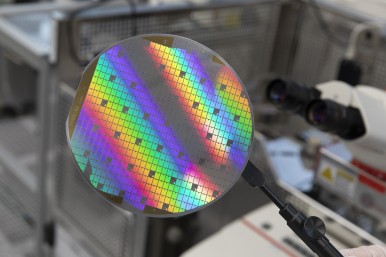
Reutlingen, Germany – They are small, powerful, and extremely efficient: semiconductors made of silicon carbide (SiC). After several years of development, Bosch is now starting volume production of power semiconductors made of this innovative material, supplying automotive manufacturers worldwide. In the future, more and more production vehicles will feature these chips. “The future for silicon carbide semiconductors is bright. We want to become a global leader in the production of SiC chips for electromobility,” says Harald Kroeger, member of the board of management of Robert Bosch GmbH. Two years ago, the supplier of technology and services had announced that it would push ahead with the development of SiC chips and enter production. For this, Bosch has developed its own highly complex manufacturing processes, which it has been using to produce the special semiconductors since the beginning of 2021 – initially as samples for customer validation. “Our order books are full, thanks to the boom in electromobility,” Kroeger says. In the future, Bosch intends to expand its production capacity for SiC power semiconductors to a unit volume running into the hundreds of millions. With this in mind, the company has already started expanding the clean-room space at its Reutlingen plant. In parallel, work is also being done on the second generation of SiC chips, which will be even more efficient and should be ready for volume production as of 2022. Bosch is receiving support for the development of these innovative manufacturing processes for SiC semiconductors from the German Federal Ministry for Economic Affairs and Energy (BMWi) as part of the “Important Project of Common European Interest (IPCEI) Microelectronics” program. “For several years now, we have been providing support to help establish semiconductor production in Germany. Bosch’s highly innovative semiconductor production strengthens the microelectronics ecosystem in Europe and is a further step toward greater independence in this key field of digitalization,” says Peter Altmaier, Germany’s Federal Minister for Economic Affairs.The stuff range dreams are made of Around the world, demand for silicon carbide power semiconductors is rising. A forecast by the market research and consulting company Yole indicates that, between now and 2025, the SiC market as a whole will grow on average by 30 percent a year to over 2.5 billion dollars. At around 1.5 billion dollars, the SiC car market is expected to account for the lion’s share. “Silicon carbide power semiconductors make particularly efficient use of energy. This material’s advantages really come to the fore in energy-intensive applications such as electromobility,” Kroeger says. In the power electronics of electric vehicles, silicon carbide chips ensure that drivers can drive significantly further on one battery charge – on average around 6 percent further than with their pure silicon counterparts. In order to meet steadily increasing demand for these semiconductors, an extra 10,764 square feet were already added to the clean-room space at the Bosch wafer fab in Reutlingen in 2021. Another 32,292 square feet will be added by the end of 2023. The new space will house state-of-the-art production facilities for manufacturing silicon carbide semiconductors using processes developed in-house. To achieve this, Bosch’s semiconductor experts are building on their decades of expertise in chip manufacturing. In the future, the company – incidentally the only automotive supplier to produce its own silicon carbide chips – plans to manufacture the semiconductors on 8-inch wafers. Compared with today’s 6-inch wafers, this will deliver sizeable economies of scale. After all, it takes several months for a single wafer to pass through several hundred process steps in countless machines. “By producing on larger wafers, we can manufacture significantly more chips in one production run and thus supply more customers,” Kroeger says.Small atom, big impact The secret behind SiC chips’ impressive performance lies in a tiny carbon atom. Introducing it into the crystalline structure of the ultra-pure silicon generally used to manufacture semiconductors gives the raw material special physical properties: for example, silicon carbide semiconductors support higher switching frequencies than pure silicon chips. What’s more, they lose only half as much energy in the form of heat, thereby increasing the range of electric vehicles. The chips are also important for 800-volt systems, where they enable faster recharging and better performance. Since the SiC chips also emit significantly less heat, the power electronics require less in the way of costly cooling. In addition to weight, this is another way to reduce the cost of electric vehicles. In the future, Bosch will supply silicon carbide power semiconductors to customers around the world – both as individual chips and installed in power electronics or complete solutions such as the e-axle. This combination of electric motor, gearbox, and power electronics achieves an efficiency of up to 96 percent thanks to the more efficient design of the overall system. This leaves more energy for the powertrain, which increases the range.