#Electrified mobility

Electromobility growth market: Bosch wins major order from Mercedes-Benz

20.05.2026

Press release

Business/economy

Electromobility growth market: Bosch wins major order from Mercedes-Benz

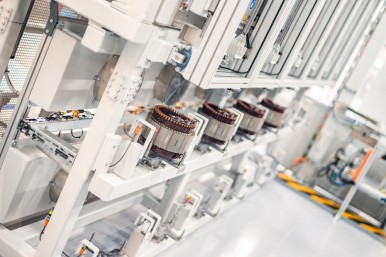
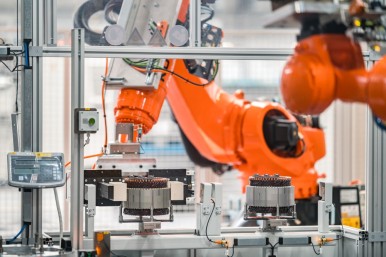
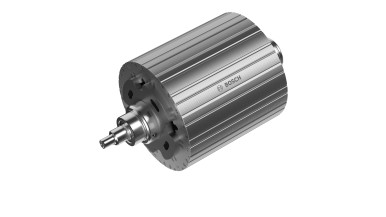
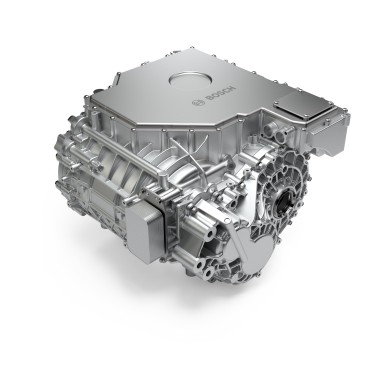
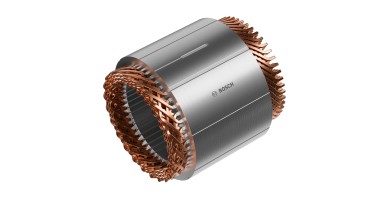
Farmington Hills, Mich. – The electrification of mobility continues to gain momentum – and together with its customers, Bosch is actively shaping this transformation. The company recently received a major new order from Mercedes-Benz to supply a large volume of electric motors into the 2030s for the premium manufacturer’s next generation of electric powertrains. “The new order reaffirms our long-standing partnership with Mercedes-Benz and shows that we can successfully contribute our expertise to technologically demanding projects as well,” says Markus Heyn, member of the Bosch board of management and chairman of Bosch Mobility. The order follows on from a successful year in 2025, in which Bosch acquired more than 70 customer projects worldwide. The company currently supplies more than 50 automakers from all over the world with technology and solutions for electromobility. Even though markets in different regions are developing at different speeds and price and competitive pressures remain high, these orders make it clear: Bosch is on course in electromobility, too. “We win over customers with our core competence of being able to develop and manufacture complex technology in large quantities with significant economies of scale worldwide. We deliver electric-driving solutions to all markets around the world,” Heyn says. We win over customers with our core competence of being able to develop and manufacture complex technology in large quantities with significant economies of scale worldwide. We deliver electric-driving solutions to all markets around the world,...says Markus Heyn, member of the Bosch board of management and chairman of Bosch Mobility. Bosch electric motors feature up to 98 percent efficiency along with increased power density, thanks in large part to the new winding technology. These motors are also equipped with innovative rotor oil cooling, which is the optimum way to dissipate the heat. Another decisive advantage is their scalable platform architecture: the length of the electric motor can be varied depending on the power required, so the motor can be easily installed in different axle variants. This allows customers to integrate the powertrain flexibly and cost-effectively into a range of vehicle models. The combination of high efficiency, innovative cooling, optimized winding technology, and scalable platform architecture results in a particularly compact design that reduces weight, installation space, and ultimately system costs. Bosch is a key technology partner for numerous manufacturers worldwide Bosch plans to manufacture more than seven million components for electric driving in 2026. Currently, roughly seven electric motors roll off the company’s production lines every minute worldwide. Besides premium manufacturers such as Mercedes-Benz, Bosch also works with a large number of other international automakers in the field of electromobility. In India, for example, the company has entered a joint venture with TataAutocomp Systems to develop, commercialize, and manufacture e-axles for the Indian market. Bosch also plays a leading role as a technology partner in China, the world’s largest vehicle market today. “We already work with almost all Chinese car manufacturers, as well as with numerous international automakers operating in China,” says Marco Zehe, president of Bosch’s Electrified Motion division. For more than a decade, Bosch has been manufacturing for a large number of automakers based there and supplies more than 30 customers with solutions for electric driving. From silicon carbide chips to complete powertrain solutions – Bosch covers the entire spectrum of electromobility worldwide. In addition to the e-axle, the company now also offers “X-in-1” solutions, in which several elements such as the electric motor, power electronics, transmission, and energy management are bundled into highly integrated systems. These are more compact, lighter, and less complex, and offer clear cost benefits for customers.

Bosch sets new benchmark for electric propulsion with next-generation synchronou ...

23.04.2026

Press release

Business/economy

Bosch sets new benchmark for electric propulsion with next-generation synchronou ...

Farmington Hills, Mich.— Bosch has introduced a new generation of permanent-magnet synchronous e-motors designed to set the benchmark for series-ready electric propulsion. The advanced motor delivers a world-record gain in efficiency, with only 0.85 kWh/100 km losses in the WLTC cycle and effectively cutting the losses by up to 30 percent . Depending on use case, the motor provides a continuous-to-peak power ratio of up to 93 percent , combining breakthrough efficiency with robust, real-world performance. WLTC, or Worldwide Harmonized Light Vehicles Test Cycle, is a globally recognized test that measures how efficiently a vehicle uses energy under realistic driving conditions so automakers and consumers can compare performance across different vehicles. By maximizing energy efficiency and power density, the technology supports the industry’s transition to scalable, high-performance electric mobility. “Efficiency is the new horsepower,” said Kevin OKeefe, regional president of Electrified Motion, Bosch in North America . “This next-generation e-motor demonstrates how Bosch is helping our customers unlock greater performance, lower costs and enhanced supply-chain resilience. By enabling smaller batteries without compromising range, we’re delivering real value to automakers and drivers alike.” Engineered for broad applicability, the motor is designed for both battery-electric and hybrid powertrains. Its modular architecture supports a wide range of vehicle segments, from passenger cars to commercial applications, allowing manufacturers to streamline development and accelerate time to market. The new e-motor also reflects Bosch’s focus on global flexibility and long-term resilience. It incorporates sourcing strategies that support diversified supply chains, including rare-earth-reduced magnet configurations and, where available, localized production. This approach supports automakers in addressing regulatory requirements, mitigating supply risks and aligning with evolving sustainability and supply chain considerations. With experience of 8 million electric motors of all generations produced so far and decades of experience in electrification and large-scale manufacturing, Bosch is positioning the new motor as a series-ready solution capable of supporting global production programs. The company continues to invest in innovations that advance efficiency, scalability and sustainability across the electric mobility ecosystem.

Bosch debuts powerful 800-volt electric drive for applications on recreational a ...

20.08.2025

Press release

Electrified mobility

Bosch debuts powerful 800-volt electric drive for applications on recreational a ...

Farmington Hills, Mich. – electric drives are becoming increasingly prevalent in the boat and ship sector. At Electric & Hybrid Marine Expo, Bosch Engineering North America, a division of Robert Bosch LLC, is unveiling a newly developed, high-performance electrification solution for electrical systems with voltages of up to 800 volts, which further extends the potential use cases of electric drives in maritime applications while also raising system efficiency. “With the latest generation of our electric motor and inverter with silicon carbide power modules, we offer a complete system that allows not only recreational boats but also larger sailing yachts and working boats to be operated with a more efficient, quiet, yet still very powerful electric drive,” states Philip Kurek, who is responsible for off-highway and maritime solutions at Bosch Engineering. The new electric motor SMG 230 is designed for system voltages of 400 to 800 volts. In an ideal voltage and temperature range, it offers a continuous power output of up to 200 kilowatts and around 250 newton meters of torque. Thanks to the 800-volt technology, the power density has also been increased significantly. The SMG 230 delivers 80 kilowatts more power than a comparable 400-volt machine with identical weight or, with the same level of performance, boasts more compact dimensions and a much lower weight. The inverter with silicon carbide semiconductors, which is also designed for electrical voltages of up to 800 volts, is characterized by its impressive efficiency of more than 99 percent. The silicon carbide semiconductors in the power modules enable faster switching operations, meaning that significantly less energy is lost in the form of heat. In addition, the electrification solution from Bosch Engineering offers great flexibility in combination with tailored transmission solutions from Bosch Rexroth, such as the new eGFV9120 coaxial gearbox. Bosch’s complete kit for the electrification of boat drives comprises electronic control units, inverters, electric motors, and transmissions for both 400- and 800-volt applications. This gives shipyards and system integrators improved flexibility when adapting the electrification strategy to the respective requirements and allows them to integrate the relevant components quickly and easily into their ships. The system components are based on modern automotive technology and combine high robustness with increased reliability. With its comprehensive kit for the electrification of ship drives, Bosch is making a significant contribution to the ongoing reduction of greenhouse gas and noise emissions.

10.09.2024

Press release

Business/economy

Buoyed by tech to support evolving consumer needs in electrification, software a ...

Flat Rock, Mich. – Today, at the Bosch Mobility Experience 2024, Bosch is displaying advanced technologies including several making their debut in North America. Highlighted innovations, demonstrated through dynamic displays at the company’s recently-upgraded proving grounds in Flat Rock, Mich., include advanced by-wire systems, comprehensive vehicle motion management and enhanced power loss safeguards. Consumer expectations are driving new vehicle technologies, which also demand significant software developments. Bosch is leading this transformation with the seamless integration of advanced software, and hardware, in solutions that help to enable precise vehicle control, enhance performance and support safety. “The North American market – and the U.S. in particular – has been moving at an increased pace driven by new OEM strategies and consumer behavior,” said Paul Thomas, president of Bosch in North America and president of Bosch Mobility in the Americas. “Our mobility team is focused on profitable growth as part of the global Bosch portfolio. We have the benefit of tapping into a network of innovators, technology, and manufacturing experts of the largest automotive supplier in the world – but we also have the talent and the license to develop solutions here in the region.” The Americas is a critical growth region for Bosch, particularly in the mobility sector. By 2029, the ambition for Bosch Mobility in the Americas is to contribute approximately 25 percent of the company’s global annual mobility turnover ($60.8 billion globally in 2023), up from the current 20 percent ($12.4 billion in 2023), reflecting Bosch’s commitment to the region's strategic importance. The focus is on driving profitable growth by developing innovative solutions to meet the requirements of original equipment customers and the expectations of end consumers making vehicle purchasing decisions. The Bosch Mobility Experience event is focused on three main themes: Evolution towards electrification: Consumer choice and value drives innovation Journey towards software-defined reality: Comprehensive solutions that meet consumer needs on the path to software-defined vehicles Progression towards by-wire: New braking and steering concepts ultimately enable automation Evolution towards electrification: Consumer choice and value drives innovation In the U.S., the pace of electrification continues to shift and options such as hybrid vehicles continue to emerge to support consumer choice in the market. At the same time, vehicle affordability is a key consideration driving the pace of electrification. As a long-standing expert in powertrain solutions, Bosch supports customers with a variety of options to support these trends. Electrified axles are increasing in prominence as a suspension design approach for automakers as the industry continues on the path towards electrification. These eAxle systems are being demonstrated at the Bosch Mobility Experience in collaboration with Linamar, showcasing how the industry is collaborating to bring forth new solutions for customers. The Ram 2500 technology demo vehicle from Linamar is equipped with front and rear eUD10 Beam eAxles, which create 4WD capability delivering over 15,200 Nm of peak torque and 750 kW peak power. These eAxle Systems can be applied to full EV, hybrid or hydrogen vehicle applications. Bosch brings extensive system knowledge and industry-leading tools for simulation and modeling to optimize the performance of the motor, inverter and axle in one cohesive unit. Bosch offers electrification products that seamlessly integrate with rigid axles to enhance vehicle performance, towing capacity and payload capabilities. The complexity of vehicle electrical systems increases with higher levels of electrification, software and automation. Powernet Guardian , being shown for the first time publicly in North America at the Bosch Mobility Experience, helps to provide an ongoing power supply for safety-critical functions in the event of a fault. The system provides real-time diagnostics and monitoring of a vehicle's electrical system, including the battery, alternator and power distribution network to help identify potential issues before they lead to failures. Journey towards software-defined reality: Comprehensive solutions that meet consumer needs on the path to software-defined vehicles Bosch is supporting its customers with software and hardware solutions that continue the journey towards the software-defined vehicle while also recognizing the need to manage vehicle costs for the end consumer. Vehicle Motion Management is a hardware-agnostic control software layer that integrates and optimizes the various driving dynamics systems in a vehicle to enhance overall performance, safety and comfort. It controls vehicle motion in all six degrees of freedom, coordinating braking, steering, powertrain and suspension. Hardware-agnostic software features optimize vehicle dynamics, handling and efficiency. In addition, Vehicle Motion Management helps make the complexity of new vehicle architectures manageable. Its systems-integrating software on central vehicle computers controls the diverse actuators of the various vehicle domains. It also can help contribute to improved fuel efficiency, or EV battery management, by optimizing power delivery and braking energy recovery. Vehicle dynamics control 2.0 , an innovative smart control feature that helps enable the vehicle to think ahead, is part of Vehicle Motion Management. Using information from the vehicle dynamics sensors, the system helps to anticipate vehicle behavior and can potentially intervene proactively. Bosch is developing solutions specific to the North American market. In 2022, data revealed that 11 million American households owned a recreational vehicle. As interest in travel and outdoor activities surges, making trailering easier and more accessible could significantly boost sales of trucks and trailers. Anywhere parking trailer , next generation technology using software and sensors to automatically park a vehicle and a trailer with the touch of a button, will be shown for the first time publicly in North America at the Bosch Mobility Experience event. Bosch is expanding on its Anywhere parking system designed to simplify the parking process using data fusion from cameras, sensors, geo-coordinates and input from the driver to park in a precise position, even in difficult situations like unmarked pavement or tight spaces. Progression towards by-wire: New braking and steering concepts ultimately enable automation Bosch will showcase both brake-by-wire and steer-by-wire technologies at the Bosch Mobility Experience. As the industry continues to work towards increasing levels of automation options for vehicles, by-wire technologies are a key enabler. These new technologies can allow for new possibilities in human-machine interface and vehicle design. The Brake Control Pad , being shown for the first time publicly in North America at the Bosch Mobility Experience, enables a new, fully-integrated brake-by-wire system that replaces the traditional brake pedal with a force-based pad, requiring only a simple touch of the brake to measure driver input. Instead of using physical connections, the Brake Control Pad senses and sends braking commands electronically, driving towards more precise braking through improved integration with electrification and other advanced driver assistance systems. Bosch has a long and storied history in anti-lock braking systems (ABS), dating back to 1969 with in-house predevelopment of an anti-lock braking system that became standard on all new vehicles in the U.S. in 2012. This groundbreaking technology was developed to prevent wheel lock-up during braking, enhancing vehicle control and safety. Over the decades, Bosch has continued to innovate in ABS technology, expanding its applications to trucks, motorcycles and now bicycles. Bosch eBike ABS , which is now available in the U.S. market, is an advanced anti-lock braking system designed specifically for electric bicycles, enhancing rider safety and control. The system continuously monitors wheel speed and adjusts braking pressure to aid performance in a variety of conditions.

Electromobility: Bosch provides access to more than one million charging station ...

29.08.2024

Press release

Business/economy

Electromobility: Bosch provides access to more than one million charging station ...

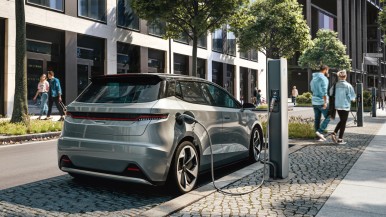
Stuttgart, Germany – Charging their electric car quickly, conveniently, and most importantly, anywhere: for many drivers of electric cars around the world, this is often more of a wish than a reality. Along with range and costs, charging is one of car drivers’ biggest concerns, as a study by the German Association of Energy and Water Industries (BDEW) shows. Bosch wants to remedy this with its proprietary platform, so it is now setting the next milestone for better access to charging infrastructure: offering more than one million charging stations on four continents. This now makes the technology company’s network one of the biggest in the world. “Bosch’s declared aim is to make charging stations widely accessible and put an end to the chaos caused by different charging apps,” says Marco Zehe, president of Bosch’s Electrified Motion division. Users can access Bosch’s charging services with a smartphone app, and Bosch also offers its solutions for charging electric cars to vehicle manufacturers and companies. These services can be flexibly and easily integrated into a manufacturer’s look and feel and infotainment system, both functionally and visually, so that the driving and charging experience retain the manufacturer’s individual look and fit into its brand world. It takes just a few clicks to charge and pay – with full cost transparency. The charging stations currently included can be found across Europe, North America, Asia, and Australia. At present, there are around 800,000 charging stations in Europe alone and another 130,000 in North America; by the end of 2024, there will be some 200,000 across Australia, New Zealand, and Asia – and the number is growing all the time. “By integrating over one million charging stations into one platform, we’re making it much easier for drivers of electric cars to search for and find them – all over the world. In this way, we’re making electromobility more and more suitable for everyday use by the general public,” Zehe says. Inventive charging services are needed: by 2030, Bosch expects one in three newly registered vehicles worldwide to be purely electric; by 2035, it will be one in two. “We anticipate a huge surge in growth for the charging services business over the course of the decade – because as the number of electric vehicles grows, so does the need for straightforward and comprehensive charging solutions. And that’s good for us,” Zehe says. By the end of the decade, Bosch is expecting its charging solutions business to expand by more than 50 percent each year.