Search and find:
Photos, videos, releases, events to support your reporting about the Bosch Group

Quantum technologies: Bosch aims to use sensors to take a leading position

05.10.2023

Press release

Research

Quantum technologies: Bosch aims to use sensors to take a leading position

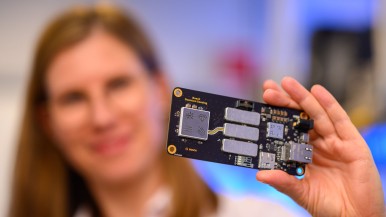
Stuttgart, Germany – Quantum technologies have great potential, but most of this potential is still a distant dream at present. Following ten years of research in this field, Bosch is now planning to work with the first pilot customers in the medical and mobility industries on specific applications over the next two years. At the startup Bosch Quantum Sensing, established at the beginning of 2022, some 30 associates are currently focusing on this. Bosch estimates the annual global market potential of applications for medicine and mobility will reach the mid-single-digit billions by the middle of the next decade. One potential area of application for quantum sensors, the brain-computer interface (BCI), will on its own be worth more than five billion dollars annually in the long term, according to the company’s calculations. One example of its future use is sensors that record nerve impulses in order to control artificial limbs and thus improve patients’ quality of life. “The quantum sensors we are creating in medical technology are a perfect fit for our ‘Invented for life’ ethos. By the end of the decade, we want to take a leading position with our technology,” says Dr. Stefan Hartung, chairman of the Bosch board of management.Small is beautiful: Bosch is a leader in miniaturization When it comes to size, the technology company is already a frontrunner: in terms of its measurement accuracy, the Bosch sensor prototype is the smallest currently available – about the size of a cell phone. Its compact design offers considerable advantages wherever space is at a premium – for example, in industrial applications, in vehicles, in aircraft, or even in hospital emergency rooms. The smaller the sensor, the greater the benefits: smaller sensors are portable, cheaper to produce, and more scalable as a result. “Our goal is to miniaturize quantum sensors to the point where they can be integrated onto a chip,” says Dr. Katrin Kobe, who is responsible for sensor commercialization at Bosch Quantum Sensing. This could lead the way to additional sensor applications. Quantum sensors as potential lifesavers In medicine, Bosch quantum sensors could help save lives in the future: by measuring the heart’s natural magnetic field and enabling simple measurements over a longer period of time, they can provide far more data than today’s electrocardiography (ECG). An ECG machine is applied directly to the skin by means of electrodes; if they slip, measurements are inaccurate. Moreover, in an emergency, attaching the ECG machine uses up precious time. Quantum sensors, by contrast, can be incorporated into things like items of clothing or mattresses. This not only speeds up diagnosis in the emergency room, but also makes monitoring at home easy and precise. The prospect of contactless early detection of atrial fibrillation – one of the causes of life-threatening strokes, heart failure, and dementia – is thus within reach for the first time. In other words, early diagnosis with the help of quantum sensors could, in the best case, lead to the prevention of fatal strokes. Ultra-precise navigation in the air, on the road, and on water In addition to medical technology, quantum sensors could also be used in mobility. One example is navigation. A global positioning system (GPS) is susceptible to interference, whereas quantum sensors are resistant to external influences, since they work by measuring the earth’s unchanging magnetic field. This paves the way for ultra-precise navigation in the air, on the road, and on water. There may also be scope for considerable additional benefits in electromobility. In the future, quantum sensors could be used there to precisely measure the magnetic field of the electric current and thus determine the exact charge level of the battery. The result would be more reliable determination of the remaining range, allowing trips to be planned better.

Carnegie Mellon University and Bosch further commitment to Carnegie Bosch Institute

24.02.2022

Press release

Research

Carnegie Mellon University and Bosch further commitment to Carnegie Bosch Institute

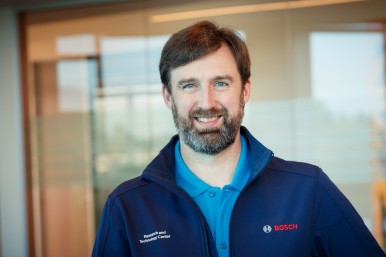
PITTSBURGH – For more than 30 years, the Carnegie Bosch Institute (CBI) has brought together industry and academia for research, education and collaboration in the areas of international management as well as technology innovation. Today, Bosch and Carnegie Mellon University (CMU) announced new leadership for the CBI as Christopher Martin, CMU alumnus and 21-year Bosch associate who currently serves as director of engineering, research and development for the Bosch Research and Technology Center in Pittsburgh, steps into the role of president of CBI. Additionally, the organizations announced a new $3 million gift from Bosch to CBI as the organization continues to stimulate relevant research in areas such as artificial intelligence (AI) and cybersecurity. The gift builds on the long-standing collaboration dating back to 1990 when the CBI was established. “The Carnegie Bosch Institute showcases how Bosch Research places a priority on collaboration with academia to pursue research that helps to accelerate technological development,” said Thomas Kropf, president, Bosch Research and Advance Engineering. “Under the leadership of Chris, we will continue to explore the intersection of shared interest with CMU that enables technological advancement in these areas.” Since 2019, CBI has funded 12 CMU research projects in fields such as AI, cybersecurity and sustainability. Examples include crowd-centric computing and interaction; connected and intelligent systems and services; disruptive materials and sustainable manufacturing; and ethics and AI. Most recently in 2021, CBI focused its awards on the topic of research at the intersection of modern data-driven AI and classical scientific or engineering approaches. “Through the Carnegie Bosch Institute as well as other collaborations, CMU and Bosch have been able to explore many research areas that have provided benefit to both organizations as well as to academia and business at-large,” said William Sanders, dean of the College of Engineering at Carnegie Mellon University. Beyond the scope of CBI, Bosch Research and Carnegie Mellon University have collaborated in areas like AI and spatial computing . In 2018, Zico Kolter, associate professor in the Computer Science Department with the School of Computer Science, joined Bosch as the chief scientist for AI which coincided with the launch of the Bosch Center for Artificial Intelligence (BCAI) Research Lab in Pittsburgh. In 2021, Anthony Rowe, Siewiorek and Walker Family Professor in CMU’s Electrical and Computer Engineering Department, joined Bosch as chief scientist focused on spatial computing . “This latest round of investment in CBI not only deepens the relationship with Bosch and CMU, it enhances our ability to support the incredible faculty, students, and staff that are the heart of the university’s excellence,” Martin said. “We look forward to enabling more cutting-edge research in areas of shared interest, and seeing the positive impact from that work on the world.” In addition to his role with CBI, Martin will continue to manage the Bosch Research and Technology Center (RTC) in Pittsburgh. As the leader for Bosch’s presence in Pittsburgh, he also guides operations for the Bosch Center for Artificial Intelligence in Pittsburgh. Martin holds undergraduate and graduate degrees from Carnegie Mellon University's Department of Electrical and Computer Engineering and has been responsible for global research teams in the U.S. and Europe during his time at Bosch. He holds multiple patents and continues to act as an Expert in Information and Communication Technology (ICT) for the European Commission. Martin also actively serves in the Pittsburgh community to champion the non-profit community, especially organizations related to STEM education. He is a member of the Board of Directors of the Allegheny Conference, Carnegie Science Center and the Pittsburgh German American Chamber of Commerce and serves on the Advisory Board for the Department of Electrical and Computer Engineering and the Manufacturing Futures Institute at CMU. Preceding Martin in the role of president of the CBI was Sylvia B. Vogt, who retired at the end of January 2022. In her time leading CBI from 2009 until the end of 2021, Vogt oversaw a shift at the organization from an emphasis on international management to a more research-oriented focus in technology fields relevant to international business. She continues to serve as an adjunct professor of management at Carnegie Mellon.

Intelligent Navigation and Wireless Charging for Mini Robots on the Moon

17.11.2020

Press release

Artificial Intelligence

Intelligent Navigation and Wireless Charging for Mini Robots on the Moon

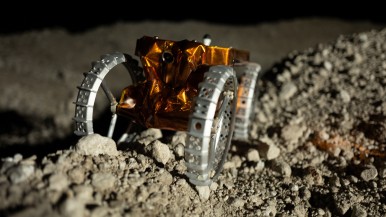
PITTSBURGH – Even on the Moon, robots need power. Normally, onboard solar panels provide the power, but smaller robots or ones that operate during the lunar night will need a complementary power source. To make this possible two emerging technologies – wireless charging and intelligent autonomous navigation – will be combined. Small robots will be equipped and trained to navigate harsh, unpredictable conditions to get to a wireless docking station in an environment where GPS is not an option.The National Aeronautics and Space Administration (NASA) recently announced funding for Ultra Fast Proximity Charging for Critical Space Applications, a project where a group of organizations will research and develop technology to intelligently navigate and wirelessly charge small robots for operation on the Moon. Astrobotic, which specializes in space robotics, serves as the Principal Investigator on the project and is joined by Bosch, the University of Washington, WiBotic, and the NASA Glenn Research Center. Bosch and Astrobotic, together with the other partners, developed the key technology and scoped the proposal from the beginning – a nearly two-year process. The goal of the project, which was awarded $5.8 million through NASA’s Tipping Point program, is to develop a system for magnetic resonance-based wireless charging for use in lunar settings. This includes the precise autonomous navigation of robots to the wireless charging station. The aim is to develop the full system for demonstration by the middle of 2023. AI and connectivity expertise drives robots Bosch will contribute its expertise in AI-driven intelligent data analytics and wireless connectivity solutions to the project. Bosch researchers in Pittsburgh and Sunnyvale, Calif. will focus on intelligent processing capability that will enable autonomous navigation of robots on the Moon’s surface. The project showcases Bosch’s expertise in AIoT - when Artificial Intelligence meets the Internet of Things. Bosch is focused on connecting things to get data, processing the data and using AI to obtain information. The information learned can improve products and add value. “Navigating a robot on the Moon is not the same as navigating a robotic vacuum through your home or navigating a self-driving car on the road,” said Dr. Samarjit Das, leader of the Intelligent Internet of Things group at Bosch Research in Pittsburgh. “First of all, radio-based terrestrial localization solutions are not available on the Moon. In addition, unpredictable lunar terrain and dust make it even harder to perform precise navigation using visual cues alone. Thus, we will need intelligent fusion and perception on the robot’s multi-sensory data to solve this unique challenge on the harsh environment of the Moon.” Bosch will study and develop multi-sensor fusion technologies that could include video, inertial measurement units (IMU), radio frequency (RF) movements and vibration sensors on the small robots to create complementary modalities that enable highly-precise navigation. The first specific navigation is guiding the robot to a docking station for wireless charging. “If a robot can master the specific navigation back to the charging station, it provides the blueprint of more autonomous missions for the robot on the Moon,” said Dr. Vivek Jain, head of the Wireless Connectivity and Sensing group at Bosch Research in Silicon Valley. “All aspects of wireless - communication, sensing, localization and charging, have to work optimally along with multi-sensor fusion to provide a robust solution.” Featuring a modular, scalable shoebox-sized rover The robot featured in the project will be Astrobotic’s CubeRover, an ultralight, rechargeable planetary rover developed in collaboration with the NASA Kennedy Space Center. The rover is roughly the size of a shoebox and weighs fewer than five pounds. It can carry its own payload or team up with other CubeRovers to scout for larger rovers and landers. The CubeRover, which was previously awarded funding as part of NASA’s Tipping Point program, are built in three sizes, 2U, 4U, and 6U, and are based on internationally recognized CubeSat standards to simplify payload integration efforts. The rover trio introduces an off-the-shelf mobile platform for payloads that can host an array of instruments such as spectrometers, neutron detectors, cameras, and other important scientific sensors. These instruments will support payloads for extended mission durations at a reduced weight and lower cost, demonstrating new space technologies and filling key knowledge gaps in our scientific understanding of the Moon. Bosch and Astrobotic previously collaborated on SoundSee, a module that uses artificial intelligence to analyze audio data, now in orbit aboard the International Space Station (ISS). Wireless – a new power source for lunar robots The CubeRovers will need power. Wireless charging expertise will come from WiBotic , a Seattle company that specializes in advanced wireless charging and power optimization solutions for the rapidly expanding ecosystem of aerial, mobile and marine robots. The company, which was co-founded by Dr. Joshua Smith and Dr. Ben Waters and announced a Series A funding round of $5.7 million in June 2020, creates wireless charging and power optimization solutions for the robotics industry via next-generation hardware and software systems for use with a broad ranges of robots or drones. WiBotic will also be supported by the University of Washington, where the topic of wireless charging has been studied for a number of years under the leadership of Dr. Smith, who leads the Sensor Systems Laboratory . Dr. Smith has been a long-time collaborator with Bosch Research in Silicon Valley in the area of wireless charging. The combined team will develop a lightweight, ultra-fast proximity charging solution, comprised of a base station and power receiver to enable critical space applications. System testing to simulate space Results of the collaboration will be tested at NASA’s Glenn Research Center (GRC) in Cleveland. There, the CubeRover with intelligent navigation and wireless charging technology will be deployed in GRC’s Space Power Facility, the world's largest thermal vacuum chamber. Tests will showcase how the system can enable lunar night survival for small-scale robotics. Public-private partnership gives a boost to technology development The project was selected as part of NASA’s fifth competitive Tipping Point solicitation for public-private partnerships. As part of the program, NASA seeks technology that is at a tipping point where investment would help to mature the technology, increase the likelihood of its use in a commercial space application and bring the technology to market for both governmental and commercial applications.

In brief: Bosch code of ethics for AI

25.02.2020

Press release

Internet of Things

In brief: Bosch code of ethics for AI

Our objective is to create AI products our customers can trust. To achieve this, we combine values-based action and methodological and technological excellence. There are “red lines” we will not cross. For example, we will not allow any AI to subject the lives of individuals or of groups of people to some kind of trade-off.Our objective is to create AI products our customers can trust. To achieve this, we combine values-based action and methodological and technological excellence. There are “red lines” we will not cross. For example, we will not allow any AI to subject the lives of individuals or of groups of people to some kind of trade-off. We are guided by the following principles: All Bosch AI products should reflect our “Invented for life” ethos, which combines a quest for innovation with a sense of social responsibility. AI decisions that affect people should not be made without a human arbiter. Instead, AI should be a tool for people. We want to develop safe, robust, and explainable AI products. Trust is one of our company’s fundamental values. We want to develop trustworthy AI products. When developing AI products, we observe legal requirements and orient to ethical principles. Concerning the use of AI, we observe the following criteria: An AI product, and/or the use to which it is put, should not violate the articles of the Universal Declaration of Human Rights. Its use must comply with the laws of the countries for which the AI product was made. Our use of the AI product should conform with the Bosch values formulated in “We are Bosch.” AI products should be guided by our “Invented for life” ethos: they must kindle people’s enthusiasm, improve quality of life, and conserve natural resources. Three approaches to the role of AI in decision making: “Human-in-command” (HIC): In this approach, the AI product is used purely as a tool. At all times, people decide when and how to use the results presented by the tool. An example is when a machine helps people with classification tasks. “Human-in-the-loop” (HITL): In this approach, people can directly influence or change decisions made by an AI product. “Human-on-the-loop” (HOTL): This approach concerns those cases in which the parameters relevant for decisions are defined by people during the design process, but the decisions themselves are delegated to the AI product. The application allows those affected by the decision to appeal for review. This ensures that people not only define the parameters for decision making beforehand, but also check retrospectively whether the decision was carried out in the intended sense.

04.04.2018

Press release

Research

Sensing tomorrow: Bosch envisions the future in Silicon Valley

SUNNYVALE, Calif. – From the rapid growth of the semiconductor industry to the birth of the venture capital business, Silicon Valley has become synonymous with technology innovation. As the region has transformed to nearly a $3 trillion ecosystem of business , Bosch has been present for nearly 20 years in Silicon Valley to lay the foundation for technology advancements that have brought great benefit to the global market and to humankind. Today Bosch hosts the grand opening of its new Research and Technology Center (RTC) in Sunnyvale, Calif. as the company continues to envision the future in Silicon Valley through advanced research, active business and venture capital activities.The new 104,000-square-foot office, which represents a $40 million commitment over a 10-year lease, is currently home to 200 team members and can house up to 300 associates. It features research labs, workshops and garage space for advanced research. The office space mirrors the company’s philosophy of Inspiring Working Conditions, focused on collaborative technology and workspaces that foster innovation, collaboration and creativity. “The new Bosch Research and Technology Center in Sunnyvale represents the maturity of our presence in Silicon Valley after nearly 20 years in the market,” said Mike Mansuetti, president of Bosch in North America. “We have envisioned technology like automated driving and artificial intelligence as part of our history in the Valley. Our new office enables us to continue the important collaboration with the Silicon Valley business and academic communities to imagine and bring to market the technology innovations of the future.” From trend scouting to collaboration with top universities, customers and industry partners, the Bosch team in Silicon Valley has contributed to the development of technology in key growth areas for the company, including artificial intelligence, human-machine interaction, automated driving systems, robotics, advanced circuits and sensors. Since 1999, Bosch’s presence in Silicon Valley has grown to include nine Bosch business divisions spanning the Bosch Group portfolio. These divisions work closely with corporate research colleagues to transition research topics into to deployable technology. They also conduct trend-scouting activities to identify new technologies and partners. Divisions present in Silicon Valley benefit from close proximity to customers and partners in categories such as mobility, consumer electronics and more. Also part of the Bosch footprint in Sunnyvale is Robert Bosch Venture Capital (RBVC) GmbH, the Bosch Group’s venture capital organization. RBVC invests in innovative startup companies around the globe at all stages of development. In so doing, it builds valuable relationships in the world of startups and helps Bosch remain an innovative leader. At the same time, RBVC investments give Bosch access to disruptive technologies at an early stage. Cultural and scientific diversity fuel Bosch in Silicon Valley As part Bosch’s global Corporate Research network, the Research and Technology Center in Silicon Valley benefits from a diversity of cultural and scientific approaches as the team is composed of researchers from around the world. The Bosch Community Fund, the company’s U.S.-based foundation, has actively supported STEM (science, technology, engineering and math) education across the United States since 2012. Today the Bosch Community Fund awarded $75,000 in grants to the Sunnyvale Education Foundation in support of STEM education programs for elementary and middle schools within the Sunnyvale School District. Schools will utilize the funds for lab and makerspace equipment, curricular materials, teacher training and other STEM programmatic support. Academic collaboration drives technology advancement At the heart of the Bosch presence in Silicon Valley is a long-standing relationship with the local academic community, particularly Stanford University. The Bosch RTC has worked with Stanford graduate students on a number of different technologies, including high-efficiency internal combustion engine concepts, MEMS (microelectromechanical systems) sensors, autonomous driving and natural language understanding. In 2008, Bosch endowed a chair at Stanford, known as the Robert Bosch Chairmanship of the Department of Mechanical Engineering, and that same year was a founding member of the Stanford University CarLab, an initiative focused on interdisciplinary research into automotive vehicle safety, the environment and enjoyable transportation.