Search and find:
Photos, videos, releases, events to support your reporting about the Bosch Group

Electromobility: Bosch provides access to more than one million charging station ...

29.08.2024

Press release

Business/economy

Electromobility: Bosch provides access to more than one million charging station ...

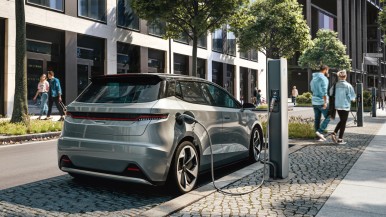
Stuttgart, Germany – Charging their electric car quickly, conveniently, and most importantly, anywhere: for many drivers of electric cars around the world, this is often more of a wish than a reality. Along with range and costs, charging is one of car drivers’ biggest concerns, as a study by the German Association of Energy and Water Industries (BDEW) shows. Bosch wants to remedy this with its proprietary platform, so it is now setting the next milestone for better access to charging infrastructure: offering more than one million charging stations on four continents. This now makes the technology company’s network one of the biggest in the world. “Bosch’s declared aim is to make charging stations widely accessible and put an end to the chaos caused by different charging apps,” says Marco Zehe, president of Bosch’s Electrified Motion division. Users can access Bosch’s charging services with a smartphone app, and Bosch also offers its solutions for charging electric cars to vehicle manufacturers and companies. These services can be flexibly and easily integrated into a manufacturer’s look and feel and infotainment system, both functionally and visually, so that the driving and charging experience retain the manufacturer’s individual look and fit into its brand world. It takes just a few clicks to charge and pay – with full cost transparency. The charging stations currently included can be found across Europe, North America, Asia, and Australia. At present, there are around 800,000 charging stations in Europe alone and another 130,000 in North America; by the end of 2024, there will be some 200,000 across Australia, New Zealand, and Asia – and the number is growing all the time. “By integrating over one million charging stations into one platform, we’re making it much easier for drivers of electric cars to search for and find them – all over the world. In this way, we’re making electromobility more and more suitable for everyday use by the general public,” Zehe says. Inventive charging services are needed: by 2030, Bosch expects one in three newly registered vehicles worldwide to be purely electric; by 2035, it will be one in two. “We anticipate a huge surge in growth for the charging services business over the course of the decade – because as the number of electric vehicles grows, so does the need for straightforward and comprehensive charging solutions. And that’s good for us,” Zehe says. By the end of the decade, Bosch is expecting its charging solutions business to expand by more than 50 percent each year.

Bosch Ventures Amplifies Commitment to Cleantech with Two Battery Recycling Inve ...

15.05.2024

Press release

Sustainability

Bosch Ventures Amplifies Commitment to Cleantech with Two Battery Recycling Inve ...

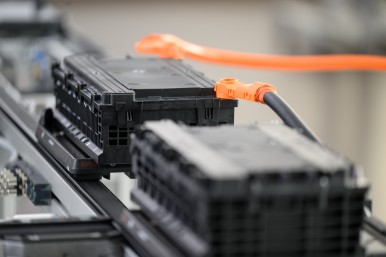
Stuttgart (Germany) / Boston (USA): Bosch Ventures, the corporate venture capital unit of the Bosch Group, announces two significant investments in the battery recycling sector within a week, marking a significant step towards sustainable technology development. "In an electrified world, battery recycling makes a significant contribution to conserving natural resources," explains Dr. Ingo Ramesohl, Managing Director of Bosch Ventures. "With our investments, we can help cylib and Li Industries to scale their production." Bosch Ventures led $36 million investment round in Li Industries On May 9, 2024, Bosch Ventures investment in Li Industries was announced. Li Industries is poised to tackle significant challenges in the Li-ion battery's circular supply chain with innovative, scalable solutions. “Li Industries is the first and only company in the U.S. capable of economically and sustainably recycling low/no cobalt batteries, such as Lithium Iron Phosphate (LFPs), at scale using their unique Direct E2ETM recycling technology,”, said Dr. Ramesohl. Bosch Ventures co-led the $36 million Series B funding round together with Khosla Ventures and LG Tech Ventures. “We are thrilled to be backed by such a strong group of investors,” said Dr. Zheng Li, co-founder and CEO of Li Industries. German cylib raised €55 million round less than 24 months after start of operations Founded in 2022, the company offers market-leading proprietary technology for end-to-end recycling of lithium-ion batteries and has already delivered a successful pilot line and completed projects with major automotive OEMs as well as battery manufacturers. cylib’s process is characterized by an efficient, resource- and climate-friendly recovery of raw materials, including lithium, graphite, nickel, cobalt and manganese from battery packs, black mass or production scraps. Lilian Schwich, CEO of cylib, said: “The funding round we announced today will empower us to embark on our next phase of expansion and deepen existing collaborations, as we grow our next-generation battery recycling at an industrial scale.” Bosch Ventures joined the oversubscribed round on cylib’s way to become Europe’s primary battery recycler. Rapidly growing market with high local interest With the rapid growth of battery-driven electric vehicles, eBikes, powertools and household appliances, the demand for battery recycling is soaring. Similar to the U.S., the EU has already ranked the materials inside EV batteries as strategic critical raw materials and set its latest stringent battery recycling regulations accordingly. cylib’s market-leading process enables battery producers, automotive OEMs and all companies operating in the battery value chain to recycle elements locally and achieve these requirements. "Our investments in cutting-edge battery recycling startups underscore our commitment to pioneering technologies that not only promise substantial market growth but also offer solutions to one of the most pressing environmental challenges of our time," stated Ramesohl. "We are excited to be at the forefront of this vital industry, and we are proud to support and connect multiple companies from different geographies in this space".

Electrifying motorsports: Bosch and DRAGON / PENSKE AUTOSPORT begin a long-term  ...

23.02.2021

Press release

Electrified mobility

Electrifying motorsports: Bosch and DRAGON / PENSKE AUTOSPORT begin a long-term ...

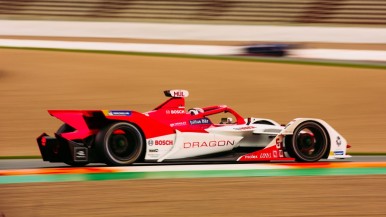
Abstatt, Los Angeles – Bosch Motorsport and the DRAGON / PENSKE AUTOSPORT Formula E Team have agreed on a long-term technology and engineering partnership for the Los Angeles & UK headquartered racing team’s cars in the ABB FIA Formula E World Championship. Within the framework of this cooperation, Bosch will be developing an electronic vehicle management system specially tailored to the requirements of the Formula E vehicle along with the corresponding hardware and software components required. The system core is represented by the central MS 50.4P vehicle control unit (VCU). Apart from the motor functions and central energy management, the MS 50.4P also controls other vehicle functions such as brake energy recovery and the display in the driver cockpit. “Collaboration with DRAGON enhances our successful involvement as a series sponsor of Formula E. With this partnership, Bosch underscores its claim as a leading supplier of powertrain management solutions, both in electromobility for production vehicles and in electrified motorsports,” according to Dr. Markus Heyn, member of the board of management at Robert Bosch GmbH. Plans entail deploying the innovative vehicle management system in a race for the first time in spring 2021. Preparations are already underway. Bosch is also planning to develop an entire electric powertrain for Formula E season 9. Jay Penske, Owner and Team Principal of DRAGON / PENSKE AUTOSPORT added that “we are very excited to embark on this journey with Bosch in Formula E. We are grateful for the support of Bosch Engineering and the entire Bosch Global board. Through our work together we will provide Bosch with a platform to both showcase its capabilities as it develops Formula E specific technologies, while also using the Team’s story-telling abilities to illustrate the role Bosch is playing as a leader in the electrification of the mobility industry. This long-term technical partnership marks a significant turning point for the Team, and I look forward to seeing the fruits of our alliance on track this Season when we introduce our new PENSKE AUTOSPORT package later this year.” Extensive technology package offered by Bosch The central VCU, offered by Bosch represents the heart of the vehicle electronics for the electric race cars of the DRAGON / PENSKE AUTOSPORT Team. Bosch has developed a bespoke vehicle wiring harness to provide optimum integration within the cars. Bosch also equips the Team’s development car with data loggers to improve the Team’s research and testing capabilities. In order to optimally adapt the new vehicle electronics to the overall vehicle, Bosch provides its RaceConnect LTE cloud solution during development and test driving for transferring telemetric data and data analysis. This provides the race team engineers with all the important parameters and data on the vehicle, powertrain, and tires, enabling them to be analyzed and optimized swiftly and efficiently. As the Formula E regulations prescribe the use of many systems, the performance of the electronic system makes a decisive contribution to racing success. “When optimizing the control software, we aim to always strike the right balance between energy efficiency and lap times under all track and racing conditions in order to optimally exploit the vehicle’s full potential. The extensive transfer of know-how and expertise at Bosch between volume production developments and applications for the race track help us in this regard,” says Dr. Klaus Böttcher, Vice President Bosch Motorsport. Moreover, with the race energy management function of the MS 50.4P the vehicle’s driving performance is adapted dynamically so that the fastest possible lap time can be achieved with a specified amount of energy. What is more, the central vehicle control unit also ensures maximum energy recovery rates in the interplay between the electric and hydraulic brakes, and adapts the powertrain and brakes to the individual race conditions, thereby optimizing vehicle feedback to the driver. Nicolas Mauduit, the EVP and Chief Technical Officer of DRAGON / PENSKE AUTOSPORT added that this alliance with Bosch is providing us with additional resources, amplifying our ability to scale our engineering, while giving us access to Bosch’s combination of hardware and software expertise to help us compete with the largest OEMs, in the most competitive motorsport championship. We have been hard at work together in order to hit the ground running this season, and I am eager to seeing the results of our efforts when the new PENSKE EV-5 package, supported by the Bosch electronic and hardware ecosystem, makes its debut this spring.

New sponsorship deal: Bosch named official partner of the ABB FIA Formula E Cham ...

17.10.2018

Press release

Electrified mobility

New sponsorship deal: Bosch named official partner of the ABB FIA Formula E Cham ...

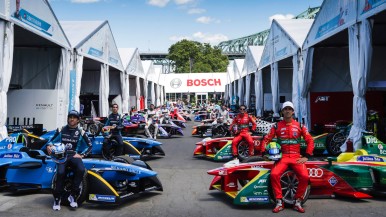
Stuttgart, Germany, and Valencia, Spain – Right on time for the start of the ABB FIA Formula E Championship’s fifth season, the race series has engaged a new sponsor: for the next three years, Bosch will be an official partner of the world’s first purely electric single-seater racing series. The move underscores Bosch’s aim to be a leader in electromobility. “Bosch is the go-to partner for electric driving, a position that is now also reflected in our status as an official Formula E partner,” says Dr. Markus Heyn, a member of the board of management of Robert Bosch GmbH. The partnership with the race series covers a wide-ranging advertising collaboration at the race tracks, online, and on TV. “It’s with great pleasure that we welcome Bosch to the ABB FIA Formula E Championship as our official partner,” says Alejandro Agag, Founder & CEO of Formula E. “Bosch is one of the leading automotive suppliers and a renowned and respected name – and the move into Formula E is definitely a big step. I couldn’t think of a more natural tie-up – with Bosch’s long-standing tradition of competing in motorsport and expertise in electrification, automation and connectivity. In my mind, these pillars are key to the future of urban mobility and together with our complete roster of partners we can collectively help to speed up the switch to electric.”Yet for Bosch, the partnership with the electric driving championship goes beyond pure sponsorship: as an official partner, the company is close to spectators and close to its customers. All the major automakers are now represented in Formula E. As Bosch joins the race series, moreover, it is continuing its own motor racing tradition: the supplier of technology and services is a long-time DTM partner as well as the source of numerous prototypes and touring vehicles for the World Endurance Championship. By moving into Formula E, the company is rounding out its activities in motor racing. “Bosch electrifies the powertrain – whether on the streets or in motor racing,” Heyn says. 13 races, twelve cities, five continents With Formula E, Bosch is focusing on a race series that has a global reach, and that offers an attractive technology and marketing platform. The races are held around the world on city-center circuits. To kick off its fifth racing season on December 15, 2018, 22 electric race cars will floor it in the Saudi Arabian district of Ad Diriyah, and it is there that the Bosch logo will debut on the race track. “Vibrant cities, enthusiastic fans, and vehicles with electrifying acceleration – this emotive setting is perfect for our motor racing activities,” says Clemens K. Krebs, head of Marketing Communication for the Mobility Solutions business sector at Bosch. Passion for racing Hardly any other company has a corporate history that is so intertwined with motor racing: Bosch achieved its first victories with its own technology back in 1901 and 1903. Since that time, the company has also been using its racing successes in its marketing. The Bosch brand has been inseparable from the DTM championship since its return in 2000. All race cars in the touring series feature the company’s highly sophisticated technology. From 2006 to 2012, diesel and diesel-hybrid vehicles took the top spots in the legendary 24-hour Le Mans race of the World Endurance Championship – these vehicles, too, always had Bosch technology on board. With their fully electrical powertrains, Formula E race cars are virtually silent. “Regardless of what the powertrain is, motor racing is part of Bosch DNA,” Krebs says.

Worlds Converge: Humans at the heart of the mobility revolution

23.05.2018

Press release

Two Wheeler

Worlds Converge: Humans at the heart of the mobility revolution

Flat Rock, Mich . –The mobility industry is the epicenter of innovation as new technologies promise to transform the entire concept of transportation. As a partner to both established and new mobility manufacturers with a portfolio that extends across automation, connectivity and electrification, Bosch has a broad view of the shifting landscape.The global supplier of technology and services provided a glimpse into the future of mobility from multiple perspectives at the Bosch Mobility Experience U.S. 2018, held at the Bosch Proving Grounds in Flat Rock, Mich. Bosch presented technologies at the middle of drivers’ changing relationship with the vehicle and showcased how the convergence of technology is driving the future of mobility. “While many feel a collision of worlds is imminent between traditional and new, the developments on the horizon are rather a convergence than a collision,” said Mike Mansuetti, president of Bosch in North America. “When we take a convergent approach, we bring together the benefits of multiple worlds for the benefit of all.” At its mobility showcase event, Bosch focused specifically on the positive impact to society as part of its Invented for Life brand promise. “The center of development isn’t whose approach is right – the center of development is the human being,” Mansuetti said. “The people inside these next-generation vehicles, their safety and their overall experience are the primary focus. Together we can foster consumer trust instead of anxiety, uncertainty and fear.” Redundancy and driver assistance blaze the path to automated driving Advanced driver assistance systems (ADAS) has been a major growth driver for Bosch. As early as 2019, the company expects to generate sales of two billion euros globally with driver assistance systems and its sales are growing faster than the market. While the global market for radar and video sensors is forecast to grow 20 percent this year, sales of Bosch radar and video sensors are expected to increase by 40 percent globally. Bosch will debut for the first time in North America automatic emergency braking for cyclists . The technology uses sensors to detect cyclists alongside and ahead of the vehicle, monitoring speed, distance, and direction of travel to calculate the risk of an accident. In the case of an imminent collision, the system automatically brings the vehicle to a stop in order to avoid — or at least reduce the severity of — an accident. Driver assistance technologies such as automatic emergency braking are coming to prominence and extending into new use cases as the technology is applied to help keep consumers and drivers safer. As levels of automation continue to increase, partially automated driving functions can help make the driver's trip safer and more relaxing. Bosch highway assist , a partially automated driving function installed in the Maserati MY 2018 Ghibli, Levante and Quattroporte, combines ACC Stop & Go and lane centering functions to control the vehicle's speed, acceleration and braking. To help reach new levels of automation, Bosch is working on redundant solutions for all levels of automated driving . Redundancy ensures safety in a vehicle where a human driver may no longer be able to operate as the backup function. At the Bosch Mobility Experience, the company will feature a redundant braking system that combines Bosch’s electromechanical brake booster (iBooster) and electronic stability control (ESP®) systems, each of which is capable of independently performing braking functions for the vehicle in the rare case of a single failure. Bosch also will present the Servolectric® Paraxial Servo Unit (EPSapa) that provides operational steering in the event the primary system is unable to operate, another redundant solution that makes highly automated driving possible. Connectivity solutions come to life Whether through connected solutions, in-vehicle interaction or the architecture within the vehicle, connectivity is at the heart of future mobility experiences. Bosch’s systems and cross-domain expertise position it to bring connectivity solutions to life. Bosch will showcase vehicle-to-anything (V2X) technologies that sense what is beyond the line of sight by facilitating communication between vehicles and the world around them. At the heart of these solutions is the Bosch connectivity control unit. The result is more time for drivers to react to potentially dangerous situations in scenarios such as left turns and pedestrians in intersections to keep drivers and pedestrians safe. The technology also will provide autonomous vehicles with decision-making information. Connectivity solutions from Bosch also help keep drivers safe inside the vehicle by helping drivers seamlessly and safely connect while reducing time when eyes are off the road. The next generation cockpit designed by Bosch is a system that runs multiple displays and electronics from one electronic control unit. The system implements smart, multimodal human machine interface (HMI) including voice print smart voice recognition, driver identification and a haptic control panel to make the vehicle increasingly driver-centric. It also includes Motion Intelligence HALO Software which limits use of the screen of any smart device that enters the driver’s area, preventing dangerous activity like texting, posting to social media, or emailing while driving. Connectivity also turns the smartphone into a car key. Perfectly keyless uses the driver’s mobile phone as a digital car key to allow passive vehicle access and start. Vehicle access can be securely granted to other users, enabling families, companies, sharing providers and fleet operators to flexibly manage who can access their vehicles and when. Bosch expertise powers new visions of electrification At the beginning of 2018, Bosch combined its powertrain expertise – gasoline, diesel, electric and battery systems – underneath a new business unit: Powertrain Solutions. Consumers in the U.S. have multiple options for powertrains, and Bosch helps manufacturers to provide these choices. As interest in pure electric vehicles increases, Bosch offers e-axle, e-machine, and power electronics technologies to many manufacturers – both established and new. Bosch electrified components are already featured in more than 800,000 vehicles around the world, and the organization has carried out over 30 production projects with OEM partners. One such example is with Nikola Motor Company. The Nikola NZT™ is the most advanced electric UTV in the world with staggering performance and capabilities. It features more than 500 horsepower coming from the state-of-the-art battery and four wheel-independent motors. Impressively, the Nikola NZT™ accelerates from 0-60 in less than 3.5 seconds. Bosch will supply the Vehicle Control Unit and controls software for the vehicle as well as anti-lock braking system as part of an overall energy management solution. Bosch also will provide high-efficiency electric motors for the Nikola two-motor e-axles. Thanks to Bosch components and systems expertise, Nikola’s vision for the NZT is becoming a reality.

15.01.2018

Press release

Automated mobility

NAIAS 2018: Step-by-step, Bosch is delivering the automated, connected and elect ...

DETROIT – The mobility industry is in a phase of technological evolution -- and revolution -- that will reinvent modern transportation. Bosch is at the forefront of this transformative era, delivering multiple solutions that will shape the future of mobility.“Key automated, connected and electrified innovations will transform the ways we travel, do business, spend our commute time and care for our vehicles,” said Mike Mansuetti, president of Bosch in North America. At the North American International Auto Show (NAIAS), Bosch will present several innovations that will make vehicles more efficient, more context-aware and much safer. From in-car systems to sensors, Bosch is delivering a full stack of automotive solutions for today and the future. Sustainable performance across powertrain options As electrification goes mainstream, the powertrain is evolving. Consider the Bosch eAxle, which made its global debut at NAIAS 2017. Since that time, eAxle has experienced great success, rapidly becoming a technology solution for start-up and traditional OEM's alike. The innovative eAxle combines the electric motor, power electronics and transmission into one compact unit that directly drives the vehicle. At NAIAS 2018, Bosch will showcase the eAxle and how it fits into the exciting future of electric vehicles. There will also be other key innovations on display. For example, Bosch’s high-efficiency thermal management system can solve significant challenges for electric vehicles. The system is designed to extend an electric vehicle’s driving range while keeping its fast-charging battery cool. The internal combustion engine (ICE) will remain a significant part of mobility into the forseeable future. Thanks to Bosch advancements such as port and direct gasoline injection (P-DI), ICE engines are seeing significant gains in efficiency and performance. P-DI combines two normally separate fuel-injection approaches into one innovative system. The strengths of each approach perfectly complements the other, resulting in increased fuel efficiency alongside a decrease in emissions. Regardless of the powertrain approach, engines are becoming more complex. Modern vehicles have as many as 100 standalone control units. Bosch’s ap-proach to vehicle computing is pioneering and setting new standards in vehicle systems. The Bosch Vehicle Control Unit (VCU) is one of several solutions, which can provide substantially higher compute for added functions while reducing the number standalone units. This frees up valuable installation space, reduces vehicle weight, and simplifies communication among control units. While the VCU reduces complexity, it also enables future innovations by providing a scalable platform for the increasingly complex electric/electronic architectures needed to support new technologies. As electrified, automated and connected solutions become more prevalent, the complexity of E/E archi-tectures is on the rise. The performance demands on these architectures are also intensifying, and Bosch is bolstering these systems for an increasingly in-terconnected future. Connected solutions keep vehicles and drivers secure and informed Automakers and providers require the right hardware for various connected services and applications. In this space, Bosch offers a wide array of versatile devices, from easy retrofit options to deeply embedded devices. Regardless of the size or form factor, each of these devices provides optimal performance for safety-critical services. Connected services are another essential piece of the mobility puzzle. The Bosch Automotive Cloud Suite offers a comprehensive software toolkit com-prising smart solutions, cloud services and device management. It enables au-tomakers and mobility service providers to develop services for drivers and de-ploy them quickly to a wide market. A comfortable, safe journey to an accident-free future In order for fully automated driving to reduce accidents in the future, redundancy in safety-critical systems such as braking and steering is an absolute neces-sity. Bosch is working on redundant braking solutions for all levels of automated driving, including a fail-degraded brake system that combines iBooster and ESC (Electronic Stability Control) systems. At NAIAS, Bosch will showcase its com-prehensive range of braking innovations, including redundant braking for auto-mated driving. Bosch is also a leader in redundant steering solutions. At NAIAS 2017, Bosch introduced its Electric Power Steering (EPS) system, which offers fail-operational functions. The system, which enables drivers and autopilot systems to make safe stops in the rare case of a single failure, is a major development in the evolution of fully automated driving. BOSCH BOOTH: Monday to Thursday, January 15-18, 2017, on Level Three, Room 330A, Cobo Center.