Search and find:
Photos, videos, releases, events to support your reporting about the Bosch Group

Bosch debuts powerful 800-volt electric drive for applications on recreational a ...

20.08.2025

Press release

Electrified mobility

Bosch debuts powerful 800-volt electric drive for applications on recreational a ...

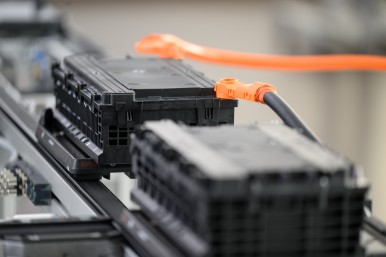
Farmington Hills, Mich. – electric drives are becoming increasingly prevalent in the boat and ship sector. At Electric & Hybrid Marine Expo, Bosch Engineering North America, a division of Robert Bosch LLC, is unveiling a newly developed, high-performance electrification solution for electrical systems with voltages of up to 800 volts, which further extends the potential use cases of electric drives in maritime applications while also raising system efficiency. “With the latest generation of our electric motor and inverter with silicon carbide power modules, we offer a complete system that allows not only recreational boats but also larger sailing yachts and working boats to be operated with a more efficient, quiet, yet still very powerful electric drive,” states Philip Kurek, who is responsible for off-highway and maritime solutions at Bosch Engineering. The new electric motor SMG 230 is designed for system voltages of 400 to 800 volts. In an ideal voltage and temperature range, it offers a continuous power output of up to 200 kilowatts and around 250 newton meters of torque. Thanks to the 800-volt technology, the power density has also been increased significantly. The SMG 230 delivers 80 kilowatts more power than a comparable 400-volt machine with identical weight or, with the same level of performance, boasts more compact dimensions and a much lower weight. The inverter with silicon carbide semiconductors, which is also designed for electrical voltages of up to 800 volts, is characterized by its impressive efficiency of more than 99 percent. The silicon carbide semiconductors in the power modules enable faster switching operations, meaning that significantly less energy is lost in the form of heat. In addition, the electrification solution from Bosch Engineering offers great flexibility in combination with tailored transmission solutions from Bosch Rexroth, such as the new eGFV9120 coaxial gearbox. Bosch’s complete kit for the electrification of boat drives comprises electronic control units, inverters, electric motors, and transmissions for both 400- and 800-volt applications. This gives shipyards and system integrators improved flexibility when adapting the electrification strategy to the respective requirements and allows them to integrate the relevant components quickly and easily into their ships. The system components are based on modern automotive technology and combine high robustness with increased reliability. With its comprehensive kit for the electrification of ship drives, Bosch is making a significant contribution to the ongoing reduction of greenhouse gas and noise emissions.

Bosch Ventures Amplifies Commitment to Cleantech with Two Battery Recycling Inve ...

15.05.2024

Press release

Sustainability

Bosch Ventures Amplifies Commitment to Cleantech with Two Battery Recycling Inve ...

Stuttgart (Germany) / Boston (USA): Bosch Ventures, the corporate venture capital unit of the Bosch Group, announces two significant investments in the battery recycling sector within a week, marking a significant step towards sustainable technology development. "In an electrified world, battery recycling makes a significant contribution to conserving natural resources," explains Dr. Ingo Ramesohl, Managing Director of Bosch Ventures. "With our investments, we can help cylib and Li Industries to scale their production." Bosch Ventures led $36 million investment round in Li Industries On May 9, 2024, Bosch Ventures investment in Li Industries was announced. Li Industries is poised to tackle significant challenges in the Li-ion battery's circular supply chain with innovative, scalable solutions. “Li Industries is the first and only company in the U.S. capable of economically and sustainably recycling low/no cobalt batteries, such as Lithium Iron Phosphate (LFPs), at scale using their unique Direct E2ETM recycling technology,”, said Dr. Ramesohl. Bosch Ventures co-led the $36 million Series B funding round together with Khosla Ventures and LG Tech Ventures. “We are thrilled to be backed by such a strong group of investors,” said Dr. Zheng Li, co-founder and CEO of Li Industries. German cylib raised €55 million round less than 24 months after start of operations Founded in 2022, the company offers market-leading proprietary technology for end-to-end recycling of lithium-ion batteries and has already delivered a successful pilot line and completed projects with major automotive OEMs as well as battery manufacturers. cylib’s process is characterized by an efficient, resource- and climate-friendly recovery of raw materials, including lithium, graphite, nickel, cobalt and manganese from battery packs, black mass or production scraps. Lilian Schwich, CEO of cylib, said: “The funding round we announced today will empower us to embark on our next phase of expansion and deepen existing collaborations, as we grow our next-generation battery recycling at an industrial scale.” Bosch Ventures joined the oversubscribed round on cylib’s way to become Europe’s primary battery recycler. Rapidly growing market with high local interest With the rapid growth of battery-driven electric vehicles, eBikes, powertools and household appliances, the demand for battery recycling is soaring. Similar to the U.S., the EU has already ranked the materials inside EV batteries as strategic critical raw materials and set its latest stringent battery recycling regulations accordingly. cylib’s market-leading process enables battery producers, automotive OEMs and all companies operating in the battery value chain to recycle elements locally and achieve these requirements. "Our investments in cutting-edge battery recycling startups underscore our commitment to pioneering technologies that not only promise substantial market growth but also offer solutions to one of the most pressing environmental challenges of our time," stated Ramesohl. "We are excited to be at the forefront of this vital industry, and we are proud to support and connect multiple companies from different geographies in this space".

Longer range as standard: Bosch gives go-ahead for volume production of silicon  ...

02.12.2021

Press release

Electrified mobility

Longer range as standard: Bosch gives go-ahead for volume production of silicon ...

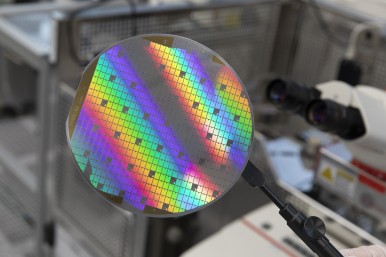
Reutlingen, Germany – They are small, powerful, and extremely efficient: semiconductors made of silicon carbide (SiC). After several years of development, Bosch is now starting volume production of power semiconductors made of this innovative material, supplying automotive manufacturers worldwide. In the future, more and more production vehicles will feature these chips. “The future for silicon carbide semiconductors is bright. We want to become a global leader in the production of SiC chips for electromobility,” says Harald Kroeger, member of the board of management of Robert Bosch GmbH. Two years ago, the supplier of technology and services had announced that it would push ahead with the development of SiC chips and enter production. For this, Bosch has developed its own highly complex manufacturing processes, which it has been using to produce the special semiconductors since the beginning of 2021 – initially as samples for customer validation. “Our order books are full, thanks to the boom in electromobility,” Kroeger says. In the future, Bosch intends to expand its production capacity for SiC power semiconductors to a unit volume running into the hundreds of millions. With this in mind, the company has already started expanding the clean-room space at its Reutlingen plant. In parallel, work is also being done on the second generation of SiC chips, which will be even more efficient and should be ready for volume production as of 2022. Bosch is receiving support for the development of these innovative manufacturing processes for SiC semiconductors from the German Federal Ministry for Economic Affairs and Energy (BMWi) as part of the “Important Project of Common European Interest (IPCEI) Microelectronics” program. “For several years now, we have been providing support to help establish semiconductor production in Germany. Bosch’s highly innovative semiconductor production strengthens the microelectronics ecosystem in Europe and is a further step toward greater independence in this key field of digitalization,” says Peter Altmaier, Germany’s Federal Minister for Economic Affairs.The stuff range dreams are made of Around the world, demand for silicon carbide power semiconductors is rising. A forecast by the market research and consulting company Yole indicates that, between now and 2025, the SiC market as a whole will grow on average by 30 percent a year to over 2.5 billion dollars. At around 1.5 billion dollars, the SiC car market is expected to account for the lion’s share. “Silicon carbide power semiconductors make particularly efficient use of energy. This material’s advantages really come to the fore in energy-intensive applications such as electromobility,” Kroeger says. In the power electronics of electric vehicles, silicon carbide chips ensure that drivers can drive significantly further on one battery charge – on average around 6 percent further than with their pure silicon counterparts. In order to meet steadily increasing demand for these semiconductors, an extra 10,764 square feet were already added to the clean-room space at the Bosch wafer fab in Reutlingen in 2021. Another 32,292 square feet will be added by the end of 2023. The new space will house state-of-the-art production facilities for manufacturing silicon carbide semiconductors using processes developed in-house. To achieve this, Bosch’s semiconductor experts are building on their decades of expertise in chip manufacturing. In the future, the company – incidentally the only automotive supplier to produce its own silicon carbide chips – plans to manufacture the semiconductors on 8-inch wafers. Compared with today’s 6-inch wafers, this will deliver sizeable economies of scale. After all, it takes several months for a single wafer to pass through several hundred process steps in countless machines. “By producing on larger wafers, we can manufacture significantly more chips in one production run and thus supply more customers,” Kroeger says.Small atom, big impact The secret behind SiC chips’ impressive performance lies in a tiny carbon atom. Introducing it into the crystalline structure of the ultra-pure silicon generally used to manufacture semiconductors gives the raw material special physical properties: for example, silicon carbide semiconductors support higher switching frequencies than pure silicon chips. What’s more, they lose only half as much energy in the form of heat, thereby increasing the range of electric vehicles. The chips are also important for 800-volt systems, where they enable faster recharging and better performance. Since the SiC chips also emit significantly less heat, the power electronics require less in the way of costly cooling. In addition to weight, this is another way to reduce the cost of electric vehicles. In the future, Bosch will supply silicon carbide power semiconductors to customers around the world – both as individual chips and installed in power electronics or complete solutions such as the e-axle. This combination of electric motor, gearbox, and power electronics achieves an efficiency of up to 96 percent thanks to the more efficient design of the overall system. This leaves more energy for the powertrain, which increases the range.