Search and find:
Photos, videos, releases, events to support your reporting about the Bosch Group

Bosch and Plus Collaborate on Assisted Driving Solution for Commercial Vehicles

01.05.2023

Press release

Business/economy

Bosch and Plus Collaborate on Assisted Driving Solution for Commercial Vehicles

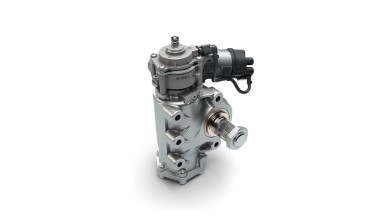
Anaheim, Calif. – Bosch and Plus are collaborating to make software-defined commercial trucks a reality. Through a new technology agreement, Plus is offering its PlusDrive solution with the integrated steering system from Bosch featuring hardware and software to deliver driver assistance and partially automated features to commercial vehicles. The announcement was made today at the Advanced Clean Transportation (ACT) Expo in Anaheim, California.PlusDrive-enabled L2++ vehicles are equipped with a predictive 360 degree surround perception system and provide partial automation by continuously helping drivers with acceleration, braking and steering. The PlusDrive software-based system and the Bosch hardware plus software steering solution work together to enable assisted driving and automated functions. PlusDrive provides traffic jam assist, merge handling, driver initiated and suggested lane change, over-the-air updates, lane nudge, sensor self-calibration, driver attentiveness detection, and other highly automated driving features. When combined with Bosch’s steering system for lateral control, its benefits include driver retention, fuel economy savings and assistance capabilities to help reduce accidents. “New mobility solutions require new, enhanced collaboration,” said Paul Thomas, executive vice president of Mobility Solutions, Americas for Bosch. “Our agreement with Plus complements existing Bosch portfolio elements and is one of multiple ways we can work together to support our customers.” "Plus’s underlying next-generation safety solution enabled by our open autonomy platform, combined with Bosch’s steering software system, will help to prevent accidents in commercial vehicles and make roads safer. The proven commercial readiness of our highly automated Plus system accelerates the deployment for our partners and improves the safety and sustainability for the trucking industry," said Shawn Kerrigan, COO and co-founder, Plus. Beyond offering hardware and software solutions in its steering technology, Bosch can also provide advanced engineering services from its Bosch Engineering team focused on vehicle integration, security and safety for the combined Bosch and Plus solution offered to commercial vehicle truck manufacturers. In addition to steering solutions for commercial vehicles, Bosch also delivers hardware and software solutions supporting increasing levels of automation in commercial vehicles. Bosch technology can help to provide significantly more powerful electronics architecture, thereby delivering the basis for the software-defined truck. Half the R&D associates in the Bosch Mobility Solutions business sector are software engineers. Among other things, this promotes the development of automated driving.

Bosch hybrid system for motorsports debuts at Rolex 24 At Daytona

09.02.2023

Press release

Commercial vehicles

Bosch hybrid system for motorsports debuts at Rolex 24 At Daytona

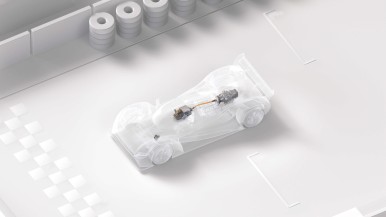
Abstatt, Farmington Hills – At the 61st edition of the 24-hour race of the IMSA WeatherTech SportsCar Championship "Rolex 24 At Daytona" (USA), the new Le Mans Daytona Hybrid vehicles (LMDh) made their successful competitive debut. The new Grand Touring Prototype (GTP) class raced competitively for the first time during the Rolex 24 At Daytona, replacing the Daytona Prototype international (DPi.) Under an agreement between International Motor Sports Association (IMSA), the Automobile Club de l’Ouest (ACO) and the Federation Internationale de l’Automobile (FIA), new standards have been established that enable the use of hybrid technology. The LMDh system features high-cost efficiency thanks to standardized parts, enabling vehicle manufacturers and teams to compete under attractive conditions at endurance classics such as Le Mans, Daytona, Sebring or Spa-Francorchamps.Despite the dynamic development time, all nine hybrid bolides from the manufacturers Acura, BMW, Cadillac and Porsche started, of which eight reached the finish line – a great success for manufacturers and teams, but also for Bosch Motorsport. The No. 60 Acura ARX-06 from Meyer Shank Racing won the GTP class and was the overall Rolex 24 winner across all vehicle classes. Additionally, the top six finishers in the Rolex 24 At Daytona event were from the GTP class featuring the new LMDh hybrid technology. Bosch is the official systems engineering lead for the hybrid system. Additionally, Bosch is the exclusive supplier for the electric motor (MGU), the inverter (MCU) and the hybrid control unit (HCU) as well as the electric braking system (EBS) that is also capable of recuperation. The hybrid system is flexible and can be combined with different vehicle and engine concepts, while still offering a high level of performance. In drive mode, it delivers a permanent output of 50 kW, and up to 200 kW in recuperation mode. "The race in Daytona was extremely important to see where we stand under real racing conditions. Overall, we are very pleased with the first debut of our technology, which proved itself right away in the 24-hour endurance test at one of the most important races of the season. We are happy for the manufacturers and teams with the successful race debut," says Ingo Mauel, Head of Bosch Motorsport. The electric braking system (EBS) from Bosch Motorsport also withstood the high stresses of the first endurance race. It uses brake-by-wire technology, in which the electronics take care of transmitting the braking signal. When the driver presses the brake pedal, the electronic control unit is activated, the electric motor reverses, and the vehicle's kinetic energy is converted into electrical energy and fed back into the battery. When hybrid technology is fully optimized, braking energy is recovered that would otherwise be lost to heat, so the driver can race dynamically with less fuel. "In the coming weeks until the race at Sebring, we have a lot to do. We have already learned a lot in the first race and will analyze further evaluations and data together with technology partners, teams and the series to move forward," says Mauel.Further information: https://www.bosch-motorsport.com/ https://www.youtube.com/watch?v=bl3Cw6T8q-o&list=PL192VO-BZ56KWsDcCw2Intr5F-x50B2FV https://www.youtube.com/watch?v=Ud_5ZmnVKAA

Hydrogen for light commercial vehicles too

13.09.2022

Press release

Commercial vehicles

Hydrogen for light commercial vehicles too

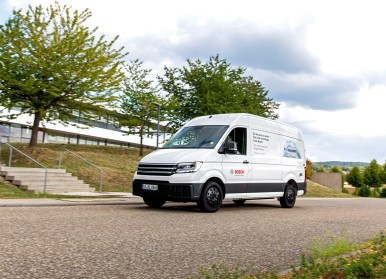
Stuttgart – Vans get goods to their destination quickly, ideally using a powertrain with zero local emissions. But the longer the journey and heavier the vehicle, the more a battery-based electric drive reaches its limits. And that is where the strengths of the fuel cell come into play. Bosch has now equipped two vans with this technology and started test operation on the road. “The fuel cell enables long ranges and short refueling times, which makes long journeys more economical,” says Dr. Markus Heyn, member of the Bosch board of management and chairman of the Mobility Solutions business sector. “With the two fuel cell vans, we are expanding our understanding of the system and showing that the fuel cell can also be a suitable drive solution for light commercial vehicles.” The partner in the project is ABT eLine GmbH, which designed and converted the vehicles together with Bosch Engineering GmbH. At IAA Transportation in Hanover, Bosch is offering interested visitors the opportunity to experience the test vehicles and Bosch fuel cell technology in action on a track.Largely Bosch components in use The developers were able to use Bosch components almost throughout for the fuel cell system. A fuel cell kit is used, which comprises the stack, anode supply module including hydrogen gas injector and recirculation blower, electronic control unit, electric air compressor and components for the hydrogen storage system, and even a large number of sensors. The technical basis for both vehicles is commercially available vans that run on electric power alone. The batteries including peripherals were now replaced by the fuel cell, five storage tanks for a total of over 22 pounds of hydrogen, and a smaller lithium-ion battery. “Accommodating the fuel cell components in the available installation space was a major challenge,” says Dr. Uwe Gackstatter, president of the Bosch Powertrain Solutions division. The partner ABT eLine adapted the cooling system, the vehicle control system, and the electrical system. Bosch designed the fuel cell system, integrated it into the vehicle together with the hydrogen storage system, and developed the associated control system. After the required technical tests, the vehicles were granted official approval for road use. The project is already providing important insights: even loaded, the vehicles can travel up to 335 miles and are fully refueled again in six minutes. The fuel cell can therefore be a good addition to the battery-electric drive in future for fleet operators whose vans cover particularly long distances during the day and return to the maintenance and storage facility in the evening.Fuel cell and hydrogen ready for the next step The first Bosch components for fuel cells are already in volume production. But the work is far from over. “We need as much data as possible from real driving operations to develop the system further,” explains Gackstatter. Thanks to cloud connectivity, the two test vehicles now deliver these in real time to the developers’ computers, supplementing the measured values from the test benches. With this knowledge, Bosch can offer customers components that have been tried and tested even earlier, as well as comprehensive support in system design. However, further steps are still necessary for fuel technology to make a breakthrough. “Industry and politics must work together to remove obstacles to hydrogen technologies,” Gackstatter warns. For example, the development of a tank infrastructure and the production of green hydrogen in larger quantities remain tasks that can only be solved together.

Worlds Converge: Humans at the heart of the mobility revolution

23.05.2018

Press release

Two Wheeler

Worlds Converge: Humans at the heart of the mobility revolution

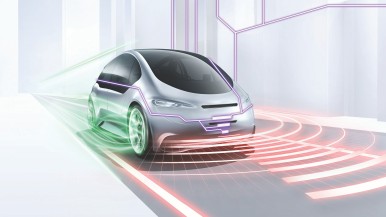
Flat Rock, Mich . –The mobility industry is the epicenter of innovation as new technologies promise to transform the entire concept of transportation. As a partner to both established and new mobility manufacturers with a portfolio that extends across automation, connectivity and electrification, Bosch has a broad view of the shifting landscape.The global supplier of technology and services provided a glimpse into the future of mobility from multiple perspectives at the Bosch Mobility Experience U.S. 2018, held at the Bosch Proving Grounds in Flat Rock, Mich. Bosch presented technologies at the middle of drivers’ changing relationship with the vehicle and showcased how the convergence of technology is driving the future of mobility. “While many feel a collision of worlds is imminent between traditional and new, the developments on the horizon are rather a convergence than a collision,” said Mike Mansuetti, president of Bosch in North America. “When we take a convergent approach, we bring together the benefits of multiple worlds for the benefit of all.” At its mobility showcase event, Bosch focused specifically on the positive impact to society as part of its Invented for Life brand promise. “The center of development isn’t whose approach is right – the center of development is the human being,” Mansuetti said. “The people inside these next-generation vehicles, their safety and their overall experience are the primary focus. Together we can foster consumer trust instead of anxiety, uncertainty and fear.” Redundancy and driver assistance blaze the path to automated driving Advanced driver assistance systems (ADAS) has been a major growth driver for Bosch. As early as 2019, the company expects to generate sales of two billion euros globally with driver assistance systems and its sales are growing faster than the market. While the global market for radar and video sensors is forecast to grow 20 percent this year, sales of Bosch radar and video sensors are expected to increase by 40 percent globally. Bosch will debut for the first time in North America automatic emergency braking for cyclists . The technology uses sensors to detect cyclists alongside and ahead of the vehicle, monitoring speed, distance, and direction of travel to calculate the risk of an accident. In the case of an imminent collision, the system automatically brings the vehicle to a stop in order to avoid — or at least reduce the severity of — an accident. Driver assistance technologies such as automatic emergency braking are coming to prominence and extending into new use cases as the technology is applied to help keep consumers and drivers safer. As levels of automation continue to increase, partially automated driving functions can help make the driver's trip safer and more relaxing. Bosch highway assist , a partially automated driving function installed in the Maserati MY 2018 Ghibli, Levante and Quattroporte, combines ACC Stop & Go and lane centering functions to control the vehicle's speed, acceleration and braking. To help reach new levels of automation, Bosch is working on redundant solutions for all levels of automated driving . Redundancy ensures safety in a vehicle where a human driver may no longer be able to operate as the backup function. At the Bosch Mobility Experience, the company will feature a redundant braking system that combines Bosch’s electromechanical brake booster (iBooster) and electronic stability control (ESP®) systems, each of which is capable of independently performing braking functions for the vehicle in the rare case of a single failure. Bosch also will present the Servolectric® Paraxial Servo Unit (EPSapa) that provides operational steering in the event the primary system is unable to operate, another redundant solution that makes highly automated driving possible. Connectivity solutions come to life Whether through connected solutions, in-vehicle interaction or the architecture within the vehicle, connectivity is at the heart of future mobility experiences. Bosch’s systems and cross-domain expertise position it to bring connectivity solutions to life. Bosch will showcase vehicle-to-anything (V2X) technologies that sense what is beyond the line of sight by facilitating communication between vehicles and the world around them. At the heart of these solutions is the Bosch connectivity control unit. The result is more time for drivers to react to potentially dangerous situations in scenarios such as left turns and pedestrians in intersections to keep drivers and pedestrians safe. The technology also will provide autonomous vehicles with decision-making information. Connectivity solutions from Bosch also help keep drivers safe inside the vehicle by helping drivers seamlessly and safely connect while reducing time when eyes are off the road. The next generation cockpit designed by Bosch is a system that runs multiple displays and electronics from one electronic control unit. The system implements smart, multimodal human machine interface (HMI) including voice print smart voice recognition, driver identification and a haptic control panel to make the vehicle increasingly driver-centric. It also includes Motion Intelligence HALO Software which limits use of the screen of any smart device that enters the driver’s area, preventing dangerous activity like texting, posting to social media, or emailing while driving. Connectivity also turns the smartphone into a car key. Perfectly keyless uses the driver’s mobile phone as a digital car key to allow passive vehicle access and start. Vehicle access can be securely granted to other users, enabling families, companies, sharing providers and fleet operators to flexibly manage who can access their vehicles and when. Bosch expertise powers new visions of electrification At the beginning of 2018, Bosch combined its powertrain expertise – gasoline, diesel, electric and battery systems – underneath a new business unit: Powertrain Solutions. Consumers in the U.S. have multiple options for powertrains, and Bosch helps manufacturers to provide these choices. As interest in pure electric vehicles increases, Bosch offers e-axle, e-machine, and power electronics technologies to many manufacturers – both established and new. Bosch electrified components are already featured in more than 800,000 vehicles around the world, and the organization has carried out over 30 production projects with OEM partners. One such example is with Nikola Motor Company. The Nikola NZT™ is the most advanced electric UTV in the world with staggering performance and capabilities. It features more than 500 horsepower coming from the state-of-the-art battery and four wheel-independent motors. Impressively, the Nikola NZT™ accelerates from 0-60 in less than 3.5 seconds. Bosch will supply the Vehicle Control Unit and controls software for the vehicle as well as anti-lock braking system as part of an overall energy management solution. Bosch also will provide high-efficiency electric motors for the Nikola two-motor e-axles. Thanks to Bosch components and systems expertise, Nikola’s vision for the NZT is becoming a reality.