Suche

Press release #Business/economy
Share pressrelease

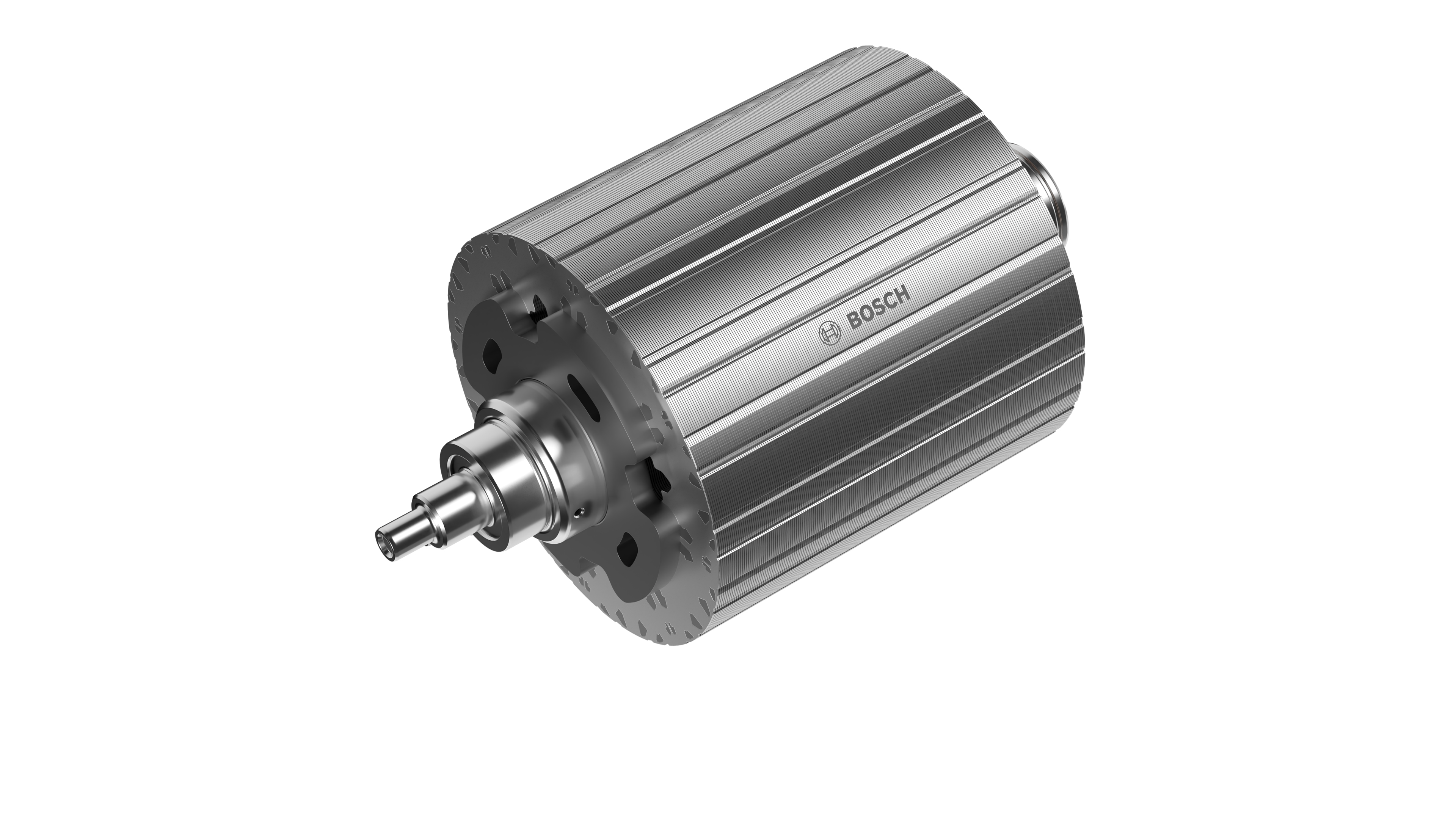
Bosch sets new benchmark for electric propulsion with next-generation synchronous motor

World-record efficiency and series-ready performance helps enable automakers to reduce battery size and cost while maintaining range

  • Motor features rare-earth-reduced magnet configuration.
  • Design supports both battery-electric and hybrid powertrains.
  • Sourcing strategy combines Bosch's global expertise with regional needs.
Megan Bonelli

Megan Bonelli

X

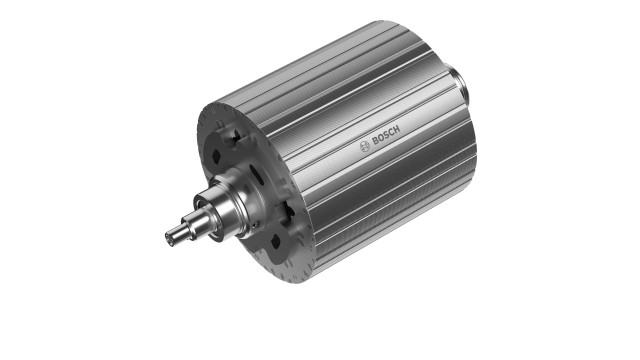
Farmington Hills, Mich.— Bosch has introduced a new generation of permanent-magnet synchronous e-motors designed to set the benchmark for series-ready electric propulsion. The advanced motor delivers a world-record gain in efficiency, with only 0.85 kWh/100 km losses in the WLTC cycle and effectively cutting the losses by up to 30 percent. Depending on use case, the motor provides a continuous-to-peak power ratio of up to 93 percent, combining breakthrough efficiency with robust, real-world performance.

WLTC, or Worldwide Harmonized Light Vehicles Test Cycle, is a globally recognized test that measures how efficiently a vehicle uses energy under realistic driving conditions so automakers and consumers can compare performance across different vehicles.

By maximizing energy efficiency and power density, the technology supports the industry’s transition to scalable, high-performance electric mobility.

“Efficiency is the new horsepower,” said Kevin OKeefe, regional president of Electrified Motion, Bosch in North America. “This next-generation e-motor demonstrates how Bosch is helping our customers unlock greater performance, lower costs and enhanced supply-chain resilience. By enabling smaller batteries without compromising range, we’re delivering real value to automakers and drivers alike.”

Engineered for broad applicability, the motor is designed for both battery-electric and hybrid powertrains. Its modular architecture supports a wide range of vehicle segments, from passenger cars to commercial applications, allowing manufacturers to streamline development and accelerate time to market.

The new e-motor also reflects Bosch’s focus on global flexibility and long-term resilience. It incorporates sourcing strategies that support diversified supply chains, including rare-earth-reduced magnet configurations and, where available, localized production. This approach supports automakers in addressing regulatory requirements, mitigating supply risks and aligning with evolving sustainability and supply chain considerations.

With experience of 8 million electric motors of all generations produced so far and decades of experience in electrification and large-scale manufacturing, Bosch is positioning the new motor as a series-ready solution capable of supporting global production programs. The company continues to invest in innovations that advance efficiency, scalability and sustainability across the electric mobility ecosystem.
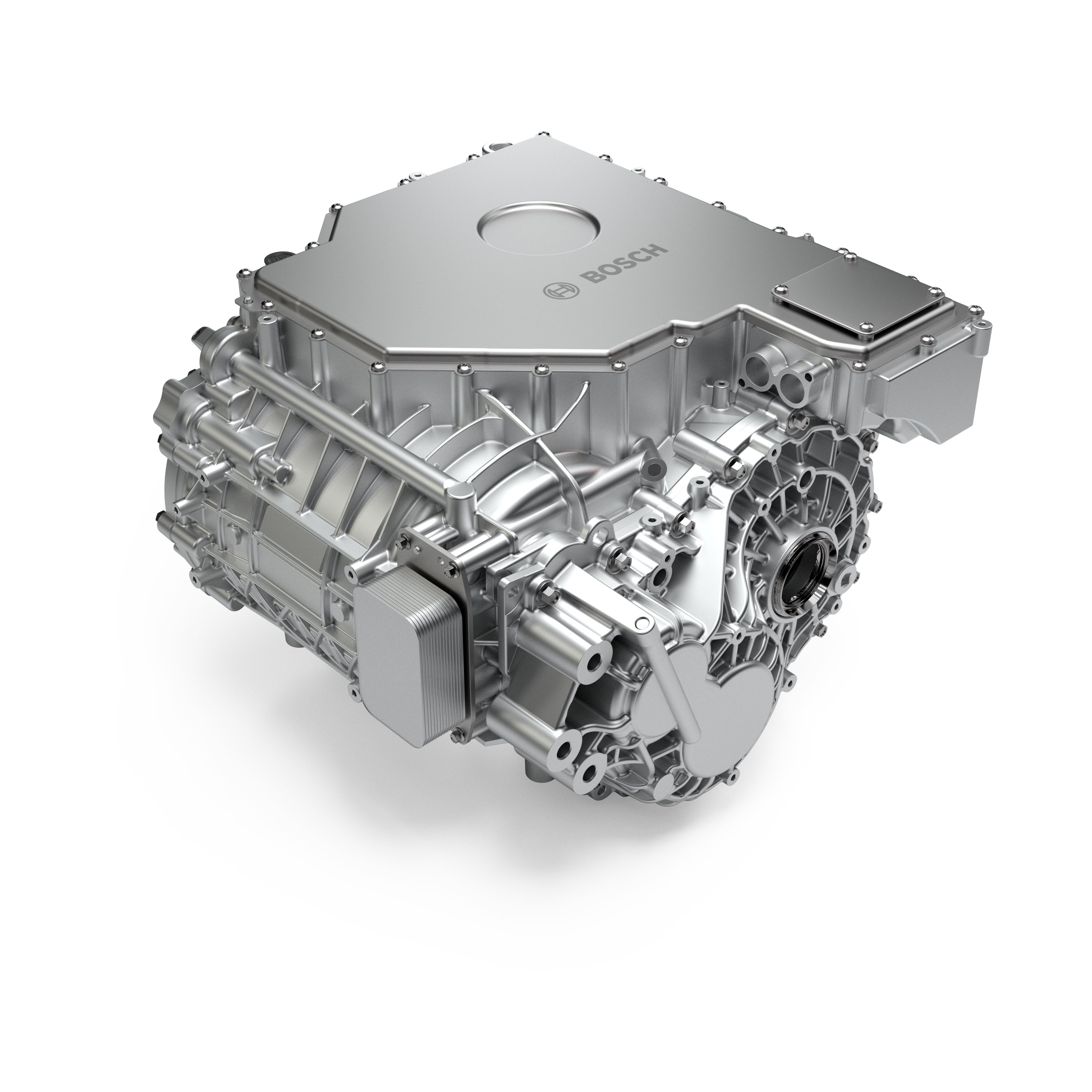
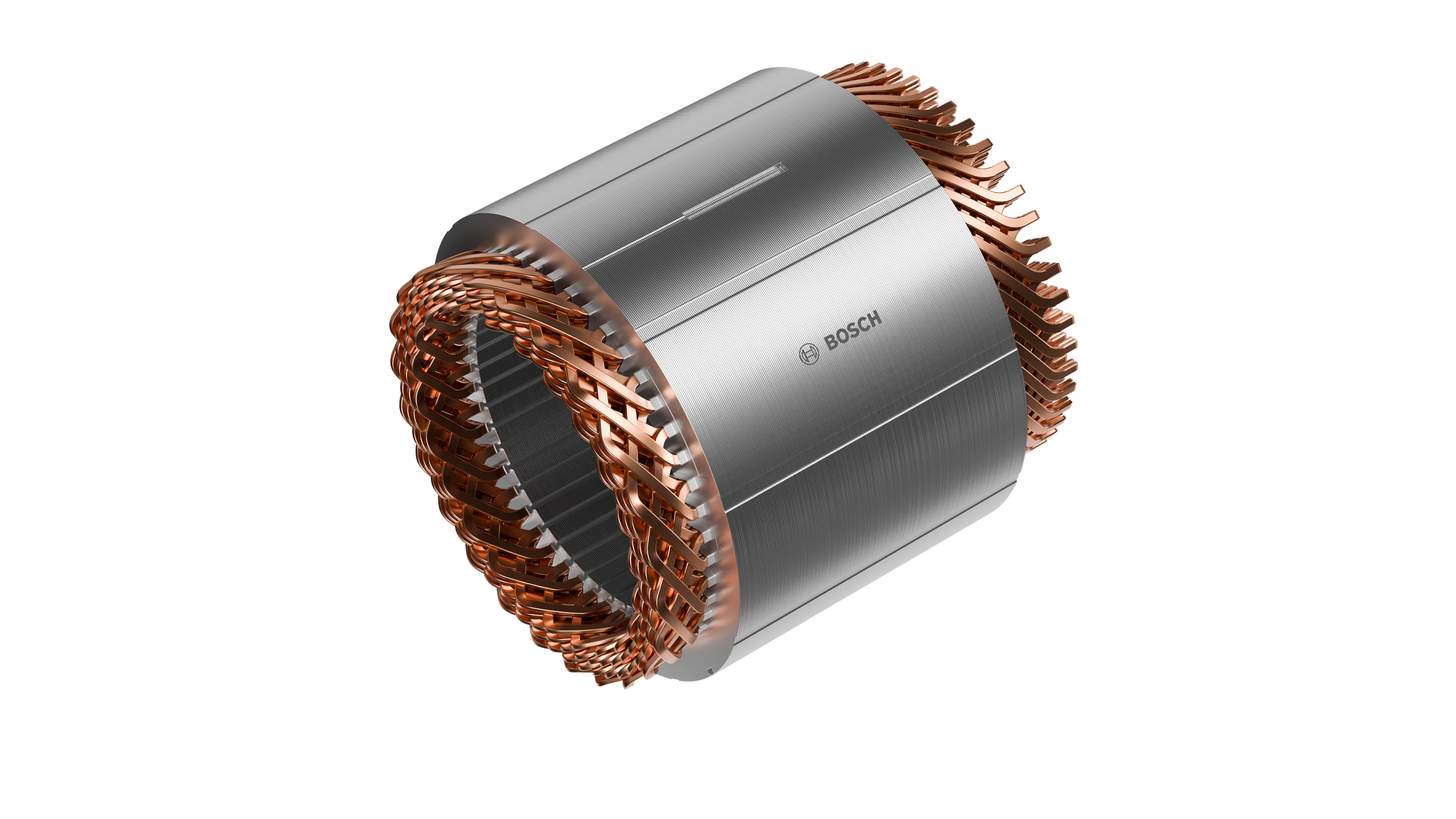
Press photos available on the Bosch Media Service at www.bosch-press.com.

Contact for press inquiries:

Megan Bonelli
Phone: +1 947 281-7062
E-Mail: megan.bonelli@us.bosch.com

About Bosch

Having established a presence in North America in 1906, today the Bosch Group employs around 38,000 associates in more than 100 locations in the North American region (as of Dec. 31, 2024). According to preliminary figures, Bosch generated consolidated sales of $18.7 billion in the U.S., Mexico and Canada in 2025. For more information visit www.bosch.us, www.bosch.mx and www.bosch.ca.

The Bosch Group is a leading global supplier of technology and services. It employs roughly 412,000 associates worldwide (as of December 31, 2025). According to preliminary figures, the company generated sales of 91 billion euros in 2025. Its operations are divided into four business sectors: Mobility, Industrial Technology, Consumer Goods, and Energy and Building Technology. With its business activities, the company aims to use technology to help shape universal trends such as automation, electrification, digitalization, connectivity, and an orientation to sustainability. In this context, Bosch’s broad diversification across regions and industries strengthens its innovativeness and robustness. Bosch uses its proven expertise in sensor technology, software, and services to offer customers cross-domain solutions from a single source. It also applies its expertise in connectivity and artificial intelligence in order to develop and manufacture user-friendly, sustainable products. With technology that is “Invented for life,” Bosch wants to help improve quality of life and conserve natural resources. The Bosch Group comprises Robert Bosch GmbH and its roughly 490 subsidiary and regional companies in over 60 countries. Including sales and service partners, Bosch’s global manufacturing, engineering, and sales network covers nearly every country in the world. Bosch’s innovative strength is key to the company’s further development. At 136 locations across the globe, Bosch employs some 82,000 associates in research and development.

The company was set up in Stuttgart in 1886 by Robert Bosch (1861-1942) as “Workshop for Precision Mechanics and Electrical Engineering.” The special ownership structure of Robert Bosch GmbH guarantees the entrepreneurial freedom of the Bosch Group, making it possible for the company to plan over the long term and to undertake significant upfront investments in the safeguarding of its future. Ninety-four percent of the share capital of Robert Bosch GmbH is held by Robert Bosch Stiftung GmbH, a limited liability company with a charitable purpose. The remaining shares are held by Robert Bosch GmbH and by a company owned by the Bosch family. The majority of voting rights are held by Robert Bosch Industrietreuhand KG. It is entrusted with the task of safeguarding the company’s long-term existence and in particular its financial independence – in line with the mission handed down in the will of the company’s founder, Robert Bosch.

Additional information is available online at www.bosch-press.com, www.bosch.com.

Exchange rate: 1 EUR = 1.1297

Download pressrelease