Search and find:
Photos, videos, releases, events to support your reporting about the Bosch Group

Bosch Tech Day 2022 in Dresden: powerful semiconductors are setting the pace for ...

13.07.2022

Press release

Internet of Things

Bosch Tech Day 2022 in Dresden: powerful semiconductors are setting the pace for ...

Stuttgart and Dresden, Germany – Highly miniaturized components are the glue that holds our modern technological world together. Powerful semiconductors are at the heart of all electronic systems. The hands-on exhibits at the Bosch Tech Day 2022 will include a wide range of current and future products, so that visitors can touch, try out, and experience for themselves the role that chips, including those manufactured by Bosch, play in making technology that is “Invented for life.” Bosch Tech Day will take place on July 13, 2022, at the Bosch wafer fab in Dresden, the most advanced of its kind in Europe.An overview of the exhibits at Bosch Tech Day Automotive sensors – surround sensing for all traffic situations: In assisted and automated driving, the vehicle must know what is going on around it at all times. It must be able to reliably detect and react to objects and people. Reliable surround sensing is essential for this. For this, Bosch employs a combination of multipurpose camera and front and corner radar sensors installed at the front and sides of the vehicle. The front radar sensor detects objects at the front of the vehicle and determines their speed as well as their position relative to the vehicle. If there is a risk of collision, the system warns the driver. If the driver fails to react, the system automatically triggers an emergency braking maneuver. The Bosch multipurpose device is a front video camera that combines traditional image-processing algorithms with artificial intelligence (AI) methods. Using AI, the camera understands and interprets what it sees, ensuring reliable object recognition and good surround sensing. In addition to camera, radar, and ultrasonic solutions, Bosch is also developing a long-range lidar, for which it employs various sensor principles. The more complex the driving task, the more important it is that these solutions interact correctly.Planar robots – high-performance contactless transport and positioning: Bosch makes Industry 4.0 hover with special planar robots that use permanent magnetic levitation, a new technology developed by Bosch researchers. The robots are much more versatile and adaptable than a conveyor belt and enable the flexible and contactless transport, positioning, and maneuvering of components or objects of any kind. They offer potential for a wide range of industries and applications, such as the semiconductor and pharmaceuticals industries as well as the food industry, for which special standards of hygiene and cleanliness apply. But they are also a boon in assembly and manufacturing environments, where they speed up operations and can combine flexible materials flow with precise positioning. The Bosch planar robot consists of two main components, each of which is equipped with permanent magnets: a mover, which is the transport platform; and a stator, which is the surface over which the mover can glide. The magnets in the stator generate a strong magnetic levitation field for the mover, which silently hovers about two centimeters above it. Due to the precise alignment of the magnets, it is possible to control the position of the mover in all directions.GSR and GSB 18V-150 C Professional – cordless screwdrivers with electronic angle detection: The GSR and GSB 18V-150 C Professional Biturbo screwdrivers are the world’s most powerful 18-volt cordless and impact screwdrivers. They are particularly suitable for conventional timber-frame construction as well as for building roof trusses or facades. In short, for any kind of work that requires large-diameter screws or drills. They offer a modern user interface as well as connectivity functions that allow individual settings to be made by smartphone. Their unique selling point is their electronic angle detection (EAD) function, a world first for commercial 18-volt screwdrivers. The GSR and GSB 18V-150 C Professional tools also feature a high level of user protection thanks to KickBack Control: in the event of sudden and unpredictable rotation of the screwdriver around the drilling axis – if the drill gets stuck in a knothole, for example – the integrated sensor switches off the motor within a fraction of a second. This prevents unexpected recoil and can reduce the risk of injury.The Quigo Green cross-line laser for DIY users – green in more ways than one: The Quigo Green projects an accurate laser cross onto the wall. It uses green laser diodes, which generate a beam that is up to four times more visible to the human eye than a red one. It is the first Bosch measurement device to feature housing and accessories made of 90 percent recycled plastic. Its packaging is also eco-friendly, made of 70 percent recycled paper, featuring an environmentally friendly water-based coating, and no longer containing any plastic film inside. Bosch also optimized the size of the packaging, making it as small as possible to maximize the number of devices that can be transported at the same time. In addition, thanks to its optimized electronics, the new Quigo Green consumes just half the energy its predecessor model did. All these features help conserve resources.Rolling Chassis – from pre-integrated modules to complete solutions: With its pre integrated systems solutions, Bosch helps startups as well as traditional automakers bring electric vehicles to the market faster than before. By reducing complexity in the development and design of electric vehicles, the company helps automakers operate more efficiently. At the heart of Bosch’s pre-integrated systems solutions is the advanced driving module (ADM). It integrates individual systems for propulsion, steering, and brakes into a harmonized and flexible whole. Simplified interfaces and a consistent software architecture reduce complexity and ensure optimized communication among components. This modular approach combining hardware, software, and services allows automakers to integrate the ADM in line with their needs. The rolling chassis prototype, which was built as part of an engineering alliance with the chassis and body expert Benteler, demonstrates the maximum possible level of pre-integration and serves as a development platform for battery-electric vehicles.Bosch Cookit – all-around culinary talent: Cookit offers a whole new dimension of flexibility in the kitchen. Whether guided cooking, automatic programs, or manual cooking, the multifunctional food processor with cooking function has the right level of support for everyone. And now it has become even more flexible: the new “My Recipe” function allows Cookit to save personal recipes. The recipe, with all ingredients, quantities, temperatures, and special tips, is entered in the Home Connect app, which then relays it to the Cookit. The food processor with cooking function will then guide the user through the preparation steps as often as required. Since the beginning of May, it has been possible to use the Home Connect app to share these personal Cookit recipes. This gives users access to countless recipes from the Cookit community. For extra inspiration, they can add a food photo to their own creations.SmartGrow Life – the first bite is with the eye: SmartGrow Life is the innovative, all-in-one indoor gardening system for growing herbs, greens, and even tomatoes at home. Thanks to its patented lighting and irrigation technology, users can grow healthy and aromatic plants all year round. In addition to providing fresh greens, SmartGrow Life is an eye-catching complement to any kitchen counter or table and can even be mounted on the wall. Following the sustainability principle, all materials used for the device, accessories, and packaging can be reused, reprocessed, or recycled.Electromobility ecosystem – charging cable and wallbox: With its integrated control and safety technology, Bosch’s new flexible smart charging cable for electric vehicles also does without the usual in-cable control box when charging at a 230-volt power socket. This means the Bosch cable weighs less than three kilograms. On average, this is a good 40 percent less than conventional charging cables with a control box. Because it comes with adapters for type 2 and household plugs, drivers who want to be free to choose whether to recharge from a power socket at home or from a charging station on the road no longer need a second cable. The three-phase cable enables mode 2 and mode 3 AC charging at up to 22 kilowatts, and the technology integrated into each of the plugs makes the recharging process safe and reliable. The type 2 connector at the vehicle end of the cable contains the components for controlling and monitoring the charging power. At the other end, the household plug with adapter houses the temperature control and a residual current device. And for charging electric cars at home, Bosch also offers wallboxes.BHI260AP – revolutionizing fitness tracking: Squats, sit-ups, kettlebell workouts: the list of fitness exercises goes on and on. However, many fitness trackers and smart watches can track only a limited number of activities, and the variety of apparatus types as well as users’ different movement styles, physiques, and fitness levels mean that they cannot always reliably recognize the exercises being done. To solve this problem, Bosch Sensortec has developed the BHI260AP – a programmable motion sensor that enables self-learning functions in wearables and hearables. The sensor automatically detects and counts different types of movements, seamlessly adapts to the user’s style in the background, and can independently learn any new recurring fitness activity within seconds. In addition to the self-learning function, the sensor also has advanced integrated functions such as swimming analysis and position and orientation tracking.

Digital nose for air quality: Bosch Sensortec’s 4-in-1 gas sensor with AI

01.03.2021

Press release

Internet of Things

Digital nose for air quality: Bosch Sensortec’s 4-in-1 gas sensor with AI

Whether at home, in the office or outdoors, we need to be confident that the air around us is clean and safe to breathe – COVID-19 has clearly highlighted the importance of air quality. Due to the particulates, gases and even airborne viruses ubiquitously present in our modern environment, poor air quality has an increasingly negative impact on our health and well-being. To address this growing need, Bosch Sensortec has announced the BME688, the first air quality MEMS sensor that combines gas, humidity, temperature and barometric pressure sensing with innovative artificial intelligence (AI) capability; essentially creating the world’s smallest four-in-one air quality measurement solution. This single device enables customers to reduce their total cost of ownership, cut their development time and simplify design. The new BME688 is ideal for the latest, customized applications, such as food spoilage detection and timely forest fire detection by detecting the gases present, and tracking temperature and humidity changes. The sensor's AI features and Bosch Sensortec’s new BME AI-Studio software tool make it straightforward for customers to rapidly develop custom solutions for their specific use cases. To further cut time to market, Bosch Sensortec also provides an Adafruit-compatible development kit. Built on Bosch Sensortec’s proven BME680 platform, the BME688 features an updated gas sensor enabling an extended measurement range and sophisticated AI features. The gas sensor now detects the presence of many gases, including volatile organic compounds (VOCs), volatile sulfur compounds (VSCs) and other gas types such as carbon monoxide and hydrogen, in the parts per billion (ppb) range. "The BME688 combines reliable high-precision sensors with wide-ranging gas detection and innovative AI capabilities in a single package,” says Dr. Stefan Finkbeiner, CEO at Bosch Sensortec. “This enables our customers to rapidly develop the next generation of applications designed to improve well-being, lifestyle and sustainability.” For example, a customer may want to develop a sensor-based product that can detect spoiled food, which would be indicated by the VSCs produced by bacteria in the food. Similarly, bad breath or body odor could be detected based on the VSCs they produce. The optimal approach is to collect indicative real-life data directly in the field. For instance by sampling gases in the vicinity of both fresh and decaying food, to thereby create different combination models for the VSCs present in the given air sample. The BME688 is capable, by default, of very accurate detection of VSCs, and the BME AI-Studio enables it to be optimized for other gas mixtures and applications. By sampling gases in the field instead of the lab, the derived algorithms that are utilized by the new detection devices are far more reliable in evaluating actual conditions. Together with gas data, the BME688 simultaneously measures humidity, barometric pressure and temperature as supplementary data inputs for complete AI modeling. In our example application, the customer categorizes this mass of data and then applies it in the development of their AI model in the BME AI-Studio, essentially training the BME688 to recognize the tell-tale signs of bacterial growth on the food. Once the sensor is trained, the final AI code runs on a system microcontroller in the customer’s end product. This AI code is generally lightweight and will run quite easily on the existing microcontroller that handles system control and management tasks. The BME688 has been developed for mobile and connected applications where size and low power consumption play a critical role. The sensor is housed in a compact package, measuring just 3.0 x 3.0 x 0.9 mm3. Current consumption can be configured between 2.1 μA and 11 mA depending on the required data rates and functions, and can be optimized using the BME AI-Studio. Availability: The BME688 is available now. Website: https://www.bosch-sensortec.com/products/environmental-sensors/gassensors/bme688/ Video: https://www.youtube.com/watch?v=xcZKKNrBt2gBOSCH SENSORTEC AT EMBEDDED WORLD DIGITAL: VIRTUAL BOOTH: March 01 – March 05, 2021 https://www.bosch-sensortec.com/about-us/events/embedded-world-2021-digital/ DEEP-DIVE SESSIONS WITH BOSCH-EXPERTS: - March 1, 2021: 10:50-11:20 am EST - Presentation and Q&A session 'Bosch unveils the new robust barometric pressure sensor BMP384 & the first gas sensor with Artificial Intelligence BME688' - March 4, 2021: 5:30-6:00 am EST - Presentation and Q&A session 'AI-catching”: Environmental sensing and fitness tracking with Artificial Intelligence' Bosch Sensortec GmbH, a fully owned subsidiary of Robert Bosch GmbH, develops and markets a wide portfolio of microelectromechanical systems (MEMS) sensors and solutions tailored for smartphones, tablets, wearables and hearables, AR/VR devices, drones, robots, smart home and IoT (Internet of Things) applications. The product portfolio includes 3-axis accelerometers, gyroscopes and magnetometers, integrated 6- and 9-axis sensors, smart sensors, barometric pressure sensors, humidity sensors, gas sensors, optical microsystems and comprehensive software. Since its foundation in 2005, Bosch Sensortec has emerged as the MEMS technology leader in the markets it addresses. Bosch has been both a pioneer and a global market leader in the MEMS sensor segment since 1995 and has, to date, sold more than 10 billion MEMS sensors. For more information, please visit www.bosch-sensortec.com, twitter.com/boschMEMS, community.bosch-sensortec.com, linkedin.com/company/bosch-sensortec/, youtube.com/user/BoschSensortec

CES 2021: Bosch puts its faith in AI and connectivity – for the protection of pe ...

10.01.2021

Press release

Internet of Things

CES 2021: Bosch puts its faith in AI and connectivity – for the protection of pe ...

Stuttgart, Germany / Detroit, USA – To improve people’s health and to protect our planet, Bosch is counting on AIoT, taking advantage of the possibilities offered by data, artificial intelligence, and the internet of things to benefit people and the environment with technical solutions. “We combine AI and connectivity to form the AIoT, which helps us improve energy efficiency and fight the coronavirus,” says Michael Bolle, Bosch board of management member. “AIoT offers enormous potential. We are already unlocking this potential and plan to expand our efforts in the future.” Under the tagline “Sustainable #LikeABosch,” the company will be presenting intelligent, sustainable solutions for health, living, and mobility at the virtual tech trade fair CES 2021.Among the innovations Bosch is debuting at the tech show is the world’s first self-learning AI sensor for wearables and hearables in fitness tracking. Since the AI runs on the sensor itself (edge AI), there’s no longer any need for an internet connection during an exercise session – this improves energy efficiency and data privacy. The company is also presenting a sensor that measures factors such as air quality and relative humidity. This delivers information about the concentration of aerosols in the air – data that has become especially important in the fight against the coronavirus. Bosch security cameras can also help in the fight against the virus. AI makes it possible for them to execute a wide array of customer-specific applications. For example, a new camera solution with integrated intelligent video analysis measures body temperature contactlessly, anonymously, and with high precision – with a maximum deviation of half a degree. Moreover, using a software solution for the open camera platform of the Bosch startup Security and Safety Things, these cameras can detect whether the number of people in a shop complies with the prevailing coronavirus restrictions. This platform was designated a 2021 CES® Innovation Award Honoree, making it one of four Bosch solutions singled out this year. Another premiere is a portable hemoglobin monitor that can detect anemia by means of a finger scan. The device is particularly well suited for regions that have insufficient access to medical care. Equipped with AI, the hemoglobin monitor delivers a result within 30 seconds – no lab test or blood draw necessary. At the moment, the best example of how innovative Bosch technology can improve health and well-being is the coronavirus PCR test on the Bosch Vivalytic testing device. This now delivers results even more quickly: laboratories, doctors’ offices, nursing homes, and hospitals can evaluate five samples simultaneously in 39 minutes – technology literally “invented for life.” Thanks to improved software, positive samples can be detected even in under 30 minutes. The development of the Vivalytic system, which consists of an analysis device and test cartridges, grew out of a long-standing collaboration between Bosch’s corporate research and advance engineering, Bosch Healthcare Solutions, and the Robert Bosch Hospital. Sustainable #LikeABosch: Bosch as a pioneer in climate action A study recently published in Germany indicated that AIoT can go beyond health applications to support climate action as well. The study found that comprehensive digitalization in mobility, manufacturing, and building technology could help get the country nearly halfway to achieving the Paris Agreement emissions targets (source: Accenture ). Here is where Bosch takes a hand: its tagline for this year’s CES – “Sustainable #LikeABosch” – expresses one aspect of the company’s entrepreneurial responsibility. The sequel of the #LikeABosch image campaign highlights how everyone can do their part to protect the environment with sustainable products. Bosch itself is leading by example: according to in-house calculations, all the company’s 400 locations worldwide have been carbon neutral since 2020. Bosch is the first globally operating industrial enterprise to achieve net zero carbon emissions with respect to the energy it produces and the energy it sources externally. “The next step for Bosch is to address emissions along the entire value chain, from procurement to product use,” Bolle says. In that vein, Bosch is the first automotive supplier to join the Science Based Targets initiative with a specific and ambitious goal: by 2030, to cut upstream and downstream CO2 emissions by 15 percent. Bosch’s achievements in climate action have won recognition outside the company as well: the non-profit Carbon Disclosure Project (CDP) has added Bosch to its A List. Through its advisory company Bosch Climate Solutions, founded last year, Bosch shares its experience as a climate action pioneer with other companies. The Bosch startup markets several solutions, including the Bosch cloud-based energy platform, which applies intelligent algorithms to reduce the energy consumption of machines and thus increase the efficiency of production processes. Bosch has already deployed the platform at more than 100 locations, making a major contribution to improving energy efficiency – the main lever in the company’s efforts to go carbon neutral. Digital and sustainable is the way forward: into the pole position with industrial AI As this example shows, digitalization is paving the way for sustainability. “We want to be the leading AIoT company in every area that we operate in,” Bolle explains. Trust in AI is the most important prerequisite for it to become established, so that it can improve the lives of people and help limit climate change. To this end, Bosch relies on industrial AI, which explains the physical world to machines – instead of teaching them how to behave like people. Nonetheless, this requires ethical guidelines. To set them, Bosch has drawn up an AI code of ethics that centers on the idea that humans always retain control. In addition to improving energy efficiency in manufacturing, Bosch is systematically adding connectivity to its products for buildings and mobility to help consumers save energy. One of these products is an energy manager that the company offers for use in private homes. When combined with a heat pump and photovoltaic system, the manager can cut energy consumption by up to 60 percent. In the mobility sphere, drivers of electric vehicles can benefit from services such as Battery in the Cloud, which uses smart software analysis to reduce battery wear by up to 20 percent. In general, the combination of electrified and automated driving with personalized and connected services will open up a broad field for software applications. Vehicle computers are central to Bosch’s efforts to extend its leading role in software-intensive electronic systems. To meet this demand, the new Cross-Domain Computing Systems division and its 17,000 associates started operations at the beginning of the year. In this unit, Bosch is combining its capabilities in hardware and software engineering for vehicle computers, sensors, and control units for all vehicle domains. This reduces complexity in vehicle development and will get new functions on the road significantly faster. Expertise to help explore the moon: aiming high with Bosch AI From earthbound roads to activities in space: whereas last year’s CES saw the premiere of the SoundSee AI sensor system for the International Space Station, this time Bosch has set its sights on the moon. As part of NASA’s Tipping Point program, Bosch is joining forces with the companies Astrobotic and WiBotic as well as the University of Washington to research and develop technology to intelligently navigate and wirelessly charge small robots for operation on the moon. Bosch researchers working on the project in Pittsburgh and Silicon Valley are contributing their expertise in AI-based intelligent data analysis and wireless connectivity solutions. The resulting findings will flow into the further development of Bosch AIoT solutions back on earth. All this clearly shows how much potential AIoT offers, as well as the key role sustainability plays in it. “Only companies that pursue sustainability today and unlock the enormous potential of AIoT, will be successful tomorrow,” Bolle says.Bosch at CES 2021: VIRTUAL PRESS CONFERENCE: Monday, January 11, 2021, from 8:00 to 8:30 EST (14:00–14:30 CET) with Dr. Michael Bolle, Bosch CTO, CDO, and management board member, and Mike Mansuetti, president of Bosch North America, at the Bosch Media Service. VIRTUAL BOOTH: January 12 – February 15, 2021, at www.ces.tech FOLLOW the Bosch CES 2021 highlights on Twitter: #BoschCES DEEP-DIVE SESSIONS WITH BOSCH-EXPERTS: January 12 – February 15, 2021, at www.ces.tech Sustainable #LikeABosch: How a key global industry player drives carbon neutrality at its sites with Torsten Kallweit, Head of Corporate Office Health, Safety, Environmental and Fire Protection as well as Sustainability and Manager CTO Bosch Climate Solutions GmbH, and Annette Wagner, Head of Sustainability and Ideas Lab Move #LikeABosch: Technology for sustainable future mobility with Mike Mansuetti, President of Bosch North America, and Tim Frasier, Regional President Automotive Electronics North America Artificial intelligence in use: Application examples from the fields of fitness tracking and well-being to smart cameras with Kaustubh Gandhi, Senior Product Manager, and Sina Isabell Springer, Business Development Manager Perfectly keyless advanced with Tim Frasier, Regional President Automotive Electronics North America, Daniel Kornek, Head of Product Area Vehicle Access (Perfectly Keyless), and Jia Hou, Business Development Manager

In brief: Bosch code of ethics for AI

25.02.2020

Press release

Internet of Things

In brief: Bosch code of ethics for AI

Our objective is to create AI products our customers can trust. To achieve this, we combine values-based action and methodological and technological excellence. There are “red lines” we will not cross. For example, we will not allow any AI to subject the lives of individuals or of groups of people to some kind of trade-off.Our objective is to create AI products our customers can trust. To achieve this, we combine values-based action and methodological and technological excellence. There are “red lines” we will not cross. For example, we will not allow any AI to subject the lives of individuals or of groups of people to some kind of trade-off. We are guided by the following principles: All Bosch AI products should reflect our “Invented for life” ethos, which combines a quest for innovation with a sense of social responsibility. AI decisions that affect people should not be made without a human arbiter. Instead, AI should be a tool for people. We want to develop safe, robust, and explainable AI products. Trust is one of our company’s fundamental values. We want to develop trustworthy AI products. When developing AI products, we observe legal requirements and orient to ethical principles. Concerning the use of AI, we observe the following criteria: An AI product, and/or the use to which it is put, should not violate the articles of the Universal Declaration of Human Rights. Its use must comply with the laws of the countries for which the AI product was made. Our use of the AI product should conform with the Bosch values formulated in “We are Bosch.” AI products should be guided by our “Invented for life” ethos: they must kindle people’s enthusiasm, improve quality of life, and conserve natural resources. Three approaches to the role of AI in decision making: “Human-in-command” (HIC): In this approach, the AI product is used purely as a tool. At all times, people decide when and how to use the results presented by the tool. An example is when a machine helps people with classification tasks. “Human-in-the-loop” (HITL): In this approach, people can directly influence or change decisions made by an AI product. “Human-on-the-loop” (HOTL): This approach concerns those cases in which the parameters relevant for decisions are defined by people during the design process, but the decisions themselves are delegated to the AI product. The application allows those affected by the decision to appeal for review. This ensures that people not only define the parameters for decision making beforehand, but also check retrospectively whether the decision was carried out in the intended sense.

Bosch and Mojio Introduce IoT Emergency Response Solution for Any Passenger Vehi ...

07.01.2019

Press release

Internet of Things

Bosch and Mojio Introduce IoT Emergency Response Solution for Any Passenger Vehi ...

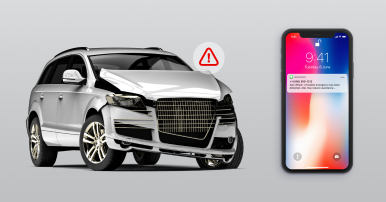
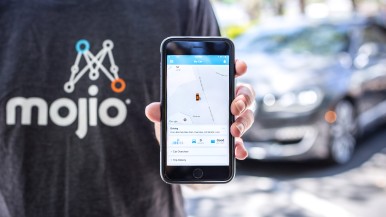
Las Vegas – The promise of the Internet of Things is vast, especially when humans begin to see, touch and feel the benefits of IoT technology. One key place is the vehicle, where IoT technology is enabling connected car experiences that make driving smarter, safer and more convenient.Today, at CES®, the largest, most influential tech event in the world, Bosch and Mojio unveiled a jointly developed, IoT integrated emergency response solution. The new offering adds crash detection and emergency call (eCall) response to an existing connected car solution from Mojio. Through the simple combination of a plug-and-play device for the vehicle’s OBD-II port and a mobile app, nearly a million consumers in North America and Europe have already upgraded their cars with Mojio’s white-label connected car solutions. These connected car offerings are deployed by Mojio’s portfolio of mobile network operator customers, including Deutsche Telekom, T-Mobile US and Telus. The new integrated emergency response offering combines a crash detection algorithm and eCall emergency services from Bosch with Mojio’s telco-grade cloud platform and white-label mobile apps for connected cars. The end result is an enhanced safety experience that senses collisions, assesses severity and triggers the appropriate emergency response. The key benefit of this IoT solution where vehicles are directly connected to the cloud is professional help arriving sooner in the case of an accident. “Enhanced driver safety, and the peace-of-mind that comes with it, will be a powerful benefit of connected mobility,” said Mike Mansuetti, president of Bosch in North America. For about $10 a month, this retrofit technology can be used in any vehicle, regardless of the make and model. Existing benefits include Wi-Fi connectivity for the vehicle and notifications for engine issues and recall notices to make informed decisions on maintenance and repairs. It can also locate a stolen vehicle to inform authorities and provides access to a growing range of smart, integrated services, such as on-demand roadside assistance and parking reservations. With the addition of the integrated crash detection and eCall service, drivers will soon benefit from the enhanced safety features enabled by Bosch. The crash detection algorithm from Bosch uses accelerometer sensor data from within a ‘made for Mojio’ certified OBD-II device to sense and measure a collision in real-time, communicating the crash data to Mojio’s cloud platform and triggering contextual emergency response alerts. The critical data, including the crash time, vehicle location and incident severity, is sent from Mojio’s cloud to Bosch’s eCall system to enable rapid dispatch of local emergency responders to the scene. In addition to the professional eCall response from Bosch, a simultaneous notification is sent to user-designated SOS contacts, such as family and friends, via Mojio’s mobile app and SMS. “We’re excited to work side-by-side with Bosch to help save lives by creating a safer and smarter global driving community, enabled by IoT,” said Kenny Hawk, Mojio CEO The solution is initially being offered to Mojio’s global portfolio of mobile network operator customers, with early deployments to consumers expected by mid-2019 in North America and Europe. Mojio’s distribution model leverages the strength of major telecom brands to deliver IoT services that are affordably priced and widely accessible through a variety of sales channels. That consumer reach, combined with the ubiquity of the OBD-II port (mandated with all passenger vehicles manufactured since 1996 in the US and 2001 in Europe), will unlock the benefits of this IoT safety upgrade to hundreds of millions of drivers of all types of vehicles. This is the first joint connected mobility solution to be introduced since the two companies announced a strategic investment and innovation agreement in June 2018 - an initiative led by Bosch’s Connected Mobility Solutions global division.

14.12.2018

Press release

Internet of Things

Christmas goes digital: why mini Bosch components will feature in so many gifts ...

Reutlingen, Germany – This year once again, the gifts under the Christmas tree will be emitting beeps, buzzes, and radio waves: according to Bitkom, some 70 percent of Germans will be giving digital gifts. This could be a smart watch, a game console, or of course a cell phone. This also means that Bosch will figure prominently under people’s Christmas trees, even though few may realize it. There’s at least one Bosch MEMS sensor in more than half the smartphones on the planet, and five of them on average in every new car. And there are millions more in drones, game consoles, fitness wristbands, and vacuum-cleaning robots. Bosch has produced more than ten billion of these miniature sensors in its wafer fab at Reutlingen, 40 kilometers south of Stuttgart, since 1995. “MEMS sensors are the building blocks of the connected world. They endow everyday objects with sensory perception and connect them with the internet,” says Jens Fabrowsky, member of the executive management of the Automotive Electronics division at Robert Bosch GmbH. With the number of connected devices rising fast – Gartner expects the global count to come to 20 billion by 2020 – MEMS sensors are sure to become chip-sized superheroes that we simply cannot do without. MEMS sensors measure the world and teach electronic systems how to see, feel, and smell. They turn a simple cell phone into a smartphone that takes sharp pictures and navigates on the street and over multiple stories in buildings....Jens Fabrowsky, member of the executive management of the Automotive Electronics division at Robert Bosch GmbH Ten billion sensory organs Rectangular or square and smaller than a pinhead at between one and four millimeters tall, these components are not easily seen. But however unremarkable MEMS sensors may seem at first glance, these mighty mites are the stars and polymaths of the connected world. “MEMS sensors measure the world and teach electronic systems how to see, feel, and smell. They turn a simple cell phone into a smartphone that takes sharp pictures and navigates on the street and over multiple stories in buildings,” Fabrowsky says. With the benefit of MEMS sensors, drones glide smoothly and can be controlled precisely even in winds. Installed in fitness trackers and smart watches, they count steps, stairs, and calories. These diminutive sensors’ fine-tuned receptors measure temperature, air pressure, humidity, and even air quality. They allow indoor air-conditioning and ventilation systems to be controlled more efficiently and, when office meetings drag on, they can trigger smartphone reminders that it is time for some fresh air. The first MEMS sensors developed nearly 25 years ago were not meant for smart-home technology or consumer electronics; they were destined for cars. These perceptive miniatures furnish data to the control units about when the car brakes or accelerates, as well as about the direction the car is traveling. The ESP electronic stability program uses this information to keep cars, trucks, and even motorcycles safely on track and in their lanes. Moreover, the GPS never loses sight of its destination, even if its signal is temporarily interrupted. What exactly are MEMS sensors? Microelectromechanical systems, or MEMS for short, are a combination of electronic and mechanical hardware. Every MEMS sensor consists of tiny silicon structures that are machined into a silicon wafer with a special type of etching process. For example, under a microscope, an acceleration sensor’s structures look like gossamer combs arranged in opposing and interlocking patterns. Some of these fine comb-like structures measure a mere four micrometers across – that is just a tenth the size of an ant’s leg. The force of a car accelerating or braking squeezes these combs. This changes the electrical voltage between the individual teeth, transforming a mechanical force into an electrical signal. A control unit interprets this signal and processes it further as a digital value. Bosch developed the manufacturing process behind MEMS technology nearly 25 years ago. It still forms the basis of today’s production runs, which take up to 14 weeks and entail several hundred steps. These tiny sensors are manufactured under exacting cleanroom conditions, as even the smallest airborne particles would disrupt their production. One cubic foot of air – that is about 30 liters – may contain no more than one particle weighing half a microgram. To put this into perspective, that equates to a cherry pit in Lake Constance – or 360 million bathtubs.

13.12.2018

Press release

Internet of Things

CES 2019: The smart solutions Bosch will be presenting in Las Vegas

At CES 2019 in Las Vegas, Central Hall, booth #14020 from January 8 to 11, 2019, Bosch is presenting technological answers to today’s challenges, including urbanization, population growth, and climate change. The supplier of technology and services will be highlighting innovative solutions and services for the mobility of the future and for the smart home. World first: Bosch concept vehicle for a new kind of mobility At CES, Bosch wants people to experience a new kind of mobility in the form of a driverless electric concept shuttle with integrated services. This kind of mobility will soon feature on streets in major cities around the world: whisper-silent, driverless shuttles that are seamlessly connected with their surroundings. Bosch will provide the necessary hardware, software, and new digital services that will enable users to book vehicles, pay for their ride, or share it with other passengers.CES Innovation Awards: a total of six honorees for Bosch In the run-up to CES 2019, Bosch received a total of six CES Innovation Awards. The CES Innovation Awards are an annual program run by the Consumer Technology Association (CTA) covering 28 categories, and serve as an indicator of future trends. This year, awards went to the following Bosch products and solutions: 1. All-in-one principle for vehicle connectivity: For the future of connected, automated driving, vehicles need the ability to communicate smoothly both among themselves and with their environment. To this end, Bosch has developed a universal connectivity unit for all Wi-Fi-based and wireless-based transmission technologies used in vehicle-to-everything (V2X) communication. This enables vehicles to communicate with each other and with traffic infrastructure, regardless of the country or manufacturer. Software produced by the Portuguese startup Veniam handles the complex task of managing the data connections. It constantly searches for the best transmission technology for each requirement and switches automatically between the available options. 2. Trucks with no exterior mirror: The new Mercedes-Benz Actros is the first production truck to feature a camera system in place of conventional main and wide-angle mirrors. Known as Mirror Cam, this system offers better 360-degree vision. In addition to increasing safety, having compact digital cameras instead of mirrors improves the truck’s fuel consumption thanks to the cameras’ considerable aerodynamic advantages. Two cameras, fitted left and right on the roof of the driver’s cab, feed real-time images to two high-resolution 15-inch displays mounted on the A-pillars inside the cab. The system adjusts the monitor display to match the driving situation. Overall, Mirror Cam greatly improves the truck’s aerodynamics, safety, and vehicle handling. Daimler’s development partners for the Mirror Cam system are Bosch and Mekra Lang. 3. The smartphone as car key: The Bosch Perfectly Keyless access system will soon let car drivers, car-sharing fleet operators, and logistics companies manage their vehicle keys digitally. They can use a smartphone app to decide at any given time who should have access to cars or trucks and when. The ingenious feature of this Bosch system is that it makes the connection between smartphone and vehicle more secure than ever. Perfectly Keyless can pinpoint the authorized smartphone like a digital fingerprint. For CES 2019, Bosch has installed the system in a demonstration vehicle based on a Ford Mustang. 4. Radar-based assistance systems prevent motorcycle accidents: Blind-spot detection, collision warning, and adaptive cruise control: giving motorcycles radar as a sensory organ enables new motorcycle assistance and safety functions while providing an accurate picture of the vehicle’s surroundings. As a result, these assistance functions not only increase safety, they also enhance enjoyment and convenience by making life easier for riders. According to Bosch accident research estimates, radar-based assistance systems could prevent one in seven motorcycle accidents. These electronic assistants are always vigilant and, in emergencies, they respond more quickly than people can. They are based on a combination of radar sensor, brake system, engine management, and HMI. 5. App for connecting e-scooters: A new app turns e-scooters into connectivity pros. As well as displaying key information such as the e-scooter’s current battery charge, it allows rider-vehicle communication and the option to connect with other users via social networks. This makes it easy for users to find out which of their friends are in the area. In addition, there is a connected helmet holder on the e-scooter’s handlebar which is controlled by app. Whenever the e-scooter is parked, this provides a storage solution for the helmet while also protecting the vehicle against theft and its display against vandalism. 6. Retrofit solution for more efficient machinery and households: Bosch has developed the Phantom algorithm to help small and medium-sized enterprises assess and greatly increase the energy efficiency of their machinery. This retrofit solution, which takes just a few minutes to install, uses sensors to measure the load on each device in the customer’s energy consumption network to provide valuable insights into usage and potential faults. This enables users to improve the machinery’s operations and efficiency. In homes, too, Bosch Phantom can tell how much power each device is using. This energy transparency makes it possible to save electricity. Mobility of the future: selection of solutions and services Driving electric, yet stress-free – that is the goal of Convenience Charging, the Bosch service that the company is presenting at CES 2019 in a demonstration vehicle based on an Audi A3 e-tron. This integrated charging and navigation solution enhances the everyday benefits of electromobility. In the future, the service will tell electric cars precisely when their power will run out, but also where they can find the next charge spot. To this end, Convenience Charging combines information from the electric powertrain with both vehicle and environment data to produce a reliable range forecast. The service uses state-of-the-art route planning to determine charging opportunities based on the driver’s personal preferences. In the future, drivers of electric cars will be able to order food for delivery directly to their pre-booked charge spot, so they can make the best use of the charging time. Using the Convenience Charging app, drivers will also be able to plan the charging stops they need in the comfort of their own home, with the app then seamlessly transmitting the suggested routes between charge spots to the vehicle. Safe use of cell phones when driving: The mySPIN smartphone integration solution makes it safe for drivers to use smartphone apps while they are on the road. Now, mySPIN also supports the MirrorLink vehicle communication standard. In the future, it will take just a simple adapter for the vehicle’s infotainment system or instrument cluster to enlarge mySPIN-compatible apps and display a reduced set of their key functions. Drivers will then be able to operate the apps by touch or using the vehicle’s rotary push button. Bosch is also developing mySPIN smartphone integration for commercial vehicles, motorcycles, scooters, and powersports vehicles. Lifesavers from the data cloud: In Germany alone, some 2,000 warnings about wrong-way drivers are broadcast each year. In most cases, however, the warning comes too late, since such incidents generally end after an average of 500 meters – in the worst case with fatal consequences. Bosch has developed a cloud-based solution that sends a warning to wrong-way drivers and all road users at risk within ten seconds. Some 15 radio and navigation apps already use Bosch wrong-way driver warning technology to reach people in 13 European countries. The service relies on a software module for integration into existing infotainment systems and apps. Making the electronic horizon even more accurate: Today, the electronic horizon provides data on road inclines and the sharpness of bends to complement navigation data. Because the system enables vehicles to think ahead, it enhances both safety and convenience. Bosch is now working on the next-generation electronic horizon, which will be even more accurate and up to date. In addition to information on road classifications, bends, and vertical profiles, it will provide vehicle systems and navigation systems with geometries for each and every traffic lane as well as infrastructure data with 3D objects. This will help automated vehicles determine their precise location within the lane. A seat-of-the-pants feel for automated vehicles: Bosch predictive road-condition services will allow self-driving vehicles to determine how road conditions will develop over the course of a journey, based on weather data provided by the company’s partner Foreca. As a sufficient number of connected vehicles take to the roads, Bosch will supplement its predictive road-condition services with vehicle data. This will increase the safety, availability, and convenience of automated driving functions. Automated driving in cities: San José in California’s Silicon Valley is set to become the pilot city for an automated ridesharing service provided by Bosch and Daimler. The three parties have already signed a letter of intent to this effect. Bosch and Daimler plan to offer the app-based service with automated Mercedes-Benz S class vehicles to selected customers. The test area is centered on the San Carlos Street / Stevens Creek Boulevard traffic artery between Downtown and West San José. Bosch and Daimler are working together on solutions for automated driving in cities. Their aim is to develop a driving system for fully automated driverless driving (SAE level 4/5) that is ready for production by the beginning of the next decade. Integrated security solution for connected vehicles: Since April 2018, all newly registered vehicles are automatically connected vehicles – thanks to the automatic Emergency Call system. This makes it increasingly important to have integrated security concepts for connected vehicles. At CES, ESCRYPT will be presenting CycurACCESS, a security solution for keyless vehicle access systems. State-of-the-art cryptographic methods make these digital keys particularly secure. What’s more, the Bosch subsidiary is presenting an all-in-one solution for secure over-the-air software updates, Featuring efficient key and certificate management to guarantee end-to-end encryption from the car’s ECU to the vehicle manufacturer’s IT systems. Intelligent assistants: solutions for the smart home Food recognition for smart storage: Connected devices offer their owners tangible benefits both on the road and at home – for instance when it comes to optimizing how food is stored. Now, Bosch connected refrigerators with interior cameras offer a new function: food recognition with storage recommendations . The device automatically recognizes some 60 kinds of fruits and vegetables and suggests the ideal place to store them via an app. By storing food in the best possible way, it stays fresh for longer and doesn’t have to be thrown away so often. Cooking without sticky touchscreens: PAI is a Bosch projector that is mounted over the kitchen counter, turning the whole worktop into a touchscreen. An integrated 3D sensor records when users touch the surface, making touch control possible. That means users can access a wide variety of digital services while cooking or baking, for instance to pull up recipes with ease or control connected appliances. Thanks to its robust design, the PAI’s interface is easy to operate even with greasy fingers, unlike conventional smartphones or tablets. This approach also frees up space on the work surface. Easy lawn care thanks to artificial intelligence: Bosch is using machine learning to improve the way its Indego robot lawn mower recognizes obstacles on the lawn by evaluating data such as motor flow, acceleration, motor speed, and direction. Thanks to AI, Bosch is making lawn care even easier and more convenient by enabling the Indego to take over the chore of mowing. Each Indego adapts to its garden in order to mow it perfectly every time. And Bosch’s new connected Indego S+ opens up new possibilities for users. It now supports voice control via Amazon Alexa, making it one of the first robot lawn mowers on the market to offer this function. Turning shelves into personal assistants: The new BML100PI interactive projection module lets users create smart shelves in their closets or wardrobes. A single module projects touchscreen functions onto the surface of as many as six shelves at a time. These projections enable a wardrobe to display weather forecasts, an individual’s daily schedule, or reminders of upcoming events. This information forms the basis for daily outfit suggestions, which users can share on social media. Once clothing has disappeared from the shelves, users can use the virtual touchscreen to place an online order for something new or make an appointment with the laundry service. The interactive projection module turns any standard shelf into a personal assistant to make everyday life more convenient. Recognizing every movement: The new BMI270 sensor is an intelligent inertial measurement unit (IMU) sensor with extremely low energy consumption which was designed for use in wearable electronic devices. The BMI270 improves the functionality of these wearables, including step counting and gesture recognition, and can distinguish between different activities, such as standing, walking, running, or cycling, in addition to detecting the transition from one activity to another. It can also detect where activities are taking place – for instance, whether it is inside a vehicle. What’s more, the new sensor can detect movements such as bending or raising the arm and tilting the wrist, making it possible to operate wearables with intuitive gestures. The gesture recognition is fully compatible with the wearables operating system Wear OS from Google. The IMU’s high level of performance is the result of combining yaw-rate sensor technology used extensively in automotive applications with a significantly improved acceleration sensor. Getting to grips with the interior climate: The AIR well-being sensor offers innovative climate comfort for the home. It records and presents information on air quality, temperature, and humidity, as well as brightness and noise. Users can operate the well-being sensor even without a smartphone thanks to its easy-to-understand interface featuring traffic-light logic. In addition, the Bosch AIR app offers more detailed information about measurements over time and enables users to tailor the sensor’s settings. By offering specific recommendations for how to improve indoor air quality and achieve a healthy interior climate, AIR helps people perform, concentrate, and feel better. Voice control for heating systems: The .aino chatbot lets users communicate with their heating system using plain language. Typing or saying “I feel cold” instructs the system to increase the room’s temperature by two degrees Celsius. In addition, the chatbot even understands the difference between “a little cold” and “very cold,” expressing that as different degrees of temperature change. The system also provides useful energy-saving tips, for instance based on the weather forecast, and suggests how to improve the efficiency of the heating system. On request, .aino sends weekly or monthly reports of energy consumption including a year-on-year comparison. Bosch at CES 2019 PRESS CONFERENCE: Monday, January 7, 2019, from 9:00 to 9:45 a.m. local time, in the Mandalay Bay Hotel, Las Vegas South Convention Center, Level 2, Ballrooms B, C, and D BOOTH: Tuesday to Friday, January 8–11, 2019, in the Central Hall, #14020 FOLLOW the Bosch CES 2019 highlights on Twitter: #BoschCES PANELS WITH BOSCH EXPERTS: Wednesday, January 9, 2019, 9:00 – 10:00 a.m. (local time) “Connected Home Innovations” with Anne Rucker, global head of digital strategy, Venetian, Level 4 Marcello 4405 Wednesday, January 9, 2019, 9:00 – 10:00 a.m. (local time) “Technology, Jobs, and the Future of Work” with Charlie Ackerman, senior vice president of human resources North America, Las Vegas Convention Center, North Hall N258 Wednesday, January 9, 2019, 2:15 – 3:15 p.m. (local time) “IoT to the Max, Thanks to 5G” with Davie Sweis, vice president of web business, Las Vegas Convention Center, North Hall N256

Bosch presents tomorrow’s mobility today

12.12.2018

Press release

Internet of Things

Bosch presents tomorrow’s mobility today

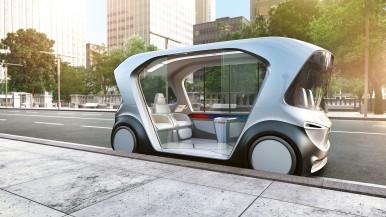
Stuttgart, Germany – A light, airy, minimalistic design, a futuristic outer shell made of display screens and glass, and a spacious interior – that is how architects might describe a novel structure, but in actuality the description also fits a completely new class of vehicle and a new kind of mobility: driverless electric shuttles that glide almost silently through city centers and are seamlessly connected with their environment. These will soon be a common sight on our city streets – whether they are transporting goods or people. Bosch provides components and systems for automating, connecting, and electrifying the shuttles, but shuttle mobility won’t be possible without mobility services. In the future, the company will offer these services too, bundling them into a smart, seamlessly connected ecosystem. That will include booking, sharing, and networking platforms, parking and charging services, and software solutions for managing and maintaining the vehicles, as well as infotainment during the journey. “Bosch is developing a unique package of hardware, software, and mobility services for shuttle mobility of the future,” says Dr. Markus Heyn, member of the board of management of Robert Bosch GmbH. At CES 2019 in Las Vegas, the world’s biggest electronics show, Bosch will be presenting its solutions for this area of transportation with a concept shuttle, and visitors will be able to experience its full range of services. Bosch is developing a unique package of hardware, software, and mobility services for shuttle mobility of the future....Dr. Markus Heyn, member of the board of management of Robert Bosch GmbH Bosch services for users and shuttle operators The emergence of the shuttle segment is a result of rising demand for ridesharing services: in Europe, the U.S., and China alone, about one million such on-demand shuttle buses will be on the roads as early as the year 2020, growing to 2.5 million by 2025 (source: Roland Berger ). Many of these vehicles, available 24/7, will be fully electric, and they will also be completely autonomous by the middle of the next decade at the latest. That’s why Bosch has packed every square centimeter of its concept shuttle with the appropriate technology – from electric powertrains and 360-degree surround sensors to connectivity management and vehicle computers. Yet these components and systems go only part of the way towards shuttle mobility. To make on-demand vehicles suitable for flexible everyday use, they must be connected to mobility services. “In the future, every vehicle on the road will make use of Bosch digital services,” Heyn says. These services allow users to book the vehicles, share rides with other passengers, and pay for the journey. Charging, repairing, and maintaining the vehicles, plus route planning and administrative activities, also call for services that Bosch will offer shuttle fleet operators in a seamlessly connected ecosystem. In the future, every vehicle on the road will make use of Bosch digital services....Dr. Markus Heyn, member of the board of management of Robert Bosch GmbH Booking and sharing Users can easily book a shuttle via smartphone, regardless of whether they’re relaxing on the sofa or sitting at their desk at work. Working behind the scenes, an algorithm identifies the vehicle closest to the requested location and finds other users who wish to travel a similar route. The more passengers a single shuttle can transport, the cheaper the journey for everyone. This approach also reduces the amount of traffic in cities and mitigates the impact on the environment. Bosch is developing the necessary software platforms to make this a reality. When the shuttle pulls up to the requested pick-up point, users again use their smartphones to identify themselves – thanks to Bosch’s Perfectly Keyless digital access service. It recognizes the owner’s smartphone as unmistakably as a digital fingerprint and opens the vehicle only for them. Every passenger always gets the seat that they reserved. Moving forward: electrified and automated Bosch’s electric axle drive makes the shuttles especially efficient yet affordable as they wend their way through the city. And the company’s Convenience Charging service knows just how long the battery charge will last and where to recharge the vehicle. This service means that even today, drivers no longer need to worry about being stranded with a dead battery. It also links vehicle information, such as the current state of battery charge or how much energy the heating and air-conditioning systems are consuming, with environmental data such as congestion and weather forecasts, so as to predict vehicle range with particular accuracy. Furthermore, Convenience Charging finds the ideal charging station and can reserve it in advance. And thanks to a standardized access and payment system, charging is easier than ever. Driverless e-shuttles provide users with transportation that is not only nearly emissions-free, but also very safe. For automation, Bosch develops and makes its own radar, video, and ultrasonic sensors, braking control systems, and power steering, to name a few examples. Smart digital services are indispensable here, too: Bosch predictive road-condition services let automated vehicles know in advance what environmental conditions to expect. They can thus adapt their driving style as needed so as to ensure maximum safety throughout the journey. The Bosch road signature is a map-based localization service with which automated vehicles can accurately determine their position in the lane down to a few centimeters – another crucial prerequisite for the safety of automated shuttles. Comfortable interior Bosch has designed the interior of its concept vehicle to provide space for four passengers, seating them across from one another to maximize legroom and comfort. Infotainment is provided on screens that can be used either by each passenger individually or in groups; for example, a family can watch a movie together as they travel somewhere for the weekend, or colleagues can work on a presentation on their way to the office. Smartphones use the on-board Wi-Fi and can integrate seamlessly with the infotainment system, thanks to Bosch connectivity technology. Its concierge service turns the shuttle into a personal assistant. With all kinds of information at its disposal, the shuttle can provide passengers with recommendations, advance bookings, weather reports, and travel tips at any time. Once the shuttle has arrived at its destination, the passengers can pay for their journey with Bosch’s e-payment service. Maintenance and administrative activities But Bosch services do not end when a rideshare journey is over: the company’s camera-based system for the vehicle interior checks whether anyone has forgotten their phone or handbag. If a passenger does forget something, the shuttle informs them directly via smartphone. The cameras can also detect gum on the seat or an overturned coffee cup – in other words, whether the shuttle needs cleaning – and can make the necessary arrangements immediately. This is so every passenger can start their journey in a clean shuttle. Bosch’s service for over-the-air updates can determine whether the driverless shuttles have the latest software version. The service detects software updates as soon as they are available and executes them in the vehicle securely and reliably. Thanks to sensors installed in the vehicle, predictive diagnostics can monitor the condition of key components and notify the shuttle before a fault actually occurs, so it has enough time to drive itself to a repair shop. This prevents the car from suddenly breaking down, which is a boon to operators. In the future, Bosch will pool updates from the data cloud and predictive diagnostics into a comprehensive connectivity platform . This will give vehicle manufacturers and shuttle service operators a constant overview of the condition of their fleets, so they can ensure that their shuttles are always ready for action. And finally, the Bosch subsidiary ESCRYPT’s security solutions handle vehicle security – whether for keyless access systems, data connectivity with the outside world, or software updates.

04.09.2018

Press release

Internet of Things

SiTime and Bosch Accelerate Innovation in MEMS Timing for 5G and IoT

SANTA CLARA, Calif. – SiTime Corporation - a leading provider of MEMS timing, and Bosch, a global supplier of technology and services, announced a strategic technology partnership to accelerate innovation in micro-electro-mechanical systems (MEMS) timing. SiTime will work with Bosch to develop processes for next-generation MEMS resonator products. These MEMS resonators are the heartbeat of 5G, IoT and automotive electronics, and will enable the higher speeds of 5G, long battery life of IoT devices and increased reliability of driver assistance systems in automotive. Bosch will utilize its expertise in MEMS manufacturing to produce these resonators for SiTime and ensure availability of high-volume capacity.Mobile phones, high-speed trains and stock markets have one thing in common – they must stay on time. And they do thanks to accurate MEMS timing devices found in millions of telecom, enterprise, and consumer electronic products. “Since 2009 SiTime has counted on Bosch to manufacture more than a billion MEMS resonators,” said Rajesh Vashist, CEO of SiTime. “Over the next decade, the 5G, IoT, and automotive markets will drive the growth of the timing industry by creating a 200 billion unit opportunity. Automation, communications, and computing applications in these markets will require more features, higher accuracy and reliability from timing components.” SiTime has revolutionized the $6 billion timing industry with innovative MEMS timing solutions that offer unique benefits. SiTime has shipped over a billion units into all electronics markets, has over 90 percent share of the MEMS timing market, and has partnered with industry leaders, such as Intel, to drive timing innovation in 5G. “Stable, reliable MEMS timing devices are needed for successful operation of new, high-bandwidth 5G, IoT and driver assistance systems,” said Jens Fabrowsky, executive vice president, Automotive Electronics at Robert Bosch GmbH. “Without ultra-precise timing, the benefits and opportunities for next generation systems will not be achieved. With Bosch’s MEMS leadership and manufacturing excellence, and SiTime’s groundbreaking MEMS timing technology, this partnership will make possible unique new features and mission-critical services in 5G, IoT, and automotive applications.” Bosch has been both a pioneer and a global market leader in the MEMS sensor segment since 1995 and has sold more than 9.5 billion MEMS sensors. The company developed the manufacturing process behind MEMS technology nearly 25 years ago. More than every second smartphone worldwide uses a Bosch MEMS sensor. “Bosch’s strong MEMS process capabilities are a foundation on which we can develop our next generation of higher performance MEMS resonators,” said Vashist. “Our partnership with Bosch will help extend our leadership into the coming decades.” More Information • SiTime Fact Sheet • About SiTime • SiTime Website

Bosch and Mojio to Deliver Advanced Connected Car Services 

27.06.2018

Press release

Internet of Things

Bosch and Mojio to Deliver Advanced Connected Car Services 

FARMINGTON HILLS, Michigan – After announcing the debut of its new Connected Mobility Solutions global division at the beginning of 2018, Bosch continues to build its capabilities in the area of mobility services. Today, the global provider of technology and services announced a strategic investment in Mojio , a technology platform and SaaS provider for connected cars, as well as an innovation agreement to co-develop a suite of advanced connected car services.Founded in 2012, Mojio has teams in Vancouver, Palo Alto and Sofia. The organization has developed a range of connected car solutions, including its hardware agnostic cloud platform, mobile apps for consumers and small businesses, and services for big data analytics. Mojio has gathered real-world data from more than 7 billion miles of driving as part of its platform service that delivers connected car experiences to subscribers of major network operators in North America and Europe, such as Deutsche Telekom, T-Mobile US and TELUS. As part of the innovation agreement, Bosch and Mojio will co-develop solutions in focused areas, beginning with vehicle communication and diagnostics as well as crash detection and notification. “The extensive data we’ve derived from our portfolio of diagnostic solutions has given us invaluable insights that can be the basis for solutions that bring great value to consumers and OEMs,” said Mike Mansuetti, president of Bosch in North America. Bosch’s strategic investment was part of the Mojio’s Series B funding round. Terms of Bosch’s strategic investment in Mojio will not be disclosed. “The Mojio platform combined with Bosch’s immense automotive expertise will empower us to accelerate the development and deployment of advanced connected car services to automakers, mobile network operators and consumers around the world,” said Mojio CEO Kenny Hawk.

Bosch Center for Artificial Intelligence establishes research lab in Pittsburgh, ...

27.06.2018

Press release

Internet of Things

Bosch Center for Artificial Intelligence establishes research lab in Pittsburgh, ...

PITTSBURGH, Pa. – Bosch in North America today announced the launch of the Bosch Center for Artificial Intelligence (BCAI) Research Lab in Pittsburgh, which will be the BCAI’s fourth location. The lab will conduct advanced research in artificial intelligence (AI) technologies.The new location is the next step in BCAI’s mission to partner with leading institutions around the world to jointly accelerate AI research. Bosch plans to build a team of up to 20 AI experts at Bosch’s Pittsburgh Technology Center by the end of 2019. In addition, Bosch will provide more than $8 million to sponsor research at Carnegie Mellon University (CMU) through 2023. This collaboration represents another important milestone in the longstanding and mutually beneficial partnership between Bosch and the world-renowned university. Having established a presence in Pittsburgh in 1999, Bosch has played an important role in fostering the development of Pittsburgh’s flourishing tech community. The launch of the BCAI Research Lab in Pittsburgh is highlighted by CMU’s Professor Zico Kolter joining Bosch as chief scientist in AI. Kolter, an assistant professor at CMU’s School of Computer Science (SCS), will direct the multi-million dollar research projects at CMU, in addition to contributing to Bosch’s global R&D efforts as a principal member of the BCAI. Kolter, a leading expert in AI research, develops methods that make machine learning more robust, interpretable and modular. He also has worked on applications for smart energy and sustainability solutions. Some of his recent work looks specifically at machine learning methods that are provably resistant to so-called “adversarial attacks” and methods for incorporating optimization procedures as modules within the loop of more complex deep learning systems. Significantly, while working for Bosch, he will continue to teach and perform research as a faculty member at SCS, which U.S. News and World Report this spring rated the No. 1 U.S. graduate school for artificial intelligence, as well as a top-ranked school for computer science overall. “We’re excited to establish BCAI Research in Pittsburgh with Zico Kolter as part of the long-term collaboration between CMU and Bosch,” said Christoph Peylo, global head of BCAI. “CMU, with its tradition as one of the leading institutions in AI research, is an important pillar in BCAI’s mission to develop safe, robust and secure AI for Bosch products and services.” With a widening gap between industry need and available talent, Bosch is partnering with leading academic organizations such as CMU to develop future professionals’ skills in the dynamic field of AI. The collaboration will also create new opportunities to further AI technology that contributes to advances in Bosch’s four business sectors – Mobility Solutions, Consumer Goods, Industrial Technology, and Energy and Building Technology. Under this partnership, Bosch will expand its AI capabilities while simultaneously training the next generation of AI experts. “We at Carnegie Mellon are excited to be working with Bosch to find new ways to use artificial intelligence to improve lives and to develop the next generation of AI scientists,” said Andrew Moore, dean of CMU’s School of Computer Science. “Bosch will benefit greatly from Zico Kolter’s insights, while Zico continues his essential research and teaching here at Carnegie Mellon.” CMU has been a leader in AI since the field emerged 60 years ago, pioneering advances in self-driving cars, facial recognition and natural language processing. Last year, SCS expanded its efforts through the CMU AI initiative and this year launched the first U.S. undergraduate degree in AI . BCAI was founded in early 2017 to deploy cutting-edge AI technologies across Bosch products and services. Using data from Bosch domains, BCAI creates differentiating technology by solving challenges in high-potential lead applications. It scales research results and generates value through deployment of machine learning in products, processes, and services in areas such as manufacturing, engineering, supply chain management and intelligent services. BCAI Pittsburgh is the most recent addition to BCAI’s locations around the globe – Renningen, Germany; Sunnyvale, California; and Bangalore, India. Since its inception, BCAI has sought out innovative partnerships with international universities as well as partners from politics, business and science to solve today's most challenging AI problems. BCAI is actively looking for opportunities to expand its research network further and collaborate with industry thought leaders. During the Robotics: Science and Systems (RSS) conference hosted at CMU June 26-30, Bosch and its partners will celebrate the launch of the BCAI research lab, as well as the partnership with CMU, with robotics researchers from around the globe. This invitation-only event will be held June 27 at 8 p.m. at the prestigious Phipps Conservatory botanical gardens near CMU’s campus in Pittsburgh, following the Bosch-sponsored RSS Pittsburgh Robotics Showcase. The Robotics Showcase will be held in the Atrium of CMU’s Newell-Simon Hall and is open to all conference attendees.

08.01.2018

Press release

Internet of Things

CES 2018: Bosch sees future in smart-city business

Las Vegas, NV – Urban populations are growing: according to the United Nations , roughly two-thirds of the global population will live in conurbations by 2050. In 2014, this figure was just one-half. Urbanization is increasing, and with it the challenges cities have to solve. Even today, therefore, there is a considerable need for smart solutions. Speaking at CES in Las Vegas, the Bosch management board member Stefan Hartung said: “We need a new conception of the city. One key factor here is technologies that make cities smart and worth living in. In the long run, cities without intelligence will not survive, but succumb to gridlock.”Bosch is working to equip cities and neighborhoods for the future, offering smart mobility, better air quality, more convenience, greater security, and many new services. In short, the aim is significantly better quality of life in cities and neighborhoods. “When it comes to smart cities, few other companies can match Bosch’s comprehensive portfolio, cross-domain knowledge, and outstanding expertise in sensors, software, and services – and all this from a single source,” Hartung said. From January 9 to 12, the supplier of technology and services will be presenting many new solutions that make cities smart at CES 2018, the world’s largest electronics show. These range from a new compact unit that measures and analyzes air quality in real time, to a system that digitally monitors river water levels and gives early warning of flood risks, to a completely automatic parking space service that makes drivers’ lives easier. For more business: the smart-city market is booming Some of the world’s major metropolises are already synonymous with the term “smart,” among them Barcelona, Seoul, and London. Across the globe, cities large and small are investing in smart-city technologies. According to a study on behalf of Bosch, the smart-city market will grow 19 percent each year between now and 2020, reaching a volume of 800 billion dollars (680 billion euros). Bosch believes this is a great business opportunity: “For a long time, the smart city was a vision. We’re helping make it reality. Bosch is in an excellent position to make the connected city a technological and commercial success,” Hartung said. The company is currently involved in 14 extensive smart-city projects in places such as San Francisco, Singapore, Tianjin, Berlin, and Stuttgart. Others are planned to follow. Within the past two years, the company has doubled its sales from cross-domain projects to nearly one billion euros, and this figure is set to rise further. In the Bay Area city of San Leandro, for example, the company has equipped roughly 5,000 streetlights with LEDs and supplied a system for remote management of the city’s street lighting. In this way, the lights are only switched on when they are actually needed. With this solution, San Leandro will be able to save roughly 8 million dollars over the next 15 years. At the Bosch CES press conference, Mike Mansuetti, the president of Bosch North America, said: “Whether cities are big or small, our smart solutions will help them save energy, and money too.” In the case of San Leandro and its 100,000 inhabitants, sensors can be used to measure and analyze air quality, and cameras can automatically re-route traffic in the event of congestion. For more connectivity: IoT and artificial intelligence The internet of things (IoT) has laid one of the main foundations for the connected city. The IoT is finding its way into all walks of life: a Gartner study predicts that some 230 million homes worldwide – roughly 15 percent of all homes – will be intelligently connected by 2020. Here as well, the potential is huge, with market volume estimated to reach 250 billion dollars annually by 2020. By the same year, more than 20 billion devices worldwide will be connected with each other – smoke detectors, burglar alarms, electricity meters, home appliances, and many more. “Bosch recognized this potential early on,” Hartung said. “Even now, more than half our electronic product classes are web-enabled – and the aim is for this to be 100 percent by 2020. Not only that: for each of our products, we want to offer accompanying services.” Another driver of the rapid development of smart cities is artificial intelligence (AI). Bosch intends to further expand its research in this field. Last year, the company opened a research center for artificial intelligence, which now employs some 100 associates in Renningen, Germany, Palo Alto, CA, and Bengaluru, India. By 2021, Bosch will invest some 300 million euros in expanding the center. The company anticipates that, ten years from now, scarcely any product will be conceivable without AI. For better air quality: Climo creates basis for targeted action Air quality is one of the greatest challenges cities face. Thanks to smart technologies, cities can take faster and more targeted action to improve it. However, this depends on accurate measurements. At CES 2018, Bosch is presenting a new solution that it developed together with Intel – the Climo microclimate monitoring system. Climo measures and analyzes 12 parameters that are important for air quality, including carbon dioxide, nitrogen oxide, temperature, and relative humidity. The appliance is one-hundredth the size of conventional systems – and one-tenth the cost. Climo won a CES Honoree Innovation Award in the “smart cities” category. For early warning: digital monitoring of rivers In many regions, climate change is resulting in unpredictable weather. Researchers expect that heavier rainfall will result in more frequent flash flooding. Up to now, mechanical devices have been used to measure river water levels. Hours may pass before these measurements become available for others. However, the flood monitoring system changes all this. In real time, it monitors the water level in rivers and other bodies of water close to cities, and warns of an impending flood. In a pilot project, Bosch is testing the new system on the Neckar river near Ludwigsburg, Germany. Ultrasonic sensor probes and cameras track changes in water level, speed, and throughput. The data is sent to the Bosch IoT Cloud for processing. Should critical thresholds be exceeded, the affected municipalities, residents, and business owners are alerted well in advance by text message. This gives them enough time to take precautions against flooding and flood-related damage. Among those interested in the solution are a number of Indian and South American municipalities that frequently have to combat flooding. For more time: connected parking Urban traffic will increase by roughly one-third by 2050. Bosch is working to make tomorrow’s mobility free of accidents, stress, and emissions. At CES 2018, the company is presenting many solutions that lead toward this goal. Urban traffic plays a role in roughly half the smart-city projects Bosch is involved in. Parking is a particular focal point. U.S. drivers now spend more than 40 hours a year stuck in congestion, wasting some 160 billion dollars in the process. Of this time, roughly one-third is wasted on the search for parking alone. This is where Bosch can help: with its community-based parking, the company simplifies the search for a suitable space. As they drive by, cars automatically recognize and measure the size of the gaps between parked cars, transmitting the data in real time to a digital map. In this way, drivers can have themselves guided directly to free parking spaces. Bosch is already testing this service in German cities, including Stuttgart. This year, as many as 20 U.S. cities will follow, including Los Angeles, Miami, and Boston. In early 2018, moreover, Bosch and Daimler will be launching a new automated valet parking service. Cars in the Mercedes-Benz Museum parking garage in Stuttgart will look for a parking space and park themselves, without a driver. This cuts out stress, and makes more efficient use of parking lots – the same amount of space can accommodate up to 20 percent more vehicles. One factor making fully automated parking a reality is smart parking-garage infrastructure, which connects with the vehicle’s on-board software. Bosch recently won a Frost & Sullivan’s 2017 Technology Innovation Award for this driverless parking solution. For energy and cost savings: Bosch DC microgrids According to the International Panel on Climate Change (IPCC), cities account for roughly 75 percent of total global energy consumption. Forty percent of this is attributable to buildings alone. And the BP Energy Outlook 2035 estimates that global energy consumption will rise 30 percent by 2035. Bosch has many smart energy management solutions that can reduce power consumption. One of these is the Bosch DC (direct current) microgrid, which can be used to supply power to large buildings or building complexes. Since microgrids are generally fed by renewable sources, they are especially eco-friendly. DC microgrids consume up to 10 percent less energy than conventional power plants. Another major advantage is their self-sufficiency, which makes them a reliable source of power when a weather- or security-related outage affects the broader grid. Bosch at CES 2018: PRESS CONFERENCE : In Ballrooms B, C, and D, Mandalay Bay Hotel, Las Vegas South Convention Center, Level 2 , from 8:00 to 8:45 a.m. local time on Monday, Jan 8 . BOOTH: Tuesday to Friday, Jan 9–12 , in the Central Hall, booth #14028 FOLLOW the Bosch CES 2018 highlights on Twitter: #BoschCES PANELS WITH BOSCH EXPERTS: Tuesday, January 9, 1:30 – 3:15 p.m. (local time) “Connect2Car: Next-Gen Automobility” session with Kay Stepper, Vice President of Bosch in North America, head of driver assistance and automated driving, Las Vegas, Convention Center, North Hall, N256 Wednesday, Jan 10, 1:45–2:30 p.m. (local time) “Connected Vehicles in Connected Ecosystems” session with Mike Mansuetti, President Bosch North America, Smart Cities Conference, Westgate. Thursday, Jan 11, 11:30 a.m to 12:30 p.m. (local time) “The Future of Robots at Work and Home” session with Phil Roan, Senior Engineer Robotics, BSH Hausgeräte GmbH, Las Vegas Convention Center, North Hall, N258