Search and find:
Photos, videos, releases, events to support your reporting about the Bosch Group

AI in the car: Bosch presents cockpit innovations at CES 2026 in Las Vegas

18.12.2025

Press release

Artificial Intelligence

AI in the car: Bosch presents cockpit innovations at CES 2026 in Las Vegas

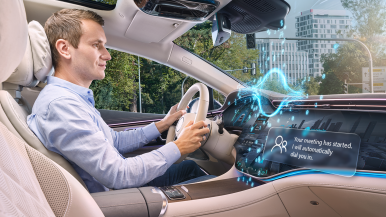
Stuttgart – The automotive industry is undergoing a fundamental transformation, with software – and especially artificial intelligence (AI) – becoming a core component of the future driving and in-cabin experience. Bosch is a pioneer in this field and is taking a decisive step forward in bringing AI into the vehicle, turning the cockpit into an intelligent and proactive companion. At one of the world’s leading electronics trade fairs, CES® 2026 in Las Vegas, USA, Bosch will unveil its new AI extension platform, an AI-enabled high performance computing unit for realizing an AI-powered cockpit. “The new AI extension platform enables existing cockpit systems to be quickly and easily upgraded with advanced AI functions. This makes the driving experience more comfortable, intuitive, and safer for all vehicle occupants,” says Markus Heyn, member of the board of management of Robert Bosch GmbH and chairman of Bosch Mobility. With Bosch’s new AI-powered cockpit, the vehicle is transforming from a simple means of transport into an intelligent, self-learning partner that understands the driver’s routines, preferences, and context. Features of Bosch’s AI-powered cockpit include an AI voice assistant that anticipates needs, comprehensive scene understanding of the vehicle interior, precise navigation, and extensive entertainment options. For instance, a simple statement like, “I’m feeling cold,” can trigger multiple coordinated actions, such as activating the seat heating while simultaneously adjusting the cabin temperature. Two billion euros in sales by the end of the decade “Bosch’s new AI-powered cockpit enables both drivers and car manufacturers to fully leverage the capabilities of modern automotive software. Thanks to the ‘AI extension platform,’ new functions can be implemented in the vehicle much faster in the future,” says Heyn. Bosch sees a significant and growing market for such AI cockpits. Various market research institutes, including Grand View Research* and MarketsandMarkets*, predict that the market for AI-enabled in-vehicle infotainment (IVI) solutions will reach a volume of approximately 17 billion euros by 2030. Bosch aims to participate in this market. The company expects sales of over 2 billion euros with such IVI solutions by the end of the decade and strives for a leading position among the top three providers. Bringing advanced AI to today’s vehicles A key application of this is turning unproductive downtime in the car into productive work time. Together with Microsoft, Bosch is transforming the car into a mobile office without compromising on driver safety. By integrating Microsoft Foundry and specialized features for the cockpit, the solution provides seamless access to the Microsoft 365 productivity suite. Microsoft 365 applications can be intelligently connected with other vehicle domains to prioritize safety and minimize distraction. For example, a driver can use an intuitive voice command to join a Microsoft Teams call, which in turn prompts the system to proactively activate adaptive cruise control. This seamless, cross-domain interaction helps to create a journey that is both productive and safe – a significant value for commuters and frequent drivers, for instance. Bosch’s new “AI extension platform” allows today's vehicles to be quickly and easily retrofitted without changes to existing hardware or system architecture. At its core, the platform leverages the powerful “NVIDIA DRIVE AGX Orin system-on-chip” (SoC), which forms the foundation for complex AI applications in the cockpit. It builds on the industry-standard “NVIDIA CUDA” platform, allowing automakers to easily integrate their own AI models and agents. Offering 150 to 200 tera operations per second (TOPS) of additional compute power, the compact unit connects via simple power and Ethernet interfaces and is supported by flexible active air or liquid cooling options. To accelerate the development and deployment of complex AI features, Bosch also utilizes Nvidia’s software suites, including the “NVIDIA NeMo framework” for managing the end-to-end AI lifecycle. This enables seamless integration of advanced in-cabin applications such as real-time sensor processing and vision-language models (VLMs). In addition, core reasoning and speech capabilities powered by “NVIDIA Nemotron models” deliver contextual understanding, multi-step reasoning, and natural, conversational user interactions. Furthermore, using Microsoft Foundry, Bosch designs and manages the in-vehicle AI, ensuring a scalable, always up-to-date AI assistant experience in the cockpit. Bosch will demonstrate the AI-powered cockpit and the AI extension platform for the first time at CES® 2026 in Las Vegas. * Grand View Research and MarketsandMarkets

AI-enabled sensors deliver life-changing use cases

06.01.2025

Press release

Artificial Intelligence

AI-enabled sensors deliver life-changing use cases

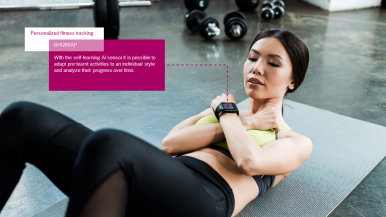
Las Vegas, NV - Sensor technology is transforming our lives: tracking our fitness, making our gadgets easy to use, and monitoring air quality, to mention just a few examples. To provide all these sophisticated functions to consumers, Bosch Sensortec’s sensors are evolving to be smarter – by integrating MEMS technology with embedded microcontrollers, software, and AI runs inside the sensor itself. At CES®, Bosch Sensortec is showcasing its latest AI-enabled sensors, and highlighting how software adds value not only to the sensor but to the entire system. Stefan Finkbeiner, CEO at Bosch Sensortec, said: “Bosch’s innovative cutting-edge sensor solutions are making an impact in diverse areas such as consumer health, smart homes and smart cities. AI and intelligent software are the key enabling technologies that make this possible.” Vision 2030: Bosch aims for more than 10 billion intelligent sensors According to market research and strategy consulting company Yole Group, Bosch is the market leader for MEMS for the fourth year in a row. In 2024 alone, Bosch Sensortec surpassed the milestone of delivering over 1 billion MEMS sensors featuring integrated microcontrollers and software. From 2027 onwards, 90 % of the products will include these integrated features. By 2030, the company aims to achieve a remarkable total of more than 10 billion MEMS sensors sold with this advanced integration. AI on the edge With AI running on the edge (meaning directly in the sensor), there’s no need for constant cloud connectivity. This ensures data remains private, dramatically reduces latency, and cuts power consumption, all while delivering accurate real-time feedback to users. State-of-the-art software solutions add value not only to the sensor but to the entire system, enabling new applications and forming the basis for AI inside the sensor itself. Always-on and ready to go Always-on technology is essential in consumer electronics, enabling continuous access to features without the need to activate the device and wake up the main processor. This significantly extends battery life, and creates a more intuitive and effortless experience for users, especially in smartphones and hearables. This is achieved with intelligent sensors combined with smart software, enabling quick access to voice assistants, health monitoring, and more, empowered by MEMS sensors with integrated microcontrollers. Examples of always-on use cases include voice activity detection and keyword triggering to activate voice assistants in hearables, fall detection in smartwatches for faster emergency assistance, and automatic orientation sensing in smartphones to adjust modes and enter sleep mode when inactive. Smart Connected Sensors (SCS): the personal AI feedback coach Can you imagine having unlimited access to a professional fitness trainer, with feedback at any time? This is the future of exercising – made possible by the Smart Connected Sensors platform from Bosch Sensortec. The platform gives users qualitative feedback on the movement execution, as well as measuring movements and repetitions. Specifically designed for full-body motion tracking, the SCS platform provides a fully integrated hardware and software solution (based on the BHI380, a programmable IMU-based sensor system with AI) that dramatically cuts development costs and time to market. A sound move for software-enabled voice control Wireless headsets have transformed how we listen to music, podcasts and audiobooks, providing free, unhindered movement – as well as new features enabled by sensors, such as activity recognition and indoor navigation. But shifting to voice control can cause problems, when the system is triggered unintentionally because it reacts to ambient noise. To fix this issue, Bosch Sensortec has come up with a software-based innovation: a new type of acceleration sensor, the BMA550, detects sound through bone vibrations. Intelligent algorithms then ensure voice control activates only when the wearer of the headset is actually speaking. Take a breath: air quality sensing Poor indoor air quality is a problem: the concentration of PM2.5 particulates from domestic cooking can reach levels 100 times higher than acceptable limits. Localized, actionable data from Bosch's particulate matter sensor for PM2.5 and PM1 enables effective responses to poor air quality. A software update coming soon will activate PM10 measurement in addition. Almost the entire global population (99 %) breathes air that exceeds WHO air quality limits, and threatens their health. Bosch’s BMV080 sensor uses software and intelligent algorithms, in a tiny, fanless design which is more than 450 times smaller than any comparable device on the market. Open platform and strong collaboration Bosch can’t do all this alone and offers a framework that supports customers in creating movement classification algorithms specific for their own application. These models can then run on a smart motion sensor, such as the BHI360. For example, Bosch Sensortec and Doublepoint have partnered to develop a powerful microgesture control solution for smartwatches, using the BHI360. This enables always-available, reliable control, such as allowing users to adjust light brightness with an intuitive pinch gesture. Doublepoint's advanced algorithms are seamlessly integrated into Bosch’s compact, low-power IMUs via a new software tool. Compared to camera-based solutions, this IMU-based approach enables obstruction-free gesture detection, offering greater reliability and efficiency. “This collaboration exemplifies Bosch Sensortec's commitment to innovation in the IoT and wearable markets, empowering manufacturers to bring advanced, user-friendly products to market more quickly,” said Lucas Ginzinger, Vice President Marketing and Business Strategy at Bosch Sensortec.

Bosch uses software and AI to make its products smarter and make people’s lives safer

06.01.2025

Press release

Artificial Intelligence

Bosch uses software and AI to make its products smarter and make people’s lives safer

Las Vegas, NV, USA – Software and artificial intelligence (AI) are already shaping our present. For the future, however, they will be crucial. Bosch was quick to recognize the opportunities offered by intelligent software and services, and focused on them at an early stage: AI now features in every one of the technology company’s products – or was involved in their production. “Intelligent software and digital services have become cornerstones of our core business,” says Tanja Rueckert, member of the board of management of Robert Bosch GmbH, at the CES 2025 electronics trade fair in Las Vegas, Nevada. And the AI and software business is continuing to gain speed: Bosch expects to achieve sales of software and services of over 6 billion euros by the beginning of the next decade. The Mobility business sector will generate around two-thirds of this sales revenue. AI is playing a particularly significant role in this development. “With over 1,500 patents in just five years, Bosch leads the way in Germany and Europe,” Rueckert says. Almost 5,000 Bosch AI specialists are now working on intelligent solutions. Bosch is offering tailored courses to consistently drive forward the training of its entire workforce in the field of AI. To date, the company’s own AI Academy has trained more than 65,000 associates. This also dovetails with the results of the latest Bosch Tech Compass, an annual survey of people’s expectations of new technologies. According to the survey, four out of five of those surveyed worldwide are planning AI-related further training this year. And two-thirds believe that schools should teach AI as an independent subject. The message is clear: AI skills are fundamental to the future of the working environment. At CES 2025 in Las Vegas, Bosch is presenting products and solutions that are already making people’s lives safer, more efficient, and more convenient thanks to software and AI. Or to put it another way: with software and AI, Bosch is improving the everyday lives of people from all walks of life. Mobility, the home, health – Bosch software in all life situations Take roads, for example: Bosch has long seen itself as a company providing software for mobility. It recently programmed a new function for vehicles that allows cars to brake smoothly and without jerking. This is a boon for drivers in slow-moving traffic, as well as for passengers with motion sickness. “No one understands the requirements and needs of the automotive industry as comprehensively as Bosch,” says Paul Thomas, president of Bosch in North America, at CES 2025. “With our mobility-specific software expertise, we’re the ideal partner for the world’s major tech players.” After all, software will change not only how we use and experience cars, but how we develop them as well. In the age of software-defined mobility, Bosch programmers approach cars from a software perspective. They are developing technologies and solutions for new centralized architectures that effortlessly manage all interactions between automotive electronics and the cloud. This will be essential in the future if cars are to be able to download new functions for areas such as infotainment or driver assistance easily and conveniently over the air. At Bosch, AI has been playing an important role in assisted and automated driving for years now. For example, the MPC3 multifunctional camera has been in volume production since 2019 and is setting new standards. This camera is able to reliably recognize objects and people as well as to distinguish between the road and the edge of the road, thereby keeping the car safely in its lane. The camera combines conventional image-processing algorithms with AI methods for a complete understanding of what it is recording. “Our AI-based multifunction camera not only makes driving more relaxed, but also makes the roads safer for all users,” Thomas says. To achieve this, Bosch is combining its profound automotive engineering knowledge and its AI expertise with a vast pool of in-house sensor data. “We’re using AI to increase the efficiency of our assistance systems,” Thomas says. What’s more, Bosch is investigating how generative AI can be used to further improve automated driving functions. The expectation is that it will enable vehicles to assess situations and react accordingly, and in this way keep road users even safer. In the future, generative AI will train automated driving functions more quickly, thus reducing the number of test miles required to validate them. And by adding conditions such as snow to the road, generative AI will quickly be in a position to alter the context of a driving sequence recorded by cameras or radar sensors. In other words, systems can be trained for snow without having to wait until snow actually falls – the AI will do it itself. AI to combat worries about range and new theft protection for eBikes By merging the physical and digital worlds, software also enhances the e-bike experience. Bosch is debuting its new Battery Lock theft protection system in Las Vegas. This provides additional protection for the e-bike battery: locking it digitally by using the rider’s smartphone as a key. AI also helps allay worries about range: with the AI-based Range Control feature, e-bike riders who are about to set out on a journey can determine the battery charge level with which they would like to arrive at their destination. And in the kitchen as well, people also have their own personal preferences. The intelligent Bosch Series 8 oven will also be on show at CES 2025. It is equipped with sensors, cameras, and AI. With their help, the oven can recognize around 80 dishes and automatically set the optimum cooking method and temperature. And for many dishes, even the degree of browning can be individually selected. Intelligent Bosch crib – a helping hand for child carers Sensors, cameras, and AI can also give parents a helping hand when caring for newborn babies. The new, intelligent Bosch Revol crib can monitor a baby’s vital signs such as heart rate and respiratory rate. The software also signals in good time if a soft toy or blanket is covering the child’s airway or if crying is detected. And should the baby have trouble falling asleep, the crib can automatically engage a gentle rocking function. Users can decide for themselves whether the data the crib records is ultimately stored in encrypted form on Bosch servers or remains offline within their own four walls. The CTA, organizer of CES 2025, has designated the intelligent Bosch crib a CES Innovation Award Honoree. Smart Bosch sensors have become an integral part of our daily lives Another example of how the rapid acceleration of AI-based innovations is changing the way people use new technologies is smart sensors. These tiny components have a big impact. Microelectromechanical sensors (MEMS), packed with Bosch software and AI, can be found in all areas of our daily lives: whether smartphones, e-bikes, fitness trackers, or cars. What do they do? They can tilt displays from vertical to horizontal, count steps, and control airbags. Modern MEMS sensors even have an integrated microprocessor and run with independent software. Without these sensors, everyday functions that we have all become accustomed to wouldn’t be possible at all – functions such as “waking up” a smartphone display or activating a voice assistant with wireless headphones. Smart sensors record data such as acceleration, rotation, and temperature and use Bosch software to process it directly in the integrated microprocessor. This means their entire functionality is contained in a compact housing – Bosch produces the world’s smallest sensor, which measures just 0.8 x 1.2 millimeters, making it barely larger than a grain of sand. Another advantage is that sensors with an integrated microprocessor draw noticeably less power from the battery of a smartphone or smartwatch. For the “wake-up” function, for example, the sensor system needs only its own microprocessor. Since it can do without the device’s central computer, this prolongs the battery’s runtime. Bosch grows with billions of units in the sensor market AI takes smart MEMS sensors to the next level: Bosch offers sensors with integrated self-learning AI software, for devices such as fitness trackers. The AI recognizes a variety of different movements and learns every repetitive fitness activity. If required, it can also provide users with qualitative feedback about how well they have done their exercises. The AI runs on the sensor itself; no connection to a cloud or smart device is needed. All data remains private and activities can be continuously recorded and analyzed without an internet connection. According to the market research institute Yole Group*, this is now the fourth year in a row that Bosch is the market leader in the MEMS sector. More than one in every two new smartphones worldwide is equipped with Bosch sensors. And the potential is still huge: according to the Yole study, the annual global demand for MEMS in the automotive and consumer electronics sectors alone is expected to grow from today’s 33 billion to over 40 billion units by 2029. Bosch wants to share in this growth and is planning to produce ten billion smart MEMS sensors with integrated microprocessors and independent software for consumer electronics by the end of 2030. Billions invested in the strategically important U.S. market CES 2025 in Las Vegas is one of the world’s biggest electronics trade fairs in a strategic growth market for Bosch. The company is making targeted investments in the U.S. to further expand its global presence. Bosch recently announced plans to acquire Johnson Controls’ global heating, ventilation, and air conditioning solutions business for residential and small commercial buildings – continuing its growth trajectory in the country. At a total of around 8 billion dollars (7.4 billion euros), this is the largest transaction in the company’s history. In Roseville, California, Bosch is currently equipping a chip factory with modern manufacturing facilities to produce silicon carbide chips, thereby expanding its manufacturing capacity in an important sales market. These special semiconductors are a key component for electrified mobility. Over the next few years, Bosch wants to invest more than 1.9 billion dollars (some 1.8 billion euros) in the Roseville location and start delivering silicon carbide chips from California in 2026. “The enormous investments in the heating and chip businesses underline the strategic importance of the U.S. market for Bosch,” Thomas says. *Source: Status of the MEMS Industry 2024, Yole Intelligence

North American Bosch Research team strengthened by leadership appointments

12.04.2024

Press release

Artificial Intelligence

North American Bosch Research team strengthened by leadership appointments

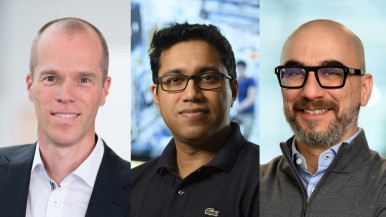
Sunnyvale, Calif., and Pittsburgh, Penn . – Three new North American leadership promotions within Bosch Research will help strengthen Bosch’s critical research in artificial intelligence (AI), semiconductors, hydrogen technologies, electrification and health care diagnostics. Thomas Kropf, president, Bosch Research and Advance Engineering, today announced recent leadership changes in the region. Stefan Knoll has been named vice president and head of Bosch Research in North America, Sam (Samarjit) Das was promoted to director of Bosch Research & Technology Center, and Alessandro Oltramari is now president of Carnegie Bosch Institute (CBI). “This talented North American leadership team will ensure that Bosch remains a driving force in AI research and the transformation towards electrification, along with our important collaboration with Carnegie Mellon University," said Kropf. Stefan Knoll – vice president and head, Bosch Research in North America As the vice president and head of Bosch Research in North America, Stefan Knoll now leads Bosch’s team of world-class researchers in Sunnyvale, Calif., Pittsburgh, Penn., and Watertown, Mass. Knoll has spent his entire career at Bosch. He began in 1999 as a development engineer in brake systems in Stuttgart, Germany. He moved to Detroit in 2000 and continued in engineering, first in brake systems, and then electronic stability control. With this U.S. experience, he returned to Stuttgart in 2005 and worked in product management in driver assistance systems, and then user experience projects. In 2019 he moved back to the U.S., this time to Silicon Valley, as a vice president working with mobility customers. Knoll holds a master’s degree in mechanical engineering and product design from the University of Stuttgart. “I find the immediate and long-term opportunities of AI as an enabling technology to be most fascinating, and I’m excited to advance ways for AI to positively contribute to our lives and our business,” said Knoll. Bosch Research works with the business units to develop the next generation of Bosch products – and the one after that. At the same time, they identify key technologies of the future and make them usable for Bosch. The Bosch researchers also analyze geopolitical, social, economic, and technological megatrends that will shape the world of tomorrow – thus safeguarding Bosch's technological future viability. The Research and Technology Center North America was established at three locations close to world-class universities and entrepreneurial ecosystems. It is headquartered in Sunnyvale, Calif., with additional offices in Pittsburgh, Penn. and Watertown, Mass. At these locations, Bosch Research hosts over 100 researchers and various technical labs that employ state-of-the-art equipment, such as the Robotics Lab, Hydrogen Research Lab, Human Machine Interaction Research Lab, Biosensors lab, Microsensor Systems Lab and Integrated Circuits Lab. Samarjit Das – director and head, Bosch Research & Technology Center Pittsburgh In his new role as the director of Bosch Research and Technology Center in Pittsburgh, Das leads a team focusing on cutting-edge AI research, as well as developing next generation Internet of Things (IoT) and security privacy technologies. He will also continue his role as the chief scientist of Signal Processing and Machine Learning research at Bosch Research. Das was the principal researcher and project lead for Bosch’s SoundSee space mission in partnership with Astrobotic Technology Inc. to perform autonomous acoustic monitoring aboard the International Space Station (ISS). SoundSee was launched to the ISS in 2019 as experimental sensor technology as part of a research collaboration with NASA. The same technology was utilized in 2022 as part of a research collaboration with Highmark Health to investigate audio AI applications towards detecting pediatric pulmonary conditions, such as childhood asthma. In partnership with Bosch Building Technologies, Das also led commercialization of SoundSee audio AI technology that won CES 2024 innovation award in AI category and was also named honoree in human security category. He started at Bosch’s Research and Technology Center in Pittsburgh as a Research Scientist in 2013. “I am so proud of our world-class team of researchers pursuing transformative innovation,” said Das. “We, as a team, look forward to shaping and building an exciting future ahead for Bosch in AI, IoT and security technologies.” Alessandro Oltramari – president, Carnegie Bosch Institute Alessandro Oltramari is president of the CBI and a senior research scientist at Bosch Research Technology Center in Pittsburgh. Oltramari joined Bosch Research in 2016, after working as a research associate at Carnegie Mellon University (CMU), funded by public agencies like DARPA, NSF, ARL. At Bosch Research, he focuses on neuro-symbolic reasoning for decision intelligence. His primary interest is to investigate how knowledge systems can be integrated with learning algorithms, and help humans and machines make sense of the physical and digital worlds. He holds a Ph.D. in cognitive science from the University of Trento (Italy). “As the new president of CBI, I look forward to continuing to grow Bosch’s strong collaboration with CMU at the important intersection of industry and academia with a focus on cutting-edge research,” said Oltramari. “Andrew Carnegie and Robert Bosch are formidable role models of the types of ingenuity, entrepreneurship, philanthropy and foresight that we should aspire to in our daily work.” A world-class academic and industry collaboration for more than 30 years, CBI is a unique alliance between CMU and Bosch. Activities at CMU include hosting the prestigious Carnegie Bosch Fellowship, supporting breakthrough research by providing funding for faculty, staff, and students, and providing ongoing support for Carnegie Bosch Chaired Professorships.

For safer roads: Bosch teams up with Microsoft to explore new frontiers with gen ...

28.02.2024

Press release

Artificial Intelligence

For safer roads: Bosch teams up with Microsoft to explore new frontiers with gen ...

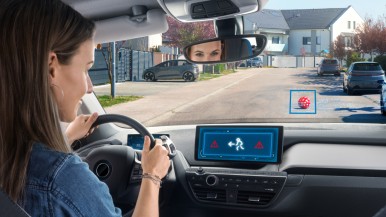
Stuttgart, Germany – It’s a scenario that no driver ever wants to see: a ball rolling out into the road. The chances are it will be followed immediately by a child in hot pursuit, oblivious to any traffic. But while human drivers can assess this situation using their contextual knowledge, today’s assisted and automated driving systems still have to learn how to do it. Bosch is pursuing the use of generative AI in terms to further improve automated driving functions. As part of this, Bosch and Microsoft are exploring opportunities to collaborate and leverage the power of generative AI. “Bosch is working on bringing a new dimension of AI applications into the vehicle,” said Dr. Stefan Hartung, chairman of the Bosch board of management, at this year’s Bosch Connected World (BCW) AIoT industry conference in Berlin. The expectation is that generative AI will enable vehicles to assess situations and react accordingly, and in this way keep road users even safer. Greater safety on the roads is also the wish of 60 percent of respondents to this year’s Bosch Tech Compass, a worldwide representative Bosch survey on the subjects of technology and AI. Generative AI to make road traffic safer The two companies anticipate that a collaboration would take the performance of automated driving functions to the next level. They would like to see generative AI help enhance convenience in the vehicle and to provide greater safety for all road users. To achieve this, Bosch's comprehensive understanding of vehicles and automotive-specific AI expertise will be invaluable, as well as their access to vehicle sensor data to feed the generative AI. “In our unwavering commitment to safer roads, Microsoft is eager to explore collaboration opportunities with Bosch to pioneer the realm of generative AI,” said Uli Homann, Microsoft CVP and Distinguished Architect. Even today, when it comes to training systems for automated driving, AI quickly comes up against its limits. Today’s driver assistance systems can detect people, animals, objects, and vehicles, but in the near future generative AI could help determine whether a situation could potentially lead to an accident. Generative AI utilizes vast amounts of data to train systems for automated driving, enabling them to draw improved conclusions from this data. For example, it could deduce whether an object on the road ahead is a plastic bag or a damaged vehicle part. This information can be used either to communicate directly with the driver – such as by displaying a warning – or to initiate appropriate driving maneuvers, such as braking while switching on the hazard warning lights. Bosch and Microsoft have already partnered to develop a universal software platform for seamlessly connecting cars and the cloud, and are looking forward to work together to identify new opportunities to bring cutting-edge AI technology to their customers and the autonomous vehicle industry. Generative AI as a boost to innovation “Generative AI is a boost to innovation. It can transform industry in much the same way as the invention of the computer,” says Tanja Rueckert, member of the Bosch board of management and chief digital officer. The new 2024 Bosch Tech Compass shows this as well: 64 percent of respondents believe that AI is the technology with the greatest importance for the future. In comparison, only 41 percent of respondents were of the same opinion just one year ago. From manufacturing to everyday office work, generative AI is already being used in many areas at Bosch. In addition to Microsoft, the company is working with several partners, including AWS, Google, and Aleph Alpha. The Bosch Group’s venture capital unit, Bosch Ventures, invested in the AI company Aleph Alpha last year. Bosch also announced it would collaborate with the startup on finding new use cases both for Bosch associates and customers. “Bosch and Aleph Alpha want to learn from each other, benefit from each other’s know-how, and work together on cross-domain use cases,” Rueckert says. This partnership is now bearing its first fruits in North America: in collaboration with Aleph Alpha, Bosch is debuting AI-based speech recognition on behalf of a premium car manufacturer. In this solution, a chatbot understands and answers breakdown service calls with the help of natural language processing, which also recognizes dialects, accents, and moods. The call is taken directly, reducing the driver’s waiting time to a minimum. As many as 40 percent of calls can be processed and resolved automatically; for more complex queries, the bot transmits all relevant information to a service center agent who takes over the case immediately. From the AI search engine to manufacturing AI experts at Bosch are currently working on well over 120 specific applications that these new AI models open up for the company’s associates and customers. Such applications include the generation of software program code or powerful chatbots and voicebots to support technicians or interact with consumers. Another is AskBosch, the in-house AI-assisted search engine launched at the end of 2023. It offers faster natural-language access to a wide variety of data sources – sources scattered over the intranet, say. In addition to externally available data, AskBosch also includes internal data sources, so Bosch associates can research information specific to the company. Generative AI also ensures greater speed in manufacturing: in initial projects in two Bosch plants in Germany, generative AI creates synthetic images in order to develop and scale AI solutions for optical inspection and optimize existing AI models. Bosch expects that this will reduce the time needed for planning, launching, and ramping up AI applications from the current six-to-twelve months to just a few weeks. Following successful piloting, this service for generating synthetic data is to be offered to all Bosch locations. 2024 Bosch Tech Compass: setting the pace in the use of AI As AI is used in more and more areas of life, professional development is becoming increasingly important: 58 percent of respondents to the Bosch Tech Compass are convinced of this. This opinion is particularly prevalent in USA at 63 percent (Germany: 54 percent, China: 52 percent). Here, too, Bosch is setting the pace in the use of artificial intelligence and is getting its associates on board. In 2019, Bosch launched a training program, initially aimed at bringing 30,000 associates up to speed on the subject of AI. Up to now, some 28,000 associates have taken part in the program. Like the Bosch AI code of ethics, which sets ethical guidelines for dealing with artificial intelligence, this program has been supplemented with content about generative AI. For all the results of the 2024 Bosch Tech Compass, click here . About the survey: For the representative survey, people aged 18 and over in seven countries (Brazil, China, Germany, France, India, the U.K., and the U.S.) were polled online on behalf of Robert Bosch GmbH by the market researchers Gesellschaft für Innovative Marktforschung mbH (GIM) in December 2023. In Germany, France, and the U.K., at least 1,000 people were polled per country; in Brazil, China, India, and the U.S., it was at least 2,000 people each. The random samples are representative of their respective countries in terms of region, gender, and age (Brazil, Germany, France, U.K., U.S.: 18 to 69 years / China, India: 18 to 59 years).

Highmark Health and Bosch launch research collaboration to study the role of dee ...

04.01.2022

Press release

Artificial Intelligence

Highmark Health and Bosch launch research collaboration to study the role of dee ...

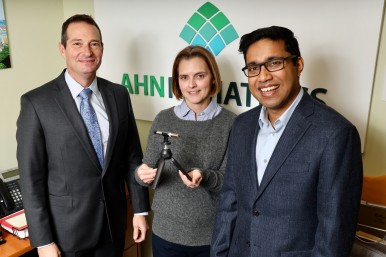
PITTSBURGH – Highmark Health and Bosch announced today at the CES® 2022 convention in Las Vegas, NV, a research collaboration that will explore the use of innovative sensor technology to capture audio that is analyzed using artificial intelligence to detect pediatric pulmonary conditions, such as asthma. The Bosch SoundSee technology was launched to the International Space Station (ISS) in late 2019 and is currently being used aboard the station to assess system operations. The new research collaboration builds upon a long-time practice in doctor-patient care. When doctors put a stethoscope on a patient’s chest, they can hear audio patterns that help them detect an abnormality. Highmark Health and Bosch are applying the same principles of the stethoscope by using AI-enabled sensor technology to listen and detect audio cues that could help with patient diagnosis. Such AI capabilities have the potential to improve patient-centric, at-home care where audio AI-based diagnostic results can be reported to a doctor for further analysis and recommended action. By using high-fidelity microphones coupled with AI and machine learning for sound analysis, the research team will investigate if pediatric pulmonary conditions such as asthma can be detected using the noise emitted through various breathing patterns from patients. Clinical studies will be conducted through the Pediatric Institute of Allegheny Health Network (AHN) and are scheduled to begin in the first quarter of 2022. Joseph Aracri, DO, AHN pediatrician and Chair of its Pediatric Institute will conduct the first feasibility study in a small cohort of pediatric patients. During the patient’s visit to the pediatric clinic, the high-resolution microphone will be used to capture the sounds as the children speak and breathe. The sounds will then be processed and added as a feature into the AI and machine learning techniques along with clinically relevant information and the child’s diagnosis. “This unique collaboration between two industry leaders fits squarely with our mission of exploring technological innovations that can improve the health and wellness of our patients and members,” said Kelly J. Shields, PhD, Senior Research Data Scientist, Highmark Health. “Bosch’s global leadership in the development of pioneering industrial and consumer technologies and Highmark Health’s R&D expertise, along with AHN’s leading pediatric expertise is an incredibly promising combination that we believe can help transform the diagnosis and treatment of asthma and other breathing disorders.” Dr. Aracri has practiced medicine as part of AHN Pediatrics since 1998 and served as its president from 2009 through 2014. Since 2014, Dr. Aracri has also served as the Chair of the Department of Pediatrics for Allegheny Health Network, leading a Department of Pediatrics with more than 120 affiliated physicians, providing a broad range of inpatient and outpatient care, including general pediatrics, asthma, allergy and immunology, and neonatology services. In western Pennsylvania alone, over 60 providers within AHN Pediatrics provide care for over 80,000 pediatric patients at 20 locations. The lifetime asthma rate in Pennsylvania was 12.3% in 2019 among children in the 0–17-year age range.Audio AI expands from space to earth Bosch’s SoundSee technology on-board the Space Station connects to NASA’s free-flying Astrobee robot and performs AI-driven analytics on audio data from the station’s systems and equipment to develop fully autonomous sensing capabilities to gauge system performance and predict maintenance needs. The technology captures ambient noise through built-in microphones and then uses artificial intelligence to extract operational characteristics of the machines and components from their emitted audio patterns to spot potential anomalies. “It has always been the vision of Bosch that the SoundSee technology would have applications beyond space,” said Dr. Samarjit Das, leader of the Intelligent Internet of Things group at Bosch Research in Pittsburgh. “Our new research collaboration with Highmark Health and Allegheny Health Network is another important step in demonstrating the potential of this technology – and specifically artificial intelligence – to provide benefit to humankind.” Bosch has secured multiple patents in utilizing the SoundSee AI technology towards various consumer and industrial applications such as environmental audio event recognition and machine health monitoring.Sensors help to detect asthma Already Bosch’s experience and core competencies in sensor and microsystems technology, miniaturization, algorithm development and smart connectivity have yielded a product for monitoring asthma. The Vivatmo me enables asthmatics to monitor their condition at home via a breath-gas analyzer device that allows patients to accurately determine levels of inflammation and document them in an app that can be shared with their doctor. Vivatmo me has been available in Germany and Austria since March 2020 and Bosch plans to obtain approval in other markets, such as the United States.

CES 2022: For better quality of life and more climate action – connected and sma ...

04.01.2022

Press release

Artificial Intelligence

CES 2022: For better quality of life and more climate action – connected and sma ...

Las Vegas – At home, on the road, at work, in the hospital, or even in orbit: Bosch is improving the everyday lives of people from all walks of life with smart and connected solutions. At the same time, the company is tapping into new areas of business through software, services, and licenses. “We are systematically digitalizing our core business to increase the benefits for our customers. Going forward, we aim turn the sale of every digital product into services-based revenue as well,” says Tanja Rückert, the Bosch Group’s chief digital officer, at CES in Las Vegas. To achieve this goal, Bosch is focusing on the connection of IoT with AI – in other words, it is linking the internet of things (IoT) with artificial intelligence (AI). This creates a virtuous circle in which connected products deliver information that, in turn, is processed by means of AI and incorporated into software updates for these products. At the core of this approach is the benefit for customers, since it allows users to be an integral part of the development process and enables solutions to be tailored precisely to their needs. Furthermore, neither development nor value creation ends with the sale of the products. “We see the combination of AI and IoT as holding the key to leveraging the most user benefit from both of these technologies,” Rückert says. “Besides enabling us to develop new business models, this approach helps us offer better products and solutions that deliver real added value for individuals and society as a whole.”Expanding software expertise: Bosch is already shaping the future today Bosch laid the foundation for this long ago. As of the new year, all electronics product classes will be connectable. Sales of connected power tools, household appliances, and heating systems alone have grown by 50 percent within one year – from four million units in 2020 to more than six million in 2021. With the Bosch Center for Artificial Intelligence (BCAI), the company has established a strong unit in the field of AI that has already contributed some 300 million euros to result. In addition, the company invests a total of more than four billion euros every year in its software expertise, around three billion of which goes to the mobility business. To shape the software-defined future of mobility, Bosch will also be pooling development activities for application-independent software in one unit as of mid-2022. In the future, under the umbrella of its subsidiary ETAS GmbH, the company will develop and sell basic vehicle software, middleware, cloud services, and development tools for universal application. Bosch is also rapidly advancing connected and automated driving. Over the past five years, Bosch has generated some nine billion euros in sales just with driver assistance systems and the associated sensors.Bosch Tech Compass: a survey conducted in five countries around the world The Bosch Tech Compass – a representative survey conducted in five countries and presented for the first time at CES – shows what people across the globe expect from new technologies. According to the survey, the majority of respondents (72 percent) are convinced that technological progress is making the world a better place, for instance as a key to fighting climate change (76 percent). At the same time, four out of five people think technology should be more focused on tackling the great challenges of our time rather than serving individual needs. “We at Bosch also believe that technology offers a broad range of benefits,” Rückert says. “When we talk about high-tech, we’re not talking only about pushing the envelope on what’s possible. We use technology as a means to improve people’s lives wherever they are.”From space to pediatric medicine: the Bosch SoundSee sensor system One example of the benefit of AI and connectivity is the SoundSee sensor system. Since late 2019, it has been traveling through space to identify unusual sounds on the ISS, using AI algorithms to analyze and indicate when maintenance is required. Now, in collaboration with the non-profit healthcare company Highmark in Pittsburgh (USA), Bosch is pursuing a completely down-to-earth application of this technology: investigating how audio AI can be used as a diagnostic tool in pediatric medicine. Specifically, Bosch and Highmark are working to adapt the sensors in a way that will enable them to detect pulmonary conditions such as asthma at an early stage just by listening to children’s breathing patterns. “Using innovative technology to improve children’s health – that’s exactly what we mean with high tech,” says Mike Mansuetti, president of Bosch in North America. SoundSee’s use in medicine also illustrates Bosch’s understanding of its “Invented for life” strategic imperative. Bosch’s new gas sensor – the first on the market to contain AI – serves to protect both humans and nature. Part of Dryad’s Silvanet Wildfire Sensor, it is essentially a digital nose that helps detect forest fires early on. Dryad’s sensors are attached to trees, where they continuously monitor the local microclimate to detect incipient fires – and to wirelessly notify the local authorities, long before camera- or satellite-based systems can. Not only can this protect against devastation by fire, it can also reduce global carbon emissions from forest fires. “These sensors are going to help save lives, homes, and tons of CO2 from entering the atmosphere – all thanks to AI and connectivity,” Mansuetti says.High-tech #LikeABosch: new campaign for smart solutions A new, lighthearted Bosch campaign shows the solutions the company has developed to improve the little things in people’s everyday lives. Called “High tech #LikeABosch – with many connected, intelligent, and sustainable solutions,” its protagonist takes viewers on a tour through her daily routine and uses several Bosch solutions, from smart glasses to a connected e-bike to a digital access pass for work. This makes her teenage son, who at the start of the clip said his mom was “old school,” look pretty out of touch.

22.04.2021

Press release

Artificial Intelligence

Bosch believes AIoT, electrification, and green hydrogen are the way forward

Renningen and Stuttgart, Germany/ Detroit, USA – Bosch, the supplier of technology and services, is combining the internet of things (IoT) with artificial intelligence (AI) and believes electromobility will allow it to develop new business opportunities on the back of the profound technological and ecological changes currently occurring. “Bosch came through the first year of the coronavirus pandemic well,” said Dr. Volkmar Denner, the chairman of the board of management of Robert Bosch GmbH, at the press conference to present the company’s 2020 annual report. “We are one of the winners in the transition to electromobility, and we are significantly expanding our software business by tying in artificial intelligence.”In powertrain technology, electromobility is establishing itself as Bosch’s core business. Denner reported that the company is making heavy upfront investments in this area – a further 700 million euros this year alone. Up to now, its upfront investments in electromobility total five billion euros. Currently, Bosch sales revenue from electrical powertrain components is growing twice as fast as the market, at almost 40 percent. The aim is to increase annual sales fivefold to a total of some five billion euros by 2025 and to break even one year earlier. “Electromobility has long since ceased to be a bet on the future. Our upfront investments are now beginning to pay off,” the Bosch CEO said at an online press conference. Overall, Bosch had acquired orders worth over 20 billion euros by the end of 2020. In the first three months of this year, Bosch Group sales climbed 17.0 percent year on year. “With a good first quarter, Bosch has made a successful start to 2021,” said Prof. Stefan Asenkerschbaumer, the CFO and deputy chairman of the Bosch board of management. He expressed confidence for 2021, but expects it to be another challenging year. For the current reporting period, sales are expected to increase roughly 6 percent year on year, while the margin from operations is set to improve slightly to around 3 percent – or around 4 percent without restructuring costs. However, this depends on the effects of the semiconductor bottlenecks, which are difficult to assess. “The year 2021 will be an important milestone on our path to regaining our target margin of around 7 percent in the next two to three years,” Asenkerschbaumer said. The encouraging 2020 business year – despite the pandemic – with an operating result (EBIT from operations, adjusted for the effects of purchase-price allocations for Automotive Steering and BSH Hausgeräte) of 2.0 billion euros provides Bosch with a sound footing on which to continue to invest in areas of future importance. With sales amounting to 71.5 billion euros, research and development spending remained essentially unchanged at 5.9 billion euros, and EBIT margin from operations reached 2.8 percent. Adjusted for restructuring expenses, which additionally burdened result in 2020, the figure was 4.7 percent. Connectivity megatrend: customers becoming integral to development Bosch aims to leverage the competitive advantage it derives from its wealth of experience in combining connectivity (the internet of things, IoT) and artificial intelligence (AI) to generate future business and become a leading AIoT company. Bosch foresees that AI-enabled products will generate sales worth billions of euros over the next few years. Sales of connectivity-enabled devices for the home are expected to double: from four million last year to around eight million units in 2021. In addition, Bosch wants to use AI to evaluate data relating to how its customers use its products, and in this way to provide software updates that create new functions and services for those customers. “Connecting things leads to knowledge about how things are used,” Denner said. “This lets us continuously improve our products, keep them up to date, and provide our customers with more benefits.” In the field of video security, for example, video analysis based on neural networks opens up new possibilities. To this end, Bosch is integrating detectors both into new cameras and into an AI box that can be connected to installed devices. The first application is a traffic detector that will initially be able to detect and locate vehicles precisely in busy traffic situations, even under difficult lighting conditions. The more data that flows into the customer application, the more AI will be able to do, including accurate accident detection, the company says. Electrification megatrend: new opportunities in several business areas Global efforts to combat climate change are boosting electrification and green hydrogen. Denner believes electrification opens up new opportunities in several business areas: “Electrification requires solutions not only for electric driving in cars, but also for electric heating in buildings.” In electromobility, the key drivers of change are falling battery costs and emissions standards designed to meet climate action targets. In building technology, especially in heating and air-conditioning, the use of heat pumps and renewables is playing a growing role. In heating systems, for instance, Bosch is growing much faster than the market with solutions based on electricity. Sales of heat pumps grew by more than 20 percent in 2020; Denner expects them to triple by 2025. The company also anticipates that the refurbishment of residential buildings called for under the European Green Deal will provide a strong stimulus to growth. With this in mind, Bosch wants to leverage its “investment clout, large-scale production capability, and commercialization expertise.” In the case of the company’s particularly efficient and quiet air-to-water heat pumps alone, unit sales almost doubled in Germany in 2020. Hydrogen megatrend: fuel-cell market worth billions Bosch is also focusing on a growth market for the hydrogen megatrend: the company believes the market for green hydrogen in the EU will be worth almost 40 billion euros by 2030 – with annual growth rates of 65 percent. Fuel cells convert hydrogen into electricity, and Bosch is developing both stationary and mobile fuel-cell solutions. From 2021 to 2024, Bosch plans to invest one billion euros in fuel-cell technology. “Bosch is already H2-ready,” Denner said. The plan is to put 100 stationary fuel-cell plants into operation this year. They will supply electricity to users such as data centers, industrial manufacturers, and residential areas. One stationary solid-oxide fuel cell, located in the center of Bamberg, Germany, was brought into operation at the end of March 2021 together with Stadtwerke Bamberg, the city’s public utilities. Bosch estimates that the market for mobile fuel-cell components will be worth around 18 billion euros by the end of the decade. Denner believes Bosch is in a good position here: “We have what it takes to be a leader in this market as well.” Bosch recently entered into a joint venture with China’s Qingling Motor Group to produce fuel-cell powertrains. A test fleet of 70 trucks is set to be on the roads before the end of this year. Denner: EU plans may threaten carbon neutrality Denner does not believe that the EU’s initial plans for the Euro 7 emissions standard make sense; however, he expressed his satisfaction that the debate was now showing signs of movement and becoming more objective. He explained why: “Climate action is not about the end of the internal-combustion engine. It’s about the end of fossil fuels. And while electromobility and green charging power make road transport carbon neutral, so do renewable fuels.” The Bosch CEO reminded his audience that climate-neutral mobility is almost as ambitious a goal as flying to the moon was in the 1960s. But instead of just setting the big goal of “first man on the moon” and leaving it up to engineers to decide how to achieve it, as U.S. President Kennedy did at the time, the European Commission is doing things the other way around. “This is a surefire way to cut off alternative paths to climate action,” Denner said. “If society truly wants climate action, it is essential that we do not play technological approaches off against each other. Instead, we must combine them.” CO2 reduction at Bosch: along the entire value chain Bosch is pressing ahead with its own climate action targets as planned: Now that the climate-neutral status of the Bosch Group, with its more than 400 locations worldwide, has been certified, Bosch is giving concrete shape to its plans for what is known as Scope 3. By 2030, it aims to reduce carbon emissions by 15 percent from their 2018 level along its entire value chain, from suppliers to customers – a reduction of 67 million metric tons of carbon dioxide emissions. “Our efforts are sure to drive our product portfolio in the direction of energy efficiency or even technology change. In the future, a supplier’s or logistics provider’s carbon footprint will be one of the criteria for awarding new procurement contracts,” Denner said. “In terms of mitigating global warming, this will pay off.” Outlook for 2021: despite confidence, the year remains challenging Bosch expects the global economy to grow by just under 4 percent this year, after a contraction of around 3.8 percent last year. “Even though we’ve made a confident start to 2021, the pandemic continues to pose significant risks,” Asenkerschbaumer said. The CFO added that Bosch is particularly aware of market bottlenecks in the automotive sector, especially for semiconductors, which are in great demand. The company is doing everything in its power to support its customers in this tense situation. However, an improvement in the short term is not to be expected, and the situation may also impact business developments in the current year. In the long run, Asenkerschbaumer believes it is necessary to make all supply chains in the automotive industry less prone to disruption. Moreover, aligning its mobility business with areas of future importance such as electromobility, automated driving, and future electronics architectures calls for enormous upfront investments. “In this profound transformation, 2021 will be both a very important and a challenging year for us.” Business year 2020: coronavirus pandemic overcome In 2020, Bosch Group sales amounted to 71.5 billion euros. As a result of the pandemic, sales were 6.4 percent below their previous-year level (4.3 percent after adjusting for exchange-rate effects). The company generated earnings from operations before interest and taxes (EBIT from operations, adjusted for the effects of purchase-price allocations for Automotive Steering and BSH Hausgeräte) of 2.0 billion euros. The EBIT margin from operations came to 2.8 percent. “Improved sales in the second half of the year, as well as significant cost savings, helped cushion the impact of the pandemic,” Asenkerschbaumer said. The equity ratio remained at a high level of 44 percent, while free cash flow reached a record level of 5.1 billion euros. The CFO sees the company in a satisfactory liquidity situation: “Bosch continues to enjoy a healthy financial structure, and this will allow it to focus on areas of future importance.” Business year 2020: development by business sector The Bosch Group’s broad diversification was vindicated once again in 2020, balancing out different business developments. In the Mobility Solutions business sector, sales developed better than the market. At 42.1 billion euros, sales were down 10 percent year on year. However, worldwide automotive production fell 16 percent over the same period. After adjusting for exchange-rate effects, sales fell 8.2 percent. The EBIT margin from operations was minus 1.3 percent, with the refocusing of the business also having an impact. In the Industrial Technology business sector, sales reached 5.1 billion euros. With the market already in decline before the coronavirus pandemic, sales tumbled by 17 percent , or by 15 percent after adjusting for exchange-rate effects. At 4.7 percent, the EBIT margin was lower than in the previous year. In the Consumer Goods business sector, demand for household appliances and power tools increased significantly during the pandemic. Sales grew by 5.1 percent to 18.7 billion euros. After adjusting for exchange-rate effects, sales growth was 8.4 percent. The margin from operations was an outstanding 11.5 percent. Sales in the Energy and Building Technology business sector fell by 2.7 percent, or by 0.8 percent after adjusting for exchange-rate effects. The EBIT margin was 4.6 percent, from sales of 5.5 billion euros. Business year 2020: development by region In Europe, sales for the year were 38.0 billion euros. This was 5.1 percent down on the previous year, or an exchange-rate adjusted 3.7 percent. In North America , sales totaled 10.7 billion euros, representing a 15.5 percent fall. After adjusting for exchange-rate effects, the fall was 12.8 percent. In South America, exchange-rate effects had a particularly pronounced impact on sales. At 1.1 billion euros, overall sales were 22.3 percent down on the previous year; however, the fall was just 0.2 percent after adjusting for exchange-rate effects. In Asia Pacific including other regions, the early and strong market recovery in China cushioned the effects of the coronavirus pandemic. At 21.7 billion euros, overall sales fell by just a slight 2.6 percent year on year, or by just 0.7 percent after adjusting for exchange-rate effects. Associates: change also offers opportunities Denner admitted that Bosch’s transformation will cost jobs on the one hand, but added that it will also open up new prospects for associates on the other. At its core plants, Bosch is taking skills from the development and production of gasoline and diesel systems and applying them to new technologies such as fuel cells. “We have already filled more than half our electromobility-related jobs with associates from the combustion-engine business,” the Bosch CEO said. In addition, a company-wide placement platform has been created in order to quickly get specialists into positions in areas of future importance. In its digital qualification programs as well, Bosch is making progress: since the beginning of 2020, the company’s in-house learning portal has been accessed more than 400,000 times. In 2020, more than one in three training sessions was held online; by 2023, this figure is expected to rise to one in two. As of December 31, 2020, the Bosch Group employed some 395,000 associates worldwide. That is around 3,100 fewer people than in the previous year – a drop of around 1 percent. Headcount decreased primarily in Asia Pacific. In Germany, the number of associates remained largely constant at 131,800. Worldwide, the number of researchers and engineers increased by around 600 to around 73,200. The number of software developers also grew by more than 10 percent to around 34,000.

Digital nose for air quality: Bosch Sensortec’s 4-in-1 gas sensor with AI

01.03.2021

Press release

Internet of Things

Digital nose for air quality: Bosch Sensortec’s 4-in-1 gas sensor with AI

Whether at home, in the office or outdoors, we need to be confident that the air around us is clean and safe to breathe – COVID-19 has clearly highlighted the importance of air quality. Due to the particulates, gases and even airborne viruses ubiquitously present in our modern environment, poor air quality has an increasingly negative impact on our health and well-being. To address this growing need, Bosch Sensortec has announced the BME688, the first air quality MEMS sensor that combines gas, humidity, temperature and barometric pressure sensing with innovative artificial intelligence (AI) capability; essentially creating the world’s smallest four-in-one air quality measurement solution. This single device enables customers to reduce their total cost of ownership, cut their development time and simplify design. The new BME688 is ideal for the latest, customized applications, such as food spoilage detection and timely forest fire detection by detecting the gases present, and tracking temperature and humidity changes. The sensor's AI features and Bosch Sensortec’s new BME AI-Studio software tool make it straightforward for customers to rapidly develop custom solutions for their specific use cases. To further cut time to market, Bosch Sensortec also provides an Adafruit-compatible development kit. Built on Bosch Sensortec’s proven BME680 platform, the BME688 features an updated gas sensor enabling an extended measurement range and sophisticated AI features. The gas sensor now detects the presence of many gases, including volatile organic compounds (VOCs), volatile sulfur compounds (VSCs) and other gas types such as carbon monoxide and hydrogen, in the parts per billion (ppb) range. "The BME688 combines reliable high-precision sensors with wide-ranging gas detection and innovative AI capabilities in a single package,” says Dr. Stefan Finkbeiner, CEO at Bosch Sensortec. “This enables our customers to rapidly develop the next generation of applications designed to improve well-being, lifestyle and sustainability.” For example, a customer may want to develop a sensor-based product that can detect spoiled food, which would be indicated by the VSCs produced by bacteria in the food. Similarly, bad breath or body odor could be detected based on the VSCs they produce. The optimal approach is to collect indicative real-life data directly in the field. For instance by sampling gases in the vicinity of both fresh and decaying food, to thereby create different combination models for the VSCs present in the given air sample. The BME688 is capable, by default, of very accurate detection of VSCs, and the BME AI-Studio enables it to be optimized for other gas mixtures and applications. By sampling gases in the field instead of the lab, the derived algorithms that are utilized by the new detection devices are far more reliable in evaluating actual conditions. Together with gas data, the BME688 simultaneously measures humidity, barometric pressure and temperature as supplementary data inputs for complete AI modeling. In our example application, the customer categorizes this mass of data and then applies it in the development of their AI model in the BME AI-Studio, essentially training the BME688 to recognize the tell-tale signs of bacterial growth on the food. Once the sensor is trained, the final AI code runs on a system microcontroller in the customer’s end product. This AI code is generally lightweight and will run quite easily on the existing microcontroller that handles system control and management tasks. The BME688 has been developed for mobile and connected applications where size and low power consumption play a critical role. The sensor is housed in a compact package, measuring just 3.0 x 3.0 x 0.9 mm3. Current consumption can be configured between 2.1 μA and 11 mA depending on the required data rates and functions, and can be optimized using the BME AI-Studio. Availability: The BME688 is available now. Website: https://www.bosch-sensortec.com/products/environmental-sensors/gassensors/bme688/ Video: https://www.youtube.com/watch?v=xcZKKNrBt2gBOSCH SENSORTEC AT EMBEDDED WORLD DIGITAL: VIRTUAL BOOTH: March 01 – March 05, 2021 https://www.bosch-sensortec.com/about-us/events/embedded-world-2021-digital/ DEEP-DIVE SESSIONS WITH BOSCH-EXPERTS: - March 1, 2021: 10:50-11:20 am EST - Presentation and Q&A session 'Bosch unveils the new robust barometric pressure sensor BMP384 & the first gas sensor with Artificial Intelligence BME688' - March 4, 2021: 5:30-6:00 am EST - Presentation and Q&A session 'AI-catching”: Environmental sensing and fitness tracking with Artificial Intelligence' Bosch Sensortec GmbH, a fully owned subsidiary of Robert Bosch GmbH, develops and markets a wide portfolio of microelectromechanical systems (MEMS) sensors and solutions tailored for smartphones, tablets, wearables and hearables, AR/VR devices, drones, robots, smart home and IoT (Internet of Things) applications. The product portfolio includes 3-axis accelerometers, gyroscopes and magnetometers, integrated 6- and 9-axis sensors, smart sensors, barometric pressure sensors, humidity sensors, gas sensors, optical microsystems and comprehensive software. Since its foundation in 2005, Bosch Sensortec has emerged as the MEMS technology leader in the markets it addresses. Bosch has been both a pioneer and a global market leader in the MEMS sensor segment since 1995 and has, to date, sold more than 10 billion MEMS sensors. For more information, please visit www.bosch-sensortec.com, twitter.com/boschMEMS, community.bosch-sensortec.com, linkedin.com/company/bosch-sensortec/, youtube.com/user/BoschSensortec

CES 2021: Bosch puts its faith in AI and connectivity – for the protection of pe ...

10.01.2021

Press release

Internet of Things

CES 2021: Bosch puts its faith in AI and connectivity – for the protection of pe ...

Stuttgart, Germany / Detroit, USA – To improve people’s health and to protect our planet, Bosch is counting on AIoT, taking advantage of the possibilities offered by data, artificial intelligence, and the internet of things to benefit people and the environment with technical solutions. “We combine AI and connectivity to form the AIoT, which helps us improve energy efficiency and fight the coronavirus,” says Michael Bolle, Bosch board of management member. “AIoT offers enormous potential. We are already unlocking this potential and plan to expand our efforts in the future.” Under the tagline “Sustainable #LikeABosch,” the company will be presenting intelligent, sustainable solutions for health, living, and mobility at the virtual tech trade fair CES 2021.Among the innovations Bosch is debuting at the tech show is the world’s first self-learning AI sensor for wearables and hearables in fitness tracking. Since the AI runs on the sensor itself (edge AI), there’s no longer any need for an internet connection during an exercise session – this improves energy efficiency and data privacy. The company is also presenting a sensor that measures factors such as air quality and relative humidity. This delivers information about the concentration of aerosols in the air – data that has become especially important in the fight against the coronavirus. Bosch security cameras can also help in the fight against the virus. AI makes it possible for them to execute a wide array of customer-specific applications. For example, a new camera solution with integrated intelligent video analysis measures body temperature contactlessly, anonymously, and with high precision – with a maximum deviation of half a degree. Moreover, using a software solution for the open camera platform of the Bosch startup Security and Safety Things, these cameras can detect whether the number of people in a shop complies with the prevailing coronavirus restrictions. This platform was designated a 2021 CES® Innovation Award Honoree, making it one of four Bosch solutions singled out this year. Another premiere is a portable hemoglobin monitor that can detect anemia by means of a finger scan. The device is particularly well suited for regions that have insufficient access to medical care. Equipped with AI, the hemoglobin monitor delivers a result within 30 seconds – no lab test or blood draw necessary. At the moment, the best example of how innovative Bosch technology can improve health and well-being is the coronavirus PCR test on the Bosch Vivalytic testing device. This now delivers results even more quickly: laboratories, doctors’ offices, nursing homes, and hospitals can evaluate five samples simultaneously in 39 minutes – technology literally “invented for life.” Thanks to improved software, positive samples can be detected even in under 30 minutes. The development of the Vivalytic system, which consists of an analysis device and test cartridges, grew out of a long-standing collaboration between Bosch’s corporate research and advance engineering, Bosch Healthcare Solutions, and the Robert Bosch Hospital. Sustainable #LikeABosch: Bosch as a pioneer in climate action A study recently published in Germany indicated that AIoT can go beyond health applications to support climate action as well. The study found that comprehensive digitalization in mobility, manufacturing, and building technology could help get the country nearly halfway to achieving the Paris Agreement emissions targets (source: Accenture ). Here is where Bosch takes a hand: its tagline for this year’s CES – “Sustainable #LikeABosch” – expresses one aspect of the company’s entrepreneurial responsibility. The sequel of the #LikeABosch image campaign highlights how everyone can do their part to protect the environment with sustainable products. Bosch itself is leading by example: according to in-house calculations, all the company’s 400 locations worldwide have been carbon neutral since 2020. Bosch is the first globally operating industrial enterprise to achieve net zero carbon emissions with respect to the energy it produces and the energy it sources externally. “The next step for Bosch is to address emissions along the entire value chain, from procurement to product use,” Bolle says. In that vein, Bosch is the first automotive supplier to join the Science Based Targets initiative with a specific and ambitious goal: by 2030, to cut upstream and downstream CO2 emissions by 15 percent. Bosch’s achievements in climate action have won recognition outside the company as well: the non-profit Carbon Disclosure Project (CDP) has added Bosch to its A List. Through its advisory company Bosch Climate Solutions, founded last year, Bosch shares its experience as a climate action pioneer with other companies. The Bosch startup markets several solutions, including the Bosch cloud-based energy platform, which applies intelligent algorithms to reduce the energy consumption of machines and thus increase the efficiency of production processes. Bosch has already deployed the platform at more than 100 locations, making a major contribution to improving energy efficiency – the main lever in the company’s efforts to go carbon neutral. Digital and sustainable is the way forward: into the pole position with industrial AI As this example shows, digitalization is paving the way for sustainability. “We want to be the leading AIoT company in every area that we operate in,” Bolle explains. Trust in AI is the most important prerequisite for it to become established, so that it can improve the lives of people and help limit climate change. To this end, Bosch relies on industrial AI, which explains the physical world to machines – instead of teaching them how to behave like people. Nonetheless, this requires ethical guidelines. To set them, Bosch has drawn up an AI code of ethics that centers on the idea that humans always retain control. In addition to improving energy efficiency in manufacturing, Bosch is systematically adding connectivity to its products for buildings and mobility to help consumers save energy. One of these products is an energy manager that the company offers for use in private homes. When combined with a heat pump and photovoltaic system, the manager can cut energy consumption by up to 60 percent. In the mobility sphere, drivers of electric vehicles can benefit from services such as Battery in the Cloud, which uses smart software analysis to reduce battery wear by up to 20 percent. In general, the combination of electrified and automated driving with personalized and connected services will open up a broad field for software applications. Vehicle computers are central to Bosch’s efforts to extend its leading role in software-intensive electronic systems. To meet this demand, the new Cross-Domain Computing Systems division and its 17,000 associates started operations at the beginning of the year. In this unit, Bosch is combining its capabilities in hardware and software engineering for vehicle computers, sensors, and control units for all vehicle domains. This reduces complexity in vehicle development and will get new functions on the road significantly faster. Expertise to help explore the moon: aiming high with Bosch AI From earthbound roads to activities in space: whereas last year’s CES saw the premiere of the SoundSee AI sensor system for the International Space Station, this time Bosch has set its sights on the moon. As part of NASA’s Tipping Point program, Bosch is joining forces with the companies Astrobotic and WiBotic as well as the University of Washington to research and develop technology to intelligently navigate and wirelessly charge small robots for operation on the moon. Bosch researchers working on the project in Pittsburgh and Silicon Valley are contributing their expertise in AI-based intelligent data analysis and wireless connectivity solutions. The resulting findings will flow into the further development of Bosch AIoT solutions back on earth. All this clearly shows how much potential AIoT offers, as well as the key role sustainability plays in it. “Only companies that pursue sustainability today and unlock the enormous potential of AIoT, will be successful tomorrow,” Bolle says.Bosch at CES 2021: VIRTUAL PRESS CONFERENCE: Monday, January 11, 2021, from 8:00 to 8:30 EST (14:00–14:30 CET) with Dr. Michael Bolle, Bosch CTO, CDO, and management board member, and Mike Mansuetti, president of Bosch North America, at the Bosch Media Service. VIRTUAL BOOTH: January 12 – February 15, 2021, at www.ces.tech FOLLOW the Bosch CES 2021 highlights on Twitter: #BoschCES DEEP-DIVE SESSIONS WITH BOSCH-EXPERTS: January 12 – February 15, 2021, at www.ces.tech Sustainable #LikeABosch: How a key global industry player drives carbon neutrality at its sites with Torsten Kallweit, Head of Corporate Office Health, Safety, Environmental and Fire Protection as well as Sustainability and Manager CTO Bosch Climate Solutions GmbH, and Annette Wagner, Head of Sustainability and Ideas Lab Move #LikeABosch: Technology for sustainable future mobility with Mike Mansuetti, President of Bosch North America, and Tim Frasier, Regional President Automotive Electronics North America Artificial intelligence in use: Application examples from the fields of fitness tracking and well-being to smart cameras with Kaustubh Gandhi, Senior Product Manager, and Sina Isabell Springer, Business Development Manager Perfectly keyless advanced with Tim Frasier, Regional President Automotive Electronics North America, Daniel Kornek, Head of Product Area Vehicle Access (Perfectly Keyless), and Jia Hou, Business Development Manager

Sensors get clever: AI revolutionizes fitness tracking

16.12.2020

Press release

Artificial Intelligence

Sensors get clever: AI revolutionizes fitness tracking

Squats, crunches or kettlebell swings: The list of fitness exercises available nowadays is almost endless. Many fitness trackers or smartwatches, however, offer only a very limited number of activities that can be tracked and do not recognize activities reliably due to different performance styles, equipment, heights and energy levels of users. To solve such problems, Bosch Sensortec has developed a revolutionary self-learning motion sensor that adds artificial intelligence (AI) to portable devices: the BHI260AP self-learning AI sensor.The sensor enables manufacturers of wearable and hearable devices to provide highly personalized fitness tracking through self-learning AI software in the sensor. It recognizes and adapts to a wide variety of movements and is able to learn any new fitness activity that is based on repetitive, cyclical patterns. Users can hence be trainers and trainees at the same time. "The self-learning AI sensor will change how users interact with their fitness devices from a mere one-way approach to an interactive way of training", says Dr. Stefan Finkbeiner, CEO at Bosch Sensortec. "This new sensor combines Bosch Sensortec’s long-term experience in smart motion sensors with its strong competence in innovative software development." One piece of software – four features The self-learning AI software is available with a standard set of more than fifteen pre-learned fitness activities, so no training is required before use. In addition, it offers four product features: learn, personalize, auto track and enhance. The learning mode offers users the option to add new fitness activities that were originally not supported, enabling them to customize the device to their individual needs. The personalization feature enables users to adapt existing, pre-learnt activities to their own individual style, increasing the accuracy of calorie counting and activity analyses. With the auto track function, users can automatically track fitness activities without any manual intervention and analyze their intensity with activity type and count over time – enabling both endurance and strength training. Finally, manufacturers can add new fitness activities without having to modify the software or needing an original dataset. These new transferable exercises may be provided by coaches or star athletes, enabling benchmarking against the best and learning from experts, or simply from the users’ friends. This enhances the perceived value of devices and strongly helps the manufacturers to differentiate. With the AI running on the sensor itself, hence on the edge, no connectivity to the cloud or even a smartphone is needed. This keeps the data private and means activities can be continuously tracked and analyzed, without the need for an internet connection or tethering to a phone. Edge AI also minimizes latency and power consumption, meaning users can get fast, real-time feedback and extended charging intervals on their devices. All-in-one solution with multiple software options The new sensor is provided to manufacturers as an integrated System in Package (SiP) solution, which includes the hardware, software and embedded AI. This reduces development time and costs, and cuts time to market. In addition to the self-learning AI software, Bosch Sensortec offers a wide range of software solutions for the BHI260AP. Wearables manufacturers can simply load the required software on to the sensor to enable solutions targeted at specific use cases including orientation tracking, position tracking (PDR) and swimming. The sensor recognizes four different swimming styles: butterfly, backstroke, breaststroke and freestyle. Since the BHI260AP is a fully programmable sensor, manufacturers can build their own customized software to be embedded in the BHI260AP or upload customized solutions depending on the users’ context. To protect these customized solutions from unauthorized use, the smart programmable sensor offers a digital signature. To make development of AI based wearable solutions even easier, Bosch Sensortec offers an application board along with a BHI260AP shuttle board, which can be wirelessly connected over Bluetooth Low Energy (BLE) to smartphones. Availability The BHI260AP self-learning AI sensor and the corresponding shuttle board are available via Bosch Sensortec’s distributors. The different software packages are available for download at the Bosch Sensortec website. Website: More information about the product Video: Discover how the self-learning AI sensor personalizes fitness tracking White paper: Find out more about the swimming software in the article "Swim like a fish with AI" Find out more about the fitness tracking in the article "Me, myself and AI"Bosch at CES 2021: VIRTUAL PRESS CONFERENCE: Monday, January 11, 2021, from 8:00 to 8:30 EST (14:00–14:30 CET) with Dr. Michael Bolle, Bosch CTO, CDO, and management board member, and Mike Mansuetti, president of Bosch North America, at the Bosch Media Service. VIRTUAL BOOTH: January 12 – February 15, 2021, at www.ces.tech FOLLOW the Bosch CES 2021 highlights on Twitter: #BoschCES DEEP-DIVE SESSIONS WITH BOSCH-EXPERTS: January 12 – February 15, 2021, at www.ces.tech Sustainable #LikeABosch: How a key global industry player drives carbon neutrality at its sites with Torsten Kallweit, Head of Corporate Office Health, Safety, Environmental and Fire Protection as well as Sustainability and Manager CTO Bosch Climate Solutions GmbH, and Annette Wagner, Head of Sustainability and Ideas Lab Move #LikeABosch: Technology for sustainable future mobility with Mike Mansuetti, President of Bosch North America, and Tim Frasier, Regional President Automotive Electronics North America Artificial intelligence in use: Application examples from the fields of fitness tracking and well-being to smart cameras with Kaustubh Gandhi, Senior Product Manager, and Sina Isabell Springer, Business Development Manager Perfectly keyless advanced with Tim Frasier, Regional President Automotive Electronics North America, Daniel Kornek, Head of Product Area Vehicle Access (Perfectly Keyless), and Jia Hou, Business

Intelligent Navigation and Wireless Charging for Mini Robots on the Moon

17.11.2020

Press release

Artificial Intelligence

Intelligent Navigation and Wireless Charging for Mini Robots on the Moon

PITTSBURGH – Even on the Moon, robots need power. Normally, onboard solar panels provide the power, but smaller robots or ones that operate during the lunar night will need a complementary power source. To make this possible two emerging technologies – wireless charging and intelligent autonomous navigation – will be combined. Small robots will be equipped and trained to navigate harsh, unpredictable conditions to get to a wireless docking station in an environment where GPS is not an option.The National Aeronautics and Space Administration (NASA) recently announced funding for Ultra Fast Proximity Charging for Critical Space Applications, a project where a group of organizations will research and develop technology to intelligently navigate and wirelessly charge small robots for operation on the Moon. Astrobotic, which specializes in space robotics, serves as the Principal Investigator on the project and is joined by Bosch, the University of Washington, WiBotic, and the NASA Glenn Research Center. Bosch and Astrobotic, together with the other partners, developed the key technology and scoped the proposal from the beginning – a nearly two-year process. The goal of the project, which was awarded $5.8 million through NASA’s Tipping Point program, is to develop a system for magnetic resonance-based wireless charging for use in lunar settings. This includes the precise autonomous navigation of robots to the wireless charging station. The aim is to develop the full system for demonstration by the middle of 2023. AI and connectivity expertise drives robots Bosch will contribute its expertise in AI-driven intelligent data analytics and wireless connectivity solutions to the project. Bosch researchers in Pittsburgh and Sunnyvale, Calif. will focus on intelligent processing capability that will enable autonomous navigation of robots on the Moon’s surface. The project showcases Bosch’s expertise in AIoT - when Artificial Intelligence meets the Internet of Things. Bosch is focused on connecting things to get data, processing the data and using AI to obtain information. The information learned can improve products and add value. “Navigating a robot on the Moon is not the same as navigating a robotic vacuum through your home or navigating a self-driving car on the road,” said Dr. Samarjit Das, leader of the Intelligent Internet of Things group at Bosch Research in Pittsburgh. “First of all, radio-based terrestrial localization solutions are not available on the Moon. In addition, unpredictable lunar terrain and dust make it even harder to perform precise navigation using visual cues alone. Thus, we will need intelligent fusion and perception on the robot’s multi-sensory data to solve this unique challenge on the harsh environment of the Moon.” Bosch will study and develop multi-sensor fusion technologies that could include video, inertial measurement units (IMU), radio frequency (RF) movements and vibration sensors on the small robots to create complementary modalities that enable highly-precise navigation. The first specific navigation is guiding the robot to a docking station for wireless charging. “If a robot can master the specific navigation back to the charging station, it provides the blueprint of more autonomous missions for the robot on the Moon,” said Dr. Vivek Jain, head of the Wireless Connectivity and Sensing group at Bosch Research in Silicon Valley. “All aspects of wireless - communication, sensing, localization and charging, have to work optimally along with multi-sensor fusion to provide a robust solution.” Featuring a modular, scalable shoebox-sized rover The robot featured in the project will be Astrobotic’s CubeRover, an ultralight, rechargeable planetary rover developed in collaboration with the NASA Kennedy Space Center. The rover is roughly the size of a shoebox and weighs fewer than five pounds. It can carry its own payload or team up with other CubeRovers to scout for larger rovers and landers. The CubeRover, which was previously awarded funding as part of NASA’s Tipping Point program, are built in three sizes, 2U, 4U, and 6U, and are based on internationally recognized CubeSat standards to simplify payload integration efforts. The rover trio introduces an off-the-shelf mobile platform for payloads that can host an array of instruments such as spectrometers, neutron detectors, cameras, and other important scientific sensors. These instruments will support payloads for extended mission durations at a reduced weight and lower cost, demonstrating new space technologies and filling key knowledge gaps in our scientific understanding of the Moon. Bosch and Astrobotic previously collaborated on SoundSee, a module that uses artificial intelligence to analyze audio data, now in orbit aboard the International Space Station (ISS). Wireless – a new power source for lunar robots The CubeRovers will need power. Wireless charging expertise will come from WiBotic , a Seattle company that specializes in advanced wireless charging and power optimization solutions for the rapidly expanding ecosystem of aerial, mobile and marine robots. The company, which was co-founded by Dr. Joshua Smith and Dr. Ben Waters and announced a Series A funding round of $5.7 million in June 2020, creates wireless charging and power optimization solutions for the robotics industry via next-generation hardware and software systems for use with a broad ranges of robots or drones. WiBotic will also be supported by the University of Washington, where the topic of wireless charging has been studied for a number of years under the leadership of Dr. Smith, who leads the Sensor Systems Laboratory . Dr. Smith has been a long-time collaborator with Bosch Research in Silicon Valley in the area of wireless charging. The combined team will develop a lightweight, ultra-fast proximity charging solution, comprised of a base station and power receiver to enable critical space applications. System testing to simulate space Results of the collaboration will be tested at NASA’s Glenn Research Center (GRC) in Cleveland. There, the CubeRover with intelligent navigation and wireless charging technology will be deployed in GRC’s Space Power Facility, the world's largest thermal vacuum chamber. Tests will showcase how the system can enable lunar night survival for small-scale robotics. Public-private partnership gives a boost to technology development The project was selected as part of NASA’s fifth competitive Tipping Point solicitation for public-private partnerships. As part of the program, NASA seeks technology that is at a tipping point where investment would help to mature the technology, increase the likelihood of its use in a commercial space application and bring the technology to market for both governmental and commercial applications.