Search & find:
Media, press releases, events for your editorial coverage

Electromobility growth market: Bosch wins major order from Mercedes-Benz

19.05.2026

Press release

Electrified mobility

Electromobility growth market: Bosch wins major order from Mercedes-Benz

Stuttgart, Germany – The electrification of mobility continues to gain momentum – and together with its customers, Bosch is actively shaping this transformation. The company recently received a major new order from Mercedes-Benz to supply a large volume of electric motors into the 2030s for the premium manufacturer’s next generation of electric powertrains. “The new order reaffirms our long-standing partnership with Mercedes-Benz and shows that we can successfully contribute our expertise to technologically demanding projects as well,” says Markus Heyn, member of the Bosch board of management and chairman of Bosch Mobility. The order follows on from a successful year in 2025, in which Bosch acquired more than 70 customer projects worldwide. The company currently supplies more than 50 automakers from all over the world with technology and solutions for electromobility. Even though markets in different regions are developing at different speeds and price and competitive pressures remain high, these orders make it clear: Bosch is on course in electromobility, too. We win over customers with our core competence of being able to develop and manufacture complex technology in large quantities with significant economies of scale worldwide. We deliver electric-driving solutions to all markets around the world,...says Markus Heyn, member of the Bosch board of management and chairman of Bosch Mobility. Bosch electric motors feature up to 98 percent efficiency along with increased power density, thanks in large part to the new winding technology. These motors are also equipped with innovative rotor oil cooling, which is the optimum way to dissipate the heat. Another decisive advantage is their scalable platform architecture: the length of the electric motor can be varied depending on the power required, so the motor can be easily installed in different axle variants. This allows customers to integrate the powertrain flexibly and cost-effectively into a range of vehicle models. The combination of high efficiency, innovative cooling, optimized winding technology, and scalable platform architecture results in a particularly compact design that reduces weight, installation space, and ultimately system costs. Bosch is a key technology partner for numerous manufacturers worldwide Bosch plans to manufacture more than seven million components for electric driving in 2026. Currently, roughly seven electric motors roll off the company’s production lines every minute worldwide. Besides premium manufacturers such as Mercedes-Benz, Bosch also works with a large number of other international automakers in the field of electromobility. In India, for example, the company has entered a joint venture with TataAutocomp Systems to develop, commercialize, and manufacture e-axles for the Indian market. Bosch also plays a leading role as a technology partner in China, the world’s largest vehicle market today. “We already work with almost all Chinese car manufacturers, as well as with numerous international automakers operating in China,” says Marco Zehe, president of Bosch’s Electrified Motion division. For more than a decade, Bosch has been manufacturing for a large number of automakers based there and supplies more than 30 customers with solutions for electric driving. From silicon carbide chips to complete powertrain solutions – Bosch covers the entire spectrum of electromobility worldwide. In addition to the e-axle, the company now also offers “X-in-1” solutions, in which several elements such as the electric motor, power electronics, transmission, and energy management are bundled into highly integrated systems. These are more compact, lighter, and less complex, and offer clear cost benefits for customers.

Bosch team wins innovation and advanced technology award with fuel-cell power module

19.11.2025

Press release

Electrified mobility

Bosch team wins innovation and advanced technology award with fuel-cell power module

Berlin, Germany – The future needs a driving force – and Bosch’s fuel-cell power module (FCPM) has what it takes. The Bosch team responsible for developing the FCPM, led by Christoffer Uhr, Kai Weeber, and Pierre Andrieu, has now received the German Future Prize 2025 in honor of this work. The German federal president’s award recognizes the system as a key technology for climate-neutral mobility. This award is outstanding recognition for the entire team. It shows the innovative potential of hydrogen – and the decisive role that Bosch is playing in it....says Dr. Stefan Hartung, chairman of the board of management of Robert Bosch GmbH. “The technology is ready. What’s needed now is the political will to systematically drive forward the development of an efficient hydrogen economy. Only then can fuel-cell power modules become an everyday technology for commercial vehicles. We in the industry have done our part”, says Dr. Stefan Hartung. The award-winning FCPM converts hydrogen and oxygen into electrical energy. This means commercial vehicles can cover long distances completely CO 2 -free – provided they have green hydrogen in the tank. Their only remaining emission is water vapor. In this way, Bosch is playing a significant part in achieving climate neutrality in freight transport. Heavy trucks are responsible for more than one-quarter of CO 2 emissions from road traffic in the EU, but they are also indispensable for the transportation of goods and freight. “With the fuel-cell power module, Bosch has shown that hydrogen technology is suitable for large-scale production and can play a major part in decarbonizing road transport,” Hartung says. “This powertrain system combines engineering skill, experience, and systems expertise – and it marks an important step toward sustainable mobility.” Several thousand trucks fitted with the Bosch system already in use worldwide Large-scale production of the FCPM started in 2023 at the Stuttgart-Feuerbach plant, and shortly afterward also in Chongqing, China. With more than a thousand individual parts, the FCPM is one of the most complex systems in Bosch’s almost 140-year history – and at the same time one of the most pioneering. From the stack to the recirculation pump and the air compressor, all its key components are developed and manufactured in-house. The powertrain module itself can be installed in trucks where the combustion engine was previously located. Instead of diesel tanks, the trucks feature pressurized tanks for the hydrogen. Refueling times are comparable at around 15 minutes. Depending on the vehicle layout, and when driven economically, it is possible to cover up to 1,000 kilometers on a single tank of around 70 kilograms of hydrogen. Several thousand trucks fitted with the Bosch FCPM are already in use worldwide. The modules already out in the field are generating valuable development data: many systems exist both physically in the vehicle and as a digital twin in virtual space. Parameters such as temperature, pressure, and wear can be continuously monitored and incorporated directly into development work on the next generation of the powertrain system. FCPM technology can be used not only in trucks but also in bus powertrains and maritime propulsion systems. What’s more, it can provide decentralized CO2-free electricity to data centers. Bosch also uses the same technology in reverse in its PEM electrolysis stacks (PEM = proton exchange membrane) to produce hydrogen from water and electricity – another important building block in the hydrogen value chain. Following the market entry of its electrolysis stacks in April, the company recently put an electrolyzer featuring its own electrolysis technology into operation for the first time at its Bamberg site. Bosch was nominated five times for the German Future Prize between 1998 and 2013, and teams from Bosch or with Bosch involvement received the award three times: in 2005 for piezo injectors, in 2008 for smart sensors, and in 2013 for ultrashort pulse lasers. With the German Future Prize 2025 for the fuel-cell power module, Bosch has written another page in this ongoing success story. The award demonstrates not only the company’s technological strength but also its vision for the future: a world in which hydrogen and fuel cells play a decisive part in decarbonizing the transportation sector.

With brake-by-wire from Bosch to the Arctic Circle

28.01.2025

Press release

Electrified mobility

With brake-by-wire from Bosch to the Arctic Circle

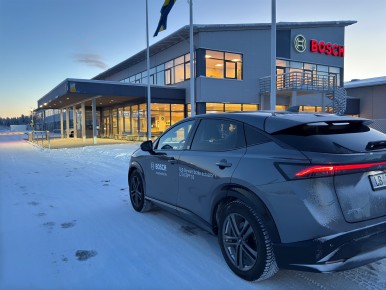
Stuttgart – For six days, over 3,300 kilometers and through different climate zones to the Arctic Circle: On an unusual test drive, a Bosch development team successfully tested the new hydraulic brake-by-wire system from Bosch for the first time on public roads. What sets brake-by-wire apart: This solution completely eliminates the mechanical connection between the brake pedal and the brake system. The driver’s brake request is transmitted to the brake-by-wire system purely as an electrical signal via redundant signal lines. For this fundamentally new approach, Bosch offers a robust and efficient solution with two independent hydraulic brake actuators – a by-wire brake actuator and an ESP ® . Today’s brake systems, such as the integrated power brake from Bosch, still ensure the required redundancy in the event of a fault via a mechanical connection to the brake pedal. This coupling via an input rod to the brake pedal is eliminated in the new Bosch brake-by-wire solution.As a leading company in braking and steering systems, Bosch is working on innovative by-wire solutions for both vehicle domains – including this hydraulic brake-by-wire system, which is planned to be launched on the market from fall 2025. In addition to the hydraulic solution, Bosch is also developing a purely electromechanical system. The company has already received orders from various vehicle manufacturers and expects that by 2030, more than 5.5 million vehicles worldwide will be equipped with brake-by-wire. Advantages of the Bosch brake-by-wire system New freedom in installation: Due to the omission of the mechanical connection, there is no longer any need to mount the brake system components at the vehicle’s firewall. Instead, the components can now be installed where it is most optimal in terms of crash safety, NVH, and manufacturing. The flexibility in choosing where to install the brake actuators helps to avoid the need for different variants for right-hand and left-hand drive vehicles. By-wire technology enables new pedal concepts with significantly shorter brake pedal travel to create space for new interior designs. The hydraulic brake-by-wire solution from Bosch is based on proven brake system technology and is a combination of a by-wire brake actuator and an ESP ® . Its slim design saves installation space and reduces the weight of the brake system. Since both the by-wire brake actuator and the ESP ® are assigned to different channels of the redundant electrical system, they can each independently build up the required brake pressure at all four wheel brakes in the event of a fault. Therefore, this Bosch solution is also suitable for highly automated vehicles, meeting the protection of the brake system required for safety reasons. Successful long-distance test provides valuable data for further development The brake-by-wire system is being developed at the Bosch development center in Abstatt near Heilbronn. The long-distance journey led the development team from the southwest of Germany via Hamburg, Copenhagen and Stockholm and a short detour to the Arctic Circle to the finish at the Bosch winter test center Vaitoudden in Arjeplog, in northern Sweden. Bosch has specifically applied for and obtained approval for public roadway use for the test vehicle in several countries, based on an extensive safety concept. “The whole team has worked towards this event with incredible motivation and is very proud of this achievement. Our hydraulic brake-by-wire system has worked perfectly on the journey. With our first long-distance test, we impressively demonstrated that we can bring a real brake-by-wire system safely and successfully from the test track to the road", explains Hagen Kuckert, project manager for the by-wire brake actuator at Bosch in Abstatt. „We performed thousands of braking operations during the journey, were able to obtain important insights and data on the behavior of the brake system in a wide variety of traffic situations and compare them with our previous simulations. All this is incorporated into the further development work to further optimize our hydraulic brake-by-wire system."

electronica 2024: Bosch presents new microelectronics for the driving experience ...

11.11.2024

Press release

Electrified mobility

electronica 2024: Bosch presents new microelectronics for the driving experience ...

Munich, Germany – At the electronica 2024 trade fair in Munich (hall C3, booth 316) from November 12 to 15, Bosch will be presenting its latest innovations in the field of microelectronics. The focus is on components for greater occupant safety, such as high-performance MEMS sensors and systems on a chip (SoC) for the construction of compact radar systems, as well as on other technical solutions for the mobility of the future, including a new transceiver that is making its world debut at the trade fair in Munich: the NT156 CAN SIC XL.CAN networks’ stability, cost efficiency, simplicity, and flexibility as regards network topologies make them very popular. But in the new E/E architectures of the very latest vehicles, it is becoming increasingly important to transmit large data packets as fast as possible. The CAN XL protocol (ISO 11898-1:2024), a downward-compatible extension of the CAN standard, makes data rates of up to 20 Mbit/s possible in a CAN network. With this in mind, Bosch has developed its new CAN SIC XL transceiver. This lets CAN XL networks operate at maximum speeds of up to 20 Mbit/s. In addition to the typical CAN messages, the CAN XL protocol also allows higher-layer protocols such as IP (internet protocol) to be transmitted.Powerful radar SoC with integrated signal evaluation For the safety of today’s increasingly autonomous driving experience, it is important that radar sensors can reliably detect obstacles. With its SX600 and SX601, Bosch offers system-on-a-chip (SoC) solutions for radar systems that operate in the 77 GHz band. While the SX600 has been optimized for cost-effective radar solutions, the SX601 offers significantly more computing power and memory. Both chips are manufactured using advanced 22nm RFCMOS technology and contain a complete millimeter-wave frontend as well as a powerful digital signal processor for either conventional or AI-based signal evaluation and enable sensor ranges of around 30 percent above the current market standard. CAN XL and Ethernet interfaces mean they can be connected flexibly to the vehicle system. At the trade fair, Bosch will be demonstrating live how the SX601 uses radar waves to detect objects, as well as an AI application running directly on the chip to evaluate them. BLE 5.3-capable MEMS sensor module for tire-pressure monitoring More measurement data, more safety, less complexity: the SMP290 is a fully integrated, Bluetooth-enabled, single-chip solution for tire-pressure monitoring systems (TPMSs). The compact sensor module contains a wireless interface, a microcontroller, a MEMS pressure sensor, a 2-axis MEMS acceleration sensor, a temperature sensor, and a battery voltage sensor. The standardized BLE5.3 interface means that diagnostics and communication are possible in both directions, while measurement data and updates are transmitted in encrypted form. Since the BLE standard already features in other vehicle components such as infotainment and wireless keys, this sensor module fits perfectly into the vehicle’s radio landscape. The SMP290 is suitable for checking tire pressure at the valve or in the tire. Additional highlights for the mobility of the future The latest MEMS sensor solutions for driver assistance systems and for driving safety and convenience are also on show at the Bosch booth. As one of the leading suppliers of MEMS in the automotive sector, Bosch is presenting even better performance data here. With its second generation of silicon carbide (SiC) MOSFETs, Bosch is also showcasing another key product for electrified driving. The optimized second generation of SiC chips features impressive switching properties and minimal on-state resistance across the entire temperature range. Bosch silicon carbide chips are available as bare dies and discretes or integrated into power modules.

Celebrating a milestone in powertrain technology

26.06.2024

Press release

Electrified mobility

Celebrating a milestone in powertrain technology

Tilburg, Netherlands. In the Dutch city of Tilburg, Bosch has reason to celebrate: its plant there has now produced its 100 millionth pushbelt. In 2023, there were more than 200 vehicle models featuring this technology on the market. Although mainly used in passenger cars, the pushbelt increasingly also features in leisure vehicles such as quads and all-terrain vehicles (ATVs). The start of pushbelt production in 1985 also marked the beginning of the success story of the Bosch location in Tilburg, which has been the market leader for this component since then. Today, the location is using the expertise it has acquired to develop and manufacture new products for other applications. “Our associates here in Tilburg know all about components made from thin metal sheets,” says Thilo Mueller, head of the thin-metal technologies business unit at Bosch. “We’re now using this expertise in more and more applications both within and outside the automotive industry, such as electrolysis stacks. That’s transformation in action.”The pushbelt is a key component of continuously variable transmissions, or CVTs. Each pushbelt comprises hundreds of specially developed individual steel elements, interconnected with strips of high-alloy steel. In the transmission unit, the pushbelt transfers the engine’s output power to the drive axle, always ensuring the best possible ratio for the speed and power required. This reduces energy consumption and CO₂ emissions. Originally designed for combustion engines, the technology has now been adapted for hybrid and electric vehicles. With its continuously variable automatic transmission for electric vehicles (CVT4EV), Bosch has debuted a compact multispeed transmission design specifically for electric cars. This is particularly advantageous for heavy or very fast vehicles. As part of an electric powertrain, the CVT4EV also reduces energy consumption, improves efficiency and performance, and ensures a pleasant, smooth driving experience. Existing know-how for the development of new components Based on the knowledge it has acquired over the years with the development and manufacture of the pushbelt, the Tilburg location has now expanded its product portfolio to include new high-tech thin-metal components. Air-foil bearings and e stacks for electric motors went into production at the end of 2023, and the plant has now started work on the development of bipolar plates. Consisting of delicate metal sheets, the e-stack is the core element of high-performance electric motors. One application for the air-foil bearing is in fuel-cell systems, as part of an electric air compressor that reaches speeds of more than 100,000 revolutions. Bipolar plates can be used as a stack or welded together in fuel cells and electrolyzers. Thanks to ongoing transformation and the further development of existing technologies, Tilburg is now a location with a future. It’s not only the market leader for pushbelts, but also a Bosch research and engineering center for electrolyzer technology, where engineers create, test, and develop product designs, and make components with an accuracy of up to one-thousandth of a millimeter. Artificial intelligence (AI) also plays an important role in production processes and quality control. “The same innovative spirit that spurred us to invent the CVT pushbelt is now driving us to create the technology of the future,” Mueller says. “Within eight years, we’ve taken completely new products into production for markets that were previously unknown to us. We’ve done so by putting our distinctive skills, expertise, and experience in development and manufacturing to good use. Together with our already highly successful and established pushbelt, we have the right mix to create a sustainable future for our location.”

Smart update: The display can now think for itself

13.02.2024

Press release

Electrified mobility

Smart update: The display can now think for itself

Stuttgart/Reutlingen – The current update means that the smart system from Bosch eBike Systems is becoming even smarter: the Kiox displays now automatically show eBikers the relevant information - and change screens independently to suit the riding situation. From now on, the four previously preconfigured riding modes can be combined individually. In another new feature, external heart rate monitors, such as a chest strap or a smartwatch, can be linked to the eBike via Bluetooth and made visible on the new heart rate display. Particularly informative features for keeping an eye on your own performance are the new screen showing the extent to which the various riding modes have been used and the screen comparing your own performance values with the motor power. The limit mode for speed pedelecs which allows support to be limited to 25 km/h on request, rounds off the update.Changing display: Automatic adaptation to every riding situation Less distraction, unimpeded flow and full focus on the essentials: the new "Dynamic display" function means that the Kiox 300 and Kiox 500 displays can now automatically show relevant information for every riding situation - and change completely independently. This means you can see the most important information at all times. For example, the system recognises inclines and then displays your personal performance, cadence and the elevation covered. When you come to a downhill section, the screen changes to focus attention on speed. Speed, distance travelled and range overview can be seen when riding on the flat. When the eBike is stationary, the system automatically shows a summary of interesting data from the current trip: maximum and average speeds, distance travelled and elevation, trip time and current range. Whatever you want: create your own preferred riding modes So far, four different riding modes have been preconfigured and adjusted by the eBike manufacturer. Pedelec users can now choose from all the riding modes available for the drive unit, define up to four favourites and adjust the configuration in the eBike Flow app according to their preferences. For example, if you feel you don't need Eco mode and want to set the Sport or Auto mode instead, you can simply make the change in the settings of the eBike Flow app under “Custom riding modes" . Keep a close eye on your current heart rate and the elevation graph as you go Whether cycling for exercise or health purposes or just to feel good, many eBikers find it important to know their current heart rate while riding. The update enables compatible heart rate monitors (such as a chest strap or a smartwatch) to be paired with the eBike Flow app using Bluetooth technology. The heart rate is then shown on the Kiox 300 and Kiox 500 displays or the ride screen while riding. Make better use of your energy and avoid any surprises: who wouldn't want to know whilst navigating whether the hardest climb of the trip has already been completed or whether you're about to encounter the last mountain and need to refill your water bottle in advance? With the practical new “elevation graph” feature ensures that eBikers are always well informed about the progress of their trip. The Kiox displays or the ride screen show a clear elevation graph for the trip, as well as the rider's current position. Analysis during or after the journey: new performance data available Two new evaluation options offer eBikers interesting information about their own performance values and how they use the support levels. The new "Riding mode usage" screen for the Kiox 300 and 500 uses a clear pie chart to show the extent to which the various riding modes are used (including Off mode). The “Power share" screen provides insights into the average rider power compared to the average performance of the drive unit, based on current activity and the selected riding mode. When less is more: the new Limit mode for S-Pedelecs "Limit mode" limits the maximum speed of S-Pedelecs to 25 kilometres per hour. The new mode can be selected as a personal riding mode and makes it easier for speed pedelec riders to adjust their own speed as necessary. For example, trips with other eBikers can be more enjoyable if everyone can effortlessly ride together at the same speed. The new, dynamic mode must be predefined by the manufacturer and cannot be retrofitted. "Limit mode" is then displayed below Eco mode. Similarly to Auto mode, it automatically adjusts support, so that the speed does not drop on climbs or headwinds and the riding mode does not have to be changed manually. Because the reduced top speed also reduces energy consumption, S-Pedelec users can use the “limit mode” to travel longer distances. The new riding mode is available for S-Pedelecs in Europe. The legal requirements for speed pedelecs - including helmet, number plate and insurance requirements as well as the ban on using cycle paths - still apply. The latest update of the eBike Flow app can be downloaded from the app store at no additional cost. After a successful eBike system update, the screens can be enabled in the app settings under “My eBike” > “Display configuration”.

Bosch and Karlsruhe-based measuring technology specialist Palas team up for bett ...

21.09.2023

Press release

Electrified mobility

Bosch and Karlsruhe-based measuring technology specialist Palas team up for bett ...

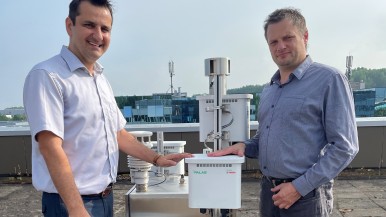
Stuttgart, Germany – Bosch and the Karlsruhe-based measuring technology specialist Palas GmbH want to work together to improve air quality. To this end, the two companies have now agreed to collaborate, each bringing their long-term expertise to the table. Palas will supply comprehensive know-how and technology for measuring a wide variety of gases and airborne particles. In the course of the partnership, Palas will also add the Environmental Connected Box (ECoB) measurement device developed by Bosch to its own portfolio and expand its product range. Bosch is to contribute cloud-based services such as device management and a software model that generates traffic emission data in real time. In addition, dispersion models help locate pollution hot spots, so that pinpointed countermeasures can be defined. The benefit of this alliance will be a comprehensive portfolio for environmentally sensitive urban traffic management, as well as for the fenceline monitoring of the concentration of substances in air at companies’ property lines. Working together with specialized integrators that coordinate all the partners involved in a project, Bosch and Palas will support city authorities and the operators of large industrial complexes. Their compatible products and services will create the basis for reliably and sustainably improving air quality. “With its analyses and simulations, Bosch technology complements Palas’s measuring technology,” says Christoph Kern, head of the Connected Powertrain Solution business unit at Bosch. This allows the actual number and placement of measurement devices required in the long term to be determined and put into cost-efficient operation in cities and at industrial sites. “The combination of Palas measurement devices and Bosch cloud services can help satisfy air pollution limits now and in the future,” says Palas CEO Dr. Maximilian Weiß. First projects with integrators both inside and outside Germany are already in preparation and are slated to start shortly. With its analyses and simulations, Bosch technology complements Palas’s measuring technology...says Christoph Kern, head of the Connected Powertrain Solution business unit at Bosch. The combination of Palas measurement devices and Bosch cloud services can help satisfy air pollution limits now and in the future...says Palas CEO Dr. Maximilian Weiß Two strong companies joining forces Palas air-quality measurement devices are already in use worldwide in official air-quality measurement networks. A range of certified measurement devices is available for various requirements, including EN particulate matter measurements. Now being expanded with the ECoB measurement device, it means that customers are no longer dependent on official measuring stations in many cases. It will be possible to carry out reliable measurements exactly where appropriate. Bosch’s focus within the partnership will be on cloud connectivity and device management, including firmware over-the-air (FOTA) updates, remote diagnostics, and software recalibrations on an as-required basis. These services shall be gradually rolled out to the existing Palas hardware. Additional Bosch services will process readings and allow both air quality and the contributory sources of emission to be assessed. This includes fine-tuned evaluations of traffic emissions and their expected dispersion in the environment in real time. Based on real traffic emission data, Bosch’s high-resolution 3D dispersion simulation can simulate the effects of different traffic control measures and thus identify the best strategies for reducing air pollution. Strong market growth expected On September 13, 2023, the EU Parliament voted to significantly tighten pollution limits including those for particulate matter. Compliance with daily mean and annual limits will require further action. And it is precisely in this context that the solutions offered by Bosch and Palas can assist cities, regions, and companies in Europe and beyond.

TSMC, Bosch, Infineon, and NXP Establish Joint Venture to Bring Advanced Semicon ...

08.08.2023

Press release

Connected mobility

TSMC, Bosch, Infineon, and NXP Establish Joint Venture to Bring Advanced Semicon ...

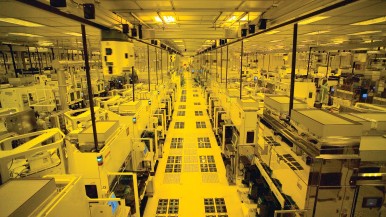
Hsinchu, Stuttgart, Munich, Eindhoven, Aug 8, 2023 – TSMC (TWSE: 2330, NYSE: TSM), Robert Bosch GmbH, Infineon Technologies AG (FSE: IFX / OTCQX: IFNNY), and NXP Semiconductors N.V. (NASDAQ: NXPI) today announced a plan to jointly invest in European Semiconductor Manufacturing Company (ESMC) GmbH, in Dresden, Germany to provide advanced semiconductor manufacturing services. ESMC marks a significant step towards construction of a 300 mm fab to support the future capacity needs of the fast-growing automotive and industrial sectors, with the final investment decision pending confirmation of the level of public funding for this project. The project is planned under the framework of the European Chips Act. The planned fab is expected to have a monthly production capacity of 40,000 300 mm (12-inch) wafers on TSMC’s 28/22 nanometer planar CMOS and 16/12 nanometer FinFET process technology, further strengthening Europe’s semiconductor manufacturing ecosystem with advanced FinFET transistor technology and creating about 2,000 direct high-tech professional jobs. ESMC aims to begin construction of the fab in the second half of 2024 with production targeted to begin by the end of 2027. The planned joint venture will be 70 percent owned by TSMC, with Bosch, Infineon, and NXP each holding 10 percent equity stake, subject to regulatory approvals and other conditions. Total investments are expected to exceed 10 billion euros consisting of equity injection, debt borrowing, and strong support from the European Union and German government. The fab will be operated by TSMC. “This investment in Dresden demonstrates TSMC’s commitment to serving our customers’ strategic capacity and technology needs, and we are excited at this opportunity to deepen our long-standing partnership with Bosch, Infineon, and NXP,” said Dr. CC Wei, Chief Executive Officer of TSMC. “Europe is a highly promising place for semiconductor innovation, particularly in the automotive and industrial fields, and we look forward to bringing those innovations to life on our advanced silicon technology with the talent in Europe.” Dr. Stefan Hartung, chairman of the Bosch board of management: “Semiconductors are not only a crucial success factor for Bosch. Their reliable availability is also of great importance for the success of the global automotive industry. Apart from continuously expanding our own manufacturing facilities, we further secure our supply chains as an automotive supplier through close cooperation with our partners. With TSMC, we are pleased to gain a global innovation leader to strengthen the semiconductor ecosystem in the direct vicinity of our semiconductor plant in Dresden.” Semiconductors are not only a crucial success factor for Bosch. Their reliable availability is also of great importance for the success of the global automotive industry. Apart from continuously expanding our own manufacturing facilities, we further secure our supply chains as an automotive supplier through close cooperation with our partners. With TSMC, we are pleased to gain a global innovation leader to strengthen the semiconductor ecosystem in the direct vicinity of our semiconductor plant in Dresden....said Dr. Stefan Hartung, chairman of the Bosch board of management “Our joint investment is an important milestone to bolster the European semiconductor ecosystem. With this, Dresden is strengthening its position as one of the world’s most important semiconductor hubs that is already home to Infineon’s largest frontend site,” said Jochen Hanebeck, CEO of Infineon Technologies. “Infineon will use the new capacity to serve the growing demand particularly of its European customers, especially in automotive and IoT. The advanced capabilities will provide a basis for developing innovative technologies, products and solutions to address the global challenges of decarbonization and digitalisation.” “NXP is very committed to strengthening innovation and supply chain resilience in Europe,” said Kurt Sievers, President and CEO of NXP Semiconductors. “We thank the European Union, Germany, and the Free State of Saxony for their recognition of the semiconductor industry’s critical role and for their true commitment to boost Europe’s chip ecosystem. The construction of this new and significant semiconductor foundry will add much needed innovation and capacity for the range of silicon required to supply the sharply increasing digitalization and electrification of the automotive and industrial sectors.”About Infineon Infineon Technologies AG is a global semiconductor leader in power systems and IoT. Infineon drives decarbonization and digitalization with its products and solutions. The company has around 56,200 employees worldwide and generated revenue of about €14.2 billion in the 2022 fiscal year (ending 30 September). Infineon is listed on the Frankfurt Stock Exchange (ticker symbol: IFX) and in the USA on the over-the-counter market OTCQX International over-the-counter market (ticker symbol: IFNNY). Further information is available at www.infineon.com . Follow us: Twitter – Facebook – LinkedIn About NXP Semiconductors NXP Semiconductors N.V. (NASDAQ: NXPI) brings together bright minds to create breakthrough technologies that make the connected world better, safer and more secure. As a world leader in secure connectivity solutions for embedded applications, NXP is pushing boundaries in the automotive, industrial & IoT, mobile, and communication infrastructure markets while delivering solutions that advance a more sustainable future. Built on more than 60 years of combined experience and expertise, the company has approximately 34,500 team members in more than 30 countries and posted revenue of $13.21 billion in 2022. Find out more at www.nxp.com . About TSMC TSMC pioneered the pure-play foundry business model when it was founded in 1987, and has been the world’s leading dedicated semiconductor foundry ever since. The Company supports a thriving ecosystem of global customers and partners with the industry’s leading process technologies and portfolio of design enablement solutions to unleash innovation for the global semiconductor industry. With global operations spanning Asia, Europe, and North America, TSMC serves as a committed corporate citizen around the world. TSMC deployed 288 distinct process technologies, and manufactured 12,698 products for 532 customers in 2022 by providing broadest range of advanced, specialty and advanced packaging technology services. The Company is headquartered in Hsinchu, Taiwan. For more information please visit https://www.tsmc.com .

Steer-by-wire ready for large-scale production: Bosch and Arnold NextG enter int ...

12.06.2023

Press release

Automated mobility

Steer-by-wire ready for large-scale production: Bosch and Arnold NextG enter int ...

Schwäbisch Gmünd, Germany – Bosch wants to bring steer-by-wire systems to the market on a commercial scale by the middle of the decade. Together with the startup Arnold NextG, the supplier of technology and services is taking the next step. The two partners have recently entered into an alliance to pool their development expertise and accelerate the process of readying the solutions for the market. We’re seeing rapidly rising demand for steer-by-wire systems. This should prove to be an exceptionally large market over the long term – especially, although by no means only, for the age of automated driving. We’re excited to see the momentum this alliance will lend to our work on system optimization ...says Dr. Gerta Marliani, president of Robert Bosch Automotive Steering GmbH. Steer-by-wire systems are considered the steering systems of the future. As one of the world’s leading suppliers of electric steering systems, Bosch recognized the potential of steer-by-wire systems early on and is systematically driving their development forward. “We’re seeing rapidly rising demand for steer-by-wire systems. This should prove to be an exceptionally large market over the long term – especially, although by no means only, for the age of automated driving. We’re excited to see the momentum this alliance will lend to our work on system optimization,” says Dr. Gerta Marliani, president of Robert Bosch Automotive Steering GmbH. The aim of the partnership is to accelerate the large-scale production of steer-by-wire solutions. Arnold NextG specializes in the development of multi-redundant drive-by-wire systems with all interfaces for autonomous driving in small and very small batch sizes. Founded in 2021, the startup has employees with over 20 years’ combined experience in street legal drive-by-wire technology, giving the company unique expertise in developing retrofit solutions for all by-wire applications. Experience has shown that, thanks to the redundancy of Arnold NextG technology, the authorities can issue system approvals for driving on public roads more quickly and efficiently. Together, Bosch and Arnold NextG aim to accelerate the development of systems that can be manufactured on a commercial scale. Steer-by-wire applications eliminate the physical connection between a vehicle’s steering wheel and its wheels. This opens up new possibilities for, say, redesigning the vehicle interior: the steering wheel can be lowered or stowed away, giving rise to entirely new cockpit concepts, especially in an age of automated driving. The technology also enables new safety features in vehicle dynamics control. For instance, even small automated steering interventions can stabilize the vehicle without the driver at the wheel even noticing. In addition, the vehicle’s driving feel can be tailored to the requirements of individual vehicle manufacturers. The use of a vehicle-independent and add-on-capable drive-by-wire technology in the radically changing series vehicle platforms of the future is of crucial importance, especially for people with the most severe physical mobility impairments. Only in this way will it be possible for this target group to continue to benefit directly from all developments in the field of autonomous and automated driving, assistance and safety systems.Pooling by-wire expertise “The alliance with Arnold NextG provides ideal support and accelerates our product development. We can apply our expertise in large-scale production and, with the Arnold NextG technology installed, we can now carry out tests on public roads more quickly,” says Dr. Stefan Waschul, the member of the Robert Bosch Automotive Steering GmbH management board responsible for development. “We’ve seen that the Bosch steer-by-wire system has the best and most natural steering feel in the market. Bosch is one of the world’s leading suppliers of electric steering systems and already offers a strong package of control technology and performance for large-scale applications downstream. That’s why I’m proud, not only to be able to build on one of the best systems, but also to have Bosch – one of the biggest automotive suppliers in the world – at our side,” says Kevin Arnold, founder and CEO of Arnold NextG, in commenting on the new alliance. “With the Arnold NextG technology, Bosch has a vehicle-agnostic development platform for drive-by-wire retrofit solutions that makes it possible to validate data and requirements for large-scale production projects at an early stage of development. Together, we can further develop this technology for large-scale manufacturing. Access to Bosch technology and the experience of a global corporation in implementing large-scale production projects is crucial for the further development of our systems.” Innovative mobility solutions thanks to by-wire technology By-wire systems use electronics to transmit mechanical signals and pulses. They will also be a basic requirement for assisted and automated driving in order to fully tap the capabilities of individual functions. For example, the lane-keeping support system would be able to correct the direction of travel without the driver feeling it in the steering wheel. The vehicle can also avoid an unexpected obstacle without jerking the steering wheel and injuring the driver. With this technology, it may even be possible in the future to steer the wheels individually. This ensures a smaller turning radius and opens the door for new vehicle concepts for local traffic and goods transport in cities.

Bosch charging services support the ramp-up of electromobility

21.03.2023

Press release

Connected mobility

Bosch charging services support the ramp-up of electromobility

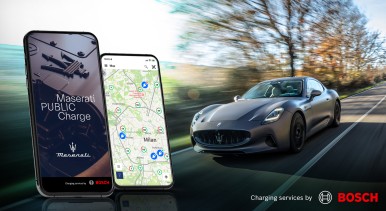
Stuttgart, Germany – Worldwide, there are more and more electric cars on the road. But how convenient is it to recharge electric vehicles? How quickly can drivers find a vacant charge point? And how easy is it to pay for the charging process? The answers to these questions will determine the success of electromobility – and thus also the achievement of climate targets. “Making it straightforward to recharge electric vehicles reduces range anxiety and is a prerequisite for their widespread acceptance. Bosch charging services offer the drivers of electric cars easy access to one of Europe’s biggest and steadily growing charging networks,” says Dr. Markus Heyn, member of the board of management of Robert Bosch GmbH and chairman of its Mobility Solutions business sector. Customers who use Bosch charging services already have access to some 450,000 publicly accessible charge points in 30 European countries – one of the largest charging networks in Europe. The Italian automaker Maserati has now made Bosch charging services available for the first time in its new electric model, the GranTurismo Folgore – not only in Europe but also, in the course of 2023, in the Asia-Pacific region. Charging services hold immense potential: by 2030, Bosch expects more than one in three new vehicles worldwide to be purely electric; in Europe, it could be as many as two in three. By 2035, it expects one in two newly registered passenger cars worldwide to be an electric car. “We expect a huge surge in growth for our charging services business over the course of the decade – because as electromobility ramps up, so does the need for straightforward and comprehensive charging solutions. We will benefit from this,” Heyn adds. By the end of the decade, Bosch is expecting its charging solutions business to expand by more than 50 percent each year. Bosch offers its solutions for recharging electric cars to vehicle manufacturers and companies. The charging services can be flexibly and easily integrated into a manufacturer’s look and feel and infotainment system, both functionally and visually, so that the driving and charging experience retain the manufacturer’s individual look and fit into its brand world. As a result, Bosch charging services are making electromobility even more suitable for everyday use. Making it straightforward to recharge electric vehicles reduces range anxiety and is a prerequisite for their widespread acceptance. Bosch charging services offer the drivers of electric cars easy access to one of Europe’s biggest and steadily growing charging networks ...says Dr. Markus Heyn, member of the board of management of Robert Bosch GmbH and chairman of its Mobility Solutions business sector. Maserati GranTurismo Folgore with Bosch charging services At Maserati, the Bosch charging services are now available for the first time in the recently unveiled GranTurismo Folgore. Once registered for the services, drivers of the GranTurismo Folgore can display the charge point information on their navigation system and on the app. It takes just a few taps to find a charge point, charge, and pay. For example, the service makes it simple to navigate to an available charge point directly, or to pull up information on restaurants and shopping centers in the vicinity of the customer’s position. Bosch also spares users the tedious task of researching car-electricity tariffs by listing which costs and terms of use apply at given charge points. Billing takes place automatically using the credit card details added to the app. Bosch charging services are for more than just charging electricity In addition to charging services for drivers of electric cars, Bosch also offers services for charge point operators. Bosch’s software services enable charge point operators to remotely control and manage their charge points and also integrate them into the Bosch charging network. For this purpose, the company concludes contracts with the charge point operators and connects their charge points to the network. On an especially encouraging note, the Bosch charging network is constantly growing. By mid-2023, it is expected to include around 700,000 charge points in Europe, North America, and the Asia-Pacific region. “With our charging services and our growing charging network, we are playing a decisive part in making electromobility a success story even faster. In this way, Bosch is also helping Germany achieve its climate targets,” Heyn says.

Bosch drives forward the development of 6G

27.02.2023

Press release

Connected mobility

Bosch drives forward the development of 6G

Stuttgart, Germany – Worldwide, research and development work on the future 6G mobile communications standard is picking up pace. Companies and states are investing massively in this technology. Bosch is leading the way and is actively involved in projects, alliances, and initiatives at both the national and international level to lay important foundations for 6G technology. “6G will be much more than just an infrastructure for connectivity; it will greatly increase the efficiency of autonomous driving cars, smart cities, and connected industries. That’s why 6G is a strategically important field of technology,” says Dr. Andreas Müller, who bundles and manages 6G activities at Bosch. The company currently has some 40 associates working on 6G technology. Over the next two years, that number is likely to double,” Müller says. Bosch is currently investing several millions of euros in research and development for 6G. 6G will be much more than just an infrastructure for connectivity; it will greatly increase the efficiency of autonomous driving cars, smart cities, and connected industries. That’s why 6G is a strategically important field of technology...says Dr. Andreas Müller, who bundles and manages 6G activities at Bosch. Bosch and Nokia expand their research alliance to include 6G At the Mobile World Congress 2023 in Barcelona, Bosch and Nokia have now announced that they will expand the alliance they entered into in 2017 to develop industrial IoT solutions in the area of 5G so that it also addresses the new 6G technology. The two companies are conducting joint research on the next generation of networks and investigating how to use future 6G networks for both communications and sensors. Comprehensive Bosch commitment at national and international level Bosch is currently contributing its expertise and experience to five publicly funded projects. In this context, the 6G-ICAS4Mobility , KOMSENS-6G , and 6G-BRAINS projects focus primarily on integrating communication and sensor-based environment recognition. Bosch leads the consortium for the first project . In addition to addressing relevant scenarios for road traffic, insights gained from the project will serve, in particular, as technical foundations for applications in the connected drones domain as well as in Industry 4.0 (e.g. for driverless transport systems). Meanwhile, the 6G-ANNA and 6G-SHINE projects focus on new connectivity structures. These are intended to enhance the efficiency of future E/E architectures in vehicles or robot cells. Bosch is also taking an active and leading role in early discussions and activities relating to future mobile communications standards within various industry alliances. In the 5G Automotive Association (5GAA) , for instance, leading companies from the automotive and telecommunications industries are working together to develop solutions for the mobility of the future. The 5G Alliance for Connected Industries and Automation (5GACIA) brings together industrial companies to focus on connectivity for machinery and equipment. Networks with a sixth sense through integration of sensor technology Among other things, the next generation of mobile communications will integrate new functionalities similar to radar sensors. With 6G, it will be possible to detect the position of objects in the network’s coverage area – without these objects having to be equipped with a radio module. 6G will enable extremely high data rates of up to one terabit per second, with very low latency in the order of some 100 microseconds – which is four times faster than a lightning strike. With the help of digital twins, this will for instance make it possible to monitor and simulate real-world manufacturing processes in a virtual world with no temporal and spatial restrictions. Experts predict that the first 6G standard will be completed by 2028. In recent months, Germany and Europe have launched a large number of 6G projects with the goal of strengthening their technological sovereignty. The German government, through the Federal Ministry of Education and Research (BMBF), is providing some 700 million euros over the next three years to fund 6G activities. In addition, the EU budget has earmarked a further almost 900 million euros until 2027. Japan and the United States have also launched corresponding investment programs totaling around 4.5 billion dollars.

IAA Mobility: climate-friendly solutions for all kinds of mobility – Bosch is ge ...

06.09.2021

Press release

Connected mobility

IAA Mobility: climate-friendly solutions for all kinds of mobility – Bosch is ge ...

Munich, Germany – In electromobility, no other company offers as many options as Bosch: from e-bikes to construction machinery, and from silicon carbide chips to pre-integrated e-axle modules. And this is paying off: in electromobility, Bosch is growing twice as fast as the market, and will generate more than 1 billion euros in sales this year. This business is continuing to gain speed: by 2025, sales are expected to grow five-fold. “Electromobility will become a core business for us, and CO₂-free mobility a growth area. We are turning challenges into opportunities – that’s how we do things at Bosch,” said Dr. Volkmar Denner, chairman of the Bosch board of management, at IAA Mobility 2021 in Munich. These growth areas also include automated driving. Driver assistance is the basis for all the levels of automated driving. At 40 percent, the market leader Bosch is growing faster than the market in this field as well. The company’s healthy position in the areas of electromobility and automated driving is helping it to successfully hold its own in a market environment marked by the Covid crisis, chip shortages, and the even faster transformation of the mobility sphere: the sales revenue of its Mobility Solutions business sector will grow 10 percent this year. “Bosch is a technology leader, and this means business success,” Denner said. Electromobility will become a core business for us, and CO₂-free mobility a growth area. We are turning challenges into opportunities – that’s how we do things at Bosch....Dr. Volkmar Denner, chairman of the Bosch board of management Electric driving – breakthrough thanks to Bosch high-tech Electromobility will be the next chapter in the Bosch success story. With upfront investments totaling 5 billion euros so far, and the most efficient electrical powertrain solutions in the market, the company is helping it to a breakthrough. This year alone, upfront investments will come to another 700 million euros. Bosch sees itself as a proactive company that shapes the future. “We are preparing for increasing demand for electric vehicles across the globe. Worldwide, we expect that 60 percent of all newly registered vehicles in 2035 will be electric,” said Dr. Stefan Hartung, member of the board of management and chairman of the Mobility Solutions business sector. In the case of e-bikes, Bosch has been showing for ten years now that innovativeness can create markets. The company’s aim is to shape the mobility of the future, across the entire range. “It must be climate-friendly, but it also has to be affordable and attractive, not least in light of the ambitious targets set by the EU,” Denner added. “Only in this way will people and freight stay mobile in the future as well.” To bring this about, Bosch is continuing to pursue a technology-neutral approach, offering climate-friendly solutions worldwide for all types of mobility, in line with the requirements of national policy. Bosch is investing not only in battery-electric powertrains, but in fuel-cell powertrains as well, and is involved in customer projects in China, the United States, and Europe. The first trucks featuring Bosch technology are already on the road in China. Bosch technology helps make people’s everyday lives easier. When driving electrically, recharging plays a decisive role. In Munich, Bosch is premiering a new flexible charging cable for electric cars. It features integrated control and safety technology and adapters for Type 2 and household plugs. Even when recharging at a 230-volt power socket, it can do without the otherwise usual in-cable control box, which means that it weighs less than three kilograms – some 40 percent less than conventional charging cables featuring control boxes. And to relieve drivers of the chore of looking for somewhere to recharge on their journeys, the Bosch web-based recharging service gives them access to more than 200,000 charge spots in Europe – including hassle-free payment. Autonomous driving – Bosch offers everything from a single source Domain control units, sensors, artificial intelligence: the Bosch portfolio contains all the elements of automated driving, and the company has some 5,000 engineers working on all its levels. Not least among these elements are enhanced assistance functions that allow drivers to take their hands off the wheel. And completely driverless functions are also already possible thanks to Bosch. “With pilot projects in the areas of automated valet parking, Bosch has set standards in Germany and the United States,” Denner said. Bosch is already working with Mercedes-Benz and other partners on deploying this function in the P6 parking garage at Stuttgart airport. The new Mercedes-Benz S-Class is the world’s first production vehicle to feature the technology needed for this. So that driverless vehicles can navigate by smartphone command to a reserved parking bay, Bosch is equipping the parking garage with technology such as fixed-installation video cameras. A further 1,000 parking garages are expected to follow suit by 2025. For all the extra convenience associated with such developments, Bosch sees automated driving above all as something that can make road traffic safer. Bosch pioneered systems ranging from electronic skid control to automatic emergency braking, and continues to pursue the goal of accident-free driving. At the same time, the company is providing innovative software as the basis for the intelligence cars need to have. “Even in the software-dominated mobility of the future, our profound systems expertise will be an advantage: Bosch is equally at home in the world of on-board electronics and of the internet of things, with which cars will be connected,” Denner said. Connected driving – Bosch thinks beyond the engine hood As Bosch predicted ten years ago, vehicles are increasingly turning into internet nodes. In the future, software will be just as important as powertrain performance or efficiency. Bosch is actively shaping this change. And the company is well positioned for this: nearly half the R&D associates in the Mobility Solutions busines sector are software engineers. Even the bicycle is becoming part of the internet, as evidenced by the new Bosch eBike Flow app. For example, it enables the software in components to be updated. In addition, software integration is becoming more and more important: here as well, Bosch has the necessary expertise. Take infotainment computers: by 2025, their computing power and software complexity will double. Bosch ensures that the various software modules work reliably with each other. When it comes to connectivity, moreover, the company’s ideas go far beyond vehicles. “Bosch isn’t just about cars, but also knows its way around the factory and home environments. Like no other company, we can connect different domains with each other,” Hartung said. Since April this year, Mercedes-Benz models featuring the MBUX voice assistant have also been a command center for Bosch smart-home applications. From the driver’s seat, a voice command is sufficient to contact the smart home and switch off the lights, open blinds, and control the heating. All this shows that Bosch technology is paving the way to mobility that is sustainable, safe, and exciting.