Search & find:
Media, press releases, events for your editorial coverage

Bosch at Agritechnica 2025

06.11.2025

Press release

Commercial vehicles

Bosch at Agritechnica 2025

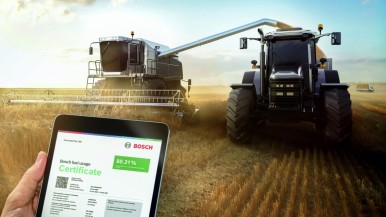
Stuttgart/Hannover, Germany – In 2025 alone, more than two million tractors and other agricultural vehicles will be produced worldwide. And according to Bosch, over 90 percent of them will be powered by a diesel engine. Its robustness and high performance combined with low weight make it ideal for almost all applications and performance classes. At the Agritechnica trade fair in Hannover, Bosch will be demonstrating how CO 2 emissions can be further reduced using this established technology. “Renewable synthetic fuels immediately make operating both new and existing vehicles much more climate-friendly,” says Jan-Oliver Roehrl, executive vice president of the Bosch Power Solutions division and head of commercial vehicle activities at Bosch. “And in the future, hydrogen engines and electrification also stand to help make agriculture much more sustainable.”Even in 2035, Bosch expects that nine out of ten new agricultural vehicles will still have a diesel engine. The company will therefore continue to offer and further develop the appropriate injection and urea-metering technology for exhaust-gas treatment for the different vehicle types in this market segment. At the same time, Bosch offers new options for the most climate-friendly powertrain possible with components for the hydrogen engine along with various electrification solutions. Renewable synthetic fuels make combustion engines more climate-friendly All major markets worldwide have already instituted comprehensive emissions regulations for agricultural vehicles that set maximum values for nitrogen oxides and particulates. As a result, SCR exhaust-gas treatment systems with urea metering are standard for diesel engines in vehicle classes above 56 kilowatts. To date, however, their climate-relevant emissions have been regulated by law only to a limited extent. One simple option for greatly reducing the carbon emissions of existing and new vehicles that is already available today is to use renewable synthetic fuels such as HVO100. Because these fuels are based predominantly on residual and waste materials, they are much more climate-friendly than fossil fuels in terms of overall carbon emissions. They are also “drop-in” fuels, meaning they can be mixed with normal diesel fuel as required. And, again like diesel, they are easy to store. Since Bosch already takes compatibility with these fuels into account when developing its injection technology, they are suitable for use in numerous products. The Digital Fuel Twin documents the use of renewable synthetic fuels Just how comprehensively renewable synthetic fuels reduce the carbon footprint of each individual vehicle is shown by Bosch’s Digital Fuel Twin (DFT). A purely digital software solution, the DFT documents the amounts of fuel distributed as well as the fuels’ sustainability – from production and transportation all the way to the filling station. It provides the operators with certificates corresponding to the ratio of fossil to renewable synthetic fuels used in their vehicles; these document the total amounts of fuel used and even the proportionate carbon footprint when using the vehicle. Hydrogen engines build on tried-and-tested foundations The hydrogen engine is a new type of powertrain that takes climate action a step further. If the hydrogen fueling the engines is produced with renewable energy, it could mark a big step forward for the climate. Bosch is working on systems with intake manifold and direct injection and can draw on decades of expertise: some 80 percent of the technology involved can be transferred from conventional combustion engines. The technology company is already involved in more than 100 development projects with customers worldwide. “Agricultural vehicles are often operated at low speeds and high loads. This is precisely where hydrogen engines, with their high efficiency and robustness, can really excel,” Roehrl says. “The first applications of hydrogen engines featuring Bosch injection technology will be launched this year.” Electrification solutions for agricultural machinery Electrification of the drive systems and powered implements is another efficient, climate-friendly option for agricultural machinery. With its eLION electrification portfolio, Bosch Rexroth already offers a wide range of motors, inverters, on-board chargers, DC/DC converters, software, and accessories. Geared toward demanding applications, the portfolio is designed for operation in the DC voltage range up to 850 volts and is supplemented by the right transmissions and hydraulic solutions. The portfolio is currently being expanded to include components for 96-volt vehicle electrical systems; at the end of 2025, it will also feature the comprehensive eLION Power and Motion Control software package. Bosch Engineering, meanwhile, is presenting a newly developed high-performance solution for battery voltages of up to 800 volts. This new electric powertrain system is compact and offers high power density as well as high efficiency, which makes the electrification of existing device platforms easier. Depending on the application, the system can be used in small to medium-sized agricultural machines as a purely battery-electric powertrain or in large agricultural machines as a hybrid in conjunction with a diesel engine. In addition to electric powertrains for auxiliary systems, Bosch also offers other mechatronic subsystems with high-voltage technology for electrified commercial and off-highway vehicles – cooling fans, for example. Here, too, the special requirements of the commercial vehicle segment, including those relating to safety and security, were taken into account. The components are compact and use a common inverter concept, which makes it possible to implement customer-specific adaptations with little effort. Bosch, Bosch Rexroth, and Bosch Engineering will be showcasing these solutions at Agritechnica in hall 16 at booths 16A05 and 16A12.

Bosch at bauma 2025

07.04.2025

Press release

Powertrain systems

Bosch at bauma 2025

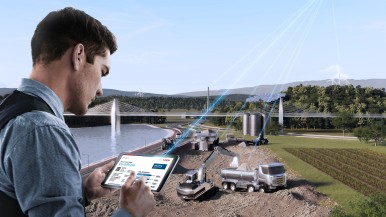
Stuttgart and Munich, Germany – Over one million new construction vehicles will be produced worldwide in 2025 alone. As different as their performance classes and tasks are, they almost all have one thing in common: a diesel engine. Its robustness and strength make it the ideal powertrain for a wide range of applications. At the bauma 2025 trade fair, Bosch will be showing how carbon emissions can be reduced even further in this vehicle segment. “Renewable synthetic fuels make operating both new and existing vehicles much more climate-friendly,” says Jan-Oliver Roehrl, executive vice president of the Bosch Power Solutions division and head of commercial vehicle activities at Bosch. “And in the future, hydrogen engines and electrification also stand to make construction machinery much more sustainable.” Renewable synthetic fuels make operating both new and existing vehicles much more climate-friendly. And in the future, hydrogen engines and electrification also stand to make construction machinery much more sustainable....Jan-Oliver Roehrl, executive vice president of the Bosch Power Solutions division and head of commercial vehicle activities at Bosch Renewable synthetic fuels make combustion engines more climate-friendly Construction vehicles are already subject to comprehensive exhaust-emission regulations, such as Stage V in Europe, Tier 4 in the U.S., and Phase IV in China. To date, however, their climate-relevant emissions have been regulated only to a limited extent, at least by law. One simple option for greatly reducing their carbon emissions that is already available today is to use renewable synthetic fuels such as HVO100. Because these fuels are based on residual and waste materials, they are much more climate-friendly than fossil fuels in terms of overall carbon emissions. They are also “drop-in” fuels, meaning they can be mixed with normal diesel fuel as required. Since Bosch already takes compatibility with these fuels into account when developing its injection technology, they are suitable for use in its products. According to Bosch forecasts, four out of five new construction vehicles worldwide with over 56 kilowatts will still have a diesel engine in 2035. That is why Bosch will continue to develop injection technology and urea dosing technology for exhaust-gas treatment in the future to suit the various segments of the construction machinery market. The Digital Fuel Twin documents the use of renewable synthetic fuels Renewable synthetic fuels can make construction machinery more climate-friendly: the more of it they use, the smaller the carbon footprint of each individual vehicle. Bosch makes this effect visible with a purely digital software solution called the Digital Fuel Twin. This documents the amounts of fuel distributed as well as the fuels’ sustainability, from production and transportation all the way to the filling station. It provides the operators of construction machinery with certificates corresponding to how they have refueled their vehicles; these document the total amounts of fuel used and even the proportionate carbon footprint when using the vehicle. Hydrogen engines build on tried-and-tested foundations When it comes to hydrogen engines, German manufacturers and suppliers can draw on decades of expertise, particularly in the field of engine technology: some 80 to 90 percent of the technology involved can be transferred from conventional combustion engines. If the hydrogen fueling the engines is produced with renewable energy, their use could mark a big step forward for the climate. Often, construction machinery is stationary and operates under heavy loads. “This is precisely where hydrogen engines, with their high efficiency and robustness, can really excel,” Roehrl says. “The first applications of hydrogen engines featuring Bosch injection technology will be launched this year.” Bosch is working on both port- and direct-injection systems and is already involved in more than 100 development projects with customers worldwide. Moreover, the hydrogen engine is also a promising option for large engines, for example as the powertrain for dump trucks in mining. Here, too, robustness and reliability combined with a compact design are essential for economical operation. Electrification solutions for construction machinery In certain construction machinery applications, electrification is another efficient and climate-friendly option for mobile and stationary functions. With its eLION electrification portfolio, Bosch Rexroth already offers a wide range of motors, inverters, gearboxes, software, and accessories, including the appropriate hydraulics. This Bosch subsidiary is currently expanding its range to include components for 96-volt vehicle electrical systems; at the end of 2025, it will introduce a standardized software platform for all voltage classes. Bosch Engineering, meanwhile, is presenting a newly developed high-performance solution for battery voltages of up to 800 volts. This subsidiary’s new electric powertrain system is compact and offers high power density as well as high efficiency. It is also suitable for construction machinery with high power requirements and limited installation space, such as wheel loaders. Bosch, Bosch Rexroth, and Bosch Engineering will be showcasing these solutions at bauma, at booths A3/327 and A4/526.

City, country, freeway: Bosch paves the way for climate-neutral transportation

08.10.2020

Press release

Powertrain systems

City, country, freeway: Bosch paves the way for climate-neutral transportation

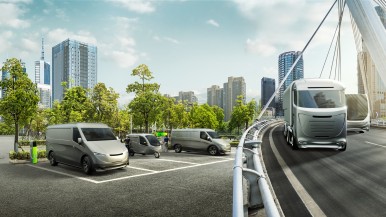
Stuttgart, Germany – Climate action for road transport calls for a broad technology offensive. Commercial vehicles in particular have a wide variety of requirements when it comes to powertrain solutions, as the CO₂ emissions differ greatly depending on driving profile, payload, and driving distance. While light vehicles tend to drive shorter distances, for example on downtown delivery routes, heavy-duty trucks transport goods and merchandise over long distances. To meet EU requirements, CO₂ emissions need to be cut dramatically in both light commercial vehicles and heavy trucks by 2030. Bosch hopes to play a role in realizing climate-neutral transportation for all vehicle classes. To this end, the company is developing a range of efficient powertrains – from combustion engines and battery-electric models to fuel cells.Powertrain solutions for commercial vehicles Silent through the city – the electric powertrain for light commercial vehicles It’s hard to imagine city streets without delivery vehicles, tradespeople, and other small-scale businesses – especially given the steadily rising demand for goods and services. That is why society needs pioneering powertrains that put as little strain as possible on residents and the environment. Bosch’s eCityTruck powertrain solutions allow for low-noise driving with zero local emissions. Together, they form a compact module made up of the e-axle, which combines the electric motor, power electronics, and transmission in a compact unit, and an electric drive module (without the transmission). Both solutions are easy to integrate and can be scaled for light commercial vehicles up to 7.5 tons. Depending on the battery design, they enable ranges of up to 200 kilometers, meaning that most delivery routes of less than 80 kilometers a day are easily covered on a single charge. “With our modular eCityTruck powertrain solutions, we are making the electrified powertrain economical, compact, and efficient,” says Uwe Gackstatter, president of the Bosch Powertrain Solutions division. In doing so, Bosch is getting electric vans ready for the mass market. Battery power for country roads, too – economical electrification for regional delivery trucks from 7.5 to 26 tons Bosch is driving forward the electrification of commercial vehicles outside the city limits as well. For instance, the company offers eRegioTruck powertrain solutions for medium- and heavy-duty trucks as well as for city and long-distance buses, and special use cases. The powertrain concept plays a critical role in making regional traffic within a radius of some 250 kilometers as economical and efficient as possible – not only that, it does it with low noise and zero local emissions. An electric motor, inverter, and vehicle control unit are all part of this systems solution. Depending on the topology, the compact electric motor can come as a separate electrical unit in combination with a transmission, or as an active component integrated into a rigid axle. Going the distance efficiently – Bosch powertrain solutions for long routes and heavy loads Because of the high mileage and the load they transport, the potential for reducing CO₂ in vehicles that drive long-haul routes is particularly great. For each customer’s needs, no matter where in the world, Bosch offers the right powertrain solution – whether it’s powered by diesel, natural gas, battery, or fuel cell. In addition, Bosch is currently examining the technical issues regarding the use of hydrogen in combustion engines and is looking into the marketability of this technology. The engine technologies available today and existing vehicle architectures already form a solid basis for developing this approach. eDistanceTruck powertrain solutions: In the future, how will trucks weighing as much as 40 tons be able to travel more than a thousand kilometers in electric mode? The key lies in Bosch’s eDistanceTruck powertrain solutions. These include the fuel cell as well as hybrid drives. The fuel-cell system in particular scores points with its combination of long range and short refueling times. If the hydrogen used comes from renewable sources, then the fuel cell’s operation is climate-neutral. Bosch offers various solutions for mobile fuel-cell systems that address customer requirements around the world: for the stack as the core of the design, the individual components in the submodules, or the overall system for commercial vehicles. Thanks to their compact design, the solutions are easy to integrate into existing vehicle platforms. Bosch is currently working with the startup Powercell to develop the stack and make it market-ready. The plan is to begin the large-scale manufacture of fuel-cell stacks in 2022 and launch the complete fuel-cell system – the Bosch fuel cell power module – in 2023. In addition, Bosch is currently working with other companies as part of the EU-funded H2Haul project to build a small fleet of fuel-cell trucks and put them on the road. Bosch components for natural gas powertrains: In regions with well-developed infrastructure for natural-gas filling stations, Bosch’s natural-gas drive system offers a viable alternative to conventional fuels for long-haul routes. Compared to liquid fuels, natural gas produces lower CO₂ and particulate emissions and offers cost advantages in many countries, depending on the local fuel prices. Bosch has a comprehensive portfolio of proven natural gas technology for many different vehicle types. Bosch diesel technology: The diesel engine is the dominant powertrain in commercial vehicles and will remain the preferred choice for the foreseeable future. No other combustion engine is used in such a variety of ways. Its advantages include high efficiency and the associated economic benefits, as well as strong engine performance. Bosch’s diesel portfolio features components for fuel injection and fuel supply, engine and air management, and exhaust-gas treatment. The company has also approved these for the use of synthetic fuels. Working together, Bosch and the Chinese engine manufacturer Weichai Power were the first to increase the efficiency of a commercial-vehicle diesel engine up to 50 percent – a real milestone, given that the maximum value for trucks to date was 46 percent. “This demonstrates that Bosch is systematically improving its diesel drive systems for on- and off-highway operation,” Gackstatter says. One feature of the new engine is Bosch’s modular common-rail system for commercial vehicles with up to 2,500 bar injection pressure. The system ensures efficient fuel supply and injection, is scalable, and can be configured for engine sizes with up to eight cylinders. Depending on the segment, it has a service life of up to 1.6 million kilometers, and in off-highway operation, 15,000 hours. In addition, the exhaust-gas treatment by urea injection – called selective catalytic reduction, or SCR – in the Bosch SCR system with double injection helps further reduce the emissions of diesel vehicles and make them more economical in their use of resources. Here, urea is injected into a catalytic converter close to the engine and into one located farther away. The system responds flexibly to driving conditions, such as high- and low-load cycles or cold starts, and can thus effectively and efficiently reduce the emission of nitrogen oxides. It is also designed for low fuel consumption. Completely connected – the internet of things (IoT) in the drive system for shorter development times and faster troubleshooting Bosch connects the drive system and provides cloud-based services for the entire vehicle life cycle. An example of such an IoT application is web-based validation in large-scale development. This process transfers powertrain data from the connected vehicles. Remote analysis makes it possible to monitor and evaluate different applications simultaneously, allowing defects in the drive system to be detected at an early stage. This reduces development time and further enhances the system’s reliability in production vehicles. Additional IoT applications for production vehicles can eliminate imminent failures of individual components using specially developed algorithms, thus effectively preventing downtimes.

Bosch and Weichai Power increase efficiency of Weichai truck diesel engines to 5 ...

16.09.2020

Press release

Powertrain systems

Bosch and Weichai Power increase efficiency of Weichai truck diesel engines to 5 ...

Stuttgart, Germany and Weifang, China – Bosch and the Chinese engine manufacturer Weichai Power have made a huge leap forward in engine technology. The two partners have successfully increased the efficiency of Weichai diesel engine for heavy commercial vehicles up to 50 percent, thus setting a new global benchmark. Currently, thermal efficiency for truck engines averages around 46 percent. “In increasing the efficiency by four percentage points, we have jointly reached a new milestone. Even though the diesel engine is nearly 130 years old, its development continues,” said Dr. Volkmar Denner, chairman of the board of management of Robert Bosch GmbH. In addition to its common-rail system with injection pressure of 2,500 bar, Bosch also contributed its full technical know-how in fuel injection systems. Particularly when it comes to commercial vehicles, and above all when heavy loads have to be transported over long distances, the diesel engine will remain the preferred choice for the foreseeable future. For this reason, Bosch and Weichai aim to steadily refine this technology with an eye to protecting the climate and environment. In increasing the efficiency by four percentage points, we have jointly reached a new milestone. Even though the diesel engine is nearly 130 years old, its development continues....Dr. Volkmar Denner, chairman of the board of management of Robert Bosch GmbH Bosch’s common-rail system is at the diesel engine’s heart Bosch and Weichai launched their joint development project in September 2018. “Bosch offered great support on the breakthrough and unprecedented achievement of 50 percent efficiency in Weichai commercial-vehicle diesel engine. We’re very pleased to be continuing our highly successful partnership with Bosch,” says Tan Xuguang, chairman of the Weichai Group. Bosch provides its modular common-rail system for the six-cylinder diesel engine with 12.9 liters displacement. Because it guarantees efficient fuel supply and injection, it is a critical element in ensuring the engine complies with the China VI emissions standard. The Bosch system can be used for pressure levels from 1,800 to 2,500 bar and configured for engine sizes up to eight cylinders. High injector flow rates make it possible to optimize the combustion strategy and achieve high engine performance. Depending on the demands it is subject to, the system can last for up to 1.6 million kilometers. The common-rail system is also designed to work with an electrified powertrain.Making trucks even cleaner, safer, and more intelligent Bosch and Weichai, China’s largest manufacturer of engines for commercial vehicles, have enjoyed many years of partnership. Their strategic alliance began back in 2003. Over the 17 years since, both companies have pooled their strengths and expertise in multiple endeavors, one of which was supplying the Chinese market with powerful, energy-efficient, and eco-friendly diesel engines. Furthermore, Bosch and Weichai collaborate in several other areas, including the mobile fuel cell and driver assistance systems. They are united by a common objective: making commercial vehicles even cleaner, safer, and more intelligent. Bosch and Weichai’s close partnership also extends beyond vehicle technology – to Industry 4.0, for example, and in turn, the connectivity and digitalization of factories.Bosch champions electromobility and efficient combustion engines Bosch aims to make transportation as resource-friendly as possible, and is pursuing the vision of CO 2 -neutral and virtually emissions-free mobility in several ways. In its approach to future powertrain technology, the supplier of technology and services is keeping an open mind. On the one hand, Bosch aims to become the market leader in electromobility with battery and fuel cell-powered vehicles. Electric vehicles are climate-neutral if the charging power and hydrogen are sourced from renewables. On the other hand, Bosch is developing technology for efficient combustion engines to combat global warming and protect the environment to the greatest extent possible. If they run on RSF, gasoline and diesel engines can also be climate-neutral on the road. Bosch expects around one-third of all newly registered vehicles worldwide to be purely electric by 2030. Two-thirds of them will still be powered by a combustion engine, many of them as hybrids.

A milestone on the road to fully connected traffic

05.05.2020

Press release

Connected mobility

A milestone on the road to fully connected traffic

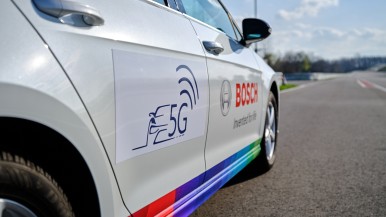
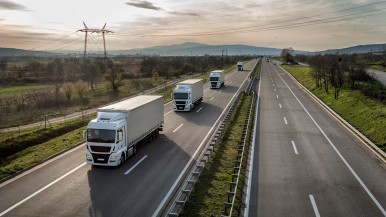
Stuttgart and Hildesheim, Germany – Safer, more convenient, greener: connected vehicles that can communicate with roadside infrastructure in real time reduce emissions and the risk of accidents. This communication requires a stable and reliable data link provided by high-performance 5G, the new fifth-generation wireless technology for cellular networks, or by Wi-Fi-based alternatives (ITS-G5). Sixteen research institutions, medium-sized enterprises, and major players have been working toward this goal over the past three years in the 5G NetMobil research project. They are now presenting their results which will enable major strides for a new era in mobility. “With the 5G NetMobil project, we have achieved decisive milestones on the road to fully connected driving and are demonstrating how modern communication technologies can make our road traffic safer, more efficient, and more economical, all at the same time,” says Thomas Rachel MdB, parliamentary state secretary in the German Ministry of Education and Research. His ministry had funded this research project with 9.5 million euros. The groundwork done in this project in the areas of networks, security, and communication protocols now underpins efforts to standardize specifications, develop new business models, and ramp up the partners’ first production runs. With the 5G NetMobil project, we have achieved decisive milestones on the road to fully connected driving and are demonstrating how modern communication technologies can make our road traffic safer, more efficient, and more economical, all at the same time....Thomas Rachel MdB, parliamentary state secretary in the German Ministry of Education and Research A launch pad for innovative traffic engineering In many traffic situations, it is virtually impossible for drivers to see everything they need to, such as pedestrians crossing convoluted intersections or vehicles suddenly emerging from blind alleys. Radar, ultrasonic, and video sensors are the eyes of modern vehicles. They monitor the traffic situation around the vehicle, but they cannot see around corners or behind obstacles. Direct vehicle-to-vehicle (V2V), vehicle-to-infrastructure (V2I) and vehicle-to-network (V2N) communication enables vehicles to share data in real time with one another and their surroundings – even data on things that cannot be seen. The partners in the 5G NetMobil project are using this communication capability to develop tools such as a crossing assistant to protect pedestrians and cyclists at blind intersections. A camera installed in the roadside infrastructure detects pedestrians and warns vehicles within just a few milliseconds to prevent critical situations, for instance, when a car turns into a side street. Another item on the research agenda is platooning. In the future, commercial vehicles will be able to join up in convoy-like platoons where synchronized acceleration, braking, and steering enables trucks to operate at very close ranks thanks to V2V communication. This automated drafting – that is, tailgating another vehicle to ride in its slipstream – reduces fuel consumption and boosts safety on freeways. Experts from the participating companies and universities have laid out the groundwork for platooning with vehicles less than ten meters apart and for parallel platooning in agriculture. “The work of the research project is relevant to a wide range of applications. This not only benefits project partners from industry and research, but especially road users,” says Dr. Frank Hofmann from Robert Bosch GmbH, who is coordinating the research project on the manufacturing end. The insights gained in this project are now flowing into the global standardization of communications infrastructure. They are cornerstones for partner companies’ further development efforts....Dr. Frank Hofmann, Robert Bosch GmbH Paving the way to standardization and new business models This research project’s brief was to find solutions to key challenges in automotive real-time communication. There’s a good reason for this: direct V2V and V2I communication has to be failsafe, with high data rates and low latency, for fully connected driving to become reality. But what happens if the quality of the data link changes, leaving less bandwidth available for direct V2V communication? The experts developed an agile “quality of service” concept to detect changes in the provided network quality and alerts the connected driving functions accordingly. This way, the distance between vehicles in a platooned convoy can be increased automatically when network quality decreases. Another focal point of this research was to break the main cellular network down into discrete virtual networks (slicing). A separate subnet is now reserved for safety-critical functions such as alerting drivers to pedestrians at an intersection. This safeguard ensures data communication for these functions is always enabled. Another discrete virtual network handles data transmissions to stream videos and update the road map. Its operations can be temporarily suspended when the data rate dips. This research project has also made significant contributions to hybrid communication where the more stable connection – either the cellular network technology or a Wi-Fi-based alternative – is used to prevent the data link from dropping out while the vehicle is on the move. “The insights gained in this project are now flowing into the global standardization of communications infrastructure. They are cornerstones for partner companies’ further development efforts,” Hofmann says. Other questions and answers: Are all partners in the 5G NetMobil project going to use the new 5G mobile communications technology to connect their vehicles? No, the participating partners are pursuing different technological approaches to enable direct communication between vehicles and infrastructure – based on either cellular network technology or WiF-Fi-based alternatives (ITS-G5). This project aimed to build the foundation for standardizing both technologies and enabling manufacturer- and technology-agnostic communication. What use cases were developed in this project? The 5G NetMobil project focused on five applications – high-density platooning of commercial vehicles separated by less than ten meters, parallel platooning of harvesters, a crossing assistant that uses infrastructure-based detection to protect pedestrians and cyclists, and smart traffic control that enables vehicles to ride a wave of green lights and steers them swiftly through city traffic. Another task on its agenda was to draft specifications for the fifth-generation cellular network to meet the requirements of safety-related applications and treat the user to a satisfying user experience.Partners in the 5G NetMobil project: Robert Bosch GmbH (project coordinator) Technische Universität Dresden (project co-coordinator) Acticom GmbH BMW AG CLAAS GmbH Deutsche Telekom AG dresden elektronik ingenieurtechnik GmbH Ericsson GmbH Fraunhofer Heinrich-Hertz-Institut Heusch/Boesefeldt GmbH Hochschule für Technik und Wirtschaft des Saarlandes – htw saar Logic Way GmbH Nokia Technische Universität Kaiserslautern Vodafone GmbH Volkswagen AG

Commercial vehicle innovation enabler: Bosch brings advanced solutions to the ne ...

17.04.2019

Press release

Connected mobility

Commercial vehicle innovation enabler: Bosch brings advanced solutions to the ne ...

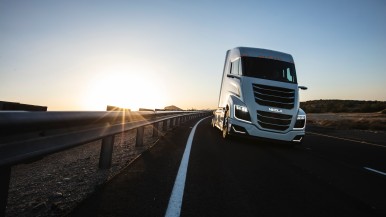
Scottsdale, Arizona – Nikola Motor Company showcased its hydrogen-electric powered semi-truck, the Nikola Two, live in action for the first time to the general public at its Nikola World event. Bosch technology and expertise helped Nikola to realize the fully functional Nikola Two hydrogen-electric truck with industry-ready heavy-duty truck components and systems. The technology and system approach is adaptable for use in Nikola’s full line of vehicles, including the Nikola One Sleeper Cab and the Nikola Tre, a hydrogen-electric truck for European markets. Bosch has been our innovation partner to help make our vision a reality....Trevor Milton, Nikola founder and CEO The Nikola trucks feature innovations in automation, connectivity and electrification enabled with Bosch’s assistance. The supplier of technology and services offers solutions for commercial vehicles to improve efficiency and safety in logistics. To enable the distinctive Nikola approach, engineering teams from Bosch locations in the United States and Germany contributed more than 220,000 hours into the development of the Nikola trucks. “This has been a two-and-a-half year cooperation targeted at implementing advanced technology into a totally new and unique approach to trucking with the highest levels of engineering excellence,” said Jason Roycht, vice president and regional business unit leader, Commercial Vehicles & Off-Road for Bosch in North America. “We’ve learned from each other and together pushed ourselves to achieve what seemed to everyone else to be impossible. The Nikola Two is not just a simple evolution of today’s heavy duty truck. It’s a revolution in both sophisticated control and design.” “Bosch has been our innovation partner to help make our vision a reality,” said Trevor Milton, founder and CEO of Nikola Motor Company. “We look for partners who provide us expertise and world-class solutions, but also ones that are willing to dream alongside us.” This has been a two-and-a-half year cooperation targeted at implementing advanced technology into a totally new and unique approach to trucking with the highest levels of engineering excellence....Jason Roycht, vice president and regional business unit leader, Commercial Vehicles & Off-Road for Bosch in North America The brain of the future – engineered by Nikola and Bosch The Nikola truck is more than just a fuel cell vehicle; it’s a rolling super computer. Bosch systems, software and engineering expertise have helped Nikola to build the brains of its Nikola Two super truck. One of the key elements of Nikola’s advanced system is the Bosch Vehicle Control Unit (VCU) , which provides higher computing power for advanced functions while reducing the number of standalone units. The VCU enables future innovations by providing a scalable platform for the highly complex electric/electronic (E/E) architecture needed to support the advanced features of the Nikola truck. The Nikola family of trucks will be connected with an advanced and secure operating system that provides real-time, over-the-air updates and monitoring. The commercial vehicle powertrain reimagined The essence of the Nikola truck lineup is a new commercial vehicle powertrain achieved thanks to a development partnership between Nikola and Bosch. The two organizations have reimagined the powertrain – and the vehicle chassis integrated together with it – from the ground up. The fuel-cell system designed to deliver benchmark vehicle range was custom-designed together by Nikola and Bosch. The two organizations also worked in tandem to develop the first true dual-motor commercial-vehicle eAxle for a long-haul truck. The eAxle features Bosch rotors and stators, and Bosch has also contributed functional safety efforts throughout the truck. Mirrorless and keyless - Bosch technology pervades the Nikola trucks Bosch technology is also prevalent in other areas of the Nikola trucks. Nikola’s vehicles will be missing one standard feature of previous class-8 trucks: side mirrors. In the place of the conventional main and wide-angle mirrors is a camera system, known as Mirror Cam System , which offers drivers a digital side and rear view from the truck cab. Two cameras, fitted left and right in place of traditional mirrors, feed real-time images to high-resolution displays mounted inside the cab. The system, developed by Bosch and Mekra Lang, adjusts the monitor display to match the driving situation digitally. It captures both rear-view fields of vision of a CV mirror with just one camera lens on each side of the vehicle cab. In addition to increasing safety, compact digital cameras instead of mirrors offer aerodynamic advantages as the cameras are considerably smaller than mirrors and therefore reduce drag. Fleet operators will be able to digitally manage vehicle keys for the Nikola trucks in their fleet thanks to the Perfectly Keyless system from Bosch. Freight and commercial vehicle rental companies can use a smartphone app to give their drivers access to specific fleet vehicles and to flexibly manage who has access and when. Sensors on the Nikola vehicles will connect with an app on a driver’s smartphone so that when the driver approaches the vehicle, Perfectly Keyless recognizes the smartphone, identifies the unique security key assigned to the driver’s phone, and unlocks the door. As soon as the driver moves away from the truck again, the vehicle is automatically securely locked. Nikola’s trucks are equipped for driver assistance and future automation thanks in part to the Bosch Servotwi n electrohydraulic steering system. The steering system will enable driver assistance systems that actively support the driver to enhance driving comfort and improve safety. On the Nikola vehicles, the Servotwin will help to enable features such as lane-keeping assistance, side-wind compensation and traffic jam assist. The system also provides a key building block for the rollout of automated features in the future.

IAA 2018: Commercial vehicles deliver commercial benefits – Bosch increases mobi ...

19.09.2018

Press release

Business/economy

IAA 2018: Commercial vehicles deliver commercial benefits – Bosch increases mobi ...

Stuttgart and Hannover, Germany – Bosch is still on course for growth: this year, the company’s mobility business is expected to increase its sales from day-to-day business by four percent, and will thus continue to grow twice as fast as automotive production. Bosch generates one-fourth of its sales revenue from technology for commercial vehicles, ranging from vans to 40-ton trucks. Its business with solutions for trucks and off-highway vehicles is growing especially rapidly, at a rate of between seven and eight percent. Bosch is active in a growing market. In 2017, sales of heavy trucks grew by almost eight percent in China, 18 percent in the United States, and 45 percent in India (source: VDA). “As road freight evolves to face the future, Bosch offers both commercial and technological strength in equal measure,” says Dr. Rolf Bulander, chairman of the Mobility Solutions business sector of Robert Bosch GmbH. The major driver is its powertrain business for commercial vehicles. Global sales of diesel injection systems grew by one-third in 2017 alone, and even faster in China. In the years ahead, these sales will stabilize on a high level. Bosch has 2,600 engineers alone working on the truck powertrain of the future. By the end of the year, the Mobility Solutions business sector will employ over 54,500 R&D associates – 5,000 more than at the beginning of the year. As road freight evolves to face the future, Bosch offers both commercial and technological strength in equal measure.... Dr. Rolf Bulander, chairman of the Mobility Solutions business sector of Robert Bosch GmbH Climate protection, air pollution, urbanization, driver shortage: the logistics sector faces a series of major challenges. And as if that were not enough, road freight will increase by another 50 percent by 2040 (source: Shell). “One of the most pressing issues of traffic policy in the light of growth in road freight is what we can do to minimize its impact on the environment, people, and the road network,” Bulander says. Bosch has some technical solutions, and not just under the hood – some are connected services that go beyond the vehicles themselves. “We want trucks to be beasts of burden, but not a burden for others,” Bulander says. Bosch’s vision: road freight of the future should ideally be as free of emissions, accidents, and stress as possible. The path to this goal incorporates electrification, automation, and connectivity for commercial vehicles. From combustion engines to fuel cells: Bosch is bringing energy to the powertrain An important milestone for Bosch is to make commercial-vehicle powertrains more efficient and thereby reduce fuel consumption as well as emissions of CO₂ and nitrogen oxides. To achieve this goal, Bosch is working to further develop both diesel and alternative powertrain solutions. “For many years to come, the development of commercial-vehicle powertrains will involve a number of disciplines. We would be well advised to approach their electrification with a technologically open mind,” Bulander says. In 2025, 80 to 90 percent of all trucks will be diesel-powered. But by 2030, one in four new commercial vehicles worldwide – nearly one in three in China – will be electrically driven. “Nobody who wants to give heavy trucks a secure future can afford to rule out the option of producing alternative fuels using electricity from renewables, known as synfuels,” Bulander says. Bosch has set itself the goal of being the international market leader in electromobility. To this end, the company offers appropriate solutions and has a broad portfolio for the electrification of commercial vehicles – e.g. 36-volt power packs for cargo e-bikes, the e-axle for delivery vans, and fuel-cell powertrains for 40-ton trucks. Bosch is developing the latter in partnership with the U.S. start-up Nikola Motor Company. In addition, Bosch has entered into a strategic partnership with Weichai Power, a Chinese manufacturer of engines for commercial vehicles, to promote the uptake of fuel cells. But Bosch is not only ensuring new vehicles are electrically driven: it also offers electromobility as a retrofit – with an electrified axle that can be integrated into semitrailers. This means they can generate electricity during braking and feed it into the trailer’s power units. In the case of a refrigerated trailer, Bosch calculates that this can deliver annual savings of up to 10,000 euros. Bosch is teaching trucks to drive Another major growth area alongside electrification is the automation of commercial vehicles. In both areas, the signs are set for double-digit market growth over the next decade. Bosch sees driver assistance as a step along the way to automated driving. When trucks are involved in accidents, the risk of fatalities is twice as high. For Bosch, this is reason enough to use driver assistance systems to make truck drivers’ lives easier and the roads safer. The turn assistant, blind-spot recognition, and predictive emergency braking system help prevent truck accidents – and Bosch offers the necessary radar sensors among other products. Automation of commercial-vehicle driving also presents further challenges for the transportation industry: even now, there are 50,000 too few truckers in the United States, and that figure is likely to triple within ten years. Europe is in a similar situation. In answering these challenges, Bosch sees a great deal of potential in hub-to-hub automation: driverless trucks shuttling between depots. This technology has the potential to resolve several transportation industry problems at once, increasing logistics companies’ economic efficiency, transport volumes, and safety. Platooning, or the automated driving of trucks in each other’s slipstream, is in Bosch’s view a logical further step in automation. This saves not only labor costs, but also fuel. However, it also means that legislation, technology, and infrastructure have to satisfy stricter requirements. Bosch is involved in major EU research projects in the field. Digitally connected logistics solutions, from freeway to front door Bosch enables digitally connected logistics solutions, from freeway to front door.... Dr. Markus Heyn, member of the Robert Bosch GmbH board of management responsible for the commercial-vehicle business For Bosch, connectivity means new efficiency for transport systems – and thus relief for our congested roads as well as for logistics companies. When it comes to the logistics of the future, Bosch can contribute twofold technical expertise: on the one hand, its broad knowledge of the commercial-vehicle domain, and on the other its profound IoT expertise. “Bosch enables digitally connected logistics solutions, from freeway to front door,” says Dr. Markus Heyn, member of the Robert Bosch GmbH board of management responsible for the commercial-vehicle business. Today, nearly every new truck in Europe and the United States is part of the internet. In this context, Bosch supplies truck manufacturers with telematics platforms that make things such as software updates or predictive diagnostics possible, which also opens up new business in connected services. Even now, the company’s service centers are using the relevant sensor systems to monitor the condition of especially critical deliveries of goods, including vital goods such as blood plasma – around the clock. Every year, the control centers monitor nearly 40,000 high-value truck loads in transit. Bosch is also using the internet of things to automate delivery tracking: sensors on goods and containers transfer information about position, temperature, and vibration to the cloud. Initial experience in the field shows that these real-time logistics solutions mean that dispatchers can cut their search and inventory effort by more than half. Moreover, they increase the availability of reusable containers by as much as 30 percent. Bosch wants connectivity to make road freight altogether more productive and reduce the burden on the road network. “Whether through electrification, automation, or connectivity, Bosch solutions are helping to ensure that road freight does not come up against the limits to growth,” Heyn says.


Germans would increasingly feel safer with autonomous self-driving trucks on the road

13.09.2018

Press release

Automated mobility

Germans would increasingly feel safer with autonomous self-driving trucks on the road

Traffic jams, accidents, blocked roads – for many people in Germany, the thought of vans and trucks in traffic leads to just one thing: stress. More and more trucks are flooding the country’s freeways and highways, and this inevitably pushes up the number of serious accidents involving commercial vehicles. One result of this is that Germans would increasingly feel safer with fully automated, driverless trucks on the road. This is the outcome of a survey conducted by Bosch and Innofact AG in the lead-up to the IAA Commercial Vehicles in Hannover. While almost 40 percent of respondents would rather that trucks have a human driver at the wheel, already more than one in three (37 percent) no longer have a preference for a human over a machine. In fact, one in four respondents would have more confidence in an autonomous truck than in a human driver. For now, driverless trucks are still an unrealized vision. But the survey shows that in Germany, people increasingly favor automated trucks when it comes to safety. The intelligent technology on board such trucks could prevent a large number of accidents: the reality is that nine out of ten accidents are due to human error. Delivery traffic on Germany’s roads must become safer and more efficient, because it doesn’t affect just logistics companies and retailers, but all road users....Dr. Markus Heyn, member of the Robert Bosch GmbH board of management Annoyed by delivery traffic “Delivery traffic on Germany’s roads must become safer and more efficient, because it doesn’t affect just logistics companies and retailers, but all road users,” says Dr. Markus Heyn, member of the Robert Bosch GmbH board of management. Bosch has a clear vision: road freight of the future should be not just accident-free, but also ideally as free of emissions and stress as possible – for all road users. At present, most people stuck in traffic find trucks and vans rather annoying. According to 57 percent of respondents, Germans feel particularly unsafe in critical situations involving trucks – for instance, when merging onto the freeway or when a truck is turning. More than one in two (56 percent) believe that there are too many road freight vehicles on the road. Around half of respondents said their biggest complaint is when trucks block traffic while parking. Other annoyances include commercial-vehicle emissions (50 percent) and truck noise (43 percent). Only one in five respondents said that truck traffic didn’t bother them. Little willingness to compromise What the survey also highlights is that very few people are willing to do anything themselves to relieve delivery traffic on the road. For instance, three-fourths of Germans (73 percent) don’t want to shop less online. And few of them (49 percent) are willing to compromise by accepting longer waiting times for parcel deliveries as a way to relieve traffic – having parcel delivery just once a week instead of every day. However, one in four respondents (27 percent) did say that they would reduce delivery traffic by returning fewer goods, while 36 percent would have their parcels delivered to a central parcel station or collection point and then pick them up themselves. Paying more for parcels to be delivered – to have, say, more evening deliveries so as to spread traffic throughout the day – is something only 15 percent of respondents would consider. The survey shows that Germans are highly critical of road freight, both on freeways and in cities. Trucks annoy them. But the fact is that road freight will increase by another 50 percent by 2040 (source: Shell study). That makes it all the more important to tackle pressing challenges such as preventing accidents and relieving road freight. At the 67th IAA Commercial Vehicles in Hannover, Bosch is showing how this can be achieved: there, the company is presenting solutions for the automation, connectivity, and electrification of commercial vehicles .Additional information on Bosch technologies for commercial vehicles: Bosch at the IAA 2018 Delivering the future – Bosch at the IAA 2018 Survey design: For the major study entitled “Commercial vehicles in road traffic” conducted on behalf of Bosch, Innofact AG surveyed 1,068 people throughout Germany between the ages of 18 and 69. The interviews were conducted in August 2018.

Bosch presents electromobility for semitrailers

28.08.2018

Press release

Powertrain systems

Bosch presents electromobility for semitrailers

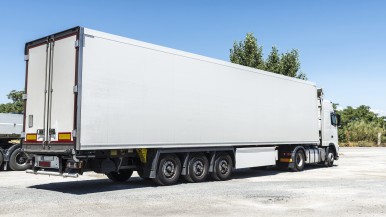
Bosch is electrifying semitrailers, and thus making electromobility possible for today’s semitrucks. At the IAA Commercial Vehicles in Hannover, Bosch will be presenting an electrified axle that can be integrated into semitrailers. The idea behind it is to integrate an electrical machine into the semitrailer’s axles, instead of simply allowing them to roll freely, as has been the case up to now. This means they can generate electricity during braking, and feed it into the trailer’s power units. In the case of a refrigerated trailer, the saving can be as much as 10,000 euros a year. If the cooling unit is operated using the power generated in this way, Bosch calculates that it can save up to 9,000 liters of diesel a year. An electrical start and acceleration boost function can help save additional fuel. Any fuel saving also reduces CO₂ emissions. One further advantage, especially for deliveries by urban supermarkets, is that electric cooling units make significantly less noise than diesel-powered ones. Deliveries can thus be made early in the morning or late in the evening without disturbing the neighbors. Bosch is making trucks’ rear axles electric and smart. Our electrification solution for trucks makes economic sense and shows how electromobility can work even in today’s trucks....Dr. Markus Heyn, member of the Robert Bosch GmbH board of management “Bosch is making trucks’ rear axles electric and smart. Our electrification solution for trucks makes economic sense and shows how electromobility can work even in today’s trucks,” says Dr. Markus Heyn, member of the Robert Bosch GmbH board of management. In addition, the electrical axle is an important step toward automated trailer parking on logistics companies’ parking lots. Adding a powertrain to the axle means that the trailer can be shunted around the parking lot without a tractor. Bosch offers this technology either for new trailers or as a retrofit solution. The potential demand is huge. In Europe alone, roughly a quarter of a million trailers with a gross vehicle weight of more than 10 metric tons are newly registered every year. One in five of these is equipped with a refrigeration unit. Energy recuperation: passenger-car components work intermittently In contrast to many other commercial-vehicle projects, Bosch engineers are relying on passenger-car parts for the electrified axle. For example, the SMG180 electric motor already features in hundreds of thousands of hybrid and electric cars worldwide, including the German postal service´s StreetScooters. Unlike in electric cars, the motors in the electrified axle work only intermittently, starting only if they can recuperate energy. This may be the case when driving downhill or braking, for example. As a result of this recuperation, which is an established technology in passenger cars, energy is no longer lost when braking, but is stored in a high-voltage battery. The electricity can be fed into the motors during hill starts, or power the trailer’s refrigeration unit, and in this way save a lot of fuel. Such demand-driven application has a further advantage: since the electric motors are inactive most of the time, recuperating energy or providing assistance when starting or on ascents for only a few seconds or minutes every hour, significantly less expensive production parts from passenger cars can be used in this trailer application. The motors are still powerful enough to move the trailer or to provide start assistance to construction vehicles. Automated parking at the depot: electric motor is an invaluable helper In addition, the electrified axle is an invaluable helper for automated driving – only when a motor is installed in the axle can a trailer maneuver independently at the depot. “Bosch’s electrified axle makes trailers independent. By electrifying trailers, Bosch is taking an important step toward automated parking at freight depots,” Heyn says. They also facilitate remote-controlled electric driving on private property such as freight companies’ premises or at ports. Up to now, truckers have had to do this task themselves, or a special trailer-shunting unit has done it for them. Now, however, the electric motor makes the trailer into an independent vehicle that can travel short distances. With the help of additional sensors attached to the trailer and installed at various points in the depot, it will be possible for goods trailers to park themselves.Electrified axle: Q&A What parts are needed to electrify an axle? Bosch supplies an inverter and the relevant vehicle control unit (VCU). The separate motor generator (SMG) is available for installation as a complete electric motor, or the active components – rotor, stator, and resolver – can be integrated into the axle. A battery system that can store the energy is also required. How much does an electrified axle cost? Bosch cannot provide an exact figure. However, the company’s view is that the system must pay back the original investment after two years’ operation at the latest. In view of the cost savings the axle offers in applications such as refrigerated trailers, Bosch is confident that this goal is realistic. Where can an electrified axle typically be used? The most obvious choice at present is in refrigerated trucks, especially for food deliveries in urban areas. Electrically powered refrigeration units are not only more economical over the medium term, but also make significantly less noise. And there are none of the emissions caused by combustion engines. The construction industry is very interested in the start assistance function in excavation pits, especially when they are muddy. How do you arrive at your estimate for fuel savings? The diesel engine that currently powers the refrigeration unit, and that is now being completely displaced by electricity, consumes between two and three liters of diesel an hour. On this basis, annual consumption is roughly 9,000 liters. In addition, there are potential savings resulting from the electrical assistance provided when starting, accelerating, and on ascents. The extra saving may be as much as four percent. Why does Bosch favor an axle with two electric motors? Two electric motors can recuperate significantly more energy, and offer a high additional benefit at relatively low extra cost, thus allowing greater savings to be made, In addition, a dual-motor axle is better for automatic maneuvering at a depot: having an electric motor at each end of the axle significantly reduces the trailer’s turning radius. If the customer wishes to save costs, electrification with just one motor is possible.

This Bosch app makes car keys a thing of the past

23.08.2018

Press release

Connected mobility

This Bosch app makes car keys a thing of the past

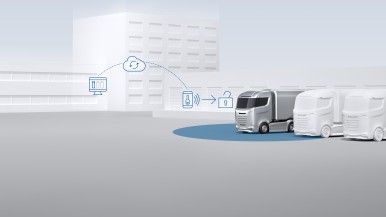
Stuttgart, Germany – The key of the future is digital, and offers more features than its analog predecessors: impossible to lose or steal, there is never a need to search for it. That is because it is stored securely and specifically for each user in a smartphone app. “Our Perfectly Keyless app is making conventional vehicle keys a thing of the past. Bosch is taking the car key into the digital realm and making it available anywhere, anytime,” says Harald Kröger, president of the Bosch Automotive Electronics division. With Perfectly Keyless, the smartphone replaces the analog vehicle key. This concept can offer owners of private vehicles increased convenience, but where it really shines is in vehicle fleets with multiple drivers. No more key handovers: fleet managers and logistics providers simply use the app to give drivers access to the vehicles. “Bosch’s digital vehicle key gives fleets a boost towards greater connectivity,” Kröger says. The company believes there is a huge market for its solution, which is making its world debut at the IAA Commercial Vehicles in Hannover: potential customers include some 15,000 logistics providers in Germany alone. Most of them manage at least a dozen vehicles and drivers. Our Perfectly Keyless app is making conventional vehicle keys a thing of the past. Bosch is taking the car key into the digital realm and making it available anywhere, anytime....Harald Kröger, president of the Bosch Automotive Electronics division A keyless journey Row upon row of hundreds of keys hanging on large boards – logistics providers still often use this method to organize the keys to their fleet vehicles. A missing key triggers a massive search operation. But every minute counts, especially with commercial vehicles. After all, if a truck isn’t moving, it’s not making any money. At the core of the new system is an app that dispatchers and truck drivers both have on their phones. This makes it possible to grant vehicle access with just a few clicks. In the future, the Bosch solution will also allow logistics providers to completely integrate digital key management into their dispatch and scheduling systems. As soon as dispatch has assigned drivers and trucks to a route, the system automatically generates digital keys for the vehicles and sends them to the drivers’ smartphones. If the route scheduling changes, the software adjusts the keys accordingly. “Thanks to Bosch’s fully digital key management, logistics providers enjoy both security and flexibility in their planning. This is the only way the logistics of the future will be able to function efficiently,” Kröger says. Thanks to Bosch’s fully digital key management, logistics providers enjoy both security and flexibility in their planning. This is the only way the logistics of the future will be able to function efficiently....Harald Kröger, president of the Bosch Automotive Electronics division Secure key management with app and cloud Bosch digital key management connects trucks and the smartphone app via the cloud. Dispatchers or fleet managers use the app to assign a truck to a driver for a particular route. Perfectly Keyless generates a personal, secure digital key and sends it via the cloud to the truck and to the driver’s smartphone. As the driver approaches the assigned truck, the sensors installed in the truck detect the smartphone via a wireless connection. The vehicle doors will open only if the key on the phone “fits” the digital lock in the vehicle. These sensors can also tell when the driver is in the driver’s seat, and the engine starts up as soon as the driver presses the start-stop button. When the driver gets out of the car at the end of the journey, the system detects this and automatically locks the doors. Battery dead? No problem! But what happens if the smartphone’s battery dies, or the device has gone missing? In the future, the vehicle key in the smartphone will work even if the phone battery is dead. In that case, the phone and truck will communicate using near-field communication (NFC), a wireless protocol for sharing data over short distances. Bosch plans to make it the “double hull” of its solution. If the smartphone is lost or stolen, and the app with it, the digital key can be simply deactivated online, thus blocking access to the vehicle. It cannot be opened and started until the fleet manager uses the app to provide another driver or a new phone with access to the truck.

Fully charged: Bosch is putting electric vans on the road

16.08.2018

Press release

Commercial vehicles

Fully charged: Bosch is putting electric vans on the road

Stuttgart, Germany – Ordered with two clicks and conveniently delivered to your door the same day: the boom in online shopping is stretching delivery traffic in major cities to its limits. Vans and heavy trucks squeeze their way through city centers, where a lack of loading zones often leads them to double park. The result: blocked roads, noise, and emissions. In cities around the world, this is also causing traffic jams and fueling discussions about driving bans. And it’s not just delivery services that are affected, but also tradespeople and other small companies that make customer visits in vans. “To keep pace with goods supply in cities, there’s no avoiding a rethink of delivery traffic,” says Dr. Markus Heyn, member of the board of management of Robert Bosch GmbH. This is one objective Bosch is looking to fulfill with its new electric powertrain for light commercial vehicles. The first vehicles to have this under the hood will launch in 2019. Bosch is bringing e-mobility to where it really makes sense – urban deliveries....Dr. Markus Heyn, member of the board of management of Robert Bosch GmbH Quiet deliveries Deutsche Post has already initiated change in urban deliveries with its StreetScooter, which uses a Bosch drive system. Now Bosch is going a step further by launching an electrical powertrain suitable for the vast majority of delivery vehicles. The idea behind this electromobility campaign is for electric vans to handle last-mile deliveries from distribution centers to recipients. The kind of stop-and-go traffic this entails is one area in which electric vehicles are particularly efficient, because they can recuperate the energy from constant braking, which increases their range. Most delivery routes amount to less than 80 kilometers a day – a distance easily covered on a single battery charge. Fleets can then be recharged overnight at the depot. Any driving bans in city centers would not affect electric fleets, since their powertrains cause zero local emissions. And it’s not just cities that are keen to see package and courier services make resource-sparing deliveries. For 61 percent of Germans, whether an online retailer makes deliveries with electric vehicles is a key criterion in their choice (source PwC). One further advantage is that electric vehicles make less noise, which should also increase people’s willingness to accept deliveries later into the evening. This could relieve traffic at peak times and provide for more flexible delivery windows. “Bosch is bringing e-mobility to where it really makes sense – urban deliveries,” Heyn says. Ready for the mass market There are two versions of Bosch’s eCityTruck powertrain: one with a transmission and one without. The goal is to create solutions that are quick to integrate and accommodate automakers’ differing requirements. These powertrain solutions can be scaled for light commercial vehicles weighing two to 7.5 metric tons, making them suitable for a large section of the commercial vehicle market. How? Small vans are very common; approximately three-fourths of all commercial vehicles registered in Germany belong to this class, and that number is on the rise (source: Shell). “Bosch’s electrical powertrain for commercial vehicles has the potential to change the face of urban delivery traffic. We’re getting electric vans ready for the mass market,” Heyn says. With its new eCityTruck powertrain concept, Bosch has taken multiple components such as an electric motor and power electronics and combined them into one unit. This economizes on parts, making the powertrain not only far more efficient, but more affordable as well. Thanks to the easily integrated solution, customers no longer have the time-consuming task of developing new components. One further advantage for automakers, both established names and new players, is that the Bosch solution lets them bring vehicles to market quickly. Bosch’s electrical powertrain for commercial vehicles has the potential to change the face of urban delivery traffic. We’re getting electric vans ready for the mass market....Dr. Markus Heyn, member of the board of management of Robert Bosch GmbH Bosch already offers an all-in-one solution for passenger cars – the e-axle – which significantly shortens vehicle development times. By expanding its product portfolio to include light commercial vehicles, Bosch is taking another decisive step in supporting automakers with their electrification strategies. Bosch’s plans for the electrification of commercial vehicles go beyond vans. Together with the Nikola Motor Company, a U.S. start-up, Bosch is developing a powertrain that raises the bar for electric range. For Bosch, these powertrain technologies for delivery traffic are another milestone on the path toward achieving a leading global position in the electromobility mass market set to emerge after 2020, and toward making its vision of emissions-free, accident-free, and stress-free mobility a reality. Bosch sees the future of mobility as automated, connected, and electrified.