Search & find:
Media, press releases, events for your editorial coverage

Logistics and transportation industry: Bosch launches service platform in Europe ...

06.12.2023

Press release

Connected mobility

Logistics and transportation industry: Bosch launches service platform in Europe ...

Stuttgart, Germany – Bosch’s digital logistics platform L.OS, targeted for simplifying IT processes in the transport and logistics industry, is celebrating a successful market launch. In Europe, India, and the U.S., the Bosch offering has already won 50 customers. 20 logistics companies each from Germany and India and ten from the U.S. are among the first L.OS customers. In addition, the integration of more than 50 service providers into the digital marketplace is already underway. Last year, Bosch announced a s trategic collaboration with the U.S. cloud provider Amazon Web Services (AWS) to digitalize logistics . The transportation and logistics industry is the backbone of the global economy. Bosch sees great market opportunities for its logistics services driving efficiency improvement. The technology company aims to generate global sales of some 500 million euros with logistics services by 2030, and has set up a separate unit with more than 400 associates for its digital platforms business. With L.OS, Bosch has ushered in the digital age for freight carriers, fleet owners and logistics service providers. Our logistics platform offers a complete ecosystem and software environment for using and combining services from different providers. For Bosch, the transportation and logistics industry is strategically important...says Dr. Markus Heyn, member of the Bosch board of management and chairman of the Mobility business sector. Open platform for providers of logistics solutions Using the digital L.OS platform, logistics and transportation companies across the globe will have quick and easy access to IT services, and thus be able to operate more efficiently and sustainably. The distinctive feature of L.OS is that it is open to all providers of logistics solutions and facilitates the smooth interplay of disparate services and data. For freight carriers and freight companies, this presents a chance to reap far greater benefit from the opportunities of digitalization for themselves in accordance with their individual needs or requirements in the respective country without having to set up resource- and cost-intensive IT projects of their own. In India, for example, Bosch’s proprietary “TrakZeus” positioning solution for efficient fleet and transportation management as well as route and parking planning has been available on L.OS from the start. The “Digital CN” solution allows transport documents such as e-way bills to be digitized quickly and easily, so that they can be transmitted securely via cell phone. In Europe, L.OS has been launched with a first service integration enabling secure truck parking booking as an extra feature for existing transportation management systems, while in the U.S., a dedicated transportation management system simplifies and manages operations for fleets. New Bosch operating unit to build digital platforms In July 2023, Bosch established its new, transnational “Mobility Platform and Services” operating unit to build digital platforms. More than 400 associates in Europe, India, and the U.S. are responsible for the further development and support of Bosch digital platforms. This currently includes for example “Mobility Marketplace”, a neutral digital ecommerce marketplace as well as “ParkZeus”, an integrated parking platform, and the “Logistics Operating System” L.OS. “The establishment of a dedicated unit underscores the great importance Bosch attaches to the digitalization of mobility empowered by cloud-based platforms. We want to enable companies to come together to co-create, innovate and solve complex problems of mobility through our platforms. Together, we’re driving the vision of sustainable and safe mobility enabled by digital platforms and the inclusivity it brings with it.,” says Sandeep Nelamangala, the executive director responsible for the digital platforms business at Bosch.

TSMC, Bosch, Infineon, and NXP Establish Joint Venture to Bring Advanced Semicon ...

08.08.2023

Press release

Connected mobility

TSMC, Bosch, Infineon, and NXP Establish Joint Venture to Bring Advanced Semicon ...

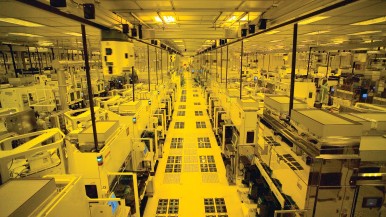
Hsinchu, Stuttgart, Munich, Eindhoven, Aug 8, 2023 – TSMC (TWSE: 2330, NYSE: TSM), Robert Bosch GmbH, Infineon Technologies AG (FSE: IFX / OTCQX: IFNNY), and NXP Semiconductors N.V. (NASDAQ: NXPI) today announced a plan to jointly invest in European Semiconductor Manufacturing Company (ESMC) GmbH, in Dresden, Germany to provide advanced semiconductor manufacturing services. ESMC marks a significant step towards construction of a 300 mm fab to support the future capacity needs of the fast-growing automotive and industrial sectors, with the final investment decision pending confirmation of the level of public funding for this project. The project is planned under the framework of the European Chips Act. The planned fab is expected to have a monthly production capacity of 40,000 300 mm (12-inch) wafers on TSMC’s 28/22 nanometer planar CMOS and 16/12 nanometer FinFET process technology, further strengthening Europe’s semiconductor manufacturing ecosystem with advanced FinFET transistor technology and creating about 2,000 direct high-tech professional jobs. ESMC aims to begin construction of the fab in the second half of 2024 with production targeted to begin by the end of 2027. The planned joint venture will be 70 percent owned by TSMC, with Bosch, Infineon, and NXP each holding 10 percent equity stake, subject to regulatory approvals and other conditions. Total investments are expected to exceed 10 billion euros consisting of equity injection, debt borrowing, and strong support from the European Union and German government. The fab will be operated by TSMC. “This investment in Dresden demonstrates TSMC’s commitment to serving our customers’ strategic capacity and technology needs, and we are excited at this opportunity to deepen our long-standing partnership with Bosch, Infineon, and NXP,” said Dr. CC Wei, Chief Executive Officer of TSMC. “Europe is a highly promising place for semiconductor innovation, particularly in the automotive and industrial fields, and we look forward to bringing those innovations to life on our advanced silicon technology with the talent in Europe.” Dr. Stefan Hartung, chairman of the Bosch board of management: “Semiconductors are not only a crucial success factor for Bosch. Their reliable availability is also of great importance for the success of the global automotive industry. Apart from continuously expanding our own manufacturing facilities, we further secure our supply chains as an automotive supplier through close cooperation with our partners. With TSMC, we are pleased to gain a global innovation leader to strengthen the semiconductor ecosystem in the direct vicinity of our semiconductor plant in Dresden.” Semiconductors are not only a crucial success factor for Bosch. Their reliable availability is also of great importance for the success of the global automotive industry. Apart from continuously expanding our own manufacturing facilities, we further secure our supply chains as an automotive supplier through close cooperation with our partners. With TSMC, we are pleased to gain a global innovation leader to strengthen the semiconductor ecosystem in the direct vicinity of our semiconductor plant in Dresden....said Dr. Stefan Hartung, chairman of the Bosch board of management “Our joint investment is an important milestone to bolster the European semiconductor ecosystem. With this, Dresden is strengthening its position as one of the world’s most important semiconductor hubs that is already home to Infineon’s largest frontend site,” said Jochen Hanebeck, CEO of Infineon Technologies. “Infineon will use the new capacity to serve the growing demand particularly of its European customers, especially in automotive and IoT. The advanced capabilities will provide a basis for developing innovative technologies, products and solutions to address the global challenges of decarbonization and digitalisation.” “NXP is very committed to strengthening innovation and supply chain resilience in Europe,” said Kurt Sievers, President and CEO of NXP Semiconductors. “We thank the European Union, Germany, and the Free State of Saxony for their recognition of the semiconductor industry’s critical role and for their true commitment to boost Europe’s chip ecosystem. The construction of this new and significant semiconductor foundry will add much needed innovation and capacity for the range of silicon required to supply the sharply increasing digitalization and electrification of the automotive and industrial sectors.”About Infineon Infineon Technologies AG is a global semiconductor leader in power systems and IoT. Infineon drives decarbonization and digitalization with its products and solutions. The company has around 56,200 employees worldwide and generated revenue of about €14.2 billion in the 2022 fiscal year (ending 30 September). Infineon is listed on the Frankfurt Stock Exchange (ticker symbol: IFX) and in the USA on the over-the-counter market OTCQX International over-the-counter market (ticker symbol: IFNNY). Further information is available at www.infineon.com . Follow us: Twitter – Facebook – LinkedIn About NXP Semiconductors NXP Semiconductors N.V. (NASDAQ: NXPI) brings together bright minds to create breakthrough technologies that make the connected world better, safer and more secure. As a world leader in secure connectivity solutions for embedded applications, NXP is pushing boundaries in the automotive, industrial & IoT, mobile, and communication infrastructure markets while delivering solutions that advance a more sustainable future. Built on more than 60 years of combined experience and expertise, the company has approximately 34,500 team members in more than 30 countries and posted revenue of $13.21 billion in 2022. Find out more at www.nxp.com . About TSMC TSMC pioneered the pure-play foundry business model when it was founded in 1987, and has been the world’s leading dedicated semiconductor foundry ever since. The Company supports a thriving ecosystem of global customers and partners with the industry’s leading process technologies and portfolio of design enablement solutions to unleash innovation for the global semiconductor industry. With global operations spanning Asia, Europe, and North America, TSMC serves as a committed corporate citizen around the world. TSMC deployed 288 distinct process technologies, and manufactured 12,698 products for 532 customers in 2022 by providing broadest range of advanced, specialty and advanced packaging technology services. The Company is headquartered in Hsinchu, Taiwan. For more information please visit https://www.tsmc.com .

Bosch drives forward the development of 6G

27.02.2023

Press release

Connected mobility

Bosch drives forward the development of 6G

Stuttgart, Germany – Worldwide, research and development work on the future 6G mobile communications standard is picking up pace. Companies and states are investing massively in this technology. Bosch is leading the way and is actively involved in projects, alliances, and initiatives at both the national and international level to lay important foundations for 6G technology. “6G will be much more than just an infrastructure for connectivity; it will greatly increase the efficiency of autonomous driving cars, smart cities, and connected industries. That’s why 6G is a strategically important field of technology,” says Dr. Andreas Müller, who bundles and manages 6G activities at Bosch. The company currently has some 40 associates working on 6G technology. Over the next two years, that number is likely to double,” Müller says. Bosch is currently investing several millions of euros in research and development for 6G. 6G will be much more than just an infrastructure for connectivity; it will greatly increase the efficiency of autonomous driving cars, smart cities, and connected industries. That’s why 6G is a strategically important field of technology...says Dr. Andreas Müller, who bundles and manages 6G activities at Bosch. Bosch and Nokia expand their research alliance to include 6G At the Mobile World Congress 2023 in Barcelona, Bosch and Nokia have now announced that they will expand the alliance they entered into in 2017 to develop industrial IoT solutions in the area of 5G so that it also addresses the new 6G technology. The two companies are conducting joint research on the next generation of networks and investigating how to use future 6G networks for both communications and sensors. Comprehensive Bosch commitment at national and international level Bosch is currently contributing its expertise and experience to five publicly funded projects. In this context, the 6G-ICAS4Mobility , KOMSENS-6G , and 6G-BRAINS projects focus primarily on integrating communication and sensor-based environment recognition. Bosch leads the consortium for the first project . In addition to addressing relevant scenarios for road traffic, insights gained from the project will serve, in particular, as technical foundations for applications in the connected drones domain as well as in Industry 4.0 (e.g. for driverless transport systems). Meanwhile, the 6G-ANNA and 6G-SHINE projects focus on new connectivity structures. These are intended to enhance the efficiency of future E/E architectures in vehicles or robot cells. Bosch is also taking an active and leading role in early discussions and activities relating to future mobile communications standards within various industry alliances. In the 5G Automotive Association (5GAA) , for instance, leading companies from the automotive and telecommunications industries are working together to develop solutions for the mobility of the future. The 5G Alliance for Connected Industries and Automation (5GACIA) brings together industrial companies to focus on connectivity for machinery and equipment. Networks with a sixth sense through integration of sensor technology Among other things, the next generation of mobile communications will integrate new functionalities similar to radar sensors. With 6G, it will be possible to detect the position of objects in the network’s coverage area – without these objects having to be equipped with a radio module. 6G will enable extremely high data rates of up to one terabit per second, with very low latency in the order of some 100 microseconds – which is four times faster than a lightning strike. With the help of digital twins, this will for instance make it possible to monitor and simulate real-world manufacturing processes in a virtual world with no temporal and spatial restrictions. Experts predict that the first 6G standard will be completed by 2028. In recent months, Germany and Europe have launched a large number of 6G projects with the goal of strengthening their technological sovereignty. The German government, through the Federal Ministry of Education and Research (BMBF), is providing some 700 million euros over the next three years to fund 6G activities. In addition, the EU budget has earmarked a further almost 900 million euros until 2027. Japan and the United States have also launched corresponding investment programs totaling around 4.5 billion dollars.

GAIA-X 4 moveID project develops basis for secure mobile data exchange

08.09.2022

Press release

Business/economy

GAIA-X 4 moveID project develops basis for secure mobile data exchange

Stuttgart, Germany – Which parking garages currently have vacant charge spots available? Where are free parking spaces in the city center? And how can this information be digitally transmitted, and services billed, across providers? The answer to these and similar questions calls for secure data exchange between the vehicles and their environment. It is precisely this foundation that a research project consisting of universities, automotive suppliers, and system providers is now in the process of building, with Bosch leading the consortium. Over the next three years, the GAIA-X 4 moveID project is set to develop the necessary standards and technological concepts to enable the secure exchange of information between providers of mobility applications and their customers. The goal is to create decentralized digital vehicle identities. This is an important prerequisite for the mass use of electric vehicles, automated driving, and the establishment of connected cities. GAIA-X 4 moveID is supported to the tune of 14 million euros by the German Federal Ministry for Economic Affairs and Climate Action – covering half of the project costs.Connectivity for digital services across the board “An integrated and transparent system architecture for the exchange of data on the road that incorporates different products and players simply isn’t available today. While it’s true that some companies out there already offer services, those services are tailored for specific applications, vehicles, or customer groups,” explains Peter Busch, project manager at the consortium leader Bosch. They often map the infrastructure, for example, but they rarely provide information about availability due to a lack of connectivity between the many independently operating service providers. “Open standards are needed so that users, for example, can find all available charging stations or pay for charging processes,” Busch says. It’s important to always ensure that the data is processed securely and that individual providers don’t exploit it solely for their own purposes. For Busch, this is the only way that the necessary user confidence can grow and a broad range of all available services, such as so-called deep parking (use of otherwise unavailable parking spaces), can be created. That is why the consortium is building on the European GAIA-X system, which defines the technological, economic, and legal framework for a secure and trustworthy data infrastructure. GAIA-X relies on decentralization and the interplay of different cloud providers under common guidelines. In this spirit, the GAIA-X 4 moveID project is using open source software for its developments and making them available to all providers for various business models. Vehicles are becoming marketplaces The standards that GAIA-X 4 moveID is pursuing will allow vehicles to securely and independently exchange information with other vehicles and their environment without an “intermediary.” The vehicles’ “infrastructure partners” include charge spots, barriers, traffic lights, and parking lots. The research project will use internationally recognized hardware and software to develop management and administrative services to facilitate the interaction and trade between different players. This will enable providers to connect a great many services, such as news, entertainment, and navigation, with the car’s system, especially in automated driving. The market for services related to connected parking alone is estimated to be worth ten billion euros annually worldwide. What’s more, the ability to navigate directly to a vacant parking space significantly reduces congestion and emissions. After all, today, about a third of downtown urban traffic is people looking for parking spaces. The availability of information is also a crucial factor for the success of electromobility. It is estimated that about half of newly registered cars in Europe will be electric by 2030. “Their drivers need to know that they’ll be able to find a charge spot quickly whenever they need one. And that requires connected systems,” Busch says. Extensive data exchange as a basis for automated driving The mass use of automated vehicles is conceivable only if cars are able to quickly and reliably communicate with their environment. The data exchange this requires will enable climate-friendly traffic control based on the volume of traffic at any given moment. This will allow cities to regulate incoming traffic to particular areas in real time, thus preventing congestion. However, this method, known as zoning, requires that vehicles be able to immediately recognize changing conditions and to reroute accordingly. Zoning is being demonstrated with test vehicles – for the first time across borders – in the Germany-France-Luxembourg (Merzig/Saarbrücken) test area as part of the GAIA-X 4 moveID project. The cars receive dynamic information regarding their approach to defined zones.The project partners: Robert Bosch GmbH Materna Information & Communications SE Denso Automotive Deutschland GmbH Continental Automotive Technlogies GmbH WOBCOM GmbH ecsec GmbH HTW Saar (University of Applied Sciences) Atos Information Technology GmbH Chainstep GmbH Peaq Technology GmbH Zeppelin Universität gGmbH (Zeppelin University) Datarella GmbH 51nodes GmbH Bigchain DB GmbH Fetch.ai Research & Development GmbH ITK Engineering GmbH Deutsche Zentrum für Luft- und Raumfahrt e.V. (German Aerospace Center) Airbus Defence and Space GmbH Delta Dao AG

Bosch to invest more than 400 million euros in its semiconductor fabs in 2022

29.10.2021

Press release

Connected mobility

Bosch to invest more than 400 million euros in its semiconductor fabs in 2022

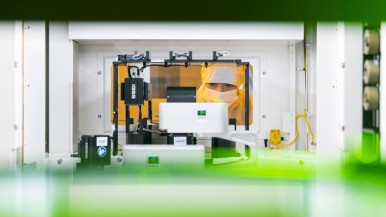
Stuttgart, Germany – In the face of the global chip shortage, Bosch is increasing its capital expenditure. Just a few weeks after opening its new wafer fab in Dresden, the supplier of technology and services has now announced another nine-figure investment in its chip manufacturing facilities. In 2022 alone, Bosch plans to invest more than 400 million euros in expanding its wafer fabs in Dresden and Reutlingen, Germany, and its semiconductor operations in Penang, Malaysia. “Demand for chips is continuing to grow at breakneck speed. In light of current developments, we are systematically expanding our semiconductor production so we can provide our customers with the best possible support,” says Dr. Volkmar Denner, chairman of the board of management of Robert Bosch GmbH. Most of the capital expenditure is earmarked for Bosch’s new 300-millimeter wafer fab in Dresden, where manufacturing capacity is to be expanded even faster in 2022. Around 50 million euros of the planned sum will be spent on the wafer fab in Reutlingen near Stuttgart in the coming year. Bosch will invest a total of 150 million euros in additional clean-room space here from 2021 to 2023. In Penang, Malaysia, Bosch is also building a test center for semiconductors from scratch. Starting in 2023, the center will test finished semiconductor chips and sensors. “These planned investments demonstrate once again the strategic importance of having our own manufacturing capacity for the core technology of semiconductors,” Denner says. Demand for chips is continuing to grow at breakneck speed. In light of current developments, we are systematically expanding our semiconductor production so we can provide our customers with the best possible support,...says Dr. Volkmar Denner, chairman of the board of management of Robert Bosch GmbH. Faster ramp-up in Dresden, new clean rooms in Reutlingen “Our aim is to ramp up production of chips in Dresden earlier than planned and at the same time expand clean-room capacity in Reutlingen. Every additional chip we produce will help in the current situation,” says Harald Kroeger, member of the board of management of Robert Bosch GmbH. In two stages, a total of more than 4,000 square meters will be added to the current 35,000 square meters of clean-room space in Reutlingen. The first stage, adding 1,000 square meters of production area for 200-millimeter wafers to bring the total to 11,500 square meters, has already been completed. This involved converting office space into a clean room over recent months and connecting it to the existing wafer fab via a bridge. The new facility has been producing wafers since September. “We’ve already expanded our manufacturing capacity for 200-millimeter wafers by some 10 percent,” Kroeger says. The capital outlay for this came to 50 million euros (in 2021). In making this move, the company is responding in particular to increased demand for MEMS sensors and silicon carbide power semiconductors. The second stage of the expansion will create a further 3,000 square meters of clean-room space by the end of 2023. To this end, the company will invest some 50 million euros in both 2022 and 2023. Bosch is also creating 150 new jobs in semiconductor development at its Reutlingen location. New test center in Penang Another portion of the capital expenditure planned for 2022 will go into a new semiconductor test center in Penang. This highly automated and connected factory is set to perform testing of semiconductor chips and sensors starting in 2023. In total, Bosch has more than 100,000 square meters of land available on Penang’s mainland strip, which will be developed in stages. Initially, the test center will cover an area of around 14,000 square meters – including clean rooms, office space, research and development, and training facilities for up to 400 associates. Earthworks for the new location started at the end of 2020, and work on the buildings began in May 2021. The test center is scheduled to start operations in 2023. The additional testing capacity in Penang is intended to open up the possibility of locating new technologies in Bosch’s wafer fabs in the future, such as silicon carbide semiconductors in Reutlingen. In addition, the new location in Asia will shorten delivery times and distances for the chips. Bosch can draw on its specific semiconductor and automotive expertise to develop superior electronic systems. This benefits our customers and the countless people who want to continue to enjoy safe and efficient mobility in the future,...says Harald Kroeger, member of the board of management of Robert Bosch GmbH. Semiconductors as a unique selling proposition Microelectronics is a key factor in the success of all Bosch’s business areas. Having recognized the potential of this technology early on, the company has been producing semiconductor components for more than 60 years. This makes Bosch one of the few companies that has a deep understanding of microelectronics as well as expertise in electronics and software. Bosch can combine this decisive competitive advantage with its strength in semiconductor manufacturing. The technology and services company has been producing semiconductor components in Reutlingen since 1970. They are used in both consumer electronics and automotive applications. Modern electronics in cars is the basis for reducing traffic emissions, preventing road accidents, and increasing powertrain efficiency. “Bosch can draw on its specific semiconductor and automotive expertise to develop superior electronic systems. This benefits our customers and the countless people who want to continue to enjoy safe and efficient mobility in the future,” Kroeger says. Production in the 300-millimeter wafer fab in Dresden started in July of this year – six months earlier than planned. The chips made in the new plant are initially being installed in Bosch power tools. For automotive customers, chip production started in September, three months earlier than planned. Since 200-millimeter technology was introduced in 2010, Bosch has invested more than 2.5 billion euros in its wafer fabs in Reutlingen and Dresden alone. On top of this, billions of euros have been invested in developing microelectronics.

Bosch at the IAA Mobility: Safe, emissions-free, and exciting mobility – now and ...

10.08.2021

Press release

Connected mobility

Bosch at the IAA Mobility: Safe, emissions-free, and exciting mobility – now and ...

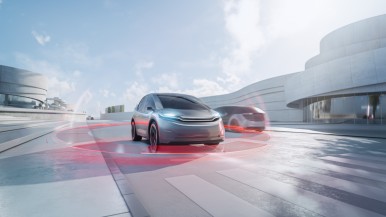
Munich, Germany – Cars, e-bikes, motorcycles, scooters, electric race cars: Bosch is rolling out mobility solutions for all types of vehicles, and is even making smartphones and people’s homes an integral part of mobility. At IAA Mobility 2021 in Munich, the supplier of technology and services will be showcasing its solutions for personalized, automated, connected, and electrified mobility. Bosch will be in exhibition hall B3 at booth C30 and in the bike area, in the Messe West parking garage, and downtown at Königsplatz and Odeonsplatz.At the trade fair and downtown – get in, get on, try it out Bosch show car: In the future, more and more vehicles will be electrically powered. They will increasingly be connected with other road users and their surroundings, assume more and more of the driving task themselves, and provide personalized services for their occupants. Bosch technology for automated, electrified, personalized, and connected mobility is paving the way for this future vision of mobility. The company has the systems know-how and comprehensive software and hardware expertise that this requires. For example, Bosch is developing central computers for the electronics architecture of the future. These vehicle computers are used for assisted and automated driving, controlling vehicle motion, as well as for cockpit functions and body electronics. (Trade fair: Hall B3, booth C30) Driverless parking: Bosch and nine project partners will present the future of parking in a live demonstration. In the automated valet parking system developed jointly by Bosch and Mercedes-Benz, a smartphone command directs cars automatically to their assigned parking bays without the need for driver supervision. Interplay between the intelligent parking garage infrastructure and the vehicle technology makes this possible. Sensors in the parking garage monitor the driving aisle and its surroundings while guiding the vehicle. The in-car technology converts the commands from the infrastructure into safe driving maneuvers. A joint project with the association of the German automotive industry (VDA) shows how vehicles from different manufacturers will be able to communicate with infrastructure technology from various suppliers in the future. Against this backdrop, the project partners are also working on an international standard (ISO 23374). (Live demonstrations several times a day in the Messe West parking garage) An enhanced cycling experience: E-bikes are the best-selling electric vehicle in Europe. Riding an electrically assisted bike is good for people’s health and the environment – as well as a lot of fun. Connected products and services enhance the cycling experience and connect e-bikers with the digital world. Bosch will be showcasing new connected-biking solutions and allowing visitors to see for themselves just how much fun power-assisted cycling can be. (Trade fair: Hall B3, booth C30; bike area B5, Blue Lane Micromobility: Brienner Straße; open space: Königsplatz and Odeonsplatz) Bosch is electrifying mobility and helping mitigate global warming Bosch wants to be a key player in climate-neutral mobility. The company has set itself the goal of making all vehicle classes ready for upcoming emissions requirements. As an innovation leader, Bosch has a broader electric driving portfolio than any other company – from e-bikes to passenger cars to heavy trucks. Battery-electric power for two- and four-wheeled vehicles: From powertrains to steering systems to brakes, Bosch’s portfolio includes all the building blocks for the electrification of passenger cars. One component is the e-axle , which combines the power electronics, electric motor, and transmission in a single unit. And with its pre-integrated system solutions for vehicle platforms, Bosch helps automakers bring electric vehicles to market faster than before. The key is the optimized interaction of the powertrain, steering, braking, and vehicle control in the advanced driving module , which is combined with partner solutions to form a complete axle module for the front and rear axles. Alongside efficient powertrains, Bosch also uses thermal management to increase the range of electric and hybrid vehicles. Precise control of currents of hot and cold air improves the efficiency of the battery and ensures that all components are working within their optimum temperature range. Bosch also offers drives and control units for electric two-wheelers . Integrated in a compact system, the two components ensure precise control of the motor, reliable riding performance, and optimum torque development. Fuel-cell system: Mobile fuel cells offer long ranges and short refueling times. Where they really come into their own is on long-haul routes and in commercial vehicles. With green hydrogen, fuel cells enable vehicles to be operated CO 2 -free. Bosch develops all the key system components to production readiness – including complete systems. For the stack, which converts hydrogen and ambient oxygen into electrical energy, the company is working with the Swedish specialist Powercell. Large-scale manufacturing of the stack is set to begin in 2022, and the launch of the complete fuel-cell system – the Bosch fuel-cell power module – is scheduled for 2023. Services for electromobility: Bosch’s Battery in the Cloud prolongs the life of electric car batteries. Smart software functions in the cloud continually analyze battery status and take appropriate action to prevent or slow cell aging. The tamper-proof “usage certificate” documents the condition of the battery throughout its entire service life, thus giving a better picture of the battery’s residual value if the car is sold. With charging services such as Convenience Charging , Bosch makes it easy and straightforward for drivers of electric cars to find – and pay at – publicly accessible charging stations. In addition, the integrated recharging and navigation solution allows for a precise range forecast and route planning that includes recharging stops – and comes with the option to set personal preferences, such as charging stations next to restaurants. New charging cable: At the IAA Mobility, Bosch is presenting a flexible charging cable with integrated control and safety technology for the first time. It also does without the usual in-cable control box when charging at a 230-volt power socket. This means, the flexible smart charging cable weighs less than three kilograms. On average, this is a good 40 percent less than conventional charging cables with a control box. Because it comes with adapters for Type 2 and household plugs, drivers who want to be free to choose whether to recharge from a power socket at home or from a charging station on the road no longer need a second cable. High-speed electromobility: For everyday life and for the racetrack – Bosch is committed to becoming the leading supplier of electrified powertrain solutions, both in electromobility for production vehicles and in electrified motorsports. The company has entered into a long-term technology and development partnership with the DRAGON/PENSKE AUTOSPORT Formula E Team. And those who want to experience driving the racing series courses virtually and compete with others for the best time can do just that in two simulators. (Open space: Königsplatz) Using electricity intelligently: Bosch’s intelligent energy manager makes it possible for homeowners to reduce CO 2 emissions and save energy costs. Serving as an interface between a Bosch heat pump and a photovoltaic system, it optimizes the use of home-generated solar energy and distributes it intelligently throughout the building. Alongside heating and hot water, it will also be possible to integrate electric cars into the Bosch energy management system in the future. Compatible wallboxes can then be deployed to recharge vehicles using as much home-generated electricity as possible. Bosch is automating driving and making roads safer Less stress, smoother traffic flows, greater safety – vehicles that assume more driving tasks themselves are a key building block for tomorrow’s mobility. An automated vehicle must be able to do everything a human driver can: perceive its surroundings, make decisions, and accelerate, brake, and steer. Step by step, Bosch is laying the technical foundations for automated driving. With its driver assistance systems, it is already paving the way for all levels of automation. Surround sensing for all traffic situations: Sensor technology forms the basis for assisted and increasingly automated driving. To drive safely, the vehicle must be able to reliably recognize objects, people, and other road users. Bosch’s multi-purpose camera combines traditional image-processing algorithms with artificial intelligence (AI) methods. Using AI, the camera understands and interprets what it sees, ensuring reliable object recognition and good surround sensing. In addition to camera, radar, and ultrasonic sensors, Bosch is also developing a long-range lidar, for which it employs various sensor principles. The more complex the driving task, the more important their interaction. Localization technology for exact positioning: Automated vehicles need to know exactly where they are at all times. Bosch offers a comprehensive package of hardware, software, and services that allows automated vehicles to precisely determine their own location. The VMPS (vehicle motion and position sensor) uses satellite navigation signals to identify the exact position, augmented by data from a correction service and information from the steering-angle and wheel-speed sensors. The Bosch road signature cloud-based map service uses data from radar and video sensors as well as vehicle motion data to create additional layers for high-resolution maps. Volkswagen Golf 8 vehicles are currently collecting this information on Europe’s roads. Redundant braking and steering systems for safe and energy-saving driving maneuvers: Better safe than sorry – this holds especially true for safety-relevant functions in automated driving. Thanks to multiple redundancy, Bosch’s electric steering system offers additional safety. In the rare event of a malfunction, the system is still capable of retaining 50 percent of its electric steering functionality. Bosch has also integrated a redundant architecture into the design of its braking systems : should either the iBooster (the electromechanical brake booster) or the ESP electronic stability program fail, the other component can brake the vehicle. A second braking unit serves as a backup for the integrated power brake system, which combines brake boosting technology and ESP functionality. This is an especially important requirement in automated vehicles. In addition, Bosch’s regenerative braking systems help save CO 2 : in a very smooth process, which is unnoticeable for the driver, they make it possible to switch between generator and friction braking, thus enabling braking energy to be converted back into electrical energy and fed back into the battery every time the vehicle is braked. Services for automated driving: Bosch’s predictive road-condition services raise the alert in the event of potential hazards long before critical situations develop. They provide real-time information about road conditions and risks such as aquaplaning, ice, and snow. This enables automated vehicles to correctly anticipate road conditions, adapt their driving behavior to the conditions, choose a different route, or even ask the driver to take control. Bosch connects vehicles with each other and with their surroundings: Vehicles that warn each other of danger, keep a protective eye on their occupants, and communicate with the smart home – Bosch connects systems, components, and services inside and outside the vehicle, making mobility more efficient, safer, and more relaxed. Users, vehicles, and surroundings are seamlessly connected, making driving more enjoyable and providing a personalized mobility experience. Smart car meets smart home: Bosch is turning cars into the command centers for smart homes: using Mercedes-Benz’s MBUX infotainment system, Bosch Smart Home applications can be controlled by voice command from the vehicle. In addition to shutters and heating thermostats, the system can also be used to control light switches and smart adapters, and to check the status of motion detectors and door/window contacts. Using voice commands allows the driver to stay focused on the road. Guardian angel for all areas of life: In the shape of Help Connect , Bosch has developed a digitally connected emergency call system for motorcycles and other vehicles. A smart crash algorithm added to the acceleration sensors in the Bosch MSC motorcycle stability control system allows accidents to be detected. A smartphone app transmits information about the accident scene and the rider to a service center, and from there to the emergency services. If the motorcycle has no permanently installed accident detection system, the sensor data from the smartphone can be used to initiate the emergency response. Bosch Help Connect can also provide assistance at home, in the gym, or when out cycling. Indoor monitoring for better occupant protection: Bosch has developed a system comprising cameras and AI that can increase the safety of vehicle occupants. The interior monitoring system detects driver drowsiness and distraction, or if occupants are in an unsafe seating position. It warns inattentive drivers, recommends a break if they are getting tired, and can reduce vehicle speed – depending on the automaker’s wishes and legal requirements. The system also enhances convenience by automatically adjusting the seat, mirrors, and steering wheel height in line with individual preferences – as well as enabling gesture control of the infotainment system. Wrong-way driver alert: Bosch’s cloud-based wrong-way driver warning system warns both the wrong-way driver and all road users at risk of the impending danger within seconds – much faster than traffic news on the radio. In early 2021, ŠKODA became the first automaker worldwide to opt for Bosch’s digital guardian angel. The lifesaving warning is flashed up directly on the display in the vehicle cockpit. As an app solution for smartphones, this service already has 2.5 million active users in 20 European countries. Smartphones as car keys: With Perfectly Keyless , sensors in the car recognize the owner’s smartphone as securely as a fingerprint and open the vehicle only at their request. The cell phone thus displaces the conventional car key. Thanks to ultra-wideband technology, the system also offers other practical everyday advantages: it is even easier to maneuver the car into tight parking spaces by remote control or to open the trunk remotely so that package handlers can deposit deliveries in it. For large parking lots where it is difficult to locate vehicles, Perfectly Keyless helps find the way to the car and illuminates the path by switching on the headlights, providing extra safety in the dark.

Stationary fuel cell: Bosch plans to start full-scale production in 2024

06.12.2020

Press release

Business/economy

Stationary fuel cell: Bosch plans to start full-scale production in 2024

Stuttgart, Germany / Horsham, United Kingdom – When it comes to stationary fuel cells, Bosch is stepping up a gear. In 2024, the supplier of technology and services intends to start full-scale production of distributed power stations based on solid oxide fuel-cell technology – hence the agreement to intensify its alliance with Ceres Power. Following a successful prototype construction phase, the two companies now want to press ahead, initially with the pre-commercialization process for stationary fuel cells. For SOFC systems, Bosch is aiming for an annual production capacity of some 200 megawatts. This is enough to meet the electricity needs of around 400,000 four-person households in urban quarters. Bosch is planning to produce the stationary fuel-cell systems at its manufacturing sites in Bamberg, Wernau, and Homburg, as well as its development sites in Stuttgart-Feuerbach and Renningen – and will invest hundreds of millions of euros by 2024. This means Bosch is positioning itself clearly as a systems supplier for stationary fuel cells with its own value creation in the cell and stack segment. One intended application of SOFC technology is in small, distributed, connectivity-enabled power stations, which can then be used in cities, factories, trade and commerce, data centers , and electric vehicle charging infrastructure. Bosch estimates that the market for decentralized power generation will reach a volume of 20 billion euros by 2030. A total of more than 250 Bosch associates are now working in this promising new field – 150 more than a year ago. “We see the highly efficient solid oxide fuel cell as an essential element of a sustainable energy supply. To bring it about, we are pooling Bosch expertise from across several divisions,” says Dr. Christian Fischer, the Bosch board of management member responsible for the Energy and Building Technology business sector. “With stationary fuel-cell systems, Bosch is establishing a new business field in which development, manufacturing, sales, and service come from a single source,” Fischer continued. “Together with our partner Ceres Power, we are now taking the next important step toward full-scale production.” We see the highly efficient solid oxide fuel cell as an essential element of a sustainable energy supply. To bring it about, we are pooling Bosch expertise from across several divisions...Dr. Christian Fischer, Bosch board of management member Energy and Building Technology Bosch intensifies alliance with Ceres Power Since August 2018, Bosch and Ceres Power have been successfully collaborating in the field of fuel cell and fuel-cell stack development. As early as fall 2019, Bosch was able to start prototype production of its first fuel-cell systems in Germany; in January 2020, it acquired a stake of around 18 percent in the U.K. company. The alliance has now been extended to include the phases leading up to full-scale production in 2024. The agreements specify how Bosch will further use its alliance partner Ceres Power’s technology. “We are proud to have reached this milestone in collaboration with our important partner Bosch. Combining innovative Ceres technology with Bosch’s manufacturing expertise made it possible to create pioneering stationary fuel-cell systems that will help overcome the global challenges of the energy transition,” says Phil Caldwell, CEO of Ceres Power. “We’re looking forward to continuing our close collaboration with Bosch.” SOFC systems are already hydrogen-compatible Ceres Power is a leading player in the development of innovative solid oxide fuel cells and stacks. Bosch holds an extensive technology license from Ceres Power and has been manufacturing fuel cells and stacks in-house since 2019. Pilot plants based on solid oxide fuel cells are already being successfully tested at various Bosch locations. The SOFC systems can already be operated with eco-friendly biogas or natural gas – and are already hydrogen-compatible for the energy system of the future. For cities and conurbations with high energy requirements, SOFC systems can ensure sustainable power supplies – with zero emissions of nitrogen oxides, particulates, and CO2. With an overall efficiency of more than 85 percent , the solid oxide fuel cell is clearly superior to any other energy converter. As Dr. Wilfried Kölscheid, who is responsible for stationary fuel cells at Bosch, explains: “Depending on energy supply requirements, in the future any number of plants with the same output can be interconnected. This interconnection creates virtual power plants that work together to supply power as and where it is required.”

NEVONEX doubles its number of partners

17.07.2020

Press release

Internet of Things

NEVONEX doubles its number of partners

Stuttgart – NEVONEX powered by Bosch enables automated and more efficient work processes together with renowned partners in the agricultural industry. "From the very beginning, we have designed NEVONEX as an open solution for all agricultural players. The entry of Corteva Agriscience, DHI, geo-konzept, MyEasyFarm and Yara convincingly confirms the concept for smart digital agriculture. The diversity of the new partners also shows the multi-faceted possibilities of NEVONEX", says Andrew Allen, responsible for the Commercial Vehicles and Off-Road operating unit at Bosch. So far, eight partners are already on board, offering high-quality FEATURES, interfaces to their agricultural machinery and sensors, the NEVONEX-enabled control unit and installation services.Growing variety of FEATURES and offers The joint ecosystem approach makes new and existing agricultural machinery more intelligent with the help of the NEVONEX-enabled control unit, thus optimizing the farmer's work processes. With the five new partners, the range of FEATURES, will be expanded. Corteva Agriscience, a major global provider of seeds, crop protection and digital agriculture solutions joins as a content partner for NEVONEX, developing new FEATURES for the system. Corteva's expert knowledge is thus made directly available on agricultural machinery. DHI, experts in digitalization, modeling, and visualization of water systems as well as Yara, a key supplier of fertilizers and environmental solutions, are also in the process of preparing FEATURES. The first partner from France, the innovative AgTech startup MyEasyFarm opens the French market for NEVONEX. The provider of precision farming solutions contributes with its know-how to the NEVONEX system. Each ecosystem partner can access the technical infrastructure and tools of NEVONEX and develop FEATURES. Thus, their expert knowledge is directly and seamlessly available on agricultural machinery. Additional important installation and service partner In addition, geo-konzept takes on the role of an installation and service partner. Among other things, the partner will retrofit agricultural machinery with NEVONEX-enabled control units and compatible sensors. Strong collaborations for the further development of the system The Federal Association DEULA e. V. supports NEVONEX with agricultural know-how and network through twelve legally independent training centers in Germany. In addition to the guidance of field tests, DEULA will help to design partner and user trainings for NEVONEX. The cooperation with the LandBauTechnik Federal Association enables NEVONEX to receive direct feedback and wishes from the practice of agricultural machinery dealers and tradesmen in close exchange with the LBT members. The Technical University of Munich looks into the future of agriculture with NEVONEX. An impact assessment of the NEVONEX technology for agriculture is being examined in the context of a Ph.D.-project. Besides the eight new additions, eight partners are already part of NEVONEX. These are: AMAZONE, LEMKEN, Pessl Instruments, RAUCH, Syngenta, Topcon, Xarvio and ZG Raiffeisen. NEVONEX is offered since spring 2020 with designated partners and regions in Europe through an Early Adopter Program, followed by North and Latin America. The overall market launch in selected regions in Europe, North and Latin America is scheduled for 2021.

CES 2020: Bosch raises the bar when it comes to artificial intelligence

06.01.2020

Press release

Business/economy

CES 2020: Bosch raises the bar when it comes to artificial intelligence

Las Vegas, NV, USA – Whether for automated driving, the smart home, or manufacturing: artificial intelligence (AI) has become an integral part of everyday life. Bosch uses AI and the internet of things (IoT) to make life easier for people and as safe as possible. Here, the slogan “Beneficial AI. Building trust together” sums up the technology and services company’s approach. The focus is on safe and robust AI for the manufacture of smart products, which Bosch will be showcasing at this year’s CES. One of these products is the Virtual Visor: an AI-based digital vehicle sun visor that will be making its debut at the world’s largest trade fair for consumer electronics. The product has also won a CES® Innovation Award, as has Bosch’s 3D display for the car.Other Bosch AI highlights at the show include an application for predictive maintenance of the International Space Station, a system for monitoring vehicle interiors, and a smart platform for medical diagnostics. “The solutions we’re showcasing at CES make it clear that Bosch aims to become an innovation leader in AI as well,” says Bosch management board member Michael Bolle. “As of 2025, every Bosch product will either contain artificial intelligence or will have been developed or manufactured with the help of AI.” The global market volume for AI applications is expected to be around 120 billion dollars over that same period, a twelvefold increase compared to 2018 (source: Tractica ). Bosch wants to tap into that potential: the company already invests 3.7 billion euros each year in software development, currently employs more than 30,000 software engineers, and has 1,000 associates working on AI. In addition, Bosch has established a comprehensive training program. “We plan to make nearly 20,000 associates AI-savvy over the next two years,” Bolle explains. “We must invest not only in artificial intelligence, but in human intelligence as well.” The program includes training formats at three different levels for managers, engineers, and AI developers and includes guidelines for using AI responsibly. To that end, Bosch has drawn up its own set of AI principles that address issues of AI security and ethics. With this in combination with its expertise, the company intends to build trust with customers and partners alike: “Anyone who has internalized technical and ethical principles knows how important data security and sovereignty are,” Bolle says. “In a way, trust is the product quality of the digital world.”Expertise saves lives In the future, Bosch believes one core area of expertise will be the industrial application of artificial intelligence. “We want to harness the power of artificial intelligence not for the purpose of creating models of human behavior, but instead to improve technology to benefit people,” Bolle says. “For this reason, industrial AI has to be safe, robust, and explainable.” According to Bosch, that means people should always remain in control, whether on the street, at home, or in manufacturing. As a pioneer in the development of life-saving driver safety systems such as ABS, ESP, and airbag control units, the company has already proved in the past that people benefit from reliable machines. AI can also make driver assistance systems even more efficient and intelligent: when Bosch’s AI camera for automated driving identifies partially concealed pedestrians, for example, the automatic emergency braking assistant can react even more reliably. Bosch is creating learning technology that is “Invented for life.”Bosch invests 100 million euros in an AI campus Innovations require investment. In addition to spending on software development, Bosch is investing worldwide in people and in competence centers. For example, the company is investing 100 million euros in the construction of a new AI campus in Tübingen, Germany. The move into the new research complex is planned for the end of 2022. It will then offer some 700 AI experts space for creative and productive exchange. These experts come from Bosch, external startups, and public research institutions. The new campus should strengthen exchange among experts in Cyber Valley. “Building trust together” will be a living reality there. Bosch is a founding member of Cyber Valley , which was established in 2016. This joint research venture brings together partners from industry, academia, and government to drive forward AI research and quickly transfer research findings into real-world industrial applications. In addition, the Bosch Center for Artificial Intelligence (BCAI) operates at seven locations worldwide, including two in the U.S.: in Sunnyvale, California and Pittsburgh, Pennsylvania. The BCAI currently has a total of some 250 AI specialists working on more than 150 projects in the domains of mobility, manufacturing, smart homes, and agriculture.World-first Virtual Visor originated in the U.S. Bosch has creative AI minds developing product innovations for mobility, the smart home, and Industry 4.0. Its AI world first for the automotive sector, which is celebrating its world premiere in Las Vegas, originated in the U.S.: the Virtual Visor, which is a transparent digital sun visor. A transparent LCD display connected to the interior monitoring camera detects the position of the driver’s eyes. Using intelligent algorithms, the Virtual Visor analyzes this information and darkens only the portion of the windshield through which the sun would dazzle the driver. The Virtual Visor scored the highest in its category at the CES Best of Innovation Awards. Bosch’s new 3D display won its category as well. Using passive 3D technology, the display generates a realistic three-dimensional effect for images and alerts. This allows visual information to be grasped faster than when displayed on conventional screens, increasing road safety. Additional safety comes from Bosch’s new interior monitoring system for vehicles. It detects when the driver is drowsy or looks at a smartphone based on eyelid movements, direction of gaze, and head position – and alerts the driver to critical situations. It also monitors the vehicle interior to determine how many occupants are present and where and in what position they are sitting. This makes it possible to optimize the operation of safety systems such as the airbags in an emergency. In 2019, Bosch sales of driver assistance systems rose by 12 percent to around 2 billion euros. They are paving the way for automated driving. In the future, when vehicles are in partially automated driving mode for sections of the journey such as on the freeway, the driver monitoring system will become an indispensable partner: In these situations, the camera will ensure that the driver can safely take the wheel again at any time. By 2022, the company will have spent around 4 billion euros on automated driving and will employ more than 5,000 engineers. To round out its sensor portfolio in this domain, Bosch is now working on making lidar sensors production-ready as well. In addition to radar and cameras, lidar is the third essential sensor technology. The Bosch long-range lidar sensor can also detect non-metallic objects at a great distance, such as rocks on the road.Bosch AI used in space and in medicine The company is aiming high with its SoundSee sensor system, which was sent into space at the end of 2019. Riding on NASA’s autonomous flying Astrobee robot, SoundSee will isolate unusual sounds on the ISS, analyze the audio using AI-driven analytics, and indicate when maintenance is necessary. Starting in early 2020, audio data captured by Soundsee will be delivered to a ground control facility configured to meet NASA specifications and built into the Bosch Research Center in Pittsburgh, PA. The system, which is barely bigger than a lunchbox, was developed in the U.S. together with Astrobotic as part of a NASA research collaboration.A completely earthbound but no less innovative product is Vivalution, a smart pathology platform that helps in medical diagnosis. Vivalution magnifies specimens like blood and other bodily fluids, digitizing the microscopic findings, and analyzing them with the help of artificial intelligence-powered algorithms. It is capable of precisely and rapidly identifying cell anomalies and providing physicians with useful support in evaluation and diagnosis.Smartglasses Light Drive make everyday glasses smart Bosch is also showcasing many non-AI innovations at CES. For example, its Light Drive smartglasses module is the world’s first sensor-based solution for making a normal pair of glasses smart. It is more than one-third thinner than other solutions on the market and weighs less than ten grams. The crystal-clear images projected into the wearer’s field of vision, which are clearly discernible even in direct sunlight, range from navigation information and text messages to calendar entries and operating instructions – depending on the information received from a smartphone or smartwatch. At CES, Bosch is using its IoT shuttle technology showpiece to present the solutions that the company offers automakers and mobility service providers for the electrification, automation, connectivity, and personalization of ridesharing vehicles. Its portfolio goes beyond components to include seamlessly connected mobility services that give users flexibility in how they operate, manage, charge, and maintain their fleet vehicles, as well as making each journey safe. At the Bosch booth, visitors can also see improved drive and sensor technologies for the connected and emissions-free mobility of the future.Solutions for the entire house: expanded portfolio for residential IoT Bosch is expanding the scope of its services for the residential internet of things (IoT). The highlight here is the open Home Connect platform, which is being showcased at CES. Starting in mid-2020, the platform’s app will also offer control of lighting and shade, entertainment, and smart gardening equipment from different manufacturers. The number of partner companies, which is currently at 40, is set to more than double, making life at home even more convenient and efficient.Smart technology protects the environment Underlying all these innovative products is Bosch’s entrepreneurial mindset. “We want to harmonize commercial, environmental, and social responsibility,” Bolle says. Climate protection is also a major concern here. According to Bolle, “Bosch not only develops environmentally friendly solutions, but also acts as a role model. By the end of 2020, all our 400 locations worldwide will be climate neutral and from development to manufacturing to administration no longer leave a carbon footprint. We’ve already achieved this for our German locations.” Artificial intelligence plays a role here, too: at individual locations, for example, an in-house energy platform uses intelligent algorithms to identify deviations in energy consumption. This alone has enabled some plants to reduce their CO2 emissions by more than 10 percent over the past two years. Considering that Bosch operates a total of 270 such plants, the savings potential is enormous. As Bolle explains, “That’s how we sum up our message at CES: Bosch has big plans for AI in many respects.”

CES 2020: Bosch presents intelligent technology that is “Invented for life”

06.01.2020

Press release

Smart Home

CES 2020: Bosch presents intelligent technology that is “Invented for life”

Stuttgart, Germany / Las Vegas, NV, USA – At CES® 2020 in Las Vegas, Central Hall, booth #12401 from January 7 to 10, 2020 , Bosch is presenting connected products for mobility and the home. Among the highlights at the trade fair are solutions that either make use of artificial intelligence (AI) or that were developed or manufactured with its help. The international supplier of technology and services wants to make AI safe, robust, and explainable, whether in manufacturing, smart homes, or automated driving.CES 2020 Innovation Awards: award-winning Bosch solutions In the run-up to CES 2020, Bosch twice received the highest score in the Innovation Awards and was also a three-time Honoree. The CES Innovation Awards are an annual program run by the Consumer Technology Association (CTA) covering 28 categories, and serve as an indicator of future trends. In addition to the 3D display for cars, a world first from the Car Multimedia division also received the coveted Best of Innovation award: the virtual visor. Both innovations were also designated Honorees in other categories. The third Honoree distinction goes to Bosch Vivalution (brand name was changed) – a smart platform for medical diagnostics.A world first: virtual visor – the transparent digital sun visor (AI inside): Conventional sun visors shield car drivers from dazzling light. But folding them down often also blocks significant areas of the driver’s field of vision. Bosch has solved this problem with a new, transparent LCD display that replaces opaque visors. The virtual visor is connected to the interior monitoring camera, which detects the position of the driver’s eyes. Using intelligent algorithms, the virtual visor analyzes this information and darkens only the portion of the windshield through which the sun or other light sources would dazzle the driver. The rest remains transparent, leaving the driver’s view of the road unobstructed.3D display – bringing the third dimension to the cockpit: The new Bosch 3D display uses passive 3D technology to generate a realistic three-dimensional effect for images and warning signals. This allows visual information to be grasped faster than when displayed on conventional screens, reducing driver distraction. Furthermore, this display system with spatial depth works completely without additional features such as eye tracking or 3D glasses.Vivalution (brand name was changed)– a smart pathology platform for medical diagnostics (AI inside): Bosch Vivalution can magnify microscopic samples of blood and other bodily fluids, take a digital picture of them, and analyze them using artificial intelligence powered algorithms. The device has already been trained on more than 30,000 images and some nine million discrete points of cells using machine learning methods – and it is still learning. It is able to determine irregularities in cells quickly and precisely, supporting doctors during evaluation and diagnosis.A Bosch must-see SoundSee – intelligent ears for the ISS (AI inside): Barely bigger than a lunch box, Bosch’s SoundSee is packed with state-of-the-art artificial intelligence (AI). SoundSee is already in orbit and will soon be deployed onboard on the International Space Station (ISS.) Riding on NASA’s flying autonomous Astrobee robot, the SoundSee uses integrated microphones to capture ambient noise in space and then analyze the audio using AI-driven analytics. By using artificial intelligence, SoundSee can analyze audio data to spot potential anomalies and give an indication of when maintenance work is needed. In early 2020, audio data captured by SoundSee will be delivered to a NASA-spec’d ground control facility built into the Bosch Research Center in Pittsburgh, PA. SoundSee was developed together with Astrobotic as part of a NASA research collaboration.Light Drive smart glasses – keeping information always in view : Bosch Sensortec is presenting Light Drive smart glasses – the world’s first solution for making a normal pair of glasses smart. The integrated projection system consists of MEMS mirrors, optical elements, sensors, and an intelligent software connection. Light Drive smart glasses are more than one-third thinner than previous solutions on the market and weigh less than ten grams. The crystal-clear images they project into the wearer’s field of vision, which are clearly discernible even in direct sunlight, range from navigation information and text messages to calendar entries and operating instructions – depending on the information they receive from a smartphone or smartwatch.Interior monitoring – safety, comfort, and convenience for all occupants (AI inside) : Based on eyelid movements, direction of gaze, and sitting position, this Bosch vehicle interior monitoring system detects when the driver is drowsy or looks at a smartphone – and alerts the driver to critical situations. It also monitors the vehicle interior to determine how many occupants are present and where they are seated. This makes it possible to optimize the operation of safety systems such as the airbags in an emergency. What’s more, the system increases occupants’ comfort and convenience. For instance, it automatically activates stored personal settings such as seat position. In the future, when vehicles are in partially automated driving mode for sections of the journey such as on the freeway, the driver monitoring system will become an indispensable partner: the camera will ensure that the driver can safely take the wheel again at any time.Bosch IoT Shuttle – the future of mobility : In the future, mobility service providers (MSPs) will increasingly use shuttles to offer customized on-demand mobility – whether for road freight or passenger transport. At CES, Bosch is using its IoT Shuttle technology showpiece to present the solutions that the company offers automakers and MSPs for the electrification, automation, connectivity, and personalization of shuttles. Its offering goes beyond components to include seamlessly connected mobility services that give users flexibility in how they operate, manage, recharge, and maintain their fleet vehicles, as well as making each journey safe.Mobility of the future: selection of solutions and services Intelligent front camera : understanding what it sees with computer vision and AI (AI inside) : This camera detects objects, categorizes them into classes such as vehicles, pedestrians, or bicycles, and measures their movement. The camera is also capable of interpreting what it sees to distinguish between the lane and the grass shoulder or roadside structures – even in the absence of road markings. In congested urban traffic, the camera can also recognize and classify partially obscured or crossing vehicles, pedestrians, and cyclists quickly and reliably. This allows the vehicle to trigger a warning or emergency braking. This camera intelligence is based on Bosch know-how and integrated into a chip, known as V3H, made by the Japanese company Renesas. It can also improve legacy driver assistance systems and extend their application range. For instance, it could enhance automatic emergency braking systems to prevent vehicles hitting various types of animals.Lidar sensors – the third type of sensor technology needed for automated driving, alongside radar and camera: Bosch is extending its sensor portfolio for automated driving and is starting production of long-range lidar sensors. Bosch long-range lidar will be the first solution available on the market suitable for automotive use. This means that it can be manufactured in large volumes and will work reliably throughout a car’s service life. Lidar plays a key role in ensuring that highly-automated vehicles can reliably detect hazards even in challenging driving situations – situations where radar and cameras come up short. The long-range lidar can also detect non-metallic objects at a great distance, such as rocks on the road.Radar sensors – surround sensors for complex driving situations : The latest generation of Bosch radar sensors are even better at capturing the vehicle’s surroundings – including in bad weather or poor light conditions. Their greater detection range, wide aperture, and high angular resolution mean automatic emergency braking systems can react more reliably.Automated valet parking – fully automated valet parking service : This joint development by Bosch and Daimler is the first SAE Level 4 system to be officially approved for everyday use in Germany. The sensors for the parking garage infrastructure and the communications technology come from Bosch. By the end of 2021, it is expected that a dozen other parking garages will be equipped with automated valet parking. Bosch is working on this together with parking garage operators and developers of major real-estate projects.Vehicle computer – next-generation electronics architecture : One key to the future of connected, automated, and electrified mobility is vehicles’ electronics architecture. Not only will new, high-performance vehicle control units make vehicles considerably more powerful in the future, but by reducing the number of ECUs, they will also reduce vehicle weight and complexity in the interactions between components and systems. Bosch vehicle computers will increase computing power by a factor of 1,000 by the start of the next decade. The company is already creating these kinds of computers for automated driving, the powertrain, and the integration of infotainment systems and driver assistance functions.Perfectly keyless – the smartphone as car key : In the future, Perfectly keyless will use not only Bluetooth for communication between the vehicle and a smartphone, but also ultra-wideband (UWB), a new communications technology that is already available in some smartphones. UWB lets smartphones be localized to within a few centimeters. It also makes communication with the vehicle particularly secure. Bosch is currently working with partners to standardize data transmission between smartphones and vehicles. At CES, Bosch is presenting a demonstration vehicle in which Perfectly keyless makes use of UWB for the first time.Fuel-cell system – electromobility for the long haul : Mobile fuel cells offer long ranges, short refueling times, and – with hydrogen produced using renewable energy – emissions-free operation of electric vehicles. Bosch is currently commercializing a fuel-cell stack together with the Swedish company Powercell. In addition to the stack, which converts hydrogen into electrical energy, Bosch is developing all the essential system components to a production-ready stage.Rolling chassis – electromobility platform : Electrical powertrains, steering systems, brakes – Bosch has all the building blocks of electromobility in its portfolio. As part of a development partnership with the chassis and automotive technology expert Benteler, the company is demonstrating how all Bosch products for electric vehicles can be integrated with one another. The rolling chassis showpiece is, among other things, helping Bosch to strategically refine products to meet such requirements.E-axle – SiC technology for high-performance electric vehicles : Bosch is presenting its new Performance e-axle, which incorporates new technological solutions to further increase the efficiency and power density of electrical powertrains. The new drive unit features improved system efficiency of up to 96 percent, which extends vehicle range by up to 6 percent in the WLTP test cycle. And at 3 kilowatts of power per kilogram, the power density is 50 percent higher than in the previous e-axle. These improvements are due to the pioneering use of silicon carbide (SiC) semiconductors in the power electronics as well as a space-saving arrangement of the electric motor, power electronics, and transmission.Connected biking – solutions that deliver a cycling experience 2.0 : The Kiox on-board computer keeps training data such as speed, pulse, and the rider’s own performance in view throughout the ride. Once the ride is over, users can evaluate the data in the eBike Connect smartphone app or in the online portal. Kiox also boasts a new premium function called Lock, which provides digital protection against theft. Meanwhile, the new SmartphoneHub lets e-bikers enjoy all-around connectivity when riding thanks to the COBI.Bike app, which offers a wide range of functions – from navigation and fitness tracking to connections with third-party services and apps such as Apple Health, Google Fit, and komoot.Intelligent assistants: safety and comfort on the road and at home Home Connect – an expanded platform for everyone : Bosch is expanding the scope of its services for the residential internet of things (IoT). Home Connect, the open IoT platform for all things relating to household appliances from Bosch and other brands, on which some 40 partners are already collaborating, is extending from the kitchen to the rest of the home. Starting in mid-2020, Home Connect will also offer control of connected devices such as lighting, heating, security, entertainment across different manufacturers. The number of partner companies is set to more than double, making life at home even more comfortable, convenient, and efficient.Bosch Smart Home – new degrees of openness: Bosch Smart Home is soon to be compatible with Apple HomeKit. In the future, it will be possible to control the Bosch smart-home system using the Apple Home app and the Siri voice assistant. To enhance customer benefits even more, in the future Bosch will offer its partners the option of including Bosch smart-home devices and services in their own offerings via an application programming interface (API).Application Store – everything under one roof : IoT connectivity has a key role to play, especially when it comes to security technology. Now the Bosch subsidiary Security and Safety Things has developed its own IT platform in an effort to make coordinating devices, software, and data for video and security applications in commercial buildings as effective as possible. Thanks to this platform, it takes no time at all to test the compatibility of an app with its intended application or to implement systems. Sample applications in the area of connected living and mobility will be on display at CES.A feeling of safety anytime, anywhere : This compact mobile alarm device can be placed wherever safety is paramount. Whether at home, in the car, in the motorhome, or in the shed – the new sensor is integrated into the intelligent Twinguard smoke alarm device. . The device is fitted with noise, motion, and air-pressure sensors, as well as GPS. If the device detects an intruder, it sends a warning to the user’s smartphone via Wi-Fi or the low power wide area (LPWA) IoT wireless technology standard.Bosch at CES 2020: PRESS CONFERENCE : In Ballrooms B, C, and D, Mandalay Bay Hotel, Las Vegas South Convention Center, Level 2 , from 9:00 to 10:30 a.m. local time on Monday, January 6, 2020 . BOOTH: Tuesday to Friday, January 7–10, 2020 , in the Central Hall, booth #12401 FOLLOW the Bosch CES 2020 highlights on Twitter: #BoschCES PANELS WITH BOSCH EXPERTS : Wednesday, January 8, 2020, 10:15 to 11:15 a.m. (local time) Event entitled “Growth of Apprenticeships for ‘New Collar’ Jobs” with Charlie Ackerman, Senior Vice President of Human Resources, Las Vegas, South Convention Center


05.06.2019

Press release

Connected mobility

Bosch presents the history of the car key

First rotary switches in 1900 Turn the key and drive away? Not in 1900. Starting a vehicle back then was a complex process comprising around ten different steps that only a well-trained chauffeur could master. Activating the ignition with a rotary switch was just one of them. So car thieves needed to be pretty determined.The birth of the car key The year 1910 marked the birth of the car key in the broadest sense – and the start of a long history of preventing auto theft. The keys were used to lock the electric circuit for the ignition, but car drivers still needed to crank up the engine.High-tech, 1920-style In the 1920s, people started locking their car doors, but they needed a separate key to do so. The ignition start switch also gradually became the norm. It not only locked the electric circuit, but also ignited the starter. Once the key was removed, the steering wheel could be locked. A matter of course today, but high-tech back then.Royal car key Extravagance never goes out of style. A personalized gold key was manufactured for Queen Soraya of Iran for her Mercedes-Benz 300 SL.Two become one Well into the 1960s, a number of cars had two different keys: one to unlock the door and another for the ignition. Then, a single key for door lock and ignition slowly became the norm.A familiar shape emerges Around the 1960s, car keys gradually began to get their familiar look – retaining it into the 1980s and even beyond.Central locking sees the light of day Familiar design, new functions: In the mid-1990s, central locking systems began their triumphant advance. Since then, drivers have no longer needed to walk around the vehicle locking each door separately.Pricey artwork A fancy car needs a fancy key. The Berlin-based company Noblekey, a specialist manufacturer of luxury keys, is a past master of this art. Pictured here: an exotic gold key encrusted with precious and semi-precious gems.Ever more convenient car keys The first wireless remote control keys made (un)locking a car even easier. One click and all the doors are open. If car drivers can’t recall exactly where they parked their car, a wireless remote control helps them find it – a flash of the indicators when the doors are unlocked shows exactly where it is.Keyless entry systems Progress certainly didn’t stop with the wireless remote control. Keyless locking systems, which debuted in production cars in 1999, allow car drivers not only to lock and unlock the car doors, but also to start the engine at the push of a button. No more ignition key – and no more ignition lock.Watch out, there’s a thief about With conventional keyless entry systems, the car key still needs to be carried in a jacket or suit pocket, for example. To open the door and start the engine, it communicates with the car using a radio signal in the low frequency (LF) or ultra-high frequency (UHF) range. In the fight against theft, the automotive industry is constantly refining existing systems. It’s like a marathon.Smartphones become car keys The Bosch keyless entry system for cars works with a virtual key stored on a smartphone. Sensors installed in the car recognize the owner’s smartphone as securely as a fingerprint and open the vehicle only for them. Digital key management links the app and the vehicle via the cloud.

Bosch technology teaches cars to fly

21.05.2019

Press release

Connected mobility

Bosch technology teaches cars to fly

Stuttgart, Germany – With traffic jams a common occurrence in the world’s cities, frustrated drivers sometimes find themselves looking to the heavens for a little help from above. A few years from now, the skies could in fact offer a tangible solution. The Boston Consulting Group predicts that people around the world will take 1 billion flights in air taxis in 2030, once sharing services have also established a presence on fixed routes above the ground. What is more, most of those air taxis will be capable of operating without a pilot. Bosch is working on state-of-the-art sensor technology to make these flights especially safe, comfortable, and convenient. “The first flying taxis are set to take off in major cities starting in 2023, at the latest. Bosch plans to play a leading role in shaping this future market,” says Harald Kröger, president of the Bosch Automotive Electronics division. To help it achieve this goal, Bosch has discovered a gap in the market. Conventional aerospace technology is too expensive, bulky, and heavy to be used in autonomous flying taxis. However, modern sensors that are also used for automated driving or in the ESP anti-skid system could have the potential to bridge this gap. That is why a team of engineers has combined dozens of sensors to create a universal control unit for flying taxis. The first flying taxis are set to take off in major cities starting in 2023, at the latest. Bosch plans to play a leading role in shaping this future market....Harald Kröger, president of the Bosch Automotive Electronics division Bosch technology for flying taxis Featuring Bosch sensors already in use in production vehicles, the universal control unit is designed to ensure the ability to determine the position of the flying taxis at all times, allowing them to be controlled with precision and safety. Acceleration and yaw-rate sensors that accurately measure the flying vehicles’ movements and angle of attack, for example, provide the necessary data. Unlike current sensor systems in the aerospace sector, some of which cost tens of thousands or even several hundred thousand euros, Bosch can make use of its solution for a fraction of the cost. That is because the company uses production-tested sensors that Bosch has already been developing and manufacturing for the automotive industry for many years. “Through our Bosch solution, we aim to make civil aviation with flying taxis affordable for a wide range of providers,” says Marcus Parentis, the head of the technology team at Bosch in charge of the control units behind the electric light aircraft. What is more, the Bosch sensors are especially small and lightweight. Flying taxi manufacturers can easily install the Bosch sensor box into their air vehicles using the plug-and-play principle. Through our Bosch solution, we aim to make civil aviation with flying taxis affordable for a wide range of providers....Marcus Parentis, the head of the technology team at Bosch in charge of the control units behind the electric light aircraft Shared mobility in the air: 1 billion flights in flying taxis in 2030 The market for flights using electric air taxis in cities is set to see substantial growth in the years ahead. Test flights are scheduled to begin in cities such as Dubai, Los Angeles, Dallas, and Singapore in 2020. Experts expect commercial operations to begin in 2023. Although pilots will probably be on board at first, the light aircraft could start flying autonomously over the roofs of major cities as early as 2025, controlled by staff on the ground. By that time, roughly 3,000 flying taxis will be in operation worldwide, according to Roland Berger. That number will increase to 12,000 by 2030, with just under 100,000 flying taxis taking to the skies by 2050. Consultants from Morgan Stanley estimate that the market for flying taxis could even reach 1.35 trillion euros (1.5 trillion USD) by 2040, extending beyond the United States and southeast Asia to include large and medium-sized cities in Germany as well. In regions such as the Ruhr valley, the Frankfurt Rhine-Main metropolitan region, and the Munich/Augsburg/Ingolstadt metroplex, they have the potential to significantly speed up travel over short and medium distances. Bosch’s Marcus Parentis also believes in the growing market opportunities. “We are talking to air taxi manufacturers from the aerospace and automotive industries, as well as with start-ups that build air vehicles and are looking to provide sharing services,” Parentis says. “The question isn’t whether flying taxis will become reality, but when.” Additional questions and answers What kind of technology does Bosch provide? The sensor box is equipped with MEMS sensors. The abbreviation MEMS stands for microelectromechanical systems. Bosch developed the first MEMS sensors for vehicles over 25 years ago. In vehicles, they supply control units with data about whether the car is currently braking or accelerating, and lets them know the direction in which the vehicle is traveling. The Bosch sensor box for flying taxis is equipped with acceleration sensors that measure the movements of the aircraft. Built-in yaw-rate sensors measure the flying vehicle’s angle of attack, while magnetic field sensors gauge its compass heading. The package also includes pressure sensors, which use barometric pressure to measure altitude and dynamic pressure readings to determine the vehicle’s current speed. To whom is Bosch supplying the sensor box? Bosch is in contact with a wide range of players in this field, from air taxi manufacturers to start-ups that are looking to build air vehicles and provide sharing services. As with any new technology, there is currently a multitude of different concepts on offer. At the present time, it is hard to say which concept will come out on top. Bosch’s plug-and-play control unit fits in any flying vehicle. What makes flying taxis an alternative? Flying taxis offer a new way of avoiding traffic jams in major cities: by taking to the air. That makes them an additional alternative for getting from A to B quickly in tomorrow’s urban areas. “Compared to today’s means of transportation, flying taxis save time on trips of 10 kilometers or more, with a maximum range of up to 300 kilometers,” Parentis says. How much will flying taxis cost? Depending on the concept and number of passengers carried, a flying taxi will cost around 500,000 euros. As a result, automated and electric air vehicles offer advantages, especially for sharing solutions. Still, a flying taxi costs far less than a comparable helicopter equipped with today’s technology. That is why it is important for suppliers to provide reliable technology that is not only lightweight and easy to install, but also offers an economic advantage compared to traditional aerospace technology. “That’s where our MEMS sensor box comes in. Through our Bosch solution, we aim to make civil aviation with flying taxis affordable for a wide range of providers,” Parentis says.