Search & find:
Media, press releases, events for your editorial coverage

08.10.2026

Factsheet

Business/economy

Robert Bosch Venture Capital GmbH (Bosch Ventures)

Headquarters Robert-Bosch-Platz 1 70839 Gerlingen, Germany Locations Stuttgart (DE) Frankfurt am Main (DE) London (affiliate office, UK) Tel Aviv (IL) Sunnyvale (affiliate office, USA) Boston (affiliate office, USA) Shanghai (affiliate office, CN) Associates Approximately 30 worldwide Management Dr. Ingo Ramesohl, managing director Philipp Rose, managing director Company Robert Bosch Venture Capital GmbH (Bosch Ventures) is the corporate venture capital company (CVC) of the Bosch Group. Founded in 2007, Bosch Ventures invests worldwide in innovative start-up companies at all stages of their development. Its investment activities focus on technology companies working in areas of business of current and future relevance for Bosch, above all, automation and electrification, climate technologies, enabling technologies, and healthcare systems. Bosch Ventures also invests in services and business models that are relevant to the above-mentioned areas of business. Furthermore, Bosch Ventures enables co-innovation between Bosch and startups through the Open Bosch Program. Fund volume Bosch Ventures invests on a fund-like basis. Its current global fund, Fund VI, has a volume of €250 million. Spark is an additional dedicated €100m fund for German Startups. In China, Bosch Ventures has also established Boyuan Capital, an investment platform through which external investors can participate in venture capital funds. Since its inception, Bosch Ventures has launched funds totaling more than €1 billion. Holdings Bosch Ventures has made more than 100 investments. It’s current portfolio comprises approximately 70 active companies listed on its website bosch.venturesInvestment strategy Investment focus Automation and electrification Mobility solutions Healthcare Energy efficiency Artificial intelligence (AI) and deep learning Disruptive computer architectures (hardware and software) Active investor Bosch Ventures operates as an institutional venture capital company in the international venture capital market. Bosch Ventures draws on its network within Bosch and beyond to help startups establish and scale new business models and ramp up distribution and industrial production.Procedure Investments Initial finance (early stage): up to €10 million Further finance up to a total investment of €25 million Selective injection of seed capital up to €1 million Selective investment in other venture capital funds to leverage international and industrial networks Process Bosch Ventures does not require strategic sponsorship or a commercial relationship with a Bosch business unit as a prerequisite for investment. Investment decisions follow venture-capital criteria, with the success of the startup taking priority. Through the Open Bosch program, Bosch Ventures connects startups (incl. portfolio companies) with Bosch business units to enable co-innovation, pilot projects, and commercial partnerships.Exit Highlights (portfolio is also listed on the website: bosch.ventures ) Arduino (IT) Develops an open-source hardware and software ecosystem for embedded systems, supporting applications from rapid prototyping to enterprise-scale deployments. Exited to Qualcomm. Basic Semiconductor (CN) Develops silicon-carbide (SiC) power semiconductors. The company completed an IPO on the Hong Kong Stock Exchange in 2026 Graphcore (UK) Developed Intelligence Processing Units (IPUs) optimized for machine-learning workloads in cloud and embedded applications. Acquired by SoftBank. IonQ (US) Develops trapped-ion quantum computers and commercial quantum-computing systems and is publicly listed on the New York Stock Exchange. UISEE (CN) Develops full-stack Level 4 autonomous-driving technology for applications including airports, industrial logistics, and passenger mobility; the company completed an IPO on the Hong Kong Stock Exchange in 2026. Xometry (US) Developed an AI-enabled marketplace for custom manufacturing that connects customers with manufacturing capacity; the company completed an IPO in 2021.

Purchasing and logistics at Bosch

01.09.2026

Press release

Business/economy

Purchasing and logistics at Bosch

Supply chain management: making responsibility part of supply chains Robust and sustainable supply chains allow companies to hold their own in global competition. This makes the responsible design of supply chains a key factor not only for companies’ future viability, but also for a sound economy and general prosperity. Bosch continuously pursues the aim of reacting even more flexibly, quickly, and transparently to increasingly specific customer requirements. At the same time, it aims to encourage sustainability, innovation, and quality along the entire supply chain and to ensure competitive prices. In these endeavors, Bosch’s guiding principle is that all parties involved should collaborate closely and in a spirit of trust, across company and national borders. With an annual purchasing volume that has now reached just unter 49 billion euros, and some 250,000 customers worldwide to be supplied each day, the design of its supply chains is a special responsibility for Bosch – in both a business and a social sense.This is why Bosch focuses on continuously improving its robustness and its contribution to sustainability, while at the same time pressing ahead with its further development – through supply chains characterized by supplier networks that foster competition and innovation. Great importance is therefore attached to sustainability and compliance: Bosch wants to work with its suppliers to reduce supply risks, avoid bottlenecks, and improve the economic efficiency of everyone involved. To achieve this, the company fosters global, regional, and local supplier relationships. The strategic importance of sustainable supply chains is also reflected in the company’s sustainability goals, which focus on respect for human rights, occupational health and safety, and climate action. On this basis, Bosch also supports the UN Guiding Principles on Business and Human Rights, as well as the German government’s National Action Plan (NAP) for human rights. Bosch also complies with the requirements of the German law on corporate due diligence in supply chains (“Lieferkettensorgfaltspflichtengesetz,” LkSG). Purchasing: procurement of components and raw materials In the supply chain between supplier and customer, Bosch assigns a key role to purchasing. Whether it’s materials for the manufacture of MEMS sensors for fitness trackers or solenoids for power drill motors – all raw materials and supplies have to be purchased on the global procurement markets. It’s from these goods that products are created that help improve quality of life and conserve natural resources. In this context, Bosch works with suppliers in some 60 countries. In 2025, the Bosch Group purchased goods and services worth 49.3 billion euros from some 35,500 suppliers worldwide (2024: 49.8 billion euros). Only a very small proportion of this is due to the direct procurement of raw materials. The acquisition of components – mostly in the form of semi-finished products and finished parts – accounts for the majority of the resources used in the supply chain. Most of these purchases are of electronic and mechanical components, but Bosch also buys merchandise, software, services, capital goods, and operating resources. The divisions are responsible for the purchasing of production materials, which is organized locally. Goods and materials not directly related to production are mainly procured at the corporate level by the indirect purchasing department. Logistics: provision of materials and products Transparency and efficiency also play an important role in Bosch’s supply chains. Bosch includes customer wishes in the early stages of its logistics planning, and in its collaboration with its suppliers, it takes into account factors such as cost, delivery time, and transport quality. Its logistics teams pay equally close attention to keeping carbon emissions as low as possible and to conserving resources. In this context, a transport management center, or TMC, is responsible for global transport strategy, designing transparent, efficient, and environmentally friendly transport for road, sea, air, and rail freight in the regions. In the development of packaging and the standardization of processes as well, the logistics department’s approach is one of sustainability. For Bosch, it’s important not only to reduce costs and carbon emissions, but also to save on raw materials and return them to a recycling cycle. In this way, the company’s logistics operations contribute to the overriding corporate goal of climate neutrality, while at the same time fulfilling their around-the-clock task of delivering materials and products on time. To facilitate this, Bosch has a global logistics network comprising some 1,000 warehouse locations. Day in and day out, a networked warehousing system ensures that the company’s roughly 230 manufacturing plants are supplied with parts and raw materials, and that finished products are delivered to customers worldwide. Partnerships: working with suppliers on equal terms For Bosch, there’s no doubt that strong partnerships contribute to the success of each company. Partnering with regional and local suppliers ensures a high degree of supply-chain robustness and availability. This is why Bosch works hand in hand with its suppliers right from the start of production and seeks to ensure competitiveness on both sides. In this context, purchasing teams work with suppliers to come up with product designs that allow the cost-optimized manufacturing of competitive products. One reason why this works is a quality management system that ensures the delivery of faultless goods right from the start of production. In addition to this preventive quality assurance, purchasing teams also work with suppliers to ensure that the required quality levels are continuously maintained. Such work is also backed up by training programs. Moreover, Bosch offers its suppliers attractive financing programs to improve liquidity. Competitiveness: additional training for suppliers Bosch suppliers have to satisfy minimum standards. As early as the selection process for potential suppliers, the Bosch purchasing teams consider criteria such as sustainability in line with group-wide requirements. The criteria for awarding new contracts include quality, price conditions, and the supplier’s track record. Optimization of process costs also plays an important role in this collaboration. Bosch is also at pains to systematically help suppliers develop their potential, and thus to ensure they satisfy quality, process, and sustainability requirements. For Bosch, the aim is partnerships that allow both parties to remain competitive over the long term. Outstanding suppliers are classified as preferred suppliers, a status that can be conferred on suppliers of either direct or indirect materials. Preferred suppliers are given priority in new projects and involved at an early stage in strategies and development projects. This allows them to align their operations with requirements, and to grow together with Bosch. The supplier of technology and services regularly honors the best of its suppliers from around the world with regional and global supplier awards. Risk management: stability through shorter supply chains Worldwide, some 38,000 people at Bosch work in supply chain management – roughly 10,500 in purchasing and 27,500 in logistics. Together, they ensure that around 230 manufacturing plants are supplied with parts and raw materials on a daily basis, and that finished products are delivered to Bosch customers worldwide. They are an integral part of the overall product development process – from the innovation phase to start of production to supplies of legacy products. The corporate supply chain management department coordinates internal and external requirements, establishes company-wide standards, and checks that they are complied with. Each unit’s purchasing and logistics managers are responsible for putting these requirements into practice. In the event of severe natural disasters or acute disruptions of global supply chains, there are precisely defined procedures for setting up specialized task forces. In this context, Bosch relies as a matter of principle on a comprehensive system of supply chain risk management that works proactively and is capable of reacting very quickly. One key factor for success is the local-for-local approach, under which Bosch manufacturing operations are located where its customers are. The company draws mainly on regional sources of supply, shortening supply chains and making them less vulnerable. And the aim of its multi-supplier strategy is to be able to switch at an early stage to alternative sources and supply routes within the global supplier network; to adapt transport management at short notice; and to use alternative manufacturing sites in the global manufacturing network. Sustainability: compliance with environmental and social standards Supply chains can only be designed responsibly if there is clarity about compliance with environmental and social standards. This gives Bosch the basis on which to give its suppliers across the globe pinpointed help in continuously improving their efforts toward achieving sustainability. Through contractual frameworks, sustainability-related checks, and resulting specific measures, Bosch aims for a high degree of sustainability and compliance in its supplier network. If there is a suspicion of misconduct, such as a violation of the Bosch sustainability standards, a whistleblower system allows associates, business partners, and other third parties to report this, including anonymously. Together with its suppliers, Bosch is committed to compliance with high environmental and social standards in its supply chains. And because Bosch is both a manufacturer and a supplier, its sustainability standards themselves have an impact on thousands of suppliers and sub-suppliers, such as when it comes to the reduction of carbon emissions. On-site checks are a key element in evaluating suppliers. Bosch checks all new suppliers before doing business with them. Existing supplier relationships are also subject to checks. The decision to check a supplier depends on risk and on the demands of a particular situation. Only if they pass muster will existing suppliers be given new contracts. If active suppliers are found to have behaved unlawfully, or if their sustainability efforts are unacceptable, they will be excluded from future contract awards. If they are found to have contravened certain sustainability standards, the purchasing departments will take up the matter. The aim is to quickly remedy any shortcomings together with the supplier and take suitable precautions for the future. If these measures fail to work, or if the supplier again falls below Bosch standards or breaks the law, the company reserves the right to end the business relationship. Digitalization: status of inventories and requirements at a glance Bosch believes that the digitalization of purchasing and logistics will help make supply chains more sustainable and robust. The company systematically invests in new technologies in order to continuously optimize workflows and global networking. Digitalization can make purchasing and logistics processes faster, less resource-consuming, and more cost-efficient. One crucial factor here is a high level of transparency regarding the status of inventories and requirements – especially when bottlenecks appear along the value stream from supplier to customer. The aim is to know in real time how a particular customer or supplier is affected across several manufacturing stages, and by what means of transport a particular type of material is currently in transit. This sort of transparency allows production schedules to be rearranged in good time, special deliveries to be organized, and agreements to be reached with customers. To record, communicate, and exchange the data this requires, Bosch and its suppliers use digital platforms. This allows them to collaborate closely and exchange information reliably, and also ensures that data quality always meets the required standards. It thus reduces effort and the time taken by processes, while maintaining excellent quality and paying attention to sustainability. In this way, Bosch can react even faster and more specifically to customers’ wishes, improve its contribution to sustainability, and provide a better overview of the growing number of regulatory demands made of the supply chain. By digitalizing its supply chains, Bosch is improving their robustness – an important building block for a sound economy.

Interview: Sustainable supply chains at Bosch

01.09.2026

Press-Feature

Business/economy

Interview: Sustainable supply chains at Bosch

What’s involved in purchasing and logistics at Bosch? Flemming: At Bosch, purchasing and logistics are combined in supply chain management. This ensures robust and sustainable supply chains from procurement source to delivery. For Bosch, this is central to improving quality of life through technology and to the goal of conserving natural resources. In our supply chain management, we work closely with our roughly 230 manufacturing plants and nearly 250,000 customers worldwide. The task is to ensure the availability of components, raw materials, and products in line with customer demand. Here, high quality and competitive prices are important aims, which we pursue in collaboration with our supplier network of more than 35,000 manufacturers and service providers. In addition, our supplier network plays an important part in Bosch’s competitiveness and innovativeness. How important is sustainability for supply chains? Flemming: Bosch takes its entrepreneurial responsibility very seriously. This is why its long-term strategy aims to reconcile economic, ecological, and social concerns. With an annual purchasing volume of almost 50 billion euros, this responsibility reaches far beyond our factories’ gates. Supply chains that manifest a high level of sustainability and social standards are therefore very important for Bosch. Together with our core suppliers around the world, we work to use raw and other materials sparingly, as well as to systematically reduce carbon emissions. We want to achieve this through measures such as consolidated shipments and optimized packaging. For us, there is no question that the only way companies can survive in global competition – and thus contribute to global prosperity – is on the basis of robust and sustainable supply chains. How does Bosch’s supply chain management respond to geopolitical upheaval and increasingly extreme weather events? Flemming: Stable supply chains are the bedrock of a sound economy. For Bosch, this means that supply chain management also has to anticipate ever new developments in global trade. In this respect, we pursue a local-for-local strategy, making our global supply chains shorter, more flexible, and thus less vulnerable. With our global manufacturing network, we produce where our customers are. Anticipatory supply chain risk management allows Bosch to react in good time to the risks arising from factors such as supply bottlenecks, natural disasters, and blocked shipping routes. Business relationships based on partnership and respect are crucial in allowing us to work hand in hand with our suppliers if global supply chains or shipping routes are disrupted in this way. In addition, a high degree of digitalization in our supply chains helps us gain clarity in real time about inventories and requirements – from procurement to manufacturing operations to customers. How does Bosch ensure compliance with legal requirements and with environmental and social standards in its supply chains? Flemming: As a global supplier of technology, Bosch purchases from companies and service providers in roughly 60 countries. As most of the master data and processes in our supply chain management are digitalized, we are in a position to comply with diverse regulatory requirements. In one respect, for the sake of competitive prices, digitalization helps us cushion the effect of extra administrative work in our supply chains wherever possible. At the same time, it makes it easier for us to comply with reporting requirements and to track sustainability targets in the supply chain. So if suppliers deviate from our quality standards, we give them additional training. Depending on the risk, we also check compliance with environmental protection regulations and respect for human rights. When it comes to reducing carbon emissions, the requirements we set as a manufacturer and supplier have an impact on thousands of suppliers and sub-suppliers of our own – thus multiplying our joint contribution to mitigating global warming. What are the latest trends in purchasing and logistics at Bosch? Flemming: We are expanding our use of generative AI to further strengthen automated planning for our supply chains. This allows us, for example, to use self-learning systems to incorporate external market factors much more effectively into demand planning for our customers. We are also testing humanoid robots in conjunction with SAP processes in warehouse management. Automated planning thus continues to play a key role in supply chain management at Bosch. We want to be able to react even better and more effectively to external factors such as flood damage at suppliers or supply shortages in the market. AI also makes it easier for us to predict and prevent quality defects as early as the procurement phase – before they can even occur. In our workflows, we systematically rely on cross-function, end-to-end processes, which we are continuously improving. Another important element is end-to-end electronic data exchange – starting for example at our suppliers through our digital platforms, and continuing from there via our plants to our customers. Dr. Arne Flemming is the head of supply chain management at Bosch. In this function, he is responsible for managing the Bosch Group’s roughly 38,000 associates worldwide in purchasing and logistics.

Christof Ehrhart will leave position as Bosch’s Head of Communications at the en ...

15.07.2026

Press release

Business/economy

Christof Ehrhart will leave position as Bosch’s Head of Communications at the en ...

Stuttgart – Prof. Christof Ehrhart (60) is leaving Bosch on December 31, 2026, at his own request to pursue commitments and projects outside the company. In his capacity as the company’s head of communications, he has been responsible worldwide for internal and external communications, governmental affairs, relations with industry associations and stakeholder groups, and strategic brand management since 2019. Ehrhart can look back on three decades of leadership roles in international communications. In 2024, he received the prestigious German Image Award for the second time for his communications work at Bosch.Stefan Asenkerschbaumer, chairman of the Bosch supervisory board: “The company extends its sincere thanks to Christof Ehrhart for his many years of outstanding work and for leading the communications function for Bosch with great success during what has been a very challenging period in the company’s history. We wish him every success in his future endeavors.” Christof Ehrhart: “Now is the right time to begin the handover in the company’s communications team. I would like to thank all my colleagues at Bosch for the trust they have placed in me, and I look forward to embracing the opportunities that lie ahead.” Christof Ehrhart’s successor will be announced at a later date.

Developing forward: Bosch is focusing on speed and global innovative strength

16.04.2026

Press release

Business/economy

Developing forward: Bosch is focusing on speed and global innovative strength

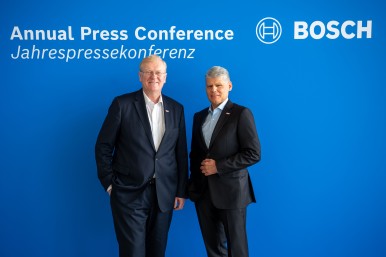
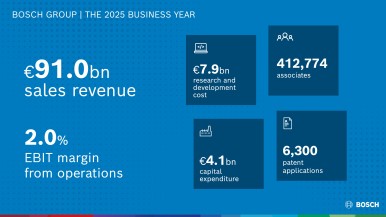
Stefan Hartung, chairman of the board of management of Robert Bosch GmbH, and Markus Forschner, member of the board of management and chief financial officer, at the annual press conference on April 16, 2026 Check against delivery.Ladies and gentlemen, “For tomorrow. Today.” – That’s precisely what we’re here to talk about. Today, we’ll talk about the future. We’ll talk about new technologies, pioneering innovations, and strategic partnerships. We’ll talk about the right response to geopolitical challenges and the mobility of tomorrow. About AI and customer proximity, about software and sensors, and about the next generation of home appliances. In other words, we’re talking about everything that will shape our company in the coming years and – more importantly – will allow it to grow. And with that, I warmly welcome you to our press conference here in Renningen. However, just because we’re focusing on our opportunities and strengths today doesn’t mean that we’re ignoring the present. It’s too early to give the all-clear. These challenges still exist and are still considerable – even for our company. There are still too many bureaucratic and regulatory shackles, too many question marks in global politics, and too little demand in many of our core markets. But one thing’s becoming increasingly clear: our answers to these challenges are the right ones. Bosch can deliver the future – even under unfavorable conditions. We’ve worked hard to achieve this confidence. As you know, we had to make some very painful and, for many of our associates, momentous decisions in the past financial year. However, the only way for us to persevere in an increasingly competitive environment is to reduce and streamline our costs and structures – not only in the short term, but in the long term. Last year’s figures show a clear need for action. In total, we generated sales revenue of 91 billion euros, which is roughly the same as in 2024. Our EBIT of around 2 percent was below the previous year’s level and also below our expectations. My colleague Markus Forschner will provide you with the detailed figures later on. But for right now, I can share two conclusions: one, our result is still within the acceptable range against the backdrop of challenging operating conditions and extraordinary burdens. And two, it’s clear that we need to further improve our profitability and competitiveness. However – and this brings us back to the aforementioned confidence – we’ve already made noticeable progress in 2025 and in the first few months of this year. I’d like to briefly present the five most important developments: First, we’ve reached agreements with employee representatives at all affected German Mobility locations regarding further local developments. By their very nature, the negotiations weren’t easy, but both sides demonstrated a marked sense of responsibility – and their efforts ultimately bore fruit. We’ve spent a lot of money on these agreements, including out of a sense of fairness toward the associates affected. However, any further delay would have cost significantly more in the long run and increased uncertainty for everyone involved. And even though it will still take some time before the measures take full effect, we must implement them now – as quickly and consistently as necessary, but also in as socially acceptable a manner as possible. Second, we won a record number of new orders in our Mobility business sector last year. Especially with our ADAS product family, by which I mean our intelligent driver assistance systems, we’ve been awarded a large number of strategically important projects. The situation in electrification is similar: a premium manufacturer has placed a major order with us for e-axles, and several other manufacturers from all over the world also rely on our solutions in this area. This was an outstanding achievement by all colleagues involved, especially given the circumstances. At the same time, this success is closely linked to my first point: these projects will really pay off only if we can operate efficiently enough. This is because global prices in the automotive industry are increasingly based on just one standard, and that’s China’s. However, despite all the challenges – and this brings me to my third point – I’m convinced that we will help shape the new automotive world just as much as we did the previous one. For years, we’ve been working intensively on the three major trends in the industry: automation, electrification, and software-defined mobility. The cars of the future will be more technologically sophisticated – and that’s just right for Bosch. Because what we’re particularly good at is connecting mechanics, electronics, and software into a single intelligent system. The car will become a fully immersive experience. Over the past few months, we have systematically expanded precisely those strengths that will be needed for the mobility of tomorrow. These include close ties with our customers through reliable partnerships and joint system developments. Or our unique breadth of technologies, which span the entire vehicle lifecycle and are increasingly being improved and expanded by AI. Economies of scale also remain extremely important. One thing in particular is becoming more and more clear: our special combination of thinking globally and acting locally is a decisive advantage in a geopolitically fragmented world. This is because trade barriers and different user expectations increasingly require regionally adapted solutions. The future belongs to those who can adapt their portfolios and supply chains to regional conditions – and still deliver world-class quality. And that’s exactly what we do: we transfer innovative, efficient solutions from our lead markets to the whole world – in exactly the way our customers expect us to. It’s yet another reason why we’re the number one supplier in the highly competitive Chinese market. This global presence brings me to my fourth point, namely, how it shapes our business outside the automotive segment. No other area is currently growing more strongly than our Energy and Building Technology business sector. The Bosch Home Comfort Group in particular is in the midst of many changes. With the acquisition of Johnson Controls and Hitachi’s heating, ventilation, and air-conditioning business, or HVAC for short, we’ve reached a milestone that strengthens us significantly in terms of both technology and our regional presence. The division has almost doubled the number of its plants to 33, and currently operates 26 development centers. This means the Bosch Home Comfort Group is close to customers around the world and can adapt its range to local requirements at any time. Electrification is merging heating and cooling – anyone wanting to be part of this shift has to be globally and broadly positioned. That’s us. Despite difficult conditions, the division was able to significantly increase its market share last year thanks to the strong growth for heat pumps in Europe. We expect a gradual revival in the market this year and then long-term growth starting in 2027, particularly in North America. Bosch Global Service Solutions, our division for connected services in the areas of mobility and monitoring, is also doing extremely well at the moment. Here, too, we received more orders last year than ever before. These include solutions for digital mobility services, such as eCall and breakdown assistance, as well as services for fleet operators, logistics providers, and building managers. We expect on average double-digit sales growth in this division up through 2030, due in part to our heavy focus on AI-based applications and innovations. And to give rise to more growth stories like this, we’ve recently established our subsidiary Bosch Business Innovations. Its mission is to systematically develop new business areas for Bosch outside the current core business. We’re supporting these efforts by investing some 200 million euros. Up to ten business ideas are to be validated and implemented in initial structures just by the end of this year. Our goal for 2030 is even more ambitious: by then, we want to have successfully established more than 20 startups together with experienced venture studios, external founders, and investors. Initial areas of focus include software-controlled manufacturing, the field of remote medical monitoring, and the capture, use, and storage of CO 2 . This brings me to the fifth and perhaps most important success factor: we’re working on hardly anything right now as hard as we are on our innovative strength. This is the most important currency we have. In international competition, it’s ultimately not just about costs, but above all about differentiating ourselves. To achieve this, however, we have to develop solutions even faster and then just as quickly convert them into products and sell them. We’ve made excellent progress here, as some of you have already seen on the tours this morning. Later on, I’ll explain a few examples in more detail, including one solution that could potentially save many lives – and another one that already does. Before that, however, our chief financial officer Markus Forschner will now present the key business figures to you in detail.... Markus, if you please... Markus Forschner: Ladies and gentlemen, I too would like to welcome you to the Bosch annual press conference. As Stefan has already said, we see considerable opportunities for Bosch and are determined to seize them. The foundation for future profitable growth is our competitiveness – that’s why we’re continuing to work hard to improve it. In 2025, we set an important course and introduced further comprehensive actions to improve efficiency and profitability. 2026 will be dominated by their implementation, and our plan is for them to take effect quickly. This also strengthens our resilience to future challenges. After all, we must continue to prepare ourselves for an environment of great uncertainty. But before we look ahead, let’s first take a look back at the 2025 financial year. The global economy proved remarkably resilient in 2025 despite considerable uncertainty. Growth plateaued at a moderate level, however, and economic momentum in our focus markets remained weak. In 2025, we were faced with a complex interplay of various negative factors – volatile trade policy, unfavorable currency effects, and increased competition. We held our own in an adverse environment and were able to increase the Bosch Group’s sales revenue to 91 billion euros. This represents a nominal increase of 0.7 percent, or 4.1 percent when taking exchange-rate effects into account. The 1.2 billion euros in sales revenue from the acquisition in the HVAC sector has had a positive impact. That meant our Energy and Building Technology business sector recorded growth of a very pleasing 13 percent – despite the sale of the building technology product business in mid-2025. Even adjusted for these portfolio changes, the sector achieved growth, in spite of subdued construction activity and regulatory uncertainties in the heating market. In the Mobility business sector, nominal sales revenue remained roughly at the previous year’s level. Adjusted for exchange rate effects, there was growth of 2.9 percent. One of the main reasons for this was the continued weak environment in the vehicle market, particularly in Europe, where the business sector generates a large portion – more than 40 percent – of its sales revenue. Although sales in areas of future importance such as electromobility and automated driving developed positively compared to the previous year, they fell short of our planning. Industrial Technology’s sales revenue also remained near the previous year’s level, due primarily to the downward trend in the North American market. The lack of momentum from the construction industries in China and the U.S. was particularly noticeable in Consumer Goods, where we recorded a nominal 1.9 percent decline in sales revenue, although it was an increase after adjusting for exchange-rate effects. From a regional perspective, sales revenue in Europe fell by 0.6 percent, while the other regions of the world posted slight increases – 3.8 percent in the Americas and 0.7 percent in Asia Pacific. Exchange-rate effects had a negative impact on global sales revenue totaling 3.1 billion euros. EBIT from operations also came in below our expectations, falling to 1.8 billion euros. The EBIT margin from operations came to 2.0 percent, following 3.5 percent the previous year. One of the main reasons for this is restructuring expenses of 2.7 billion euros, which are mainly in the form of provisions. Exchange-rate effects, lower contribution margins, and higher or additional customs duties also had a negative impact. Overall, this results in a picture that is strongly influenced by special and one-off effects beyond our actual business development. Profit before tax fell to 0.5 billion euros, compared with 2.7 billion euros in the previous year. After taxes, result was negative at −0.4 billion euros, compared with 1.3 billion euros in the previous year. Despite the decline in result, we once again achieved a positive free cash flow of 0.3 billion euros in 2025. Liquidity according to the consolidated statement of cash flows remained high at 7.4 billion euros, as did the equity ratio of 41.6 percent. Bosch is therefore standing on a stable financial foundation, even in challenging times. We’re pleased to say that all our business sectors made a positive contribution to result: Mobility with 1.8 percent of sales, Consumer Goods with 3.0 percent, Industrial Technology with 3.5 percent, and Energy and Building Technology with 0.5 percent. In addition to restructuring costs, which impacted all sectors, Energy and Building Technology also saw one-off costs due to our acquisitions and sales activities that had a negative effect on result. The number of associates worldwide fell by some 5,100 to around 412,800 in 2025, a decline of 1.2 percent. Adjusted for consolidation- and method-based effects, the operational workforce reduction amounts to around 15,000 associates, affecting the Mobility business sector and Germany the most. This shows that we are making good progress in implementing the socially responsible measures. Even in difficult times, Bosch is prepared to make substantial upfront financial investments. Capital expenditure remained at the high level of 4.1 billion euros, albeit lower than it was the previous year. In 2025, we once again made targeted investments in numerous projects of future importance, with a focus on semiconductors, sensors, modern braking control systems, and electromobility. Bosch’s expenditure on research and development amounted to 7.9 billion euros, or 8.7 percent of sales. Ladies and gentlemen, what awaits us in the current financial year? Business and the economy will continue to be characterized by considerable uncertainty in 2026. Geopolitical tensions are escalating, national interests are increasingly putting the brakes on free trade, and this is putting a strain on the global economy. The impact of the war in the Middle East on inflation, global economic output, and the delivery of energy resources cannot yet be estimated. It also remains to be seen how the U.S. Supreme Court’s decision will affect future customs and trade policy and what claims will arise for reimbursement of tariffs. At present, we expect global economic growth to remain at the moderate level of previous years. Asia Pacific is once again expected to record the highest growth rates, although we anticipate a slowdown. This is due particularly to China’s structural challenges, for example in the real estate industry or demographic trends. In the U.S., we’re likely to get a boost from strong momentum in artificial intelligence and a more expansive monetary and fiscal policy. Increasing government spending on infrastructure and defense is also supporting growth in Europe. However, it will probably remain subdued, especially because the necessary reforms for greater competitiveness are being implemented only slowly, particularly in Germany. Markets remain demanding and implementing our growth targets is challenging. The price and competitive pressure is palpable. Nonetheless, in the first three months of this year, we were able to keep our revenue more or less at the previous year’s level, and increased it by some 5 percent after adjusting for exchange-rate effects. We’re confident that we can exploit the potential in our markets – with innovative strength, a high degree of technological expertise, and global positioning that puts us close to our customers. Despite the unfavorable environment, which is intensifying competition and hampering growth opportunities, we aim to increase the Bosch Group’s sales by 2 to 5 percent in 2026. We expect growth in all business sectors, mostly in Energy and Building Technology with double-digit growth driven especially by the newly acquired business. Industrial Technology is likely to make solid gains by tapping the potential offered by advancing automation and electrification. Despite a probable decline in vehicle production, we’re forecasting a slight increase in sales for Mobility, and in Consumer Goods as well. For 2026, we anticipate a major improvement in result with an EBIT margin from operations of between 4 and 6 percent of sales. One reason for this is that special effects, such as the high provisions of the previous year, no longer affect us to the same extent. In addition, the restructuring actions are gradually having a positive effect on result. Even if we don’t reach our target margin of 7 percent in 2026, we’re on the right track and are making great progress. Profitable growth also requires financial leeway. We want to tap into this primarily from our own resources, but also by using the capital markets. Previously, we could issue financial instruments such as bonds during the year only for a limited period once our consolidated financial statements were available. Now, however, we intend to make our access to the capital markets much more flexible in the future. For this reason, this year we’re publishing interim consolidated financial statements and an interim group management report for the first time. This improves our ability to access the capital markets, even though we have a strong capacity to finance our business from our own resources. Ladies and gentlemen, as you can see, we’re working hard to improve our financial robustness and competitiveness, as this will enable growth and secure our future. And now I’ll hand back to Stefan Hartung. Stefan Hartung: Thank you, Markus! The figures clearly show once again that we will have to continue with a two-pronged approach for the foreseeable future. The first prong is to secure and optimize our core business. And the second is about carefully selecting growth areas and opening them up quickly. One finances the other, and both together secure our future. In both areas, the fuel is the same: innovation. That’s why I’m so very proud of all the innovations that our associates have developed, tested, improved, and brought to the market over the past few months. The spectrum is huge and ranges from highly specialized quantum sensors to products such as the first BSH oven with an AI-supported voice function. The oven requires no external loudspeakers and no additional apps, but responds quickly and precisely to simple commands – right up to voice-controlled opening of the oven door. The smallest Bosch products, on the other hand, are barely visible to the naked eye, but have long since established themselves as lifesavers. I’m talking of course about our sensors. For example, sensors built into a smartwatch can detect if the wearer takes a sudden fall, so that an alarm can be triggered in good time. Another example is pressure sensors, which help rescue teams find and treat people seeking help more quickly. These sensors work even in high-rise buildings, as they can indicate height differences down to a few centimeters. It’s estimated that this function saves thousands of lives in the U.S. alone – every year. Bosch sensors are also playing an increasingly important role in consumer electronics and robotics. They make artificially created environments look extremely realistic, they stabilize the images from smartphones and action cameras, and they help robots find the right path even under difficult conditions. The different variants are based on the BMI5 sensor platform, our most intelligent, most accurate, and most powerful sensor solution to date – ideally suited for a rapidly growing sector in which Bosch is the market leader. And there’s another emerging technology that depends heavily on smart sensors: automated driving. One example here is our range of inertial sensors, including the SMU300. This sensor works for an automated car in much the same way as the inner ear works for us: all rotations and inclines are recorded with the utmost precision and processed into something akin to a sense of balance. It allows the car to maintain full awareness of its whereabouts even when camera or GPS signals aren’t available. The portfolio encompasses individual sensors as well as customized solutions, such as our IMU-Integrated. Such solutions play a key role in the success of our ADAS product family. As mentioned earlier, the demand here is particularly encouraging to see. In 2025 alone, we won orders worth 10 billion euros for intelligent driver assistance systems across all regions of the world. These include software solutions as well as central vehicle computers or products: for example, camera systems, high-precision radar sensors, and ultrasonic sensors that not only help with parking, but also detect whether the road is wet or dry and send corresponding signals to the assistance systems. Of course, the future of mobility also includes the integration of artificial intelligence into the entire lifecycle of the car – from its manufacture to regular software updates. Bosch is at the forefront in this area and is now literally bringing AI into the driver’s field of vision. Our new AI-controlled cockpit is a mixture of assistant, navigator, and chauffeur – it can advise, give warnings, and even think for itself. This is because behind the AI-powered cockpit is an AI-enabled high-performance computer that actively supports the driver, be it with appointment management, route planning, or the predictive search for a parking space. In conjunction with our interior sensing solutions, the AI-powered cockpit can turn driving into a completely new, highly personalized experience. The vehicle recognizes who’s at the wheel and detects whether there are any other passengers on board, then adjusts everything accordingly: from the exterior mirrors and vehicle handling to optimized airbag deployment in the event of an accident. Buttons and touchscreens are increasingly being supplemented by gestures and “normal” speech: the interface between person and machine is shifting more and more in the human direction. In the future, parking the car will require just one voice command before the AI-powered cockpit steps in to handle everything else – all that’s left for you to do is get yourself out of the car. At the same time, interior recognition is crucial for automated driving, as this is the only way the car can determine whether a person is really in a position to take over the wheel again. In this respect, all these functions aren’t just some fun gimmick. On the contrary: taken together, they can make driving considerably more convenient and, above all, safer. This is particularly true when other functions are available in the vehicle – for example, our Vehicle Motion Management, which is already used by more than 20 manufacturers worldwide. This software handles central control of brakes, steering, powertrain, and chassis. The individual systems are optimally coordinated with each other, exactly as the driver wants them to be. On command, the vehicle switches from smooth to sporty or vice versa. But not in the same way as the usual changes between driving modes; instead, in such a way that you think you’re sitting in a completely different car. Things get really exciting when you combine our Vehicle Motion Management with intelligent driver assistance systems, like in the new automated emergency steering function. As soon as an obstacle is detected, the system automatically and precisely initiates an evasive maneuver without compromising the vehicle’s stability – even at speeds of up to 100 kilometers per hour. Bosch worked with a Chinese vehicle manufacturer to make this function ready for volume production within six months. The next safety features are already in the test phase – including an almost revolutionary lane-keeping support system. Truly, technology that’s “Invented for life.” All this is complemented by our by-wire systems for brakes and steering. Steer-by-wire, for example, replaces the mechanical connection between the steering wheel and the steering mechanism with electrical signal lines. With these in place, when the lane-keeping support system helps the driver react, the steering wheel remains completely still – no distracting movements, no irritating shaking. At the same time, the driver retains full control and a secure steering feel at all times. Our customers were able to experience for themselves how precisely, quickly, and sensitively our system operates during the recent winter tests in northern Sweden. All these solutions are key technologies on our path toward automated driving and software-defined mobility. But here, too, any players looking to break into new worlds quickly and deeply would do better to seek out strong partners. Almost all the functions I’ve just presented to you require one or more systems on a chip, meaning chips on which all essential signals from driver assistance and infotainment converge. We work closely with partners such as Qualcomm, Nvidia, Renesas, and Horizon Robotics to ensure that our technologies are perfectly matched to the respective chips. The volumes we’re talking about here are enormous: for example, as part of a strategic partnership, we’ve already delivered more than 10 million digital cockpit computers with a Qualcomm system on a chip. This also applies to three major orders for cockpit and ADAS integration platforms that we’re currently implementing for manufacturers worldwide. Of course, the cars of the future will need not only algorithms but also powertrains. We’re hard at work on this as well; for example, in electromobility. The most recent example is our new joint venture with Tata AutoComp Systems in India. Together, we want to focus on developing, manufacturing, and selling e-axles and electric motors in India, with operations scheduled to start by the middle of this year. No other company is as globally positioned in electromobility as Bosch, and we’re growing in all core markets. This year alone, we will deliver more than 7 million solutions and components for electric driving. Our customers – more than 50 worldwide – are increasingly relying on highly integrated systems, some of which go far beyond the classic e-axle. That’s why we’re bundling the motor, power electronics, transmission, and other components, such as the entire energy management system, into a single unit. Doing so will save space and cut costs. Such a solution will go into volume production this year. The further development of the other powertrains in our portfolio depends not only on our innovative strength, but on political decisions as well. Take hydrogen, for example. We’ve just introduced a new version of our fuel-cell power module that is particularly suitable for buses in city traffic. With the solution, the vehicles can be powered electrically and – when using renewable hydrogen – even completely carbon-free. Hydrogen remains a key growth field for us – also because the EU’s climate and resilience targets can hardly be achieved without it. In this respect, it’s regrettable that politicians aren’t doing more to drive hydrogen technology forward, or that they at least refrain from the use of some restrictive requirements. There’s currently no market for it in Europe, so we regularly review our strategy in this area. Nevertheless, we’re making upfront investments and advancing both the production and use of hydrogen. In March, we put an electrolysis stack into operation at our Farmington Hills site in the U.S., and a similar system has been running at our Bamberg plant since November. And since October, a filling station in California has enabled even heavy-duty trucks to fill up their hydrogen tanks in under ten minutes – thanks to a Bosch Rexroth CryoPump station. We also see a need for political action in the area of conventional powertrains. The European Commission’s proposed change to the CO2 limits won’t be enough to secure investment, value creation, and, in particular, jobs in Europe. That’s because efficient combustion engines will remain important for a long while yet. We expect that around 50 percent of all new vehicles worldwide will still have a combustion engine on board in 2035; roughly half of these will be powerful hybrids. For Europe, this means that if we limit ourselves exclusively to battery-electric powertrains, we’ll forgo about half the global market – and thus the corresponding jobs and skills. Excessive regulation would therefore affect the European industry right at its very core. This can be avoided only if we make use of all available technologies during the transformation. We need battery-electric powertrains, hybrids, range extenders, and efficient combustion engines with renewable fuels. We want to play a major role here with our solutions in the combustion and hybrid businesses – our expertise in these areas has always been in demand worldwide. It is therefore welcome news that the federal government intends to maintain favorable and reliable conditions for plug-in hybrids and continue to permit vehicles powered by renewable fuels. This also applies to the Mobility Aftermarket, meaning our workshop business, which serves both technology worlds – electric and conventional powertrains – exceptionally well. Our ESI[tronic] diagnostic software is used some 55 million times a year worldwide. This puts us in an excellent position for the future, as access to the vehicle after delivery is increasingly becoming a strategic advantage, especially in the age of software-defined mobility. The division also provides an excellent example of how we strive for sustainability by combining economy and ecology. We’ve established services for the circular economy in almost all areas of business. And our workshop division does this particularly well: with the “eXchange” program, it generated around 400 million euros in 2025. By 2030, we expect sales revenue to rise to 1 billion euros. Ladies and gentlemen, these many examples have made one thing strikingly clear: Bosch is in a good position. 2026 will be a year of new beginnings. We also have clear goals beyond this: we want to be among the top three companies in all our key markets. We want to achieve an average annual increase in sales of 6 to 8 percent. And we want to generate a margin of at least 7 percent. In the current situation, this will take a little longer than expected. But we are still convinced that we will achieve these goals fairly soon. Our innovative strength is among the best in the industry: in terms of patent applications, we’ve been number one in Germany for many years and we’re also one of the top applicants in Europe. And I have no doubt that this will continue to be the case in the future – especially with more and more applications now coming from the AI sphere. Bosch is celebrating a milestone anniversary this November. It will then be 140 years since Robert Bosch set up his “Workshop for Precision Mechanics and Electrical Engineering” in a courtyard in Stuttgart. A lot has happened since then, but some things have remained almost the same. For 140 years, we have constantly faced new challenges – and often enough, in retrospect, they have become pioneering success stories. For 140 years, we have been as robust as we are versatile, as resilient as we are dynamic, and as realistic as we are confident. For 140 years, we have repeatedly taken the initiative based on this confidence – and thus carried our history further and further into the future. So for 140 years, we’ve been living the idea of “For tomorrow. Today.” Rest assured, this will still be true when our 150th anniversary rolls around. Thank you!

Strategy 2030: Bosch plays to its innovative strengths

16.04.2026

Press release

Business/economy

Strategy 2030: Bosch plays to its innovative strengths

Stuttgart and Renningen, Germany – In the face of geopolitical tensions and trade barriers, the Bosch Group intends to exploit the growth prospects in its global markets with full innovative strength in the 2026 business year. The necessary upfront investments in areas of future importance are set to remain at the high level of previous years. In 2025 alone, Bosch devoted some 12 billion euros to investments in research and development and to capital expenditure. The supplier of technology and services is planning sales growth of 2–5 percent and an EBIT margin from operations of 4–6 percent for 2026. Referring to the presentation of the company’s annual figures, Stefan Hartung , chairman of the board of management of Robert Bosch GmbH, said: “As a global technology leader, we are committed to shaping the trends of automation, digitalization, electrification, and artificial intelligence, as this also paves the way for profitable growth in our business. An important prerequisite for this are the cost-cutting effects of the structural measures we have already initiated and innovations in all business areas.” When it comes to innovative strength, Bosch is one of the strongest industrial companies in the world and one of the most prolific patent applicants in Europe. Bosch registered around 6,300 patents in 2025 and was once again the leader in Germany. Despite considerable challenges, Bosch was able to achieve sales revenue of 91.0 billion euros in the 2025 business year, slightly up on the previous year (2024: 90.3 billion euros). After adjusting for exchange-rate effects, this was equivalent to 4.1 percent growth. At 2 percent, the EBIT margin from operations was below the previous year’s figure (2024: 3.5 percent). Necessary structural and personnel adjustments to increase future viability had a considerable negative impact on result in the form of provisions of 2.7 billion euros.Strategy 2030: innovation and differentiation to boost growth To achieve successful business development in an adverse global economic environment, the company must keep its costs at a competitive level. With the conclusion of talks with employee representatives on the necessary job cuts at all affected Mobility locations in Germany, Bosch is improving its future competitive position in the face of increasing price pressure. “The negotiations weren’t easy, but both sides demonstrated a marked sense of responsibility,” Hartung said. “We are now implementing the agreed measures as quickly and consistently as necessary, but also in as socially acceptable a manner as possible.” In the automotive industry, China is currently setting the standard for price levels. Hartung therefore sees the expansion of innovation leadership as a key success factor for expanding business, particularly in the automotive market, and implementing the company’s Strategy 2030, which foresees Bosch being one of the three leading suppliers in its key markets. Trade barriers and different user expectations are currently both a challenge and an opportunity for regionally adapted solutions. “In international competition, it’s not just about costs, but above all about differentiating ourselves,” Hartung said, referring to Bosch’s global footprint, which he sees as a competitive advantage. “We can adapt our offerings and supply chains to regional conditions and at the same time deliver global-level quality.” Business outlook 2026: generate financing for areas of future importance Bosch believes that the weak economic development of 2025 will continue in the current business year. High levels of uncertainty, primarily due to geopolitical developments with the as yet unpredictable effects of the war in the Middle East, are likely to continue to affect inflation and global economic output. Moreover, price and competitive pressure remains high. Nonetheless, in the first three months of the year, Bosch was able to keep its sales more or less at the previous year’s level; after adjusting for exchange-rate effects, revenue was some 5 percent higher. Bosch expects the global economy to achieve only moderate growth, at the level of recent years. “The foundation for profitable growth is our competitiveness – which is why we’re working hard to increase it further,” said Markus Forschner , member of the board of management and chief financial officer of Robert Bosch GmbH. “This strengthens our resilience in the face of upcoming challenges and at the same time boosts our investment capacity for the future.” In light of strategic opportunities and as a financial precaution, Bosch is expanding its scope accordingly: to ensure it will be able to issue financial instruments such as bonds more flexibly during the year, the company will for the first time publish interim consolidated financial statements and an interim group management report for the first half of the current business year. On this point, Forschner said: “This improves our ability to access the capital markets, even though we already have a strong capacity to finance our business from our own resources.” Sensor technology as an innovation field: automation and robotics secure sales Bosch is driving forward numerous innovations in microelectronics and sensor technology and expects its consistent focus on technology that is “Invented for life” to provide considerable growth impetus. Experts suggest that the global market for sensors could be worth more than 440 billion U.S. dollars by 2031. Bosch stands to benefit from growth in the potential applications: the company’s sensors are playing an increasingly important role in robotics. The BMI5 sensor platform, for example, creates artificial environments extremely realistically and helps robots find their way around even under difficult conditions. With this, its most powerful sensor solution to date, Bosch considers itself well positioned for a rapidly growing segment. In the field of automated driving, inertial sensors are regarded as a key component of the future and offer additional sales potential. They enable cars to maintain full awareness of their whereabouts even when camera or GPS signals aren’t available. “These sensors work for an automated car in much the same way as the sense of balance does in the human inner ear,” Hartung said. According to analysts, the market for intelligent sensors in automotive applications is set to almost double to more than 80 billion U.S. dollars by the middle of the next decade. Innovations in the field of mobility: algorithms and powertrains boost growth Bosch expects the market for automotive software to be worth around 200 billion euros by 2030. As a result, Bosch chairman Hartung sees great growth opportunities in software-defined mobility. “Bosch is at the forefront in this area and is now literally bringing AI into the driver’s field of vision,” Hartung said. The new Bosch AI Extension Platform is an AI-capable high-performance computer that, in conjunction with an interior sensing solution, turns driving into a highly personalized experience. “The vehicle recognizes who’s at the wheel and detects whether there are any other passengers on board, then adjusts everything: from the exterior mirrors and vehicle handling to optimized airbag deployment in the event of an accident.” Product innovations in intelligent driver assistance solutions are also generating new business across all regions of the world: together with sensor technologies and central vehicle computers, Bosch secured orders worth 10 billion euros in 2025. “Of course, the cars of the future will need not only algorithms but also powertrains,” Hartung said with regard to the growing business with electromobility. “This year alone, we will deliver more than 7 million solutions and components for electric driving.” Just a few weeks ago, Bosch announced a joint venture with Tata AutoComp Systems in India. Starting in the middle of the year, it will focus on the development, manufacturing, and sale of electric axles and motors in the Indian market. Innovations in the field of consumer goods and services: AI is driving business forward AI is providing significant growth opportunities in the services and product business as well. For example, a new oven model with an AI-based voice function is securing new sales potential for the BSH Hausgeräte division. No external loudspeakers or additional apps are required. Overall, the worldwide business with home appliances in the luxury and premium segment is expected to continue to grow, particularly in North America. Market experts estimate that global sales of home appliances will reach around 5 billion units by 2030. The use of AI is also driving product innovations in the Power Tools division. Since the start of the year, the first 30 tools in the Expert product line have been on the market and setting new standards for professional power tools. These include a new wall scanner that locates objects in different types of wall and uses Bosch radar technology in combination with AI object detection for the first time. Bosch’s services business is also benefiting from AI: The Bosch Global Service Solutions division also expects double-digit average sales growth by 2030 thanks to AI-based applications. Its service portfolio includes solutions for digital mobility services such as eCall and breakdown assistance as well as offerings for fleet operators and logistics providers. The 2025 business year: stable financial strength, liquidity, and R&D ratio Bosch achieved a positive free cash flow of some 300 million euros in 2025 (2024: some 900 million euros). The R&D ratio stood at 8.7 percent of sales (2024: 8.6 percent). Expenditure on research and development amounted to 7.9 billion euros. “Even in difficult times, Bosch is prepared to make substantial upfront investments,” Forschner said. “Capital expenditure remained at a high level." Bosch made considerable upfront investments in areas such as electromobility, semiconductors, and state-of-the-art braking control systems. At 41.6 percent, the equity ratio also remained high (2024: 44.3 percent). The Bosch Group continues to be financially solid, even though liquidity as per the consolidated statement of cash flows fell to 7.4 billion euros (2024: 8.2 billion euros). The 2025 business year: development by business sector Sales development in the business sectors was held back both by the subdued economy in focus markets and by negative currency effects. The Mobility business sector recorded an increase in sales revenue of 0.1 percent to reach 55.8 billion euros. After adjusting for exchange-rate effects, this was equivalent to 2.9 percent growth. The EBIT margin from operations came to 1.8 percent (2024: 3.8 percent). In the Industrial Technology business sector, sales rose by 0.1 percent to 6.5 billion euros. Adjusted for exchange-rate effects, the increase was 2.4 percent. The main reason for this was the downward trend on the North American market. The EBIT margin increased to 3.5 percent (2024: 1.2 percent). In the Consumer Goods business sector, sales revenue fell by 1.9 percent year on year to 19.9 billion euros. Adjusted for exchange-rate effects, however, sales increased by 4.1 percent. The consumer goods business suffered in particular from a lack of impetus from the construction industry in China and the U.S. The EBIT margin from operations was 3.0 percent (2024: 3.5 percent). The Energy and Building Technology business sector generated sales of 8.5 billion euros. This is an increase of 13.0 percent, or an exchange rate-adjusted 15.6 percent. The EBIT margin from operations was 0.5 percent (2024: 4.9 percent). This was heavily influenced by one-off costs from acquisitions and sales activities. The 2025 business year: development by region While sales revenue in Europe declined slightly, Bosch recorded slight increases in the other regions of the world. In Europe, sales revenue fell by 0.6 percent year on year to 44.2 billion euros – but grew by 1.5 percent after adjusting for exchange-rate effects. In the Americas , sales revenue increased by 3.8 percent to 18.5 billion euros, or by 9.3 percent after adjusting for exchange-rate effects. In Asia Pacific , sales increased by 0.7 percent to 28.3 billion euros. Adjusted for exchange-rate effects, the growth rate amounted to a significant 5.0 percent. The 2025 business year: development of headcount At the end of 2025, worldwide headcount in the Bosch Group stood at 412,774 associates (2024: 417,859), a reduction of around 1 percent (5,085 associates). This had the greatest impact on the Mobility business sector and regionally on Germany.