Search & find:
Media, press releases, events for your editorial coverage

Bosch invests millions in metal 3D printing center

18.03.2025

Press release

Business/economy

Bosch invests millions in metal 3D printing center

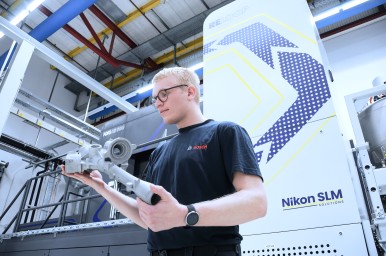
Nuremberg and Stuttgart, Germany – Speed, precision, flexibility, and energy efficiency: for Bosch, these factors are key when manufacturing the complex metal parts that it supplies to its in-house and third-party customers. With a new metal 3D printer at its Nuremberg plant, Bosch wants to bolster its pioneering role in the supplier industry. In fact, it is the first Tier-1 automotive supplier in Europe to have a facility in this performance class. The plant has invested almost six million euros in the center and in the associated purchase and installation of a Nikon SLM Solutions NXG XII 600 metal 3D printer. Bosch remains committed to Germany as an industrial location and is investing large sums of money here. By introducing new technologies in our plants, we are securing considerable sales potential....Klaus Mäder, member of the Bosch Mobility sector board responsible for operations. “Bosch remains committed to Germany as an industrial location and is investing large sums of money here. By introducing new technologies in our plants, we are securing considerable sales potential,” says Klaus Mäder, the member of the Bosch Mobility sector board responsible for operations, including all plants worldwide. The new 3D printer is intended to accelerate development cycles, especially for metal parts, which take a long time to make using conventional manufacturing processes. Commenting on the facility’s official start of operations, Alexander Weichsel, the commercial plant manager in Nuremberg, says: “By making the manufacture of metal parts faster and more productive, this new facility will increase our competitiveness.” And the technical plant manager Jörg Luntz adds: “With this facility, we are setting the highest standards in metal 3D printing. In volume production, this will open up completely new possibilities for us.” Whether components for hydrogen applications, motor housings for electric cars, components for e-axles, or engine blocks for racing: the facility’s sheer size and technical capabilities pave the way for a host of applications. Working from a computer-aided design file developed in advance, its twelve lasers melt metal powder layer by layer to create highly complex shapes. The new metal 3D printer is up to five times faster than the 3D printing systems that have been used up to now. Complex structures such as interior or curved channels, which are simply not feasible with conventional milling processes, can now be produced without any problem. While drilling around corners is not possible using conventional methods, 3D printing makes light work of this. The printer can produce unfinished parts on demand with no need for tooling. And because 3D printing slashes raw-material waste to almost zero, it also conserves resources. “Using the 3D printer to manufacture components not only increases sustainability in production, but also enables Bosch to respond flexibly to fluctuations in batch sizes and offer everything from a single source,” Weichsel says. Manufacturing a complete engine block using the 3D printing process One particularly vivid example of the new possibilities that the 3D printing process opens up is the engine block: with conventional manufacturing, it can take up to three years to get from the first draft design to volume production. Completing the casting mold for the engine block alone can take up to 18 months. 3D printing does away with this step. The design data is transmitted directly to the printer, eliminating the need for complex molds. The 3D printer delivers a finished engine block after just a few days, thus greatly reducing overall product development time. At full capacity, the facility can produce metal parts with a total weight of around 10,000 kilograms in under a year, achieving speeds of up to 1,000 cubic centimeters per hour. The main aim of this faster component production is to cut the time to market. “We want to be faster than with traditional manufacturing processes and use this technology to get products to market more quickly,” Luntz says. “Even today, only a few companies can produce technology on an industrial scale the way Bosch does. We’re now going one step further, taking volume production in metal 3D printing to the automotive level.” This opens the door to completely new opportunities and possibilities – in the automotive sector, but also in numerous other industries such as energy and aviation.

GAIA-X 4 moveID project develops basis for secure mobile data exchange

08.09.2022

Press release

Business/economy

GAIA-X 4 moveID project develops basis for secure mobile data exchange

Stuttgart, Germany – Which parking garages currently have vacant charge spots available? Where are free parking spaces in the city center? And how can this information be digitally transmitted, and services billed, across providers? The answer to these and similar questions calls for secure data exchange between the vehicles and their environment. It is precisely this foundation that a research project consisting of universities, automotive suppliers, and system providers is now in the process of building, with Bosch leading the consortium. Over the next three years, the GAIA-X 4 moveID project is set to develop the necessary standards and technological concepts to enable the secure exchange of information between providers of mobility applications and their customers. The goal is to create decentralized digital vehicle identities. This is an important prerequisite for the mass use of electric vehicles, automated driving, and the establishment of connected cities. GAIA-X 4 moveID is supported to the tune of 14 million euros by the German Federal Ministry for Economic Affairs and Climate Action – covering half of the project costs.Connectivity for digital services across the board “An integrated and transparent system architecture for the exchange of data on the road that incorporates different products and players simply isn’t available today. While it’s true that some companies out there already offer services, those services are tailored for specific applications, vehicles, or customer groups,” explains Peter Busch, project manager at the consortium leader Bosch. They often map the infrastructure, for example, but they rarely provide information about availability due to a lack of connectivity between the many independently operating service providers. “Open standards are needed so that users, for example, can find all available charging stations or pay for charging processes,” Busch says. It’s important to always ensure that the data is processed securely and that individual providers don’t exploit it solely for their own purposes. For Busch, this is the only way that the necessary user confidence can grow and a broad range of all available services, such as so-called deep parking (use of otherwise unavailable parking spaces), can be created. That is why the consortium is building on the European GAIA-X system, which defines the technological, economic, and legal framework for a secure and trustworthy data infrastructure. GAIA-X relies on decentralization and the interplay of different cloud providers under common guidelines. In this spirit, the GAIA-X 4 moveID project is using open source software for its developments and making them available to all providers for various business models. Vehicles are becoming marketplaces The standards that GAIA-X 4 moveID is pursuing will allow vehicles to securely and independently exchange information with other vehicles and their environment without an “intermediary.” The vehicles’ “infrastructure partners” include charge spots, barriers, traffic lights, and parking lots. The research project will use internationally recognized hardware and software to develop management and administrative services to facilitate the interaction and trade between different players. This will enable providers to connect a great many services, such as news, entertainment, and navigation, with the car’s system, especially in automated driving. The market for services related to connected parking alone is estimated to be worth ten billion euros annually worldwide. What’s more, the ability to navigate directly to a vacant parking space significantly reduces congestion and emissions. After all, today, about a third of downtown urban traffic is people looking for parking spaces. The availability of information is also a crucial factor for the success of electromobility. It is estimated that about half of newly registered cars in Europe will be electric by 2030. “Their drivers need to know that they’ll be able to find a charge spot quickly whenever they need one. And that requires connected systems,” Busch says. Extensive data exchange as a basis for automated driving The mass use of automated vehicles is conceivable only if cars are able to quickly and reliably communicate with their environment. The data exchange this requires will enable climate-friendly traffic control based on the volume of traffic at any given moment. This will allow cities to regulate incoming traffic to particular areas in real time, thus preventing congestion. However, this method, known as zoning, requires that vehicles be able to immediately recognize changing conditions and to reroute accordingly. Zoning is being demonstrated with test vehicles – for the first time across borders – in the Germany-France-Luxembourg (Merzig/Saarbrücken) test area as part of the GAIA-X 4 moveID project. The cars receive dynamic information regarding their approach to defined zones.The project partners: Robert Bosch GmbH Materna Information & Communications SE Denso Automotive Deutschland GmbH Continental Automotive Technlogies GmbH WOBCOM GmbH ecsec GmbH HTW Saar (University of Applied Sciences) Atos Information Technology GmbH Chainstep GmbH Peaq Technology GmbH Zeppelin Universität gGmbH (Zeppelin University) Datarella GmbH 51nodes GmbH Bigchain DB GmbH Fetch.ai Research & Development GmbH ITK Engineering GmbH Deutsche Zentrum für Luft- und Raumfahrt e.V. (German Aerospace Center) Airbus Defence and Space GmbH Delta Dao AG

Live fantastic #LikeABosch

31.08.2022

Press release

Business/economy

Live fantastic #LikeABosch

Stuttgart, Germany – Continuing its successful #LikeABosch brand campaign, Bosch is turning to the pioneers of German hip-hop: DIE FANTASTISCHEN VIER have produced a new version of the campaign song, to which they have written new lyrics. They also star in the new commercials. Bosch has shifted the focus of its new campaign to consumer goods for relaxed, convenient, and sustainable living. This is the first time, under the claim “Live fantastic #LikeABosch,” that Bosch’s Household Appliances, Power Tools, Smart Home, and Thermotechnology divisions have presented their products designed for “everyday needs” in a joint campaign. The “Live fantastic #LikeABosch” campaign, targeted at Germany, Austria, and Switzerland, is to run on TV, YouTube, and social media from September 1, 2022. In addition, Amazon Prime Video will be airing the TV commercials during its coverage of the Champions League. Bosch and DIE FANTASTISCHEN VIER will be presenting their joint project at IFA in Berlin.Live fantastic #LikeABosch The new round of the successful #LikeABosch campaign has a lot to live up to: #LikeABosch is one of the most successful marketing campaigns worldwide, and has won over 30 national and international awards since its launch in 2019, including the German Advertising Film Award. More than 15 million people, or one in five Germans, watched the first #LikeABosch rap video. The second highlight video, “Heat smart #LikeABosch,” was the most viewed German YouTube advertising video of 2019. Bosch wants to build on this success with the latest round of its campaign: comprising a 90-second music video and seven TV commercials, its reach will be increased by placing it online, on social media, and Amazon Prime Video. The focus of “Live fantastic #LikeABosch” is on products and solutions that make life easier, smarter, healthier, and more sustainable. These include power tools, appliances for the kitchen, home, and garden, smart home products, and heat pumps. “In many respects, the new campaign is a first for Bosch. It’s the first time we have put a total of four divisions at the center of a major campaign. In addition, we have DIE FANTASTISCHEN VIER on board – a partner that is both prominent and eloquent, witty and authentic. The band skillfully transposes this into the commercials to show how Bosch products improve and simplify everyday life,” says Boris Dolkhani, the head of Bosch corporate marketing communications and strategy. Fantastic cast For the latest round of its campaign, Bosch is relying on prominent support and proven expertise: DIE FANTASTISCHEN VIER are the founders of German-language hip-hop. They brought hip-hop to Germany and made it a household name. This is the first time that the four hip-hop artists have written and recorded a campaign song in their style for a company. They are also the stars of the Bosch commercials. The commercials were directed by Lars Timmermann, who worked with DIE FANTASTISCHEN VIER on the music video of their hit single “Zusammen.” Connections were key to the partnership: “Just like Bosch, DIE FANTASTISCHEN VIER come from southwest Germany. While neither the band nor the company have ever been geographically limited to this region, they’ve never completely detached themselves from it either: success needs roots. In addition, Bosch and DIE FANTASTISCHEN VIER share the aspiration to make life better – be it with technology, music, or the pursuit of greater sustainability. Bosch and DIE FANTASTISCHEN VIER are a perfect match,” Dolkhani says. The “Live fantastic #LikeABosch” campaign also builds on contributions by the creative agency Jung von Matt, the production company CZAR, and, on the part of the band, Radar Media. It also involves the agencies MediaCom, Lemundo, segmenta communications, Lucky7even, and the publisher falkemedia.

Bosch develops first 3D-printed ceramic microreactor

30.06.2022

Press release

Business/economy

Bosch develops first 3D-printed ceramic microreactor

Ludwigsburg / Immenstadt, Germany – A 3D-printing premiere: together with the Karlsruhe Institute of Technology (KIT) and the chemicals company BASF, Bosch has successfully produced the first-ever 3D-printed microreactor made of technical ceramics. Microreactors are devices for housing chemical reactions. In terms of heat, stability, and corrosion, few materials can withstand the extreme conditions caused by high-temperature chemical reactions. “To control and monitor a chemical reaction, a reactor needs to have hardness, heat resistance, and complex structures inside,” says Klaus Prosiegel, sales manager at the Bosch startup Advanced Ceramics, based in southern Germany. “3D-printed technical ceramics bring these excellent properties to the table.”Many applications for technical ceramics The market research company Data Bridge forecasts that the global market for technical ceramics will be worth around 16 billion euros by 2029. This versatile material is in demand in a wide range of industries: in medicine, it is used in bipolar scissors, which can cut tissue and stop bleeding at the same time. Electric current flowing through the two metallic halves of the scissors heats the tissue and seals it. An insulator made of technical ceramics ensures that the two metallic blades do not cause a short circuit when the scissors are closed. This makes surgery faster and safer. In energy technology, the extreme heat resistance and ion conductivity of technical ceramics makes them ideal for use in fuel-cell stacks, among other applications. In mobility, distance sensors that help with parking are also made of technical ceramics. Another area of application is grinders for fully automatic coffee machines. Here, the material’s extreme durability and hardness ensures that the grinding effect remains the same over time, with no material abrasion that could affect the taste of the coffee. “We have products on the market in all these areas,” Prosiegel says. Premiere: 3D-printed ceramic reactor Bosch Advanced Ceramics was well aware that technical ceramics are also very well suited for chemical reactions. “The challenge, however, was to find a process that was capable of producing the complex structures inside a ceramic reactor,” Prosiegel says. To solve this task, the startup’s ten-strong team combined their company’s two core competencies: technical ceramics and 3D printing. "We’ve successfully employed 3D printing to produce ceramic components that can’t be made by conventional means,” he says. BASF is now using this microreactor in basic research, since it allows to monitor chemical reactions under ideal temperature conditions. Furthermore, it requires fewer raw materials and less energy than large reactors. Experts can analyze these small-scale results and extrapolate them for large-scale implementation. “This is just like a chef trying out a new recipe on a small scale first before putting the dish on the menu,” Prosiegel says. That is why the next step is to print 10 to 20 more reactors with the same design for BASF. In view of the conceivable further potential applications for technical ceramics in the chemicals sector, Prosiegel sees a bright future ahead: “After all, almost every laboratory crucible is made of technical ceramics,” he says. It will be a while before he and his colleagues run out of work. We’ve successfully employed 3D printing to produce ceramic components that can’t be made by conventional means....Klaus Prosiegel, Sales Manager Bosch Advanced Ceramics Bosch startup platform grow Bosch Advanced Ceramics is part of grow, Bosch’s in-house startup platform. With locations in Europe, the Middle East, Africa, Southeast Asia, India, China, Japan, North America, and South America, grow is the global home for startups within the technology company. Worldwide, the startup platform currently has ten projects in the incubation phase. Further information on Bosch Advanced Ceramics is available online.

Bosch’s new rapid coronavirus test delivers reliable results in 39 minutes

25.09.2020

Press release

Business/economy

Bosch’s new rapid coronavirus test delivers reliable results in 39 minutes

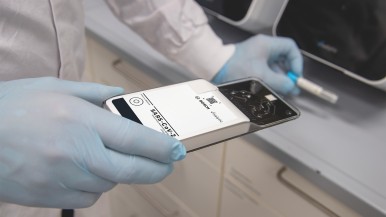
Stuttgart, Germany – Bosch has developed a new rapid test for its Vivalytic analysis device to detect the SARS-CoV-2 pathogen. The test provides a reliable result in 39 minutes and is currently the fastest polymerase chain reaction (PCR) test worldwide. Bosch’s new rapid test is predestined for decentralized use in mobile test centers at freeway service stations or in airports. People who take the test can obtain a reliable result while at the testing site. Available now in Europe, the CE-approved test helps avoid time in quarantine, relieve laboratories, and make travel and work safer again. “One of the keys to fighting the coronavirus pandemic is to rapidly identify sources of infection. That’s why we focused on following up on our first coronavirus test with an even faster one,” says Dr. Volkmar Denner, chairman of the board of management of Robert Bosch GmbH. “This will now enable us to put people’s minds at ease even more quickly.” One of the keys to fighting the coronavirus pandemic is to rapidly identify sources of infection. That’s why we focused on following up on our first coronavirus test with an even faster one....Dr. Volkmar Denner, chairman of the board of management of Robert Bosch GmbH The development of the new Bosch PCR singleplex test is part of a research and development project funded by the German Federal Ministry of Education and Research (BMBF). As the federal minister for education and research Anja Karliczek says, “I believe it’s important that people have clarity about their state of health as quickly as possible. In this respect, insights from science and research can bring people huge benefits. Over the next few months, we will be confronted with the particular challenge of having to test more people. The improved testing procedure developed by Bosch with the BMBF’s support has the potential to be a tremendous help with this complex job. The rapid improvement of our technological capabilities shows what innovative achievements German companies can deliver in times of crisis.” The test has a sensitivity of 98 percent and a specificity of 100 percent. To develop it, the Bosch subsidiary Bosch Healthcare Solutions joined forces with the German biotechnology company R-Biopharm – a leading provider of highly sensitive manual PCR tests. PCR tests are considered the gold standard of test methods.A world first: simultaneous testing of five samples Bosch launched the first rapid test for its Vivalytic analysis device at the end of March, after just six weeks’ development. As a multiplex test, it simultaneously checks samples for the SARS-CoV-2 virus and nine other respiratory diseases in two and a half hours. The new, accelerated test is exclusively for SARS-CoV-2. “With our different coronavirus tests and variable analysis strategies, we open up a range of testing scenarios with a Vivalytic device – from screening all the way to supporting differential diagnosis for diseases with similar symptoms,” says Marc Meier, president of Bosch Healthcare Solutions GmbH. And development work is still in full swing at Bosch: As of early October 2020, it will be possible to simultaneously evaluate five samples in one test cartridge and at a comparable speed – a world first, according to the company. Bosch is thus increasing available testing capacity, enabling fully automated processing of more than 160 samples a day using a Vivalytic device. In addition, optimized software will in the next few weeks further reduce the time to result of the SARS-CoV-2 test on positive samples. Vivalytic analysis device: easy to use at the test site The advantages of Bosch’s rapid test lie not only in speedy analysis, but also in ease of use. A sample is taken from the patient’s nose or throat using a swab, and placed in the test cartridge. Then the test cartridge, which already contains all the reagents required for the test, is inserted into the Vivalytic device for automated analysis. The Vivalytic analysis device is designed to be user-friendly; medical staff require only brief training on how to operate it. The development of the Vivalytic system, which consists of an analysis device and test cartridges, grew out of a long-standing collaboration between Bosch’s corporate research and advance engineering and Bosch Healthcare Solutions. By the end of the year, Bosch wants to reach capacity for one million tests. As demand for the analysis device and the rapid tests remains high, the company is working closely with its suppliers to maximize capacity and further increase supply.

Bosch Rexroth achieves stable sales at previous year's record level in 2019

16.04.2020

Press release

Business/economy

Bosch Rexroth achieves stable sales at previous year's record level in 2019

Lohr am Main, Germany – Bosch Rexroth held up well in 2019 in a difficult environment and despite a sharp drop in incoming orders. At 6.2 billion euros, sales remained stable at the previous year’s record level. The company benefited from a solid core business in hydraulics and the further expansion of its product range in factory automation as an important door opener for new markets. “We draw a positive conclusion for 2019," says Rolf Najork, member of the Board of Management of Robert Bosch GmbH, responsible for the Industrial Technology division and Chairman of the board of Bosch Rexroth AG. "In view of the volatile markets and the noticeable economic slowdown, this very good result was anything but certain. It shows that our broad positioning with different divisions is a great advantage and that we have set the right course with our structural adjustments.” In 2019, Bosch Rexroth was able to match the success of the previous year in all regions. The core markets of Germany and Europe remained the strongest. Sales in Germany dropped by 4.1 percent to 1.4 billion euros. In the remaining European markets (excluding Germany), sales declined by 0.3 percent to 2.1 billion euros compared to the previous year. In the growth markets in the Asia-Pacific / Africa region, Bosch Rexroth achieved sales of 1.6 billion euros, which equals a slight increase of 0.6 percent. The region North and South America recorded a 5.3 percent rise to 1.1 billion euros. At the end of the fiscal year (December 31, 2019), the company employed around 31,000 people worldwide.Economic environment and COVID-19 pandemic cloud prospects for 2020 Bosch Rexroth expects business to decline in all regions and sectors in the current fiscal year 2020 due to the general economic weakness and the structural change in customer sectors closely linked to the automotive industry. Order intake declined by 20.3 percent in the course of 2019. Additionally, the global COVID-19 pandemic is currently clouding business expectations for 2020. Hence, the systematic implementation of measures to improve competitiveness in all areas is particularly important for Bosch Rexroth. "We are very much concerned with the current developments regarding COVID-19. We have taken extensive measures during the past weeks to protect our employees, customers and partners while ensuring the best possible supply," says Najork, "Safety is our top priority throughout. We want to be a reliable and responsible partner for our customers, also and especially in such global crises". Focus on innovations and new markets Bosch Rexroth remains one of the most significant innovation drivers and pioneer for new technologies in its markets. For example, the company invested some 348 million euros in research and development in fiscal year 2019 – an increase of 6.2 percent over the previous year. The company continues to focus on developing connected and fully automated solutions in the two major areas of hydraulics and factory automation. All divisions contributed to the success of Bosch Rexroth in 2019. While the core business with industrial and mobile hydraulics proved to be a solid foundation, the factory automation division with its focus on Industry 4.0 and the vision of the fully connected factory of the future, developed into an important door opener for new markets and customers.Machinery Applications and Engineering: connected and intelligent hydraulics Bosch Rexroth is actively driving change in its traditional core business of industrial hydraulics: smart hydraulic components and systems such as the compact hydraulic unit CytroBox can be quickly and easily integrated into connected manufacturing facilities. They are Industry 4.0 ready and offer services for the Internet of Things (IoT), for example for condition monitoring of machines and plants.Mobile Hydraulics: Smart Solutions for the mobile work machine of the future Despite the tense market environment, Bosch Rexroth was able to further expand its market share in mobile hydraulics in 2019. New activities in the fields of automation and driver assistance systems, electrification and IoT are future key topics. With BODAS Connect, Bosch Rexroth offers an open, scalable end-to-end solution to connect mobile work machines with each other. It enables customers to retrieve and analyze data from the mobile application. At the 2019 BAUMA trade fair for construction machinery, the company also presented the first components of a future range of electrification systems for work machines. These solutions support customers in reducing emissions, while further increasing performance. Here, Bosch Rexroth benefits from the long-standing Bosch expertise in electromobility. Factory Automation: new standards for connected manufacturing Connected assembly and intralogistics remain an important strategic focus for Bosch Rexroth’s factory automation division. The spotlight is on the vision of the factory of the future with software-based, automated and connected solutions. The company was able to further strengthen its position as an innovation driver in 2019, amongst others with the open ctrlX AUTOMATION platform. As the first 5G-capable automation platform from Bosch Rexroth, ctrlX AUTOMATION connects a wide range of devices with the new communication standard and ensures consistent connectivity in factories. Existing machines can be upgraded with the new technology via retrofit solutions. The Active Shuttle, which was also introduced in 2019, ensures greater flexibility and higher productivity in the automated factory. The autonomous transport system sets new standards in intralogistics, transports loads of up to 260 kilograms and is loaded and unloaded fully automatically using an integrated lifting platform."GoGreen" project: targets for energy and CO₂ savings exceeded In 2019, Bosch Rexroth was also able to record important achievements in CO2 neutrality: as part of the Bosch Group, the supplier of drive and control technologies has set itself ambitious goals to reduce energy consumption and CO₂ emissions. In the scope of the Bosch Rexroth project “GoGreen”, energy efficiency is being systematically improved in all plants and at customers' sites since 2011 – with an extremely positive outcome: by the end of fiscal 2019, Bosch Rexroth had saved 620 million kilowatt hours of electricity and gas worldwide thanks to "GoGreen," corresponding to more than 265,000 tons of CO₂. This equals the annual energy consumption of a city with some 80,000 inhabitants. Energy consumption at the Bosch Rexroth locations was reduced by 20 to 50 percent. Since the end of 2019, Bosch Rexroth has achieved a CO2-neutral “footprint” in Germany.

Bosch puts 5G machines in pole position

26.11.2019

Press release

Business/economy

Bosch puts 5G machines in pole position

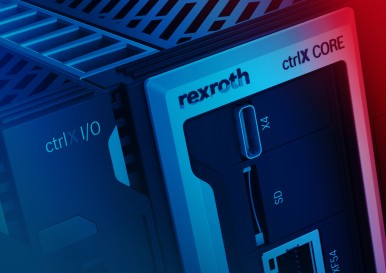
Stuttgart, Germany – 5G is coming. The new communications standard accelerates the internet of things and boosts Industry 4.0. Control systems and sensors of the kind built into facilities, machinery, and logistics chains stand to gain from this fast, reliable real-time wireless data transfer. Preparing machines for state-of-the-art communication involves making them 5G-capable. Now Bosch has the solution: Bosch Rexroth’s new ctrlX AUTOMATION control technology comes with 5G built in and can connect a wide range of industrial devices with the new communications standard. ctrlX AUTOMATION will be showcased at the SPS trade fair in Nuremberg.Bosch opens the door to a new industrial age 5G is set to turbocharge manufacturing. Our new 5G-capable automation platform lays the groundwork and opens the door to a new industrial age,...says Rolf Najork, the member of the Bosch board of management responsible for industrial technology. 5G is the first communications standard designed to enable connectivity for people as well as for the internet of things. The new standard has impressive characteristics: it is up to 20 times faster than 4G, transfers data virtually instantaneously with a latency of one millisecond, and is up to 99.9999 percent reliable – making the receipt of a “digital shipment” as certain as with transmission through a wire. "5G is a revolution and an important building block for the factory of the future", Najork says. Engineers and designers now face the challenges of integrating 5G into their machines and products. Bosch is introducing the solution that meets their needs: the new automation platform’s hardware can be fitted with a 5G module. The operating system and software for ctrlX AUTOMATION are 5G-capable from the outset and support rapid commissioning. Retrofit solutions are also available for adding the new technology to existing machinery. Bosch Rexroth’s new automation platform is scheduled to have its market launch in 2020. 5G will be a competitive factor for connected industry Experts estimate that there will be up to 70 billion connected devices worldwide by 2025. Many of them will be in manufacturing, meaning that 5G will become a competitive factor. The new communications standard will enable applications that require high-power, extremely reliable wireless connections to be integrated securely and efficiently into manufacturing facilities. These include mobile robotics, autonomous transport vehicles, and human-machine interactions. For instance, workers wearing augmented reality glasses can access additional information in their field of vision, optimizing how they monitor and maintain machinery. Combining tasks in the virtual world with those in the real world calls for real-time data flows. And that’s what 5G promises. "This new form of communication eclipses everything we’ve had until now. 5G is the first wireless protocol to truly meet the needs of the manufacturing industry", Najork says. Bosch takes on leadership role in Industry 4.0 and 5G Bosch is developing the factory of the future. In this endeavor, the company is relying on Industry 4.0 . The company first tests and validates products in-house before they are available on the market. Bosch is taking this approach with 5G, too. The company presented its first 5G-capable autonomous transport system, ActiveShuttle , at the Hannover Messe. To support the further development of its factories, Bosch has applied to the German Federal Network Agency for 5G licenses with which to set up local campus networks. Moreover, Bosch has taken on the chair of the global 5G Alliance for Connected Industries and Automation (5G-ACIA) with the aim of shaping the new mobile standard so that it meets the needs of the manufacturing industry from the outset.

Bosch and CATL collaborate on battery cells

05.09.2019

Press release

Business/economy

Bosch and CATL collaborate on battery cells

Stuttgart, Germany: Bosch and Contemporary Amperex Technology Co. Limited (CATL) have concluded a long-term strategic cooperation agreement. The partners are going to jointly specify high-performance battery cells. CATL will then design, develop, and manufacture these cells in accordance with Bosch requirements. The cells are to be used in the 48-volt battery developed by Bosch. This battery is the core element of 48-volt hybrid powertrain systems, whose efficiency is making them globally ever more important. In joining this alliance, the supplier of technology and services is also securing its long-term sourcing for battery cells. “We have to understand battery cells, but we do not have to make them ourselves,” says Dr. Stefan Hartung, member of the board of management and chairman of the Mobility Solutions business sector. “With CATL, we have brought an established cell specialist for lithium-ion batteries on board as a partner. In combination with our systems know-how and expertise in battery management, we will extend our strong position in the 48-volt battery market.” CATL, one of the world's leading experts of lithium-ion battery is currently building a battery factory in Erfurt, Germany. For Bosch, this alliance is another step on the path to market leadership in electromobility. Numerous global automakers already use Bosch’s 48-volt battery. This 48-volt hybridization is sure to be the minimum standard in tomorrow’s automotive market....Dr. Stefan Hartung, member of the board of management and chairman of the Mobility Solutions business sector 48-volt system destined to be the minimum standard in tomorrow’s automotive market Bosch’s portfolio for 48-volt systems extends beyond the 48-volt battery to encompass other system components such as DC/DC converters and electrical machines. With this technology, Bosch aims to gear up all classes of vehicles for future emissions requirements and offer affordable hybridization. Its 48-volt electrification augments the combustion engine with an electric motor. This motor is powered by the 48-volt battery, which in turn is charged by recovering energy expended during braking. This can cut fuel consumption by as much as 15 percent. If we want to improve efficiency, we can no longer afford to let brake energy dissipate unused,” Hartung says. “This 48-volt hybridization is sure to be the minimum standard in tomorrow’s automotive market.” The market for 48-volt solutions is growing worldwide. Bosch expects that by 2025, nearly 20 percent of new cars sold annually around the globe will have a 48-volt system and matching battery on board. Demand for 48-volt systems is rising, especially in Europe and China. Cost-effective and easy to integrate – the Bosch 48-volt battery The Bosch plant in Wuxi, China, started making the first generation of the 48-volt battery late last year. The USP of the latest version of this product is that the battery is compact and cooled passively. This means automakers can simply integrate it into their vehicle models, and do not require any additional cooling units. In addition, they can dispense with the long and costly effort of proprietary engineering work. “We are confident that our 48-volt battery will achieve a leading position in the market, and make the 48-volt hybrid affordable for the mass market,” Hartung says. Expertise across the e-mobility ecosystem Bosch is more broadly positioned in e-mobility than any other company. It aims to take the lead in the mass e-mobility market that will emerge in 2020 and beyond. The company is planning to increase its sales in this area more than tenfold by 2025, to five billion euros. Bosch electrical powertrain components already feature in more than a million vehicles around the world. The supplier of technology and services has carried out powertrain projects for 50 electric-vehicle platforms. It is the market leader in China, the world’s biggest and fastest-growing electric-vehicle market. Bosch technology can be found in practically every class of vehicle, from electric baby buggies, bicycles, and scooters to passenger cars and commercial vehicles. The company’s expertise thus extends across the entire e-mobility ecosystem. Bosch is partnering with various automakers to give e-vehicle drivers app-based access to some 40,000 charge spots in eight European countries.

07.12.2018

Presentations

Business/economy

More safety, more energy efficiency, more convenience: Bosch is investing in dig ...

Presentation by Dr. Stefan Hartung, member of the board of management of Robert Bosch GmbH, at the press briefing for the Bosch Energy and Building Technology business sector on December 7, 2018. Check against delivery.Ladies and gentlemen: Welcome to our press briefing, whether you’re here in person at Schillerhöhe or joining us by webcast. To those of you here in person, I would like to say welcome to our newly refurbished building. As you made your way to this auditorium, you may have noticed how it is above all the work environment itself that we have modernized, with a focus on collaborative work methods. And whether making your way here today or to your office every day, you may also have passed by a solution or two from the Bosch business sector organizing today’s event. Did you notice? Probably not. That’s because energy and building technology is often behind the scenes; our solutions do not always immediately leap to the eye. But even with invisible solutions, we are helping to make people’s everyday lives safer, more secure, more efficient, and more comfortable. That’s what we want to talk about today, with a focus on three issues: User experience – involving customers early on in the development of products and services; Connectivity and artificial intelligence – applying sensors, software, and self-learning systems to make solutions smart; and Partnerships, platforms, and interoperability – opening up various providers’ systems so they can work with each other. These are crucial topics for us at Bosch as we systematically drive forward the internet of things, or IoT for short. And they are crucial not at some point in the distant future, but here and now. More than ever, we firmly believe that the IoT will fundamentally improve people’s everyday lives. Smart energy and building technology enhances convenience and security, saves energy, reduces operating costs, and is good for the environment. Specifically, we offer products and services for efficiently generating, metering, managing, storing, and securing energy. I’m talking about connected heating, cooling, and ventilation systems in office buildings, about smart home applications for private homes, and of course about energy storage in industry. What role do user experience, artificial intelligence, software platforms, and interoperability play in all this? They are decisive in leveraging the opportunities of the IoT. But before we go into more detail about solutions and services in energy and building technology, I would like to take a moment to briefly review current trends, the market environment, and business developments over the past year. Growth by saving – the market potential of efficient solutions Experts predict that by 2050, there will be more than six billion people living in urban areas worldwide – twice as many as there are now, or 70 percent of the global population. Cities already account for some 75 percent of power consumption, with 40 percent going to buildings alone. By 2035, global energy consumption will have increased by a total of 30 percent, once again driving up CO 2 emissions. In light of these trends, smart – meaning connected – solutions for more efficient energy use are key to climate action. After all, they not only provide a pleasant indoor climate simply and automatically – they also reduce energy consumption and costs, and consequently also CO 2 emissions. Digitalizing buildings, then, has an ecological impact as well – and it is clearly becoming more popular. Experts predict that some 230 million homes worldwide – roughly 15 percent of all homes – will be intelligently connected by 2020. The research organization Gartner estimates that the global market for the internet of things will grow by 35 percent each year until 2020, reaching a value of 250 billion U.S. dollars. We at Bosch want to tap into this market potential, too. In 2017, Bosch sold 38 million web-enabled products. The Energy and Building Technology business sector shared in that as well, selling more than 13 million web-enabled devices, among them security cameras and heating systems. The sector is growing – moderately so, but growing all the same. This year, its sales will rise from 5.4 to 5.5 billion euros, or by 2 percent. The reported sales figure has above all been affected by the weakness of the U.S. dollar and the Turkish lira. If we adjust for such exchange-rate effects, we arrive at a growth figure of 6 percent. The number of associates in Energy and Building Technology will (likely) have grown from some 31,700 to 32,400 over the course of the year. Ladies and gentlemen, the internet of things is and will remain the main driver of our business beyond the current year. Its growth is skyrocketing. Market researchers expect there to be more than 14 billion connected things around the world next year. By 2021, the figure will be 25 billion. This is not a case of connectivity for its own sake, but instead about using connected solutions to make people’s everyday lives better. What are we at Bosch doing to achieve this goal? Knowing what the customer wants – user experience First off: products and services have to make sense from a technological perspective. But that’s not enough: they also have to be fun to use! Our customers want products that are simple and intuitive to operate and that solve problems. In short, we have to know what users want and need – if possible, even before they themselves know or consciously formulate it. To do this, we have to systematically get closer to our users, their needs, and their expectations. And this is precisely what we’re doing at Bosch with our user experience approach. Over the past six years, we’ve trained more than 13,000 associates in this approach. It has four key phases: observing users, analyzing the observations, rapid prototyping, and user tests. We repeat these phases until we are satisfied with the result and the product. As you can see, we involve our customers in the development of products and services right from the beginning. And we adapt function and design to the insights we gain in the process. This doesn’t stop with the market launch: the product stays in the focus of our user experience team, even when it is in the hands of the user. Let me give you an example. We already considered input from potential users when developing our 360° indoor camera . But following the product launch of this security camera in mid-2017, our product engineers stayed in regular contact with our customers, evaluating 1,000 feedback reports and talking with many of the users. As a result, more than 20 new functions have been added since the market launch, including camera control with Alexa, detection of suspicious noises, and options for panning and zooming live video instead of just passively watching what happens at home. The expanded functions of the 360° indoor camera demonstrate how we in effect turn users into developers, learning from them and their experiences. The same approach informs our DICENTIS conference system for interpreters. Imagine EU representatives meeting for a European digital summit – politicians who have to reach joint decisions, despite speaking 24 different languages. They need interpreters who can concentrate fully on correctly translating what is being said, instead of worrying about technical problems. That is why we collaborated with them to develop a lectern that expands our DICENTIS system. We showed interpreters drawings, wooden models, and prototypes, and then improved the arrangement of the controls on the basis of their feedback. The lectern can be operated intuitively, so even interpreters with visual impairment can use it. In addition, we made installation easier: interpreters can store their settings in the system and call them up using a personal NFC (near-field communication) card. They simply hold their card in front of the lectern, and all individual configurations are immediately available. This is our conception of the user experience: focusing on people and their specific needs. Connectivity and artificial intelligence go hand in hand Making life easier for people, relieving them of routine tasks, and freeing up time for creative work or for recreation – all these are equally what artificial intelligence, or AI, seeks to achieve. The whole world is talking about it – Bosch is making it happen. With the help of AI, machines can learn how to be smart and to anticipate; for example, by recognizing spoken language and images. This requires data evaluation and the connectivity of as many things as possible. Products first have to have connectivity before we can use AI to turn them into smart assistants. At all times, the aim is to make people’s everyday lives better. Even now, the number of road deaths has fallen, factory downtimes have decreased, life-threatening diseases can be detected more quickly and accurately, and machines are using less energy – and life in our homes is getting easier. These positive developments are attributable to an increase in technical assistants: in traffic, in manufacturing, but also in the home. This trend is set to continue with connected sensors, software, and services – and of course also with AI. In ten years, all Bosch products will either utilize AI themselves or will have been developed and produced using AI. Our spending also attests to our confidence in this approach. By 2021, the Bosch Center for Artificial Intelligence , or BCAI for short, will have spent some 300 million euros on AI research and development. We founded the BCAI in 2017, and it already has 170 experts around the world – a figure we expect to climb to at least 400. They are currently working on some 80 development projects ranging from automated driving to applications in healthcare and manufacturing. Bosch has support here from its academic partners, the universities of Tübingen, Stuttgart, and Amsterdam. Right now I would like to provide you with some examples of services and systems from Energy and Building Technology – solutions that are connected via the internet of things and are moving in the direction of AI. Today, more than 15 percent of interactions with Bosch Service Solutions customers are data-based. In other words, we’re speaking about direct communication between things and machines with no human involvement. By 2021, we aim to increase this share of interactions facilitated by the internet of things to some 30 percent, and to as much as roughly 50 percent by 2025. Our Service Solutions division has also already piloted the use of AI. Specifically, we have used bots in customer communication, also known as technical dialog systems , which understand text input or even spoken language. They draw on background databases to find the right answer to each question. This process is more than a pure “if A, then B” logic based on predefined keywords. AI enables chatbots to determine the context and thus to properly classify misspelled or mispronounced words or those with multiple meanings. With this context-sensitive capability, bots can also assume “concierge functions,” with which they can direct customers automatically to the appropriate contact person. Their software responds to customer behavior – this point alone makes bot solutions superior to pure search functions. Nonetheless, this automated approach is especially well suited for answering simple and frequently asked questions, such as those about delivery times or tourist destinations. This frees up customer advisors so they can devote more time to complex or sensitive problems. We firmly believe that people will remain irreplaceable in service solutions. Take for example a serious road accident: in situations like this, a human voice is absolutely vital, in the truest sense of the word. Bosch will continue to rely on this element wherever empathy is required – for instance, in the eCall emergency call service, where specially qualified experts will be free to focus on exerting a calming influence on those involved in an accident. In the future, AI will be able to lend a hand as well. The analysis of sensor data, whether from tires, car seats, belt tensioners, or even external weather services, will deliver further key insights into the accident. It is conceivable that AI will provide emergency services with important initial information – not just about snow or black ice at the scene, but also about the probable severity of the injuries. Quick and comprehensive information can save lives. Our monitoring services also improve safety and, more than ever, they are doing so over the internet of things. For example, we are connecting crucial areas and infrastructure in buildings. In Germany alone, some 40,000 elevators are connected to the Bosch Service Solutions control center. Such connectivity makes it possible to quickly free any people trapped inside one of them in an emergency. In the logistics sector as well, we are employing sensor-based services. The demand for web-based monitoring services is continually rising – on the road, on water, and in the air. They help keep track of the condition and location of urgent deliveries of plasma, rare vaccines, easily perishable foods, or expensive smartphones. If a condition or location deviates from the norm, the control center is automatically notified right away. This benefits people by increasing security and convenience – and reducing waste. Critical situations that could literally flare up call for video-based fire detection systems from Bosch Building Technologies. We plan to further expand this business area, which is one where we have high expectations of artificial intelligence. Special AI-based Aviotec cameras use intelligent image analysis to detect fires. Cameras pointed directly at potential problem spots detect flames or smoke within seconds. This is even faster than conventional smoke detector systems, in which the smoke has to first reach the detectors. If a fire starts on the floor of a hall with high ceilings, it can take minutes before the smoke reaches the actual detector. In contrast, the new intelligent cameras can detect smoke and flames right at the source – this resulting head start is decisive in limiting damage and perhaps even saving lives. Beyond safety, our smart home solutions also help ensure the desired interior climate, comfort, and energy efficiency. This business is constantly growing. According to a study by Arthur D. Little and eco, the German market alone will be worth 4.3 billion euros by 2022, which means average annual growth of 26.4 percent. By way of comparison, the figure was just 1.3 billion euros in 2017. Connected solutions are becoming more and more popular in Germany’s private homes, which the industry association Bitkom attributes in no small part to the spread of digital voice assistants. Straightforward voice control helps allay people’s concerns about the technology. This year, Bosch integrated Alexa into its smart home system. This is AI based on connectivity and intelligent speech recognition. A security system that uses facial recognition to deactivate itself when an authorized user enters, or a window that closes itself based on a forecast of bad weather – this is what we see as the future of the smart home. To turn such ideas for homes into business opportunities, we need to spark occupants’ enthusiasm for them. One way in which we do so is with our scenario manager , one of the highlights at the IFA in Berlin this year. This is an app that lets users control all devices connected with the Bosch smart home system. It allows residents to quickly and conveniently take care of everyday tasks, such as turning off lights, heating, and electrical appliances when leaving the house. They can select one of the preset scenarios or program their own. Two of the preset scenarios are “Leaving the house” and “Coming home.” Another is the “Good morning” scenario: running it raises the window blinds, turns on the hall light, and signals the heating system to adjust to the desired temperature in the bathroom. Meanwhile, in the kitchen, the kettle can start boiling water for a morning cup of tea thanks to its plug adapter. What enables the scenario manager to handle all this is the connectivity of as many devices as possible. In the future, AI will take on a larger role in smart homes as well. The home will learn from specific behavior patterns of its occupants and be able to adjust itself to best meet their needs. Algorithms will detect if something does not fit an established pattern – such as a smart heating valve that registers unusually high energy consumption in the middle of the night. The valve reports the unusual event not only to the user, but to the heating system as well – which can then turn itself off to avoid water damage, sparing the customer high costs. We firmly believe that the benefits of AI will be so obvious that this will win over other home-owners to the smart-home idea. That is precisely why we are already working on artificial intelligence in the home, collaborating with partners inside and outside of Bosch. Helping devices understand each other – platforms and interoperability Ladies and gentlemen, “together” is the keyword for a further strategic aspect that is important to us at Bosch: partnerships, platforms, and interoperability. The connected world is one in which many devices and services are in use, made by different manufacturers. We have to find a way to get these devices and services to become friends. They have to understand each other and be interoperable if they are to generate benefits for people. In that vein, today I’d like to tell you about the latest addition to our IoT ecosystem, the startup SAST . SAST stands for Security and Safety Things GmbH. Established just a few weeks ago in Munich, the company is still small, but it has big plans. The startup is a wholly owned Bosch subsidiary, currently with 80 associates, that aims to shake up the market with software for security cameras. Its objective is to develop the world’s first open IoT platform for security camera applications. The new app store should be online by mid-2019. Security cameras have become indispensable in areas with large crowds of people. They improve the safety of train stations, airports, stores, and office buildings. Cameras have also long served to help detect dangers early by supporting the analysis of movement patterns – another area where AI was put to use early on. Still, there’s one challenge: as their software gets older, the cameras are getting “dumber.” Even when new software is released, it is often incompatible with their specific hardware. Security cameras would thus be capable of much more if we regularly updated them with compatible software packages. And this is where the new startup comes in. SAST provides the first operating system that can be used for programming and controlling different security cameras. That means no more multiple update versions for multiple software programs – one is enough. With this open and standardized operating system, SAST has achieved nothing less than the creation of a global marketplace for security camera applications. For new cameras, this means old software out, new software in: remotely, with no further adjustments, with no great fuss, and whenever necessary – throughout the camera’s service life. The new solution is being launched in a market that has been steadily expanding for years. In Germany alone, according to BHE, customers spent more than half a billion euros on security video technology in 2017, a 7 percent increase over the previous year. Manufacturers will deliver some 130 million security cameras around the world in 2018; compare that to 2006, when it was just 10 million (source: IHS Markit). It is for this growing market that we are creating the first uniform software development platform, which is sure to deliver benefits for all stakeholders. Ladies and gentlemen, this news about our SAST project brings me to my closing remarks. It is an especially clear example of our strategy of investing in digital growth areas, and encouraging the emergence of new platforms in the process. Finally, I’d like to announce a changeover in the leadership of the Energy and Building Technology business sector. From January 1, I will be passing the baton to Dr. Christian Fischer, and it is to him that I would now like to hand over.


Bosch Thermotechnology on growth path

10.07.2018

Press release

Business/economy

Bosch Thermotechnology on growth path

Wetzlar – In 2017, Bosch Thermotechnology achieved revenue growth of four percent in nominal terms and six percent in exchange rate adjusted terms, pushing up total revenues to a record level of EUR 3.4 billion. Bosch Thermotechnology continued to grow also in the first half of 2018, when sales revenues were up on the prior year period by three and six percent in nominal and exchange rate adjusted terms, respectively. “In spite of the difficult environment, Bosch Thermotechnology delivered an excellent performance in the past 18 months,” said Uwe Glock, President of Bosch Thermotechnology. “Raw material and transport costs have increased noticeably and we had to cope with adverse exchange rate effects. Although the currency depreciation, especially of the Turkish lira and the pound sterling, cost us a double-digit million amount, we were able to generate the highest revenues in the history of our company in 2017,” said Glock.In product terms, growth was driven primarily by heat pumps and wall-hung devices; in market terms, the rise in revenues is primarily the result of strong sales in Europe. Bosch Thermotechnology recorded a sharp increase in revenues primarily in Germany, the main market, and in Turkey as well as in nearly all Central and Eastern European markets. In spite of Brexit and its adverse currency effects, Bosch Thermotechnology grew strongly in the important UK market, where revenues climbed eight percent in local currency in the first half of 2018. “Our high and continuous investments in the expansion of innovative future technologies are clearly paying off. In 2017, our R&D budget amounted to EUR 172 million, which was more than twice as much as ten years ago,” said Glock. More than 415,000 connectable products sold to date make Bosch Thermotechnology the leading provider of smart heating solutions for greatly enhanced comfort, energy efficiency, operational safety and service quality. The all-new product generation launched in 2015 under the name of “DNA”, which has caused quite a stir in the industry, has been very well accepted by the market. The devices are characterised by connectability, a modular structure, easy servicing and a distinctive design. The series is meanwhile available in some 30 countries worldwide. “It has strengthened our position as the world market leader for residential buildings and set new standards for the heating technology industry,” Glock emphasised. Well positioned for the three mega trends in times of the energy transition Over the past ten years, Bosch Thermotechnology has evolved from a product supplier to an international supplier of complete systems in the HVAC (Heating, Ventilation, Air-Conditioning) market. “On the way to the thermotechnology of the future, Bosch Thermotechnology will continue to rely on the three business segments ‘heating systems and energy management for residential buildings’, ‘domestic hot water heating’ and ‘commercial and industrial heating and airconditioning systems’. “In the times of the energy transition, it is our objective to become a digital climate and energy company including service operations and we aim for revenue growth of at least five percent per year,” Uwe Glock said to explain the ambitious objectives the company has set itself for the future. In the long term, the three megatrend “Ds” of the heating technology industry – decarbonisation, digitisation and decentralisation (increased local electricity generation) – will be the biggest challenges to make Bosch Thermotechnology fit and sound for the future. “It is therefore important to understand that now is the time to push ahead with the expansion of electric systems such as heat pumps in combination with controlled room ventilation or electric hot water solutions. Other items that rank high on our agenda for the coming years include complete system solutions for new residential buildings, the project business in the commercial and industrial segment and the entry into new business areas such as air purification”, said Uwe Glock. Already today, Bosch Thermotechnology has a large number of products in its portfolio which innovatively implement the three mega trends mentioned above for heating contractors and customers. Stationary battery storage systems make electricity supply more flexible The market for stationary high-performance battery storage systems continues to grow dynamically as efficient battery systems stabilise renewable energy sources and compensate for the time lag between power generation and power demand. Bosch Thermotechnology offers electricity storage systems in output ranges for smaller industrial businesses up to power plants. The Bosch battery storage systems feature a sophisticated cooling system which causes low operating costs and prevents premature ageing of the batteries. An example of such a large storage system can be found on the Bosch Thermotechnology site in Wernau. The 12-metre-long container is equipped with 432 battery modules which can supply forty households of four with an annual power consumption of 3,500 kWh each with electricity for one week. The system is connected to the public power grid and is charged and discharged in line with supply and demand in the electricity market. “We are convinced that our battery storage systems will become economically viable, as they are more efficient and faster than other solutions,” said Uwe Glock. Smart connection with the decentralised energy manager from Bosch Presented at the SHK trade fair in Essen in March, the new energy manager from Bosch assists smart-home residents in becoming energy-independent. More and more homeowners choose a solution comprising a heat pump and a photovoltaic system. The energy manager software intelligently combines the two units, thus facilitating the use of internally generated energy and efficient heat generation. The energy manager is integrated into the Bosch Smart Home – the app allows users to keep all data under control and to easily integrate their household appliances. Smart-home residents stand to save up to 80 percent of their electricity costs thanks to efficient digital control and renewable solar energy in combination with a battery storage system. Digital service tools assist heating contractors “Digital solutions are the key to success when it comes to shaping the future of the heating industry. In the foreseeable future, we will generate a large part of our revenues with connected solutions. We aim to be a strong partner to heating contractors to support them on their way into the connected world, so that they can focus on their core business and offer end customers the best possible service,” said Uwe Glock. In April 2018, the company launched a new digital solution in the form of the EasyContact app, which allows heating contractors to directly contact the Bosch Thermotechnology experts via phone. After only three clicks, they will quickly and easily be put through to the desired department. More functions will be added in the course of the year. It will be possible for the heating contractor, for instance, to use the app to send error reports directly to Customer Service, so that the technical consultant can come up with a solution even more quickly than before. EasyContact is integrated into the digital EasyService Toolbox, which means that all digital tools relating to the servicing and commissioning of the heating systems are combined in a single app. The benefits: better control, less time input, greater customer satisfaction.

Germany, high-tech hub: Semiconductors pave the way for better quality of life.

25.06.2018

Presentations

Business/economy

Germany, high-tech hub: Semiconductors pave the way for better quality of life.

Check against delivery.Ladies and gentlemen, It’s been only roughly a year since we jointly announced the decision to build a new plant for 300 mm wafers. Now here we are, following a complex planning process, laying the foundation stone for Bosch’s chip factory of the future. With it, we are laying the foundation for improving people’s quality of life, the foundation for more safety on the road – and the foundation for a technology crucial to the internet of things and the mobility of the future. Semiconductors are a core component of all electrical systems. Semiconductors are also turning data into a coveted raw material of the future – none of the cars made today would be able to drive without them. They enable automated and efficient driving, and provide the best passenger protection – such as when they are called on to deploy airbags. With the areas of application for semiconductors becoming larger and larger, we are expanding our manufacturing capacity. As a location, we have opted for Germany. With this plant, we are entering into 300 mm wafer production for the first time, in a drive to achieve further significant economies of scale and to bolster our competitiveness. We see Dresden, the capital of Saxony, as a driver of microelectronics in Europe – and thus as the first choice worldwide for our billion-euro investment. I firmly believe high-tech is something Germany does well. By working closely with semiconductor companies, researchers, and universities, we aim to strengthen both our innovative strength and the competitiveness of this high-tech industry – in Germany and throughout Europe. Ladies and gentlemen, every day in our wafer fab, we will use highly automated manufacturing processes to create the future in the shape of semiconductors. But we will be doing more than that: we’ll also be creating prospects for the future in the shape of highly attractive jobs. Our high-tech factory will employ up to 700 people. We are looking for creative minds – people who can bring their expertise to bear on the construction of this state-of-the-art Bosch wafer fab. We are counting heavily on finding specialists here in the region as well as international specialists and experts. Our new construction project is also the biggest single investment in Bosch history. We are putting roughly one billion euros into our new location, and are pleased that the German Ministry for Economic Affairs and Energy plans to support its construction and commissioning. And in addition to the federal government, the state of Saxony and the city of Dresden have also pledged their support. So at this point, I wish to express my thanks to you, Minister Altmaier, and you, Minister-President Kretschmer. It is also thanks to you and your predecessors that things have moved so fast, and we find ourselves here today, ready to lay the symbolic foundation stone together – for better quality of life, for the semiconductor industry in Dresden, and for the competitiveness of Germany as a high-tech location.