Search & find:
Media, press releases, events for your editorial coverage

Acquisition of Paladin Technologies: Bosch plans to expand its building services ...

05.07.2023

Press release

Business/economy

Acquisition of Paladin Technologies: Bosch plans to expand its building services ...

Stuttgart, Germany / Vancouver, Canada / Phoenix, United States – Bosch plans to acquire Paladin Technologies, Inc., headquartered in Vancouver, Canada – a leading provider of security and life safety solutions and system integration services in North America. This purchase complements Bosch’s 2015 acquisition of Climatec, LLC, with more than 1,000 associates in the US. Climatec is part of Bosch Building Technologies and offers energy efficiency, building automation, security, and life safety solutions for the US market. The US is one of the largest and fastest growing markets for Bosch Building Technologies. Paladin Technologies employs around 1,500 associates across 35 locations in Canada and the US with projected 2023 sales approaching USD 400 million.Corresponding agreements were signed by Bosch and Paladin Technologies on July 4, 2023. It has been agreed that the purchase price will not be disclosed. The acquisition is subject to approval by the relevant regulatory authorities. “Energy efficiency and security needs are driving factors for the modernization of commercial buildings, particularly in the North American market. These long-term trends have contributed to the growth of our subsidiary Climatec, which has significantly increased its sales and workforce since we acquired them in 2015. We want to continue Bosch’s success in the delivery of these vital services in the region, and helping make buildings greener, smarter, and safer,” says Christian Fischer, the deputy chairman of the Bosch board of management who is responsible for the company’s Energy and Building Technology and Consumer Goods business sectors. Bosch Building Technologies is part of Bosch’s Energy and Building Technology business sector and reports strong growth with its energy- and cost-efficient commercial building and building services portfolio. The business sector including Bosch Building Technologies grew in 2022 by 17.4 percent. Energy efficiency and security needs are driving factors for the modernization of commercial buildings, particularly in the North American market. These long-term trends have contributed to the growth of our subsidiary Climatec, which has significantly increased its sales and workforce since we acquired them in 2015. We want to continue Bosch’s success in the delivery of these vital services in the region, and helping make buildings greener, smarter, and safer,...says Christian Fischer, the deputy chairman of the Bosch board of management who is responsible for the company’s Energy and Building Technology and Consumer Goods business sectors. Bosch Building Technologies expands its business in North America “The acquisition of Paladin Technologies enables Bosch Building Technologies to significantly expand its system integration business in North America by entering the Canadian market and increasing its US operations. Paladin Technologies and Climatec have exciting opportunities to collaborate and bring comprehensive offers to our customers, building upon their respective market positions, strong brands, highly experienced leadership teams and the tremendous industry expertise of their employees,” says Thomas Quante, president of Bosch Building Technologies. Bosch Building Technologies currently offers building automation, security, life safety, and energy efficiency services in the US with offices across Arizona, Texas, Nevada, California, New York, and New Jersey. “I’ve always respected Bosch’s long-term business focus, its over 100-year reputation for innovation and its private ownership structure, in which the majority shareholder is a charitable foundation. We’ve also been impressed by the success of Bosch’s building services growth in the USA and look forward to succeeding together as we build upon our shared values of innovation, teamwork, and the development of our people,” says Ted Reid, CEO of Paladin Technologies. Paladin Technologies, part of the Paladin Group of Companies founded in 1976 in Vancouver, is a leading provider of security and life safety solutions and system integration services. The company serves the entire Canadian market with 18 offices and the US market with 17 offices across New York, Texas, California, the Southwest, Pacific Northwest and Midwest regions. The company’s portfolio comprises video surveillance, access control and intrusion detection as well as network infrastructure, monitoring, and advanced audio-visual solutions. Paladin Technologies will continue to offer customized building solutions built upon the best technologies available from their product partners. “I’m excited for the opportunity to work with Ted and the Paladin Technologies team as we expand our services across North America. It was clear from our first meeting that our companies share a common customer and employee-focused culture with a tremendous passion for delivering safe, secure, and efficient building solutions,” said Mauro Lima Vaz, Senior Vice President of Bosch Integration Business for North America and CEO of Climatec. Portfolios of both companies complement each other perfectly With its market presence in Canada and key metropolitan areas in the US, Paladin Technologies is an ideal addition to Bosch’s system integration business. For instance, Paladin Technologies is responsible for the design and installation of security systems for Royal Columbian Hospital, enhancing patient experiences, while maintaining the continuity of the hospital services as it is one of only two trauma centers within the province. Further, Paladin Technologies protects the assets of Cargill facilities, an international provider of food, agriculture, financial and industrial products and services. Paladin Technologies serves Cargill across multiple provinces and states. Through Climatec, Bosch implements highly innovative projects across the North American market. For example, The Spiral, a premier office high-rise skyscraper in New York City, which Climatec equipped with an advanced building automation system – a smart and green building offering the highest quality of life for its occupants. Another example is the City of Ontario, California, for which Climatec has implemented significant building modernization and renewable energy systems that saves the city millions in utility and operating costs.


Stationary fuel cell: Bosch plans to start full-scale production in 2024

06.12.2020

Press release

Business/economy

Stationary fuel cell: Bosch plans to start full-scale production in 2024

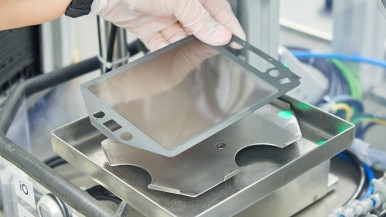
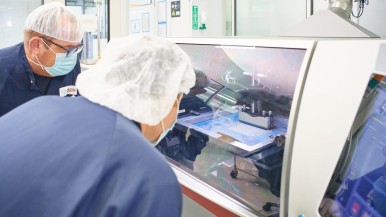
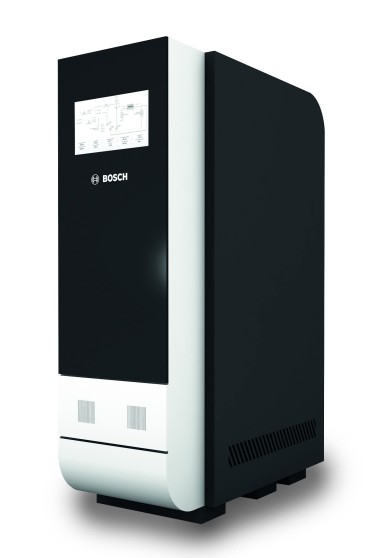
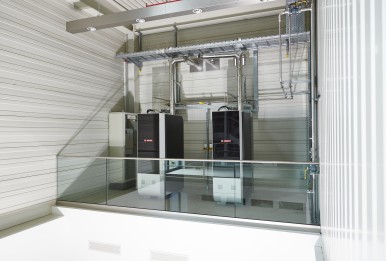
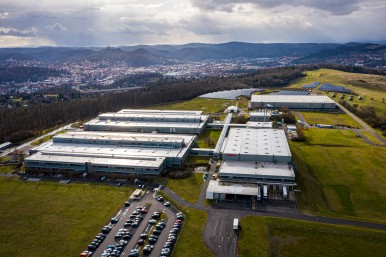
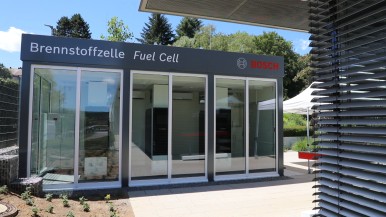
Stuttgart, Germany / Horsham, United Kingdom – When it comes to stationary fuel cells, Bosch is stepping up a gear. In 2024, the supplier of technology and services intends to start full-scale production of distributed power stations based on solid oxide fuel-cell technology – hence the agreement to intensify its alliance with Ceres Power. Following a successful prototype construction phase, the two companies now want to press ahead, initially with the pre-commercialization process for stationary fuel cells. For SOFC systems, Bosch is aiming for an annual production capacity of some 200 megawatts. This is enough to meet the electricity needs of around 400,000 four-person households in urban quarters. Bosch is planning to produce the stationary fuel-cell systems at its manufacturing sites in Bamberg, Wernau, and Homburg, as well as its development sites in Stuttgart-Feuerbach and Renningen – and will invest hundreds of millions of euros by 2024. This means Bosch is positioning itself clearly as a systems supplier for stationary fuel cells with its own value creation in the cell and stack segment. One intended application of SOFC technology is in small, distributed, connectivity-enabled power stations, which can then be used in cities, factories, trade and commerce, data centers , and electric vehicle charging infrastructure. Bosch estimates that the market for decentralized power generation will reach a volume of 20 billion euros by 2030. A total of more than 250 Bosch associates are now working in this promising new field – 150 more than a year ago. “We see the highly efficient solid oxide fuel cell as an essential element of a sustainable energy supply. To bring it about, we are pooling Bosch expertise from across several divisions,” says Dr. Christian Fischer, the Bosch board of management member responsible for the Energy and Building Technology business sector. “With stationary fuel-cell systems, Bosch is establishing a new business field in which development, manufacturing, sales, and service come from a single source,” Fischer continued. “Together with our partner Ceres Power, we are now taking the next important step toward full-scale production.” We see the highly efficient solid oxide fuel cell as an essential element of a sustainable energy supply. To bring it about, we are pooling Bosch expertise from across several divisions...Dr. Christian Fischer, Bosch board of management member Energy and Building Technology Bosch intensifies alliance with Ceres Power Since August 2018, Bosch and Ceres Power have been successfully collaborating in the field of fuel cell and fuel-cell stack development. As early as fall 2019, Bosch was able to start prototype production of its first fuel-cell systems in Germany; in January 2020, it acquired a stake of around 18 percent in the U.K. company. The alliance has now been extended to include the phases leading up to full-scale production in 2024. The agreements specify how Bosch will further use its alliance partner Ceres Power’s technology. “We are proud to have reached this milestone in collaboration with our important partner Bosch. Combining innovative Ceres technology with Bosch’s manufacturing expertise made it possible to create pioneering stationary fuel-cell systems that will help overcome the global challenges of the energy transition,” says Phil Caldwell, CEO of Ceres Power. “We’re looking forward to continuing our close collaboration with Bosch.” SOFC systems are already hydrogen-compatible Ceres Power is a leading player in the development of innovative solid oxide fuel cells and stacks. Bosch holds an extensive technology license from Ceres Power and has been manufacturing fuel cells and stacks in-house since 2019. Pilot plants based on solid oxide fuel cells are already being successfully tested at various Bosch locations. The SOFC systems can already be operated with eco-friendly biogas or natural gas – and are already hydrogen-compatible for the energy system of the future. For cities and conurbations with high energy requirements, SOFC systems can ensure sustainable power supplies – with zero emissions of nitrogen oxides, particulates, and CO2. With an overall efficiency of more than 85 percent , the solid oxide fuel cell is clearly superior to any other energy converter. As Dr. Wilfried Kölscheid, who is responsible for stationary fuel cells at Bosch, explains: “Depending on energy supply requirements, in the future any number of plants with the same output can be interconnected. This interconnection creates virtual power plants that work together to supply power as and where it is required.”

Climate neutrality: Bosch expands supply of renewable energy

05.08.2020

Press release

Business/economy

Climate neutrality: Bosch expands supply of renewable energy

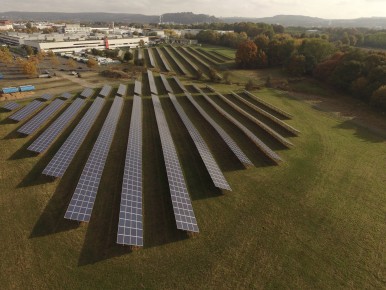
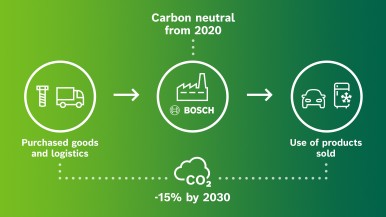
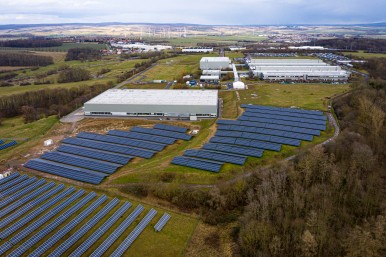
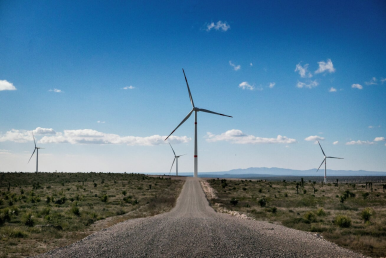
Stuttgart, Germany – On the path to climate neutrality, renewables represent a key area where companies can make major adjustments. Bosch is expanding in-house power generation at its locations and is set to be a long-term customer of renewable electricity from newly constructed wind and solar parks. To this end, the supplier of technology and services has signed three exclusive long-term purchasing agreements for PV electricity with the providers RWE, Statkraft, and Vattenfall. Despite the challenging situation due to the current coronavirus pandemic, Bosch is pressing ahead with its highly ambitious climate action plans: “Climate change isn’t taking a break, so neither are we. By the end of the year, we will achieve our ambitious goal of no longer leaving a carbon footprint,” said Volkmar Denner, the CEO of the Bosch Group. All 400 Bosch locations worldwide will then be climate-neutral. The company’s German sites have been climate-neutral since the end of 2019. “Our efforts for the energy transition will continue after 2020. Investing in renewables is an important testament to this,” Denner added, explaining that while climate action costs money, doing nothing would be more expensive – especially since investing in energy efficiency also leads to cost savings. Climate change isn’t taking a break, so neither are we. By the end of the year, we will achieve our ambitious goal of no longer leaving a carbon footprint....Dr. Volkmar Denner, chairman of the board of management of Robert Bosch GmbH Bosch further improves ecological quality of carbon neutrality Besides renewables, Bosch is investing above all in energy efficiency at its own locations in order to realize carbon neutrality . From now until 2030, the company intends to further improve the ecological quality of its carbon neutrality by gradually ramping up these two measures. As an effective short-term lever, Bosch is also purchasing green electricity from existing plants and fully offsetting unavoidable carbon emissions through selected climate-action measures. “In 2020, the share of carbon offsets will be far lower than projected. In other words, we are making faster progress than we expected in further improving the quality of the measures we take,” Denner said. Bosch intends to significantly increase the share of renewables in its energy consumption. The three new long-term agreements for PV electricity are moving the company toward achieving this goal; they are also driving the energy transition forward. In total, Bosch emitted around 1.94 million metric tons of CO₂ worldwide in 2019 (Scope 1+2) – already about one-third less than in the previous year. 100,000 megawatt hours from new photovoltaic parks The contracting parties RWE, Statkraft, and Vattenfall will each supply Bosch exclusively from newly constructed plants. Electricity from the three suppliers’ subsidy-free photovoltaic parks will be transported through the public grid to be consumed at Bosch locations in Germany. From 2021 onward, this will cover a total annual volume of more than 100,000 megawatt hours – equivalent to the annual electricity consumption of up to 30,000 private households or 70 percent of the electricity consumption at the Bosch site in Feuerbach. Under optimum photovoltaic conditions, the maximum output will be sufficient to cover the entire electricity requirements of the plants in Feuerbach, Homburg, and Bamberg simultaneously, at least for a few hours. The long-term contracts replace part of Bosch’s green electricity purchases and have a duration of between 12 and 16 years. Statkraft has already been supplying power since May. The Bosch Group is also aiming to sign such long-term contracts outside Germany. In Mexico, for example, the company already covers up to 80 percent of its energy demand with such new clean power. Many of the Bosch locations there get electricity from a newly constructed wind farm belonging to the energy group Enel, which generates some 105,000 megawatt hours per year. The partnership with Enel is due to run for 15 years. Our efforts for the energy transition will continue after 2020. Investing in renewables is an important testament to this....Dr. Volkmar Denner, chairman of the board of management of Robert Bosch GmbH From solar to hydrogen: covering energy demand with in-house power generation In addition to exclusive purchases from renewable energy sources, Bosch is expanding its in-house power supply: the company currently generates some 60,000 megawatt hours per year from almost 50 photovoltaic systems at its own sites. Bosch’s Nashik site in India is home to the largest plant of this kind in the Indian automotive industry. In total, Bosch plans to expand its on-site renewable energy supply to 400,000 megawatt hours by 2030. A photovoltaic system at Bosch’s Hemaraj plant in Thailand, scheduled for completion in 2020, will generate 1,300 megawatt hours of electricity per year. Furthermore, Bosch operates projects for power generation through hydropower and biomass. New approaches such as heat and electricity from hydrogen are also part of the energy supply. Last year, the prototype of a stationary fuel cell developed by Bosch was put into operation at the Homburg and Bamberg sites. The fuel cell now covers peak electricity demand. In Salzgitter, Bosch is working with the Fraunhofer Institute and other local companies to establish a center for hydrogen, known as the Hydrogen Campus, which is funded by the city as well as the state of Lower Saxony. At the Bosch training center in Wernau, a fuel cell pilot plant based on solid-oxide fuel cell (SOFC) technology was commissioned at the end of June. A beacon project is in development in Thuringia, at the Bosch plant in Eisenach: by 2022, the plant intends to meet its electricity requirements through in-house power generation from photovoltaic systems and exclusive purchases of electricity from wind power, while minimizing demand through sophisticated energy management based on artificial intelligence.