Search & find:
Media, press releases, events for your editorial coverage

Bosch at bauma 2025

07.04.2025

Press release

Powertrain systems

Bosch at bauma 2025

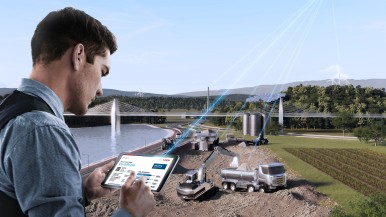
Stuttgart and Munich, Germany – Over one million new construction vehicles will be produced worldwide in 2025 alone. As different as their performance classes and tasks are, they almost all have one thing in common: a diesel engine. Its robustness and strength make it the ideal powertrain for a wide range of applications. At the bauma 2025 trade fair, Bosch will be showing how carbon emissions can be reduced even further in this vehicle segment. “Renewable synthetic fuels make operating both new and existing vehicles much more climate-friendly,” says Jan-Oliver Roehrl, executive vice president of the Bosch Power Solutions division and head of commercial vehicle activities at Bosch. “And in the future, hydrogen engines and electrification also stand to make construction machinery much more sustainable.” Renewable synthetic fuels make operating both new and existing vehicles much more climate-friendly. And in the future, hydrogen engines and electrification also stand to make construction machinery much more sustainable....Jan-Oliver Roehrl, executive vice president of the Bosch Power Solutions division and head of commercial vehicle activities at Bosch Renewable synthetic fuels make combustion engines more climate-friendly Construction vehicles are already subject to comprehensive exhaust-emission regulations, such as Stage V in Europe, Tier 4 in the U.S., and Phase IV in China. To date, however, their climate-relevant emissions have been regulated only to a limited extent, at least by law. One simple option for greatly reducing their carbon emissions that is already available today is to use renewable synthetic fuels such as HVO100. Because these fuels are based on residual and waste materials, they are much more climate-friendly than fossil fuels in terms of overall carbon emissions. They are also “drop-in” fuels, meaning they can be mixed with normal diesel fuel as required. Since Bosch already takes compatibility with these fuels into account when developing its injection technology, they are suitable for use in its products. According to Bosch forecasts, four out of five new construction vehicles worldwide with over 56 kilowatts will still have a diesel engine in 2035. That is why Bosch will continue to develop injection technology and urea dosing technology for exhaust-gas treatment in the future to suit the various segments of the construction machinery market. The Digital Fuel Twin documents the use of renewable synthetic fuels Renewable synthetic fuels can make construction machinery more climate-friendly: the more of it they use, the smaller the carbon footprint of each individual vehicle. Bosch makes this effect visible with a purely digital software solution called the Digital Fuel Twin. This documents the amounts of fuel distributed as well as the fuels’ sustainability, from production and transportation all the way to the filling station. It provides the operators of construction machinery with certificates corresponding to how they have refueled their vehicles; these document the total amounts of fuel used and even the proportionate carbon footprint when using the vehicle. Hydrogen engines build on tried-and-tested foundations When it comes to hydrogen engines, German manufacturers and suppliers can draw on decades of expertise, particularly in the field of engine technology: some 80 to 90 percent of the technology involved can be transferred from conventional combustion engines. If the hydrogen fueling the engines is produced with renewable energy, their use could mark a big step forward for the climate. Often, construction machinery is stationary and operates under heavy loads. “This is precisely where hydrogen engines, with their high efficiency and robustness, can really excel,” Roehrl says. “The first applications of hydrogen engines featuring Bosch injection technology will be launched this year.” Bosch is working on both port- and direct-injection systems and is already involved in more than 100 development projects with customers worldwide. Moreover, the hydrogen engine is also a promising option for large engines, for example as the powertrain for dump trucks in mining. Here, too, robustness and reliability combined with a compact design are essential for economical operation. Electrification solutions for construction machinery In certain construction machinery applications, electrification is another efficient and climate-friendly option for mobile and stationary functions. With its eLION electrification portfolio, Bosch Rexroth already offers a wide range of motors, inverters, gearboxes, software, and accessories, including the appropriate hydraulics. This Bosch subsidiary is currently expanding its range to include components for 96-volt vehicle electrical systems; at the end of 2025, it will introduce a standardized software platform for all voltage classes. Bosch Engineering, meanwhile, is presenting a newly developed high-performance solution for battery voltages of up to 800 volts. This subsidiary’s new electric powertrain system is compact and offers high power density as well as high efficiency. It is also suitable for construction machinery with high power requirements and limited installation space, such as wheel loaders. Bosch, Bosch Rexroth, and Bosch Engineering will be showcasing these solutions at bauma, at booths A3/327 and A4/526.

Bosch polls Europeans about the future of the powertrain: respondents in favor o ...

20.10.2020

Press release

Powertrain systems

Bosch polls Europeans about the future of the powertrain: respondents in favor o ...

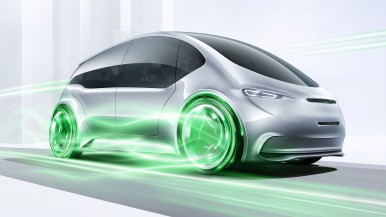
Stuttgart, Germany – According to a representative survey conducted in June 2020 by the market research institute Innofact on behalf of Bosch, no powertrain types have lost any of their relevance – whether batteries or fuel cells, gasoline or diesel engines. If the 2,500 survey respondents in Germany, France, Italy, and the U.K. had to decide on a new car tomorrow, one in two would opt for a stand-alone combustion engine for their primary car and around one in three for their second car. However, when asked what would be the most prevalently used powertrain in 2030, some 68 percent of those polled see the electrical powertrain in pole position, ahead of hybrids and combustion engines. Survey participants acknowledged the potential of fuel cell-powered cars, with around one in three seeing the fuel cell as the future of mobility. “Electric mobility is on its way – and that’s good news. This year alone, Bosch is investing 500 million euros in this domain. At the same time, we’re also continuously refining the internal combustion engine – because it’s still needed,” says Dr. Stefan Hartung, member of the Robert Bosch GmbH board of management and chairman of the Mobility Solutions business sector. Electric mobility is on its way – and that’s good news. This year alone, Bosch is investing 500 million euros in this domain. At the same time, we’re also continuously refining the internal combustion engine – because it’s still needed....Dr. Stefan Hartung, member of the Robert Bosch GmbH board of management and chairman of the Mobility Solutions business sector Respondents want incentives for all powertrain types A further question reveals respondents’ open-mindedness toward powertrains of all types: when asked whether they favor incentives for vehicles equipped solely with combustion engines, in addition to the many government subsidies for electric cars and plug-in hybrids, 70 percent of the Europeans polled answered in the affirmative. The number of respondents in favor of government incentives to buy new cars with a conventional powertrain is highest in Italy at 83 percent, and lowest in the United Kingdom at 60 percent. In France, 77 percent are in favor; in Germany, 62 percent. “Incentivizing modern combustion engines can accelerate the vehicle fleet’s renewal, which would also help the environment and the climate,” Hartung says. Just under one-third of Europeans would like to see this subsidy run to at least 9,000 euros. This is the same as the maximum rebate currently offered by the German government for the purchase of an electric car. Two findings are notable: for one, 72 percent of city dwellers in the four surveyed European countries believe the combustion engine merits a subsidy. For the other, the majority (80 percent) of 18-to-29 year-olds also endorse incentives for cars with combustion engines. Even cars with conventional engines can run in a climate-neutral way. The key to this is renewable synthetic fuels (RSF), which are made from renewable hydrogen and CO₂ captured from the surrounding air. On average, 57 percent of those taking part in the Bosch survey agreed that RSF should benefit from tax breaks. “There’s just no way around renewable synthetic fuels if we want to achieve our climate targets,” Hartung says. “Only with RSF can the more than one billion vehicles already on the road worldwide help contain global warming.”Can’t live without a car: respondents in Europe are unanimous In Europe, the status of the car and its importance for mobility is unlikely to change any time soon. Around 60 percent of those surveyed in Germany, France, Italy, and the U.K. are unable to imagine living without a car altogether. And a clear majority of the remaining 40 percent are only prepared to leave their car behind some of the time. The car’s approval rating in rural Europe is 77 percent. Incidentally, these findings are roughly similar among 18-to-29 year-olds, around half of whom also come out clearly in favor of a car. While 61 percent of those surveyed in Germany and 47 percent in the U.K. cited greater flexibility as the most important reason for having a car, 41 percent of French respondents indicated they need it mostly for work. In contrast, 55 percent of surveyed Italians prefer the car to other forms of mobility that they feel are less convenient. “For the foreseeable future, the car will remain the number one means of transport – and has excellent prospects of becoming even more climate-friendly,” Hartung says. Bosch’s objective is for people to be able to stay mobile in an affordable and eco-friendly way.The future of the powertrain: Bosch champions electromobility and combustion technology Bosch aims to make transportation as resource-friendly as possible, and is pursuing the vision of CO₂-neutral and virtually emissions-free mobility in several ways. In its approach to future powertrain technology, the supplier of technology and services is keeping an open mind. On the one hand, Bosch aims to become the market leader in electromobility with battery and fuel cell-powered vehicles. Electric vehicles are climate-neutral if the charging power and hydrogen are sourced from renewables. On the other hand, Bosch is continuing to refine combustion engines to contain global warming and protect the environment to the greatest extent possible. If they run on RSF, gasoline and diesel engines can also be climate-neutral on the road. Bosch expects around one-third of all newly registered vehicles worldwide to be purely electric by 2030. Two-thirds of all new vehicles will still be powered by a combustion engine, many of them as hybrids.

Bosch and CATL collaborate on battery cells

05.09.2019

Press release

Business/economy

Bosch and CATL collaborate on battery cells

Stuttgart, Germany: Bosch and Contemporary Amperex Technology Co. Limited (CATL) have concluded a long-term strategic cooperation agreement. The partners are going to jointly specify high-performance battery cells. CATL will then design, develop, and manufacture these cells in accordance with Bosch requirements. The cells are to be used in the 48-volt battery developed by Bosch. This battery is the core element of 48-volt hybrid powertrain systems, whose efficiency is making them globally ever more important. In joining this alliance, the supplier of technology and services is also securing its long-term sourcing for battery cells. “We have to understand battery cells, but we do not have to make them ourselves,” says Dr. Stefan Hartung, member of the board of management and chairman of the Mobility Solutions business sector. “With CATL, we have brought an established cell specialist for lithium-ion batteries on board as a partner. In combination with our systems know-how and expertise in battery management, we will extend our strong position in the 48-volt battery market.” CATL, one of the world's leading experts of lithium-ion battery is currently building a battery factory in Erfurt, Germany. For Bosch, this alliance is another step on the path to market leadership in electromobility. Numerous global automakers already use Bosch’s 48-volt battery. This 48-volt hybridization is sure to be the minimum standard in tomorrow’s automotive market....Dr. Stefan Hartung, member of the board of management and chairman of the Mobility Solutions business sector 48-volt system destined to be the minimum standard in tomorrow’s automotive market Bosch’s portfolio for 48-volt systems extends beyond the 48-volt battery to encompass other system components such as DC/DC converters and electrical machines. With this technology, Bosch aims to gear up all classes of vehicles for future emissions requirements and offer affordable hybridization. Its 48-volt electrification augments the combustion engine with an electric motor. This motor is powered by the 48-volt battery, which in turn is charged by recovering energy expended during braking. This can cut fuel consumption by as much as 15 percent. If we want to improve efficiency, we can no longer afford to let brake energy dissipate unused,” Hartung says. “This 48-volt hybridization is sure to be the minimum standard in tomorrow’s automotive market.” The market for 48-volt solutions is growing worldwide. Bosch expects that by 2025, nearly 20 percent of new cars sold annually around the globe will have a 48-volt system and matching battery on board. Demand for 48-volt systems is rising, especially in Europe and China. Cost-effective and easy to integrate – the Bosch 48-volt battery The Bosch plant in Wuxi, China, started making the first generation of the 48-volt battery late last year. The USP of the latest version of this product is that the battery is compact and cooled passively. This means automakers can simply integrate it into their vehicle models, and do not require any additional cooling units. In addition, they can dispense with the long and costly effort of proprietary engineering work. “We are confident that our 48-volt battery will achieve a leading position in the market, and make the 48-volt hybrid affordable for the mass market,” Hartung says. Expertise across the e-mobility ecosystem Bosch is more broadly positioned in e-mobility than any other company. It aims to take the lead in the mass e-mobility market that will emerge in 2020 and beyond. The company is planning to increase its sales in this area more than tenfold by 2025, to five billion euros. Bosch electrical powertrain components already feature in more than a million vehicles around the world. The supplier of technology and services has carried out powertrain projects for 50 electric-vehicle platforms. It is the market leader in China, the world’s biggest and fastest-growing electric-vehicle market. Bosch technology can be found in practically every class of vehicle, from electric baby buggies, bicycles, and scooters to passenger cars and commercial vehicles. The company’s expertise thus extends across the entire e-mobility ecosystem. Bosch is partnering with various automakers to give e-vehicle drivers app-based access to some 40,000 charge spots in eight European countries.

Bosch trialing fully renewable diesel fuel

10.12.2018

Press release

Powertrain systems

Bosch trialing fully renewable diesel fuel

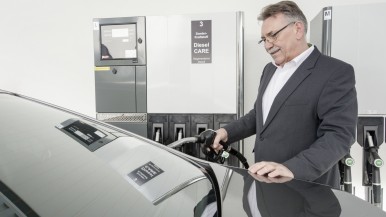
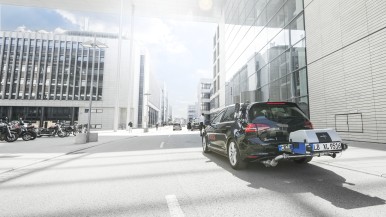
Stuttgart, Germany. Since early November, the cars chauffeuring the management board members of Robert Bosch GmbH have been running on fully renewable diesel. Known as “C.A.R.E. diesel,” this fuel is synthesized mainly from by-products and waste materials. Its supplier Toolfuel claims that C.A.R.E. diesel reduces the CO₂ emissions of these cars by around two-thirds, or 65 percent, from well to wheel. “Renewable and synthetic fuels can contribute greatly to limiting global warming. Their use has a much faster ecological impact than replacing vehicles and infrastructure, as existing filling stations can remain in operation,” says Dr. Volkmar Denner, CEO of Robert Bosch GmbH. For him, the consequences are clear: “Synthetic and renewable fuels should be factored into the CO₂ fleet regulation for passenger cars and trucks.” Since C.A.R.E. diesel has yet to be included in the German law on the prevention of airborne pollution, it is not currently available at regular filling stations. In its trials with fully renewable diesel, Bosch wants to show if and how it could be adopted on a broad scale. Renewable and synthetic fuels can contribute greatly to limiting global warming....Dr. Volkmar Denner, CEO of Robert Bosch GmbH Bosch is offering partly renewable diesel at certain company filling stations The company is encouraging the use of renewable and synthetic fuels. R33 Blue Diesel, an approved fuel made by Shell, has been available for trial and company car pool vehicles at the filling stations at the Bosch locations in Feuerbach, Schwieberdingen, and Hildesheim for some weeks now. This fuel contains up to 33 percent renewables. The carbon footprint of the more than 1,000 Bosch vehicles that regularly refuel at these three filling stations could thus be reduced by as much as 20 percent from well to wheel. On top of that, Bosch aims to make synthetic and renewable fuels available for company cars and internal delivery vehicles at all its company filling stations across Germany. The supplier of technology and services is also gradually incorporating battery-powered electric vehicles into its fleet. Fewer diesel vehicles mean more CO₂ emissions from Europe’s road traffic Since it accounts for 18 percent of global CO₂ emissions, road traffic also contributes to the greenhouse effect. On the upside, there has been some progress. In Germany, the CO₂ emissions of newly registered vehicles have fallen by one quarter since 2007. On the downside, the CO₂ emitted by traffic on European roads is rising again. One reason for this is the shrinking share of newly registered diesel vehicles. They have a great advantage over gasoline models when it comes to CO₂ emissions. Compared with its gasoline variant, a diesel model’s carbon footprint is around 15 percent lower on average. “We need diesel and other solutions such as renewable and synthetic fuels in addition to electromobility to further reduce greenhouse gas emissions,” Denner says. If renewable and synthetic fuels were widely used by European passenger cars, this alone could save up to 2.8 gigatons of CO₂ by 2050, and that is without electrification factored into the equation. This is three times the amount of carbon dioxide Germany emitted in 2016. Bosch has been exploring renewable and synthetic fuels for some time now. The company’s fuel-carrying components for diesel engines, such as the fuel pump and injection nozzles, have been rigorously tested, and vehicle manufacturers are free to approve them for use with renewable and synthetic fuels. Bosch aims to make transportation as resource-friendly as possible Bosch is approaching future powertrain technology with an open mind. The company is committed to a vision of virtually emissions-free driving. While it will continue to improve the internal-combustion engine, it also aims to become a leader in the market for electromobility. After years of research and development effort, Bosch presented a new diesel technology in April 2018. It is capable of cutting NOx emissions from diesel vehicles to well below the statutory 120 milligram-per-kilometer limit that will come into effect in 2020 – and it can do so in any real traffic conditions. These results were achieved in test vehicles with heavily modified engine and emission settings. The vehicles were also equipped with leading-edge technology and components, just recently introduced to the market. A combination of advanced fuel-injection technology, a newly developed air management system, and intelligent temperature management made such low readings possible. Bosch customers can now tap this system know-how to develop future lines of mass-manufactured vehicles. Q&A about renewable C.A.R.E diesel What is C.A.R.E. diesel? C.A.R.E. diesel is a fully renewable fuel made mainly of by-products and waste materials, recycled cooking oils, and grease. It contains no conventional diesel – that is, fossil fuel. Neste, a Finnish mineral oil company and biofuel manufacturer, makes C.A.R.E. diesel; the company’s partner Toolfuel distributes it in Germany. C.A.R.E., a trademark of Toolfuel, is short for CO₂ Reduction, Arctic Grade, Renewable, Emission Reduction. What does Bosch hope to gain by using C.A.R.E. diesel? Bosch is making every effort to optimize internal combustion engines and believes diesel powertrains help reduce CO₂ emissions in road traffic. This reduction in CO₂ emissions is even greater when vehicles run on renewable paraffinic fuels such as C.A.R.E. diesel, which helps protect the environment and conserve resources. Why only a 65 percent reduction in CO₂ emissions? The CO₂ advantage here is that only the CO₂ emissions resulting from the conversion of waste materials into fuel are taken into account. The waste materials themselves are deemed to be CO₂ neutral, as they already exist. What technical upgrades do vehicles need to run on C.A.R.E. diesel? C.A.R.E. diesel is a paraffinic fuel and, as such, has a slightly lower density and higher ignitability than conventional diesel fuel. This is why regulatory authorities have drafted an additional standard, EN 15490, for paraffinic diesel fuels. The EN 590 standard applies to conventional diesel fuel. Manufacturers have to specifically approve vehicles for fuels with the properties set out in EN 15940. This is important, as they must first investigate component compatibility, potential increases in peak pressure during combustion, and other factors. When will C.A.R.E. diesel be available at regular filling stations? Various test fleets are already running on C.A.R.E. diesel. As it stands now, C.A.R.E. diesel is unavailable in quantities sufficient to supply filling stations on a wide scale across Europe. Also, many countries have national laws regulating the fuel sold at public filling stations. In these countries, including Germany, the EN 15940 standard has yet to be adopted. The decision to amend EN 15940 to the 10th German law on the prevention of airborne pollution is still pending. How much does a liter of C.A.R.E. diesel cost at the pump? With approval still pending, C.A.R.E. diesel is currently unavailable at filling stations. A liter of C.A.R.E. diesel is a little more expensive than conventional diesel fuel. This markup is due to manufacturing costs.

EICMA 2018: Bosch’s Two-Wheeler and Powersports business continues to gain speed

06.11.2018

Press release

Connected mobility

EICMA 2018: Bosch’s Two-Wheeler and Powersports business continues to gain speed

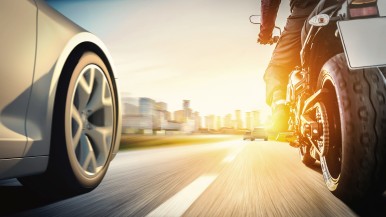
Milan, Italy – Bosch’s Two-Wheeler & Powersports business unit continues to gain momentum in the global motorcycle and powersports market. Bosch’s motorcycle technology sales for 2018 are forecasted to rise more than 20 percent compared to 2017. According to Bosch’s estimate, the business unit´s sales will continue to grow twice as fast as the market, heading towards the target of one billion euros of sales in 2020, generated by assistance, powertrain, electrification, and connectivity systems. Major growth is forecasted in India where Bosch supplies market-specific motorcycle powertrain and safety solutions to comply with the ABS and Bharat Stage 6 emission regulation as well as local market trends. Bosch continues to invest in a constantly growing market. The global demand for two-wheelers is forecasted to grow annually by more than four percent from 2017 to 2022, reaching 122 million bikes by 2022 (source: Freedonia). In 2018, Bosch has set up a dedicated Two-Wheeler & Powersports team in ASEAN, one of the Top 3 motorcycle markets in the world besides China and India, to address the local market needs. “Bosch continues to invest in dedicated motorcycle and powersports technologies, aiming at becoming the market leader,” says Dr. Dirk Hoheisel, Executive Board Member at Robert Bosch GmbH. Bosch continues to invest in dedicated motorcycle and powersports technologies, aiming at becoming the market leader....Dr. Dirk Hoheisel, Executive Board Member at Robert Bosch GmbH Bosch’s vision is to make the mobility of the future accident-free, stress-free, and nearly emissions-free – and this goes for motorcycles as well. Safety is one of the most pressing challenges in the motorcycle market. The fact is, motorcyclists are still the most vulnerable road users. Their risk of dying in an accident is up to 20 times higher than for car drivers. Bosch is tackling this with a comprehensive three-step safety concept towards accident-free mobility. Firstly, by keeping the bike stable in braking situations and acceleration; secondly, by realizing predictive safety and comfort functions with innovative surround-sensing; and thirdly, by connecting the bike with its environment. Comprehensive safety concept: three steps towards accident-free mobility Bosch has made motorcycle riding safer with assistance systems such as ABS and MSC. According to Bosch accident research, around one-third of powered two-wheeler accidents with injuries could be avoided with MSC. Now Bosch goes one step further by building a virtual safety shield for motorcycles. A new safety package for motorcycles, comprising adaptive cruise control, forward collision warning, and blind-spot detection is being shown at EICMA to a wide audience for the first time. These electronic assistants are always vigilant and, in emergencies, they respond more quickly than people can. According to Bosch accident research estimates, these radar-based assistance systems could prevent one in seven motorcycle accidents. The technology underpinning these systems is a combination of radar sensor, brake system, engine management, and human machine interface. Giving motorcycles radar as a sensory organ enables these new motorcycle assistance and safety functions while providing an accurate picture of the vehicle’s surroundings. As a result, these assistance functions not only increase safety, they also enhance enjoyment and convenience by making life easier for riders. “The motorcycle of the future must be able to see and feel,” says Geoff Liersch, Head of the Bosch Two-Wheeler and Powersports business unit. More safety, more enjoyment Assistance systems alone are not enough to make roads safer. Bosch’s vision for the future is to prevent accidents happening in the first place. According to estimates by Bosch accident research, motorcycle-to-car communication could prevent nearly one-third of motorcycle accidents. Up to ten times a second, vehicles within a radius of several hundred meters exchange information about vehicle types, speed, position, and direction of travel. Long before drivers or their vehicles’ sensors catch sight of a motorcycle, this technology informs them that a motorcycle is approaching, allowing them to adopt a more defensive driving strategy. If a crash is unavoidable, the eCall system will trigger the rescue chain to support the rider as soon as possible. “We will continue to develop new technologies to make motorcycle riding safer without reducing enjoyment,” says Geoff Liersch, Head of Two-Wheeler & Powersports. The evolution of electromobility for city riding Another major challenge for the motorcycle market is urbanization. Today, 55 percent of the world’s population lives in urban areas, a proportion that is expected to increase up to 70 percent by 2050 (source: UN). However, as populations grow, so too does the urban landscape with congested roads, higher noise levels, and poorer air quality. To cope with these challenges worldwide, Bosch offers electromobility solutions for nearly all vehicle segments – from eBike systems up to solutions for commercial vehicles. For the electrification of light vehicles on four, three, or two-wheels, for all performance classes between 0.25 and 20 kW, Bosch provides not only highly efficient mobility solutions for the urban environment but also a unique riding experience for the individual riders. As a part of Bosch’s integrated eScooter system, an app integrates vehicle information, connected functions, and social networking. Riders can easily manage trips with the app focusing on the riders’ needs for the specific situation. In addition, Bosch is not only electrifying personal vehicles, but also vehicles used in commercial applications. Electromobility is playing an increasingly important role in the fast and flexible delivery of goods within cities. The Bosch 48 V central drive system is also used to power the Ligier cargo three-wheeler, which delivery services use to carry letters and parcels the last mile to their destinations in urban areas.


EICMA 2018: Bosch’s two-wheelers and powersports innovations are designed to acc ...

06.11.2018

Press release

Connected mobility

EICMA 2018: Bosch’s two-wheelers and powersports innovations are designed to acc ...

Milan, Italy – Whether smart assistance systems, connectivity solutions, or new energy for the powertrain: Bosch has the right solutions for the motorcycles and powersport vehicles of the future. For Bosch, all innovative solutions and technologies are another steppingstone toward making the vision of stress-free, accident-free, and nearly emission-free mobility a reality.Highlights at the Bosch booth (Booth G55, Hall 13): Advanced rider assistance systems: According to Bosch accident research estimates, radar-based assistance systems could prevent one in seven motorcycle accidents. These electronic assistants are always vigilant and, in emergencies, they respond more quickly than people can. The technology underpinning these systems is a combination of radar sensor, brake system, engine management, and HMI (Human Machine Interface). Giving motorcycles radar as a sensory organ enables these new motorcycle assistance and safety functions while providing an accurate picture of the vehicle’s surroundings. Functionalities of the Bosch advanced rider assistance systems: ACC (adaptive cruise control) Riding in heavy traffic and maintaining the correct distance to the vehicle in front takes a great deal of concentration and is strenuous over longer periods. ACC adjusts the vehicle speed to the flow of traffic and maintains the necessary safe following distance. This can effectively prevent rear-end collisions caused by driving too close to the vehicle in front. And not only does ACC offer riders more convenience, it also allows them to concentrate more on the road, particularly in high-density traffic. Forward collision warning In road traffic, even the briefest lapse in concentration can have serious consequences. Bosch has developed a collision warning system for motorcycles to reduce the risk of a rear-end collision or to mitigate its consequences. The system is active as soon as the vehicle starts and it supports the rider in all relevant speed ranges. If the system detects that another vehicle is dangerously close and the rider does not react to the situation, it warns the rider by way of an acoustic or optical signal. Blind-spot detection This system keeps a lookout in all directions to help motorcyclists change lanes safely. A radar sensor serves as the blind-spot recognition system’s electronic eye, registering objects in hard-to-see areas. Whenever there is a vehicle in the rider’s blind spot, the technology warns them by way of an optical signal, for example in the rear-view mirror. ABS (antilock braking system) evolution: from eBikes to powersports: Since 1984, Bosch has continuously developed motorcycle ABS technology, and produced the smaller, lighter design with enhanced performance to increase riding safety for all riders of motorcycles in every region. Worldwide, an increasing number of countries, including the European Union, Japan, India, Taiwan, and Brazil are mandating motorcycle ABS or applying it in the near future. Nowadays, this safety system is not only for motorcycles but also for a wider range of vehicles such as powersports vehicles and eBikes. Bosch has launched the market’s first series-produced anti-lock braking system for eBikes. Due to this new development it will be possible to prevent the pedelec’s front wheel from locking up and also to limit the lifting of the rear wheel – thanks to an intelligent and innovative system. This reduces the braking distance as well as the risk of crashing and rollovers. According to accident researchers, almost a quarter of pedelec accidents could be avoided through the use of ABS. Moreover, the number of accidents with severe injuries could be reduced further. By the end of 2018, ABS for pedelecs will become commercially available on selected models. For powersports vehicles, in cooperation with BRP, Bosch has realized the world’s first application of ABS on an all-terrain vehicle (ATV). The BRP Outlander and Renegade models brought out in 2018 and 2019 are equipped with the Bosch ABS system. Solutions for electromobility: Mobility solutions for the urban environment must be flexible, affordable, and most importantly highly efficient. With the powertrain solutions from Bosch, bicycles, scooters, motorbikes, and three-wheelers can be electrified. Besides end customer vehicles, this can also be applied to commercial applications. Two commercial solutions are shown on this year’s EICMA: the e-cargo bike up to 25 km/h and the e-cargo tricycle up to 45 km/h. Electromobility solutions for Bosch cover more than just powertrain systems. As a part of Bosch’s integrated eScooter system, an app integrates vehicle information, connected functions, and social networking in two interfaces: range and compass modes. Riders can easily manage trips by this friendly and minimalistic design focusing on the users’ needs for the specific situation. Additional topics at the Bosch booth: New MSC Motorcycle Stability Control enhanced system: The new enhanced motorcycle stability control system is available as a semi or full integral system. The box volume was reduced by 35 % and weight by 20 % compared to the previous generation 9 unit. This reduces the installation effort for the motorcycle manufacturer and enables the installation on smaller motorcycles. The unit utilizes state of the art passenger car technologies and was designed to accommodate future functionalities such as advanced rider assistance systems. Its global premiere will be at the Bosch booth. Engine management systems: Electronic engine management systems are the core of efficient and economical technology, which allows two-wheelers to fulfill future emissions regulations such as Euro 5 and BS 6 (Bharat stage 6) including OBD l/ll. In combination with highly developed sensor technology, engine management systems have achieved considerable increases in efficiency compared to conventional carburetor systems and can reduce CO₂ emissions by up to 16 % (depending on the situation). The control unit is the main component of the new engine management system. This small computer analyzes all the data from the powertrain sensors and adjusts among other things, ignition timing and fuel injection quantity. To address the future emission regulations like Bharat Stage 6 in India, Bosch has also developed a new mini heated Lambda sensor which is specially designed for two-wheeler applications. Lambda measures the oxygen content in the exhaust gas and helps in optimizing the air/fuel-ratio.The M12 thread and the optimum protection tube design allows compact installation, with optimized heater power for two-wheelers. The planned life time is about 100,000 km. The new mini heated lambda sensor will go into series production in 2019. Integrated connectivity cluster with mySPIN: Advanced rider assistance systems require a user focused HMI (human machine interface) to visualize the functionalities for motorcycle riders. Bosch’s integrated connectivity cluster combines traditional instrumentation with a wide range of infotainment features in a single device. The integrated connectivity cluster connects to the rider’s smartphone via Bluetooth, and through intuitive controls on the handlebar, the riders are effortlessly able to make and receive phone calls, access their contact lists and listen to music.The mySPIN – smartphone integration solution enables further functionalities. It enables riders to bring riders’ smartphone content to their motorcycle, scooter, or powersports vehicle. This provides all vehicle manufacturers with an open platform featuring an extensive range of options. mySPIN also has the potential to leverage the expertise of key third party apps, for its usage simplicity and its capacity to minimize distractions, thus increasing riding comfort and convenience.

Diesel at Bosch: your questions answered

30.07.2018

Press release

Powertrain systems

Diesel at Bosch: your questions answered

What is the benefit of the new Bosch diesel technology? Through continuing research and improvements in diesel technology and applications, Bosch engineers have been able to achieve even lower emissions of nitrogen oxides (NOx) across a wide range of environmental and driving conditions. In EU6-RDE on-road testing, vehicles equipped with the new Bosch diesel technology achieved average NOx emissions as low as 13 mg per kilometer. Although Bosch’s engineers achieved these results by substantially modifying existing technologies, the technologies are now available and can be applied in new vehicles without incurring high additional costs. Is there any comparison for the number 13 mg/km? Since 2017, the European EU6 RDE standard has required that new passenger car models be tested according to a mix of urban, extra-urban, and freeway cycles and emit an average of no more than 168 milligrams of NOx per kilometer. As of 2020, this limit will be cut to 120 milligrams. As of today, the demonstration vehicles equipped with Bosch’s new diesel technology have demonstrated that they can achieve average NOx emissions of as low as 13 mg/km over the course of a drive that fits the EU6-RDE testing requirements. What is meant by “a wide range of environmental conditions”? This includes extremes of driving styles (highly dynamic as well as very slow), both high and low ambient temperatures, in freeway as well as congested city driving, etc. What distinguishes the new diesel technology? The technological solution developed by Bosch involves a highly responsive airflow management system for the engine, including the use of a further optimized turbocharger and a combination of high- and low-pressure exhaust-gas recirculation, as well as an active SCR on DPF catalyst and passive downstream SCR catalyst. In addition, Bosch has also developed a sophisticated thermal management system for the diesel engine to help keep exhaust gases and equipment in a temperature range that helps optimize emissions reduction over a wide range of driving and environmental conditions. When will the technology be ready for production? Bosch has achieved these results in demonstration vehicles by substantially modifying engine and emissions configurations and the application of technologies and components that have now become available in the market. Bosch’s customers can begin to work with the system knowledge Bosch has developed and incorporate into production projects for future model years. Why is urban driving more demanding than extra-urban or freeway driving? To ensure optimum NOx conversion, the exhaust gases and control systems must be hotter than 200 degrees Celsius. This temperature can be a challenge to maintain in urban driving, when exhaust gases can cool due to gridlock or stop-and-go traffic. Bosch’s new thermal management system addresses this issue by actively regulating the exhaust gas temperature in a wide range of operating conditions. Does the temperature regulation require an auxiliary 48-volt heater installed in the exhaust-gas system or additional components of a similar kind? Bosch’s new diesel system is based on components already available in the market and does not require an additional 48-volt on-board electrical system. Will the new Bosch technology make the diesel engine significantly more expensive? Bosch does not believe that the technology will add significantly to the costs of producing diesel vehicles. Will the diesel engine lose its comparative advantage in fuel economy and climate-friendliness as a result of the new technology? No, our engineers were able to achieve their further reductions of NOx emissions while retaining the diesel’s comparative advantage in terms of CO₂ emissions. When will the diesel technology be available for customers to buy? Bosch is not in a position to say when vehicles will be available. This will depend on decisions by the OEMs. You call it a breakthrough, but then say the parts are close to going into production. Isn´t that a contradiction? Bosch has taken advantage of the fruits of ongoing research and development as well as new components now reaching the market, such that its customers can begin applying what Bosch has learned in projects for future model year production vehicles. The progress made is largely due to complex modifications of the entire system. If Bosch is mainly making use of existing hardware, why are we only seeing this technology now, instead of some years ago? Some of the hardware available now was not available years ago, and the engine management and temperature management Bosch has developed required years of systems engineering and learning that was not available years ago. In addition, Bosch engineers developed enhanced testing and measurement strategies that enabled them to measure vehicles’ emissions under more dynamic conditions and with greater precision. As the test and measurement systems improved, Bosch engineers could target their optimization efforts more precisely, which accelerated the pace of technological development. What does this technology mean for urban air quality? To find this out, Bosch asked an independent engineering firm to carry out an analysis. It looked at the air quality in the vicinity of the Neckartor monitoring station in Stuttgart, which is notorious for high NOx values. The results of the data analysis are clear: If all diesel vehicles were equipped with the latest Bosch exhaust technology, their share of local pollution would be negligible, and they would help maintain ambient air quality well within the limits set by the EU, even at Neckartor. Can the new Bosch diesel technology be retrofitted? Given the nature of the systems modifications Bosch made in its demonstration vehicles, it would not be reasonably feasible or practical to retrofit existing vehicles. Hasn’t the technology come too late to prevent driving bans? Policy makers have a variety of measures other than driving bans to help maintain ambient air quality within EU limits. Normal fleet renewal alone will help reduce the contribution of diesel passenger cars to ambient NOx levels, and if in the future all diesel vehicles employed the further advances Bosch has developed, diesel passenger cars will add only negligible amounts of NOx such that diesel driving bans will not be needed to meet ambient limits. Is this complex technology also affordable in compact vehicles? In principle, Bosch sees the technical feasibility to adapt the technology to various engine types. How will AdBlue consumption be affected? In the trial vehicle, AdBlue consumption is roughly 1.5 liters per 1,000 kilometers, even with sporty driving. How much engineering effort went into the new diesel technology? Development of the new diesel technology required an enormous amount of effort over the course of several years.