Search & find:
Media, press releases, events for your editorial coverage

With brake-by-wire from Bosch to the Arctic Circle

28.01.2025

Press release

Electrified mobility

With brake-by-wire from Bosch to the Arctic Circle

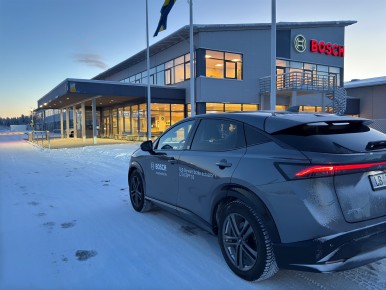
Stuttgart – For six days, over 3,300 kilometers and through different climate zones to the Arctic Circle: On an unusual test drive, a Bosch development team successfully tested the new hydraulic brake-by-wire system from Bosch for the first time on public roads. What sets brake-by-wire apart: This solution completely eliminates the mechanical connection between the brake pedal and the brake system. The driver’s brake request is transmitted to the brake-by-wire system purely as an electrical signal via redundant signal lines. For this fundamentally new approach, Bosch offers a robust and efficient solution with two independent hydraulic brake actuators – a by-wire brake actuator and an ESP ® . Today’s brake systems, such as the integrated power brake from Bosch, still ensure the required redundancy in the event of a fault via a mechanical connection to the brake pedal. This coupling via an input rod to the brake pedal is eliminated in the new Bosch brake-by-wire solution.As a leading company in braking and steering systems, Bosch is working on innovative by-wire solutions for both vehicle domains – including this hydraulic brake-by-wire system, which is planned to be launched on the market from fall 2025. In addition to the hydraulic solution, Bosch is also developing a purely electromechanical system. The company has already received orders from various vehicle manufacturers and expects that by 2030, more than 5.5 million vehicles worldwide will be equipped with brake-by-wire. Advantages of the Bosch brake-by-wire system New freedom in installation: Due to the omission of the mechanical connection, there is no longer any need to mount the brake system components at the vehicle’s firewall. Instead, the components can now be installed where it is most optimal in terms of crash safety, NVH, and manufacturing. The flexibility in choosing where to install the brake actuators helps to avoid the need for different variants for right-hand and left-hand drive vehicles. By-wire technology enables new pedal concepts with significantly shorter brake pedal travel to create space for new interior designs. The hydraulic brake-by-wire solution from Bosch is based on proven brake system technology and is a combination of a by-wire brake actuator and an ESP ® . Its slim design saves installation space and reduces the weight of the brake system. Since both the by-wire brake actuator and the ESP ® are assigned to different channels of the redundant electrical system, they can each independently build up the required brake pressure at all four wheel brakes in the event of a fault. Therefore, this Bosch solution is also suitable for highly automated vehicles, meeting the protection of the brake system required for safety reasons. Successful long-distance test provides valuable data for further development The brake-by-wire system is being developed at the Bosch development center in Abstatt near Heilbronn. The long-distance journey led the development team from the southwest of Germany via Hamburg, Copenhagen and Stockholm and a short detour to the Arctic Circle to the finish at the Bosch winter test center Vaitoudden in Arjeplog, in northern Sweden. Bosch has specifically applied for and obtained approval for public roadway use for the test vehicle in several countries, based on an extensive safety concept. “The whole team has worked towards this event with incredible motivation and is very proud of this achievement. Our hydraulic brake-by-wire system has worked perfectly on the journey. With our first long-distance test, we impressively demonstrated that we can bring a real brake-by-wire system safely and successfully from the test track to the road", explains Hagen Kuckert, project manager for the by-wire brake actuator at Bosch in Abstatt. „We performed thousands of braking operations during the journey, were able to obtain important insights and data on the behavior of the brake system in a wide variety of traffic situations and compare them with our previous simulations. All this is incorporated into the further development work to further optimize our hydraulic brake-by-wire system."

Bosch and Karlsruhe-based measuring technology specialist Palas team up for bett ...

21.09.2023

Press release

Electrified mobility

Bosch and Karlsruhe-based measuring technology specialist Palas team up for bett ...

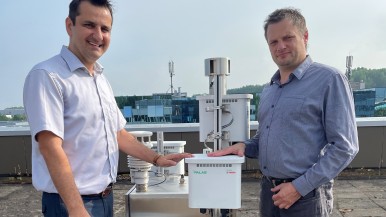
Stuttgart, Germany – Bosch and the Karlsruhe-based measuring technology specialist Palas GmbH want to work together to improve air quality. To this end, the two companies have now agreed to collaborate, each bringing their long-term expertise to the table. Palas will supply comprehensive know-how and technology for measuring a wide variety of gases and airborne particles. In the course of the partnership, Palas will also add the Environmental Connected Box (ECoB) measurement device developed by Bosch to its own portfolio and expand its product range. Bosch is to contribute cloud-based services such as device management and a software model that generates traffic emission data in real time. In addition, dispersion models help locate pollution hot spots, so that pinpointed countermeasures can be defined. The benefit of this alliance will be a comprehensive portfolio for environmentally sensitive urban traffic management, as well as for the fenceline monitoring of the concentration of substances in air at companies’ property lines. Working together with specialized integrators that coordinate all the partners involved in a project, Bosch and Palas will support city authorities and the operators of large industrial complexes. Their compatible products and services will create the basis for reliably and sustainably improving air quality. “With its analyses and simulations, Bosch technology complements Palas’s measuring technology,” says Christoph Kern, head of the Connected Powertrain Solution business unit at Bosch. This allows the actual number and placement of measurement devices required in the long term to be determined and put into cost-efficient operation in cities and at industrial sites. “The combination of Palas measurement devices and Bosch cloud services can help satisfy air pollution limits now and in the future,” says Palas CEO Dr. Maximilian Weiß. First projects with integrators both inside and outside Germany are already in preparation and are slated to start shortly. With its analyses and simulations, Bosch technology complements Palas’s measuring technology...says Christoph Kern, head of the Connected Powertrain Solution business unit at Bosch. The combination of Palas measurement devices and Bosch cloud services can help satisfy air pollution limits now and in the future...says Palas CEO Dr. Maximilian Weiß Two strong companies joining forces Palas air-quality measurement devices are already in use worldwide in official air-quality measurement networks. A range of certified measurement devices is available for various requirements, including EN particulate matter measurements. Now being expanded with the ECoB measurement device, it means that customers are no longer dependent on official measuring stations in many cases. It will be possible to carry out reliable measurements exactly where appropriate. Bosch’s focus within the partnership will be on cloud connectivity and device management, including firmware over-the-air (FOTA) updates, remote diagnostics, and software recalibrations on an as-required basis. These services shall be gradually rolled out to the existing Palas hardware. Additional Bosch services will process readings and allow both air quality and the contributory sources of emission to be assessed. This includes fine-tuned evaluations of traffic emissions and their expected dispersion in the environment in real time. Based on real traffic emission data, Bosch’s high-resolution 3D dispersion simulation can simulate the effects of different traffic control measures and thus identify the best strategies for reducing air pollution. Strong market growth expected On September 13, 2023, the EU Parliament voted to significantly tighten pollution limits including those for particulate matter. Compliance with daily mean and annual limits will require further action. And it is precisely in this context that the solutions offered by Bosch and Palas can assist cities, regions, and companies in Europe and beyond.

Bosch polls Europeans about the future of the powertrain: respondents in favor o ...

20.10.2020

Press release

Powertrain systems

Bosch polls Europeans about the future of the powertrain: respondents in favor o ...

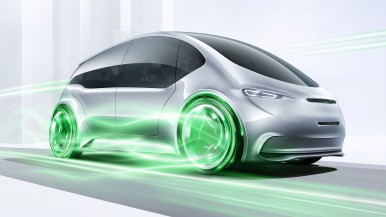
Stuttgart, Germany – According to a representative survey conducted in June 2020 by the market research institute Innofact on behalf of Bosch, no powertrain types have lost any of their relevance – whether batteries or fuel cells, gasoline or diesel engines. If the 2,500 survey respondents in Germany, France, Italy, and the U.K. had to decide on a new car tomorrow, one in two would opt for a stand-alone combustion engine for their primary car and around one in three for their second car. However, when asked what would be the most prevalently used powertrain in 2030, some 68 percent of those polled see the electrical powertrain in pole position, ahead of hybrids and combustion engines. Survey participants acknowledged the potential of fuel cell-powered cars, with around one in three seeing the fuel cell as the future of mobility. “Electric mobility is on its way – and that’s good news. This year alone, Bosch is investing 500 million euros in this domain. At the same time, we’re also continuously refining the internal combustion engine – because it’s still needed,” says Dr. Stefan Hartung, member of the Robert Bosch GmbH board of management and chairman of the Mobility Solutions business sector. Electric mobility is on its way – and that’s good news. This year alone, Bosch is investing 500 million euros in this domain. At the same time, we’re also continuously refining the internal combustion engine – because it’s still needed....Dr. Stefan Hartung, member of the Robert Bosch GmbH board of management and chairman of the Mobility Solutions business sector Respondents want incentives for all powertrain types A further question reveals respondents’ open-mindedness toward powertrains of all types: when asked whether they favor incentives for vehicles equipped solely with combustion engines, in addition to the many government subsidies for electric cars and plug-in hybrids, 70 percent of the Europeans polled answered in the affirmative. The number of respondents in favor of government incentives to buy new cars with a conventional powertrain is highest in Italy at 83 percent, and lowest in the United Kingdom at 60 percent. In France, 77 percent are in favor; in Germany, 62 percent. “Incentivizing modern combustion engines can accelerate the vehicle fleet’s renewal, which would also help the environment and the climate,” Hartung says. Just under one-third of Europeans would like to see this subsidy run to at least 9,000 euros. This is the same as the maximum rebate currently offered by the German government for the purchase of an electric car. Two findings are notable: for one, 72 percent of city dwellers in the four surveyed European countries believe the combustion engine merits a subsidy. For the other, the majority (80 percent) of 18-to-29 year-olds also endorse incentives for cars with combustion engines. Even cars with conventional engines can run in a climate-neutral way. The key to this is renewable synthetic fuels (RSF), which are made from renewable hydrogen and CO₂ captured from the surrounding air. On average, 57 percent of those taking part in the Bosch survey agreed that RSF should benefit from tax breaks. “There’s just no way around renewable synthetic fuels if we want to achieve our climate targets,” Hartung says. “Only with RSF can the more than one billion vehicles already on the road worldwide help contain global warming.”Can’t live without a car: respondents in Europe are unanimous In Europe, the status of the car and its importance for mobility is unlikely to change any time soon. Around 60 percent of those surveyed in Germany, France, Italy, and the U.K. are unable to imagine living without a car altogether. And a clear majority of the remaining 40 percent are only prepared to leave their car behind some of the time. The car’s approval rating in rural Europe is 77 percent. Incidentally, these findings are roughly similar among 18-to-29 year-olds, around half of whom also come out clearly in favor of a car. While 61 percent of those surveyed in Germany and 47 percent in the U.K. cited greater flexibility as the most important reason for having a car, 41 percent of French respondents indicated they need it mostly for work. In contrast, 55 percent of surveyed Italians prefer the car to other forms of mobility that they feel are less convenient. “For the foreseeable future, the car will remain the number one means of transport – and has excellent prospects of becoming even more climate-friendly,” Hartung says. Bosch’s objective is for people to be able to stay mobile in an affordable and eco-friendly way.The future of the powertrain: Bosch champions electromobility and combustion technology Bosch aims to make transportation as resource-friendly as possible, and is pursuing the vision of CO₂-neutral and virtually emissions-free mobility in several ways. In its approach to future powertrain technology, the supplier of technology and services is keeping an open mind. On the one hand, Bosch aims to become the market leader in electromobility with battery and fuel cell-powered vehicles. Electric vehicles are climate-neutral if the charging power and hydrogen are sourced from renewables. On the other hand, Bosch is continuing to refine combustion engines to contain global warming and protect the environment to the greatest extent possible. If they run on RSF, gasoline and diesel engines can also be climate-neutral on the road. Bosch expects around one-third of all newly registered vehicles worldwide to be purely electric by 2030. Two-thirds of all new vehicles will still be powered by a combustion engine, many of them as hybrids.

Bosch and CATL collaborate on battery cells

05.09.2019

Press release

Business/economy

Bosch and CATL collaborate on battery cells

Stuttgart, Germany: Bosch and Contemporary Amperex Technology Co. Limited (CATL) have concluded a long-term strategic cooperation agreement. The partners are going to jointly specify high-performance battery cells. CATL will then design, develop, and manufacture these cells in accordance with Bosch requirements. The cells are to be used in the 48-volt battery developed by Bosch. This battery is the core element of 48-volt hybrid powertrain systems, whose efficiency is making them globally ever more important. In joining this alliance, the supplier of technology and services is also securing its long-term sourcing for battery cells. “We have to understand battery cells, but we do not have to make them ourselves,” says Dr. Stefan Hartung, member of the board of management and chairman of the Mobility Solutions business sector. “With CATL, we have brought an established cell specialist for lithium-ion batteries on board as a partner. In combination with our systems know-how and expertise in battery management, we will extend our strong position in the 48-volt battery market.” CATL, one of the world's leading experts of lithium-ion battery is currently building a battery factory in Erfurt, Germany. For Bosch, this alliance is another step on the path to market leadership in electromobility. Numerous global automakers already use Bosch’s 48-volt battery. This 48-volt hybridization is sure to be the minimum standard in tomorrow’s automotive market....Dr. Stefan Hartung, member of the board of management and chairman of the Mobility Solutions business sector 48-volt system destined to be the minimum standard in tomorrow’s automotive market Bosch’s portfolio for 48-volt systems extends beyond the 48-volt battery to encompass other system components such as DC/DC converters and electrical machines. With this technology, Bosch aims to gear up all classes of vehicles for future emissions requirements and offer affordable hybridization. Its 48-volt electrification augments the combustion engine with an electric motor. This motor is powered by the 48-volt battery, which in turn is charged by recovering energy expended during braking. This can cut fuel consumption by as much as 15 percent. If we want to improve efficiency, we can no longer afford to let brake energy dissipate unused,” Hartung says. “This 48-volt hybridization is sure to be the minimum standard in tomorrow’s automotive market.” The market for 48-volt solutions is growing worldwide. Bosch expects that by 2025, nearly 20 percent of new cars sold annually around the globe will have a 48-volt system and matching battery on board. Demand for 48-volt systems is rising, especially in Europe and China. Cost-effective and easy to integrate – the Bosch 48-volt battery The Bosch plant in Wuxi, China, started making the first generation of the 48-volt battery late last year. The USP of the latest version of this product is that the battery is compact and cooled passively. This means automakers can simply integrate it into their vehicle models, and do not require any additional cooling units. In addition, they can dispense with the long and costly effort of proprietary engineering work. “We are confident that our 48-volt battery will achieve a leading position in the market, and make the 48-volt hybrid affordable for the mass market,” Hartung says. Expertise across the e-mobility ecosystem Bosch is more broadly positioned in e-mobility than any other company. It aims to take the lead in the mass e-mobility market that will emerge in 2020 and beyond. The company is planning to increase its sales in this area more than tenfold by 2025, to five billion euros. Bosch electrical powertrain components already feature in more than a million vehicles around the world. The supplier of technology and services has carried out powertrain projects for 50 electric-vehicle platforms. It is the market leader in China, the world’s biggest and fastest-growing electric-vehicle market. Bosch technology can be found in practically every class of vehicle, from electric baby buggies, bicycles, and scooters to passenger cars and commercial vehicles. The company’s expertise thus extends across the entire e-mobility ecosystem. Bosch is partnering with various automakers to give e-vehicle drivers app-based access to some 40,000 charge spots in eight European countries.

From the wind tunnel to the sidewalk: Bosch is bringing smart electrical drives  ...

02.09.2019

Press release

Connected mobility

From the wind tunnel to the sidewalk: Bosch is bringing smart electrical drives ...

Bühl, Germany – Measuring a seven on the Beaufort scale, the air in the wind tunnel blasts the stroller at a speed of 60 kph. Its hood may be flapping wildly, but the stroller doesn’t budge. This isn’t because its parking brake is on, or because someone is holding it still. It’s all thanks to the new Bosch e-stroller system. This is much more than an electrical drive – it is an assistance system for strollers with a comprehensive range of comfort and safety features: in addition to offering push support and an automatic braking function, this includes connectivity via a smartphone app, an alarm function, and a variety of high-tech sensors. This new system marks Bosch’s entry into a new market. “The e-stroller system incorporates know-how from across the company. We’ve applied the same rigorous technology and quality standards here as we do in the automotive sector, including wind tunnel tests,” says Dr. Stefan Hartung, member of the board of management and chairman of the Mobility Solutions business sector. The variable Bosch system is equally suitable for single, twin, or sibling strollers. It will have its market launch in early 2020 with the Swedish stroller manufacturer Emmaljunga. Collaboration with additional manufacturers is planned. The e-stroller system incorporates know-how from across the company....Dr. Stefan Hartung, member of the board of management and chairman of the Mobility Solutions business sector Two electric motors help with acceleration and braking Demand for electric assistance for strollers is growing. Comfort and safety are the key criteria for nine out of ten parents when buying a stroller. This is the result of a representative Bosch survey of women and men with a child aged 0 to 4 years old as well as expectant parents. “Bosch wants its mobility solutions to offer help even before a child can walk, bringing intelligent mobility to all areas of life,” Hartung says. The system’s drive unit comprises two low-noise electric motors on the rear axle along with a Bluetooth module and a smart sensor system. The sensors, which are also employed in smartphones, measure things like the stroller’s speed and acceleration while assessing the road surface it is moving over. Using algorithms, they can calculate in fractions of a second what mom or dad wants to do next. On an uphill path, the motors automatically help push the stroller, as they do on an e-bike. When on a downhill slope, they step in to help brake. If the parents let go of the stroller, the motor brake prevents it from rolling away unchecked, and the electromechanical lock engages the parking brake. In line with Bosch’s typical approach of combining the highest technical standards with user-friendly operation, the e-stroller system has no need for additional switches or buttons on the push handle. The electric assistance not only increases comfort and safety, but also improves the stroller’s ergonomics. Bosch user testing showed that the e-stroller system can greatly improve parents’ posture, since it takes a lot less effort to push the stroller uphill, over uneven terrain, or into a headwind. Meanwhile, the self-braking electrical drive noticeably eases back strain when heading downhill. The system’s steering support also brings clear benefits when pushing with just one hand. Among other things, this makes bends easier to manage. What’s more, the drive system helps keep the stroller on course when on a laterally sloping path. After all, parents often push a stroller with one hand, for instance when holding their child’s older sibling with the other hand. Smartphone connectivity via Bluetooth Users can choose from three levels of electric assistance using the associated smartphone app (available for Android and iOS). The app communicates with the e-stroller system via Bluetooth. It also displays the charge level of the detachable battery and warns users in good time that power is running out. The stroller’s handy, lightweight 18-volt lithium-ion battery is housed in a lockable compartment. This is the same battery used in standard Bosch power tools such as cordless screwdrivers, which means that the stroller battery can be used to power other devices and vice-versa, whenever a spare battery is needed. With a charging time of some two and a half hours, the fully charged battery offers a range of up to 15 kilometers, depending on the level of assistance selected and the weight of the stroller. Parents can also charge their smartphone using the system’s USB port. The app can be used to activate the alarm function, too, for instance when parents leave the stroller parked outside a café. Provided a Bluetooth connection has been established with a parent’s smartphone, a warning will appear if anyone tries to push the stroller away. In addition, an alarm will sound from the stroller’s integrated loudspeaker and the parking brake will automatically reengage. Should the battery run out on the move after all, the stroller can still be used like a normal stroller – with no perceptible motor resistance.

Commercial vehicle innovation enabler: Bosch brings advanced solutions to the ne ...

17.04.2019

Press release

Connected mobility

Commercial vehicle innovation enabler: Bosch brings advanced solutions to the ne ...

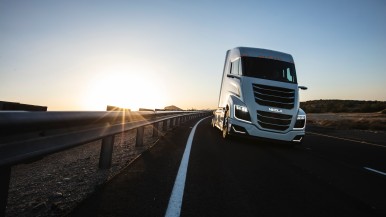
Scottsdale, Arizona – Nikola Motor Company showcased its hydrogen-electric powered semi-truck, the Nikola Two, live in action for the first time to the general public at its Nikola World event. Bosch technology and expertise helped Nikola to realize the fully functional Nikola Two hydrogen-electric truck with industry-ready heavy-duty truck components and systems. The technology and system approach is adaptable for use in Nikola’s full line of vehicles, including the Nikola One Sleeper Cab and the Nikola Tre, a hydrogen-electric truck for European markets. Bosch has been our innovation partner to help make our vision a reality....Trevor Milton, Nikola founder and CEO The Nikola trucks feature innovations in automation, connectivity and electrification enabled with Bosch’s assistance. The supplier of technology and services offers solutions for commercial vehicles to improve efficiency and safety in logistics. To enable the distinctive Nikola approach, engineering teams from Bosch locations in the United States and Germany contributed more than 220,000 hours into the development of the Nikola trucks. “This has been a two-and-a-half year cooperation targeted at implementing advanced technology into a totally new and unique approach to trucking with the highest levels of engineering excellence,” said Jason Roycht, vice president and regional business unit leader, Commercial Vehicles & Off-Road for Bosch in North America. “We’ve learned from each other and together pushed ourselves to achieve what seemed to everyone else to be impossible. The Nikola Two is not just a simple evolution of today’s heavy duty truck. It’s a revolution in both sophisticated control and design.” “Bosch has been our innovation partner to help make our vision a reality,” said Trevor Milton, founder and CEO of Nikola Motor Company. “We look for partners who provide us expertise and world-class solutions, but also ones that are willing to dream alongside us.” This has been a two-and-a-half year cooperation targeted at implementing advanced technology into a totally new and unique approach to trucking with the highest levels of engineering excellence....Jason Roycht, vice president and regional business unit leader, Commercial Vehicles & Off-Road for Bosch in North America The brain of the future – engineered by Nikola and Bosch The Nikola truck is more than just a fuel cell vehicle; it’s a rolling super computer. Bosch systems, software and engineering expertise have helped Nikola to build the brains of its Nikola Two super truck. One of the key elements of Nikola’s advanced system is the Bosch Vehicle Control Unit (VCU) , which provides higher computing power for advanced functions while reducing the number of standalone units. The VCU enables future innovations by providing a scalable platform for the highly complex electric/electronic (E/E) architecture needed to support the advanced features of the Nikola truck. The Nikola family of trucks will be connected with an advanced and secure operating system that provides real-time, over-the-air updates and monitoring. The commercial vehicle powertrain reimagined The essence of the Nikola truck lineup is a new commercial vehicle powertrain achieved thanks to a development partnership between Nikola and Bosch. The two organizations have reimagined the powertrain – and the vehicle chassis integrated together with it – from the ground up. The fuel-cell system designed to deliver benchmark vehicle range was custom-designed together by Nikola and Bosch. The two organizations also worked in tandem to develop the first true dual-motor commercial-vehicle eAxle for a long-haul truck. The eAxle features Bosch rotors and stators, and Bosch has also contributed functional safety efforts throughout the truck. Mirrorless and keyless - Bosch technology pervades the Nikola trucks Bosch technology is also prevalent in other areas of the Nikola trucks. Nikola’s vehicles will be missing one standard feature of previous class-8 trucks: side mirrors. In the place of the conventional main and wide-angle mirrors is a camera system, known as Mirror Cam System , which offers drivers a digital side and rear view from the truck cab. Two cameras, fitted left and right in place of traditional mirrors, feed real-time images to high-resolution displays mounted inside the cab. The system, developed by Bosch and Mekra Lang, adjusts the monitor display to match the driving situation digitally. It captures both rear-view fields of vision of a CV mirror with just one camera lens on each side of the vehicle cab. In addition to increasing safety, compact digital cameras instead of mirrors offer aerodynamic advantages as the cameras are considerably smaller than mirrors and therefore reduce drag. Fleet operators will be able to digitally manage vehicle keys for the Nikola trucks in their fleet thanks to the Perfectly Keyless system from Bosch. Freight and commercial vehicle rental companies can use a smartphone app to give their drivers access to specific fleet vehicles and to flexibly manage who has access and when. Sensors on the Nikola vehicles will connect with an app on a driver’s smartphone so that when the driver approaches the vehicle, Perfectly Keyless recognizes the smartphone, identifies the unique security key assigned to the driver’s phone, and unlocks the door. As soon as the driver moves away from the truck again, the vehicle is automatically securely locked. Nikola’s trucks are equipped for driver assistance and future automation thanks in part to the Bosch Servotwi n electrohydraulic steering system. The steering system will enable driver assistance systems that actively support the driver to enhance driving comfort and improve safety. On the Nikola vehicles, the Servotwin will help to enable features such as lane-keeping assistance, side-wind compensation and traffic jam assist. The system also provides a key building block for the rollout of automated features in the future.

EICMA 2018: Bosch’s two-wheelers and powersports innovations are designed to acc ...

06.11.2018

Press release

Connected mobility

EICMA 2018: Bosch’s two-wheelers and powersports innovations are designed to acc ...

Milan, Italy – Whether smart assistance systems, connectivity solutions, or new energy for the powertrain: Bosch has the right solutions for the motorcycles and powersport vehicles of the future. For Bosch, all innovative solutions and technologies are another steppingstone toward making the vision of stress-free, accident-free, and nearly emission-free mobility a reality.Highlights at the Bosch booth (Booth G55, Hall 13): Advanced rider assistance systems: According to Bosch accident research estimates, radar-based assistance systems could prevent one in seven motorcycle accidents. These electronic assistants are always vigilant and, in emergencies, they respond more quickly than people can. The technology underpinning these systems is a combination of radar sensor, brake system, engine management, and HMI (Human Machine Interface). Giving motorcycles radar as a sensory organ enables these new motorcycle assistance and safety functions while providing an accurate picture of the vehicle’s surroundings. Functionalities of the Bosch advanced rider assistance systems: ACC (adaptive cruise control) Riding in heavy traffic and maintaining the correct distance to the vehicle in front takes a great deal of concentration and is strenuous over longer periods. ACC adjusts the vehicle speed to the flow of traffic and maintains the necessary safe following distance. This can effectively prevent rear-end collisions caused by driving too close to the vehicle in front. And not only does ACC offer riders more convenience, it also allows them to concentrate more on the road, particularly in high-density traffic. Forward collision warning In road traffic, even the briefest lapse in concentration can have serious consequences. Bosch has developed a collision warning system for motorcycles to reduce the risk of a rear-end collision or to mitigate its consequences. The system is active as soon as the vehicle starts and it supports the rider in all relevant speed ranges. If the system detects that another vehicle is dangerously close and the rider does not react to the situation, it warns the rider by way of an acoustic or optical signal. Blind-spot detection This system keeps a lookout in all directions to help motorcyclists change lanes safely. A radar sensor serves as the blind-spot recognition system’s electronic eye, registering objects in hard-to-see areas. Whenever there is a vehicle in the rider’s blind spot, the technology warns them by way of an optical signal, for example in the rear-view mirror. ABS (antilock braking system) evolution: from eBikes to powersports: Since 1984, Bosch has continuously developed motorcycle ABS technology, and produced the smaller, lighter design with enhanced performance to increase riding safety for all riders of motorcycles in every region. Worldwide, an increasing number of countries, including the European Union, Japan, India, Taiwan, and Brazil are mandating motorcycle ABS or applying it in the near future. Nowadays, this safety system is not only for motorcycles but also for a wider range of vehicles such as powersports vehicles and eBikes. Bosch has launched the market’s first series-produced anti-lock braking system for eBikes. Due to this new development it will be possible to prevent the pedelec’s front wheel from locking up and also to limit the lifting of the rear wheel – thanks to an intelligent and innovative system. This reduces the braking distance as well as the risk of crashing and rollovers. According to accident researchers, almost a quarter of pedelec accidents could be avoided through the use of ABS. Moreover, the number of accidents with severe injuries could be reduced further. By the end of 2018, ABS for pedelecs will become commercially available on selected models. For powersports vehicles, in cooperation with BRP, Bosch has realized the world’s first application of ABS on an all-terrain vehicle (ATV). The BRP Outlander and Renegade models brought out in 2018 and 2019 are equipped with the Bosch ABS system. Solutions for electromobility: Mobility solutions for the urban environment must be flexible, affordable, and most importantly highly efficient. With the powertrain solutions from Bosch, bicycles, scooters, motorbikes, and three-wheelers can be electrified. Besides end customer vehicles, this can also be applied to commercial applications. Two commercial solutions are shown on this year’s EICMA: the e-cargo bike up to 25 km/h and the e-cargo tricycle up to 45 km/h. Electromobility solutions for Bosch cover more than just powertrain systems. As a part of Bosch’s integrated eScooter system, an app integrates vehicle information, connected functions, and social networking in two interfaces: range and compass modes. Riders can easily manage trips by this friendly and minimalistic design focusing on the users’ needs for the specific situation. Additional topics at the Bosch booth: New MSC Motorcycle Stability Control enhanced system: The new enhanced motorcycle stability control system is available as a semi or full integral system. The box volume was reduced by 35 % and weight by 20 % compared to the previous generation 9 unit. This reduces the installation effort for the motorcycle manufacturer and enables the installation on smaller motorcycles. The unit utilizes state of the art passenger car technologies and was designed to accommodate future functionalities such as advanced rider assistance systems. Its global premiere will be at the Bosch booth. Engine management systems: Electronic engine management systems are the core of efficient and economical technology, which allows two-wheelers to fulfill future emissions regulations such as Euro 5 and BS 6 (Bharat stage 6) including OBD l/ll. In combination with highly developed sensor technology, engine management systems have achieved considerable increases in efficiency compared to conventional carburetor systems and can reduce CO₂ emissions by up to 16 % (depending on the situation). The control unit is the main component of the new engine management system. This small computer analyzes all the data from the powertrain sensors and adjusts among other things, ignition timing and fuel injection quantity. To address the future emission regulations like Bharat Stage 6 in India, Bosch has also developed a new mini heated Lambda sensor which is specially designed for two-wheeler applications. Lambda measures the oxygen content in the exhaust gas and helps in optimizing the air/fuel-ratio.The M12 thread and the optimum protection tube design allows compact installation, with optimized heater power for two-wheelers. The planned life time is about 100,000 km. The new mini heated lambda sensor will go into series production in 2019. Integrated connectivity cluster with mySPIN: Advanced rider assistance systems require a user focused HMI (human machine interface) to visualize the functionalities for motorcycle riders. Bosch’s integrated connectivity cluster combines traditional instrumentation with a wide range of infotainment features in a single device. The integrated connectivity cluster connects to the rider’s smartphone via Bluetooth, and through intuitive controls on the handlebar, the riders are effortlessly able to make and receive phone calls, access their contact lists and listen to music.The mySPIN – smartphone integration solution enables further functionalities. It enables riders to bring riders’ smartphone content to their motorcycle, scooter, or powersports vehicle. This provides all vehicle manufacturers with an open platform featuring an extensive range of options. mySPIN also has the potential to leverage the expertise of key third party apps, for its usage simplicity and its capacity to minimize distractions, thus increasing riding comfort and convenience.

EICMA 2018: Bosch’s Two-Wheeler and Powersports business continues to gain speed

06.11.2018

Press release

Connected mobility

EICMA 2018: Bosch’s Two-Wheeler and Powersports business continues to gain speed

Milan, Italy – Bosch’s Two-Wheeler & Powersports business unit continues to gain momentum in the global motorcycle and powersports market. Bosch’s motorcycle technology sales for 2018 are forecasted to rise more than 20 percent compared to 2017. According to Bosch’s estimate, the business unit´s sales will continue to grow twice as fast as the market, heading towards the target of one billion euros of sales in 2020, generated by assistance, powertrain, electrification, and connectivity systems. Major growth is forecasted in India where Bosch supplies market-specific motorcycle powertrain and safety solutions to comply with the ABS and Bharat Stage 6 emission regulation as well as local market trends. Bosch continues to invest in a constantly growing market. The global demand for two-wheelers is forecasted to grow annually by more than four percent from 2017 to 2022, reaching 122 million bikes by 2022 (source: Freedonia). In 2018, Bosch has set up a dedicated Two-Wheeler & Powersports team in ASEAN, one of the Top 3 motorcycle markets in the world besides China and India, to address the local market needs. “Bosch continues to invest in dedicated motorcycle and powersports technologies, aiming at becoming the market leader,” says Dr. Dirk Hoheisel, Executive Board Member at Robert Bosch GmbH. Bosch continues to invest in dedicated motorcycle and powersports technologies, aiming at becoming the market leader....Dr. Dirk Hoheisel, Executive Board Member at Robert Bosch GmbH Bosch’s vision is to make the mobility of the future accident-free, stress-free, and nearly emissions-free – and this goes for motorcycles as well. Safety is one of the most pressing challenges in the motorcycle market. The fact is, motorcyclists are still the most vulnerable road users. Their risk of dying in an accident is up to 20 times higher than for car drivers. Bosch is tackling this with a comprehensive three-step safety concept towards accident-free mobility. Firstly, by keeping the bike stable in braking situations and acceleration; secondly, by realizing predictive safety and comfort functions with innovative surround-sensing; and thirdly, by connecting the bike with its environment. Comprehensive safety concept: three steps towards accident-free mobility Bosch has made motorcycle riding safer with assistance systems such as ABS and MSC. According to Bosch accident research, around one-third of powered two-wheeler accidents with injuries could be avoided with MSC. Now Bosch goes one step further by building a virtual safety shield for motorcycles. A new safety package for motorcycles, comprising adaptive cruise control, forward collision warning, and blind-spot detection is being shown at EICMA to a wide audience for the first time. These electronic assistants are always vigilant and, in emergencies, they respond more quickly than people can. According to Bosch accident research estimates, these radar-based assistance systems could prevent one in seven motorcycle accidents. The technology underpinning these systems is a combination of radar sensor, brake system, engine management, and human machine interface. Giving motorcycles radar as a sensory organ enables these new motorcycle assistance and safety functions while providing an accurate picture of the vehicle’s surroundings. As a result, these assistance functions not only increase safety, they also enhance enjoyment and convenience by making life easier for riders. “The motorcycle of the future must be able to see and feel,” says Geoff Liersch, Head of the Bosch Two-Wheeler and Powersports business unit. More safety, more enjoyment Assistance systems alone are not enough to make roads safer. Bosch’s vision for the future is to prevent accidents happening in the first place. According to estimates by Bosch accident research, motorcycle-to-car communication could prevent nearly one-third of motorcycle accidents. Up to ten times a second, vehicles within a radius of several hundred meters exchange information about vehicle types, speed, position, and direction of travel. Long before drivers or their vehicles’ sensors catch sight of a motorcycle, this technology informs them that a motorcycle is approaching, allowing them to adopt a more defensive driving strategy. If a crash is unavoidable, the eCall system will trigger the rescue chain to support the rider as soon as possible. “We will continue to develop new technologies to make motorcycle riding safer without reducing enjoyment,” says Geoff Liersch, Head of Two-Wheeler & Powersports. The evolution of electromobility for city riding Another major challenge for the motorcycle market is urbanization. Today, 55 percent of the world’s population lives in urban areas, a proportion that is expected to increase up to 70 percent by 2050 (source: UN). However, as populations grow, so too does the urban landscape with congested roads, higher noise levels, and poorer air quality. To cope with these challenges worldwide, Bosch offers electromobility solutions for nearly all vehicle segments – from eBike systems up to solutions for commercial vehicles. For the electrification of light vehicles on four, three, or two-wheels, for all performance classes between 0.25 and 20 kW, Bosch provides not only highly efficient mobility solutions for the urban environment but also a unique riding experience for the individual riders. As a part of Bosch’s integrated eScooter system, an app integrates vehicle information, connected functions, and social networking. Riders can easily manage trips with the app focusing on the riders’ needs for the specific situation. In addition, Bosch is not only electrifying personal vehicles, but also vehicles used in commercial applications. Electromobility is playing an increasingly important role in the fast and flexible delivery of goods within cities. The Bosch 48 V central drive system is also used to power the Ligier cargo three-wheeler, which delivery services use to carry letters and parcels the last mile to their destinations in urban areas.


Bosch enters the car-sharing business with electric vans

09.10.2018

Press release

Connected mobility

Bosch enters the car-sharing business with electric vans

Stuttgart, Germany – Quickly renting a car by app is something that nearly two million people already do in Germany alone, and the number of car-sharing users is on the rise. In this growth market, Bosch is launching a new sharing service for electric vans. Together with toom, a subsidiary of the German retail group Rewe, the company will be testing the service at hardware stores, which is precisely where there is a demand for vans with sufficient space to carry heavy and bulky purchases. “Bosch is growing with digital services for urban mobility. A service for sharing electric vans has huge potential for growth,” says Dr. Rainer Kallenbach, president of the Connected Mobility Solutions division at Bosch. With more than 330 stores, toom is one of the top providers in the German home-improvement industry. From December 2018, it will only take a few clicks for customers at five selected stores to directly book an electric van on site, and quickly and simply take stone slabs, balcony plants, and paint pots home with them. “As a company committed to sustainability, we are always eager to constantly improve our contribution to environmental protection. We’re therefore very pleased that we can now offer our customers an eco-friendly way of taking their purchases home,” says Wolfgang Vogt, toom’s managing director for finance and personnel. Bosch is already well versed in the sharing services business, as demonstrated by Coup, its rental service for electric scooters. Since its launch in 2016, Coup has constantly expanded, and now has a fleet of 3,500 scooters in Berlin, Paris, and Madrid. Bosch is growing with digital services for urban mobility. A service for sharing electric vans has huge potential for growth....Dr. Rainer Kallenbach, president of the Connected Mobility Solutions division at Bosch Electric fleet for hire In Germany, one in every ten shared cars now has an electric motor. In its Coup and van-sharing schemes, Bosch has opted exclusively for electrically powered vehicles. “Fully electric driving is ideal for urban mobility – whether that means downtown delivery traffic or individual mobility in major cities,” Kallenbach says. The van-sharing service will initially be offered in Germany, at hardware stores in Berlin, Frankfurt, Leipzig, Troisdorf, and Freiburg. At these stores, charge spots are already in place for the small electric vans, which are provided by StreetScooter. Bosch supplies the powertrain components for these vehicles. The company believes that shared electric vans have scope for application outside the hardware-store sector: if the new sharing service proves popular, Bosch plans to expand it to include other partners, whether these be other toom stores, furniture stores, supermarkets, or electronics stores. Say goodbye to shopping stress Car sharing has long ceased to be a niche market, as indicated by the sector’s rapid growth: by 2025, the market is projected to have as many as 36 million users worldwide (source: Frost & Sullivan). More and more users, especially in big cities, are taking advantage of app-based services to reserve a vehicle at any time, day or night, then climb right in and drive off. Large and bulky purchases rarely fit into the backpack a shopper might use when traveling through the city on a rented scooter or bike. Anyone who finds themselves needing a way to transport their hardware-store purchases can use the new service to reserve a roomy electric van, either a few hours in advance or at the last minute when making the purchase. Vans can be returned to the same station that the shopper picked them up from. The great advantage here is that users pay a flat hourly rate that includes mileage and battery recharging, an arrangement that is often less expensive than the classic car rental. In addition, the entire process from rental to return is completely digital – with no tedious paperwork.

Diesel at Bosch: your questions answered

30.07.2018

Press release

Powertrain systems

Diesel at Bosch: your questions answered

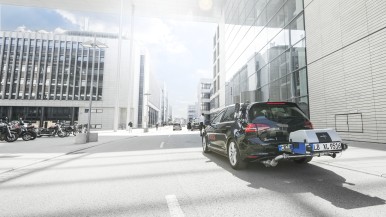
What is the benefit of the new Bosch diesel technology? Through continuing research and improvements in diesel technology and applications, Bosch engineers have been able to achieve even lower emissions of nitrogen oxides (NOx) across a wide range of environmental and driving conditions. In EU6-RDE on-road testing, vehicles equipped with the new Bosch diesel technology achieved average NOx emissions as low as 13 mg per kilometer. Although Bosch’s engineers achieved these results by substantially modifying existing technologies, the technologies are now available and can be applied in new vehicles without incurring high additional costs. Is there any comparison for the number 13 mg/km? Since 2017, the European EU6 RDE standard has required that new passenger car models be tested according to a mix of urban, extra-urban, and freeway cycles and emit an average of no more than 168 milligrams of NOx per kilometer. As of 2020, this limit will be cut to 120 milligrams. As of today, the demonstration vehicles equipped with Bosch’s new diesel technology have demonstrated that they can achieve average NOx emissions of as low as 13 mg/km over the course of a drive that fits the EU6-RDE testing requirements. What is meant by “a wide range of environmental conditions”? This includes extremes of driving styles (highly dynamic as well as very slow), both high and low ambient temperatures, in freeway as well as congested city driving, etc. What distinguishes the new diesel technology? The technological solution developed by Bosch involves a highly responsive airflow management system for the engine, including the use of a further optimized turbocharger and a combination of high- and low-pressure exhaust-gas recirculation, as well as an active SCR on DPF catalyst and passive downstream SCR catalyst. In addition, Bosch has also developed a sophisticated thermal management system for the diesel engine to help keep exhaust gases and equipment in a temperature range that helps optimize emissions reduction over a wide range of driving and environmental conditions. When will the technology be ready for production? Bosch has achieved these results in demonstration vehicles by substantially modifying engine and emissions configurations and the application of technologies and components that have now become available in the market. Bosch’s customers can begin to work with the system knowledge Bosch has developed and incorporate into production projects for future model years. Why is urban driving more demanding than extra-urban or freeway driving? To ensure optimum NOx conversion, the exhaust gases and control systems must be hotter than 200 degrees Celsius. This temperature can be a challenge to maintain in urban driving, when exhaust gases can cool due to gridlock or stop-and-go traffic. Bosch’s new thermal management system addresses this issue by actively regulating the exhaust gas temperature in a wide range of operating conditions. Does the temperature regulation require an auxiliary 48-volt heater installed in the exhaust-gas system or additional components of a similar kind? Bosch’s new diesel system is based on components already available in the market and does not require an additional 48-volt on-board electrical system. Will the new Bosch technology make the diesel engine significantly more expensive? Bosch does not believe that the technology will add significantly to the costs of producing diesel vehicles. Will the diesel engine lose its comparative advantage in fuel economy and climate-friendliness as a result of the new technology? No, our engineers were able to achieve their further reductions of NOx emissions while retaining the diesel’s comparative advantage in terms of CO₂ emissions. When will the diesel technology be available for customers to buy? Bosch is not in a position to say when vehicles will be available. This will depend on decisions by the OEMs. You call it a breakthrough, but then say the parts are close to going into production. Isn´t that a contradiction? Bosch has taken advantage of the fruits of ongoing research and development as well as new components now reaching the market, such that its customers can begin applying what Bosch has learned in projects for future model year production vehicles. The progress made is largely due to complex modifications of the entire system. If Bosch is mainly making use of existing hardware, why are we only seeing this technology now, instead of some years ago? Some of the hardware available now was not available years ago, and the engine management and temperature management Bosch has developed required years of systems engineering and learning that was not available years ago. In addition, Bosch engineers developed enhanced testing and measurement strategies that enabled them to measure vehicles’ emissions under more dynamic conditions and with greater precision. As the test and measurement systems improved, Bosch engineers could target their optimization efforts more precisely, which accelerated the pace of technological development. What does this technology mean for urban air quality? To find this out, Bosch asked an independent engineering firm to carry out an analysis. It looked at the air quality in the vicinity of the Neckartor monitoring station in Stuttgart, which is notorious for high NOx values. The results of the data analysis are clear: If all diesel vehicles were equipped with the latest Bosch exhaust technology, their share of local pollution would be negligible, and they would help maintain ambient air quality well within the limits set by the EU, even at Neckartor. Can the new Bosch diesel technology be retrofitted? Given the nature of the systems modifications Bosch made in its demonstration vehicles, it would not be reasonably feasible or practical to retrofit existing vehicles. Hasn’t the technology come too late to prevent driving bans? Policy makers have a variety of measures other than driving bans to help maintain ambient air quality within EU limits. Normal fleet renewal alone will help reduce the contribution of diesel passenger cars to ambient NOx levels, and if in the future all diesel vehicles employed the further advances Bosch has developed, diesel passenger cars will add only negligible amounts of NOx such that diesel driving bans will not be needed to meet ambient limits. Is this complex technology also affordable in compact vehicles? In principle, Bosch sees the technical feasibility to adapt the technology to various engine types. How will AdBlue consumption be affected? In the trial vehicle, AdBlue consumption is roughly 1.5 liters per 1,000 kilometers, even with sporty driving. How much engineering effort went into the new diesel technology? Development of the new diesel technology required an enormous amount of effort over the course of several years.