Search & find:
Media, press releases, events for your editorial coverage

New Bosch subsidiary develops solution for identifying fake products

16.10.2025

Press release

Connected mobility

New Bosch subsidiary develops solution for identifying fake products

Stuttgart, Germany – In 2023 alone, 152 million counterfeit goods with an estimated value of 3.4 billion euros were seized in the European Union – an increase of 77 percent compared to the previous year. Not only does this represent an economic loss for brand manufacturers, it also poses a risk for consumers. If toys, cosmetics, food, or even medicines that appear to be original products are in fact inferior goods, customers can suffer health, safety, or financial consequences.* This is precisely where Origify, a software solution from the newly established Bosch Secure Authentication GmbH, comes in. Together with Koenig & Bauer Vision & Protection GmbH, a leading provider of inspection and security technologies in the printing industry, the new Bosch subsidiary offers greatly improved brand protection and traceability for sensitive print products.“Thanks to this cooperation, we can make even better use of the opportunities in our target markets,” says Oliver Steinbis, CTO at Bosch Secure Authentication GmbH. “According to the consulting firm Smithers, the packaging market is set to grow to over 1.4 trillion U.S. dollars by 2028, while the security printing industry is set to grow to more than 35 billion U.S. dollars.” This size underlines the market potential for Bosch Secure Authentication and Koenig & Bauer Vision & Protection, which together aim to set new standards in product security with their solution. Authentication via unique surface structures The technical basis for unique identification is Bosch’s Origify solution, which records a product’s individual microstructures. To this end, an image is recorded during the production of each individual object, then converted into a digital identity, and finally stored securely in the cloud. All that’s required for verification is to take another photo using a smartphone app and compare it with the reference data stored in the database. This means a product’s authenticity can be clearly verified at any time – with no need for additional security features or imprints. Companies can use the solution to detect fake goods in-house – for example, to prevent counterfeit returns from entering the goods cycle. At the same time, the solution can be made available to end users: if a company gives the go-ahead, customers can verify the authenticity of its products themselves using a smartphone app. A version of Origify specially developed for the printing industry is now available under the name “Ovjera.” Designed for high volumes and manufacturing speeds, this software can be integrated directly into printing machines without slowing down the production flow. Here too, a forgery-proof digital identity is recorded for each printed product to reliably ensure traceability. About Bosch Secure Authentication GmbH Bosch Secure Authentication GmbH, a wholly owned subsidiary of Robert Bosch GmbH, was founded in 2025 and is part of the Bosch Group. Bosch has been working intensively on authentication and traceability since 2017 and has already tested the technology on its own production lines. Projects to date were centered on registering and verifying automotive parts during production using Origify in a process that both serves legal requirements and maintains internal quality standards. Building on this, the company is now focusing on the development and marketing of solutions for the printing sector, the luxury goods market, and manufacturing industry. Video: Banknotes *European Commission – Directorate-General for Taxation and Customs Union & EUIPO. (November 13, 2024). EU seizes record 152 million fake items worth €3.4 billion in 2023. European Commission. Available at: https://taxation-customs.ec.europa.eu/news/eu-seizes-record-152-million-fake-items-worth-34-billion-eur-2023-2024-11-13_en (accessed on: September 23, 2025)

Logistics and transportation industry: Bosch launches service platform in Europe ...

06.12.2023

Press release

Connected mobility

Logistics and transportation industry: Bosch launches service platform in Europe ...

Stuttgart, Germany – Bosch’s digital logistics platform L.OS, targeted for simplifying IT processes in the transport and logistics industry, is celebrating a successful market launch. In Europe, India, and the U.S., the Bosch offering has already won 50 customers. 20 logistics companies each from Germany and India and ten from the U.S. are among the first L.OS customers. In addition, the integration of more than 50 service providers into the digital marketplace is already underway. Last year, Bosch announced a s trategic collaboration with the U.S. cloud provider Amazon Web Services (AWS) to digitalize logistics . The transportation and logistics industry is the backbone of the global economy. Bosch sees great market opportunities for its logistics services driving efficiency improvement. The technology company aims to generate global sales of some 500 million euros with logistics services by 2030, and has set up a separate unit with more than 400 associates for its digital platforms business. With L.OS, Bosch has ushered in the digital age for freight carriers, fleet owners and logistics service providers. Our logistics platform offers a complete ecosystem and software environment for using and combining services from different providers. For Bosch, the transportation and logistics industry is strategically important...says Dr. Markus Heyn, member of the Bosch board of management and chairman of the Mobility business sector. Open platform for providers of logistics solutions Using the digital L.OS platform, logistics and transportation companies across the globe will have quick and easy access to IT services, and thus be able to operate more efficiently and sustainably. The distinctive feature of L.OS is that it is open to all providers of logistics solutions and facilitates the smooth interplay of disparate services and data. For freight carriers and freight companies, this presents a chance to reap far greater benefit from the opportunities of digitalization for themselves in accordance with their individual needs or requirements in the respective country without having to set up resource- and cost-intensive IT projects of their own. In India, for example, Bosch’s proprietary “TrakZeus” positioning solution for efficient fleet and transportation management as well as route and parking planning has been available on L.OS from the start. The “Digital CN” solution allows transport documents such as e-way bills to be digitized quickly and easily, so that they can be transmitted securely via cell phone. In Europe, L.OS has been launched with a first service integration enabling secure truck parking booking as an extra feature for existing transportation management systems, while in the U.S., a dedicated transportation management system simplifies and manages operations for fleets. New Bosch operating unit to build digital platforms In July 2023, Bosch established its new, transnational “Mobility Platform and Services” operating unit to build digital platforms. More than 400 associates in Europe, India, and the U.S. are responsible for the further development and support of Bosch digital platforms. This currently includes for example “Mobility Marketplace”, a neutral digital ecommerce marketplace as well as “ParkZeus”, an integrated parking platform, and the “Logistics Operating System” L.OS. “The establishment of a dedicated unit underscores the great importance Bosch attaches to the digitalization of mobility empowered by cloud-based platforms. We want to enable companies to come together to co-create, innovate and solve complex problems of mobility through our platforms. Together, we’re driving the vision of sustainable and safe mobility enabled by digital platforms and the inclusivity it brings with it.,” says Sandeep Nelamangala, the executive director responsible for the digital platforms business at Bosch.

CES world premiere: Bosch unites infotainment and driver assistance functions on ...

05.12.2023

Press release

Connected mobility

CES world premiere: Bosch unites infotainment and driver assistance functions on ...

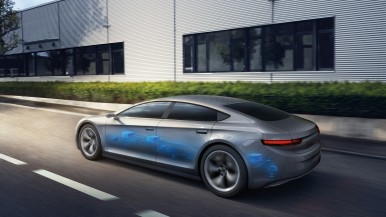
Stuttgart – The trend toward software-defined mobility goes hand in hand with a centralized vehicle and electric/electronic (E/E) architecture. While numerous electronic control units usually control different functions in the car today, in the future just a few central vehicle computers will unite multiple system functions from previously separate domains. To do this, new computers with a powerful processor, known as a system on chip (SoC), are necessary. As an innovation and technology leader, Bosch is leading the charge and, at CES® 2024 in Las Vegas, will be the world’s first automotive supplier to demonstrate the fusion of infotainment and driver assistance functions in a software-intensive central computer on a single SoC. “We want to reduce the complexity of the electronics systems in cars and make them as secure as possible at the same time. With this demonstration of our new vehicle computer platform at CES, we are taking an important step in exactly this direction. Our goal in the medium term is to bring even more automated driving functions to the road, including to the compact and midsized car segments,” says Dr. Markus Heyn, member of the board of management at Robert Bosch GmbH and chairman of Bosch Mobility.At the core of the new vehicle computer from Bosch – called the cockpit & ADAS integration platform – is a single SoC, which processes a variety of functions from the two domains of infotainment and driver assistance simultaneously. This includes, for example, automated parking and lane detection, paired with smart, personalized navigation and voice assistance. Advantages for vehicle manufacturers: less space and cabling required, meaning lower costs. Central vehicle computers are the heart of software-defined cars. In the future, they will control all the domains in modern vehicles and reduce the currently high number of individual control units...says Dr. Markus Heyn, member of the board of management at Robert Bosch GmbH and chairman of Bosch Mobility. Overall, Bosch is already doing good business with vehicle computers: in 2026, the company expects sales revenue of three billion euros just for vehicle computers for infotainment and driver assistance. Modular system principle for maximum scalability For its central vehicle computers, Bosch uses a modular system principle. Together with stand-alone software solutions such as video perception for surround sensing, vehicle manufacturers can modularly and scalably assemble their individual solutions in combination with hardware components. Software-intensive central computers play a decisive role here, since they enable manufacturers to implement driving and assistance features. Software integration is in strong demand here. Bosch brings integrative expertise and enables software components from various sources to be combined. Bosch knowledge in all vehicle domains as a competitive advantage Nearly every vehicle maker in the world is currently investing massively in software-defined vehicles. Bosch predicts that the market for automotive software will reach a volume of around 200 billion euros by 2030. In the field of vehicle computers for infotainment and driver assistance systems, the company expects a market volume of 32 billion euros in 2030. Bosch’s advantage is its extensive knowledge in all vehicle domains. This means that the company is an expert not just for software but also for hardware, and develops and manufactures key components of modern vehicles, such as for drives, brakes, steering, infotainment, and automated driving, under one roof. Bosch’s approach allows maximum flexibility Bosch pursues what is known as a multi-SoC approach. The company’s new vehicle computers are designed so that the required SoCs can come from different chip manufacturers. Therefore, depending on the customer’s wishes, Bosch can use exactly the SoC that is requested. “Our software runs on chips from different manufacturers. This allows software and hardware to be decoupled from each other,” says Heyn. Bosch is one of the few companies that can develop a centralized electronic architecture from start to finish and has mastered the interplay of automotive electronics, software, and the cloud. New features, such as for driver assistance, are simply and easily sent to the car through over-the-air updates. This provides drivers with a personalized digital driving experience – even long after purchasing the car. Presskit #BoschCES 2024 Event #BoschCES 2024

TSMC, Bosch, Infineon, and NXP Establish Joint Venture to Bring Advanced Semicon ...

08.08.2023

Press release

Connected mobility

TSMC, Bosch, Infineon, and NXP Establish Joint Venture to Bring Advanced Semicon ...

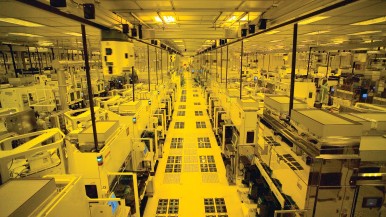
Hsinchu, Stuttgart, Munich, Eindhoven, Aug 8, 2023 – TSMC (TWSE: 2330, NYSE: TSM), Robert Bosch GmbH, Infineon Technologies AG (FSE: IFX / OTCQX: IFNNY), and NXP Semiconductors N.V. (NASDAQ: NXPI) today announced a plan to jointly invest in European Semiconductor Manufacturing Company (ESMC) GmbH, in Dresden, Germany to provide advanced semiconductor manufacturing services. ESMC marks a significant step towards construction of a 300 mm fab to support the future capacity needs of the fast-growing automotive and industrial sectors, with the final investment decision pending confirmation of the level of public funding for this project. The project is planned under the framework of the European Chips Act. The planned fab is expected to have a monthly production capacity of 40,000 300 mm (12-inch) wafers on TSMC’s 28/22 nanometer planar CMOS and 16/12 nanometer FinFET process technology, further strengthening Europe’s semiconductor manufacturing ecosystem with advanced FinFET transistor technology and creating about 2,000 direct high-tech professional jobs. ESMC aims to begin construction of the fab in the second half of 2024 with production targeted to begin by the end of 2027. The planned joint venture will be 70 percent owned by TSMC, with Bosch, Infineon, and NXP each holding 10 percent equity stake, subject to regulatory approvals and other conditions. Total investments are expected to exceed 10 billion euros consisting of equity injection, debt borrowing, and strong support from the European Union and German government. The fab will be operated by TSMC. “This investment in Dresden demonstrates TSMC’s commitment to serving our customers’ strategic capacity and technology needs, and we are excited at this opportunity to deepen our long-standing partnership with Bosch, Infineon, and NXP,” said Dr. CC Wei, Chief Executive Officer of TSMC. “Europe is a highly promising place for semiconductor innovation, particularly in the automotive and industrial fields, and we look forward to bringing those innovations to life on our advanced silicon technology with the talent in Europe.” Dr. Stefan Hartung, chairman of the Bosch board of management: “Semiconductors are not only a crucial success factor for Bosch. Their reliable availability is also of great importance for the success of the global automotive industry. Apart from continuously expanding our own manufacturing facilities, we further secure our supply chains as an automotive supplier through close cooperation with our partners. With TSMC, we are pleased to gain a global innovation leader to strengthen the semiconductor ecosystem in the direct vicinity of our semiconductor plant in Dresden.” Semiconductors are not only a crucial success factor for Bosch. Their reliable availability is also of great importance for the success of the global automotive industry. Apart from continuously expanding our own manufacturing facilities, we further secure our supply chains as an automotive supplier through close cooperation with our partners. With TSMC, we are pleased to gain a global innovation leader to strengthen the semiconductor ecosystem in the direct vicinity of our semiconductor plant in Dresden....said Dr. Stefan Hartung, chairman of the Bosch board of management “Our joint investment is an important milestone to bolster the European semiconductor ecosystem. With this, Dresden is strengthening its position as one of the world’s most important semiconductor hubs that is already home to Infineon’s largest frontend site,” said Jochen Hanebeck, CEO of Infineon Technologies. “Infineon will use the new capacity to serve the growing demand particularly of its European customers, especially in automotive and IoT. The advanced capabilities will provide a basis for developing innovative technologies, products and solutions to address the global challenges of decarbonization and digitalisation.” “NXP is very committed to strengthening innovation and supply chain resilience in Europe,” said Kurt Sievers, President and CEO of NXP Semiconductors. “We thank the European Union, Germany, and the Free State of Saxony for their recognition of the semiconductor industry’s critical role and for their true commitment to boost Europe’s chip ecosystem. The construction of this new and significant semiconductor foundry will add much needed innovation and capacity for the range of silicon required to supply the sharply increasing digitalization and electrification of the automotive and industrial sectors.”About Infineon Infineon Technologies AG is a global semiconductor leader in power systems and IoT. Infineon drives decarbonization and digitalization with its products and solutions. The company has around 56,200 employees worldwide and generated revenue of about €14.2 billion in the 2022 fiscal year (ending 30 September). Infineon is listed on the Frankfurt Stock Exchange (ticker symbol: IFX) and in the USA on the over-the-counter market OTCQX International over-the-counter market (ticker symbol: IFNNY). Further information is available at www.infineon.com . Follow us: Twitter – Facebook – LinkedIn About NXP Semiconductors NXP Semiconductors N.V. (NASDAQ: NXPI) brings together bright minds to create breakthrough technologies that make the connected world better, safer and more secure. As a world leader in secure connectivity solutions for embedded applications, NXP is pushing boundaries in the automotive, industrial & IoT, mobile, and communication infrastructure markets while delivering solutions that advance a more sustainable future. Built on more than 60 years of combined experience and expertise, the company has approximately 34,500 team members in more than 30 countries and posted revenue of $13.21 billion in 2022. Find out more at www.nxp.com . About TSMC TSMC pioneered the pure-play foundry business model when it was founded in 1987, and has been the world’s leading dedicated semiconductor foundry ever since. The Company supports a thriving ecosystem of global customers and partners with the industry’s leading process technologies and portfolio of design enablement solutions to unleash innovation for the global semiconductor industry. With global operations spanning Asia, Europe, and North America, TSMC serves as a committed corporate citizen around the world. TSMC deployed 288 distinct process technologies, and manufactured 12,698 products for 532 customers in 2022 by providing broadest range of advanced, specialty and advanced packaging technology services. The Company is headquartered in Hsinchu, Taiwan. For more information please visit https://www.tsmc.com .


Bosch opens new semiconductor test center for chips and sensors in Malaysia

01.08.2023

Press release

Connected mobility

Bosch opens new semiconductor test center for chips and sensors in Malaysia

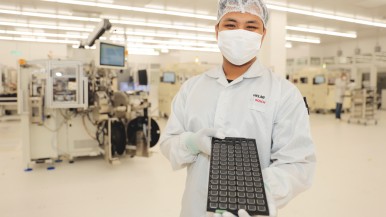
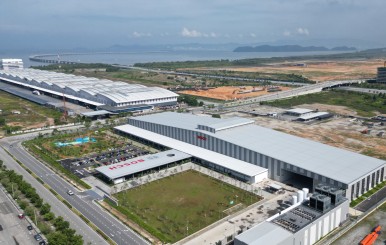
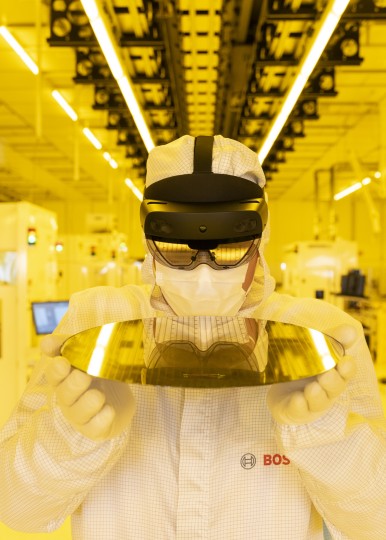
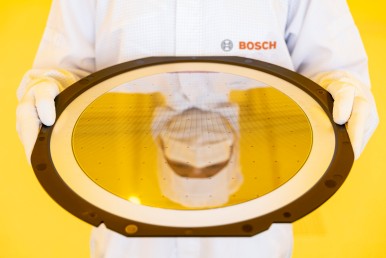
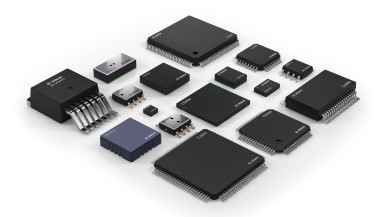
Stuttgart, Germany / Penang, Malaysia – Global demand for chips for the automotive and consumer goods industries remains high. That is why Bosch is continuing to expand its semiconductor business. The company has now opened a new test center for chips and sensors in Penang, Malaysia, at a cost of some 65 million euros; it plans to invest a further 285 million euros at the site by the middle of the next decade. “With our new semiconductor test center in Penang, we are creating additional capacity within our worldwide manufacturing network to meet the continued high demand for chips and sensors,” said Dr. Stefan Hartung, chairman of the Bosch board of management. “Semiconductors are a decisive success factor for all Bosch business areas, and the expansion of this business is strategically very important.” With our new semiconductor test center in Penang, we are creating additional capacity within our worldwide manufacturing network to meet the continued high demand for chips and sensors,...said Dr. Stefan Hartung, chairman of the Bosch board of management. In total, Bosch has some 100,000 square meters of land available on Penang’s mainland strip. The new test center currently covers more than 18,000 square meters and includes clean rooms, office space, and laboratories for quality assurance and manufacturing. By the middle of the next decade, up to 400 associates will be working there. With the new factory and a total of 4,200 associates, Penang is now Bosch’s biggest location in Southeast Asia. Semiconductor manufacturing can basically be divided into two sections: frontend manufacturing and backend manufacturing. For the latter, Malaysia is an important hub in the global semiconductor supply chain. The country is estimated to cover around 13 percent of global backend manufacturing. According to official figures, in recent years the state of Penang has generated more than 5 percent of worldwide semiconductor revenue. “The new test center in Penang brings our manufacturing network closer to the companies that serve the further value chain of semiconductor manufacturing as well as to customers in this important Asian market. That shortens delivery times and routes, and it improves our competitiveness,” says Dr. Markus Heyn, member of the Bosch board of management and chairman of the Mobility business sector. One of the most cutting-edge test centers in Southeast Asia The frontend is where the actual circuits are attached and patterned on the wafers; at Bosch, for example, this work is currently performed in the clean rooms of the wafer fabs in Reutlingen and Dresden. The backend is where the individual chips are then separated from the wafers, assembled, and tested. Bosch currently carries out most of the final testing of its semiconductors in Reutlingen, Germany; Suzhou, China; and Hatvan, Hungary. Those locations will now be joined by the new test center in Penang, Malaysia. The fully connected plant is one of the most advanced semiconductor test centers in Southeast Asia. Here, Bosch will immediately begin testing semiconductors that the company manufactures at its frontend in Dresden, among other locations. “Our new test center in Penang completes our internal process chain, especially for semiconductors from Dresden,” Heyn says. Bosch invests further in chip business Bosch is pursuing a global growth strategy with its semiconductor business. Over the next three years, the company plans to invest some three billion euros in Dresden and Reutlingen, both as part of its own investment plan and under the auspices of the European IPCEI ME/CT (“Important Project of Common European Interest on Microelectronics and Communication Technologies”) funding program. Following its expected acquisition of part of the business of TSI Semiconductors, based in Roseville, California, which is expected before the end of the year, Bosch plans to invest roughly an additional 1.4 billion euros in retooling the fab to support the latest manufacturing processes for silicon carbide semiconductors. Penang Factsheet

Bosch charging services support the ramp-up of electromobility

21.03.2023

Press release

Connected mobility

Bosch charging services support the ramp-up of electromobility

Stuttgart, Germany – Worldwide, there are more and more electric cars on the road. But how convenient is it to recharge electric vehicles? How quickly can drivers find a vacant charge point? And how easy is it to pay for the charging process? The answers to these questions will determine the success of electromobility – and thus also the achievement of climate targets. “Making it straightforward to recharge electric vehicles reduces range anxiety and is a prerequisite for their widespread acceptance. Bosch charging services offer the drivers of electric cars easy access to one of Europe’s biggest and steadily growing charging networks,” says Dr. Markus Heyn, member of the board of management of Robert Bosch GmbH and chairman of its Mobility Solutions business sector. Customers who use Bosch charging services already have access to some 450,000 publicly accessible charge points in 30 European countries – one of the largest charging networks in Europe. The Italian automaker Maserati has now made Bosch charging services available for the first time in its new electric model, the GranTurismo Folgore – not only in Europe but also, in the course of 2023, in the Asia-Pacific region. Charging services hold immense potential: by 2030, Bosch expects more than one in three new vehicles worldwide to be purely electric; in Europe, it could be as many as two in three. By 2035, it expects one in two newly registered passenger cars worldwide to be an electric car. “We expect a huge surge in growth for our charging services business over the course of the decade – because as electromobility ramps up, so does the need for straightforward and comprehensive charging solutions. We will benefit from this,” Heyn adds. By the end of the decade, Bosch is expecting its charging solutions business to expand by more than 50 percent each year. Bosch offers its solutions for recharging electric cars to vehicle manufacturers and companies. The charging services can be flexibly and easily integrated into a manufacturer’s look and feel and infotainment system, both functionally and visually, so that the driving and charging experience retain the manufacturer’s individual look and fit into its brand world. As a result, Bosch charging services are making electromobility even more suitable for everyday use. Making it straightforward to recharge electric vehicles reduces range anxiety and is a prerequisite for their widespread acceptance. Bosch charging services offer the drivers of electric cars easy access to one of Europe’s biggest and steadily growing charging networks ...says Dr. Markus Heyn, member of the board of management of Robert Bosch GmbH and chairman of its Mobility Solutions business sector. Maserati GranTurismo Folgore with Bosch charging services At Maserati, the Bosch charging services are now available for the first time in the recently unveiled GranTurismo Folgore. Once registered for the services, drivers of the GranTurismo Folgore can display the charge point information on their navigation system and on the app. It takes just a few taps to find a charge point, charge, and pay. For example, the service makes it simple to navigate to an available charge point directly, or to pull up information on restaurants and shopping centers in the vicinity of the customer’s position. Bosch also spares users the tedious task of researching car-electricity tariffs by listing which costs and terms of use apply at given charge points. Billing takes place automatically using the credit card details added to the app. Bosch charging services are for more than just charging electricity In addition to charging services for drivers of electric cars, Bosch also offers services for charge point operators. Bosch’s software services enable charge point operators to remotely control and manage their charge points and also integrate them into the Bosch charging network. For this purpose, the company concludes contracts with the charge point operators and connects their charge points to the network. On an especially encouraging note, the Bosch charging network is constantly growing. By mid-2023, it is expected to include around 700,000 charge points in Europe, North America, and the Asia-Pacific region. “With our charging services and our growing charging network, we are playing a decisive part in making electromobility a success story even faster. In this way, Bosch is also helping Germany achieve its climate targets,” Heyn says.

GAIA-X 4 moveID project develops basis for secure mobile data exchange

08.09.2022

Press release

Business/economy

GAIA-X 4 moveID project develops basis for secure mobile data exchange

Stuttgart, Germany – Which parking garages currently have vacant charge spots available? Where are free parking spaces in the city center? And how can this information be digitally transmitted, and services billed, across providers? The answer to these and similar questions calls for secure data exchange between the vehicles and their environment. It is precisely this foundation that a research project consisting of universities, automotive suppliers, and system providers is now in the process of building, with Bosch leading the consortium. Over the next three years, the GAIA-X 4 moveID project is set to develop the necessary standards and technological concepts to enable the secure exchange of information between providers of mobility applications and their customers. The goal is to create decentralized digital vehicle identities. This is an important prerequisite for the mass use of electric vehicles, automated driving, and the establishment of connected cities. GAIA-X 4 moveID is supported to the tune of 14 million euros by the German Federal Ministry for Economic Affairs and Climate Action – covering half of the project costs.Connectivity for digital services across the board “An integrated and transparent system architecture for the exchange of data on the road that incorporates different products and players simply isn’t available today. While it’s true that some companies out there already offer services, those services are tailored for specific applications, vehicles, or customer groups,” explains Peter Busch, project manager at the consortium leader Bosch. They often map the infrastructure, for example, but they rarely provide information about availability due to a lack of connectivity between the many independently operating service providers. “Open standards are needed so that users, for example, can find all available charging stations or pay for charging processes,” Busch says. It’s important to always ensure that the data is processed securely and that individual providers don’t exploit it solely for their own purposes. For Busch, this is the only way that the necessary user confidence can grow and a broad range of all available services, such as so-called deep parking (use of otherwise unavailable parking spaces), can be created. That is why the consortium is building on the European GAIA-X system, which defines the technological, economic, and legal framework for a secure and trustworthy data infrastructure. GAIA-X relies on decentralization and the interplay of different cloud providers under common guidelines. In this spirit, the GAIA-X 4 moveID project is using open source software for its developments and making them available to all providers for various business models. Vehicles are becoming marketplaces The standards that GAIA-X 4 moveID is pursuing will allow vehicles to securely and independently exchange information with other vehicles and their environment without an “intermediary.” The vehicles’ “infrastructure partners” include charge spots, barriers, traffic lights, and parking lots. The research project will use internationally recognized hardware and software to develop management and administrative services to facilitate the interaction and trade between different players. This will enable providers to connect a great many services, such as news, entertainment, and navigation, with the car’s system, especially in automated driving. The market for services related to connected parking alone is estimated to be worth ten billion euros annually worldwide. What’s more, the ability to navigate directly to a vacant parking space significantly reduces congestion and emissions. After all, today, about a third of downtown urban traffic is people looking for parking spaces. The availability of information is also a crucial factor for the success of electromobility. It is estimated that about half of newly registered cars in Europe will be electric by 2030. “Their drivers need to know that they’ll be able to find a charge spot quickly whenever they need one. And that requires connected systems,” Busch says. Extensive data exchange as a basis for automated driving The mass use of automated vehicles is conceivable only if cars are able to quickly and reliably communicate with their environment. The data exchange this requires will enable climate-friendly traffic control based on the volume of traffic at any given moment. This will allow cities to regulate incoming traffic to particular areas in real time, thus preventing congestion. However, this method, known as zoning, requires that vehicles be able to immediately recognize changing conditions and to reroute accordingly. Zoning is being demonstrated with test vehicles – for the first time across borders – in the Germany-France-Luxembourg (Merzig/Saarbrücken) test area as part of the GAIA-X 4 moveID project. The cars receive dynamic information regarding their approach to defined zones.The project partners: Robert Bosch GmbH Materna Information & Communications SE Denso Automotive Deutschland GmbH Continental Automotive Technlogies GmbH WOBCOM GmbH ecsec GmbH HTW Saar (University of Applied Sciences) Atos Information Technology GmbH Chainstep GmbH Peaq Technology GmbH Zeppelin Universität gGmbH (Zeppelin University) Datarella GmbH 51nodes GmbH Bigchain DB GmbH Fetch.ai Research & Development GmbH ITK Engineering GmbH Deutsche Zentrum für Luft- und Raumfahrt e.V. (German Aerospace Center) Airbus Defence and Space GmbH Delta Dao AG