Search & find:
Media, press releases, events for your editorial coverage

GAIA-X 4 moveID project develops basis for secure mobile data exchange

08.09.2022

Press release

Business/economy

GAIA-X 4 moveID project develops basis for secure mobile data exchange

Stuttgart, Germany – Which parking garages currently have vacant charge spots available? Where are free parking spaces in the city center? And how can this information be digitally transmitted, and services billed, across providers? The answer to these and similar questions calls for secure data exchange between the vehicles and their environment. It is precisely this foundation that a research project consisting of universities, automotive suppliers, and system providers is now in the process of building, with Bosch leading the consortium. Over the next three years, the GAIA-X 4 moveID project is set to develop the necessary standards and technological concepts to enable the secure exchange of information between providers of mobility applications and their customers. The goal is to create decentralized digital vehicle identities. This is an important prerequisite for the mass use of electric vehicles, automated driving, and the establishment of connected cities. GAIA-X 4 moveID is supported to the tune of 14 million euros by the German Federal Ministry for Economic Affairs and Climate Action – covering half of the project costs.Connectivity for digital services across the board “An integrated and transparent system architecture for the exchange of data on the road that incorporates different products and players simply isn’t available today. While it’s true that some companies out there already offer services, those services are tailored for specific applications, vehicles, or customer groups,” explains Peter Busch, project manager at the consortium leader Bosch. They often map the infrastructure, for example, but they rarely provide information about availability due to a lack of connectivity between the many independently operating service providers. “Open standards are needed so that users, for example, can find all available charging stations or pay for charging processes,” Busch says. It’s important to always ensure that the data is processed securely and that individual providers don’t exploit it solely for their own purposes. For Busch, this is the only way that the necessary user confidence can grow and a broad range of all available services, such as so-called deep parking (use of otherwise unavailable parking spaces), can be created. That is why the consortium is building on the European GAIA-X system, which defines the technological, economic, and legal framework for a secure and trustworthy data infrastructure. GAIA-X relies on decentralization and the interplay of different cloud providers under common guidelines. In this spirit, the GAIA-X 4 moveID project is using open source software for its developments and making them available to all providers for various business models. Vehicles are becoming marketplaces The standards that GAIA-X 4 moveID is pursuing will allow vehicles to securely and independently exchange information with other vehicles and their environment without an “intermediary.” The vehicles’ “infrastructure partners” include charge spots, barriers, traffic lights, and parking lots. The research project will use internationally recognized hardware and software to develop management and administrative services to facilitate the interaction and trade between different players. This will enable providers to connect a great many services, such as news, entertainment, and navigation, with the car’s system, especially in automated driving. The market for services related to connected parking alone is estimated to be worth ten billion euros annually worldwide. What’s more, the ability to navigate directly to a vacant parking space significantly reduces congestion and emissions. After all, today, about a third of downtown urban traffic is people looking for parking spaces. The availability of information is also a crucial factor for the success of electromobility. It is estimated that about half of newly registered cars in Europe will be electric by 2030. “Their drivers need to know that they’ll be able to find a charge spot quickly whenever they need one. And that requires connected systems,” Busch says. Extensive data exchange as a basis for automated driving The mass use of automated vehicles is conceivable only if cars are able to quickly and reliably communicate with their environment. The data exchange this requires will enable climate-friendly traffic control based on the volume of traffic at any given moment. This will allow cities to regulate incoming traffic to particular areas in real time, thus preventing congestion. However, this method, known as zoning, requires that vehicles be able to immediately recognize changing conditions and to reroute accordingly. Zoning is being demonstrated with test vehicles – for the first time across borders – in the Germany-France-Luxembourg (Merzig/Saarbrücken) test area as part of the GAIA-X 4 moveID project. The cars receive dynamic information regarding their approach to defined zones.The project partners: Robert Bosch GmbH Materna Information & Communications SE Denso Automotive Deutschland GmbH Continental Automotive Technlogies GmbH WOBCOM GmbH ecsec GmbH HTW Saar (University of Applied Sciences) Atos Information Technology GmbH Chainstep GmbH Peaq Technology GmbH Zeppelin Universität gGmbH (Zeppelin University) Datarella GmbH 51nodes GmbH Bigchain DB GmbH Fetch.ai Research & Development GmbH ITK Engineering GmbH Deutsche Zentrum für Luft- und Raumfahrt e.V. (German Aerospace Center) Airbus Defence and Space GmbH Delta Dao AG

CES 2019: Bosch extends its position as a leading IoT company

07.01.2019

Press release

Smart Home

CES 2019: Bosch extends its position as a leading IoT company

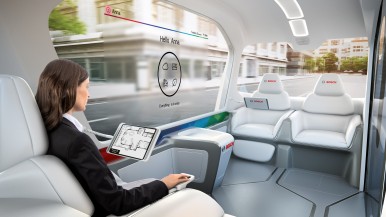
Las Vegas, NV – More and more, the internet of things (IoT) is changing our world. At CES 2019 in Las Vegas, Bosch is showing what it is already capable of today. From a concept for a shuttle vehicle that makes a new kind of mobility tangible, to fridges with connectivity that give advice on food storage, to smart lawn mowers that learn by doing – the spectrum of solutions Bosch is presenting at the world’s largest consumer electronics show is huge. “Bosch recognized the huge opportunities of the IoT early on. We have been actively shaping the connected world for nearly ten years now,” says the Bosch board of management member Dr. Markus Heyn. “Today, we are a leading IoT company. Step by step, we have extended our software and IT expertise.” Using its own IoT cloud, the company has already carried out more than 270 projects in field such as mobility, smart homes, smart cities, and agriculture. The number of sensors and devices connected over the Bosch IoT Suite has risen nearly 40 percent since last year, and now stands at 8.5 million.One of the keys to further growth and new business opportunities on the internet of things is artificial intelligence (AI). This is also a field in which Bosch is playing a decisive part in driving developments. “We will best be able to unlock the potential of the IoT if we combine it with AI, and take our IoT and AI activities forward in parallel,” Heyn says. In his view, the relationship between the two fields is complementary: “The IoT needs intelligence. The use of connected things to gather data can be a decisive boost for the development of AI. It is only through AI that connected things become intelligent and learn to draw their own conclusions. Above all, we aim to achieve concrete improvements in people’s real, everyday lives – things such as more time, more security, more efficiency, and more convenience.” Here, Heyn cites the example of video-based fire detection: by using intelligent image analysis, security cameras are able to identify fires within a few seconds, even before the system’s sensors detect heat and smoke. In this way, fires can be detected considerably earlier than with conventional fire or smoke alarm systems. This saves valuable minutes in which lives can be saved.A second key to success on the path to the IoT age is partnerships. Here, Bosch is opting for a mix of traditional and new players. The alliance recently agreed with the Canadian platform provider Mojio has already resulted in the first integrated IoT platform for connected vehicles: in the event of an accident, a special Bosch algorithm can identify where and when the accident happened, and how severe it is. Via the Mojio cloud, the data are transmitted without any delay to the Bosch emergency service center, which automatically sends an emergency call to local rescue services. At the same time, a message is sent to a predetermined list of recipients, either as a text message or via the Mojio app. “Together with Mojio, we are connecting vehicles directly with the cloud. This means rescue services can get to the scene of an accident even faster than before,” says Mike Mansuetti, the president of Bosch North America. From the middle of next year, the IoT emergency solution will be available for nearly a million drivers in North America and Europe. IoT on the roads: Bosch presents connected mobility of the future With the concept shuttle vehicle it developed in-house, Bosch is celebrating a world first at CES. In this vehicle, the company is its presenting solutions for the automation, connectivity, and electrification of vehicles, and is giving visitors the chance to experience at first hand a new kind of mobility: driverless shuttles, which will soon be a feature on the streets of the world’s cities. “This will pay into our vision of mobility that is as emissions-free, accident-free, and stress-free as possible,” Heyn says. For shuttle-based mobility such as this, Bosch will be supplying not only components and systems, but also a complete range of mobility services, such as reservation, sharing, and connectivity platforms, as well as parking and recharging services. Bosch believes that such connected services are essential for the shuttle-based mobility of the future. The forecast market volume for these services is also high: while it was 47 billion euros in 2017, it is estimated that it will be as much as 140 billion euros by 2022 (source: PwC). Bosch also wants to have a share in this, and aims for significant double-digit growth with the solutions it offers. For Heyn, there is no doubt: “In the future, every vehicle on the road will make use of Bosch digital services. We will consolidate them into a smart, seamlessly connected ecosystem.”One of the final obstacles for putting shuttle-based mobility into practice is the automation of vehicles in complex urban environments. Here, Bosch believes partnerships are the answer: In the second half of this year, San José in California’s Silicon Valley is set to become the pilot city for testing a fully automated, driverless ridesharing service provided by Bosch and Daimler. The three parties have already signed a letter of intent to this effect. With their development alliance, Bosch and Daimler want to improve urban traffic flows, enhance road safety, and provide an important building block for the traffic of the future. Their aim is to develop a driving system for fully automated driverless driving (SAE level 4/5) that is ready for production by the beginning of the next decade. IoT in the home: connected appliances make home owners’ lives noticeably easier It’s not just on the roads that connected products and services that make user’s lives easier are in demand. “We’re working on the idea of a connected home, and on appliances that think autonomously and understand what users want,” Heyn says. At CES, for example, the company is presenting a new function for web-enabled fridges that can recognize types of food and provide recommendations on storage. The interior camera automatically recognizes some 60 kinds of fruits and vegetables and suggests the ideal place to store them by means of an app. As a result, food is stored in the best possible way, stays fresh for longer, and doesn’t have to be thrown away so often. Another new development is the PAI projector, which can project a virtual user interface onto a kitchen counter top. An integrated 3D sensor captures any hand movements, allowing touch-screen operation of the interface. In this way, users can conveniently call up recipes online and make phone calls over the internet while they are cooking and baking. Designed especially for the kitchen environment, PAI does not have to be used with as much care as a smartphone or tablet. Even with sticky fingers, the projector can still be controlled perfectly. PAI is set to debut in China in February 2019, to be followed by market launch in the United States. Bosch is also presenting the Indego S+, its new robot lawn mower with internet connectivity, at CES. It is one of the first robot lawn mowers in the market to offer voice control by Amazon Alexa. It is also the only robot lawn mower that can use weather forecasts on the web to automatically decide when best to mow the lawn again. Bosch is using artificial intelligence to improve the way its robot lawn mower recognizes obstacles on the lawn by evaluating data such as motor flow, acceleration, motor speed, and direction. “We are using AI to make lawn care even easier and more convenient. Our vision is an Indego that adapts to its garden in order to mow the lawn perfectly every time,” Heyn says. IoT #LikeABosch: Bosch launches digital IoT campaign Bosch is also using CES 2019 to premiere its new IoT image campaign. The main plank of the campaign is a hip-hop video clip featuring a protagonist who is a savvy IoT user. Bosch is entering new territory with its “Like a Bosch” campaign; the decidedly different approach and tone marks a new departure for the company, which was founded in 1886.This PR move capitalizes on a rash of “like a boss” videos and memes that have gone viral on the internet, attracting tens of millions of clicks. These videos feature everyday people who stage bizarre stunts or find their way out of predicaments with technical finesse. The IoT image campaign changes a few letters in order to put a fresh spin on this internet phenomenon. The protagonist in the Bosch video is a young man who is always on top of things, thanks to connected solutions from Bosch. Smartphone in hand, he operates his car, lawn mower, or coffee machine in a cool, smart, and confident way – he’s in charge of things “like a Bosch.”


Versatile semiconductors: Bosch launches new automotive system-ICs at electronic ...

05.11.2018

Press release

Connected mobility

Versatile semiconductors: Bosch launches new automotive system-ICs at electronic ...

Munich and Reutlingen, Germany – System ICs are application-specific integrated circuits (ASICs) designed to meet special requirements in vehicle systems. They are integrated on a single silicon chip measuring only a few square millimeters, and house complex circuits with up to several million individual electronic functions. At electronica 2018, the world’s leading trade show for electronics, Bosch introduces four new system-ICs. A new chip for electric vehicles will shut off the power in the event of an accident, ensuring safety for driver and passengers and enable rescuers to work without being put in danger.Semiconductors make electric cars safer in an accident Pure electric or hybrid vehicles are equipped with special batteries that provide power to the electric motor at high voltages of 400 to 800 volts. For safety reasons, these high-voltage batteries, power electronics and their electrical wiring are designed to be highly robust. Nevertheless, the question of how secure a high-voltage battery is in the event of an accident is of vital concern to both the vehicle's occupants as well as any rescue workers. To prevent these persons from coming into contact with high voltage, while at the same time eliminating the risk of a vehicle fire, it must be possible to completely isolate the battery from the vehicle’s electrical system. During an accident, so-called "pyro fuses" blow out sections of the electrical wiring to the high-voltage battery by means of a small explosive charge, so that the circuit is interrupted quickly and effectively. Here, Bosch semiconductors play a crucial role: The integrated circuit CG912 can, as a part of the battery management, fire up to four pyro fuses in the battery wiring in the event of an accident,. This mitigates the risk of electrical shock when touching the vehicle’s chassis. In addition, this special IC can also provide power to the battery management. Bosch’s CG912 was originally developed for deploying airbags and has been proven in the field a million times over. New system ICs at electronica 2018 System ICs are truly versatile. They provide stable supply voltages, read sensor data, process information and drive actuators – in real time. The new oxygen sensor evaluation IC CJ138 offers, in comparison to its predecessors, extended options for adapting an engine control unit to a wide range of oxygen sensors, as well as accurate sensor cable diagnostic for short circuit or interruption. The highly integrated transmission IC CG270 precisely controls up to ten hydraulic valves in automatic transmissions and allows the design of more compact control units for modern multi-stage transmissions. CG135 is a transmission IC that monitors the supply voltages in a transmission control unit and prevents the transmission from being damaged in the event of a fault.

Bosch MEMS sensors now enable faster airbag deployment

05.11.2018

Press release

Connected mobility

Bosch MEMS sensors now enable faster airbag deployment

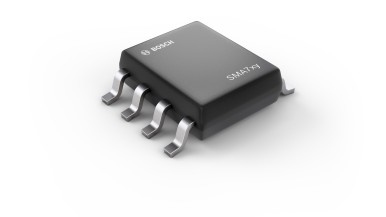
Munich and Reutlingen, Germany – Precision meets speed. At electronica, the world’s leading trade fair for electronics, Bosch announces a new generation of high-g acceleration sensors. The SMA7xy sensor family improves safety for car drivers and passengers. When the acceleration sensors detect a collision, the passive safety systems such as airbags can now be deployed earlier, and the restraining effect can be precisely set for the given accident scenario. In this way, the consequences of accidents can be further mitigated. The new SMA7xy family comprises of multiple sensors for airbag systems based on Bosch's market leading MEMS technology.Universally applicable, very fast crash sensors The sensors from the new SMA7xy product family enable extremely fast signal processing. Compared to the sensors of the preceding generation, Bosch has doubled the bandwidth, and thereby increased crash signal processing speeds by one hundred percent. The acceleration sensors are located either directly in the airbag ECU or in satellites located at the A- B- or C-pillar or at the front bumper. The sensors detect impact or a car rollover event within fractions of a second and send this information to the airbag ECU, which then deploys the vehicle's passive safety systems in time. One of the sensors from the SMA7xy family, the SMA760 precisely detects front and side impacts. A second sensor, the SMA720 contains one x and one z channel to measure acceleration along the vertical axis. This makes the SMA720 an ideal companion to the SMI860 for vehicle rollover detection. Both sensors support the SafeSPI communication interface standard. All sensors from the SMA7xy family conform to the ASIL D safety level of ISO 26262 and meet the VDA AK-LV27 specification. The PSI5 sensor versions, designed specifically for use along the periphery, offer a wide acceleration range: 30g, 60g, 120g, 240g, or 480g. For improved design flexibility Bosch offers a number of variants, for example an upright face mount option with a smaller footprint. Flexible options providing design freedom The peripheral-type sensors of the SMA7xy family are available in many variants, with two package options, four sensor axis configurations, several measurement range options and well over 80 different PSI5 modes – there is a suitable sensor to meet every requirement. One package option is the SOIC8, a well-established housing that is widely used and exceptionally robust, whilst the LGA System-in-package (SiP) houses integrated passive components.

MEMS sensors from Bosch make driving safer, more fun, and more relaxed

05.11.2018

Press release

Connected mobility

MEMS sensors from Bosch make driving safer, more fun, and more relaxed

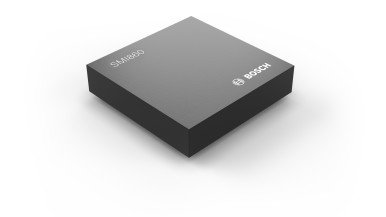
Munich and Reutlingen, Germany – Stable vehicle handling under all weather conditions and traffic situations makes car driving not only safer and more comfortable but also delivers a higher degree of enjoyment and dynamics to the driving experience. At the electronica exhibition in Munich, Bosch reveals for the first time its SMI860 five-axis inertial sensor. This extremely robust MEMS sensor enables a safe and natural driving experience – both in everyday as well as demanding situations – noticeably improving driving safety, comfort and dynamics.Car driving becoming even safer The intelligent SMI860 MEMS sensor provides important support for active safety and driver assistance systems inside the vehicle. For example, the ESP electronic stability control system (anti-skidding system), greatly increases traffic safety and has, to date, saved more than 8,500 lives in Europe alone. Necessary dynamic driving state data is delivered to the anti-skid system also from the SMI860. It recognizes whether the vehicle is travelling in the direction in which the steering wheel is turned. In the event that these values diverge, the skid protection system is activated. In addition, this new sensor can precisely determine the position of the vehicle, which can be utilized in precise vehicle heading applications. The SMI860 is the first example of a package from Bosch containing five inertial data measuring elements in a single sensor for active safety applications. The package includes two 16-bit gyroscopes for measuring yaw rate and roll rate, and three 16-bit acceleration sensors. Algorithms are used to calculate the dynamic driving state and position of the vehicle based on the received signals. Compact, robust, reliable, and temperature-tolerant This intelligent sensor is built on Bosch’s proven market-leading MEMS technology. Compared to its predecessor, it is better protected against vibrations and its exceptionally high offset stability will deliver reliable long-term operation. It has been developed according to ISO26262 for use in systems up to ASIL D. Thanks to its small bias instability, the SMI860 delivers low noise performance, thereby further improving its accuracy. Noise (rms) is just ±0.1 °/s for the gyroscope and 4 mg (x and y axes) and 6 mg (z axis) for the accelerometer. A signal conditioning ASIC provides on-chip processing and low-pass filtering, and an industry-standard SafeSPI interface is included for communication with other devices. To save space, the SMI860 is housed in a compact BGA package, measuring just 7mm x 7mm x 1.5mm. Required supply current for the sensor does not exceed 28mA. Its operating temperature range of -40ºC to +125ºC enables it to be installed in practically any location.

MEMS sensors from Bosch enable cars to navigate without GPS

05.11.2018

Press release

Connected mobility

MEMS sensors from Bosch enable cars to navigate without GPS

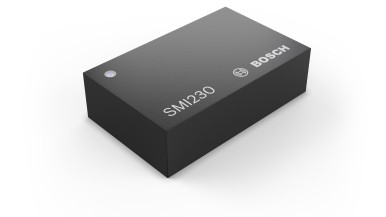
Munich and Reutlingen, Germany – The loss of a GPS signal has brought many relaxing car trips to an abrupt end. At Munich's world-renowned electronics exhibition: electronica, Bosch today announced the new SMI230 six-axis inertial sensor. With this sensor onboard, navigation systems will not take their eye off the destination – even when the GPS signal is interrupted. The SMI230 from Bosch provides the navigation system with motion data, enabling the current position of the travelling vehicle to be determined even when the GPS signal is weak or nonexistent. Navigation systems will become even more precise and reliable.No longer travelling blind when without GPS Millions of car drivers today rely on GPS navigation. If a satellite signal is weak, distorted or interrupted, e.g. due to mountains, tall buildings or even tunnels, then the navigation system will lose its direction. That is when the SMI230 MEMS sensor from Bosch comes into play: it precisely measures the yaw rate and acceleration of the vehicle. In this way the onboard navigation system continuously calculates the travel direction and position while the car is moving. The navigation is not disrupted when inside a tunnel or an 'urban canyon'. The capabilities of the sensor improve not only navigation but also find their niche in fleet management, toll systems and car alarm installations. Here too, precise determination of position is essential. Versatility brings flexibility The SMI230 conveniently combines one three-axis MEMS accelerometer with one three-axis MEMS gyroscope in a single compact package. Both sensors run digitally in 16-bit mode based on proven MEMS technology from Bosch. Adding to this already powerful combination is the fact that the gyroscope and accelerometer can either be operated individually or interconnected for data synchronization purposes. Accurate, stable and power efficient The SMI230 delivers high accuracy – the prerequisite for the best-possible precision in navigation: noise is only 0.02°/s/√Hz (rms) for the gyroscope and 0.12 mg/√Hz (rms) for the accelerometer. Also, the accelerometer has rock-solid temperature stability, with a low temperature coefficient offset (TCO) of typically below 0.2 mg/K and temperature coefficient sensitivity (TCS) of only 0.002 %/K. Typical bias instability of the gyroscope is well below 2°/h. Power consumption plays a decisive role in many applications. Therefore, the SMI230 supports three power saving modes - accelerometer: suspend mode; gyroscope: suspend mode and deep suspend mode. Backward compatible to accelerate the development cycle The SMI230 is pin-for-pin compatible with Bosch’s SMI130, and offers an identical gyroscope programming interface, making it fast and easy to integrate into existing platforms without any time-consuming layout re-work. The new sensor is housed in an ultra-compact 16-pin standard LGA package, measuring just 3 mm x 4.5 mm x 0.95 mm. The sensor will be available in May 2019.

Germany, high-tech hub: Semiconductors pave the way for better quality of life.

25.06.2018

Presentations

Business/economy

Germany, high-tech hub: Semiconductors pave the way for better quality of life.

Check against delivery.Ladies and gentlemen, It’s been only roughly a year since we jointly announced the decision to build a new plant for 300 mm wafers. Now here we are, following a complex planning process, laying the foundation stone for Bosch’s chip factory of the future. With it, we are laying the foundation for improving people’s quality of life, the foundation for more safety on the road – and the foundation for a technology crucial to the internet of things and the mobility of the future. Semiconductors are a core component of all electrical systems. Semiconductors are also turning data into a coveted raw material of the future – none of the cars made today would be able to drive without them. They enable automated and efficient driving, and provide the best passenger protection – such as when they are called on to deploy airbags. With the areas of application for semiconductors becoming larger and larger, we are expanding our manufacturing capacity. As a location, we have opted for Germany. With this plant, we are entering into 300 mm wafer production for the first time, in a drive to achieve further significant economies of scale and to bolster our competitiveness. We see Dresden, the capital of Saxony, as a driver of microelectronics in Europe – and thus as the first choice worldwide for our billion-euro investment. I firmly believe high-tech is something Germany does well. By working closely with semiconductor companies, researchers, and universities, we aim to strengthen both our innovative strength and the competitiveness of this high-tech industry – in Germany and throughout Europe. Ladies and gentlemen, every day in our wafer fab, we will use highly automated manufacturing processes to create the future in the shape of semiconductors. But we will be doing more than that: we’ll also be creating prospects for the future in the shape of highly attractive jobs. Our high-tech factory will employ up to 700 people. We are looking for creative minds – people who can bring their expertise to bear on the construction of this state-of-the-art Bosch wafer fab. We are counting heavily on finding specialists here in the region as well as international specialists and experts. Our new construction project is also the biggest single investment in Bosch history. We are putting roughly one billion euros into our new location, and are pleased that the German Ministry for Economic Affairs and Energy plans to support its construction and commissioning. And in addition to the federal government, the state of Saxony and the city of Dresden have also pledged their support. So at this point, I wish to express my thanks to you, Minister Altmaier, and you, Minister-President Kretschmer. It is also thanks to you and your predecessors that things have moved so fast, and we find ourselves here today, ready to lay the symbolic foundation stone together – for better quality of life, for the semiconductor industry in Dresden, and for the competitiveness of Germany as a high-tech location.

25.06.2018

Factsheet

Business/economy

Laying the foundation stone for 300 mm wafer fab in Dresden

General information Total investment approx. 1 billion euros Site approx. 100,000 m2 (about 14 soccer fields) Total floor space approx. 72,000 m² of production area and office space Construction timeline Groundbreaking in spring 2018 installation of machinery mid-/end 2019 pilot production to start at end of 2021 Associates in the completed plant Up to 700 Qualified professionals needed Experts from the semiconductor industry, such as process, production, and maintenance engineers, mathematicians, software engineers, as well as professionals with degrees in physics, chemistry, and microsystems technologies Manufacturing technologye Highly automated wafer production (300 mm silicon substrate wafers with structures up to 65 nm in width – 1 nm equals one millionth of a millimeter) Connected manufacturing Every second, the machines will transmit one gigabit of production data. The volume of data produced is equivalent to more than 42 million written sheets of paper, weighing 22 metric tons.Details on the building Total building volume 600 000 m³ Concrete approx. 66,500 m³ (about 8,300 concrete mixer trucks) Steel approx. 16,400 metric tons (about 30 A380 passenger jets) Earth moved/excavated approx. 90,000 m³ (some 7,500 truckloads) Bored piles for the foundation approx. 860 Floor slabs 100 cm thick Length of piping and ductwork approx. 80 km Length of electrical cabling approx. 380 km (from Dresden to Berlin and back)Internet For job seekers www.bosch-career.de/jobs Site for the Dresden location https://www.bosch.de/en/ourcompany/bosch-in-germany/dresden Bosch semiconductors www.bosch-semiconductors.com

Bosch lays foundation stone for factory of the future

25.06.2018

Press release

Business/economy

Bosch lays foundation stone for factory of the future

Stuttgart and Dresden, Germany – The foundation stone laid today in Dresden is a key milestone in the construction of the Bosch Group’s state-of-the-art wafer fab. Construction is scheduled to be completed in late 2019, when installation of the production machinery will start. “Today we are laying the foundation stone for the wafer fab of the future, and with it the foundation for improving people’s quality of life and their safety on the road,” said Dr. Dirk Hoheisel, member of the board of management of Robert Bosch GmbH, at the formal ceremony in Dresden. “Semiconductors are the key technology for the internet of things and the mobility of the future. When installed in cars’ control units, for example, they enable automated, efficient driving and the best possible passenger protection.” In his address, Peter Altmaier, the German Federal Minister for Economic Affairs, underlined the central importance of this Bosch investment: “We are today taking an important step toward securing the future competitiveness of Germany as an industrial location. The research community in Germany and Europe is an excellent one, but we cannot afford to rest on our laurels. In the field of microelectronics, we also need engineering skills and know-how, and especially industrial-scale manufacture and application, in Germany and Europe. Today’s ceremony is an important step on this route.” As a supplier of technology and services, Bosch is investing roughly one billion euros in its new location in the Saxony state capital. The first associates are due to start work in the new plant in early 2020. Today we are laying the foundation stone for the wafer fab of the future, and with it the foundation for improving people’s quality of life and their safety on the road....Dr. Dirk Hoheisel After Reutlingen, the Dresden plant is the Bosch Group’s second wafer fab in Germany. With it, the company aims to expand its manufacturing capacity, and thus to boost its competitive edge in global markets. Semiconductors are finding their way into more and more applications relating to the internet of things and mobility solutions. According to the market research company Gartner, semiconductor sales around the world rose by some 22 percent in 2017 alone. Otto Graf, who will manage the new plant, said: “Construction is proceeding right on schedule. “During the construction phase, we will move some 7,500 truckloads of earth, lay about 80 kilometers of piping and ductwork, and mix more than 65,000 cubic meters of concrete – 8,000 concrete mixers-worth.” Following a rollout phase, pilot manufacturing operations are expected to start at the end of 2021. The plot of land – measuring some 100,000 square meters, or roughly 14 soccer fields – will also be home to a nearly 72,000 square-meter multistory building housing offices and production space. Up to 700 associates will be involved in the highly automated chip manufacturing process, working to plan, manage, and monitor production. This also includes modifying the production processes and evaluating the data from Dresden in Bosch’s global manufacturing network. Saxony as a business location: driving Europe’s microelectronics industry “Bosch’s decision is an important milestone. The construction of the new wafer fab here in Dresden will create many other attractive jobs, strengthen Saxony’s reputation as a location for technology and business, and is good for Germany and Europe as well. This project will play a decisive part in securing a leading role for European industry as a whole in the technologies of the future,” said Michael Kretschmer, the Minister-President of the state of Saxony. “This investment in such a major project is a sign of confidence in Saxony, in its people, in the research and industrial network that has become established here, and in its innovativeness.” In its search for a new location, Bosch considered several cities around the world. In Hoheisel’s words, “Dresden is an excellent microelectronics cluster.” He added that the city’s infrastructure is excellent: everything is easily accessible, and the transportation connections are good. The cluster also includes automotive suppliers and service providers, as well as universities offering technological expertise. As Hoheisel pointed out: “We want to work closely with semiconductor companies and universities to increase semiconductor technology’s competitive edge – not only in Germany, but across Europe.” We are today taking an important step toward securing the future competitiveness of Germany as an industrial location....Peter Altmaier, the German Federal Minister for Economic Affairs Semiconductors: key technology for the internet of things Manufacturing semiconductor chips always starts with a silicon disc, or wafer. The bigger the wafer’s diameter, the more chips that can be made per manufacturing cycle. This is one reason why the new Bosch factory will focus on the production of 300 mm wafers: Compared with conventional 150 and 200 mm wafer fabs, 300 mm wafer technology offers greater economies of scale. Semiconductors are extremely small integrated circuits with structures measured in fractions of a micrometer. Manufacturing them requires a highly automated and complex process consisting of several hundred individual steps over several weeks. It takes place in clean-room conditions, as even the tiniest particles in the ambient air can damage the delicate circuits. Connected manufacturing: 22 metric tons of data a day for higher quality Wafer production is one of the forerunners of connected manufacturing. The Dresden plant is expected to generate production data equivalent to 500 text pages per second – written out on paper, that would be more than 42 million pages a day, weighing 22 metric tons. This is why artificial intelligence will play a special part in chip manufacturing in the factory: the highly automated production facilities analyze their own data in order to optimize their processes. As a result, the quality of the chips rises while production costs go down. Furthermore, planning and process engineers can access this production data at any time to accelerate the development of new wafer products or minimize tolerances early on in the manufacturing process. “We need creative minds for our connected and automated manufacturing operations – particularly experts in wafer technology, like process engineers, mathematicians, or software developers,” Graf said. Many new associates have already been hired for the Dresden plant, he added, and there has been no drop in the number of applications. Leading semiconductor manufacturer with 45 years of experience For more than 45 years, Bosch has been making semiconductor chips in various forms, above all as application-specific integrated circuits (ASICs). At its wafer fab in Reutlingen, Germany, Bosch currently manufactures ASICs, power semiconductors, and microelectromechanical systems (MEMS). Bosch ASICs have been used in vehicles since 1970. They are customized to individual applications, and essential for functions such as engine management or airbag deployment. In 2016, every car rolling off the production lines worldwide had on average more than nine Bosch chips on board.

Political VIPs at Bosch: chancellor Merkel and prime minister Costa open technol ...

30.05.2018

Press release

Business/economy

Political VIPs at Bosch: chancellor Merkel and prime minister Costa open technol ...

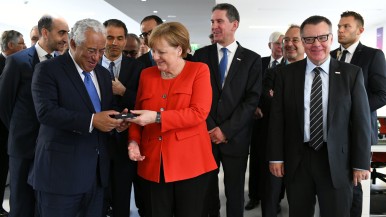
Braga, Portugal – Angela Merkel, the German chancellor, and António Costa, the prime minister of Portugal, today officially opened a new Bosch technology center in Braga together with Bosch board of management member Dr. Dirk Hoheisel . By the end of 2018, over 200 engineers will be working on developing sensors and software functions for automated driving at the location, which is situated about 50 km northeast of the coastal city of Porto. 100 new jobs will be created at the center. Some 100 associates have already transferred to the new 4,500 m2 technology center from the company’s main site, which is located four kilometers away. The German chancellor was in Portugal for talks on the development of German-Portuguese relations. In his speech, Portuguese prime minister Costa welcomed the opening of Bosch’s new technology center in his country, saying, “Portugal stands for innovative strength. Investments like the one Bosch has made here underscore this.” Our associates here will contribute to one of the key projects of future importance – the development of automated driving....Dirk Hoheisel, member of the board of management of Robert Bosch GmbH “Our new technology center in Braga is another indicator of the great potential we see in Portugal. It also reflects our confidence in the expertise of Portuguese engineers,” Hoheisel said, adding: “I am particularly pleased that our associates here will be able to make an even greater contribution to one of the key projects of future importance – the development of automated driving.” In recent years, Bosch has significantly expanded its presence in Portugal: between 2015 and 2017, it spent more than 200 million euros strengthening its activities there in the field of connected and automated mobility. In 2018, investments are expected to match the high levels of previous years. Bosch in Braga: solutions for tomorrow’s mobility The international supplier of technology and services currently employs more than 3,000 associates at its Braga location – around 1,000 more than just five years ago. The majority are involved in the development and manufacture of components for connected mobility, including technology for user-friendly display systems and infotainment. Among these is the eCall automatic emergency notification system for two-wheelers . If the vehicle is involved in an accident, the system automatically places a call for help. Particularly for motorcyclists, who have a much higher risk than car drivers of being involved in an accident, the system can mean the difference between life and death. About ten percent of associates at the Braga location work on developing components for automated mobility. In addition to developing and manufacturing sensors for vehicle safety systems like the ESP electronic stability program, the location also produces sensors that can, for instance, accurately determine the position of self-driving cars. In addition, the Bosch location in Braga has a longstanding research partnership with the local University of Minho, one of the country’s top universities. In a joint project with the university, the new technology center will also conduct research into sensors for automated driving. This partnership is scheduled to commence this year and continue for three years. Bosch Portugal: growing importance in the global engineering and manufacturing network Portugal is a key location within Bosch’s global engineering and manufacturing network. The company has had a presence in Portugal since 1911 and currently employs more than 4,500 associates at four locations. 500 of Bosch’s Portuguese associates work in R&D. In 2017, Bosch generated sales of around 240 million euros in the Portuguese market. Including deliveries to other Bosch companies, the total sales figure was 1.5 billion euros. Opened in 1990, the Braga plant is Bosch’s largest in Portugal. In Aveiro, Bosch’s Thermotechnology division develops and manufactures hot-water heaters, heat pumps, and heating appliances for private households. Ovar, the company’s third location in Portugal, is home to a manufacturing site as well as development activities of Bosch’s Building Technologies division. Video and fire alarm systems are one focus of activity at the site. Bosch’s regional headquarters in Lisbon is home to the company’s administrative as well as sales and marketing activities.