04.01.2022
Presentations
Business/economy
High tech #LikeABosch – how we’re delivering better quality of life with connect ...
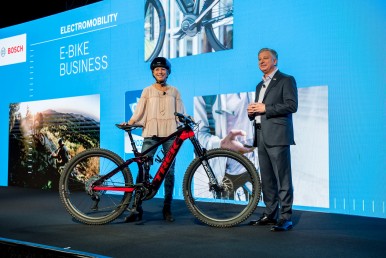
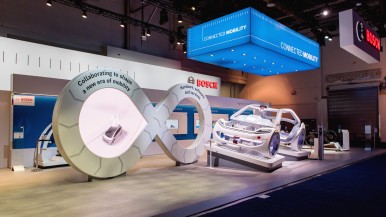
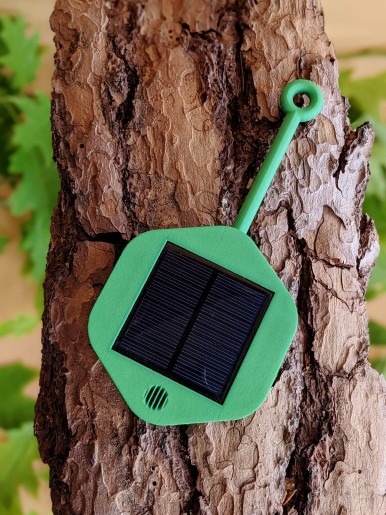
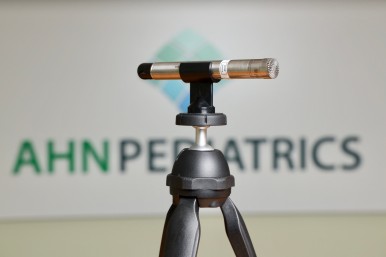
Dr. Tanja Rückert, chief digital officer of Robert Bosch GmbH, and Mike Mansuetti, president of Bosch in North America, at the Consumer Electronics Show on January 4, 2022 Check against delivery. Good morning everyone, and welcome to the Bosch press conference! We’re delighted to have you with us digitally today. Although we regret that the pandemic has once again prevented us from meeting face to face, of course everyone’s health has top priority. The good news is that we can safely come together in a virtual manner, all thanks to technology. And that fits in perfectly with what we want to talk to you about today. Specifically, we want to talk about the benefits and opportunities offered by technology, and the positive impact it can have. Technology for a better world – today and tomorrow You’ve just seen the premiere of the latest installment of our #LikeABosch” campaign: “high tech #LikeABosch.” “High tech” may be a familiar term here at CES, but we at Bosch have a slightly different take on things. Today, we want to tell you about how our approach to high tech is not just about pushing the envelope on what’s possible. Instead, it’s about using cutting-edge technology as a means to improve people’s lives wherever they are: at home, at work, on the road, in a hospital, or even in orbit! As a company committed to delivering life-enhancing innovations, we center our development around people. But especially at a time of such profound technological change, it’s not enough for companies to assume we have all the answers. To truly give people what they need and want, we have to understand what these are – and what hesitations and concerns are attached to them. And so we did exactly this: we conducted a comprehensive international survey to gauge opinions on a wide range of technology-related topics. We asked a representative sample of people in five countries – China, Germany, India, the U.K., and the U.S. – to tell us how technological progress looks from their point of view, what they want most from technology, and where they see both the most promise and the most risk. The inaugural Bosch Tech Compass is having its global debut right here at CES. Over the course of our press conference we’ll be sharing with you some of our most interesting and relevant findings. To start with, let’s look at what for us is perhaps the most significant finding of all. As the survey showed, confidence in technology and enthusiasm about its impact are high across the globe. A full 72 percent of respondents worldwide believe that technology is making the world a better place. Above all, they believe technology is bringing them increased comfort and safety, and that it’s making work easier. And they’re optimistic about its potential, too: most significantly, 76 percent of people globally are convinced that technology holds the key to combating climate change. At Bosch, we agree wholeheartedly. After all, we’re also firmly convinced that technology has the potential to make all our lives better – that’s why “Invented for life” is not just our claim, it’s our strategic imperative. We only need to look at our portfolio for proof: think of beneficial and even lifesaving innovations such as our vehicle electronic stability program ESP, airbag control units, our digital guardian angel Help Connect, or the rapid coronavirus PCR test we developed for our Vivalytic device last year. When it comes to climate change, we at Bosch take the fight against it very seriously: we were the first global industrial enterprise to achieve carbon neutrality at all our international locations. We’re working now on reducing emissions generated along our supply chains and during the lifecycle of our products by 15 percent by 2030. In terms of volume, this is 67 million metric tons, a figure roughly twenty times greater than what our locations emitted in our baseline year of 2018. We’re also sharing our experiences and supporting other companies’ carbon neutrality efforts via our consulting company Bosch Climate Solutions. We’re driving sustainability with our products as well, enabling those who use them to reduce their carbon footprint. For example, our U.S.-based building technology subsidiary Climatec won a 35 million-dollar contract from the City of Ontario in California to boost its energy efficiency, safety, and connectivity. Within the framework of the “Smart Ontario” project, we’ll be retrofitting the city’s infrastructure with smart, connected solutions such as building automation and LED streetlights that should reduce local greenhouse gas emissions by over 10,000 tons annually. And to pursue our longstanding vision of climate-friendly mobility, we supply a full range of components and systems solutions for electromobility – in fact, no other company offers as wide a range as Bosch: from battery-electric powertrains to regenerative braking systems to fuel cells, powering everything from e-bikes to commercial vehicles. Speaking of e-bikes, they’re at the intersection of two major drivers for our business: electrification and connectivity. It wasn’t too long ago that an e-bike was a niche product. Now it has become one of the most popular forms of personal transport worldwide. But what does connectivity have to do with an e-bike? It’s the basis for a personalized e-bike experience like never before. This is exactly what our new system generation – called the eBike Smart System – offers its users. This innovation, which is a 2022 CES ® Innovation Award Honoree, was first introduced late last year and will be available for a mass audience to see and demo for the first time in the U.S. here at CES. With this entirely new system consisting of our eBike Flow app, control unit, display, battery, and drive unit, we’re merging the physical experience of riding an e-bike with digital conveniences like connectivity, personalization, and services. For example, in the future, your e-bike will be able to adapt to your riding style, suggest routes you enjoy, and guide you safely to your destination while learning your preferences and interests. Thanks to connectivity, the bike is not a static product, but one that can continually evolve after purchase. The experience can be constantly enriched with new digital experiences thanks to over-the-air updates. This is just one example of how connectivity is at the heart of all our products. In fact, we’re delighted to announce that we reached an important goal set several years ago: 100 percent of all our electronic product classes are now web-enabled. This means that for nearly everything we produce, we can now realize functions such as wireless updates and web-based services. Just think of the beneficial services we’ve already realized by putting cars online: our emergency notification service eCall, for instance, or our wrong-way driver warning. Bosch is an IoT and software company This milestone is a key proof point for how Bosch has evolved into a software and IoT company. We currently employ approximately 35,000 software developers. Overall, our annual investments in building up software competence amount to more than four and a half billion dollars. This means that we understand both sides of the coin better than most other companies – particularly when it comes to connecting things to the internet. Just let me give you an idea of what we’ve achieved recently in two of our key domains: home and mobility. When it comes to technology for the home, Bosch sold 4 million web-enabled power tools, home appliances, and heating systems in 2020; in 2021 this number increased to over 6 million – which is 50 percent growth! In the mobility sector as well, software is paramount – cars are becoming internet nodes. This has been a Bosch vision for quite a while, and we’re ideally positioned to play a major role in creating the software-defined car. In our Mobility Solutions business sector, we’re investing nearly three and a half billion dollars annually in building up our software competence in this domain. At the beginning of last year, our new Cross-Domain Computing Solutions division started operations, bringing together hardware and software development for new automotive electronics architectures. This year we’re taking the additional step of pooling our work on application-independent vehicle software for cars and the cloud at our subsidiary ETAS GmbH. This means that we’ll be able to provide solutions to manufacturers and other suppliers more quickly, securely, and efficiently in the future. In addition to optimizing our organization and building up our expertise, we’re engaging in partnerships to propel our technology leadership in the mobility sector forward. For example, together with Microsoft we’re strengthening our position in software development for all domains – from the car to the cloud. It’s also enabling us to speed up feature development to bring new software functions to vehicles faster. In this collaboration we’re making great progress toward developing an open technology platform that will enable the acceleration of automotive development cycles. Last but not least, increasing demand for software comes along with an increasing need for software integration. Here, given our domain knowledge, Bosch is at home and can provide the necessary integration know-how. Take automated driving, for example. An automated vehicle must be able to do everything a human driver can do: perceive its surrounding, make decisions, and accelerate, brake, and steer. Bosch has all the different building blocks for automated driving in our portfolio and, step by step, we’re laying the technical groundwork. With our driver assistance systems, we’re already paving the way for all levels of automation. And this is paying off: to give you an example, over the past five years, Bosch made more than 10 billion dollars in sales with driver assistance systems. From components to systems, and from software to services – when it comes to tomorrow’s mobility, all roads lead to Bosch. To give you a sense of the range of technologies we offer, and how they’ll be seamlessly integrated in future vehicles, we are showing a glimpse in our booth of how software, personalization, automation, connectivity, and electrification will unlock infinite possibilities to shape the way we get from points A to B in the future. Bosch on its way to becoming a leading data-driven AI company Speaking of the future, when asked what they think the most influential technology will be in ten years, Bosch Tech Compass respondents across the globe agreed that it will be AI and 5G. At Bosch, we’ve made AI a major strategic focus. We want to use connectivity and data collected over the IoT combined with artificial intelligence – AIoT for short – to continuously improve our products and services. A milestone on our path to become a leading data-driven AI company was the establishment of the Bosch Center for Artificial Intelligence in 2017. The BCAI currently operates at 7 locations in the U.S., Germany, India, Israel, and China. So far it has worked on more than 200 projects in the mobility, manufacturing, agriculture, and smart-home domains, and has already contributed nearly 350 million dollars to our global result. In systematically building up our expertise in AI, we’re also working toward a concrete goal: by 2025, every Bosch product will either be equipped with AI or manufactured with its help. One new product featuring AI that we’re showcasing here is our latest Home Connect fridge, which can identify its contents and suggest recipes based on what’s inside – which might not only get you out of a dinnertime rut, but can also help you use up what might otherwise go to waste. Another very special example which demonstrates how we continue to develop solutions for maximum benefit is our SoundSee technology. This acoustic technology had its debut aboard the International Space Station, where it uses AI to help monitor the health of critical systems on the ISS, such as the space station’s environmental control and life-support systems. And today we’re announcing for the first time a new use case for audio AI based on the same technology currently aboard the ISS. Together with Highmark Health in Pittsburgh, Pennsylvania, we’re exploring the use of audio AI as a diagnostic tool in pediatric medicine. Specifically, we’re working on adapting these experimental sensors to detect pulmonary conditions such as asthma at an early age, just by listening to children’s breathing patterns. Our hypothesis is that each child has a sort of audio fingerprint, and that the use of audio AI can be used to learn a child’s normal pulmonary sounds. Should something change, then the idea is that the AI will pick this up, which will potentially lead to early therapy and better outcomes. Ideally this technology will enable us to monitor kids in a non-invasive manner and alert the parents at a far earlier stage when there is a variation from the child’s baseline. Ultimately, we see the combination of AI and the IoT as holding the key to leveraging the most user benefit from both of these technologies. Think of it as a continuous improvement loop. Connected products transmit data, which is then processed with the help of AI algorithms. Optimizations are identified, then fed back to the products in the form of software updates, and the cycle starts again. In effect, this allows customers to be an integral part of the development process, and for solutions to be tailored precisely to their needs. The result is better solutions for our customers – as well as new revenue streams for us, since it will enable us to turn the sale of every digital product into services-based revenue as well. Trust and responsibility are decisive for success Like the Bosch Tech Compass respondents, we also believe that the impact of artificial intelligence and next-generation connectivity will be huge. In order to realize the full potential of these new technologies, however, they must gain widespread acceptance. For this, we must not only make the benefits comprehensible for people, we need to build trust in the technology and in the companies that create it. In fact, the same is true of all new digital technologies: trust must be established, not taken for granted. Going back to the results of the survey, this was one of the strongest points of agreement among all the respondents. Four out of five people across the globe believe that a company’s success will ultimately depend on its ability to build digital trust with its customers. To gain trust, of course, companies must act responsibly: in dealing with sensitive data, in balancing economic and ecological considerations, and in leveraging innovation for the common good. Respondents to our survey agree on this as well: a whopping 83 percent of respondents think that technological progress should be more focused on confronting society’s challenges rather than on serving individual needs. Above all, what emerges from the Bosch Tech Compass is that people are more aware than ever of both the potential and the pitfalls offered by technology, and that they want those who create it as well as those who legislate its use – in other words, companies and policymakers – to take responsibility for steering its development in the right direction. At Bosch, we’ve always prioritized trust and responsibility in our pursuit of technological advancement. This was true for the analog world, and it’s even more true for the digital world, where trust is in short supply. Above all, we want to lead by example when it comes to using innovation as a force for good, not just for profit. That’s why we’ve published an AI code of ethics for our own developers, and why we’re explicitly and exclusively committed to AI that is safe, robust, and explainable. It’s also why we are the driving force behind the Digital Trust Forum, a global consortium of representatives from different stakeholder groups whose aim is to foster a high level of trust in AI and IoT-based solutions. In particular, we’re working with our partners to develop trust policy frameworks and eventual certification and conformity labels. The plan is that products that meet certain criteria will bear a Digital Trust seal – along the lines of the energy-efficiency labels you see on home appliances, for instance. Of course, trust and acceptance also depend on people seeing the concrete benefits a new technology can deliver. Here I’d like to highlight a Bosch innovation that again demonstrates the incredible potential of AI. It’s a gas sensor – the first one on the market equipped with artificial intelligence – and it’s being used in a truly revolutionary new product. Dryad’s Silvanet Wildfire Sensor is a pioneering new solution for ultra-early wildfire detection, and our gas sensor is its digital nose. Apart from the unfathomable devastation wildfires cause, did you know that they account for up to 20 percent of annual global carbon emissions? That’s as much as the entire transportation sector combined – in other words all the cars, ships, and planes on the planet. Dryad’s sensors are mounted on trees, where they continuously monitor the local microclimate in order to detect flames early – and wirelessly notify local authorities long before camera or satellite-based systems can. These sensors are going to help save lives, homes, and tons of CO 2 from entering the atmosphere – all thanks to AI and connectivity. Solutions for a better world At Bosch, our aim is and always has been to improve people’s daily lives with our products and solutions. The Bosch Tech Compass respondents are optimistic about the beneficial potential of technology, and so are we: that’s why we continue to work on cutting-edge innovations that are designed to make life better for everyone across the globe. This is light years beyond high tech, it’s “high tech #LikeABosch”! Thank you.