Search & find:
Media, press releases, events for your editorial coverage

Hannover Messe 2025: Bosch embraces hydrogen production

26.03.2025

Press release

Industry 4.0

Hannover Messe 2025: Bosch embraces hydrogen production

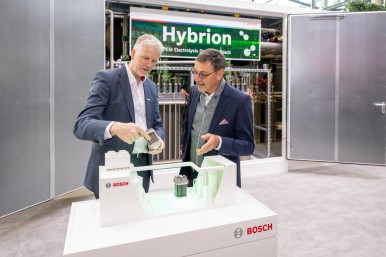
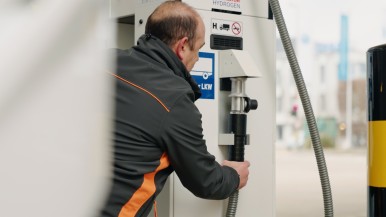
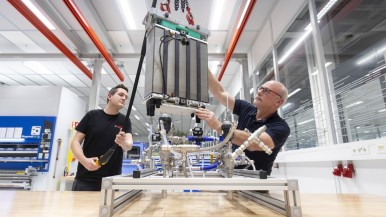
Stuttgart and Hannover, Germany – Whether in the chemicals, transportation, steel, or energy industries, there is enormous potential for decarbonization if hydrogen is used as an energy source – especially if it is produced using renewables. With an expected global capacity of 100–170 gigawatts by 2030, electrolysis is a strategic growth field for Bosch, despite the slowdown in the ramp-up of the hydrogen economy. To mark its entry into this market, the company is showcasing technology for electrolyzers at Hannover Messe. Bosch is premiering two Hybrion PEM (proton exchange membrane) electrolysis stacks as a modular container solution integrated into an electrolysis system. Such stacks are at the heart of the electrolyzer. The complete system, with an output of 2.5 megawatts, is supplied by FEST, based in Goslar, Germany. “To counter climate change, we need alternatives to fossil fuels. Green hydrogen, produced with renewable energy, will play a vital role in massively reducing carbon emissions in the industrial, transport, and energy sectors. Producing this hydrogen requires electrolysis systems – and Bosch’s Hybrion stack is the key component for them,” says Dr. Stefan Hartung, chairman of the board of management of Robert Bosch GmbH. To counter climate change, we need alternatives to fossil fuels. Green hydrogen, produced with renewable energy, will play a vital role in massively reducing carbon emissions in the industrial, transport, and energy sectors. Producing this hydrogen requires electrolysis systems – and Bosch’s Hybrion stack is the key component for them....Dr. Stefan Hartung, chairman of the board of management of Robert Bosch GmbH Bosch aims to apply its fuel-cell expertise to hydrogen production. The company wants to use its experience in volume production to achieve economies of scale and reduce costs in the future. In 2025, it is planning to work on several projects in Europe with various partners. Even before the official sales launch in April, Bosch has already acquired orders amounting to some 100 megawatts – for example, Neuman & Esser will be integrating 16 Bosch Hybrion stacks into an electrolyzer with a capacity of 20 megawatts. Bosch is also working with companies including AKA Energy Systems, Andritz, Pietro Fiorentini, Hyter, H2B2, iGas, IMI, Nikkiso, and Técnicas Reunidas. “Hydrogen is a strategic growth field for Bosch – we expect sales revenue to run into the billions by 2030,” says Dr. Markus Heyn, member of the board of management and chairman of Bosch Mobility. Hydrogen is a strategic growth field for Bosch – we expect sales revenue to run into the billions by 2030....Dr. Markus Heyn, member of the board of management and chairman of Bosch Mobility Stack production and hydrogen cycle in Bamberg The Hybrion stacks will initially be manufactured at the Bosch location in Bamberg, Germany. For each unit, over one hundred electrolysis cells are arranged in layers. For this, Bosch has developed a special clamping tool that greatly simplifies and accelerates the manufacturing process. Each stack can produce up to 23 kilograms of hydrogen per hour when supplied with a maximum power input of 1.25 megawatts. This is enough for a 40-ton truck with a fuel-cell powertrain to travel around 250 to 300 kilometers. In the individual electrolysis cells, a proton exchange membrane – made using a special polymer – separates the anode and cathode from each other. To produce hydrogen, ultrapure water is first fed into the anode side of the PEM electrolyzer. As a result of electrical voltage at the two electrodes, the water at the anode reacts to form oxygen and free electrons and protons. The protons cross the membrane and combine with the electrons to form hydrogen gas at the cathode. Bosch’s Hybrion PEM electrolysis stacks are suitable for hydrogen production in modular plants starting from 1 megawatt, but also for large, gigawatt-scale industrial plants. A FEST electrolyzer with integrated Bosch PEM electrolysis stacks is set to go into operation at the Bamberg plant as part of a hydrogen cycle in 2025. Bosch intends to use the hydrogen produced there for the endurance testing of mobile fuel-cell stacks, which are also manufactured in Bamberg. The power generated during that testing will in turn flow into the electrolyzer, thus closing the cycle. The hydrogen itself is initially intended for the company’s own use. Bosch offers a broad portfolio of products and solutions for hydrogen Bosch has an exhaustive hydrogen portfolio. “In developing hydrogen technologies, Bosch also relies on its proven expertise in industrial technology. We offer solutions from industry for industry,” says Dr. Tanja Rueckert, member of the Bosch board of management. Bosch Manufacturing Solutions, for example, offers water treatment systems that can be used to produce the ultrapure water required for electrolysis. These systems use thermal and electrochemical processes to remove impurities such as salts or metals from the water. Bosch is also actively using hydrogen in mobile fuel cells and hydrogen engines. Together with FirstElement Fuel, the U.S. market leader for the commercial operation of liquid hydrogen filling stations, Bosch Rexroth has achieved an important technology milestone for refueling infrastructure. CryoPump stations cut operating costs by up to 70 percent, bringing them down to an economical level, while shortening refueling processes for heavy trucks to around ten minutes.

Hannover Messe 2025: Bosch offers intelligent and efficient solutions for industry

19.03.2025

Press release

Business/economy

Hannover Messe 2025: Bosch offers intelligent and efficient solutions for industry

Stuttgart and Hannover, Germany – At Hannover Messe, Bosch presents solutions for industry – from hydraulics and electrolysis to software . In each case, the focus is always on improving the efficiency and productivity of manufacturing and enabling sustainable production. There is a significant role for hydrogen in making production sustainable – and in Hall 13, Booth C33, Bosch will be showcasing technologies for producing and using this resource. Bosch Rexroth will also be presenting its broad portfolio of industrial technology in Hall 6, Booth D26. In addition, Bosch experts will be sharing their thoughts with industry through presentations and panel discussions .Bosch technical highlights make industry fit for the future Hydraulic Hub: With its comprehensive range of digital services, the Hydraulic Hub simplifies and accelerates the servicing and maintenance of industrial hydraulic products, thereby increasing machine availability. Users of this digital service platform can access Bosch Rexroth’s hydraulics and service expertise 24/7 via its intuitive interface. The Hydraulic Hub also offers support with documentation and with proactive maintenance of hydraulic systems. AI-based tools provide answers to specific questions, such as what to do in the event of an oil leak, and help identify and rectify faults. Bosch Rexroth is working with Amazon Web Services, among others, to apply AI technologies. Electrolysis stack: Hydrogen production by way of electrolysis using renewable electricity has a central role to play on the path to a climate-neutral economy. In 2025, Bosch will launch its first electrolysis stack, the heart of every electrolyzer. The Bosch stack comprises more than 100 electrolysis cells that employ electricity to split water into oxygen and hydrogen. It is designed for an output of 1.25 megawatts, which corresponds to a hydrogen production rate of 23 kilograms per hour. On the hydrogen side, the resulting pressure is more than 30 bar. The stack is suitable for use in modular systems from 1 megawatt upward as well as in large gigawatt-class industrial systems. Water treatment system: The Pure Water System offered by Bosch Manufacturing Solutions (BMG) is a container system for the production of ultrapure water for electrolysis. Impurities in the water can render electrolyzers inoperative in a very short time. BMG’s water treatment system uses thermal and electrochemical processes to remove impurities such as salts or metals, thereby producing ultrapure water. The first step uses an energy-efficient and water-saving distillation technology called mechanical vapor compression. This is followed by electrodeionization (EDI), in which an electric field removes the remaining ions from the distillate. The Pure Water System requires no filter media or chemicals at all to treat salty water. The system’s product water meets the strict purity requirements of all electrolyzer technologies. Electrolyzer stack testing system: Bosch Manufacturing Solutions (BMG) offers an innovative system for the safe and efficient end-of-line testing of PEM electrolysis stacks up to a size of 1 megawatt. Automated contacting of the electrolyzers at the anode, cathode, and power supply increases precision and reduces the time required for testing. The software’s test procedures can be flexibly adapted to the specific requirements of different tests. Moreover, its customizable data evaluations enable a detailed analysis of the test results, which supports quality assurance in stack production. BMG also offers a modular, customizable electrolysis system for efficient hydrogen production, as well as a broad portfolio of assembly and testing systems for the development, manufacture, and quality assurance of fuel cells and fuel-cell power modules (FCPM). CryoPump station: Bosch Rexroth has worked together with FirstElement Fuel, the U.S. market leader for the commercial operation of liquid hydrogen filling stations, to develop an important technology milestone for refueling infrastructure. CryoPump stations cut operating costs by up to 70 percent, bringing them down to an economical level, while shortening refueling processes for heavy trucks to around ten minutes. Compared to conventional crankshaft-based pumps, the technology increases efficiency to over 95 percent and extends maintenance intervals to over 4,000 hours. With a footprint of less than 11 m² and a noise level of less than 65 dB(A), the stations are ideal for use in existing filling stations, even in residential areas. Battery production solutions: Battery production is considered a key technology for the energy transition. The only way manufacturers can hope to meet heavy future demand is by rapidly scaling up their battery production capacity. At Hannover Messe, Bosch Rexroth will be demonstrating how to realize complex value streams and extremely dynamic material movements using real material flow solutions along the entire value stream: from the virtual warehouse and cell preparation through module and pack assembly to transport and end-of-line testing. Compact gas compressor: Efficient and cost-effective hydrogen compression and storage is a key issue in the energy transition. Based on a proven automotive application, Bosch has developed a gas compressor that can compress over 11 standard cubic meters of hydrogen per hour to as much as 350 bar. This corresponds to more than one kilogram of hydrogen. The compressor’s compact dimensions and extremely low weight of less than ten kilograms make installation and maintenance considerably easier. In addition to hydrogen, the compressor is also suitable for other gases such as nitrogen, helium, and carbon dioxide, which greatly expands its range of application. HeyBosch: Bosch and Microsoft have expanded their partnership to introduce HeyBosch, an advanced AI platform based on Microsoft Azure. HeyBosch improves data management for industrial companies by providing insights into data and knowledge, making complex engineering data easy to understand, and using generative AI to enable user training. The platform integrates conversational AI, VR/AR functions, and business intelligence tools to offer a consistent and user-friendly experience.

The journey to a more sustainable future

02.07.2024

Press release

Electrified mobility

The journey to a more sustainable future

Stuttgart/Reutlingen – The eBike is an important building block for the mobility revolution. It helps to reduce traffic and its impact on the environment, takes up little space and does not cause noise or local emissions 1 . Compared to cars, eBikes are not only cheaper, but also more environmentally friendly, space-saving and often faster in city traffic. They offer an important alternative to the car, especially for short distances of up to around 5 to 10 kilometers 2 . In an international study conducted by Bosch eBike Systems this year, 49 percent of eBike users surveyed stated that half of the journeys they used to make by car are now made by eBike 3 . This active form of mobility not only helps to reduce CO₂ emissions in cities, but also benefits each and every individual: Travelling by bike or eBike is good for your health and is also fun!As an evaluation by the Federal Environment Agency shows, the eBike is one of the lowest-emission means of transport. When using an eBike, the electricity consumption results in average CO₂ emissions of 3 g CO₂/person-kilometer (pkm), depending on the electricity mix. In comparison, a motor vehicle with an internal combustion engine emits about 166 g CO₂/pkm, while public transport emits between 58 and 93 g CO₂/pkm 4 . eBikers using the smart system from Bosch can now view their CO₂ savings compared to a car after every ride via the activity tracking function of the eBike Flow app 5 . "Bosch eBike systems are already driving a society in which people are travelling more sustainably. With our products and solutions, we make a contribution to future-proof mobility. It is also important to us to continue to improve our eBike systems in terms of sustainability throughout the entire product life cycle," explains Claus Fleischer, CEO of Bosch eBike Systems. "Because sustainability is not an additional task, but an integral part of our corporate culture." From vision to realisation: Bosch eBike Systems focuses on three pillars of sustainability Bosch eBike Systems has defined three pillars of sustainability and firmly anchored them in its strategy: The "Carbon footprint" pillar aims to measure, identify and reduce CO₂ emissions at company, product and material level. The "Responsibility in the supply chain" pillar defines measures to ensure that all materials and primary products are selected sustainably and responsibly and that social standards are adhered to. The "Circular economy" pillar is concerned with the goal of extending the service life of products, i.e. reusing raw materials and further increasing recycling efficiency, for example. For Bosch eBike Systems, the pillars are strategic guard rails that contribute to a common goal: to make eBike systems even more future-proof. To achieve this goal, the company derives specific measures that are implemented both internally and externally in collaboration with partners and suppliers. CO₂ analysis focusing on savings potential To intensify efforts to reduce emissions, Bosch eBike Systems, together with TÜV Rheinland, conducted a holistic analysis of the eBike's carbon footprint in 2022 and refined and updated it in 2024. Using the results of the analysis, the company has calculated the carbon footprint for each product in its portfolio. The aim of the analysis was to identify and evaluate the greatest CO₂ savings potential that can be found both in the system components and in the entire supply chain. Around 79 percent of an eBike's CO2 emissions are caused by the materials used and in production, and 13 percent through use. The remaining eight percent is accounted for by transport, packaging and recycling. Overall, an eBike has an average carbon footprint of 263 kg of CO₂ equivalents over its entire life cycle. If the eBike components are considered individually with approximately 84 kg of CO₂ equivalents, approx. 50 percent of the emissions are attributable to the battery, 48 percent to the drive unit and 2 percent to the display. If you ride around 515 kilometers on an eBike instead of using a motor vehicle with an internal combustion engine, the Bosch eBike system will have already paid for itself in terms of CO₂ consumption. The CO₂ savings potential identified in the display are the electronic components (53 percent) and the screen (41 percent). In the drive unit, the housing accounts for the largest share of CO₂ at 55 percent, followed by the electronic components at 17 percent. In the battery, the greatest savings potential comes from the cells, which account for 73 percent of the CO₂ emissions, followed by the housing at 12 percent and the cell holder at four percent. Reducing emissions along the entire supply chain In the purchasing process, the carbon footprint is an important decision-making criterion when it comes to supplier selection, alongside other sustainability criteria. For this purpose, the CO₂ emissions of the materials used and purchased parts are requested from suppliers. Claus Fleischer emphasises: "The joint analysis with TÜV Rheinland has shown us which areas we can and will prioritise to further reduce the carbon footprint of our eBike systems. Our measures focus on optimising materials and reducing emissions in production and the supply chain. Together with our partners and suppliers, we are making enormous efforts here, which are gradually paying off." In the production of the new Bosch CompactTube 400, for example, the company uses alternative materials for the cell holders, which make up the largest plastic parts within the PowerTubes, in order to reduce the carbon footprint. For this purpose, a plastic is used whose emission factor is 64 percent lower than that of the plastic previously used. This material change will in future become the standard for all Bosch eBike Systems batteries integrated within the frame. Beyond material and product level, Bosch eBike Systems also focuses on the corporate carbon footprint of its direct suppliers and makes this an important decision-making criterion in the purchasing process. By participating in the global system for the disclosure of environmental data provided by the non-profit organisation CDP, the company can record and assess the efforts of its direct suppliers to take climate protection measures. The aim is to make climate protection the standard: Suppliers that have a low CDP ranking and do not commit to the goals of the Paris Climate Agreement through an SBTi voluntary commitment 6 will be given a lower rating in the purchasing process. Suppliers that disclose via the CDP currently account for 97 percent of the purchasing volume of Bosch eBike Systems – this figure is set to rise to 100 percent by 2025. An important factor for reducing CO₂ is the use of green electricity. Bosch eBike Systems expects its suppliers to switch their production to electricity from renewable sources in order to reduce their emissions. Responsibility and transparency as selection criteria in the purchasing process Bosch eBike Systems places great value on the transparency and traceability of its supply chain, particularly with regard to batteries. In doing so, Bosch eBike Systems goes beyond the legal obligations stipulated by the Supply Chain Act and not only checks and qualifies its direct suppliers, but also endeavours to understand the entire supply chain in order to avoid potential risks in the procurement of raw materials. This applies in particular to the raw materials in the battery cells, which are comprehensively traced back to the mines. This approach will also be extended to the drive unit and displays in the future. With regard to environmental protection, Bosch eBike Systems expects its suppliers to set up and develop an environmental management system in accordance with ISO 14001. As of this year, 100 percent of our direct suppliers have appropriate certification. Circular economy: Remanufacturing & recycling at the end of the product life cycle For Bosch eBike Systems, the high quality, safety and long service life of its products are paramount. The useful life of an eBike and the number of journeys with other modes of transport it replaces make a significant contribution to reducing the impact on the environment. Nevertheless, it is inevitable that the products will reach the end of their lifetime at some point. This is where the circular strategy comes in, with which Bosch eBike Systems aims to improve the sustainability of products throughout their entire life cycle. This includes the procurement, production, utilisation, return, reprocessing and recycling of materials. Since 2014, Bosch eBike Systems has been investing specifically in the recycling of its drive units through remanufacturing. Defective Bosch eBike drive units that qualify after testing are subjected to a detailed reconditioning process. They undergo a complete technical overhaul and are made available to dealers with full functionality after a final test. "With our commitment to remanufacturing, we are sending a clear signal of our commitment to protecting the environment and promoting sustainable mobility – and have been doing so for over 10 years now," says Claus Fleischer. Further drive units will be added to the remanufacturing portfolio this year. To be able to reuse valuable raw materials at the end of their lifetime, batteries need to be recycled properly. Bosch eBike Systems supports new and sustainable recycling methods worldwide. The efficiency of recovery depends on the recycling process. In the processes used by the German GRS industry solution, almost 71 percent of many valuable raw materials can be recovered 7 and can be reused for new products. In future, Bosch eBike Systems will increasingly focus on the use of recyclates in its circular economy. In all sales countries where it is legally possible, Bosch eBike Systems voluntarily assumes responsibility for recycling obligations and the associated costs through local service partners. In countries where recycling solutions are not yet available or existing recycling solutions are inadequate, Bosch eBike Systems works closely with its partners, promotes pilot projects and supports the development of industry solutions. The company currently supports battery collection systems in 18 countries, including the Czech Republic and the United Kingdom as of this year. Moving forward together Through its measures, Bosch eBike Systems contributes to the overarching sustainability goals of the Bosch Group. With more than 400 locations worldwide, the Bosch Group has been carbon-neutral overall since 2020 (Scope 1 & 2) 8 . At the same time, the company intends to shape climate protection beyond its direct sphere of influence and also systematically reduce upstream and downstream emissions – the aim is to reduce emissions by 15 percent by 2030 (Scope 3). "We are aware that we still face a number of challenges on our path to a sustainable future. Responsible and sustainable behaviour is very important to us as a company and is already daily practice in many areas at Bosch eBike Systems. Both small and large improvements have already had a positive impact – and we want to achieve more and more of these in the future," says Claus Fleischer.Sources 1 World Health Organization (2022): "Walking and cycling: latest evidence to support policy-making and practice", p. 1, https://apps.who.int/iris/rest/bitstreams/1426622/retrieve (retrieved on 30 May 2024). 2 Federal Environment Agency (2023): "Welche Umwelttipps Sie bei Elektrofahrrädern beachten sollten" (Environmental tips to consider when using electric bikes), https://www.umweltbundesamt.de/umwelttipps-fuer-den-alltag/mobilitaet-reisen/e-bike-pedelec#gewusst-wie (retrieved on 30 April 2024). 3 Bosch eBike Systems, n= 4,200, countries: Denmark, Netherlands, USA, UK, Poland, Switzerland, Germany, Austria, Italy, field time: 30 November 2023 – 29 December 2023 4 Federal Environment Agency (2022): "Vergleich der durchschnittlichen Emissionen einzelner Verkehrsmittel des Linien- und Individualverkehrs im Personenverkehr in Deutschland 2022" (Comparison of the average emissions of individual means of regular and private passenger transport in Germany in 2022), https://www.umweltbundesamt.de/bild/vergleich-der-durchschnittlichen-emissionen-0 (retrieved on 30 April 2024) 5 The emissions saved relate to the use phase. The calculation is based on the Federal Environment Agency's assumption (2022): Car = 166 g CO₂/pkm, eBike = 3 g CO₂/pkm 6 The SBTi voluntary commitment allows companies to set science-based targets for reducing greenhouse gas emissions. Through this voluntary commitment, companies demonstrate their willingness to actively contribute to climate protection and align their business practices with the goals of the Paris Agreement. 7 Gemeinsames Rücknahmesystem Servicegesellschaft mbH (2023): "Nachhaltigkeit durch Rücknahme von Altbatterien aus E-Bikes und anderen elektrischen Kleinfahrzeugen steigern" (Increasing sustainability by taking back used batteries from eBikes and other small electric vehicles), presented at Eurobike 2023 8 Since 2020, the Bosch Group with its more than 400 locations worldwide has been carbon-neutral overall (Scope 1 & 2 according to Greenhouse Gas Protocol Corporate Accounting and Reporting Standard ). Bosch uses four levers to achieve this: increasing energy efficiency, generating its own energy from renewable sources, purchasing green electricity and offsetting remaining CO₂ emissions with carbon credits. Further information on the Bosch Group's sustainability strategy can be found at nachhaltigkeit.bosch.com

Hannover Messe 2024: Bosch presents sustainable solutions for factory automation ...

22.04.2024

Press release

Business/economy

Hannover Messe 2024: Bosch presents sustainable solutions for factory automation ...

Stuttgart and Hannover, Germany – Industrial manufacturing is the engine of every economy. It creates jobs, secures prosperity, and ensures growth through trade. When industrial manufacturers come together again for this year’s Hannover Messe, there will be one major challenge that all of them continue to face: to respond to climate change, factories must become sustainable and conserve resources. Bosch is one of the leading factory outfitters; its broad portfolio of solutions for factory automation, the hydrogen economy, digitalization, and artificial intelligence (AI) helps industrial companies achieve a green transformation.Bosch industrial technology is in demand: in 2023, the supplier of technology and services was able to hold its own in a volatile market environment characterized by geopolitical tensions, the economic downturn, and interest-rate effects. Its sales of industrial technology rose to 7.4 billion euros. This equates to an increase of 6.8 percent, or 10.2 percent after adjusting for exchange-rate effects. The main drivers of this growth were Bosch’s acquisitions of HydraForce and Elmo Motion Control. “We are pursuing a long-term growth strategy with industrial technology,” says Tanja Rueckert, the member of the board of management of Robert Bosch GmbH responsible for the Industrial Technology business sector as well as the area of digital business and services. “We want to strengthen our market position, expand regional supply chains, and increase our industrial technology sales to 10 billion euros by 2028.” We want to strengthen our market position, expand regional supply chains, and increase our industrial technology sales to 10 billion euros by 2028....Tanja Rueckert, the member of the board of management of Robert Bosch GmbH At Hannover Messe 2024, Bosch will be presenting technologies and solutions in the fields of automation, digitalization, and hydrogen. “As an early adopter of artificial intelligence and digitalization applications, industrial technology is like almost no other sector,” Rueckert says. “Software and connectivity help increase efficiency, quality, and sustainability in production. The only way we can secure our standard of living and prosperity is with a strong industrial sector.” Generative AI: improve processes, increase quality In manufacturing, Bosch wants to use generative AI to further improve production management, monitoring, and control. In two Bosch plants in Germany, the company has launched initial projects through which generative AI creates synthetic images in order to develop and scale AI solutions for optical inspection and to optimize existing AI models. Bosch expects that this will reduce the time needed for planning, launching, and ramping up AI applications from the current six-to-twelve months to just a few weeks. Developed by Bosch researchers, this service for generating synthetic data is to be offered to all Bosch locations following successful piloting. ctrlX AUTOMATION: automation toolkit The ctrlX AUTOMATION system for factory automation developed by Bosch Rexroth comprises hardware, software, and apps. It is an open platform that provides all the building blocks for complete automation solutions, and reduces component and engineering costs by 30 to 50 percent. The platform’s community of partners, known collectively as ctrlX World, is continuously expanding the range of solutions with hardware, and above all with apps. So far, 100 partners have contributed their strengths and solutions. Since its launch five years ago, the number of customers has risen to around 1,500. Sales in this area increased 30 percent in 2023. Battery production: components for automated equipment Whether in electromobility, consumer electronics, or building technology, the demand for energy storage is greater than ever. Bosch Rexroth offers a comprehensive portfolio for battery production that includes individual components, systems solutions, and subsystems featuring linear, joining, and transfer technology in addition to the fully open ctrlX AUTOMATION system. Speed and precision are also important in battery production. Bosch Rexroth has developed linear robots that can be used quickly for typical applications such as handling cells and packs as well as joining and dispensing. These robots optimize processes in module and pack assembly and disassembly. Battery recycling: automation solution for deep discharge of batteries There are more and more electric cars driving quietly and with low emissions on the roads. Their batteries contain rare and valuable raw materials such as lithium and nickel, the recovery of which makes economic and ecological sense. Bosch Rexroth’s toolkit solution for diagnosing, discharging, and dismantling used vehicle batteries enables the automation of these process steps, which are upstream of the actual process of recovering the raw materials. This makes it possible to recycle batteries on an industrial scale and offers the possibility of flexible scaling. Stack and smart electrolysis module: technology for H2 electrolyzers Bosch not only plans to use hydrogen, but also to provide smart technology for its production. For this purpose, the company has developed an electrolysis stack, the central element of an electrolyzer. The stack comprises more than 100 electrolysis cells that use electricity to split water into oxygen and hydrogen. It is designed for an output of 1.25 megawatts. That is equivalent to the production of 23 kilograms of hydrogen per hour. The Bosch electrolysis stack is suitable for use in smaller-scale plants producing 1 megawatt and more, all the way up to large, gigawatt-scale plants. It is expected to be market-ready from 2025. In addition, Bosch is planning to combine its electrolyzer stack with a control unit, power electronics, and various sensors to create a smart electrolysis module. Manufacturing and testing technology: how fuel cells are made Bosch Manufacturing Solutions (BMG), the company’s special-purpose machinery unit, supplies advanced manufacturing equipment and testing technology for fuel-cell manufacturing – from individual components to complete systems. In total, more than 50 percent of the required manufacturing equipment comes from Bosch itself. When testing stacks and systems, natural conditions are simulated for the end-of-line functional test, where the PEM fuel cells are put through their paces. Here, gas composition, temperature, pressure, and humidity are the same as in the actual vehicle. The test benches work efficiently: 50 percent of the hydrogen used is recovered for new testing processes. A test bench for proton exchange membrane (PEM) electrolysis stacks will be presented for the first time at Hannover Messe. This type of test bench can be upgraded for development as well as for end-of-line functional testing, and is available in size classes between 50 kW and 3 MW. eSEA underwater actuator: electrification of offshore facilities In the future, hydrogen will often be produced in remote areas – in the desert or at sea – and thus far away from where it will later be used. To make it economical to operate the offshore facilities required for green hydrogen and the capture and storage of CO2, their plant technology needs to be significantly cheaper to purchase and operate than it has been to date. Bosch Rexroth has developed an electrical solution for controlling valves in underwater process plants at depths of up to 4,000 meters. Since this solution no longer feature valves operated via hydraulically driven actuators, it eliminates the need for miles of hydraulic lines to connect to hydraulic power units above water. Hydrogen filling stations: drive solutions for compressing hydrogen Hydrogen filling stations play a major role in decarbonizing the mobility sector. Within the next six years, several thousand hydrogen filling stations are set to go into operation worldwide. Together with partners, Bosch Rexroth has developed scalable solutions for servo-hydraulic compressor drives in the power range between 10 and 280 kW for the compression of hydrogen. To be able to refuel vehicles with hydrogen fuel quickly and simply, the gas has to be compressed to as much as 900 bar. A new electrohydraulically driven cryogenic pump has been developed in partnership with FirstElement Fuel, a leading company in the U.S. for the commercial operation of hydrogen filling stations. This cryogenic pump compresses liquid hydrogen directly to 875 bar. The aim is to refuel heavy trucks with 100 kg of hydrogen in under ten minutes. Direct refueling eliminates the need for intermediate storage tanks at filling stations. The first filling stations are set to be equipped starting in 2025. Moreover, Bosch Rexroth has worked with Maximator Hydrogen to develop scalable, low-maintenance drive units, with ratings currently up to 250 kW, that offer filling station operators an affordable way into hydrogen technology. The new container-based compressors can potentially reduce total cost of ownership by half compared with the commercially available alternatives. The Swiss Coop Group already uses hydrogen trucks for its goods transportation. They refuel at five filling stations equipped with Maximator and Bosch Rexroth technology. Bosch at Hannover Messe Bosch Rexroth – Hall 6, Booth D26 Bosch Connected Industries – Hall 9, Booth F27 Bosch Manufacturing Solutions – Hall 13, Booth C33 Selected panels with Bosch experts • Research Summit – Panel discussion with Dr. Tanja Rueckert, member of the board of management and chief digital officer, Robert Bosch GmbH, Monday, April 22, 2024, 2:30–3:15 p.m., Convention Center (CC), Room 1 • Panel discussion “The future of SMEs: Organizing sustainability & establishing digital business models” with Lisa Reehten, managing director, Bosch Climate Solutions, Tuesday, April 23, 2024, 5:15–5:35 p.m., Hall 8, Booth D17 • Panel discussion “AI meets automation” with Hans Michael Krause, director ctrlX World, Bosch Rexroth AG, Tuesday, April 23, 2024, 1:30–2:00 p.m. in Hall 3, Booth A76 • Lecture “Digital twins: What nobody is talking about” with Dr. Birgit Boss, Bosch Connected Industry, Thursday, April 25, 2024, 3:00–3:25 p.m., Industry 4.0 Conference Stage, Hall 8, Booth D17 • Panel discussion “The role of 6G in shaping the next industrial era” with Andreas Müller, Wednesday, April 24, 2024, 2:45–3:30 p.m., Hall 14, Booth H06


Bosch closes the circle: almost all the platinum in fuel-cell stacks can be reco ...

14.09.2023

Press release

Sustainability

Bosch closes the circle: almost all the platinum in fuel-cell stacks can be reco ...

Stuttgart, Germany – The Bosch fuel-cell power module is in volume production. And with that, the technology company’s recycling plan is getting underway. Fuel cells contain what are known as platinum group metals 1 (PGMs) – and circular economy models are a particularly worthwhile way to recover these valuable raw materials. For example, almost all the platinum in fuel-cell stacks – at least 95 percent – can be recovered. That is why Bosch aims to repurchase stacks when their useful life expires. “By recycling, we can make the stacks more economical and at the same time reduce the carbon emissions associated with platinum mining,” says Thomas Pauer, the president of the Bosch Powertrain Solutions division. “We’re already laying the groundwork for recovering rare raw materials like platinum. Our estimates suggest that by 2030 at the latest, appreciable numbers of fuel cells will need recycling,” he adds. Platinum acts as a catalyst in the fuel cell, accelerating the reaction of hydrogen and oxygen. Recycling platinum can save more than 95 percent of the carbon emissions associated with platinum mining. By recycling, we can make the stacks more economical and at the same time reduce the carbon emissions associated with platinum mining,...says Thomas Pauer, the president of the Bosch Powertrain Solutions division. Bosch develops model agreement with repurchase option for stacks A first, important step in this direction is an agreement with the mobility provider Hylane, which provides for the repurchase of fuel-cell stacks by Bosch when their useful lives expire. Some of the hydrogen trucks leased by the Cologne-based startup feature Bosch fuel-cell power modules. In the long term, this model agreement could serve as a blueprint for further Bosch fuel-cell activities, both mobile and distributed, as well as for electrolysis stacks. “In this way, we can create predictable and stable supply chains and improve the availability of resources. Using recycled platinum lets us greatly reduce stacks’ absolute carbon footprint, since we avoid the emissions that would otherwise occur during the mining of the metal,” says Thomas Wintrich, head of the mobile fuel-cell business unit at Bosch. Under the new model agreement with Hylane, Bosch is guaranteed an option to repurchase stacks for mobile applications. The stacks themselves will be recycled by a third-party company. In the subsequent production process, Bosch will use the platinum recovered for new Hylane stacks. “We’re proud to have reached this innovative model agreement with Bosch that gives it the option to repurchase retired fuel-cell stacks. To achieve a sustainable transformation in mobility, it’s important that we consider not only vehicle use on the roads but the entire vehicle lifecycle as well,” says Sara Schiffer, the managing director of Hylane. In this way, we can create predictable and stable supply chains and improve the availability of resources. Using recycled platinum lets us greatly reduce stacks’ absolute carbon footprint, since we avoid the emissions that would otherwise occur during the mining of the metal, ...says Thomas Wintrich, head of the mobile fuel-cell business unit at Bosch. High demand for platinum in industry In medicine, the automotive industry, and many other areas, platinum is in demand as a raw material. In the automotive sector, platinum is used not only in fuel-cell stacks. In internal combustion engines as well, it is used in exhaust-gas treatment systems and lambda sensors. According to a 2021 study by the German Mineral Resources Agency, worldwide platinum demand could increase by some 20 percent by 2040 compared to 2018 production 2 . For fuel-cell stacks in mobile applications, the use of platinum alone accounts for over 80 percent of the stack’s carbon footprint. Bosch is pursuing various approaches to the circular economy Bosch has set itself the target of saving 15 percent of the CO 2 emitted in the upstream and downstream value chain (known as Scope 3 3 ) by 2030. The company is working on, developing, and researching various solutions, and takes an integrated approach to the circular economy. For instance, Bosch researchers have developed solutions that recover platinum in an eco-friendlier way than before. For these processes, it has filed for more than 20 patent families. And not only at the end of the product lifecycle is resource conservation the focus: in the future, it is planned to use digital twins to monitor the service life and function of the components in fuel cells and in electrolysis stacks during operation. This will allow maintenance, repair, and recycling to be planned in advance. Bosch is also involved in battery recycling, supplying pioneering technology: Europe’s first fully automated system for discharging and disassembling battery modules, featuring Bosch industrial technology, is being built on the premises of Battery Lifecycle Company, a subsidiary of Remondis, in Magdeburg, Germany. Meanwhile, as part of its Bosch eXchange program, the Automotive Aftermarket division has been reconditioning parts such as used starter and alternator units for decades – an attractive alternative for workshops looking for high-quality repairs in line with the current value of the vehicle. In certain product areas in household appliances and power tools, Bosch relies on the use of recycled materials in packaging and product housings. 1 Platinum group metals include platinum, palladium, rhodium, ruthenium, osmium, and iridium. 2 German Mineral Resources Agency (DERA) study “Raw Materials for Future Technologies 2021. ” 3 Scope 3 emissions correspond to all other indirect emissions generated in a company’s value chain (source: Greenhouse Gas Protocol Corporate Accounting and Reporting Standard , p. 5). Roughly 90 percent of Scope 3 emissions occur during the product use phase. This is due, among other things, to the durability of our products (source: Bosch Sustainability Report , p. 54.)

New area of business: Bosch to develop systems for water treatment

28.06.2023

Press release

Business/economy

New area of business: Bosch to develop systems for water treatment

Stuttgart, Germany – “A climate-neutral world won’t work without green hydrogen,” says Dr. Stefan Hartung, chairman of the Bosch board of management. Bosch is now expanding its business to include technology for water treatment. In addition to systems using the usual water treatment method of reverse osmosis, Bosch also plans to offer new solutions specifically engineered for remote areas and offshore locations. “Above all, the production of green hydrogen requires ultrapure water. With our special-purpose systems, water treatment can be done anywhere, even in the most remote areas of the world, in an economical and environmentally friendly way,” Hartung says. The systems designed by Bosch Manufacturing Solutions are not only robust and low maintenance, but compared to solutions commonly available on the market, they eliminate the need for chemicals in water treatment. With its entry into this new business field, Bosch is closing the circle and rounding off its range of products and services: “We’re developing technology for water treatment as well as for the generation, compression, storage, and use of hydrogen – and doing so for various sectors. Hardly any other company offers such a broad portfolio,” Hartung says. Water treatment forms the first and most fundamental link in the hydrogen value chain. Bosch has developed the water treatment technology for electrolysis at its locations in Renningen, Stuttgart-Feuerbach, and České Budějovice, and external pilot projects are to be added in the course of this year. The market launch for the systems is planned for 2024, and Bosch will be presenting the technology at the Bosch Tech Day in Stuttgart-Feuerbach on July 13, 2023. We’re developing technology for water treatment as well as for the generation, compression, storage, and use of hydrogen – and doing so for various sectors. Hardly any other company offers such a broad portfolio...says Dr. Stefan Hartung, chairman of the Bosch board of management. Special-purpose water treatment systems for the toughest conditions Electrolyzers require ultrapure water for the production of hydrogen. “Impurities in the water can render electrolyzers inoperative in a very short time,” explains Dr. Wolfgang Schleifenbaum, head of the Hydrogen business unit at Bosch Manufacturing Solutions. In the future, hydrogen will be produced in areas with strong winds or abundant sunshine – Africa, South America, or Northern Europe, for example. Locations offshore or in the desert present particular challenges: considerable distances from the technical facilities, water high in salt or minerals – all make water treatment more difficult. As a result, demand for special equipment is high: Bosch expects that starting in 2035, some 500 of the company’s special-purpose water treatment systems will be needed worldwide each year. The Bosch systems remove minerals from the water by means of thermal and electrochemical processes to obtain ultrapure water. Thanks to a treatment process without filter media, it is possible for operators to completely dispense with the use of chemicals. “Green hydrogen is sustainable only if its production doesn’t cause collateral damage to the environment; for example, by putting chemicals into our already heavily polluted waters,” Schleifenbaum explains. For predictive maintenance of the equipment, even from far away, Bosch offers software solutions that ensure robust operation in harsh environmental conditions. Industrial systems for water treatment in developed areas The demand for ultrapure water for the world’s hydrogen projects is enormous. As the world strives to achieve the Paris climate targets, Bosch estimates that, starting in 2050, annual demand for the water used in electrolysis will amount to some four cubic kilometers – more than the volume of Germany’s Lake Starnberg. Germany, too, has ambitious plans: the government has set a goal of installing H2 electrolyzers with a total capacity of 10 gigawatts by 2030 (source: German government, 2022 ). The EU aims to install 40 gigawatts of electrolysis capacity in Europe by 2030, with plans to produce up to ten million metric tons of renewable hydrogen (source: European Commission, 2020 ). “Hydrogen will play a crucial role in the energy supply of the future. Industries worldwide must use hydrogen if they want to become climate neutral. Bosch supplies water treatment technology that meets different requirements with regard to the size, performance, and location of the electrolyzers,” Schleifenbaum says. For water treatment in developed areas, Bosch plans to expand its portfolio to include industrial systems that use reverse-osmosis processes and ion exchangers to turn tap water into the ultrapure water electrolyzers need. With this combination of industrial and special purpose equipment, Bosch fulfills the requirements for electrolysis projects worldwide. Water treatment with Bosch technology – “Invented for life” Bosch technologies also help maintain valuable drinking water reserves. The Bosch system is particularly efficient, reducing the feedwater required for producing water for the electrolysis process by up to one-third compared to common solutions on the market. In addition to producing water for electrolysis, the special-purpose systems can also be adapted to produce drinking water. “With our water treatment systems, we follow the Bosch guideline and offer technology that is ‘Invented for life.’ In areas where drinking water is scarce, we can use our technology to help improve the supply,” Schleifenbaum says.

Hannover Messe: Bosch aims to increase sales of industrial technology to over 10 ...

13.04.2023

Press release

Business/economy

Hannover Messe: Bosch aims to increase sales of industrial technology to over 10 ...

Stuttgart, Germany – Bosch wants to achieve sustainable growth with industrial technology. Its sales of industrial technology are expected to rise from their current level of 7 billion euros to more than 10 billion euros by 2028. The aim is to achieve profitable growth: “We want to increase result more than sales and sustainably increase the value of the company. To this end, Bosch will invest a combined total of more than 3 billion euros in industrial technology in 2022 and 2023, ensuring organic and inorganic growth,” says the Bosch chairman Dr. Stefan Hartung. The acquisition of the U.S. hydraulics company HydraForce and its roughly 2,100 associates means that Bosch’s biggest current acquisition is in its Industrial Technology business sector. This merger sees Bosch Rexroth expanding its leading global position in hydraulics, supplying technology for excavators, cranes, tractors, and for plant and machinery in factories.Industrial technology offers enormous growth potential for Bosch. This is driven by an increasing need for automation and Industry 4.0 solutions, the “merging” of electrical and hydraulic systems, and growing demand for GreenTech for the ecological transformation of the economy. “By strengthening Industrial Technology, we are creating a better balance among our areas of business. Our broad diversification as a global technology company makes Bosch more creative and robust,” Hartung says. Within the Bosch Group as well, Industrial Technology is an important service provider, equipping the roughly 240 Bosch plants worldwide with manufacturing technology to ensure resource-efficient, customer-specific production. This saves the group from having to make orders worth over half a billion euros every year. At Hannover Messe (April 17–21, 2023), Bosch is showcasing its industrial technology portfolio, including innovations in collaborative robotics, control technology for Industry 4.0, energy-efficient hydraulics, electrified mobile machinery, stationary fuel cells for buildings and factories, and automated battery recycling. By strengthening Industrial Technology, we are creating a better balance among our areas of business. Our broad diversification as a global technology company makes Bosch more creative and robust,...says the Bosch chairman Dr. Stefan Hartung. GreenTech: Bosch sales with solutions for industry reach the billion mark Industrial technology is growing thanks both to various sectors of the economy moving toward climate neutrality and to the emergence of a circular economy. “Without capital goods, the ecological transformation of business would not be conceivable. Industrial technology enables the sustainable transformation of different sectors of the economy,” Hartung says. Bosch is developing solutions that conserve resources, reduce energy consumption, protect the environment, and mitigate global warming. In 2022, Bosch generated sales of more than 1 billion euros with environmental technology for industry – a year-on-year increase of 25 percent. In other words, Bosch reached its sales target for 2023 one year earlier than planned. And the company is continuing to expand its GreenTech portfolio. Bosch Rexroth, for example, is launching its eLION portfolio solutions for the electrification of mobile machinery such as excavators, wheel loaders, and tractors. With over 80 motor variants, graded according to power and size, the company offers the broadest range in the industry, helping to reduce carbon emissions on construction sites, in mining, and in ports. International customers such as Sennebogen and Kalmar Cargotec are already using the new Bosch drives in their products, and in this way driving forward the electrification of mobile machinery. The demand for GreenTech is also increasing in factories. As a result of climate-action measures, companies are modernizing their installed machinery and equipment on the one hand and building new manufacturing facilities on the other, for example for batteries and fuel cells. At Hannover Messe, Bosch is showcasing manufacturing technology for battery production – and for recycling. “The only way we can make a success of electromobility is if we recover the raw materials we use,” Hartung says. Bosch Rexroth has developed an automated battery discharge system that not only simplifies recycling, but is also more efficient than manual processes. The technology is being used for the first time by REMONDIS and Rhenus Automotive at their Magdeburg site in Germany. Hydrogen: Bosch is relying on its own know-how for technology development In addition to storage media such as batteries, “conversion artists” such as fuel cells are important elements of a climate-neutral future. At Hannover Messe, Bosch is presenting stationary solid-oxide fuel cells (SOFCs) with an overall efficiency of more than 85 percent. These distributed energy converters are currently being tested in some 60 pilot plants. One of them is the Hydrogen Campus in Salzgitter, Germany: at this Bosch site, ten SOFC fuel-cell systems have been integrated into the plant’s energy supply system. Bosch is aiming to launch the stationary fuel cells commercially in 2025. The components are manufactured using Bosch’s own know-how and technology. From cell to stack to the overall system: Bosch’s special-purpose machinery unit supplies more than 50 percent of the manufacturing equipment required for fuel-cell production. In the future, the Bosch portfolio will also feature components for electrolyzers. The market launch for the heart of the electrolyzer, known as the stack, is planned for 2025. Industry 4.0: Bosch software conserves resources Energy, factory supplies, raw materials – resources are rare and precious. “Our response to shortages is efficiency. Anyone looking to manufacture sustainably needs to adopt Industry 4.0,” Hartung says. For example, Bosch Connected Industry’s Nexeed Industry 4.0 software increases plant effectiveness in factories by an average of 5 percent, cuts maintenance costs by 25 percent, and reduces waste. Nexeed is already being put through its paces in more than half of Bosch’s roughly 240 plants and at more than 100 international customers. Software also helps combine conventional and novel technologies. One example is hydraulics: for more than 200 years, fluid mechanics have been used whenever large loads need to be moved with minimal effort, for example in plastics machinery or presses. Thanks to load-dependent control, Bosch Rexroth variable-speed pump drives are now always in the optimum operating mode. They switch to standby mode when not in use. Compared to conventional drives, this reduces the hydraulic systems’ energy consumption by up to 80 percent. Automation: Bosch technology reduces complexity Aging society, labor shortages, limited resources in general: the challenges are mounting. Bosch is focusing on an education and training campaign and on technology that supports companies and relieves workers of certain tasks. Bosch Rexroth’s ctrlX AUTOMATION modular automation system, for example, understands over 30 programming languages and allows users to develop their own apps and services. More than 600 customers already rely on this pioneering form of automation. “The only way we can overcome the pressing challenges of our time is by joining forces to make more of a difference. ‘Co-creation’ and making systems open for others are important considerations here,” Hartung says. Bosch Rexroth is pursuing this approach in hydraulics as well. Whereas control technology was previously tied to hardware, the company has now transferred this to software modules. This means mechanical engineers can continue to use existing automation architectures; specific hydraulics know-how is no longer required. Automation also supports workers directly, for example by relieving them of monotonous or strenuous tasks. At Hannover Messe, Bosch Rexroth is showcasing articulated, fine-motor lightweight cobots that reach around corners in seven axes and help workers load, palletize, and inspect workpieces. These cobots are in demand. The global market for industrial automation is growing rapidly: while sales of automation technology were just under 200 billion euros in 2021, they are expected to grow to more than 400 billion euros globally by 2030 – with annual growth rates of over 8 percent (source: Precedence Research, 2022 ). “Megatrends such as digitalization, an aging society, and efforts toward greater sustainability are driving the demand for automation. Factory automation is a strategic business area for Bosch in which we aim to achieve double-digit growth every year – and thus grow faster the market,” Hartung says.

Battery recycling: Bosch to develop Europe’s first fully automated battery-disch ...

05.04.2023

Press release

Business/economy

Battery recycling: Bosch to develop Europe’s first fully automated battery-disch ...

Stuttgart, Germany – More and more electric cars are finding their way onto the road. Bosch estimates that they will account for around 70 percent of all newly registered passenger cars in Europe by 2030. This is increasing demand for batteries and for the recycling of the raw materials they contain, such as lithium, cobalt, and nickel. Bosch has developed special machinery, equipment, and software for this purpose. The subsidiary Bosch Rexroth is supplying Battery Lifecycle Company, a joint venture between REMONDIS subsidiary TSR Recycling and Rhenus Automotive, with Europe’s first fully automated system for discharging and disassembling battery modules. “Electromobility can only establish itself in the long term if sufficient raw materials are available for battery production. Recycling plays a key role here, and helps place our output on a sustainable footing: we reuse what we use, and we recover raw materials,” says Dr. Stefan Hartung, chairman of the Bosch board of management. Experts predict that by 2030, Europe will require recycling capacity for up to 420,000 metric tons of battery material each year (Source: Fraunhofer ISI, 2023 ). “If we want to build a European circular economy, we need to integrate recycling firmly into the product life cycle and create the necessary infrastructure to do so. Bosch is contributing its technical expertise to this,” Hartung says. Bosch will present industrial technology for battery recycling at Hannover Messe (April 17–21, 2023). Electromobility can only establish itself in the long term if sufficient raw materials are available for battery production. Recycling plays a key role here, and helps place our output on a sustainable footing: we reuse what we use, and we recover raw materials,...says Dr. Stefan Hartung, chairman of the Bosch board of management. Efficient recycling as a building block of a circular economy Growing numbers of electric cars combined with limited resources and increasing legal requirements for recycling – the challenges are increasing. “What we do today sets the course for tomorrow. The batteries currently being installed in vehicles will have reached the end of their life in 10 to 15 years. We must use this window of opportunity to build the necessary recycling capacity,” says Steffen Haack, CEO of Bosch Rexroth. According to the Fraunhofer Institute for Systems and Innovation Research, the technical systems required for recycling will require investment of more than 6 billion euros by 2040 in Europe alone (Source: Fraunhofer, 2021 ). Recycling will be worthwhile: optimum recycling can recover up to 95 percent of a battery’s chemical elements and recycle them into the battery production process. The automated discharging system developed by Bosch not only simplifies recycling, but also increases efficiency and enhances safety: it takes just a few minutes to deep-discharge a module. The system recognizes different battery designs, minimizing risks such as short circuits and fires. Model project at Battery Lifecycle Company Battery Lifecycle Company is building Europe’s first fully automated plant at its site in Magdeburg, with Bosch Rexroth supplying the technology. The site will test used batteries from different manufacturers, deep-discharge them, and prepare them for subsequent shredding. The new plant’s workpiece carriers will each transport battery materials weighing up to 150 kilograms at a speed of 18 meters per minute. This means that it will take less than 15 minutes to automatically discharge eight lithium-ion batteries from electric cars. Bosch’s automated solution will greatly increase the speed of recycling: with the manual process currently used, it takes up to 24 hours to deep-discharge a battery. The model project in Magdeburg is the first to use this patented Bosch discharging solution: battery modules will be chemically deactivated in a reliable process, ensuring that further processing can take place without voltage. The residual energy in the modules can be used to operate the recycling system. In addition, the site will use proven Bosch industrial technology for battery production on-site, including flexible, modular transfer systems and the ctrlX AUTOMATION control platform. Each year, the Battery Lifecycle Company site will recycle up to 15,000 metric tons of battery materials. The plant is scheduled to go into operation in summer 2023. Bosch industrial technology for recycling Bosch has many years of experience in the development of automation and manufacturing technology for battery production. All the premium German automakers and many battery production facilities worldwide use Bosch industrial technology. Bosch is continuously expanding its portfolio along the value chain for battery production. The company has now developed hardware and software specifically for battery recycling, which is marketed worldwide together with partners and system integrators. In addition to fully automated battery module discharging stations, these include ergonomically flexible workstations for technical analysis and safe battery disassembly, transfer systems for transporting batteries of different weight classes, and software for guiding workers through the various process steps. Bosch also offers a track and trace solution for the condition, material origin, and processing status of batteries.

Bosch aims to generate billions in sales with green tech for industry

24.05.2022

Press release

Business/economy

Bosch aims to generate billions in sales with green tech for industry

Stuttgart, Germany – In the fight against climate change, technology is paving the way, and Bosch is at the forefront of these endeavors. In February 2020, Bosch became the first global industrial company to achieve carbon-neutral production. It is developing green technologies that conserve resources, reduce energy consumption, protect the environment, and mitigate global warming. “Industry will become a driver of ecological transformation in business and society. Bosch is mobilizing all its resources and contributing its technological know-how and many years of manufacturing expertise,” says Rolf Najork, the member of the Bosch board of management responsible for industrial technology. In 2021, green tech for industry generated sales of over 800 million euros for the company. That is just under 14 percent of the total sales of Bosch’s Industrial Technology business sector (6.1 billion euros in 2021). The green tech market is growing by 8 percent annually (source: BMU, 2021 ). “Bosch is growing faster than the market. By 2023, we want to break the one-billion-euro mark in sales of green industrial technology,” Najork says. Ecological transformation is paying off: according to the VDMA, the association of German machinery and equipment manufacturers, the systematic use of green tech can cut industrial greenhouse gas emissions by almost 90 percent (source: VDMA, 2020 ). The VDMA study also says that by 2050, the expansion of climate-friendly technologies in the industrial sector will create a market potential of over 300 billion euros a year. At Hannover Messe (May 30–June 2, 2022), Bosch will be presenting its green tech solutions – from industry, for industry, and beyond. Industry will become a driver of ecological transformation in business and society. Bosch is mobilizing all its resources and contributing its technological know-how and many years of manufacturing expertise...says Rolf Najork, the member of the Bosch board of management responsible for industrial technology. Green factories: digitalized and connected Mitigating climate change is a challenge for society as a whole. The industrial sector accounts for around one-fifth of global CO 2 emissions. “Industry must and can play a crucial role in environmental and climate action,” Najork says. “Far from being a pipe dream, green factories are a reality. All we need now is more of them.” Energy efficiency is a key lever, helping machinery and equipment to consume less energy. This is where digitalization comes in. It also helps pinpoint where energy is being consumed. To manage the consumption of heat, electricity, and compressed air, Bosch relies on its own Energy Platform in combination with Nexeed Industry 4.0 software. This makes it easier to predict energy consumption, avoid peak loads, and recognize and correct deviations in individual machines. The platform is now used at more than 120 of the company’s locations and in more than 80 customer projects. In Bosch’s Industry 4.0 lead plant in Homburg, Germany, this software is helping cut energy requirements by over 40 percent per manufactured product. Artificial intelligence offers even more possibilities. At its Eisenach plant, also in Germany, Bosch is currently piloting its Balancing Energy Network . Based on the Energy Platform, this AI solution manages and optimizes the energy requirement of 1,000 machines. The AI shows how production and logistics data, weather information, and energy prices relate to each other and offers recommendations for action. AI is expected to help further lower the location’s annual energy costs by around 5 percent. Efficient machinery: higher performance, lower consumption Connecting machinery and processes intelligently and dovetailing them with information and communications technology creates the basis for energy-efficient production. Increasingly, this involves relocating functions from hardware to software, augmented by digital twins. “In the factory of the future, it will be possible to adjust many things at the touch of a button,” Najork says. Here, Bosch takes a modular approach. The only static elements of such a factory will be the floor, ceiling, and walls. Everything else will be dynamic and variable, with machines constantly rearranging their constellations and changing their configuration, depending on the job in hand. As a result, plant and equipment will last longer, and the amount of raw materials used in the production of new hardware will decrease. Digital twins provide ways of designing, developing, and testing production systems to make them more resource-efficient. “Virtual copies of physical assets in the real factory allow us to simulate and optimize workflows and processes – and this without interrupting operations,” Najork says. One striking example is ctrlX Automation , the new Bosch Rexroth control technology, with its app technology and web-based engineering. This allows the volume of all automation components to be reduced by up to 50 percent on average. What’s more, the drives weigh up to one-third less. The lighter the hardware, the less drive power and energy are required. Three years on from market launch, more than 300 customers are already using this Bosch automation technology, which works like a smartphone. The company is even rethinking hydraulics and unlocking its potential: machine tools, injection molding machinery, and presses often use smart hydraulic power units such as Bosch Rexroth’s CytroBox . The integrated variable-speed pump drive reduces energy consumption and electricity costs by up to 80 percent compared to conventional drives. CytroBox’s load-dependent control means that it is always in the optimum operating mode. It switches to standby mode when not in use. Sustainable industries: the basis and the trailblazers of the green economy German companies are among the leading providers of environmental technology, making up 15 percent of the global green tech market. Pre-eminent among these German companies are manufacturers of machinery and equipment – this sector has the largest share of the German green tech market (source: BMU, 2021 ). “Establishing a green economy hinges on industry. It’s where the innovations will be developed that sustainably shape not only industry, but also a variety of other sectors,” Najork says. To take the example of mobility: Bosch is the world’s biggest automotive supplier, and the innovation leader in electric driving. No other company offers such a broad portfolio – from e-bikes, to passenger cars, to commercial vehicles. Bosch Rexroth is taking this one step further and accelerating the electrification of mobile machinery such as excavators, forklifts, and tractors. Volume production of electric motors for off-highway applications is scheduled to start in the second half of 2022. But Bosch is also one of the leading suppliers of factory equipment. The company supplies both its own factories and those of its customers with machinery and equipment. It will only be possible to transition to electromobility if high-quality energy storage systems are developed that are sustainably produced and then recycled. For the production and recycling of battery modules and packs , Bosch offers everything from a single source, ranging from individual components and systems solutions to complete assembly lines. Together with Volkswagen, Bosch is looking to develop factory equipment for producing the core component of electromobility: the battery cell. A project unit is currently examining the market and is tasked with verifying and preparing the establishment of a new company by the end of the year. In addition to batteries, hydrogen-based fuel cells will power the mobility of the future. Bosch’s special-purpose machinery unit supplies efficient manufacturing and testing technology tailored to the individual requirements of automakers and suppliers, as well as customers from the aviation industry. For example, this year Bosch will equip the manufacturing facility operated by its partner Nikola in Arizona with production lines to assemble fuel-cell systems for trucks. When it comes to establishing infrastructure, the hydrogen extracted through electrolysis needs to be compressed at filling stations. Bosch Rexroth is developing hydraulic drives and electric controls, including software, for hydrogen compressors that raise the gas pressure to up to 900 bar. The aim is to equip some 4,000 hydrogen filling stations with Bosch technology by 2030. “Industry is opening the door to a climate-neutral future,” Najork says.

New area of business: Bosch to develop components for hydrogen electrolysis

04.05.2022

Press release

Powertrain systems

New area of business: Bosch to develop components for hydrogen electrolysis

Stuttgart and Renningen, Germany – When it comes to green hydrogen, Bosch is stepping on the gas: in the interest of effective climate action, the company is planning not only to use this new fuel, but also to be one of the companies producing it. This is why Bosch is branching out into the development of components for electrolyzers, which use electrolysis to split water into hydrogen and oxygen. Ideally, the electricity for this purpose is generated from renewable sources such as wind or photovoltaic power, in which case the result is known as “green hydrogen”. “We cannot afford to delay climate action any longer, so we aim to use Bosch technology to support the rapid expansion of hydrogen production in Europe,” said Dr. Stefan Hartung, chairman of the board of management of Robert Bosch GmbH, at the presentation of the company’s annual figures . “To do this, we will leverage our know-how in fuel-cell technology,” added Dr. Markus Heyn, member of the board of management of Bosch and chairman of the Mobility Solutions business sector. Drawing on this expertise, Bosch will assign the development of electrolyzer components to the Mobility Solutions business sector, investing up to 500 million euros in this venture by the end of the decade. In light of energy diversification, the move away from fossil fuels, and the need to reduce CO2 emissions, demand for green hydrogen is growing rapidly – not only in energy-intensive industries such as steel, chemicals, and heavy-duty freight, but also in private real estate. According to the EU, demand is set to rise to some ten million metric tons a year by 2030. Bosch forecasts that the global market for electrolyzer components will increase to a volume of around 14 billion euros over the same period, with Europe set to see the highest rates of growth. To help business and society reduce dependency on fossil fuels and harness new forms of energy, Bosch intends to invest some three billion euros in climate-neutral technology, such as electrification and hydrogen, over the next three years. “We cannot afford to delay climate action any longer, so we aim to use Bosch technology to support the rapid expansion of hydrogen production in Europe” ...says Dr. Stefan Hartung, chairman of the board of management of Robert Bosch GmbH Bosch is to develop the stack – the core component of an electrolyzer As in the fuel cell, the key component of an electrolyzer is a stack, which comprises several hundred individual cells connected in series. In each of these cells, electricity is used to split water into hydrogen and oxygen. This is the reverse of what takes place in a fuel cell, where electricity is generated by combining hydrogen and oxygen. In both cases, the chemical reaction is facilitated by means of a proton-exchange membrane (PEM). Bosch is collaborating with a number of partners to develop a way of combining the electrolyzer stack with a control unit, power electronics, and various sensors to create a “smart module”. With pilot plants scheduled to commence operation in the coming year, the company plans to supply these smart modules to manufacturers of electrolysis plants and industrial service providers from 2025 onward. Using a simple process, Bosch will incorporate a number of these compact modules. They can then be used both in smaller units with capacity of up to ten megawatts and in gigawatt-rated onshore and offshore plants – whether in new-build projects or in existing plants for conversion to the production of green hydrogen. To maximize the efficiency of hydrogen production and extend the service life of the stack, the smart modules are to be connected to the Bosch cloud. At the same time, the use of a modular design for the electrolyzers is expected to make maintenance more flexible: any scheduled work will require the shutdown of certain sections of the plant only, instead of the entire facility. Bosch is also working on service concepts that will include the recycling of components in order to promote a circular economy. Bosch can use its strengths in mass production and economies of scale Unlike many of the electrolyzer components currently on the market, the Bosch smart modules will be mass produced. As such, the manufacturing operation will generate economies of scale. “Two key factors are involved in ramping up hydrogen production: speed and cost,” Heyn said. “This is where we can play to our strengths, thanks to our expertise in mass production and our automotive know-how.” Bosch is now planning to start volume production as quickly as possible at a number of European locations. These include Bamberg and Feuerbach (Germany), Tilburg (Netherlands), Linz (Austria), and České Budějovice (Czech Republic). Bosch portfolio expansion will safeguard jobs The ongoing transformation of the automotive sector presents a huge challenge for the industry as a whole. As ever, Bosch’s response here is to innovate. In entering a new field of business – one that will add a nonautomotive wing to its mobility solutions business – the company is seizing the opportunity to further safeguard employment. In the coming years, this expansion into electrolyzer components is expected to create work for hundreds of associates. “In fact, we’re doing three things at once,” Heyn said. “We’re making an important contribution ecologically, economically, and socially.” Bosch is working on mobile and stationary fuel cells Bosch firmly believes in hydrogen as a future fuel, and is also working on both stationary and mobile fuel cells . One intended use for the former is as small, on-site power plants for cities, data centers, shopping malls, business parks, and as charge spots for electric vehicles. Bosch plans to use mobile fuel cells to facilitate the climate-neutral shipping of goods and commodities, initially by truck. The company’s portfolio of vehicle-related products in this field ranges from individual sensors to core components such as the electric air compressor , the stack, and complete fuel-cell modules . Production is expected to start this year.

CES 2022: For better quality of life and more climate action – connected and sma ...

04.01.2022

Press release

Business/economy

CES 2022: For better quality of life and more climate action – connected and sma ...

Las Vegas – At home, on the road, at work, in the hospital, or even in orbit: Bosch is improving the everyday lives of people from all walks of life with smart and connected solutions. At the same time, the company is tapping into new areas of business through software, services, and licenses. “We are systematically digitalizing our core business to increase the benefits for our customers. Going forward, we aim to turn the sale of every digital product into services-based revenue as well,” says Tanja Rückert, the Bosch Group’s chief digital officer, at CES in Las Vegas. To achieve this goal, Bosch is focusing on the connection of IoT with AI – in other words, it is linking the internet of things (IoT) with artificial intelligence (AI). We are systematically digitalizing our core business to increase the benefits for our customers. Going forward, we aim to turn the sale of every digital product into services-based revenue as well....Tanja Rückert, the Bosch Group’s chief digital officer This creates a virtuous circle in which connected products deliver information that, in turn, is processed by means of AI and incorporated into software updates for these products. At the core of this approach is the benefit for customers, since it allows users to be an integral part of the development process and enables solutions to be tailored precisely to their needs. Furthermore, neither development nor value creation ends with the sale of the products. “We see the combination of AI and IoT as holding the key to leveraging the most user benefit from both of these technologies,” Rückert says. “Besides enabling us to develop new business models, this approach helps us offer better products and solutions that deliver real added value for individuals and society as a whole.” Expanding software expertise: Bosch is already shaping the future today Bosch laid the foundation for this long ago. As of the new year, all electronics product classes will be connectable. Sales of connected power tools, household appliances, and heating systems alone have grown by 50 percent within one year – from four million units in 2020 to more than six million in 2021. With the Bosch Center for Artificial Intelligence (BCAI), the company has established a strong unit in the field of AI that has already contributed some 300 million euros to result. In addition, the company invests a total of more than four billion euros every year in its software expertise, around three billion of which goes to the mobility business. To shape the software-defined future of mobility, Bosch will also be pooling development activities for application-independent software in one unit as of mid-2022. In the future, under the umbrella of its subsidiary ETAS GmbH, the company will develop and sell basic vehicle software, middleware, cloud services, and development tools for universal application. Bosch is also rapidly advancing connected and automated driving. Over the past five years, Bosch has generated some nine billion euros in sales just with driver assistance systems and the associated sensors. Bosch Tech Compass: a survey conducted in five countries around the world The Bosch Tech Compass – a representative survey conducted in five countries and presented for the first time at CES – shows what people across the globe expect from new technologies. According to the survey, the majority of respondents (72 percent) are convinced that technological progress is making the world a better place, for instance as a key to fighting climate change (76 percent). At the same time, four out of five people think technology should be more focused on tackling the great challenges of our time rather than serving individual needs. “We at Bosch also believe that technology offers a broad range of benefits,” Rückert says. “When we talk about high-tech, we’re not talking only about pushing the envelope on what’s possible. We use technology as a means to improve people’s lives wherever they are.” From space to pediatric medicine: the Bosch SoundSee sensor system One example of the benefit of AI and connectivity is the SoundSee sensor system. Since late 2019, it has been traveling through space to identify unusual sounds on the ISS, using AI algorithms to analyze and indicate when maintenance is required. Now, in collaboration with the non-profit healthcare company Highmark in Pittsburgh (USA), Bosch is pursuing a completely down-to-earth application of this technology: investigating how audio AI can be used as a diagnostic tool in pediatric medicine. Specifically, Bosch and Highmark are working to adapt the sensors in a way that will enable them to detect pulmonary conditions such as asthma at an early stage just by listening to children’s breathing patterns. “Using innovative technology to improve children’s health – that’s exactly what we mean with high tech,” says Mike Mansuetti, president of Bosch in North America. SoundSee’s use in medicine also illustrates Bosch’s understanding of its “Invented for life” strategic imperative. Bosch’s new gas sensor – the first on the market to contain AI – serves to protect both humans and nature. Part of Dryad’s Silvanet Wildfire Sensor, it is essentially a digital nose that helps detect forest fires early on. Dryad’s sensors are attached to trees, where they continuously monitor the local microclimate to detect incipient fires – and to wirelessly notify the local authorities, long before camera- or satellite-based systems can. Not only can this protect against devastation by fire, it can also reduce global carbon emissions from forest fires. “These sensors are going to help save lives, homes, and tons of CO 2 from entering the atmosphere – all thanks to AI and connectivity,” Mansuetti says. High-tech #LikeABosch: new campaign for smart solutions A new, lighthearted Bosch campaign shows the solutions the company has developed to improve the little things in people’s everyday lives. Called “High tech #LikeABosch – with many connected, intelligent, and sustainable solutions,” its protagonist takes viewers on a tour through her daily routine and uses several Bosch solutions, from smart glasses to a connected e-bike to a digital access pass for work. This makes her teenage son, who at the start of the clip said his mom was “old school,” look pretty out of touch.

Bosch at the IAA Mobility: Safe, emissions-free, and exciting mobility – now and ...

10.08.2021

Press release

Connected mobility

Bosch at the IAA Mobility: Safe, emissions-free, and exciting mobility – now and ...

Munich, Germany – Cars, e-bikes, motorcycles, scooters, electric race cars: Bosch is rolling out mobility solutions for all types of vehicles, and is even making smartphones and people’s homes an integral part of mobility. At IAA Mobility 2021 in Munich, the supplier of technology and services will be showcasing its solutions for personalized, automated, connected, and electrified mobility. Bosch will be in exhibition hall B3 at booth C30 and in the bike area, in the Messe West parking garage, and downtown at Königsplatz and Odeonsplatz.At the trade fair and downtown – get in, get on, try it out Bosch show car: In the future, more and more vehicles will be electrically powered. They will increasingly be connected with other road users and their surroundings, assume more and more of the driving task themselves, and provide personalized services for their occupants. Bosch technology for automated, electrified, personalized, and connected mobility is paving the way for this future vision of mobility. The company has the systems know-how and comprehensive software and hardware expertise that this requires. For example, Bosch is developing central computers for the electronics architecture of the future. These vehicle computers are used for assisted and automated driving, controlling vehicle motion, as well as for cockpit functions and body electronics. (Trade fair: Hall B3, booth C30) Driverless parking: Bosch and nine project partners will present the future of parking in a live demonstration. In the automated valet parking system developed jointly by Bosch and Mercedes-Benz, a smartphone command directs cars automatically to their assigned parking bays without the need for driver supervision. Interplay between the intelligent parking garage infrastructure and the vehicle technology makes this possible. Sensors in the parking garage monitor the driving aisle and its surroundings while guiding the vehicle. The in-car technology converts the commands from the infrastructure into safe driving maneuvers. A joint project with the association of the German automotive industry (VDA) shows how vehicles from different manufacturers will be able to communicate with infrastructure technology from various suppliers in the future. Against this backdrop, the project partners are also working on an international standard (ISO 23374). (Live demonstrations several times a day in the Messe West parking garage) An enhanced cycling experience: E-bikes are the best-selling electric vehicle in Europe. Riding an electrically assisted bike is good for people’s health and the environment – as well as a lot of fun. Connected products and services enhance the cycling experience and connect e-bikers with the digital world. Bosch will be showcasing new connected-biking solutions and allowing visitors to see for themselves just how much fun power-assisted cycling can be. (Trade fair: Hall B3, booth C30; bike area B5, Blue Lane Micromobility: Brienner Straße; open space: Königsplatz and Odeonsplatz) Bosch is electrifying mobility and helping mitigate global warming Bosch wants to be a key player in climate-neutral mobility. The company has set itself the goal of making all vehicle classes ready for upcoming emissions requirements. As an innovation leader, Bosch has a broader electric driving portfolio than any other company – from e-bikes to passenger cars to heavy trucks. Battery-electric power for two- and four-wheeled vehicles: From powertrains to steering systems to brakes, Bosch’s portfolio includes all the building blocks for the electrification of passenger cars. One component is the e-axle , which combines the power electronics, electric motor, and transmission in a single unit. And with its pre-integrated system solutions for vehicle platforms, Bosch helps automakers bring electric vehicles to market faster than before. The key is the optimized interaction of the powertrain, steering, braking, and vehicle control in the advanced driving module , which is combined with partner solutions to form a complete axle module for the front and rear axles. Alongside efficient powertrains, Bosch also uses thermal management to increase the range of electric and hybrid vehicles. Precise control of currents of hot and cold air improves the efficiency of the battery and ensures that all components are working within their optimum temperature range. Bosch also offers drives and control units for electric two-wheelers . Integrated in a compact system, the two components ensure precise control of the motor, reliable riding performance, and optimum torque development. Fuel-cell system: Mobile fuel cells offer long ranges and short refueling times. Where they really come into their own is on long-haul routes and in commercial vehicles. With green hydrogen, fuel cells enable vehicles to be operated CO 2 -free. Bosch develops all the key system components to production readiness – including complete systems. For the stack, which converts hydrogen and ambient oxygen into electrical energy, the company is working with the Swedish specialist Powercell. Large-scale manufacturing of the stack is set to begin in 2022, and the launch of the complete fuel-cell system – the Bosch fuel-cell power module – is scheduled for 2023. Services for electromobility: Bosch’s Battery in the Cloud prolongs the life of electric car batteries. Smart software functions in the cloud continually analyze battery status and take appropriate action to prevent or slow cell aging. The tamper-proof “usage certificate” documents the condition of the battery throughout its entire service life, thus giving a better picture of the battery’s residual value if the car is sold. With charging services such as Convenience Charging , Bosch makes it easy and straightforward for drivers of electric cars to find – and pay at – publicly accessible charging stations. In addition, the integrated recharging and navigation solution allows for a precise range forecast and route planning that includes recharging stops – and comes with the option to set personal preferences, such as charging stations next to restaurants. New charging cable: At the IAA Mobility, Bosch is presenting a flexible charging cable with integrated control and safety technology for the first time. It also does without the usual in-cable control box when charging at a 230-volt power socket. This means, the flexible smart charging cable weighs less than three kilograms. On average, this is a good 40 percent less than conventional charging cables with a control box. Because it comes with adapters for Type 2 and household plugs, drivers who want to be free to choose whether to recharge from a power socket at home or from a charging station on the road no longer need a second cable. High-speed electromobility: For everyday life and for the racetrack – Bosch is committed to becoming the leading supplier of electrified powertrain solutions, both in electromobility for production vehicles and in electrified motorsports. The company has entered into a long-term technology and development partnership with the DRAGON/PENSKE AUTOSPORT Formula E Team. And those who want to experience driving the racing series courses virtually and compete with others for the best time can do just that in two simulators. (Open space: Königsplatz) Using electricity intelligently: Bosch’s intelligent energy manager makes it possible for homeowners to reduce CO 2 emissions and save energy costs. Serving as an interface between a Bosch heat pump and a photovoltaic system, it optimizes the use of home-generated solar energy and distributes it intelligently throughout the building. Alongside heating and hot water, it will also be possible to integrate electric cars into the Bosch energy management system in the future. Compatible wallboxes can then be deployed to recharge vehicles using as much home-generated electricity as possible. Bosch is automating driving and making roads safer Less stress, smoother traffic flows, greater safety – vehicles that assume more driving tasks themselves are a key building block for tomorrow’s mobility. An automated vehicle must be able to do everything a human driver can: perceive its surroundings, make decisions, and accelerate, brake, and steer. Step by step, Bosch is laying the technical foundations for automated driving. With its driver assistance systems, it is already paving the way for all levels of automation. Surround sensing for all traffic situations: Sensor technology forms the basis for assisted and increasingly automated driving. To drive safely, the vehicle must be able to reliably recognize objects, people, and other road users. Bosch’s multi-purpose camera combines traditional image-processing algorithms with artificial intelligence (AI) methods. Using AI, the camera understands and interprets what it sees, ensuring reliable object recognition and good surround sensing. In addition to camera, radar, and ultrasonic sensors, Bosch is also developing a long-range lidar, for which it employs various sensor principles. The more complex the driving task, the more important their interaction. Localization technology for exact positioning: Automated vehicles need to know exactly where they are at all times. Bosch offers a comprehensive package of hardware, software, and services that allows automated vehicles to precisely determine their own location. The VMPS (vehicle motion and position sensor) uses satellite navigation signals to identify the exact position, augmented by data from a correction service and information from the steering-angle and wheel-speed sensors. The Bosch road signature cloud-based map service uses data from radar and video sensors as well as vehicle motion data to create additional layers for high-resolution maps. Volkswagen Golf 8 vehicles are currently collecting this information on Europe’s roads. Redundant braking and steering systems for safe and energy-saving driving maneuvers: Better safe than sorry – this holds especially true for safety-relevant functions in automated driving. Thanks to multiple redundancy, Bosch’s electric steering system offers additional safety. In the rare event of a malfunction, the system is still capable of retaining 50 percent of its electric steering functionality. Bosch has also integrated a redundant architecture into the design of its braking systems : should either the iBooster (the electromechanical brake booster) or the ESP electronic stability program fail, the other component can brake the vehicle. A second braking unit serves as a backup for the integrated power brake system, which combines brake boosting technology and ESP functionality. This is an especially important requirement in automated vehicles. In addition, Bosch’s regenerative braking systems help save CO 2 : in a very smooth process, which is unnoticeable for the driver, they make it possible to switch between generator and friction braking, thus enabling braking energy to be converted back into electrical energy and fed back into the battery every time the vehicle is braked. Services for automated driving: Bosch’s predictive road-condition services raise the alert in the event of potential hazards long before critical situations develop. They provide real-time information about road conditions and risks such as aquaplaning, ice, and snow. This enables automated vehicles to correctly anticipate road conditions, adapt their driving behavior to the conditions, choose a different route, or even ask the driver to take control. Bosch connects vehicles with each other and with their surroundings: Vehicles that warn each other of danger, keep a protective eye on their occupants, and communicate with the smart home – Bosch connects systems, components, and services inside and outside the vehicle, making mobility more efficient, safer, and more relaxed. Users, vehicles, and surroundings are seamlessly connected, making driving more enjoyable and providing a personalized mobility experience. Smart car meets smart home: Bosch is turning cars into the command centers for smart homes: using Mercedes-Benz’s MBUX infotainment system, Bosch Smart Home applications can be controlled by voice command from the vehicle. In addition to shutters and heating thermostats, the system can also be used to control light switches and smart adapters, and to check the status of motion detectors and door/window contacts. Using voice commands allows the driver to stay focused on the road. Guardian angel for all areas of life: In the shape of Help Connect , Bosch has developed a digitally connected emergency call system for motorcycles and other vehicles. A smart crash algorithm added to the acceleration sensors in the Bosch MSC motorcycle stability control system allows accidents to be detected. A smartphone app transmits information about the accident scene and the rider to a service center, and from there to the emergency services. If the motorcycle has no permanently installed accident detection system, the sensor data from the smartphone can be used to initiate the emergency response. Bosch Help Connect can also provide assistance at home, in the gym, or when out cycling. Indoor monitoring for better occupant protection: Bosch has developed a system comprising cameras and AI that can increase the safety of vehicle occupants. The interior monitoring system detects driver drowsiness and distraction, or if occupants are in an unsafe seating position. It warns inattentive drivers, recommends a break if they are getting tired, and can reduce vehicle speed – depending on the automaker’s wishes and legal requirements. The system also enhances convenience by automatically adjusting the seat, mirrors, and steering wheel height in line with individual preferences – as well as enabling gesture control of the infotainment system. Wrong-way driver alert: Bosch’s cloud-based wrong-way driver warning system warns both the wrong-way driver and all road users at risk of the impending danger within seconds – much faster than traffic news on the radio. In early 2021, ŠKODA became the first automaker worldwide to opt for Bosch’s digital guardian angel. The lifesaving warning is flashed up directly on the display in the vehicle cockpit. As an app solution for smartphones, this service already has 2.5 million active users in 20 European countries. Smartphones as car keys: With Perfectly Keyless , sensors in the car recognize the owner’s smartphone as securely as a fingerprint and open the vehicle only at their request. The cell phone thus displaces the conventional car key. Thanks to ultra-wideband technology, the system also offers other practical everyday advantages: it is even easier to maneuver the car into tight parking spaces by remote control or to open the trunk remotely so that package handlers can deposit deliveries in it. For large parking lots where it is difficult to locate vehicles, Perfectly Keyless helps find the way to the car and illuminates the path by switching on the headlights, providing extra safety in the dark.