Search & find:
Media, press releases, events for your editorial coverage

Bosch establishes company with the synthetic diamond solutions provider Element Six

07.04.2025

Press release

Business/economy

Bosch establishes company with the synthetic diamond solutions provider Element Six

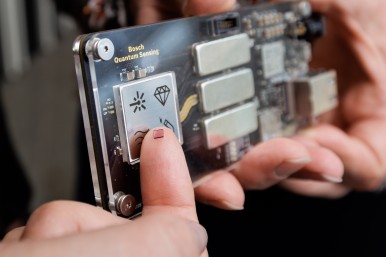
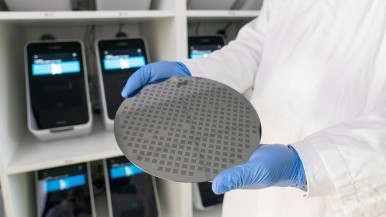
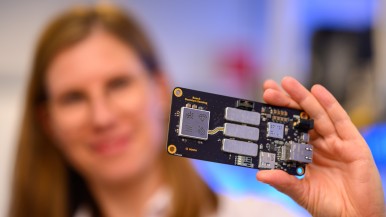
Stuttgart, Germany – They cannot be grasped, either literally or figuratively. Yet their potential is revolutionary, and they are a key technology of the future. We are talking about quanta. For more than ten years, Bosch has been researching in this field, and it is playing a decisive part in commercializing quantum sensors. Since 2023, it has had a development collaboration with Element Six, the world’s leading solutions provider of synthetic diamonds. Bosch is now significantly extending this alliance and establishing a joint venture, to be known as Bosch Quantum Sensing. The joint venture will be based on the in-house start-up of the same name, which Bosch set up in 2022. Domiciled in Ludwigsburg, Germany, Bosch Quantum Sensing currently employs 30 associates. Bosch itself will be the lead partner and be responsible for operations. Element Six will hold a 25 percent stake. It has been agreed that further financial details will not be disclosed. The establishment of the new company is still subject to official approval. Bosch Quantum Sensing sees many areas in which novel quantum sensors can be used, from exploration of natural resources to aircraft navigation and medical technology. By the middle of the next decade, Bosch estimates that the global market potential of medical and mobility applications will be in the mid-single-digit billion euros range per year. Synthetic diamonds are a key component of Bosch quantum sensors. In stepping up its partnership with Element Six, Bosch is making a determined move toward the commercialization of quantum sensors. Quantum sensors are a future technology with huge potential. They will bring about fundamental changes in many sectors of our economy, and improve people’s lives. In setting up this new company, we are underscoring this technology’s strategic significance for Bosch. As innovation leader of commercial quantum sensors, we will work with Element Six to further extend our technological lead,...says Stefan Hartung, chairman of the board of management of Robert Bosch GmbH. Quantum leap toward commercialization The distinctive qualities of these special-purpose synthetic diamonds allow quantum sensors based on them to detect even the tiniest magnetic fields. In this way, they satisfy the most exacting market requirements and make real innovations possible. “We want to work with Element Six to make quantum sensors economical and allow them to be produced on an industrial scale. In this way, we will create the basis for innovative applications that set new standards for precision and efficiency,” says Katrin Kobe, CEO of Bosch Quantum Sensing. “Through the new joint venture between Bosch and Element Six, which aligns with Element Six’ contribution towards De Beers Group’s Origins strategy, we will integrate our synthetic diamond technology with Bosch Quantum Sensing’s capabilities, unlocking new possibilities in critical sectors such as healthcare and navigation. Together, we will harness the respective decades of excellence and innovation to push the limits of what's possible, heralding a new era of synthetic diamond-enabled technologies”, says Siobhán Duffy, the CEO of Element Six. The synthetic diamond solutions provider is in a unique position to supply the highly engineered synthetic diamonds in the quantity and quality required for industrial applications, while Bosch will integrate them into robust and scalable sensor systems. It is a classic win-win situation. Even now, the latest Bosch quantum sensor prototype is the most compact of its kind for the level of sensitivity required – it is the same size as a modern smartphone. In the area of mobility, it could enable a robust navigation in the future, complementary to conventional GPS systems. It could also offer decisive advantages for the exploration of natural resources and, in medical technology, for the measurement of cardiac activity. The advantage of compact sensors is their portability, less expensive production, and better scalability. The long-term goal of Bosch Quantum Sensing is to make quantum sensors so small that they can be integrated onto a chip. Press photos and infocharts are available on the Bosch Media Service at www.bosch-press.com . Contact person for press inquiries: Athanassios Kaliudis Phone: +49 711 811-7497 E-mail: Athanassios.Kaliudis@de.bosch.com

Growth through medical technology: Bosch and Randox invest heavily in the Vivaly ...

10.04.2024

Press release

Business/economy

Growth through medical technology: Bosch and Randox invest heavily in the Vivaly ...

Crumlin, Northern Ireland / Gerlingen and Waiblingen, Germany – With many diseases, every minute counts, and determining whether a patient is presenting the symptoms of a simple cold, the flu, or something as severe as life-threatening meningitis is usually only possible after time-consuming and expensive laboratory diagnostics. With its Vivalytic analysis platform, Bosch has set itself the goal of making fast and highly precise diagnostics accessible at the point of care – and aims to use molecular diagnostics to become a leading provider in the market by 2030. To achieve this, Bosch has now agreed on a strategic partnership with Randox Laboratories Ltd., a leading diagnostic and medical technology company. The two companies will invest around 150 million euros in joint research, development, and sales activities for new tests for the Vivalytic analysis platform provided by Bosch Healthcare. One goal is the development of a sepsis IVD 1 grade test that will be the first to feature highly innovative and novel BioMEMS technology.Bosch has defined medical technology as a strategic growth field. Point-of-care molecular diagnostics is expected to become a future market worth billions. And with its Vivalytic analysis platform, Bosch aims to achieve a leading position in this market. “With cutting-edge technology from our own labs and our own production lines, we want to grow long-term together with partners in the field of precision diagnostics,” says Stefan Hartung, chairman of the Bosch board of management. “Here, our medical technology can draw considerable benefit from our diversification, from our expertise, from the groundwork we have done in automation, miniaturization, molecular diagnostics, and from our experience in microchip development and manufacturing,” Hartung adds. “We are investing long-term in an exciting high-tech growth field and continuously developing it together with partners. With technology ‘Invented for life’, we can relieve the burden on medical professionals and help make the diagnose and treatment of disease faster”. With cutting-edge technology from our own labs and our own production lines, we want to grow long-term together with partners in the field of precision diagnostics.... Stefan Hartung, chairman of the Bosch board of management Shared growth: decentralized diagnostics at the point of care Bosch Healthcare Solutions and Randox are now joining forces in an attempt to accelerate the development and market launch of new tests and to make distribution channels more efficient. The partnership is set to run for more than ten years. With Vivalytic, the two companies aim to achieve sales in the medium nine-figure range by 2030. “Globally, healthcare is moving toward decentralized and personalized diagnostics, that enable rapid interventions and individual treatment plans,” says Marc Meier, managing director of Bosch Healthcare Solutions GmbH. “With our partner Randox, we want to further expand the test portfolio of our Vivalytic analysis device. Our fully automated molecular-diagnostic PCR tests provide clarity directly at the site of sample collection, shorten waiting times, and take the strain off the healthcare system,” Meier adds. Globally, healthcare is moving toward decentralized and personalized diagnostics, that enable rapid interventions and individual treatment plans....Marc Meier, managing director of Bosch Healthcare Solutions GmbH The two partners are a good fit: Bosch can contribute its technology and manufacturing expertise across the fields of molecular diagnostics, microchip development and manufacturing, and miniaturization. The universal Vivalytic platform for molecular diagnostics was developed in over ten years by Bosch researchers and brought to market maturity by Bosch Healthcare Solutions. Randox has 40 years of experience in the design and development of highly sensitive IVD tests performed on a variety of technologies, including microfluidic platforms. In combination with the company’s extensive market knowledge and global sales and distribution network, this adds up to considerable opportunities for growth. “Randox has always been committed to improving health worldwide and sees the need to invest in research and development initiatives that will support clinical decision making across a variety of disease areas. Diagnostics has always been an indispensable component of healthcare, and the alignment of both science and technology makes for the perfect fit in an area for high potential impact, especially in pressure-driven environments,” says Dr. Peter Fitzgerald, Managing Director of Randox Laboratories Ltd. Bosch Healthcare Solutions and Randox already collaborated during the Covid-19 pandemic. In spring 2020, Bosch launched one of the world’s first fully automated PCR tests for the SARS-CoV-2 coronavirus. Together with Randox, the rapid test for use in doctor’s offices, nursing homes, testing stations, and hospitals was made ready for the Vivalytic analysis device within the space of just a few weeks. Development goal: sepsis test based on BioMEMS technology One focus of the development partnership with Randox is the implementation of a highly sensitive multiplex 2 test for sepsis on the Vivalytic analysis platform. Sepsis, also known as “blood poisoning,” is a potentially life-threatening complication 3 that can occur in conjunction with various infectious diseases. A medical emergency that can lead to multiple organ failure, it requires immediate medical treatment. The planned IVD grade sepsis test is to be based for the first time on the highly innovative and novel BioMEMS technology developed by teams from Bosch corporate research in Renningen and Bosch Healthcare Solutions in Waiblingen. “We have set ourselves the ambitious goal of adding the functions of a high-performance silicon chip based on microsystems technology to our test cartridges for the Vivalytic platform. In doing so, we will combine Bosch’s unique expertise in the areas of MEMS chips, molecular diagnostics, and microfluidics,” Marc Meier says. “Clinical outcomes in sepsis depend on timely diagnosis and appropriate early therapeutic intervention. Current methods of sepsis diagnosis are insufficient and time-consuming. With over 10 years of experience in the field of infectious diseases diagnostics, we aim to develop a state-of-the-art sepsis test using the highly multiplexing BioMEMS technology. Such a test could revolutionize sepsis diagnosis, ultimately leading to improved treatment outcomes and lower mortality rates from this life-threatening condition,” says Dr. Peter Fitzgerald. Smaller and faster: from microfluidics to nanofluidics – thanks to BioMEMS The powerful BioMEMS chip adds a further innovative analysis method to the Vivalytic test cartridge, enabling it to test simultaneously and significantly faster for a large number of different pathogens. It is called BioMEMS because it combines microelectromechanical systems (MEMS) with microfluidics for applications in the field of medical technology. In microfluidics, very small amounts of fluid in the microliter range are moved in a very small space. Miniaturization allows qualitative biochemical polymerase chain reactions (PCR) to run in parallel in real-time on a single BioMEMS chip. “Compared to previous PCR reactions, the volumes of liquids are reduced by a factor of 1,000 to the nanoliter range. The analysis of liquids is left to a small microchip,” Marc Meier explains. With the new BioMEMS technology, fully automatic testing of up to 250 genetic characteristics 4 (e.g. pathogens) in one cartridge is possible in less than 15 minutes in some cases. The test cartridge is a highly complex laboratory the size of a smartphone, so to speak. Another future advantage of BioMEMS will be simpler and faster adaptation of new tests or existing tests on the chip itself. For example, existing tests can easily be expanded to include additional features. “The BioMEMS technology paves the way for us to move into nanofluidics, where each pathogen will be examined in a reaction vessel the thickness of a hair,” Meier says. To achieve this, Bosch wants to create more capacity on a MEMS chip and expand it what are known as “nanocavities”. Thanks to these very small cavities, even more biochemical processes will be able to run in parallel on a chip. With increasing miniaturization, the technology has potential to be used in oncology as well over the long term. The BioMEMS chips are to be manufactured at the Bosch semiconductor plant in Reutlingen, with bio-integration and cartridge assembly to be carried out at Bosch Healthcare Solutions in Waiblingen. The BioMEMS technology paves the way for us to move into nanofluidics, where each pathogen will be examined in a reaction vessel the thickness of a hair....Marc Meier, managing director of Bosch Healthcare Solutions GmbH Vivalytic platform: easy application at the point of sample collection The advantages of carrying out PCR tests on the Bosch Vivalytic platform lie not only in speedy analysis, but also in the ease of use: Once the sample has been taken, it is placed in the test cartridge. The cartridge, which contains all the necessary reagents for the respective test, is then inserted into the Vivalytic analyser for automated evaluation. Medical staff require only brief training on how to operate it. This enables fast and targeted diagnostics directly at the point of sample collection – either at the doctor’s office or in the hospital – without the often long and time-consuming detour via a central laboratory. Bosch Healthcare Solutions already distributes various tests for diseases of the upper and lower respiratory tract, such as SARS-CoV-2 – also as a pooling variant and as a saliva test – or a test to differentiate between SARS-CoV-2, RSV virus and influenza. There are also tests for pathogens that cause sexually transmitted infections (STI) and MRSA / SA (“hospital germ”). Starting in summer, it is planned to expand the portfolio with tests for whooping cough (Bordetella holmesii, Bordetella parapertussis, and Bordetella bronchiseptica), urinary tract infections (UTI), bacterial meningitis, the two most common sexually transmitted diseases (Chlamydia trachomatis; CT and Neisseria gonorrhoeae; NG), fungal infections (Candida auris), and three tests for diarrheal diseases (norovirus, Clostridioides difficile, HSP).1 In in vitro diagnostic tests, samples such as blood or saliva are taken from the human body to be analyzed. 2 High-multiplex test means that a PCR test can test for a large number of pathogens simultaneously. In comparison, a multiplex test can detect up to 50 pathogens and a lowplex / single test up to 10 pathogens. 3 With around 50 million cases of sepsis and 11 million fatalities per year, sepsis is responsible for around 20 percent of all fatalities worldwide. [https://pubmed.ncbi.nlm.nih.gov/31954465/]. 4 Genetic characteristics can be used to detect pathogens such as viruses, bacteria, fungi and parasites, as well as their resistance to drugs, or to identify genetic mutations in tumors.Explore more PCR rapid test for Candida auris for Vivalytic by Bosch now available.

For safer roads: Bosch teams up with Microsoft to explore new frontiers with gen ...

28.02.2024

Press release

Automated mobility

For safer roads: Bosch teams up with Microsoft to explore new frontiers with gen ...

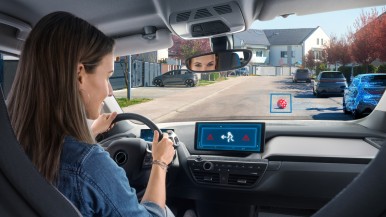
Stuttgart, Germany – It’s a scenario that no driver ever wants to see: a ball rolling out into the road. The chances are it will be followed immediately by a child in hot pursuit, oblivious to any traffic. But while human drivers can assess this situation using their contextual knowledge, today’s assisted and automated driving systems still have to learn how to do it. Bosch is pursuing the use of generative AI in terms to further improve automated driving functions. As part of this, Bosch and Microsoft are exploring opportunities to collaborate and leverage the power of generative AI. “Bosch is working on bringing a new dimension of AI applications into the vehicle,” said Dr. Stefan Hartung, chairman of the Bosch board of management, at this year’s Bosch Connected World (BCW) AIoT industry conference in Berlin. The expectation is that generative AI will enable vehicles to assess situations and react accordingly, and in this way keep road users even safer. Greater safety on the roads is also the wish of 60 percent of respondents to this year’s Bosch Tech Compass, a worldwide representative Bosch survey on the subjects of technology and AI. Bosch is working on bringing a new dimension of AI applications into the vehicle,...says Dr. Stefan Hartung, chairman of the board of management. Generative AI to make road traffic safer The two companies anticipate that a collaboration would take the performance of automated driving functions to the next level. They would like to see generative AI help enhance convenience in the vehicle and to provide greater safety for all road users. To achieve this, Bosch's comprehensive understanding of vehicles and automotive-specific AI expertise will be invaluable, as well as their access to vehicle sensor data to feed the generative AI. “In our unwavering commitment to safer roads, Microsoft is eager to explore collaboration opportunities with Bosch to pioneer the realm of generative AI,” said Uli Homann, Microsoft CVP and Distinguished Architect. Even today, when it comes to training systems for automated driving, AI quickly comes up against its limits. Today’s driver assistance systems can detect people, animals, objects, and vehicles, but in the near future generative AI could help determine whether a situation could potentially lead to an accident. Generative AI utilizes vast amounts of data to train systems for automated driving, enabling them to draw improved conclusions from this data. For example, it could deduce whether an object on the road ahead is a plastic bag or a damaged vehicle part. This information can be used either to communicate directly with the driver – such as by displaying a warning – or to initiate appropriate driving maneuvers, such as braking while switching on the hazard warning lights. Bosch and Microsoft have already partnered to develop a universal software platform for seamlessly connecting cars and the cloud, and are looking forward to work together to identify new opportunities to bring cutting-edge AI technology to their customers and the autonomous vehicle industry. Generative AI as a boost to innovation “Generative AI is a boost to innovation. It can transform industry in much the same way as the invention of the computer,” says Dr. Tanja Rueckert, member of the Bosch board of management and chief digital officer. The new 2024 Bosch Tech Compass shows this as well: 64 percent of respondents believe that AI is the technology with the greatest importance for the future. In comparison, only 41 percent of respondents were of the same opinion just one year ago. Generative AI is a boost to innovation. It can transform industry in much the same way as the invention of the computer,...says Dr. Tanja Rueckert, member of the Bosch board of management and chief digital officer. From manufacturing to everyday office work, generative AI is already being used in many areas at Bosch. In addition to Microsoft, the company is working with several partners, including AWS, Google, and Aleph Alpha. The Bosch Group’s venture capital unit, Bosch Ventures, invested in the AI company Aleph Alpha last year. Bosch also announced it would collaborate with the startup on finding new use cases both for Bosch associates and customers. “Bosch and Aleph Alpha want to learn from each other, benefit from each other’s know-how, and work together on cross-domain use cases,” Rueckert says. This partnership is now bearing its first fruits in North America: in collaboration with Aleph Alpha, Bosch is debuting AI-based speech recognition on behalf of a premium car manufacturer. In this solution, a chatbot understands and answers breakdown service calls with the help of natural language processing, which also recognizes dialects, accents, and moods. The call is taken directly, reducing the driver’s waiting time to a minimum. As many as 40 percent of calls can be processed and resolved automatically; for more complex queries, the bot transmits all relevant information to a service center agent who takes over the case immediately. From the AI search engine to manufacturing AI experts at Bosch are currently working on well over 120 specific applications that these new AI models open up for the company’s associates and customers. Such applications include the generation of software program code or powerful chatbots and voicebots to support technicians or interact with consumers. Another is AskBosch, the in-house AI-assisted search engine launched at the end of 2023. It offers faster natural-language access to a wide variety of data sources – sources scattered over the intranet, say. In addition to externally available data, AskBosch also includes internal data sources, so Bosch associates can research information specific to the company. Generative AI also ensures greater speed in manufacturing: in initial projects in two Bosch plants in Germany, generative AI creates synthetic images in order to develop and scale AI solutions for optical inspection and optimize existing AI models. Bosch expects that this will reduce the time needed for planning, launching, and ramping up AI applications from the current six-to-twelve months to just a few weeks. Following successful piloting, this service for generating synthetic data is to be offered to all Bosch locations. 2024 Bosch Tech Compass: setting the pace in the use of AI As AI is used in more and more areas of life, professional development is becoming increasingly important: 58 percent of respondents to the Bosch Tech Compass are convinced of this. This opinion is particularly prevalent in USA at 63 percent (Germany: 54 percent, China: 52 percent). Here, too, Bosch is setting the pace in the use of artificial intelligence and is getting its associates on board. In 2019, Bosch launched a training program, initially aimed at bringing 30,000 associates up to speed on the subject of AI. Up to now, some 28,000 associates have taken part in the program. Like the Bosch AI code of ethics, which sets ethical guidelines for dealing with artificial intelligence, this program has been supplemented with content about generative AI. For all the results of the 2024 Bosch Tech Compass, click here . About the survey: For the representative survey, people aged 18 and over in seven countries (Brazil, China, Germany, France, India, the U.K., and the U.S.) were polled online on behalf of Robert Bosch GmbH by the market researchers Gesellschaft für Innovative Marktforschung mbH (GIM) in December 2023. In Germany, France, and the U.K., at least 1,000 people were polled per country; in Brazil, China, India, and the U.S., it was at least 2,000 people each. The random samples are representative of their respective countries in terms of region, gender, and age (Brazil, Germany, France, U.K., U.S.: 18 to 69 years / China, India: 18 to 59 years).

Quantum technologies: Bosch aims to use sensors to take a leading position

05.10.2023

Press release

Electrified mobility

Quantum technologies: Bosch aims to use sensors to take a leading position

Stuttgart, Germany – Quantum technologies have great potential, but most of this potential is still a distant dream at present. Following ten years of research in this field, Bosch is now planning to work with the first pilot customers in the medical and mobility industries on specific applications over the next two years. At the startup Bosch Quantum Sensing, established at the beginning of 2022, some 30 associates are currently focusing on this. Bosch estimates the annual global market potential of applications for medicine and mobility will reach the mid-single-digit billions by the middle of the next decade. One potential area of application for quantum sensors, the brain-computer interface (BCI), will on its own be worth more than five billion dollars annually in the long term, according to the company’s calculations. One example of its future use is sensors that record nerve impulses in order to control artificial limbs and thus improve patients’ quality of life. “The quantum sensors we are creating in medical technology are a perfect fit for our ‘Invented for life’ ethos. By the end of the decade, we want to take a leading position with our technology,” says Dr. Stefan Hartung, chairman of the Bosch board of management.Small is beautiful: Bosch is a leader in miniaturization When it comes to size, the technology company is already a frontrunner: in terms of its measurement accuracy, the Bosch sensor prototype is the smallest currently available – about the size of a cell phone. Its compact design offers considerable advantages wherever space is at a premium – for example, in industrial applications, in vehicles, in aircraft, or even in hospital emergency rooms. The smaller the sensor, the greater the benefits: smaller sensors are portable, cheaper to produce, and more scalable as a result. “Our goal is to miniaturize quantum sensors to the point where they can be integrated onto a chip,” says Dr. Katrin Kobe, who is responsible for sensor commercialization at Bosch Quantum Sensing. This could lead the way to additional sensor applications. Quantum sensors as potential lifesavers In medicine, Bosch quantum sensors could help save lives in the future: by measuring the heart’s natural magnetic field and enabling simple measurements over a longer period of time, they can provide far more data than today’s electrocardiography (ECG). An ECG machine is applied directly to the skin by means of electrodes; if they slip, measurements are inaccurate. Moreover, in an emergency, attaching the ECG machine uses up precious time. Quantum sensors, by contrast, can be incorporated into things like items of clothing or mattresses. This not only speeds up diagnosis in the emergency room, but also makes monitoring at home easy and precise. The prospect of contactless early detection of atrial fibrillation – one of the causes of life-threatening strokes, heart failure, and dementia – is thus within reach for the first time. In other words, early diagnosis with the help of quantum sensors could, in the best case, lead to the prevention of fatal strokes. Ultra-precise navigation in the air, on the road, and on water In addition to medical technology, quantum sensors could also be used in mobility. One example is navigation. A global positioning system (GPS) is susceptible to interference, whereas quantum sensors are resistant to external influences, since they work by measuring the earth’s unchanging magnetic field. This paves the way for ultra-precise navigation in the air, on the road, and on water. There may also be scope for considerable additional benefits in electromobility. In the future, quantum sensors could be used there to precisely measure the magnetic field of the electric current and thus determine the exact charge level of the battery. The result would be more reliable determination of the remaining range, allowing trips to be planned better.

New area of business: Bosch to develop systems for water treatment

28.06.2023

Press release

Business/economy

New area of business: Bosch to develop systems for water treatment

Stuttgart, Germany – “A climate-neutral world won’t work without green hydrogen,” says Dr. Stefan Hartung, chairman of the Bosch board of management. Bosch is now expanding its business to include technology for water treatment. In addition to systems using the usual water treatment method of reverse osmosis, Bosch also plans to offer new solutions specifically engineered for remote areas and offshore locations. “Above all, the production of green hydrogen requires ultrapure water. With our special-purpose systems, water treatment can be done anywhere, even in the most remote areas of the world, in an economical and environmentally friendly way,” Hartung says. The systems designed by Bosch Manufacturing Solutions are not only robust and low maintenance, but compared to solutions commonly available on the market, they eliminate the need for chemicals in water treatment. With its entry into this new business field, Bosch is closing the circle and rounding off its range of products and services: “We’re developing technology for water treatment as well as for the generation, compression, storage, and use of hydrogen – and doing so for various sectors. Hardly any other company offers such a broad portfolio,” Hartung says. Water treatment forms the first and most fundamental link in the hydrogen value chain. Bosch has developed the water treatment technology for electrolysis at its locations in Renningen, Stuttgart-Feuerbach, and České Budějovice, and external pilot projects are to be added in the course of this year. The market launch for the systems is planned for 2024, and Bosch will be presenting the technology at the Bosch Tech Day in Stuttgart-Feuerbach on July 13, 2023. We’re developing technology for water treatment as well as for the generation, compression, storage, and use of hydrogen – and doing so for various sectors. Hardly any other company offers such a broad portfolio...says Dr. Stefan Hartung, chairman of the Bosch board of management. Special-purpose water treatment systems for the toughest conditions Electrolyzers require ultrapure water for the production of hydrogen. “Impurities in the water can render electrolyzers inoperative in a very short time,” explains Dr. Wolfgang Schleifenbaum, head of the Hydrogen business unit at Bosch Manufacturing Solutions. In the future, hydrogen will be produced in areas with strong winds or abundant sunshine – Africa, South America, or Northern Europe, for example. Locations offshore or in the desert present particular challenges: considerable distances from the technical facilities, water high in salt or minerals – all make water treatment more difficult. As a result, demand for special equipment is high: Bosch expects that starting in 2035, some 500 of the company’s special-purpose water treatment systems will be needed worldwide each year. The Bosch systems remove minerals from the water by means of thermal and electrochemical processes to obtain ultrapure water. Thanks to a treatment process without filter media, it is possible for operators to completely dispense with the use of chemicals. “Green hydrogen is sustainable only if its production doesn’t cause collateral damage to the environment; for example, by putting chemicals into our already heavily polluted waters,” Schleifenbaum explains. For predictive maintenance of the equipment, even from far away, Bosch offers software solutions that ensure robust operation in harsh environmental conditions. Industrial systems for water treatment in developed areas The demand for ultrapure water for the world’s hydrogen projects is enormous. As the world strives to achieve the Paris climate targets, Bosch estimates that, starting in 2050, annual demand for the water used in electrolysis will amount to some four cubic kilometers – more than the volume of Germany’s Lake Starnberg. Germany, too, has ambitious plans: the government has set a goal of installing H2 electrolyzers with a total capacity of 10 gigawatts by 2030 (source: German government, 2022 ). The EU aims to install 40 gigawatts of electrolysis capacity in Europe by 2030, with plans to produce up to ten million metric tons of renewable hydrogen (source: European Commission, 2020 ). “Hydrogen will play a crucial role in the energy supply of the future. Industries worldwide must use hydrogen if they want to become climate neutral. Bosch supplies water treatment technology that meets different requirements with regard to the size, performance, and location of the electrolyzers,” Schleifenbaum says. For water treatment in developed areas, Bosch plans to expand its portfolio to include industrial systems that use reverse-osmosis processes and ion exchangers to turn tap water into the ultrapure water electrolyzers need. With this combination of industrial and special purpose equipment, Bosch fulfills the requirements for electrolysis projects worldwide. Water treatment with Bosch technology – “Invented for life” Bosch technologies also help maintain valuable drinking water reserves. The Bosch system is particularly efficient, reducing the feedwater required for producing water for the electrolysis process by up to one-third compared to common solutions on the market. In addition to producing water for electrolysis, the special-purpose systems can also be adapted to produce drinking water. “With our water treatment systems, we follow the Bosch guideline and offer technology that is ‘Invented for life.’ In areas where drinking water is scarce, we can use our technology to help improve the supply,” Schleifenbaum says.

Bosch drives forward the development of 6G

27.02.2023

Press release

Connected mobility

Bosch drives forward the development of 6G

Stuttgart, Germany – Worldwide, research and development work on the future 6G mobile communications standard is picking up pace. Companies and states are investing massively in this technology. Bosch is leading the way and is actively involved in projects, alliances, and initiatives at both the national and international level to lay important foundations for 6G technology. “6G will be much more than just an infrastructure for connectivity; it will greatly increase the efficiency of autonomous driving cars, smart cities, and connected industries. That’s why 6G is a strategically important field of technology,” says Dr. Andreas Müller, who bundles and manages 6G activities at Bosch. The company currently has some 40 associates working on 6G technology. Over the next two years, that number is likely to double,” Müller says. Bosch is currently investing several millions of euros in research and development for 6G. 6G will be much more than just an infrastructure for connectivity; it will greatly increase the efficiency of autonomous driving cars, smart cities, and connected industries. That’s why 6G is a strategically important field of technology...says Dr. Andreas Müller, who bundles and manages 6G activities at Bosch. Bosch and Nokia expand their research alliance to include 6G At the Mobile World Congress 2023 in Barcelona, Bosch and Nokia have now announced that they will expand the alliance they entered into in 2017 to develop industrial IoT solutions in the area of 5G so that it also addresses the new 6G technology. The two companies are conducting joint research on the next generation of networks and investigating how to use future 6G networks for both communications and sensors. Comprehensive Bosch commitment at national and international level Bosch is currently contributing its expertise and experience to five publicly funded projects. In this context, the 6G-ICAS4Mobility , KOMSENS-6G , and 6G-BRAINS projects focus primarily on integrating communication and sensor-based environment recognition. Bosch leads the consortium for the first project . In addition to addressing relevant scenarios for road traffic, insights gained from the project will serve, in particular, as technical foundations for applications in the connected drones domain as well as in Industry 4.0 (e.g. for driverless transport systems). Meanwhile, the 6G-ANNA and 6G-SHINE projects focus on new connectivity structures. These are intended to enhance the efficiency of future E/E architectures in vehicles or robot cells. Bosch is also taking an active and leading role in early discussions and activities relating to future mobile communications standards within various industry alliances. In the 5G Automotive Association (5GAA) , for instance, leading companies from the automotive and telecommunications industries are working together to develop solutions for the mobility of the future. The 5G Alliance for Connected Industries and Automation (5GACIA) brings together industrial companies to focus on connectivity for machinery and equipment. Networks with a sixth sense through integration of sensor technology Among other things, the next generation of mobile communications will integrate new functionalities similar to radar sensors. With 6G, it will be possible to detect the position of objects in the network’s coverage area – without these objects having to be equipped with a radio module. 6G will enable extremely high data rates of up to one terabit per second, with very low latency in the order of some 100 microseconds – which is four times faster than a lightning strike. With the help of digital twins, this will for instance make it possible to monitor and simulate real-world manufacturing processes in a virtual world with no temporal and spatial restrictions. Experts predict that the first 6G standard will be completed by 2028. In recent months, Germany and Europe have launched a large number of 6G projects with the goal of strengthening their technological sovereignty. The German government, through the Federal Ministry of Education and Research (BMBF), is providing some 700 million euros over the next three years to fund 6G activities. In addition, the EU budget has earmarked a further almost 900 million euros until 2027. Japan and the United States have also launched corresponding investment programs totaling around 4.5 billion dollars.

Bosch establishes startup for quantum sensing

17.02.2022

Press release

Research

Bosch establishes startup for quantum sensing

Ludwigsburg, Germany – Robert Bosch GmbH has set up a new business unit to commercialize quantum sensors. With a view to sharing in the strong growth expected for this market, an in-house startup will pool the results of research so far and translate them into products. Jens Fabrowsky, the executive vice-president of Bosch Automotive Electronics responsible for the semiconductor business, says: “Quantum technology is pushing the boundaries of what is possible – in both data processing and sensors. Above all, the aim is to increase the broad practical benefit of quantum effects – for everything from the development of carbon-neutral powertrains to neurological diagnosis. Bosch has been doing extensive research in quantum sensing for many years now, and we see ourselves as global leaders in this area. Now we also want to use this as a basis for future business models.” Quantum technology is pushing the boundaries of what is possible – in both data processing and sensors....Jens Fabrowsky, executive vice-president of Bosch Automotive Electronics Dr. Katrin Kobe to lead new unit The CEO of the newly established startup is Dr. Katrin Kobe. A physics PhD, she brings to Bosch more than 25 years of management experience with a variety of technology companies. During that time, she developed several new business areas. “At Bosch, research is a top priority,” she says. “As a global company with alliances and expertise in quantum technology, Bosch is seizing the opportunity to make headway with this promising new field in an agile startup environment.” There are already 15 associates working at the new startup. The team, which is set to grow to more than 20 in the coming months, is looking to attract engineers and business developers in particular. At Bosch, research is a top priority,” she says. “As a global company with alliances and expertise in quantum technology, Bosch is seizing the opportunity to make headway with this promising new field in an agile startup environment....Dr. Katrin Kobe, CEO of the new start-up Medical applications possible in the foreseeable future Quantum sensors use the individual atoms of a gas or defects in solids as atomic measuring instruments. Because of the special way they are initialized before measurement and their ability to detect individual quantum states after measurement, these sensors achieve unprecedented precision. Thanks to quantum technology, this will soon allow measurements to be carried out that are nearly 1,000 times more precise than those done by today’s MEMS sensors (MEMS stands for micro-electro-mechanical system). Quantum sensors will, for example, be able to help diagnose neurological conditions such as Alzheimer’s and Parkinson’s more accurately and easily. They can also be used to record nerve impulses, and thus to control artificial limbs one day. These sensors can also detect the tiniest changes in an object’s position. Bosch has been researching quantum sensing for seven years now, and has built fully functional and powerful demonstrators of a quantum magnetometer and a quantum gyrometer. Quantum magnetometers can, for example, be used to detect the tiny magnetic fields generated by physiological processes, while quantum gyrometers permit the high-precision detection of rotations for the navigation of autonomous systems. The long-term goal is to achieve further miniaturization and integrate the technology on a chip. Moreover, Bosch has been actively involved in eight publicly funded quantum sensing projects, some of them international, since 2018. With this new business unit, Bosch now wants to open up this field for its own strategic purposes. Strong market growth expected Market experts are predicting strong growth in quantum sensing applications in the years ahead. In 2021, 22 billion dollars was invested worldwide in quantum technology. According to McKinsey & Co., the market for quantum sensors is expected to grow to as much as 7 billion dollars. Bosch’s new business unit will be located on the premises of its grow platform GmbH subsidiary in Ludwigsburg. Organizationally, the startup will be assigned to the Bosch Automotive Electronics division, based in Reutlingen.

On the path toward zero-defect production with Bosch AI

03.03.2021

Press release

Industry 4.0

On the path toward zero-defect production with Bosch AI

Stuttgart, Germany – More precise than any eye or ear, faster than any mind: artificial intelligence captures and processes terabytes of data in a matter of seconds, helping humans understand complex relationships at a glance and take action. The Bosch Center for Artificial Intelligence (BCAI) has developed an AI-based system that detects anomalies and malfunctions in the manufacturing process at an early stage, reliably reduces reject parts, and improves product quality. Speaking at Bosch’s digital AI conference “AI CON” on Wednesday, March 3, Bosch CDO/CTO Dr. Michael Bolle said: “The use of artificial intelligence will make factories more efficient, more productive, more eco-friendly – and will make products even better. Our new AI solution will save plants millions in costs.” Pilot plants where the AI solution is already in use are saving between one and two million euros per year. The plant in Hildesheim, for example, was able to identify and eliminate disruptions in process flows with the help of AI. As a result, the cycle times of the lines dropped by 15 percent Studies have confirmed the AI effect: Industry 4.0 in particular would benefit from the widespread use of AI in Germany. Spread across the various industries, the greatest cost-saving potential – more than 50 percent (182 billion euros) – is to be found in AI-assisted production (source: eco - Association of the Internet Industry and Arthur D. Little, 2019). In 2021, Bosch will be rolling out the AI solution developed by BCAI, starting with some 50 powertrain plants worldwide, and connecting it to more than 800 production lines. More than one billion data messages will be stored on the analysis platform every day. Bosch plans to subsequently deploy the AI solution across the company at its roughly 240 plants. The company will also take the experience and technological know-how it gains and incorporate it into the development of new AI technology for manufacturing. The use of artificial intelligence will make factories more efficient, more productive, more eco-friendly – and will make products even better. Our new AI solution will save plants millions in costs....Dr. Michael Bolle, Bosch CDO/CTO Bosch AI improves production and product The pilot user of the new AI analysis platform is Bosch’s Mobility Solutions business sector. Over the next few years, Bosch will invest some 500 million euros in bringing digitalization and connectivity to its plants. The expected saving will be twice as high: roughly one billion euros by 2025. An integral part of the project is the use of artificial intelligence. Collaboration between BCAI and the division’s plants has resulted in a universal AI solution for manufacturing that uses Bosch Connected Industry’s Nexeed Manufacturing Execution System (MES) to automatically collect, process, and analyze data from a variety of sources in near real time. Sensor data from machines serves as the basis for, say, determining fluctuations in a wide range of manufacturing processes. The Industry 4.0 software Nexeed “translates” and visualizes the data and codes, the AI system makes a recommendation for action, and the associate decides how to proceed. The main tools in this process are dashboards, individually configured and tailored to local use cases and the corresponding AI analysis. This setup makes it easier to find potential causes of errors. Self-adapting processes for machines and assembly lines can be integrated as well. If, for example, a drill hole deviates from the defined placement, the AI system independently initiates the necessary steps. At times, the AI system receives support from cameras that are positioned along the production lines and record the manufacturing process. On the basis of patterns it has learned, the system identifies deviations, and action can be taken immediately. In addition, field and customer data is linked to the platform in individual cases. This helps the system understand even better how products behave in the field, enabling it to detect defects in good time and predict impending failures. Bosch uses AI to unlock manufacturing potential While the manufacturing industry has grasped the situation in theory, it is still lagging behind in practice: more than half of all German companies (58 percent) see disruptive potential in artificial intelligence, but only one in seven (14 percent) is currently using AI for Industry 4.0 (Bitkom, 2020). A clear majority of Germans (60 percent) would like to see AI used more in industry, in sectors such as automaking or aircraft-building. This is a core finding of the Bosch AI Future Compass . Presented in November 2020, the study indicated that more than two-thirds of respondents would welcome the use of AI in diagnosing machine faults and in other high-tech areas. Bosch is already fully committed to artificial intelligence. In manufacturing operations, the technology helps reduce rejects, improves the utilization of machines and systems, and optimizes production processes. “Artificial intelligence is an epoch-making technology, comparable to the invention of letterpress. It will revolutionize manufacturing. With the help of artificial intelligence, machines and products learn how to be smart and anticipate,” Bolle says. In addition to projects in its own plants, Bosch is launching AI-based solutions on the market. Applications in manufacturing include automated visual inspection of workpieces, software for intelligent production management, and sophisticated energy management. Bosch will present AI solutions for manufacturing at the digital Hannover Messe 2021 (April 12–16). Artificial intelligence is an epoch-making technology, comparable to the invention of letterpress. It will revolutionize manufacturing. With the help of artificial intelligence, machines and products learn how to be smart and anticipate....Dr. Michael Bolle, Bosch CDO/CTO Bosch anchors artificial intelligence in its corporate strategy Bosch regards artificial intelligence as a key technology. By 2025, the aim is for all Bosch products to either contain AI or have been developed or manufactured with its help. To this end, the company is investing in bright minds, appropriate infrastructure, and suitable conditions. Bosch aims to train 20,000 associates in AI by the end of 2022. One key lever here is its research and development center for artificial intelligence, BCAI. Just three years after it was set up, BCAI had earned back its initial investment: its contribution to result is now some 300 million euros. Bosch’s objective: “We research and offer AI that is safe, robust, and explainable,” Bolle says. The company is primarily concerned with industrial AI – the connection between artificial intelligence and the physical world, in other words. Bosch has excellent prospects in this area. “Our plants manufacture a wide variety of products – from refrigerators and power tools to powertrains and assistance systems for the automotive industry and automation technology for use in factories. We are now adding AI algorithms to this expertise,” Bolle explains.

Bosch Hemoglobin Monitor: Early detection of anemia without blood tests

11.01.2021

Press release

Business/economy

Bosch Hemoglobin Monitor: Early detection of anemia without blood tests

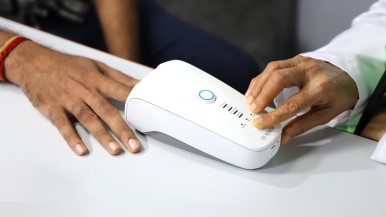
Bengaluru, India / Waiblingen, Germany – According to estimations by the WHO 1.6 billion people suffer from Anemia, a condition resulting from the reduced hemoglobin concentration in the blood. This has prompted the WHO to define the fight against anemia as one of its critical sustainable development goals for 2025. Bosch has developed a portable Hemoglobin Monitor Solution (HMS) especially for regions where routine access to medical care tends to be difficult. This HMS allows a large number of people to be screened for anemia rapidly, safely, using a non-invasive approach. The solution has been named a CES Innovation Award Honoree in the “Health and Wellness” category. “Bosch has developed the non-invasive Hemoglobin monitor as an innovative solution and as an alternative to traditional methods for the early detection of anemia. This should offer people better diagnosis options even in resource constrained conditions. The use of artificial intelligence is revolutionizing anemia management, specifically in point-of-care setups and closer to the patient”, explains Dattatri Salagame, President and Managing Director of Robert Bosch Engineering and Business Solutions Private Limited (RBEI). Bosch has developed the non-invasive Hemoglobin monitor as an innovative solution and as an alternative to traditional methods for the early detection of anemia. This should offer people better diagnosis options even in resource constrained conditions. The use of artificial intelligence is revolutionizing anemia management, specifically in point-of-care setups and closer to the patient....Dattatri Salagame, President and Managing Director of Robert Bosch Engineering and Business Solutions Private Limited (RBEI) Hemoglobin is a protein found in red blood cells and is responsible for carrying oxygen and carbon dioxide throughout the body. People with a low hemoglobin count may experience symptoms such as general fatigue, weakness, pale skin, and even serious illnesses. Anemia particularly affects women, even more so when they are pregnant, and also people suffering from malnutrition. In cancer patients undergoing chemotherapy or in palliative care, hemoglobin levels should be checked regularly. Hemoglobin results in 30 seconds using a non-invasive AI measurement The intelligent solution by Bosch is designed for use directly at the point-of-care and is completely pain-free with no need for a blood test, as the value is determined by a finger scanner using multi-wavelength spectrophotometry on the surface of the skin. The system uses an optical sensor to precisely and reliably measure the photoplethysmogram (PPG) signals. Photoplethysmography, or PPG, is an optical technique used to detect volumetric changes in blood in peripheral circulation. The device provides a reliable result within 30 seconds even for low hemoglobin concentrations. This is where machine learning comes in: the device’s algorithm monitors the wavelength of the light and uses 27 different characteristics to determine and classify the hemoglobin value. The algorithm has been trained with more than 10,000 anemia data points. These clinically collected data along with the corresponding ground truth data, are the basis for the machine learning algorithm. The more validated data sets are put into the continuously learning algorithm, the more precise the results will be. Lab-free results without risk of infection A laboratory analysis is not necessary and there is no risk of infection from contaminated needles. Participants receive their test results quickly at the point of care. The device is battery operated, does not need subsequent calibration, and is extremely easy to use. It is intended for use in outlying and remote regions by healthcare professionals. Location-based reporting ensures easy clinical traceability. Organizations that operate multiple devices can draw conclusions through heat maps about specific regions. Patient data remains anonymous. Market release in India is expected by mid-2021.

“5G is a standard of superlatives”

26.11.2020

Press release

Business/economy

“5G is a standard of superlatives”

Everyone’s talking about 5G. What is so special about this new communications standard? Dr. Andreas Müller : If we want to keep things simple, we could say this is the next step after the mobile communications standards 2G, 3G, and 4G. And now with 5G, we’ll be able to transfer data on the internet even faster. But that definition doesn’t go far enough. 5G represents something completely new. For the first time, a mobile communications standard has been developed that focuses not on connecting people, but on the communication between sensors, devices, machines, and more on the internet of things (IoT). The IoT is of key importance for Bosch. We already employ more than 30,000 software engineers.. As far as possible, all Bosch products should be launched with a web-based services package in the future. Experts believe that by 2025, there will be more than 70 billion connected devices worldwide. These include industrial robots, self-driving cars, and agricultural sensors that measure soil moisture or provide information on animal health.How much better and faster will communication be with 5G? Dr. Andreas Müller : We won’t only be faster and better, we’ll also cover a lot more. Striving for more is human nature, but it doesn’t always become reality. With 5G it’s different. 5G is a standard of superlatives: with top data rates of 20 gigabits a second, it is up to 20 times faster than 4G. It can transfer data virtually instantaneously with a latency of one millisecond, and is up to 99.9999 percent reliable – in other words, almost as safe as data transmission through a wire. 5G also makes wireless real-time “critical communication” possible for the first time. In other words, even applications that have to work absolutely reliably and securely can be realized wirelessly with 5G. This applies, for example, to a remotely operated crane as well as to a manufacturing facility. 5G opens up new areas of application in industry, where the performance of other wireless technologies such as Wi-Fi frequently fell short in the past. How important is 5G for Bosch? Dr. Andreas Müller : Bosch is an IoT company. We offer solutions for connected mobility, homes, and factories. All these are areas in which 5G will be used and deliver added value. In doing so, it has enormous disruptive potential: not only will it enable completely new technological solutions and business models, but it will also trigger fundamental changes to established value chains. Bosch launched its research activities in 5G as early as 2014 and got involved with a host of national and international initiatives and bodies. One of these is the 5G Alliance for Connected Industries and Automation ( 5G-ACIA ), which has more than 70 companies and research institutions as members. Bosch has taken on the chair of the alliance to work with partners in shaping 5G so that it meets the needs of industry from the outset. In addition, we applied to Germany’s Federal Network Agency for 5G licenses for selected German locations and received them. Here, Germany is blazing a path for the rest of the world in making it possible for companies to set up their own local campus networks. This also offers opportunities for leveraging the full potential of Industry 4.0, particularly in the manufacturing sector. Such opportunities are especially important for Bosch, As the company believes Industry 4.0 is the way forward, and is digitalizing its plants and those of its customers. What benefits does 5G offer manufacturing? Can you name some examples? Dr. Andreas Müller : 5G will become the central nervous system of the factory of the future. The new communications standard will make manufacturing more flexible, more mobile, and more productive. One way to use 5G in manufacturing is with portable, mobile operating panels, which on-site workers can use to plug into various systems and machines. The panels themselves can also support safety-critical applications like kill switches. At the moment, such mechanisms are usually stationary and attached to each separate machine. 5G reduces that number and simultaneously improves working conditions for associates, who can quickly and conveniently access the machines. Augmented reality in conjunction with the new mobile communications standard will also deliver considerable benefits. For instance, workers wearing data glasses connected via 5G can access additional information in their field of vision in real time, optimizing how they monitor and maintain machinery. 5G also makes it possible to link driverless transport systems and integrate them into manufacturing operations without any difficulty. We presented ActiveShuttle , an initial prototype for a 5G-capable transport system, at the Hannover Messe 2019. What role exactly does 5G play in ActiveShuttle? Dr. Andreas Müller : In the first stage, we’ve replaced “only” the current Wi-Fi connection with 5G. That has already brought many advantages, such as a more stable connection and the avoidance of interruptions to communication when switching between different wireless access nodes. But things should really get interesting when we launch the second stage. At that point, we will shift the “intelligence” of our transport system, meaning key control functions, to a local cloud and use 5G for data transfer between the machine and IT infrastructure. This will pave the way for more affordable devices, and improve maintenance, safety, security, and scalability. At the same time, we’ll be able to realize new functions relatively easily, such as cooperative maneuvers between different transport systems. What we’re currently looking into is these sorts of approaches, which weren’t possible before 5G. The first prototypes will be available in the next few months. Often it’s the way they combine the trio of 5G, edge computing, and AI that’s truly revolutionary. If 5G gives production a boost, why has Bosch applied for 5G licenses for only its two locations in Feuerbach and Renningen? Dr. Andreas Müller : We’re still in the process of evaluating 5G’s full potential and working out new manufacturing concepts. This takes time and will happen first at selected locations that do pioneering work for the entire Bosch network.. However, we have firm plans to eventually roll out 5G to all Bosch plants step by step. There are already 5G activities underway at several locations, although still using test licenses from the network agency. What were the criteria for selecting the Feuerbach and Renningen locations? Dr. Andreas Müller : Various factors come together at these locations. The plant in Feuerbach is one of Bosch’s largest factories in Germany and very centrally located, with the research campus in Renningen, Bosch Rexroth branches, corporate IT, and the Bosch Connected Industry operating unit all very close by. We can bring together various kinds of expertise and professionals relatively easily and quickly – which is precisely what we need. What’s more, Feuerbach is a lead plant for Industry 4.0 at Bosch and now also a lead plant for 5G. The research campus in Renningen, is the nucleus of research and development at Bosch. That’s where we ran early tests on 5G and its application in an industrial setting. Our plan is to expand that further and gradually extend those activities to other domains, such as agriculture or building automation. You have put the first 5G campus network into operation in Feuerbach. What was the biggest challenge? Dr. Andreas Müller : 5G campus networks are uncharted territory – for Bosch as well as for everyone else. These challenges start at the network planning stage. Traditional network planning generally focuses on network coverage and the feasible data transfer rate. In a factory, however, criteria such as latency and reliability also play a role. Guaranteeing 99.9999% reliability is not so easy from a planning perspective. Beyond that, questions about topology arose – how exactly the network is going to be constructed. Working out the details of how to integrate it securely into existing structures, for example the existing Bosch network, was also very challenging Who is Bosch working with to set up these 5G networks? Dr. Andreas Müller : We select our partners on a project-related basis. In the current phase it is also important to get to know the offers of different providers even better. At the Stuttgart-Feuerbach plant, for example, we have implemented the network construction with Nokia. While Bosch defined use cases, Nokia supplied the 5G infrastructure components. Both companies carried out the network planning together. At our semiconductor plant in Reutlingen however, we are working together with Ericsson as part of the 5G-SMART research project. The aim of this project is to evaluate the effects of 5G on the extremely complex and sensitive semiconductor manufacturing process. Aside from 5G-capable factories, there are also machines and products that have to be compatible with the new standard. Bosch recently launched a new 5G-capable control technology. Will Bosch be making all its products 5G-capable? Dr. Andreas Müller : Bosch Rexroth’s new control technology, ctrlX AUTOMATION , is a true revolution. ctrlX AUTOMATION bridges the gap between control systems, IT, and the internet of things, and was designed with 5G in mind. 5G will be making its way not only into manufacturing, but also into domains such as agriculture, urban development, and healthcare. As a result, we are constantly assessing whether using 5G makes sense or if another technology might not be a better choice. 5G is not an end in itself, but should always offer recognizable added value for our customers. How does 5G affect people’s health? How dangerous is the radiation exposure from 5G? Dr. Andreas Müller : Bosch takes this topic very seriously, as well as the concerns that people sometimes have about it. Complying with all legal requirements and threshold values is a given. In addition, we regularly analyze the assessments and recommendations from various organizations, such as the World Health Organization (WHO) and the German Federal Office for Radiation Protection (BfS). Neither WHO nor BfS have so far found any scientific evidence of negative effects on people’s health, despite numerous studies. Apart from that, we are drawing up concepts that would minimize radiation exposure, for instance through proper network planning. A high density of base stations is actually a good thing, since this can markedly reduce the transmission power. But ultimately it’s always about the terminal device’s reception quality. In plants, the transmission power of 5G will be comparable to that of Wi-Fi. What will 5G change for Bosch associates? Dr. Andreas Müller : With 5G, we’ll be making entirely new manufacturing concepts a reality, moving us toward our vision of the factory of the future. This of course goes hand in hand with giving our associates training. The new mobile communications standard has the potential to simplify and improve the work our associates do in manufacturing and logistics. And that’s the whole point.About Dr. Andreas Müller Dr. Andreas Müller is the head of communication and network technology in the corporate sector for research and advance engineering at Robert Bosch GmbH in Renningen, Germany. He also coordinates group-wide 5G activities at Bosch as part of its Industry 4.0 initiative. Since April 2018, Dr. Müller has chaired the global 5G Alliance for Connected Industries and Automation (5G-ACIA). The goal of the alliance, which has more than 70 companies and research institutions, is to shape 5G from the beginning so that it meets the future needs of industry.


Bosch puts first 5G campus network into operation

26.11.2020

Press release

Business/economy

Bosch puts first 5G campus network into operation

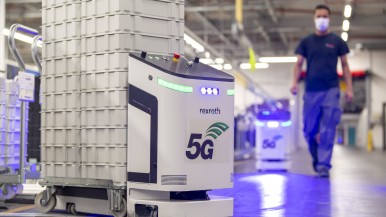
Stuttgart, Germany – Bosch is putting its first 5G campus network into operation. At its Industry 4.0 lead plant in Stuttgart-Feuerbach, the company aims to manufacture under previously unheard-of conditions, with data being transferred extremely reliably and ultra-fast, and machines reacting almost instantaneously. For the first time, wireless implementation will be possible for critical applications that require absolute precision and safety. Without exception, people and machines will be able to cooperate safely and without barriers. “5G strengthens our competitiveness and lets us make even more of Industry 4.0 ’s potential,” says Dr. Michael Bolle, board of management member and CDO/CTO at Bosch. “We will gradually roll 5G out to our roughly 250 plants around the world.” The locations where Bosch will be setting up 5G networks in the coming months include its research campus in Renningen, Germany. The company is also developing 5G-capable products and launching its first solutions for industrial use. 5G strengthens our competitiveness and lets us make even more of Industry 4.0’s potential. We will gradually roll 5G out to our roughly 250 plants around the world....Dr. Michael Bolle, board of management member and CDO/CTO at Bosch Bosch plant in Stuttgart-Feuerbach is 5G pioneer The ActiveShuttle moves effortlessly and autonomously over the shop floor, avoids people and vehicles, bypasses storage boxes, steers purposefully toward the production line, stops, unloads its freight, and sets off again. At the Bosch plant in Stuttgart-Feuerbach, the factory of the future is becoming a reality – including 5G applications such as the widespread use of autonomous transport systems. “Campus networks¹ are an important building block for Industry 4.0,” Bolle says. One decisive feature is ubiquitous and uninterrupted network coverage. The network can be optimized and tailored to highly demanding industrial applications. In the campus network in Feuerbach, eight small base stations – known as “small cells” – ensure good signal reception throughout the manufacturing facility, which covers around 10,000 square metres. This lets wirelessly connected machines and systems communicate with each other in real time and exchange data within a few milliseconds. Integrated into the existing IT infrastructure and continuously monitored, the 5G campus network offers a maximum of security and independence. “Campus networks give us control – over what happens in the factory and over how data is transferred both within and beyond the factory walls,” Bolle says. Bosch set up the network together with Nokia. While Bosch defined use cases, Nokia provided 5G components. The two companies are jointly responsible for network planning, operation, and servicing. The pioneering work in Feuerbach is also the setting for an extraordinary symbiosis: Industry 4.0 combined with 5G, optimized with artificial intelligence. As part of KICK , a project funded by the German Federal Ministry of Education and Research, Nokia and other partners are researching how artificial intelligence can simplify the operation and maintenance of 5G campus networks. We have a clear vision of the factory of the future, and how we need to develop our products to meet its requirements. In this context, 5G is a ‘springboard innovation,’ a technology that will fundamentally change the market....Rolf Najork, member of the Bosch board of management Bosch to launch its first 5G-capable products Anyone looking to seize the potential of the new mobile communications standard in factories needs not just 5G networks but also equipment and machines that interact wirelessly. Bosch is making products 5G-capable. “We have a clear vision of the factory of the future, and how we need to develop our products to meet its requirements. In this context, 5G is a ‘springboard innovation,’ a technology that will fundamentally change the market,” says Rolf Najork, the member of the Bosch board of management responsible for industrial technology. Capgemini has found that 65 percent of industrial companies worldwide plan to deploy 5G within the first two years of availability². Bosch is developing solutions to meet this demand. At the Hannover Messe 2019, the company presented its ActiveShuttle , whose 5G capability and intelligent software allow it to integrate into intralogistics operations smoothly and safely. 5G also plays an important role in control technology. Indeed, Bosch Rexroth’s ctrlX Automation platform was designed for 5G from the outset. “We are forging new paths and bridging the gap between control systems, IT, and the internet of things. Our new control technology will use the new mobile communications standard to connect a wide range of devices,” Najork says. Bosch sees 5G as a boost for business 5G is making inroads not only into manufacturing industry, but also into healthcare, agriculture, mobility, and urban development. Experts estimate that there will be up to 70 billion connected devices worldwide by 2025³, ranging from industrial robots and autonomous cars to sensors that provide information about the nutrient content or moisture level of arable soils. The new mobile communications standard plays a major role in this and is becoming a competitive factor. “We have played an active part in shaping 5G. Bosch started its research into 5G as early as 2014,” Bolle says. These include activities such as 5G NetMobil , a project that shows how to achieve fully connected driving and how modern communications technology can make it safer. Meanwhile, the international 5G-SMART association is investigating the potential effects 5G will have on complex semiconductor production. These findings are being incorporated into the planning of 5G networks, also in Bosch’s new wafer fab in Dresden, which will be ready for 5G from day one. Moreover, Bosch now chairs the 5G-ACIA initiative, whose more than 70 member companies aim to shape 5G so that it meets the needs of manufacturing industry from the outset. As a leading IoT company that offers solutions for connected mobility, the smart home, and connected industry, Bosch sees 5G as a driver of future business.¹ “5G campus network” denotes a geographically limited, local cellular network adapted to meet specific requirements such as industrial communications. ² See Capgemini: “ 5G in industrial operations: How telcos and industrial companies stand to benefit ”, p. 7. ³ See Roland Berger: „ Erfolgsfaktor 5G. Innovation und Vielfalt für die nächste Stufe der Digitalisierung “, p. 11.

Groundbreaking passenger protection: 40 years ago, Bosch launched the electronic ...

04.11.2020

Press release

Automated mobility

Groundbreaking passenger protection: 40 years ago, Bosch launched the electronic ...

Stuttgart, Germany – A collision, a loud bang, and the worst-case scenario has been avoided – that’s the easiest way to describe the benefits of an airbag. Playing a key role in this protective “detonation” is the airbag control unit. It functions as the control center for the lifesaving inflatable cushion. Forty years ago, Bosch joined forces with the Daimler-Benz AG to start production of the world’s first electronic airbag control unit – giving a decisive boost to passenger protection. “Bosch is a pioneer in automotive electronics and safety,” says Bosch board of management member Harald Kröger. “The electronic airbag control unit shows what we mean by ‘Invented for life.’” Since the start of full-scale production in December 1980, Bosch has manufactured more than 250 million airbag control units, constantly refining the technology all the while. The company’s accident researchers estimate that since the market launch of Bosch’s airbag control units, the front, side, and head airbags they deploy have helped save some 90,000 lives around the world. This makes them a key component of vision zero: no fatalities or serious injuries in road traffic. Bosch is a pioneer in automotive electronics and safety. The electronic airbag control unit shows what we mean by ‘Invented for life.’...Bosch board of management member Harald Kröger The right decision in milliseconds Using internal and external acceleration, yaw-rate, and pressure sensors, a state-of-the-art airbag control unit identifies the type of accident as well as its severity, and deploys the airbag and belt tensioner as needed. In just ten milliseconds – ten times faster than a person can blink – the trigger algorithm interprets the sensor data to determine whether the driver has simply hit the brakes, bumped into a parked car, jumped the curb, or if the vehicle has had a severe collision or is at risk of rolling over. If the situation is dangerous, the system ignites the pyrotechnic gas generator. Within 30 milliseconds, the airbag is fully inflated and can protect the driver and passengers. Today’s vehicles come with as many as nine airbags installed, which can be deployed individually depending on the accident scenario. Following a collision, the system also sends a signal to cut off the fuel supply, or, in electric vehicles, to disconnect the high-voltage battery. In addition, the system forwards information about the accident to other vehicle systems – for example eCall, which automatically calls emergency services after an airbag has been deployed. Since 1977, Bosch engineers have worked with automakers on the first electronic airbag control unit, putting it through more than 6,000 crash tests in 60 vehicle models. Today, more than 1.8 million crash simulations are necessary to prepare an airbag control unit for large-scale production in a vehicle model. The first airbag system, which went into production in December 1980 and then had its market launch in the Mercedes-Benz S-Class, consisted of three components – a voltage converter, an energy reserve, and a control unit – with a total of 170 parts. These controlled only an airbag and belt tensioner for the driver and optionally for the front passenger. Today’s twelfth-generation airbag control units have just half as many parts and can manage up to 48 restraint devices, including various front and side airbags, knee airbags, and belt tensioners.Airbag control units and automated driving In the future, as the number of sensors in vehicles rises, applying the information they gather could ensure that airbags, belt tensioners, and other vehicle functions interact even better. Such an interaction might look something like this: the system swiftly recognizes an impending accident and, for example, automatically puts the occupants into a sitting position that reduces their risk of injury before the actual collision. It can deploy airbags and belt tensioners to provide the best possible crash protection for every person in the vehicle. Increasingly automated driving is one area where these possibilities are relevant, since at higher levels it opens up entirely new interior concepts and more room to move about, even for drivers: they may swivel their seat, turn to face the passengers, or get cozy in their seat. As seating arrangements in the vehicle become more flexible, it is ever more crucial to have very specific control of airbags and belt tensioners. In turn, this increases the complexity of the demands on the airbag control units that Bosch is already working on today. Even after 40 years, this particular bag of tricks is still far from empty.