Search & find:
Media, press releases, events for your editorial coverage

Bosch sensor platform turns robots into real movement talents

05.01.2026

Press release

Internet of Things

Bosch sensor platform turns robots into real movement talents

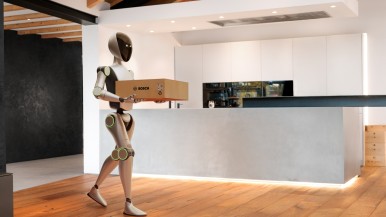
Las Vegas, NV – At the pulsating heart of the robotics revolution and the rapidly expanding world of Extended Reality (XR) lies a silent, yet indispensable technology: MEMS (Micro-Electro-Mechanical Systems) sensors. Much like the complex senses that guide living organisms, these tiny, sophisticated devices serve as the foundational pillar, endowing machines with the crucial ability to perceive and understand their own motion and orientation. This spatial awareness transforms complex algorithms into fluid movements and immersive digital experiences.Three new high-end sensors for the growth market At CES® 2026, Bosch Sensortec introduces the BMI5 platform, a new generation of inertial (acceleration and gyroscope) sensors designed to provide high-precision performance with ultra-low noise to capture every nuance of motion across multiple device classes. Built on a shared hardware foundation and adapted through intelligent software, the platform launches with three variants – BMI560, BMI563 and BMI570. The BMI5 family products are addressing the premium segments of consumer electronics device manufacturers, building the base for the growing MEMS sensor market. According to market research and strategy consulting company Yole Group, this market with Bosch as the market leader, is expected to grow to more than 19.2 billion USD by 2030, with an average compound annual growth rate (CAGR 2024-2030) of 4 percent.* To meet the high-volume serial production demands, the cleanroom area in its own Bosch wafer fab in Reutlingen, Germany was expanded from approximately 35,000 square meters to over 44,000 square meters by the end of 2025. Specific solutions for diverse applications The BMI560 sensor makes virtual and augmented reality experiences feel incredibly real. It precisely tracks head movements with almost no delay, allowing users to interact naturally in 3D environments. Advanced image stabilization helps smartphones and action cameras capture clear, shake-free photos and videos, even on the go. The BMI563 is handling vibrations and extreme movements, making it ideal for robots that need to navigate precisely or for controllers in virtual reality that track every subtle hand gesture. It helps these devices understand their surroundings and movements with exceptional accuracy. For example, Bosch's new MEMS sensor helps a humanoid robot find the right way, even if the camera lens is covered by an object. The BMI570 enhances smartwatches and wireless earbuds. Compared to its predecessor, the new platform delivers a doubled measurement range. This enables the detection of an even wider array of movements and gestures, particularly those in dynamic forms. For hearables it provides accurate head-orientation data for immersive 3D audio experiences. This means music or calls can sound like they're coming from a specific direction, reacting to how the user is moving. Technical AI excellence paired with responsible innovation An Edge-AI classification engine helps the device stay “always on” by recognizing movement patterns directly inside the sensor. This uses less power, makes reactions faster, and adds smart benefits — like automatic activity detection on a smartwatch without the user needing to interact. Across all variants, the BMI5 platform meets Bosch Sensortec’s highest ecological standards to date, combining technical performance with responsible innovation. This unified architecture enables device makers to streamline cutting-edge and at the same time a sustainable development across product lines. With the BMI5 platform, we are strengthening the foundation for the next generation of motion-aware devices...said Stefan Finkbeiner, CEO of Bosch Sensortec. “Our customers benefit from a consistent level of precision, robustness and exceptional performance across all variants - enabling responsive XR systems, reliable robotics and intuitive wearables. The platform combines technical excellence with responsible innovation, reflecting our core Bosch values of quality and sustainability supporting a wide range of applications with a single, scalable architecture. And this was just the beginning. The BMI5 family continues to grow, with more variants already in the pipeline.” *Source: Status of the MEMS Industry 2025 report, Yole Group. Availability: Samples are now available for direct customers, and the complete product line-up will go into high-volume series production from Q3 2026 onwards.

Bosch Tech Compass: 70 percent see AI as the most influential technology

05.01.2026

Press release

Internet of Things

Bosch Tech Compass: 70 percent see AI as the most influential technology

Stuttgart, Germany – The world is ready for the age of artificial intelligence (AI). This is the broad consensus among the more than 11,000 people surveyed worldwide for this year’s Bosch Tech Compass. Never before have respondents seen AI in such a positive light as in this year’s survey: a majority believe that AI will be the most influential technology in the coming years and, out of all technologies, will have the greatest positive impact on society. More than half of all respondents worldwide feel ready for the changes brought about by AI. Yet there are also signs of a certain amount of “progress fatigue”: 57 percent want a pause button and would like to slow down technological development until we can better understand its effects.Germans have the highest expectations of AI In Germany, the expectations associated with AI are particularly high: 77 percent consider AI to be the most influential technology of the next ten years. However, as in previous years, skepticism about technological progress is also relatively high among respondents in Germany. Just 59 percent believe that technology will make the world a better place; only France is more skeptical (53 percent). Meanwhile, 71 percent of respondents worldwide are technology optimists. In Germany, only 40 percent currently feel prepared for the AI age – the lowest figure of all countries and at the same level as last year. Where does this technology skepticism in Germany come from? Two further results could provide an answer: only 30 percent of respondents there say that the education system encouraged them to develop innovative thinking, and only 23 percent think that the country’s regulation successfully promotes innovation – putting Germany at the bottom of the rankings in both respects. “The results of the Bosch Tech Compass indicate that we in Germany need to increase our society’s acceptance of innovations”, says Stefan Hartung, chairman of the board of management of Robert Bosch GmbH. However, to get innovations from the research lab onto the road, the innovation policy framework must also be right. This includes measures such as tax relief for investments in innovative technologies, more agility, and less bureaucracy. Overall, I would like us as a society to have more courage to take risks. And if something doesn’t work, we shouldn’t see it as a failure, but as part of the learning process...says Stefan Hartung, chairman of the board of management of Robert Bosch GmbH. Tanja Rueckert, member of the board of management and CDO of Robert Bosch GmbH, says: “We’re seeing a rapidly growing number of innovative AI solutions worldwide that we couldn’t have imagined even just a few years ago. It’s therefore not surprising that the number of people around the world who see AI as the most influential technology of our future has skyrocketed from 41 percent to 70 percent in just three years.” A full 59 percent would encourage their child to launch a startup A positive attitude toward innovation and risk is also a cultural issue: 59 percent of respondents worldwide would encourage their child to skip university and found a startup if they had a groundbreaking idea, but just 52 percent of German respondents share this courage to take risks. However, it’s only through this courage that the solutions of tomorrow are created. When people were asked about the areas that technological innovation should focus on, the top responses worldwide were climate change (37 percent), access to healthcare (31 percent), and cybersecurity (28 percent). AI has the greatest positive and greatest negative impact Not only will AI be the most influential technology of the next ten years, but it will also have the greatest positive impact on society – so say 43 percent of the survey respondents worldwide. Biotechnology and climate engineering follow at a clear distance behind, with 36 percent and 32 percent respectively believing they will have a particularly positive impact. Respondents also see a downside, however: 34 percent rank AI above all other technologies when it comes to negative effects on society. Humanoid robots and self-driving vehicles come next. For us at Bosch, this is a clear mission: innovation must go hand in hand with responsibility. That’s why it’s especially important that we introduce rules for trustworthy AI worldwide. At the same time, efforts should be made to avoid stifling the development and use of AI through overregulation ...says Tanja Rueckert, member of the board of management and CDO of Robert Bosch GmbH. About the study: For the Bosch Tech Compass , the Gesellschaft für Innovative Marktforschung mbH (GIM) surveyed more than 11,000 people over the age of 18 in seven countries in fall 2025. In Germany, France, and the United Kingdom, 1,000 people per country took part; in Brazil, China, India, and the United States, it was 2,000 people each. Bosch was not named as a client at any point during the survey.

Hannover Messe 2024: Bosch presents sustainable solutions for factory automation ...

22.04.2024

Press release

Business/economy

Hannover Messe 2024: Bosch presents sustainable solutions for factory automation ...

Stuttgart and Hannover, Germany – Industrial manufacturing is the engine of every economy. It creates jobs, secures prosperity, and ensures growth through trade. When industrial manufacturers come together again for this year’s Hannover Messe, there will be one major challenge that all of them continue to face: to respond to climate change, factories must become sustainable and conserve resources. Bosch is one of the leading factory outfitters; its broad portfolio of solutions for factory automation, the hydrogen economy, digitalization, and artificial intelligence (AI) helps industrial companies achieve a green transformation.Bosch industrial technology is in demand: in 2023, the supplier of technology and services was able to hold its own in a volatile market environment characterized by geopolitical tensions, the economic downturn, and interest-rate effects. Its sales of industrial technology rose to 7.4 billion euros. This equates to an increase of 6.8 percent, or 10.2 percent after adjusting for exchange-rate effects. The main drivers of this growth were Bosch’s acquisitions of HydraForce and Elmo Motion Control. “We are pursuing a long-term growth strategy with industrial technology,” says Tanja Rueckert, the member of the board of management of Robert Bosch GmbH responsible for the Industrial Technology business sector as well as the area of digital business and services. “We want to strengthen our market position, expand regional supply chains, and increase our industrial technology sales to 10 billion euros by 2028.” We want to strengthen our market position, expand regional supply chains, and increase our industrial technology sales to 10 billion euros by 2028....Tanja Rueckert, the member of the board of management of Robert Bosch GmbH At Hannover Messe 2024, Bosch will be presenting technologies and solutions in the fields of automation, digitalization, and hydrogen. “As an early adopter of artificial intelligence and digitalization applications, industrial technology is like almost no other sector,” Rueckert says. “Software and connectivity help increase efficiency, quality, and sustainability in production. The only way we can secure our standard of living and prosperity is with a strong industrial sector.” Generative AI: improve processes, increase quality In manufacturing, Bosch wants to use generative AI to further improve production management, monitoring, and control. In two Bosch plants in Germany, the company has launched initial projects through which generative AI creates synthetic images in order to develop and scale AI solutions for optical inspection and to optimize existing AI models. Bosch expects that this will reduce the time needed for planning, launching, and ramping up AI applications from the current six-to-twelve months to just a few weeks. Developed by Bosch researchers, this service for generating synthetic data is to be offered to all Bosch locations following successful piloting. ctrlX AUTOMATION: automation toolkit The ctrlX AUTOMATION system for factory automation developed by Bosch Rexroth comprises hardware, software, and apps. It is an open platform that provides all the building blocks for complete automation solutions, and reduces component and engineering costs by 30 to 50 percent. The platform’s community of partners, known collectively as ctrlX World, is continuously expanding the range of solutions with hardware, and above all with apps. So far, 100 partners have contributed their strengths and solutions. Since its launch five years ago, the number of customers has risen to around 1,500. Sales in this area increased 30 percent in 2023. Battery production: components for automated equipment Whether in electromobility, consumer electronics, or building technology, the demand for energy storage is greater than ever. Bosch Rexroth offers a comprehensive portfolio for battery production that includes individual components, systems solutions, and subsystems featuring linear, joining, and transfer technology in addition to the fully open ctrlX AUTOMATION system. Speed and precision are also important in battery production. Bosch Rexroth has developed linear robots that can be used quickly for typical applications such as handling cells and packs as well as joining and dispensing. These robots optimize processes in module and pack assembly and disassembly. Battery recycling: automation solution for deep discharge of batteries There are more and more electric cars driving quietly and with low emissions on the roads. Their batteries contain rare and valuable raw materials such as lithium and nickel, the recovery of which makes economic and ecological sense. Bosch Rexroth’s toolkit solution for diagnosing, discharging, and dismantling used vehicle batteries enables the automation of these process steps, which are upstream of the actual process of recovering the raw materials. This makes it possible to recycle batteries on an industrial scale and offers the possibility of flexible scaling. Stack and smart electrolysis module: technology for H2 electrolyzers Bosch not only plans to use hydrogen, but also to provide smart technology for its production. For this purpose, the company has developed an electrolysis stack, the central element of an electrolyzer. The stack comprises more than 100 electrolysis cells that use electricity to split water into oxygen and hydrogen. It is designed for an output of 1.25 megawatts. That is equivalent to the production of 23 kilograms of hydrogen per hour. The Bosch electrolysis stack is suitable for use in smaller-scale plants producing 1 megawatt and more, all the way up to large, gigawatt-scale plants. It is expected to be market-ready from 2025. In addition, Bosch is planning to combine its electrolyzer stack with a control unit, power electronics, and various sensors to create a smart electrolysis module. Manufacturing and testing technology: how fuel cells are made Bosch Manufacturing Solutions (BMG), the company’s special-purpose machinery unit, supplies advanced manufacturing equipment and testing technology for fuel-cell manufacturing – from individual components to complete systems. In total, more than 50 percent of the required manufacturing equipment comes from Bosch itself. When testing stacks and systems, natural conditions are simulated for the end-of-line functional test, where the PEM fuel cells are put through their paces. Here, gas composition, temperature, pressure, and humidity are the same as in the actual vehicle. The test benches work efficiently: 50 percent of the hydrogen used is recovered for new testing processes. A test bench for proton exchange membrane (PEM) electrolysis stacks will be presented for the first time at Hannover Messe. This type of test bench can be upgraded for development as well as for end-of-line functional testing, and is available in size classes between 50 kW and 3 MW. eSEA underwater actuator: electrification of offshore facilities In the future, hydrogen will often be produced in remote areas – in the desert or at sea – and thus far away from where it will later be used. To make it economical to operate the offshore facilities required for green hydrogen and the capture and storage of CO2, their plant technology needs to be significantly cheaper to purchase and operate than it has been to date. Bosch Rexroth has developed an electrical solution for controlling valves in underwater process plants at depths of up to 4,000 meters. Since this solution no longer feature valves operated via hydraulically driven actuators, it eliminates the need for miles of hydraulic lines to connect to hydraulic power units above water. Hydrogen filling stations: drive solutions for compressing hydrogen Hydrogen filling stations play a major role in decarbonizing the mobility sector. Within the next six years, several thousand hydrogen filling stations are set to go into operation worldwide. Together with partners, Bosch Rexroth has developed scalable solutions for servo-hydraulic compressor drives in the power range between 10 and 280 kW for the compression of hydrogen. To be able to refuel vehicles with hydrogen fuel quickly and simply, the gas has to be compressed to as much as 900 bar. A new electrohydraulically driven cryogenic pump has been developed in partnership with FirstElement Fuel, a leading company in the U.S. for the commercial operation of hydrogen filling stations. This cryogenic pump compresses liquid hydrogen directly to 875 bar. The aim is to refuel heavy trucks with 100 kg of hydrogen in under ten minutes. Direct refueling eliminates the need for intermediate storage tanks at filling stations. The first filling stations are set to be equipped starting in 2025. Moreover, Bosch Rexroth has worked with Maximator Hydrogen to develop scalable, low-maintenance drive units, with ratings currently up to 250 kW, that offer filling station operators an affordable way into hydrogen technology. The new container-based compressors can potentially reduce total cost of ownership by half compared with the commercially available alternatives. The Swiss Coop Group already uses hydrogen trucks for its goods transportation. They refuel at five filling stations equipped with Maximator and Bosch Rexroth technology. Bosch at Hannover Messe Bosch Rexroth – Hall 6, Booth D26 Bosch Connected Industries – Hall 9, Booth F27 Bosch Manufacturing Solutions – Hall 13, Booth C33 Selected panels with Bosch experts • Research Summit – Panel discussion with Dr. Tanja Rueckert, member of the board of management and chief digital officer, Robert Bosch GmbH, Monday, April 22, 2024, 2:30–3:15 p.m., Convention Center (CC), Room 1 • Panel discussion “The future of SMEs: Organizing sustainability & establishing digital business models” with Lisa Reehten, managing director, Bosch Climate Solutions, Tuesday, April 23, 2024, 5:15–5:35 p.m., Hall 8, Booth D17 • Panel discussion “AI meets automation” with Hans Michael Krause, director ctrlX World, Bosch Rexroth AG, Tuesday, April 23, 2024, 1:30–2:00 p.m. in Hall 3, Booth A76 • Lecture “Digital twins: What nobody is talking about” with Dr. Birgit Boss, Bosch Connected Industry, Thursday, April 25, 2024, 3:00–3:25 p.m., Industry 4.0 Conference Stage, Hall 8, Booth D17 • Panel discussion “The role of 6G in shaping the next industrial era” with Andreas Müller, Wednesday, April 24, 2024, 2:45–3:30 p.m., Hall 14, Booth H06


For safer roads: Bosch teams up with Microsoft to explore new frontiers with gen ...

28.02.2024

Press release

Automated mobility

For safer roads: Bosch teams up with Microsoft to explore new frontiers with gen ...

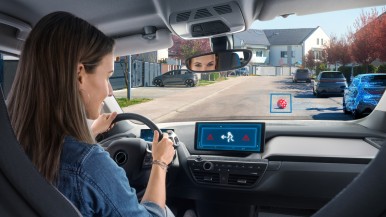
Stuttgart, Germany – It’s a scenario that no driver ever wants to see: a ball rolling out into the road. The chances are it will be followed immediately by a child in hot pursuit, oblivious to any traffic. But while human drivers can assess this situation using their contextual knowledge, today’s assisted and automated driving systems still have to learn how to do it. Bosch is pursuing the use of generative AI in terms to further improve automated driving functions. As part of this, Bosch and Microsoft are exploring opportunities to collaborate and leverage the power of generative AI. “Bosch is working on bringing a new dimension of AI applications into the vehicle,” said Dr. Stefan Hartung, chairman of the Bosch board of management, at this year’s Bosch Connected World (BCW) AIoT industry conference in Berlin. The expectation is that generative AI will enable vehicles to assess situations and react accordingly, and in this way keep road users even safer. Greater safety on the roads is also the wish of 60 percent of respondents to this year’s Bosch Tech Compass, a worldwide representative Bosch survey on the subjects of technology and AI. Bosch is working on bringing a new dimension of AI applications into the vehicle,...says Dr. Stefan Hartung, chairman of the board of management. Generative AI to make road traffic safer The two companies anticipate that a collaboration would take the performance of automated driving functions to the next level. They would like to see generative AI help enhance convenience in the vehicle and to provide greater safety for all road users. To achieve this, Bosch's comprehensive understanding of vehicles and automotive-specific AI expertise will be invaluable, as well as their access to vehicle sensor data to feed the generative AI. “In our unwavering commitment to safer roads, Microsoft is eager to explore collaboration opportunities with Bosch to pioneer the realm of generative AI,” said Uli Homann, Microsoft CVP and Distinguished Architect. Even today, when it comes to training systems for automated driving, AI quickly comes up against its limits. Today’s driver assistance systems can detect people, animals, objects, and vehicles, but in the near future generative AI could help determine whether a situation could potentially lead to an accident. Generative AI utilizes vast amounts of data to train systems for automated driving, enabling them to draw improved conclusions from this data. For example, it could deduce whether an object on the road ahead is a plastic bag or a damaged vehicle part. This information can be used either to communicate directly with the driver – such as by displaying a warning – or to initiate appropriate driving maneuvers, such as braking while switching on the hazard warning lights. Bosch and Microsoft have already partnered to develop a universal software platform for seamlessly connecting cars and the cloud, and are looking forward to work together to identify new opportunities to bring cutting-edge AI technology to their customers and the autonomous vehicle industry. Generative AI as a boost to innovation “Generative AI is a boost to innovation. It can transform industry in much the same way as the invention of the computer,” says Dr. Tanja Rueckert, member of the Bosch board of management and chief digital officer. The new 2024 Bosch Tech Compass shows this as well: 64 percent of respondents believe that AI is the technology with the greatest importance for the future. In comparison, only 41 percent of respondents were of the same opinion just one year ago. Generative AI is a boost to innovation. It can transform industry in much the same way as the invention of the computer,...says Dr. Tanja Rueckert, member of the Bosch board of management and chief digital officer. From manufacturing to everyday office work, generative AI is already being used in many areas at Bosch. In addition to Microsoft, the company is working with several partners, including AWS, Google, and Aleph Alpha. The Bosch Group’s venture capital unit, Bosch Ventures, invested in the AI company Aleph Alpha last year. Bosch also announced it would collaborate with the startup on finding new use cases both for Bosch associates and customers. “Bosch and Aleph Alpha want to learn from each other, benefit from each other’s know-how, and work together on cross-domain use cases,” Rueckert says. This partnership is now bearing its first fruits in North America: in collaboration with Aleph Alpha, Bosch is debuting AI-based speech recognition on behalf of a premium car manufacturer. In this solution, a chatbot understands and answers breakdown service calls with the help of natural language processing, which also recognizes dialects, accents, and moods. The call is taken directly, reducing the driver’s waiting time to a minimum. As many as 40 percent of calls can be processed and resolved automatically; for more complex queries, the bot transmits all relevant information to a service center agent who takes over the case immediately. From the AI search engine to manufacturing AI experts at Bosch are currently working on well over 120 specific applications that these new AI models open up for the company’s associates and customers. Such applications include the generation of software program code or powerful chatbots and voicebots to support technicians or interact with consumers. Another is AskBosch, the in-house AI-assisted search engine launched at the end of 2023. It offers faster natural-language access to a wide variety of data sources – sources scattered over the intranet, say. In addition to externally available data, AskBosch also includes internal data sources, so Bosch associates can research information specific to the company. Generative AI also ensures greater speed in manufacturing: in initial projects in two Bosch plants in Germany, generative AI creates synthetic images in order to develop and scale AI solutions for optical inspection and optimize existing AI models. Bosch expects that this will reduce the time needed for planning, launching, and ramping up AI applications from the current six-to-twelve months to just a few weeks. Following successful piloting, this service for generating synthetic data is to be offered to all Bosch locations. 2024 Bosch Tech Compass: setting the pace in the use of AI As AI is used in more and more areas of life, professional development is becoming increasingly important: 58 percent of respondents to the Bosch Tech Compass are convinced of this. This opinion is particularly prevalent in USA at 63 percent (Germany: 54 percent, China: 52 percent). Here, too, Bosch is setting the pace in the use of artificial intelligence and is getting its associates on board. In 2019, Bosch launched a training program, initially aimed at bringing 30,000 associates up to speed on the subject of AI. Up to now, some 28,000 associates have taken part in the program. Like the Bosch AI code of ethics, which sets ethical guidelines for dealing with artificial intelligence, this program has been supplemented with content about generative AI. For all the results of the 2024 Bosch Tech Compass, click here . About the survey: For the representative survey, people aged 18 and over in seven countries (Brazil, China, Germany, France, India, the U.K., and the U.S.) were polled online on behalf of Robert Bosch GmbH by the market researchers Gesellschaft für Innovative Marktforschung mbH (GIM) in December 2023. In Germany, France, and the U.K., at least 1,000 people were polled per country; in Brazil, China, India, and the U.S., it was at least 2,000 people each. The random samples are representative of their respective countries in terms of region, gender, and age (Brazil, Germany, France, U.K., U.S.: 18 to 69 years / China, India: 18 to 59 years).

Bosch unveils cutting edge Smart Connected Sensors platform for full-body motion ...

08.01.2024

Press release

Internet of Things

Bosch unveils cutting edge Smart Connected Sensors platform for full-body motion ...

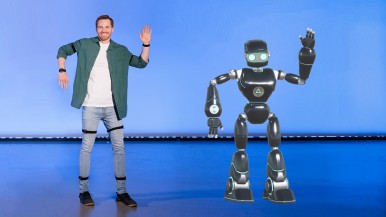
Las Vegas, Nevada / Reutlingen, Germany – Unlimited access to a personal feedback coach? That's the dream of many fitness and gaming enthusiasts. With the brand new Smart Connected Sensors platform, Bosch Sensortec ensures that movements and repetitions are not only measured, but that users get qualitative feedback on the movement execution. Specifically designed for full-body motion tracking, this new platform provides a fully integrated hardware and software solution that dramatically cuts development costs and time to market.Business customers wanting to integrate sensors in their designs are often faced with time-consuming and complicated tasks, combining and tweaking multiple devices to create the necessary hardware and software system. There is no sensor solution available on the market right now that provides wireless and ready-to-use full-body movement feedback. To meet this need and save developers precious time and effort, Bosch Sensortec provides business customers with the full package: BHI380, a programmable IMU-based sensor system using AI functionality. A wearable reference design (certified CE, FCC, ISED, MSIT, SRRC, MIC, NCC, UKCA) that can be straightforwardly attached to any part of the body without having to handle cable clutter, an external camera or dedicated bodysuits. Software features including gesture and activity recognition, body movement detection, relative body angle information, as well as a feedback coach. Multiple applications in rehabilitation, fitness and gaming The possibilities are almost endless. Key use cases will include rehabilitation, fitness, and gaming according to the motto “Move. Prove. Improve.” The Smart Connected Sensors platform provides complex feedback that enables users to properly perform rehabilitation exercises at home, thereby supporting their faster recovery. For highly responsive gaming applications, motion sensors will provide intuitive, accurate control by tracking even the tiniest movements. In the area of sports and fitness, the motion sensors can be used for complete body movement detection, for example to give detailed feedback on how well high-intensity exercises are performed. The sensors communicate wirelessly via Bluetooth Low Energy and thus do not restrict users' movement. Thanks to the platform principle, the system can be connected to numerous applications, such as wearables, hearables and AR/VR headsets. Engineers will find the Smart Connected Sensors platform easy to use and simple to scale, easily incorporating additional sensors and capabilities into their existing designs. Importantly, the platform enables up to eight nodes with various Bosch Sensortec sensors to be neatly connected to a central node, including Inertial Measurement Units (IMUs), magnetometers and pressure sensors. “For applications using Smart Connected Sensors, our new platform significantly reduces the amount of effort required from designers, enabling them to cut time to market and focus more on their specific expertise,” said Stefan Finkbeiner, General Manager and CEO at Bosch Sensortec. For applications using Smart Connected Sensors, our new platform significantly reduces the amount of effort required from designers, enabling them to cut time to market and focus more on their specific expertise...said Stefan Finkbeiner, General Manager and CEO at Bosch Sensortec. The sensor platform provides qualitative feedback based on integrated AI features and comes with a pattern creation software tool that helps customers customize their system design. By using this tool, the customer retains control over their data, as there is no need for regular data exchange with Bosch Sensortec. Availability: Smart Connected Sensors is available on direct request.

A new dimension of acceleration: Bosch launches world’s smallest MEMS accelerome ...

08.01.2024

Press release

Internet of Things

A new dimension of acceleration: Bosch launches world’s smallest MEMS accelerome ...

Las Vegas, Nevada / Reutlingen, Germany – Space is at a premium in hearables, smartwatches and other portable consumer products, and all components must be as small as possible. At the same time, OEMs are demanding plug-and-play step-counters and other sensors with built-in features that enable easy implementation without detailed application knowledge. To meet these challenges, Bosch Sensortec has announced the BMA530 and BMA580, the world's smallest MEMS accelerometers. Both devices include built-in features making them easy to design with. BMA530 tracks activities with its step counter and is especially suitable for wearables, and BMA580 targets hearables with voice activity detection.Compared to Bosch's current generation accelerometer (BMA253), the BMA530 and BMA580 have a 76 percent smaller footprint and have been reduced in height from 0.95 mm to 0.55 mm. This size reduction is achieved with an innovative Wafer Level Chip Scale Package (WLCSP). The small size of the accelerometers makes them easy to place on a PCB, and their integrated features make them easy for design engineers to integrate into their portable products. "The demand for tiny sensors with ever-increasing performance is growing as the industry moves towards more stylish and minimalist designs that require smaller sensors," said Stefan Finkbeiner, General Manager and CEO of Bosch Sensortec. "The new BMA530 and BMA580 provide an ultra-compact, fully-featured solution to meet this demand." The demand for tiny sensors with ever-increasing performance is growing as the industry moves towards more stylish and minimalist designs that require smaller sensors. The new BMA530 and BMA580 provide an ultra-compact, fully-featured solution to meet this demand. ...said Stefan Finkbeiner, General Manager and CEO of Bosch Sensortec. Bone conduction for reduced power consumption The BMA580 provides innovative voice activity detection and an advanced feature set for hearable devices. Typically, microphones in hearables consume a lot of power because they need to be always-on to listen for voice activity. Instead, the BMA580 uses bone conduction to detect the vibration of the user’s voice and then wakes the microphone from sleep – for an overall power saving. No other sensor on the market combines bone conduction with this miniature sensor size. The BMA580 enables user interaction with a hearable in response to the user tapping the device, for example to answer or end a call. The sensor’s software includes an algorithm that can distinguish between single, double and triple taps. In addition to wearables, the new BMA530 acceleration sensor is ideal for gesture recognition in toys, fall detection in laptops and other devices, and power management functions such as putting a smartphone to sleep when it is not moved. The new accelerometers offer multiple power modes and automatically switch from low-power to high-power modes to extend battery life. They offer a flexible set of connectivity options, including an I3C® interface. Availability: The new acceleration sensors from Bosch Sensortec can be ordered at our distribution partners from Q1 2024 onwards.

Logistics and transportation industry: Bosch launches service platform in Europe ...

06.12.2023

Press release

Connected mobility

Logistics and transportation industry: Bosch launches service platform in Europe ...

Stuttgart, Germany – Bosch’s digital logistics platform L.OS, targeted for simplifying IT processes in the transport and logistics industry, is celebrating a successful market launch. In Europe, India, and the U.S., the Bosch offering has already won 50 customers. 20 logistics companies each from Germany and India and ten from the U.S. are among the first L.OS customers. In addition, the integration of more than 50 service providers into the digital marketplace is already underway. Last year, Bosch announced a s trategic collaboration with the U.S. cloud provider Amazon Web Services (AWS) to digitalize logistics . The transportation and logistics industry is the backbone of the global economy. Bosch sees great market opportunities for its logistics services driving efficiency improvement. The technology company aims to generate global sales of some 500 million euros with logistics services by 2030, and has set up a separate unit with more than 400 associates for its digital platforms business. With L.OS, Bosch has ushered in the digital age for freight carriers, fleet owners and logistics service providers. Our logistics platform offers a complete ecosystem and software environment for using and combining services from different providers. For Bosch, the transportation and logistics industry is strategically important...says Dr. Markus Heyn, member of the Bosch board of management and chairman of the Mobility business sector. Open platform for providers of logistics solutions Using the digital L.OS platform, logistics and transportation companies across the globe will have quick and easy access to IT services, and thus be able to operate more efficiently and sustainably. The distinctive feature of L.OS is that it is open to all providers of logistics solutions and facilitates the smooth interplay of disparate services and data. For freight carriers and freight companies, this presents a chance to reap far greater benefit from the opportunities of digitalization for themselves in accordance with their individual needs or requirements in the respective country without having to set up resource- and cost-intensive IT projects of their own. In India, for example, Bosch’s proprietary “TrakZeus” positioning solution for efficient fleet and transportation management as well as route and parking planning has been available on L.OS from the start. The “Digital CN” solution allows transport documents such as e-way bills to be digitized quickly and easily, so that they can be transmitted securely via cell phone. In Europe, L.OS has been launched with a first service integration enabling secure truck parking booking as an extra feature for existing transportation management systems, while in the U.S., a dedicated transportation management system simplifies and manages operations for fleets. New Bosch operating unit to build digital platforms In July 2023, Bosch established its new, transnational “Mobility Platform and Services” operating unit to build digital platforms. More than 400 associates in Europe, India, and the U.S. are responsible for the further development and support of Bosch digital platforms. This currently includes for example “Mobility Marketplace”, a neutral digital ecommerce marketplace as well as “ParkZeus”, an integrated parking platform, and the “Logistics Operating System” L.OS. “The establishment of a dedicated unit underscores the great importance Bosch attaches to the digitalization of mobility empowered by cloud-based platforms. We want to enable companies to come together to co-create, innovate and solve complex problems of mobility through our platforms. Together, we’re driving the vision of sustainable and safe mobility enabled by digital platforms and the inclusivity it brings with it.,” says Sandeep Nelamangala, the executive director responsible for the digital platforms business at Bosch.

Security With Award-Winning Design

31.08.2023

Press release

Smart Home

Security With Award-Winning Design

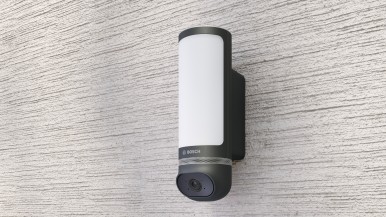
Stuttgart – The new Bosch Smart Home Eyes Outdoor Camera II is more than just a high-precision security camera for home. Its stylish design with a bright front lamp and colour-customisable top and bottom lights also makes it a handsome eye-catcher outdoors. The integrated 75-decibel siren sounds a loud alarm to frighten burglars away. The Eyes Outdoor Camera II can be used independently with the Bosch Smart Home Camera app or integrated into the Bosch Smart Home system.*Smart motion detection for enhanced security Reliably protecting their own homes is the top priority for many people. With a 145° field of view, DualRadar sensors, and manually rotatable and tiltable camera head, the Eyes Outdoor Camera II provides ideal monitoring of the area under surveillance. Thanks to 3D motion detection and smart video analysis, the camera automatically distinguishes human activities from other motions such as a roving cat or a windblown branch – which avoids false alarms. The masking function blacks out predefined zones (for example, neighbouring properties) and excludes them from the recording, thus protecting the privacy of third parties. The Eyes Outdoor Camera II easily masters darkness too thanks to its front lamp, which shines with a brightness up to 1 100 lumens, thus enabling the camera to also capture sharply focused images in full HD colour both day and night. If motion is detected while the Eyes Outdoor Camera II is in security mode, the device shows another of its talents. In addition to high-precision video recording, its integrated 75-decibel siren sounds a loud alarm and its red upper and lower lights begin to flash, thus providing both audible and visual deterrence in emergencies. Of course, when a stranger enters one’s property, it doesn’t necessarily mean danger. For example, the visitor could simply be a parcel carrier arriving at the door with a long-awaited delivery when no one is at home. In this case, the Eyes Outdoor Camera II acts like an intercom system. Via livestream on their smartphone, the user can see who is standing in front of the door and can communicate with them by means of the integrated loudspeaker and microphone. This makes it easy to instruct parcel carriers where they can safely leave their deliveries. Brings light into the darkness The integrated lighting options provide an additional sense of security. Using innovative DualRadar technology, the camera detects movements and measures distances with two modern radar sensors. It covers a field of vision of 180° and, as soon as movement is detected, it illuminates the property in the desired brightness. The property can initially be lit by subdued lighting or, as a deterrent, by bright lamps shining at full intensity. This way, passing cars or passers-by outside the monitored area do not trigger the motion light. The Bosch Smart Camera app enables its user to adjust the brightness of the front lamp (from warm to cool white) as well as the top and bottom lights, which can optimally illuminate the property in more than 1 500 colours. All lamps can also be individually switched and used with automatic twilight or individual time settings. The Bosch Smart Camera app enables its user to adjust the brightness of the front lamp (from warm to cool white) as well as the top and bottom lights, which can optimally illuminate the property in more than 1 500 colours. All lamps can also be individually switched and used with automatic twilight or individual time settings. Uncompromising design Available in silver or anthracite metallic, the Eyes Outdoor Camera II convinces users thanks to its thoroughly stylish design, which earned it both the Red Dot “Best of Best” Design Award (2023) and the iF Design Award (2023). With its modern style and clever combination of a camera and outdoor lighting, it appealingly yet unobtrusively welcomes guests and residents alike. Access-protected storage The 100 most recent video clips are automatically saved free of charge for seven days in the access-protected cloud storage. This enables users to re-evaluate or save individual video recordings. People who need even more storage space can opt for the Cloud+ extension , which lets them customise clip lengths, save video recordings for 30 days and permanently store up to 25 of their favourite clips. Particularly clever: the Cloud+ extension covers all cameras in the Bosch Smart Home system. Even smarter in the system The Eyes Outdoor Camera II can be integrated* into existing Bosch Smart Home systems to trigger smart automations and individual scenarios. For example, the customisable “Coming Home” scenario automatically deactivates the device when its user returns home after a day at work. Integrating the Eyes Outdoor Camera II into the Bosch Smart Home system enables the device to provide even greater security and convenience in one’s own home. Further features Resolution: 1080-pixel full HD (1920 x 1080 pixels) IP protection class: IP 55 Ambient temperature range: -20° to +50° Celsius Power supply: 230-volt alternating current Weight: 900 grams (including accessories and packaging: 1406g +/- 10g) Monitored areas: 130° horizontal (+80° rotation), 70° vertical (+25° inclination), 145° diagonal Radar detection range: 180° (range of 8 metres) Connections: Wi-Fi IEEE 802.11 b/g/n 2.4 GHz Wireless free-field range: 100 m Availability The Eyes Outdoor Camera II is expected to be available from the first half of 2024 in Germany, Austria, Switzerland, France, Great Britain, Belgium, the Netherlands, Luxembourg, Italy, Spain, Portugal, Denmark, Sweden, Norway and Finland. Requirements The Bosch Smart Camera app is required to use the Eyes Outdoor Camera II. To take advantage of further benefits, the Eyes Outdoor Camera II can be integrated into the Bosch Smart Home system via the Bosch Smart Home app.* * Integration of the Eyes Outdoor Camera II into the Bosch Smart Home system is expected to become possible from the first half of the year 2024.

TSMC, Bosch, Infineon, and NXP Establish Joint Venture to Bring Advanced Semicon ...

08.08.2023

Press release

Connected mobility

TSMC, Bosch, Infineon, and NXP Establish Joint Venture to Bring Advanced Semicon ...

Hsinchu, Stuttgart, Munich, Eindhoven, Aug 8, 2023 – TSMC (TWSE: 2330, NYSE: TSM), Robert Bosch GmbH, Infineon Technologies AG (FSE: IFX / OTCQX: IFNNY), and NXP Semiconductors N.V. (NASDAQ: NXPI) today announced a plan to jointly invest in European Semiconductor Manufacturing Company (ESMC) GmbH, in Dresden, Germany to provide advanced semiconductor manufacturing services. ESMC marks a significant step towards construction of a 300 mm fab to support the future capacity needs of the fast-growing automotive and industrial sectors, with the final investment decision pending confirmation of the level of public funding for this project. The project is planned under the framework of the European Chips Act. The planned fab is expected to have a monthly production capacity of 40,000 300 mm (12-inch) wafers on TSMC’s 28/22 nanometer planar CMOS and 16/12 nanometer FinFET process technology, further strengthening Europe’s semiconductor manufacturing ecosystem with advanced FinFET transistor technology and creating about 2,000 direct high-tech professional jobs. ESMC aims to begin construction of the fab in the second half of 2024 with production targeted to begin by the end of 2027. The planned joint venture will be 70 percent owned by TSMC, with Bosch, Infineon, and NXP each holding 10 percent equity stake, subject to regulatory approvals and other conditions. Total investments are expected to exceed 10 billion euros consisting of equity injection, debt borrowing, and strong support from the European Union and German government. The fab will be operated by TSMC. “This investment in Dresden demonstrates TSMC’s commitment to serving our customers’ strategic capacity and technology needs, and we are excited at this opportunity to deepen our long-standing partnership with Bosch, Infineon, and NXP,” said Dr. CC Wei, Chief Executive Officer of TSMC. “Europe is a highly promising place for semiconductor innovation, particularly in the automotive and industrial fields, and we look forward to bringing those innovations to life on our advanced silicon technology with the talent in Europe.” Dr. Stefan Hartung, chairman of the Bosch board of management: “Semiconductors are not only a crucial success factor for Bosch. Their reliable availability is also of great importance for the success of the global automotive industry. Apart from continuously expanding our own manufacturing facilities, we further secure our supply chains as an automotive supplier through close cooperation with our partners. With TSMC, we are pleased to gain a global innovation leader to strengthen the semiconductor ecosystem in the direct vicinity of our semiconductor plant in Dresden.” Semiconductors are not only a crucial success factor for Bosch. Their reliable availability is also of great importance for the success of the global automotive industry. Apart from continuously expanding our own manufacturing facilities, we further secure our supply chains as an automotive supplier through close cooperation with our partners. With TSMC, we are pleased to gain a global innovation leader to strengthen the semiconductor ecosystem in the direct vicinity of our semiconductor plant in Dresden....said Dr. Stefan Hartung, chairman of the Bosch board of management “Our joint investment is an important milestone to bolster the European semiconductor ecosystem. With this, Dresden is strengthening its position as one of the world’s most important semiconductor hubs that is already home to Infineon’s largest frontend site,” said Jochen Hanebeck, CEO of Infineon Technologies. “Infineon will use the new capacity to serve the growing demand particularly of its European customers, especially in automotive and IoT. The advanced capabilities will provide a basis for developing innovative technologies, products and solutions to address the global challenges of decarbonization and digitalisation.” “NXP is very committed to strengthening innovation and supply chain resilience in Europe,” said Kurt Sievers, President and CEO of NXP Semiconductors. “We thank the European Union, Germany, and the Free State of Saxony for their recognition of the semiconductor industry’s critical role and for their true commitment to boost Europe’s chip ecosystem. The construction of this new and significant semiconductor foundry will add much needed innovation and capacity for the range of silicon required to supply the sharply increasing digitalization and electrification of the automotive and industrial sectors.”About Infineon Infineon Technologies AG is a global semiconductor leader in power systems and IoT. Infineon drives decarbonization and digitalization with its products and solutions. The company has around 56,200 employees worldwide and generated revenue of about €14.2 billion in the 2022 fiscal year (ending 30 September). Infineon is listed on the Frankfurt Stock Exchange (ticker symbol: IFX) and in the USA on the over-the-counter market OTCQX International over-the-counter market (ticker symbol: IFNNY). Further information is available at www.infineon.com . Follow us: Twitter – Facebook – LinkedIn About NXP Semiconductors NXP Semiconductors N.V. (NASDAQ: NXPI) brings together bright minds to create breakthrough technologies that make the connected world better, safer and more secure. As a world leader in secure connectivity solutions for embedded applications, NXP is pushing boundaries in the automotive, industrial & IoT, mobile, and communication infrastructure markets while delivering solutions that advance a more sustainable future. Built on more than 60 years of combined experience and expertise, the company has approximately 34,500 team members in more than 30 countries and posted revenue of $13.21 billion in 2022. Find out more at www.nxp.com . About TSMC TSMC pioneered the pure-play foundry business model when it was founded in 1987, and has been the world’s leading dedicated semiconductor foundry ever since. The Company supports a thriving ecosystem of global customers and partners with the industry’s leading process technologies and portfolio of design enablement solutions to unleash innovation for the global semiconductor industry. With global operations spanning Asia, Europe, and North America, TSMC serves as a committed corporate citizen around the world. TSMC deployed 288 distinct process technologies, and manufactured 12,698 products for 532 customers in 2022 by providing broadest range of advanced, specialty and advanced packaging technology services. The Company is headquartered in Hsinchu, Taiwan. For more information please visit https://www.tsmc.com .

Bosch opens new semiconductor test center for chips and sensors in Malaysia

01.08.2023

Press release

Connected mobility

Bosch opens new semiconductor test center for chips and sensors in Malaysia

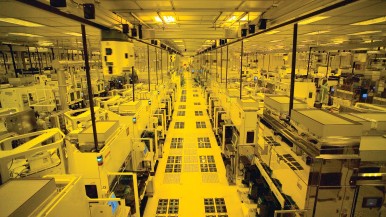
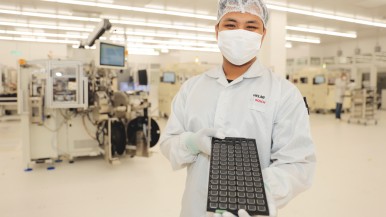
Stuttgart, Germany / Penang, Malaysia – Global demand for chips for the automotive and consumer goods industries remains high. That is why Bosch is continuing to expand its semiconductor business. The company has now opened a new test center for chips and sensors in Penang, Malaysia, at a cost of some 65 million euros; it plans to invest a further 285 million euros at the site by the middle of the next decade. “With our new semiconductor test center in Penang, we are creating additional capacity within our worldwide manufacturing network to meet the continued high demand for chips and sensors,” said Dr. Stefan Hartung, chairman of the Bosch board of management. “Semiconductors are a decisive success factor for all Bosch business areas, and the expansion of this business is strategically very important.” With our new semiconductor test center in Penang, we are creating additional capacity within our worldwide manufacturing network to meet the continued high demand for chips and sensors,...said Dr. Stefan Hartung, chairman of the Bosch board of management. In total, Bosch has some 100,000 square meters of land available on Penang’s mainland strip. The new test center currently covers more than 18,000 square meters and includes clean rooms, office space, and laboratories for quality assurance and manufacturing. By the middle of the next decade, up to 400 associates will be working there. With the new factory and a total of 4,200 associates, Penang is now Bosch’s biggest location in Southeast Asia. Semiconductor manufacturing can basically be divided into two sections: frontend manufacturing and backend manufacturing. For the latter, Malaysia is an important hub in the global semiconductor supply chain. The country is estimated to cover around 13 percent of global backend manufacturing. According to official figures, in recent years the state of Penang has generated more than 5 percent of worldwide semiconductor revenue. “The new test center in Penang brings our manufacturing network closer to the companies that serve the further value chain of semiconductor manufacturing as well as to customers in this important Asian market. That shortens delivery times and routes, and it improves our competitiveness,” says Dr. Markus Heyn, member of the Bosch board of management and chairman of the Mobility business sector. One of the most cutting-edge test centers in Southeast Asia The frontend is where the actual circuits are attached and patterned on the wafers; at Bosch, for example, this work is currently performed in the clean rooms of the wafer fabs in Reutlingen and Dresden. The backend is where the individual chips are then separated from the wafers, assembled, and tested. Bosch currently carries out most of the final testing of its semiconductors in Reutlingen, Germany; Suzhou, China; and Hatvan, Hungary. Those locations will now be joined by the new test center in Penang, Malaysia. The fully connected plant is one of the most advanced semiconductor test centers in Southeast Asia. Here, Bosch will immediately begin testing semiconductors that the company manufactures at its frontend in Dresden, among other locations. “Our new test center in Penang completes our internal process chain, especially for semiconductors from Dresden,” Heyn says. Bosch invests further in chip business Bosch is pursuing a global growth strategy with its semiconductor business. Over the next three years, the company plans to invest some three billion euros in Dresden and Reutlingen, both as part of its own investment plan and under the auspices of the European IPCEI ME/CT (“Important Project of Common European Interest on Microelectronics and Communication Technologies”) funding program. Following its expected acquisition of part of the business of TSI Semiconductors, based in Roseville, California, which is expected before the end of the year, Bosch plans to invest roughly an additional 1.4 billion euros in retooling the fab to support the latest manufacturing processes for silicon carbide semiconductors. Penang Factsheet

Smart Without a Smartphone

14.06.2023

Press release

Smart Home

Smart Without a Smartphone

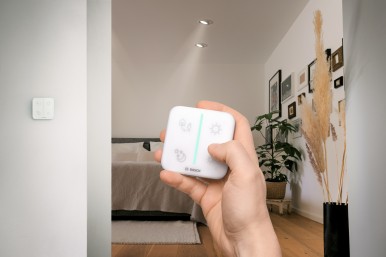
Stuttgart – Easy to use and universally applicable: the new Bosch Smart Home Universal Switch II is the perfect addition to the Bosch Smart Home control system. This intelligent switch offers maximum convenience and flexibility for the most important Smart Home functions, even without a smartphone. This makes the Universal Switch II particularly practical for guests, children, senior citizens or anyone who does not always have their smartphone to hand. The Universal Switch II can also be removed from its wall fixture at any time and used as a portable remote control.Quick and versatile The four buttons of the Universal Switch II can be assigned in various ways: on the one hand, with predefined usage profiles for tasks such as dimming lights, setting the roller shutter, and activating or deactivating the alarm system; on the other hand, freely according to individual needs for specific devices, scenarios, and automations. The wizard in the Bosch Smart Home app makes configuration child’s play, so the Universal Switch II can be configured according to the needs of its users and ready for use in just a few moments. Convenient and easy to use The Universal Switch II is simply and intuitively useable for residents and guests alike. The 36 included and interchangeable symbol stickers make the Universal Switch II easy to understand right away. Palpable embossing on the buttons adds even more convenience by assuring that the switch can be operated unerringly even in the dark, for example, to switch on lights or open roller shutters. The LED strip emits a visual signal in the colours green, orange and red, so the user gets immediate feedback about the status of the input command. Design in a class of its own The Universal Switch II is also visually convincing in terms of design: The international jury of the iF Design Awards, consisting of 132 experts, honoured the smart switch for its outstanding product design. Further features High-quality design and compact size (70 x 70 x 20 mm) Battery-operated with two replaceable AAA batteries Easy to set up with step-by-step instructions in the Bosch Smart Home App Availability and price Available as of March 2023 in Germany, Austria, Switzerland, France, the United Kingdom, Belgium, the Netherlands, Luxembourg, Italy, Spain, Portugal, Denmark, Sweden, Norway and Finland RRP €54.95 including 19% VAT Requirements The Bosch Smart Home Universal Switch II can be used only in combination with a first- or second-generation Bosch Smart Home Controller.

Hannover Messe: Bosch aims to increase sales of industrial technology to over 10 ...

13.04.2023

Press release

Business/economy

Hannover Messe: Bosch aims to increase sales of industrial technology to over 10 ...

Stuttgart, Germany – Bosch wants to achieve sustainable growth with industrial technology. Its sales of industrial technology are expected to rise from their current level of 7 billion euros to more than 10 billion euros by 2028. The aim is to achieve profitable growth: “We want to increase result more than sales and sustainably increase the value of the company. To this end, Bosch will invest a combined total of more than 3 billion euros in industrial technology in 2022 and 2023, ensuring organic and inorganic growth,” says the Bosch chairman Dr. Stefan Hartung. The acquisition of the U.S. hydraulics company HydraForce and its roughly 2,100 associates means that Bosch’s biggest current acquisition is in its Industrial Technology business sector. This merger sees Bosch Rexroth expanding its leading global position in hydraulics, supplying technology for excavators, cranes, tractors, and for plant and machinery in factories.Industrial technology offers enormous growth potential for Bosch. This is driven by an increasing need for automation and Industry 4.0 solutions, the “merging” of electrical and hydraulic systems, and growing demand for GreenTech for the ecological transformation of the economy. “By strengthening Industrial Technology, we are creating a better balance among our areas of business. Our broad diversification as a global technology company makes Bosch more creative and robust,” Hartung says. Within the Bosch Group as well, Industrial Technology is an important service provider, equipping the roughly 240 Bosch plants worldwide with manufacturing technology to ensure resource-efficient, customer-specific production. This saves the group from having to make orders worth over half a billion euros every year. At Hannover Messe (April 17–21, 2023), Bosch is showcasing its industrial technology portfolio, including innovations in collaborative robotics, control technology for Industry 4.0, energy-efficient hydraulics, electrified mobile machinery, stationary fuel cells for buildings and factories, and automated battery recycling. By strengthening Industrial Technology, we are creating a better balance among our areas of business. Our broad diversification as a global technology company makes Bosch more creative and robust,...says the Bosch chairman Dr. Stefan Hartung. GreenTech: Bosch sales with solutions for industry reach the billion mark Industrial technology is growing thanks both to various sectors of the economy moving toward climate neutrality and to the emergence of a circular economy. “Without capital goods, the ecological transformation of business would not be conceivable. Industrial technology enables the sustainable transformation of different sectors of the economy,” Hartung says. Bosch is developing solutions that conserve resources, reduce energy consumption, protect the environment, and mitigate global warming. In 2022, Bosch generated sales of more than 1 billion euros with environmental technology for industry – a year-on-year increase of 25 percent. In other words, Bosch reached its sales target for 2023 one year earlier than planned. And the company is continuing to expand its GreenTech portfolio. Bosch Rexroth, for example, is launching its eLION portfolio solutions for the electrification of mobile machinery such as excavators, wheel loaders, and tractors. With over 80 motor variants, graded according to power and size, the company offers the broadest range in the industry, helping to reduce carbon emissions on construction sites, in mining, and in ports. International customers such as Sennebogen and Kalmar Cargotec are already using the new Bosch drives in their products, and in this way driving forward the electrification of mobile machinery. The demand for GreenTech is also increasing in factories. As a result of climate-action measures, companies are modernizing their installed machinery and equipment on the one hand and building new manufacturing facilities on the other, for example for batteries and fuel cells. At Hannover Messe, Bosch is showcasing manufacturing technology for battery production – and for recycling. “The only way we can make a success of electromobility is if we recover the raw materials we use,” Hartung says. Bosch Rexroth has developed an automated battery discharge system that not only simplifies recycling, but is also more efficient than manual processes. The technology is being used for the first time by REMONDIS and Rhenus Automotive at their Magdeburg site in Germany. Hydrogen: Bosch is relying on its own know-how for technology development In addition to storage media such as batteries, “conversion artists” such as fuel cells are important elements of a climate-neutral future. At Hannover Messe, Bosch is presenting stationary solid-oxide fuel cells (SOFCs) with an overall efficiency of more than 85 percent. These distributed energy converters are currently being tested in some 60 pilot plants. One of them is the Hydrogen Campus in Salzgitter, Germany: at this Bosch site, ten SOFC fuel-cell systems have been integrated into the plant’s energy supply system. Bosch is aiming to launch the stationary fuel cells commercially in 2025. The components are manufactured using Bosch’s own know-how and technology. From cell to stack to the overall system: Bosch’s special-purpose machinery unit supplies more than 50 percent of the manufacturing equipment required for fuel-cell production. In the future, the Bosch portfolio will also feature components for electrolyzers. The market launch for the heart of the electrolyzer, known as the stack, is planned for 2025. Industry 4.0: Bosch software conserves resources Energy, factory supplies, raw materials – resources are rare and precious. “Our response to shortages is efficiency. Anyone looking to manufacture sustainably needs to adopt Industry 4.0,” Hartung says. For example, Bosch Connected Industry’s Nexeed Industry 4.0 software increases plant effectiveness in factories by an average of 5 percent, cuts maintenance costs by 25 percent, and reduces waste. Nexeed is already being put through its paces in more than half of Bosch’s roughly 240 plants and at more than 100 international customers. Software also helps combine conventional and novel technologies. One example is hydraulics: for more than 200 years, fluid mechanics have been used whenever large loads need to be moved with minimal effort, for example in plastics machinery or presses. Thanks to load-dependent control, Bosch Rexroth variable-speed pump drives are now always in the optimum operating mode. They switch to standby mode when not in use. Compared to conventional drives, this reduces the hydraulic systems’ energy consumption by up to 80 percent. Automation: Bosch technology reduces complexity Aging society, labor shortages, limited resources in general: the challenges are mounting. Bosch is focusing on an education and training campaign and on technology that supports companies and relieves workers of certain tasks. Bosch Rexroth’s ctrlX AUTOMATION modular automation system, for example, understands over 30 programming languages and allows users to develop their own apps and services. More than 600 customers already rely on this pioneering form of automation. “The only way we can overcome the pressing challenges of our time is by joining forces to make more of a difference. ‘Co-creation’ and making systems open for others are important considerations here,” Hartung says. Bosch Rexroth is pursuing this approach in hydraulics as well. Whereas control technology was previously tied to hardware, the company has now transferred this to software modules. This means mechanical engineers can continue to use existing automation architectures; specific hydraulics know-how is no longer required. Automation also supports workers directly, for example by relieving them of monotonous or strenuous tasks. At Hannover Messe, Bosch Rexroth is showcasing articulated, fine-motor lightweight cobots that reach around corners in seven axes and help workers load, palletize, and inspect workpieces. These cobots are in demand. The global market for industrial automation is growing rapidly: while sales of automation technology were just under 200 billion euros in 2021, they are expected to grow to more than 400 billion euros globally by 2030 – with annual growth rates of over 8 percent (source: Precedence Research, 2022 ). “Megatrends such as digitalization, an aging society, and efforts toward greater sustainability are driving the demand for automation. Factory automation is a strategic business area for Bosch in which we aim to achieve double-digit growth every year – and thus grow faster the market,” Hartung says.