Search & find:
Media, press releases, events for your editorial coverage

AI in the car: Bosch presents cockpit innovations at CES 2026 in Las Vegas

18.12.2025

Press release

Artificial Intelligence

AI in the car: Bosch presents cockpit innovations at CES 2026 in Las Vegas

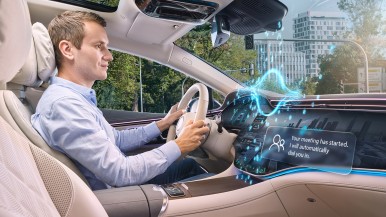
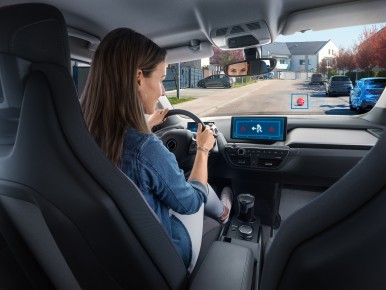
Stuttgart – The automotive industry is undergoing a fundamental transformation, with software – and especially artificial intelligence (AI) – becoming a core component of the future driving and in-cabin experience. Bosch is a pioneer in this field and is taking a decisive step forward in bringing AI into the vehicle, turning the cockpit into an intelligent and proactive companion. At one of the world’s leading electronics trade fairs, CES® 2026 in Las Vegas, USA, Bosch will unveil its new AI extension platform, an AI-enabled high performance computing unit for realizing an AI-powered cockpit. The new AI extension platform enables existing cockpit systems to be quickly and easily upgraded with advanced AI functions. This makes the driving experience more comfortable, intuitive, and safer for all vehicle occupants...says Markus Heyn, member of the board of management of Robert Bosch GmbH and chairman of Bosch Mobility. With Bosch’s new AI-powered cockpit, the vehicle is transforming from a simple means of transport into an intelligent, self-learning partner that understands the driver’s routines, preferences, and context. Features of Bosch’s AI-powered cockpit include an AI voice assistant that anticipates needs, comprehensive scene understanding of the vehicle interior, precise navigation, and extensive entertainment options. For instance, a simple statement like, “I’m feeling cold,” can trigger multiple coordinated actions, such as activating the seat heating while simultaneously adjusting the cabin temperature. Two billion euros in sales by the end of the decade “Bosch’s new AI-powered cockpit enables both drivers and car manufacturers to fully leverage the capabilities of modern automotive software. Thanks to the ‘AI extension platform,’ new functions can be implemented in the vehicle much faster in the future,” says Heyn. Bosch sees a significant and growing market for such AI cockpits. Various market research institutes, including Grand View Research* and MarketsandMarkets*, predict that the market for AI-enabled in-vehicle infotainment (IVI) solutions will reach a volume of approximately 17 billion euros by 2030. Bosch aims to participate in this market. The company expects sales of over 2 billion euros with such IVI solutions by the end of the decade and strives for a leading position among the top three providers. Bringing advanced AI to today’s vehicles A key application of this is turning unproductive downtime in the car into productive work time. Together with Microsoft, Bosch is transforming the car into a mobile office without compromising on driver safety. By integrating Microsoft Foundry and specialized features for the cockpit, the solution provides seamless access to the Microsoft 365 productivity suite. Microsoft 365 applications can be intelligently connected with other vehicle domains to prioritize safety and minimize distraction. For example, a driver can use an intuitive voice command to join a Microsoft Teams call, which in turn prompts the system to proactively activate adaptive cruise control. This seamless, cross-domain interaction helps to create a journey that is both productive and safe – a significant value for commuters and frequent drivers, for instance. Bosch’s new “AI extension platform” allows today's vehicles to be quickly and easily retrofitted without changes to existing hardware or system architecture. At its core, the platform leverages the powerful “NVIDIA DRIVE AGX Orin system-on-chip” (SoC), which forms the foundation for complex AI applications in the cockpit. It builds on the industry-standard “NVIDIA CUDA” platform, allowing automakers to easily integrate their own AI models and agents. Offering 150 to 200 tera operations per second (TOPS) of additional compute power, the compact unit connects via simple power and Ethernet interfaces and is supported by flexible active air or liquid cooling options. To accelerate the development and deployment of complex AI features, Bosch also utilizes NVIDIA’s software suites, including the “NVIDIA NeMo framework” for managing the end-to-end AI lifecycle. This enables seamless integration of advanced in-cabin applications such as real-time sensor processing and vision-language models (VLMs). In addition, core reasoning and speech capabilities powered by “NVIDIA Nemotron models” deliver contextual understanding, multi-step reasoning, and natural, conversational user interactions. Furthermore, using Microsoft Foundry, Bosch designs and manages the in-vehicle AI, ensuring a scalable, always up-to-date AI assistant experience in the cockpit. Bosch will demonstrate the AI-powered cockpit and the AI extension platform for the first time at CES® 2026 in Las Vegas. * Grand View Research and MarketsandMarkets

Growing acceptance of artificial intelligence in Germany

07.01.2025

Press release

Artificial Intelligence

Growing acceptance of artificial intelligence in Germany

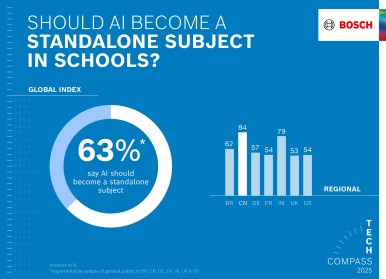
Stuttgart, Germany – Artificial intelligence (AI) will be the dominant technology of the next decade. As a result, AI skills will become increasingly important in both our professional and personal lives. This is the broad consensus among the more than 11,000 people surveyed worldwide for this year’s Bosch Tech Compass agree on this. In Germany, 72 percent believe that AI will be the dominant technology of the next decade in their country. Just two years ago, the proportion was only 42 percent. In other words, respondents in Germany now see even greater potential in the technology than respondents in the rest of the world, where the figure is 67 percent.The same respondents consider AI far more important than any other technology. In Germany, industrial robots are in second place, mentioned by 25 percent of respondents, with 23 percent singling out hydrogen and fuel cells. Worldwide, 5G technology is in second place, mentioned by 32 percent of respondents, while 24 percent mentioned automated driving. But despite this recognition of AI’s importance in Germany, there still seems to be little interest in the technology. In fact, one in three respondents in Germany stated that they have no intention of acquiring any AI skills. On average across the countries surveyed, the proportion of those who have no wish to educate themselves in AI is only 18 percent; in India, China, and Brazil, this percentage is in single figures. Artificial intelligence is a boost to innovation....Dr. Tanja Rueckert, member of the board of management and CDO of Robert Bosch GmbH “Artificial intelligence is a boost to innovation. It can transform industry worldwide in much the same way as the invention of the computer,” says Dr. Tanja Rueckert, member of the board of management and CDO of Robert Bosch GmbH. “The technology offers great opportunities. It is also a task for society as a whole to make this potential clear and promote acceptance among the general public.” As many as 34 percent of respondents in Germany agree with the statement that AI will have a positive impact on society. This proportion has increased in recent years; in 2023, for instance, it was still at 26 percent. However, attitudes toward AI in other countries are even more optimistic: in China, as many as 66 percent of respondents expect a positive impact. Majority favor AI as a standalone school subject To do justice to the increasing importance of AI, 57 percent of respondents in Germany would welcome it being taught as a standalone school subject. Worldwide, the number of people in favor of this is 63 percent. “Competition for AI specialists is already in full swing around the world and will only increase in the future,” Rueckert says. “Including AI in the school curriculum would be an important step toward ensuring Germany has the AI specialists it will need in the future.” For 41 percent of respondents in Germany, AI skills are already important in their current jobs; worldwide, 56 percent believe that such skills are very important. France, where the corresponding figure is 38 percent, is the only country where the figure is even lower than in Germany. In India, by contrast, 83 percent need these skills for their work. On the subject of everyday life, 60 percent of respondents in Germany expect that AI skills will be “important” or “very important” in the future. The figure worldwide is 71 percent. While more than one in two people worldwide already use AI at least occasionally at work, the corresponding figure for Germany is only around 45 percent. In both China and India, 69 percent already use AI in the workplace. Major interest in new technologies in Germany One possible reason people in Germany are still comparatively cautious when it comes to AI is that new technologies are generally perceived more positively elsewhere in the world. While 45 percent of respondents in Germany agree on the importance of staying up to date with the latest technological developments and 62 percent state that they like to get to grips with new technologies and want to understand how they work, both these figures are lower than the global average. In India, for example, 74 percent of respondents stated that they want to keep up to date with technological developments and 79 percent of people there say they like to get to grips with new technologies. “Professionals around the world have to come to terms with artificial intelligence – this will become an essential, complementary skill in professional life,” Rueckert says. “Generative AI will affect how we learn, work, and collaborate – bringing significant change to workflows and processes in companies. That’s why we at Bosch believe it’s important to support our associates on their journey and offer appropriate professional development. We’ve already trained more than 65,000 associates in AI through our own AI Academy. These training courses are available to all associates online. We also explain the advantages to them: generative AI can support them by relieving them of simple, repetitive tasks in their day-to-day work.” Hardly any AI-related training or education – but also hardly any job worries However, it would appear that many workers in Germany are not yet receiving any AI-related education: just 18 percent of respondents stated that they had received AI training at work. Worldwide, 28 percent have received such training and education. Nonetheless, the majority of German respondents have few worries about their jobs: while one-third see AI as a risk to their job, two-thirds believe that AI poses “no” or “probably no” job risk. The corresponding global figure is around 50 percent. About the study: For the Bosch Tech Compass, the Gesellschaft für Innovative Marktforschung mbH (GIM) surveyed more than 11,000 people over the age of 18 in seven countries in fall 2024. In Germany, France, and the United Kingdom, 1,000 people per country took part; in Brazil, China, India, and the United States, it was 2,000 people each. Bosch was not named as a client at any point during the survey.

AI-enabled sensors deliver life-changing use cases

06.01.2025

Press release

Artificial Intelligence

AI-enabled sensors deliver life-changing use cases

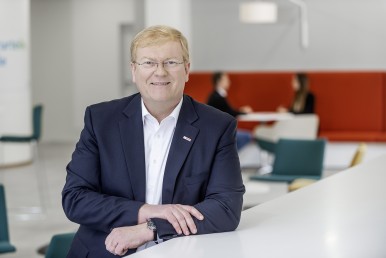
Las Vegas, NV - Sensor technology is transforming our lives: tracking our fitness, making our gadgets easy to use, and monitoring air quality, to mention just a few examples. To provide all these sophisticated functions to consumers, Bosch Sensortec’s sensors are evolving to be smarter – by integrating MEMS technology with embedded microcontrollers, software, and AI runs inside the sensor itself. Bosch’s innovative cutting-edge sensor solutions are making an impact in diverse areas such as consumer health, smart homes and smart cities. AI and intelligent software are the key enabling technologies that make this possible. ...Stefan Finkbeiner, CEO at Bosch Sensortec At CES®, Bosch Sensortec is showcasing its latest AI-enabled sensors, and highlighting how software adds value not only to the sensor but to the entire system. Stefan Finkbeiner, CEO at Bosch Sensortec, said: “Bosch’s innovative cutting-edge sensor solutions are making an impact in diverse areas such as consumer health, smart homes and smart cities. AI and intelligent software are the key enabling technologies that make this possible.” Vision 2030: Bosch aims for more than 10 billion intelligent sensors According to market research and strategy consulting company Yole Group, Bosch is the market leader for MEMS for the fourth year in a row. In 2024 alone, Bosch Sensortec surpassed the milestone of delivering over 1 billion MEMS sensors featuring integrated microcontrollers and software. From 2027 onwards, 90 % of the products will include these integrated features. By 2030, the company aims to achieve a remarkable total of more than 10 billion MEMS sensors sold with this advanced integration. AI on the edge With AI running on the edge (meaning directly in the sensor), there’s no need for constant cloud connectivity. This ensures data remains private, dramatically reduces latency, and cuts power consumption, all while delivering accurate real-time feedback to users. State-of-the-art software solutions add value not only to the sensor but to the entire system, enabling new applications and forming the basis for AI inside the sensor itself. Always-on and ready to go Always-on technology is essential in consumer electronics, enabling continuous access to features without the need to activate the device and wake up the main processor. This significantly extends battery life, and creates a more intuitive and effortless experience for users, especially in smartphones and hearables. This is achieved with intelligent sensors combined with smart software, enabling quick access to voice assistants, health monitoring, and more, empowered by MEMS sensors with integrated microcontrollers. Examples of always-on use cases include voice activity detection and keyword triggering to activate voice assistants in hearables, fall detection in smartwatches for faster emergency assistance, and automatic orientation sensing in smartphones to adjust modes and enter sleep mode when inactive. Smart Connected Sensors (SCS): the personal AI feedback coach Can you imagine having unlimited access to a professional fitness trainer, with feedback at any time? This is the future of exercising – made possible by the Smart Connected Sensors platform from Bosch Sensortec. The platform gives users qualitative feedback on the movement execution, as well as measuring movements and repetitions. Specifically designed for full-body motion tracking, the SCS platform provides a fully integrated hardware and software solution (based on the BHI380, a programmable IMU-based sensor system with AI) that dramatically cuts development costs and time to market. A sound move for software-enabled voice control Wireless headsets have transformed how we listen to music, podcasts and audiobooks, providing free, unhindered movement – as well as new features enabled by sensors, such as activity recognition and indoor navigation. But shifting to voice control can cause problems, when the system is triggered unintentionally because it reacts to ambient noise. To fix this issue, Bosch Sensortec has come up with a software-based innovation: a new type of acceleration sensor, the BMA550, detects sound through bone vibrations. Intelligent algorithms then ensure voice control activates only when the wearer of the headset is actually speaking. Intelligent algorithms then ensure voice control activates only when the wearer of the headset is actually speaking. Take a breath: air quality sensing Poor indoor air quality is a problem: the concentration of PM2.5 particulates from domestic cooking can reach levels 100 times higher than acceptable limits. Localized, actionable data from Bosch's particulate matter sensor for PM2.5 and PM1 enables effective responses to poor air quality. A software update coming soon will activate PM10 measurement in addition. Almost the entire global population (99 %) breathes air that exceeds WHO air quality limits, and threatens their health. Bosch’s BMV080 sensor uses software and intelligent algorithms, in a tiny, fanless design which is more than 450 times smaller than any comparable device on the market. Open platform and strong collaboration Bosch can’t do all this alone and offers a framework that supports customers in creating movement classification algorithms specific for their own application. These models can then run on a smart motion sensor, such as the BHI360. For example, Bosch Sensortec and Doublepoint have partnered to develop a powerful microgesture control solution for smartwatches, using the BHI360. This enables always-available, reliable control, such as allowing users to adjust light brightness with an intuitive pinch gesture. This collaboration exemplifies Bosch Sensortec's commitment to innovation in the IoT and wearable markets, empowering manufacturers to bring advanced, user-friendly products to market more quickly. ... Lucas Ginzinger, Vice President Marketing and Business Strategy at Bosch Sensortec Doublepoint's advanced algorithms are seamlessly integrated into Bosch’s compact, low-power IMUs via a new software tool. Compared to camera-based solutions, this IMU-based approach enables obstruction-free gesture detection, offering greater reliability and efficiency. “This collaboration exemplifies Bosch Sensortec's commitment to innovation in the IoT and wearable markets, empowering manufacturers to bring advanced, user-friendly products to market more quickly,” said Lucas Ginzinger, Vice President Marketing and Business Strategy at Bosch Sensortec. Website: https://www.bosch-sensortec.com/

Kilometre by kilometre, the eBike learns more

02.07.2024

Press release

Electrified mobility

Kilometre by kilometre, the eBike learns more

Stuttgart/Reutlingen – AI solutions are increasingly being used to make a variety of everyday tasks easier. They impress with personalised applications by analysing individual needs and continuously learning from them. Thanks to Connected Biking, the physical riding experience merges with the digital world. Consequently, the eBike has long become an intelligent companion. Connected via the eBike Flow app, it forms part of a modern, digital lifestyle and always remains up-to-date. Bosch eBike Systems integrates AI-based solutions into the smart system, which recognise user behaviour, learn from it and enable, for example, smarter route planning and navigation. We’re confident that Connected Biking is the future. Only by merging the physical riding experience with the digital world can the full potential of our eBike systems be realised....explains Gregor Dasbach, Vice President Digital Business at Bosch eBike Systems. “With the integration of AI, we are taking the next logical step in developing and creating priceless added value for eBikers: Kilometre by kilometre, the eBike learns more and unnoticed, becomes a smart and connected companion along the way.” Range Control: AI ensures greater reliability when it comes to range on the eBike The new, AI-based “Range Control” feature makes planning rides easier: eBikers no longer need to worry about their battery range. When you plan a route in the eBike Flow app, it immediately indicates the percent of battery charge remaining when you reach your destination. To display the most accurate range possible, the smart system gathers various information, including the system weight, the elevation profile of the route and your personal riding behaviour during your recent rides. Its predictions become increasingly precise: once the first activities have been recorded, the system is able to determine the battery status on arrival much more accurately than on the first journey. The predicted battery level is also updated during the journey and the current riding style is taken into account. This means that riders can concentrate fully on their eBike experience. To rule out every last worry about range during the journey, you can even set the desired minimum battery level at destination. The smart system takes care of the rest – extremely practical if, for example, charging isn’t possible before the return journey or the next ride. If required, eBikers can enable this additional feature via a toggle button in the eBike Flow app. A slider can then be used to precisely set the desired battery level at destination. Depending on the selection, the app indicates whether the route can be travelled with full, low or very low support. During the journey, the smart system then adjusts the motor support as necessary. This ensures that you arrive with the predetermined battery level. With this new development, wondering whether the battery will last to the destination is now a thing of the past for eBikes with a smart system from Bosch. Personalised arrival time and route planning The smart system also uses other AI features for personalised planning. The expected arrival time, for example, can be calculated and displayed before a ride. An analysis of previous riding behaviour on similar routes helps here. eBikers also benefit from personalised route suggestions: The smart system knows, for example, which road types, which surfaces and which gradients and speeds are preferred, and makes a corresponding route recommendation. Current charge level for easy planning and detailed maps for Kiox displays Further new functions make navigation and planning even easier. With the “current charge level” feature , users can track the battery status live during the charging process on the eBike Flow app and view it anytime and anywhere. So you can plan your next tour or onward journey at home on the couch or in a cosy café. The “extended navigation” feature enhances the navigation display on the Kiox 300 and Kiox 500 displays. This no longer only shows the planned route and junctions, but also all side roads. These new, additional map details ensure the best possible orientation and intuitive navigation. “Extended navigation” and “current charge level” are part of the Flow+ subscription service. New insights on completed journeys Bosch also presents numerous innovations in terms of the ride statistics. This means that all riders who have a Bosch eBike ABS installed on their eBike can view the percentage of braking manoeuvres with and without ABS as a direct comparison in the eBike Flow app. During the ride, the number of braking manoeuvres where ABS was activated is also displayed. The “riding mode usage” display is no longer only available during the ride, but also as a statistic afterwards. A clear pie chart shows the ratios of the riding modes used (including Off mode). The same applies to the “power share” screen. The “power share” screen provides insights into the average rider power compared to the average power of the drive unit, based on current activity and the selected riding mode. This information helps eBikers to improve their fitness level and optimise their training. Display of riding mode usage and power share after the ride are both part of Flow+. New Eco+ mode enables long ranges In addition to the digital features, Bosch is also introducing a new riding mode for the smart system. The new Eco+ mode blurs the boundaries between eBiking and normal cycling, saves energy and enables particularly long ranges. It is particularly suitable for eBikers who enjoy pedalling without support on flat terrain, but do not want to do without a motor on climbs or when overtaking, for example. Depending on the rider performance, the motor remains completely switched off until an activation threshold that can be customised in the eBike Flow app is exceeded. This is ideal for lightweight eBikes, but also for eSUVs and eTrekking bikes. When support is no longer required, the motor switches off automatically. This makes it easy to save energy and extend the range, making even lengthy tours possible without charging or replacing the battery. The Eco+ mode is available for all drive units with the smart system from Bosch eBike Systems and can be installed on your own eBike using the eBike Flow app. Even more customisation: display configuration on the Purion 200 The networking of components creates new possibilities for customisation. Like the Kiox 300 and Kiox 500 displays, the display of the Purion 200 control unit can now also be customised according to your own preferences: eBikers can sort, add or delete content in the eBike Flow app. You prefer the speed to be displayed on the left and always want the heart rate on the right? No problem, because two tiles per screen can be freely assigned. The screen order can also be redefined.

Hannover Messe 2024: Bosch presents sustainable solutions for factory automation ...

22.04.2024

Press release

Business/economy

Hannover Messe 2024: Bosch presents sustainable solutions for factory automation ...

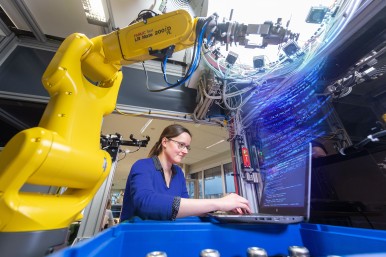
Stuttgart and Hannover, Germany – Industrial manufacturing is the engine of every economy. It creates jobs, secures prosperity, and ensures growth through trade. When industrial manufacturers come together again for this year’s Hannover Messe, there will be one major challenge that all of them continue to face: to respond to climate change, factories must become sustainable and conserve resources. Bosch is one of the leading factory outfitters; its broad portfolio of solutions for factory automation, the hydrogen economy, digitalization, and artificial intelligence (AI) helps industrial companies achieve a green transformation.Bosch industrial technology is in demand: in 2023, the supplier of technology and services was able to hold its own in a volatile market environment characterized by geopolitical tensions, the economic downturn, and interest-rate effects. Its sales of industrial technology rose to 7.4 billion euros. This equates to an increase of 6.8 percent, or 10.2 percent after adjusting for exchange-rate effects. The main drivers of this growth were Bosch’s acquisitions of HydraForce and Elmo Motion Control. “We are pursuing a long-term growth strategy with industrial technology,” says Tanja Rueckert, the member of the board of management of Robert Bosch GmbH responsible for the Industrial Technology business sector as well as the area of digital business and services. “We want to strengthen our market position, expand regional supply chains, and increase our industrial technology sales to 10 billion euros by 2028.” We want to strengthen our market position, expand regional supply chains, and increase our industrial technology sales to 10 billion euros by 2028....Tanja Rueckert, the member of the board of management of Robert Bosch GmbH At Hannover Messe 2024, Bosch will be presenting technologies and solutions in the fields of automation, digitalization, and hydrogen. “As an early adopter of artificial intelligence and digitalization applications, industrial technology is like almost no other sector,” Rueckert says. “Software and connectivity help increase efficiency, quality, and sustainability in production. The only way we can secure our standard of living and prosperity is with a strong industrial sector.” Generative AI: improve processes, increase quality In manufacturing, Bosch wants to use generative AI to further improve production management, monitoring, and control. In two Bosch plants in Germany, the company has launched initial projects through which generative AI creates synthetic images in order to develop and scale AI solutions for optical inspection and to optimize existing AI models. Bosch expects that this will reduce the time needed for planning, launching, and ramping up AI applications from the current six-to-twelve months to just a few weeks. Developed by Bosch researchers, this service for generating synthetic data is to be offered to all Bosch locations following successful piloting. ctrlX AUTOMATION: automation toolkit The ctrlX AUTOMATION system for factory automation developed by Bosch Rexroth comprises hardware, software, and apps. It is an open platform that provides all the building blocks for complete automation solutions, and reduces component and engineering costs by 30 to 50 percent. The platform’s community of partners, known collectively as ctrlX World, is continuously expanding the range of solutions with hardware, and above all with apps. So far, 100 partners have contributed their strengths and solutions. Since its launch five years ago, the number of customers has risen to around 1,500. Sales in this area increased 30 percent in 2023. Battery production: components for automated equipment Whether in electromobility, consumer electronics, or building technology, the demand for energy storage is greater than ever. Bosch Rexroth offers a comprehensive portfolio for battery production that includes individual components, systems solutions, and subsystems featuring linear, joining, and transfer technology in addition to the fully open ctrlX AUTOMATION system. Speed and precision are also important in battery production. Bosch Rexroth has developed linear robots that can be used quickly for typical applications such as handling cells and packs as well as joining and dispensing. These robots optimize processes in module and pack assembly and disassembly. Battery recycling: automation solution for deep discharge of batteries There are more and more electric cars driving quietly and with low emissions on the roads. Their batteries contain rare and valuable raw materials such as lithium and nickel, the recovery of which makes economic and ecological sense. Bosch Rexroth’s toolkit solution for diagnosing, discharging, and dismantling used vehicle batteries enables the automation of these process steps, which are upstream of the actual process of recovering the raw materials. This makes it possible to recycle batteries on an industrial scale and offers the possibility of flexible scaling. Stack and smart electrolysis module: technology for H2 electrolyzers Bosch not only plans to use hydrogen, but also to provide smart technology for its production. For this purpose, the company has developed an electrolysis stack, the central element of an electrolyzer. The stack comprises more than 100 electrolysis cells that use electricity to split water into oxygen and hydrogen. It is designed for an output of 1.25 megawatts. That is equivalent to the production of 23 kilograms of hydrogen per hour. The Bosch electrolysis stack is suitable for use in smaller-scale plants producing 1 megawatt and more, all the way up to large, gigawatt-scale plants. It is expected to be market-ready from 2025. In addition, Bosch is planning to combine its electrolyzer stack with a control unit, power electronics, and various sensors to create a smart electrolysis module. Manufacturing and testing technology: how fuel cells are made Bosch Manufacturing Solutions (BMG), the company’s special-purpose machinery unit, supplies advanced manufacturing equipment and testing technology for fuel-cell manufacturing – from individual components to complete systems. In total, more than 50 percent of the required manufacturing equipment comes from Bosch itself. When testing stacks and systems, natural conditions are simulated for the end-of-line functional test, where the PEM fuel cells are put through their paces. Here, gas composition, temperature, pressure, and humidity are the same as in the actual vehicle. The test benches work efficiently: 50 percent of the hydrogen used is recovered for new testing processes. A test bench for proton exchange membrane (PEM) electrolysis stacks will be presented for the first time at Hannover Messe. This type of test bench can be upgraded for development as well as for end-of-line functional testing, and is available in size classes between 50 kW and 3 MW. eSEA underwater actuator: electrification of offshore facilities In the future, hydrogen will often be produced in remote areas – in the desert or at sea – and thus far away from where it will later be used. To make it economical to operate the offshore facilities required for green hydrogen and the capture and storage of CO2, their plant technology needs to be significantly cheaper to purchase and operate than it has been to date. Bosch Rexroth has developed an electrical solution for controlling valves in underwater process plants at depths of up to 4,000 meters. Since this solution no longer feature valves operated via hydraulically driven actuators, it eliminates the need for miles of hydraulic lines to connect to hydraulic power units above water. Hydrogen filling stations: drive solutions for compressing hydrogen Hydrogen filling stations play a major role in decarbonizing the mobility sector. Within the next six years, several thousand hydrogen filling stations are set to go into operation worldwide. Together with partners, Bosch Rexroth has developed scalable solutions for servo-hydraulic compressor drives in the power range between 10 and 280 kW for the compression of hydrogen. To be able to refuel vehicles with hydrogen fuel quickly and simply, the gas has to be compressed to as much as 900 bar. A new electrohydraulically driven cryogenic pump has been developed in partnership with FirstElement Fuel, a leading company in the U.S. for the commercial operation of hydrogen filling stations. This cryogenic pump compresses liquid hydrogen directly to 875 bar. The aim is to refuel heavy trucks with 100 kg of hydrogen in under ten minutes. Direct refueling eliminates the need for intermediate storage tanks at filling stations. The first filling stations are set to be equipped starting in 2025. Moreover, Bosch Rexroth has worked with Maximator Hydrogen to develop scalable, low-maintenance drive units, with ratings currently up to 250 kW, that offer filling station operators an affordable way into hydrogen technology. The new container-based compressors can potentially reduce total cost of ownership by half compared with the commercially available alternatives. The Swiss Coop Group already uses hydrogen trucks for its goods transportation. They refuel at five filling stations equipped with Maximator and Bosch Rexroth technology. Bosch at Hannover Messe Bosch Rexroth – Hall 6, Booth D26 Bosch Connected Industries – Hall 9, Booth F27 Bosch Manufacturing Solutions – Hall 13, Booth C33 Selected panels with Bosch experts • Research Summit – Panel discussion with Dr. Tanja Rueckert, member of the board of management and chief digital officer, Robert Bosch GmbH, Monday, April 22, 2024, 2:30–3:15 p.m., Convention Center (CC), Room 1 • Panel discussion “The future of SMEs: Organizing sustainability & establishing digital business models” with Lisa Reehten, managing director, Bosch Climate Solutions, Tuesday, April 23, 2024, 5:15–5:35 p.m., Hall 8, Booth D17 • Panel discussion “AI meets automation” with Hans Michael Krause, director ctrlX World, Bosch Rexroth AG, Tuesday, April 23, 2024, 1:30–2:00 p.m. in Hall 3, Booth A76 • Lecture “Digital twins: What nobody is talking about” with Dr. Birgit Boss, Bosch Connected Industry, Thursday, April 25, 2024, 3:00–3:25 p.m., Industry 4.0 Conference Stage, Hall 8, Booth D17 • Panel discussion “The role of 6G in shaping the next industrial era” with Andreas Müller, Wednesday, April 24, 2024, 2:45–3:30 p.m., Hall 14, Booth H06


For safer roads: Bosch teams up with Microsoft to explore new frontiers with gen ...

28.02.2024

Press release

Automated mobility

For safer roads: Bosch teams up with Microsoft to explore new frontiers with gen ...

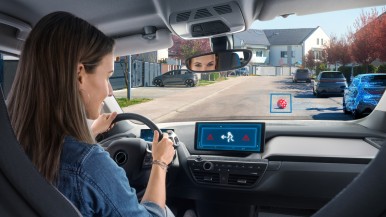
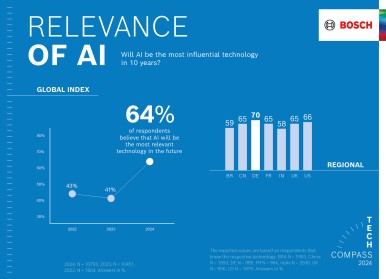
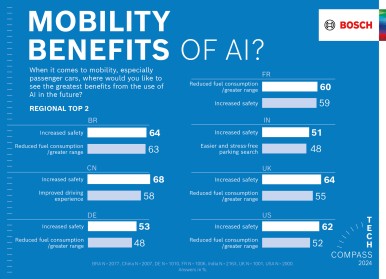
Stuttgart, Germany – It’s a scenario that no driver ever wants to see: a ball rolling out into the road. The chances are it will be followed immediately by a child in hot pursuit, oblivious to any traffic. But while human drivers can assess this situation using their contextual knowledge, today’s assisted and automated driving systems still have to learn how to do it. Bosch is pursuing the use of generative AI in terms to further improve automated driving functions. As part of this, Bosch and Microsoft are exploring opportunities to collaborate and leverage the power of generative AI. “Bosch is working on bringing a new dimension of AI applications into the vehicle,” said Dr. Stefan Hartung, chairman of the Bosch board of management, at this year’s Bosch Connected World (BCW) AIoT industry conference in Berlin. The expectation is that generative AI will enable vehicles to assess situations and react accordingly, and in this way keep road users even safer. Greater safety on the roads is also the wish of 60 percent of respondents to this year’s Bosch Tech Compass, a worldwide representative Bosch survey on the subjects of technology and AI. Bosch is working on bringing a new dimension of AI applications into the vehicle,...says Dr. Stefan Hartung, chairman of the board of management. Generative AI to make road traffic safer The two companies anticipate that a collaboration would take the performance of automated driving functions to the next level. They would like to see generative AI help enhance convenience in the vehicle and to provide greater safety for all road users. To achieve this, Bosch's comprehensive understanding of vehicles and automotive-specific AI expertise will be invaluable, as well as their access to vehicle sensor data to feed the generative AI. “In our unwavering commitment to safer roads, Microsoft is eager to explore collaboration opportunities with Bosch to pioneer the realm of generative AI,” said Uli Homann, Microsoft CVP and Distinguished Architect. Even today, when it comes to training systems for automated driving, AI quickly comes up against its limits. Today’s driver assistance systems can detect people, animals, objects, and vehicles, but in the near future generative AI could help determine whether a situation could potentially lead to an accident. Generative AI utilizes vast amounts of data to train systems for automated driving, enabling them to draw improved conclusions from this data. For example, it could deduce whether an object on the road ahead is a plastic bag or a damaged vehicle part. This information can be used either to communicate directly with the driver – such as by displaying a warning – or to initiate appropriate driving maneuvers, such as braking while switching on the hazard warning lights. Bosch and Microsoft have already partnered to develop a universal software platform for seamlessly connecting cars and the cloud, and are looking forward to work together to identify new opportunities to bring cutting-edge AI technology to their customers and the autonomous vehicle industry. Generative AI as a boost to innovation “Generative AI is a boost to innovation. It can transform industry in much the same way as the invention of the computer,” says Dr. Tanja Rueckert, member of the Bosch board of management and chief digital officer. The new 2024 Bosch Tech Compass shows this as well: 64 percent of respondents believe that AI is the technology with the greatest importance for the future. In comparison, only 41 percent of respondents were of the same opinion just one year ago. Generative AI is a boost to innovation. It can transform industry in much the same way as the invention of the computer,...says Dr. Tanja Rueckert, member of the Bosch board of management and chief digital officer. From manufacturing to everyday office work, generative AI is already being used in many areas at Bosch. In addition to Microsoft, the company is working with several partners, including AWS, Google, and Aleph Alpha. The Bosch Group’s venture capital unit, Bosch Ventures, invested in the AI company Aleph Alpha last year. Bosch also announced it would collaborate with the startup on finding new use cases both for Bosch associates and customers. “Bosch and Aleph Alpha want to learn from each other, benefit from each other’s know-how, and work together on cross-domain use cases,” Rueckert says. This partnership is now bearing its first fruits in North America: in collaboration with Aleph Alpha, Bosch is debuting AI-based speech recognition on behalf of a premium car manufacturer. In this solution, a chatbot understands and answers breakdown service calls with the help of natural language processing, which also recognizes dialects, accents, and moods. The call is taken directly, reducing the driver’s waiting time to a minimum. As many as 40 percent of calls can be processed and resolved automatically; for more complex queries, the bot transmits all relevant information to a service center agent who takes over the case immediately. From the AI search engine to manufacturing AI experts at Bosch are currently working on well over 120 specific applications that these new AI models open up for the company’s associates and customers. Such applications include the generation of software program code or powerful chatbots and voicebots to support technicians or interact with consumers. Another is AskBosch, the in-house AI-assisted search engine launched at the end of 2023. It offers faster natural-language access to a wide variety of data sources – sources scattered over the intranet, say. In addition to externally available data, AskBosch also includes internal data sources, so Bosch associates can research information specific to the company. Generative AI also ensures greater speed in manufacturing: in initial projects in two Bosch plants in Germany, generative AI creates synthetic images in order to develop and scale AI solutions for optical inspection and optimize existing AI models. Bosch expects that this will reduce the time needed for planning, launching, and ramping up AI applications from the current six-to-twelve months to just a few weeks. Following successful piloting, this service for generating synthetic data is to be offered to all Bosch locations. 2024 Bosch Tech Compass: setting the pace in the use of AI As AI is used in more and more areas of life, professional development is becoming increasingly important: 58 percent of respondents to the Bosch Tech Compass are convinced of this. This opinion is particularly prevalent in USA at 63 percent (Germany: 54 percent, China: 52 percent). Here, too, Bosch is setting the pace in the use of artificial intelligence and is getting its associates on board. In 2019, Bosch launched a training program, initially aimed at bringing 30,000 associates up to speed on the subject of AI. Up to now, some 28,000 associates have taken part in the program. Like the Bosch AI code of ethics, which sets ethical guidelines for dealing with artificial intelligence, this program has been supplemented with content about generative AI. For all the results of the 2024 Bosch Tech Compass, click here . About the survey: For the representative survey, people aged 18 and over in seven countries (Brazil, China, Germany, France, India, the U.K., and the U.S.) were polled online on behalf of Robert Bosch GmbH by the market researchers Gesellschaft für Innovative Marktforschung mbH (GIM) in December 2023. In Germany, France, and the U.K., at least 1,000 people were polled per country; in Brazil, China, India, and the U.S., it was at least 2,000 people each. The random samples are representative of their respective countries in terms of region, gender, and age (Brazil, Germany, France, U.K., U.S.: 18 to 69 years / China, India: 18 to 59 years).