#Service Solutions

Highest number of truck parking spaces in Europe

03.11.2022

Press release

Service Solutions

Highest number of truck parking spaces in Europe

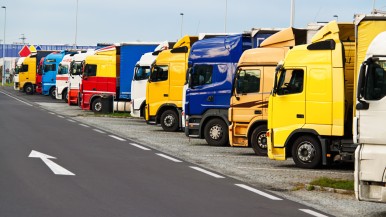
Frankfurt am Main, Germany, and Tilburg, the Netherlands – The logistics industry is struggling with major challenges: According to recent studies, there is a shortage of 400,000 safe truck parking spaces in the EU alone. The result: risky and accident-prone parked vehicles, increased cargo theft and more traffic and CO 2 emissions due to the search for a parking space. Added to this is the pressure on drivers to comply with their driving and rest times. To address these challenges, Bosch Secure Truck Parking and TRAVIS Road Services have forged an alliance against the shortage of truck parking spaces in Europe: In a new partnership, the two companies will be combining their contingents and providing carriers with Europe's highest number of bookable truck parking spaces: "From the beginning of 2023, users of Bosch Secure Truck Parking and TRAVIS Road Services will be able to access a total of 15,000 parking spaces at well around 400 locations in 14 European countries, also in countries such as the Netherlands, Belgium, Great Britain, France, and Poland," explains Dr. Jan-Philipp Weers, Head of Bosch Secure Truck Parking.Joint action against lack of parking spaces "Together, we are taking an important step towards addressing the challenges of the logistics industry," said Dennis van Veggel, CEO of TRAVIS Road Services. "In addition to the high safety standards that the majority of the 100 Bosch sites meet, there is good site coverage through approximately 300 parking locations of TRAVIS Road Services." The portals provide freight forwarders with parking spaces in different areas, such as at truck stops, trucking marshalling yards, logistics centers. This approach allows to connect locations and new parking spaces flexibly, which promises further, rapid growth in parking spaces. What essentially changes is the scope of the offer for existing customers: Freight forwarders can view and block-book all the parking spaces they need in real time via the usual platform, and bill paperlessly via efficient collective invoices. Individual offers are retained Regardless of the cooperation, Bosch and TRAVIS maintain their individual offers on the respective portals. Bosch Secure Truck Parking advises beyond the platform on holistic solutions for the transport and logistics industry and supports freight forwarders in the structural implementation of security and service solutions. Depending on the requirements, Bosch complies with European safety certificates such as the certifications of the Transported Asset Protection Association's (TAPA) or EU Parking Standards developed by the European Commission. This is important because the financial damage caused by cargo theft alone is estimated at 8.2 billion euros within the European Union. Bosch has also recently introduced a service that provides freight forwarders and drivers with support as needed via a Europe-wide telephone hotline. TRAVIS, on the other hand, offers the combined booking of cleaning and repair services. Carriers can continue to book these services at approximately 1,450 partner locations in 17 countries as usual. They can easily simplify their administration by receiving just one invoice for different bookings or services which includes special VAT rules (e.g. reverse-charge mechanism). The possibility to pay and book road services with company fuel cards are also still available, which TRAVIS offers in cooperation with partners such as Shell, DKV or UTA. In short, the alliance between Bosch and TRAVIS brings a noticeable increase in truck parking spaces for freight forwarders, their drivers, and customers, many with high safety standards. At the same time, it also relieves the municipalities along the major traffic axes of wildly parked trucks and minimizes the traffic and accident risks caused by them. Additional interview on the partnership: https://www.boschservicesolutions.com/en/stories/interview-bosch-and-travis-partnership/
Ten years of increased road safety with Bosch eCall

15.06.2022

Press release

Service Solutions

Ten years of increased road safety with Bosch eCall

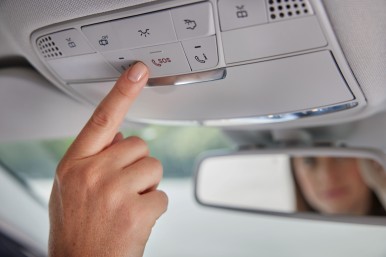
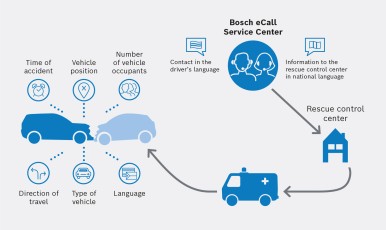
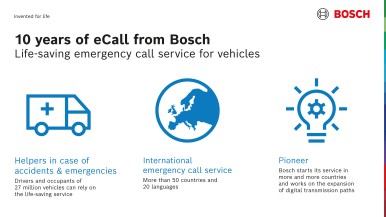
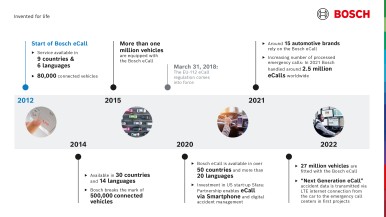
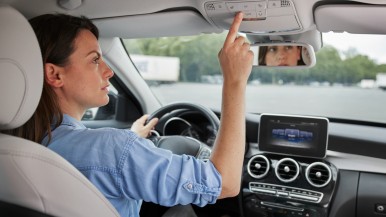
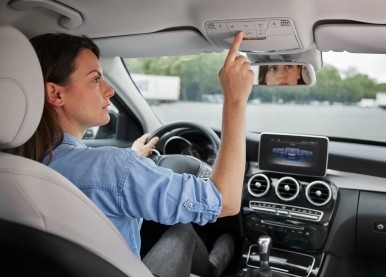
Frankfurt am Main - Black ice on the highway. A vehicle leaves the road, flips over and slides down an embankment. There's no one around to witness the accident. "Emergency Call", known as eCall for short, was developed for situations precisely like this. In the event of an accident or emergency situation, the emergency call system for vehicles establishes a voice connection to an emergency call point to request rapid assistance either automatically or at the push of a button. Bosch Service Solutions is a leading international provider of this life-saving service. Ten years ago, on behalf of Mercedes-Benz, the service provider developed one of the first integrated emergency call services that went on to become a global success. "In June 2012, the service went live in nine countries and six languages. Today, it is already available in more than 50 countries and more than 20 languages – and there are more and more. Currently, around 27 million cars from more than 15 car brands have the Bosch emergency call service fitted," explains Stefan Gross, Head of Mobility Services at Bosch Service Solutions. In the past ten years, the company has processed over eleven million eCalls. As a pioneer in this field, it is also constantly bringing innovations to the market, most recently the smartphone-based eCall.Launch of the eCall service in 2012 While the Bosch emergency call service still involved a combination of on-board computer and driver's cell phone in 2012, the standard integration for Mercedes-Benz cars followed in 2014. Since then, the corresponding technology has been integrated into the infotainment module – it detects an impact, sends an emergency call and transmits a package with accident-relevant data. Bosch has established an international network of service centers for the eCall service, including a comprehensive IT infrastructure. These include partner networks with connections to rescue control centers, fire departments and hospitals in the relevant countries. The service provider developed the high standards of the Bosch eCall based on years of experience in alarm and emergency call management. Saving lives and increasing road safety The benefits of emergency call systems in vehicles also gained acceptance at the political level: eCall became a mandatory requirement in the EU on March 31, 2018. Since then, passenger cars and light commercial vehicles newly launched on the market in the EU must have an integrated emergency call service. Consequently, two systems operate in the EU: the statutory 112 eCall system and the eCall systems run by private providers such as Bosch - both of which meet the defined EU standards. The difference is that with private eCall, the emergency call is received at the provider's own emergency call centers and immediately forwarded to the public control centers if necessary. The advantage is that faulty alarms, such as those caused by accidentally pressing the emergency call button, can be filtered out in this way. This relieves the rescue coordination centres and keeps capacities free for emergencies. With a quota of around 90 percent, Bosch has filtered out around ten million faulty eCalls in the last ten years. Another plus: Bosch emergency call center employees stay on the phone to attend to the people involved until the rescue forces arrive. Euro NCAP confirms improved road safety A major advantage of Bosch eCall is its multilingual nature: vehicle occupants in many countries can report an emergency in their own language. A German tourist on vacation in Spain, for example, will be addressed in German, which can be of great value psychologically and when it comes to passing on the details of the accident. In turn, the rescue control centers are informed in the local language, avoiding misunderstandings. What's more, they receive information that goes beyond the so-called minimum data set associated with EU-112 eCalls. This includes, among other things, the geographical position, the time of the accident and the direction of travel of the accident vehicle. Bosch also passes on data such as the number of occupants and the severity of the accident. Both are factors that improve the rescue chain and thus help occupants. Euro NCAP, the independent assessment organization for vehicle safety, also evaluates in-car eCall systems when it checks the road safety of new cars in crash tests. The availability of the emergency call in as many languages as possible also has a positive impact on the evaluation, as does the transmission to the rescue control centers of accident-related data that goes beyond the minimum data set. Combining smartphone and LTE for the eCall service of the future Bosch is continuously developing eCall and regularly launches technical innovations on the market. For example, Bosch eCall can now be integrated into fleet vehicle apps thanks to smartphone-based collision detection. Bosch is also working on expanding faster digital transmission paths. In the USA, for example, Bosch is focusing on "Next Generation eCall" and transmits accident data from the car to emergency call centers via an internet-based data connection using LTE. "Very high speed and excellent voice quality speak for the transmission via LTE," explains Stefan Gross. "That helps us to set the rescue chain in motion particularly quickly." Digitizing the rescue chain The transmission of relevant information from the emergency call centers to the rescue control centers is also evolving: this is necessary because data transmission in EU-112-eCall is limited to the older 2G and 3G telephone networks, which are under constant threat of being shut down. At the same time, however, Germany still lacks a legal basis that clearly regulates how emergency calls from private providers can be transmitted digitally to the control centers. As a result, many emergency calls are still passed on by voice call. Bosch is working to expand the use of modern digital transmission paths. "We hope that the course will be set for fast digital data transmission throughout the EU as soon as possible, which will be used across the board”, says Stefan Gross. Whatever happens, Bosch is well equipped to handle future emergencies quickly and effectively – with the aim of saving even more lives.

Bosch plans to acquire Elpro Group AG

16.12.2021

Press release

Service Solutions

Bosch plans to acquire Elpro Group AG

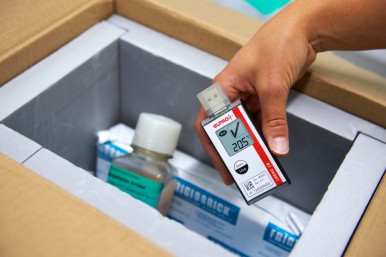
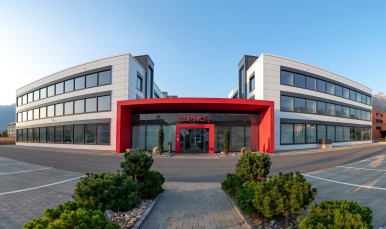
Frankfurt am Main - Bosch Service Solutions, a leading provider of technology-based services, plans to acquire Elpro Group AG, headquartered in Buchs, Switzerland. Founded in 1986, the company develops monitoring solutions for the pharmaceutical, biotech, life science and healthcare industries. This includes, for example, uninterrupted monitoring of the cold chain for pharmaceuticals. With the acquisition of the Elpro Group, Bosch Service Solutions is expanding its portfolio and entering the pharmaceutical services sector. “The Elpro Group has deep industry knowledge and innovative strength in the development and application of monitoring solutions. These are implemented along the entire pharmaceutical supply chain and meet the highest quality standards,” says Henning von Boxberg, President of the Board of Management of Bosch Service Solutions. The company employs 220 people and has sales offices in Europe, North America, and Singapore. Bosch and Elpro signed agreements on the planned acquisition on December 15, 2021. The parties have agreed not to disclose the purchase price. The transaction is subject to approval by the antitrust authorities.Bosch Service Solutions has been offering monitoring solutions for e.g. elevators, heating systems, and security transport since the 80s. The technologies of the Elpro Group expand the portfolio to include monitoring services for sensitive goods such as pharmaceuticals. “Bosch is an excellent partner for us. We are united by a promise of high quality and technology-based solutions. The global presence of Bosch Service Solutions helps expand Elpro’s portfolio internationally, open up additional markets and implement new service offerings,” says Philipp Osl, CEO of the Elpro Group. Safe monitoring of sensitive goods Drugs are sensitive products. Temperature, humidity, and light can affect their quality. Certain medicines, such as vaccines, must be refrigerated throughout the supply chain: from manufacturer through wholesaler, pharmacy and hospital to the patient. If a cold chain is interrupted, medicines are at risk of becoming unusable and losing their effectiveness. Elpro has developed technologies that monitor the entire process. For this, the company uses so-called data loggers. These are devices for stationary or mobile use, which monitor temperature, humidity, light, and other environmental conditions with the help of sensors. If specifications and guidelines are not adhered to, this is recorded automatically. The data loggers transfer this information to software that immediately reports and documents critical deviations and makes the data available to manufacturers. New service options for Elpro customers Until now, Elpro has focused on identifying and documenting deviations in the pharmaceutical supply chain. Bosch Service Solutions operates the largest private security control center network in Europe. This makes it possible not only to detect malfunctions and emergencies, but also to coordinate remedial actions. Elpro’s service portfolio will be expanded to include this service competence in the future. New and innovative service models can result for participants of the pharmaceutical supply chain.