Search & find:
Media, press releases, events for your editorial coverage

Services for connected eBike mobility: Bosch presents the Connected Biking Platform

24.03.2026

Press release

Electrified mobility

Services for connected eBike mobility: Bosch presents the Connected Biking Platform

Stuttgart/Reutlingen – Modern eBike mobility is seamlessly integrated into people’s everyday digital lives. This gives rise to new opportunities for companies from the bike, mobility and service world: the development of attractive digital offers for their customers, optimised processes and innovative business models. With the Connected Biking Platform, Bosch eBike Systems now offers a digital basis for the development of new eBike services and provides with standardised interfaces and expertise. Our Connected Biking Platform is becoming a central component of the digital ecosystem around the eBike. We are creating opportunities for industry players to develop their own digital offerings. The first partners are already connected and are shaping connected eBike mobility together with us....Claus Fleischer, CEO of Bosch eBike Systems From connectivity to new possibilities The connected eBike is at the centre of the new platform. The system continuously records important information such as status, configuration, use and service data via the Bosch ConnectModule. This creates a level of knowledge about the entire life cycle of the eBike, from delivery to operation and remarketing. For secure integration, Bosch eBike Systems provides a modular toolbox of standardised interfaces and digital modules. For example, partners can use this information for their own applications via Cloud APIs for the ConnectModule and the eBike Flow app. Added value for the bike industry: development, service and new offers These insights into the complete life cycle of an eBike open up new ways for the entire bike industry to simplify processes and continuously enhance the riding experience for end customers. New models can be specifically adapted to real use profiles, maintenance and support are strengthened with efficient service, and app providers can develop innovative digital offerings. eBike manufacturers receive valuable insights into the actual use of their connected models based on the comprehensive information base. Knowledge about stock levels, functions used or the system status helps in developing future models and equipment in a more targeted manner. Operational processes can also be simplified: test fleets can be managed efficiently and transport to retailers can be secured with the tracking option. In addition, eBike manufacturers can develop their own apps or subscription services and place their own branded content directly in the eBike Flow app via “Content Cards”. Specialist dealers benefit from the option of being able to organise their own rental or test fleets even better on this basis. The overview of the location and availability of each eBike makes management much more efficient and also increases theft protection. App and service providers can connect their services to the eBike Flow app via the Connected Biking Platform and therefore reach a large, active eBike community. Once integrated, the interface enables seamless exchange between the two platforms. This creates a consistent experience for shared users and a valuable basis for the further development of our own services. Partners such as komoot are already connected here. New potential for fleet operators, leasing providers and insurance companies The Connected Biking Platform also opens up new options for professional mobility service providers: fleet operators can manage their eBikes more efficiently and minimise breakdowns, leasing providers can transparently track the value retention of their models, and insurance companies can minimise damage risks. The result is more reliable sharing services, transparent leasing conditions and comprehensible insurance rates. Fleet operators receive real-time information on the location, state of charge and use of each individual eBike. In the event of theft, the eBike can be located and the motor support disabled. Partners such as Papin and Tilia already have these options: for example, they can plan and control use, service and charging processes centrally. This enables proactive maintenance, reduces downtime and simplifies operation across many wheels. The fleet therefore remains reliably available. Mobility platforms can offer a complete solution with dashboards and booking apps for fleet and rental management with a clear competitive advantage. The advantage is a single, standardised interface for all eBikes with the smart system from Bosch. Partners such as allride (AMAG Group), Connected Cycle , Friiway , Joyride , OKGO and Velo de Ville are already using the Connected Biking Platform to help fleet and hire providers manage their eBikes or support dealers in selling eBikes through subscription models – without them having to invest in their own solutions. Leasing providers can transparently track the condition and service history of each eBike over the entire contract term. This ensures value retention, facilitates the technical appraisal during return and makes the evaluation of returns faster and more objective – the ideal basis for profitable remarketing. Leasing partners can also offer additional digital services by integrating them into the eBike Flow app. This creates a seamless experience for customers: they benefit from digital theft protection and can view their contract data directly in the eBike Flow app. Leasing providers are therefore given the opportunity to optimise customer lifecycle management and initiate follow-up leasing. Insurance companies benefit from alarm and GPS tracking functions that can help prevent theft and recover stolen bikes more quickly. A digital theft report also bundles all relevant data on the eBike and the incident. This enables significantly faster, partially automated claims processing and helps to calculate risks or rates accurately in future, based on real information. The Connected Biking Platform as the digital backbone of the eBike industry A reliable and secure technical basis is needed so that the variety of digital services for eBikers in the sector can continue to grow. The protection of personal data and information security are also a top priority for Bosch eBike Systems when working with its partners and are an integral part of the company’s principles. Modern encryption technologies and a system architecture are used to ensure that each eBike is individually protected. In addition, all data processed by Bosch eBike Systems is stored on European servers in accordance with strict European data protection law. Over-the-air updates also make it possible to keep security up to date at all times. The protection and conscious control of personal data by the user are at the centre of this. With the Connected Biking Platform, Bosch eBike Systems is creating a digital backbone that sets new standards. This offers partners countless options for shaping digital mobility. The Connected Biking Platform forms the basis for an ecosystem that grows with you. It is already providing compelling offers from the first partners, and simultaneously forming the foundation for tomorrow. “With the extensive components of our Connected Biking Platform, we are creating a real win-win situation: customers and partners can implement ideas easily, quickly and reliably, and therefore create a wide range of digital offers from which the constantly growing community of eBikers can benefit. The future of eBiking is happening now,” says Gregor Dasbach, Head of Digital Business at Bosch eBike Systems. Further information on the possibilities of the Connected Biking Platform can be found here.

Many applications made easy: Bosch launches cost-effective motion sensor BMI323

20.10.2022

Press release

Sensortec

Many applications made easy: Bosch launches cost-effective motion sensor BMI323

The BMI323’s combination of simplicity with an excellent price-performance ratio will open up new applications for IMUs...said Dr. Stefan Finkbeiner, CEO at Bosch Sensortec. Tiny MEMS motion sensors are all around us. They make consumer products easier to use and improve how our smartphones and other gadgets interact with us. These sensors are precise, compact and power-efficient, however, until now, they have been complex for basic applications. To address this issue, Bosch Sensortec is launching the BMI323, an affordable Inertial Measurement Unit (IMU) with excellent performance and integrated features enabling a shorter development time. "The BMI323’s combination of simplicity with an excellent price-performance ratio will open up new applications for IMUs," said Dr. Stefan Finkbeiner, CEO at Bosch Sensortec. "These will include standard consumer products, such as toys, gaming controllers, remote controls, wearables, fitness trackers, smartwatches as well as tablets and laptops." Like its predecessor BMI160, the new BMI323 is a general-purpose, low-power IMU that combines precise acceleration and angular rate (gyroscopic) measurement with intelligent integrated features that are triggered by motion. Its integrated features make development faster and easier for OEMs. For example, the BMI323 already includes Bosch Sensortec’s plug-and-play step counter software, so customers don’t need to spend time developing their own algorithms. Other features include motion detection that can turn subsystems on or off when a device, such as a TV remote control, is put down or picked up, thus reducing overall power consumption. Compared to the BMI160, the BMI323 provides improved accelerometer performance as well as lower power consumption. In high-performance mode, using both the gyroscope and the accelerometer, the BMI323 has a current consumption of 790µA compared to 925µA on the BMI160, which represents a reduction of nearly 15%. The 6-axis BMI323 has a self-calibrating 16-bit triaxial gyroscope, a 16-bit triaxial accelerometer, and a 16-bit digital temperature sensor housed in a miniature 2.5 x 3.0 x 0.83 mm3 (14-pin) LGA package that is pin to pin compatible with the BMI160 and others. The BMI323 is the first IMU device announced by Bosch Sensortec to include the new I3C interface, in addition to the I2C and SPI interfaces. Availability: The BMI323 is available now. Website: https://www.bosch-sensortec.com/products/motion-sensors/imus/bmi323/ Contact person for press inquiries: Katharina Sorg phone: +49 711 811-26074 Twitter: @BoschMEMS

Accurate indoor localization can save thousands of lives – enabled by pressure s ...

22.04.2020

Press release

Internet of Things

Accurate indoor localization can save thousands of lives – enabled by pressure s ...

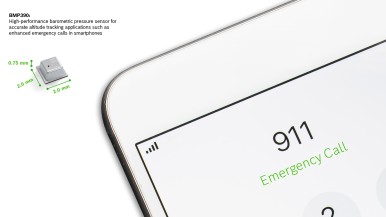
Bosch Sensortec announces the BMP390 , a barometric pressure sensor that delivers unmatched accuracy for altitude tracking in smartphones as well as wearable and hearable devices. The new sensor can measure height changes below 10 centimeters thanks to the improved resolution, and is 50 percent more accurate than its predecessor. The use of Bosch Sensortec’s latest BMP390 pressure sensor in smartphones, enables a high precision localization service that ultimately has the potential to save thousands of lives....Dr. Stefan Finkbeiner, CEO at Bosch Sensortec Accurate altitude detection helps to localize people indoors, where GPS signals are not available. The addition of the vertical-specific position to existing horizontal information enables first responders to determine the floor level of smartphone users who trigger an emergency call. The Federal Communications Commission (FCC) estimates that the additional vertical information has the potential to save up to 10,000 lives per year just in the USA alone 1 . "The use of Bosch Sensortec’s latest BMP390 pressure sensor in smartphones, enables a high precision localization service that ultimately has the potential to save thousands of lives," said Dr. Stefan Finkbeiner, CEO at Bosch Sensortec. Enabling enhanced emergency calls According to a recent report by the FCC , wireless providers in the US will soon be required to meet an increasingly stringent series of location accuracy benchmarks in accordance with a timetable, including providing the caller’s dispatchable location. The order adopts a z-axis location accuracy metric of ±3 meters relative to the handset for 80 percent of indoor wireless 9-1-1 calls starting in 2021. Emergency applications such as the enhanced 911 (E911) system in the US could also be implemented in other regions like Europe or Asia, to further improve people’s safety and peace of mind. Bosch and NextNav LLC, a 3D geolocation service provider, have collaborated on component specifications and system performance resulting in consistent, high accuracy z-axis capabilities indoors. This is accomplished by applying barometric pressure sensors in the phone, like the Bosch BMP390, and combining them with NextNav’s Metropolitan Beacon System (MBS) z-axis service to determine three-dimensional location and positioning. Accurate indoor and outdoor navigation and improved fitness tracking Not limited to emergency applications, the sensor also enables improved indoor navigation in general, for example in combination with the Position Tracking Smart Sensor BHI160BP . These navigation solutions compensate for traditional localization technologies such as GPS that do not work efficiently in shielded environments. This will help users to save time and avoid the hassle of getting lost, for example when searching for their car in an underground garage. Furthermore, the new BMP390 supports enhanced GPS applications for outdoor navigation and calorie expenditure estimation tasks. The use of advanced barometric pressure sensing can determine whether a user is walking up or down an incline, stairs or lifting weights during a fitness training session. This helps to increase the precision of calorie tracking by up to 15 percent 2 . Thanks to the improved accuracy of altitude measurements, fitness trackers are able to show exactly how far a user has run, walked or cycled. Accurate, stable and compact The BMP390 provides a typical relative accuracy of ±0.03 hPa, which is superior to any other comparable product on the market today. Typical absolute accuracy is ±0.5 hPa. The excellent accuracy is the result of significant improvements in temperature stability, drift behavior and noise. The sensor offers high temperature stability across its entire operating temperature and pressure range of 0 to 65 °C and 700 to 1100 hPa respectively, with an average temperature coefficient offset (TCO) of just ±0.6 Pa/K. Noise is also low, at only 0.9 Pa typical, an improvement of 25 percent relative to the predecessor BMP380. The device also provides high long-term stability, and low short- and long-term drift. Its small size, measuring only 2.0 mm x 2.0 mm x 0.75 mm, makes the new sensor easy to integrate into portable devices. Power consumption is kept low at 3.2 μA at 1 Hz (typical) to maximize battery life on portable devices. Availability The BMP390 is available for high-volume smartphone, wearable and hearable manufacturers. Footnotes 1 FCC Fact Sheet 2 Energy Expenditure Estimation with Smartphone Body Sensors

Bosch Rexroth achieves stable sales at previous year's record level in 2019

16.04.2020

Press release

Business/economy

Bosch Rexroth achieves stable sales at previous year's record level in 2019

Lohr am Main, Germany – Bosch Rexroth held up well in 2019 in a difficult environment and despite a sharp drop in incoming orders. At 6.2 billion euros, sales remained stable at the previous year’s record level. The company benefited from a solid core business in hydraulics and the further expansion of its product range in factory automation as an important door opener for new markets. “We draw a positive conclusion for 2019," says Rolf Najork, member of the Board of Management of Robert Bosch GmbH, responsible for the Industrial Technology division and Chairman of the board of Bosch Rexroth AG. "In view of the volatile markets and the noticeable economic slowdown, this very good result was anything but certain. It shows that our broad positioning with different divisions is a great advantage and that we have set the right course with our structural adjustments.” In 2019, Bosch Rexroth was able to match the success of the previous year in all regions. The core markets of Germany and Europe remained the strongest. Sales in Germany dropped by 4.1 percent to 1.4 billion euros. In the remaining European markets (excluding Germany), sales declined by 0.3 percent to 2.1 billion euros compared to the previous year. In the growth markets in the Asia-Pacific / Africa region, Bosch Rexroth achieved sales of 1.6 billion euros, which equals a slight increase of 0.6 percent. The region North and South America recorded a 5.3 percent rise to 1.1 billion euros. At the end of the fiscal year (December 31, 2019), the company employed around 31,000 people worldwide.Economic environment and COVID-19 pandemic cloud prospects for 2020 Bosch Rexroth expects business to decline in all regions and sectors in the current fiscal year 2020 due to the general economic weakness and the structural change in customer sectors closely linked to the automotive industry. Order intake declined by 20.3 percent in the course of 2019. Additionally, the global COVID-19 pandemic is currently clouding business expectations for 2020. Hence, the systematic implementation of measures to improve competitiveness in all areas is particularly important for Bosch Rexroth. "We are very much concerned with the current developments regarding COVID-19. We have taken extensive measures during the past weeks to protect our employees, customers and partners while ensuring the best possible supply," says Najork, "Safety is our top priority throughout. We want to be a reliable and responsible partner for our customers, also and especially in such global crises". Focus on innovations and new markets Bosch Rexroth remains one of the most significant innovation drivers and pioneer for new technologies in its markets. For example, the company invested some 348 million euros in research and development in fiscal year 2019 – an increase of 6.2 percent over the previous year. The company continues to focus on developing connected and fully automated solutions in the two major areas of hydraulics and factory automation. All divisions contributed to the success of Bosch Rexroth in 2019. While the core business with industrial and mobile hydraulics proved to be a solid foundation, the factory automation division with its focus on Industry 4.0 and the vision of the fully connected factory of the future, developed into an important door opener for new markets and customers.Machinery Applications and Engineering: connected and intelligent hydraulics Bosch Rexroth is actively driving change in its traditional core business of industrial hydraulics: smart hydraulic components and systems such as the compact hydraulic unit CytroBox can be quickly and easily integrated into connected manufacturing facilities. They are Industry 4.0 ready and offer services for the Internet of Things (IoT), for example for condition monitoring of machines and plants.Mobile Hydraulics: Smart Solutions for the mobile work machine of the future Despite the tense market environment, Bosch Rexroth was able to further expand its market share in mobile hydraulics in 2019. New activities in the fields of automation and driver assistance systems, electrification and IoT are future key topics. With BODAS Connect, Bosch Rexroth offers an open, scalable end-to-end solution to connect mobile work machines with each other. It enables customers to retrieve and analyze data from the mobile application. At the 2019 BAUMA trade fair for construction machinery, the company also presented the first components of a future range of electrification systems for work machines. These solutions support customers in reducing emissions, while further increasing performance. Here, Bosch Rexroth benefits from the long-standing Bosch expertise in electromobility. Factory Automation: new standards for connected manufacturing Connected assembly and intralogistics remain an important strategic focus for Bosch Rexroth’s factory automation division. The spotlight is on the vision of the factory of the future with software-based, automated and connected solutions. The company was able to further strengthen its position as an innovation driver in 2019, amongst others with the open ctrlX AUTOMATION platform. As the first 5G-capable automation platform from Bosch Rexroth, ctrlX AUTOMATION connects a wide range of devices with the new communication standard and ensures consistent connectivity in factories. Existing machines can be upgraded with the new technology via retrofit solutions. The Active Shuttle, which was also introduced in 2019, ensures greater flexibility and higher productivity in the automated factory. The autonomous transport system sets new standards in intralogistics, transports loads of up to 260 kilograms and is loaded and unloaded fully automatically using an integrated lifting platform."GoGreen" project: targets for energy and CO₂ savings exceeded In 2019, Bosch Rexroth was also able to record important achievements in CO2 neutrality: as part of the Bosch Group, the supplier of drive and control technologies has set itself ambitious goals to reduce energy consumption and CO₂ emissions. In the scope of the Bosch Rexroth project “GoGreen”, energy efficiency is being systematically improved in all plants and at customers' sites since 2011 – with an extremely positive outcome: by the end of fiscal 2019, Bosch Rexroth had saved 620 million kilowatt hours of electricity and gas worldwide thanks to "GoGreen," corresponding to more than 265,000 tons of CO₂. This equals the annual energy consumption of a city with some 80,000 inhabitants. Energy consumption at the Bosch Rexroth locations was reduced by 20 to 50 percent. Since the end of 2019, Bosch Rexroth has achieved a CO2-neutral “footprint” in Germany.

Bosch puts 5G machines in pole position

26.11.2019

Press release

Business/economy

Bosch puts 5G machines in pole position

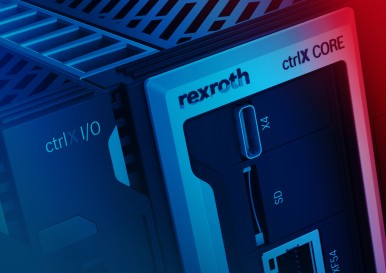
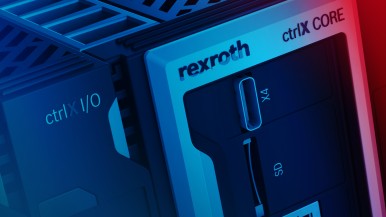
Stuttgart, Germany – 5G is coming. The new communications standard accelerates the internet of things and boosts Industry 4.0. Control systems and sensors of the kind built into facilities, machinery, and logistics chains stand to gain from this fast, reliable real-time wireless data transfer. Preparing machines for state-of-the-art communication involves making them 5G-capable. Now Bosch has the solution: Bosch Rexroth’s new ctrlX AUTOMATION control technology comes with 5G built in and can connect a wide range of industrial devices with the new communications standard. ctrlX AUTOMATION will be showcased at the SPS trade fair in Nuremberg.Bosch opens the door to a new industrial age 5G is set to turbocharge manufacturing. Our new 5G-capable automation platform lays the groundwork and opens the door to a new industrial age,...says Rolf Najork, the member of the Bosch board of management responsible for industrial technology. 5G is the first communications standard designed to enable connectivity for people as well as for the internet of things. The new standard has impressive characteristics: it is up to 20 times faster than 4G, transfers data virtually instantaneously with a latency of one millisecond, and is up to 99.9999 percent reliable – making the receipt of a “digital shipment” as certain as with transmission through a wire. "5G is a revolution and an important building block for the factory of the future", Najork says. Engineers and designers now face the challenges of integrating 5G into their machines and products. Bosch is introducing the solution that meets their needs: the new automation platform’s hardware can be fitted with a 5G module. The operating system and software for ctrlX AUTOMATION are 5G-capable from the outset and support rapid commissioning. Retrofit solutions are also available for adding the new technology to existing machinery. Bosch Rexroth’s new automation platform is scheduled to have its market launch in 2020. 5G will be a competitive factor for connected industry Experts estimate that there will be up to 70 billion connected devices worldwide by 2025. Many of them will be in manufacturing, meaning that 5G will become a competitive factor. The new communications standard will enable applications that require high-power, extremely reliable wireless connections to be integrated securely and efficiently into manufacturing facilities. These include mobile robotics, autonomous transport vehicles, and human-machine interactions. For instance, workers wearing augmented reality glasses can access additional information in their field of vision, optimizing how they monitor and maintain machinery. Combining tasks in the virtual world with those in the real world calls for real-time data flows. And that’s what 5G promises. "This new form of communication eclipses everything we’ve had until now. 5G is the first wireless protocol to truly meet the needs of the manufacturing industry", Najork says. Bosch takes on leadership role in Industry 4.0 and 5G Bosch is developing the factory of the future. In this endeavor, the company is relying on Industry 4.0 . The company first tests and validates products in-house before they are available on the market. Bosch is taking this approach with 5G, too. The company presented its first 5G-capable autonomous transport system, ActiveShuttle , at the Hannover Messe. To support the further development of its factories, Bosch has applied to the German Federal Network Agency for 5G licenses with which to set up local campus networks. Moreover, Bosch has taken on the chair of the global 5G Alliance for Connected Industries and Automation (5G-ACIA) with the aim of shaping the new mobile standard so that it meets the needs of the manufacturing industry from the outset.

Bosch reaches settlements with 50 U.S. States and Territories as well as with U. ...

10.01.2019

Press release

Business/economy

Bosch reaches settlements with 50 U.S. States and Territories as well as with U. ...

Stuttgart / New York / San Francisco – On January 10, 2019, Bosch resolved pending civil litigation with U.S. consumers and used car dealers, as well as investigations by 50 U.S. states and territories into Bosch by entering into two sets of settlement agreements. Settlement 1: Agreement with U.S. plaintiffs regarding Fiat Chrysler Together with Fiat Chrysler, Bosch reached agreement with U.S. civil plaintiffs to resolve pending class action litigation against Bosch and Fiat Chrysler concerning Fiat Chrysler diesel vehicles sold in the United States. The settlement agreement was concluded with the Plaintiffs Steering Committee (“PSC”) on behalf of a proposed settlement class. The respective documents were filed on January 10 with the competent court, the United States District Court for the Northern District of California, and will require that court’s approval. The agreement settles the claims of U.S. consumers and used car dealers against Robert Bosch GmbH, its affiliates, employees and management concerning approximately 100,000 Fiat Chrysler diesel Ram 1500 and Jeep Grand Cherokee vehicles from model years 2014 to 2016. The agreement also settles claims against Fiat Chrysler. Bosch supplied engine control units for these vehicles. Fiat Chrysler will pay for most of the settlement. Bosch will contribute up to USD 27.5 million. The settlement agreement requires the approval of Judge Edward Chen, who conducts the nationwide multi-district proceedings in which all pending private lawsuits against Bosch concerning these vehicles have been combined. The Court will hold a hearing on January 23 to consider preliminary approval of the settlement notice, after which the class members will be informed of their rights and options. A hearing to consider final approval of the settlement is anticipated by early May 2019. Settlement 2: Agreement with U.S. states regarding Fiat Chrysler and Volkswagen The settlement reached with 50 U.S. states and territories will terminate the participating U.S. states’ investigations of Bosch related to Volkswagen and Fiat Chrysler diesel vehicles sold in the U.S. The settlement, which will be implemented state-by-state, will release Robert Bosch GmbH, its respective affiliates, employees, directors and officers as well as the management, from all potential current and future claims under the state laws named in the agreement with regard to Bosch’s supply of engine control units and software for Volkswagen and Fiat Chrysler diesel vehicles. For this purpose, Bosch will pay as settlement different amounts to each state as agreed with all 50 of the jurisdictions. A total of approximately USD 98 million will be paid to the participating U.S. states. The settlement amount will be distributed among the participating states based primarily on the number of vehicles registered in each state. Additional USD 5 million will also be paid to the National Association of Attorneys General. In the determination of the settlement with the U.S. states, Bosch's robust compliance systems as well as its full cooperation during the investigations were positively taken into account. Since 2016 the already existing extensive compliance policies and procedures have been substantially enhanced. The maintenance of these is part of the agreement. By entering into the settlements, Bosch does not accept liability, nor does Bosch admit to the factual allegations of the U.S. plaintiffs or U.S. states. The settlements reflect Bosch’s desire to move forward and to spare the company the very substantial costs and the burden on the company’s resources that would be required to litigate these issues. “Upon careful consideration of all relevant aspects, we have decided to enter into settlement agreements. Legal disputes would have resulted in lengthy and costly proceedings in numerous U.S. states and with a large number of different claimants. As an innovation leader, we want to devote our attention and resources to developing our businesses and to intensifying our efforts to shape the future in our areas of activity," stated Dr. Stefan Hartung, Member of the Board of Management of Robert Bosch GmbH and Chairman of the Business Sector Mobility Solutions. Bosch will continue to defend its interests in all other civil and criminal law proceedings and to cooperate comprehensively with the investigating authorities in Germany and in other countries.

CES 2019: Bosch extends its position as a leading IoT company

07.01.2019

Press release

Smart Home

CES 2019: Bosch extends its position as a leading IoT company

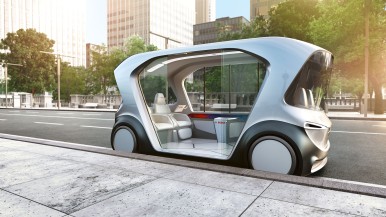
Las Vegas, NV – More and more, the internet of things (IoT) is changing our world. At CES 2019 in Las Vegas, Bosch is showing what it is already capable of today. From a concept for a shuttle vehicle that makes a new kind of mobility tangible, to fridges with connectivity that give advice on food storage, to smart lawn mowers that learn by doing – the spectrum of solutions Bosch is presenting at the world’s largest consumer electronics show is huge. “Bosch recognized the huge opportunities of the IoT early on. We have been actively shaping the connected world for nearly ten years now,” says the Bosch board of management member Dr. Markus Heyn. “Today, we are a leading IoT company. Step by step, we have extended our software and IT expertise.” Using its own IoT cloud, the company has already carried out more than 270 projects in field such as mobility, smart homes, smart cities, and agriculture. The number of sensors and devices connected over the Bosch IoT Suite has risen nearly 40 percent since last year, and now stands at 8.5 million.One of the keys to further growth and new business opportunities on the internet of things is artificial intelligence (AI). This is also a field in which Bosch is playing a decisive part in driving developments. “We will best be able to unlock the potential of the IoT if we combine it with AI, and take our IoT and AI activities forward in parallel,” Heyn says. In his view, the relationship between the two fields is complementary: “The IoT needs intelligence. The use of connected things to gather data can be a decisive boost for the development of AI. It is only through AI that connected things become intelligent and learn to draw their own conclusions. Above all, we aim to achieve concrete improvements in people’s real, everyday lives – things such as more time, more security, more efficiency, and more convenience.” Here, Heyn cites the example of video-based fire detection: by using intelligent image analysis, security cameras are able to identify fires within a few seconds, even before the system’s sensors detect heat and smoke. In this way, fires can be detected considerably earlier than with conventional fire or smoke alarm systems. This saves valuable minutes in which lives can be saved.A second key to success on the path to the IoT age is partnerships. Here, Bosch is opting for a mix of traditional and new players. The alliance recently agreed with the Canadian platform provider Mojio has already resulted in the first integrated IoT platform for connected vehicles: in the event of an accident, a special Bosch algorithm can identify where and when the accident happened, and how severe it is. Via the Mojio cloud, the data are transmitted without any delay to the Bosch emergency service center, which automatically sends an emergency call to local rescue services. At the same time, a message is sent to a predetermined list of recipients, either as a text message or via the Mojio app. “Together with Mojio, we are connecting vehicles directly with the cloud. This means rescue services can get to the scene of an accident even faster than before,” says Mike Mansuetti, the president of Bosch North America. From the middle of next year, the IoT emergency solution will be available for nearly a million drivers in North America and Europe. IoT on the roads: Bosch presents connected mobility of the future With the concept shuttle vehicle it developed in-house, Bosch is celebrating a world first at CES. In this vehicle, the company is its presenting solutions for the automation, connectivity, and electrification of vehicles, and is giving visitors the chance to experience at first hand a new kind of mobility: driverless shuttles, which will soon be a feature on the streets of the world’s cities. “This will pay into our vision of mobility that is as emissions-free, accident-free, and stress-free as possible,” Heyn says. For shuttle-based mobility such as this, Bosch will be supplying not only components and systems, but also a complete range of mobility services, such as reservation, sharing, and connectivity platforms, as well as parking and recharging services. Bosch believes that such connected services are essential for the shuttle-based mobility of the future. The forecast market volume for these services is also high: while it was 47 billion euros in 2017, it is estimated that it will be as much as 140 billion euros by 2022 (source: PwC). Bosch also wants to have a share in this, and aims for significant double-digit growth with the solutions it offers. For Heyn, there is no doubt: “In the future, every vehicle on the road will make use of Bosch digital services. We will consolidate them into a smart, seamlessly connected ecosystem.”One of the final obstacles for putting shuttle-based mobility into practice is the automation of vehicles in complex urban environments. Here, Bosch believes partnerships are the answer: In the second half of this year, San José in California’s Silicon Valley is set to become the pilot city for testing a fully automated, driverless ridesharing service provided by Bosch and Daimler. The three parties have already signed a letter of intent to this effect. With their development alliance, Bosch and Daimler want to improve urban traffic flows, enhance road safety, and provide an important building block for the traffic of the future. Their aim is to develop a driving system for fully automated driverless driving (SAE level 4/5) that is ready for production by the beginning of the next decade. IoT in the home: connected appliances make home owners’ lives noticeably easier It’s not just on the roads that connected products and services that make user’s lives easier are in demand. “We’re working on the idea of a connected home, and on appliances that think autonomously and understand what users want,” Heyn says. At CES, for example, the company is presenting a new function for web-enabled fridges that can recognize types of food and provide recommendations on storage. The interior camera automatically recognizes some 60 kinds of fruits and vegetables and suggests the ideal place to store them by means of an app. As a result, food is stored in the best possible way, stays fresh for longer, and doesn’t have to be thrown away so often. Another new development is the PAI projector, which can project a virtual user interface onto a kitchen counter top. An integrated 3D sensor captures any hand movements, allowing touch-screen operation of the interface. In this way, users can conveniently call up recipes online and make phone calls over the internet while they are cooking and baking. Designed especially for the kitchen environment, PAI does not have to be used with as much care as a smartphone or tablet. Even with sticky fingers, the projector can still be controlled perfectly. PAI is set to debut in China in February 2019, to be followed by market launch in the United States. Bosch is also presenting the Indego S+, its new robot lawn mower with internet connectivity, at CES. It is one of the first robot lawn mowers in the market to offer voice control by Amazon Alexa. It is also the only robot lawn mower that can use weather forecasts on the web to automatically decide when best to mow the lawn again. Bosch is using artificial intelligence to improve the way its robot lawn mower recognizes obstacles on the lawn by evaluating data such as motor flow, acceleration, motor speed, and direction. “We are using AI to make lawn care even easier and more convenient. Our vision is an Indego that adapts to its garden in order to mow the lawn perfectly every time,” Heyn says. IoT #LikeABosch: Bosch launches digital IoT campaign Bosch is also using CES 2019 to premiere its new IoT image campaign. The main plank of the campaign is a hip-hop video clip featuring a protagonist who is a savvy IoT user. Bosch is entering new territory with its “Like a Bosch” campaign; the decidedly different approach and tone marks a new departure for the company, which was founded in 1886.This PR move capitalizes on a rash of “like a boss” videos and memes that have gone viral on the internet, attracting tens of millions of clicks. These videos feature everyday people who stage bizarre stunts or find their way out of predicaments with technical finesse. The IoT image campaign changes a few letters in order to put a fresh spin on this internet phenomenon. The protagonist in the Bosch video is a young man who is always on top of things, thanks to connected solutions from Bosch. Smartphone in hand, he operates his car, lawn mower, or coffee machine in a cool, smart, and confident way – he’s in charge of things “like a Bosch.”


Bosch presents tomorrow’s mobility today

12.12.2018

Press release

Mobility

Bosch presents tomorrow’s mobility today

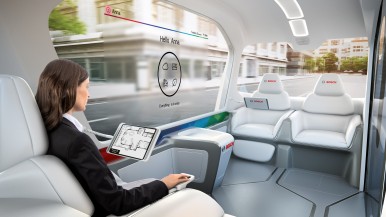
Stuttgart, Germany – A light, airy, minimalistic design, a futuristic outer shell made of display screens and glass, and a spacious interior – that is how architects might describe a novel structure, but in actuality the description also fits a completely new class of vehicle and a new kind of mobility: driverless electric shuttles that glide almost silently through city centers and are seamlessly connected with their environment. These will soon be a common sight on our city streets – whether they are transporting goods or people. Bosch provides components and systems for automating, connecting, and electrifying the shuttles, but shuttle mobility won’t be possible without mobility services. In the future, the company will offer these services too, bundling them into a smart, seamlessly connected ecosystem. That will include booking, sharing, and networking platforms, parking and charging services, and software solutions for managing and maintaining the vehicles, as well as infotainment during the journey. “Bosch is developing a unique package of hardware, software, and mobility services for shuttle mobility of the future,” says Dr. Markus Heyn, member of the board of management of Robert Bosch GmbH. At CES 2019 in Las Vegas, the world’s biggest electronics show, Bosch will be presenting its solutions for this area of transportation with a concept shuttle, and visitors will be able to experience its full range of services. Bosch is developing a unique package of hardware, software, and mobility services for shuttle mobility of the future....Dr. Markus Heyn, member of the board of management of Robert Bosch GmbH Bosch services for users and shuttle operators The emergence of the shuttle segment is a result of rising demand for ridesharing services: in Europe, the U.S., and China alone, about one million such on-demand shuttle buses will be on the roads as early as the year 2020, growing to 2.5 million by 2025 (source: Roland Berger ). Many of these vehicles, available 24/7, will be fully electric, and they will also be completely autonomous by the middle of the next decade at the latest. That’s why Bosch has packed every square centimeter of its concept shuttle with the appropriate technology – from electric powertrains and 360-degree surround sensors to connectivity management and vehicle computers. Yet these components and systems go only part of the way towards shuttle mobility. To make on-demand vehicles suitable for flexible everyday use, they must be connected to mobility services. “In the future, every vehicle on the road will make use of Bosch digital services,” Heyn says. These services allow users to book the vehicles, share rides with other passengers, and pay for the journey. Charging, repairing, and maintaining the vehicles, plus route planning and administrative activities, also call for services that Bosch will offer shuttle fleet operators in a seamlessly connected ecosystem. In the future, every vehicle on the road will make use of Bosch digital services....Dr. Markus Heyn, member of the board of management of Robert Bosch GmbH Booking and sharing Users can easily book a shuttle via smartphone, regardless of whether they’re relaxing on the sofa or sitting at their desk at work. Working behind the scenes, an algorithm identifies the vehicle closest to the requested location and finds other users who wish to travel a similar route. The more passengers a single shuttle can transport, the cheaper the journey for everyone. This approach also reduces the amount of traffic in cities and mitigates the impact on the environment. Bosch is developing the necessary software platforms to make this a reality. When the shuttle pulls up to the requested pick-up point, users again use their smartphones to identify themselves – thanks to Bosch’s Perfectly Keyless digital access service. It recognizes the owner’s smartphone as unmistakably as a digital fingerprint and opens the vehicle only for them. Every passenger always gets the seat that they reserved. Moving forward: electrified and automated Bosch’s electric axle drive makes the shuttles especially efficient yet affordable as they wend their way through the city. And the company’s Convenience Charging service knows just how long the battery charge will last and where to recharge the vehicle. This service means that even today, drivers no longer need to worry about being stranded with a dead battery. It also links vehicle information, such as the current state of battery charge or how much energy the heating and air-conditioning systems are consuming, with environmental data such as congestion and weather forecasts, so as to predict vehicle range with particular accuracy. Furthermore, Convenience Charging finds the ideal charging station and can reserve it in advance. And thanks to a standardized access and payment system, charging is easier than ever. Driverless e-shuttles provide users with transportation that is not only nearly emissions-free, but also very safe. For automation, Bosch develops and makes its own radar, video, and ultrasonic sensors, braking control systems, and power steering, to name a few examples. Smart digital services are indispensable here, too: Bosch predictive road-condition services let automated vehicles know in advance what environmental conditions to expect. They can thus adapt their driving style as needed so as to ensure maximum safety throughout the journey. The Bosch road signature is a map-based localization service with which automated vehicles can accurately determine their position in the lane down to a few centimeters – another crucial prerequisite for the safety of automated shuttles. Comfortable interior Bosch has designed the interior of its concept vehicle to provide space for four passengers, seating them across from one another to maximize legroom and comfort. Infotainment is provided on screens that can be used either by each passenger individually or in groups; for example, a family can watch a movie together as they travel somewhere for the weekend, or colleagues can work on a presentation on their way to the office. Smartphones use the on-board Wi-Fi and can integrate seamlessly with the infotainment system, thanks to Bosch connectivity technology. Its concierge service turns the shuttle into a personal assistant. With all kinds of information at its disposal, the shuttle can provide passengers with recommendations, advance bookings, weather reports, and travel tips at any time. Once the shuttle has arrived at its destination, the passengers can pay for their journey with Bosch’s e-payment service. Maintenance and administrative activities But Bosch services do not end when a rideshare journey is over: the company’s camera-based system for the vehicle interior checks whether anyone has forgotten their phone or handbag. If a passenger does forget something, the shuttle informs them directly via smartphone. The cameras can also detect gum on the seat or an overturned coffee cup – in other words, whether the shuttle needs cleaning – and can make the necessary arrangements immediately. This is so every passenger can start their journey in a clean shuttle. Bosch’s service for over-the-air updates can determine whether the driverless shuttles have the latest software version. The service detects software updates as soon as they are available and executes them in the vehicle securely and reliably. Thanks to sensors installed in the vehicle, predictive diagnostics can monitor the condition of key components and notify the shuttle before a fault actually occurs, so it has enough time to drive itself to a repair shop. This prevents the car from suddenly breaking down, which is a boon to operators. In the future, Bosch will pool updates from the data cloud and predictive diagnostics into a comprehensive connectivity platform . This will give vehicle manufacturers and shuttle service operators a constant overview of the condition of their fleets, so they can ensure that their shuttles are always ready for action. And finally, the Bosch subsidiary ESCRYPT’s security solutions handle vehicle security – whether for keyless access systems, data connectivity with the outside world, or software updates.

Machine learning: Bosch sends sensor system to ISS

19.11.2018

Press release

Research

Machine learning: Bosch sends sensor system to ISS

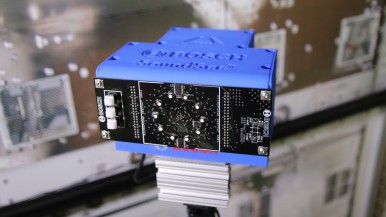
Pittsburgh, USA – Bosch in North America and Astrobotic Technology Inc. today announced a research partnership to send experimental sensor technology to the International Space Station (ISS) as early as May 2019. Bosch’s SoundSee technology is a deep audio analytics capability that uses a custom array of microphones and machine learning to analyze information contained in emitted noises. SoundSee’s analytics will investigate whether audio data from equipment could be learned and understood using advanced software, such that it could be used to improve the operations of the ISS. “Machines, such as motors and pumps, emit noise signatures while they operate,” said Dr. Samarjit Das, principal researcher and SoundSee project lead at Bosch’s Research and Technology Center in Pittsburgh . “Our SoundSee AI (artificial intelligence) algorithm uses machine learning to analyze these subtle acoustic clues and determine whether a machine, or even a single component of a machine, needs to be repaired or replaced.” The SoundSee payload will ride on NASA’s Astrobee Robot, an autonomous free-flying vehicle capable of navigating throughout the ISS. The NASA Ames Research Center’s Astrobee team has also provided support for ground testing. “The support from NASA has been critical,” said Dr. Andrew Horchler, Astrobotic research scientist and director of Future Missions and Technology. “They have provided feedback and requirements that have helped us design our operational plans and understand the challenges of sending a hardware payload to the ISS.” On the ISS, researchers will collect data and send it to Earth for Bosch to study. As research progresses, the team expects to update the software or adjust operational routines to improve data-collection results. “This data should allow us to gain insights into the state of the space station,” said Jon Macoskey, research engineer intern at Bosch. “Our long-term goal is to show that we can detect anomalies in the operation of the station and return that intelligence to crewmembers or ground control.” The research has promise for numerous terrestrial applications and other crewed spacecraft, including missions to the Moon and Mars. “For some time, Bosch has been interested in using audio analytics to monitor critical machines and equipment, such as car engines or HVAC systems,” said Dr. Joseph Szurley, a Bosch research scientist on the project. “The ISS will allow us to study how these techniques can extend to even more challenging and unique environments.” Astrobotic’s Future Missions and Technology team , a space robotics research group, is developing the flight version of the sensor, known as the SoundSee payload. The team will also lead ground testing and preparation for flight. “Conducting research in space, even when you have an asset like the ISS, is significantly more challenging than testing on the ground,” Horchler said. “As a space robotics company, we are able to help Bosch prepare for operating in this highly controlled space environment.” The SoundSee project has been in development since the Center for the Advancement of Science in Space (CASIS) approved funding for launch costs and astronaut time aboard the space station earlier this year. CASIS is the organization tasked by NASA with managing the ISS U.S. National Laboratory. Recently, Bosch and Astrobotic researchers began testing engineering units of the SoundSee payload and added former ISS Commander Dr. Colin “Mike” Foale to the team. “Since meeting the team at Astrobotic in Pittsburgh for the SoundSee preliminary design review, I am convinced that this novel, cutting-edge approach to using machine learning in space will not only have great benefits for troubleshooting ISS problems, but especially throughout industry on Earth,” Foale said. “Commander Foale has provided invaluable operational insights into how the mission might operate within the ISS and helped us complete our preliminary design review this summer,” Bosch’s Das said. “Our test facility at Astrobotic is helping us validate the techniques that we will deploy on the ISS.” The SoundSee payload will launch to the International Space Station as part of NASA’s Astrobee robot, and will be delivered on a future commercial resupply services mission. “We have a dedicated team and clear path to flight,” Horchler said. “We couldn’t be more excited to work with Bosch, NASA and CASIS on this critical work.”

Versatile semiconductors: Bosch launches new automotive system-ICs at electronic ...

05.11.2018

Press release

Connected mobility

Versatile semiconductors: Bosch launches new automotive system-ICs at electronic ...

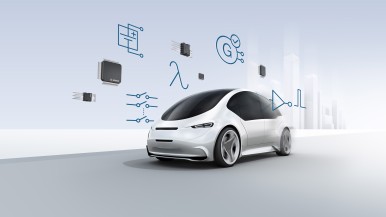
Munich and Reutlingen, Germany – System ICs are application-specific integrated circuits (ASICs) designed to meet special requirements in vehicle systems. They are integrated on a single silicon chip measuring only a few square millimeters, and house complex circuits with up to several million individual electronic functions. At electronica 2018, the world’s leading trade show for electronics, Bosch introduces four new system-ICs. A new chip for electric vehicles will shut off the power in the event of an accident, ensuring safety for driver and passengers and enable rescuers to work without being put in danger.Semiconductors make electric cars safer in an accident Pure electric or hybrid vehicles are equipped with special batteries that provide power to the electric motor at high voltages of 400 to 800 volts. For safety reasons, these high-voltage batteries, power electronics and their electrical wiring are designed to be highly robust. Nevertheless, the question of how secure a high-voltage battery is in the event of an accident is of vital concern to both the vehicle's occupants as well as any rescue workers. To prevent these persons from coming into contact with high voltage, while at the same time eliminating the risk of a vehicle fire, it must be possible to completely isolate the battery from the vehicle’s electrical system. During an accident, so-called "pyro fuses" blow out sections of the electrical wiring to the high-voltage battery by means of a small explosive charge, so that the circuit is interrupted quickly and effectively. Here, Bosch semiconductors play a crucial role: The integrated circuit CG912 can, as a part of the battery management, fire up to four pyro fuses in the battery wiring in the event of an accident,. This mitigates the risk of electrical shock when touching the vehicle’s chassis. In addition, this special IC can also provide power to the battery management. Bosch’s CG912 was originally developed for deploying airbags and has been proven in the field a million times over. New system ICs at electronica 2018 System ICs are truly versatile. They provide stable supply voltages, read sensor data, process information and drive actuators – in real time. The new oxygen sensor evaluation IC CJ138 offers, in comparison to its predecessors, extended options for adapting an engine control unit to a wide range of oxygen sensors, as well as accurate sensor cable diagnostic for short circuit or interruption. The highly integrated transmission IC CG270 precisely controls up to ten hydraulic valves in automatic transmissions and allows the design of more compact control units for modern multi-stage transmissions. CG135 is a transmission IC that monitors the supply voltages in a transmission control unit and prevents the transmission from being damaged in the event of a fault.

Bosch MEMS sensors now enable faster airbag deployment

05.11.2018

Press release

Connected mobility

Bosch MEMS sensors now enable faster airbag deployment

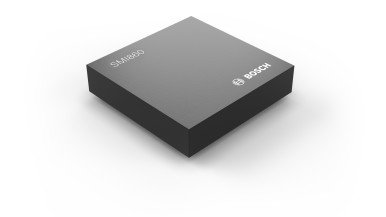
Munich and Reutlingen, Germany – Precision meets speed. At electronica, the world’s leading trade fair for electronics, Bosch announces a new generation of high-g acceleration sensors. The SMA7xy sensor family improves safety for car drivers and passengers. When the acceleration sensors detect a collision, the passive safety systems such as airbags can now be deployed earlier, and the restraining effect can be precisely set for the given accident scenario. In this way, the consequences of accidents can be further mitigated. The new SMA7xy family comprises of multiple sensors for airbag systems based on Bosch's market leading MEMS technology.Universally applicable, very fast crash sensors The sensors from the new SMA7xy product family enable extremely fast signal processing. Compared to the sensors of the preceding generation, Bosch has doubled the bandwidth, and thereby increased crash signal processing speeds by one hundred percent. The acceleration sensors are located either directly in the airbag ECU or in satellites located at the A- B- or C-pillar or at the front bumper. The sensors detect impact or a car rollover event within fractions of a second and send this information to the airbag ECU, which then deploys the vehicle's passive safety systems in time. One of the sensors from the SMA7xy family, the SMA760 precisely detects front and side impacts. A second sensor, the SMA720 contains one x and one z channel to measure acceleration along the vertical axis. This makes the SMA720 an ideal companion to the SMI860 for vehicle rollover detection. Both sensors support the SafeSPI communication interface standard. All sensors from the SMA7xy family conform to the ASIL D safety level of ISO 26262 and meet the VDA AK-LV27 specification. The PSI5 sensor versions, designed specifically for use along the periphery, offer a wide acceleration range: 30g, 60g, 120g, 240g, or 480g. For improved design flexibility Bosch offers a number of variants, for example an upright face mount option with a smaller footprint. Flexible options providing design freedom The peripheral-type sensors of the SMA7xy family are available in many variants, with two package options, four sensor axis configurations, several measurement range options and well over 80 different PSI5 modes – there is a suitable sensor to meet every requirement. One package option is the SOIC8, a well-established housing that is widely used and exceptionally robust, whilst the LGA System-in-package (SiP) houses integrated passive components.