Search & find:
Media, press releases, events for your editorial coverage

Many applications made easy: Bosch launches cost-effective motion sensor BMI323

20.10.2022

Press release

Sensortec

Many applications made easy: Bosch launches cost-effective motion sensor BMI323

The BMI323’s combination of simplicity with an excellent price-performance ratio will open up new applications for IMUs...said Dr. Stefan Finkbeiner, CEO at Bosch Sensortec. Tiny MEMS motion sensors are all around us. They make consumer products easier to use and improve how our smartphones and other gadgets interact with us. These sensors are precise, compact and power-efficient, however, until now, they have been complex for basic applications. To address this issue, Bosch Sensortec is launching the BMI323, an affordable Inertial Measurement Unit (IMU) with excellent performance and integrated features enabling a shorter development time. "The BMI323’s combination of simplicity with an excellent price-performance ratio will open up new applications for IMUs," said Dr. Stefan Finkbeiner, CEO at Bosch Sensortec. "These will include standard consumer products, such as toys, gaming controllers, remote controls, wearables, fitness trackers, smartwatches as well as tablets and laptops." Like its predecessor BMI160, the new BMI323 is a general-purpose, low-power IMU that combines precise acceleration and angular rate (gyroscopic) measurement with intelligent integrated features that are triggered by motion. Its integrated features make development faster and easier for OEMs. For example, the BMI323 already includes Bosch Sensortec’s plug-and-play step counter software, so customers don’t need to spend time developing their own algorithms. Other features include motion detection that can turn subsystems on or off when a device, such as a TV remote control, is put down or picked up, thus reducing overall power consumption. Compared to the BMI160, the BMI323 provides improved accelerometer performance as well as lower power consumption. In high-performance mode, using both the gyroscope and the accelerometer, the BMI323 has a current consumption of 790µA compared to 925µA on the BMI160, which represents a reduction of nearly 15%. The 6-axis BMI323 has a self-calibrating 16-bit triaxial gyroscope, a 16-bit triaxial accelerometer, and a 16-bit digital temperature sensor housed in a miniature 2.5 x 3.0 x 0.83 mm3 (14-pin) LGA package that is pin to pin compatible with the BMI160 and others. The BMI323 is the first IMU device announced by Bosch Sensortec to include the new I3C interface, in addition to the I2C and SPI interfaces. Availability: The BMI323 is available now. Website: https://www.bosch-sensortec.com/products/motion-sensors/imus/bmi323/ Contact person for press inquiries: Katharina Sorg phone: +49 711 811-26074 Twitter: @BoschMEMS

Bosch Hemoglobin Monitor: Early detection of anemia without blood tests

11.01.2021

Press release

Business/economy

Bosch Hemoglobin Monitor: Early detection of anemia without blood tests

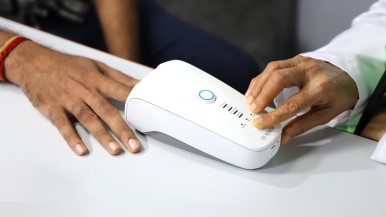
Bengaluru, India / Waiblingen, Germany – According to estimations by the WHO 1.6 billion people suffer from Anemia, a condition resulting from the reduced hemoglobin concentration in the blood. This has prompted the WHO to define the fight against anemia as one of its critical sustainable development goals for 2025. Bosch has developed a portable Hemoglobin Monitor Solution (HMS) especially for regions where routine access to medical care tends to be difficult. This HMS allows a large number of people to be screened for anemia rapidly, safely, using a non-invasive approach. The solution has been named a CES Innovation Award Honoree in the “Health and Wellness” category. “Bosch has developed the non-invasive Hemoglobin monitor as an innovative solution and as an alternative to traditional methods for the early detection of anemia. This should offer people better diagnosis options even in resource constrained conditions. The use of artificial intelligence is revolutionizing anemia management, specifically in point-of-care setups and closer to the patient”, explains Dattatri Salagame, President and Managing Director of Robert Bosch Engineering and Business Solutions Private Limited (RBEI). Bosch has developed the non-invasive Hemoglobin monitor as an innovative solution and as an alternative to traditional methods for the early detection of anemia. This should offer people better diagnosis options even in resource constrained conditions. The use of artificial intelligence is revolutionizing anemia management, specifically in point-of-care setups and closer to the patient....Dattatri Salagame, President and Managing Director of Robert Bosch Engineering and Business Solutions Private Limited (RBEI) Hemoglobin is a protein found in red blood cells and is responsible for carrying oxygen and carbon dioxide throughout the body. People with a low hemoglobin count may experience symptoms such as general fatigue, weakness, pale skin, and even serious illnesses. Anemia particularly affects women, even more so when they are pregnant, and also people suffering from malnutrition. In cancer patients undergoing chemotherapy or in palliative care, hemoglobin levels should be checked regularly. Hemoglobin results in 30 seconds using a non-invasive AI measurement The intelligent solution by Bosch is designed for use directly at the point-of-care and is completely pain-free with no need for a blood test, as the value is determined by a finger scanner using multi-wavelength spectrophotometry on the surface of the skin. The system uses an optical sensor to precisely and reliably measure the photoplethysmogram (PPG) signals. Photoplethysmography, or PPG, is an optical technique used to detect volumetric changes in blood in peripheral circulation. The device provides a reliable result within 30 seconds even for low hemoglobin concentrations. This is where machine learning comes in: the device’s algorithm monitors the wavelength of the light and uses 27 different characteristics to determine and classify the hemoglobin value. The algorithm has been trained with more than 10,000 anemia data points. These clinically collected data along with the corresponding ground truth data, are the basis for the machine learning algorithm. The more validated data sets are put into the continuously learning algorithm, the more precise the results will be. Lab-free results without risk of infection A laboratory analysis is not necessary and there is no risk of infection from contaminated needles. Participants receive their test results quickly at the point of care. The device is battery operated, does not need subsequent calibration, and is extremely easy to use. It is intended for use in outlying and remote regions by healthcare professionals. Location-based reporting ensures easy clinical traceability. Organizations that operate multiple devices can draw conclusions through heat maps about specific regions. Patient data remains anonymous. Market release in India is expected by mid-2021.

Accurate indoor localization can save thousands of lives – enabled by pressure s ...

22.04.2020

Press release

Internet of Things

Accurate indoor localization can save thousands of lives – enabled by pressure s ...

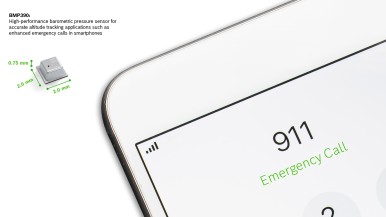
Bosch Sensortec announces the BMP390 , a barometric pressure sensor that delivers unmatched accuracy for altitude tracking in smartphones as well as wearable and hearable devices. The new sensor can measure height changes below 10 centimeters thanks to the improved resolution, and is 50 percent more accurate than its predecessor. The use of Bosch Sensortec’s latest BMP390 pressure sensor in smartphones, enables a high precision localization service that ultimately has the potential to save thousands of lives....Dr. Stefan Finkbeiner, CEO at Bosch Sensortec Accurate altitude detection helps to localize people indoors, where GPS signals are not available. The addition of the vertical-specific position to existing horizontal information enables first responders to determine the floor level of smartphone users who trigger an emergency call. The Federal Communications Commission (FCC) estimates that the additional vertical information has the potential to save up to 10,000 lives per year just in the USA alone 1 . "The use of Bosch Sensortec’s latest BMP390 pressure sensor in smartphones, enables a high precision localization service that ultimately has the potential to save thousands of lives," said Dr. Stefan Finkbeiner, CEO at Bosch Sensortec. Enabling enhanced emergency calls According to a recent report by the FCC , wireless providers in the US will soon be required to meet an increasingly stringent series of location accuracy benchmarks in accordance with a timetable, including providing the caller’s dispatchable location. The order adopts a z-axis location accuracy metric of ±3 meters relative to the handset for 80 percent of indoor wireless 9-1-1 calls starting in 2021. Emergency applications such as the enhanced 911 (E911) system in the US could also be implemented in other regions like Europe or Asia, to further improve people’s safety and peace of mind. Bosch and NextNav LLC, a 3D geolocation service provider, have collaborated on component specifications and system performance resulting in consistent, high accuracy z-axis capabilities indoors. This is accomplished by applying barometric pressure sensors in the phone, like the Bosch BMP390, and combining them with NextNav’s Metropolitan Beacon System (MBS) z-axis service to determine three-dimensional location and positioning. Accurate indoor and outdoor navigation and improved fitness tracking Not limited to emergency applications, the sensor also enables improved indoor navigation in general, for example in combination with the Position Tracking Smart Sensor BHI160BP . These navigation solutions compensate for traditional localization technologies such as GPS that do not work efficiently in shielded environments. This will help users to save time and avoid the hassle of getting lost, for example when searching for their car in an underground garage. Furthermore, the new BMP390 supports enhanced GPS applications for outdoor navigation and calorie expenditure estimation tasks. The use of advanced barometric pressure sensing can determine whether a user is walking up or down an incline, stairs or lifting weights during a fitness training session. This helps to increase the precision of calorie tracking by up to 15 percent 2 . Thanks to the improved accuracy of altitude measurements, fitness trackers are able to show exactly how far a user has run, walked or cycled. Accurate, stable and compact The BMP390 provides a typical relative accuracy of ±0.03 hPa, which is superior to any other comparable product on the market today. Typical absolute accuracy is ±0.5 hPa. The excellent accuracy is the result of significant improvements in temperature stability, drift behavior and noise. The sensor offers high temperature stability across its entire operating temperature and pressure range of 0 to 65 °C and 700 to 1100 hPa respectively, with an average temperature coefficient offset (TCO) of just ±0.6 Pa/K. Noise is also low, at only 0.9 Pa typical, an improvement of 25 percent relative to the predecessor BMP380. The device also provides high long-term stability, and low short- and long-term drift. Its small size, measuring only 2.0 mm x 2.0 mm x 0.75 mm, makes the new sensor easy to integrate into portable devices. Power consumption is kept low at 3.2 μA at 1 Hz (typical) to maximize battery life on portable devices. Availability The BMP390 is available for high-volume smartphone, wearable and hearable manufacturers. Footnotes 1 FCC Fact Sheet 2 Energy Expenditure Estimation with Smartphone Body Sensors

Bosch Rexroth achieves stable sales at previous year's record level in 2019

16.04.2020

Press release

Business/economy

Bosch Rexroth achieves stable sales at previous year's record level in 2019

Lohr am Main, Germany – Bosch Rexroth held up well in 2019 in a difficult environment and despite a sharp drop in incoming orders. At 6.2 billion euros, sales remained stable at the previous year’s record level. The company benefited from a solid core business in hydraulics and the further expansion of its product range in factory automation as an important door opener for new markets. “We draw a positive conclusion for 2019," says Rolf Najork, member of the Board of Management of Robert Bosch GmbH, responsible for the Industrial Technology division and Chairman of the board of Bosch Rexroth AG. "In view of the volatile markets and the noticeable economic slowdown, this very good result was anything but certain. It shows that our broad positioning with different divisions is a great advantage and that we have set the right course with our structural adjustments.” In 2019, Bosch Rexroth was able to match the success of the previous year in all regions. The core markets of Germany and Europe remained the strongest. Sales in Germany dropped by 4.1 percent to 1.4 billion euros. In the remaining European markets (excluding Germany), sales declined by 0.3 percent to 2.1 billion euros compared to the previous year. In the growth markets in the Asia-Pacific / Africa region, Bosch Rexroth achieved sales of 1.6 billion euros, which equals a slight increase of 0.6 percent. The region North and South America recorded a 5.3 percent rise to 1.1 billion euros. At the end of the fiscal year (December 31, 2019), the company employed around 31,000 people worldwide.Economic environment and COVID-19 pandemic cloud prospects for 2020 Bosch Rexroth expects business to decline in all regions and sectors in the current fiscal year 2020 due to the general economic weakness and the structural change in customer sectors closely linked to the automotive industry. Order intake declined by 20.3 percent in the course of 2019. Additionally, the global COVID-19 pandemic is currently clouding business expectations for 2020. Hence, the systematic implementation of measures to improve competitiveness in all areas is particularly important for Bosch Rexroth. "We are very much concerned with the current developments regarding COVID-19. We have taken extensive measures during the past weeks to protect our employees, customers and partners while ensuring the best possible supply," says Najork, "Safety is our top priority throughout. We want to be a reliable and responsible partner for our customers, also and especially in such global crises". Focus on innovations and new markets Bosch Rexroth remains one of the most significant innovation drivers and pioneer for new technologies in its markets. For example, the company invested some 348 million euros in research and development in fiscal year 2019 – an increase of 6.2 percent over the previous year. The company continues to focus on developing connected and fully automated solutions in the two major areas of hydraulics and factory automation. All divisions contributed to the success of Bosch Rexroth in 2019. While the core business with industrial and mobile hydraulics proved to be a solid foundation, the factory automation division with its focus on Industry 4.0 and the vision of the fully connected factory of the future, developed into an important door opener for new markets and customers.Machinery Applications and Engineering: connected and intelligent hydraulics Bosch Rexroth is actively driving change in its traditional core business of industrial hydraulics: smart hydraulic components and systems such as the compact hydraulic unit CytroBox can be quickly and easily integrated into connected manufacturing facilities. They are Industry 4.0 ready and offer services for the Internet of Things (IoT), for example for condition monitoring of machines and plants.Mobile Hydraulics: Smart Solutions for the mobile work machine of the future Despite the tense market environment, Bosch Rexroth was able to further expand its market share in mobile hydraulics in 2019. New activities in the fields of automation and driver assistance systems, electrification and IoT are future key topics. With BODAS Connect, Bosch Rexroth offers an open, scalable end-to-end solution to connect mobile work machines with each other. It enables customers to retrieve and analyze data from the mobile application. At the 2019 BAUMA trade fair for construction machinery, the company also presented the first components of a future range of electrification systems for work machines. These solutions support customers in reducing emissions, while further increasing performance. Here, Bosch Rexroth benefits from the long-standing Bosch expertise in electromobility. Factory Automation: new standards for connected manufacturing Connected assembly and intralogistics remain an important strategic focus for Bosch Rexroth’s factory automation division. The spotlight is on the vision of the factory of the future with software-based, automated and connected solutions. The company was able to further strengthen its position as an innovation driver in 2019, amongst others with the open ctrlX AUTOMATION platform. As the first 5G-capable automation platform from Bosch Rexroth, ctrlX AUTOMATION connects a wide range of devices with the new communication standard and ensures consistent connectivity in factories. Existing machines can be upgraded with the new technology via retrofit solutions. The Active Shuttle, which was also introduced in 2019, ensures greater flexibility and higher productivity in the automated factory. The autonomous transport system sets new standards in intralogistics, transports loads of up to 260 kilograms and is loaded and unloaded fully automatically using an integrated lifting platform."GoGreen" project: targets for energy and CO₂ savings exceeded In 2019, Bosch Rexroth was also able to record important achievements in CO2 neutrality: as part of the Bosch Group, the supplier of drive and control technologies has set itself ambitious goals to reduce energy consumption and CO₂ emissions. In the scope of the Bosch Rexroth project “GoGreen”, energy efficiency is being systematically improved in all plants and at customers' sites since 2011 – with an extremely positive outcome: by the end of fiscal 2019, Bosch Rexroth had saved 620 million kilowatt hours of electricity and gas worldwide thanks to "GoGreen," corresponding to more than 265,000 tons of CO₂. This equals the annual energy consumption of a city with some 80,000 inhabitants. Energy consumption at the Bosch Rexroth locations was reduced by 20 to 50 percent. Since the end of 2019, Bosch Rexroth has achieved a CO2-neutral “footprint” in Germany.

Bosch puts 5G machines in pole position

26.11.2019

Press release

Business/economy

Bosch puts 5G machines in pole position

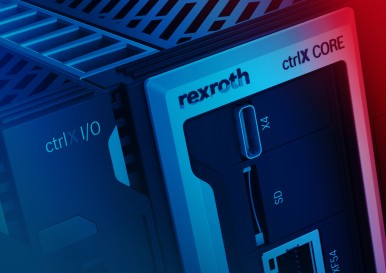
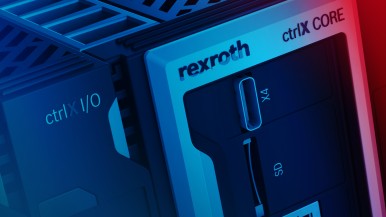
Stuttgart, Germany – 5G is coming. The new communications standard accelerates the internet of things and boosts Industry 4.0. Control systems and sensors of the kind built into facilities, machinery, and logistics chains stand to gain from this fast, reliable real-time wireless data transfer. Preparing machines for state-of-the-art communication involves making them 5G-capable. Now Bosch has the solution: Bosch Rexroth’s new ctrlX AUTOMATION control technology comes with 5G built in and can connect a wide range of industrial devices with the new communications standard. ctrlX AUTOMATION will be showcased at the SPS trade fair in Nuremberg.Bosch opens the door to a new industrial age 5G is set to turbocharge manufacturing. Our new 5G-capable automation platform lays the groundwork and opens the door to a new industrial age,...says Rolf Najork, the member of the Bosch board of management responsible for industrial technology. 5G is the first communications standard designed to enable connectivity for people as well as for the internet of things. The new standard has impressive characteristics: it is up to 20 times faster than 4G, transfers data virtually instantaneously with a latency of one millisecond, and is up to 99.9999 percent reliable – making the receipt of a “digital shipment” as certain as with transmission through a wire. "5G is a revolution and an important building block for the factory of the future", Najork says. Engineers and designers now face the challenges of integrating 5G into their machines and products. Bosch is introducing the solution that meets their needs: the new automation platform’s hardware can be fitted with a 5G module. The operating system and software for ctrlX AUTOMATION are 5G-capable from the outset and support rapid commissioning. Retrofit solutions are also available for adding the new technology to existing machinery. Bosch Rexroth’s new automation platform is scheduled to have its market launch in 2020. 5G will be a competitive factor for connected industry Experts estimate that there will be up to 70 billion connected devices worldwide by 2025. Many of them will be in manufacturing, meaning that 5G will become a competitive factor. The new communications standard will enable applications that require high-power, extremely reliable wireless connections to be integrated securely and efficiently into manufacturing facilities. These include mobile robotics, autonomous transport vehicles, and human-machine interactions. For instance, workers wearing augmented reality glasses can access additional information in their field of vision, optimizing how they monitor and maintain machinery. Combining tasks in the virtual world with those in the real world calls for real-time data flows. And that’s what 5G promises. "This new form of communication eclipses everything we’ve had until now. 5G is the first wireless protocol to truly meet the needs of the manufacturing industry", Najork says. Bosch takes on leadership role in Industry 4.0 and 5G Bosch is developing the factory of the future. In this endeavor, the company is relying on Industry 4.0 . The company first tests and validates products in-house before they are available on the market. Bosch is taking this approach with 5G, too. The company presented its first 5G-capable autonomous transport system, ActiveShuttle , at the Hannover Messe. To support the further development of its factories, Bosch has applied to the German Federal Network Agency for 5G licenses with which to set up local campus networks. Moreover, Bosch has taken on the chair of the global 5G Alliance for Connected Industries and Automation (5G-ACIA) with the aim of shaping the new mobile standard so that it meets the needs of the manufacturing industry from the outset.

Bosch boosts its AI expertise: center for data science and AI opens at leading I ...

06.02.2019

Press release

Artificial Intelligence

Bosch boosts its AI expertise: center for data science and AI opens at leading I ...

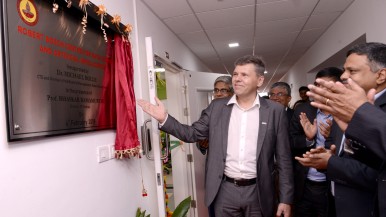
Chennai, India – Bosch today opened the Robert Bosch Center for Data Science and Artificial Intelligence (RBC-DSAI) at the Indian Institute of Technology Madras (IITM), one of the country’s leading engineering institutes. The center will contribute to basic research in the fields of data science and artificial intelligence (AI) and aim to work on an interdisciplinary basis with scientists, politicians, and businesspeople. Bosch’s investment will amount to 2.5 million euros over a five-year period. In supporting this new AI center at IITM, Bosch wants to further extend its expertise in the field of artificial intelligence and data science in India. Speaking at the inauguration ceremony in Chennai (formerly Madras), the company’s chief digital officer Dr. Michael Bolle underscored the importance of AI for the future of every aspect of connected living. “Artificial Intelligence is a core technology of the future. Our Indian engineers are playing a significant part in expanding our company’s AI skills set.” Since 2017, Bosch already has its own AI Center in India: the Bosch Center for Artificial Intelligence (BCAI) has one of its main locations in Bengaluru, alongside further locations in Sunnyvale and Pittsburgh in the United States and Renningen in Germany.About IITM The Indian Institute of Technology Madras was set up by the Indian government in 1959. Its work in various fields of engineering and science is carried out by 16 academic departments and several interdisciplinary research centers. IITM is a residential institute with nearly 550 faculty and 9,000 students. In 2016, 2017, and 2018, IITM was ranked the country’s top engineering institute. About Bosch in India The Bosch Group has been present in India since 1922. All four of its business sectors now operate in the country, where the company has 15 manufacturing sites. The 18,000 highly qualified engineers working for Bosch in India make the country its biggest development hub outside Germany. The company employs more than 31,000 associates in India, and generated sales revenue of some 2.1 billion euros there in 2017.

Bosch presents tomorrow’s mobility today

12.12.2018

Press release

Mobility

Bosch presents tomorrow’s mobility today

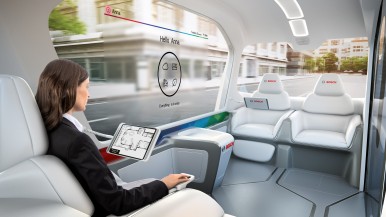
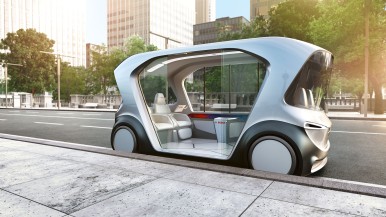
Stuttgart, Germany – A light, airy, minimalistic design, a futuristic outer shell made of display screens and glass, and a spacious interior – that is how architects might describe a novel structure, but in actuality the description also fits a completely new class of vehicle and a new kind of mobility: driverless electric shuttles that glide almost silently through city centers and are seamlessly connected with their environment. These will soon be a common sight on our city streets – whether they are transporting goods or people. Bosch provides components and systems for automating, connecting, and electrifying the shuttles, but shuttle mobility won’t be possible without mobility services. In the future, the company will offer these services too, bundling them into a smart, seamlessly connected ecosystem. That will include booking, sharing, and networking platforms, parking and charging services, and software solutions for managing and maintaining the vehicles, as well as infotainment during the journey. “Bosch is developing a unique package of hardware, software, and mobility services for shuttle mobility of the future,” says Dr. Markus Heyn, member of the board of management of Robert Bosch GmbH. At CES 2019 in Las Vegas, the world’s biggest electronics show, Bosch will be presenting its solutions for this area of transportation with a concept shuttle, and visitors will be able to experience its full range of services. Bosch is developing a unique package of hardware, software, and mobility services for shuttle mobility of the future....Dr. Markus Heyn, member of the board of management of Robert Bosch GmbH Bosch services for users and shuttle operators The emergence of the shuttle segment is a result of rising demand for ridesharing services: in Europe, the U.S., and China alone, about one million such on-demand shuttle buses will be on the roads as early as the year 2020, growing to 2.5 million by 2025 (source: Roland Berger ). Many of these vehicles, available 24/7, will be fully electric, and they will also be completely autonomous by the middle of the next decade at the latest. That’s why Bosch has packed every square centimeter of its concept shuttle with the appropriate technology – from electric powertrains and 360-degree surround sensors to connectivity management and vehicle computers. Yet these components and systems go only part of the way towards shuttle mobility. To make on-demand vehicles suitable for flexible everyday use, they must be connected to mobility services. “In the future, every vehicle on the road will make use of Bosch digital services,” Heyn says. These services allow users to book the vehicles, share rides with other passengers, and pay for the journey. Charging, repairing, and maintaining the vehicles, plus route planning and administrative activities, also call for services that Bosch will offer shuttle fleet operators in a seamlessly connected ecosystem. In the future, every vehicle on the road will make use of Bosch digital services....Dr. Markus Heyn, member of the board of management of Robert Bosch GmbH Booking and sharing Users can easily book a shuttle via smartphone, regardless of whether they’re relaxing on the sofa or sitting at their desk at work. Working behind the scenes, an algorithm identifies the vehicle closest to the requested location and finds other users who wish to travel a similar route. The more passengers a single shuttle can transport, the cheaper the journey for everyone. This approach also reduces the amount of traffic in cities and mitigates the impact on the environment. Bosch is developing the necessary software platforms to make this a reality. When the shuttle pulls up to the requested pick-up point, users again use their smartphones to identify themselves – thanks to Bosch’s Perfectly Keyless digital access service. It recognizes the owner’s smartphone as unmistakably as a digital fingerprint and opens the vehicle only for them. Every passenger always gets the seat that they reserved. Moving forward: electrified and automated Bosch’s electric axle drive makes the shuttles especially efficient yet affordable as they wend their way through the city. And the company’s Convenience Charging service knows just how long the battery charge will last and where to recharge the vehicle. This service means that even today, drivers no longer need to worry about being stranded with a dead battery. It also links vehicle information, such as the current state of battery charge or how much energy the heating and air-conditioning systems are consuming, with environmental data such as congestion and weather forecasts, so as to predict vehicle range with particular accuracy. Furthermore, Convenience Charging finds the ideal charging station and can reserve it in advance. And thanks to a standardized access and payment system, charging is easier than ever. Driverless e-shuttles provide users with transportation that is not only nearly emissions-free, but also very safe. For automation, Bosch develops and makes its own radar, video, and ultrasonic sensors, braking control systems, and power steering, to name a few examples. Smart digital services are indispensable here, too: Bosch predictive road-condition services let automated vehicles know in advance what environmental conditions to expect. They can thus adapt their driving style as needed so as to ensure maximum safety throughout the journey. The Bosch road signature is a map-based localization service with which automated vehicles can accurately determine their position in the lane down to a few centimeters – another crucial prerequisite for the safety of automated shuttles. Comfortable interior Bosch has designed the interior of its concept vehicle to provide space for four passengers, seating them across from one another to maximize legroom and comfort. Infotainment is provided on screens that can be used either by each passenger individually or in groups; for example, a family can watch a movie together as they travel somewhere for the weekend, or colleagues can work on a presentation on their way to the office. Smartphones use the on-board Wi-Fi and can integrate seamlessly with the infotainment system, thanks to Bosch connectivity technology. Its concierge service turns the shuttle into a personal assistant. With all kinds of information at its disposal, the shuttle can provide passengers with recommendations, advance bookings, weather reports, and travel tips at any time. Once the shuttle has arrived at its destination, the passengers can pay for their journey with Bosch’s e-payment service. Maintenance and administrative activities But Bosch services do not end when a rideshare journey is over: the company’s camera-based system for the vehicle interior checks whether anyone has forgotten their phone or handbag. If a passenger does forget something, the shuttle informs them directly via smartphone. The cameras can also detect gum on the seat or an overturned coffee cup – in other words, whether the shuttle needs cleaning – and can make the necessary arrangements immediately. This is so every passenger can start their journey in a clean shuttle. Bosch’s service for over-the-air updates can determine whether the driverless shuttles have the latest software version. The service detects software updates as soon as they are available and executes them in the vehicle securely and reliably. Thanks to sensors installed in the vehicle, predictive diagnostics can monitor the condition of key components and notify the shuttle before a fault actually occurs, so it has enough time to drive itself to a repair shop. This prevents the car from suddenly breaking down, which is a boon to operators. In the future, Bosch will pool updates from the data cloud and predictive diagnostics into a comprehensive connectivity platform . This will give vehicle manufacturers and shuttle service operators a constant overview of the condition of their fleets, so they can ensure that their shuttles are always ready for action. And finally, the Bosch subsidiary ESCRYPT’s security solutions handle vehicle security – whether for keyless access systems, data connectivity with the outside world, or software updates.


Versatile semiconductors: Bosch launches new automotive system-ICs at electronic ...

05.11.2018

Press release

Connected mobility

Versatile semiconductors: Bosch launches new automotive system-ICs at electronic ...

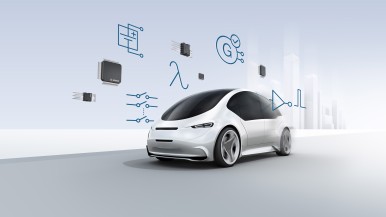
Munich and Reutlingen, Germany – System ICs are application-specific integrated circuits (ASICs) designed to meet special requirements in vehicle systems. They are integrated on a single silicon chip measuring only a few square millimeters, and house complex circuits with up to several million individual electronic functions. At electronica 2018, the world’s leading trade show for electronics, Bosch introduces four new system-ICs. A new chip for electric vehicles will shut off the power in the event of an accident, ensuring safety for driver and passengers and enable rescuers to work without being put in danger.Semiconductors make electric cars safer in an accident Pure electric or hybrid vehicles are equipped with special batteries that provide power to the electric motor at high voltages of 400 to 800 volts. For safety reasons, these high-voltage batteries, power electronics and their electrical wiring are designed to be highly robust. Nevertheless, the question of how secure a high-voltage battery is in the event of an accident is of vital concern to both the vehicle's occupants as well as any rescue workers. To prevent these persons from coming into contact with high voltage, while at the same time eliminating the risk of a vehicle fire, it must be possible to completely isolate the battery from the vehicle’s electrical system. During an accident, so-called "pyro fuses" blow out sections of the electrical wiring to the high-voltage battery by means of a small explosive charge, so that the circuit is interrupted quickly and effectively. Here, Bosch semiconductors play a crucial role: The integrated circuit CG912 can, as a part of the battery management, fire up to four pyro fuses in the battery wiring in the event of an accident,. This mitigates the risk of electrical shock when touching the vehicle’s chassis. In addition, this special IC can also provide power to the battery management. Bosch’s CG912 was originally developed for deploying airbags and has been proven in the field a million times over. New system ICs at electronica 2018 System ICs are truly versatile. They provide stable supply voltages, read sensor data, process information and drive actuators – in real time. The new oxygen sensor evaluation IC CJ138 offers, in comparison to its predecessors, extended options for adapting an engine control unit to a wide range of oxygen sensors, as well as accurate sensor cable diagnostic for short circuit or interruption. The highly integrated transmission IC CG270 precisely controls up to ten hydraulic valves in automatic transmissions and allows the design of more compact control units for modern multi-stage transmissions. CG135 is a transmission IC that monitors the supply voltages in a transmission control unit and prevents the transmission from being damaged in the event of a fault.

Bosch MEMS sensors now enable faster airbag deployment

05.11.2018

Press release

Connected mobility

Bosch MEMS sensors now enable faster airbag deployment

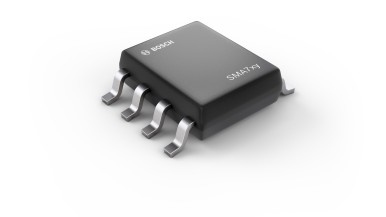
Munich and Reutlingen, Germany – Precision meets speed. At electronica, the world’s leading trade fair for electronics, Bosch announces a new generation of high-g acceleration sensors. The SMA7xy sensor family improves safety for car drivers and passengers. When the acceleration sensors detect a collision, the passive safety systems such as airbags can now be deployed earlier, and the restraining effect can be precisely set for the given accident scenario. In this way, the consequences of accidents can be further mitigated. The new SMA7xy family comprises of multiple sensors for airbag systems based on Bosch's market leading MEMS technology.Universally applicable, very fast crash sensors The sensors from the new SMA7xy product family enable extremely fast signal processing. Compared to the sensors of the preceding generation, Bosch has doubled the bandwidth, and thereby increased crash signal processing speeds by one hundred percent. The acceleration sensors are located either directly in the airbag ECU or in satellites located at the A- B- or C-pillar or at the front bumper. The sensors detect impact or a car rollover event within fractions of a second and send this information to the airbag ECU, which then deploys the vehicle's passive safety systems in time. One of the sensors from the SMA7xy family, the SMA760 precisely detects front and side impacts. A second sensor, the SMA720 contains one x and one z channel to measure acceleration along the vertical axis. This makes the SMA720 an ideal companion to the SMI860 for vehicle rollover detection. Both sensors support the SafeSPI communication interface standard. All sensors from the SMA7xy family conform to the ASIL D safety level of ISO 26262 and meet the VDA AK-LV27 specification. The PSI5 sensor versions, designed specifically for use along the periphery, offer a wide acceleration range: 30g, 60g, 120g, 240g, or 480g. For improved design flexibility Bosch offers a number of variants, for example an upright face mount option with a smaller footprint. Flexible options providing design freedom The peripheral-type sensors of the SMA7xy family are available in many variants, with two package options, four sensor axis configurations, several measurement range options and well over 80 different PSI5 modes – there is a suitable sensor to meet every requirement. One package option is the SOIC8, a well-established housing that is widely used and exceptionally robust, whilst the LGA System-in-package (SiP) houses integrated passive components.

MEMS sensors from Bosch make driving safer, more fun, and more relaxed

05.11.2018

Press release

Connected mobility

MEMS sensors from Bosch make driving safer, more fun, and more relaxed

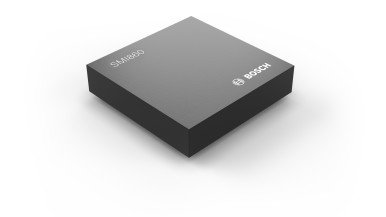
Munich and Reutlingen, Germany – Stable vehicle handling under all weather conditions and traffic situations makes car driving not only safer and more comfortable but also delivers a higher degree of enjoyment and dynamics to the driving experience. At the electronica exhibition in Munich, Bosch reveals for the first time its SMI860 five-axis inertial sensor. This extremely robust MEMS sensor enables a safe and natural driving experience – both in everyday as well as demanding situations – noticeably improving driving safety, comfort and dynamics.Car driving becoming even safer The intelligent SMI860 MEMS sensor provides important support for active safety and driver assistance systems inside the vehicle. For example, the ESP electronic stability control system (anti-skidding system), greatly increases traffic safety and has, to date, saved more than 8,500 lives in Europe alone. Necessary dynamic driving state data is delivered to the anti-skid system also from the SMI860. It recognizes whether the vehicle is travelling in the direction in which the steering wheel is turned. In the event that these values diverge, the skid protection system is activated. In addition, this new sensor can precisely determine the position of the vehicle, which can be utilized in precise vehicle heading applications. The SMI860 is the first example of a package from Bosch containing five inertial data measuring elements in a single sensor for active safety applications. The package includes two 16-bit gyroscopes for measuring yaw rate and roll rate, and three 16-bit acceleration sensors. Algorithms are used to calculate the dynamic driving state and position of the vehicle based on the received signals. Compact, robust, reliable, and temperature-tolerant This intelligent sensor is built on Bosch’s proven market-leading MEMS technology. Compared to its predecessor, it is better protected against vibrations and its exceptionally high offset stability will deliver reliable long-term operation. It has been developed according to ISO26262 for use in systems up to ASIL D. Thanks to its small bias instability, the SMI860 delivers low noise performance, thereby further improving its accuracy. Noise (rms) is just ±0.1 °/s for the gyroscope and 4 mg (x and y axes) and 6 mg (z axis) for the accelerometer. A signal conditioning ASIC provides on-chip processing and low-pass filtering, and an industry-standard SafeSPI interface is included for communication with other devices. To save space, the SMI860 is housed in a compact BGA package, measuring just 7mm x 7mm x 1.5mm. Required supply current for the sensor does not exceed 28mA. Its operating temperature range of -40ºC to +125ºC enables it to be installed in practically any location.

MEMS sensors from Bosch enable cars to navigate without GPS

05.11.2018

Press release

Connected mobility

MEMS sensors from Bosch enable cars to navigate without GPS

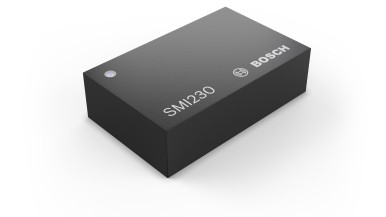
Munich and Reutlingen, Germany – The loss of a GPS signal has brought many relaxing car trips to an abrupt end. At Munich's world-renowned electronics exhibition: electronica, Bosch today announced the new SMI230 six-axis inertial sensor. With this sensor onboard, navigation systems will not take their eye off the destination – even when the GPS signal is interrupted. The SMI230 from Bosch provides the navigation system with motion data, enabling the current position of the travelling vehicle to be determined even when the GPS signal is weak or nonexistent. Navigation systems will become even more precise and reliable.No longer travelling blind when without GPS Millions of car drivers today rely on GPS navigation. If a satellite signal is weak, distorted or interrupted, e.g. due to mountains, tall buildings or even tunnels, then the navigation system will lose its direction. That is when the SMI230 MEMS sensor from Bosch comes into play: it precisely measures the yaw rate and acceleration of the vehicle. In this way the onboard navigation system continuously calculates the travel direction and position while the car is moving. The navigation is not disrupted when inside a tunnel or an 'urban canyon'. The capabilities of the sensor improve not only navigation but also find their niche in fleet management, toll systems and car alarm installations. Here too, precise determination of position is essential. Versatility brings flexibility The SMI230 conveniently combines one three-axis MEMS accelerometer with one three-axis MEMS gyroscope in a single compact package. Both sensors run digitally in 16-bit mode based on proven MEMS technology from Bosch. Adding to this already powerful combination is the fact that the gyroscope and accelerometer can either be operated individually or interconnected for data synchronization purposes. Accurate, stable and power efficient The SMI230 delivers high accuracy – the prerequisite for the best-possible precision in navigation: noise is only 0.02°/s/√Hz (rms) for the gyroscope and 0.12 mg/√Hz (rms) for the accelerometer. Also, the accelerometer has rock-solid temperature stability, with a low temperature coefficient offset (TCO) of typically below 0.2 mg/K and temperature coefficient sensitivity (TCS) of only 0.002 %/K. Typical bias instability of the gyroscope is well below 2°/h. Power consumption plays a decisive role in many applications. Therefore, the SMI230 supports three power saving modes - accelerometer: suspend mode; gyroscope: suspend mode and deep suspend mode. Backward compatible to accelerate the development cycle The SMI230 is pin-for-pin compatible with Bosch’s SMI130, and offers an identical gyroscope programming interface, making it fast and easy to integrate into existing platforms without any time-consuming layout re-work. The new sensor is housed in an ultra-compact 16-pin standard LGA package, measuring just 3 mm x 4.5 mm x 0.95 mm. The sensor will be available in May 2019.