Search & find:
Media, press releases, events for your editorial coverage

For safer roads: Bosch teams up with Microsoft to explore new frontiers with gen ...

28.02.2024

Press release

Automated mobility

For safer roads: Bosch teams up with Microsoft to explore new frontiers with gen ...

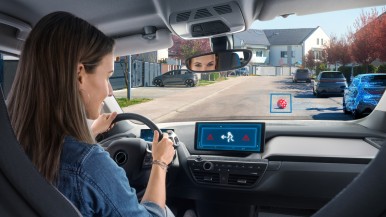
Stuttgart, Germany – It’s a scenario that no driver ever wants to see: a ball rolling out into the road. The chances are it will be followed immediately by a child in hot pursuit, oblivious to any traffic. But while human drivers can assess this situation using their contextual knowledge, today’s assisted and automated driving systems still have to learn how to do it. Bosch is pursuing the use of generative AI in terms to further improve automated driving functions. As part of this, Bosch and Microsoft are exploring opportunities to collaborate and leverage the power of generative AI. “Bosch is working on bringing a new dimension of AI applications into the vehicle,” said Dr. Stefan Hartung, chairman of the Bosch board of management, at this year’s Bosch Connected World (BCW) AIoT industry conference in Berlin. The expectation is that generative AI will enable vehicles to assess situations and react accordingly, and in this way keep road users even safer. Greater safety on the roads is also the wish of 60 percent of respondents to this year’s Bosch Tech Compass, a worldwide representative Bosch survey on the subjects of technology and AI. Bosch is working on bringing a new dimension of AI applications into the vehicle,...says Dr. Stefan Hartung, chairman of the board of management. Generative AI to make road traffic safer The two companies anticipate that a collaboration would take the performance of automated driving functions to the next level. They would like to see generative AI help enhance convenience in the vehicle and to provide greater safety for all road users. To achieve this, Bosch's comprehensive understanding of vehicles and automotive-specific AI expertise will be invaluable, as well as their access to vehicle sensor data to feed the generative AI. “In our unwavering commitment to safer roads, Microsoft is eager to explore collaboration opportunities with Bosch to pioneer the realm of generative AI,” said Uli Homann, Microsoft CVP and Distinguished Architect. Even today, when it comes to training systems for automated driving, AI quickly comes up against its limits. Today’s driver assistance systems can detect people, animals, objects, and vehicles, but in the near future generative AI could help determine whether a situation could potentially lead to an accident. Generative AI utilizes vast amounts of data to train systems for automated driving, enabling them to draw improved conclusions from this data. For example, it could deduce whether an object on the road ahead is a plastic bag or a damaged vehicle part. This information can be used either to communicate directly with the driver – such as by displaying a warning – or to initiate appropriate driving maneuvers, such as braking while switching on the hazard warning lights. Bosch and Microsoft have already partnered to develop a universal software platform for seamlessly connecting cars and the cloud, and are looking forward to work together to identify new opportunities to bring cutting-edge AI technology to their customers and the autonomous vehicle industry. Generative AI as a boost to innovation “Generative AI is a boost to innovation. It can transform industry in much the same way as the invention of the computer,” says Dr. Tanja Rueckert, member of the Bosch board of management and chief digital officer. The new 2024 Bosch Tech Compass shows this as well: 64 percent of respondents believe that AI is the technology with the greatest importance for the future. In comparison, only 41 percent of respondents were of the same opinion just one year ago. Generative AI is a boost to innovation. It can transform industry in much the same way as the invention of the computer,...says Dr. Tanja Rueckert, member of the Bosch board of management and chief digital officer. From manufacturing to everyday office work, generative AI is already being used in many areas at Bosch. In addition to Microsoft, the company is working with several partners, including AWS, Google, and Aleph Alpha. The Bosch Group’s venture capital unit, Bosch Ventures, invested in the AI company Aleph Alpha last year. Bosch also announced it would collaborate with the startup on finding new use cases both for Bosch associates and customers. “Bosch and Aleph Alpha want to learn from each other, benefit from each other’s know-how, and work together on cross-domain use cases,” Rueckert says. This partnership is now bearing its first fruits in North America: in collaboration with Aleph Alpha, Bosch is debuting AI-based speech recognition on behalf of a premium car manufacturer. In this solution, a chatbot understands and answers breakdown service calls with the help of natural language processing, which also recognizes dialects, accents, and moods. The call is taken directly, reducing the driver’s waiting time to a minimum. As many as 40 percent of calls can be processed and resolved automatically; for more complex queries, the bot transmits all relevant information to a service center agent who takes over the case immediately. From the AI search engine to manufacturing AI experts at Bosch are currently working on well over 120 specific applications that these new AI models open up for the company’s associates and customers. Such applications include the generation of software program code or powerful chatbots and voicebots to support technicians or interact with consumers. Another is AskBosch, the in-house AI-assisted search engine launched at the end of 2023. It offers faster natural-language access to a wide variety of data sources – sources scattered over the intranet, say. In addition to externally available data, AskBosch also includes internal data sources, so Bosch associates can research information specific to the company. Generative AI also ensures greater speed in manufacturing: in initial projects in two Bosch plants in Germany, generative AI creates synthetic images in order to develop and scale AI solutions for optical inspection and optimize existing AI models. Bosch expects that this will reduce the time needed for planning, launching, and ramping up AI applications from the current six-to-twelve months to just a few weeks. Following successful piloting, this service for generating synthetic data is to be offered to all Bosch locations. 2024 Bosch Tech Compass: setting the pace in the use of AI As AI is used in more and more areas of life, professional development is becoming increasingly important: 58 percent of respondents to the Bosch Tech Compass are convinced of this. This opinion is particularly prevalent in USA at 63 percent (Germany: 54 percent, China: 52 percent). Here, too, Bosch is setting the pace in the use of artificial intelligence and is getting its associates on board. In 2019, Bosch launched a training program, initially aimed at bringing 30,000 associates up to speed on the subject of AI. Up to now, some 28,000 associates have taken part in the program. Like the Bosch AI code of ethics, which sets ethical guidelines for dealing with artificial intelligence, this program has been supplemented with content about generative AI. For all the results of the 2024 Bosch Tech Compass, click here . About the survey: For the representative survey, people aged 18 and over in seven countries (Brazil, China, Germany, France, India, the U.K., and the U.S.) were polled online on behalf of Robert Bosch GmbH by the market researchers Gesellschaft für Innovative Marktforschung mbH (GIM) in December 2023. In Germany, France, and the U.K., at least 1,000 people were polled per country; in Brazil, China, India, and the U.S., it was at least 2,000 people each. The random samples are representative of their respective countries in terms of region, gender, and age (Brazil, Germany, France, U.K., U.S.: 18 to 69 years / China, India: 18 to 59 years).


German industry proposes new development standard for safe automated driving

21.11.2023

Press release

Automated mobility

German industry proposes new development standard for safe automated driving

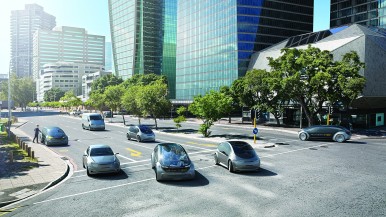
Stuttgart, Germany – Four years ago, the German automotive industry joined forces with 21 partners in a project to develop the world’s first structures for the verification of safety standards for automated vehicles in an urban environment. The results of the joint Verification and Validation Methods (VVM) project are now available. The findings of the pre-competitive research project, funded by the German Federal Ministry for Economic Affairs and Climate Action and initiated by the VDA flagship initiative autonomous and connected driving, will be discussed in detail at the final presentation at the Carl Benz Arena in Stuttgart today.The higher the level of automated driving and the more complex a system’s area of application, the more factors need to be taken into account during development. The first SAE Level 3 systems for freeway driving and an SAE Level 4 system for driverless parking have already been approved. Expanding the use of these systems to other applications – such as urban traffic – means that the vehicle and system become much more complex and subject to far stricter requirements. This explains the need for suitable verification and validation methods, which was the focus of the VVM project’s efforts. The challenge of urban traffic “Pedestrians, cyclists, motorized two-wheelers, intersections with limited visibility: one of the biggest challenges for automated driving systems is coping with traffic in an urban environment, which is characterized by a huge volume of road users, traffic light systems, traffic signs, and vehicles,” says Roland Galbas from Bosch, the coordinator of the VVM consortium project. “For future vehicles to be able to handle even extremely rare scenarios, they will need comprehensible structures and processes that not only enable the safe operation of a system in exceptional situations, but can also verify that maneuvering is done safely.” “The essence of the VVM research project is to verify that automated driving functions react safely and reliably, and that they also benefit customers in terms of precision and quality,” says Dr. Mark Schiementz from BMW, the co-coordinator of the project. “In addition to compliance with regulations, the guiding principle behind the German automotive industry’s work is not only to get technological progress onto the roads as quickly as possible, but also to provide safe vehicles and systems that can be relied on at all times. And this reliability starts right from the development of these systems.” Approval for road use requires verifiable safety Right from the very beginning of the design and development of automated driving functions, safety is the overriding consideration. And safety functions must be verified before a vehicle can be approved and certified for use in road traffic. To be able to provide this verification, the 21 project partners have jointly developed a model comprising a suite of procedures, methods, and tools. This allows a “security argumentation” to be employed to verify that the system is safe to use. To develop the methodology for this model, the partners worked together in several subprojects. If it were applied industry-wide, the defined model would provide the basis for verifying the safety of automated vehicles. “The models developed here make it possible for the first time to provide all automakers with the same structures for the verification and validation of automated driving systems in urban areas. This may then also lead to industry-wide standards that could make road traffic even safer for all road users,” explains Dr. Helmut Schittenhelm, project coordinator at Mercedes-Benz. Technology pioneer from Germany The VVM project’s methodological approach is the world’s first standard to also take industrial processes into account, once again underscoring the German automotive industry’s pioneering role in automated driving. The world’s first regulation for fully automated driving (SAE Level 4) came into force in 2021, when Germany enacted a law to that effect. In 2022, a corresponding regulation outlining the technical details was passed to allow such vehicles to be registered and operated on German roads. These latest developments are yet another example of how the German automotive industry is tackling the complexity of automated driving and making it more manageable. At the end of its project term, and building on the results of its Pegasus and SetLevel predecessor projects, VVM now delivers the world’s first consistent methodical approach to safety for automated driving in an urban environment, enabling industry-wide collaboration and value creation. The scenario-based safety verification approach pursued in the project could help to set global standards once it has been approved by the authorities. VVM has created a reference system for the industry that is relevant for the future, closes a methodological gap for practical validation, and secures the pioneering role of German industry in international competition on automated driving.

How connectivity can make city traffic safer and more efficient

26.09.2023

Press release

Automated mobility

How connectivity can make city traffic safer and more efficient

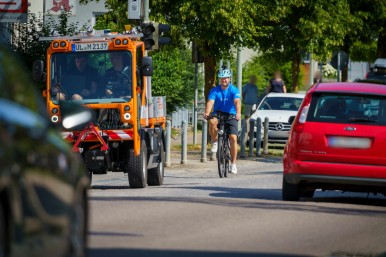
Stuttgart, Germany – The digital transformation, increasing urbanization and automation, as well as the need for greater energy efficiency and climate action are tough challenges currently facing the mobility sector. In the three-year LUKAS research project, Bosch, InMach, IT-Designers, Mercedes-Benz, Nokia, Ulm University, and the University of Duisburg-Essen are researching how to improve traffic efficiency and safety in future mixed traffic scenarios of urban traffic environments. LUKAS is the abbreviation of the German name "Lokales Umfeldmodell für das kooperative, automatisierte Fahren in komplexen Verkehrssituationen” (local environment model for cooperative automated driving in complex traffic situations). Reliable communication between automated and non-automated traffic participants as well as within the infrastructure plays a key role here. The project was funded by the German Federal Ministry for Economic Affairs and Climate Action (BMWK) with 5.2 million euros as part of its program for new vehicle and systems technology.Using data from the local environment for more safety and efficiency To increase traffic efficiency and safety in future mixed traffic scenarios of urban traffic environments, the LUKAS research project uses all the information available within the local environment. This includes, for example, information from infrastructure sensors, connected cars and commercial vehicles, and mobile devices such as smartphones used by pedestrians or cyclists. This concept provides anonymized data from traffic participants and stationary objects, including values such as position, extent, and possibly the travel speed and direction of movement. The preprocessed sensor information is relayed to an edge server, which is directly connected to the 5G network near the junction and provides data transmission with minimal delay times. A fusion algorithm on the edge server is able to create a comprehensive model of the local surroundings and use this as the basis to plan maneuvers for connected traffic participants. Object information from the server's environment model is fed back to the road users. This expands their overview to include areas that they cannot detect themselves. "The edge server uses methods of artificial intelligence (AI), among others, to calculate an optimized, cooperative maneuver and then sends instructions to the connected participants. This approach makes it possible to increase the overall energy efficiency of a traffic scenario and the safety of traffic participants, especially those who are vulnerable...explains Dr. Rüdiger Walter Henn, head of the LUKAS project at Bosch, the consortium leader. LUKAS pilot installation in Ulm-Lehr To run the tests, which took place in a public area in the suburb of Ulm-Lehr, the consortium used a pilot installation supported by the city of Ulm and operated by Ulm University. The selected area contains a junction with a right-of-way street turning off and a side street entering. The buildings there obscure the right-of-way, which makes this street situation particularly interesting for real traffic scenarios. "This installation gives us excellent opportunities to use real traffic situations to test the approaches we have researched and developed, so we can very quickly draw conclusions about their suitability for practical use," explains Dr. Michael Buchholz, who heads the Electric Mobility and Connected Driving/Connected Infrastructure research groups at the Institute of Measurement, Control and Microtechnology at Ulm University and is responsible for the pilot installation. The lampposts in the vicinity of the junction are equipped with video, lidar, and radar sensors to detect and classify the flowing traffic. The object information is sent to the edge server via a 5G network from the partner Nokia. Due to data protection reasons, persons and vehicles are not able to be identified. The edge server hosts the global environment model, several evaluated variations of cooperative maneuver planning, and a warning module for pedestrians and cyclists. Connectivity makes travel safer and more efficient To depict cooperative use cases in mixed traffic, Bosch, Mercedes-Benz, and Ulm University bring in connected, partially automated passenger cars. InMach provides a connected prototype of a street sweeper. Special smartphone apps from IT-Designers GmbH and Nokia make it possible to connect pedestrians and cyclists with the edge server. IT-Designers collects data using a video drone to assist in the simulation of the traffic scenarios, while the University of Duisburg-Essen supports the project with traffic flow simulations. All tested use cases verified the benefits of the LUKAS approach in terms of increasing traffic efficiency and safety. Simulation results from AI-based planning algorithms lead researchers to expect a significant increase in the traffic flow. Studies by the partner Mercedes-Benz show a significant reduction in fuel consumption and a decrease in the time required to pass through the junction in comparison to conventional driving. By delaying oncoming traffic to allow for cooperative behavior, participants passing stationary vehicles and vulnerable traffic participants crossing the road are protected in obscured areas. Thanks to the new technology and cooperative scenario planning, traffic participants recognize early on which driving strategy will enable them to behave safely and efficiently. The results of the LUKAS project have allowed the partners of the consortium to gain informative experience about connected, cooperative driving and incorporate this into the development of new products. The approach developed by LUKAS can help make automated driving in urban mixed traffic safer and more efficient for all traffic participants.

GAIA-X 4 moveID project develops basis for secure mobile data exchange

08.09.2022

Press release

Business/economy

GAIA-X 4 moveID project develops basis for secure mobile data exchange

Stuttgart, Germany – Which parking garages currently have vacant charge spots available? Where are free parking spaces in the city center? And how can this information be digitally transmitted, and services billed, across providers? The answer to these and similar questions calls for secure data exchange between the vehicles and their environment. It is precisely this foundation that a research project consisting of universities, automotive suppliers, and system providers is now in the process of building, with Bosch leading the consortium. Over the next three years, the GAIA-X 4 moveID project is set to develop the necessary standards and technological concepts to enable the secure exchange of information between providers of mobility applications and their customers. The goal is to create decentralized digital vehicle identities. This is an important prerequisite for the mass use of electric vehicles, automated driving, and the establishment of connected cities. GAIA-X 4 moveID is supported to the tune of 14 million euros by the German Federal Ministry for Economic Affairs and Climate Action – covering half of the project costs.Connectivity for digital services across the board “An integrated and transparent system architecture for the exchange of data on the road that incorporates different products and players simply isn’t available today. While it’s true that some companies out there already offer services, those services are tailored for specific applications, vehicles, or customer groups,” explains Peter Busch, project manager at the consortium leader Bosch. They often map the infrastructure, for example, but they rarely provide information about availability due to a lack of connectivity between the many independently operating service providers. “Open standards are needed so that users, for example, can find all available charging stations or pay for charging processes,” Busch says. It’s important to always ensure that the data is processed securely and that individual providers don’t exploit it solely for their own purposes. For Busch, this is the only way that the necessary user confidence can grow and a broad range of all available services, such as so-called deep parking (use of otherwise unavailable parking spaces), can be created. That is why the consortium is building on the European GAIA-X system, which defines the technological, economic, and legal framework for a secure and trustworthy data infrastructure. GAIA-X relies on decentralization and the interplay of different cloud providers under common guidelines. In this spirit, the GAIA-X 4 moveID project is using open source software for its developments and making them available to all providers for various business models. Vehicles are becoming marketplaces The standards that GAIA-X 4 moveID is pursuing will allow vehicles to securely and independently exchange information with other vehicles and their environment without an “intermediary.” The vehicles’ “infrastructure partners” include charge spots, barriers, traffic lights, and parking lots. The research project will use internationally recognized hardware and software to develop management and administrative services to facilitate the interaction and trade between different players. This will enable providers to connect a great many services, such as news, entertainment, and navigation, with the car’s system, especially in automated driving. The market for services related to connected parking alone is estimated to be worth ten billion euros annually worldwide. What’s more, the ability to navigate directly to a vacant parking space significantly reduces congestion and emissions. After all, today, about a third of downtown urban traffic is people looking for parking spaces. The availability of information is also a crucial factor for the success of electromobility. It is estimated that about half of newly registered cars in Europe will be electric by 2030. “Their drivers need to know that they’ll be able to find a charge spot quickly whenever they need one. And that requires connected systems,” Busch says. Extensive data exchange as a basis for automated driving The mass use of automated vehicles is conceivable only if cars are able to quickly and reliably communicate with their environment. The data exchange this requires will enable climate-friendly traffic control based on the volume of traffic at any given moment. This will allow cities to regulate incoming traffic to particular areas in real time, thus preventing congestion. However, this method, known as zoning, requires that vehicles be able to immediately recognize changing conditions and to reroute accordingly. Zoning is being demonstrated with test vehicles – for the first time across borders – in the Germany-France-Luxembourg (Merzig/Saarbrücken) test area as part of the GAIA-X 4 moveID project. The cars receive dynamic information regarding their approach to defined zones.The project partners: Robert Bosch GmbH Materna Information & Communications SE Denso Automotive Deutschland GmbH Continental Automotive Technlogies GmbH WOBCOM GmbH ecsec GmbH HTW Saar (University of Applied Sciences) Atos Information Technology GmbH Chainstep GmbH Peaq Technology GmbH Zeppelin Universität gGmbH (Zeppelin University) Datarella GmbH 51nodes GmbH Bigchain DB GmbH Fetch.ai Research & Development GmbH ITK Engineering GmbH Deutsche Zentrum für Luft- und Raumfahrt e.V. (German Aerospace Center) Airbus Defence and Space GmbH Delta Dao AG

Swarm intelligence for automated driving

15.07.2021

Press release

Automated mobility

Swarm intelligence for automated driving

Stuttgart, Germany – Is it possible to help automated driving achieve a breakthrough just by driving? Sure – at least for drivers behind the wheel of a VW Golf 8. As they drive along, these vehicles can provide information for the Bosch road signature. The cloud-based service uses real-world traffic data from sensors to provide multilayer high-resolution maps and keep them up to date. For driving that is becoming increasingly automated, this function is crucial. “We are pleased to be paving the way to tomorrow’s mobility today together with partners,” says Dr. Mathias Pillin, president of the Bosch Cross-Domain Computing Solutions division.If cars are to drive on their own in the future, they will need highly accurate digital maps – and to know precisely where they are on those maps. This is exactly what the Bosch road signature offers: using information from radar and video sensors, as well as vehicle motion data, it augments common navigation maps with additional layers for vehicle localization and control. These additional layers are compatible with typical map formats. Data is currently being generated to set up the road signature. Starting in 2023, vehicles will feature the signature along with an initial number of services. Bosch plans to use current data to continuously expand the signature and keep it up to date. While the other map levels truly unfold their full potential especially in vehicles featuring Level 2 hands-free functions and higher, they also offer advantages at lower levels. “The more vehicles that provide information now and in the future, the larger and more robust the database will be for automated and assisted driving,” Pillin says. Digital twin of the vehicle environment VW is leading the way with the high-volume Golf 8 in Europe, with other vehicles to follow. Specifically, the solution works like this: while on the road, the vehicle fleet uses surround sensors to generate information about landmarks such as road signs, guardrails, curbs, and lane markings. The vehicles send the data completely anonymously via the VW cloud to the Bosch cloud. Furthermore, only the information that is required for the map layers is transmitted. The road signature is created in the Bosch cloud on this basis, producing a kind of digital twin of the real environment. We are pleased to be paving the way to tomorrow’s mobility today together with partners...Dr. Mathias Pillin, president of the Bosch Cross-Domain Computing Solutions division Thanks to the Bosch road signature, vehicles can determine their position with a high degree of accuracy: in real time, each vehicle compares the information currently provided by its surround sensors with that of its digital twin. This comparison enables the cars to accurately determine their position in the lane down to a few decimeters relative to the highly accurate map. The use of radar means that localization works reliably even in adverse weather conditions such as fog, rain, and snow – conditions which make it difficult, if not impossible, for a camera to perceive its surroundings. Natural driving behavior of automated vehicles In addition, the road signature enables safer and more convenient lateral and longitudinal guidance of automated vehicles, as it contains information not only about landmarks, but also about road geometry, lane layout, road signs, and speed limits. It even includes typical driving behavior at specific locations: for instance, how do human drivers approach a curve? When do they step on the brakes before an intersection? What do they do when they change lanes prior to making a turn? To answer such questions, the service uses motion data such as speed, steering angle, and wheel speed. In the future, the road signature will provide vehicles with this information – and thus help make automated driving an experience that is as natural, comfortable, and safe as possible. Bosch and VW are moving closer to this goal with every kilometer driven.

CES 2019: Bosch extends its position as a leading IoT company

07.01.2019

Press release

Smart Home

CES 2019: Bosch extends its position as a leading IoT company

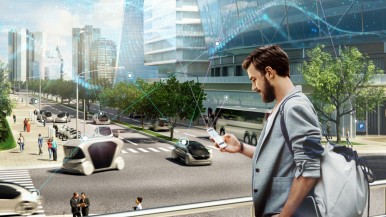
Las Vegas, NV – More and more, the internet of things (IoT) is changing our world. At CES 2019 in Las Vegas, Bosch is showing what it is already capable of today. From a concept for a shuttle vehicle that makes a new kind of mobility tangible, to fridges with connectivity that give advice on food storage, to smart lawn mowers that learn by doing – the spectrum of solutions Bosch is presenting at the world’s largest consumer electronics show is huge. “Bosch recognized the huge opportunities of the IoT early on. We have been actively shaping the connected world for nearly ten years now,” says the Bosch board of management member Dr. Markus Heyn. “Today, we are a leading IoT company. Step by step, we have extended our software and IT expertise.” Using its own IoT cloud, the company has already carried out more than 270 projects in field such as mobility, smart homes, smart cities, and agriculture. The number of sensors and devices connected over the Bosch IoT Suite has risen nearly 40 percent since last year, and now stands at 8.5 million.One of the keys to further growth and new business opportunities on the internet of things is artificial intelligence (AI). This is also a field in which Bosch is playing a decisive part in driving developments. “We will best be able to unlock the potential of the IoT if we combine it with AI, and take our IoT and AI activities forward in parallel,” Heyn says. In his view, the relationship between the two fields is complementary: “The IoT needs intelligence. The use of connected things to gather data can be a decisive boost for the development of AI. It is only through AI that connected things become intelligent and learn to draw their own conclusions. Above all, we aim to achieve concrete improvements in people’s real, everyday lives – things such as more time, more security, more efficiency, and more convenience.” Here, Heyn cites the example of video-based fire detection: by using intelligent image analysis, security cameras are able to identify fires within a few seconds, even before the system’s sensors detect heat and smoke. In this way, fires can be detected considerably earlier than with conventional fire or smoke alarm systems. This saves valuable minutes in which lives can be saved.A second key to success on the path to the IoT age is partnerships. Here, Bosch is opting for a mix of traditional and new players. The alliance recently agreed with the Canadian platform provider Mojio has already resulted in the first integrated IoT platform for connected vehicles: in the event of an accident, a special Bosch algorithm can identify where and when the accident happened, and how severe it is. Via the Mojio cloud, the data are transmitted without any delay to the Bosch emergency service center, which automatically sends an emergency call to local rescue services. At the same time, a message is sent to a predetermined list of recipients, either as a text message or via the Mojio app. “Together with Mojio, we are connecting vehicles directly with the cloud. This means rescue services can get to the scene of an accident even faster than before,” says Mike Mansuetti, the president of Bosch North America. From the middle of next year, the IoT emergency solution will be available for nearly a million drivers in North America and Europe. IoT on the roads: Bosch presents connected mobility of the future With the concept shuttle vehicle it developed in-house, Bosch is celebrating a world first at CES. In this vehicle, the company is its presenting solutions for the automation, connectivity, and electrification of vehicles, and is giving visitors the chance to experience at first hand a new kind of mobility: driverless shuttles, which will soon be a feature on the streets of the world’s cities. “This will pay into our vision of mobility that is as emissions-free, accident-free, and stress-free as possible,” Heyn says. For shuttle-based mobility such as this, Bosch will be supplying not only components and systems, but also a complete range of mobility services, such as reservation, sharing, and connectivity platforms, as well as parking and recharging services. Bosch believes that such connected services are essential for the shuttle-based mobility of the future. The forecast market volume for these services is also high: while it was 47 billion euros in 2017, it is estimated that it will be as much as 140 billion euros by 2022 (source: PwC). Bosch also wants to have a share in this, and aims for significant double-digit growth with the solutions it offers. For Heyn, there is no doubt: “In the future, every vehicle on the road will make use of Bosch digital services. We will consolidate them into a smart, seamlessly connected ecosystem.”One of the final obstacles for putting shuttle-based mobility into practice is the automation of vehicles in complex urban environments. Here, Bosch believes partnerships are the answer: In the second half of this year, San José in California’s Silicon Valley is set to become the pilot city for testing a fully automated, driverless ridesharing service provided by Bosch and Daimler. The three parties have already signed a letter of intent to this effect. With their development alliance, Bosch and Daimler want to improve urban traffic flows, enhance road safety, and provide an important building block for the traffic of the future. Their aim is to develop a driving system for fully automated driverless driving (SAE level 4/5) that is ready for production by the beginning of the next decade. IoT in the home: connected appliances make home owners’ lives noticeably easier It’s not just on the roads that connected products and services that make user’s lives easier are in demand. “We’re working on the idea of a connected home, and on appliances that think autonomously and understand what users want,” Heyn says. At CES, for example, the company is presenting a new function for web-enabled fridges that can recognize types of food and provide recommendations on storage. The interior camera automatically recognizes some 60 kinds of fruits and vegetables and suggests the ideal place to store them by means of an app. As a result, food is stored in the best possible way, stays fresh for longer, and doesn’t have to be thrown away so often. Another new development is the PAI projector, which can project a virtual user interface onto a kitchen counter top. An integrated 3D sensor captures any hand movements, allowing touch-screen operation of the interface. In this way, users can conveniently call up recipes online and make phone calls over the internet while they are cooking and baking. Designed especially for the kitchen environment, PAI does not have to be used with as much care as a smartphone or tablet. Even with sticky fingers, the projector can still be controlled perfectly. PAI is set to debut in China in February 2019, to be followed by market launch in the United States. Bosch is also presenting the Indego S+, its new robot lawn mower with internet connectivity, at CES. It is one of the first robot lawn mowers in the market to offer voice control by Amazon Alexa. It is also the only robot lawn mower that can use weather forecasts on the web to automatically decide when best to mow the lawn again. Bosch is using artificial intelligence to improve the way its robot lawn mower recognizes obstacles on the lawn by evaluating data such as motor flow, acceleration, motor speed, and direction. “We are using AI to make lawn care even easier and more convenient. Our vision is an Indego that adapts to its garden in order to mow the lawn perfectly every time,” Heyn says. IoT #LikeABosch: Bosch launches digital IoT campaign Bosch is also using CES 2019 to premiere its new IoT image campaign. The main plank of the campaign is a hip-hop video clip featuring a protagonist who is a savvy IoT user. Bosch is entering new territory with its “Like a Bosch” campaign; the decidedly different approach and tone marks a new departure for the company, which was founded in 1886.This PR move capitalizes on a rash of “like a boss” videos and memes that have gone viral on the internet, attracting tens of millions of clicks. These videos feature everyday people who stage bizarre stunts or find their way out of predicaments with technical finesse. The IoT image campaign changes a few letters in order to put a fresh spin on this internet phenomenon. The protagonist in the Bosch video is a young man who is always on top of things, thanks to connected solutions from Bosch. Smartphone in hand, he operates his car, lawn mower, or coffee machine in a cool, smart, and confident way – he’s in charge of things “like a Bosch.”

Political VIPs at Bosch: chancellor Merkel and prime minister Costa open technol ...

30.05.2018

Press release

Business/economy

Political VIPs at Bosch: chancellor Merkel and prime minister Costa open technol ...

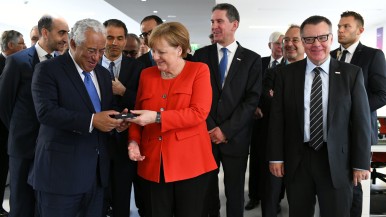
Braga, Portugal – Angela Merkel, the German chancellor, and António Costa, the prime minister of Portugal, today officially opened a new Bosch technology center in Braga together with Bosch board of management member Dr. Dirk Hoheisel . By the end of 2018, over 200 engineers will be working on developing sensors and software functions for automated driving at the location, which is situated about 50 km northeast of the coastal city of Porto. 100 new jobs will be created at the center. Some 100 associates have already transferred to the new 4,500 m2 technology center from the company’s main site, which is located four kilometers away. The German chancellor was in Portugal for talks on the development of German-Portuguese relations. In his speech, Portuguese prime minister Costa welcomed the opening of Bosch’s new technology center in his country, saying, “Portugal stands for innovative strength. Investments like the one Bosch has made here underscore this.” Our associates here will contribute to one of the key projects of future importance – the development of automated driving....Dirk Hoheisel, member of the board of management of Robert Bosch GmbH “Our new technology center in Braga is another indicator of the great potential we see in Portugal. It also reflects our confidence in the expertise of Portuguese engineers,” Hoheisel said, adding: “I am particularly pleased that our associates here will be able to make an even greater contribution to one of the key projects of future importance – the development of automated driving.” In recent years, Bosch has significantly expanded its presence in Portugal: between 2015 and 2017, it spent more than 200 million euros strengthening its activities there in the field of connected and automated mobility. In 2018, investments are expected to match the high levels of previous years. Bosch in Braga: solutions for tomorrow’s mobility The international supplier of technology and services currently employs more than 3,000 associates at its Braga location – around 1,000 more than just five years ago. The majority are involved in the development and manufacture of components for connected mobility, including technology for user-friendly display systems and infotainment. Among these is the eCall automatic emergency notification system for two-wheelers . If the vehicle is involved in an accident, the system automatically places a call for help. Particularly for motorcyclists, who have a much higher risk than car drivers of being involved in an accident, the system can mean the difference between life and death. About ten percent of associates at the Braga location work on developing components for automated mobility. In addition to developing and manufacturing sensors for vehicle safety systems like the ESP electronic stability program, the location also produces sensors that can, for instance, accurately determine the position of self-driving cars. In addition, the Bosch location in Braga has a longstanding research partnership with the local University of Minho, one of the country’s top universities. In a joint project with the university, the new technology center will also conduct research into sensors for automated driving. This partnership is scheduled to commence this year and continue for three years. Bosch Portugal: growing importance in the global engineering and manufacturing network Portugal is a key location within Bosch’s global engineering and manufacturing network. The company has had a presence in Portugal since 1911 and currently employs more than 4,500 associates at four locations. 500 of Bosch’s Portuguese associates work in R&D. In 2017, Bosch generated sales of around 240 million euros in the Portuguese market. Including deliveries to other Bosch companies, the total sales figure was 1.5 billion euros. Opened in 1990, the Braga plant is Bosch’s largest in Portugal. In Aveiro, Bosch’s Thermotechnology division develops and manufactures hot-water heaters, heat pumps, and heating appliances for private households. Ovar, the company’s third location in Portugal, is home to a manufacturing site as well as development activities of Bosch’s Building Technologies division. Video and fire alarm systems are one focus of activity at the site. Bosch’s regional headquarters in Lisbon is home to the company’s administrative as well as sales and marketing activities.