03.09.2025
Press release
Business/economy
Comprehensive Bosch portfolio for software-driven mobility is a crowd-puller
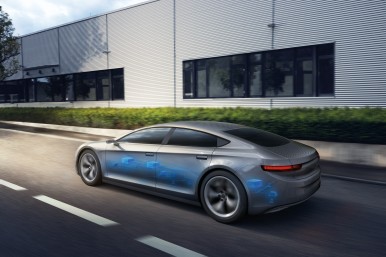
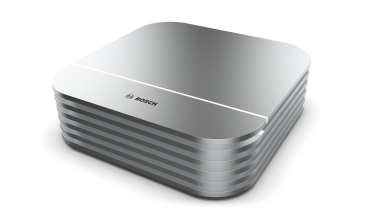
Farmington Hills, Mich. – The automotive industry is changing. Software and artificial intelligence are making cars even more digital, while codes and algorithms are turning driving into a customized experience. To develop its full potential, software needs the right hardware. After all, even the most modern car won’t move an inch without physical components. Bosch operates in all relevant areas of software-driven mobility, and is a partner for automakers across the globe – regardless of how much progress they have made in the transformation to the software-defined vehicle. With its profound automotive expertise, Bosch interconnects the various vehicle domains. From brakes, steering systems, and electric powertrains to sensors, vehicle computers, and software, the supplier of technology and services develops and manufactures the key components of modern vehicles under one roof. At booth D01 in hall B3, Bosch is showcasing its latest solutions for connected and intelligent transportation systems at IAA Mobility 2025 in Munich. Bosch driving assistance for more safety and convenience Automated driving is an essential feature of software-defined vehicles. Bosch is actively pressing ahead with its development, and systematically taking driver assistance systems to new levels – for greater safety and convenience. The company uses an End-to-End AI architecture: The use of AI along the entire technology chain accelerates development cycles and increases the performance of the software stack. For assisted driving and parking up to SAE Level 2, Bosch offers its ADAS (advanced driver assistance system) product family in three variants: entry-level, mid-range, and premium. These variants differ in scope of software function, the number and combination of sensors, and required computing power. Automakers can purchase the hardware and software as integrated or stand-alone packages. The number of automakers who have opted for various constellations of the Bosch ADAS product family now runs into double figures. Both the mid-range and luxury variants are already in series production in China. Also available to end customers on the market are connected map services that extend the vehicle's field of vision like an additional sensor. The crowd-based solution provides information on difficult weather and road conditions, accidents, or wrong-way drivers, for example. Sensors for precise surround sensing: More and more vehicles, including less expensive ones, are being equipped with comprehensive driver assistance systems. This explains why high-performance and cost-effective camera solutions are becoming increasingly important. The Bosch multi purpose camera is available as a camera-only solution, or alternatively as a new two-part system variant comprising camera head and control unit. In the camera-only solution, the entire ADAS function is installed in the camera itself, and computation is done there. This is particularly suitable for vehicles with decentralized architectures. The two-part system variant, on the other hand, is a step on the way to centralized architectures. It is particularly attractive for automakers who want to take advantage of advanced driver assistance functions in their existing architectures. In software-defined vehicles with centralized architectures, the camera’s safety-relevant computation is done in powerful computers. For its new radar sensor , Bosch has developed and manufactured all the key elements itself, including the system on a chip (SoC). Thanks to advanced semiconductor technology, the SX600 and SX601 radar sensors’ range is roughly 30 percent greater than that of comparable models. This technology also allows driving functions to be fully and cost-effectively integrated into the radar sensor. Both sensor types support AI-assisted signal processing. The SX601 offers significantly greater computing power than usual on the market, as well as even better detection properties. For improved system performance and maximum precision, two SX601s can be connected in series to use eight transmitting and eight receiving antennas. In software-driven mobility, centralized semiconductor architectures are taking on increasing importance. They govern many sensor-based functions, including ESP ® , navigation, and driver assistance systems. To reduce complexity, Bosch has developed the latest generation of especially powerful MEMS inertial sensors . They can provide several systems at once with the data they need. This “one-sensor-fits-all” approach features in Bosch sensors such as the SMU300 and SMI980 , which are already in use in inertial measurement units and in airbag control units. At the IAA, Bosch will also be presenting its new TB293 and TB193 chips for ultrasonic sensors , which offer the highest data transmission rate in the ultrasonic market. For even greater sensor performance, Bosch is also turning to raw data, with the signal being recorded directly at the ultrasonic sensor (at the transducer), which means that the full range of data is retained. This is a great advantage, especially for AI-based functions. As a result, the sensors allow much better object detection. Now, for the first time, these chips are freely available in the market, independent of any sensors. With this step, Bosch is also making its new VASI bus interface (versatile automotive sensor interface) available, thus setting a new standard in the market. This means that automakers have a wider choice of sensor supplier, benefit from state-of-the-art ultrasonic technology, and can avoid lock-in effects. New standards for Bluetooth-based tire pressure sensors: In the Bosch SMP290 , safety and energy efficiency go hand in hand. With its compact design, low power consumption, long life, and one-of-a-kind integration of acceleration and pressure sensor as well as ASIC including Bluetooth on one chip, it truly stands out. Not only that: it helps simplify vehicle architecture. Thanks to the standardized Bluetooth interface, the SMP290 also enables new applications such as direct interaction with a smartphone. Bosch solution for damage detection: With its small damage detection , Bosch demonstrates how to cleverly combine software and hardware. This solution uses existing vehicle components such as the airbag ECU and sensors, obviating the need for any additional hardware. And in software-defined vehicles, small damage detection can even be updated over the air, after the vehicle has been purchased. It accurately detects even minor damage to the vehicle – both while driving and when parked. Small damage detection registers shocks that are below the threshold for airbag deployment, storing the relevant data. The system thus enables fast, automated, and objective damage detection. Act-by-wire technology: the future of vehicle control Act-by-wire systems transmit the driver’s steering and braking commands purely electronically. They are highly relevant for software-driven mobility, especially for the personalization of vehicle dynamics and handling, and for higher-level modes of automated driving. New brakes and steering for greater flexibility: Braking and steering via electrical cables (act-by-wire) opens up the possibility of new concepts for the steering wheel and brake pedal, crash-optimized design, and the more flexible positioning of components and the design of the interior. Bosch is one of the pioneers in the development of this technology, and soon one of the first to market it. Its brake-by-wire solution , comprising a by-wire actuator and ESP®, will feature in a production vehicle of a major Asian automaker. What is special about the hydraulic Bosch by-wire braking system is that it requires absolutely no mechanical connection between the brake pedal and the braking system. Software systems solution for vehicle dynamics: Bosch Vehicle Motion Management assumes the task of intelligently controlling actuators. This systems solution perfectly synchronizes the brakes, steering, chassis, and powertrain. Vehicle Motion Management is suitable for all vehicles and marques in the passenger-car segment. It takes the driving experience to a new level. Thanks to a special software function, the vehicle can be transformed into a super-maneuverable urban vehicle, a powerful speedster, or a limousine with chauffeur-driven comfort – depending on the individual driver’s mood. It can be activated either at the push of a button or by AI, which works in the background to customize the vehicle. Software function against travel sickness: Vehicle Motion Management’s “Comfort Stop” function increases comfort and counters travel sickness. The interaction of the brakes and the electric motor can reduce the jerk resulting from braking by 70 to 90 percent and gently bring the vehicle to a standstill. The shift from decentralized to centralized vehicle architectures Software-defined functions require a completely different setup for the electronic components and systems. Intelligence in the vehicle will be centralized in a few high-performance computers, instead of being distributed among currently sometimes more than 100 individual control units. This reduces the need for wiring, and makes both centralized processing and over-the-air updates possible. Bosch can supply the basic framework for any vehicle. Powerful computers for the software-defined vehicle: The Bosch portfolio not only includes centralized, powerful computers and state-of-the-art software , but also scalable and adaptable vehicle infrastructure. Bosch’s centralized high-performance computers and all its other components feature state-of-the-art communication interfaces. Depending on requirements, the resulting communication infrastructure can either be fast and broadband or lean and especially cost-efficient. Here, a key role is played by zone-level control units, which aggregate and translate the various communication channels and media. Robust on-board networks with zone-based architecture and 48-volt technology create the basis for a stable power supply that satisfies the growing requirements of modern vehicles. On the level of power-supply infrastructure, the key components supplied by Bosch include its 48-volt Powernet Master, which ensures that the vehicle’s safety-relevant functions are supplied with power at all times. The portfolio also includes combined communication and power-supply solutions, and well as zone-level control units. The range is rounded out by intelligent solutions for power distribution. These not only open up new diagnostic and maintenance options, but also meet the most stringent functional safety requirements. Faster data transmission in modern vehicles: It takes automotive ECUs just milliseconds to exchange data. The invisible backbone of this communication is the controller area network, or CAN. In vehicle architectures, such networks ensure a high level of stability, simplicity, flexibility, and cost efficiency. And with the new Bosch CAN SIC XL transceiver , they work especially fast – up to 20 Mbit/s in the case of CAN XL networks. In addition to the customary CAN commands, the new CAN XL standard can transmit internet protocol (IP), and thus complies with the requirements of modern E/E architectures. ETAS software: The Bosch subsidiary ETAS offers a Vehicle Software Platform Suite , which provides a stable and secure basis for the efficient development and management of scalable vehicle architecture. It supports all modern vehicle architectures – from classic control units to powerful computers and platforms for assisted and automated driving. Customers can use it to efficiently create state-of-the-art vehicle platforms and market them more quickly. As a founding member of Eclipse S-Core, ETAS uses a code-first approach as an integral part of the platforms it offers, and in this way plays a major part in shaping the open-source initiative. Using the ETAS Comprehensive Measurement Solution , vehicle functions can be validated quickly and cost-effectively, and system behavior optimized efficiently. The platform software records data in real time, and perfectly synchronizes internal data from microprocessor-based control units. This scalable and flexible solution can be adapted to various E/E architectures and to vehicle domains such as assisted and automated driving (ADAS/AD), infotainment, and motion. Bosch powertrain solutions: powerful and efficient In the powertrain domain, too, Bosch is responding to the growing requirements of software-driven mobility, and is developing sophisticated solutions. Following a technology-neutral approach, Bosch offers concepts for powertrains ranging from combustion engines to electric motors. Silicon-carbide semiconductors for electromobility: Automakers, automotive suppliers, and distributors can draw on a wide range of Bosch silicon-carbide (SiC) power semiconductors for diverse automotive applications. Silicon carbide is seen as a key technology for electromobility. Bosch offers its dual-channel trench MOSFETs as 750 and 1200 volt versions – unpackaged for inverter modules or packaged for on-board chargers, DC/DC converters, and inverters. By 2030, Bosch predicts that one in three newly registered cars and light trucks will be battery-electric. In electromobility, the Chinese market is setting the pace. Bosch is playing an active part in its development. Here, scalable and standardized platforms are crucial in making innovations universally available and affordable. They are also the basis of the broad Bosch portfolio for electric and hybrid vehicles of all types (Mild Hybrid, Strong Hybrid, Plug-in Hybrid, Range-extended electric vehicle). A global platform for a wealth of variants: Oil-cooled Bosch e-axles can be used as primary or secondary powertrains. They are globally available and locally adaptable. The 3-in-1 e-axle combines an electric motor, power electronics, and transmission. Bosch is adding further energy management components to its e-axle, such as an on-board charger, a DC/DC converter, and a power distribution unit. This combination of several functions in one unit offers a number of benefits, including a more compact design, lighter weight, and optimized costs, while increasing efficiency at the same time. From electric vehicle to mobile energy storage unit: Although they take up 30 percent less space, the latest generation of bidirectional charger converters , which combine an on-board charger with a DC/DC converter, are even more efficient. This systems solution is much easier to integrate, whether close to the powertrain in the e-axle or close to the battery. With bidirectional flows of energy, an electric vehicle can also function as a mobile energy storage unit. Inverters with greater power density: A new generation of inverters featuring power modules and semiconductors as well as innovative inverter topologies is paving the way for significant progress in power density and efficiency. And in electric motors as well, Bosch is moving ahead. Automakers can benefit from a globally standardized technology platform comprising various electric motors and active components such as rotors and stators. Shorter winding heads, innovative cooling designs including a direct copper conductor and magnet solution, and innovative materials are having a positive effect on electric motors’ size, efficiency, and use of materials. Increased range, reduced charging time: Standardized hardware means that intelligent software is gaining in significance. It can be used to extend range and curtail recharging time. Synchronous control (voltage modulation) allows efficiency to be increased by 1.5 percent, and an electric vehicle’s peak power and continuous output by 10 percent. Solely by using software, switching behavior can be synchronized with the rotation of the electric motor, without modifying the hardware. This extends the vehicle's range and simultaneously enhances the driving experience. Through the software feature eAxle Heating , the electric vehicle's battery is optimally preconditioned prior to charging. This facilitates higher charging capacities and consequently reduces vehicle downtimes. Digital proof of renewable fuels: In addition to electric vehicles, hybrid vehicles can also reduce carbon emissions from road traffic. This is why Bosch is continuing to develop injection and exhaust-gas treatment technology for combustion engines. Apart from strong and plug-in hybrids, electric vehicles with range extenders are becoming increasingly common, especially in China. Using renewable fuels in hybrid vehicles makes them much more climate-friendly. Proof that such fuels are in the tank can be provided by a Bosch cloud solution, the Digital Fuel Twin . This also shows how much less CO2 has been emitted. Optimum battery temperature: Thermal management systems can further increase the efficiency of hybrid and electric vehicles. By deliberately controlling flows of cold and heat, they ensure that the high-voltage battery remains within the optimum temperature window at all times, that the electric motor does not overheat under heavier loads, and that as little electricity as possible is used for cooling and heating. For this, Bosch is developing pre-integrated modules that combine essential elements such as electric cooling compressors and coolant pumps. This considerably reduces complexity and installation effort. In new systems, the coolant used is propane (R290), which is already used in heat pumps and tumble dryers. Intelligent coordination of energy management: The modular software solutions used in Bosch Vehicle Energy Management distribute energy in the vehicle in an especially intelligent way. An integrated approach coordinates and optimizes energy management and its component subsystems such as thermal management, powertrain, on-board network, and charging system. This connected system also takes account of current and forecast vehicle parameters, as well as of road conditions and driver behavior. In this way, electric vehicles’ efficiency, convenience, and service life can be further improved. Bosch Vehicle Energy Management is also offered as a hardware-agnostic solution. Safety in critical operating states: Together with its electronic disconnect unit , the Bosch battery management system monitors and controls the high-voltage battery’s cells – in both electric cars and plug-in hybrids. In critical operating states, it provides the necessary safety mechanisms. It also optimizes power output and battery life. It comprises a control unit as well as elements that are attached to the individual battery modules and that monitor each individual cell. Software functions, such as the battery passport that will be required in the EU from 2027, can also be integrated. In the event of an accident, the electronic disconnect unit disconnects the battery from the vehicle electronics. The battery management system, the cell monitoring units, and the charger-converter can be brought together in this disconnect unit, thereby reducing complexity. New battery for the on-board network: To meet ever greater demands for power, more and more electric vehicles will feature a 48-volt on-board network in the future. To satisfy this need, Bosch is developing a 48-volt lithium-ion battery – in addition to the 48-volt battery for mild hybrids it has already manufactured millions of times. The new variant will consistently provide the power needed for safety-critical features and for highly automated driving, but also when the vehicle is stationary for a protracted period. The battery can be flexibly integrated into the vehicle. Unlike conventional 12-volt batteries, it is lead-free. Bosch ESI[tronic] adds Tesla to its diagnostic program: The range of vehicles covered by Bosch’s tried and tested ESI[tronic] diagnostic software now also includes Tesla models. For the first time, therefore, independent workshops will now be able to use their everyday multibrand solution to perform extensive diagnostic work on Tesla models . Accessing diagnostic data was a special challenge when integrating Tesla. In contrast to many other automakers whose data Bosch receives in advance and translates into [ESI]tronic languages, the original Tesla diagnosis interacts in English only. And while other documentation is available in several languages, it is not available in all 23 of the languages supported by [ESI]tronic. To deal with this language barrier, Bosch has now come up with a technical solution that works with artificial intelligence, and has integrated this automatic translation functionality directly into the diagnostic process. As soon as a mechatronics engineer hooks up to a Tesla, the English diagnostic information is translated in real time into the user’s selected [ESI]tronic system language. This innovative approach ensures that independent workshops can work on Tesla vehicles efficiently and precisely, without language difficulties. This addition is an important step toward providing independent workshops with a future-proof, comprehensive diagnostic solution for the growing electric-vehicle segment. Bosch press conference: Monday, September 8, 2025, 11:00–11:20 CEST: with Dr. Stefan Hartung, chairman of the board of management of Robert Bosch GmbH, and Dr. Markus Heyn, member of the Bosch board of management and chairman of Bosch Mobility, at the Bosch booth D01 in Hall B3 and via Livestream on the Bosch Media Service . Bosch eBike Systems at IAA Mobility | Open Space: The IAA Open Space in downtown Munich will be open from 11:00 to 21:00 CEST from September 9 to 13, 2025. On Sunday, September 14, 2025, the IAA Open Space will be open for guests from 10:00 until 17:00 CEST. During the IAA, visitors can take the Cargo Line and other innovations, as well as many digital features offered by Bosch eBike Systems, for a test ride on the cycling test track in Munich’s Englischer Garten park. In addition, Bosch eBike product experts will be on hand to answer questions in the Open Space at Odeonsplatz.