Search and find:
Photos, videos, releases, events to support your reporting about the Bosch Group

Bosch showcases next-generation powertrain, driver assistance, and compute solut ...

30.04.2026

Press release

Business/economy

Bosch showcases next-generation powertrain, driver assistance, and compute solut ...

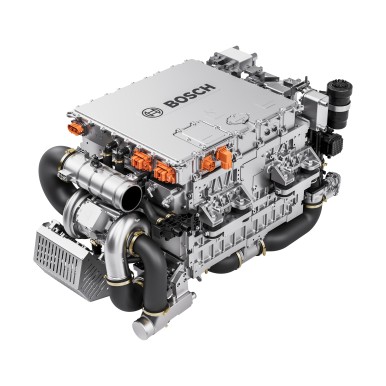
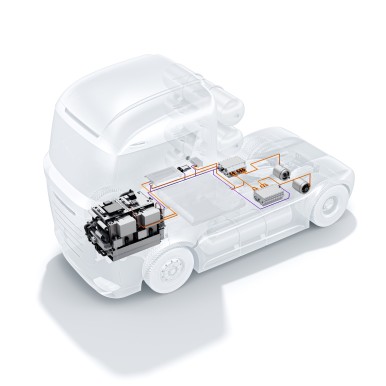
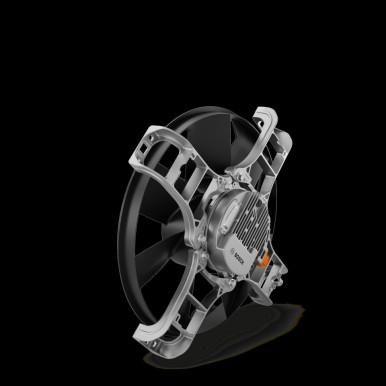
Las Vegas – Bosch will debut a suite of advanced powertrain, driver assistance and compute technologies at ACT Expo 2026, May 4-6, underscoring its commitment to enabling efficient, scalable and future-ready commercial mobility. “Bosch is uniquely positioned at the intersection of hardware and software, supporting the shift to software-defined vehicles while delivering real-world performance gains,” said Peter Tadros, regional president, Power Solutions. “Our technologies help customers manage complexity and improve uptime, supporting a wide range of powertrains—from diesel and renewable fuels to electrified and hydrogen mobility and more.” Bosch will be in booth 2153 at the ACT Expo in the Las Vegas Convention Center. Diversity of electrification across all vehicle segments As an experienced commercial vehicle electrified system provider, Bosch offers strong calibration and integration capability, including software, services and systems engineering: Electrified power take-off integrates easily, delivering up to 61kW of continuous power and 72 kW of peak output at up to 850 V, enabling improved efficiency and performance for demanding duty cycles. High-voltage electric fan (5kW and 15kW), features an integrated controller, operating at up to 850 V to enhance efficiency and performance for demanding duty cycles. Electric motor direct cooling technology , enabling up to a 90% continuous-to-peak performance ratio, significantly improving durability and sustained output. Vehicle charge communication unit , providing a standardized communication interface and providing innovative use cases such as V2X. Hydrogen solutions for mobility and infrastructure Bosch is advancing the hydrogen ecosystem with new technologies designed to improve scalability and economics: Fuel cell power module compact 300 , the most powerful Bosch fuel cell module and ideally suited for heavy-duty long-haul trucks. It provides reliability and safety according to automotive standards and is also available for stationary applications via the cooperation partner PowerCell Sweden AB. A compact gas compressor for hydrogen and other gaseous applications, with start of production planned for the fourth quarter of 2026. The Rexroth CryoPump module , developed by Bosch Rexroth, delivers a breakthrough in hydrogen pumping efficiency and enables a lower total cost of ownership across the hydrogen transportation and refueling ecosystem. Fuel alternative for internal combustion engines Renewable fuels offer a simple solution to improve sustainability with the existing fleet. Digital fuel twin , designed to monitor and certify the amount of consumed renewable fuels on a single vehicle basis. This cloud-based software bridges the fuel supply chain from producer to end-user "well-to-wheel" via a digital tag attached to every physical step of the fuel value chain. Progressing ADAS solutions For vehicles becoming ever more automated and connected, Bosch is offering advanced driver assistance products including various hardware and software solutions: Connected horizon , provides driver assistance systems with predictive information on, for instance, speed limits, traffic jams and danger spots. This is designed to provide information that may reduce accident risk and increase comfort and convenience. Working together to make L4 trucking a reality Bosch and Kodiak AI are collaborating on vehicle-independent, redundant platforms for driverless trucks: Kodiak AI sensor pod integrates Bosch radar and camera systems enabling Level 4 commercial vehicle applications. Developed for autonomous trucking use cases, the sensor pod is designed to enhance perception capabilities and support scalable deployment of automated driving solutions. Commercial vehicle architectures and platforms Bosch is driving innovation in commercial vehicle architectures with the introduction of its customer-neutral engine control module, a solution optimized for performance, fuel efficiency and emissions. Bosch is also developing the flexible medium-heavy truck platform , first showcased at ACT Expo 2025, designed to power the next generation of commercial vehicles with flexible architecture supporting next-generation applications. Bosch presentations: The ACT Expo speaker faculty has six Bosch speakers as part of its curriculum. They include: Dr. Marko Babic , head of product area-air quality and sustainability solutions Aditya Badarinath , engineering team lead, vehicle systems development & ADAS Dr. Stefan Becher , vice president, fuel cell solutions Saqib Masood , senior acquisition manager Alex H. Maun, PhD ., director of customer accounts Christine Thelesklaf , vice president, software and controls, power solutions

Comprehensive Bosch portfolio for software-driven mobility is a crowd-puller

03.09.2025

Press release

Business/economy

Comprehensive Bosch portfolio for software-driven mobility is a crowd-puller

Farmington Hills, Mich. – The automotive industry is changing. Software and artificial intelligence are making cars even more digital, while codes and algorithms are turning driving into a customized experience. To develop its full potential, software needs the right hardware. After all, even the most modern car won’t move an inch without physical components. Bosch operates in all relevant areas of software-driven mobility, and is a partner for automakers across the globe – regardless of how much progress they have made in the transformation to the software-defined vehicle. With its profound automotive expertise, Bosch interconnects the various vehicle domains. From brakes, steering systems, and electric powertrains to sensors, vehicle computers, and software, the supplier of technology and services develops and manufactures the key components of modern vehicles under one roof. At booth D01 in hall B3, Bosch is showcasing its latest solutions for connected and intelligent transportation systems at IAA Mobility 2025 in Munich. Bosch driving assistance for more safety and convenience Automated driving is an essential feature of software-defined vehicles. Bosch is actively pressing ahead with its development, and systematically taking driver assistance systems to new levels – for greater safety and convenience. The company uses an End-to-End AI architecture: The use of AI along the entire technology chain accelerates development cycles and increases the performance of the software stack. For assisted driving and parking up to SAE Level 2, Bosch offers its ADAS (advanced driver assistance system) product family in three variants: entry-level, mid-range, and premium. These variants differ in scope of software function, the number and combination of sensors, and required computing power. Automakers can purchase the hardware and software as integrated or stand-alone packages. The number of automakers who have opted for various constellations of the Bosch ADAS product family now runs into double figures. Both the mid-range and luxury variants are already in series production in China. Also available to end customers on the market are connected map services that extend the vehicle's field of vision like an additional sensor. The crowd-based solution provides information on difficult weather and road conditions, accidents, or wrong-way drivers, for example. Sensors for precise surround sensing: More and more vehicles, including less expensive ones, are being equipped with comprehensive driver assistance systems. This explains why high-performance and cost-effective camera solutions are becoming increasingly important. The Bosch multi purpose camera is available as a camera-only solution, or alternatively as a new two-part system variant comprising camera head and control unit. In the camera-only solution, the entire ADAS function is installed in the camera itself, and computation is done there. This is particularly suitable for vehicles with decentralized architectures. The two-part system variant, on the other hand, is a step on the way to centralized architectures. It is particularly attractive for automakers who want to take advantage of advanced driver assistance functions in their existing architectures. In software-defined vehicles with centralized architectures, the camera’s safety-relevant computation is done in powerful computers. For its new radar sensor , Bosch has developed and manufactured all the key elements itself, including the system on a chip (SoC). Thanks to advanced semiconductor technology, the SX600 and SX601 radar sensors’ range is roughly 30 percent greater than that of comparable models. This technology also allows driving functions to be fully and cost-effectively integrated into the radar sensor. Both sensor types support AI-assisted signal processing. The SX601 offers significantly greater computing power than usual on the market, as well as even better detection properties. For improved system performance and maximum precision, two SX601s can be connected in series to use eight transmitting and eight receiving antennas. In software-driven mobility, centralized semiconductor architectures are taking on increasing importance. They govern many sensor-based functions, including ESP ® , navigation, and driver assistance systems. To reduce complexity, Bosch has developed the latest generation of especially powerful MEMS inertial sensors . They can provide several systems at once with the data they need. This “one-sensor-fits-all” approach features in Bosch sensors such as the SMU300 and SMI980 , which are already in use in inertial measurement units and in airbag control units. At the IAA, Bosch will also be presenting its new TB293 and TB193 chips for ultrasonic sensors , which offer the highest data transmission rate in the ultrasonic market. For even greater sensor performance, Bosch is also turning to raw data, with the signal being recorded directly at the ultrasonic sensor (at the transducer), which means that the full range of data is retained. This is a great advantage, especially for AI-based functions. As a result, the sensors allow much better object detection. Now, for the first time, these chips are freely available in the market, independent of any sensors. With this step, Bosch is also making its new VASI bus interface (versatile automotive sensor interface) available, thus setting a new standard in the market. This means that automakers have a wider choice of sensor supplier, benefit from state-of-the-art ultrasonic technology, and can avoid lock-in effects. New standards for Bluetooth-based tire pressure sensors: In the Bosch SMP290 , safety and energy efficiency go hand in hand. With its compact design, low power consumption, long life, and one-of-a-kind integration of acceleration and pressure sensor as well as ASIC including Bluetooth on one chip, it truly stands out. Not only that: it helps simplify vehicle architecture. Thanks to the standardized Bluetooth interface, the SMP290 also enables new applications such as direct interaction with a smartphone. Bosch solution for damage detection: With its small damage detection , Bosch demonstrates how to cleverly combine software and hardware. This solution uses existing vehicle components such as the airbag ECU and sensors, obviating the need for any additional hardware. And in software-defined vehicles, small damage detection can even be updated over the air, after the vehicle has been purchased. It accurately detects even minor damage to the vehicle – both while driving and when parked. Small damage detection registers shocks that are below the threshold for airbag deployment, storing the relevant data. The system thus enables fast, automated, and objective damage detection. Act-by-wire technology: the future of vehicle control Act-by-wire systems transmit the driver’s steering and braking commands purely electronically. They are highly relevant for software-driven mobility, especially for the personalization of vehicle dynamics and handling, and for higher-level modes of automated driving. New brakes and steering for greater flexibility: Braking and steering via electrical cables (act-by-wire) opens up the possibility of new concepts for the steering wheel and brake pedal, crash-optimized design, and the more flexible positioning of components and the design of the interior. Bosch is one of the pioneers in the development of this technology, and soon one of the first to market it. Its brake-by-wire solution , comprising a by-wire actuator and ESP®, will feature in a production vehicle of a major Asian automaker. What is special about the hydraulic Bosch by-wire braking system is that it requires absolutely no mechanical connection between the brake pedal and the braking system. Software systems solution for vehicle dynamics: Bosch Vehicle Motion Management assumes the task of intelligently controlling actuators. This systems solution perfectly synchronizes the brakes, steering, chassis, and powertrain. Vehicle Motion Management is suitable for all vehicles and marques in the passenger-car segment. It takes the driving experience to a new level. Thanks to a special software function, the vehicle can be transformed into a super-maneuverable urban vehicle, a powerful speedster, or a limousine with chauffeur-driven comfort – depending on the individual driver’s mood. It can be activated either at the push of a button or by AI, which works in the background to customize the vehicle. Software function against travel sickness: Vehicle Motion Management’s “Comfort Stop” function increases comfort and counters travel sickness. The interaction of the brakes and the electric motor can reduce the jerk resulting from braking by 70 to 90 percent and gently bring the vehicle to a standstill. The shift from decentralized to centralized vehicle architectures Software-defined functions require a completely different setup for the electronic components and systems. Intelligence in the vehicle will be centralized in a few high-performance computers, instead of being distributed among currently sometimes more than 100 individual control units. This reduces the need for wiring, and makes both centralized processing and over-the-air updates possible. Bosch can supply the basic framework for any vehicle. Powerful computers for the software-defined vehicle: The Bosch portfolio not only includes centralized, powerful computers and state-of-the-art software , but also scalable and adaptable vehicle infrastructure. Bosch’s centralized high-performance computers and all its other components feature state-of-the-art communication interfaces. Depending on requirements, the resulting communication infrastructure can either be fast and broadband or lean and especially cost-efficient. Here, a key role is played by zone-level control units, which aggregate and translate the various communication channels and media. Robust on-board networks with zone-based architecture and 48-volt technology create the basis for a stable power supply that satisfies the growing requirements of modern vehicles. On the level of power-supply infrastructure, the key components supplied by Bosch include its 48-volt Powernet Master, which ensures that the vehicle’s safety-relevant functions are supplied with power at all times. The portfolio also includes combined communication and power-supply solutions, and well as zone-level control units. The range is rounded out by intelligent solutions for power distribution. These not only open up new diagnostic and maintenance options, but also meet the most stringent functional safety requirements. Faster data transmission in modern vehicles: It takes automotive ECUs just milliseconds to exchange data. The invisible backbone of this communication is the controller area network, or CAN. In vehicle architectures, such networks ensure a high level of stability, simplicity, flexibility, and cost efficiency. And with the new Bosch CAN SIC XL transceiver , they work especially fast – up to 20 Mbit/s in the case of CAN XL networks. In addition to the customary CAN commands, the new CAN XL standard can transmit internet protocol (IP), and thus complies with the requirements of modern E/E architectures. ETAS software: The Bosch subsidiary ETAS offers a Vehicle Software Platform Suite , which provides a stable and secure basis for the efficient development and management of scalable vehicle architecture. It supports all modern vehicle architectures – from classic control units to powerful computers and platforms for assisted and automated driving. Customers can use it to efficiently create state-of-the-art vehicle platforms and market them more quickly. As a founding member of Eclipse S-Core, ETAS uses a code-first approach as an integral part of the platforms it offers, and in this way plays a major part in shaping the open-source initiative. Using the ETAS Comprehensive Measurement Solution , vehicle functions can be validated quickly and cost-effectively, and system behavior optimized efficiently. The platform software records data in real time, and perfectly synchronizes internal data from microprocessor-based control units. This scalable and flexible solution can be adapted to various E/E architectures and to vehicle domains such as assisted and automated driving (ADAS/AD), infotainment, and motion. Bosch powertrain solutions: powerful and efficient In the powertrain domain, too, Bosch is responding to the growing requirements of software-driven mobility, and is developing sophisticated solutions. Following a technology-neutral approach, Bosch offers concepts for powertrains ranging from combustion engines to electric motors. Silicon-carbide semiconductors for electromobility: Automakers, automotive suppliers, and distributors can draw on a wide range of Bosch silicon-carbide (SiC) power semiconductors for diverse automotive applications. Silicon carbide is seen as a key technology for electromobility. Bosch offers its dual-channel trench MOSFETs as 750 and 1200 volt versions – unpackaged for inverter modules or packaged for on-board chargers, DC/DC converters, and inverters. By 2030, Bosch predicts that one in three newly registered cars and light trucks will be battery-electric. In electromobility, the Chinese market is setting the pace. Bosch is playing an active part in its development. Here, scalable and standardized platforms are crucial in making innovations universally available and affordable. They are also the basis of the broad Bosch portfolio for electric and hybrid vehicles of all types (Mild Hybrid, Strong Hybrid, Plug-in Hybrid, Range-extended electric vehicle). A global platform for a wealth of variants: Oil-cooled Bosch e-axles can be used as primary or secondary powertrains. They are globally available and locally adaptable. The 3-in-1 e-axle combines an electric motor, power electronics, and transmission. Bosch is adding further energy management components to its e-axle, such as an on-board charger, a DC/DC converter, and a power distribution unit. This combination of several functions in one unit offers a number of benefits, including a more compact design, lighter weight, and optimized costs, while increasing efficiency at the same time. From electric vehicle to mobile energy storage unit: Although they take up 30 percent less space, the latest generation of bidirectional charger converters , which combine an on-board charger with a DC/DC converter, are even more efficient. This systems solution is much easier to integrate, whether close to the powertrain in the e-axle or close to the battery. With bidirectional flows of energy, an electric vehicle can also function as a mobile energy storage unit. Inverters with greater power density: A new generation of inverters featuring power modules and semiconductors as well as innovative inverter topologies is paving the way for significant progress in power density and efficiency. And in electric motors as well, Bosch is moving ahead. Automakers can benefit from a globally standardized technology platform comprising various electric motors and active components such as rotors and stators. Shorter winding heads, innovative cooling designs including a direct copper conductor and magnet solution, and innovative materials are having a positive effect on electric motors’ size, efficiency, and use of materials. Increased range, reduced charging time: Standardized hardware means that intelligent software is gaining in significance. It can be used to extend range and curtail recharging time. Synchronous control (voltage modulation) allows efficiency to be increased by 1.5 percent, and an electric vehicle’s peak power and continuous output by 10 percent. Solely by using software, switching behavior can be synchronized with the rotation of the electric motor, without modifying the hardware. This extends the vehicle's range and simultaneously enhances the driving experience. Through the software feature eAxle Heating , the electric vehicle's battery is optimally preconditioned prior to charging. This facilitates higher charging capacities and consequently reduces vehicle downtimes. Digital proof of renewable fuels: In addition to electric vehicles, hybrid vehicles can also reduce carbon emissions from road traffic. This is why Bosch is continuing to develop injection and exhaust-gas treatment technology for combustion engines. Apart from strong and plug-in hybrids, electric vehicles with range extenders are becoming increasingly common, especially in China. Using renewable fuels in hybrid vehicles makes them much more climate-friendly. Proof that such fuels are in the tank can be provided by a Bosch cloud solution, the Digital Fuel Twin . This also shows how much less CO2 has been emitted. Optimum battery temperature: Thermal management systems can further increase the efficiency of hybrid and electric vehicles. By deliberately controlling flows of cold and heat, they ensure that the high-voltage battery remains within the optimum temperature window at all times, that the electric motor does not overheat under heavier loads, and that as little electricity as possible is used for cooling and heating. For this, Bosch is developing pre-integrated modules that combine essential elements such as electric cooling compressors and coolant pumps. This considerably reduces complexity and installation effort. In new systems, the coolant used is propane (R290), which is already used in heat pumps and tumble dryers. Intelligent coordination of energy management: The modular software solutions used in Bosch Vehicle Energy Management distribute energy in the vehicle in an especially intelligent way. An integrated approach coordinates and optimizes energy management and its component subsystems such as thermal management, powertrain, on-board network, and charging system. This connected system also takes account of current and forecast vehicle parameters, as well as of road conditions and driver behavior. In this way, electric vehicles’ efficiency, convenience, and service life can be further improved. Bosch Vehicle Energy Management is also offered as a hardware-agnostic solution. Safety in critical operating states: Together with its electronic disconnect unit , the Bosch battery management system monitors and controls the high-voltage battery’s cells – in both electric cars and plug-in hybrids. In critical operating states, it provides the necessary safety mechanisms. It also optimizes power output and battery life. It comprises a control unit as well as elements that are attached to the individual battery modules and that monitor each individual cell. Software functions, such as the battery passport that will be required in the EU from 2027, can also be integrated. In the event of an accident, the electronic disconnect unit disconnects the battery from the vehicle electronics. The battery management system, the cell monitoring units, and the charger-converter can be brought together in this disconnect unit, thereby reducing complexity. New battery for the on-board network: To meet ever greater demands for power, more and more electric vehicles will feature a 48-volt on-board network in the future. To satisfy this need, Bosch is developing a 48-volt lithium-ion battery – in addition to the 48-volt battery for mild hybrids it has already manufactured millions of times. The new variant will consistently provide the power needed for safety-critical features and for highly automated driving, but also when the vehicle is stationary for a protracted period. The battery can be flexibly integrated into the vehicle. Unlike conventional 12-volt batteries, it is lead-free. Bosch ESI[tronic] adds Tesla to its diagnostic program: The range of vehicles covered by Bosch’s tried and tested ESI[tronic] diagnostic software now also includes Tesla models. For the first time, therefore, independent workshops will now be able to use their everyday multibrand solution to perform extensive diagnostic work on Tesla models . Accessing diagnostic data was a special challenge when integrating Tesla. In contrast to many other automakers whose data Bosch receives in advance and translates into [ESI]tronic languages, the original Tesla diagnosis interacts in English only. And while other documentation is available in several languages, it is not available in all 23 of the languages supported by [ESI]tronic. To deal with this language barrier, Bosch has now come up with a technical solution that works with artificial intelligence, and has integrated this automatic translation functionality directly into the diagnostic process. As soon as a mechatronics engineer hooks up to a Tesla, the English diagnostic information is translated in real time into the user’s selected [ESI]tronic system language. This innovative approach ensures that independent workshops can work on Tesla vehicles efficiently and precisely, without language difficulties. This addition is an important step toward providing independent workshops with a future-proof, comprehensive diagnostic solution for the growing electric-vehicle segment. Bosch press conference: Monday, September 8, 2025, 11:00–11:20 CEST: with Dr. Stefan Hartung, chairman of the board of management of Robert Bosch GmbH, and Dr. Markus Heyn, member of the Bosch board of management and chairman of Bosch Mobility, at the Bosch booth D01 in Hall B3 and via Livestream on the Bosch Media Service . Bosch eBike Systems at IAA Mobility | Open Space: The IAA Open Space in downtown Munich will be open from 11:00 to 21:00 CEST from September 9 to 13, 2025. On Sunday, September 14, 2025, the IAA Open Space will be open for guests from 10:00 until 17:00 CEST. During the IAA, visitors can take the Cargo Line and other innovations, as well as many digital features offered by Bosch eBike Systems, for a test ride on the cycling test track in Munich’s Englischer Garten park. In addition, Bosch eBike product experts will be on hand to answer questions in the Open Space at Odeonsplatz.

At ACT Expo, Bosch showcases support for hydrogen economy across the lifecycle

20.05.2024

Press release

Business/economy

At ACT Expo, Bosch showcases support for hydrogen economy across the lifecycle

LAS VEGAS - Bosch is committed to the advancement of hydrogen, providing solutions for multiple technologies along the entire hydrogen value chain. The provider of technology and services offers an expanding range of components for both mobile fuel cells and hydrogen engines to optimize engine performance. It also is developing cryopump technology to support faster re-fueling times and electrolyzer technology for the production of hydrogen. Bosch has reaffirmed its business expectations in the growth area of hydrogen: by 2030, its sales with hydrogen technology could reach nearly $5.5 billion globally. In 2023, Bosch invested around $530 million (500 million euros) globally in the development and manufacturing of its hydrogen technologies and plans to invest around the same amount in 2024. At the 2024 Advanced Clean Transportation (ACT) Expo in Las Vegas May 20-23, Bosch will showcase key elements of its hydrogen portfolio in Booth #1444. “Hydrogen is a key tool on the path to reducing emissions and developing alternate propulsion options,” said Paul Thomas, president of Mobility, Americas for Bosch. “We are applying our systems know-how and industrial excellence to help drive forward hydrogen solutions for our customers.” Components and systems knowledge for hydrogen engines Bosch is developing components and applying its system knowledge to support hydrogen engines and the company expects the market for hydrogen engine technology to be worth around $1 billion globally by 2030. In fact, a first hydrogen engine with Bosch components is set to debut this year. From a technical point of view, Bosch believes hydrogen engines represent a rapid path for reducing emissions in commercial-vehicle transportation and are a viable option along with battery-electric drives and mobile fuel cells. A major reason is that existing powertrain technology from today already provides a solid platform for hydrogen engines. Approximately 90 percent of existing development and manufacturing technologies can be re-utilized, as the basic structure of the fuel, air and exhaust system can be adopted from existing powertrain solutions. Additionally, existing skill sets of workforce can be naturally applied. And last but not least, hydrogen engines use very few rare earth materials. “Hydrogen engines can be a powertrain of choice also for applications that require sustained high loads and robustness in challenging environmental conditions,” Thomas said. “We see this kind of application relevant for heavy long-distance transport as well as for agricultural and construction machinery.” Next to port-fuel injection solutions, Bosch engineers are working to create specialized low-pressure direct injection systems for hydrogen engines that meet the performance and durability requirements of the commercial vehicle industry. In addition to fuel injection, Bosch as a system supplier for hydrogen engines also offers the electronic control unit, products for the storage and supply of hydrogen and further powertrain components as well as system engineering services. The mobility industry is collaborating to show the opportunity in hydrogen engines. Bosch is among a group of industry collaborators supporting a Southwest Research Institute (SwRI) joint industry program that retrofitted a Class 8 heavy-duty vehicle with a hydrogen engine to demonstrate the low-CO2 and low-emissions potential’of hydrogen-powered engines using current technology. The vehicle will be on display at the 2024 ACT Expo. A full portfolio to support mobile fuel cells Bosch continues to provide customers with options in the area of mobile fuel cells. Already, the company is in production with the fuel cell power module to support global customers. Based on the learnings from the on-road experience, Bosch is exploring a next generation of the fuel cell power module with an increased power target of 300 kW and improved power to weight ratio. The company offers a full portfolio of fuel cell components and sub-systems . Some of the key systems and components are the fuel cell stack, the electric air compressor, the anode recirculation blower, the anode module, the hydrogen injector, the fuel cell power transfer unit and the fuel cell control unit. These components perform critical functions that control the supply of hydrogen and oxygen to the fuel cell stack. “The diverse experience at Bosch provides our customers with a variety of options to match their needs as they bring mobile fuel cell vehicles to market,” Thomas said. Solutions for service, re-fueling and hydrogen production Bosch is active on other aspects of the hydrogen value chain. As part of its Mobility Aftermarket business, Bosch brings together its comprehensive expertise in hardware, software, and repair solutions to prepare service centers for the latest vehicle technologies in the market. The company’s vehicle service readiness solutions include support for servicing vehicles equipped with electric and fuel cell powertrains. In addition to the solutions shown at the ACT Expo, Bosch is also active in hydrogen re-fueling solutions and hydrogen production. Based on its decades of experience in hydraulics, Bosch Rexroth is developing customized solutions for an economical hydrogen infrastructure , working together with collaborators. The aim is to refuel Heavy Goods Vehicles (HGV) with 100 kg of hydrogen in less than 10 minutes. Working with the market leader for the commercial operation of hydrogen filling stations in the USA, FirstElement Fuel in California, Bosch Rexroth has developed a cryopump that can compress up to 600 kg of liquid hydrogen per hour. Bosch is also participating in the rapidly growing market for hydrogen production by developing components for electrolyzers. The company is developing the electrolysis stack – the core component of an electrolyzer, based on proton exchange membrane (PEM) technology. This stack comprises more than 100 electrolysis cells that use electricity to split water into oxygen and hydrogen. Currently the stack is on course for market entry next year.

New area of business: Bosch to develop components for hydrogen electrolysis

04.05.2022

Press release

Powertrain systems

New area of business: Bosch to develop components for hydrogen electrolysis

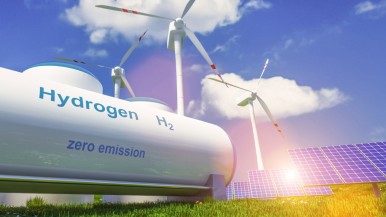
Stuttgart and Renningen, Germany – When it comes to green hydrogen, Bosch is stepping on the gas: in the interest of effective climate action, the company is planning not only to use this new fuel, but also to be one of the companies producing it. This is why Bosch is branching out into the development of components for electrolyzers, which use electrolysis to split water into hydrogen and oxygen. Ideally, the electricity for this purpose is generated from renewable sources such as wind or photovoltaic power, in which case the result is known as “green hydrogen.” “We cannot afford to delay climate action any longer, so we aim to use Bosch technology to support the rapid expansion of hydrogen production in Europe,” said Dr. Stefan Hartung, chairman of the board of management of Robert Bosch GmbH, at the presentation of the company’s annual figures . “To do this, we will leverage our know-how in fuel-cell technology,” added Dr. Markus Heyn, member of the board of management of Bosch and chairman of the Mobility Solutions business sector. Drawing on this expertise, Bosch will assign the development of electrolyzer components to the Mobility Solutions business sector, investing up to 500 million euros in this venture by the end of the decade. In light of energy diversification, the move away from fossil fuels, and the need to reduce CO2 emissions, demand for green hydrogen is growing rapidly – not only in energy-intensive industries such as steel, chemicals, and heavy-duty freight, but also in private real estate. According to the EU, demand is set to rise to some eleven million tons a year by 2030. Bosch forecasts that the global market for electrolyzer components will increase to a volume of around $16.6 billion over the same period, with Europe set to see the highest rates of growth. To help business and society reduce dependency on fossil fuels and harness new forms of energy, Bosch intends to invest some $3.5 billion in climate-neutral technology, such as electrification and hydrogen, over the next three years.Bosch is to develop the stack – the core component of an electrolyzer As in the fuel cell, the key component of an electrolyzer is a stack, which comprises several hundred individual cells connected in series. In each of these cells, electricity is used to split water into hydrogen and oxygen. This is the reverse of what takes place in a fuel cell, where electricity is generated by combining hydrogen and oxygen. In both cases, the chemical reaction is facilitated by means of a proton-exchange membrane (PEM). Bosch is collaborating with a number of partners to develop a way of combining the electrolyzer stack with a control unit, power electronics, and various sensors to create a “smart module.” With pilot plants scheduled to commence operation in the coming year, the company plans to supply these smart modules to manufacturers of electrolysis plants and industrial service providers from 2025 onward. Using a simple process, Bosch will incorporate a number of these compact modules. They can then be used both in smaller units with capacity of up to ten megawatts and in gigawatt-rated onshore and offshore plants – whether in new-build projects or in existing plants for conversion to the production of green hydrogen. To maximize the efficiency of hydrogen production and extend the service life of the stack, the smart modules are to be connected to the Bosch cloud. At the same time, the use of a modular design for the electrolyzers is expected to make maintenance more flexible: any scheduled work will require the shutdown of certain sections of the plant only, instead of the entire facility. Bosch is also working on service concepts that will include the recycling of components in order to promote a circular economy.Bosch can use its strengths in mass production and economies of scale Unlike many of the electrolyzer components currently on the market, the Bosch smart modules will be mass produced. As such, the manufacturing operation will generate economies of scale. “Two key factors are involved in ramping up hydrogen production: speed and cost,” Heyn said. “This is where we can play to our strengths, thanks to our expertise in mass production and our automotive know-how.” Bosch is now planning to start volume production as quickly as possible at a number of European locations. These include Bamberg and Feuerbach (Germany), Tilburg (Netherlands), Linz (Austria), and České Budějovice (Czech Republic).Bosch portfolio expansion will safeguard jobs The ongoing transformation of the automotive sector presents a huge challenge for the industry as a whole. As always, Bosch’s response here is to innovate. In entering a new field of business – one that will add a nonautomotive wing to its mobility solutions business – the company is seizing the opportunity to further safeguard employment. In the coming years, this expansion into electrolyzer components is expected to create work for hundreds of associates. “In fact, we’re doing three things at once,” Heyn said. “We’re making an important contribution ecologically, economically, and socially.”Bosch is working on mobile and stationary fuel cells Bosch firmly believes in hydrogen as a future fuel, and is also working on both stationary and mobile fuel cells . One intended use for the former is as small, onsite power plants for cities, data centers, shopping malls, business parks, and as charge spots for electric vehicles. Bosch plans to use mobile fuel cells to facilitate the climate-neutral shipping of goods and commodities, initially by truck. The company’s portfolio of vehicle-related products in this field ranges from individual sensors to core components such as the electric air compressor , the stack, and complete fuel-cell modules . Production is expected to start this year.

Bosch: the mobility of the future needs fuel cells

02.09.2020

Press release

Automated mobility

Bosch: the mobility of the future needs fuel cells

Stuttgart, Germany – Electromobility is picking up more and more speed. It is an important element in reducing CO2 emissions from traffic. But how economical is it to operate heavy-duty trucks with 40-ton payloads over long distances using only battery-electric power? Given the battery weight, long charging times, and limited range of today’s technology, electric powertrains aren’t the first choice for heavy trucks. Nevertheless, even 40-ton trucks will be able to travel more than 620 miles in all-electric mode in the near future. The key to this is the Bosch fuel-cell powertrain. When powered with hydrogen produced using renewable energy, this powertrain enables the climate-neutral transportation of goods and commodities. Bosch is taking the first step in this direction by developing the fuel-cell powertrain primarily with a focus on trucks, and the company plans to start production in 2022–2023. Once they have become established in trucks, Bosch fuel-cell powertrains will then increasingly find their way into passenger cars – rightly making them an integral part of tomorrow’s powertrain portfolio.Seven reasons why fuel cells and hydrogen are crucial building blocks of tomorrow’s mobility: 1) Climate neutrality In a fuel cell, hydrogen (H2) reacts with oxygen (O2) from the ambient air. The energy this reaction releases is converted into electricity, which is used for driving. Heat and pure water (H2O) are other products of the reaction. H2 is obtained using electrolysis, in which water is separated into hydrogen and oxygen with the aid of electricity. Generating this electricity from renewables makes the fuel-cell powertrain completely climate-neutral. Especially for large, heavy vehicles, fuel cells have a better carbon footprint than exclusively battery-electric powertrains if the CO2 emissions for production, operation, and disposal are added together. All that fuel-cell vehicles need in addition to their hydrogen tank is a much smaller battery for intermediate buffer storage. This greatly reduces their carbon footprint in production. “The advantages of the fuel cell really come into play in those areas where battery-electric powertrains don’t shine,” explains Dr. Uwe Gackstatter, president of the Bosch Powertrain Solutions division. “This means there’s no competition between fuel cells and batteries; instead, they complement each other perfectly.” 2) Potential applications Hydrogen has a high energy density. Two pounds of hydrogen contains as much energy as a gallon of diesel. To travel 62 miles, a passenger car needs only about two pounds; a 40-ton truck needs a good 15 pounds. As with diesel or gasoline, it takes just a few minutes to fill an empty H2 tank and continue the journey. “Fuel cells are the first choice for transporting larger loads for many miles every day,” Gackstatter says, summarizing the advantages. In the EU-funded H2Haul project, Bosch is currently working with other companies to build a small fleet of fuel-cell trucks and put them on the road. In addition to mobile applications, Bosch is developing fuel-cell stacks for stationary applications with solid-oxide fuel-cell (SOFC) technology. One intended use for them is as small, distributed power stations in cities, data centers, and charge points for electric vehicles. If the Paris climate action targets are to be met, in the future hydrogen will need to power not only cars and commercial vehicles, but also trains, aircraft, and ships. The energy and steel industries are also planning to make use of hydrogen. 3) Efficiency One of the decisive factors for a powertrain’s eco-friendliness and profitability is its efficiency. This is around a quarter higher for fuel-cell vehicles than for vehicles with combustion engines. Employing recuperative braking further increases efficiency. Battery-electric vehicles, which can store electricity directly in the vehicle and use it for propulsion, are even more effective. However, since energy production and energy demand do not always coincide in time and location, electricity from wind and solar plants often remains unused because it cannot find a consumer and cannot be stored. This is where hydrogen comes into its own. The surplus electricity can be used to produce it in a decentralized way, ready for flexible storage and transportation. 4) Costs The cost of green hydrogen will come down considerably when production capacities are expanded and the price of electricity generated from renewables declines. The Hydrogen Council, an association of over 90 international companies, expects costs for many hydrogen applications to fall by half in the next ten years – making them competitive with other technologies. Bosch is currently working with the startup Powercell to develop the stack, the core of the fuel cell, and make it market-ready, with manufacturing to follow. The goal is a high-performance solution that can be manufactured at low cost. “In the medium term, using a vehicle with a fuel cell won’t be more expensive than using one with a conventional powertrain,” Gackstatter says. 5) Infrastructure Today’s network of hydrogen filling stations doesn’t offer complete coverage, but the roughly 180 hydrogen filling stations in Europe are already sufficient for some important transport routes. Companies in many countries are cooperating to push ahead with the expansion, often supported by state subsidies. In Germany, too, politicians have recognized the important role of hydrogen in decarbonizing the economy and have anchored it in the National Hydrogen Strategy. For example, the H2 Mobility joint venture will have built around 100 publicly accessible filling stations in Germany by the end of 2020, while the EU-funded H2Haul project is working not only on trucks but also on the filling stations required on its planned routes. Japan, China, and South Korea also have comprehensive support programs. 6) Safety The use of gaseous hydrogen in vehicles is safe and no more hazardous than other automotive fuels or batteries. Hydrogen tanks do not pose an increased risk of explosion. It is true that H2 burns in combination with oxygen and that a mixture of the two beyond a certain ratio is explosive. But hydrogen is about 14 times lighter than air and therefore extremely volatile. For example, any H2 that escapes from a vehicle tank will rise faster than it can react with the ambient oxygen. In a fire test conducted on a fuel-cell car by U.S. researchers in 2003, there was a flash fire, but it quickly went out again. The vehicle remained largely undamaged. 7) Timing Hydrogen production is a proven and technologically straightforward process. This means it can be ramped up quickly to meet higher demand. In addition, fuel cells have now reached the necessary technological maturity for their commercialization and widespread use. According to the Hydrogen Council, the hydrogen economy can become competitive in the next ten years, provided there is sufficient investment and political will. “The time for entry into the hydrogen economy is now,” Gackstatter says.

A classic performance vehicle reimagined

24.08.2018

Press release

Powertrain systems

A classic performance vehicle reimagined

FARMINGTON HILLS, Michigan – Imagine your favorite classic vehicle, but with modern performance. That is what Singer Vehicle Design has done with the 964-era Porsche 911 vehicles restored for their clients. A key aspect of bringing modern performance to these vehicles has been Bosch technology such as electronic stability control, also known as electronic stability program (ESP), and engineering expertise from the Bosch team.Singer revealed its newest client-inspired work, the Dynamics and Lightweighting Study (DLS), at the 2018 Goodwood Festival of Speed. DLS is a collaboration with Williams Advanced Engineering and a formation of technical partners, including Bosch, in pursuit of the most advanced air-cooled Porsche 911 in the world. The DLS was showcased as part of both a static display outside the Goodwood House and performed as part of the Michelin Supercar Paddock Hillclimb Run. The vehicle is on display for the first time publicly in the U.S. at Monterey Car Week beginning August 23. Additionally, the car will be displayed upon the famed concept lawn at the globally renowned Pebble Beach Concours d’Elegance on Sunday, August 26. Original 964-era Porsche 911s came equipped with a Bosch ABS 2U system, which Singer currently restores for their Classic Commissions. For the DLS, however, Singer desired a new level of technology and refinement and turned to Bosch. “It’s really important for us that the addition of these systems shouldn’t spoil the driving experience, and still allow the driver to explore the dynamic limits of the vehicle, with varying levels of driver-selected assistance,” said Mazen Fawaz, Managing Director at Singer Vehicle Design. “We’re delighted with the way that the Bosch team have been able to work with us to develop the system to deliver the level of performance in the way that we always intended. We’ve created something together that we think is really quite special.” The engineering team at Bosch focused on integrating a modern ESP system to provide not only safety, but also high-level racetrack performance. Singer, Williams and Bosch worked together to ensure that the sensors and communication architecture necessary for modern ESP controls were integrated into the custom design of the vehicle from the beginning. “Singer’s meticulous level of detail in all facets of their work aligned well with our Invented for Life vision of developing technology that provides benefit – in this case through improved safety and performance,” said Keith Andrews, regional president of Bosch Engineering Group in North America. “Our team embraced the challenge to integrate the ESP in a modern fashion while respecting the heritage.” The Bosch Engineering Group team in North America has spent the past 10 years refining a Brake Controls solution optimized for racetrack driving. Multiple sports car programs and thousands of hours later; Singer is tapping into this experience and expertise. “When we were planning the Dynamics and Lightweighting Study, coming to Bosch for the ABS, traction control & ESP system was a natural choice for us,” Fawaz said. “From an early stage of discussions, it was obvious that the team there were really enthusiastic and understood the character that we are trying to give to the vehicle.”

Worlds Converge: Humans at the heart of the mobility revolution

23.05.2018

Press release

Two Wheeler

Worlds Converge: Humans at the heart of the mobility revolution

Flat Rock, Mich . –The mobility industry is the epicenter of innovation as new technologies promise to transform the entire concept of transportation. As a partner to both established and new mobility manufacturers with a portfolio that extends across automation, connectivity and electrification, Bosch has a broad view of the shifting landscape.The global supplier of technology and services provided a glimpse into the future of mobility from multiple perspectives at the Bosch Mobility Experience U.S. 2018, held at the Bosch Proving Grounds in Flat Rock, Mich. Bosch presented technologies at the middle of drivers’ changing relationship with the vehicle and showcased how the convergence of technology is driving the future of mobility. “While many feel a collision of worlds is imminent between traditional and new, the developments on the horizon are rather a convergence than a collision,” said Mike Mansuetti, president of Bosch in North America. “When we take a convergent approach, we bring together the benefits of multiple worlds for the benefit of all.” At its mobility showcase event, Bosch focused specifically on the positive impact to society as part of its Invented for Life brand promise. “The center of development isn’t whose approach is right – the center of development is the human being,” Mansuetti said. “The people inside these next-generation vehicles, their safety and their overall experience are the primary focus. Together we can foster consumer trust instead of anxiety, uncertainty and fear.” Redundancy and driver assistance blaze the path to automated driving Advanced driver assistance systems (ADAS) has been a major growth driver for Bosch. As early as 2019, the company expects to generate sales of two billion euros globally with driver assistance systems and its sales are growing faster than the market. While the global market for radar and video sensors is forecast to grow 20 percent this year, sales of Bosch radar and video sensors are expected to increase by 40 percent globally. Bosch will debut for the first time in North America automatic emergency braking for cyclists . The technology uses sensors to detect cyclists alongside and ahead of the vehicle, monitoring speed, distance, and direction of travel to calculate the risk of an accident. In the case of an imminent collision, the system automatically brings the vehicle to a stop in order to avoid — or at least reduce the severity of — an accident. Driver assistance technologies such as automatic emergency braking are coming to prominence and extending into new use cases as the technology is applied to help keep consumers and drivers safer. As levels of automation continue to increase, partially automated driving functions can help make the driver's trip safer and more relaxing. Bosch highway assist , a partially automated driving function installed in the Maserati MY 2018 Ghibli, Levante and Quattroporte, combines ACC Stop & Go and lane centering functions to control the vehicle's speed, acceleration and braking. To help reach new levels of automation, Bosch is working on redundant solutions for all levels of automated driving . Redundancy ensures safety in a vehicle where a human driver may no longer be able to operate as the backup function. At the Bosch Mobility Experience, the company will feature a redundant braking system that combines Bosch’s electromechanical brake booster (iBooster) and electronic stability control (ESP®) systems, each of which is capable of independently performing braking functions for the vehicle in the rare case of a single failure. Bosch also will present the Servolectric® Paraxial Servo Unit (EPSapa) that provides operational steering in the event the primary system is unable to operate, another redundant solution that makes highly automated driving possible. Connectivity solutions come to life Whether through connected solutions, in-vehicle interaction or the architecture within the vehicle, connectivity is at the heart of future mobility experiences. Bosch’s systems and cross-domain expertise position it to bring connectivity solutions to life. Bosch will showcase vehicle-to-anything (V2X) technologies that sense what is beyond the line of sight by facilitating communication between vehicles and the world around them. At the heart of these solutions is the Bosch connectivity control unit. The result is more time for drivers to react to potentially dangerous situations in scenarios such as left turns and pedestrians in intersections to keep drivers and pedestrians safe. The technology also will provide autonomous vehicles with decision-making information. Connectivity solutions from Bosch also help keep drivers safe inside the vehicle by helping drivers seamlessly and safely connect while reducing time when eyes are off the road. The next generation cockpit designed by Bosch is a system that runs multiple displays and electronics from one electronic control unit. The system implements smart, multimodal human machine interface (HMI) including voice print smart voice recognition, driver identification and a haptic control panel to make the vehicle increasingly driver-centric. It also includes Motion Intelligence HALO Software which limits use of the screen of any smart device that enters the driver’s area, preventing dangerous activity like texting, posting to social media, or emailing while driving. Connectivity also turns the smartphone into a car key. Perfectly keyless uses the driver’s mobile phone as a digital car key to allow passive vehicle access and start. Vehicle access can be securely granted to other users, enabling families, companies, sharing providers and fleet operators to flexibly manage who can access their vehicles and when. Bosch expertise powers new visions of electrification At the beginning of 2018, Bosch combined its powertrain expertise – gasoline, diesel, electric and battery systems – underneath a new business unit: Powertrain Solutions. Consumers in the U.S. have multiple options for powertrains, and Bosch helps manufacturers to provide these choices. As interest in pure electric vehicles increases, Bosch offers e-axle, e-machine, and power electronics technologies to many manufacturers – both established and new. Bosch electrified components are already featured in more than 800,000 vehicles around the world, and the organization has carried out over 30 production projects with OEM partners. One such example is with Nikola Motor Company. The Nikola NZT™ is the most advanced electric UTV in the world with staggering performance and capabilities. It features more than 500 horsepower coming from the state-of-the-art battery and four wheel-independent motors. Impressively, the Nikola NZT™ accelerates from 0-60 in less than 3.5 seconds. Bosch will supply the Vehicle Control Unit and controls software for the vehicle as well as anti-lock braking system as part of an overall energy management solution. Bosch also will provide high-efficiency electric motors for the Nikola two-motor e-axles. Thanks to Bosch components and systems expertise, Nikola’s vision for the NZT is becoming a reality.