Search and find:
Photos, videos, releases, events to support your reporting about the Bosch Group

Bosch showcases technologies for the truck of the future at Mobility Experience Days

22.09.2026

Press release

Business/economy

Bosch showcases technologies for the truck of the future at Mobility Experience Days

Flat Rock, Mich. September 22, 2026 – Bosch is highlighting the key elements of what it calls the “truck of the future,” a showcase of the software, sensors and powertrain technologies the company believes will define the next generation of pickups and large SUVs, as part of Mobility Experience Days at its proving grounds in Flat Rock, Mich. The event comes as automakers face a central question: what will truck and SUV buyers demand next? Bosch’s answer is that no single powertrain will win. Instead, the company is betting on what it calls a “multi-lane highway” – Full Hybrid Electric Vehicles (FHEVs) and Range Extended Electric Vehicles (REEVs) and other configurations built to serve different customers and use cases, all without asking buyers to compromise on the capability they expect. “The truck of the future isn’t defined by what’s under the hood. It’s defined by what the vehicle can do for the people who depend on it, and by the software and sensors that make that possible,” said Paul Thomas, president and CEO, Bosch in North America and president, Bosch Mobility, Americas. Bosch research shows truck buyers expect a baseline of roughly 8,000 pounds of towing capacity, even when they rarely use it, and that two-thirds want vehicle-to-load power to run job-site tools or back up a home during an outage. Meeting those expectations while also improving efficiency, Bosch says, requires flexible vehicle architectures and common components that can scale across multiple platforms and powertrain types. At its Mobility Experience Days event, the company highlighted how hybrid technology for the truck of the future does not mean sacrificing performance. The hybrid work-truck demonstrator showcases the pathway to meet emissions targets below Tier 4 Bin 20 standards while delivering performance – including towing – of a conventional internal-combustion only truck. For the next generation of eAxle systems from Bosch, silicon carbide MOSFETs (metal-oxide-semiconductor field-effect transistor) with advanced vertical trench technology combines with direct cooling of the motor’s stator windings and rotor magnets to create higher power density and significant cost reduction. By packaging the e-motor, compact inverter, and gearbox into a single, ultra-compact design , Bosch has created the ultimate modular solution for the multi-energy platform. Supporting the next generation of eAxle secondary drive for hybrid and battery electric vehicle applications, this unit operates as a dedicated boost system to provide on-demand power and instant all-wheel-drive (AWD) capability. Software delivers vehicle dynamics control in new use cases The truck of the future goes beyond propulsion. Software provides the opportunity for highly personalized experiences, particularly when it comes to vehicle dynamics. The baseline is Bosch Vehicle Motion Management software, which can be applied in multiple use cases. Bosch Vehicle Motion Management software combined with FOX semi-active suspension technology coordinates chassis actuators in real time to show how software-defined mobility is going off-road. The result is a vehicle that can balance off-road capability, comfort and stability by continuously adapting suspension behavior to terrain and driver inputs. With Vehicle Motion Management off-road propulsion and braking can be coordinated into a single pedal to help precisely modulate vehicle speed during trail driving, obstacle negotiation and rock crawling while maintaining control of vehicle dynamics. The combination of Vehicle Motion Management software with steer-by-wire provides a coordinated vehicle dynamics ecosystem where steering, braking, propulsion and suspension work together in real time. The result new levels of driving precision, personalization and automation while laying the groundwork for the next generation of software-defined vehicles. Sensors and AI deliver personalized experiences and awareness The truck of the future will also increasingly use sensors and AI to provide hyper-personalized experiences and situational awareness by the vehicle. Bosch will showcase its new AI cockpit inside a vehicle for the first time, as contextual awareness and scalable automotive computing work together to enable the next generation of user-centric vehicle functions and highly personalized in-cabin experiences. The Bosch AI extension platform allows vehicles to add AI features without changes to existing hardware or system architecture. This enables automakers to easily integrate their own AI models and agents in highly successful truck programs without major system overhauls. The truck of the future should sense and respond to its environment. Bosch will showcase its new Wet Road Detection feature for the first time in North America, which utilizes ultrasonic generation 7 to detect wetness levels in real time to help vehicle recognize changing driving conditions and adapt accordingly. “At Bosch, our job is to give automakers the flexible architecture and the software foundation to meet the expectations of truck drivers here in the market,” Thomas said. “The result is that buyers get the capability, range and affordability they’re asking for, without automakers having to reinvent the vehicle for every option.”

U.S. Riders cover an estimated 62 million miles on eBikes with a Bosch System

09.09.2026

Press release

Business/economy

U.S. Riders cover an estimated 62 million miles on eBikes with a Bosch System

Foothill Ranch, Calif. (September 3, 2026) Since the first eBikes equipped with the Bosch smart system reached riders in the United States, those riders have covered an estimated 62 million miles, according to anonymized, aggregated usage data from Bosch eBike Systems. More than 52 million of those miles are measured directly, drawn from riders who have opted into the eBike Flow app through activity tracking and connected-bike odometer readings. Conservatively extrapolated across the full number of eBikes running the Bosch smart system in the U.S., the total comes to roughly 62 million miles. Laid end to end, 62 million miles is close to 2,500 laps of the Earth at the equator, or about two-thirds of the distance from here to the sun. It is also a little more than 22,000 rides of the Great Divide Mountain Bike Route, the 2,745-mile ribbon of dirt that runs from Banff, Alberta, to the Mexican border. These miles were not covered by a fleet or a field of professionals, (though there are many eBikes with a Bosch system used for deliveries and bike share). They were covered by commuters, parents hauling kids and groceries, mountain bikers, and riders returning to cycling after years away. "These are real miles, ridden by real people, on ordinary days," said Jocelyn Vande Velde, marketing director, North America at Bosch eBike Systems. "Many of them are on the trail: eMTB riders getting in one more climb, one more descent, staying out longer than they expected to. The rest are commutes, errands, and school runs. What the data tells us is that the bike has become both a way deeper into the mountains and a practical answer to trips that used to belong to something else. That is the outcome we have been engineering toward for more than a decade, and it is the reason we take the responsibility of building these systems as seriously as we do." That rider mix maps onto a broader shift underway across the U.S. market. A recent PeopleForBikes analysis describes an eBike market moving from recreation toward everyday transportation, and from the enthusiast toward the everyday rider: families, commuters, and errand-runners who never thought of themselves as cyclists. Categories built for hauling, electric cargo bikes among them, are now some of the fastest-growing in the country. The same analysis found the market to be considerably larger than headline retail figures suggest. Once direct-to-consumer and peer-to-peer channels were counted, close to one million e-bikes were bought or sold in the United States in 2024, roughly double the size the conventional numbers had shown . Sales figures capture what riders buy; usage data like the eBike Flow figures captures what they do with the bikes afterward, and both point in the same direction. The figures cover only eBikes running the Bosch smart system, and only riders who have opted in to sharing data through the eBike Flow app. The first of those bikes did not reach the U.S. market until 2023, which makes the total a picture of roughly three years of riding rather than a full accounting of eBike travel on Bosch systems. Given that previous versions of Bosch eBike systems were introduced in the US market starting in 2014, the cumulative mileage on Bosch-equipped eBikes is massive. Earlier this year, Bosch offered a free software update via its eBike Flow app, the Performance upgrade 2.0, allowing users to increase the motor's performance values, with more torque and support, for select drive units of the smart system. This over-the-air update became available starting May 2026 for nine of Bosch's drive units, aimed at perfecting the natural riding experience by offering the ideal balance of performance, durability, and range. In addition to over-the-air updates with new features and system improvements, the Bosch smart system, through its app, provides a central hub to track activities and ride statistics. The app also offers digital theft protection, smartphone connectivity, customized riding modes, navigation by connecting directly to apps like Strava, komoot, Apple Watch and compatible Garmin devices for route, and health tracking. Bosch eBike Systems works with more than 100 of the world's leading bicycle brands, supplying networked drive systems including motors, batteries, displays, and the eBike Flow app. The company's approach draws on Bosch's 139-year history in mobility, and on a conviction that the value of an eBike is measured in the trips it makes possible, and the memories along the way, rather than in any single specification. For more information about Bosch eBike Systems and its range of offerings, please visit https://www.bosch-ebike.com/us/why-ride-bosch. Source: anonymized, aggregated usage data from opted-in Bosch eBike Systems smart system eBikes in the United States, as of July 2026. Distance comparisons are illustrative and calculated by Verde Brand Communications.

YORK® Residential and Light Commercial Website Migrates to Bosch Home Comfort Gr ...

26.08.2026

Press release

Business/economy

YORK® Residential and Light Commercial Website Migrates to Bosch Home Comfort Gr ...

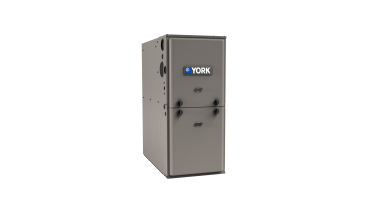
Dallas, August 26, 2026 – Bosch Home Comfort Group has migrated its YORK® Residential and Light Commercial products in North America website to YORK.Bosch-HCGroup.com. This marks another important milestone in the transition of the acquired business to Bosch Home Comfort Group. While the web address has changed, the transition is designed to be seamless with little to no disruption to the online experience. The new domain includes the same YORK® Residential and Light Commercial product information, literature, videos and contact resources previously available through YORK.com. Customers, contractors and partners are encouraged to begin using and bookmarking YORK.Bosch-HCGroup.com and update any saved links, shortcuts and other materials that reference the previous YORK.com pages. In August 2025, Bosch completed the acquisition of the global residential and light commercial HVAC business of Johnson Controls, which includes the Johnson Controls-Hitachi Air Conditioning joint venture. The largest acquisition in Bosch history, the transaction significantly expanded Bosch Home Comfort Group’s presence in the Americas and Asia Pacific. Bosch Home Comfort Group will continue to operate as a house of brands, building on strong global names including Bosch, Hitachi and YORK®, among others.

Bosch Home Comfort Group Launches Two New Multifamily HVAC System Offerings

20.08.2026

Press release

Business/economy

Bosch Home Comfort Group Launches Two New Multifamily HVAC System Offerings

DALLAS, AUGUST 12, 2026 – Today, Bosch Home Comfort Group released a new range of Evcon® and Guardian® multifamily heating and cooling solutions. Designed specifically for the unique requirements of multifamily applications, the portfolio gives developers, designers and contractors the flexibility to meet a wide variety of project needs. The offering includes heat pumps, air conditioners, furnaces, air handlers, coils and thermostats, providing complete system solutions optimized for multifamily residences across the U.S. and Canada. With features engineered to address installation challenges such as long piping runs, higher vertical lifts and limited equipment space, the new systems deliver dependable comfort and performance for property owners and residents alike. Multifamily residences, including condominiums, apartments and townhouses make up nearly a third of housing in the U.S 1 . Occupant demographics vary widely, from young professionals to empty nesters, and so do their heating and cooling needs. This comprehensive portfolio enables contractors and developers to deliver solutions tailored to project requirements while maintaining comfort, reliability and long-term system performance. “Multifamily projects require a different perspective than traditional single-family applications,” said Bahadir Taskonak, head of residential ducted products, Bosch Home Comfort Group Americas. "Developers, consulting engineers and contractors are balancing multiple priorities—from maximizing building design flexibility and accommodating longer piping lengths, to keeping projects on schedule and delivering reliable comfort for residents. With our new Evcon® and Guardian® multifamily offerings, we focused on addressing these requirements holistically.” The systems are designed to support longer line-set applications and higher lifts, simplify installation in space-constrained environments and provide dependable operation across a wide range of climates. “The result is a solution that helps designers achieve their project objectives, allows contractors to install with greater speed and confidence, and ultimately delivers the comfort, reliability and long-term performance that homeowners and residents expect,” said Taskonak. Air conditioners range from 1.5 to 5 tons with SEER2 levels of 13.4 and 14.3. Heat pumps range from 1 to 5 tons, with 1.5-, 2-, and 2.5-ton models available now and 1-, 3-, 3.5-, 4-, and 5-ton models launching later this year. Gas furnaces include both condensing and non-condensing models to support a broad range of regional application requirements. The portfolio includes a variety of features specifically developed to address common multifamily installation and operational challenges: Long-line sets that are up to 250 feet and increased lift up to 150 feet, providing greater design flexibility in multi-story applications. New, compact 24 by 24-inch cabinet footprints for air conditioners and horizontal-discharge heat pump configurations that help maximize usable space in tight installation environments. Crankcase heaters on heat pumps to support long-term reliability and performance. A hard-start kit is included on select air conditioner models, with accessory availability across additional capacities. Contractors and technicians can also leverage the Bosch Home Comfort GoTemp Pro app from for instant access to critical system information and powerful tools that streamline installation, commissioning and maintenance. This helps projects stay on schedule and systems perform as intended throughout their lifecycle. 1 https://www.nahb.org/other/consumer-resources/types-of-home-construction/multifamily

Bosch announces $225 million direct funding agreement with the U.S. Department o ...

13.07.2026

Press release

Business/economy

Bosch announces $225 million direct funding agreement with the U.S. Department o ...

Roseville, California – Bosch, a leading provider of technology and services and the largest automotive supplier in the world according to external rankings, announced a definitive agreement with the Trump Administration for up to $225 million in direct funding from the Department of Commerce’s CHIPS Program Office to support the up to $2 billion Bosch is investing to transform its Roseville, California site for the production of silicon carbide (SiC) semiconductors. The Roseville facility, which has more than 40 years of experience in semiconductor manufacturing, is undergoing a profound evolution into a facility that produces and tests SiC semiconductors with state-of-the-art processes and equipment. Bosch also announced it has begun sample production in Roseville as the company intends to produce its first commercial production chips on 200-millimeter wafers based on the pioneering SiC Bosch technology in 2026. “The start of sample production and our agreement with the Department of Commerce is a milestone in providing our local customers with what they have requested – localized U.S.-based manufacturing,” said Paul Thomas, president and CEO of Bosch in North America. The production of silicon carbide chips in the United States helps to support supply chain resiliency and capitalizes on the expertise of U.S. manufacturing associates to bring this technology to the U.S. market in a timely manner....Paul Thomas, president and CEO of Bosch in North America. “The Trump Administration is committed to developing a secure supply chain here in the United States that will enable continued innovation and competitive leadership in industries of national and economic security importance,” said Secretary of Commerce Howard Lutnick. As part of its investment into U.S. manufacturing at the Roseville site, Bosch has developed a new cleanroom space and high-tech manufacturing line for production of silicon carbide chips. Bosch has accelerated its time-to-market through investment into a long-standing U.S.-based manufacturing facility with highly-skilled U.S.-based associates who bring specific semiconductor experience. In April 2023, Bosch announced its intention to acquire the assets of the existing wafer fab in Roseville. The acquisition was closed in August 2023 and since that time Bosch began to transform the site while also maintaining employment of the existing associates throughout the transformation process. Bosch invested in the further development of Roseville associates through training and collaboration with the Bosch production network. Bosch has a long-standing commitment to the U.S. and is celebrating its 120th anniversary in the country in 2026. The company plans to invest up to $7.5 billion over the next five years across its operations in the U.S. as it heads towards its 125th anniversary of U.S. operations in 2031. “We are focused on growth and investment in the United States in order to increase the share of our global portfolio that is represented by North America and the U.S. specifically,” Thomas said. “The Roseville investment is a key milestone in our 120 years in the U.S., and we are appreciative of the support of the Administration as we look to accelerate our growth here.” Silicon carbide: essential for future mobility & efficiency Silicon carbide chips are becoming foundational in electric and next-generation mobility systems as they handle high voltages, high temperatures, and fast switching more efficiently. They also enable automotive manufacturers with a technology that supports consumer choice in the market as it helps to enable greater range and more efficient recharging in battery-electric vehicles and plug-in hybrid vehicles. Recently, Bosch announced its third-generation silicon carbide chips that deliver up to 20 percent higher performance and are smaller than the previous generation. In the near future, Bosch plans to manufacture third-generation silicon carbide chips in Roseville. The new generation helps to enable greater cost efficiency and supports making high-performance electronics more widely available worldwide. Bosch has already delivered more than 60 million SiC chips worldwide since the first generation went into production in 2021. In addition to mobility applications, silicon carbide also has potential uses in other business sectors including industrial energy applications for energy consumption effectiveness in data centers, since SiC chips enable higher-efficiency, higher-power conversion with less heat, and smaller components, making them ideal to support rapidly growing AI workloads while reducing energy and cooling demands. “Silicon carbide semiconductors are the enabling technology behind the electrification in multiple critical industries including energy, automotive, and defense. The CHIPS Program incentive supports Bosch’s effort to onshore silicon carbide technology that will bolster supply chain resiliency for our country,” said Bill Frauenhofer, Executive Director for Semiconductor Innovation and Investment at the Department of Commerce. The Roseville site represents the first semiconductor production site in the United States for Bosch and is one of 20 facilities with manufacturing operations in the U.S. for Bosch across the company’s broad portfolio. Bosch employs around 10,000 associates working in manufacturing operations in the United States. The company has invested significant capital in the U.S. over the past five years, the majority of which is focused on manufacturing. The Roseville facility has nearly 40 years of extensive experience in the production of semiconductors for automotive and industrial applications, which it will now apply to the production of silicon carbide chips. In addition, the Roseville site has also been awarded a $25 million California Competes Tax Credit incentive from the Governor’s Office of Business & Economic Development (GO-Biz) to support redevelopment and investment in Roseville. The Bosch site in Roseville, California, currently employs more than 300 associates, with potential to grow in the future based on market development. Along with advancing the skills of its current associates, Bosch is making local investments to strengthen future semiconductor talent in the United States. Beginning in 2026, Bosch plans to invest more than $100,000 per year in the Roseville community through the Bosch Community Fund, the regional foundation for Bosch in North America. Since 2024, the Bosch Community Fund has invested $200,000 in grant awards to schools and nonprofits in support of science, technology, engineering, and math (STEM) education initiatives, impacting nearly 1,500 students and teachers in the Roseville area. These strategic investments by the Bosch Community Fund will empower students, educators, and community members to foster innovation and strengthen workforce development in the region. As an example, the Sierra College Foundation in Rocklin, California, received a grant award in support of its Career Technical Education Support Fund. This grant helped cover expenses such as certification costs, microcontroller kits, development materials, software, protective equipment, tools, competition entry and travel fees, and project resources for STEM clubs and programs. Supporting quotes: “We applaud suppliers who are taking action to localize production. A resilient supply chain is essential to the future of the automotive industry and advanced mobility. Bosch’s investment strengthens the availability of critical technologies that support U.S. vehicle manufacturing.” – Liz Door, Chief Supply Chain Officer, Ford Motor Company “The introduction of silicon carbide semiconductor manufacturing in the United States is a critical step toward building a resilient domestic supply chain, strengthening access to high-performance power electronics essential for improving the range, efficiency and affordability of electric vehicles. Bosch's investment in domestic manufacturing helps accelerate innovation while supporting the growth of American EV production at scale.” – Neil Marsons, Chief Supply Chain Officer, Lucid “This initiative will help drive innovation and expand a highly skilled workforce in our region, further establishing Roseville as a center for cutting-edge manufacturing. It’s a strong example of how strategic investment can reinforce America’s semiconductor leadership.” – Kevin Kiley, U.S. Congressman representing California's 3rd District “Today’s announcement is a pivotal moment for semiconductor manufacturing —and for the technologies that will define our future. In this next phase, Bosch’s partnership with the Department of Commerce under the CHIPS for America program will scale silicon carbide chip production, expand operations and create more jobs at home. When we build these capabilities in the United States, we’re not just making chips—we’re securing our economic strength and national security for decades to come.” – Jay Timmons, President and CEO, National Association of Manufacturers (NAM) "When I co-authored the original CHIPS Act, I believed investments like this could help communities like Sacramento lead the next era of American manufacturing. This $225 million federal investment will strengthen our economy, ensure a resilient supply chain, and build on Sacramento's place at the forefront of innovation." – Doris Matsui, U.S. Congresswoman representing California’s 7th District "Bosch's investment in Roseville is a powerful testament to California's unmatched talent and commitment to growing advanced manufacturing at scale. This project will not only create good-paying jobs for the greater Sacramento region, but also strengthen the state's semiconductor supply chain and reinforce our global leadership in next-generation chip production.” – Dee Dee Myers, Senior Advisor to Governor Newsom and Director of the Governor’s Office of Business and Economic Development (GO-Biz) “A CHIPS award for Bosch is more than an investment in one company; it's confirmation that the Sacramento region has arrived as a national hub for innovation, advanced manufacturing, and next-generation industry. It accelerates the momentum we've built and sends a clear signal: this is where global companies come to scale, collaborate, and lead.” – Krista Bernasconi, Mayor of Roseville “Sierra College is proud to collaborate with Bosch to deliver the specialized technical training and talent pipeline necessary for our region’s semiconductor manufacturing success. A CHIPS investment in Bosch’s Roseville operations will be transformative, providing a vital industrial foundation for the region, with Sierra College ready to expand educational pathways to prepare students for high-demand STEM careers that will contribute to the region’s long-term economic growth.” – Willy Duncan, Superintendent/President, Sierra Community College District “Bosch’s investment in the Greater Sacramento region strengthens our economy, accelerates growth in the semiconductor industry and reinforces the United States' leadership in advanced technology.” – Barry Broome, President & CEO of Greater Sacramento Economic Council