10.04.2024
Press release
Business/economy
Growth through medical technology: Bosch and Randox invest heavily in the Vivaly ...
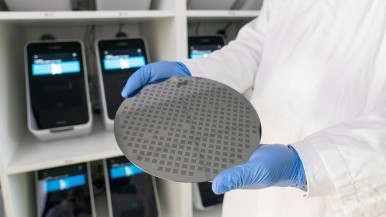
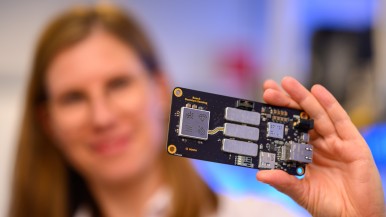
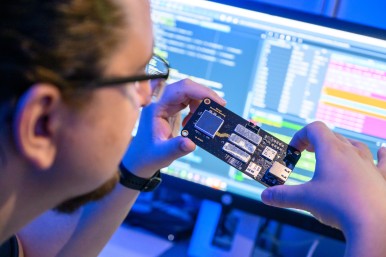
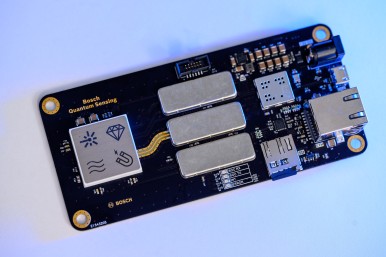
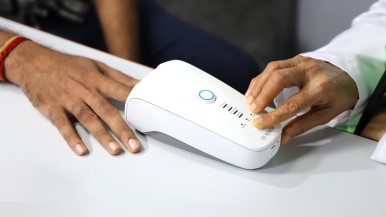
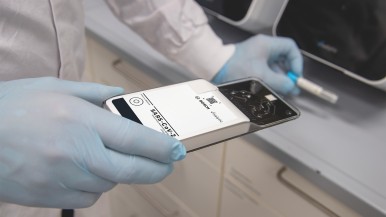
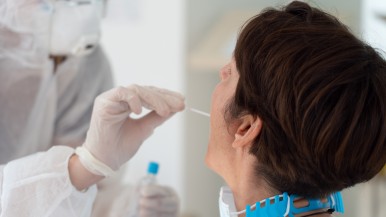
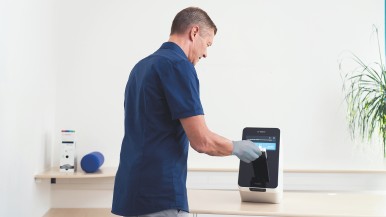
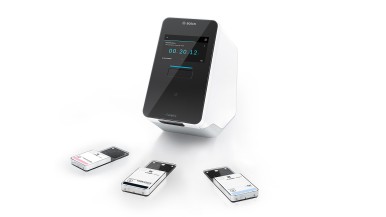
Crumlin, Northern Ireland / Gerlingen and Waiblingen, Germany – With many diseases, every minute counts, and determining whether a patient is presenting the symptoms of a simple cold, the flu, or something as severe as life-threatening meningitis is usually only possible after time-consuming and expensive laboratory diagnostics. With its Vivalytic analysis platform, Bosch has set itself the goal of making fast and highly precise diagnostics accessible at the point of care – and aims to use molecular diagnostics to become a leading provider in the market by 2030. To achieve this, Bosch has now agreed on a strategic partnership with Randox Laboratories Ltd., a leading diagnostic and medical technology company. The two companies will invest around 150 million euros in joint research, development, and sales activities for new tests for the Vivalytic analysis platform provided by Bosch Healthcare. One goal is the development of a sepsis IVD 1 grade test that will be the first to feature highly innovative and novel BioMEMS technology.Bosch has defined medical technology as a strategic growth field. Point-of-care molecular diagnostics is expected to become a future market worth billions. And with its Vivalytic analysis platform, Bosch aims to achieve a leading position in this market. “With cutting-edge technology from our own labs and our own production lines, we want to grow long-term together with partners in the field of precision diagnostics,” says Stefan Hartung, chairman of the Bosch board of management. “Here, our medical technology can draw considerable benefit from our diversification, from our expertise, from the groundwork we have done in automation, miniaturization, molecular diagnostics, and from our experience in microchip development and manufacturing,” Hartung adds. “We are investing long-term in an exciting high-tech growth field and continuously developing it together with partners. With technology ‘Invented for life’, we can relieve the burden on medical professionals and help make the diagnose and treatment of disease faster”. With cutting-edge technology from our own labs and our own production lines, we want to grow long-term together with partners in the field of precision diagnostics.... Stefan Hartung, chairman of the Bosch board of management Shared growth: decentralized diagnostics at the point of care Bosch Healthcare Solutions and Randox are now joining forces in an attempt to accelerate the development and market launch of new tests and to make distribution channels more efficient. The partnership is set to run for more than ten years. With Vivalytic, the two companies aim to achieve sales in the medium nine-figure range by 2030. “Globally, healthcare is moving toward decentralized and personalized diagnostics, that enable rapid interventions and individual treatment plans,” says Marc Meier, managing director of Bosch Healthcare Solutions GmbH. “With our partner Randox, we want to further expand the test portfolio of our Vivalytic analysis device. Our fully automated molecular-diagnostic PCR tests provide clarity directly at the site of sample collection, shorten waiting times, and take the strain off the healthcare system,” Meier adds. Globally, healthcare is moving toward decentralized and personalized diagnostics, that enable rapid interventions and individual treatment plans....Marc Meier, managing director of Bosch Healthcare Solutions GmbH The two partners are a good fit: Bosch can contribute its technology and manufacturing expertise across the fields of molecular diagnostics, microchip development and manufacturing, and miniaturization. The universal Vivalytic platform for molecular diagnostics was developed in over ten years by Bosch researchers and brought to market maturity by Bosch Healthcare Solutions. Randox has 40 years of experience in the design and development of highly sensitive IVD tests performed on a variety of technologies, including microfluidic platforms. In combination with the company’s extensive market knowledge and global sales and distribution network, this adds up to considerable opportunities for growth. “Randox has always been committed to improving health worldwide and sees the need to invest in research and development initiatives that will support clinical decision making across a variety of disease areas. Diagnostics has always been an indispensable component of healthcare, and the alignment of both science and technology makes for the perfect fit in an area for high potential impact, especially in pressure-driven environments,” says Dr. Peter Fitzgerald, Managing Director of Randox Laboratories Ltd. Bosch Healthcare Solutions and Randox already collaborated during the Covid-19 pandemic. In spring 2020, Bosch launched one of the world’s first fully automated PCR tests for the SARS-CoV-2 coronavirus. Together with Randox, the rapid test for use in doctor’s offices, nursing homes, testing stations, and hospitals was made ready for the Vivalytic analysis device within the space of just a few weeks. Development goal: sepsis test based on BioMEMS technology One focus of the development partnership with Randox is the implementation of a highly sensitive multiplex 2 test for sepsis on the Vivalytic analysis platform. Sepsis, also known as “blood poisoning,” is a potentially life-threatening complication 3 that can occur in conjunction with various infectious diseases. A medical emergency that can lead to multiple organ failure, it requires immediate medical treatment. The planned IVD grade sepsis test is to be based for the first time on the highly innovative and novel BioMEMS technology developed by teams from Bosch corporate research in Renningen and Bosch Healthcare Solutions in Waiblingen. “We have set ourselves the ambitious goal of adding the functions of a high-performance silicon chip based on microsystems technology to our test cartridges for the Vivalytic platform. In doing so, we will combine Bosch’s unique expertise in the areas of MEMS chips, molecular diagnostics, and microfluidics,” Marc Meier says. “Clinical outcomes in sepsis depend on timely diagnosis and appropriate early therapeutic intervention. Current methods of sepsis diagnosis are insufficient and time-consuming. With over 10 years of experience in the field of infectious diseases diagnostics, we aim to develop a state-of-the-art sepsis test using the highly multiplexing BioMEMS technology. Such a test could revolutionize sepsis diagnosis, ultimately leading to improved treatment outcomes and lower mortality rates from this life-threatening condition,” says Dr. Peter Fitzgerald. Smaller and faster: from microfluidics to nanofluidics – thanks to BioMEMS The powerful BioMEMS chip adds a further innovative analysis method to the Vivalytic test cartridge, enabling it to test simultaneously and significantly faster for a large number of different pathogens. It is called BioMEMS because it combines microelectromechanical systems (MEMS) with microfluidics for applications in the field of medical technology. In microfluidics, very small amounts of fluid in the microliter range are moved in a very small space. Miniaturization allows qualitative biochemical polymerase chain reactions (PCR) to run in parallel in real-time on a single BioMEMS chip. “Compared to previous PCR reactions, the volumes of liquids are reduced by a factor of 1,000 to the nanoliter range. The analysis of liquids is left to a small microchip,” Marc Meier explains. With the new BioMEMS technology, fully automatic testing of up to 250 genetic characteristics 4 (e.g. pathogens) in one cartridge is possible in less than 15 minutes in some cases. The test cartridge is a highly complex laboratory the size of a smartphone, so to speak. Another future advantage of BioMEMS will be simpler and faster adaptation of new tests or existing tests on the chip itself. For example, existing tests can easily be expanded to include additional features. “The BioMEMS technology paves the way for us to move into nanofluidics, where each pathogen will be examined in a reaction vessel the thickness of a hair,” Meier says. To achieve this, Bosch wants to create more capacity on a MEMS chip and expand it what are known as “nanocavities”. Thanks to these very small cavities, even more biochemical processes will be able to run in parallel on a chip. With increasing miniaturization, the technology has potential to be used in oncology as well over the long term. The BioMEMS chips are to be manufactured at the Bosch semiconductor plant in Reutlingen, with bio-integration and cartridge assembly to be carried out at Bosch Healthcare Solutions in Waiblingen. The BioMEMS technology paves the way for us to move into nanofluidics, where each pathogen will be examined in a reaction vessel the thickness of a hair....Marc Meier, managing director of Bosch Healthcare Solutions GmbH Vivalytic platform: easy application at the point of sample collection The advantages of carrying out PCR tests on the Bosch Vivalytic platform lie not only in speedy analysis, but also in the ease of use: Once the sample has been taken, it is placed in the test cartridge. The cartridge, which contains all the necessary reagents for the respective test, is then inserted into the Vivalytic analyser for automated evaluation. Medical staff require only brief training on how to operate it. This enables fast and targeted diagnostics directly at the point of sample collection – either at the doctor’s office or in the hospital – without the often long and time-consuming detour via a central laboratory. Bosch Healthcare Solutions already distributes various tests for diseases of the upper and lower respiratory tract, such as SARS-CoV-2 – also as a pooling variant and as a saliva test – or a test to differentiate between SARS-CoV-2, RSV virus and influenza. There are also tests for pathogens that cause sexually transmitted infections (STI) and MRSA / SA (“hospital germ”). Starting in summer, it is planned to expand the portfolio with tests for whooping cough (Bordetella holmesii, Bordetella parapertussis, and Bordetella bronchiseptica), urinary tract infections (UTI), bacterial meningitis, the two most common sexually transmitted diseases (Chlamydia trachomatis; CT and Neisseria gonorrhoeae; NG), fungal infections (Candida auris), and three tests for diarrheal diseases (norovirus, Clostridioides difficile, HSP).1 In in vitro diagnostic tests, samples such as blood or saliva are taken from the human body to be analyzed. 2 High-multiplex test means that a PCR test can test for a large number of pathogens simultaneously. In comparison, a multiplex test can detect up to 50 pathogens and a lowplex / single test up to 10 pathogens. 3 With around 50 million cases of sepsis and 11 million fatalities per year, sepsis is responsible for around 20 percent of all fatalities worldwide. [https://pubmed.ncbi.nlm.nih.gov/31954465/]. 4 Genetic characteristics can be used to detect pathogens such as viruses, bacteria, fungi and parasites, as well as their resistance to drugs, or to identify genetic mutations in tumors.Explore more PCR rapid test for Candida auris for Vivalytic by Bosch now available.