Search & find:
Media, press releases, events for your editorial coverage

Interview: Sustainable supply chains at Bosch

01.05.2025

Press-Feature

Business/economy

Interview: Sustainable supply chains at Bosch

What’s involved in purchasing and logistics at Bosch? Flemming: At Bosch, purchasing and logistics are combined in supply chain management. This ensures stable and sustainable supply chains from procurement source to delivery. For Bosch, this is central to improving quality of life through technology and to the goal of conserving natural resources. In our supply chain management, we work closely with our roughly 240 manufacturing plants and nearly 250,000 customers worldwide. The task is to ensure the availability of components, raw materials, and products in line with customer demand. Here, high quality and competitive prices are important aims, which we pursue in collaboration with our supplier network of some 35,000 manufacturers and service providers. In addition, our supplier network plays an important part in Bosch’s competitiveness and innovativeness. How important is sustainability for supply chains? Flemming: Bosch takes its entrepreneurial responsibility very seriously. This is why its long-term strategy aims to reconcile economic, ecological, and social concerns. With an annual purchasing volume of roughly 50 billion euros, this responsibility reaches far beyond our factories’ gates. Supply chains that manifest a high level of sustainability and social standards are therefore very important for Bosch. Together with our core suppliers around the world, we work to use raw and other materials sparingly, as well as to systematically reduce carbon emissions. We want to achieve this through measures such as consolidated shipments and optimized packaging. For us, there is no question that the only way companies can survive in global competition – and thus contribute to global prosperity – is on the basis of robust and sustainable supply chains. How does Bosch’s supply chain management respond to geopolitical upheaval and increasingly extreme weather events? Flemming: Stable supply chains are the bedrock of a sound economy. For Bosch, this means that supply chain management also has to anticipate ever new developments in global trade. In this respect, we pursue a local-for-local strategy, making our global supply chains shorter, more flexible, and thus less vulnerable. With our global manufacturing network, we produce where our customers are. Anticipatory supply chain risk management allows Bosch to react in good time to the risks arising from factors such as supply bottlenecks, natural disasters, and blocked shipping routes. Business relationships based on partnership and respect are crucial in allowing us to work hand in hand with our suppliers if global supply chains or shipping routes are disrupted in this way. In addition, a high degree of digitalization in our supply chains helps us gain clarity in real time about inventories and requirements – from procurement to manufacturing operations to customers. How does Bosch ensure compliance with legal requirements and with environmental and social standards in its supply chains? Flemming: As a global supplier of technology, Bosch purchases from companies and service providers in roughly 60 countries. As most of the master data and processes in our supply chain management are digitalized, we are in a position to comply with diverse regulatory requirements. In one respect, for the sake of competitive prices, digitalization helps us cushion the effect of extra administrative work in our supply chains wherever possible. At the same time, it makes it easier for us to comply with reporting requirements and to track sustainability targets in the supply chain. So if suppliers deviate from our quality standards, we give them additional training. We also check compliance with environmental protection regulations and respect for human rights – and this at more than 100 business partners each year. When it comes to reducing carbon emissions, the requirements we set as a manufacturer and supplier have an impact on thousands of suppliers and sub-suppliers of our own – thus multiplying our joint contribution to mitigating global warming. What are the latest trends in purchasing and logistics at Bosch? Flemming: Automated planning is playing an increasingly important role in supply chain management at Bosch. The aim is to be able to react even better and more effectively to external factors such as flood damage at suppliers or supply shortages in the market. In keeping with that, we’re extending the integrated planning systems that help us quickly adjust our sources of supply, shipping routes, and choice of manufacturing site if there are any bottlenecks. In our workflows, we systematically rely on cross-function, end-to-end processes, which we are continuously improving. One important element is end-to-end electronic data exchange – starting for example at our suppliers through the SupplyOn digital platform, and continuing from there via our plants to our customers. We expect that the use of generative AI will soon take this automated planning to a new level, and further enhance our supply chains. Examples of where we’re already using AI include voice recognition on supplier hotlines and the extraction of data from drawings and specifications in quality assurance. Dr. Arne Flemming is the head of supply chain management at Bosch. In this function, he is responsible for managing the Bosch Group’s purchasing and logistics with its roughly 35,000 associates worldwide.

Bosch AI future compass 2020

10.11.2020

Press-Feature

Artificial Intelligence

Bosch AI future compass 2020

Foreword Artificial intelligence (AI) is a key technology for Germany and Europe. It is set to develop into one of the main drivers of our economy and of our prosperity. Unlike at the established major IT providers from the United States or China, for example, the opportunities in Germany and Europe lie not in imitating human behavior with the help of AI, but instead in using AI to optimize interaction between machines and the world of objects. AI allows machines to understand their spatial and functional environments differently than before – and correspondingly lets them respond better. The possibilities include using AI to manufacture physical products and to optimize the way they work. The European approach to AI is closely related to the internet of things. Companies such as Bosch are looking to use industrial AI to make everyday life safer and more convenient for all of us, improve technologies, and relieve the burden on people, not change them. Bosch AI makes driving even safer, industrial production even more reliable, the energy management of buildings even more efficient, and homes even cozier. The Bosch AI Future Compass delivers proof for the very first time that support of AI, especially industrial AI, is high in Germany. However, we also see that there are still many reservations about AI, some of them strong. This skepticism cannot be merely discounted as unreasonable by drawing parallels to the dystopian visions presented in movies. Like all technologies, AI has the potential to be misused. It is for that very reason that we need to understand at all times exactly how AI works and to place limits on its use. To do so, it is also necessary to discuss its benefits and drawbacks – publicly and on a sound factual basis. Above all, we, the providers and users of AI, need to build trust by voicing our commitment to clear ethical red lines. In its AI code of ethics, Bosch committed in early 2020 to making sure that Bosch AI is safe, robust, and explainable – and that humans must retain control over all AI-based decisions. We see the fact that 85 percent of Germans agree as clear confirmation of our strategy. The Bosch AI Future Compass is designed to inspire people to intensively consider and discuss the impact of AI on our society. Now is the time to set the course for our technological future in Germany and Europe. To do so, we need to agree on the direction. I look forward to a lively discussion. To the brochure: Bosch AI Future Compass 2020

A brief guide

04.10.2019

Press-Feature

Connected mobility

A brief guide

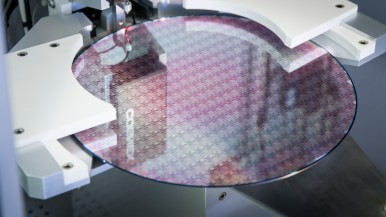
Semiconductors – one way, then another Semiconductors are chemical substances that have the properties both of electrical conductors and of non-conductors – hence semiconductors. As microchips, they are built into practically every kind of electrical system. They are a key technology of the connected world. Silicon/silicon carbide – the raw material of the connected world Silicon (Si) is the most frequently used semiconductor in microelectronics. In chip production, ultra-pure, monocrystalline silicon is used. With silicon carbide (SiC), carbon atoms are additionally integrated into the lattice structure of silicon during the manufacturing process. This serves to increase energy efficiency. Wafers – the semiconductor world in disc form In the world of semiconductors, the term “wafer” means a circular disc made of a material such as silicon or silicon carbide. In a drawing process, cylinders of the raw material of up to 300 millimeters in diameter and more than one meter in length are extracted from a molten bath of the semiconductors. These cylinders are then sawed into discs – the so-called raw wafers. These discs are thinner than a millimeter. In a manufacturing process lasting around 14 weeks, these discs are turned into semiconductor chips. MEMS – seeing, feeling, smelling Rectangular or square, smaller than a pinhead, and between one and four millimeters tall – the tiny MEMS sensors are hugely versatile all-rounders in the connected world. MEMS stands for microelectromechanical systems. They act effectively as sensory organs in a wide range of different applications in vehicles and supply the control units with important information, such as whether the car is spinning on a slippery road surface. Nowadays it is also impossible to imagine consumer and entertainment electronics without MEMS sensors. For example, they transform a simple cellphone into a smartphone that takes sharp photos with no shaking or jittering. MEMS sensors consist primarily of a MEMS element and an ASIC on a tiny circuit board. The whole lot is covered by a protective casing. ASICs – chips with built-in “intelligence” If MEMS sensors are the sensory organs of the connected world, then application-specific integrated circuits (ASICs) are the brains. They process the information from the MEMS sensors and trigger further actions. For instance, they tell the airbags in a vehicle when exactly they should deploy. On the silicon chips measuring just a few square millimeters, there are complex circuits with up to several million individual electronic functions. Power semiconductors – brimming with strength These special semiconductor components look after the controlling and switching of high electrical currents and voltages. To manage this, they are equipped with special switching and conducting properties, as the high currents and voltages would destroy ordinary semiconductor components. In electric and hybrid vehicles, they control the energy flow in the power electronics between the battery and the e-motor and ensure that the electricity is used as efficiently as possible. Clean rooms – not just clean, but squeaky clean In the manufacturing rooms for semiconductor production, it must be ensured that there is absolutely no dust or other contaminating particles present in the ambient air. Even the tiniest of particles can destroy semiconductor components. Therefore, the air is kept clean using special extraction and filtering technology. There are various clean room classes. Sensitive chip manufacturing requires the purest Class 1. For work clothing, this means: coverall, gloves, hood, and face mask. And make-up, lipstick, and eyeliner are a no-go.

Did you know... Facts, figures, and amazing truths about semiconductors

04.10.2019

Press-Feature

Connected mobility

Did you know... Facts, figures, and amazing truths about semiconductors

The market In 2018, some 469 billion dollars (427 billion euros) worth of semiconductors were sold worldwide, an increase of around 15 percent over 2017 (source: World Semiconductor Trade Statistics). At 40 billion dollars (36 billion euros), memory chips make up the largest market share. The German semiconductor market grew by around 8 percent in 2018 and was worth 16 billion euros (source: ZVEI). While the semiconductor share in smartphones, tablet computers, PCs, and TVs will stagnate over the coming years, it will grow in vehicles as a result of increasing electrification, automation, and connectivity. Bosch today is one of the leading manufacturers of semiconductors for automotive applications and has been the leader in the manufacture of MEMS sensors since 2013.Production Semiconductor chips are manufactured on circular discs of silicon or silicon carbide, known as wafers. Up to 50,000 semiconductor chips fit on an eight-inch (200-mm) silicon wafer. Wafer production is carried out under cleanroom class 1 conditions. Every cubic foot (approx. 28 liters) of normal ambient air contains 100,000 particles. When manufacturing semiconductors, by contrast, there must be no more than one particle weighing half a microgram in every cubic foot of air. That is roughly the equivalent of having a single cherry pit in all of Lake Constance. In a complex production process lasting up to 14 weeks, the raw silicon wafers are made into semiconductor chips. In 1994, Bosch developed the “Bosch Process” for manufacturing MEMS sensors. For this work, the developers Jiri Marek, Michael Offenberg, and Frank Melzer received the German Future Prize. Bosch holds more than 1,500 patents and patent applications in the field of semiconductors, 1,000 of which are for MEMS technology. The development of semiconductor technology at Bosch Bosch has been manufacturing a wide range of semiconductor chips for nearly 50 years. These include application-specific integrated circuits (ASICs), power semiconductors, and microelectromechanical systems (MEMS). In the mid-1950s, Bosch research began to explore the development of particularly robust semiconductor components that are suitable for use on the road. In the 1960s, Bosch developed the first power semiconductor for cars. Back then, special generator diodes made generators more reliable and longer-lasting. At the end of the 1960s, Bosch built its first semiconductor factory in Reutlingen due to the growing demand for the components from within the Bosch Group. In 1970, Bosch launched the world’s first mass-produced ASICs for cars. Specifically, they were power transistors for voltage regulators and integrated circuits. When Bosch began producing its Motronic – a digital engine control system (ignition and injection in one control unit) – in 1979, it had an eight-bit microprocessor on board. Together with the erasable memory used, this was effectively the world’s first use of a computer in a car in a driving-relevant role. Bosch has been producing MEMS sensors for 25 years; the first model was a pressure sensor for the Bosch Motronic. In 2010, Bosch took its 200-millimeter semiconductor factory in Reutlingen into operation. With a total outlay of 600 million euros for the wafer fab, this was the biggest single investment ever made in the history of the Bosch Group. In June 2018, Bosch laid the foundation stone in Dresden for the construction of the Bosch Group’s most advanced semiconductor factory. The company is investing around one billion euros in this facility. In the plant, the company will manufacture semiconductors based on 300-millimeter technology. Use in vehicles In 2018, every new vehicle featured semiconductors worth 370 dollars (337 euros) on average. By 2021, this figure is set to rise to around 406 dollars (369 euros) (source: ZVEI). Experts predict that the biggest growth will be in the compact and middle-class segments, as typical high-end functions gradually seep into the mass market. Today’s vehicles feature around 50 MEMS sensors. Semiconductors account for some 75 percent of innovations in new vehicles. They can be found, for example, in the powertrain, in the cockpit, and in the infotainment and driver assistance and safety systems. In 2016, every car rolling off the production lines worldwide had on average more than nine Bosch chips on board, of which five were MEMS sensors. Use in consumer and entertainment electronics For more than ten years, Bosch MEMS sensors have also been used in consumer electronics. 2006 saw the market launch of the first MEMS sensor for consumer electronics. It enhanced the fun of games consoles. In 2018, more than 1.4 billion smartphones were sold (source: International Data Corporation (IDC)). In addition, wearables – the collective term for electronics that can be worn on the body, such as smart watches, fitness armbands, and data goggles – are growing in popularity. In 2018, sales of wearables were around 172 million units (source: IDC). All these devices contain sensors that evaluate a very wide range of information. On average, five MEMS sensors are built into every smartphone. They enable the mini-computers to recognize when the screen has been turned, and they stabilize photos and facilitate navigation. Every second smartphone has at least one Bosch semiconductor chip (MEMS sensor). Amazing but true When Bosch began the production of micromechanical sensors in 1995, the edge length of an acceleration sensor was 133 millimeters. The edge length of the smallest MEMS sensor currently in Bosch’s portfolio is 1.56 millimeters. That is smaller than a pinhead and represents a miniaturization of the sensor size by a factor of 85 within about 25 years – while simultaneously featuring more functions. More than 80 of these microchips would fit on a thumbnail. To date, Bosch has manufactured well in excess of 10 billion MEMS sensors in Reutlingen, with several million more added to the tally every day. On average, Bosch semiconductors are two millimeters thick. If the 10 billion semiconductors already manufactured by Bosch were laid end to end, the row of chips would be about 20,000 kilometers long. That is roughly the distance from the North to the South Pole. In consumer electronics, MEMS sensors are less than one millimeter in height. Some components inside the sensors measure a mere four micrometers – 17 times thinner than a human hair.


Dr. Stefan Hartung, member of the board of management of Robert Bosch GmbH and c ...

24.01.2019

Press-Feature

Business/economy

Dr. Stefan Hartung, member of the board of management of Robert Bosch GmbH and c ...

Strategy: “We want to be the go-to partner for electric driving, and to be the leader in the mass market for electromobility that will emerge after 2020.” “Electromobility has a home: Bosch.” “With its economic and technological clout, Bosch is driving forward the breakthrough in electromobility.” “Our electromobility strategy goes far beyond the powertrain. Bosch’s expertise covers the entire electromobility ecosystem – from proven components for electrified applications to digital connection with the recharging infrastructure.” “Systems expertise, energy efficiency, and standardization are the three pillars of our electromobility strategy.” The acquisition of EM-motive GmbH: “For Bosch, the complete acquisition of EM-motive is the next logical step on the path to becoming the market leader for electromobility. It’s a chance to establish an even broader presence in the market.” “Having acquired EM-motive, we will in the future cover the entire value stream and be able to offer electric motors from a single source.” The market: “The global market for electromobility will grow rapidly over the next few years. We forecast that around 20 percent of all new vehicles will be hybrids or electric cars by 2025. By 2030, that figure will be more than 25 percent.” “Bosch electrical powertrain components already feature in over a million vehicles around the world.” “No other company is working as broadly on electromobility as Bosch – from bicycles to trucks.” “Bosch already has a leading position in China, the world’s largest market for electromobility. In Europe, Bosch supplies the powertrain system for the continent’s largest electric-vehicle fleet, the German Post Office’s StreetScooters. “There’s a saying in our company that there’s no car on the planet without a bit of Bosch in it. In the future, this will be extended to include electric cars. Wherever you look under the hood – be it in Asia, Europe, or North America – you’ll always find the Bosch armature in a circle.” The company’s product portfolio: “Our portfolio stretches from power electronics, to 48-volt mild hybrid batteries, to electric motors and electric axle systems.” “Bosch’s e-axle is the advent of the all-in-one principle in the powertrain. For automakers, it makes electrical powertrains more efficient and affordable. This will allow the market penetration of electromobility to continue to gain speed. The e-axle is key to making Bosch the go-to partner for electromobility.” “We have to understand battery cells technically, not necessarily make them ourselves. Cell production is not decisive for our success.” Customers: “Bosch will play a leading part in shaping the dynamic transition to electric driving. In this transformation process, we will be there to support our customers with knowledge and technology.” “Our customers benefit just as much from this market experience as from our global research and development network. The latter allows Bosch to carry out projects flexibly and close to its customers, whether in Asia, Europe, or North America.”