Search & find:
Media, press releases, events for your editorial coverage

For safer roads: Bosch teams up with Microsoft to explore new frontiers with gen ...

28.02.2024

Press release

Automated mobility

For safer roads: Bosch teams up with Microsoft to explore new frontiers with gen ...

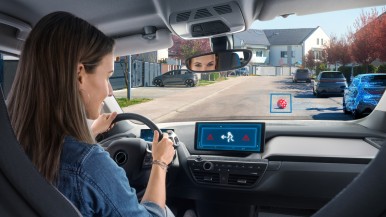
Stuttgart, Germany – It’s a scenario that no driver ever wants to see: a ball rolling out into the road. The chances are it will be followed immediately by a child in hot pursuit, oblivious to any traffic. But while human drivers can assess this situation using their contextual knowledge, today’s assisted and automated driving systems still have to learn how to do it. Bosch is pursuing the use of generative AI in terms to further improve automated driving functions. As part of this, Bosch and Microsoft are exploring opportunities to collaborate and leverage the power of generative AI. “Bosch is working on bringing a new dimension of AI applications into the vehicle,” said Dr. Stefan Hartung, chairman of the Bosch board of management, at this year’s Bosch Connected World (BCW) AIoT industry conference in Berlin. The expectation is that generative AI will enable vehicles to assess situations and react accordingly, and in this way keep road users even safer. Greater safety on the roads is also the wish of 60 percent of respondents to this year’s Bosch Tech Compass, a worldwide representative Bosch survey on the subjects of technology and AI. Bosch is working on bringing a new dimension of AI applications into the vehicle,...says Dr. Stefan Hartung, chairman of the board of management. Generative AI to make road traffic safer The two companies anticipate that a collaboration would take the performance of automated driving functions to the next level. They would like to see generative AI help enhance convenience in the vehicle and to provide greater safety for all road users. To achieve this, Bosch's comprehensive understanding of vehicles and automotive-specific AI expertise will be invaluable, as well as their access to vehicle sensor data to feed the generative AI. “In our unwavering commitment to safer roads, Microsoft is eager to explore collaboration opportunities with Bosch to pioneer the realm of generative AI,” said Uli Homann, Microsoft CVP and Distinguished Architect. Even today, when it comes to training systems for automated driving, AI quickly comes up against its limits. Today’s driver assistance systems can detect people, animals, objects, and vehicles, but in the near future generative AI could help determine whether a situation could potentially lead to an accident. Generative AI utilizes vast amounts of data to train systems for automated driving, enabling them to draw improved conclusions from this data. For example, it could deduce whether an object on the road ahead is a plastic bag or a damaged vehicle part. This information can be used either to communicate directly with the driver – such as by displaying a warning – or to initiate appropriate driving maneuvers, such as braking while switching on the hazard warning lights. Bosch and Microsoft have already partnered to develop a universal software platform for seamlessly connecting cars and the cloud, and are looking forward to work together to identify new opportunities to bring cutting-edge AI technology to their customers and the autonomous vehicle industry. Generative AI as a boost to innovation “Generative AI is a boost to innovation. It can transform industry in much the same way as the invention of the computer,” says Dr. Tanja Rueckert, member of the Bosch board of management and chief digital officer. The new 2024 Bosch Tech Compass shows this as well: 64 percent of respondents believe that AI is the technology with the greatest importance for the future. In comparison, only 41 percent of respondents were of the same opinion just one year ago. Generative AI is a boost to innovation. It can transform industry in much the same way as the invention of the computer,...says Dr. Tanja Rueckert, member of the Bosch board of management and chief digital officer. From manufacturing to everyday office work, generative AI is already being used in many areas at Bosch. In addition to Microsoft, the company is working with several partners, including AWS, Google, and Aleph Alpha. The Bosch Group’s venture capital unit, Bosch Ventures, invested in the AI company Aleph Alpha last year. Bosch also announced it would collaborate with the startup on finding new use cases both for Bosch associates and customers. “Bosch and Aleph Alpha want to learn from each other, benefit from each other’s know-how, and work together on cross-domain use cases,” Rueckert says. This partnership is now bearing its first fruits in North America: in collaboration with Aleph Alpha, Bosch is debuting AI-based speech recognition on behalf of a premium car manufacturer. In this solution, a chatbot understands and answers breakdown service calls with the help of natural language processing, which also recognizes dialects, accents, and moods. The call is taken directly, reducing the driver’s waiting time to a minimum. As many as 40 percent of calls can be processed and resolved automatically; for more complex queries, the bot transmits all relevant information to a service center agent who takes over the case immediately. From the AI search engine to manufacturing AI experts at Bosch are currently working on well over 120 specific applications that these new AI models open up for the company’s associates and customers. Such applications include the generation of software program code or powerful chatbots and voicebots to support technicians or interact with consumers. Another is AskBosch, the in-house AI-assisted search engine launched at the end of 2023. It offers faster natural-language access to a wide variety of data sources – sources scattered over the intranet, say. In addition to externally available data, AskBosch also includes internal data sources, so Bosch associates can research information specific to the company. Generative AI also ensures greater speed in manufacturing: in initial projects in two Bosch plants in Germany, generative AI creates synthetic images in order to develop and scale AI solutions for optical inspection and optimize existing AI models. Bosch expects that this will reduce the time needed for planning, launching, and ramping up AI applications from the current six-to-twelve months to just a few weeks. Following successful piloting, this service for generating synthetic data is to be offered to all Bosch locations. 2024 Bosch Tech Compass: setting the pace in the use of AI As AI is used in more and more areas of life, professional development is becoming increasingly important: 58 percent of respondents to the Bosch Tech Compass are convinced of this. This opinion is particularly prevalent in USA at 63 percent (Germany: 54 percent, China: 52 percent). Here, too, Bosch is setting the pace in the use of artificial intelligence and is getting its associates on board. In 2019, Bosch launched a training program, initially aimed at bringing 30,000 associates up to speed on the subject of AI. Up to now, some 28,000 associates have taken part in the program. Like the Bosch AI code of ethics, which sets ethical guidelines for dealing with artificial intelligence, this program has been supplemented with content about generative AI. For all the results of the 2024 Bosch Tech Compass, click here . About the survey: For the representative survey, people aged 18 and over in seven countries (Brazil, China, Germany, France, India, the U.K., and the U.S.) were polled online on behalf of Robert Bosch GmbH by the market researchers Gesellschaft für Innovative Marktforschung mbH (GIM) in December 2023. In Germany, France, and the U.K., at least 1,000 people were polled per country; in Brazil, China, India, and the U.S., it was at least 2,000 people each. The random samples are representative of their respective countries in terms of region, gender, and age (Brazil, Germany, France, U.K., U.S.: 18 to 69 years / China, India: 18 to 59 years).


CES 2019: Bosch extends its position as a leading IoT company

07.01.2019

Press release

Smart Home

CES 2019: Bosch extends its position as a leading IoT company

Las Vegas, NV – More and more, the internet of things (IoT) is changing our world. At CES 2019 in Las Vegas, Bosch is showing what it is already capable of today. From a concept for a shuttle vehicle that makes a new kind of mobility tangible, to fridges with connectivity that give advice on food storage, to smart lawn mowers that learn by doing – the spectrum of solutions Bosch is presenting at the world’s largest consumer electronics show is huge. “Bosch recognized the huge opportunities of the IoT early on. We have been actively shaping the connected world for nearly ten years now,” says the Bosch board of management member Dr. Markus Heyn. “Today, we are a leading IoT company. Step by step, we have extended our software and IT expertise.” Using its own IoT cloud, the company has already carried out more than 270 projects in field such as mobility, smart homes, smart cities, and agriculture. The number of sensors and devices connected over the Bosch IoT Suite has risen nearly 40 percent since last year, and now stands at 8.5 million.One of the keys to further growth and new business opportunities on the internet of things is artificial intelligence (AI). This is also a field in which Bosch is playing a decisive part in driving developments. “We will best be able to unlock the potential of the IoT if we combine it with AI, and take our IoT and AI activities forward in parallel,” Heyn says. In his view, the relationship between the two fields is complementary: “The IoT needs intelligence. The use of connected things to gather data can be a decisive boost for the development of AI. It is only through AI that connected things become intelligent and learn to draw their own conclusions. Above all, we aim to achieve concrete improvements in people’s real, everyday lives – things such as more time, more security, more efficiency, and more convenience.” Here, Heyn cites the example of video-based fire detection: by using intelligent image analysis, security cameras are able to identify fires within a few seconds, even before the system’s sensors detect heat and smoke. In this way, fires can be detected considerably earlier than with conventional fire or smoke alarm systems. This saves valuable minutes in which lives can be saved.A second key to success on the path to the IoT age is partnerships. Here, Bosch is opting for a mix of traditional and new players. The alliance recently agreed with the Canadian platform provider Mojio has already resulted in the first integrated IoT platform for connected vehicles: in the event of an accident, a special Bosch algorithm can identify where and when the accident happened, and how severe it is. Via the Mojio cloud, the data are transmitted without any delay to the Bosch emergency service center, which automatically sends an emergency call to local rescue services. At the same time, a message is sent to a predetermined list of recipients, either as a text message or via the Mojio app. “Together with Mojio, we are connecting vehicles directly with the cloud. This means rescue services can get to the scene of an accident even faster than before,” says Mike Mansuetti, the president of Bosch North America. From the middle of next year, the IoT emergency solution will be available for nearly a million drivers in North America and Europe. IoT on the roads: Bosch presents connected mobility of the future With the concept shuttle vehicle it developed in-house, Bosch is celebrating a world first at CES. In this vehicle, the company is its presenting solutions for the automation, connectivity, and electrification of vehicles, and is giving visitors the chance to experience at first hand a new kind of mobility: driverless shuttles, which will soon be a feature on the streets of the world’s cities. “This will pay into our vision of mobility that is as emissions-free, accident-free, and stress-free as possible,” Heyn says. For shuttle-based mobility such as this, Bosch will be supplying not only components and systems, but also a complete range of mobility services, such as reservation, sharing, and connectivity platforms, as well as parking and recharging services. Bosch believes that such connected services are essential for the shuttle-based mobility of the future. The forecast market volume for these services is also high: while it was 47 billion euros in 2017, it is estimated that it will be as much as 140 billion euros by 2022 (source: PwC). Bosch also wants to have a share in this, and aims for significant double-digit growth with the solutions it offers. For Heyn, there is no doubt: “In the future, every vehicle on the road will make use of Bosch digital services. We will consolidate them into a smart, seamlessly connected ecosystem.”One of the final obstacles for putting shuttle-based mobility into practice is the automation of vehicles in complex urban environments. Here, Bosch believes partnerships are the answer: In the second half of this year, San José in California’s Silicon Valley is set to become the pilot city for testing a fully automated, driverless ridesharing service provided by Bosch and Daimler. The three parties have already signed a letter of intent to this effect. With their development alliance, Bosch and Daimler want to improve urban traffic flows, enhance road safety, and provide an important building block for the traffic of the future. Their aim is to develop a driving system for fully automated driverless driving (SAE level 4/5) that is ready for production by the beginning of the next decade. IoT in the home: connected appliances make home owners’ lives noticeably easier It’s not just on the roads that connected products and services that make user’s lives easier are in demand. “We’re working on the idea of a connected home, and on appliances that think autonomously and understand what users want,” Heyn says. At CES, for example, the company is presenting a new function for web-enabled fridges that can recognize types of food and provide recommendations on storage. The interior camera automatically recognizes some 60 kinds of fruits and vegetables and suggests the ideal place to store them by means of an app. As a result, food is stored in the best possible way, stays fresh for longer, and doesn’t have to be thrown away so often. Another new development is the PAI projector, which can project a virtual user interface onto a kitchen counter top. An integrated 3D sensor captures any hand movements, allowing touch-screen operation of the interface. In this way, users can conveniently call up recipes online and make phone calls over the internet while they are cooking and baking. Designed especially for the kitchen environment, PAI does not have to be used with as much care as a smartphone or tablet. Even with sticky fingers, the projector can still be controlled perfectly. PAI is set to debut in China in February 2019, to be followed by market launch in the United States. Bosch is also presenting the Indego S+, its new robot lawn mower with internet connectivity, at CES. It is one of the first robot lawn mowers in the market to offer voice control by Amazon Alexa. It is also the only robot lawn mower that can use weather forecasts on the web to automatically decide when best to mow the lawn again. Bosch is using artificial intelligence to improve the way its robot lawn mower recognizes obstacles on the lawn by evaluating data such as motor flow, acceleration, motor speed, and direction. “We are using AI to make lawn care even easier and more convenient. Our vision is an Indego that adapts to its garden in order to mow the lawn perfectly every time,” Heyn says. IoT #LikeABosch: Bosch launches digital IoT campaign Bosch is also using CES 2019 to premiere its new IoT image campaign. The main plank of the campaign is a hip-hop video clip featuring a protagonist who is a savvy IoT user. Bosch is entering new territory with its “Like a Bosch” campaign; the decidedly different approach and tone marks a new departure for the company, which was founded in 1886.This PR move capitalizes on a rash of “like a boss” videos and memes that have gone viral on the internet, attracting tens of millions of clicks. These videos feature everyday people who stage bizarre stunts or find their way out of predicaments with technical finesse. The IoT image campaign changes a few letters in order to put a fresh spin on this internet phenomenon. The protagonist in the Bosch video is a young man who is always on top of things, thanks to connected solutions from Bosch. Smartphone in hand, he operates his car, lawn mower, or coffee machine in a cool, smart, and confident way – he’s in charge of things “like a Bosch.”