#Mobility Aftermarket

Bosch Comprehensively Expands Thermal Management Program for the Aftermarket

08.09.2026

Press release

Mobility Aftermarket

Bosch Comprehensively Expands Thermal Management Program for the Aftermarket

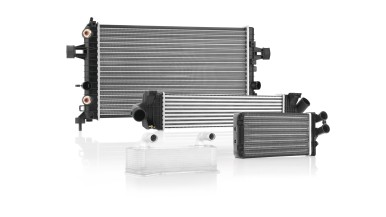
Karlsruhe, Germany – Bosch is significantly expanding its thermal management range for the aftermarket. With the addition of brand-new product groups and the expansion of its existing portfolio, Bosch is strengthening its position as a comprehensive system supplier for workshops. The goal is to offer businesses an even broader and deeper range of spare parts in proven Bosch quality, all from a single source, to support a growing number of repair cases involving to thermal systems.Expansion with new product groups The thermal management system in a vehicle ensures that all components operate within their optimal temperature range while maintaining a pleasant climate for the occupants. Building its extensive expertise in vehicle thermal systems and decades of development and manufacturing experience, Bosch will expand its existing range from the first quarter of 2027 to include radiators, oil coolers, intercoolers, and cabin heat exchangers. The new range will initially comprise of approximately 1,000 part numbers for passenger cars and light commercial vehicles in proven Bosch quality and will be successively expanded. The products are offered in various versions to meet the specific requirements of each vehicle application – for example, oil coolers with or without a filter, or radiators with or without an oil cooler – thus covering a large portion of the most common vehicles in Europe. To facilitate installation for workshops, a large part of the range is supplied with the appropriate O-rings and corresponding accessories. New water pumps for demand-based repairs As a further addition to the thermal management program, Bosch is introducing the electric main water pump at the end of 2026. While the electric auxiliary water pump, established in the Bosch portfolio, supports the various coolant circuits in both combustion engine and electric vehicles, the main water pump is responsible for the fundamental and reliable cooling of the engine. Its operation, independent of the engine, enables optimized cooling performance, particularly in modern powertrains, including hybrid and electric vehicles. The range includes 12 part numbers for common passenger car models from BMW, Mercedes-Benz, and Toyota. All products meet original equipment quality standards, ensuring reliable function and a long service life. To provide workshops with more flexibility in repairing belt-driven systems, the mechanical water pump will also be available as an individual part in the future – in addition to the well-known belt kit including a water pump. From the end of the third quarter of 2026, 70 part numbers for the timing drive will be available. In early 2027, around 120 more part numbers will follow, with approximately 40 for the timing drive and 80 for the accessory drive. With this, Bosch covers a large part of the European vehicle fleet. A/C components program to be further expanded The program of A/C components, first introduced in early 2024, is growing particularly strongly. From the beginning of 2027, around 500 new part numbers will expand the range,from compressors and condensers to dryers, evaporators, and expansion valves. This increasesthe European vehicle park coverage for condensers to over 90%. A highlight that underscores the expertise for modern drives is a new dryer for various Tesla models. For simple and professional installation, all A/C components are supplied with the matching O-rings. Strict endurance, leak, and corrosion tests ensure the reliable performance and long service life of the parts. Continuous expansion of the existing range The existing portfolio is also continuously adapting to the needs of workshops. In the cabin blower segment, Bosch is expanding the program at the end of 2026 with 20 new part numbers. The new blowers are available for passenger cars and light commercial vehicles from the brands VW, Renault, BMW, and Peugeot in the European market. In the engine cooling fan segment, the range will also expand from the beginning of 2027 by ten more part numbers for common models from VW, Renault, and Peugeot. The quality spare parts for the independent aftermarket are suitable for passenger cars and light commercial vehicles. Both product ranges will be consistently expanded to meet market requirements. Comprehensive system expertise and a broad range from a single source With the development and expansion of its thermal management business, Bosch ensures that workshops can rely on an even more comprehensive range of products from an experienced partner for service and repair cases. "Our claim is to stand by workshops as a strong and reliable partner. That is why we are consistently expanding our thermal management program. This is crucial, especially regarding electromobility, because intelligent thermal management is the key to the performance and service life of future vehicle generations. With our expanded portfolio, we are sharpening our expertise and supporting workshops with the requirements of future vehicle generations," says Carsten Kopp, member of the Bosch Mobility Aftermarket divisional board, responsible for development and product areas. The entire range is available to workshops through the usual distribution channels. All newly added products are listed in both the Esitronic diagnostic software from Bosch and the TecDoc electronic parts catalog.

100 Years of Bosch Wiper Systems: A Success Story with a Clear Vision for the Future

08.09.2026

Press release

Mobility Aftermarket

100 Years of Bosch Wiper Systems: A Success Story with a Clear Vision for the Future

Karlsruhe – In 1926, Bosch revolutionized driving safety with the first electric windshield wiper. 100 years later, the company is celebrating this significant anniversary and looking back on a long history of groundbreaking innovations. From the introduction of interval wiping to the Aerotwin flat-blade wiper, Bosch has decisively shaped the development of wiper systems and repeatedly redefined the standards for clear vision.A journey through the milestones of wiper technology The history of Bosch windshield wipers is a story of progress. The electric drive was followed by the development of the dual-material wiper rubber (1994), which significantly improved cleaning performance. With the Bosch Aerotwin in 2001, the company set the new standard for modern flat-blade wipers, which are now original equipment (OE) in most new vehicles. Their aerodynamic design with a custom-fit Evodium spring strip ensures optimal contact pressure and a long service life. "The invention of the electric windshield wiper by Bosch in 1926 was a quantum leap for road safety," says Bart Robijns, Head of Wiper Development at Bosch. "A modern wiper is a crucial component in the vehicle: The latest generation of electric vehicles, in particular, places high demands on acoustic performance. Wipers with maximum running smoothness and no disruptive background noise are required. Furthermore, modern driver assistance systems rely on an impeccably clean windshield so that cameras and sensors can accurately and continuously capture the vehicle's surroundings." Anniversary campaign celebrates "Keeping the essentials in sight for 100 years" To celebrate this anniversary, Bosch is launching a comprehensive communication campaign, which officially begins with the trade fair Automechanika. Under the motto "Keeping the essentials in sight for 100 years," the campaign tells a story that connects generations and focuses on the themes of family, care and nostalgia. The campaign includes videos, extensive social media activities and other materials that workshops and retailers can use in their marketing efforts. Outlook: Innovations for the mobility of tomorrow Innovative strength has been the driving force behind Bosch wiper systems for 100 years. With pioneering technologies, the company actively shapes global trends and offers tailor-made solutions for OE and the aftermarket. For example, the Aerotwin J.E.T-blade for commercial vehicles embeds nozzles into the wiper blade, so washing fluid can be sprayed directly in front of the blade as it travels across the windshield, thus reducing disruptive spray mist and immediately improving visibility for drivers. On these systems, fleet operators benefit from maximum reliability, while workshops save time during installation thanks to pre-assembled adapters.

Bosch Classic Reproduces Wheel-Speed Sensors for Historic Vehicles

08.09.2026

Press release

Mobility Aftermarket

Bosch Classic Reproduces Wheel-Speed Sensors for Historic Vehicles

Karlsruhe – Bosch Classic, the division for modern and vintage classic cars at Bosch, will launch newly reproduced wheel-speed sensors for early ABS systems at Automechanika in Frankfurt from September 8 to 12, 2026. By resuming production, Bosch Classic is closing a long-standing supply gap in the spare parts market and supporting owners of historic vehicles and specialized workshops in the repair and preservation of classic cars. The Bosch Classic booth will be located in Hall 9, providing information on its range of spare parts, services and technical support for historic vehicles.The wheel-speed sensors are a central component of the first ABS generations developed by Bosch. For numerous vehicles, especially those built between 1982 and 1997, suitable replacement sensors have not been available for a long time. Bosch Classic is solving this problem by reproducing selected sensors based on the original specifications. The new spare parts enable vehicle owners and workshops to properly repair the ABS systems of historic vehicles,keeping the vehicles as true to the original as possible. Bosch Classic will expand the program in the coming months, though reproduced part numbers currently available can be found here: Classic Alliance brings together specialist audience and classic car expertise Bosch Classic is also involved as a collaborator in the new Classic Alliance by Automechanika—a program aimed to more strongly connect the automotive aftermarket and the international classic car scene. The new B2B network offers workshops, restoration businesses and other market participants a platform for professional exchange and access to specialized know-how on historic vehicles. "We see great opportunities in the emerging B2B Classic Car network to present the product portfolio and services of Bosch Classic to an international specialist audience," said Michael Mack, head of Bosch Classic. Bosch Classic is committed to preserving historic vehicles and supporting the growing number of modern and vintage classic car enthusiasts with technical know-how, original and remanufactured parts and an extensive archive of historical documentation. The Bosch Classic Services – a network of around 50 businesses in Germany, Austria, and Switzerland – offer specialized expertise as well as suitable tools and equipment for the maintenance, repair and restoration of modern and vintage classic cars.

Automechanika 2026: Bosch successfully guides auto repair shops on the road to t ...

08.09.2026

Press release

Mobility Aftermarket

Automechanika 2026: Bosch successfully guides auto repair shops on the road to t ...

Frankfurt a. M./Karlsruhe – Mobility is in a state of transformation, with new vehicle technologies, software-based systems, and artificial intelligence ushering in a new era for independent repair shops. Bosch is supporting shops at the forefront of this transition in expanding their range of services, working more efficiently, and tapping into additional business growth opportunities.Bosch is characterizing its presence at Automechanika 2026 with the theme "Master the job every day," demonstrating how technological expertise, digital connectivity and collaborative partnerships enable workshops to conquer their current and future objectives. To this end, Bosch combines original equipment expertise, vehicle diagnostics, spare parts, workshop equipment, training and digital services into an integrated systems approach that relieves the daily burden on shops by simplifying processes and supporting sustainable economic success. "Mobility is changing rapidly. Our ambition is to accompany repair shops as partners on this journey – not with individual products, but with an intelligently connected, integrated system that helps them work successfully today and leverage the opportunities of tomorrow's mobility," says Rupert Hoellbacher, Chairman of the Bosch Mobility Aftermarket divisional board. Artificial intelligence creates more efficiency in day-to-day shop operations The new generation of the ESI[tronic] diagnostic software demonstrates how Bosch is specifically using artificial intelligence to increase productivity in workshops. The integrated AI assistant analyzes diagnostic data, accesses repair instructions and original documents from vehicle manufacturers, and suggests suitable solutions. This allows technicians to arrive at the correct diagnosis more quickly and concentrate on what matters most – repairing the vehicle. In this way, Bosch is reducing the complexity of modern vehicles and helping shops optimize diagnostic service. The potential of the ESI[tronic] diagnostic software with its integrated AI assistant to sustainably improve efficiency in workshops was also recognised by the international Automechanika jury. Right at the start of the trade fair, the solution received the 2026 Innovation Award in the “AI Solutions & Digitalisation” category. ADAS calibration from Bosch – easier than ever Bosch is also leveraging new and powerful technologies for the calibration of modern advanced driver assistance systems (ADAS), bringing efficiency gains directly into the daily workflow. With the new SOVAL technology (Sensor Validation) for the DAS 3000 calibration system, Bosch significantly streamlines modern ADAS calibration. Instead of the time-consuming manual alignment of the vehicle and calibration device, technicians can simply complete a tablet-guided walk around the vehicle and the system will automatically detect the vehicle's position, reference points, and step-by-step calibration needs. This allows calibrations to be carried out faster, more easily, and efficiently, even in limited spaces. Workshop solutions for all powertrains Bosch supports repair shops in servicing every powertrain that enters their shop. For the foreseeable future, vehicles with combustion engines will remain an important part of in-shop service, while the importance of electrified vehicle service capabilities continues to grow. Bosch is therefore pursuing a technology-neutral approach, offering shops solutions that allow them to handle current repair cases profitably while preparing for new requirements. In the diesel service sector, the new DCP 800 test bench (Diagnostic Common-Rail Pump), presented in Frankfurt, accelerates the testing of common-rail high-pressure pumps and helps shops get vehicles back on the road faster. At the same time, Bosch is comprehensively expanding its thermal management portfolio and will offer shops even more components from a single source – for modern cooling and air-conditioning systems spanning combustion engines and electric vehicles. Partnership creates competitive advantages In addition to innovative technologies, strong partnerships are a decisive factor for shop success. With various in-shop support concepts such as Bosch Car Service and AutoCrew, Bosch combines modern workshop equipment, diagnostic software, training, technical information and a strong international brand into a comprehensive partner offering. Shops gain access to current technological knowledge, benefit from the exchange of experience within a strong network, and can continuously develop their range of services. Additional business opportunities arise in the fleet business. With data-based services, Bosch helps fleet operators identify maintenance needs early, reduce downtime and make service processes more predictable. This strengthens competitiveness for fleet operators and independent repair shops through driving recurring service occasions, better capacity utilization and additional revenue potential. A strong portfolio for the repair shops of today and tomorrow As an original equipment manufacturer, Bosch brings new vehicle technologies to the aftermarket at an early stage and continuously develops its spare parts portfolio. The goal is to support workshops in every repair case with the right products, data and services. This also applies to the commercial vehicle business. At Automechanika, Bosch is presenting numerous portfolio extensions for current vehicle generations – from new spare parts and diagnostic solutions to shop tools and equipment. Together with ESI[tronic] Truck and Off-Highway, Bosch helps shops carry out maintenance and repair work efficiently to ensure the long-term operational readiness of commercial vehicles. Sustainability becomes an economic success factor For Bosch, sustainability is far more than an environmental goal. It opens up new business opportunities for repair shops while strengthening their competitiveness. "In the aftermarket, sustainability is not decided by abstract concepts, but in the specific repair case,” said Carsten Kopp, member of the Bosch Mobility Aftermarket divisional board. “When we remanufacture components, extend vehicle life cycles and enable economically attractive repairs for vehicle owners, we conserve resources and, at the same time, create new business opportunities for repair shops. This is precisely the strength of the circular economy: It combines ecological responsibility with economic benefits for our partners in the market." With programs such as Bosch eXchange, the company returns remanufactured components to the market in original-equipment quality. Going forward, Bosch intends to further develop this approach together with strong partners. To this end, Bosch and PreZero announced a strategic collaboration at Automechanika aimed at strengthening the circular economy and European material cycles. The objective is to keep valuable components and raw materials within the European economic cycle for as long as possible while further expanding the second-life approach for vehicle components. In the vehicle recycling process, Bosch combines its expertise in diagnostics and remanufacturing with PreZero’s recyclable materials management and logistics infrastructure. Going forward, data-driven insights are intended to help determine more precisely whether components are suitable for reuse, remanufacturing, or recycling. The collaboration with PreZero is one element of Bosch’s comprehensive commitment to the circular economy. At the same time, Bosch is continuously developing its existing programs and other approaches to make the best possible use of components and materials and unlock new economic potential for the aftermarket. Bosch supports vehicles throughout their entire life cycle The strength of the Bosch portfolio is evident throughout the entire vehicle life cycle. While modern diagnostic and repair solutions prepare independent shops for future vehicle generations, Bosch Classic supports owners and specialized shops in the long-term maintenance of historic vehicles. With new spare part solutions for early ABS systems, Bosch Classic is closing supply gaps in the market and helping to preserve classic vehicles as true to their original state as possible. Additionally, Bosch is celebrating 100 years of electric windshield wiper systems at Automechanika. The anniversary is a prime example of the company's sustained strength in innovation and the close link between original equipment and the aftermarket. With its trade fair presence at Automechanika, Bosch is showing how powerful technologies, original equipment expertise and strong partnerships are helping independent repair shops shape the mobility of today and tomorrow in an economically successful way.


Safety and Availability in Everyday Transport: Bosch Expands Brake Program for C ...

11.08.2026

Press release

Mobility Aftermarket

Safety and Availability in Everyday Transport: Bosch Expands Brake Program for C ...

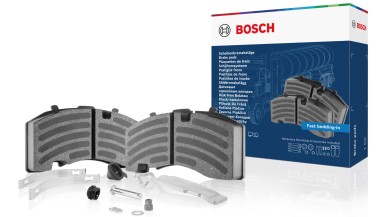
Karlsruhe – Commercial vehicles are on the road every day under demanding conditions. Brake components must function reliably, last as long as possible, and reach their full performance quickly after replacement. With new disc brake pads for trucks, truck trailers, and buses, Bosch is expanding its commercial vehicle program with a solution that combines stable braking performance, cost-effectiveness, and workshop-friendliness. By the end of 2026, Bosch will double the range of the new product line, thereby covering around 90 percent of the commercial vehicle fleet in Europe. This will enable workshops to source suitable Bosch solution for a majority of common vehicles.Balanced for the high demands of everyday transport The new Bosch disc brake pads for commercial vehicles are designed to offer a particularly balanced ratio between a stable friction coefficient, comfort, and wear characteristics. The vehicle owner benefits from consistently stable braking performance, even under heavy use. Longer service life of the brake disc and short break-in period The new brake pads are delivered with a specially roughened surface coating. This allows them to grip the brake disc better from the start, shortening the break-in period and enabling them to reach their full braking power much more quickly. Tested beyond legal requirements To ensure high quality standards, Bosch tests the brake pads in accordance with ISO 26865 and ISO 26866 standards, in addition to the legal requirements. These voluntary tests evaluate factors such as break-in and wear behavior, heat sensitivity, and simulations of downhill driving. For example, the wear behavior test according to ISO 26866 showed that Bosch brake pads can reduce brake disc wear by up to 25 percent* compared to the corresponding original equipment brake pads. This significantly contributes to extending the service life of this valuable spare part. For simple and quick installation, the necessary accessories are already included with the new brake pads. The new program will initially be introduced in Germany, Poland, France, and Turkey; other European countries will follow in stages. *Measured by an independent test institute according to ISO 26866 on a Mercedes-Benz Actros

Bosch strengthens commercial vehicle workshops with new products and diagnostic  ...

21.07.2026

Press release

Mobility Aftermarket

Bosch strengthens commercial vehicle workshops with new products and diagnostic ...

Karlsruhe, Germany – Bosch is presenting numerous expansions to its commercial vehicle portfolio at Automechanika 2026. As one of the world's leading suppliers for commercial vehicle original equipment, Bosch brings its long-standing system and development expertise to the aftermarket and continuously develops its portfolio for current vehicle generations. New products and program extensions for brakes, filtration, windshield wipers, steering, and auxiliary drives complement the existing portfolio. Together with diagnostic software, workshop equipment, and digital services, they make it easier for workshops to perform maintenance and repair work efficiently and help increase vehicle availability. In addition, Bosch supports workshops with the Alltrucks workshop concept, a Europe-wide network for multi-brand maintenance and repair of commercial vehicles."As a long-standing partner to global commercial vehicle manufacturers, we leverage extensive original equipment expertise to develop innovative solutions for the aftermarket. With high-quality spare parts, modern diagnostic technology, workshop equipment, and digital solutions, we support workshops in carrying out repairs efficiently and getting vehicles back on the road as quickly as possible," says Carsten Kopp, member of the Bosch Mobility Aftermarket Divisional Board with responsibility for development and product areas. New disc brake pads for commercial vehicles Bosch is expanding its commercial vehicle spare parts portfolio with a new range of disc brake pads for trucks, trailers, and buses. For workshops, the expanded offering simplifies parts sourcing by providing broad vehicle coverage from a single supplier. The brake pads are designed for a balanced ratio of friction coefficient, comfort, and wear. A special surface coating shortens the break-in period through improved interaction between the brake pad and brake disc. New urea filters for commercial vehicle AdBlue systems Bosch is adding two new urea filters for AdBlue injection systems from third-party manufacturers to its portfolio. The new filters cover applications for different generations of Cummins-Hilite systems, which are used in the Mercedes-Benz Actros as well as in vehicles from DAF and Scania. They help protect injection valves from contamination and support precise AdBlue dosing. For workshops, the portfolio expansion simplifies parts procurement and expands the service offering for exhaust-gas aftertreatment. Steering systems for modern commercial vehicle applications In the steering segment, Bosch is showcasing new solutions for current and future commercial vehicle applications. The electrohydraulic steering system Servotwin combines the proven Servocom steering with electric assistance. This enables additional driver assistance functions and serves as a foundation for automated vehicle functions. Thanks to the electric assistance of the Servotwin, emergency steering functions can also be realized without an additional second hydraulic circuit. The portfolio is complemented by electrohydraulic rear-axle steering systems, which support enhanced vehicle maneuverability and ease of operation in challenging environments. The system's control unit calculates the required steering angle for the rear axle based on the steering angle of the front axle. Based on the steering angle of the front axle, a control unit determines the required steering input for the rear axle. An electric motor drives a hydraulic pump that generates the necessary pressure to actuate a cylinder and steer the rear wheels accordingly. Workshops benefit from this expanded offering for modern commercial vehicle platforms. The new steering components will be available from August 2026. Portfolio expansion of Aerotwin J.E.T-Blade for commercial vehicles Bosch is expanding the Aerotwin J.E.T-Blade program from September 2026 with additional set variants and wiper lengths. With Jet Evolution Technology (J.E.T), the washer fluid is applied directly in front of the wiper blade via integrated nozzles. This reduces annoying spray mist and provides immediate clear vision. For workshops, the new windshield wiper offers a vehicle-specific solution with a pre-assembled adapter, which enables quick installation and reduces the time required for wiper changes. Fleet operators benefit from the J.E.T-Blade technology's reliable wiping performance even in demanding weather conditions. Expansion of the program for auxiliary drive components Bosch is also expanding its commercial vehicle range for auxiliary drive components. New tensioning and idler pulleys as well as additional V-ribbed belts complement the existing range. Developed for high loads and long service lives, the components ensure reliable power transmission even under demanding operating conditions. Workshops benefit from broader vehicle coverage, helping them support their customers by minimizing downtime and keeping vehicles on the road. The expanded range will be available from November 2026. ESI[tronic] for Truck and Off-Highway as a central platform for diagnosis and repair In addition to the spare parts portfolio, the established diagnostic software ESI[tronic] for Truck and OHW plays a central role in Bosch's commercial vehicle business. The modular software supports workshops in diagnosis, maintenance, and repair work on commercial and off-highway vehicles. With access to manufacturer data, maintenance information, repair instructions, and circuit diagrams, faults can be identified more quickly, and repairs can be carried out efficiently. The software covers more than 18,000 vehicle models from over 600 brands and is regularly updated. Features like Secure Diagnostic Access also facilitate access to protected vehicle electronics. In conjunction with the KTS Truck diagnostic module, ESI[tronic] helps workshops reduce downtime and perform repairs according to manufacturer specifications. Comprehensive commercial vehicle range: Bosch as a trusted partner for workshops With the new products presented at Automechanika 2026, Bosch continues to strengthen its position as a comprehensive partner for commercial vehicle workshops. The company combines its original equipment expertise with a broad portfolio of spare parts, advanced diagnostic technology, workshop equipment, and digital services. This enables workshops to access solutions from a single source, helping them meet the growing demands of modern commercial vehicles while minimizing downtime and keeping their customers' vehicles on the road. The complete trade fair preview for Automechanika 2026 is available via the following link: https://www.bosch-presse.de/pressportal/de/de/preview-automechanika-2026-283864.html

DCP 800: Bosch expands its diesel testing technology range with a new pump test bench

21.07.2026

Press release

Mobility Aftermarket

DCP 800: Bosch expands its diesel testing technology range with a new pump test bench

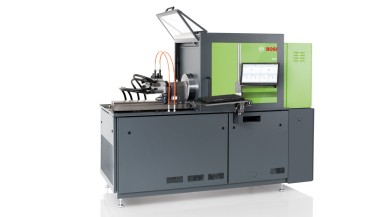
Plochingen, Germany – Bosch is expanding its portfolio for diesel components with the new DCP 800 test bench. The abbreviation DCP stands for Diagnostic Common-Rail Pump and refers to a test bench specially developed for common-rail high-pressure pumps. The system helps workshops meet the increasing demands for efficiency, precision, and economy in diesel service.High-performance technology for precise test results The DCP 800 enables the testing of common-rail pumps for passenger cars, commercial vehicles, and off-road applications at pressures of up to 2,700 bar. A powerful 25-kW electric motor is directly connected to the drive mechanism and operates without intermediate systems. This drive concept supports precise and reliable testing, particularly for commercial and heavy-duty vehicle applications. Automated inlet and counter-pressure regulation, as well as electronic flow measurement, further contribute to measurement accuracy. Efficient workflows in the workshop A key advantage for workshops is the high efficiency of the test sequences. With test times of around 20 minutes – regardless of the application – service processes can be significantly accelerated. At the same time, a quick setup process combined with predefined, standardized test plans ensures simple and repeatable test execution. Optimized filtration, cooling, and measurement systems support automated maintenance intervals and help reduce operating costs. The test bench covers a broad spectrum of Bosch common-rail pumps, including the CP1 to CPN6 series. Furthermore, it is compatible with existing generations of Bosch test kits such as CP1, CP3, and CBX8 from EPS 815/708 systems. This allows workshops a gradual and economical transition to the new testing technology. Flexible integration into different workshop environments A newly developed drive coupling system, which enables the quick mounting of different pump types, provides additional flexibility in the workshop. An adapter solution ensures that older coupling designs can continue to be used. The ergonomic machine concept with three-sided access supports comfortable and safe operation. The operating computer with a screen for controlling and monitoring the test sequences can be positioned on either side of the test bench, depending on workshop requirements. This allows the DCP 800 to be easily adapted to different workshop specifications. Workshops benefit from optimized workflows, ergonomic operation, and seamless integration into their existing workspace. The DCP 800 complements the existing Bosch test benches for common-rail injectors and enables workshops to perform comprehensive testing of pumps and injectors from a single source. The new test bench will make its debut at Automechanika Frankfurt from September 8 to 12, where it will be showcased live for the first time. The complete trade fair preview for Automechanika 2026 is available via the following link: https://www.bosch-presse.de/pressportal/de/de/preview-automechanika-2026-283864.html

Efficiently find the right repair solution: AI assistant optimizes ESI[tronic] d ...

21.07.2026

Press release

Mobility Aftermarket

Efficiently find the right repair solution: AI assistant optimizes ESI[tronic] d ...

Plochingen, Germany – With the increasing complexity of modern vehicles, workshops face growing challenges in quickly finding the right repair information. Bosch is therefore expanding its ESI[tronic] diagnostic software to include an AI-based assistant. Thanks to the new assistance function, faults and the corresponding repair solution are identified immediately. The feature will be introduced with the 2026/4 software update at the end of the year and will be previewed at the Automechanika trade fair in Frankfurt.AI assistant specifically uses existing knowledge databases The new AI assistant provides targeted support for mechanics during the diagnosis and repair process. The assistant analyzes fault patterns and draws on data provided by Bosch, such as diagnostic data, repair instructions, and original data from vehicle manufacturers. In addition, it incorporates other available information sources and independently finds possible solutions. Based on this, the AI assistant – depending on the vehicle, fault, and requirement – suggests the appropriate repair option, the relevant document, or the sought-after information. This provides workshops with a structured basis for decision-making, which can shorten the diagnostic process and increase efficiency in daily work. The potential of the ESI[tronic] diagnostic software with its integrated AI assistant to sustainably improve efficiency in workshops was also recognised by the international Automechanika jury. Right at the start of the trade fair, the solution received the 2026 Innovation Award in the “AI Solutions & Digitalisation” category. Simple interaction for the right solution The use of the AI assistant is designed for simple operation: just entering fault codes or short keywords is enough to receive well-founded solution suggestions. A time-consuming dialog is not necessary, allowing workshop staff to concentrate on the actual repair. Furthermore, the AI assistant acts as a continuous dialog partner. Throughout the entire repair process, workshop professionals can bring in new questions, query diagnostic steps, or check alternative solutions at any time. The AI assistant is thus an interactive companion and support for solving complex fault patterns. AI assistant available in ESI[tronic] Advanced and Master packages The new function will be available for the ESI[tronic] Advanced and Master software packages within the existing software license at no additional cost. This gives workshops access to an AI assistant designed to support daily diagnostic, repair, and maintenance tasks. The AI function builds on the existing strengths of ESI[tronic]. These include comprehensive diagnostic functions, access to manufacturer data, and experience-based repair (EBR), which provides proven solutions for recurring faults based on a large database. By combining these established features with AI-powered assistance, ESI[tronic] delivers an advanced diagnostic solution that helps workshops manage the increasing complexity of modern vehicles.

A key technology makes history: Bosch celebrates 50 years of the lambda sensor

18.06.2026

Press release

Mobility Aftermarket

A key technology makes history: Bosch celebrates 50 years of the lambda sensor

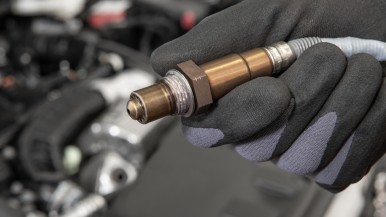
Karlsruhe/Plochingen – Developed by Bosch in 1976 and first installed in production vehicles by Volvo that same year, the lambda sensor marked a technical revolution in the automotive industry. Today, it has become an indispensable component in gasoline and diesel vehicles. In 2026, Bosch celebrates the 50th anniversary of a key technology that significantly contributes to reducing pollutant emissions and fuel consumption. With around 1.7 billion units produced by Bosch worldwide, the lambda sensor has established itself as a vital component for more efficient combustion.Pioneering work that became a global standard 50 years ago, Bosch readied the lambda sensor for series production to enable effective exhaust-gas treatment in the 3-way catalytic converter. The sensor precisely measures the residual oxygen content in the exhaust gas and provides the engine control unit with the crucial information needed to regulate the optimal air-fuel mixture (lambda = 1). This is the only way for the catalytic converter to achieve its full effect and reliably convert pollutants. Initially developed for use in gasoline engines, the next technological step followed with the development of the wide-band lambda sensor. This also enabled its use in diesel engines and engine concepts such as gasoline direct injection, significantly expanding its range of applications. What began as pioneering work is now a key technology in exhaust-gas treatment, with production sites in Germany, Southeast Europe, North America, China, and India. From series production to the replacement parts market Thanks to its decades of expertise, Bosch is one of the leading manufacturers of lambda sensors for original equipment – making it a key player in the replacement parts market. The lambda sensor portfolio covers around 70 percent of the vehicle fleet in the European market with approximately 1,000 part numbers. Every lambda sensor for the workshop market undergoes strict quality and release processes and complies with the standards of series production. Bosch's expertise in exhaust-gas sensors extends far beyond the lambda sensor: Bosch offers its workshop partners a wide range of particulate, NOx, and exhaust-gas temperature sensors. These components are important for complying with modern emissions standards. Customers benefit from receiving all relevant exhaust-gas sensors from a single source. This comprehensive solution simplifies procurement, supports good compatibility, and ensures high quality. Versatile technology far beyond the vehicle The success story of the lambda sensor is no longer limited to the passenger car sector. Today, its precise measurement technology is also used in trucks, motorcycles, modern heating systems, and even in Bosch's "PerfectBake" ovens, where it ensures optimal baking results.

Bosch Vehicle Care Assistant: Digital and plannable maintenance management for s ...

29.05.2026

Press release

Mobility Aftermarket

Bosch Vehicle Care Assistant: Digital and plannable maintenance management for s ...

Karlsruhe – When vehicles are in daily use, unplanned downtime can quickly become an organizational problem. With the Bosch Vehicle Care Assistant (VCA), Bosch is expanding its digital portfolio for workshops and fleet customers. The software digitally connects vehicles of small and medium-sized companies with their designated Bosch Car Service workshop. Based on relevant vehicle data such as mileage, tire pressure, service intervals, or warning messages, maintenance needs can be identified early, and service appointments can be planned proactively and efficiently. This helps companies to increase fleet availability and reduce unplanned downtime.Greater overview and predictability for small fleets Companies with smaller vehicle fleets, such as craft businesses, delivery services, and care and mobility services, heavily rely on the availability of their vehicles in their daily operations. At the same time, many of these companies do not have their own fleet management systems. The Vehicle Care Assistant closes this gap with an easy-to-use digital solution. Via the vehicle's integrated connectivity or an OBD dongle, relevant vehicle data is transmitted to the designated workshop and can be viewed in the Vehicle Care Assistant. The Bosch Car Service workshop can continuously monitor the vehicle's condition and proactively contact its customers in case of warning messages or upcoming maintenance. This allows companies to benefit from better predictability, reduced administrative effort, and more transparency about the condition of their vehicles, leaving them more time for their core business. From a reactive repair shop to a proactive service partner The Vehicle Care Assistant also opens up new opportunities for Bosch Car Service workshops. Instead of only becoming active in the event of maintenance or damage, they can now provide their customers with predictive support and position themselves more strongly as long-term mobility partners for local businesses. The early detection of service needs also facilitates better workshop utilization planning and creates additional potential for plannable service revenues and stronger customer loyalty. "Many smaller companies rely on their vehicles daily but do not have the resources for professional fleet management systems," says Elena Orti, Project Manager for the Vehicle Care Assistant. "The Vehicle Care Assistant is a simple digital solution with added value for both sides: Companies benefit from higher vehicle availability, and workshops can serve their customers more proactively and build longer-term customer relationships." With digital solutions like the Vehicle Care Assistant, Bosch continues to drive the transformation towards data-based and connected service offerings in the independent aftermarket. The service is now available in Germany, Denmark, Finland, France, the Netherlands, Spain, and the United Kingdom, with a gradual rollout planned for other European countries.